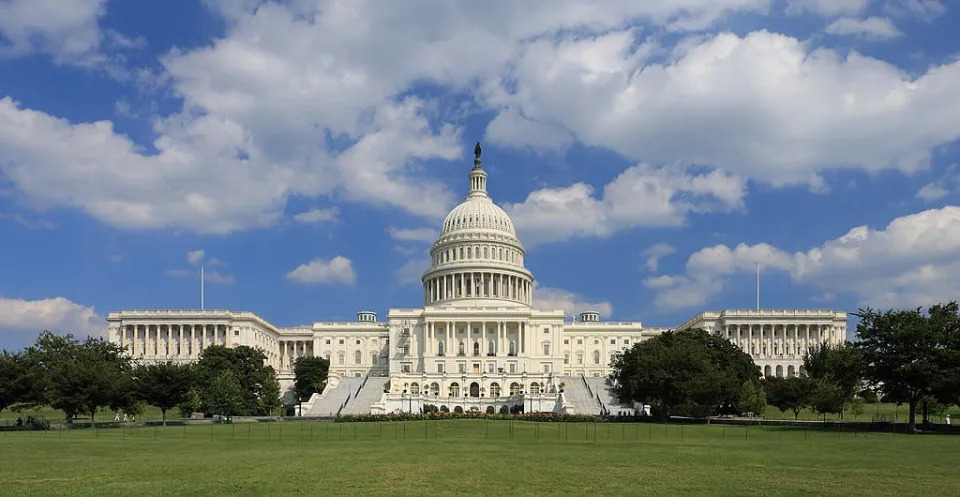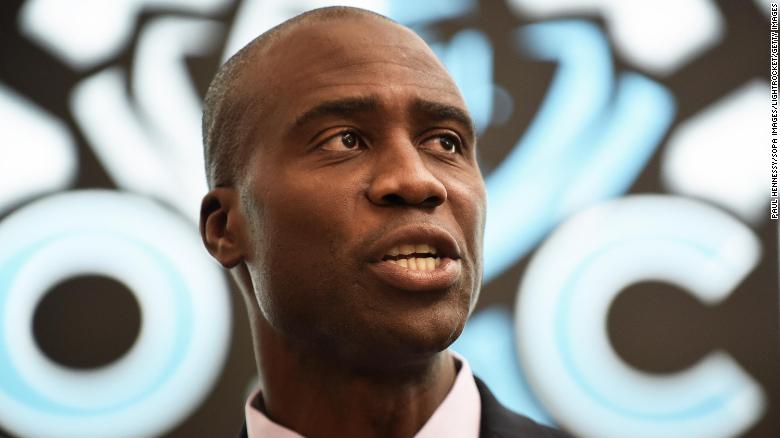
Apparently Florida’s Gov. DeSantis is trying to kill off the repub’s most faithful voters

DailyBeast

DeSantis’ Demented Doc Is About to Get the Grilling He Deserves

Michael Daly January 26, 2022

Photo Illustration by Thomas Levinson/The Daily Beast/Getty

Florida Gov. Ron DeSantis is a politician by profession, so he easily puts politics above all else, even when it concerns the fight against a virus that has killed 870,000 Americans, including 61,000 of his constituents.

“Without a shred of clinical data to support its decision, the Biden Administration has revoked the emergency use authorization for lifesaving monoclonal antibody treatments,” DeSantis tweeted after the FDA’s Monday night announcement that it was suspending approval of the two main therapeutics offered by the centers he opened with great fanfare just last week.

DeSantis went so far as to say, “This indefensible edict takes treatment out of the hands of medical professionals and will cost some Americans their lives. There are real-world implications to Biden’s medical authoritarianism – Americans’ access to treatments is now subject to the whims of a failing president.”

But Dr. Joseph Ladapo, appointed by DeSantis appointed as the state’s surgeon general and now awaiting lawmakers’ confirmation to that post, is a physician. Ladapo therefore had the moral and professional responsibility to set people straight regarding the clinics that were opened by the health department he heads. He instead affirmed the governor’s fiction.

“The federal government has failed to adequately provide the United States with adequate outpatient treatment options for COVID-19,” Ladapo said. “Now, they are scrambling to cover up a failure to deliver on a promise to ‘shut down the virus.’”

Ron DeSantis Opens Antibody Centers That Are Useless Against Omicron

The truth is that the treatment options being offered by the clinics had been rendered all but useless by the Omicron variant. The manufacturer of one of the two main monoclonal treatments acknowledged that in a statement on Tuesday.

“The original REGEN-COV antibody cocktail has been administered to millions of people, and we are extremely proud of the critical role this medicine has played during the pandemic. However, it does not work against #Omicron in lab tests, which tells us that unfortunately it is also not going to work in people infected with this variant,” a Regeneron spokesperson said. “According to the CDC, over 99% of COVID-19 cases in the U.S. are now caused by the Omicron variant, and thus we believe the FDA’s decision to amend the Emergency Use Authorization was appropriate at this time.”

Ladapo just ignored this inconvenient reality. He had at other times described reliance on vaccines and face coverings and testing as “the trifecta of stupidity.” And he gave no indication he would not simply further his reckless and irresponsible nonsense on Wednesday, when he is scheduled to appear at a confirmation hearing by the Health Policy Committee of the state Senate.

Early misgivings about his suitability arose during a “get acquainted” visit to the Senate after his appointment in October. The senators Ladapo visited included Democrat Tina Polsky, who has a sign on her door asking all who enter to wear a mask. He and two men with him strode inside and stood in the waiting area with their faces uncovered.

Entire Universe Dunks on Florida Surgeon General After Insane Mask Standoff

Polsky asked Ladapo to put on a mask. He suggested there were alternatives such as going outside.

“I said, ‘No, I would like to sit here in my office where I have chairs and a comfortable setting, but I would like you to wear a mask,’” she recalled to The Daily Beast.

Ladapo balked and seemed to seek a debate.

“But I wouldn’t engage in it,” she remembered, “And it just went on and on.”

Polsky had particular cause for concern. She had recently undergone surgery for breast cancer and was about to begin a regimen of radiation that would be disrupted if she tested positive for COVID-19

“I said. ‘I have a serious medical condition’’’ she remembered. “He said, ‘We can talk about that.’ I said, ‘No.’ I kept backing up into my aide’s office because I was so uncomfortable. I had my mask on, of course.’”

Ladapo continued to refuse.

“I didn’t talk to him about any substantive issues because he wouldn’t put on a mask so I could sit down and have a conversation with him about his credentials,” she remembered.

She realized that he was likely just to go on and on.

“I said, ‘You can leave now, if you’re not going to wear a mask. I know everything I need to know about you and your role as the top medical professional in the state,’” she recalled.

Ladapo departed.

“The real kicker was when he left, my other aide was outside and heard him say something like, ‘I love to rile up those liberals,’” Polsky told The Daily Beast.

When word of the encounter reached the press, DeSantis defended Ladapo, saying Polsky had just been playing politics. But the president of the state Senate, Wilton Simpson, is a gentleman as well as a Republican.

Simpson sent a memorandum to all the senators and their staff with the subject “Respect and Decorum in the Senate.” He reported that he had learned of an “interaction” in Polsky’s office “during which her request that visitors… wear a mask was not respected.”

“This incident is even more disappointing given the health challenges Senator Polsky is currently facing,” the memo said. “However, it should not take a cancer diagnosis for people to respect each other’s level of comfort with social interaction during a pandemic. What occurred in Senator Polsky’s office was unprofessional and will not be tolerated in the Senate.”

Ladapo said nothing until six days after the incident. He offered no apology.

“It is important to me to communicate clearly and effectively with people,” he tweeted. “I can’t do that when half of my face is covered.”

As there is no mandate in the senate, Ladapo would not be required to cover any of his face when he appeared before the Health Committee. The Democratic members include Sen. Janet Cruz, who promised she will “ask many questions” about Ladapo’s positions.

“In my opinion, he’s proven time and time again that data and science are not on the top of his mind when making decisions about the health and wellness of Florida,” she told The Daily Beast.

“So much misinformation is flying around, it’s important to have Florida’s top doc, if that’s what you want to call him, grounded in fact and not in extreme political rhetoric. His rhetoric does not line up with the reality,” she said, adding that “he takes this direction from a governor that feels the same way.”

Cruz noted that Ladapo attended Harvard, but wonders if this is proof that sometimes an Ivy League education does not stack up to “just plain common sense.”

“Or is it just a straight up opportunist who will say and do anything to advance his career?” she wondered. “I don’t know, but I’m disappointed. I’ve been disappointed by many of his comments.”

Cruz spoke of a friend whose 42-year-old nephew failed to get vaccinated and ended up critically ill with COVID in a small community hospital. The friend called to ask Cruz to help get him transferred to a hospital in Tampa that could better treat him.

“I said, ‘Yeah, let’s try,’” Cruz recalled.

But the nephew died before he could be moved. Cruz noted that the nephew’s wife had gotten vaccinated and was fine, but now a widow.

“That’s the kinda stuff that makes me nuts, when I have a Harvard-trained physician that will not recognize the power of the vaccine,” Cruz said.

Cruz noted that her husband is a retired nephrologist, a specialist who was sought out by other specialists with difficult cases.

“I watched him devote 50 years of his life to saving sick patients,” she said. “I’ve watched this man get up at four o’clock in the morning and try to go save someone… And then I see a physician who won’t stand up for a vaccine. I just can’t believe that someone could go to one of the finest medical institutions in the country and perhaps the world and deny the efficacy of a vaccine and the fact that it saves lives.”

Cruz is nonetheless all but certain the Health Policy Committee will approve Ladapo. He will then appear before the Ethics and Elections Committee, whose members include Polsky. The whole Senate will then vote on the appointment. And it seems likely the Senate will impugn its own dignity by approving Ladapo as Florida’s top doctor.

The ultimate question is whether he should be a doctor at all.

As white nationalists, January 6th extremists embrace Christian nationalism, even darker forces revive

Daily Kos

As white nationalists, January 6th extremists embrace Christian nationalism, even darker forces revive

David Neiwert, Daily Kos Staff January 28, 2022 

NEW YORK, NY - NOVEMBER 13: Nicholas Fuentes holds up a cross while speaking to people associated with the far-right group America First attend an anti-vaccine protest in front of Gracie Mansion on November 13, 2021 in New York City. A U.S. Circuit Court granted an emergency stay to temporarily stop the Biden administration's vaccine requirement for businesses with 100 or more workers as many feel it is an unlawful overreach. (Photo by Stephanie Keith/Getty Images)
White nationalist ‘Groyper’ leader Nick Fuentes holds aloft a crucifix at an anti-vaccination rally in New York City in November.

Most of the far-right extremist movements that arose online and then in real life over the past decade—the alt-right, white nationalists, and other authoritarian proto-fascists—have been generally ecumenical and areligious in their rhetorical appeals and organizing, other than their frequent expressions of antisemitism. But that’s beginning to change, as Jack Jenkins explored this week at The Washington Post.

With “Groyper” leader Nick Fuentes leading the way, it’s becoming much more common to hear them embracing Christian nationalism—an ideology long embraced by the larger radical right, particularly the so-called “Patriot” movement. Moreover, a number of these white nationalists appear to be pushing even farther into a particularly ugly—and previously stagnant—brand of religious nationalism: Christian Identity, the bigoted theological movement claiming that white people are the true “Children of Israel,” that Jews are the literal descendants of Satan, and that all nonwhite people are soulless “mud people.”

As Jenkins reports, since the Jan. 6, 2021 Capitol insurrection, Fuentes’ white nationalist “America First” organization has increasingly employed Christian nationalist rhetoric: chanting “Christ is King” at the antiabortion “March for Life” last week and at anti-vaccine protests, using crucifixes as protest symbols, and similar rhetorical appeals. In a speech at the America First conference in Orlando in March at which he declared America “a Christian nation,” Fuentes warned his audience that America will cease to be America “if it loses its White demographic core and if it loses its faith in Jesus Christ.”

“Christian nationalism—and even the idea of separatism, with a subtext of White, Christian and conservative-leaning [influences]—took a more dominant role in the way that extremist groups talk to each other and try to propagandize in public,” Jared Holt of the Atlantic Council’s Digital Forensic Research Lab told Jenkins.

Christian nationalism has long been a feature of the nation’s extremist right, dating back to the original Ku Klux Klan of the 1860s and its later version in the 1920s. Fuentes’ rhetoric “could have come word-for-word from a Klan speech in 1922,” historian Kelly J. Baker told Jenkins. “The Klan’s goal here was patriotism and nationalism, but it was combined with their focus on White Christianity.”

This worldview was a powerful animating force at the Jan. 6 insurrection, embodied by the moment when the self-described “Patriots” entered the vacated Senate chambers, took over the dais, and proceeded to share a prayer led by Jacob “QAnon Shaman” Chansley.

A video captured by The New Yorker shows the moment: One insurrectionist shouts, “Jesus Christ, we invoke your name!” The men bellow “Amen!” Then Chansley begins to lead them in prayer, saying: “Thank you heavenly father for gracing us with this opportunity to stand up for our God-given inalienable rights.” He also thanks God for allowing them to “exercise our rights, to allow us to send a message to all the tyrants, the communists and the globalists that this is our nation, not theirs.”

He concluded: “Thank you for allowing the United States of America to be reborn. Thank you for allowing us to get rid of the communists, the globalists, and the traitors within our government.”

As journalist Katherine Stewart explained in The New York Times:

A final precondition for the coup attempt was the belief, among the target population, that the legitimacy of the United States government derives from its commitment to a particular religious and cultural heritage, and not from its democratic form. It is astonishing to many that the leaders of the Jan. 6 attack on the constitutional electoral process styled themselves as “patriots.” But it makes a glimmer of sense once you understand that their allegiance is to a belief in blood, earth and religion, rather than to the mere idea of a government “of the people, by the people, for the people.”

A number of the groups, notably the Proud Boys and Oath Keepers, who led the insurrection similarly voiced their affinity for Christian nationalism. The morning of Jan. 6, as Jenkins reports, a group of Proud Boys led by Ethan Nordean—the primary leader of the men who later spearheaded the siege of the Capitol—were seen praying together.

At a gathering of Proud Boys near the Washington Monument on Dec. 11 captured on video by independent journalist Dakota Santiago for Religion News Service, Nordean had spoken about “sacrificing ourselves for our country” while speaking at an impromptu Proud Boys rally near the Washington Monument, according to footage provided to Religion News Service (RNS) by independent journalist Dakota Santiago.

Nordean—a notorious street brawler nicknamed “Rufio Panman”—described an epiphany he had during a protest about Jesus Christ’s sacrifice on the cross:

I had a moment of realization where I was like, “You know what, I’m going to be diehard about everything in my life. I’m gonna be real.” Because everything that we have sacrificed—because you know how hard it is in this environment that we live in—it is time that you rise to the occasion. Be real.

Now you may not believe in that, but it’s important in the very least for my case for me, because this man did this thing. Just as we sacrifice ourselves for our country. A man provides and protects even when he’s not loved. That is what we do. We are hated but we do it in anyway, we keep showing up every day and we protect these people from these tyrannical dictators.

The same religious fervor has intensified in the aftermath of the insurrection, particularly as Patriot movement believers and their mainstream Republican enablers have doubled down with a gaslighting narrative insisting that what happened Jan. 6 wasn’t an insurrection, it was a righteous protest by Real Americans.

That narrative has been ardently adopted by Christian nationalists like the Trump supporters interviewed earlier this month by NPR:

Outside on the walkway, Murray Clemetson stands with an armful of hand-made signs he brought to church, such as, “Set the DC Patriots Free” and “We Are Americans, Not Terrorists.” The law-school student and father of three —all home-schooled— was at the “Stop The Steal” rally in Washington, D.C., last year.

“The only insurrection that happened on Jan. 6 was by the agent provocateurs, paid actors, and corrupt police and FBI,” he says, disputing all the evidence made public in the more than 700 criminal cases that the rioters were Trump fanatics.

The church the interviewers reported from is Ken Peters’ Patriot Church in Tennessee, one of the nation’s most prominent Christian nationalist congregations. Peters is a rabidly pro-Trump pastor who has appeared onstage in recent months with Mike Lindell, the “My Pillow” conspiracy theorist who claims Donald Trump was the victim of election fraud. Peters also spoke to the crowd gathered in Washington, D.C., on Jan. 5 at a pre-rally for the next day’s “Stop the Steal” protest that devolved into the Capitol insurrection.

Peters’ predilection for linking arms with violent white nationalist thugs like the Proud Boys manifested itself in summer 2021 in Salem, Oregon, outside a Planned Parenthood clinic targeted by Peters’ “Church at Planned Parenthood” campaign. A phalanx of Proud Boys provided “security” for the event, including notorious brawler Tusitala “Tiny” Toese, who is currently in jail awaiting trial on assault charges.

The sermon Peters delivered during NPR’s visit to his church turned a similarly convenient blind eye to Donald Trump’s manifest flaws as a Christian hero. “We consider the left in our nation today to be a giant bully,” Peters said. “And when there is a bully on the schoolyard and somebody rises up and punches back, ‘Hallelujah!’ So we are thankful for Trump.”

Then he added: “But you know what? If Trump passes away tomorrow, God forbid, does that stop us? Does that slow us down? Not one bit. We’ll be looking for the next guy to lead the way.”

Indeed, the long-term determination of Christian nationalists to impose a narrow sectarian view on American government and society are reflected in its legislative assault on state laws, an attempt to reshape U.S. laws from the ground up as well as the top down. Their program “Project Blitz,” revealed by journalist Frederick Clarkson in 2018—a detailed and complex system of proposed legislation with which Christian nationalist beliefs are gradually embedded within state laws—is only one example of the breadth and depth of their assault on liberal democracy.

“The use of Christian symbols, iconography, Scripture in efforts to dominate and exclude are as old the republic itself,” Rev. Fred Davie, executive vice president of Union Theological Seminary in New York City, told Trevor Hughes of USA Today. “It’s deeply baked into our nation. It’s deep, but it’s also been proven time and time again to be wrong.”

While many Christian nationalists are grounded in more traditional evangelical views, there is also a component who are cynically embracing religious fervor as a way of broadening their community of white supremacists and expanding their recruitment base.

“For them, it’s just shorthand for identity,” Edward Ahmed Mitchell, deputy executive director of the Council on American-Islamic Relations, told Hughes. “There absolutely is a connection between far-right political extremism and far-right religious extremism, but I doubt these people are showing up at church every Sunday and reading their Bibles.”

Research sociologist Matthew DeMichele told Hughes that many of today’s religious displays are an “intense redeployment of old tactics.”

“People don’t want to say that this is a country founded on white supremacy. But we know that to be true,” DeMichele said. “It’s very important to understand that it’s not new for white supremacists to have a Christian identity. But it is intriguing there has been the strengthening overlap of the white nationalists and those of Christian Identity.”

The striking aspect of the surge of Christian nationalism has been its ability to unify sectors of the radical right, from militia-oriented Patriots to bigoted white nationalists to conspiracists like the authoritarian QAnon cult. Alex Newhouse, deputy director of the Center on Terrorism, Extremism and Counterterrorism at the Middlebury Institute of International Studies Besides faith, told Jenkins that social media had been a powerful vector for this confluence.

“This unification is pretty unprecedented,” Newhouse said. “The infusion of Christian nationalism throughout that unification process has been particularly interesting and, in my opinion, is going to end up being pretty dangerous.”

Newhouse particularly has noticed a sudden uptick, since 2019, of interest in Christian Identity, the infamous religious movement long associated with neo-Nazis, particularly the Aryan Nations operation in the northern Idaho Panhandle between 1978 and 2000, which was an Identity church. Newhouse noted that Christian nationalist appeals may “disguise a much more dangerous uptick in adoption of Christian Identity.”

One of the leading voices in this resurgence of Identity beliefs, Newhouse says, is Kyle Chapman, the cofounder of the Proud Boys-affiliated Fraternal Order of the Alt-Knights who later attempted to create an explicitly racist and antisemitic offshoot called “Proud Goys.” (Chapman is currently awaiting trial in Idaho on charges of assaulting a health care worker when he was hospitalized last November.)

Newhouse said Chapman has been interacting with Christian Identity influencers on the encrypted chat platform Telegram, while “blasting out Christian Identity propaganda.” Another key Trumpist figure—QAnon influencer GhostEzra, who has 300,000 followers on Telegram—posted explicit Identity messages. Identity theology—including references to the “two seedline theory,” which claims that Eve also mated with Satan in the Garden of Eden and thus gave birth to Jews—has been popping up with regularity on QAnon and Proud Boys channels on Telegram, Newhouse reported.

“There’s this gradual move toward a more revolutionary, burn-it-all-down posture, and I think Christian Identity for a lot of these people has become a way for them to organize their thoughts,” he said.

As Stewart explained in The NYT, Christian nationalist beliefs are not merely spreading among far-right extremists. Perhaps even more pernicious is their spread among mainstream conservatives in the media and especially within the Republican Party:

National organizations like the Faith & Freedom Coalition and the Ziklag Group, which bring together prominent Republican leaders with donors and religious right activists, feature “Seven Mountains” workshops and panels at their gatherings. Nationalist leaders and their political dependents in the Republican Party now state quite openly what before they whispered to one another over their prayer breakfasts. Whether the public will take notice remains to be seen.

As I’ve observed previously (while reviewing Stewart’s excellent review of Christian nationalism, The Power Worshippers: Inside the Dangerous Rise of Religious Nationalism): When viewed through the lens of its real-world outcomes, fundamentalist Christianity is less a coherent theology than it is a form of spiritual or religious totalitarianism, one that requires abject submission to what is actually a very perverse and narrow interpretation of the meaning of scripture.

This approach translated naturally into political authoritarianism—the kind that Donald Trump practices. And Trump in turn has proven very adept at feeding the psychological needs of the kinds of personalities that adhere to such movements.

Many leaders of the Christian right like to dress up in red, white, and blue and announce themselves as true patriots. But they are the same people who seek to pervert our institutions, betray our international alliances, treat the Constitution as a subcategory of their holy texts, demean whole segments of the population, foist their authoritarian creed upon other people’s children, and celebrate the elevation of a “king” to the presidency who made a sport out of violating democratic laws and norms.

We can only be grateful that he is out of power now. And it will be incumbent on everyone who treasures their democratic institutions to do everything in their power to defend them against this lethal tide of extremism now.

6 in 10 republi-cons can’t admit Biden won in 2020, and won’t vote for those who do

Yahoo! News

Poll: Nearly 6 in 10 Republicans say they will not vote for any candidate who admits Biden won ‘fair and square’

Andrew Romano, West Coast Correspondent January 27, 2022

Joe Biden, with one hand on a Bible held by his wife and the other hand raised, is sworn in president.
Joe Biden is sworn in as president on Jan. 20, 2021. (Andrew Harnik/Pool via Reuters)

Despite a mountain of evidence showing the 2020 presidential contest wasn’t rigged against Donald Trump, nearly 6 in 10 Republicans and Republican-leaning independents (57 percent) now say they will not vote in upcoming elections for any candidate who admits that Joe Biden won the presidency “fair and square.”

Only 17 percent say they would consider voting for a candidate who accurately characterizes Biden’s victory as legitimate.

These numbers underscore the degree to which Trump’s “big lie” claiming Biden cheated his way into the White House — a falsehood that three-quarters of Trump voters (74 percent) now believe — has become a litmus test for the entire GOP, crowding out other issues and strengthening Trump’s grip on the party ahead of the 2022 midterms.

For his part, Trump has made it clear that supporting his election fabrications is key to his own personal endorsement. Indeed, the former president is backing primary candidates against state officials who bucked his attempts to overturn the election.

The poll data also helps explain why Republican presidential hopefuls such as Florida Gov. Ron DeSantis now want to spend millions of dollars on special “election crimes” police units tasked with finding fraud where they previously insisted there was none.

“The way Florida did it, I think, inspired confidence,” DeSantis said immediately after the 2020 election. “That’s how elections should be run.”

The survey of 1,568 U.S. adults, which was conducted from Jan. 20 to 24, found that when asked which issue they want future candidates to focus on the most, the share of Republicans and Republican-leaning independents who say “stopping Democrats from rigging and stealing elections” (17 percent) — something that Democrats are not doing — is statistically equivalent to the share who say “bringing down inflation” (19 percent).

A flag reads: Stop the Steal.
A flag at a campaign rally with President Donald Trump and Sen. Kelly Loeffler in Dalton, Ga., on Jan. 4, 2021, the eve of Georgia’s Senate runoff election. (Brian Snyder/Reuters)

Other core conservative policies don’t even come close: “ending COVID restrictions” (10 percent), “fighting crime” (8 percent), “outlawing abortion” (5 percent), “cutting taxes” (5 percent), “appointing Supreme Court justices” (2 percent) and “giving parents more controls over schools” (2 percent). Only “securing the border” (23 percent) ranks higher.

Likewise, if the GOP wins control of Congress in November, 56 percent of Republicans say they want the party to launch yet another investigation of the 2020 presidential election — twice the number (28 percent) who say the opposite.

Trump remains the GOP’s most powerful and influential figure. Looking ahead, 56 percent of Republicans and Republican leaners say Trump’s endorsement is more important than that of “other Republican leaders” (23 percent) when they are deciding how to vote. Half (50 percent) say Trump was “the best Republican president” — far better than George H.W. Bush (4 percent) and his son George W. Bush (9 percent), and significantly better even than conservative icon Ronald Reagan (37 percent). Eighty-two percent rate Trump favorably, and 83 percent say they would vote for him in a rematch with Biden.

For the broader population of voters, Biden’s job approval rating continues to sink. Fifty-three percent of Americans disapprove of how he’s handling the presidency, compared with 40 percent who approve, and a mere 2 points now separate him (42 percent) and Trump (40 percent) in a hypothetical head-to-head matchup. In the Dec. 13 Yahoo News/YouGov poll, Biden (45 percent) led Trump (38 percent) by 7.

President Donald Trump delivers his first State of the Union address to Congress in 2018 as Vice President Mike Pence and House Speaker Paul Ryan applaud.
Trump delivers his first State of the Union address to a joint session of Congress on Jan. 30, 2018. (Win McNamee/Pool via Reuters)

There are signs that at least some Republicans are open to alternatives to Trump. More than a quarter (27 percent) say he should not run again. Sixteen percent say they would consider voting for centrist West Virginia Democratic Sen. Joe Manchin if he were to run for president as an independent, more than the number of Democrats (10 percent) or independents (15 percent) who say the same. And 21 percent already say they would vote for DeSantis over Trump in the GOP primary; other potential candidates — including former Vice President Mike Pence (6 percent), former U.N. Ambassador Nikki Haley (6 percent) and Fox News host Tucker Carlson (2 percent) — combine for another 19 percent of the vote, and 12 percent say they’re not sure.

DeSantis’s unfavorable rating among Republicans and Republican-leaning independents (12 percent) is also lower than Trump’s (15 percent). More than half (51 percent) rate the Florida governor “very” favorably, on par with the far more familiar Trump (57 percent).

As a result, less than half of Republicans and GOP-aligned independents (46 percent) currently say they would vote for Trump in the 2024 GOP primaries. Still, it’s worth noting how close that number is to the 45 percent of the popular vote that Trump won across all Republican primaries in 2016 — enough to secure him the nomination and ultimately propel him to the White House.

_________________

The Yahoo News survey was conducted by YouGov using a nationally representative sample of 1,568 U.S. adults interviewed online from Jan. 20 to 24, 2022. This sample was weighted according to gender, age, race and education based on the American Community Survey, conducted by the U.S. Bureau of the Census, as well as 2020 presidential vote (or nonvote) and voter registration status. Respondents were selected from YouGov’s opt-in panel to be representative of all U.S. adults. The margin of error is approximately 2.8 percent.

Biden urges Congress to act now on Equal Rights Amendment

Reuters

Biden urges Congress to act now on Equal Rights Amendment

Susan Heavey January 27, 2022

WASHINGTON, Jan 27 (Reuters) – President Joe Biden on Thursday called on Congress to immediately enshrine the Equal Rights Amendment in the U.S. Constitution and formally protect women’s rights nearly a century after lawmakers first raised them.

In a statement, Biden urged Congress “to pass a resolution recognizing ratification of the ERA,” saying recent legal analysis showed there was nothing preventing lawmakers from acting.

The Democratic president’s call comes amid jostling over the deadline to enact the ERA, which passed Congress in 1972 with a 1982 deadline to be enacted if 38 state legislatures voted to approve. Nearly 100 years have passed since it was first introduced in 1923.

Democrats in the U.S. House of Representatives separately unveiled a resolution to enshrine the ERA, but it could fall short of the 60 votes needed in the Senate, where Democrats control just 50 seats.

While supporters say the ERA is needed to protect against sexual discrimination and would help achieve equal pay, opponents argue the original timetable has passed and that the amendment is no longer needed.

Virginia became the 38th state in 2020 to adopt the ERA, but Republican then-President Donald Trump sought to block ratification with a legal memo saying the process must begin anew.

A new Justice Department legal analysis, however, allows the process to move forward and “makes clear, there is nothing standing in Congress’s way from doing so,” Biden said.

House oversight panel Chairwoman Carolyn Maloney and other Democrats argue that the ERA made clear it takes effect two years after the final state’s ratification, with Thursday marking two years since Virginia’s vote.

The resolution “reaffirms what we already know to be true: the Equal Rights Amendment is the 28th amendment to the U.S. Constitution,” Maloney said.

The issue also remains entangled in the federal courts: Virginia, Illinois and Nevada sued to have the ERA declared valid.

In a statement, the U.S. National Archives and Records Administration said it would abide by the Justice Department’s legal opinion unless otherwise directed by a final court order. (Reporting by Susan Heavey; Additional reporting by David Morgan and Doina Chiacu; Editing by Tomasz Janowski and Jonathan Oatis)

State lawmakers proposes bill that would let Arizona legislature nullify presidential elections

State lawmakers proposes bill that would let Arizona legislature nullify presidential elections

Aldous J Pennyfarthing – January 27, 2022 

Maricopa County ballots cast in the 2020 general election are examined and recounted by contractors working for Florida-based company, Cyber Ninjas, Thursday, May 6, 2021 at Veterans Memorial Coliseum in Phoenix. The audit, ordered by the Arizona Senate, has the U.S. Department of Justice saying it is concerned about ballot security and potential voter intimidation arising from the unprecedented private recount of the 2020 presidential election results. (AP Photo/Matt York, Pool)

Who are these folks who can’t wrap their minds around the fact that Donald Trump legitimately lost the 2020 election? Where did they ever get the idea that this logorrheic lout was invincible? The guy was laid low by bone spurs, FFS—and he only survived COVID-19 because he was given access to extraordinary life-saving measures. It’s not like he was Teddy Roosevelt regaling his charges with bracing tales about his days with the Rough Riders. At best, Trump’s rough rider tales were just tedious screaming jeremiads about the thread count and awkward fit of his underpants.

But by now it’s an article of faith among “loyal” (read: cultish) Republicans that the 2020 election was stolen from the guy who never polled above 50% approval at any time during his presidency. And once again, Arizona is at the vanguard of the Big Lie boobery. This time it’s Republican state Rep. John Fillmore, who’s proposed a bill that would make Arizona legislators a backstop against election fraud a Republican presidential candidate ever losing the state again.  

The bill, introduced by state Rep. John Fillmore (R), would substantially change the way Arizonans vote by eliminating most early and absentee voting and requiring people to vote in their home precincts, rather than at vote centers set up around the state.

Most dramatically, Fillmore’s bill would require the legislature to hold a special session after an election to review election processes and results, and to “accept or reject the election results.”

So Republicans don’t already have enough of an advantage with an Electoral College, U.S. Senate, and gerrymandered network of state legislatures all favoring them? Now they need the power to nullify elections they don’t like, too?

It’s interesting that this comes from Arizona, the state that authorized a fake, pro-Trump audit that nevertheless confirmed Joe Biden’s victory. (Dead-enders who still dream of a thousand-year Galactic Trumpian Empire have cited the Cyber Ninjas’ post-fraudit “questions” surrounding the election as reasons to keep up the 2020 fight, but those were dismissed with remarkable ease by Maricopa County’s crew of experienced election officials.)

For his part, Fillmore isn’t buying into all this “Biden won” tomfoolery. He saw those boat parades and superspreader rallies with his own eyes, and that trumps a full hand recount of ballots any day. “I don’t care what the press says. I don’t trust ABC, CBS, NBC or Fox or anybody out there. Everybody’s lying to me and I feel like I have a couple hundred ex-wives hanging around me,” Fillmore said at a committee hearing on Wednesday. “We should have voting in my opinion in person, one day, on paper, with no electronic means and hand counting that day. We need to get back to 1958-style voting.”

Hmm, judging by his “ex-wives” crack, I have a feeling the voting system isn’t the only thing he’d like returned to 1958.

So … one day to vote? Does that mean he’ll support an Election Day holiday and a big boost in the number of polling places so people of color don’t have to wait in line for four hours to exercise their sacred constitutional rights? Erm. For some reason I doubt that.

Of course, Arizona has already done a number on voting rights, and the Supreme Court appears poised to back them up at every turn. So what’s one more nail in our democracy’s coffin, huh? 

And while Fillmore’s bill is unlikely to pass, it’s still alarming how brazenly the GOP is attempting to rewrite the rules to a game they’d be losing far more frequently if those rules were fair.

Fillmore’s legislation is unlikely to gain much traction, but it is a sign that some Republicans have embraced the idea that legislators should have veto power over the will of the voters if they do not like the results.

Before Trump came along, such initiatives would be rightly seen as hair-on-fire emergencies for Western liberal democracy. Now? Just another Wednesday.

We’re in a fraught moment, folks. I hope we’re all awake and ready to push back at these fatuous fascists every time they try this nonsense. If not, get ready for McRib sandwiches to be permanently classified as a vegetable by the USDA. Because that’s what freedom tastes like in the Trump Reich.

Believe it or not, the economy (GDP) grew last year at the fastest pace since 1984 (5.7%), and the first quarter of 2022 has grown (6.7%)


NPR – Special Series – The Coronavirus Crisis

Believe it or not, the economy grew last year at the fastest pace since 1984

Scott Horsley January 27, 2022

People shop in The Galleria mall in Houston during Black Friday on Nov. 26, 2021. The economy grew strongly last year but at an uneven pace because of the pandemic.Brandon Bell/Getty Images

Last year saw the fastest economic growth since Ronald Reagan was president. But for many people, 2021 felt less like “Morning in America” and more like a restless night, dogged by fitful dreams about the ongoing pandemic.

The Commerce Department reported Thursday that the nation’s gross domestic product grew 5.7% last year — the biggest increase since 1984. But the growth arrived in fits and starts, with hopes for a steady recovery repeatedly dashed by successive waves of infection.

And now, uncertainty continues in the year ahead, as the omicron variant continues to spread. Meanwhile, the Federal Reserve is gearing up to raise interest rates, perhaps aggressively, in an effort to combat stubbornly high inflation.

“It wasn’t a straight line for the economy last year, for sure,” said Mark Zandi, chief economist for Moody’s Analytics. “The economy remains tethered to the pandemic.”

ECONOMY
Employers added only 199,000 jobs in December even before omicron started to surge

Business last year boomed in the spring and early summer, as millions of Americans got vaccinated and felt free to travel and dine out more. In June and July alone, employers added more than 2 million jobs — nearly a third of the year’s total job gains.

But growth slowed when the delta variant hit.

“It was crazy. It was a roller coaster,” says Dave Krick, who owns three restaurants in Boise, Idaho.

Krick had high hopes for the end of the year, after a busy October, and he was making plans to resume hosting private parties in his restaurants, only to pull the plug when the infection rate started to soar again as the omicron variant started to spread.Article continues after sponsor message

“It was a teaser. We though the holiday season was going to be really good,” Krick said. “Those holiday parties for us are a big part of making the year work. And we basically canceled it all.”

A flight information display system shows cancelled flights at the Ronald Reagan Washington National Airport on Dec. 27, 2021, in Arlington, Va. Flight cancellations became a regular occurrence in December as the omicron variant infected staff at airports and airlines.Anna Moneymaker/Getty Images

An economic bang – and a whimper

The Commerce Department said GDP grew at an annual rate of 6.9% in the last three months of the year, thanks in part to stronger exports and a buildup of inventories.

But the fourth quarter was as uneven as the nine months that came before.

“Q4 started with a bang and ended with a whimper,” said Zandi. “October was a fantastic month for the economy — consumer spending, investment — everything was kind of firing on all cylinders. And then by December, omicron came on the scene quickly and did a lot of damage.”

While unemployment has dropped to just 3.9% — the lowest level since the start of the pandemic — employers added only 199,000 jobs in December.

And forecasters expect that weakness to continue into the beginning of the new year.

Initial claims for unemployment benefits in recent weeks suggest some employers are cutting jobs in response to the omicron wave.

Help wanted signs such as this one outside a retailer in Hattiesburg, Miss., on March 27, 2021, were a common sight last year as busineses struggled to recruit workers.Rogelio V. Solis/AP

Even though last year’s economic growth was the strongest in decades, it fell short of what economists once hoped for. Following passage of the $1.9 trillion American Rescue Plan, some forecasters were predicting growth as high as 7%, fueled by widespread vaccinations and pent-up demand.

“There were just too many people who didn’t get vaccinated,” Zandi said. “It’s admirable how well the economy did perform, despite the fact that vaccines didn’t exactly solve the problem.”

Pandemic-driven supply-chain problems and labor shortages weighed on economic growth, while also driving up prices.

“Even though we had a lot of demand, we weren’t able to do as much with it as we had hoped,” said Krick, the restaurant owner.

His labor costs have risen sharply this year, thanks to higher wages and new health benefits. The restaurant’s food costs are up as well.

“Our supply chains don’t like this roller coaster,” Krick said. “We have a hard time predicting what we’re going to get and not get, so we have to adjust quickly with menus and that takes a lot of our energy and time. And the costs are definitely difficult.”

The price of restaurant meals nationwide was 6% higher in December than a year ago, while overall inflation reached 7% — the highest level since 1982.

Will 2022 be better?

The new year will likely continue to be marked by the path of the pandemic – as well as the fight against inflation.

The Federal Reserve signaled Wednesday that it plans to begin raising interest rates at its next meeting in March, in an effort to keep a lid on prices, and markets expect three additional rate hikes over the course of the year.

The central bank’s challenge is not to hit the brakes too hard and slow the economy too much — a tricky feat considering some economists believe the central bank waited too long to tackle inflation.

“We do expect some softening in the economy from omicron, but we think that that should be temporary,” Fed Chairman Jerome Powell told reporters. “We think the underlying strength of the economy should show though fairly quickly after that.”

Supermarkets such as this one in Orlando, Fl., are experiencing a shortage of some products as the omicron variant infects workers and worsens supply chain woes.John Raoux/AP

Zandi expressed confidence that the central bank could gradually withdraw its easy-money policies without stalling the recovery.

“I think they’ll be able to do it and land the economic plane on the tarmac,” he said. “It might be a little bumpy here. There’s a lot of cross-winds in the economy.”

Most of the federal relief programs that pumped trillions of dollars into people’s pockets during the pandemic have also now expired, although restaurants are petitioning Congress for additional help.

Zandi thinks the economy will continue to expand in 2022, albeit at a slower pace of around 4%.

“All of us are getting better at kind of navigating the virus and learning how to live with it and manage through it,” Zandi said. “Hopefully, we have another good year in 2022.”

Krick is also hopeful that business will continue to rebound, but he’s not making any firm predictions about the year ahead.

“One thing we know right now is we don’t know what 2022 is going to bring us,” he said. “We’re bleeding a lot of cash, hoping that this spring and summer will be better, mainly because we don’t have any choice. It’s a weird time to be running a restaurant.”

True American’s Will Not Whitewash Our History !

The Insider

A Georgia elementary school removes assignment instructing students to write a letter as ‘an American settler’ to Andrew Jackson in favor of removing Indigenous people from their land

Katie Balevic January 26, 2022

President Andrew Jackson.
President Andrew Jackson. 
  • An assignment at a Georgia school about the Trail of Tears has been removed. 
  • Fourth-graders were given a prompt to write in favor of “removing the Cherokee.”
  • The assignment also asked students to write from the point of view of a member of the Cherokee Nation.

 A Georgia school gave fourth graders an assignment that prompted them to write from the point of view of an English colonizer in America and justify the removal of indigenous people from their land. 

“Write a letter to President Andrew Jackson from the perspective of an American settler. Explain why you think removing the Cherokee will help the United States grow and prosper,” the writing prompt titled “The Trail of Tears” said, referencing one of the largest tribes of Indigenous peoples in the US.

Jackson, commander in chief from 1829 to 1837, signed the Indian Removal Act in 1830, authorizing – beyond his time in office – the violent forced displacement of approximately 100,000 Indigenous peoples amid the country’s westward expansion. Over 15,000 people from different tribal nations died on what came to be called the Trail of Tears, which has been largely categorized the ethnic cleansing and genocide of tens of thousands of Indigenous peoples. 

While exact numbers are unknown, the National Park Service estimated that 4,000 Cherokees – or a fifth of their population – died on the Trail of Tears. One Choctaw leader referred to the journey as a “trail of tears and death.” 

Jennifer Martin, a parent in Virginia, told Insider that she shared the assignment from a public charter school called the Georgia Cyber Academy after seeing someone post it in a private group among parents. She saw the prompt as an example of how the movement against critical race theory is “prioritizing the feelings of settlers and colonizers as more important than actual, real history.”

“If this sort of content could happen at a state-funded Georgia charter school, it could easily happen in any public school, and I think people should be aware of how quickly we’re devolving into this kind of atmosphere in American schools,” Martin said. “The truth of American history, and what happened to indigenous peoples and enslaved Africans and other people of color, shouldn’t be whitewashed.”

School assignment on Trail of Tears.
A portion of the writing prompt on the Trail of Tears by the Georgia Cyber Academy. 

According to the Georgia Department of Education, in lesson plans that explain westward expansion in America, educators are to “describe the impact of westward expansion on American Indians; include the Trail of Tears, Battle of Little Bighorn and the forced relocation of American Indians to reservations.” Georgia Cyber Academy, a charter school, may not have to adhere to this guidance for social studies curriculum.

A spokesperson for Georgia Cyber Academy told Insider that the assignment has since been removed after school leadership “concluded this is not an appropriate question to be used in our classrooms.”

“While there is often a benefit in asking students to consider all perspectives in a social studies class – and it should be noted that the next question in the series asked students to also argue from the opposite perspective (screenshot attached) – we believe there are more appropriate ways to teach this subject,” the spokesperson said in an email. 

The second portion of the assignment, shared by the school, asked students to write from the “perspective of a Cherokee Indian.” 

“Explain why the Indian Removal Act is harmful to you and your family. Describe conditions on the Trail of Tears and their effects on your tribe,” the prompt said. 

The Cherokee Nation of Oklahoma did not immediately respond to Insider’s request for comment. 

300+ MBAs Sign Letter Calling On Business Roundtable To Defend U.S. Democracy

Poets & Quants

300+ MBAs Sign Letter Calling On Business Roundtable To Defend U.S. Democracy

Kristy Bleizeffer – January 27, 2022

Storming of the U.S. Capitol

Rioters outside the US Capitol building on January 6, 2021. A letter signed by more than 300 MBAs calls on business leaders to protect American democracy: Wikipedia photo by Tyler Merbler.

A year after the January 6 insurrection on the U.S. Capitol, more than 300 MBAs from top business schools have signed an open letter calling on business leaders to take action to protect voting rights and America’s democratic institutions. The letter was sent to the Business Roundtable Wednesday evening (January 26), an organizer of the effort tells Poets&Quants.

“On the heels of the one year anniversary of the January 6th Insurrection against American democracy, we – the undersigned business students – have watched with concern as business leaders largely remain silent and sidestep accountability for defending the integrity of American democratic institutions. We believe more courageous, active leadership is required,” reads the letter, a copy of which was provided to P&Q.

The letter was penned by the Cross-MBA Democracy Task Force, a group of MBAs from five of the country’s top business schools: Wharton, Harvard Business School, Stanford Graduate School of Business and MIT Sloan School of Management. The 300 signatures so far are from MBAs representing more than 10 business schools and counting.

The front page of The New York Times on Jan. 7, 2021

The front page of The New York Times on Jan. 7, 2021

“I don’t think it’s a stretch to say that a lot of America watched in horror as this insurrection, revolt, attack descended on the United States Capitol, leading to a number of people losing their lives,” says Matt Devine, an MBA2 at Stanford GSB and a member of the Cross-MBA Democracy Task Force.

“I think what was most notable was how quickly what felt like a very universal reaction from the American people changed and became quite polarized. It was almost like light hitting a prism, and people started looking at and interpreting the events in very self-serving ways.”

CALLING AMERICA’S TOP CEOS TO ACCOUNT

The Business Roundtable is a lobbyist association of CEOs from top U.S. companies “working to promote a thriving U.S. economy and expanded opportunity for all Americans through sound public policy,” according to its website. Members include Andy Jassy of Amazon, Tim Cook of Apple, Lynn Good of Duke Energy, and nearly 200 other chief executives.

The MBA task force letter includes three actions the signed business students want to see business leaders undertake:

  • Enabling employees to be civically engaged in this year’s elections.
  • Withholding financial support from elected officials in Congress and state capitols who deliberately undermine our democracy.
  • Leveraging their platforms and influence to support efforts that expand access to voting.

You can read the full letter and see the signatures of the 300-plus MBAs here or click through to the end of this story. Also check out this commentary from January 7, 2021, written by Poets&Quants editor in chief John Byrne: Why Wharton Should Take Back Trump’s Business Degree.

Poets&Quants interviewed Matt Devine, a writer of the letter and task force member, on Wednesday morning. Read the conversation on the next page. It has been edited for length and clarity.

NEXT PAGE: P&Q’s interview with Matt Devine, Stanford MBA, one of the letter’s authors of the letter and task force member.

U.S. Capitol

Westside view of the U.S. Capitol. Wikipedia Commons photo by Martin Falbisoner.

Read our conversation with Matt Devine below. It has been edited for length and clarity.

How did this effort get started?

There has been a group of students that, since the election in 2020, were organized around protecting voter integrity. It was basically just a group of interested students across some of the top MBA programs who were on a Whatsapp chain, talking about democracy as well as the ongoing political situation.

Then, in November this year, there was a smaller offshoot of the group that really felt that there was a voice that MBA students could have. We started seeing over the course of the last year, since the January 6 insurrection, that there were a number of business leaders who were speaking out and taking steps both to withhold campaign funding as well as issue press releases. We saw a lot of different, more extraordinary actions from the private sector, around a number of different issues, including racial justice.

Matt Levine, Stanford GSB MBA

Matt Devine, MBA ’22, is an author of the letter and member of the MBA democracy task force

We started thinking there might be a role for MBA students to model the sort of behavior that we would hope that business leaders in today’s environment would have. We also wanted to acknowledge that the reason that the private sector continues to be as successful as it is, is because of the integrity of the public sector and the trust and faith that people place in democratic institutions.

It started as just a small group of interested students, sharing ideas about what this would look like and what sort of action we could take. And obviously, this very short period of time of two years that we’re in our MBA programs, so we thought that a letter would be one of the better ways to (express our viewpoints) and also to gauge how many other students were thinking similarly. That coalesced around the three actions that are listed in the letter and in the preface of why we feel like this is the time to take tangible actions to support democratic institutions.

How did this idea spread to more than 10 business schools?

It started with one of my friends, Lucas Levine (Stanford GSB MBA ’22), who is a dual student at the GSB and the Harvard Kennedy School (HKS). He heard from students at Stanford GSB on the private side (of business) and from students at HKS, which obviously self-selects students who have different perspectives on the public sector.

Then it became just a group of people that we knew from different schools, either that we had met at conferences or in various virtual environments last year, who we thought would be interested in this question. So we reached out and asked who was interested in a more active role for the private sector and who would be down to put together an action from the MBA perspective. It coalesced to around 12 different students who were involved at various times. Some were involved in the ideation process, some were involved in the writing and then some were involved in gathering signatures. We had a couple representatives at every school.

Why did you pick the Business Roundtable as the recipient of the letter?

The Business Roundtable has shown an interest in the last couple years of taking a new approach to the way that the private sector and business leaders can have an impact. That is in terms of the workers that they hire, their supply chains, the way they think about the policies they implement. So not just shareholders and employees, but also people in their communities that they impact as well.

Most notably, I suppose, was their statement on climate change, as well as taking more proactive stances publicly against social issues. We felt that this was at least one of the largest targets and certainly one of the most public places to really get this word out there and maybe even find a lot of receptive ears from business leaders. They are the people who are hiring business students from these universities, and are hopefully finding people who support the actions that they’re currently taking. There is a momentum in business schools for this sort of activity and these sorts of actions.

Why do you think it’s important for businesses to speak out about issues that, in the past, might have been considered outside their lane?

I think there are a number of different reasons to do so. One, kind of underpinning it all, is that the reason that capitalism, at least in the United States, is such a persuasive voice in society writ large is because it’s protected by the public sector. There is a lot of trust in democratic institutions. Without a strong public sector, there can be, really, no private sector in the United States. It is one of the things, I think, that makes our country very unique. If people don’t have trust in these institutions, how does that impact the way we think about business, both in the United States and abroad? For a long time, we were able to take it for granted in a lot of ways.

I also think the expectations for business leaders has become greater in a number of different categories. We see that in terms of the actions around diversity and inclusion, providing working wages, supporting minimum wage workers and more. There’s just a more compelling narrative and a groundswell of support for businesses to provide services and independence to workers in all fields.

You said you have more than 300 signatures so far. Is that higher or lower than what you were hoping for?

I think it’s a little bit of both. I think there was some discussion that we were maybe not specific enough in the ask that we had and because of that we weren’t going to get very many signatures.

There were a number of people who felt that 300 was an excellent number to get in the short period of time that we put up for signatures which was about a week. And there were people who felt this is a great first step in what we hope becomes a larger coalition of business students speaking out about values they want to see represented.

There are some, like myself, who feel that 300 is not as many as we had hoped for. I’m in Stanford, and we have 900 students. This group now has 10 business schools. This is, I guess, one of the first efforts of its kind, but I would hope that there’d be more students who would be interested in putting their name to paper to represent what I personally think could be even a stronger statement and even more specific about the sort of actions that business leaders can and should consider.

This is also a new initiative. Students aren’t, maybe, used to the idea of putting their name on a piece of paper that could go public without knowing the sort of impact that it could have. This is a very new topic, for business leaders and for students who can’t quite imagine the sort of leadership role that they will have down the line. I think this is a new conversation, which is another goal of this letter and hopefully future actions as well: To get students talking about the role of the private sector and what we can do as business leaders in the scope of influence in our communities.

What was it about the January 6 anniversary that made you feel an action like this was required?

At first, you saw business leaders who very quickly put out a statement saying that they supported the 2020 election, that they did not believe that there was any sort of deception, and who they would donate to or not donate to based on who cast doubt on the election.

Slowly we’ve seen that change. We’ve seen a number of businesses who have put out press releases from their communications department as well as business leaders walk back some of those statements, or even interpret what seemed like black and white language to insert a little more gray area. As it’s become apparent that this isn’t something that the American people agree about what actually happened, what it meant, and what it could mean for democracy, there has been a lot of back tracking. That indecision and opportunism is why I think this is an important action.

This has been such a galvanizing event. Coming up on the one-year anniversary, we found it startling the number of commitments people had made but hadn’t followed through, and how much what they were willing to say publicly had changed. We felt it required a reassertion that this is still the time and this is still the place for a new sort of leadership.

What do you hope happens in response to your letter? What does success look like?

I don’t think we’re overly optimistic that that will see any change per se. What I do hope is that the students who signed this letter and who are part of this effort, continue to think about what tools they have as future business leaders and people being hired by these companies, what companies they are willing to accept jobs from, what sort of values they have, and what actions they can take within their place of business to push leaders to to really examine their influence. I really hope that students who have signed this letter can find other business leaders who feel similarly and have more conversations about what is possible when we act by ourselves and what’s possible when we act together.

What are the publicity plans? Obviously, it will have more impact the more people know about it.

We’ve created social assets for everyone to share on Instagram, Twitter, TikTok, etc., that include smaller excerpts from the letter itself, as well as some statistics on the number of students who have signed it. We’re hoping to make it very easy for students who have signed to tell people what it means to them.

We’re also reaching out to a couple of media outlets. Media may not be our primary way of getting this out. There were no aspirations of being on the front page of The New York Times or anything. We just want to put the letter out there to have this be a statement that that lives by itself.

The full letter to the Business Roundtable is printed below. Click here to see the more than 300 MBA signatures.

Thursday, January 27, 2022

To: Business Leaders of the United States

Re: Call to Action – Protect American Democracy

On the heels of the one year anniversary of the January 6th Insurrection against American democracy, we – the undersigned business students – have watched with concern as business leaders largely remain silent and sidestep accountability for defending the integrity of American democratic institutions. We believe more courageous, active leadership is required.

We stand in solidarity with those business leaders who had the courage to take action against ongoing efforts – allegations that undermine election integrity, restrictions on voting access, and donations to public officials who support these actions – that corrode our democratic process.

Business has a critical role in protecting our democracy. We envision and expect a future where our future employers and business partners take action to:

  • Enable your employees to be civically engaged in this year’s elections, such as by providing time off to vote, encouraging employees to volunteer as poll workers, and hosting voter registration drives.
  • Withhold financial support from elected officials in Congress and state capitols who deliberately undermine our democracy by bolstering unsubstantiated claims of fraud — this includes the 8 Senators and 139 members of Congress who objected to the Electoral vote count in 2021.
  • Leverage your platform and influence to support efforts that expand access to the ballot, at both the federal and state level, and to push back against voting restrictions as they are introduced in legislatures across the country.
    Following the anniversary of the January 6th Insurrection, we implore business leaders to take these simple actions. The future of the American (and global) economy at this moment lies with you.

Signed,

MBA Students for the Preservation & Protection of Democracy

DON’T MISS WHY WHARTON SHOULD TAKE BACK TRUMP’S BUSINESS DEGREE

Florida surgeon general favorably recommended after Democrats walk out of confirmation hearing

CNN – Politics

Florida surgeon general favorably recommended after Democrats walk out of confirmation hearing

By Steve Contorno, CNN – January 26, 2022

Newly appointed state Surgeon General Dr. Joseph Ladapo speaks during a press conference at Neo City Academy in Kissimmee, Florida.Newly appointed state Surgeon General Dr. Joseph Ladapo speaks during a press conference at Neo City Academy in Kissimmee, Florida.

(CNN)A contentious confirmation hearing for Florida Surgeon General Dr. Joseph Ladapo ended abruptly Wednesday after Democrats walked out in protest, prompting Republicans to immediately vote to favorably recommend Ladapo. Democrats grew increasingly exasperated at Ladapo for his lengthy, circular responses that wouldn’t directly answer their questions about his background and the state’s response to the pandemic. Five times state Sen. Lauren Book asked Ladapo if vaccines worked against the coronavirus. Ladapo refused to say.

“Do the vaccines work against preventing Covid-19? Yes or no?” Book, a Democrat from Plantation, asked.

Ladapo responded: “Yes or no questions are not that easy to find in science.”

He later conceded that the vaccines have “relatively high effectiveness for the prevention of hospitalization.” US Centers for Disease Control and Prevention data shows that in November, unvaccinated adults had 15 times the risk of dying from Covid-19 compared with fully vaccinated adults. In the same month, unvaccinated adults had 68 times the risk of dying from Covid-19 compared with fully vaccinated adults who had received booster doses.

Ladapo, who was appearing before the state Senate Health Policy Committee, also declined to say if he regretted not wearing a mask when in the presence of state Sen. Tina Polsky, a Democrat. Polsky has been diagnosed with breast cancer and asked Ladapo to wear a mask during their meeting. He declined, earning a rebuke from state Senate President Wilton Simpson, a Republican.

He also would not answer questions about the decision by the state Department of Health to suspend Orange County’s top public health official. Dr. Raul Pino was placed on administrative leave after he sent an email criticizing his colleagues for the department’s low vaccination rate. Ladapo did not discuss details of the case, citing an ongoing investigation, but he assured the Senate panel Pino was “absolutely not placed on administrative leave for any reasons that were potentially political, or related to anything other than the policies that we have at the Department of Health.” Republican Gov. Ron DeSantis appointed Ladapo to be the state’s top doctor in September. Since then, Ladapo has helped lead the state Department of Health’s crackdown on mask mandates in schools and against vaccine mandates by private businesses. DeSantis plucked Ladapo from the David Geffen School of Medicine at UCLA where he worked with HIV patients and conducted research on cardiovascular diseases. By then, Ladapo had gained attention during the pandemic after penning a series of op-eds that challenged the consensus scientific opinion on vaccines, masks and mitigation strategies. In a piece he co-authored for the Wall Street Journal last June, Ladapo asserted that the “risks of a Covid-19 vaccine may outweigh the benefits for certain low-risk populations.” Several months later, he wrote for the Journal that vaccine mandates were an “unsustainable strategy designed to achieve an unattainable goal.” The three vaccines available in the United States are safe and effective at preventing severe Covid-19 illness and death. They were studied in large clinical trials that included thousands of people, and more than 210 million people in the United States have been fully vaccinated since the vaccines were authorized for emergency use by the US Food and Drug Administration. In December, rates of Covid-19-associated hospitalizations were 16 times higher in unvaccinated adults compared with fully vaccinated adults, according to the CDC. In the same month, Covid-19-related hospitalization rates were 49 times higher among unvaccinated people age 65 and older than in older adults who were fully vaccinated and boosted. Ladapo was also among a group of doctors that supported controversial and unproven Covid-19 therapies such as ivermectin and hydroxychloroquine. Ladapo replaced Dr. Scott Rivkees as Florida’s surgeon general. Rivkees exited after 18 months leading the state’s health department through the pandemic, mostly from behind the scenes. During an April 2020 meeting streamed on a state-operated channel, Rivkees acknowledged that Covid mitigation measures like social distancing were unlikely to subside until a vaccine was widely available. Rivkees was pulled from the meeting shortly after and was rarely seen in public again. Ladapo, though, has been a featured member of DeSantis’ coronavirus response team. He maintains an active Twitter account, regularly appears on conservative media and travels with DeSantis to announce the administration’s latest pandemic initiatives. When DeSantis signed a bill in Tampa that banned vaccine mandates, Ladapo was cheered wildly and stayed after DeSantis had exited to take pictures with supporters.In Florida, the surgeon general must be confirmed by the state Senate, though DeSantis can reappoint Ladapo if the full chamber declines to take up his nomination during the current legislative session. Ladapo told the Senate panel on Wednesday he earns between $440,000 annually from the University of Florida, where he teaches, through an intergovernmental agreement with the state. Ladapo recently told the Wall Street Journal that he resides in Tampa with his wife and three kids. Ladapo’s confirmation comes as Florida and the Biden administration continue to spar over the availability of certain monoclonal antibody treatments. The US Food and Drug Administration recently restricted the use of the drugs because they have not proven effective against the Omicron variant in lab studies. The CDC has said Omicron now makes up more than 99% of all coronavirus cases. Federal health officials have urged states to pivot to more proven treatments. But DeSantis and Ladapo have continued to insist that all monoclonal antibody treatments should be available to states. The makers of the affected treatments, Eli Lilly and Regeneron, have said they support the FDA decision. Asked about this position during Wednesday’s hearing, Ladapo justified it by saying that “laboratory data and patient clinical data don’t always match up perfectly.” He has not presented clinical data that these antibody therapies help patients with the Omicron variant. Ladapo, who has taken controversial stances on coronavirus mitigation measures like masks and vaccines, told state senators on Wednesday that he was committed to improving the health of Floridians by “applying scientific data, evidence-based strategy and a sensible approach to public health.” Democrats on the committee immediately raised questions about Ladapo’s credentials to run the state’s top public health agency. He worked as a physician and clinical researcher at UCLA, but not in public health. Ladapo insisted he has “dedicated my professional career to issues of important public health relevance” and noted his coursework at Harvard, where he graduated from medical school and earned an advanced degree in health policy. As the hearing continued, Democrats frequently cut off Ladapo’s long answers and accused him of not answering their questions. “What I hear is arrogance and polite avoidance,” state Sen. Janet Cruz of Tampa. “Can we just get straight answers so we can get more information? “At the 80-minute mark, Book, the Senate Democratic leader, said they weren’t getting adequate answers and would no longer participate in the hearing. She and her Democratic colleagues then walked out.

Republicans responded by immediately calling for a vote on Ladapo’s confirmation. He was recommended favorably by the Senate Health Policy Committee without any further questions, public input or debate. Democrats did not vote. This story has been updated with additional information.

DeSantis’ Demented Doc Is About To Get the Grilling He Deserves

Daily Beast

DeSantis’ Demented Doc Is About To Get the Grilling He Deserves

Opinion by Michael Daly – January 26, 2022

Newly appointed state Surgeon General Dr. Joseph Ladapo speaks during a press conference at Neo City Academy in Kissimmee, Florida.

Florida Gov. Ron DeSantis is a politician by profession, so he easily puts politics above all else, even when it concerns the fight against a virus that has killed 870,000 Americans, including 61,000 of his constituents.

“Without a shred of clinical data to support its decision, the Biden Administration has revoked the emergency use authorization for lifesaving monoclonal antibody treatments,” DeSantis tweeted after the FDA’s Monday night announcement that it was suspending approval of the two main therapeutics offered by the centers he opened with great fanfare just last week.

DeSantis went so far as to say, “This indefensible edict takes treatment out of the hands of medical professionals and will cost some Americans their lives. There are real-world implications to Biden’s medical authoritarianism – Americans’ access to treatments is now subject to the whims of a failing president.”

But Dr. Joseph Ladapo, appointed by DeSantis appointed as the state’s surgeon general and now awaiting lawmakers’ confirmation to that post, is a physician. Ladapo therefore had the moral and professional responsibility to set people straight regarding the clinics that were opened by the health department he heads. He instead affirmed the governor’s fiction.

“The federal government has failed to adequately provide the United States with adequate outpatient treatment options for COVID-19,” Ladapo said. “Now, they are scrambling to cover up a failure to deliver on a promise to ‘shut down the virus.’”

The truth is that the treatment options being offered by the clinics had been rendered all but useless by the Omicron variant. The manufacturer of one of the two main monoclonal treatments acknowledged that in a statement on Tuesday.

“The original REGEN-COV antibody cocktail has been administered to millions of people, and we are extremely proud of the critical role this medicine has played during the pandemic. However, it does not work against #Omicron in lab tests, which tells us that unfortunately it is also not going to work in people infected with this variant,” a Regeneron spokesperson said. “According to the CDC, over 99% of COVID-19 cases in the U.S. are now caused by the Omicron variant, and thus we believe the FDA’s decision to amend the Emergency Use Authorization was appropriate at this time.”

Ladapo just ignored this inconvenient reality. He had at other times described reliance on vaccines and face coverings and testing as “the trifecta of stupidity.” And he gave no indication he would not simply further his reckless and irresponsible nonsense on Wednesday, when he is scheduled to appear at a confirmation hearing by the Health Policy Committee of the state Senate.

Early misgivings about his suitability arose during a “get acquainted” visit to the Senate after his appointment in October. The senators Ladapo visited included Democrat Tina Polsky, who has a sign on her door asking all who enter to wear a mask. He and two men with him strode inside and stood in the waiting area with their faces uncovered.

Polsky asked Ladapo to put on a mask. He suggested there were alternatives such as going outside.

“I said, ‘No, I would like to sit here in my office where I have chairs and a comfortable setting, but I would like you to wear a mask,’” she recalled to The Daily Beast.

Ladapo balked and seemed to seek a debate.

“But I wouldn’t engage in it,” she remembered, “And it just went on and on.”

Polsky had particular cause for concern. She had recently undergone surgery for breast cancer and was about to begin a regimen of radiation that would be disrupted if she tested positive for COVID-19

“I said. ‘I have a serious medical condition’’’ she remembered. “He said, ‘We can talk about that.’ I said, ‘No.’ I kept backing up into my aide’s office because I was so uncomfortable. I had my mask on, of course.’”

Ladapo continued to refuse.

“I didn’t talk to him about any substantive issues because he wouldn’t put on a mask so I could sit down and have a conversation with him about his credentials,” she remembered.

She realized that he was likely just to go on and on.

“I said, ‘You can leave now, if you’re not going to wear a mask. I know everything I need to know about you and your role as the top medical professional in the state,’” she recalled.

Ladapo departed.

“The real kicker was when he left, my other aide was outside and heard him say something like, ‘I love to rile up those liberals,’” Polsky told The Daily Beast.

When word of the encounter reached the press, DeSantis defended Ladapo, saying Polsky had just been playing politics. But the president of the state Senate, Wilton Simpson, is a gentleman as well as a Republican.

Simpson sent a memorandum to all the senators and their staff with the subject “Respect and Decorum in the Senate.” He reported that he had learned of an “interaction” in Polsky’s office “during which her request that visitors… wear a mask was not respected.”

“This incident is even more disappointing given the health challenges Senator Polsky is currently facing,” the memo said. “However, it should not take a cancer diagnosis for people to respect each other’s level of comfort with social interaction during a pandemic. What occurred in Senator Polsky’s office was unprofessional and will not be tolerated in the Senate.”

Ladapo said nothing until six days after the incident. He offered no apology.

“It is important to me to communicate clearly and effectively with people,” he tweeted. “I can’t do that when half of my face is covered.”

As there is no mandate in the senate, Ladapo would not be required to cover any of his face when he appeared before the Health Committee. The Democratic members include Sen. Janet Cruz, who promised she will “ask many questions” about Ladapo’s positions.

“In my opinion, he’s proven time and time again that data and science are not on the top of his mind when making decisions about the health and wellness of Florida,” she told The Daily Beast.

“So much misinformation is flying around, it’s important to have Florida’s top doc, if that’s what you want to call him, grounded in fact and not in extreme political rhetoric. His rhetoric does not line up with the reality,” she said, adding that “he takes this direction from a governor that feels the same way.”

Cruz noted that Ladapo attended Harvard, but wonders if this is proof that sometimes an Ivy League education does not stack up to “just plain common sense.”

“Or is it just a straight up opportunist who will say and do anything to advance his career?” she wondered. “I don’t know, but I’m disappointed. I’ve been disappointed by many of his comments.”

Cruz spoke of a friend whose 42-year-old nephew failed to get vaccinated and ended up critically ill with COVID in a small community hospital. The friend called to ask Cruz to help get him transferred to a hospital in Tampa that could better treat him.

“I said, ‘Yeah, let’s try,’” Cruz recalled.

But the nephew died before he could be moved. Cruz noted that the nephew’s wife had gotten vaccinated and was fine, but now a widow.

“That’s the kinda stuff that makes me nuts, when I have a Harvard-trained physician that will not recognize the power of the vaccine,” Cruz said.

Cruz noted that her husband is a retired nephrologist, a specialist who was sought out by other specialists with difficult cases.

“I watched him devote 50 years of his life to saving sick patients,” she said. “I’ve watched this man get up at four o’clock in the morning and try to go save someone… And then I see a physician who won’t stand up for a vaccine. I just can’t believe that someone could go to one of the finest medical institutions in the country and perhaps the world and deny the efficacy of a vaccine and the fact that it saves lives.”

Cruz is nonetheless all but certain the Health Policy Committee will approve Ladapo. He will then appear before the Ethics and Elections Committee, whose members include Polsky. The whole Senate will then vote on the appointment. And it seems likely the Senate will impugn its own dignity by approving Ladapo as Florida’s top doctor.

The ultimate question is whether he should be a doctor at all.