NC Republicans in Congress got a stinging lesson in democracy from Zelensky
Gene Nichol – March 27, 2022
FILE
Ukrainian President Volodymyr Zelensky’s speech to the U.S. Congress was a hallmark in the history of democracy. It echoed, in word and deed, Lincoln at Gettysburg, Churchill after Dunkirk, Martin Luther King from Montgomery in March, 1965.
It instructed a calcified, ancient and often unserious democracy on the meaning and human centrality of government by the people.
It taught, once again, that democratic politics can be the most ennobling and heroic of undertakings. It is not relegated to the hatred-driven and timidity-infused version that dominates our assemblies. It provided a much needed, if likely still insufficient, jolt to self-satisfied American lawmakers.
The undaunted and courageous Ukrainian president reminded that “Russia has attacked not just us, our land, our cities,” but, more foundationally, it has launched “a brutal offensive against basic human values.” It has “thrown tanks and planes against our freedom, against our right to live freely in our own country, (against our power) to choose our own future.” Russia demands to be master to the slave.
Zelensky’s oration also included censure. Some was intentional, pointed — calling on us, “in the darkest times to do more,” urging President Biden to be “leader of the world for peace.”
Yet another rebuke, I thought, was likely accidental, ancillary. Zelensky explained:
“Just like anyone in the United States, I remember your national memorial in Rushmore, the faces of your prominent presidents who laid the foundation for America as it is today: democracy, independence, freedom, and care for every person, for everyone who works diligently, who lives honestly, who respects the law. We in Ukraine want the same for our people.”
No one can doubt how powerfully Zelensky strives for these fundamentals in his re-born nation. And, of course, it’s hard to be sure how much Zelensky actually knows of the reality of modern American political life. He has, at the moment, somewhat larger fish to fry. Though, it must be conceded, Zelensky himself has had to stare down the United States’ most dangerous, lawless, and dishonest tyrant.
Still, Zelensky’s testament to defining creed inevitably reminded the rest of us that much of our nation now rejects the teachings of Rushmore. Re-read the list. Can there be any doubt that the most popular and dominant Republican in North Carolina, Donald Trump, despises each and every one of these constitutive notions? The entirety of his political career is a battle against them.
Trump’s Tar Heel consigliere, Mark Meadows, was literally caught on tape facilitating his boss’ efforts to force Georgia officials to overturn the presidential election. Madison Cawthorn not only fostered the Jan. 6, 2021 insurrection, but , voted to oppose various Russian sanctions, and pressed for violence if Republicans fail to achieve office — as if the American democracy was merely a white man’s gun club.
Virginia Foxx gleefully made the successful motion to expel Liz Cheney from Republican House leadership for refusing to endorse Trump’s lies. Foxx called Cheney “a leader with no followers,” almost bragging about the absence of character in the Republican caucus.
Dan Bishop, Ted Budd, Richard Hudson, David Rouzer, Cawthorn and Foxx locked arms with Republican colleagues, amazingly, to lawlessly reject state electoral college certifications. The N.C. Republican Party censured Sen. Richard Burr for saying the rule of law applied to Trump. It spoke not a word against Cawthorn’s embrace of violent sedition.
These powerful N.C. Republicans must have felt a stinging discomfort at Zelensky’s soul-stirring address. No one wants a soul to be stirred after he’s bartered his own.
Contributing columnist Gene Nichol is the Boyd Tinsley Distinguished Professor of Law at the University of North Carolina.
Ukrainian students in PCB: Putin has been invading for last 8 years | Guestview
Yaraslava Tsitova and Daryna Antoshko – March 27, 2022
Ukraine is a country with the most fertile soils and mesmerizing beauty and has been independent since 1991. However, Vladimir Putin, president of Russia, has stated that he wants to bring the USSR back, and he is trying to do exactly that no matter the blood, tears, manipulations and death his and other countries have to go through. Putin has been invading Ukraine since 2014, although other nations are noticing it just now.
After the Ukrainian people overthrew their fourth president, Viktor Yanukovich, who worked with Putin throughout his presidency, Putin used the moment when Ukraine technically did not have a leader to order Russian soldiers to go to Simferopol, the capital of Crimea.
When the soldiers arrived, they walked to the Parliament where they forced the deputies of the Supreme Council of the Republic of Crimea to sign paperwork that stated that the Crimean referendum, which talked about Crimea becoming part of Russia, had to be passed. After the document came in place, and the people of Crimea supposedly voted that they would like to be a part of the Russian Federation (which has been proven false multiple times), the peninsula joined as the biggest country in the world, although most of the world refused to recognize it as a part of Russia.
After getting ahold of such beautiful land, Putin kept taking more property. More soldiers were sent to Donetsk and Lugansk, where they told citizens about a false threat from Western Ukraine, and that they are here to protect them. This information was accepted and the cities started a defense from a made-up enemy. An army of volunteers was organized by the new president of Ukraine Petro Poroshenko, after Yanukovich got rid of the military, and went to what is now called Donbass to send the Russian soldiers home, which at first went well, but then Putin sent his troops back to Ukraine. And while the cities were getting bombed, Russian media called the “situation” a civil war.
Although the circumstances kept getting worse, and more people were dying daily, other countries did not plan on intervening until a Malaysian Boeing 777 flying from Amsterdam to Kuala Lumpur was shot down on July 17, 2014. After that, sanctions that affected mainly Crimea were introduced by foreign countries. Serious hostilities were stopped on Sept. 5, 2014, after Poroshenko was forced to sign the Minsk agreements, because of Ukrainian troops getting into the enemy ring. However, the fighting did not stop. Ever since, Ukraine has been begging the United States, and European and NATO countries for help.
World rallies around Ukraine
On Feb. 24, at 5 a.m., Putin declared war on Ukraine, calling it a “special military operation.” The attack started by air striking the biggest airports in Ukraine located in such cities as Kiev, Dnipro, and Kharkiv. Afterward, the troops were sent to Ukrainian lands. At the moment, Kherson, Donetsk, Lugansk, Kharkiv, Sumy and Militopol are under temporary occupation.
On Feb. 28, the Russian army also occupied Energodar, where stands a giant nuclear plant that they immediately began to shoot. Thankfully, the plant can be fixed. Not only military objects, but hospitals, schools, apartment complexes, and peaceful people are getting bombed daily. Since the beginning of the war, over a million people, most of which are women and children, have left the country to protect themselves, while the men stayed to fight for their homeland. People all over the world show their support for Ukraine through protests, the spread of information, sending money to organizations and collecting donations such as water, food, clothes, diapers, and hygiene products, while their governments help by sending guns, ammo, and other military equipment.
This war also has had a huge negative impact on the Russian economy. Thirty-seven countries closеd their airspace and refused to import and export oil, gas, metals, and other goods. Since the start of the war, the price of a dollar has grown dramatically. Almost all global companies and social media platforms are curtailing their business in Russia. Even though those horrible events occur on Ukrainian land, the people of Russia have no way of knowing the truth because of the media bias and propaganda. They have no access to reliable news sources and information, especially from foreign countries. The government is trying to brainwash the nation to believe it is another civil war.
Anyone can help the peaceful people of Ukraine by sending money to reliable charities, donating important items and spreading truthful information.
Mercy Chefs, an organization that was very helpful to us after Hurricane Michael, has already set up in Ukraine and is feeding people and assisting with supplies. You can find out more about their outreach and how to support their work at mercychefs.com/ukraine.
Yaraslava Tsitova and Daryna Antoshko are Ukrainian students attending J.R. Arnold High School in Panama City Beach.
Letters to the editor | Sunday, March 27, 2022: How to rid the world of Putin
March 27, 2022
AP
How to rid world of Putin
The war in Ukraine is on a course to end the reign of Putin the Terrible.
If he comes to his senses and admits he made a mistake, he’ll be politically marginalized if not overthrown. If he continues his hamfisted stab at subjugating Ukraine, the death and destruction of the Russian military will bring new leadership. Or his war crimes and escalations will draw NATO into the conflict. In that case, NATO will easily sweep Russia out of Ukraine, or World War III will end in a nuclear winter. Either way, the conflict will be short-lived.
A better outcome would be a Russian military coup. I picture a group of disgruntled generals calling someone in the West – the CIA? – and suing for peace terms if they neutralize Putin. I know it’s official State Department policy to not interfere with the selection of any sovereign foreign leaders, but if any Russian generals are reading this, give me a call. I’ll do anything I can to help you out, even if it means paying more for gas and stuff.
J. Jason Gale, Riverbank
Sizing up presidents
The Ukrainians did something unheard of in a national election — they voted for a comedian in their presidential election and he won. He has become the most respected and admired spokesperson in man’s quest for freedom and peace.
The Americans did something unheard of in a national election — they voted for a self-proclaimed billionaire, a genius on any and all subjects, in their presidential election and he won. He then became a comedian, leaving most of the world laughing at him.
Russian President Vladimir Putin holds a meeting with winners of state culture prizes via a video link at the Novo-Ogaryovo state residence outside Moscow on March 25, 2022. – President Putin on March 25 slammed the West for discriminating against Russian culture, saying it was like the ceremonial burning of books by Nazi supporters in the 1930s. (Photo by Mikhail KLIMENTYEV / SPUTNIK / AFP) (Photo by MIKHAIL KLIMENTYEV/SPUTNIK/AFP via Getty Images) (MIKHAIL KLIMENTYEV via Getty Images)
PARIS — Speaking in what he called “the language of Goethe, Schiller and Kant,” picked up during his time as a KGB officer in Dresden, Germany, President Vladimir Putin of Russia addressed the German Parliament on Sept. 25, 2001. “Russia is a friendly European nation,” he declared. “Stable peace on the continent is a paramount goal for our nation.”
The Russian leader, elected the previous year at the age of 47 after a meteoric rise from obscurity, went on to describe “democratic rights and freedoms” as the “key goal of Russia’s domestic policy.” Members of the Bundestag gave a standing ovation.
Norbert Röttgen, a center-right representative who headed the Parliament’s Foreign Affairs Committee for several years, was among those who rose to their feet. “Putin captured us,” he said. “The voice was quite soft, in German, a voice that tempts you to believe what is said to you. We had some reason to think there was a viable perspective of togetherness.”
Today, all togetherness shredded, Ukraine burns, bludgeoned by the invading army Putin sent to prove his conviction that Ukrainian nationhood is a myth. More than 3.7 million Ukrainians are refugees; the dead mount up in a month-old war; and that purring voice of Putin has morphed into the angry rant of a hunched man dismissing as “scum and traitors” any Russian who resists the violence of his tightening dictatorship.
His opponents will meet an ugly fate, Putin vowed this month, grimacing as his planned blitzkrieg in Ukraine stalled. True Russians, he said, would “spit them out like a gnat that accidentally flew into their mouths” and so achieve “a necessary self-purification of society.”
This was less the language of Kant than of fascist nationalist exaltation laced with Putin’s hardscrabble, brawling St. Petersburg youth.
Between these voices of reason and incitation, between these two seemingly different men, lie 22 years of power and five United States presidents. As China rose, as the U.S. fought and lost its forever wars in Iraq and Afghanistan, as technology networked the world, a Russian enigma took form in the Kremlin.
Did the U.S. and its allies, through excess of optimism or naiveté, simply get Putin wrong from the outset? Or was he transformed over time into the revanchist warmonger of today?
Putin is an enigma, but he is also the most public of figures. Seen from the perspective of his reckless gamble in Ukraine, a picture emerges of a man who seized on almost every move by the West as a slight against Russia — and perhaps also himself. As the grievances mounted, the distinction blurred. In effect, he became the state, he merged with Russia, their fates fused in an increasingly Messianic vision of restored imperial glory.
From the Ashes of Empire
“The temptation of the West for Putin was, I think, chiefly that he saw it as instrumental to building a great Russia,” said Condoleezza Rice, the former secretary of state who met several times with Putin during the first phase of his rule. “He was always obsessed with the 25 million Russians trapped outside Mother Russia by the breakup of the Soviet Union. Again and again he raised this. That is why, for him, the end of the Soviet empire was the greatest catastrophe of the 20th century.”
But if irredentist resentment lurked, alongside a Soviet spy’s suspicion of the U.S., Putin had other initial priorities. He was a patriotic servant of the state. The post-communist Russia of the 1990s, led by Boris Yeltsin, the country’s first freely elected leader, had sundered.
In 1993, Yeltsin ordered the Parliament shelled to put down an insurgency; 147 people were killed. The West had to provide Russia with humanitarian aid, so dire was its economic collapse, so pervasive its extreme poverty, as large swaths of industry were sold off for a song to an emergent class of oligarchs. All this, to Putin, represented mayhem.
“He hated what happened to Russia, hated the idea the West had to help it,” said Christoph Heusgen, the chief diplomatic adviser to former Chancellor Angela Merkel of Germany between 2005 and 2017. Putin’s first political manifesto for the 2000 presidential campaign was all about reversing Western efforts to transfer power from the state to the marketplace.
The new president would work with the oligarchs created by chaotic, free-market, crony capitalism — so long as they showed absolute fealty. Failing that, they would be expunged. If this was democracy, it was “sovereign democracy,” a phrase embraced by Putin’s top political strategists, stress on the first word.
Marked, to some degree, by his home city of St. Petersburg, built by Peter the Great in the early 18th century as a “window to Europe,” and by his initial political experience there from 1991 working in the mayor’s office to attract foreign investment, Putin does appear to have been guardedly open to the West early in his rule.
He mentioned the possibility of Russian membership of NATO to former President Bill Clinton in 2000, an idea that never went anywhere. He maintained a Russian partnership agreement signed with the European Union in 1994. A NATO-Russia Council was established in 2002. Petersburg man vied with Homo Sovieticus.
This was a delicate balancing act, for which the disciplined Putin was prepared. “You should never lose control,” he told American movie director Oliver Stone in “The Putin Interviews,” a 2017 documentary.
“You must understand, he is from the KGB, lying is his profession, it is not a sin,” said Sylvie Bermann, the French ambassador in Moscow from 2017 to 2020.
A few months before the Bundestag speech, Putin famously won over former President George W. Bush, who, after their first meeting in June 2001, said he had looked into the Russian president’s eyes and found him “very straightforward and trustworthy.” Yeltsin, similarly swayed, anointed Putin as his successor just three years after he arrived in Moscow in 1996.
An Authoritarian’s Rise
Born in 1952 in a city then called Leningrad, Putin grew up in the shadow of the Soviets’ war with Nazi Germany. The immense sacrifices of the Red Army in defeating Nazism were not abstract but palpable within his modest family. Putin learned young that, as he put it, “the weak get beat.”
“The West did not take sufficient account of the strength of Soviet myth, military sacrifice and revanchism in him,” said Michel Eltchaninoff, the French author of “Inside the Mind of Vladimir Putin,” whose grandparents were all Russian. “He believes deeply that Russian man is prepared to sacrifice himself for an idea, whereas Western man likes success and comfort.”
Putin brought a measure of that comfort to Russia in the first eight years of his presidency. The economy galloped ahead, foreign investment poured in.
The problem for Putin was that to diversify an economy, the rule of law helps. He had studied law at St. Petersburg University and claimed to respect it. In fact, power proved to be his lodestone.
Timothy Snyder, a prominent historian of fascism, put it this way: “Having toyed with an authoritarian rule-of-law state, he simply become the oligarch-in-chief and turned the state into the enforcer mechanism of his oligarchical clan.”
Still, the biggest country on Earth needed more than economic recovery to stand tall once more. Putin had been formed in a Soviet world that held that Russia was not a great power unless it dominated its neighbors. Rumblings at the country’s doorstep challenged that doctrine.
In November 2003, the Rose Revolution in Georgia set that country firmly on a Western course. In 2004 — the year of NATO’s second post-Cold War expansion, which brought in Estonia, Lithuania, Latvia, Bulgaria, Romania, Slovakia and Slovenia — massive street protests, known as the Orange Revolution, erupted in Ukraine. They, too, stemmed from a rejection of Moscow and the embrace of a Western future.
Putin’s turn from cooperation with the West to confrontation began. It would be slow but the general direction was set.
A Clash With the West
From 2004 onward, a distinct hardening of Putin’s Russia became evident.
The president scrapped elections for regional governors in late 2004, turning them into Kremlin appointees. Russian TV increasingly looked like Soviet TV in its undiluted propaganda.
Although Putin has portrayed a West-leaning Ukraine as a threat to Russian security, it was more immediately a threat to Putin’s authoritarian system itself. Radek Sikorski, the former Polish foreign minister, said: “Putin is of course right that a democratic Ukraine integrated with Europe and successful is a mortal threat to Putinism. That, more than NATO membership, is the issue.”
The Russian president does not take well to mortal threats, real or imagined. If anyone had doubted Putin’s ruthlessness, they stood corrected by 2006. His loathing of weakness dictated a proclivity for violence. Yet Western democracies were slow to absorb this basic lesson.
They needed Russia, and not only for its oil and gas. The Russian president was an important potential ally in what came to be called the global war on terror. It meshed with his own war in Chechnya and with a tendency to see himself as part of a civilizational battle on behalf of Christianity.
But Putin was far less comfortable with Bush’s “freedom agenda,” announced in his second inaugural of January 2005, a commitment to promote democracy across the world in pursuit of a neoconservative vision.
Arriving in Moscow as the U.S. ambassador in 2005, William Burns, now the CIA director, sent a sober cable, all post-Cold War optimism dispelled. “Russia is too big, too proud, and too self-conscious of its own history to fit neatly into a ‘Europe whole and free,’” he wrote.
When François Hollande, the former French president, met Putin several years later, he was surprised to find him referring to Americans as “Yankees” — and in scathing terms. These Yankees had “humiliated us, put us in second position,” Putin told him.
These grudges came to a head in Putin’s ferocious speech in 2007 to the Munich Security Conference. “One state and, of course, first and foremost the United States, has overstepped its national borders in every way,” he declared to a shocked audience. A “unipolar world” had been imposed after the Cold War with “one center of authority, one center of force, one center of decision-making.”
The result was a world “in which there is one master, one sovereign, and at the end of the day this is pernicious.” More than pernicious, it was “extremely dangerous,” resulting “in the fact that nobody feels safe.”
The Threat of NATO Expansion
After the Munich speech, Germany still had hopes for Putin. Merkel, raised in East Germany, a Russian speaker, had formed a relationship with him. “There was an affinity,” said Heusgen. “An understanding.”
Working with Putin could not mean dictating to him, however. “We deeply believed it would not be good to bring Georgia and Ukraine into NATO,” Heusgen said. “They would bring instability.” Article 10 of the NATO Treaty, as Heusgen noted, says any new member must be in a position to “contribute to the security of the North Atlantic area.” Just how the two contested countries would do that was unclear to Merkel.
The U.S., however, with the Bush presidency in its last year, was in no mood to compromise. Bush wanted a “membership action plan,” or MAP, for Ukraine and Georgia, a specific commitment to bringing the two countries into the alliance, to be announced at the April 2008 NATO summit in Bucharest, Romania.
Burns, as ambassador, was opposed. In a then-classified message to Rice, he wrote: “Ukrainian entry into NATO is the brightest of all redlines for the Russian elite (not just Putin).”
Already, in February 2008, the U.S. and many of its allies had recognized the independence of Kosovo from Serbia, a unilateral declaration rejected as illegal by Russia and seen as an affront to a fellow Slav nation.
France joined Germany in Bucharest in opposing the MAP for Georgia and Ukraine.
The compromise was messy. The NATO leaders’ declaration said that Ukraine and Georgia “will become members of NATO.” But it stopped short of endorsing an action plan that would make such membership possible. Ukraine and Georgia were left with an empty promise while Russia was at once angered and offered a glimpse of a division it could later exploit.
Putin came to Bucharest and delivered what Rice described as an “emotional speech,” suggesting Ukraine was a made-up country, noting the presence of 17 million Russians there, and calling Kyiv the mother of all Russian cities — a claim that would develop into an obsession.
Us Versus Them
On May 7, 2012, as a 30-gun salute echoed over Moscow and riot police officers in camouflage rounded up protesters, Putin returned to the Russian presidency. Bristling and increasingly convinced of Western perfidy and decadence, he was in many respects a changed man.
The outbreak of large street protests five months earlier, with marchers bearing signs that said “Putin is a thief,” had cemented his conviction that the U.S. was determined to bring a color revolution to Russia.
Putin accused then-Secretary of State Hillary Clinton of being the primary instigator.
Still, the idea that Putin posed any serious threat to U.S. interests was largely dismissed in a Washington focused on defeating al-Qaida.
Russia, under U.S. pressure, had abstained in a 2011 United Nations Security Council vote for military intervention in Libya, which authorized “all necessary measures” to protect civilians. When this mission, in Putin’s perception, morphed into the pursuit of the overthrow of Moammar Gadhafi, who was killed by Libyan forces, the Russian president was furious. This was yet further confirmation of America’s international lawlessness.
Something else was at work. “He was haunted by the brutal takeout of Gadhafi,” said Mark Medish, who was senior director for Russian, Ukrainian and Eurasian affairs at the National Security Council during the Clinton presidency.
Michel Duclos, a former French ambassador to Syria and now a special adviser to the Institut Montaigne think tank in Paris, places Putin’s definitive “choice of repolarization” in 2012. “He had become convinced that the West was in decline after the 2008 financial crisis,” Duclos said. “The way forward now was confrontation.”
When Putin traveled to Kyiv in July 2013, on a visit to mark the 1,025th anniversary of the conversion to Christianity of Prince Vladimir of the Kyivan Rus, he vowed to protect “our common Fatherland, Great Rus.”
A Leader Emboldened
The 22-year arc of Putin’s exercise of power is in many ways a study of growing audacity. Intent at first at restoring order in Russia and gaining international respect, he became convinced that a Russia rich in oil revenue and new high-tech weaponry could strut the world, deploy military force and meet scant resistance.
If Putin was, as he now seemed to believe, the personification of Russia’s mystical great-power destiny, all constraints were off.
Ukraine, by ousting its Moscow-backed leader in a bloody popular uprising in February 2014, and so de facto rejecting Putin’s multibillion-dollar blandishments to join his Eurasian Union rather than pursue an association agreement with the EU, committed the unpardonable. This, for Putin, was, he insisted, a U.S.-backed “coup.”
Putin’s annexation of Crimea and orchestration of the military conflict in eastern Ukraine that created two Russian-backed breakaway regions followed.
Two decades earlier, in 1994, Russia had signed an agreement known as the Budapest Memorandum, under which Ukraine gave up its vast nuclear arsenal in exchange for a promise of respect for its sovereignty and existing borders. But Putin had no interest in that commitment.
Heusgen said a breaking point for Merkel came when she asked Putin about the “little green men” — masked Russian soldiers — who appeared in Crimea before the Russian annexation in March 2014. “I have nothing to do with them,” Putin responded, unconvincingly.
“He lied to her — lies, lies, lies,” Heusgen said. “From then on, she was much more skeptical about Mr. Putin.”
The U.S. and most of Europe — less so the states closest to Russia — glided on in the seldom-questioned belief that the Russian threat, while growing, was contained; that Putin was a rational man whose use of force involved serious cost-benefit analysis; and that European peace was assured.
The War in Ukraine
The unthinkable can happen. Russia’s war of choice in Ukraine is proof of that.
In the isolation of COVID-19, all of Putin’s obsessions about the 25 million Russians lost to their motherland at the breakup of the Soviet Union seem to have coagulated.
After President Emmanuel Macron of France met with Putin at opposite ends of a 20-foot table last month, he told journalists that he found Putin more stiff, isolated and ideologically unyielding than at their previous meeting in 2019.
That Ukraine got to Putin in some deeply disturbing way is evident in the 5,000-word tract on “The Historical Unity of Russians and Ukrainians” that he penned in his isolation last summer and had distributed to members of the armed forces. Marshaling arguments ranging back to the ninth century, he said that “Russia was robbed, indeed.”
His intent, in hindsight, was clear enough, many months before the invasion.
But why now? The West, Putin had long since concluded, was weak, divided, decadent, given over to private consumption and promiscuity. Germany had a new leader, and France an imminent election. A partnership with China had been cemented. Poor intelligence persuaded him that Russian troops would be greeted as liberators in wide swaths of eastern Ukraine, at least.
In a single stroke, Putin has galvanized NATO, ended Swiss neutrality and German postwar pacifism, united an often fragmented EU, hobbled the Russian economy for years to come, provoked a massive exodus of educated Russians and reinforced the very thing he denied had ever existed, in a way that will prove indelible: Ukrainian nationhood. He has been outmaneuvered by the agile and courageous Ukrainian president, Volodymyr Zelenskyy, a man he mocked.
It is as if, after a flirtation with a new idea — a Russia integrated with the West — Putin, who will be 70 this year, reverted to something deeper in his psyche: the world of his childhood after The Great Patriotic War had been won, with Russia in his head again liberating Ukrainians from Nazism, and Stalin restored to heroic stature.
Navalny won’t be freed until Putin is gone, top aide says
Dave Lawler – March 27, 2022
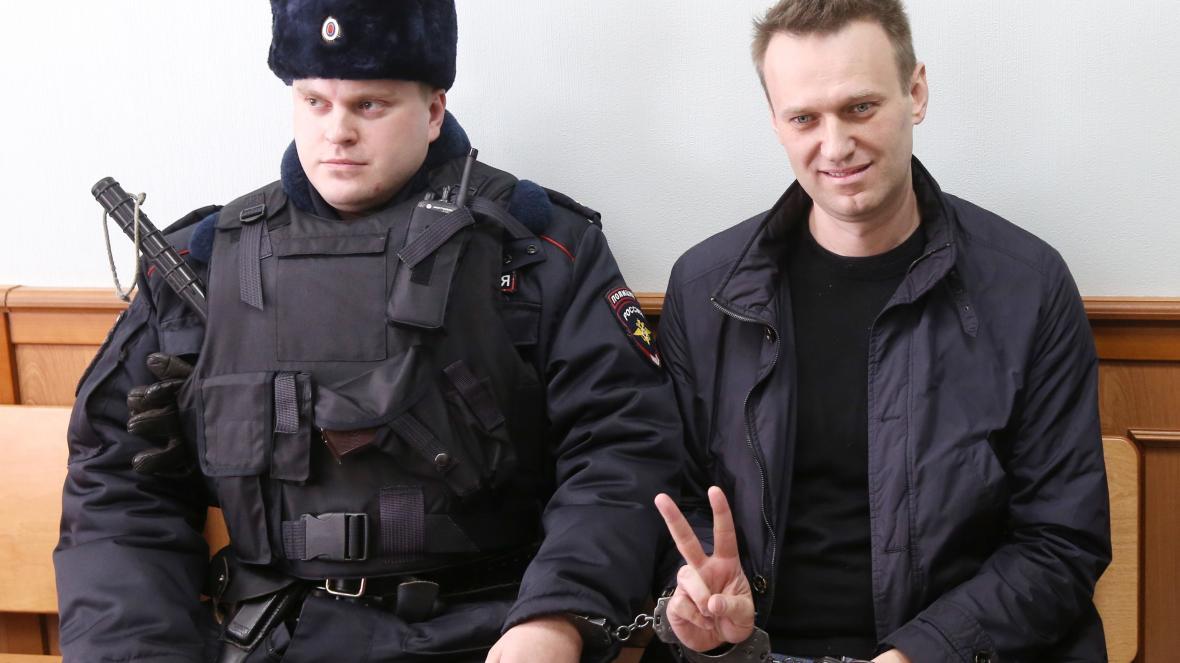
Russian opposition leader Alexei Navalny’s new sentence — nine years in a more remote prison colony — could potentially endanger his life and sever his contacts with the outside world, according to Vladimir Ashurkov, the director of Navalny’s Anti-Corruption Foundation.
Driving the news: Navalny protested Putin’s invasion of Ukraine in court and on social media before a judge handed down the sentence, on fraud charges that were widely seen as politically motivated. Navalny has been in prison since returning to Russia in January 2021 after recuperating from an assassination attempt by Russia’s security services.
What he’s saying: “Yes, we are dismayed by the sentence. But we knew that with Putin in power it’s unlikely that Alexei can get out. So it’s important for us to continue our work,” Ashurkov told Axios in a Zoom interview from London, where he lives in exile.
The foundation continues to post investigations into the alleged wealth and corruption of Kremlin insiders, most recently of a $700 million yacht linked to Putin.
And Navalny, who has faced harsh treatment in prison and held a three-week hunger strike last year to demand proper medical care, has remained one of Putin’s sharpest critics. “He is thin, he is frail, but he is as fiery as ever,” Ashurkov said.
Up to now, Navalny’s lawyers have been able to visit him at his prison colony outside Moscow for around an hour each day, during which time he could write and receive messages from his family and colleagues and help guide the work of his organization.
He will now be moved to a more secure and more remote facility. It’s unclear whether he will appear regularly in court, or have steady access to his lawyers — who were briefly detained following his sentencing on Tuesday.
“This trickle of communication and information has been vital for us,” Ashurkov said. “It’s possible this will be taken away.”
Asked about Navalny’s personal safety, Ashurkov noted that he is himself in danger even in London.
Ashurkov in 2018. Photo: Chris J. Ratcliffe/Bloomberg via Getty
“Nobody has any doubt that Russian security services can undertake assassinations in any part of the world. We’ve seen it in Germany, we’ve seen it in U.K. So a Russian prison cell is not a secure place — it’s probably the least secure place.”
Ashurkov left Russia in 2014 after facing politically motivated charges for his work with Navalny. The entire Anti-Corruption Foundation moved its staff and operations to Lithuania last year after being declared an “extremist” organization.
Ashurkov noted that many more Russians are moving into exile as Putin steps up his repression at home during the invasion in Ukraine. “Any dissident, any independent voice in Russia is unfortunately in great danger.”
What’s next: Navalny is calling for protests over the Ukraine invasion, and Ashurkov expects a new wave of demonstrations to begin in the next few months as sanctions bite and discontent over the war grows. He believes that will destabilize the regime and, over time, lead to its downfall.
His team is preparing for that day to ensure it has a “seat at the table” when the direction of post-Putin Russia is set.
The bottom line: “People who are involved in Russian opposition politics have learned not to expect quick wins. They are in for the long run and have braced for long battles.”
A History of the Tensions Between Ukraine and Russia
Matthew Mpoke Bigg – March 27, 2022
Protests in Kyiv’s main square in 2014 were a violent flash point in relations between Ukraine and Russia. (Sergey Ponomarev for The New York Times) (NYT)
Two former republics of the Soviet Union — Russia and Ukraine — are once again in conflict. Here are some pivotal moments in the years leading up to Russia’s invasion of Ukraine on Feb. 24, as well as a brief look at their relationship in the 20th century.
February 2014: Protesters in Ukraine overthrow President Viktor Yanukovych, who was friendly to Russia’s interests. During the revolution, more than 100 people are killed in protests that centered on the main square in the capital Kyiv, often called the Maidan.
The interim government that follows this pro-Western revolution eventually signs a trade agreement with the European Union that is seen as a first step toward membership in the bloc.
April 2014: Russia invades and then annexes the Crimean Peninsula. Secessionists in eastern Ukraine, backed by Russia, declare themselves independent, as the Donetsk People’s Republic and Luhansk People’s Republic, and go to war against Ukraine.
The secessionist war continues in the eastern region known as Donbas. It then spreads west. Roughly 13,000 Ukrainian soldiers and civilians eventually die in the conflict. The front lines have barely shifted for years.
2014 and 2015: Russia, Ukraine, France and Germany sign a series of cease-fire agreements known as the Minsk Accords. Many view these accords as ambiguous.
April 2019: A former comedian, Volodymyr Zelenskyy, is elected by a large majority as president of Ukraine on a promise to make peace with Russia and restore Donbas to the country.
2021-2022: President Vladimir Putin of Russia seeks to prevent Ukraine’s drift toward the United States and its allies. Putin demands “security guarantees,” including an assurance by NATO that Ukraine will never join the group and that the alliance pulls back troops stationed in countries that joined after 1997.
Many Russians view the Ukrainian capital, Kyiv, as the birthplace of their nation and cite the numerous cultural ties between the two countries.
Here is a brief recap of their relations in the 20th century:
1918: Ukraine declares independence from Russia during a conflict fought by multiple countries and armies over several years. Its independence and sovereignty receive international recognition at the Treaty of Brest-Litovsk. Soviet forces later overthrow independent Ukraine. The Ukrainian Soviet Socialist Republic is founded in 1921, and Ukraine is subsumed into the Soviet Union the following year.
1932 and 1933: A famine caused by Josef Stalin’s policy of collectivization kills millions of people, mainly ethnic Ukrainians in a republic that is known as the bread basket of the Soviet Union. The disaster is known as the Holodomor, from the Ukrainian word for famine.
1939-1944: The Soviet Union annexes what is now western Ukraine from Poland and Romania. Later, Nazi Germany and the Axis powers invade the Soviet Union and occupy Ukraine, which suffers enormous devastation.
1991: Ukraine declares independence, a move endorsed in a referendum by 92% of voters. Russia, Ukraine and Belarus sign an accord recognizing that the Soviet Union has dissolved. Ukraine begins a transition to a market economy, and comes into possession of a significant stockpile of nuclear weapons that had belonged to the Soviet Union.
1994: Under the Budapest Memorandum, Ukraine gives up its nuclear arsenal in exchange for a commitment from Moscow “to respect the independence and sovereignty and the existing borders of Ukraine.”
Some Russian military units regrouping in Belarus amid losses: Ukraine
March 27, 2022
A Ukrainian soldier stands atop a destroyed Russian APC after recent battle in Kharkiv, Ukraine, Saturday, March 26, 2022.
Ukrainian defense officials said on Sunday that some Russian military units have returned to Belarus through Chernobyl to regroup amid mounting losses as Moscow’s invasion enters its fifth week.
In a statement on Saturday, General Staff of the Armed Forces of Ukraine (GSAFU) said an unspecified number of Russian forces have left Ukraine and crossed into Belarus. It added that the units could return to bolster attempts to encircle the capital Kyiv.
“Several units have been taken to the Chernobyl district with further relocation to the territory of the Republic of Belarus to hold measures for the restoration of armor,” GSAFU said in its Facebook post.
“It is not excluded that after specified measures, regrouping and strengthening the grouping of the occupiers, action on blocking Kiev from the south-west direction will be restored,” it added.
Fighting continued around Kyiv over the weekend. According to the New York Times, Russian forces shelled Boyarka, a town outside of the capital, on Saturday.
Boyarka mayor Oleksandr Zarubiv told the newspaper that five residents were hospitalized from the incident.
“Russia can plan its attacks on us but we are also getting ready and I can say that it will not be easy for them here,” Zarubiv said.
GSAFU added that it was able to halt Russian military movement toward the town of Brovary, adding that Russian forces in the area are now on the defensive.
“In the direction of Brovary, the opponent’s units are stopped. The enemy was forced to move to defense, carrying out engineering equipment positions,” GSAFU said, adding that Russian forces “suffered significant losses.”
Joe Biden correctly argues that the struggle between democracy and autocracy is the defining conflict of our time. So which system performs better under stress?
For the last several years the autocracies seemed to have the upper hand. In autocracy, power is centralized. Leaders can respond to challenges quickly, shift resources decisively. China showed that autocracies can produce mass prosperity. Autocracy has made global gains and democracy continues to decline.
In democracies, on the other hand, power is decentralized, often polarized and paralytic. The American political system has become distrusted and dysfunctional. A homegrown would-be autocrat won the White House. Academics have written popular books with titles like “How Democracies Die.”
Yet the past few weeks have been revelatory. It’s become clear that when it comes to the most important functions of government, autocracy has severe weaknesses. This is not an occasion for democratic triumphalism; it’s an occasion for a realistic assessment of authoritarian ineptitude and perhaps instability. What are those weaknesses?
The wisdom of many is better than the wisdom of megalomaniacs. In any system, one essential trait is: How does information flow? In democracies, policymaking is usually done more or less in public and there are thousands of experts offering facts and opinions. Many economists last year said inflation would not be a problem but Larry Summers and others said it would and they turn out to have been right. We still make mistakes but the system learns.
Often in autocracies, decisions are made within a small, closed circle. Information flows are distorted by power. No one tells the top man what he doesn’t want to hear. The Russian intelligence failure about Ukraine has been astounding. Vladimir Putin understood nothing about what the Ukrainian people wanted, how they would fight or how his own army had been ruined by corruption and kleptocrats.
People want their biggest life. Human beings these days want to have full, rich lives and make the most of their potential. The liberal ideal is that people should be left as free as possible to construct their own ideal. Autocracies restrict freedom for the sake of order. So many of the best and brightest are now fleeing Russia. The American ambassador to Japan, Rahm Emanuel, points out that Hong Kong is suffering a devastating brain drain. Bloomberg reports, “The effects of the brain drain in sectors such as education, health care and even finance will likely be felt by residents for years to come.” American institutions now have nearly as many top-tier AI researchers from China as from the United States. Given the chance, talented people will go where fulfillment lies.
Organization man turns into gangster man. People rise through autocracies by ruthlessly serving the organization, the bureaucracy. That ruthlessness makes them aware others may be more ruthless and manipulative, so they become paranoid and despotic. They often personalize power so they are the state, and the state is them. Any dissent is taken as a personal affront. They may practice what scholars call “negative selection.” They don’t hire the smartest and best people. Such people might be threatening. They hire the dimmest and the most mediocre. You get a government of third-raters (witness the leaders of the Russian military).
Ethnonationalism self-inebriates. Everybody worships something. In a liberal democracy, worship of the nation is balanced by the love of liberal ideals. With the demise of communism, authoritarianism lost a major source of universal values. National glory is pursued with intoxicating fundamentalism.
Putin seems to believe Russia is exceptional on front after front and “on the march.” This kind of crackpot nationalism deludes people into pursuing ambitions far beyond their capacity.
Government against the people is a recipe for decline. Democratic leaders, at least in theory, serve their constituents. Autocratic leaders, in practice, serve their own regime and longevity, even if it means neglecting their people. Thomas J. Bollyky, Tara Templin and Simon Wigley illustrate how life expectancy improvements have slowed in countries that have recently transitioned to autocracies. A study of more than 400 dictators across 76 countries by Richard Jong-A-Pin and Jochen O. Mierau found that a one-year increase in a dictator’s age decreases his nation’s economic growth by 0.12 percentage points.
When the Soviet Union fell, we learned that the CIA had overstated the Soviet economy and Soviet military might. It’s just very hard to successfully run a big society through centralized power.
To me, the lesson is that even when we’re confronting so-far successful autocracies like China, we should learn to be patient and trust our liberal democratic system. When we are confronting imperial aggressors like Putin, we should trust the ways we are responding now. If we steadily, patiently and remorselessly ramp up the economic, technological and political pressure, the weaknesses inherent in the regime will grow and grow.
This article originally appeared in The New York Times.
Donald Trump Asked Kid Rock About North Korea and There Is No Bottom
The Daily Beast – March 27, 2022
Photo Illustration by The Daily Beast/Getty
Summing up the Republicans’ appalling conduct at the Ketanji Brown Jackson confirmation hearing, and Sen. Mike Braun’s interview where he said interracial marriage should be a question for the states, The New Abnormal co-host Molly Jong-Fast says “they’re never gonna be happy. They’re not gonna be happy when they take away abortion. They wanna go back to antebellum times. This ends with less and less rights.”
That’s anything but a joke, but “it’s funny because I remember thinking before the 2016 election, ‘Well, Trump won’t get elected,’ but even when he did I thought, ‘Wow, it’s so terrible, but they’ll get what they want and they’ll see how much it sucks.’ And they didn’t. They were thrilled. And then when Trump started killing his own people and telling them that the virus wasn’t a big deal, I thought, ‘Well, he’ll kill his own people. And they’ll see this guy’s a monster,’ but it seems like he can pretty much do anything. These Republicans can pretty much do anything and (their supporters) don’t notice that it’s against their interests.”
If not antebellum times, says co-host Andy Levy, “the most charitable thing you can say about them is that they want to go back to the 1950s. That’s the latest time-frame you can give them. They all think that the 1950s were grand, with the white picket fences and the nuclear families that all loved each other and to them, that’s the garden of Eden that they don’t care that first of all never really existed. And second of all, to the extent that existed, it existed for white Christians only, and it wasn’t even so great for white Christian women. But they don’t care, that’s their end game.”
Meantime, Kid Rock of all damn people is boasting about how Donald Trump would call him up after Sarah Palin introduced him and Ted Nugent to the president, and ask things like “What do you think we could do about North Korea?”
“I’m like, What? I don’t think I’m qualified to answer this.”
Then again, it could always be worse with this set. As Molly asks, “Do you think Kid Rock is stupider than Junior?” And, notes Andy, at least Kid Rock “was self-aware enough to know that he shouldn’t be talking, giving advice about North Korea.”
Plus, Florida Agriculture Commissioner and gubernatorial candidate Nikki Fried—who went to high school with Judge Jackson—joins to explain how she won office in a red state and her bid to become its first female governor. She says the party needs to “follow my lead” to win again in the Sunshine State:
“The Democrats need to understand, once again, that it is always about the economy—it always has been and always will be. Of course, we have to stand up and we have to fight and we have to advocate for our people and our principles. But at the end of the day, the people of our state want leaders. They don’t want their elected officials to be falling into these cultural war traps, which Republicans are trying to do. We have an opportunity under my leadership to bring our party together, to unite our party and to fight for fundamental principles that—you know, might have been electing Republican governors for 25 years, but it’s by the smallest of margins by, by less than one percent, Ron DeSantis won by 34,000 votes out of almost 8.3 million votes.”
Fried concludes: “So to say that our state is red is not consistent with how we vote. And for those same 25 years, the people of our state have consistently voted for very progressive constitutional amendments, from a $15 minimum wage to medical marijuana to environmental issues to restoration of civil rights. But we as Democrats have not done a good enough job running campaigns, and making sure we are on the same page as the rest of the people of our state. So we have to take some playbooks by the Republicans on the economy, on home rule, on the free market. But really we’ve got to rise above this chaos and this nonsense and be ready to fight. There’s no one out there who doesn’t know that I am willing and able to throw punches. And most of the times I land them, and make the governor squirm every time that we are in the same room together. And that’s what it’s going to take to stand up against this bully and show the people of our state that there is a better way to lead.”
Barbarossa, Pearl Harbor and Ukraine are military failures of the autocrats
Perry Smith – March 27, 2022
Perry Smith is a retired Air Force major general who lives in Augusta.
Russian President Vladimir Putin stands while waiting for Belarusian President Alexander Lukashenko prior to their talks in Moscow, on March 11. [Mikhail Klimentyev, Sputnik, Kremlin Pool Photo via AP, File)
When I conduct workshops on executive leadership, I emphasize the importance of strategic thinking and planning. In the past one hundred years, there have been three colossal mistakes of strategy.
These failures were made by three national leaders. Hitler, Tojo and Putin. They had three characteristics in common. All three were autocrats. They surrounded themselves with lackeys. Their study and understanding of history and grand strategy were both limited and flawed. At the end of this article, I will identify American leaders who were excellent strategists.
As someone who has studied and taught international relations for more than fifty years, I have been fascinated with the behavior of autocrats. My first interest was in Benito Mussolini. I lived in Italy immediately after World War II. I can remember quite vividly the newspaper picture of Mussolini hanging upside down in a square in Milan – with the headline: FINITO BENITO. He was the perfect example of a psychopath in his rhetoric, persona and actions.
Next, I studied Adolph Hitler. I lived in Germany in the 1950s, 1960s, 1970s and 1980s. I got to know the German people quite well in the Coblenz, Bitburg and Monchengladbach areas of Germany. Hitler was not only a psychopath, but he was also a brilliant public speaker. His keen understanding of the German political culture in the aftermath of World War I allowed him, through the democratic process, to reach very high office. Folks often forget that Hitler did not become the Chancellor of Germany by conducting a coup.
Hitler the autocrat evolved into Hitler the dictator. He created, during the 1930s, a remarkably efficient totalitarian state. Hitler’s gravest error was the Invasion of Soviet Russia in June 1941. Operation Barbarossa was flawed in all three levels of warfare: tactical, operational and strategic. Russia had collapsed in World War I so Hitler felt that throwing 200 German divisions in the attack would lead to Soviet surrender before winter closed in.
Like Hitler, Tojo learned the wrong lessons from history. Japan had great success with the war against China in the 1890s and with the war with Russia in 1905. Short wars were followed by favorable peace treaties which led to more and more territory under the Japanese empire. A short war with America followed by a favorable peace treaty was, to Tojo and some of his cronies, a likely outcome. If Tojo had strong subordinates at his elbow, this huge mistake may have been avoided. Admiral Yamamoto was strong but not strong enough
Putin has made a similar strategic mistake – misreading history. Russia had military success in Chechnya (1999-2009), in Georgia (2008), in Crimea (2014) and in Syria (2015). Attacking Ukraine with the massive use of Russian ground and air power may have seemed to Putin like a no-brainer. Putin probably anticipated a quick victory followed by a peace treaty that would guarantee that Ukraine would become a vassal state – much like Belarus today. Also, like Hitler and Tojo, Putin vastly underestimated the enemy he had created.
Putin now faces some huge problems. The 140 million people of Russia have had a taste, since 1991, of free speech, free enterprise and free assembly. Today, Russians are angry that Putin is destroying the Russian economy and their way of life. Putin has almost no friends and even his nominal ally, China, has become wary of this his behavior and actions.
This past week I spoke to 100 members of the Rotary Club of Augusta. I had been invited months earlier to address Pearl Harbor and what it was like to witness the Dec. 7, 1941 attack as a small child. I presented a strategic analysis of the Japanese attack and compared the calculus of decision making in Tokyo in 1941 with the decision-making in Moscow in 2022.
In answer to a question, I predicted that Ukraine would win the war and Putin would be removed from power. With enormous support from the West, Ukraine would rebuild rather quickly.
Toward the end of the session with the Rotarians, I recommended that they lend support to the Ukrainian people by sending a check to World Vision and to add a zero or two to their normal charitable contribution. I also suggested wearing blue and yellow clothing. I forgot to mention that Saint Paul’s Church, Augusta, had contributed $6,000 via the Episcopal Relief and Development Fund.
So, who were the best American grand strategists? George Marshall, Colin Powell and Brent Scowcroft. The poor ones were Robert McNamara and Donald Rumsfeld.
Let me end this article on a positive note. With Putin gone, the Chinese more cautious, NATO more unified, and COVID-19 greatly diminished, the future appears bright – thank goodness. Incidentally. our home has, in the front yard, the American flag and the blue and yellow flag of Ukraine.