Appeals court orders end to special master review process in Trump documents case

CBS News

Appeals court orders end to special master review process in Trump documents case

Robert Legare – December 1, 2022

Washington – A three-judge federal appeals court panel in Atlanta ruled that the special master review process that oversaw the Justice Department’s use of non-classified evidence collected earlier this year at former President Donald Trump’s Florida residence must end.

The unanimous decision from the U.S. Court of Appeals for the 11th Circuit reversed the decision of Judge Aileen Cannon, a federal judge from Florida who granted Trump’s request for the review and appointed semi-retired federal Judge Raymond Dearie of New York as an independent arbiter, or special master, to sift through the documents for any that may be subject to claims of privilege by the former president.

That decision also barred investigators from using the roughly 13,000 documents taken from Mar-a-Lago, Trump’s resort, during the execution of a search warrant on Aug. 8 for investigative purposes. A separate appeals court decision from September permitted the Justice Department to use more than 100 documents with classified markings it seized for its investigation into Trump’s alleged mishandling of sensitive documents, and Thursday’s subsequent decision grants the government full access to the evidentiary record.

Trump can now ask the full 11th Circuit to rehear the case or appeal the decision to the Supreme Court.

In a statement, Trump spokesperson Steven Cheung said the former president called the panel’s decision “procedural and based only on jurisdiction.”

“The decision does not address the merits that clearly demonstrate the impropriety of the unprecedented, illegal, and unwarranted raid on Mar-a-Lago,” Cheung’s statement said.

But in fact, the 11th Circuit’s opinion made clear that the execution of the search warrant — the “raid” — was legal.

The Justice Department “presented an FBI agent’s sworn affidavit to a Florida magistrate judge, who agreed that probable cause existed to believe that evidence of criminal violations would likely be found at Mar-a-Lago,” the opinion stated.

“President Donald J. Trump will continue to fight against the weaponized Department of ‘Justice,’ while standing for America and Americans,”  Cheung added.

Trump and his allies have frequently accused Attorney General Merrick Garland of weaponizing the Justice Department against Republicans, although no court has found any evidence of that.

Former President Donald Trump applauds while speaking at the Mar-a-Lago Club in Palm Beach, Florida, on Nov. 15, 2022.  / Credit: ALON SKUY/AFP via Getty Images
Former President Donald Trump applauds while speaking at the Mar-a-Lago Club in Palm Beach, Florida, on Nov. 15, 2022. / Credit: ALON SKUY/AFP via Getty Images

“The law is clear. We cannot write a rule that allows any subject of a search warrant to block government investigations after the execution of the warrant. Nor can we write a rule that allows only former presidents to do so,” Chief Judge William Pryor and Judges Britt Grant and Andrew Brasher said in their 23-page opinion. “Either approach would be a radical reordering of our caselaw limiting the federal courts’ involvement in criminal investigations. And both would violate bedrock separation-of-powers limitations.”

Pryor was appointed to the 11th Circuit by former President George W. Bush, while Grant and Brasher were named by Trump.

The opinion from the 11th Circuit wipes away Cannon’s order appointing the special master and sends the case back to the lower court with instructions for it to be dismissed.

“This appeal requires us to consider whether the district court had jurisdiction to block the United States from using lawfully seized records in a criminal investigation,” the judges wrote. “The answer is no.”

Trump first asked Cannon to appoint a special master to review the seized documents in late August, two weeks after the FBI conducted the search of his office and storage room at Mar-a-Lago. Prosecutors say they are conducting a national security investigation into those and other sensitive documents retrieved from the Florida resort after Trump left office, and possible obstruction of that probe.

When issuing her original order appointing the special master, Cannon wrote that Trump faced an “unequitable potential harm by way of improper disclosure of sensitive information to the public,” but criminal investigators rarely — if ever — release seized evidence to the public unless criminal charges are filed. The Justice Department has repeatedly argued the entire process was premature and unnecessary.

The former president’s legal team has said Cannon’s order appointing a special master was not appealable and claimed that Trump deemed the records he brought to Mar-a-Lago as “personal” while he was still in office, a designation allowed under the Presidential Records Act (PRA).

“It is simply untenable to conclude any president may be subject to a criminal charge for exercising the unfettered rights set forth in the PRA to categorize certain documents as ‘personal’ during that president’s term of office,” they told the 11th Circuit in filings.

But the 11th Circuit noted that even if Trump did designate the document as “personal,” search warrants authorize the seizure of such records.

“As we have said, the status of a document as personal or presidential does not alter the authority of the government to seize it under a warrant supported by probable cause,” the judges wrote.

Claims of attorney-client privilege have mostly been resolved by the two parties, but Trump argued some of the seized records belong to him in a personal capacity as the former president. His legal team has said the documents he brought to Mar-a-Lago must be considered “presumptively privileged” by the courts and shielded from the criminal investigation until the independent review concludes.

Throughout the appeal, prosecutors remained opposed to Trump’s reading of the law, writing in part that he cannot assert executive privilege to preclude review of executive branch documents by the executive branch itself.  The Justice Department also argued that Cannon overstepped when she issued her September injunction barring the FBI from using the seized material for investigative purposes.

A three-judge panel heard oral arguments in the dispute last week, during which they appeared open to the Justice Department’s position that Cannon wrongly appointed the special master to review the seized documents and erred when she issued her injunction.

Thursday’s ruling comes after Attorney General Merrick Garland last month appointed a special counsel to oversee the Justice Department’s investigation into Trump’s handling of government records, as well as the department’s probe into his efforts to subvert the results of the 2020 presidential election.

Florida federal Judge Aileen Cannon ‘slammed’ by appeals court in Trump case

Miami Herald

Florida federal Judge Aileen Cannon ‘slammed’ by appeals court in Trump case

Jay Weaver – December 2, 2022

Three months ago, U.S. District Judge Aileen Cannon made the controversial call to appoint an independent expert to examine documents — including classified government materials — seized by FBI agents from former President Donald Trump’s Palm Beach residence.

She did so despite expressing initial doubts in her own ruling about intervening in the politically charged case.

In a scathing ruling issued Thursday night, a federal appellate court in Atlanta found she should have heeded her first legal concerns. A three-judge panel, all Republican-appointees like Cannon, reversed her decision to name a “special master” because she had no authority to do so and effectively killed the case as legal experts consider a potential appeal unlikely to succeed.

The ruling from the 11th U.S. Circuit Court of Appeals, several South Florida and other legal experts said, left little room for argument.

“The key point is that Judge Cannon had no jurisdiction to do anything here,” said Mark Schnapp, a former federal prosecutor and longtime Miami criminal defense attorney. “She tried to assert equitable jurisdiction [to appoint the special master], but her own opinion showed why her analysis was defective.

“Her opinion got ripped to shreds by the Eleventh Circuit Court,” he said.

Read More: Trump wanted a special master. So did a businessman. The judge treated them differently

In her Sept. 5 order, Cannon noted that she agreed with Justice Department lawyers that FBI agents carrying a search warrant for Trump’s Mar-a-Lago estate had not shown a “callous disregard for [his] constitutional rights,” concluding that “this factor cuts against the exercise of equitable jurisdiction.”

But rather than follow her own analysis, Cannon extended Trump protections not provided to ordinary citizens by appointing a special master to review the FBI’s evidence, citing the “unprecedented circumstances” of the U.S. government raiding a former president’s home.

Cannon, who was nominated by Trump and joined the federal bench in South Florida at the end of his term in 2020, assumed jurisdiction in the Justice Department’s investigation of his alleged mishandling of classified documents and possible national security violations. She appointed a New York special master to view about 100 classified records and thousands of other personal and presidential records taken from Trump’s home on Aug. 8 to determine if any contained privileged correspondence with lawyers. Cannon refused to let a Justice Department “filter team” of agents and prosecutors do the job.

Her decision, in response to a civil lawsuit seeking to have certain privileged documents returned to Trump, slowed down the FBI’s criminal probe of the former president. The Justice Department appealed her ruling and has now scored a major legal victory, allowing its investigation of the classified documents case to move forward at full throttle.

Former President Donald Trump speaks at Mar-a-Lago Friday, Nov. 18, 2022, in Palm Beach, Fla. Earlier in the day Attorney General Merrick Garland named a special counsel to oversee the Justice Department’s investigation into the presence of classified documents at Trump’s Florida estate and aspects of a separate probe involving the Jan. 6, 2021, insurrection and efforts to undo the 2020 election.

The impact is immediate: Cannon’s decision will not only be thrown out based on her lack of jurisdiction but the special master’s still-unfinished review will be shut down, bringing Trump’s lawsuit to dead end.

While the former president’s lawyers are expected to pursue a counter appeal experts say it will likely fall on deaf ears given the blunt appellate decision: “This appeal requires us to consider whether the district court had jurisdiction to block the United States from using lawfully seized records in a criminal investigation. The answer is no.”

Legal experts in South Florida agreed, saying Cannon should have rejected Trump’s lawsuit seeking to thwart the Justice Department’s investigation after the FBI obtained a search warrant from a magistrate judge who found probable cause of a crime over his storing of classified and other presidential documents at the Mar-a-Lago club and residence after he left the White House in January 2021.

“The bottom line is, he didn’t have presidential privilege anymore because he was no longer president,” said retired career federal prosecutor Dick Gregorie. “She had no business sticking her nose in it, and they slammed her for it.”

Carl Tobias, a University of Richmond law professor, echoed that view, saying the Atlanta appellate judges “ripped her [decision] apart” during oral arguments and so the outcome “was not surprising.”

Tobias said that Cannon never “justified” her decision to invoke jurisdiction in Trump’s case, saying her conclusion to appoint a special master was “wrong.” But he added: “I don’t think she’s acting in bad faith. She’s a junior judge acting in isolation” in Fort Pierce.” That’s where Cannon was assigned when she joined the federal bench in the Southern District of Florida.

The appellate panel’s ruling came from three Republican-appointed judges, including two by Trump. It also marks the second time that the Atlanta court has dealt a major blow to Cannon in her handling of the high-profile case. After her initial decision to appoint the special master, the appellate court ruled that the outside expert, New York U.S. District Judge Raymond Dearie, could not review the classified documents taken from Mar-a-Lago, and that they should be returned immediately to U.S. investigators.

In a 21-page ruling issued late Thursday, the judges — Chief Judge William H. Pryor, Britt Grant and Andrew L. Brasher — described the Trump legal team’s arguments as a “sideshow,” highlighting that his lawyers never made the fundamental point that FBI agents showed a “callous disregard” for the former president’s constitutional rights. The appellate panel found that the “callous disregard standard has not been met here, and no one argues otherwise” — including the presiding judge, Cannon.

“There is no record evidence that the government exceeded the scope of the warrant — which, it bears repeating, was authorized by a [West Palm Beach] magistrate judge’s finding of probable cause [of a crime],” the panel wrote. “And yet again, [Trump’s] argument would apply universally; presumably any subject of a search warrant would like all of his property back before the government has a chance to use it.”

The panel said that the proper time for Trump or any other suspect in a criminal investigation to challenge the government’s seizure of property would be after an indictment has been returned by a grand jury. The grand jury in Washington, D.C., is currently reviewing evidence and hearing witness testimony in the Mar-a-Lago documents probe, according to published reports. U.S. Attorney General Merrick Garland recently appointed a special prosecutor, Jack Smith, to oversee the investigation., which followed Trump’s announcement that he is running for president in 2024.

The Atlanta appellate judges noted that it is “indeed extraordinary for a warrant to be executed at the home of a former president — but not in a way that affects our legal analysis or otherwise gives the judiciary license to interfere in an ongoing investigation.”

Citing a legal test on jurisdiction that has been in place for nearly 50 years, the three-judge panel wrote that “its limits apply no matter who the government is investigating.”

“The law is clear,” the panel concluded. “We cannot write a rule that allows any subject of a search warrant to block government investigations after the execution of a warrant. Nor can we write a rule that allows only former presidents to do so.“

Winter comes to Ukraine: Civilians forced to face ‘extremely difficult few months ahead’ as Russian invasion grinds on

Yahoo! News

Winter comes to Ukraine: Civilians forced to face ‘extremely difficult few months ahead’ as Russian invasion grinds on

Niamh Cavanagh, Reporter – December 1, 2022

TBILISI, Georgia — It’s been nine months since Russia launched its “special operation” in Ukraine in what President Vladimir Putin claimed was done to “de-Nazify” the region. Since February, millions of Ukrainians have fled to neighboring countries, while others, unable to leave, have taken shelter in train stations and in the basements of buildings from heavy shelling and invading forces.

As the weather in Ukraine drops below freezing, with average temperatures this time of year around 20°F, civilians will be forced to defend themselves against another threat: the oncoming winter. In recent weeks, Russia’s military has ramped up attacks on critical infrastructures in cities such as Kyiv and Lviv. In just one day last month, Russia’s military launched between 60 and 100 missiles at several major cities.

Among the targets was the national power grid, its operator said. Volodymyr Kudrytskyi, CEO of Ukrenergo, said the attacks on the grid had been “colossal.” In a briefing to reporters, he stated that Ukrainians could face power outages as the grid could not “generate as much energy as consumers can use.”

A view of damaged electrical wires after the Ukrainian army retook control from Russian forces in Lyman, Ukraine, on Nov. 27.
A view of damaged electrical wires after the Ukrainian army retook control from Russian forces in Lyman, Ukraine, on Nov. 27. (Metin Aktas/Anadolu Agency via Getty Images)

As a result of the colder weather and lack of basic necessities in Ukraine, a World Health Organization regional director said that at least 3 million people would be displaced in the coming months. “This winter will be life-threatening for millions of people in Ukraine,” Hans Henri P. Kluge said in a statement. “We expect 2–3 million more people to leave their homes in search of warmth and safety.”

Similarly, the top U.S. general and chairman of the Joint Chiefs of Staff, Mark Milley, said there would be “incalculable human suffering” as families are left without electricity and heat. “Basic human survival and subsistence is going to be severely impacted, and human suffering for the Ukrainian population is going to increase,” Milley said. He went on to say that the Russian strikes on energy infrastructure would “undoubtedly hinder Ukraine’s ability to care for the sick and the elderly. … The elderly are going to be exposed to the elements.”

Elderly residents are evacuated from the southern city of Kherson, Ukraine, on Nov. 27.
Elderly residents are evacuated from the southern city of Kherson, Ukraine, on Nov. 27. (Bernat Armangue/AP)

On Tuesday, during a NATO two-day conference held in Romania, Secretary-General Jens Stoltenberg accused Putin of trying to “weaponize winter.” “Russia is using brutal missile and drone attacks to leave Ukraine cold and dark this winter,” Stoltenberg said. Now Ukrainians are either forced to “freeze or flee.”

And there are some who are deciding to stay. Yahoo News spoke to a mother of two based in Lviv, where she runs a bakery with her husband. Asked why she wanted to stay despite the bombings and the looming bitter winter, Kateryna Humenyuk said: “Of course, we are worried. But as long as it is possible to live here, we will raise the economy of our country and look for all possible options for the safety of our children.”

In the residential area where she lives, Humenyuk said that the infrastructure had been “badly damaged” from a previous bombing. “There was no light and therefore no heat.” She added: “But fortunately, our energy workers have restored everything and there is still light, although there are still intermittent blackouts.” For those, Humenyuk explained how her husband connected an ordinary lightbulb to a car battery. ”It’s a pity it does not give warmth,” she said.

Kateryna Humenyuk with her husband and children.
Kateryna Humenyuk with her husband and children. (Courtesy of Kateryna Humenyuk)

Across Ukraine, there are organizations, both local and international, that are helping those who will stay during the long winter. One organization on the ground in Ukraine is Plan International, which, among other services, provides Ukrainians with thermal blankets, winter clothing, heat appliances and fuel ahead of the winter months.

Speaking to Yahoo News, Mia Haglund Heelas, Plan International’s head of Mission Ukraine Crisis Response, said that the freezing temperatures will have a “brutal impact” on the lives of millions of Ukrainian children and their families. “Many are living in homes that are damaged and are not able to provide the protection that you need when you meet very harsh winter conditions,” she said. “Now, with the beginning of winter, and the below-zero temperatures, this is the start of an extremely difficult few months ahead.”

With the charity being a children’s rights organization, Heelas said it also provides protective gear for children making their way to school during the harsh winter conditions. So far the organization has supported around 14,000 individuals, particularly those living in isolated areas.

A woman is seen making her way through the snow on Nov. 27 in Kyiv.
A woman is seen making her way through the snow on Nov. 27 in Kyiv. (Jeff J. Mitchell/Getty Images)

Lauren Boebert won. But did Democrats miss a chance to flip her Colorado district?

USA Today

Lauren Boebert won. But did Democrats miss a chance to flip her Colorado district?

Erin Mansfield and Rachel Looker, USA TODAY – December 1, 2022

When former currency trader Adam Frisch from western Colorado looked at far-right Republicans who won seats to Congress in 2020, he found something surprising: While many of them won their seats by 20 or more percentage points, his own, Rep. Lauren Boebert, failed to get the same numbers.

She won 51%-45% over her Democratic challenger and lost her home county by nearly 1,800 votes. It gave Frisch an idea: If a moderate Democrat like him could get through a primary, they might be able to beat Boebert in the general election.

He was almost right.

Frisch lost to Boebert by about 500 votes in a down-to-the-wire race last month in the midterm election. But he did so as a largely self-funded candidate, who ran a campaign without any financial help from national Democrats and struggled to get national pollsters and pundits to take him seriously during the bulk of the campaign.

In an election where far-right candidates faltered and Democrats fared far better than expectations, did Democrats miss an opportunity to unseat one of their most outspoken critics?

“I said, ‘Listen, this could be the emotional win for the country and the party if you actually put some investment in here,’” said Frisch recalling his pitch to national Democratic campaign leaders for money after winning the June primary.

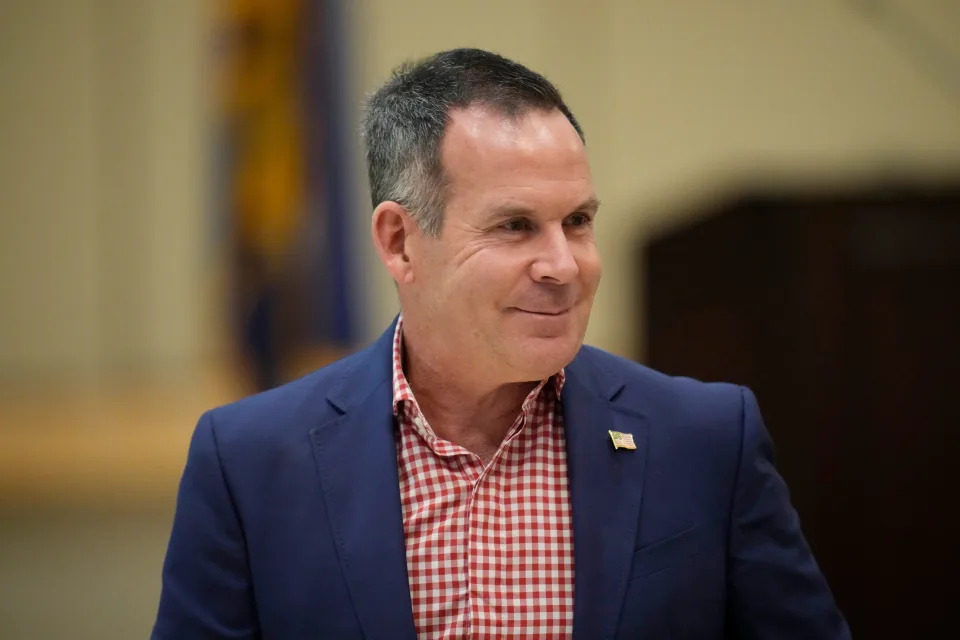
Democrat Adam Frisch, a candidate for Colorado's 3rd Congressional District, makes an appearance on the campus of the University of Colorado-Pueblo, Sept. 28, 2022, in Pueblo, Colo.
Democrat Adam Frisch, a candidate for Colorado’s 3rd Congressional District, makes an appearance on the campus of the University of Colorado-Pueblo, Sept. 28, 2022, in Pueblo, Colo.

There’s no expert consensus over whether money from national Democrats would have helped Frisch get over the finish line, or whether national support would have created more ammo for the Boebert campaign to tie the moderate Democrat to figures like President Joe Biden and House Speaker Nancy Pelosi.

Even Frisch is cautious to say whether more money would have helped his campaign or made him look too much like a national Democrat, or created a kind of arms race between the two parties.

What is known is Boebert, known for her disparaging comments against Muslim colleagues and opposition to LGBT rights, heads into a second two-year term in the House with a Republican majority. The chamber’s possible next speaker, House Minority Leader Kevin McCarthy, R-Calif., pledged to give far-right members committee seats, offering the likes of Rep. Marjorie Taylor Greene, R-Ga., a louder microphone.

Frisch said he kept reaching out to national Democrats as the race got closer, and didn’t get a substantive response. Chris Taylor, spokesperson for the Democratic party’s congressional campaign arm, said his group “engaged with Team Frisch multiple occasions throughout this election cycle” but did not address any of Frisch’s detailed accounts of his outreach.

Frisch nets a primary win, then seeks support from Democrats
Adam Frisch, a Democratic candidate in Colorado's 3rd Congressional district, arrives at the Hyatt Regency, in Washington, Sunday, Nov. 13, 2022.
Adam Frisch, a Democratic candidate in Colorado’s 3rd Congressional district, arrives at the Hyatt Regency, in Washington, Sunday, Nov. 13, 2022.

Frisch is a moderate Democrat who campaigned on issues like fighting inflation and maintaining energy production in his home state. He said it was hard to win the Democratic primary as a moderate, but after he won in June, he began pitching to national Democrats.

Frisch said he was in Washington, D.C. in July when he first made an appeal to the House Democrats’ campaign arm, also known as the Democratic Congressional Campaign Committee, or DCCC. He said his campaign’s polling showed him down by 7 percentage points to Boebert, but campaign staff thought Frisch should have been down by 12 percentage points because of the makeup of the largely rural district and Boebert’s incumbency.

Despite some encouraging words, the DCCC did not agree to provide financial help, and Frisch was outgunned. Boebert raised $6.7 million to Frisch’s $5.2 million, and $2.2 million of Frisch’s money came from his own pocket. Boebert also got a $413,000 ad boost from the campaign arm of the House Freedom Caucus, but no similar PACs bought their own ads for Frisch.

More: Far-right candidates struggled in midterm election. Who’s to blame? Experts say Trump, GOP

Around the time of the DCCC conversation, pundits and pollsters projected Democrats would lose the House by a wide margin. Frisch said he understood party leaders might prefer to put money into closer districts, as opposed to his district, which the Cook Political Report says the average national Republican could win by about seven percentage points.

“The mindset was, ‘We have other easier races that we can focus on by a longshot,’” Frisch said. “I appreciate numbers are important, but what about the emotional win?”

As internal polling showed him getting closer to Boebert, Frisch said he kept reaching out but “never received a response of substance” in the lead-up to Election Day. His campaign did receive legal help from the DCCC after polls closed and it became more likely there would be a recount of the close race.  

Frisch said he would have spent any additional money on media buys in the vast western Colorado district that encompasses about half the state.

‘Hard to say’ if more money to Frisch could have flipped district
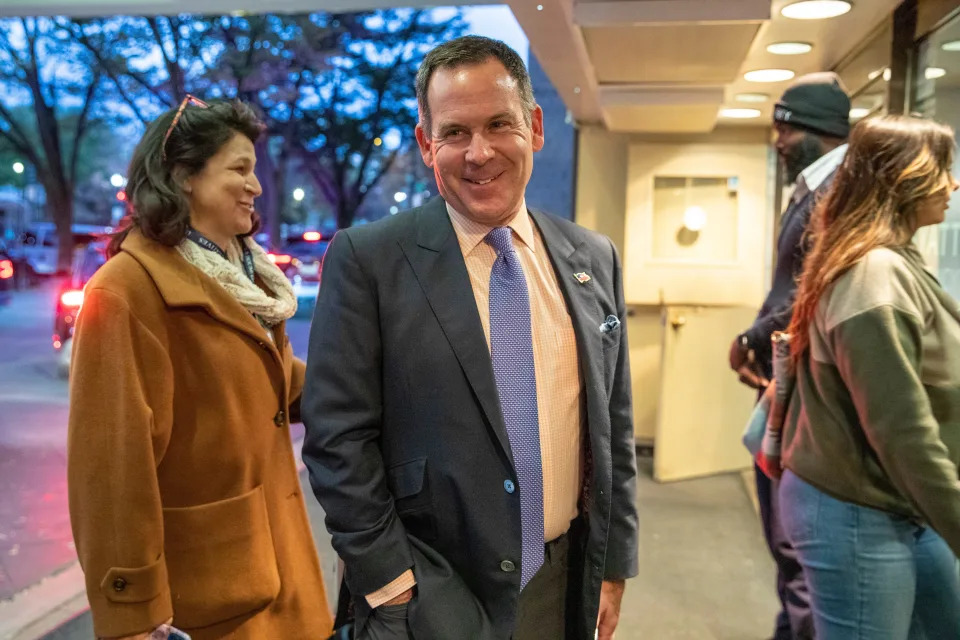
Adam Frisch of Aspen, Colo., center, the Democrat who opposed Rep. Lauren Boebert, R-Colo., in Colorado's 3rd Congressional District, walks with his son Felix Frisch, left, and wife Katy Frisch, right, at the Capitol in Washington, Friday, Nov. 18.
Adam Frisch of Aspen, Colo., center, the Democrat who opposed Rep. Lauren Boebert, R-Colo., in Colorado’s 3rd Congressional District, walks with his son Felix Frisch, left, and wife Katy Frisch, right, at the Capitol in Washington, Friday, Nov. 18.

Experts told USA TODAY more support for Frisch wouldn’t necessarily equate to a win for the Democrat over Boebert in the Republican-leaning district.

“It’s hard to say that one strategic decision would have made a difference in that complex environment, but it could have,” said Kyle Saunders, political science professor at Colorado State University.

Saunders said the DCCC and other organizations that contribute to campaigns have limited resources and must “behave strategically” when deciding which candidates to support during an election season.

‘Not a repudiation’: Joe Biden holds off red wave, gets unexpected boost from midterm election

Almost half of the voters in the district, or 45%, are registered as unaffiliated voters. Another 31% are registered Republicans and 24% are registered Democrats. Saunders said most of these unaffiliated voters are not independents and estimates 70% are likely to lean toward one party or another.

“They’re just as partisan as the people who say they are a Republican or Democrat,” he said.

David Wasserman, House editor for Cook Political Report, a nonpartisan election analysis newsletter, rated the race as solid Republican but said pundits like him and Democrats clearly underestimated Boebert’s vulnerability. Still, he cautioned against assuming help from national Democrats would have put Frisch over the finish line.

“Had national Democrats invested more in this race, it might not have helped Frisch because, No. 1, Frisch was well funded on his own, and No. 2, attempting to nationalize this race might’ve played into Boebert’s argument that D.C. liberals and Nancy Pelosi are out to get her,” Wasserman said.

He pointed to how Democrat Marie Perez beat Republican Trump acolyte Joe Kent for a seat in Washington without any help from national Democrats.

“It may have been beneficial to Frisch to come across as a homegrown campaign,” Wasserman said.

What does this mean for 2024?
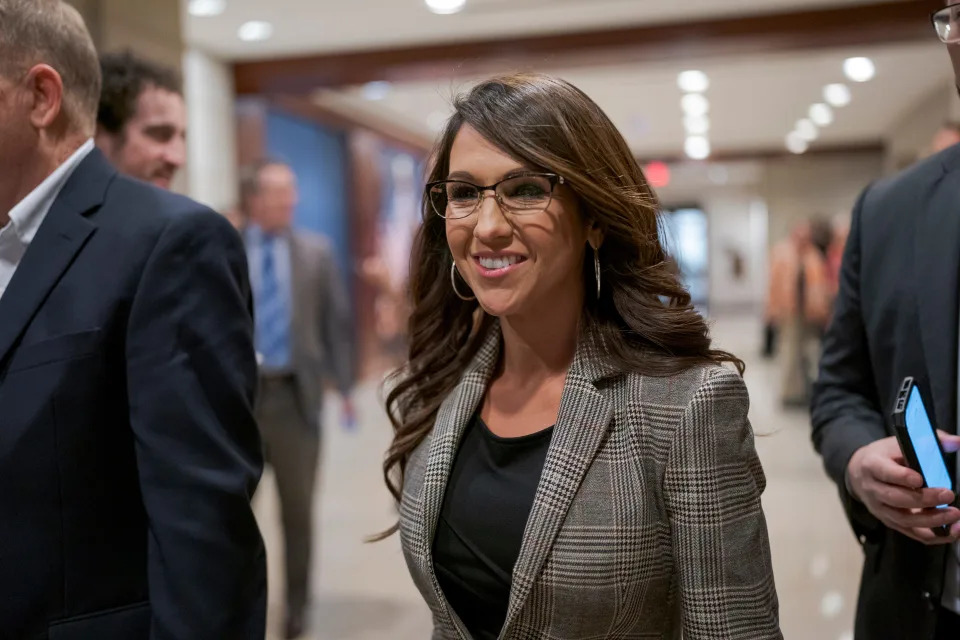
Rep. Lauren Boebert, R-Colo., who was in an unexpected tight race with Democratic challenger Adam Frisch, arrives to meet with fellow Republicans behind closed doors as Republicans hold its leadership candidate forum at the Capitol in Washington, Monday, Nov. 14, 2022.

Headed into 2024, Boebert will be a twice-elected incumbent serving in a House led by Republicans, and Frisch will be better known in Democratic circles for having almost unseated her.

Incumbents have high name recognition in their districts and need to spend less to get their message out. Incumbents running for Congress raised more than twice as much as their challengers, according to an analysis by OpenSecrets, an organization that tracks money in politics.

Wasserman said Frisch could double how much he raises if he runs in 2024 because of his increased name recognition. However, he cautioned that won’t necessarily propel him to victory.

More: Democratic support for Biden in 2024 surges after midterms as Trump takes a hit, USA TODAY/Ipsos Poll finds

“The problem, if Trump is back on the ballot, the district’s electorate is likely to become more favorable to Republicans, judging by the low turnout on the Republican side this time,” said Wasserman, referring to former President Donald Trump.

Taylor, from the DCCC, said Colorado voters this year stood up to “extremism, hate and division” and showed that they were not welcome in their state.

“While we narrowly came up short this time, voters will have their say again in two years,” he said.

Frisch did not address whether he would run in 2024, but said he is working to understand what went wrong in his 2022 campaign.

“When losers lose, they blame other people,” Frisch said. “When winners lose, they try to figure out where they could’ve done better, and that’s what I’m trying to figure out.”

McCarthy Warns Jan. 6 Committee Republicans Will Investigate Its Work

The New York Times

McCarthy Warns Jan. 6 Committee Republicans Will Investigate Its Work

Luke Broadwater – December 1, 2022

Rep. Kevin McCarthy (R-Calif) speaks at the Republican Jewish Coalition at the Venetian Resort and Casino in Las Vegas, on Nov. 19, 2022. (Mikayla Whitmore/The New York Times)

WASHINGTON — Rep. Kevin McCarthy, the California Republican who is attempting to become the next House speaker, on Wednesday warned the special committee investigating the Jan. 6, 2021, attack on the Capitol that members of his party planned to launch an inquiry of their own into the panel’s work next year when Republicans assume control of the chamber.

In a letter sent to the committee’s chair, McCarthy instructed the panel to preserve its records — an action already required under House rules — including any recorded transcripts of its more than 1,000 interviews. The missive was the first official indication that newly empowered House Republicans plan not only to end the inquiry at the start of the new Congress, but also to attempt to dismantle and discredit its findings — the latest piece of a broader effort the party has undertaken over the past two years to deny, downplay or shift blame for the deadly attack by a pro-Trump mob.

It comes as McCarthy toils to shore up his position with hard-right Republicans in his conference who have refused to support his bid for speaker, imperiling his chances of being elected in January.

McCarthy pledged in the letter that he would hold public hearings scrutinizing the security breakdowns that occurred during the assault, when a pro-Trump mob stormed the Capitol, disrupting Congress’s formal count of electoral votes to confirm Joe Biden’s election as president.

“Although your committee’s public hearings did not focus on why the Capitol complex was not secure on Jan. 6, 2021, the Republican majority in the 118th Congress will hold hearings that do so,” McCarthy wrote to Rep. Bennie Thompson, D-Miss. and chair of the committee.

A spokesperson for the Jan. 6 committee declined to comment on the letter, which was reported earlier by The Federalist.

The committee, which will be dissolved at the end of the current Congress, is finishing up its final batch of witness interviews, including a session on Wednesday with Robin Vos, the speaker of the Wisconsin State Assembly, who said former President Donald Trump has continued to try to pressure lawmakers to overturn the 2020 election — even more than a year after his defeat.

The panel is also completing an extensive report, which is expected to be released in December and is the subject of much internal debate over how much to focus on Trump’s actions versus security failures at the Capitol. Members of the committee’s so-called Blue Team have conducted months of investigation and research into such failures, but it was unclear how much of their work would be featured.

McCarthy highlighted the complaints raised by some current and former staffers in media reports that their work investigating security failures, the financing of the rallies that preceded the attack and the threat of white nationalism would be overshadowed in the report by a focus on Trump’s attempts to overturn the 2020 election.

Lawmakers on the committee have said they are attempting to create a readable report — and had to make difficult choices about what to include, given the voluminous evidence accumulated — but plan to release the full transcripts of their interviews after making some redactions to prevent the identification of witnesses who were granted anonymity.

In addition to interviewing more than 1,000 witnesses, the committee has obtained more than 1 million pages of documents.

Shortly after the attack, both the Senate and the House held multiple hearings investigating security failures, and the Senate produced a bipartisan report detailing those failures.

Republicans, especially those on the hard right, have pressed to focus on the security flaws, which they have baselessly blamed on Speaker Nancy Pelosi, rather than on Trump’s role in pushing for the election to be overturned and summoning a large crowd to march on the Capitol, where they attacked and injured more than 150 police officers in a bloody rampage.

In a recent closed-door meeting of Republicans, right-wing lawmakers including Rep. Marjorie Taylor Greene of Georgia also extracted a promise that their leaders would investigate Pelosi and the Justice Department for their treatment of defendants jailed in connection with the Jan. 6 attack.

McCarthy has long derided the Jan. 6 committee’s investigation. He refused to comply with a subpoena and argued the panel is “illegitimate,” citing Pelosi’s rejection of two of his nominees.

The panel has taken no step to enforce that subpoena, citing congressional traditions.

9 Questions for an Obesity Researcher Who Says Calorie Counting Isn’t the Answer

Bicycling

9 Questions for an Obesity Researcher Who Says Calorie Counting Isn’t the Answer

Donna Raskin – December 1, 2022

three cyclists riding uphill alongside a mountain
9 Questions for an Obesity ResearcherBrian Barnhart

In the October issue of Obesity: A Medical Journal, Barbara Corkey, Ph.D., its former editor-in-chief and emeritus professor of medicine and biochemistry at Boston University published an editorial called “En attendant Godot: Waiting for the Answer to Obesity and Longevity.”

In the piece, she addressed the problematic reality that since the 1970s, the number of Americans with obesity has increased. Experts now agree that gaining and losing weight is less an individual responsibility than previously believed and that diet and exercise “have virtually no lasting impact on weight loss,” Corkey wrote.

In fact, she and other obesity experts agree that rather than each person trying to diet their way to an ideal weight, the solution lies in examining and changing food production systems, as well as other institutions. It now appears that our health issues around weight might stem from the same industries that are contributing to climate change, including industrial farming, according to many experts who contributed to a report published in The Lancet in 2019.

Despite this, many Americans—including many athletes—believe weight is entirely the responsibility of a given individual and not part of a global “syndemic,” as The Lancet report writers called it, meaning when two or more biological factors work together to worsen a disease.

Bicycling talked to Corkey about how to reframe your approach to your weight—and what obesity really means for your health.

two cyclists taking a break on a gravel path discussing things
Brian Barnhart

Bicycling: Why does obesity put people at risk for other diseases?

Barbara Corkey: The answer is tricky. One of the things we know about people who struggle with being overweight or obese is that their body improperly handles eating and the storage of calories. For example, fasting insulin levels should be very low, but they are often very high in people who are going to have other health problems.

Metabolic misinformation can create havoc in the body: You feel hungry when you’re not, you hold onto fat when you don’t need to. The system has been misinformed. However, such metabolic defects do not occur in everyone. You can be overweight and not have those defects, just as you can be thin and have them, but you are more likely to have metabolic health issues if you are overweight.

The weight itself can also have some negative effects, such as on joints or lung capacity.

Bicycling: Should BMI continue to be used as a heath metric?

BC: The answer, in my opinion, is both yes and no. It’s not very precise. There are caveats. It’s like blood sugar measurements: If you’ve just eaten a big meal and your blood sugar level is high, then the number makes sense, but if you fasted and your blood sugar level is high, then you likely have a metabolic defect. One piece of information doesn’t automatically mean you have a disease.

Bicycling: We still see a lot of people who think weight is a matter of calories in versus calories out. How does this thinking hurt people living with obesity?

BC: First of all, it’s complete nonsense. There is no evidence at all that most people intentionally overeat. It doesn’t happen without an interruption of some sort in the metabolic system. It rarely happens in the entire natural world nor did it happen with the vast majority of even humans before 1970. The concept that suddenly everyone lost their willpower is a silly idea.

In my opinion, that misinformation about hunger and satiety is the reason the problem has gotten worse over the last few decades. We’re not saying it doesn’t matter what you eat, because you cannot gain weight without eating, but we’re not defying the laws of nature. It’s not up to you to become overweight or obese—something else is going on, even if you are actually overeating, because that behavior is just one step in the cycle of the problem.

Bicycling: Would you say that dieting is actually one of the habits that causes obesity?

BC: No. I think that dieting is a desperate effort to become more acceptable because we’re so bigoted and mean to people who have extra weight. Professor Rudy Leibel [a diabetes researcher and professor at Columbia University] has done some studies in which he has taken normal weight people and both overfed and underfed them. His goal was to find out what the body does in a controlled environment. In both cases, everyone’s bodies worked hard to maintain the original weight.

We are biologically programmed to maintain whatever weight our body thinks is our right weight. If you diet and then go back to eating the way you used to eat, you’ll regain the weight you lost and maybe more.

Many people have dysfunctional responses to some foods. In fact, a large percentage of certain populations appear to be genetically predisposed to insulin resistance and diabetes, and that’s even before we begin to add in high levels of processed foods without understanding how a healthy body responds to the added ingredients.

Bicycling: What do you think when you read about diet fads, which many people want to start in the New Year in order to lose weight quickly?

BC: Honestly, my first thought is about money and how much money we spend on diets. When the AIDS epidemic began, our government responded well to that and made available funding to try to solve the problem. When I did the last calculation, the United States spent $2,000 per person for AIDS to find a solution. At the same time, we spent under $1 per person to deal with obesity and that’s because we thought anyone can be the right weight if they just try hard enough.

The truth is, we’re not solving this problem because we’re not investing in understanding it and, instead, we leave individuals to deal with it on their own or to rely on unproven systems that make a profit.

Bicycling: It’s complicated for people to take food guidance, such as myplate.gov or the food pyramid and turn it into a shopping list. What is some real-life advice that will help people cook and shop so they can eat more healthfully?

BC: Shopping for real food is a good beginning—go for things you could potentially grow or raise in your backyard, whether it’s fruitsvegetables, or meats. Ideally, those foods are also advertised as being free from antibiotics.

Then, it’s essential to make a weekly menu and to shop once a week. Find recipes that you like that take 15 minutes or less to prepare. It takes longer than that to go to McDonald’s. You can have steak or fish with simple vegetables, and it doesn’t take a half-hour to make these things.

Every week, I make a large salad with a lot of raw vegetables and no dressing. I take some out each night, add dressing and mix in new things (fruit, nutscheese) for variety.

Bicycling: You mentioned culinary medicine in your editorial. What does that mean to you?

BC: If someone sees a doctor with an illness and instead of giving them a drug, they help them to change their eating plan, taking into account what people like, that’s culinary medicine.

Americans aren’t actually eating “real food,” but rather processed creations that are high in calories and low in nutrition. The 10 most abundantly consumed foods in the United States are grain-based desserts, yeast breads, chicken and chicken-mixed dishes, soda, energy drinks and sports drinks, pizza, alcoholic beverages, pasta and pasta dishes, Mexican mixed dishes, beef and beef-mixed dishes, and dairy-based desserts.

The list clearly excludes all fruits and vegetables in their native state, while including very few protein-based foods. In many cases, changing eating habits will change health. Not in all cases, of course, but culinary medicine should be part of the treatment.

Bicycling: Do you think high amounts of exercise, such as cycling and running, help with weight management?

BC: Well, first of all, we know perfectly well that exercise is beneficial especially as you age, although there are things that are not under your control, which include that you just can’t always do what you used to do. We slow down with age, even the most fit among us. Exercise is wonderful and to be encouraged, but it has not been shown to help with weight loss on its own.

How much do you need to earn annually to afford a house in Los Angeles?

Los Angeles Times

How much do you need to earn annually to afford a house in Los Angeles?

Salvador Hernandez – December 1, 2022

MISSION HILLS, CA - October 11, 2022 - A home for sale in the Mission Hills area of Los Angeles Tuesday, Oct. 11, 2022 in Mission Hills, CA.(Brian van der Brug / Los Angeles Times)
A home for sale in the Mission Hills area of Los Angeles on Oct. 11. (Brian van der Brug / Los Angeles Times)

The annual income needed to buy a home in Los Angeles skyrocketed past $220,000, a recent study found, with higher mortgage rates and inflation cutting deeper into household incomes.

That means the ability to own a home is a goal inching further and further away from more families and households in Los Angeles, where the median annual household income in 2020 was just over $65,000.

According to the residential real estate firm Redfin, the yearly salary needed now to buy a median-priced home in the city and comfortably make the mortgage payment is now $221,592, up nearly 41% from last year.

In Los Angeles, the high cost of housing has also played a role in making it the most overcrowded large U.S. county.

Across the U.S., home buyers need to earn $107,281 a year, or 45.6% more, in 2022 compared with the previous year to buy a typical home, the study conducted by Redfin found.

Rising mortgage rates are the leading factor for the higher housing cost, according to the study, which found that from February 2020 to October 2022, the monthly payment for a family buying a median-priced home increased about 70%.

Home prices have also remained relatively steady, meaning that those who can still afford a home need to readjust their budgets, while others have been priced out.

“High rates are making buyers rethink their priorities, as many of them can no longer afford the home they want in the location they want,” said Chelsea Traylor, a Redfin agent.

The biggest spike has been in Florida, where the average mortgage payment increased more than 73% in North Port, where an annual salary of $131,535 is now needed to afford a home. The salary needed to buy a median home increased to $128,892 in Miami as well, a rise of more than 63% in a single year.

In 93 metro areas analyzed by Redfin, the agency found all of them needed at least a 30% salary increase to buy a median-priced home. Prospective home buyers in at least half those areas needed to make a minimum of $100,000 a year.

Redfin’s study compared median monthly mortgage payments in October 2022 and October 2021, and considered an affordable monthly payment to be no more than 30% of the home buyer’s income.

The study also found that although some areas in California — like the Bay Area — had “smaller-than-average” increases in income requirements, the state is still home to five of the most expensive places to own a home.

In San Francisco, the salary needed to buy a median-priced home soared to more than $402,000 and, in San Jose, a salary of more than $363,000 was needed to make the monthly mortgage payments. In Anaheim, home buyers needed about $254,000 a year, followed by Oakland, with a required salary of $247,559, and Los Angeles.

Eating More Fruits and Veggies May Improve Your Memory—Here’s Why, According to New Research


EatingWell

Eating More Fruits and Veggies May Improve Your Memory—Here’s Why, According to New Research

Adam Meyer – December 1, 2022

Pineapple & Cucumber Salad

Growing up, you were likely told more times than you can count to “Eat your veggies”—and for good reason. Fruits and vegetables are among the healthiest foods on the planet. They provide a wide variety of vitamins, minerals, fiber and other essential phytonutrients (like antioxidants) that are critical for good health and lowering your risk of developing chronic diseases, such as heart disease and cancer—the top two causes of death in the U.S.

Pictured RecipePineapple & Cucumber Salad

While you probably know that fruits and vegetables are good for your body, you might be surprised to hear that they are also important for your brain, and that eating plenty of them may even improve your memory. According to a new study published on November 22, 2022, in Neurology, people who consume more foods high in antioxidant flavonols, which are abundant in several fruits and vegetables, may have a slower rate of memory decline. “Fruits and veggies’ high antioxidant levels, including polyphenols, flavonols and other bioactive compounds, lower inflammation in the body, which may contribute to memory decline,” says Dana Ellis Hunnes Ph.D., M.P.H., RD, a senior clinical dietitian at the Ronald Reagan UCLA Medical Center, assistant professor at UCLA’s Fielding School of Public Health and author of Recipe for Survival. “Additionally, these foods lower plaques in the brain due to their antioxidant properties and are beneficial for the microbiome, which we know is important for cognitive health.”

These findings are critical for public health, considering that the number of Americans with Alzheimer’s disease (the most common form of dementia) is expected to rise to 12.7 million by 2050. Keep reading to learn more.

RelatedWhy You Should Eat the Rainbow When It Comes to Fruits and Vegetables

What the Study Found

To arrive at these conclusions, researchers at Rush University Medical Center in Chicago followed 961 participants for an average of seven years. The subjects had an average age of 81 and did not have dementia at the study’s onset Each year, participants completed a food-frequency questionnaire regarding how often they ate certain foods. They were also given annual cognitive and memory tests and asked about various lifestyle factors, including their level of physical activity and how much time they spent doing mentally engaging activities like reading and playing games.

Researchers determined rates of cognitive decline using a global cognition score ranging from 0.5 (no cognitive impairment) to 0.2 (mild thinking problems) to -0.5 (Alzheimer’s disease). Participants with the highest flavonol intake experienced a decline rate that was 0.4 units per decade slower than the decline rate of those with the lowest intake. “It’s exciting that our study shows making specific diet choices may lead to a slower rate of cognitive decline,” said Thomas M. Holland, M.D., M.S., study co-author and medical advisor in the Department of Internal Medicine at Rush University in a press release. “Something as simple as eating more fruits and vegetables and drinking more tea is an easy way for people to take an active role in maintaining their brain health.”

What It Means

Researchers noted the slower rates of cognitive decline were likely due to flavonol’s high antioxidant and anti-inflammatory properties. They also determined that the best high-flavonol fruits and vegetables for brain health include apples, broccoli, kale, olive oil, oranges, pears, spinach and tomatoes. But numerous fruits and vegetables contain antioxidants and anti-inflammatory properties, so eating a variety is the best way to reap the benefits. “Typically, the darker the fruit or vegetable, the higher the flavonol content,” says Ellis Hunnes. “Berries are particularly high, as are dark leafy greens. Limited amounts of tea, coffee and red wine are also high in flavonols and can be beneficial for memory and overall health.”

The Bottom Line

A new study from Rush University Medical Center in Chicago found that higher consumption of fruits and vegetables rich in flavonol antioxidants may reduce rates of memory decline when combined with regular exercise and mentally stimulating activities. Additionally, eating plenty of these high-flavonol foods may help improve brain function, reduce rates of cognitive decline and lower risk of dementia. Consult your health care team about how to include more high-flavonol fruits and veggies in your diet to support your brain health.

Read Next: Best & Worst Foods for Brain Health, According to Dietitians

Satellite images show Russia is making a big gamble on how it plans to defend territory near Crimea from Ukraine

Business Insider

Satellite images show Russia is making a big gamble on how it plans to defend territory near Crimea from Ukraine

Jake Epstein – December 1, 2022

Close-up view of Russian trenches and tank obstacles in Novotroitsky, Ukraine, captured on November 15, 2022.Satellite image ©2022 Maxar Technologies.
Satellite images show Russia is making a big gamble on how it plans to defend territory near Crimea from Ukraine
  • Russian forces have set up defensive lines and positions in territory leading toward Crimea.
  • But their fortifications focus on roads and highways, rather than fields and open terrain.
  • This is a gamble for Putin’s troops and could make them vulnerable to Ukrainian offensives.

In the wake of its recent humiliating defeat in Kherson, a key southern city that was under Russian occupation since the early days of the war, Russia is now gambling big on how it intends to defend against further Ukrainian advances.

Recent satellite images captured by Maxar Technologies and obtained by Insider show multiple Russian defensive positions in the eastern Kherson region, above the occupied Crimean peninsula, as Moscow tries to hold ground in the face of Ukraine’s rolling battlefield successes.

Russian defensive positions have been built along critical ground lines of communication like roads and highways and connect Russian forces at the Dnipro River with other occupied areas to the southeast, like Crimea and the Kherson and Zaporizhia regions, according to an assessment this week from the Institute for the Study of War (ISW), a Washington-based think tank.

These positions exist in the form of trenches and dragon’s teeth anti-tank defenses, the ISW assessment said, referring to a decades-old strategy consisting of hardened fortifications that are built to slow and stop heavy armor. But instead of connecting communication lines across the battlefield, the positions appear more like “elaborate roadblocks” that don’t stray too far from the roads or into the fields.

Overview of Russian trenches, fortifications, and tank obstacles in Stepne, Ukraine, captured on November 15, 2022.
Overview of Russian trenches, fortifications, and tank obstacles in Stepne, Ukraine, captured on November 15, 2022.Satellite image ©2022 Maxar Technologies.
Close up of Russian trenches, fortifications, and tank obstacles in Velyka Blahovischenka, Ukraine, captured on November 15, 2022.
Close up of Russian trenches, fortifications, and tank obstacles in Velyka Blahovischenka, Ukraine, captured on November 15, 2022.Satellite image ©2022 Maxar Technologies.
Close-up view of Russian defensive positions in Novotroitsky, Ukraine, captured on November 15, 2022.
Close-up view of Russian defensive positions in Novotroitsky, Ukraine, captured on November 15, 2022.Satellite image ©2022 Maxar Technologies.

ISW assesses that the defensive positions indicate that Russian military leadership is concerned that Ukrainian forces could advance across the Dnipro River and into the lower Kherson region. The nature of these positions is a gamble, however, because while Russia is focusing on defending roads and highways, it is ignoring the real possibility that Ukraine could advance across open terrain.

Ukraine’s tanks and tracked vehicles could cut through fields and bypass them or assault the Russian positions from their more vulnerable flanks.

“They are not arrayed in such a way to create necessarily long, coherent defensive lines that cut across cross-country into the fields and things of that nature,” George Barros, an expert with the ISW, told Insider. This “suggests that the Russians expect that they have vulnerabilities on the road and the highways, and they’re not expecting a cross-country drive.”

Given the “battlefield geometry” and how the positions are set up, Russian forces may also be vulnerable to Ukrainian encirclement if they’re able to advance from the eastern and western flanks in southern Kherson, Barros said. Additionally, Ukraine could use precision strikes to threaten Russia’s communication lines.

Beyond this, Barros said that in establishing these defensive lines, Russian forces are also limiting themselves in their ability to conduct offensive operations in the area.

It remains to be seen exactly how Ukraine will build off its success in retaking Kherson — a counteroffensive that began months ago and went hand-in-hand with lightning-fast advances in the country’s northeastern Kharkiv region. Since late summer, advancing Ukrainian forces have managed to liberate thousands of square miles of territory from under Russian occupation.

Ukrainian President Volodymyr Zelenskyy has previously and repeatedly vowed to expel Russian troops from the entirety of Ukraine’s territory, including Crimea, which Russia illegally annexed in 2014. On Thursday, a top Ukrainian military official said Russia does not plan to relinquish territory adjacent to the occupied Crimean peninsula, signaling that a tough fight lies ahead given Russia’s reluctance to abandon these holdings.

Brig. Gen. Oleksiy Hromov, the deputy chief of the main operational department at the General Staff of the Armed Forces of Ukraine, told reporters, per state news agency Ukrinform, that “the priority of the Russian Federation remains to maintain positions in Donetsk and Luhansk regions, as well as the land corridor to the temporarily occupied territory of the Autonomous Republic of Crimea.”

Only women who suffered in Russian prisons can know Brittney Griner’s agony

AZ Central – The Arizona Republic

Only women who suffered in Russian prisons can know Brittney Griner’s agony

Phil Boas, Arizona Republic – December 1, 2022

The story of Brittney Griner may ultimately turn out to be an historic marker that shows just how completely ignorant Americans were of their world in the early 21st century.

It may show how the people of this country were so removed from history and hard facts we could not comprehend the story of a Phoenix pro basketball player taken prisoner by the Russians.

This is not a story about a woman who did the crime and now must do the time.

If you believe that, you’re not only a fool, you’re a mean and ignorant lout.

Nor is this the story of U.S. indifference to women of color or LGBTQ people, or some sign we need to reform America’s draconian marijuana laws.

If you believe that, you’re indecent. You’re exploiting someone else’s suffering to advance your politics.

The Brittney Griner story is really an old story, a soul crushing tale of how historic events are indifferent to the agony of a single human being.

Brittney Griner could spend her life in prison
WNBA star and two-time Olympic gold medalist Brittney Griner stands in a cage at a court room prior to a hearing, in Khimki just outside Moscow on July 26, 2022.

We all know Griner’s predicament could end tomorrow with a U.S.-Russian prisoner swap. But what few are saying and must know is that it might never end, that Brittney Griner is caught in the awakening gears of a changing world and could conceivably spend the rest of her life in captivity.

Even before the Russians seized upon her as a bargaining chip exactly one week before its Feb. 24 invasion of Ukraine, people were writing and speaking about what she is facing.

They are the only people who truly understand Brittney Griner. They’re women, they’re mostly Russian, and they have endured one of the worst penal systems on earth − the Russian gulag.

After Griner’s sentence:Russian media plays the international victim card

They know that what is in store for her is utterly hair-raising – a misery that few civilized people will ever know or comprehend.

Wait a minute, you say. The gulag? Isn’t that a relic of Soviet communism and Alexander Solzhenitsyn and “One Day in the Life of Ivan Denisovich”?

No.

The Russian gulag lives. And Brittney Griner is trapped in its gear train.

Human rights violations, torture are common

“Our prison system was never reformed,” said “Nadya” Tolokonnikova, a member of the Russian punk band and activist group Pussy Riot and one of Griner’s fiercest advocates.

In March 2012, “Nadya” was arrested with other members of her band after protesting 40 seconds against Vladimir Putin’s Russia at Moscow’s Cathedral of Christ the Savior. She was sentenced to two years in prison.

“There was no period after gulag time,” she told the Oxford Union Society. There was talk of reforming Russian prisons, but “they never did it. That’s why we still live in barracks. Still live like slaves. One hundred women are sharing three toilets, and you can imagine what kind of mayhem (that causes) in the morning. It’s no fun.”

Jan Strzelecki, writing in 2019 for The Centre for Eastern Studies, noted that “most Russian penal colonies and prisons were built back in Stalinist times. Despite several attempts to reform the prison system in Russia, they still resemble the Soviet Gulag: human rights violations and torture are common.”

If Russian prisons are bad, Griner is getting the worst of it.

She is serving her nine-year sentence in IK-2, part of a notorious system of Russian penal colonies near Mordovia, a region about 300 miles east of Moscow, The (London) Guardian reports. “The prisons were built in the early 1930s as part of the gulag system of the Stalin era and together make up one of the largest penal complexes in Europe.”

Griner was sent to Russia’s ‘worst’ penal colony

Griner was arrested and later convicted of possessing vape cartridges with tiny amounts of marijuana. Yet, that is immaterial. Her sentence is a sham, because there is no Russian justice system.

In 2016, the acquittal rate in Russia’s criminal courts was a “merciless” 0.36%, reports the news-commentary site Riddle. The prison where Griner is serving her sentence cares nothing about justice or human dignity.

When Pussy Riot learned where Griner was headed, it tweeted out to its 243,000 followers, “Brittney Griner was transported to IK-2 Mordovia, the WORST penal colony in Russia.”

“Nadya” Tolokonnikova told MSNBC, “I’m terrified that Brittney Griner was moved to IK-2. … I was protesting terrible conditions in my penal colony, but I know (about) every chief official who works at IK-2 and I know exactly what human rights abuses they perform on a daily basis and the kinds of tortures that they use against prisoners.”

It has become a common phrase among Russian inmates that “If you haven’t served time in Mordovia, you know nothing about prison.”

Gelena Alekseyeva, a former government minister in Saratov, a port city on the Volga, served 3½ years in Mordovia for abetting commercial bribery.

“When the girls find out that they’re going to Mordovia, they cut their wrists, do everything possible: get sick, swallow nails, just so they don’t have to go there,” she told RadioFreeEurope.

Prisoners are punished psychologically

In a September 2013 letter, Pussy Riot’s “Nadya” described how Russian internment is not just a prison of walls and barbed wire.

It’s a prison of forgotten history, of remote geography; a prison of the mind and of physical deprivation; a prison of concentric circles that surround each inmate and make their lives a living hell.

The female wards of Mordovia are caught in a “medieval” system that most of the rest of the world left behind many decades ago.

To demonstrate that point, “Galena” told the story of the cats.

In Russian prisons cats are common because the places are overrun with vermin. “Mice lived with us. Rats lived with us in the industrial zone. Before you went into the bathroom, you needed to knock – there were special poles for that. So that the rats would scatter, you understand.”

To attack the problem, the prisons introduced cats to kill the rats. But the cats would reproduce and create their own problem, she told RadioFreeEurope. The Russians solved that by gathering up the kittens and throwing them into a sack and then into a furnace.

Starved for companionship, Russian women inmates grow fond of the cats. “There is nothing more dear to the inmates than these kittens and cats. But they can also be used for punishment. So, if you sewed badly today then we will burn the cats! They don’t punish one or two people − they punish a whole brigade.”

They also engage in slave labor

The sewing is a reference to the day labor of Russian women prisoners. In her letter on prison conditions, “Nadya” wrote, “My brigade in the sewing shop works 16 to 17 hours a day. From 7.30 am to 12.30 am. At best, we get four hours of sleep a night. We have a day off once every month and a half. We work almost every Sunday.”

The sewing machines are “ancient” and dangerous, she wrote. “Your hands are pierced with needle marks and covered in scratches, your blood is all over the work table, but still, you keep sewing.”

“Galena” explained how the old industrial sewing equipment makes it very easy to make a mistake.

“The saw cuts the fabric along a chalk line continuously. God forbid, if the saw cuts somewhere else [and not on the chalk line], then all 100 cuts are ruined. I can say that fingers on the saw are chopped off, cut, blood flows. This is definitely unsafe, requiring some training.”

Miss a quota and not only you, but your entire brigade of prisoners is punished. This breeds anger and resentment.

“Prisoners are always on the verge of breaking down, screaming at each other, fighting over the smallest things. Just recently a young woman got stabbed in the head with a pair of scissors because she didn’t turn in a pair of pants on time.”

Prisons turn prisoner against prisoner

Those who disobey orders can be sent outdoors into the Russian winter.

“Nadya” told of one woman from a brigade of disabled and elderly prisoners who was punished this way for an entire day. Her frostbite was so bad “they had to amputate her fingers and one of her feet.”

One of the age-old techniques of Russian prisons is to turn prisoner against prisoner.

In their book “Before and After Prison: Women’s Stories,” a group of Russian sociologists explained that the heavy surveillance in Russian women’s prisons is enhanced by a less formal system of snitching.

“The system of squealing and earning high marks with the management for snooping on others, which was originally created in the Gulag [Soviet-era labor camps], has effectively survived until the present day,” St. Petersburg sociologist Yelena Omelchenko told The Moscow Times.

The result is an inmate population that doesn’t trust one another and routinely acts out in retribution.

“Women are cruel, and they are extremely nasty to each other, vicious as hell,” said Yulia, a prisoner whose story is included in the book. “If you are ill, or weak or old, they will be sure to exploit you, humiliate you, harass you, sometimes just for fun.

“… We were working in a sewing workshop in the colony, and some vicious inmates would cut the items that the girls in my team made so that we would fail to fulfill the plan.”

It’s all designed to dispirit inmates

That cruelty starts at the very beginning.

When Veronika Krass entered prison IK-14 in Mordovia in 2014, her eyes were drawn to the words on the entrance wall.

“Welcome To Hell.”

“When someone enters the colony, there’s a lineup in the yard,” she told RadioFreeEurope. “Everyone yells, ‘Fresh meat has arrived.’ The (new) inmates react of course to this − they are afraid.”

Soon they will be caught up in a system that deprives them of privacy, self-respect, food and their own humanity.

“The food and hygiene were unspeakable,” wrote “Nadya.” “It was a degrading and humiliating experience, and a great trauma for everyone who went through it.

Food consisted of rotten “slimy blackened” potatoes, stale bread and watered-down milk and rancid porridge, she said.

Know what Griner is facing before you speak

In her prison, “Galina” said, “It was awful, and really felt like barracks. And there was only one toilet room − with two toilets in it − per one detachment of three hundred people, who had a total of half an hour in the morning to use this toilet. It was surreal. […] We hardly ever had hot water, and the toilets, if they broke, would not be repaired. It was a concentration camp.”

Wrote “Nadya” in her letter, “Life in the colony is constructed in such a way as to make the inmate feel like a filthy animal who has no rights.”

“When the pipes get clogged, urine bursts forth from the washrooms and feces fly. We have learned to clean the sewage pipes ourselves, but the results do not last long: the pipes get backed up again. The colony does not have a cable for cleaning pipes. We can wash our clothes once a week, in a small room with three faucets from which cold water drips.”

In women’s prisons, toilets and showers do not have partitions. The sociologist Omelchenko said the “devastating lack of personal space” was intentional. “Whether you are eating or working or sleeping or showering, and even when you are using the toilet, you are exposed to others.”

“When I discovered, during the course of my research, how they renovated a toilet in one colony, I was stunned,” Omelchenko recalled. “In front of a row of holes in the ground − not separated by partitions − they placed a large mirror. I am still not fully convinced that the person who was responsible for that interior design solution was not in fact a moral sadist.”

Before you condemn Brittney Griner for breaking Russian law or before you use her story to score cheap political points, you need to understand what she is facing.

You need to know that the one man who holds the key to her release, a tyrant name Vladimir Putin, is also the man most responsible for the barbaric conditions in which she now lives.

Phil Boas is an editorial columnist for The Arizona Republic.