We Have Been Misled About Menopause

The New York Times

We Have Been Misled About Menopause

Susan Dominus – February 5, 2023

Doctor sitting at desk and writing a prescription for her patient (demaerre via Getty Images)

HOT FLASHES, SLEEPLESSNESS, PAIN DURING SEX: FOR SOME OF MENOPAUSE’S WORST SYMPTOMS, THERE’S AN ESTABLISHED TREATMENT. WHY AREN’T MORE WOMEN OFFERED IT?

For the past two or three years, many of my friends, women mostly in their early 50s, have found themselves in an unexpected state of suffering. The cause of their suffering was something they had in common, but that did not make it easier for them to figure out what to do about it, even though they knew it was coming: It was menopause.

The symptoms they experienced were varied and intrusive. Some lost hours of sleep every night, disruptions that chipped away at their mood, their energy, the vast resources of good will that it takes to parent and to partner. One friend endured weeklong stretches of menstrual bleeding so heavy that she had to miss work. Another friend was plagued by as many as 10 hot flashes a day; a third was so troubled by her flights of anger, their intensity new to her, that she sat her 12-year-old son down to explain that she was not feeling right — that there was this thing called menopause and that she was going through it. Another felt a pervasive dryness in her skin, her nails, her throat, even her eyes — as if she were slowly calcifying.

Then last year, I reached the same state of transition. Technically, it is known as perimenopause, the biologically chaotic phase leading up to a woman’s last period, when her reproductive cycle makes its final, faltering runs. The shift, which lasts, on average, four years, typically starts when women reach their late 40s, the point at which the egg-producing sacs of the ovaries start to plummet in number. In response, some hormones — among them estrogen and progesterone — spike and dip erratically, their usual signaling systems failing. During this time, a woman’s period may be much heavier or lighter than usual. As levels of estrogen, a crucial chemical messenger, trend downward, women are at higher risk for severe depressive symptoms. Bone loss accelerates. In women who have a genetic risk for Alzheimer’s disease, the first plaques are thought to form in the brain during this period. Women often gain weight quickly, or see it shift to their middles, as the body fights to hold onto the estrogen that abdominal fat cells produce. The body is in a temporary state of adjustment, even reinvention, like a machine that once ran on gas trying to adjust to solar power, challenged to find workarounds.

I knew I was in perimenopause because my period disappeared for months at a time, only to return with no explanation. In the weeks leading up to each period, I experienced abdominal discomfort so extreme that I went for an ultrasound to make sure I didn’t have some ever-growing cyst. At times, hot flashes woke me at night, forcing me straight into the kinds of anxious thoughts that take on ferocious life in the early hours of morning. Even more distressing was the hard turn my memory took for the worse: I was forever blanking on something I said as soon as I’d said it, chronically groping for words or names — a development apparent enough that people close to me commented on it. I was haunted by a conversation I had with a writer I admired, someone who quit relatively young. At a small party, I asked her why. “Menopause,” she told me without hesitation. “I couldn’t think of the words.”

My friends’ reports of their recent doctors’ visits suggested that there was no obvious recourse for these symptoms. When one friend mentioned that she was waking once nightly because of hot flashes, her gynecologist waved it off as hardly worth discussing. A colleague of mine seeking relief from hot flashes was prescribed bee-pollen extract, which she dutifully took with no result. Another friend who expressed concerns about a lower libido and vaginal dryness could tell that her gynecologist was uncomfortable talking about both. (“I thought, hey, aren’t you a vagina doctor?” she told me. “I use that thing for sex!”)

Their doctors’ responses prompted me to contemplate a thought experiment, one that is not exactly original but is nevertheless striking. Imagine that some significant portion of the male population started regularly waking in the middle of the night drenched in sweat, a problem that endured for several years. Imagine that those men stumbled to work, exhausted, their morale low, frequently tearing off their jackets or hoodies during meetings and excusing themselves to gulp for air by a window. Imagine that many of them suddenly found sex to be painful, that they were newly prone to urinary-tract infections, with their penises becoming dry and irritable, even showing signs of what their doctors called “atrophy.” Imagine that many of their doctors had received little to no training on how to manage these symptoms — and when the subject arose, sometimes reassured their patients that this process was natural, as if that should be consolation enough.

Now imagine that there was a treatment for all these symptoms that doctors often overlooked. The scenario seems unlikely, and yet it’s a depressingly accurate picture of menopausal care for women. There is a treatment, hardly obscure, known as menopausal hormone therapy, that eases hot flashes and sleep disruption and possibly depression and aching joints. It decreases the risk of diabetes and protects against osteoporosis. It also helps prevent and treat menopausal genitourinary syndrome, a collection of symptoms, including urinary-tract infections and pain during sex, that affects nearly half of postmenopausal women.

Menopausal hormone therapy was once the most commonly prescribed treatment in the United States. In the late 1990s, some 15 million women a year were receiving a prescription for it. But in 2002, a single study, its design imperfect, found links between hormone therapy and elevated health risks for women of all ages. Panic set in; in one year, the number of prescriptions plummeted. Hormone therapy carries risks, to be sure, as do many medications that people take to relieve serious discomfort, but dozens of studies since 2002 have provided reassurance that for women under 60 whose hot flashes are troubling them, the benefits of taking hormones outweigh the risks. The treatment’s reputation, however, has never fully recovered, and the consequences have been wide-reaching. It is painful to contemplate the sheer number of indignities unnecessarily endured over the past 20 years: the embarrassing flights to the bathroom, the loss of precious sleep, the promotions that seemed no longer in reach, the changing of all those drenched sheets in the early morning, the depression that fell like a dark curtain over so many women’s days.

About 85 percent of women experience menopausal symptoms. Rebecca Thurston, a professor of psychiatry at the University of Pittsburgh who studies menopause, believes that, in general, menopausal women have been underserved — an oversight that she considers one of the great blind spots of medicine. “It suggests that we have a high cultural tolerance for women’s suffering,” Thurston says. “It’s not regarded as important.”

Even hormone therapy, the single best option that is available to women, has a history that reflects the medical culture’s challenges in keeping up with science; it also represents a lost opportunity to improve women’s lives.

“EVERY WOMAN HAS the right — indeed the duty — to counteract the chemical castration that befalls her during her middle years,” the gynecologist Robert Wilson wrote in 1966. The U.S. Food and Drug Administration approved the first hormone-therapy drug in 1942, but Wilson’s blockbuster book, “Feminine Forever,” can be considered a kind of historical landmark — the start of a vexed relationship for women and hormone therapy. The book was bold for its time, in that it recognized sexual pleasure as a priority for women. But it also displayed a frank contempt for aging women’s bodies and pitched hormones in the service of men’s desires: Women on hormones would be “more generous” sexually and “easier to live with.” They would even be less likely to cheat. Within a decade of the book’s publication, Premarin — a mix of estrogens derived from the urine of pregnant horses — was the fifth-most-prescribed drug in the United States. (Decades later, it was revealed that Wilson received funding from the pharmaceutical company that sold Premarin.)

In 1975, alarming research halted the rise of the drug’s popularity. Menopausal women who took estrogen had a significantly increased risk of endometrial cancer. Prescriptions dropped, but researchers soon realized that they could all but eliminate the increased risk by prescribing progesterone, a hormone that inhibits the growth of cells in the uterus lining. The number of women taking hormones started rising once again, and continued rising over the next two decades, especially as increasing numbers of doctors came to believe that estrogen protected women from cardiovascular disease. Women’s heart health was known to be superior to men’s until they hit menopause, at which point their risk for cardiovascular disease quickly skyrocketed to meet that of age-matched men. In 1991, an observational study of 48,000 postmenopausal nurses found that those who took hormones had a 50 percent lower risk of heart disease than those who did not. The same year, an advisory committee suggested to the F.D.A. that “virtually all” menopausal women might be candidates for hormone therapy. “When I started out, I had a slide that said estrogen should be in the water,” recalls Hadine Joffe, a psychiatry professor at Harvard Medical School who studies menopause and mood disorders. “We thought it was like fluoride.”

Feminist perspectives on hormone therapy varied. Some perceived it as a way for women to control their own bodies; others saw it as an unnecessary medicalization of a natural process, a superfluous product designed to keep women sexually available and conventionally attractive. For many, the issue lay with its safety: Hormone therapy had already been aggressively marketed to women in the 1960s without sufficient research, and many women’s health advocates believed that history was repeating itself. The research supporting its health benefits came from observational studies, which meant that the subjects were not randomly assigned to the drug or a placebo. That made it difficult to know if healthier women were choosing hormones or if hormones were making women healthier. Women’s health advocates, with the support of the feminist congresswoman Patricia Schroeder, called on the National Institutes of Health to run long-term, randomized, controlled trials to determine, once and for all, whether hormones improved women’s cardiovascular health.

In 1991, Bernadine Healy, the first woman to serve as director of the N.I.H., started the Women’s Health Initiative, which remains the largest randomized clinical trial in history to involve only women, studying health outcomes for 160,000 postmenopausal women, some of them over the course of 15 years. Costs for just one aspect of its research, the hormone trial, would eventually run to $260 million. The hormone trial was expected to last about eight years, but in June 2002, word started spreading that one arm of the trial — in which women were given a combination of estrogen and progestin, a synthetic form of progesterone — had been stopped prematurely. Nanette Santoro, a reproductive endocrinologist who had high hopes for hormones’ benefit on heart health, told me she was so anxious to know why the study was halted that she could barely sleep. “I kept waking my husband up in the middle of the night to say, ‘What do you think?’” she recalled. Alas, her husband, an optometrist, could scarcely illuminate the situation.

Santoro did not have to wait long. On July 9, the Women’s Health Initiative’s steering committee organized a major news conference in the ballroom of the National Press Club in Washington to announce both the halting of the study and its findings, a week before the results would be publicly available for doctors to read and interpret. Jaques Rossouw, an epidemiologist who was the acting director of the W.H.I., told the gathered press that the study had found both adverse effects and benefits of hormone therapy, but that “the adverse effects outweigh and outnumber the benefits.” The trial, Rossouw said, did not find that taking hormones protected women from heart disease, as many had hoped; on the contrary, it found that hormone therapy carried a small but statistically significant increased risk of cardiac events, strokes and clots — as well as an increased risk of breast cancer. He described the increased risk of breast cancer as “very small,” or more precisely: “less than a tenth of 1 percent per year” for an individual woman.

What happened next was an exercise in poor communication that would have profound repercussions for decades to come. Over the next several weeks, researchers and news anchors presented the data in a way that caused panic. On the “Today” show, Ann Curry interviewed Sylvia Wassertheil-Smoller, an epidemiologist who was one of the chief investigators for the W.H.I. “What made it ethically impossible to continue the study?” Curry asked her. Wassertheil-Smoller responded, “Well, in the interest of safety, we found there was an excess risk of breast cancer.” Curry rattled off some startling numbers: “And to be very specific here, you actually found that heart disease, the risk increased by 29 percent. The risks of strokes increased by 41 percent. It doubled the risk of blood clots. Invasive breast cancer risk increased by 26 percent.”

All of those statistics were accurate, but for a lay audience, they were difficult to interpret and inevitably sounded more alarming than was appropriate. The increase in the risk of breast cancer, for example, could also be presented this way: A woman’s risk of having breast cancer between the ages of 50 and 60 is around 2.33 percent. Increasing that risk by 26 percent would mean elevating it to 2.94 percent. (Smoking, by contrast, increases cancer risk by 2,600 percent.) Another way to think about it is that for every 10,000 women who take hormones, an additional eight will develop breast cancer. Avrum Bluming, a co-author of the 2018 book “Estrogen Matters,” emphasized the importance of putting that risk and others in context. “There is a reported risk of pulmonary embolism among postmenopausal women taking estrogen,” Bluming says. “But what is ‘risk’? The risk of embolism is similar to the risk of being on oral contraceptives or being pregnant.”

The study itself was designed with what would come to be seen as a major flaw. W.H.I. researchers wanted to be able to measure health outcomes — how many women ended up having strokes, heart attacks or cancer — but those ailments may not show up until women are in their 70s or 80s. The study was scheduled to run for only 8½ years. So they weighted the participants toward women who were already 60 or older. That choice meant that women in their 50s, who tended to be healthier and have more menopausal symptoms, were underrepresented in the study. At the news conference, Rossouw started out by saying that the findings had “broad applicability,” emphasizing that the trial found no difference in risk by age. It would be years before researchers appreciated just how wrong that was.

The “Today” segment was just one of several media moments that triggered an onslaught of panicked phone calls from women to their doctors. Mary Jane Minkin, a practicing OB-GYN and a clinical professor at Yale School of Medicine, told me she was apoplectic with frustration; she couldn’t reassure her patients, if reassurance was even in order (she came to think it was), because the findings were not yet publicly available. “I remember where I was when John Kennedy was shot,” Minkin says. “I remember where I was on 9/11. And I remember where I was when the W.H.I. findings came out. I got more calls that day than I’ve ever gotten before or since in my life.” She believes she spoke to at least 50 patients on the day of the “Today” interview, but she also knows that countless other patients did not bother to call, simply quitting their hormone therapy overnight.

Within six months, insurance claims for hormone therapy had dropped by 30 percent, and by 2009, they were down by more than 70 percent. JoAnn Manson, chief of the division of preventive medicine at Brigham and Women’s Hospital and one of the chief investigators in the study, described the fallout as “the most dramatic sea change in clinical medicine that I have ever seen.” Newsweek characterized the response as “near panic.” The message that took hold then, and has persisted ever since, was a warped understanding of the research that became a cudgel of a warning: Hormone therapy is dangerous for women.

THE FULL PICTURE of hormone therapy is now known to be far more nuanced and reassuring. When patients tell Stephanie Faubion, the director of the Mayo Clinic Center for Women’s Health, that they’ve heard that hormones are dangerous, she has a fairly consistent response. “I sigh,” Faubion told me. She knows she has some serious clarifying to do.

Faubion, who is also the medical director of the North American Menopause Society (NAMS), an association of menopause specialists, says the first question patients usually ask her is about breast-cancer risk. She explains that in the W.H.I. trial, women who were given a combination of estrogen and progestin saw an increased risk emerge only after five years on hormones — and even after 20 years, the mortality rate of women who took those hormones was no higher than that of the control group. (Some researchers have hope that new formulations of hormone therapy will lessen the risk of breast cancer. One major observational study published last year suggested so, but that research is not conclusive.)

The biggest takeaway from the last two decades of research is that age matters: For women who go through early menopause, before age 45, hormone therapy is recommended because they’re at greater risk for osteoporosis if they don’t receive hormones up until the typical age of menopause. For healthy women in their 50s, life-threatening events like clots or stroke are rare, and so the increased risks from hormone therapy are also quite low. When Manson, along with Rossouw, did a reanalysis of the W.H.I. findings, she found that women under 60 in the trial had no elevated risk of heart disease.

The findings, however, did reveal greater risks for women who start hormone therapy after age 60. Manson’s analyses found that women had a small elevated risk of coronary heart disease if they started taking hormones after age 60 and a significant elevated risk if they started after age 70. It was possible, researchers have hypothesized, that hormones may be most effective within a certain window, perpetuating the well-being of systems that are still healthy but accelerating damage in those already in decline. (No research has yet followed women who start in their 50s and stay on continuously into their 60s.)

Researchers also now have a better appreciation of the benefits of hormone therapy. Even at the time that the W.H.I. findings were released, the data showed at least one clear improvement resulting from hormone therapy: Women had 24 percent fewer fractures. Since then, other positive results have emerged. The incidence of diabetes, for instance, was found to be 20 percent lower in women who took hormones, compared with those who took a placebo. In the W.H.I. trial, women who had hysterectomies — 30 percent of American women by age 60 — were given estrogen alone because they did not need progesterone to protect them from endometrial cancer, and that group had lower rates of heart disease and breast cancer than the placebo group. “Nonetheless,” Bluming and his co-author, Carol Tavris, write in “Estrogen Matters,” “we have yet to see an N.I.H. press conference convened to reassure women of the benefits of estrogen.” Anything short of that, they argue, allows misrepresentations and fears to persist.

Positive reports about hormone therapy for women in their 50s started emerging as early as 2003, and they have never really slowed. But the revelations have come in a trickle, with no one story gaining the kind of exposure or momentum of the W.H.I. news conference. In 2016, Manson tried to rectify the problem in an article for The New England Journal of Medicine, issuing a clear course correction of the W.H.I. findings as they pertained to women in their 40s and 50s. Since she published that paper, she feels, attitudes have changed, but too slowly. Manson frequently speaks to the press, and as the years passed — and more data accumulated that suggested the risks were not as alarming as they were first presented — you can almost track her increasing frustration in her public comments. “Women who would be appropriate candidates are being denied hormone therapy for the treatment of their symptoms,” she told me in a recent interview. She was dismayed that some doctors were not offering relief to women in their 50s on the basis of a study whose average subject age was 63 — and in which the risk assessments were largely driven by women in their 70s. “We’re talking about literally tens of thousands of clinicians who are reluctant to prescribe hormones.”

Even with new information, doctors still find themselves in a difficult position. If they rely on the W.H.I., they have the benefit of a gold-standard trial, but one that focused on mostly older women and relied on higher doses and different formulations of hormones from those most often prescribed today. New formulations more closely mimic the natural hormones in a woman’s body. There are also new methods of delivery: Taking hormones via transdermal patch, rather than a pill, allows the medication to bypass the liver, which seems to eliminate the risk of clots. But the studies supporting the safety of newer options are observational; they have not been studied in long-term, randomized, controlled trials.

The NAMS guidelines emphasize that doctors should make hormone-therapy recommendations based on the personal health history and risk factors of each patient. Many women under 60, or within 10 years of menopause, already have increased baseline risks for chronic disease, because they are already trying to manage their obesity, hypertension, diabetes or high cholesterol. Even so, Faubion says that “there are few women who have absolute contraindications,” meaning that for them, hormones would be off the table. At highest risk from hormone use are women who have already had a heart attack, breast cancer or a stroke or a blood clot, or women with a cluster of significant health problems. “For everyone else,” Faubion says, “the decision has to do with the severity of symptoms as well as personal preferences and level of risk tolerance.”

For high-risk women, other sources of relief exist: The selective serotonin reuptake inhibitor paroxetine is approved for the relief of hot flashes, although it is not as effective as hormone therapy. Cognitive-behavioral therapy has also been shown to help women with how much hot flashes bother them. Doctors who treat menopause are waiting for the F.D.A.’s review of a drug up for approval this month: a nonhormonal drug that would target the complex of neurons thought to be involved in triggering hot flashes.

Conversations about the risks and benefits of these various treatments often require more time than the usual 15-minute slot that health insurance will typically reimburse for a routine medical visit. “If I weren’t my own chair, I would be called to task for not doing stuff that would make more money, like delivering babies and I.V.F.,” says Santoro, now the department chair of obstetrics and gynecology at the University of Colorado School of Medicine, who frequently takes on complex cases of menopausal women. “Family medicine generally doesn’t want to deal with this, because who wants to have a 45-minute-long conversation with somebody about the risks and benefits of hormone therapy? Because it’s nuanced and complicated.” Some of those conversations entail explaining that hormones are not a cure-all. “When women come in and tell me they’re taking hormones for anti-aging or general prevention, or because they have some vague sense it’ll return them to their premenopausal self — and they’re not even having hot flashes — I say, ‘Hormone therapy is not a fountain of youth and shouldn’t be used for that purpose,’” Faubion says.

Too many doctors are not equipped to parse these intricate pros and cons, even if they wanted to. Medical schools, in response to the W.H.I., were quick to abandon menopausal education. “There was no treatment considered safe and effective, so they decided there was nothing to teach,” says Minkin, the Yale OB-GYN. About half of all practicing gynecologists are under 50, which means that they started their residencies after the publication of the W.H.I. trial and might never have received meaningful education about menopause. “When my younger partners see patients with menopausal symptoms, they refer them to me,” says Audrey Buxbaum, a 60-year-old gynecologist with a practice in New York. Buxbaum, like many doctors over 50, prescribed menopausal hormone therapy before the W.H.I. and never stopped.

Education on a stage of life that affects half the world’s population is still wildly overlooked at medical schools. A 2017 survey sent to residents across the country found that 20 percent of them had not heard a single lecture on the subject of menopause, and a third of the respondents said they would not prescribe hormone therapy to a symptomatic woman, even if she had no clear medical conditions that would elevate the risk of doing so. “I was quizzing my daughter a few years ago when she was studying for the board exams, and whoever writes the board questions, the answer is never, ‘Give them hormones,’” Santoro says. In recent years, there has been some progress: The University of Pennsylvania has established a menopause clinic, and Johns Hopkins now offers a two-year curriculum on the subject to its medical students. But the field of gynecology will, most likely for decades to come, be populated by many doctors who left medical school unprepared to offer guidance to menopausal women who need their help.

I DIDN’T KNOW all of this when I went to see my gynecologist. I knew only what my friends had told me, and that hormone therapy was an option. The meeting was only my second with this gynecologist, a woman who struck me as chic, professional and in a bit of a hurry, which was to be expected, as she is part of a large health care group — the kind that makes you think you’d rather die from whatever’s ailing you than try to navigate its phone tree one more time. Something about the quick pace of the meeting — the not-so-frequent eye contact — made me hesitate before bringing up my concerns: They felt whiny, even inappropriate. But I forged on. I was having hot flashes, I told her — not constantly, but enough that it was bothering me. I had other concerns, but since memory issues were troubling me the most, I brought that up next. “But that could also just be normal aging,” she said. She paused and fixed a doubtful gaze in my direction. “We only prescribe hormones for significant symptoms,” she told me. I felt rebuffed, startled by how quickly the conversation seemed to have ended, and I was second-guessing myself. Were my symptoms, after all, “significant”? By whose definition?

The NAMS guidelines suggest that the benefits of hormone therapy outweigh the risks for women under 60 who have “bothersome” hot flashes and no contraindications. When I left my doctor’s office (without a prescription), I spent a lot of time thinking about whether my symptoms were troubling me enough to take on any additional risk, no matter how small. On the one hand, I was at a healthy weight and active, at relatively low risk for cardiovascular disease; on the other hand, because of family history and other factors, I was at higher risk for breast cancer than many of my same-age peers. I felt caught between the promises and, yes, risks of hormone therapy, the remaining gaps in our knowledge and my own aversion, common if illogical, to embarking on a new and indefinitely lasting medical regimen.

Menopause could represent a time when women feel maximum control of our bodies, free at last from the risk of being forced to carry an unwanted pregnancy. And yet for many women, menopause becomes a new struggle to control our bodies, not because of legislation or religion but because of a lack of knowledge on our part, and also on the part of our doctors. Menopause presents not just a new stage of life but also a state of confusion. At a time when we have the right to feel seasoned, women are thrust into the role of newbie, or worse, medical detective, in charge of solving our own problems.

Even the most resourceful women I know, the kind of people you call when you desperately need something done fast and well, described themselves as “baffled” by this stage of their lives. A recent national poll found that 35 percent of menopausal women reported that they had experienced four or more symptoms, but only 44 percent said they had discussed their symptoms with a doctor. Women often feel awkward initiating those conversations, and they may not even identify their symptoms as menopausal. “Menopause has the worst P.R. campaign in the history of the universe, because it’s not just hot flashes and night sweats,” says Rachel Rubin, a sexual-health expert and assistant clinical professor in urology at Georgetown University. “How many times do I get a 56-year-old woman who comes to me, who says, Oh, yeah, I don’t have hot flashes and night sweats, but I have depression and osteoporosis and low libido and pain with sex? These can all be menopausal symptoms.” In an ideal world, Rubin says, more gynecologists, internists and urologists would run through a list of hormonal symptoms with their middle-aged patients rather than waiting to see if those women have the knowledge and wherewithal to bring them up on their own.

The W.H.I. trial measured the most severe, life-threatening outcomes: breast cancer, heart disease, stroke and clots, among others. But for a woman who is steadily losing hair, who has joint pain, who suddenly realizes her very smell has changed (and not for the better) or who is depressed or exhausted — for many of those women, the net benefits of taking hormones, of experiencing an improved quality of life day to day, may be worth facing down whatever incremental risks hormone therapy entails, even after age 60. Even for women like me, whose symptoms are not as drastic but whose risks are low, hormones can make sense. “I’m not saying every woman needs hormones,” Rubin says, “but I’m a big believer in your body, your choice.”

Conversations about menopause lack, among so many other things, the language to help us make these choices. Some women sail blissfully into motherhood, but there is a term for the extreme anxiety and depression that other women endure following delivery: postpartum depression. Some women menstruate every month without major upheaval; others experience mood changes that disrupt their daily functioning, suffering what we call premenstrual syndrome (PMS), or in more serious cases, premenstrual dysphoric disorder. A significant portion of women suffer no symptoms whatsoever as they sail into menopause. Others suffer near-systemic breakdowns, with brain fog, recurring hot flashes and exhaustion. Others feel different enough to know they don’t like what they feel, but they are hardly incapacitated. Menopause — that baggy term — is too big, too overdetermined, generating a confusion that makes it especially hard to talk about.

NO SYMPTOM is more closely associated with menopause than the hot flash, a phenomenon that’s often reduced to a comedic trope — the middle-aged woman furiously waving a fan at her face and throwing ice cubes down her shirt. Seventy to 80 percent of women have hot flashes, yet they are nearly as mysterious to researchers as they are to the women experiencing them — a reflection of just how much we still have to learn about the biology of menopause. Scientists are now trying to figure out whether hot flashes are merely a symptom or whether they trigger other changes in the body.

Strangely, the searing heat a woman feels roaring within is not reflected in any significant rise in her core body temperature. Hot flashes originate in the hypothalamus, an area of the brain rich in estrogen receptors that is both crucial in the reproductive cycle and also functions as a thermostat. Deprived of estrogen, its thermostat now wonky, the hypothalamus is more likely to misread small increases in core body temperature as too hot, triggering a rush of sweat and widespread dilation of the blood vessels in an attempt to cool the body. This also drives up the temperature on the skin. Some women experience these misfirings once a day, others 10 or more, with each one lasting anywhere from seconds to five minutes. On average, women experience them for seven to 10 years.

What hot flashes might mean for a woman’s health is one of the main questions that Rebecca Thurston, the director of the Women’s Biobehavioral Health Laboratory at the University of Pittsburgh, has been trying to answer. Thurston helped lead a study that followed a diverse cohort of 3,000 women over 22 years and found that about 25 percent of them were what she called superflashers: Their hot flashes started long before their periods became irregular, and the women continued to experience them for as many as 14 years, upending the idea that, for most women, hot flashes are an irritating but short-lived inconvenience. Of the five racial and ethnic groups Thurston studied, Black women were found to experience the most hot flashes, to experience them as the most bothersome and to endure them the longest. In addition to race, low socioeconomic status was associated with the duration of women’s hot flashes, suggesting that the conditions of life, even years later, can affect a body’s management of menopause. Women who experienced childhood abuse were 70 percent more likely to report night sweats and hot flashes.

Might those symptoms also signal harm beyond the impact on a woman’s quality of life? In 2016, Thurston published a study in the journal Stroke showing that women who had more hot flashes — at least four a day — tended to have more signs of cardiovascular disease. The link was even stronger than the association between cardiovascular risk and obesity, or cardiovascular risk and high blood pressure. “We don’t know if it’s causal,” Thurston cautions, “or in which direction. We need more research.” There might even be some women for whom the hot flashes do accelerate physical harm and others not, Thurston told me. At a minimum, she says, reports of severe and frequent hot flashes should cue doctors to look more closely at a woman’s cardiac health.

As Thurston was trying to determine the effects of hot flashes on vascular health, Pauline Maki, a professor of psychiatry at the University of Illinois at Chicago, was establishing associations between hot flashes and mild cognitive changes during menopause. Maki had already found a clear correlation between the number of a woman’s hot flashes and her memory performance. Maki and Thurston wondered if they would be able to detect some physical representation of that association in the brain. They embarked on research, published last October, that found a strong correlation between the number of hot flashes a woman has during sleep and signs of damage to the tiny vessels of the brain. At a lab in Pittsburgh, which has one the most powerful M.R.I. machines in the world, Thurston showed me an image of a brain with tiny lesions represented as white dots, ghostlike absences on the scan. Both their number and placement, she said, were different in women with high numbers of hot flashes. But whether the hot flashes were causing the damage or the changes in the cerebral vessels were causing the hot flashes, she could not say.

About 20 percent of women experience cognitive decline during perimenopause and in the first years after menopause, mostly in the realm of verbal learning, the acquisition and synthesis of new information. But the mechanisms of that decline are varied. As estrogen levels drop, the region of the brain associated with verbal learning is thought to recruit others to support its functioning. It’s possible that this period of transition, when the brain is forming new pathways, accounts for the cognitive dip that some women experience. For most of them, it’s short-lived, a temporary neurological confusion. A woman’s gray matter — the cells that process information — also seems to shrink in volume before stabilizing in most women, according to Lisa Mosconi, an associate professor of neurology at Weill Cornell Medicine and director of its Women’s Brain Initiative. She compares the process the brain undergoes during those years of transition to a kind of “remodeling.” But the tiny brain lesions that Thurston and Maki detected don’t resolve — they remain, contributing incrementally, over many years, to an increased risk of cognitive decline and dementia.

In the past 15 years, four randomized, controlled trials found that taking estrogen had no effect on cognitive performance. But those four studies, Maki points out, did not look specifically at women with moderate to severe hot flashes. She believes that might be the key factor: Treat the hot flashes with estrogen, Maki theorizes, and researchers might see an improvement in cognitive health. In one small trial Maki conducted of about 36 women, all of whom had moderate to severe hot flashes, half of the group received a kind of anesthesia procedure that reduced their hot flashes, and the other half received a placebo treatment. She measured the cognitive function of both groups before the treatment and then three months after and found that as hot flashes improved, memory improved. The trial was small but “hypothesis generating,” she says.

Even adjusting for greater longevity in women, Alzheimer’s disease is more frequent in women than men, one of many brain-health discrepancies that have led researchers to wonder about the role that estrogen — and possibly hormone therapy — might play in the pathways of cognitive decline. But the research on hormone therapy and Alzheimer’s disease has proved inconclusive so far.

Whatever research exists on hormones and the brain focuses on postmenopausal women, which means it’s impossible to know, for now, whether perimenopausal women could conceivably benefit from taking estrogen and progesterone during the temporary dip in their cognitive function. “There hasn’t been a single randomized trial of hormone therapy for women in perimenopause,” Maki says. “Egregious, right?”

What’s also unclear, Thurston says, is how the various phenomena of cognitive change during menopause — the temporary setbacks that resolve, the progress toward Alzheimer’s in women with high genetic risk and the onset of those markers of small-vessel brain disease — interact or reflect on one another. “We haven’t followed women long enough to know,” says Thurston, who believes that menopause care begins and ends with one crucial dictum: “We need more research.”

IN THE information void, a vast menopausal-wellness industry has developed, flush with products that Faubion dismisses as mostly “lotions and potions.” But a new crop of companies has also come to market to provide F.D.A.-approved treatments, including hormone therapy. Midi Health offers virtual face-to-face access to menopause-trained doctors and nurse practitioners who can prescribe hormones that some insurances will cover; other sites, like Evernow and Alloy, sell prescriptions directly to the patient. (Maki serves on the medical advisory boards of both Midi and Alloy.)

On the Alloy website, a woman answers a series of questions about her symptoms, family and medical history, and the company’s algorithm recommends a prescription (or doesn’t). A prescribing doctor reviews the case and answers questions by text or phone, and if the woman decides to complete the order, she has access to that prescribing doctor by text for as long as the prescription is active.

Alloy holds online support groups where women, clearly of varying socioeconomic backgrounds, often vent — about how hard it was for them to find relief, how much they are still suffering or how traumatized they still are by the lack of compassion and concern they encountered when seeking help for distressing symptoms. On one call in July, a middle-aged woman described severe vaginal dryness. “When I was walking or trying just to exercise, I would be in such agony,” she said. “It’s painful just to move.” She was trying to buy vaginal estradiol cream, an extremely low-risk treatment for genitourinary syndrome; she said there was a shortage of it in her small town. Until she stumbled on Alloy, she’d been relying on antibacterial creams to soothe the pain she felt.

The space was clearly a no-judgment zone, a place where women could talk about how they personally felt about the risks and benefits of taking hormones. At one meeting, a woman said that she’d been on hormone therapy, which she said “changed my life” during perimenopause, but that she and her sisters both had worrying mammograms at the same time. Her sister was diagnosed with breast cancer and had her lymph nodes removed; the woman on the call was diagnosed with atypical hyperplasia, which is not cancer but is considered a precursor that puts a woman at high risk. The NAMS guidelines do not indicate that hormone therapy is contraindicated for a woman at high risk of breast cancer, leaving it up to the woman and her practitioner to decide. “My new OB-GYN and my cancer doc won’t put me on hormones,” the woman said. She bought them from Alloy instead. “So I’m kind of under the radar.”

No one at the meeting questioned the woman’s decision to go against the advice of two doctors. I mentioned the case to Faubion. “It sounds to me like she felt she wasn’t being heard by her doctors and had to go somewhere else,” she said. Faubion told me that in certain circumstances, higher-risk women who are fully informed of the risks but suffer terrible symptoms might reasonably make the decision to opt for hormones. But, she said, those decisions require nuanced, thoughtful conversations with health care professionals, and she wondered whether Alloy and other online providers were set up to allow for them. Anne Fulenwider, one of Alloy’s founders, said the patient in the support group had not disclosed her full medical history when seeking a prescription. After that came to light, an Alloy doctor reached out to her to have a more informed follow-up conversation about the risks and benefits of hormone therapy.

As I weighed my own options, I sometimes asked the doctors I interviewed outright for their advice. For women in perimenopause, who are still at risk of pregnancy, I learned, a low-dose birth control can “even things out,” suppressing key parts of the reproductive system and supplying a steadier dose of hormones. Another alternative is an intrauterine device (IUD) to provide birth control, along with a low-dose estrogen patch, which is less potent than even a low-dose birth-control pill and is therefore thought to be safer. “Too much equipment,” I told Rachel Rubin, the sexual-health expert, when she suggested it. “This is why I don’t ski.” I found myself thinking often about an insight that Santoro says she offers her patients (especially those under 60 and in good health): If you’re having any symptoms, how can you weigh the risks and benefits if you haven’t experienced the extent of the benefits?

In November, I started on a low-dose birth-control pill. I am convinced — and those close to me are convinced — that my brain is more glitch-free. I have no hot flashes. Most surprising to me (and perhaps the main reason for that improvement in cognition): My sleep improved. I had not even mentioned my poor quality of sleep to my gynecologist, given the length of our discussion, but I had also assumed that it was a result of stress, age and a sweet but snoring husband. Only once I took the hormones did I appreciate that my regular 2 a.m. wakings, too, were most likely a symptom of perimenopause. The pill was an easy-enough experiment, but it carried a potentially higher risk of clots than the IUD and patch; now convinced that the effort of an IUD is worth it, I resolved to make that switch as soon as I could get an appointment.

How many women are doing some version of what I did, unsure of or explaining away menopausal symptoms, apologizing for complaining about discomforts they’re not sure are “significant,” quietly allowing the conversation to move on when they meet with their gynecologists or internists or family-care doctors? And yet … my more smoothly functioning brain goes round and round, wondering, worrying, waiting for more high-quality research. Maybe in the next decade, when my personal risks start escalating, we’ll know more; all I can hope is that it confirms the current trend toward research that reassures. The science is continuing. We wait for progress, and hope it is as inevitable as aging itself.

Colorado River crisis is so bad, lakes Mead and Powell are unlikely to refill in our lifetimes

Los Angeles Times

Colorado River crisis is so bad, lakes Mead and Powell are unlikely to refill in our lifetimes

Rong-Gong Lin II, Ian James – February 5, 2023

Scenes around Lake Mead as persistent drought drives water levels to their lowest point in history.
Boaters are dwarfed by a white bathtub ring around Lake Mead. (Luis Sinco/Los Angeles Times)

The snowpack in the Sierra Nevada is the deepest it’s been in decades, but those storms that were a boon for Northern California won’t make much of a dent in the long-term water shortage for the Colorado River Basin — an essential source of supplies for Southern California.

In fact, the recent storms haven’t changed a view shared by many Southern California water managers: Don’t expect lakes Mead and Powell, the nation’s largest reservoirs, to fill up again anytime soon.

“To think that these things would ever refill requires some kind of leap of faith that I, for one, don’t have,” said Brad Udall, a water and climate scientist at Colorado State University.

Lake Mead, located on the Arizona-Nevada border and held back by Hoover Dam, filled in the 1980s and 1990s. In 2000, it was nearly full and lapping at the spillway gates. But the megadrought over the last 23 years — the most severe in centuries — has worsened the water deficit and left Lake Mead about 70% empty.

Upstream, Lake Powell has declined to just 23% of full capacity and is approaching a point where Glen Canyon Dam would no longer generate power.

Even with this winter’s above-average snowpack in the Rocky Mountains, water officials and scientists say everyone in the Colorado River Basin will need to plan for low reservoir levels for years to come. And some say they think the river’s major reservoirs probably won’t refill in our lifetimes.

“They’re not going to refill. The only reason they filled the first time is because there wasn’t demand for the water. In the 1950s, ’60s, ’70s and ’80s, there was no Central Arizona Project, there was no Southern Nevada Water Authority, there was not nearly as much use in the Upper [Colorado River] Basin,” said Bill Hasencamp, manager of Colorado River resources for the Metropolitan Water District of Southern California. “So the water use was low. So that filled up storage.”

Demand for Colorado River water picked up in the late 1990s and early 2000s. The Central Arizona Project, a 336-mile-long water delivery system, brings water from the Colorado River to Arizona’s most populous counties and wasn’t completed until the 1990s. The Southern Nevada Water Authority was created in 1991.

Arizona began starting to take its full apportionment of river water in the late 1990s, and Nevada in the early 2000s. California continues using the single largest share of the river.

“Now the water use is maxed out. Every state is taking too much, and we have to cut back. And so there’s just not enough. You would need wet year after wet year, after wet year after wet year, after wet year. Even then, because the demand is so high, it still wouldn’t fill,” Hasencamp said in an interview.

Climate change has dramatically altered the river. In the last 23 years, as rising temperatures have intensified the drought, the river’s flow has declined about 20%.

Scientists have found that roughly half the decline in the river’s flow has been caused by higher temperatures, and that climate change is driving the aridification of the Southwest. With global warming, average temperatures across the upper watershed — where most of the river’s flow originates — have risen about 3 degrees since 1970.

Research has shown that for each additional 1 degree Celsius (1.8 degrees Fahrenheit), the river’s average flow is likely to decrease about 9%.

In multiple studies, scientists have estimated that by the middle of this century, the average flow of the river could decline by 30% or 40% below the average during the past century.

“The last 23 years are the best lessons we have right now, and they should scare the pants off of people,” said Udall, who has been a co-author of research showing how warming is sapping the river’s flows.

Based on the low levels of Lake Mead and Lake Powell, Udall said, he would estimate that refilling the reservoirs would take roughly six consecutive extremely wet years, with water flows similar to those in 2011.

“We’d need six years like that to refill this system, in a row, based on current operating rules,” Udall said. “And I just don’t see that even being remotely possible.”

The Colorado River Basin very well could get a few wet years, he said.

“We might even get a wet decade. But, boy, the long-term warming and drying trend seems super clear to me,” Udall said. “And a bet on anything other than that seems like water management malpractice, that we have got to plan for something that looks like a worst-case future.”

The Colorado River supplies water to seven states, tribal nations and Mexico. The states are under pressure from the federal government to agree on cuts to prevent reservoirs from dropping to dangerously low levels.

California and the six other states are at odds over how to make the cuts, and have submitted separate proposals to the federal government, with some disagreements centering on the legal system that governs how the river is managed.

Scientists have warned of a coming crisis for many years.

In a 2008 study, scientists Tim Barnett and David Pierce examined the likely flow declines with climate change and estimated there was a 50% chance the usable water supply in Lake Mead and Lake Powell would be gone by 2021. They titled their study “When Will Lake Mead Go Dry?” In research published in 2009, they wrote that based on projections with climate change or even the long-term average flows, “currently scheduled future water deliveries from the Colorado River are not sustainable.”

“Climate change is reducing the flow into the Colorado River system, so the agreements are divvying up more water than exists,” said Pierce, a climate scientist at Scripps Institution of Oceanography. “This drop in reservoir levels is happening because we are abiding by agreements that do not account for changes in water inflow into the system due to climate change.”

There is always the chance of a few extremely wet years with the potential to refill reservoirs, Pierce said.

“It’s just that in the coming decades that likelihood decreases. Our work has estimated that the chance of the reservoirs refilling decreases from about 75% today to about 10% by 2060 if no changes in [water] delivery schedules are made,” Pierce said. “We should be planning for the situation where the hotter temperatures decrease the river flow in the future.”

The capacity of lakes Mead and Powell is gargantuan compared with the capacity of California’s two largest reservoirs, Shasta Lake and Lake Oroville. Lake Mead can store more than 27 million acre-feet of water, and Lake Powell 25 million acre-feet. By contrast, Shasta Lake can hold about 4.6 million acre-feet, and Lake Oroville 3.5 million acre-feet.

The Colorado River supplies, on average, about 25% of the water supplies in coastal Southern California, while the region also gets water from Northern California through the State Water Project, and other sources.

California’s Sierra Nevada snowpack is now about 200% of average at this point in the season, while the snowpack in the Upper Colorado River Basin so far stands at about 140% of the median over the last 30 years.

The bigger snowpack could help the Colorado’s reservoir levels this year somewhat. How much won’t be clear for a few months.

“Absolutely this snow is welcomed. The cold weather is welcome. The real question will be in the spring,” Hasencamp said.

In recent years, hot, dry conditions have led to reduced flows in the river. “That’s what’s been the killer the last few years, is a hot dry spring has taken the snow that’s been there, and it doesn’t make it to the reservoirs,” Hasencamp said.

Daniel Swain, a UCLA climate scientist, said an exceptionally wet decade might someday change things.

“But the problem is, it doesn’t just have to be wetter than average, it would have to be dramatically wetter than the long-term average,” Swain said. And for many years.

Scientists say higher temperatures effectively make the atmosphere “thirstier,” causing more moisture to evaporate off the landscape. Vegetation also takes up more water as temperatures rise, leaving less runoff flowing in streams.

“There is no question that there will be an ongoing downward trend in inflows, but extreme high events are also more likely to occur in the context of climate change, according to the U.S. National Climate Assessment,” said Kathy Jacobs, director of the University of Arizona’s Center for Climate Adaptation Science and Solutions.

Jacobs noted that researchers project atmospheric rivers will become more intense with rising temperatures, and scientists expect more intense extreme storms and periodic flooding.

“I strongly suspect that the dams on the Colorado will be needed for flood control in the future as well as for water supply,” Jacobs said.

As for the future, Jacobs said a great deal depends on whether greenhouse gas emissions are reduced “to net zero in the near term.”

There are workable ways of managing reduced water supplies from the river, she said. “The longer we wait to build more flexible future management schemes, the harder it will be.”

LISTEN: Colorado River in Crisis Podcast

While COVID raged, another deadly threat was on the rise in hospitals

Los Angeles Times

While COVID raged, another deadly threat was on the rise in hospitals

Emily Alpert Reyes – February 5, 2023

Los Angeles, CA - January 02: Patients on gurneys line the hallways inside the Emergency Department at MLK Community Hospital on Monday, Jan. 2, 2023, in Los Angeles, CA. Its emergency department was expected to handle an estimated 110 patients a day when it opened seven and a half years ago, which would have totaled roughly 40,000 patients annually. Instead, it has seen more than 400 on hectic days and ultimately exceeded 112,000 patients in 2022. (Francine Orr / Los Angeles Times)
A patient rests on a gurney inside a Los Angeles hospital. (Francine Orr / Los Angeles Times)

As COVID-19 began to rip through California, hospitals were deluged with sickened patients. Medical staff struggled to manage the onslaught.

Amid the new threat of the coronavirus, an old one was also quietly on the rise: More people have suffered severe sepsis in California hospitals in recent years — including a troubling surge in patients who got sepsis inside the hospital itself, state data show.

Sepsis happens when the body tries to fight off an infection and ends up jeopardizing itself. Chemicals and proteins released by the body to combat an infection can injure healthy cells as well as infected ones and cause inflammation, leaky blood vessels and blood clots, according to the National Institutes of Health.

It is a perilous condition that can end up damaging tissues and triggering organ failure. Across the country, sepsis kills more people annually than breast cancer, HIV/AIDS and opioid overdoses combined, said Dr. Kedar Mate, president and chief executive of the Institute for Healthcare Improvement.

“Sepsis is a leading cause of death in hospitals. It’s been true for a long time — and it’s become even more true during the pandemic,” Mate said.

The bulk of sepsis cases begin outside of hospitals, but people are also at risk of getting sepsis while hospitalized for other illnesses or medical procedures. And that danger only grew during the pandemic, according to state data: In California, the number of “hospital-acquired” cases of severe sepsis rose more than 46% between 2019 and 2021.

Experts say the pandemic exacerbated a persistent threat for patients, faulting both the dangers of the coronavirus itself and the stresses that hospitals have faced during the pandemic. The rise in sepsis in California came as hospital-acquired infections increased across the country — a problem that worsened during surges in COVID hospitalizations, researchers have found.

“This setback can and must be temporary,” said Lindsey Lastinger, a health scientist in the CDC’s Division of Healthcare Quality Promotion.

Physicians describe sepsis as hard to spot and easy to treat in its earliest stages, but harder to treat by the time it becomes evident. It can show up in a range of ways, and detecting it is complicated by the fact that its symptoms — which can include confusion, shortness of breath, clammy skin and fever — are not unique to sepsis.

There’s no “gold standard test to say that you have sepsis or not,” said Dr. Santhi Kumar, interim chief of pulmonology, critical care and sleep medicine at Keck Medicine of USC. “It’s a constellation of symptoms.”

Christopher Lin, 28, endured excruciating pain and a broiling fever of 102.9 degrees Fahrenheit at home before heading to the Kaiser Permanente Los Angeles Medical Center. It was October 2020 and the hospital looked “surreal,” Lin said, with a tent set up outside and chairs spaced sparsely in the waiting room.

His fever raised concerns about COVID-19, but Lin tested negative. At one point at the emergency department his blood pressure abruptly dropped, Lin said, and “it felt like my soul had left my body.”

Lin, who suffered sepsis in connection with a bacterial infection, isn’t sure where he first got infected. Days before he went to the hospital, he had undergone a quick procedure at urgent care to drain a painful abscess on his chest, and got the gauze changed by a nurse the following day, he said. Such outpatient procedures aren’t included in state data on “hospital-acquired” sepsis.

Someone with sepsis might have a high temperature or a low one, a heart rate that has sped or slowed, a breathing rate that is high or low.

It can result from bacteria, fungal infections, viruses or even parasites — “and the challenge is that when someone walks into the emergency department with a fever, we don’t know which of those four things they have,” said Dr. Karin Molander, an emergency medicine physician and past board chair of Sepsis Alliance. Treatment can vary depending on what is driving the infection that spurred sepsis, but antibiotics are common because many cases are tied to bacterial infections.

The pandemic piled on the risks: A coronavirus infection can itself lead to sepsis, and the virus also ushered more elderly and medically vulnerable people into hospitals who are at higher risk for the dangerous condition, experts said. Nearly 40% of severe sepsis patients who died in California hospitals in 2021 were diagnosed with COVID-19, according to state data. Some COVID-19 patients were hospitalized for weeks at a time, ramping up their risk of other complications that can lead to sepsis.

“The longer you’re in the hospital, the more things happen to you,” said Dr. Maita Kuvhenguhwa, an attending physician in infectious disease at MLK Community Healthcare. “You’re immobilized, so you have a risk of developing pressure ulcers” — not just on the backside, but potentially on the face under an oxygen device — “and the wound can get infected.”

“Lines, tubes, being here a long time — all put them at risk for infection,” Kuvhenguhwa said.

Experts said the pandemic may have also pulled away attention from other kinds of infection control, as staff were strained and hospital routines were disrupted. California, which is unusual nationwide in mandating minimum ratios for nurse staffing, allowed some hospitals to relax those requirements amid the pandemic.

Nurses juggling more patients might not check and clean patients’ mouths as often to help prevent bacterial infections, Kumar said. Mate said that hospitalized patients might not get their catheters changed as often amid staff shortages, which can increase the risk of urinary tract infections.

Hospitals might have brought in traveling nurses to help plug the gaps, but “if they don’t know the same systems, it’s going to be harder for them to follow the same processes” to deter infections, said Catherine Cohen, a policy researcher with the RAND Corp.

Armando Nahum, one of the founding members of Patients for Patient Safety U.S., said that pandemic restrictions on hospital visitors may have also worsened the problem, preventing family members from being able to spot that a relative was acting unusually and raise concerns.

Molander echoed that point, saying that it’s important for patients to have someone who knows them well and might be able to alert doctors, “My mom has dementia, but she’s normally very talkative.”

Sepsis has been a longstanding battle for hospitals: One-third of people who die in U.S. hospitals had sepsis during their hospitalization, according to research cited by the CDC. But Mate argued that sepsis deaths can be reduced significantly “with the right actions that we know how to take.”

In Pennsylvania and New Jersey, Jefferson Health began rolling out a new effort to combat sepsis in fall of 2021 — just before the initial Omicron wave began to hit hospitals.

Its system includes predictive modeling that uses information from electronic medical records to alert clinicians that someone might be suffering from sepsis. It also set up a “standardized workflow” for sepsis patients so that crucial steps such as prescribing antibiotics happen as quickly as possible, hospital officials said.

The goal was to lessen the mental burden on doctors and nurses pulled in many directions, said Dr. Patricia Henwood, its chief clinical officer. “Clinicians across the country are strained, and we don’t necessarily need better clinicians — we need better systems,” she said.

Jefferson Health credits the new system with helping to reduce deaths from severe sepsis by 15% in a year.

In New York state, uproar over the death of 12-year-old Rory Staunton led to new requirements for hospitals to adopt protocols to rapidly identify and treat sepsis and report data to the state. State officials said the effort saved more than 16,000 lives between 2015 and 2019, and researchers found greater reductions in sepsis deaths in New York than in states without such requirements.

If your child gets sick, he said, “you shouldn’t have to wonder if the hospital on the right has sepsis protocols and the one on the left doesn’t,” said Ciaran Staunton, who co-founded the organization End Sepsis after the death of his son. His group welcomed the news when federal agencies were recently directed to develop “hospital quality measures” for sepsis.

Such a move could face opposition. Robert Imhoff, president and chief executive of the Hospital Quality Institute — an affiliate of the California Hospital Assn. — contended that expanding the kind of requirements in effect in New York was unnecessary.

“I don’t think hospitals need to be mandated to provide safe, quality care,” Imhoff said.

State data show that severe sepsis — including cases originating both outside and inside hospitals — has been on the rise in California over the last decade, but Molander said the long-term increase may be tied to changes in reporting requirements that led to more cases being tracked. California has yet to release new data on severe sepsis acquired in hospitals last year, and is not expected to do so until this fall.

For Lin, surviving sepsis left him determined to make sure that the word gets out about sepsis — and not just in English. In the hospital, he had struggled to explain what was happening to his mother, who speaks Cantonese. After recovering, Lin worked with local officials to get materials from Sepsis Alliance translated into Mandarin.

“I can’t imagine if it were my parents in the hospital,” he said, “going through what I was going through.”

George Santos has been accused of lying constantly. This is what experts say about the psychology of compulsive liars.

Insider

George Santos has been accused of lying constantly. This is what experts say about the psychology of compulsive liars.

Alia Shoaib – February 5, 2023

George Santos in congress
Rep. George Santos waits for the start of a session in the House chamber.Alex Brandon/AP Photo
  • Rep. George Santos has been accused of lying about events from the serious to the insignificant.
  • Experts said pathological lying could exist on its own or be a feature of a personality disorder.
  • What drives compulsive liars, and is George Santos one? This is what the experts say.

Rep. George Santos has been accused of being a fantasist, a fabulist, and an outright liar.

Each day appears to bring new allegations about the New York congressman.

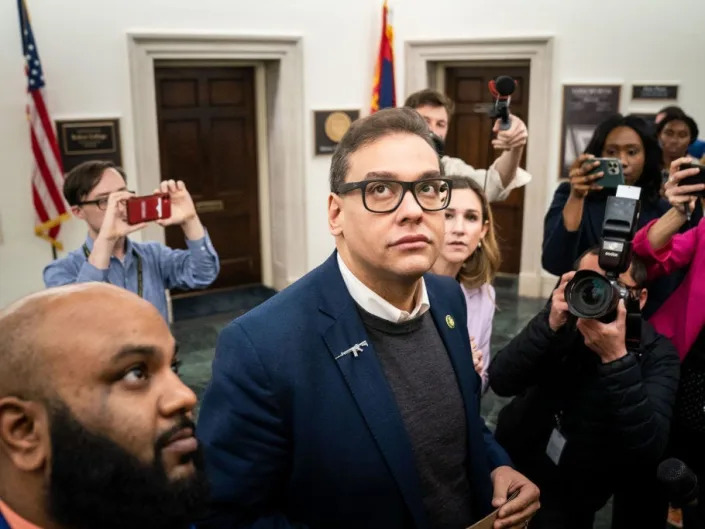
He has gone by multiple names, admitted to lying about his college education and work history, falsely claimed he has Jewish heritage, and made multiple bizarre and disproved claims about his mother either dying in or being present during the 9/11 attacks.

Mired in scandal, Santos has said he will step down from serving on committees in the House of Representatives while he faces multiple investigations.

While everyone tells lies occasionally, some people appear to do so much more than others. So, why and how do people become compulsive liars? This is what the experts say.

What is a compulsive liar?

Christian Hart, a professor of psychology at Texas Woman’s University who specializes in pathological lying, told Insider that the terms “habitual liar,” “compulsive liar,” and “pathological liar” essentially mean the same thing — people who lie a lot.

Hart said that compulsive liars typically engage in excessive lying that causes some problems in the normal functioning of their lives, whether with work, romantic relationships, or with friends and family.

They typically have some kind of internal conflict over the lies, he said, as they want to stop but find themselves compulsively engaging in the behavior over and over again.

While Hart said he can’t formally diagnose the lawmaker without knowing details about whether he experiences functional problems or distress, he notes that Santos does appear to engage in pathological lying.

“In the sense that most people use the term ‘pathological lying,’ I’d say yes, it seems like he’s got this long track history preceding his entering into politics where he’s cultivated this reputation of being an extremely dishonest person,” Hart said.

So why do people lie? Hart explains that people don’t lie unless there is some incentive to do so — though this incentive might not always be obvious to an outsider.

Many of Santos’ lies appear to serve a clear purpose. He embellished his résumé while on the campaign trail, likely in an attempt to impress voters. He fabricated connections to the 9/11 attacks, possibly in order to burnish his reputation as a true New Yorker or to garner sympathy.

But along with lying about details about important elements of his life and history, Santos has also appeared to tell outlandish lies about seemingly insignificant things.

He has claimed that he was a successful volleyball player at the university he lied about attending, once allegedly told a former roommate that he was a model, and claimed to have acted in the “Hannah Montana” Disney movie.

“When people have historically defined pathological lying, many of them have said these people lie with no apparent reason. But I argue that it does serve a purpose, it’s just a purpose that we are unfamiliar with,” Hart said.

Santos, Hart said, “lied about being a star athlete on a volleyball team at a kind of a lower-tier college — that wouldn’t carry any cache for most people. But just because we can’t see the purpose of the lie doesn’t mean the purpose doesn’t exist for him. Perhaps, he’s always had a sense of inferiority about not being an athletic person, and so to be seen that way means a lot to him where it would mean nothing to other people.”

A representative for Santos did not reply to Insider’s request for comment.

Reporters surround embattled Rep. George Santos as he heads to the House Chamber for a vote, at the US Capitol on Tuesday, January 31, 2023 in Washington, DC.
Reporters surround embattled Rep. George Santos as he heads to the House Chamber for a vote, at the US Capitol on Tuesday, January 31, 2023 in Washington, DC.Kent Nishimura / Los Angeles Times via Getty Images

Hart has written a book about the science of pathological lying along with his colleague Drew Curtis, who is a psychology professor at Angelo State University.

Curtis told Insider that, like many psychological tendencies, pathological lying is often due to a combination of factors involving environment and genetics, both nature and nurture, and typically begins in later childhood and adolescence.

Do compulsive liars know they’re lying?

Many psychologists say compulsive lying is often a feature of a personality disorder, such as antisocial-personality disorder or narcissistic-personality disorder.

Compulsive lying is not, in itself, classified as a disorder in the DSM, the handbook healthcare professionals use as the guide to classifying mental-health disorders.

Curtis explained that it is important to distinguish people who are just pathological liars, and those that engage in pathological lying as part of a personality disorder — a key difference being that pathological liars do typically exhibit some remorse about lying.

While again Hart said he can’t formally diagnose him, he said Santos does appear to exhibit some traits of antisocial-personality disorder — where people manipulate and exploit others for personal benefit, with little guilt or remorse.

“Looking at the types of things that historically Santos has been accused of lying about and given his reaction when he’s confronted about those instances of dishonesty, he certainly seems that he could have many of the traits of antisocial-personality disorder,” Hart said.

Along with being accused of lying about things to boost his reputation, a military veteran has also accused Santos of pocketing $3,000 from a GoFundMe page for a dying dog, which the FBI is now probing.

Peers and the public have also raised questions about the congressman’s personal and campaign finances, which he is facing federal and local investigations over.

Typically, compulsive liars believe they won’t be caught and that any negative consequences from their lies are tolerable, according to Hart.

However, Santos’ lies are often well-documented, as he puts them in writing on social media or his websites, or verbalizes them in on-camera interviews.

Hart noted that it is “unusual” that Santos does not appear to be concerned about others discovering his lies and, in fact, “appears to just double down in many cases when he’s accused of lying.”

“That is unusual for him and unusual for many of the cases that we’ve explored of pathological liars,” Hart said. “It looks to me like he’s the type of person who doesn’t seem to worry too much about the reputation he’s cultivating around his honesty or dishonesty.”

Rep. George Santos.
Rep. George Santos.Patrick Semansky/AP Photo

When people lie constantly and repeatedly, it can be easy to question whether they are even aware that they are lying any more and whether they have simply become detached from reality.

In a recently leaked audio recording from January 30, obtained by Talking Points Memo, Santos admits to his track record of lying and appears to express frustration with himself.

“I’ve made bad judgment calls, and I’m reaping the consequences of those bad judgment calls,” Santos said in the recording.

“I’ve obviously fucked up and lied to him, like I lied to everyone else,” Santos later said, apparently referring to his chief of staff Charley Lovett. “And he still forgave me and gave me a second shot, unlike some other people.”

Curtis noted that the fact that Santos has admitted to lying about some aspects of his past suggests a conscious deception.

“I think in the case of Santos, he’s come out, at least from my understanding, he’s come out and apologized and said, you know, this wasn’t necessarily true. So then if someone’s claiming that what they said wasn’t true, then I think it’s easier to say that was a deception, not a delusion,” Curtis said.

Professions like politics are more closely linked to lying

Curtis and Hart note in their research that certain professions, like sales and politics, are more closely linked with lying.

Hart explained that these professions do not necessarily attract dishonest people, but might push people toward dishonesty. For example, a salesperson may be dishonest if they must sell an inferior product. Similarly, politicians might not be able to be honest all of the time and so might find themselves exaggerating, concealing, or outright lying about things.

He noted that politicians who are willing to tell lies are actually more likely to get reelected than politicians who are unwilling to be dishonest.

How do you deal with compulsive liars?
Rep. George Santos.
Rep. George Santos.

Rep. George Santos.Mary Altaffer

Curtis and Hart note that pathological lying can be difficult to treat as it is not a formally recognized diagnosis.

As it currently stands, psychologists typically treat pathological liars with cognitive-behavioral therapy, a common type of talk therapy.

Outside of a professional setting, it can be hard to know how to respond to a compulsive liar. Hart suggested that the best way to respond to pathological liars is to call them out on their lies.

“Most people don’t like being called out on their lying and feel extremely uncomfortable, and they want to prevent any further reputational damage,” he said.

Curtis suggested ignoring the deception and intentionally giving attention to honest behavior instead.

“One of the real challenges of how to respond to pathological lying is that we give attention to their lies, which then can become reinforcing. So one of the suggestions we have is called ‘differential reinforcement of other behavior,’ where you ignore the deception. Then you have to intentionally give attention to honest behavior,” Curtis said.

“So, even when honesty may be mundane, not very exciting, we need to give that attention to the person who lies a lot.”

Sue Bird made 10 times as much money playing basketball in Russia and said it helped make her a millionaire

Insider

Sue Bird made 10 times as much money playing basketball in Russia and said it helped make her a millionaire

Cork Gaines – February 5, 2023

Sue Bird dribbles the ball during a game for Spartak Moscow in Russia
Sue Bird played professionally in Russia for 11 years.Bob Martin /Sports Illustrated via Getty Images
  • The WNBA legend Sue Bird spent 10 seasons playing in Russia to supplement her income.
  • Bird told “60 Minutes” that she made 10 times her first WNBA salary, which was under $60,000 a year.
  • Bird also said it was a wild time that included her team’s owner being murdered.

After Brittney Griner spent nearly 10 months jailed in Russia on drug-smuggling accusations, a fellow basketball star, Sue Bird, explained why she spent 11 years playing professionally in Russia for an owner who was once convicted of being a KGB spy.

Bird told “60 Minutes” that despite being the first pick in the 2002 WNBA draft, she made less than $60,000 a year early in her career. While she plays only stateside now, as she enters her 21st season, she spent a large part of her career playing overseas to supplement her income, as many WNBA players have.- ADVERTISEMENT -https://s.yimg.com/rq/darla/4-10-1/html/r-sf-flx.html

Bird said that after playing in Europe for two seasons, the Russian billionaire Shabtai Kalmanovich recruited her to Spartak Moscow of the EuroLeague.

She told CBS about the recruitment: “He was like, ‘You know, I have a ton of money. And, you know, some people like to gamble. Some people like to buy cars. I like women’s basketball. That’s where I want to spend my money.'”

CBS reported that Kalmanovich paid Bird 10 times what she made in the WNBA. When asked if the money was life-changing, Bird said it was.

“Absolutely,” she said. “Like, I’m a millionaire because of it.”

Russian billionaire Shabtai Kalmanovich with some of his players on Spartak Moscow, including Sue Bird (far right).
The Russian billionaire Shabtai Kalmanovich with some of his players on Spartak Moscow, including Bird (far right).Joe Klamar/AFP via Getty Images

A 2019 episode of ESPN’s “30 for 30” described how Kalmanovich spoiled his players, and the perks went beyond salaries.

“Everything literally was first class,” Bird told ESPN. “We’re staying at the best hotels. We go to Paris. We’re in, like, the bomb hotel in Paris.”

Diana Taurasi, her teammate, said they were also provided a “mini-mansion” with a pool and a spa. Kalmanovich even gave the American players his credit card to go on shopping sprees, they said, telling the women to “get whatever you want.”

“So you know automatically, like, ‘OK, can we spend $500? Can we spend a thousand?'” Taurasi told ESPN. “And, you know, you get nervous, you have this adrenaline, where you’re like, ‘Should I get this Louis Vuitton bag that’s $3,000, which I would never buy? Yes, I will, and I’ll get two of them — one for me and one for Jessika Taurasi,” she said, referring to her sister.

Taurasi continued, “We get in the car, and I mean we have what, like, 25, 30 bags. I feel like we robbed a bank.”

CBS described Kalmanovich as “a former KGB spy and businessman with a record of operating outside the law.” He was also assassinated while Bird played for the team.

A BBC report said Kalmanovich spent five years in prison in Israel, convicted of being a KGB spy. After being released, he made his fortune in the African diamond trade.

This story was originally published in 2022 and has been updated. 

China accuses US of indiscriminate use of force over balloon

Associated Press

China accuses US of indiscriminate use of force over balloon

Emily Wang Fujiyama – February 5, 2023

Business owner "Annie" weights down copies of the Chinese Daily News newspaper showcasing pictures of a suspected Chinese spy balloon, in the Chinatown district of Los Angeles Sunday, Feb. 5, 2023. The balloon's presence in the sky above the United States before a military jet shot it down over the Atlantic Ocean with a missile Saturday has further strained U.S.- China ties. (AP Photo/Damian Dovarganes)
Business owner “Annie” weights down copies of the Chinese Daily News newspaper showcasing pictures of a suspected Chinese spy balloon, in the Chinatown district of Los Angeles Sunday, Feb. 5, 2023. The balloon’s presence in the sky above the United States before a military jet shot it down over the Atlantic Ocean with a missile Saturday has further strained U.S.- China ties. (AP Photo/Damian Dovarganes)
ASSOCIATED PRESS

BEIJING (AP) — China on Monday accused the United States of indiscriminate use of force in shooting down a suspected Chinese spy balloon, saying it “seriously impacted and damaged both sides’ efforts and progress in stabilizing Sino-U.S. relations.”

The U.S. shot down the balloon off the Carolina coast after it traversed sensitive military sites across North America. China insisted the flyover was an accident involving a civilian aircraft.

Vice Foreign Minister Xie Feng said he lodged a formal complaint with the U.S. Embassy on Sunday over the “U.S. attack on a Chinese civilian unmanned airship by military force.”

“However, the United States turned a deaf ear and insisted on indiscriminate use of force against the civilian airship that was about to leave the United States airspace, obviously overreacted and seriously violated the spirit of international law and international practice,” Xie said.

The presence of the balloon in the skies above the U.S. dealt a severe blow to already strained U.S.-Chinese relations that have been in a downward spiral for years. It prompted Secretary of State Antony Blinken to abruptly cancel a high-stakes Beijing trip aimed at easing tensions.

Xie repeated China’s insistence that the balloon was a Chinese civil unmanned airship that blew into U.S. airspace by mistake, calling it “an accidental incident caused by force majeure.”

China will “resolutely safeguard the legitimate rights and interests of Chinese companies, resolutely safeguard China’s interests and dignity and reserve the right to make further necessary responses,” he said.

U.S. President Joe Biden issued the shootdown order after he was advised that the best time for the operation would be when it was over water, U.S. officials said. Military officials determined that bringing down the balloon over land from an altitude of 60,000 feet (18,000 meters) would pose an undue risk to people on the ground.

“What the U.S. has done has seriously impacted and damaged both sides’ efforts and progress in stabilizing Sino-U.S. relations since the Bali meeting,” Xie said, referring to a recent meeting between Biden and his Chinese counterpart, Xi Jinping, in Indonesia that many hoped would create positive momentum for improving ties that have plunged to their lowest level in years.

Foreign Ministry spokesperson Mao Ning provided no new details on Monday, repeating China’s insistence that the object was a civilian balloon intended for meteorological research, had little ability to steer and entered U.S. airspace by accidentally diverging from its course. She also did not say what additional steps China intended to take in response to Washington’s handling of the issue and cancellation of Blinken’s trip, which would have made him the highest-ranking U.S. official to visit since the start of the COVID-19 pandemic.

“We have stated that this is completely an isolated and accidental incident caused by force majeure, but the U.S. still hyped up the incident on purpose and even used force to attack,” Mao said at a daily briefing. “This is an unacceptable and irresponsible action.”

Balloons thought or known to be Chinese have been spotted from Latin America to Japan. Japanese Deputy Chief Cabinet Secretary Yoshihiko Isozaki told reporters Monday that a flying object similar to the one shot down by the U.S. had been spotted at least twice over northern Japan since 2020.

“We are continuing to analyze them in connection with the latest case in the United States,” he said.

Mao confirmed that a balloon recently spotted over Latin American was Chinese, describing it as a civilian airship used for flight tests.

“Affected by weather and due to its limited self-control ability, the airship severely deviated from its set route and entered the space of Latin America and the Caribbean by accident,” Mao said.

Washington and Beijing are at odds over a range of issues from trade to human rights, but China is most sensitive over alleged violations by the U.S. and others of its sovereignty and territorial integrity.

Beijing strongly protests U.S. military sales to Taiwan and visits by foreign politicians to the island, which it claims as Chinese territory, to be recovered by force if necessary.

It reacted to a 2022 visit by then-U.S. House Speaker Nancy Pelosi by firing missiles over the island and staging threatening military drills seen as a rehearsal for an invasion or blockade. Beijing also cut off discussion with the U.S. on issues including climate change that are unrelated to military tensions.

Last week, Mao warned Pelosi’s successor, House Speaker Kevin McCarthy, not to travel to Taiwan, implying that China’s response would be equally vociferous.

“China will firmly defend its sovereignty, security and development interests,” Mao said. McCarthy said China had no right to dictate where and when he could travel.

China also objects when foreign military surveillance planes fly off its coast in international airspace and when U.S. and other foreign warships pass through the Taiwan Strait, accusing them of being actively provocative.

In 2001, a U.S. Navy plane conducting routine surveillance near the Chinese coast collided with a Chinese fighter plane, killing the Chinese fighter pilot and damaging the American plane, which was forced to make an emergency landing at a Chinese naval airbase on the southern Chinese island province of Hainan. China detained the 24-member U.S. Navy aircrew for 10 days until the U.S. expressed regret over the Chinese pilot’s death and for landing at the base without permission.

The South China Sea is another major source of tension. China claims the strategically key sea virtually in its entirety and protests when U.S. Navy ships sail past Chinese military features there.

At a news conference Friday with his South Korean counterpart, Blinken said “the presence of this surveillance balloon over the United States in our skies is a clear violation of our sovereignty, a clear violation of international law, and clearly unacceptable. And we’ve made that clear to China.”

“Any country that has its airspace violated in this way I think would respond similarly, and I can only imagine what the reaction would be in China if they were on the other end,” Blinken said.

China’s weather balloon explanation should be dismissed outright, said Oriana Skylar Mastro, an expert on Chinese military affairs and foreign policy at Stanford University.

“This is like a standard thing that countries often say about surveillance assets,” Mastro said.

China may have made a mistake and lost control of the balloon, but it was unlikely to have been a deliberate attempt to disrupt Blinken’s visit, Mastro said.

For the U.S. administration, the decision to go public and then shoot down the balloon marks a break from its usual approach of dealing with Beijing on such matters privately, possibly in hopes of changing China’s future behavior.

However, Mastro said, it was unlikely that Beijing would respond positively.

“They’re probably going to dismiss that and continue on as things have been. So I don’t see a really clear pathway to improved relations in the foreseeable future.”

AP journalists Tian Macleod Ji in Bangkok, Mari Yamaguchi in Tokyo and news assistant Caroline Chen in Beijing contributed this report.

It’s everywhere: Sea-level rise’s surprising reach damaging more than East Coast shoreline

USA Today

It’s everywhere: Sea-level rise’s surprising reach damaging more than East Coast shoreline

Kelly Powers and Dinah Voyles Pulver – February 5, 2023

Sections of 2,200 feet of geotextile tubes installed in 2019 behind 13 private lots on Ponte Vedra Beach have been uncovered by erosion from a recent storm.

A walk down this 6-mile stretch of Florida beach might feel different than others.

Some things are the same. Rolling waves reach into smooth sheets, polishing the beach. Seaweed and shells tumble and settle, tumble and settle.

Look to the land, and the view is unexpected. Dunes have been carved into jagged cliffs. Strange canvas tubing pokes out of eroding sand mounds.

Keep walking and the view changes again. Newly imported plants grip a rebuilt dune, the result of an expensive human project.

Ponte Vedra Beach is just one place that provides a firsthand view of all the problems storm surge and high tides and sea-level rise bring in with them.

Seawalls jut from the sand, blamed by some for additional erosion elsewhere. Residents installed over 2,000 feet of geotextile tubing along the beaten dunes, with mixed results.

Meanwhile, their homes peer over a sand cliff’s edge.

“People are trying to beat Mother Nature,” said Nancy Condron, who built a home on this beach with her husband in 2008. “And what they really need to do is move their structures back and have a natural dune.”

Condron has been vocal in her opinions, having built west of the state’s coastal construction limits, but debates persist.

“It’s depressing.”

Sea-level rise is deeper than tides, more than the beach

This slice of Florida nearly captures sea-level rise in its full scope.

The sea advances on St. Johns County with a deadly combination of naturally higher tides, empowered storms and saltwater intrusion. It will impact generations of businesses, deeply historic neighborhoods, freshwater public supply wells, sparkling new subdivisions and oceanfront mansions alike.

But accelerated sea-level rise isn’t just a beachfront problem.

From threatened heritage to salty forests, oyster farms and inland flooding, voices across the region show this threat and its mitigation are far more complex than higher tides.

The rising sea reaches places you would not expect.

One tide gauge in the nation broke its record for high-tide flood days over the past year.

It was far inland, just outside Delaware City along Delaware Bay and about 20 miles from Wilmington, Delaware.

Places up and down the entire East Coast are menaced by sea-level rise’s impacts compounding the force of tides and storms: centuries of Black history, generations of businesses on Philadelphia’s Schuylkill River, headstones in colonial New England cemeteries, millennia of indigenous Florida heritage.

One of the oldest Black American communities feels current turning against them

She raised all the air conditioners 18 inches.

Lincolnville Museum and Cultural Center’s executive director Gayle Phillips in St. Augustine doesn’t have the budget to approach large mitigation projects, so she makes hands-on fixes. “We didn’t want to invest in AC units that were just going to be subjected to flooding,” Phillips said.

The effort came after Hurricane Matthew. Across much of Lincolnville’s east and south sides, flooding occurs during high tide and heavy rain.

Phillips is no stranger to taking her shoes off to get to work.

The museum, cradled by its historically Black neighborhood of Lincolnville, is devoted in part to celebrating the history of those taken involuntarily over this ocean centuries ago.

St. Augustine is the oldest continuously occupied European settlement in the country. Tourists come for its history, architecture and the white quartz sand of its beaches.

Now St. Augustine is fighting the sea to preserve indigenous artifacts, colonial Spanish antiquity and modern Black history. Newly freed slaves established the now-historic district of Lincolnville inside a city already more than 450 years old.

In 1964, Lincolnville hosted a famed Martin Luther King Jr. sit-in. Not only would King be arrested in St. Augustine that June, he would be in the city to learn the Civil Rights Act had passed.

History is baked into these 45 blocks of southwest peninsula.

The Lincolnville museum finds itself in competition with historical settlements, buildings and landmarks all around it for precious funds to preserve its own piece of heritage — in a place where there’s almost as much history as there is water.

Water’s winning.

But Lincolnville is just one neighborhood, and competition for funding is already steep. Phillips is not alone in her concern that the history she safeguards will be sacrificed for something more popular.

She said the Lincolnville museum cannot afford drainage improvements to its parking lot right now. It could be hard to imagine visitors taking off their shoes, wading through frequent flood waters, to reach her doors.

Lincolnville didn’t rank as highly as the Castillo de San Marcos fort, among other sites, in a recent city assessment of archaeological value. Historic tourism is worth $2.9 billion.

Pennsylvania brewpub fights back against storms, tides and sea-level rise

Up and down East Coast states, impact reaches well inland of the high tide line.

Mike Rose watched the damage unfold under a clear sky.

After the raging storm commanded attention all night, Pennsylvania officials continued to warn of a Schuylkill River surge near Philadelphia. More than 17 feet was expected by 8 a.m. It crested just short of that.

Rose watched from an off-site monitor as the cameras streamed the destruction until the power went out. The 66-year-old is used to occasional flooding, but this was different.

He returned to nearly three feet of mud.

Gelled between toppled equipment, saturated walls and debris, brown slime coated the guts of his restaurant. Massive brewpub tanks had been lifted and dropped. Remains blocked any path to Manayunk Brewing Company’s back patio, typically overlooking a quietly flowing river, several yards below.

“Did I think I was going to open up this time? I didn’t think so,” Rose recalled, perched at the bar. “I said: ‘I don’t know if I want to do this. I’m stripped. I’m just stripped of strength.”

Remnants of Hurricane Ida brought a Schuylkill River surge that near-completely engulfed Manayunk Brewing Restaurant and Bar on Sept. 2, 2021, in northwest Philadelphia. The brewpub, having made hundreds of its own craft beers since 1996, reopened after six months of repairs as a restaurant and bar.
Hurricane Irene, Hurricane Isaias, an unnamed flash flood in 2014, Agnes from 1972 — various high-water lines climb the wall in Manayunk Brewing Restaurant and Bar, in Philadelphia, on July 22, 2020. Black arrows mark each floodwater peak.

He swiped through photos on his phone. Employees shoveled mud. Ruined wiring ripped from the walls. Pieces of kitchen equipment were shoved in a heap against the iron street gate.

From the Chesapeake to Massachusetts bays, Ida brought surges several feet above typical high tide levels.

Rising seas can spell problems for inland communities. High tides and strengthened storm surges push water higher in nearby rivers during extreme storms, and into floodplains.

Rivers across Pennsylvania and New Jersey broke record levels.

Higher tides also push back on rivers, preventing flow back into the sea. Meanwhile, fresh water from extreme rainfall can start stacking up.

If it can’t drain into watersheds, it will find new routes.

Charged by climate change, stronger storms expose weaknesses

“Hurricanes have multiple elements or drivers or mechanisms here,” said Ning Lin, associate professor of civil and environmental engineering with Princeton University. “Sea-level rise is one piece.

“Looking at the joint probability between rainfall and surge, with sea-level rise, we found that extreme joint hazards can become much more frequent in our future climate.”

The strongest drivers for this, Lin said, are more intense rainfall — as a warming planet draws more water into the atmosphere, contributing to heavier storms — and a rising sea.

She said more research is needed to model for these impacts, together. Ida already exposed mid-Atlantic infrastructure shortcomings.

Rose may feel too busy for all the science. He has his third restaurant to run.

Nearly $2 million in Ida repairs later, the brewpub reopened in February. Repairing beer tanks proved too expensive. “We’re not making our own beer anymore,” Rose said. “That’s devastating to us.”

Kitchen equipment sits on wheels. Newly polished floors replace any carpeting. Electric panels were moved to the second floor.

Over Rose’s shoulder, small signs climb the gray bricks. Markers for Hurricane Irene, Hurricane Isaias, an unnamed flash flood in 2014, Agnes in 1972 — the various high-water lines stretch back to the building’s time as a wool mill. Black arrows mark floodwater peaks.

The edge of Ida’s small, white sign meets the ceiling. And it points up.

Underground, another waterline snakes its way inland.

Saltwater seeps underground into critical freshwater wetlands

Only the notes of historians remain to tell the story of the Pamlico people.

They lived along the Albemarle and Pamlico sounds for thousands of years, on the now-North Carolina coast, gliding dugout canoes through wetland forest threaded with teeming creeks and rivers.

This is “TaTaku” — where land and sea meet the sky — but the Pamlico vanished within 150 years of European settlers’ arrival. Men, women and children were decimated by smallpox and absorbed into other tribes.

Scientists fear the Albemarle-Pamlico Peninsula could follow a similar path. Freshwater wetland forests and shrubby evergreen bogs could be decimated by rising seas and absorbed by advancing coastal marsh.

Wildlife refuges protect more than 450,000 acres, hosting migratory birds, rare pocosin peat bogs and the sole wild population of red wolves in the nation. Today, fewer than two dozen remain.

With no escape, the cedars, pines and pocosin bogs starve under an onslaught of rising water. On this peninsula, Atlantic white cedars have virtually disappeared.

Sea water presses forward into the estuary, past Outer Banks barrier islands. Salinity levels creep higher, pushing into groundwater supplies and washing overland during high tides and storm surges.

These rolling pulses already arrive more often.

Once the sea water arrives, trapped by roads and other changes in elevation, it can stay for weeks, or even months — saturating the roots of the trees.

Forests could be completely overtaken, said Elliott White Jr., assistant professor at Stanford University. Satellite photos show the landward march. A dense, brown fringe “gets thicker and thicker year after year.”

If the losses documented over 25 years continue without widespread restoration, White said, the wetland forests could disappear by the end of this century.

The insidious flow of salts below ground also threatens freshwater wells and agriculture across the region. Farmers on the peninsula, who raise corn, soybeans, wheat, potatoes and cotton, have seen salt in their fields, said Rebekah Martin, Coastal NC National Wildlife Refuges Complex project leader.

Ghost forests appear and spread almost invisibly


NOAA’s Ocean Service

When sea level rises and salt water floods coastal forests, it kills the trees. What’s left behind is called a ghost forest: https://oceanservice.noaa.gov/facts/ghost-forest.html…#OceanMonthNOAA

Photo of a ghost forest on the shore

“Ghost forests” can grow almost slowly enough to miss. Yet these dying woods appear from Maine to Miami, bending back along the Gulf of Mexico.

Stripped of their leaves and bark, trees become gaunt skeletons. Gradually forests and bogs give way to more salt-tolerant thickets.

“I’ve seen palm tree ghost forests in Florida and red spruce ghost forests in Canada,” said Matt Kirwan, associate professor with Virginia Institute of Marine Science. “They all share a similar origin.”

A group of University of South Florida researchers concluded the Big Bend’s coastal forest is dying at “an unprecedented rate.”

Hurricane Sandy left a ghost forest of white cedar in New Jersey.

In the Chesapeake Bay region, more than 80,000 acres of forest have turned to marsh in the last 150 years. That number could increase fivefold by 2100, Kirwan predicts.

New corridors would have to be considered for wildlife to retreat, Martin said. And more people and places could be exposed to intensifying storms typically buffered by marsh.

On the Albemarle-Pamlico Peninsula, once-vital forests could be lost to history.

Unwitting oysters part of a plan to fortify shorelines

Rolling between Scott Budden’s fingers, a baby oyster resembles a grain of sand. Its tiny shell, still translucent in the gray morning, is already the perfect shape.

Its life with Budden begins here on Kent Island, Maryland. Farmers must tailor the crop’s controlled life cycle with the whims of changing waters, rising tides and shifting salinity.

After outgrowing land tanks, having savored algae and phytoplankton, the adolescent oyster will eventually move north to the Chester River. Waves will crash through hundreds of similar surface floats, transferring energy to the bundled mollusks lining several acres.

The oyster will return to Eastern Bay to finish. The water is saltier down here.

Scott Budden with a handful of seed oysters on July 26, 2022, destined for oyster reefs. In term of broader restoration, Joseph Gordon of Pew says the Chesapeake Bay is already the most massive shellfish restoration project in the world, central to a life system stretching from Maine to Florida. “It’s the beating heart of the Atlantic coast,” he said.
Scott Budden with a handful of seed oysters on July 26, 2022, destined for oyster reefs. In term of broader restoration, Joseph Gordon of Pew says the Chesapeake Bay is already the most massive shellfish restoration project in the world, central to a life system stretching from Maine to Florida. “It’s the beating heart of the Atlantic coast,” he said.
Oyster tattoos on the arm of Scott Budden on July 26, 2022.  He escaped his Washington, D.C., finance job in 2012 to come work on Kent Island.
Oyster tattoos on the arm of Scott Budden on July 26, 2022. He escaped his Washington, D.C., finance job in 2012 to come work on Kent Island.

Today, his prize crop joins a growing list of natural tools to fight against the very waters that foster it. Experts say even these oysters raised for a plate can also help fortify shorelines, like millions once did on their own.

“Growing the shellfish aquaculture industry can benefit the entire ecosystem,” said Joseph Gordon, U.S. East Coast project director with Pew Charitable Trusts. His group co-sponsored an initiative to buy millions of oysters from farmers like Budden, who were lacking the usual restaurant demand, and re-establish them in the bay.

The initiative’s reach extended to shellfish growers up the mid-Atlantic and New England, following an idea that has established itself to grow much like the oysters themselves: Mitigating climate change can mimic the natural world.

What’s a living shoreline?

One farm offers a payoff Budden doesn’t often consider.

On a stretch of coast, he notices an exposed beach has slowly washed away. But the same erosion, near Eastern Neck Island, Maryland, isn’t seen on his side.

“I’ve noticed there’s some dampening effect,” said the 36-year-old. “Basically, as waves come through, the energy is transferred to the floats, the floats then transfer that energy to the oyster. Which, actually, makes a better oyster.”

His casual observations echo the experts and other projects. Mitigations have been moving “from gray to green” to combat the effects of rising sea.

“For a long time, when we needed to stop erosion along the shoreline, we put in a hard structure,” said Molly Mitchell, a research assistant professor with the Virginia Institute of Marine Science. Think bulkheads, riprap, seawalls.

“They don’t provide good habitat for animals, and they don’t have the other benefits of natural beaches and marshes, like actually reducing wave energy.”

“Living shorelines” — from adding marsh and grass, to building shellfish breakwaters — have been growing in popularity as an alternative to shoreline hardening.

Scott Budden washes a bin by the dock on July 26, 2022. Today, his prize crop joins a growing list of natural tools to help the very waters that foster it. “Adding oysters can even help other interconnected habitats, like salt marsh and underwater seagrass — and together, these can increase the integrity and resilience of the coast by stabilizing shorelines to better withstand storms and storm surge," said Joseph Gordon, U.S. East Coast project director with Pew Charitable Trusts.
Scott Budden washes a bin by the dock on July 26, 2022. Today, his prize crop joins a growing list of natural tools to help the very waters that foster it. “Adding oysters can even help other interconnected habitats, like salt marsh and underwater seagrass — and together, these can increase the integrity and resilience of the coast by stabilizing shorelines to better withstand storms and storm surge,” said Joseph Gordon, U.S. East Coast project director with Pew Charitable Trusts.

Oyster reefs once thrived on Eastern shores, before humans decimated populations in the early 1800s. Oysters built on top of one another as others died, creating a solid structure.

“Rocks and seawalls aren’t going to evolve as the water gets steeper,” Mitchell said. “If you use an oyster reef, the oysters will actually grow on it — and the structure will get taller and taller as sea level rises.”

It can’t work everywhere. These solutions take best to systems with more moderate wave energy, like the Chesapeake Bay, or rivers and sounds.

Back at the dock, Budden and his team watch saltwater drizzle through a churning tumbler, cleaning their harvest. Those measuring too small plunk back to the bay below.

His crop has always had a role to play in protecting the coast, but today shoreline communities may need to get more creative.

“We’ve got a couple million market oysters in the water, another three or four million have been put through the nursery this year,” he said. “Still, just a drop in the bucket.”

This article is part of a USA TODAY Network reporting project called “Perilous Course,” a collaborative examination of how people up and down the East Coast are grappling with the climate crisis. Journalists from more than 35 newsrooms from New Hampshire to Florida are speaking with regular people about real-life impacts, digging into the science and investigating government response, or lack of it. 

50-car train derailment causes big fire, evacuations in Ohio

Associated Press

50-car train derailment causes big fire, evacuations in Ohio

February 4, 2023

In this photo provided by Melissa Smith, a train fire is seen from her farm in East Palestine, Ohio, Friday, Feb. 3, 2023. A train derailment and resulting large fire prompted an evacuation order in the Ohio village near the Pennsylvania state line on Friday night, covering the area in billows of smoke lit orange by the flames below. (Melissa Smith via AP)
This photo taken with a drone shows portions of a Norfolk and Southern freight train that derailed Friday night in East Palestine, Ohio are still on fire at mid-day Saturday, Feb. 4, 2023. (AP Photo/Gene J. Puskar)
In this photo provided by Melissa Smith, a train fire is seen from her farm in East Palestine, Ohio, Friday, Feb. 3, 2023. A train derailment and resulting large fire prompted an evacuation order in the Ohio village near the Pennsylvania state line on Friday night, covering the area in billows of smoke lit orange by the flames below. (Melissa Smith via AP)
ASSOCIATED PRESS

EAST PALESTINE, Ohio (AP) — A freight train derailment in Ohio near the Pennsylvania state line left a mangled and charred mass of boxcars and flames Saturday as authorities launched a federal investigation and monitored air quality from the various hazardous chemicals in the train.

About 50 cars derailed in East Palestine at about 9 p.m. EST Friday as a train was carrying a variety of products from Madison, Illinois, to Conway, Pennsylvania, rail operator Norfolk Southern said Saturday. There was no immediate information about what caused the derailment. No injuries or damage to structures were reported.

“The post-derailment fire spanned about the length of the derailed train cars,” Michael Graham, a member of the National Transportation Safety Board, told reporters Saturday evening. “The fire has since reduced in intensity, but remains active and the two main tracks are still blocked.”

Norfolk Southern said 20 of the more than 100 cars were classified as carrying hazardous materials — defined as cargo that could pose any kind of danger “including flammables, combustibles, or environmental risks.” Graham said 14 cars carrying vinyl chloride were involved in the derailment “and have been exposed to fire,” and at least one “is intermittently releasing the contents of the car through a pressure release device as designed.”

“At this time we are working to verify which hazardous materials cars, if any, have been breached,” he said. The Environmental Protection Agency and Norfolk Southern were continuing to monitor air quality, and investigators would begin their on-scene work “once the scene is safe and secure,” he said.

Vinyl chloride, used to make the polyvinyl chloride hard plastic resin used in a variety of plastic products, is associated with increased risk of liver cancer and other cancers, according to the federal government’s National Cancer Institute. Federal officials said they were also concerned about other possibly hazardous materials.

Mayor Trent Conaway, who earlier declared a state of emergency citing the “train derailment with hazardous materials,” said air quality monitors throughout a one-mile zone ordered evacuated had shown no dangerous readings.

Fire Chief Keith Drabick said officials were most concerned about the vinyl chloride and referenced one car containing that chemical but said safety features on that car were still functioning. Emergency crews would keep their distance until Norfolk Southern officials told them it was safe to approach, Drabick said.

“When they say it’s time to go in and put the fire out, my guys will go in and put the fire out,” he said. He said there were also other chemicals in the cars and officials would seek a list from Norfolk Southern and federal authorities.

Graham said the safety board’s team would concentrate on gathering “perishable” information about the derailment of the train, which had 141 load cars, nine empty cars and three locomotives. State police had aerial footage and the locomotives had forward-facing image recorders as well as data recorders that could provide such information as train speed, throttle position and brake applications, he said. Train crew and other witnesses would also be interviewed, Graham said.

Firefighters were pulled from the immediate area and unmanned streams were used to protect some areas including businesses that might also have contained materials of concern, officials said. Freezing temperatures in the single digits complicated the response as trucks pumping water froze, Conaway said.

East Palestine officials said 68 agencies from three states and a number of counties responded to the derailment, which happened about 51 miles (82 kilometers) northwest of Pittsburgh and within 20 miles (32 kilometers) of the tip of West Virginia’s Northern Panhandle.

Conaway said surveillance from the air showed “an entanglement of cars” with fires still burning and heavy smoke continuing to billow from the scene as officials tried to determine what was in each car from the labels outside. The evacuation order and shelter-in-place warnings would remain in effect until further notice, officials said.

Village officials warned residents that they might hear explosions due to the fire. They said drinking water was safe despite discoloration due to the volume being pumped the fight the blaze. Some runoff had been detected in streams but rail officials were working to stem that and prevent it from going downstream, officials said.

Officials repeatedly urged people not to come to the scene, saying they were endangering not only themselves but emergency responders.

The evacuation area covered 1,500 to 2,000 of the town’s 4,800 to 4,900 residents, but it was unknown how many were actually affected, Conaway said. A high school and community center were opened, and the few dozen residents sheltering at the high school included Ann McAnlis, who said a neighbor had texted her about the crash.

“She took a picture of the glow in the sky from the front porch,” McAnlis told WFMJ-TV. “That’s when I knew how substantial this was.”

Norfolk Southern opened an assistance center in the village to take information from affected residents and also said it was “supporting the efforts of the American Red Cross and their temporary community shelters through a $25,000 donation.

Elizabeth Parker Sherry said her 19-year-old son was heading to Walmart to pick up a new TV in time for the Super Bowl when he called her outside to see the flames and black smoke billowing toward their home. She said she messaged her mother to get out of her home next to the tracks, but all three of them and her daughter then had to leave her own home as crews went door-to-door to tell people to leave the evacuation zone.

Jan. 6 panel witness Cassidy Hutchinson said Trump assaulted Secret Service agent

Palm Beach Daily News

Jan. 6 panel witness Cassidy Hutchinson said Trump assaulted Secret Service agent

Antonio Fins, Palm Beach Post – February 4, 2023

A witness has testified that a furious President Donald Trump assaulted the head of his Secret Service detail in the presidential vehicle after being told he could not go to the U.S. Capitol amid a mushrooming riot on Jan. 6, 2021.

Cassidy Hutchinson, an aide to then-White House Chief of Staff Mark Meadows, related the account on Tuesday during her appearance before the U.S. House committee investigating the attack on the Capitol.

She said a top White House official, Tony Ornato, who served as White House deputy chief of staff, told her that story in the presence of the Secret Service agent, Robert Engel, with whom Trump had the altercation.

After Engel told Trump he could not go the Capitol due to security concerns, the then-president in a fit of anger was said to have reached for the steering wheel. When told to let it go, Trump then lunged at Engel, Hutchinson said Ornato told her.

Neither Ornato nor Engel ever told her the story was wrong, Hutchinson said during questioning.

That conversation, Hutchinson testified, took place moments after the president, his Secret Service detail and a group of aides, including Hutchinson, returned to the White House after Trump’s Jan. 6 rally speech.

Hutchinson also testified that Trump was irate before his speech because metal detectors were keeping armed rallygoers from entering the area closest to where he and others were speaking. Police reports, presented during the hearing, stated some attendees were carrying weapons, including AR-15s and “Glock-style pistols.”

But Hutchinson said Trump dismissed the obvious threat saying they were “not there to hurt me” and demanded that the metal detectors be taken away.

President Donald Trump passes supporters while traveling in his motorcade in West Palm Beach, Fla., on Wednesday, January 27, 2021 on his way to Mar-a-Lago in Palm Beach.

Hutchinson also said she received a call from GOP Minority Leader Kevin McCarthy who was angry that Trump had stated during his speech that he would march with rallygoers to the Capitol.

Another White House aide, lawyer Pat Cipollone, also warned that Trump’s plans to go to the Capitol would raise serious legal exposure and liability. And upon hearing of “hang Mike Pence chants” among Capitol rioters, Trump said: “Mike deserves it.”

Hutchinson also testified that she had helped a White House valet wipe ketchup stains after Trump threw a dish at a wall in anger. That followed Trump’s hearing that Attorney General William Barr had told the Associated Press on Dec. 1, 2020, that there was no evidence of massive electoral fraud.

Hutchinson offered the in-person testimony before the Select Committee investigating the Jan. 6, 2021, violence on Capitol Hill as well as allegations that Trump abused his powers to remain in office despite losing the November 2020 election.

In a statement on Truth Social, Trump said he “hardly” knew Hutchinson, but then described her as “a total phony and ‘leaker.’ ” He also said he personally “turned her request down” when Hutchinson asked to join his team in Florida. “She is bad news,” he wrote.

He then posted 11 more missives on the platform denying he was dismissive of the threat against Pence and saying her “made up” statements were evidence of “a social climber.”

And Trump also denied he “complained” about the crowd for his Jan. 6 rally speech, or that he wanted to “make room for people with guns to watch my speech.”

An image of a photo shown during the sixth hearing of the U.S. House committee investigating the Jan. 6 attack on the Capitol.

Antonio Fins is a politics and business editor at the Palm Beach Daily News, part of the USA TODAY Florida Network. 

As suicide rate keeps rising in Wisconsin, concentration in rural areas raises alarm

USA Today

As suicide rate keeps rising in Wisconsin, concentration in rural areas raises alarm

Natalie Eilbert – February 2, 2023

If you or someone you know is dealing with suicidal thoughts, call the National Suicide Prevention Lifeline at 988 or text “Hopeline” to the National Crisis Text Line at 741-741.

Karen Endres knows that farming involves stress unlike other occupations.

Its main variables — weather, livestock, crops, sales — are largely beyond control. Physical demands and time commitment never ease. Family relationships, management practices and work-life balance all overlap. In how many jobs, after all, might three generations of a family work, live and plan for the future together?

And if that business isn’t going well, who do they talk to?

“We don’t have a community to connect with others about mental health and stressors,” said Endres, who operates a dairy farm with her husband, and works as the farmer wellness coordinator at Wisconsin Farm Center’s Farmer Wellness Program, part of the state Department of Agriculture, Trade and Consumer Protection. “It can lead us to very dangerous places.”

The most recent Suicide in Wisconsin report shows a 32% increase in suicides in Wisconsin from 2000 to 2020. Suicide is now the state’s 10th leading cause of death. Over the last three years combined, suicide rates were higher among rural residents than among urban residents. And overwhelmingly, the suicides were among men.

Some rural counties dwarf the state suicide rate.

According to the Wisconsin Violent Deaths Reporting System, Milwaukee County’s rate of suicide deaths was about 12 per every 100,000 people in 2018, the most recent year of comprehensive reporting. Nearly 300 miles north in Ashland County, the rate of suicide deaths was about 25 per every 100,000. Milwaukee County has a population of nearly 930,000. Ashland’s population: About 16,000.

“North of Green Bay, the population is very sparse and resources are very sparse. You have a high proportion of veterans living in those counties, higher proportions of firearm ownership in those counties, and so there’s just a number of factors that play into that,” said Sara Kohlbeck, an assistant professor in the Department of Psychiatry at the Medical College of Wisconsin.

Kohlbeck conducts research in suicide and suicide prevention across different communities in Wisconsin. In 14 years, Kohlbeck has analyzed the deaths of nearly 200 Wisconsin farmers who died by suicide.

One farmer ended his life the day after receiving a change of address card in the mail from his wife, who’d recently left him. Another died a week after being “disgusted” over not being able to cut his own toenails, a result of new physical limitations. Yet another had just finished a phone call with a loan company. Another had a disappointing crop, the latest in a string of bad years. Still, others had blood alcohol content many, many times the legal limit.

Over 70% of farmer suicides involved firearms.

Kohlbeck and her team divided the hardships faced by farmers into five categories: acute interpersonal loss (a wife leaving), rugged individualism (a man facing new limitations), financial stress (a phone call from a loan company), the pressure of providing (struggling with the crops) and the lethal combination of alcohol and firearms.

“They’re just in an untenable scenario of inescapable pain,” Kohlbeck said. “Physical health issues, substance abuse, not having access to care, not being able to put food on the table — a lot of what I see is basic needs-related issues … that lead them to wanting to escape the situation they’re in.”

Chris Frakes is the group director of the Southwestern Wisconsin Community Action Program, an anti-poverty agency. Every three years, it does a community needs assessment for the five counties it oversees. In 2017, Frakes had heard so many stories of farmers struggling to get by, she expected them to reach out for help. But few did.

The silence and the growing farm crisis led to the program getting creative about upstream prevention. In 2021, it received nearly $1 million from the Wisconsin Partnership Program at the University of Wisconsin School of Medicine and Public Health to target farmers’ mental health over a five-year period.

But Frakes is the first to admit that assessing the needs of farmers involves face-to-face interactions, ability to crack coded language and, above all things, development of trust. To do so requires people to understand the culture.

“We’re trying to really empower community members to not only recognize when somebody’s in a crisis, or when somebody’s struggling with thoughts of suicide but also to notice when somebody’s really stressed or struggling,” Frakes said.

Karen Endres works as the farmer wellness coordinator at Wisconsin Farm Center's Farmer Wellness Program, part of the Wisconsin Department of Agriculture, Trade and Consumer Protection. She frequently pays visits to fellow farmers to learn about their specific mental health needs.
Karen Endres works as the farmer wellness coordinator at Wisconsin Farm Center’s Farmer Wellness Program, part of the Wisconsin Department of Agriculture, Trade and Consumer Protection. She frequently pays visits to fellow farmers to learn about their specific mental health needs.
Domino effects of self-blame in farmer culture

Brenda Statz, a cattle farmer in Loganville, lost her husband to suicide in 2018. Leon Statz had struggled with depression, and four months to the day after he made the decision to sell his dairy cows, he was rushed to the hospital following an overdose. It was his first suicide attempt.

But Statz found it hard to talk about his mental health. Instead, he talked about the torrential rainfall at the end of 2016 and throughout 2017 that left his hay perpetually damp. He talked about crops growing moldy, cows getting sick from mycotoxins in their feed, vet bills shooting through the roof, tractors running aground in the mud. He talked about corn left unharvested.

Something that will always stay with Brenda Statz is a conversation she had with a psychiatrist in Iowa who told her farmers are a specific breed of people who will “always find a way to blame themselves.” If milk price falls, they’ll berate themselves for not forward contracting. If the rainfall ruins the hay, they should have cut the hay earlier.

“They will always turn it around that it’s their fault that they did something wrong — whether this stuff is totally out of their control, they will still find a way to say they did something wrong, that they should have been paying attention,” Statz said. “That’s farming.”

Kohlbeck’s studies suggest that fewer than half of the people who die by suicide have a diagnosed mental health condition. In connection with self-blame and lost control, what has jumped out to her is a sense of having lost usefulness.

“When a farmer is stymied by physical health issues, an ability to care for the farm and for those relying on them is compromised—in fact, they may see themselves as ‘no good.’ Their identity as a strong, physically able hard worker may be shaken,” Kohlbeck wrote in a study published by The Journal of Rural Health.

Lethal combinations of firearms and substances

What makes Wisconsin’s farmer suicides stand out isn’t the number of deaths the state sees every year; those numbers are proportionate across Midwestern farmlands. It’s the fact that Wisconsin holds the troubling distinction of more binge drinkers than any other state in the United States, with 23.5% of its adult population drinking excessively, according to the Centers for Disease Control and Prevention.

“There’s a higher number of suicides here because we have three things: We’re readily accessible to guns, firearms, because people hunt; you can isolate out on your farm very easy and you don’t ever have to leave the farm; and another thing is, as a state, we’re known for drinking,” said Brenda Statz. “So, you mix those three things together and it could spell disaster for some.”

Brenda Statz, widow and the wife for 34 years to Leon Statz. Leon died by suicide after struggling to keep his farm solvent.

Kohlbeck noted that nearly 20% of the farmers who used a firearm in their suicides also had alcohol in their systems at the time of their death.

Statz knows all too well that farmers won’t go to doctors, even if they need to, partly because they’re “fixers, even when everything’s going wrong,” and partly because, she said, even if they’re on death’s door, “there’s always work to do on the farm,” she said.

“Many individuals use alcohol as a means for coping with the stress they encounter in their daily life,” Kohlbeck said. “And, unfortunately, alcohol alters your decision-making when you’re in a crisis.”

Self-medicating with alcohol and opioids, Endres said, is a big problem. Frakes, from Southwestern Wisconsin Community Action Program, said farmers keep what she calls a “rainy day” stock of opioids from previous injuries. At a time when opioids are reaching historic levels in the state, especially in rural areas, the combination leads to catastrophic outcomes for farmers, Frakes said.

In less than a decade, overdose deaths in Wisconsin have more than doubled, from 628 in 2014 to 1,427 in 2021, according to the state Department of Health Services. Hospitalizations for overdoses are rising as well, from 1,489 hospital visits in 2014 to 3,133 in 2021. It’s suspected that, in 2022, 8,622 ambulance runs within Wisconsin were the result of opioid overdose cases.

Largely rural counties — Menominee, Ashland, Forest, Douglas, Jackson and La Crosse counties — had suspected rates of opioid overdoses that far exceeded the state average, sometimes 100 times the state rate. Further, both deaths and misuse of opioids are higher in Wisconsin than the national average.

Finding a trustworthy doctor is a challenge

Since she lost her husband to suicide, Statz travels to churches across the state to promote mental health in farmers as part of her work with the Farmer Angel Network, a project out of the Wisconsin Farm Bureau Federation.

Part of the mindset for farmers is to work hard and work constantly. Farmers aren’t the type to ask for — or able to take even if they want it — time off and, instead, see it as a success when somebody works years without a break.

"Suicide doesn't just impact that one person; it impacts the whole family," says Brenda Statz, Sauk County Farm Bureau member who lost her husband Leon in 2018 following his third suicide attempt.
“Suicide doesn’t just impact that one person; it impacts the whole family,” says Brenda Statz, Sauk County Farm Bureau member who lost her husband Leon in 2018 following his third suicide attempt.

When she spoke as a representative of Farmer Angel Network with Reedsburg Area Medical Center, Statz explained to the staff there that farmers come to counseling because their spouses have “nagged them” or they’ve run out of other options.

That doesn’t mean they’re ready to talk, though.

“He’s going to come in your office and he’s going to talk about the weather, he’s going to talk about his dog, he’s going to talk about everything, except why he’s there,” Statz said. “You’re going need a little more time when a farmer comes in. They’re going to not be upfront right away, because they’re still checking you out to see how much they can trust you.”

Many farmers use small talk to gain trust, Frakes said. And they’re not prone to come out and say they’re struggling. Farmers can shoo terms like anxiety and depression away like flies, but when they start to talk about issues like crops failing, that’s the time to start paying attention, she said. Crop failure can mean livestock feed is short for the winter, which can interfere with farm operations.

“Instead of asking if a farmer is depressed, it’s better to ask them what’s keeping them up at night. Asking a slightly different set of questions to try and get at what’s really happening, plus small talk, is a way to build trust,” Frakes said.

The lack of access to counseling services — and an evergreen reluctance to seek care — means when a farmer does feel mental distress, it’s usually already an emergency. And for 21 Wisconsin counties, the closest option for residential crisis stabilization involves a trip across county lines.

Statz’s husband Leon attempted suicide three times in 2018. After Leon’s first attempt on April 21, it would be another six weeks before he could see a counselor. His second attempt happened in July.

He was dead by October.

Resources for farmers
  • Wisconsin Farm Center has a toll-free, 24/7 farmer wellness line for anyone experiencing depression or anxiety, or who just needs to talk, at (888) 901-255​8.
  • The Farmer Wellness Program offers weekly support groups for farmers and farmer couples to share challenges and offer encouragement, comfort, and advice nine months out of the year (except between July and September). Zoom meetings take place either on the first Monday or the first Tuesday​ of every month at 8 p.m.
  • The Farmer Angel Network provides its members with access to mental health resources through educational programs, informational flyers and trained personnel. Summer months include all-expense paid ice cream socials, kid-friendly drive-in movies and more for over 50 farm families to enjoy a night off.
  • Farm Well Wisconsin partners with local experts to build on and connect existing community resources, gives community leaders the tools they need to support and intervene in crises, and improves knowledge of health providers serving rural populations.
  • Wisconsin Farmers Union is a member-driven organization committed to enhancing the quality of life for family farmers, rural communities and all people through educational opportunities, cooperative endeavors and civic engagement.

More: One mom’s journey: The (lack of) paint on the walls colors the stigma surrounding mental health

Natalie Eilbert covers mental health issues for USA TODAY NETWORK-Central Wisconsin. She welcomes story tips and feedback.