As climate change and overuse shrink Lake Powell, the emergent landscape is coming back to life – and posing new challenges

The Conversation

As climate change and overuse shrink Lake Powell, the emergent landscape is coming back to life – and posing new challenges

Daniel Craig McCool, Prof. Pol. Sci., Univ. of Utah – February 6, 2023
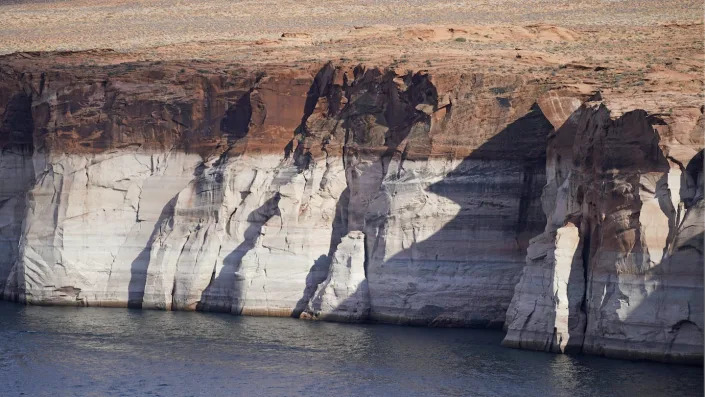
The white 'bathtub ring' around Lake Powell, which is roughly 110 feet high, shows the former high water mark. <a href=
The white ‘bathtub ring’ around Lake Powell, which is roughly 110 feet high, shows the former high water mark. AP Photo/Rick Bowmer

As Western states haggle over reducing water use because of declining flows in the Colorado River Basin, a more hopeful drama is playing out in Glen Canyon.

Lake Powell, the second-largest U.S. reservoir, extends from northern Arizona into southern Utah. A critical water source for seven Colorado River Basin states, it has shrunk dramatically over the past 40 years.

An ongoing 22-year megadrought has lowered the water level to just 22.6% of “full pool,” and that trend is expected to continue. Federal officials assert that there are no plans to drain Lake Powell, but overuse and climate change are draining it anyway.

As the water drops, Glen Canyon – one of the most scenic areas in the U.S. West – is reappearing.

This landscape, which includes the Colorado River’s main channel and about 100 side canyons, was flooded starting in the mid-1960s with the completion of Glen Canyon Dam in northern Arizona. The area’s stunning beauty and unique features have led observers to call it “America’s lost national park.”

Lake Powell’s decline offers an unprecedented opportunity to recover the unique landscape at Glen Canyon. But managing this emergent landscape also presents serious political and environmental challenges. In my view, government agencies should start planning for them now.

A tarnished jewel

Glen Canyon Dam, which towers 710 feet high, was designed to create a water “bank account” for the Colorado River Basin. The U.S. Bureau of Reclamation touted Lake Powell as the “Jewel of the Colorado” and promised that it would be a motorboater’s paradise and an endless source of water and hydropower.

Lake Powell was so big that it took 17 years to fill to capacity. At full pool, it contained 27 million acre-feet of water – enough to cover 27 million acres of land to a depth of one foot – and Glen Canyon Dam’s turbines could generate 1,300 megawatts of power when the reservoir was high.

Soon the reservoir was drawing millions of boaters and water skiers every year. But starting in the late 1980s, its volume declined sharply as states drew more water from the Colorado River while climate change-induced drought reduced the river’s flow. Today the reservoir’s average volume is less than 6 million acre-feet.

Nearly every boat ramp is closed, and many of them sit far from the retreating reservoir. Hydropower production may cease as early as 2024 if the lake falls to “minimum power pool,” the lowest point at which the turbines can draw water. And water supplies to 40 million people are gravely endangered under current management scenarios.

These water supply issues have created a serious crisis in the basin, but there is also an opportunity to recover an amazing landscape. Over 100,000 acres of formerly flooded land have emerged, including world-class scenery that rivals some of the crown jewels of the U.S. national park system.

Bargained away

Glen Canyon made a deep impression on explorer John Wesley Powell when he surveyed the Colorado River starting in 1867. When Powell’s expedition floated through Glen Canyon in 1869, he wrote:

“On the walls, and back many miles into the country, numbers of monument-shaped buttes are observed. So we have a curious ensemble of wonderful features – carved walls, royal arches, glens, alcove gulches, mounds, and monuments … past these towering monuments, past these oak-set glens, past these fern-decked alcoves, past these mural curves, we glide hour after hour.”
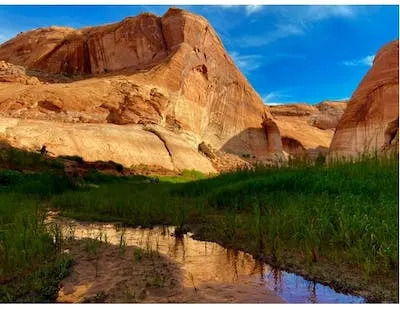
This side canyon emerged in recent years as Lake Powell shrank. The white ‘bathtub ring’ on the rock wall shows past water levels. Daniel Craig McCool, <a href=
This side canyon emerged in recent years as Lake Powell shrank. The white ‘bathtub ring’ on the rock wall shows past water levels. Daniel Craig McCool, CC BY-ND

Glen Canyon remained relatively unknown until the late 1940s, when the Bureau of Reclamation proposed several large dams on the upper Colorado River for irrigation and hydropower. Environmentalists fiercely objected to one at Echo Park in Dinosaur National Monument on the Colorado-Utah border, alarmed by the prospect of building a dam in a national monument. Their campaign to block it succeeded – but in return they accepted a dam in Glen Canyon, a decision that former Sierra Club President David Brower later called his greatest regret.

New challenges

The first goal of managing the emergent landscape in Glen Canyon should be the inclusion of tribes in a co-management role. The Colorado River and its tributaries are managed through a complex maze of laws, court cases and regulations known as the “Law of the River.” In an act of stupendous injustice, the Law of the River ignored the water rights of Native Americans until courts stepped in and required western water users to consider their rights.

Tribes received no water allocation in the 1922 Colorado River Compact and were ignored or trivialized in subsequent legislation. Even though modern concepts of water management emphasize including all major stakeholders, tribes were excluded from the policymaking process.

There are 30 tribes in the Colorado River Basin, at least 19 of which have an association with Glen Canyon. They have rights to a substantial portion of the river’s flow, and there are thousands of Indigenous cultural sites in the canyon.

Another management challenge is the massive amounts of sediment that have accumulated in the canyon. “Colorado” means “colored red” in Spanish, a recognition of the silt-laden water. This silt used to build beaches in the Grand Canyon, just downstream, and created the Colorado River delta in Mexico.

But for the past 63 years, it has been accumulating in Lake Powell, where it now clogs some sections of the main channel and will eventually accumulate below the dam. Some of it is laced with toxic materials from mining decades ago. As more of the canyon is exposed, it may become necessary to create an active sediment management plan, including possible mechanical removal of some materials to protect public health.

The creation of Lake Powell also resulted in biological invasives, including nonnative fish and quagga mussels. Some of these problems will abate as the reservoir declines and a free-flowing river replaces stagnant still water.

On a more positive note, native plants are recolonizing side canyons as they become exposed, creating verdant canyon bottoms. Restoring natural ecosystems in the canyon will require innovative biological management strategies as the habitat changes back to a more natural landscape.

Finally, as the emergent landscape expands and side canyons recover their natural scenery, Glen Canyon will become a unique tourist magnet. As the main channel reverts to a flowing river, users will no longer need an expensive boat; anyone with a kayak, canoe or raft will be able to enjoy the beauty of the canyons.

Glen Canyon National Recreation Area, which includes over 1.25 million acres around Lake Powell, was created to cater to people in motorized boats on a flat-water surface. Its staff will need to develop new capabilities and an active visitor management plan to protect the canyon and prevent the kind of crowding that is overrunning other popular national parks.

Other landscapes are likely to emerge across the West as climate change reshapes the region and numerous reservoirs decline. With proper planning, Glen Canyon can provide a lesson in how to manage them.

Read more:

Mt. Washington records coldest wind chill in US history

The Hill

Mt. Washington records coldest wind chill in US history

Amanda Pitts – February 6, 2023

MT. WASHINGTON, N.H. (WPRI) – New Hampshire’s Mount Washington, the highest peak in the Northeast, recorded the coldest wind chill in the history of the United States on Saturday morning when an arctic air mass hit New England.

The Mount Washington Observatory recorded a new, record-low air temperature of -46.9 degrees Fahrenheit as of Saturday morning at 4:10 a.m, according to overnight summit conditions.

The previous record daily low of -32 degrees Fahrenheit was set in 1963.

The previous wind chill record was shattered overnight, when wind chills dropped to -108.4 degrees at different points on Friday night and Saturday morning. The previous record was -102.7 degrees Fahrenheit.

“Winds will also remain elevated Saturday morning, with wind speeds ranging from 100-115 mph with gusts up to 135 mph,” the observatory wrote in a summit forecast on Saturday. “Strong winds and harsh cold temperatures will continue to produce dangerously low wind chill values, with wind chill values remaining at 100 below to 110 below Saturday morning.

What is ‘thundersnow’? Weather phenomenon explained

The record-cold temps come amid what experts call a “generational Arctic outbreak” throughout the Northeast, a branch of the National Weather Service (NWS) told CNN.

On Saturday morning, dangerously cold temperatures remained, along with wind chills that dropped to -45 to -50 degrees Fahrenheit in many areas. On Sunday, however, the frigid temperatures in the region are expected to move out, and possibly rise to the 40s.

The Associated Press contributed to this report.

Huge chunk of plants, animals in U.S. at risk of extinction -report

Reuters

Huge chunk of plants, animals in U.S. at risk of extinction -report

Brad Brooks – February 6, 2023

A Venus flytrap is seen at the meat-eating plant exhibition "Dejate Atrapar" (Let Yourself Get Caught), in Bogota
A Venus flytrap is seen at the meat-eating plant exhibition “Dejate Atrapar” (Let Yourself Get Caught), in Bogota
Endangered Key Deer are pictured in a puddle following Hurricane Irma in Big Pine Key, Florida
Endangered Arizona hedgehog cactus is seen in the Oak Flat recreation area outside Superior, Arizona
A full moon rises over a cactus in Phoenix
The endangered dusky gopher frog, a darkly colored, moderately sized frog with warts covering its back and dusky spots on its belly, is shown in this handout photo

(Reuters) -A leading conservation research group found that 40% of animals and 34% of plants in the United States are at risk of extinction, while 41% of ecosystems are facing collapse.

Everything from crayfish and cacti to freshwater mussels and iconic American species such as the Venus flytrap are in danger of disappearing, a report released on Monday found.

NatureServe, which analyzes data from its network of over 1,000 scientists across the United States and Canada, said the report was its most comprehensive yet, synthesizing five decades’ worth of its own information on the health of animals, plants and ecosystems.

Importantly, the report pinpoints the areas in the United States where land is unprotected and where animals and plants are facing the most threats.

Sean O’Brien, president of NatureServe, said the conclusions of the report were “terrifying” and he hoped it would help lawmakers understand the urgency of passing protections, such as the Recovering America’s Wildlife Act that stalled out in Congress last year.

“If we want to maintain the panoply of biodiversity that we currently enjoy, we need to target the places where the biodiversity is most threatened,” O’Brien said. “This report allows us to do that.”

U.S. Representative Don Beyer, a Democrat who has proposed legislation to create a wildlife corridor system to rebuild threatened populations of fish, wildlife and plants, said NatureServe’s work would be critical to helping agencies identify what areas to prioritize and where to establish migration routes.

“The data reported by NatureServe is grim, a harrowing sign of the very real problems our wildlife and ecosystems are facing,” Beyer told Reuters. “I am thankful for their efforts, which will give a boost to efforts to protect biodiversity.”

HUMAN ENCROACHMENT

Among the species at risk of disappearing are icons like the carnivorous Venus flytrap, which is only found in the wild in a few counties of North and South Carolina.

Nearly half of all cacti species are at risk of extinction, while 200 species of trees, including a maple-leaf oak found in Arkansas, are also at risk of disappearing. Among ecosystems, America’s expansive temperate and boreal grasslands are among the most imperiled, with over half of 78 grassland types at risk of a range-wide collapse.

The threats against plants, animals and ecosystems are varied, the report found, but include “habitat degradation and land conversion, invasive species, damming and polluting of rivers, and climate change.”

California, Texas and the southeastern United States are where the highest percentages of plants, animals and ecosystems are at risk, the report found.

Those areas are both the richest in terms of biodiversity in the country, but also where population growth has boomed in recent decades, and where human encroachment on nature has been harshest, said Wesley Knapp, the chief botanist at NatureServe.

Knapp highlighted the threats facing plants, which typically get less conservation funding than animals. There are nearly 1,250 plants in NatureServe’s “critically imperiled” category, the final stage before extinction, meaning that conservationists have to decide where to spend scant funds even among the most vulnerable species to prevent extinctions.

“Which means a lot of plants are not going to get conservation attention. We’re almost in triage mode trying to keep our natural systems in place,” Knapp said.

‘NATURE SAVINGS ACCOUNT’

Vivian Negron-Ortiz, the president of the Botanical Society of America and a botanist with the U.S. Fish and Wildlife Service, who was not involved in the NatureServe report, said there is still a lot scientists do not know and have not yet discovered about biodiversity in the United States, and that NatureServe’s data helped illuminate that darkness.

More than anything, she sees the new data as a call to action.

“This report shows the need for the public to help prevent the disappearance of many of our plant species,” she said. “The public can help by finding and engaging with local organizations that are actively working to protect wild places and conserve rare species.”

John Kanter, the senior wildlife biologist with the National Wildlife Federation, said the data in the report, which he was not involved with, was essential to guiding state and regional officials in creating impactful State Wildlife Action Plans (SWAPs), which they must do every 10 years to receive federal funding to protect vulnerable species.

Currently $50 million in federal funding is divided up among all states to carry out their SWAPs. The Recovering America’s Wildlife Act, whose congressional sponsors say will be reintroduced soon, would have increased that to $1.4 billion, which would have a huge impact on the state’s abilities to protect animals and ecosystems, Kanter said, and the NatureServe report can act as roadmap for officials to best spend their money.

“Our biodiversity and its conservation is like a ‘nature savings account’ and if we don’t have this kind of accounting of what’s out there and how’s it doing, and what are the threats, there’s no way to prioritize action,” Kanter said. “This new report is critical for that.”

Read more:

GRAPHIC-The collapse of insects

Penguins offer varied clues to Antarctic climate change

ANALYSIS-U.N. nature deal can help wildlife as long as countries deliver

(Reporting by Brad Brooks in Lubbock, Texas; Additional reporting by Julio-Cesar Chavez in Washington; Editing by Lisa Shumaker)

Death toll climbs as 7.8 magnitude earthquake rocks Turkey and Syria: Here’s everything we know

Yahoo! News

Death toll climbs as 7.8 magnitude earthquake rocks Turkey and Syria: Here’s everything we know

Photos show the devastation and desperate search for survivors after an earthquake hit the border of Turkey and Syria.

Dylan Stableford and Yahoo News Photo Staff – February 6, 2023

Rescuers carry out a girl from a collapsed building following an earthquake in Diyarbakir, Turkey February 6, 2023. (Sertac Kayar/Reuters)

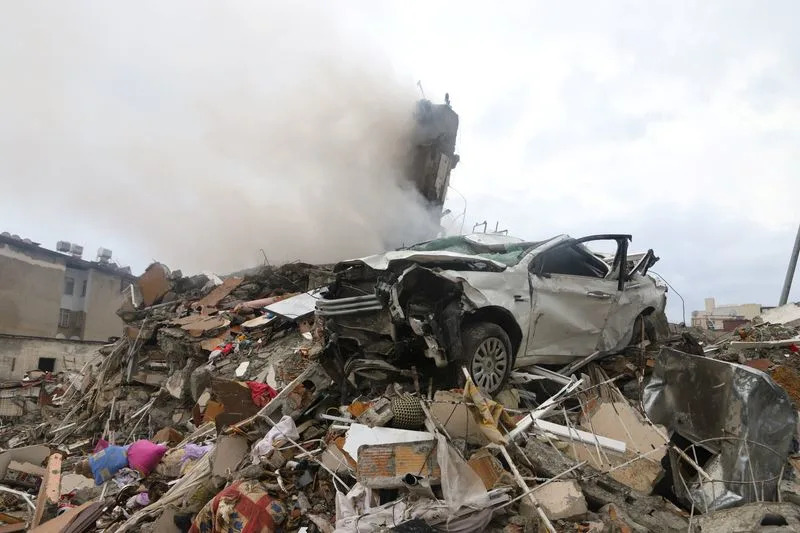
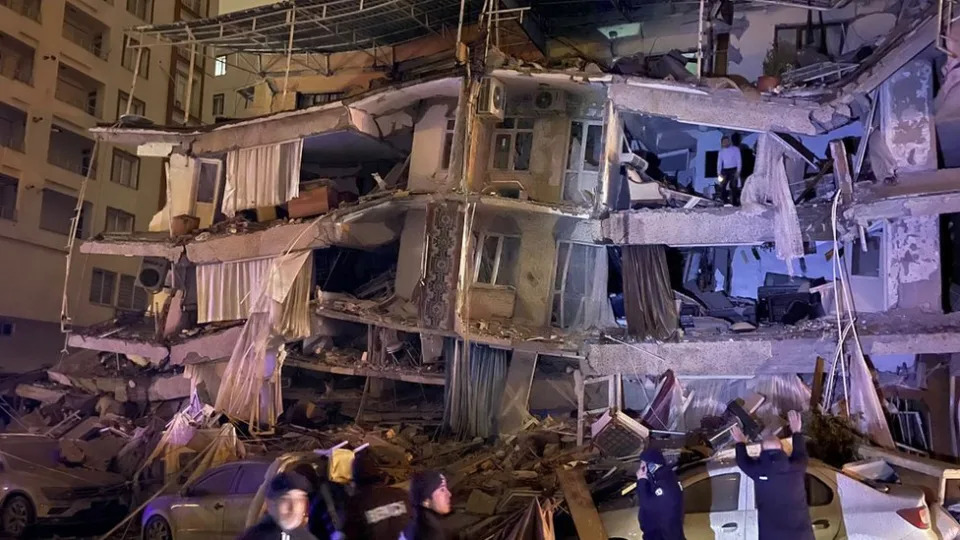
At least 2,300 people were killed after a 7.8 magnitude pre-dawn earthquake rocked the border of Turkey and Syria early Monday, toppling thousands of buildings and leaving hundreds of people trapped under rubble.

The quake, which was centered on Turkey’s southeastern province of Kahramanmaras, could be felt as far away as Cairo and Beirut, as powerful aftershocks continued to rattle the region.

Here’s everything we know about the earthquake and its aftermath.

This aerial view shows residents searching for victims and survivors amidst the rubble of collapsed buildings following an earthquake in the village of Besnia near the twon of Harim, in Syria's rebel-held northwestern Idlib province on the border with Turkey, on February 6, 2022. (Omar Haj Kadour/AFP via Getty Images)
This aerial view shows residents searching for victims and survivors amidst the rubble of collapsed buildings following an earthquake in the village of Besnia near the twon of Harim, in Syria’s rebel-held northwestern Idlib province on the border with Turkey, on February 6, 2022. (Omar Haj Kadour/AFP via Getty Images)

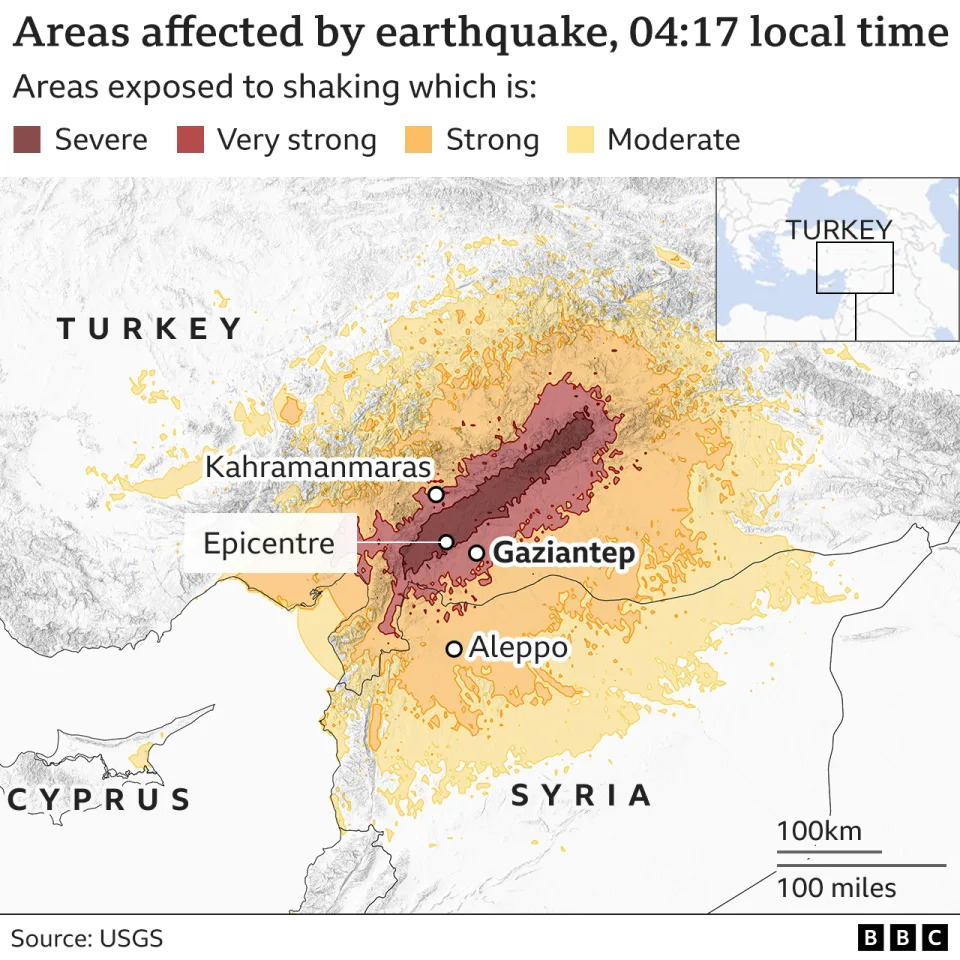
The U.S. Geological Survey measured the 7.8 magnitude quake at a depth of 17.9 km, or about 11 miles, at 4:17 a.m. local time.

The Associated Press described the moment it struck.

“On both sides of the border, residents jolted out of sleep by the pre-dawn quake rushed outside on a cold, rainy and snowy night. Buildings were reduced to piles of pancaked floors,” the news service reported. “Rescue workers and residents in multiple cities searched for survivors, working through tangles of metal and concrete. A hospital in Turkey collapsed, and patients, including newborns, were evacuated from facilities in Syria.”

An infographic titled
An infographic titled “Impact area of earthquakes in Turkey” created in Ankara, Turkiye on February 06, 2023. (Yasin Demirci/Anadolu Agency via Getty Images)

Dozens of aftershocks followed. Hours later, a 7.5 magnitude quake struck more than 60 miles away. An official from Turkey’s disaster management agency said it was a new earthquake, not an aftershock, the AP said.

Death toll climbs

In Turkey, officials said the death toll had risen to almost 1,500, with at least 8,500 injured.

In Syria, the death toll in government-held areas was at least 430 with more than 1,200 injured, the Syrian Health Ministry reported. In rebel-held areas, more than 380 people were killed, according to the Syrian Civil Defense unit, also known as the White Helmets.

Search and rescue operations continue after 7.7 magnitude earthquake hits Elazig, Turkiye on February 06, 2023. (Ismail Sen/Anadolu Agency via Getty Images)

Turkish President Recep Tayyip Erdogan warned that the death toll will undoubtedly rise.

“Because the debris removal efforts are continuing in many buildings in the earthquake zone, we do not know how high the number of dead and injured will rise,” Erdogan said. “Hopefully, we will leave these disastrous days behind us in unity and solidarity as a country and a nation.”

Winter weather complicates recovery efforts

Bitterly cold temperatures and worsening conditions were complicating the search and rescue efforts, Reuters reported.

Civil defense workers and security forces search through the wreckage of collapsed buildings in Hama, Syria, Monday, Feb. 6, 2023. (SANA via AP)

“Temperatures in some areas were expected to fall to near freezing overnight, worsening conditions for people trapped under rubble or left homeless,” the news service said. “Rain was falling on Monday after snowstorms swept the country at the weekend.”

What’s more, “poor internet connections and damaged roads between some of the worst-hit cities in Turkey’s south, homes to millions of people, hindered efforts to assess and address the impact.”

Quake struck war-torn region

The earthquake struck a region that has been battered on both sides of the border by more than a decade of civil war in Syria.

Rescue teams search for victims in the rubble following an earthquake in northwestern Syrian Idlib in the rebel-held part of Idlib province, on February 6, 2023. (Syria Civil Defense/UPI/Shutterstock)

“On the Syrian side, the region is divided between government-held territory and the country’s last opposition-held enclave, which is surrounded by Russian-backed government forces. Turkey is home to millions of refugees from that conflict. About 4 million people live in the opposition-held regions in Syria, many of them displaced from other parts of the country by the fighting. Many of the residential buildings were already unsafe because of bombardments.”

Mehmet Emin Ataoglu rescued under the rubble of 6-storey-building after 7.7 magnitude earthquake hits Iskenderun district of Hatay, Turkiye on February 06, 2023. (Murat Sengul/Anadolu Agency via Getty Images)

The region also sits on top of major fault lines. In 1999, a string of earthquakes struck northwest Turkey, killing nearly 18,000 people.

Erdogan called Monday’s quake the biggest disaster since the 1939 Erzincan earthquake, which killed more than 30,000.

Biden vows support
Civil defense workers and security forces search through the wreckage of collapsed buildings in Hama, Syria, Monday, Feb. 6, 2023. (Omar Sanadik/AP)

In a statement, President Biden said he was “deeply saddened by the loss of life and devastation caused by the earthquake” and has directed his administration to provide any and all needed assistance.

“Our teams are deploying quickly to begin to support Turkish search and rescue efforts and address the needs of those injured and displaced by the earthquake,” Biden said in a statement. “U.S.-supported humanitarian partners are also responding to the destruction in Syria. Today, our hearts and our deepest condolences are with all those who have lost precious loved ones, those who are injured, and those who saw their homes and businesses destroyed.”

More images from the devastation
Rescue teams evacuate a victim pulled out of the rubble following an earthquake in northwestern Syrian Idlib in the rebel-held part of Idlib province, on February 6, 2023. (Syria Civil Defense/UPI/Shutterstock)
People gather as rescuers search for survivors under the rubble, following an earthquake, in rebel-held town of Jandaris, Syria February 6, 2023. (Khalil Ashawi/Reuters)
A rescuer carries an injured child away from the rubble of a building following an earthquake in rebel-held Azaz, Syria February 6, 2023 in this still image taken from video. Reuters TV/via Reuters)
Rescuers search for survivors under the rubble, following an earthquake, in rebel-held town of Jandaris, Syria February 6,2023.  (Khalil Ashawi/Reuters)
Rescuers search for survivors under the rubble, following an earthquake, in rebel-held town of Jandaris, Syria February 6,2023. (Khalil Ashawi/Reuters)
Firefighters carry the body of a victim in Diyarbakir, in southeastern Turkey, Monday, Feb. 6, 2023. (Mahmut Bozarsan/AP)
Syrian civil defense members search for people under the rubble of a destroyed building in Afrin, Syria, Monday, Feb. 6, 2023. (Zana Halil/DIA images via AP)
People and emergency teams rescue a person on a stretcher from a collapsed building in Adana, Turkey, Monday, Feb. 6, 2023.  (IHA agency via AP)
People and emergency teams rescue a person on a stretcher from a collapsed building in Adana, Turkey, Monday, Feb. 6, 2023. (IHA agency via AP)
People search for survivors under the rubble following an earthquake in Diyarbakir, Turkey February 6, 2023. (Sertac Kayar/Reuters)
People carry a victim as rescuers search for survivors under the rubble, following an earthquake, in rebel-held town of Jandaris, Syria February 6, 2023. (Khalil Ashawi/AP)
Rescuers work at the site of a collapsed building following an earthquake in Adana, Turkey February 6, 2023. (Cagla Gurdogan/Reuters)
A man carries a girl following an earthquake, in rebel-held town of Jandaris, Syria February 6, 2023. (Khalil Ashawi/Reuters)
People gather as rescuers search for survivors under the rubble, following an earthquake, in rebel-held town of Jandaris, Syria February 6, 2023. (Khalil Ashawi/Reuters)
Earthquake victims receive treatment at the al-Rahma Hospital in the town of Darkush, Idlib province, northern Syria, Monday, Feb. 6, 2023. (Ghaith Alsayed/AP)

Why was the Turkey-Syria earthquake so bad?

Reuters

EXPLAINER – Why was the Turkey-Syria earthquake so bad?

Gloria Dickie – February 6, 2023

Earthquake in Iskenderun
Aftermath of an earthquake in Aleppo

LONDON (Reuters) – The magnitude 7.8 earthquake that struck Turkey and Syria on Monday is likely to be one of the deadliest this decade, seismologists said, with a more than 100 km (62 miles) rupture between the Anatolian and Arabian plates.

Here is what scientists said happened beneath the earth’s surface and what to expect in the aftermath:

WHERE DID THE EARTHQUAKE ORIGINATE?

The epicentre was about 26 km east of the Turkish city of Nurdagi at a depth of about 18 km on the East Anatolian Fault. The quake radiated towards the northeast, bringing devastation to central Turkey and Syria.

During the 20th century, the East Anatolian Fault yielded little major seismic activity. “If we were going simply by (major) earthquakes that were recorded by seismometers, it would look more or less blank,” said Roger Musson, an honorary research associate at the British Geological Survey.

Only three earthquakes have registered above 6.0 on the Richter Scale since 1970 in the area, according to the U.S. Geological Survey. But in 1822, a 7.0 quake hit the region, killing an estimated 20,000 people.

HOW BAD WAS THIS EARTHQUAKE?

On average, there are fewer than 20 quakes over 7.0 magnitude in any year, making Monday’s event severe.

Compared with the 6.2 earthquake that hit central Italy in 2016 and killed some 300 people, the Turkey-Syria earthquake released 250 times as much energy, according to Joanna Faure Walker, head of the University College London Institute for Risk and Disaster Reduction.

Only two of the deadliest earthquakes from 2013 to 2022 were of the same magnitude as Monday’s quake.

WHY WAS IT SO SEVERE?

The East Anatolian Fault is a strike-slip fault.

In those, solid rock plates are pushing up against each other across a vertical fault line, building stress until one finally slips in a horizontal motion, releasing a tremendous amount of strain that can trigger an earthquake.

The San Andreas Fault in California is perhaps the world’s most famous strike-slip fault, with scientists warning that a catastrophic quake is long overdue.

The initial rupture for the Turkey-Syria earthquake kicked off at a relatively shallow depth.

“The shaking at the ground surface will have been more severe than for a deeper earthquake of the same magnitude at source,” David Rothery, a planetary geoscientist at the Open University in Britain, said.

WHAT KIND OF AFTERSHOCKS CAN BE EXPECTED?

Eleven minutes after the initial quake, the region was hit by a 6.7-magnitude aftershock. A 7.5-magnitude quake came hours later, followed by another 6.0 spasm in the afternoon.

“What we are seeing now is the activity is spreading to neighbouring faults,” said Musson. “We expect seismicity to continue for a while.”

After the deadly 1822 event, aftershocks carried on into the following year.

WHAT MIGHT THE FINAL DEATH TOLL BE?

Earthquakes of similar magnitudes in populated areas have killed thousands of people. Nepal’s 7.8-magnitude earthquake in 2015 claimed nearly 9,000 lives.

“It’s not going to be good,” said Musson. “It will be in the thousands, and could be in the tens of thousands.”

Cold winter weather, he added, means that people trapped under rubble have less chance at survival.

(Reporting by Gloria Dickie; Editing by Andrew Cawthorne)

Turkey earthquake: Death toll could increase eight-fold, WHO says

BBC News

Turkey earthquake: Death toll could increase eight-fold, WHO says

Tiffany Wertheimer – BBC News – February 6, 2023

The death toll from a strong earthquake in south-eastern Turkey, near Syria’s border, could rise eight-fold, the World Health Organisation has warned.

The toll, which currently stands at more than 3,400 people, has increased rapidly since the first earthquake struck early on Monday morning.

About 12 hours later, a second powerful tremor hit further north.

Rescuers have been combing through mountains of rubble in freezing and snowy conditions to find survivors.

Countries around the world are sending support to help the rescue efforts, including specialist teams, sniffer dogs and equipment.

The US Geological Survey said the 7.8 magnitude tremor struck at 04:17 local time (01:17 GMT) at a depth of 17.9km (11 miles) near the city of Gaziantep.

Seismologists said the first quake was one of the largest ever recorded in Turkey. Survivors said it took two minutes for the shaking to stop.

The second quake – triggered by the first – had a magnitude of 7.5, and its epicentre was in the Elbistan district of Kahramanmaras province.

Many aftershocks are still being felt across the region.

The number of dead and injured from both Turkey and Syria has increased rapidly throughout Monday.

The WHO has warned that those numbers are likely to increase as much as eight times, as rescuers find more victims in the rubble.

“We always see the same thing with earthquakes, unfortunately, which is that the initial reports of the numbers of people who have died or who have been injured will increase quite significantly in the week that follows,” the WHO’s senior emergency officer for Europe, Catherine Smallwood, told AFP.

Ms Smallwood added that the snowy conditions will leave many people without shelter, adding to the dangers.

Many of the victims are in war-torn northern Syria, where millions of refugees live in camps on both sides of the border with Turkey. There have been dozens of fatalities reported in rebel-held areas.

Thousands of buildings across both the countries have collapsed, and several videos show the moment they fell, as onlookers ran for cover. Many buildings that were as large as 12 storeys high are now flattened, roads have been destroyed and there are huge mountains of rubble as far as the eye can see.

Among the buildings destroyed was Gaziantep Castle, an historic landmark that has stood for more than 2,000 years.

The BBC’s Middle East correspondent Anna Foster, reporting from the Turkish city of Osmaniye, near the epicentre, described a devastating scene.

“It’s absolutely pouring with rain which is hampering the rescue efforts. There is no power at all in the city tonight.

“We’re still feeling regular after-shocks… and there are still concerns that there may be still more buildings to collapse,” our correspondent said.

Map showing where the tremors were

Turkey’s energy infrastructure has also been damaged, and videos have emerged showing large fires in southern Turkey. Social media users claimed they were caused by damage to gas pipelines.

Turkey’s energy minister Fatih Donmez confirmed there had been serious damage to the infrastructure, but did not mention the explosions.

Turkey lies in one of the world’s most active earthquake zones.

In 1999 a deadly quake killed more than 17,000 in the north-west. The country’s worst earthquake disaster was in 1939 when 33,000 people died in Turkey’s eastern Erzincan province.

One Kahramanmaras resident, Melisa Salman, said living in an earthquake zone meant she was used to “being shaken”, but Monday’s tremor was “the first time we have ever experienced anything like that”.

“We thought it was the apocalypse,” she said.

Rescue teams check a destroyed house in Diyarbakir, Turkey. Photo: 6 February 2023
In Diyarbakir, north-east of Gaziantep, a search is now under way for people trapped in damaged buildings

The Turkish Red Crescent has called for citizens to make blood donations, and the organisation’s president, Kerem Kınık, said on Twitter that additional blood and medical products were being sent to the affected region.

Following an international appeal for help, Turkey’s President Erdogan said 45 countries had offered support.

UN Secretary General António Guterres has called for an international response to the crisis, saying that many of the families hit by the disaster were “already in dire need of humanitarian aid in areas where access is a challenge”.

The European Union is sending search and rescue teams to Turkey, while rescuers from the Netherlands and Romania are already on their way. The UK has said it will send 76 specialists, equipment and rescue dogs.

France, Germany, Israel, and the US have also pledged to help. Russian President Vladimir Putin has offered help to both Turkey and Syria, as has Iran.

Turkey’s interior minister, Suleymon Soylu, said 10 cities were affected by the initial quake including Hatay, Osmaniye, Adiyaman, Malatya, Sanliurfa, Adana, Diyarbakir and Kilis.

School has been suspended in those cities for at least a week.

A volunteer with the White Helmets rescue group, which operates in rebel-controlled areas of north-western Syria, fought back tears as he described the devastation in Sarmada, near the border with Turkey.

“Many buildings in different cities and villages in north-western Syria collapsed,” he told the BBC.

“Still now, many families are under the rubble. We are trying to save them but it’s a very hard task for us.

“We need help. We need the international community to do something, to help us, to support us. North-western Syria is now a disaster area,” he added.

The earthquake was powerful enough to be felt as far away as Cyprus, Lebanon and Israel.

Map showing damage zone

Is ‘Quiet Thriving’ the New Workplace Trend We Should All Be Channeling?

Glamour

Is ‘Quiet Thriving’ the New Workplace Trend We Should All Be Channeling?

Fiona Ward – February 6, 2023

If quiet quitting was your workplace buzzword for 2022, then maybe this year’s more optimistic trend—quiet thriving—might just be the positive outlook you need.

By the end of last year, it seemed we were all quiet quitting something, be it our relationships or our jobs. That is, doing the bare minimum in a situation that you don’t believe is serving you or rewarding you in the way you feel you deserve. But while it’s a tempting thought to mentally check out of your job, it can actually have a pretty negative effect on your mood and may even make you feel even more unfulfilled at work. So, introducing the antithesis to quiet quitting: quiet thriving.

Coined by psychotherapist Lelsey Alderman in an article for The Washington Post, the term quiet thriving means actively making changes to your work day in order to shift your mental state and help you feel more engaged in your job.

As neuroscientist and success coach Laura Ellera tells Glamour UK, it isn’t really in our nature to do the bare minimum at work. “Let’s be honest, it’s not always possible to just up and quit our jobs when they are causing us distress, even though we might want to,” she says. “We can choose to settle into just getting by and practicing quiet quitting, but this in the long run will not be best for your mental health.”

Work

‘Resenteeism’ Is Natural Successor to Quiet Quitting

It’s the idea of staying in a job you’re fundamentally unhappy in.

She continues, “We are built to thrive as human beings—we are naturally inquisitive and even if we say we’re happy just doing the bare minimum until something better comes along, deep down we feel that lack of purpose. We notice the clock ticking as our careers seem to drift by us. We are nagged by that feeling that there’s got to be more to life than this.

“Even if you could leave that role, you may not find the fulfillment you crave if you haven’t worked on yourself first. No job alone will give us that deep down satisfaction that we all desire. We want to make a difference. We need to be appreciated. There is a drive to reach our full potential, whether we care to admit it to ourselves or not. So quiet quitting, while it may feel like sticking two up to the establishment, is actually doing the same right back at you.”

For Ellera, quiet thriving allows us to take back control of our well-being at work—and it involves two elements: “The mental switch that we need to work through in order to see our career from a different, more positive angle, and the physical actions we take in order to shape the reality of the role into one that makes us excited to go to work again.”

Here’s how you can try quiet thriving for yourself….

Take back control.

“A great place to start is to think about which parts of your job frustrate you and which parts light you up,” says Ellera. “Really get clear on the different aspects of your role and what they mean to you. Then take the parts that frustrate you and ask yourself honestly, Which parts of this do I have control over? Which parts do I have some influence over? And which parts are completely out of my control?

“If you believe your boss is an overbearing fool, you have no control over how they behave, but you do have control over how you react to their behavior. So go through each of the points (good and bad) and mark ‘control,’ ‘influence,’ or ‘no control’. It’s then down to you to take the parts that light you up and you have control over, and to work out a plan to incorporate more of that into your every day.”

Ellera suggests, “Look at the parts that frustrate you but you have control over, and work out how you can get less of that in your day. Once you’ve worked on these, go onto the things that you have influence over and do the same. Then consciously agree to let go of the things you have no control over. But know that even with these, you always have control over how you choose to react to them. And it is a choice.”

Learn to soothe your nervous system.

“When we get stressed, we lose full access to parts of our brain, as the body is focusing on more imminent threats (previously the hungry lion, now the looming deadline or the angry looking boss heading your way). When our body is in this threat mode, we also lose the ability to communicate properly and build connections with others, both of which are imperative for our workplace success and mental well-being,“ Ellera says.

“So to step out of this threat mode, we need to learn to soothe our nervous system, and we can do this by starting to become more aware of how our body is feeling in the moment. Are you breathing deeply, are your shoulders and jaw relaxed, are you feeling calm? Or are you taking short breaths in the top of your chest, feeling like you’re about to explode?

“Set a reminder on your phone to repeat every hour, and when it goes off, just take notice,” she instructs. “Become aware of what’s happening internally. Allow yourself the grace of taking three long, deep breaths in, exhaling each as slowly as you can through pursed lips, imagining you’re breathing out through a straw. This allows your nervous system to calm and means that your body can function fully and your brain can work optimally—because you can’t thrive in your job if your body is stuck in threat mode.”

Career

This Is What Gen Z Actually Wants From Their Jobs Right Now

Career experts give us the low-down.

Connect with others.

It takes a lot of energy for our body to function properly, and a lot of the time, we are taking more out of it than we are replenishing. This means we end up in an energy deficit; that’s when we feel sluggish, sleepy or downright exhausted.

“One thing that can help us to feel rejuvenated is to connect with people who make us feel safe,” says Ellera. “People who feel good to be around. This is when we can co-regulate our nervous systems—we move into step with other people’s breathing and heart-rate rhythm when we are relaxed with them. This can give us more energy and motivation in our workday. The key to this is making sure these relationships are built with growth in mind, so not hanging around with the group that spend their time complaining about work or their boss.

“You also need to be able to trust that person,” she says, ”because although the best thing for your nervous system is another human being, the worst thing for your nervous system is also another human being if they make you feel unsafe in any way shape or form. So connecting with your colleagues has greater benefits than just feeling good. It can actually help to regulate your entire body, give you more energy, and therefore allow you to thrive in your career.”

Have a break.

According to Ellera, there’s no harm in taking time to reset—it may even help with your productivity (depending on what you do, of course).

“We were not built to concentrate for 12 hours straight a day,” she says. “Studies have found that we can only really concentrate on a task for around an hour at a time before our brain starts to wander. So as you push on throughout the day, you’re actually getting less and less efficient at your work and are more and more likely to make mistakes. So take a break.”

One tactic Ellera suggests: “Split the day up into chunks where you can, and make sure you get up, move, and have a break. I get my clients to use the Pomodoro technique, where they set a timer (I use 25 minute intervals) and focus solely on one task at a time; when the timer goes off, they can either reset it and continue for another 25 minutes if it’s going well, or get up and have a break. This will make you so much more productive and helps you to get more done in your day. The breaks allow your brain to rest and your concentration to reset. And if you add a mini reward for getting that task done, such as a five-minute walk outside, or a coffee from the office cafe, your body will anticipate the reward and hit you with a shot of dopamine, the feel good hormone, making you more likely to do it again.”

Culture

How Much Work Are You Really Supposed to Do at Work?

Most offices have eight-hour workdays—how many of those hours are we really supposed to be working? We asked a productivity expert, a psychologist, a labor journalist, and a boss.

Prioritize your health and sleep.

“If you’re struggling with finding the love for your work, this isn’t going to be improved by crawling into the office late, tired, and with a hangover,” says Ellera. “Our mental health depends on our brain health, and when we don’t look after our brain, this is when everything seems to get harder.

“And this makes appreciating your role and working toward a better career path more difficult if you’re feeling generally rubbish.” she points out. “So ensure you’re starting your working day from the best place possible. Your brain thrives when it is nourished with the right nutrients, hydrated with water and rested with seven to nine hours of sleep. All the stuff that is common sense, but often not common practice. So take stock of where your health is right now. Because that has a direct impact on your brain health. And that has a direct impact on how you are going to be showing up at work and in your life in general.”

Be proactive.

While not every role out there has the wiggle room to change dramatically, there are always more ways to mold the role than we believe, according to Ellera.

“Since you’ve already highlighted the things that light you up over the things that drain you, it’s now up to you to shape your role into something that works for both you and your employer. It’s much more beneficial for an employer to have happy, motivated employees than it is to rigidly stick to a job description without taking into account the human doing the role. And businesses are becoming more open to this way of thinking,” Ellera says.

“Whilst taking a sledgehammer to your role and changing it completely might not go down so well, highlighting areas of opportunity to your boss, and explaining why and how they could work for you and the company, can help you to take back control of your career. Becoming known as the go-to for the area you thrive in will not only make you happier in your role, but also makes you a valued member of the team and increases your potential in the company.”

These are the 7 most common long COVID symptoms, new study finds

Today

These are the 7 most common long COVID symptoms, new study finds

Linda Carroll – February 6, 2023

mixetto

Despite the plethora of symptoms reported by patients with long COVID, a new study points to just seven that are unique to the illness. However, some long COVID researchers and doctors who’ve treated the disease believe this list is far from comprehensive.

The goal of the study was to look for long COVID symptoms that appear or persist more than a month after the initial infection and are distinct from symptoms of other common respiratory viruses, such as the flu or common cold. To do so, researchers used Cerner Real-World Data, a database containing information extracted from the electronic medical records from 122 health systems in the U.S.

They analyzed data from electronic health records of more than 17,000 patients diagnosed with COVID before April 14, 2022; more than 17,000 patients diagnosed with a different respiratory virus between March 1, 2020, and April 1, 2021; and 15,694 people with no virus diagnosis but who sought health care between 2020 and 2022.

Researchers concluded that some symptoms typically associated with long COVID do not appear more often after a COVID infection than they do with other respiratory viruses, according to the report published in Open Forum Infectious Diseases.

Compared to other viral respiratory illnesses, long COVID was most strongly associated with:

  • Heart palpitations (fast beating, fluttering or pounding)
  • Hair loss
  • Fatigue
  • Chest pain
  • Dyspnea (difficulty breathing)
  • Joint pain
  • Obesity in the postinfectious period

The hope is that this research will help patients and their doctors more easily recognize long COVID, study co-author Dr. Adnan Qureshi, neurologist at University of Missouri Health Care, tells TODAY.com. The research may help “health care providers know what they should be screening for,” Qureshi adds.

The surge in long COVID cases caught the health care system by surprise, Qureshi says.

“We thought once you survived the acute infection, then everything would be over,” he explains. “Now that survival has improved a lot, it’s quite apparent that this is not a one-time thing for many.”

“There has been a dramatic shift in disability and loss of productivity on a nationwide scale that is quite out of line with what we expected,” Qureshi adds. “The whole health care system has to gear up to meet that existing demand.”

Qureshi admits that the list of seven symptoms might not be the last word on the topic. “This is a work in progress,” he says. “It’s possible that some of the symptoms did not come out as significant in this analysis.”

Dr. Lawrence Purpura, director of Columbia University Irving Medical Center’s long COVID clinic, tells TODAY.com that the main strength of the new study is the number of patients it includes. But he adds that the study missed some of the cardinal symptoms of long COVID, aka post-COVID syndrome — most likely due to the underlying data. Chief among theses symptoms are:

  • Brain fog
  • Disabling fatigue
  • Dysfunction of the autonomic nervous system, which controls subconscious bodily functions, such as breathing, heart rate and blood pressure

The dysfunction of the autonomic nervous system explains why some patients’ heart rates skyrocket after climbing two or three steps, and that symptom may be what the authors of the new study are listing as heart palpitations, Purpura says.

But there are numerous issues with using electronic medical records to make conclusions about long COVID, Purpura explains.

First, the study depends on doctors knowing enough about long COVID to correctly enter the diagnostic billing code for the illness into the patient’s record, he says. Moreover, many patients with mild cases of COVID aren’t tested for COVID, so it’s wrong to assume that the 15,694 patients in the control group never had COVID.

As a result of the state of testing during the time period covered by the study, people with severe illness were most likely to be tested for COVID by a health care provider.

“In my clinic, I am seeing a lot of patients who were fully vaccinated and who have gone on to develop a prolonged case of long COVID, despite having had a mild case of COVID,” Purpura says. “My concern is that by missing some of the key characteristics of long COVID, we’d be doing patients a disservice.”

David Putrino, Ph.D., director of rehabilitation innovation for the Mount Sinai Health System, tells TODAY.com that, right now, electronic medical record-based studies of long COVID shouldn’t be seen “as anything other than general hypothesis-generating pieces of work.”

“We need to stop treating these studies as the be all and end all of science just because of the large (number of patients) and despite serious methodological flaws,” he adds.

Like Purpura, Putrino has found that the majority of people with persistent long COVID symptoms had a mild case of COVID, so they were unlikely to have positive test results in their medical records.

He adds that one of the big symptoms missed by the new study is “exertional malaise,” the crushing fatigue some patients experience after minor physical exertion. “This is a cardinal symptom of long COVID, and it’s been left out.”

Unfortunately, many health care providers don’t know how to treat this symptom, Putrino says. They think that patients are out of shape from being sick and just need to work up to a higher level of fitness, he adds.

“The reason they are not able to walk a block isn’t because they spent two weeks on the couch recovering from COVID,” Putrino explains. “They are experiencing this because they have inflamed blood vessels, persistent virus still rampaging through the body,” and malfunctioning mitochondria, the power plants of the cells that provide energy to essentially keep the lights on.

“If you try to exert yourself, it’s like someone poisoned you,” Putrino says. “You crash for weeks on end.”

Buy Nothing is everything

The Washington Post

Buy Nothing is everything

Maura Judkis, The Washington Post – February 6, 2023

(Illustration by Elena Lacey/The Washington Post)

It was not until after Angela Parker, 53, had raced across her north Atlanta neighborhood to nab eight leftover, thick-cut slices of ham with gravy from the porch of someone she didn’t know that she began to ask herself some questions. Was it weird to eat a stranger’s porch ham? Was it safe? Would the ham be worth it?

It was free, so – yes?

Parker had been alerted to the ham via her neighborhood’s Buy Nothing group, where people offer up their belongings to neighbors who might need or want them. The ham-givers had leftovers from a party, they said, and it was from Matthew’s Cafeteria, a legendary old-school Southern restaurant.

Sure enough, it was delicious. Well worth the (nonexistent) price.

“Ham’s my jam,” Parker says. “I enjoyed the heck out of it, on some Hawaiian bread.”

Meanwhile, in Takoma Park, Md., Julie Patton Lawson, 44, posted a free item on her Buy Nothing group: 13 gallons of Guinea pig poop.

“They eat a lot of fiber, so they poop a lot,” says Lawson, who owns four Guinea pigs and is fostering seven others. She had been using their poop as occasional fertilizer in her garden, but with 11 Guinea pigs in the home she had more poop than she needed. Also, her dogs kept eating it. So Lawson decided to offer it up to her neighbors.

“Within an hour I had one inquiry, and she came and picked up that bag the next day,” she says. “I have other people asking me, ‘So when will you have your next bag?'”

There have always been scrappers and freecyclers prowling the curbsides on trash day for castoff furniture and other treasures. The people who think, “Someone could use this,” and the people who do. They are scrimpers and savers, environmentalists, neighborhood do-gooders, benevolent hoarders; people who love stuff and hate waste and have a high threshold for risk, or just a quirky sense of adventure.

Who wants this raccoon skull? This possibly haunted baby doll? This toilet seat? These three mismatched spoons? A landline phone shaped like a shoe?

The answer is, almost always, somebody. Especially if it’s free.

Liesl Clark and Rebecca Rockefeller started the Buy Nothing Project as an experiment on Bainbridge Island, near Seattle. The idea was to encourage their neighbors to give away unwanted possessions instead of trashing them, and to take others’ things instead of buying something new and adding to the heaps of plastic junk circulating the globe. People can also use the app to ask if other people in their communities have a thing they need and would be willing to part with it – for free. That part is important. Members are prohibited from selling and trading, or even mentioning the monetary value of items.

By design, each participating neighborhood has its own volunteer-led group – to keep the giving close and convenient, though this presents issues regarding access and equity – rich neighbors give away fancier stuff, and more of it. People swap their stuff over Facebook or the Buy Nothing app. The movement spread dramatically over the last few years and now encompasses more than 7,000 groups.

“I’m a complete Buy Nothing freak,” says Katjusa Cisar, 41, who writes a newsletter, Curb Alert, about her adventures in scoring used finds on mailing lists and in thrift stores.

Expiration dates do not faze her. She has, on more than one occasion, obtained free used underwear. (“I just took them home and washed them,” she shrugs.) Some of her recent acquisitions from her Milwaukee-area Buy Nothing have included a Gucci Mane puzzle, a vintage book about CB radios, bunk beds for her kids, a half-empty container of contact lens solution and a tub full of mostly-expired cosmetics and beauty products (some of them were rancid and needed to be tossed). Things she has successfully given in the past include a half-eaten bag of frozen chicken tenders, a book about witchcraft and a broken hot dog roller, like the ones in convenience stores.

“A misconception that people have about Buy Nothing, if they’re unfamiliar with it, is that it’s charity,” says Cisar. “The number one goal of Buy Nothing, at least for the group I’m in, is to save things from going into the garbage.”

Clark, the co-founder, has seen some strange gifts and requests in groups. A neighbor once asked for a plot of land to bury a beloved dog. In the Pacific Northwest, a more-common-than-you’d-think posting is for owl pellets, a term for the bird’s regurgitations, where the skeletal remains of the animals it’s eaten are often preserved.

“A lot of home-schooling families or teachers ask for owl pellets,” Clark says, “because the students get to go through them and learn about the various bones.”

There’s an Instagram account (there always is!) called “the best of buy nothing,” which documents odd items that show up on the giveaway groups. Sex toys make frequent appearances. Other finds have included an empty (used) container for cremated remains, an X-ray film of the giver-awayer’s head and neck and a deflated volleyball.

There’s a lid for every pot, as the saying goes. Who could possibly want a terrifyingly realistic animatronic chimpanzee head, which loudly grunts and bellows? And which has sensors so its eyes follow you as you move? (And which was also broken, according to the owner?)

That would be Britny Adams, 36, of Colleyville, Texas.

When a member of her Buy Nothing group posted the bellowing chimp head last week, Adams went for it.

“I commented that I wanted it to scare my mother, because she had a pet monkey growing up in the 70’s,” she said.

The piece wasn’t actually broken, Adams says. The batteries were just stuck. Now it bellows great. The chimp head, she says, has provided hours of entertainment for her six-year-old child – and hours of abject terror for her dog. They named him Ape Ventura.

The plan might have been to prank her mother, but Adams ended up pranking herself. When she returned home last week from an evening with friends, she suddenly noticed Ape Ventura, staring at her in the dark. Adams screeched with fright. Her husband screeched with laughter. Ape Ventura screeched with screeching monkey noises.

There is something about free stuff that makes us abandon all rational thought.

“What our research has basically shown is that when people encounter items that are free, they overvalue them,” says Nina Mazar, a marketing professor at Boston University’s Questrom School of Business.

Take, for example, the case of the two granola bars.

Anna Paone Levy, 32, didn’t really like a box of almond coconut chocolate chip granola bars that she’d ordered on Instacart. After eating a few of them, she posted them on Buy Nothing, and somebody claimed the remaining two. Which, on the one hand … two granola bars? Really? On the other hand, heck yeah – two free granola bars!

“From an economics perspective, we would just value those costs and the benefits,” says Mazar. Are two granola bars, worth no more than a dollar each, worth walking 15 minutes for? Most people value their time at a higher rate than that, and so would be losing value on the deal, even if the bars were free. (Paone Levy didn’t know how far the woman had traveled.)

It goes the other way, too. People could try to sell all the miscellaneous stuff that ends up on Buy Nothing, but given the time and effort (and perhaps guilt) that comes with finding a buyer, giving it away can be the more economical solution.

And many people put their junk on Buy Nothing simply because it is unsellable.

After Paone Levy unloaded the two granola bars, her husband tweeted with astonishment about the exchange – a post that provoked other people to share their own observations about Buy Nothing’s bizarro economy. One person posted a screenshot of a free squeegee and used toilet brush that, despite the giver’s assurances that he “ran both through dish washer,” still bore some alarming brown stains. Another person shared an offer of birth control pills – but only the row of placebos at the bottom of the pack.

A third sent a screenshot of an offer for something called the “Privacy Pop,” which is a tent that goes over a dorm bed. “We bought it for our son freshman year in college in case a sleep-over visitor wanted a little privacy with another roomie present – never used.”

Similar genre: An Arlington, Va., woman was cleaning out some drawers when she encountered some condoms a month away from expiration. “I was looking at my nightstand and I was like, ‘Oh, well, that was a hopeful purchase,'” says Olga, 43, who spoke on the condition of anonymity to save face.

There were no takers. “I gave it a few days and then I just threw them out,” she says.

If these examples of unused giveaway items made you think of the famous six-word short story often attributed to Ernest Hemingway – “For sale: baby shoes, never worn” – then you’re not alone.

Jason Loviglio, 58, is the poet laureate of his Baltimore neighborhood’s giveaway group. People’s castoff items are “a very generative source for art,” he says.

Loviglio, who says he once saw someone post an offering of three celery sticks, writes poetry based on the absurd offers he sees in his group, which has included hornworms, champagne yeast, irritable bowel syndrome medication and too-spicy gumballs. Here’s one of his masterpieces:

“Saddest short story on the Listserv

“Free: Child’s Violin

“Never been played well”

Bridget Pooley’s giveaway ordeal was less like a poem, more like a riddle.

She had moved into a house in St. Paul, Minn., that came with a rain barrel. It had proved useful in the warm months, providing a reserve of water for her garden. As the weather got colder she worried about what would happen to the rainwater-filled barrel when temperatures plunged below freezing.

A friend suggested putting it on Buy Nothing.

Meaning the water, not the barrel.

“It has more nutrients, right? And it’s not processed, so it’s better for plants. And so I thought people would maybe come over and get some water,” says Pooley, 34.

What happened, instead, is that she spent a bunch of time warding off people who thought she was giving away the barrel. The day ended with her confronting someone in her yard who had emptied it – apparently thinking he could take the barrel without the water – and saturated her lawn in the process.

“I felt like an idiot,” Pooley says. “But I think it was a good laugh for some folks.”

Outnumbered and Worn Out, Ukrainians in East Brace for Russian Assault

THe New York Times

Outnumbered and Worn Out, Ukrainians in East Brace for Russian Assault

Michael Schwirtz – February 6, 2023

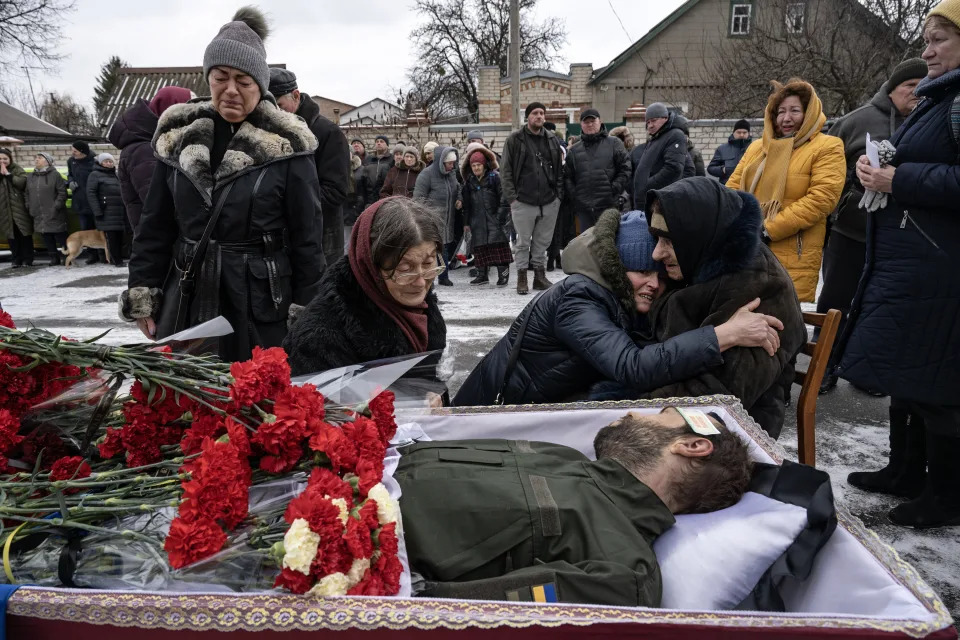
Mourners in Kharkiv, Ukraine grieve on Monday, Feb. 6, 2023, during the funeral of Anton Pushkar, a Ukrainian soldier who was killed in fighting near Bakhmut, in eastern Ukraine.  (Lynsey Addario/The New York Times)
Mourners in Kharkiv, Ukraine grieve on Monday, Feb. 6, 2023, during the funeral of Anton Pushkar, a Ukrainian soldier who was killed in fighting near Bakhmut, in eastern Ukraine. (Lynsey Addario/The New York Times)

NEVSKE, Ukraine — In a tiny village in eastern Ukraine at the epicenter of the next phase of the war, Lyudmila Degtyaryova measures the Russian advance by listening to the boom of incoming artillery shells.

There are more and more of them now. And they are coming more frequently, as Russian troops grind their way forward.

“You should see the fireworks here,” said Degtyaryova, 61, as the sounds of artillery howled all around. “It is like New Year’s.”

Russia’s military is preparing to launch a new offensive that could soon swallow Degtyaryova’s village of Nevske, and perhaps much more in the eastern Ukrainian region known as the Donbas. But already the impact of Russia’s stepped-up assault is being felt in the towns and villages along the hundreds of miles of undulating eastern front.- ADVERTISEMENT -https://s.yimg.com/rq/darla/4-10-1/html/r-sf-flx.html

Exhausted Ukrainian troops complain they are already outnumbered and outgunned, even before Russia has committed the bulk of its roughly 200,000 newly mobilized soldiers. And doctors at hospitals speak of mounting losses as they struggle to care for fighters with gruesome injuries.

The civilians standing in the way of Russia’s planned advance once again face the agonizing decision of whether to leave or to stay and wait out the coming calamity. This area in the northern Donbas was among the last to be liberated in a Ukrainian blitz offensive last fall that raised hopes among local residents that their months of trauma were over.

But the war has come back. Two weeks ago, a Russian shell landed in Degtyaryova’s yard, and as she contemplated her future over the weekend, the remains of her barn still smoldered.

She has rabbits, ducks and three pregnant cows to care for. A chicken, its feathers partly burned off in the recent strike, lay recovering in a bed of hay, its small injured foot in a homemade cast.

If the Russians come back, she lamented, she’ll have to flee.

“I’ve started to pack my things, if I’m being honest,” she said. “The soldiers will cover my back and I will leave. I’ll let my cows out and I’ll go. I don’t want to go back there.”

When and where the new offensive will begin in earnest is still unclear, but Ukrainian officials are gravely concerned. Ukraine’s military defied dire assessments before the war, thwarting Russia’s early efforts to seize the capital, Kyiv, and eventually driving Russian forces back in the northeast and south.

But the Russian military just keeps coming. Right now, the newly mobilized troops are finishing their training and entering the field; the forces include as many soldiers as took part in the initial invasion last year.

They could be ready to fight in as little as two weeks, said Serhiy Haidai, the governor of the Luhansk region, which includes Nevske — much sooner than new Western weapons, including tanks and heavy armored fighting vehicles, are expected to arrive in Ukraine.

“There are so many,” Haidai said of the new recruits. “These are not professional soldiers, but it is still 200,000 people who are shooting in our direction.”

Russia is expected to punch hard, looking to reverse nearly a year of cascading failure. While a renewed attack on Kyiv is now considered improbable, Russian forces will likely try to recover territories they lost last fall. as well as take full control of the Donbas, a key objective of Russian President Vladimir Putin.

Military analysts say that one likely scenario would be for Russian forces to swing down from the north and up from the south in an arc, creating a large claw that would cut off Ukrainian supply lines running east and west. That would put villages like Nevske in the direct path of Russia’s likely advance.

For locals it would be a disaster. Out here at the far edge of Ukraine’s offensive, people have not experienced the fruits of liberation the way Ukrainians farther west have. There is still no power or water and the fighting has never subsided. Fields of black unharvested sunflowers are pocked with snow-filled craters, and the area is littered with burned-out tanks and unexploded ordnance and mines that frequently kill livestock. Passing through the region, one occasionally comes across their frozen bodies or bones.

In Makiivka, just north of Nevske, five of Ruslan Vasilchenko’s cows have been killed, and those that remain were huddled on a recent day in a tiny barn that had been spackled with shrapnel. There was a burned tank in his garden and two destroyed cars in his courtyard. He said he expected things would get much worse soon.

“Over the last few days, the soldiers have come by to tell us not to leave our homes,” he said.

The first stages of the Russian offensive have already begun. Ukrainian troops say that Bakhmut, an eastern Ukrainian city that Russian forces have been trying to seize since the summer, is likely to fall soon. Elsewhere, Russian forces are advancing in small groups and probing the front lines looking for Ukrainian weaknesses.

The efforts are already straining Ukraine’s military, which is worn out by nearly 12 months of heavy fighting.

Troops say they have tanks and artillery pieces, but not enough of either, and have far less ammunition than their adversaries. Russian forces have also started to field more sophisticated weaponry, such as the T-90 tank, which is equipped with technology capable of detecting the targeting systems of anti-tank weapons like the U.S-made Javelins, limiting their effectiveness.

Mostly, though, the challenge comes down to numbers.

“It’s particularly difficult when you have 50 guys and they have 300,” said a 35-year-old infantry soldier named Pavlo, who was struck in the eye with a piece of shrapnel from a rocket-propelled grenade near Bakhmut. “You take them out and they keep coming and coming. There are so many.”

Losses among Ukrainian forces have been severe. Troops in a volunteer contingent called the Carpathian Sich, positioned near Nevske, said that some 30 fighters from their group had died in recent weeks, and soldiers said, only partly in jest, that just about everyone has a concussion.

“It’s winter and the positions are open; there’s nowhere to hide,” said a soldier from the unit with the call sign Rusin.

At one front-line hospital in the Donbas, the morgue was packed with the bodies of Ukrainian soldiers in white plastic bags. In another hospital, stretchers with wounded troops covered in gold foil thermal blankets crowded the corridors, and a steady stream of ambulances arrived from the front nearly all day long.

A military surgeon at that hospital, Myroslav Dubenko, 36, scrolled through photographs of soldiers with ghastly injuries: a lower jaw blasted off, half of a face missing. One soldier was rushed in with his throat sliced open from ear to ear. Dubenko was able to quickly repair the damage, and the soldier survived.

“In civilian life, you know that no matter how horrible your shift is, it will end sooner or later,” Dubenko said. “Here, you never know when it will end.”

It not just the influx of soldiers that is consuming doctors; civilians, too, are frequent victims of Russian attacks. For Andriy Drobnytsky, a 27-year-old military doctor, this is part of a deliberate strategy of overwhelming Ukraine’s military hospitals. Last week, a retired prison guard was rushed into the military hospital where Drobnytsky is deployed, his hand blown apart by a mortar shell that exploded while he was gathering firewood. Drobnytsky assisted in sewing his hand back together, probably saving his index finger.

“If there are lots of victims, we’ll get distracted by them,” he said. “You just can’t abandon them, right?”

Whether Russia will be able to capitalize on its strength in numbers is an open question. Russian soldiers, according to Ukrainian and Western assessments, are dying in far greater numbers. U.S. officials now estimate the number of Russian troops wounded and killed to be approaching 200,000, an astounding casualty rate.

In his sleeping quarters at a base near Bakhmut, a soldier with the call sign Badger pulled out a cloth bag and dumped its contents onto a cot. Inside were half a dozen knives — one with a hilt made from a deer’s hoof — trophies he said he had taken from the bodies of dead Russian soldiers.

“We also have losses, but they have huge losses,” Badger said. “We’ve wasted them all in huge numbers.”

Back near Nevske, soldiers from the Carpathian Sich said they had enough ammunition to hang on for now. One soldier, with the call sign Diesel, showed videos on his phone of the bodies of Russian troops he had killed when they came too close.

As they have since the beginning of the war, the Russians continue to make stupid mistakes, he said. From one dead officer, Diesel said, he took a tablet computer without an access code that had the coordinates of all of their mines and snipers.

In a video he recorded from the front, Diesel approaches a body lying in the snow, his rifle muzzle trained on the Russian’s head.

“Hello,” he whispers after determining the man was dead. “Did you sleep well?”