A California journalist documents the far-right takeover of her town: ‘We’re a test case’

The Guardian

A California journalist documents the far-right takeover of her town: ‘We’re a test case’

Dani Anguiano in Redding with photographs by Marlena Sloss

April 22, 2023

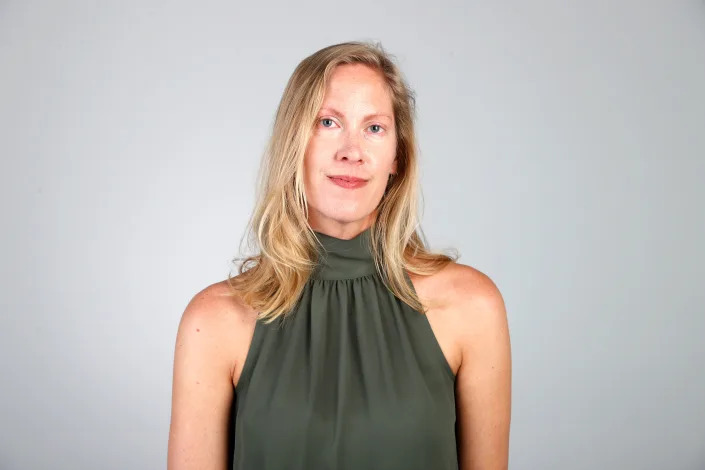
In a seemingly long gone era – before the Trump presidency, and Covid, and the 2020 election – Doni Chamberlain would get the occasional call from a displeased reader who had taken issue with one of her columns. They would sometimes call her stupid and use profanities.

Today, when people don’t like her pieces, Chamberlain said, they tell her she’s a communist who doesn’t deserve to live. One local conservative radio host said she should be hanged.

Chamberlain, 66, has worked as a journalist in Shasta county, California, for nearly 30 years.

Never before in this far northern California outpost has she witnessed such open hostility towards the press.

She has learned to take precautions. No meeting sources in public. She livestreams rowdy events where the crowd is less than friendly and doesn’t walk to her car without scanning the street. Sometimes, restraining orders can be necessary tools.

Related: Far-right county throws out voting machines – with nothing to replace them

These practices have become crucial in the last three years, she said, as she’s documented the county’s shift to the far right and the rise of an ultraconservative coalition into the area’s highest office. Shasta, Chamberlain said, is in the midst of a “perfect storm” as different hard-right factions have joined together to form a powerful political force with outside funding and publicity from fringe figures.

The new majority, backed by militia members, anti-vaxxers, election deniers and residents who have long felt forgotten by governments in Sacramento and Washington, has fired the county health officer and done away with the region’s voting system. Politically moderate public officials have faced bullying, intimidation and threats of violence. County meetings have turned into hours-long shouting matches.

Chamberlain and her team at A News Cafe, the news site she runs, have covered it all. Her writing has made her a public enemy of the conservative crowd intent on remaking the county. Far-right leaders have confronted her at rallies and public meetings, mocking and berating her. At a militia-organized protest in 2021, the crowd screamed insults.

The response of parts of her community has left her shocked: “This isn’t how it’s supposed to be to be a journalist. I shouldn’t go to my car afraid one of these guys is gonna bash me in the head with a baseball bat,” she said on a beautiful spring day in Redding late last month.

But it has left her with a sense of urgency, a determination to warn readers about a movement that shows no signs of slowing down and could have national repercussions as extremists try to create a framework that could be replicated elsewhere. “I can’t imagine how bad things can get here,” she said.

A community swinging to the extreme right

A lifelong Shasta county resident, Chamberlain became a cub reporter in her late thirties. She went to college later in life after marrying her high school sweetheart and having children. She initially wanted to be a social worker but has always been drawn to scratching under the surface of things, she said, a tendency she attributed to her childhood: after the death of her mother, she and her sisters were raised by a family that was far less kind than they appeared to be from the outside.

For 10 years, she wrote a beloved column at the local newspaper, telling the stories of community characters and sharing her personal experiences, like her son’s deployment to Iraq. When she was laid off, a hundred people picketed outside the newspaper’s office.

With help from her son, she started A News Cafe, an online magazine that documents local affairs, and readers came with her. Just before Covid hit, she had considered selling the website, and then decided to scale back operations and change its focus to town happenings and recipes, a favorite topic of the hobby baker.

But then Covid shut down the state, and laid bare the bitter fault lines that divided this community.

Residents angry over pandemic closures began filling county meetings, sometimes forcing their way inside, and directed their ire at elected officials who enforced only the minimum restrictions required by the state. One local resident, Carlos Zapata, warned the board of supervisors at a meeting in August 2020 to reopen the county or things wouldn’t be “peaceful much longer”.

“When the ballot box is gone, there is only the cartridge box. You have made bullets expensive, but luckily for you, ropes are reusable,” another resident said at a board of supervisors meeting in January 2021.

Religious leaders defied state orders and continued holding events. Bethel church, a Redding megachurch with more than 11,000 members and a major footprint in this city of 92,000, reported hundreds of cases at its school of “supernatural ministry”.

But there was more than just a backlash under way. The anger coalesced into an anti-establishment movement backed financially by the Connecticut millionaire Reverge Anselmo, who has a longstanding grudge against the county over a failed effort to start a winery.

Leaders of the movement sought to recall county supervisors, and produced a glossy documentary series about their efforts to “take back” their county. In February 2022, voters ousted a longtime supervisor, a former police chief and self-described Reagan Republican, and gained control of the board of supervisors.

The climate in the area had shifted, residents said, and those who had expressed support for officials and Covid rules encountered hostility. One man had his tires slashed, Chamberlain said. Others reported being mocked and bullied in public for wearing masks.

Still, the recall election saw low turnout with just 41% of eligible voters casting a ballot. Though many residents opposed the rightwing agenda, they didn’t take the threat seriously, Chamberlain said.

Chamberlain followed the upheaval closely, and the far-right figures driving it, while still writing stories about the joys of loungewear and how to sell old belongings.

She began documenting the political developments through chatty and irreverent opinion columns, with analysis of what’s happening and who’s behind it, and warnings of the danger it poses to the community.

“As the shit storm of civil unrest piles up, the North State has become a tinderbox at the ready, on the verge of ignition. Slogans and memes are the kindling. Calls to action, aggression and civil war are often found on the same Facebook pages as family photos, holiday greetings and birthday wishes,” she wrote in August 2020.

Chamberlain and A News Cafe reporters were also often breaking news: a Bethel church leader officiating his son’s wedding, a large gathering held in defiance of Covid restrictions; a pandemic shortage of nurses temporarily closing a local neonatal intensive care unit; and a sheriff’s deputy promoting far-right extremist content on social media.

Chamberlain described Zapata, the resident who had threatened violence and had become the public face of Shasta county’s anti-establishment movement, as an “alt-right recall kingpin/militia member/bull-semen purveyor/restaurant owner/former Florida strip-club owner”. He lashed out in comments before the board of supervisor that Chamberlain was “coward” who wants to “poison children”.

Zapata told the Guardian he was frustrated with Chamberlain’s “incessant writing” about him and what he described as attacks on his reputation and his family. He argued he was cordial and willing to sit down for an interview, but feels Chamberlain has created a caricature of him by taking things out of context.

“I stand for the majority of residents in Shasta county who want to ensure Shasta county remains a safe and healthy place for our children to grow and prosper,” he said in a statement. “Doni doesn’t like that. That is why she has made it her priority to attack me in the name of journalism for several years.”

Zapata is the only person in Chamberlain’s three decade career whom she has refused to interview, the journalist said. Instead, she has quoted his statements and social media posts rather than speak with him directly. “He has used very abusive language. He has made threats against people. He doesn’t tell the truth often. I refuse to write things that I know are not going to be true.”

Chamberlain has made a point of not interacting with those who attack her directly, and continuing her reporting. But the exchanges, along with the menacing, graphic threats to her and her staff and others in the community, and the lack of action from law enforcement have fundamentally changed how she approaches her job.

Last year, for example, A News Cafe reported that Zapata had threatened a local man in a voicemail, telling him he was a “dead motherfucker” for talking about Zapata’s wife. Zapata apologized and law enforcement forwarded the case to the district attorney, requesting a charge of terrorist threats, Chamberlain said, but nothing has come of it. “Every time one of those guys gets away with saying something like that, with zero consequences, it moves the line a little further.”

Zapata described the incident to the Guardian as a “situation between two grown men”. “It was handled and there hasn’t been any further issue,” he said.

But the threats make doing journalism in Shasta county particularly challenging, she added. Finding sources is difficult. Many people are afraid of speaking out, even anonymously.

And her family worries for her. Her son has put cameras all around the house. For Mother’s Day, he gifted her gel pepper spray. She keeps an air horn next to her bed.

Chamberlain’s twin sister has warned her not to poke the bear.

“I say, ‘I’m not poking a bear, I’m just holding a flashlight, I’m reporting things other people can’t go report,’” she said. “I feel a moral responsibility to let people know what’s happening.”

Amid the rage, a loyal following

Chamberlain has vocal opponents, but she also has devoted followers.

As local journalism across the US disappears, Chamberlain has found a winning formula. Her site attracts more than 100,000 unique visitors a month, according to Chamberlain, and hundreds donate, locally and from across the US. She has several paid editorial staff members, even more than the local newspaper, she says. She’s looking to hire more.

At a board of supervisors meeting in March on the hiring of a new county CEO and the voting system, audience members could be seen browsing her site. (It had just published two bombshell stories: one revealing that police were investigating the county’s top candidate for said CEO job, a leader of a California secessionist group, for an incident with a teenage girl at a local business; the other an analysis from the county clerk about the risks of introducing an untested manual tally voting system in response to disproven theories about Dominion voting machines.) Chamberlain was sitting in the front of the room, her notebook and pen in hand.

In the back of the chambers, Jeff Gorder, the retired Shasta county public defender who came to urge supervisors to keep its voting system intact, said he was a longtime reader of the site. “What would we do without journalists like that to follow up on all of these issues? We’d really been in a world of hurt. Journalism is going away at the local level, so I’m really glad that we have them,” he said. “She’s just very thorough.”

Chamberlain has no plans to slow down and said she pulls all-nighters at least four times a month.

“As a journalist, you couldn’t ask for a place to have a more exciting job because so much is happening here,” she said.

She balances her work with the things that bring her joy: baking, spending time with friends and working on her home.

“There’s so many things that are out of my control. And what’s happening in Shasta county, all that kind of stuff is out of my control. So what I do have control of is planting, I planted hundreds of bulbs,” Chamberlain said. “That’s an optimistic thing to do. And when I was planting them, I was thinking, ‘I wonder what things will be like here when those tulips bloom.’”

Still, she fears for the future of Shasta county and the repercussions it could have. “I think we’re a test case for rightwing folks like [Mike] Lindell,” she said. “These big heavy-hitting wealthy people are using Shasta county, I believe, as this little petri dish … And so far, it’s working. I’m watching it unveil before my very eyes. And it’s terrifying.”

If GOP doesn’t listen to Nancy Mace on abortion, the party can count on losing big in 2024

The Abilene Reporter – News – Opinion

If GOP doesn’t listen to Nancy Mace on abortion, the party can count on losing big in 2024

Ingrid Jacques, USA TODAY – April 22, 2023

South Carolina U.S. Rep. Nancy Mace seems to understand some things that many others in her Republican Party are missing.

On issues such as abortion and guns, compromise is going to be necessary – or the GOP will lose the support of all but its most devout proponents. And that is not a recipe for winning elections.

Since the Supreme Court overturned Roe v. Wade last year, Mace has advocated a “middle ground” approach to abortion rights, warning that extreme anti-abortion views allowing for few if any exceptions aren’t compassionate toward women and will alienate moderate conservatives and independent voters. The majority of Americans now support legal abortion in most cases, according to polls.

Voters supported abortion rights: Here’s what anti-abortion leaders should learn from it

“The middle, the independent voters, right of center, left of center, they cannot support us,” Mace said on a Sunday TV show.

Court battle renews focus on abortion

The midterm elections made it clear that voters were motivated on the issue of abortion, and many Republicans weren’t ready with a message that resonated – if they had one at all.

Even former President Donald Trump has pointed out that the GOP fell short on the issue. While he was likely trying to take the heat away from his own role in the party’s losses, he has a good point.

And now the legal battle over access to frequently used abortion pill mifepristone has brought fresh attention to the matter. After a federal judge in Texas halted Food and Drug Administration approval of the drug this month, the case has moved quickly through the courts.

The debate over this pill is a big deal, because more than half of abortions in the United States are medication abortions. Mifepristone is used in conjunction with misoprostol, which can also be used on its own. The two drugs are also used to treat miscarriages.

The Supreme Court is expected Wednesday to make a decision about whether to uphold an appeals court’s restrictions on the drug. Last week, the 5th U.S. Circuit Court of Appeals agreed with the Biden administration that FDA approval of mifepristone could continue, but it allowed other restrictions on the drug’s access to stand.

A plea for ‘common sense’

The judge’s decision sparked outrage from Democrats, including New York Rep. Alexandria Ocasio-Cortez, who said the Biden administration should simply ignore the ruling. Sen. Ron Wyden of Oregon echoed the sentiment.

Mace joined in shortly thereafter, saying she agreed with “ignoring it at this point.”

As I wrote previously about Ocasio-Cortez and Wyden, Mace took things too far by making the argument that the executive branch can simply ignore the judicial branch when it doesn’t like a court decision. The ruling needs to play out in the courts, and it is.

Her broader point is worthy of consideration, however.

“This is an issue that Republicans have been largely on the wrong side of,” Mace told CNN after the Texas judge’s decision. “We have, over the last nine months, not shown compassion toward women, and this is one of those issues that I’ve tried to lead on as someone who’s pro-life and just have some common sense.”

Political decisions on issues as impactful as abortion shouldn’t be based solely on polls. Yet conservatives have to realize that imposing too much change at once on citizens will backfire on them.

USA TODAY columnist Ingrid Jacques

Politicians and groups opposed to abortion should listen to voices like Mace and fine-tune a strategy going into 2024 that is reasonable and won’t create a backlash that could hurt the GOP for years to come.

A Dietitian Explains How To Add More Potassium To Your Diet To Lower Blood Pressure

She Finds

A Dietitian Explains How To Add More Potassium To Your Diet To Lower Blood Pressure

Faith Geiger – April 21, 2023

woman eating fresh fruit salad

High blood pressure, also known as hypertension, is a common health problem that affects millions of people worldwide. If left uncontrolled, hypertension can lead to serious health issues such as heart disease, stroke, and kidney failure. While there are several factors that play a role in your blood pressure, including your stress levels (find tips for managing stress here), and there are medications available to help manage hypertension, a healthy diet can also play a significant role. One nutrient that has been shown to be particularly beneficial in lowering blood pressure is potassium.

To learn more about how adding more potassium to your diet can help you manage your blood pressure and discover some of the best sources of this nutrient, we spoke to registered dietitian Krutika Nanavati. She gave us a rundown on why adding potassium-rich foods like fresh fruits and vegetables, legumes, and more can make all the difference in your health. Read on for all of her expert insight!

READ MORECardiologists Agree: This Is The One Processed Meat You Have To Stop Buying ASAP

How potassium helps lower blood pressure

There are several ways that adding more potassium to your diet can help reduce your risk of high blood pressure. For starters, Nanavati tells us that “Potassium helps relax the walls of blood vessels, which lowers resistance to blood flow and reduces the strain on the heart.”

In addition to lowering resistance of blood flow, increasing your potassium intake can also prevent a build-up of calcium in your arteries and veins, which Nanavati cites as a major contributing factor to high blood pressure.

Then there’s the fact that potassium helps maintain healthy fluid levels and keep electrolytes balanced in your body. “It works by balancing out sodium, helping to reduce the effects of sodium on our blood vessels and reducing our overall risk of high blood pressure,” Nanavati explains. Nice!

READ MORE: The Scary Sign You May Be Suffering From High Blood Pressure, According To Doctors

Best sources of potassium

So, now that we know how great potassium is at lowering blood pressure, what are some of the best ways to fit it into your diet? Nanavati recommends the following:

-Fresh fruits and vegetables: Nanavati says that one of the best ways to up your potassium intake is through fruits such as bananas, oranges, apricots and kiwis, as well as vegetables like spinach, broccoli and potatoes.

-Legumes: Don’t underestimate the power of legumes! Nanavati suggests dried peas, beans and lentils, which she notes are “packed with potassium and other important nutrients.”

-Dairy products: Good news for cheese lovers; Nanavati tells us that dairy products like milk, yogurt, and cottage cheese are also great sources of potassium.

-Fish: Fish can be a great protein choice for so many reasons. You may already know that this food is packed with healthy fats and other nutrients, but did you know it also offers a healthy dose of potassium? Try salmon, tuna and sardines.

-Nuts and seeds: Nuts and seeds make a fantastic snack or topping for your oatmeal, smoothie bowls, salads, and more. In addition to being nutrient-rich and highly satiating, Nanavati says they’re also a great source of potassium. She recommends almonds, pistachios, pumpkin seeds and sunflower seeds in particular. Learn more about the benefits of nuts here.

-Dried herbs and spices: Don’t forget to add some flavor to your meals with spices and herbs! Not only do they make food taste great, but according to Nanavati, they can also add some extra potassium to the mix. Parsley, coriander, and black pepper are all potassium-rich options.

The bottom line

Ultimately, maintaining healthy blood pressure levels will require you to make healthy choices every day. (You can find some of the best habits to lower your blood pressure here.) However, your diet can play a major role, and potassium is one of the best things to add to the mix. When you follow Nanavati’s advice by adding these foods to your plate, you’ll be one step closer to your health goals.

Saying NO to a farm-free future

Resilience – Society

Saying NO to a farm-free future

By Chris Smaje, originally published by Small Farm Future

April 20, 2023

The time has come to announce my new book, Saying NO to a Farm-Free Future: The Case for an Ecological Food System and Against Manufactured Foods. It’ll be published in the UK on 29 June and the US on 20 July, with ebook and audio versions also available. So there’s no excuse… I’m delighted that Sarah Langford, the author of Rooted, is writing a foreword for it.

The folks at Chelsea Green have come up with this attractive but unfancy cover, which matches my feelings about the book.

I wrote the book in a two-month blur as a job of work that I felt somebody had to do to combat the head of steam building around the case for a farm-free future associated with George Monbiot’s book Regenesis and the Reboot Food initiative. And if that somebody was me, so be it.

My original motivation was mainly just to critique the fanciful ecomodernism of Reboot Food, which I believe is apt to bedazzle people of goodwill but with limited knowledge of food and farming into thinking that a technological solution is at hand that will enable them to continue living high-energy, urban consumerist lifestyles while going easy on the climate and the natural world. Really, it isn’t. The danger is that farm-free bromides will, as usual with ecomodernism, instil a ‘great, they’ve fixed it!’ complacency at just the time when we need to jettison the techno-fix mentality and radically reimagine our social and political assumptions.

So the book takes a somewhat polemical approach in critiquing the arguments for manufactured food. But actually I found that this provided a pretty good foil for making an alternative case for agrarian localism, what I call in my book ‘a predominantly distributed rural population, energy restraint, diverse mixed farming for local needs, wildlands, human-centred science, popular smallholder democracy and keystone ecology’. So the book has that more positive framing too, much of which will be familiar to regular readers of this blog or of my previous book, although I like to think I’ve pushed a few things forwards. Still, it’s a short book, so a more detailed exposition awaits.

What I don’t and won’t do is offer some alternative technical or social one-size-fits-all solution. Solutionism of this kind is itself part of the problem. I daresay that will lead to some incomprehension in the book’s reception along the lines that if I can’t provide an alternative ‘answer’, then I can’t have anything worthwhile to say. Naturally, I don’t subscribe to that line of reasoning. Researchers, opinion-mongers and writers of books just don’t have ‘the answer’, whereas you – whoever ‘you’ are – probably do have part of an answer locally. But you have to work at it. Maybe my book will help. In that sense, what I offer is a bit like the answer of farming itself. Instead of the magic beans and golden geese of the Reboot Food narrative, all I can realistically offer is a bare seedbed awaiting productive work. The scene then has to be peopled by others, ordinary working people, doing the work.

Or maybe you could think of the book as an exercise in rewilding, because the nature of wildness is that you can’t really tell what’s going to happen next.

Anyway, I’ll be interested to see what kind of reception the book gets. Possibly, it’s presumptuous of me to expect it’ll get much of a reception at all, but my tweet from a few days back announcing the book has had around 34,000 views – so by my humble standards I think there may be an appetite out there for this.

I’m not going to steal my own thunder from the book pre-publication, but I thought I’d offer loyal readers of this blog a few tidbits by way of a sneak preview.

So, after some introductory material the book asks whether the energetics and economic geography implied in the manufactured food narrative are feasible (as I just said, I can’t give too much away just now about the book’s contents, but I’ll offer a clue: the answer is a two-letter word beginning with ‘n’). Then I consider whether the case against the wildlife and climate impacts of familiar plant-and-livestock based agriculture articulated in manufactured food narratives is plausible (answer: it’s complicated – let’s call it a two-letter word beginning with ‘n’ again, but with a side of three-letter word beginning with ‘y’). Next, I move on to examine whether a farm-free future for humanity is likely to involve what ecomodernist pioneer Stewart Brand called ‘urban promise’ – urbanization as a positive and prosperity-enriching experience. On that one, we’re back to a straightforward answer – the two-letter ‘n’ word again. Or at least we are if we have any commitment to justice. Finally, I make an alternative case for agrarian localism as the best means of securing human and natural wellbeing and climate stability, involving long-term human relationships with the land that, like all long-term relationships, require regular and ongoing work.

So there you have it. If you’d like to read the full version (or alternatively hear me reading it) I’d suggest pre-ordering a copy now! But I daresay I’ll write more about its themes on this blog once the book is out, albeit most likely with a bit less expounding than I devoted to my previous one.

Chris Smaje

Chris Smaje has coworked a small farm in Somerset, southwest England, for the last 17 years. Previously, he was a university-based social scientist, working in the Department of Sociology at the University of Surrey and the Department of Anthropology at Goldsmiths College on aspects of social policy, social identities and the environment. Since switching focus to the practice and politics of agroecology, he’s written for various publications, such as The Land , Dark Mountain , Permaculture magazine and Statistics Views, as well as academic journals such as Agroecology and Sustainable Food Systems and the Journal of Consumer Culture . Smaje writes the blog Small Farm Future, is a featured author at www.resilience.org and a current director of the Ecological Land Co-op. Chris’ latest book is: A Small Farm Future: Making the Case for a Society Built Around Local Economies, Self-Provisioning, Agricultural Diversity, and a Shared Earth.

Japan has almost completely eliminated gun deaths — here’s how

Business Insider

Japan has almost completely eliminated gun deaths — here’s how

Chris Weller, Erin Snodgrass, Katie Anthony, Azmi Haroun, Lloyd Lee – April 20, 2023

japan gun shotgun
japan gun shotgun

AP

  • Japan is a country of more than 127 million people, but it rarely sees more than 10 gun deaths a year.
  • Culture is one reason for the low rate, but gun control is a major one, too.
  • Japan has a long list of tests that applicants must pass before gaining access to a small pool of guns. 

A recent spate of mass shootings has prompted intensified discussions around gun control in the US.

On Saturday, four people were killed and 32 were injured in a shooting in Dadeville, Alabama, during a 16th birthday party. Last month, a 28-year-old woman opened fire at The Covenant School in Nashville, Tennessee, killing three elementary school students and three adult staff members, according to police.

The attacks come on the heels of several other mass shootings in the past year, including at a Fourth of July parade in Illinois, in a supermarket in Buffalo, New York, and at an elementary school in Uvalde, Texas.

There was 17 mass shooting this year, with 88 people killed, according to The Associated Press.

One of the biggest questions being asked: How does the US prevent this from happening over and over again?

Although the US has no exact counterpart elsewhere in the world, some countries have taken steps that can provide a window into what successful gun control looks like. Japan, a country of 127 million people and yearly gun deaths rarely totaling more than 10, is one such country.

“Ever since guns entered the country, Japan has always had strict gun laws,” Iain Overton, executive director of Action on Armed Violence, a British advocacy group, told the BBC. “They are the first nation to impose gun laws in the whole world, and I think it laid down a bedrock saying that guns really don’t play a part in civilian society.”

Japan is a country with regulations upon regulations

Japan’s success in curbing gun deaths is intimately linked with its history. Following World War II, pacifism emerged as one of the dominant philosophies in the country. Police only started carrying firearms after American troops made them, in 1946, for the sake of security. It’s also written into Japanese law, as of 1958, that “no person shall possess a firearm or firearms or a sword or swords.”

The government has since loosened the law, but the fact Japan enacted gun control from the stance of prohibition is important. (It’s also one of the main factors separating Japan from the US, where the Second Amendment broadly permits people to own guns.)

If Japanese people want to own a gun, they must attend an all-day class, pass a written test, and achieve at least 95% accuracy during a shooting-range test. Then they have to pass a mental-health evaluation, which takes place at a hospital, and pass a background check, in which the government digs into their criminal record and interviews friends and family. They can only buy shotguns and air rifles — no handguns — and every three years they must retake the class and initial exam.

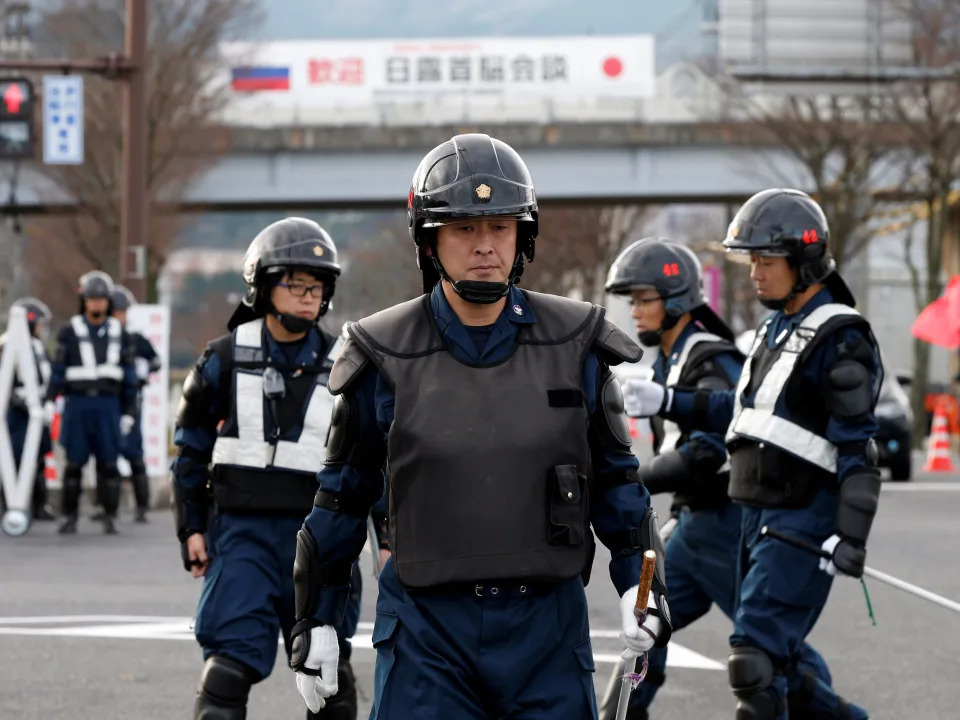
japan riot police
Even Japanese riot police infrequently turn to guns, instead preferring long batons.Toru Hanai/Reuters

Japan has also embraced the idea that fewer guns in circulation will result in fewer deaths. Each prefecture — which ranges in size from half a million people to 12 million, in Tokyo — can operate a maximum of three gun shops; new magazines can only be purchased by trading in empty ones; and when gun owners die, their relatives must surrender the deceased member’s firearms.

The role of trust can’t be overstated

The result is a situation where citizens and police seldom wield or use guns.

Off-duty police aren’t allowed to carry firearms, and most encounters with suspects involve some combination of martial arts or striking weapons. When Japanese attacks do turn deadly, they generally involve fatal stabbings. In July of 2016, an assailant killed 19 people in an assisted living facility. Japan rarely sees so many fatalities from guns in an entire year.

Yet even Japan is not immune to gun violence. The assassination of former the county’s former Prime Minister Shinzo Abe on July 8, 2022, shocked the nation. Abe was shot and killed by a shooting suspect wielding what appeared to be a homemade firearm constructed of metal barrels attached to wood with black tape.

Video from the moments before Abe was shot show the suspect standing close behind him with little visible security around him. 

Nancy Snow, Japan director of the International Security Industrial Council, told Insider that Japan will be “forever changed” by Abe’s death.

“When I talk about Japan changing forever — the Japanese people, it’s hard to even have a conversation with them about the gun culture in the United States, without people getting viscerally upset thinking about it because they say, we’re not that country,” Snow said.

Gun control in Japan, combined with the prevailing respect for authority, has led to a more harmonious relationship between civilians and the police than in the US. It’s something of a chicken-egg problem: The police, in choosing to use sub-lethal force on people, generate less widespread fear among the public that they’ll be shot. In turn, people feel less of a need to arm themselves.

The US, meanwhile, has a more militarized police force that uses automatic weapons and armored cars. There is also less widespread trust between people (and between people and institutions). The factors combine to produce a much fearful culture that can seem to be always on-edge.

Japan’s approach would be a tough sell in the face of American gun culture, but it can provide a starting point for reining in the senseless violence that has become a hallmark of life in the US.

As Fears of Banking Crisis Surged, Members of Congress Sold Bank Shares

The New York Times

As Fears of Banking Crisis Surged, Members of Congress Sold Bank Shares

Kate Kelly – April 20, 2023

An account belonging to Representative Jared Moskowitz’s children sold shares of Seacoast Banking Corporation as fears of a banking crisis rattled investors. (AP)

WASHINGTON — On March 10, as fears were swirling over the health of the nation’s banks, an investment account belonging to the children of Rep. Jared Moskowitz, D-Fla., sold shares of Seacoast Banking Corp. worth $65,000 to $150,000.

Two days later, with the government working to control the crisis, Moskowitz said in a television interview that he had attended a bipartisan congressional briefing on the tumult. And on March 13, as investors fretted over the failure of Silicon Valley Bank and two other, smaller banks, Seacoast Banking shares fell nearly 20%.

A spokesperson for Moskowitz said in an email that the Seacoast share sales had been suggested by the congressman’s financial adviser as a means to diversify his young children’s holdings. Moskowitz said the congressional briefing on the bank crisis had taken place just before the television interview and after the shares were sold.

But the transaction was just one example of how members of Congress continue to buy and sell stocks and other financial assets in industries that intersect with their official duties.

At least eight members of Congress or their close relatives sold shares of bank stocks in March, according to an analysis by Capitol Trades, a project of the data firm 2iQ — a number that could rise in the coming days, as lawmakers make additional disclosures of trades made last month.

Although broadly legal, stock trading by members of Congress has become a flashpoint because lawmakers are sometimes privy to closely held information about the companies and industries they oversee.

A New York Times investigation last year showed that during a three-year period, nearly one-fifth of federal lawmakers or their immediate family members had bought or sold stocks or other securities that could have been affected by their legislative work.

Efforts to pass legislation to place limits on trading by members of Congress or to ban it have stalled in recent years. On Capitol Hill on Tuesday, Sen. Jeff Merkley, D-Ore., and Sen. Sherrod Brown, D-Ohio, announced a new bill intended to eliminate the practice that has 19 co-sponsors in the Senate.

A House version of the bill is co-sponsored by Rep. Michael Cloud, R-Texas, and Rep. Raja Krishnamoorthi, D-Ill.

“As the Silicon Valley Bank was closed, even during that period, there were reports that members of Congress were trading bank stocks,” Brown said. “I mean, imagine that — that members of Congress, we have more inside information,” he said, adding, “members of Congress are able, because of our jobs, to know more about the economy.”

Rep. Dan Goldman, D-N.Y., sold shares of First Republic Bank, the large depositor that was rapidly losing both cash and clients, on March 15, the day before it received an industry bailout of $30 million.

The wife and children of Rep. Ro Khanna, D-Calif., sold First Republic shares that same day. Rep. John Curtis, R-Utah, sold shares in First Republic from a joint account with his spouse on March 16, the day the industry bailout occurred.

By that time, First Republic shares had already fallen nearly 80% from a February peak. The timing of the sales by those three lawmakers or their relatives meant that the sellers averted an additional price swoon that was still to come. First Republic stock is down nearly 90% since the beginning of this year.

A spokesperson for Goldman has said that his portfolio is managed by a third party without his knowledge and that he is setting up a blind trust to avoid any appearance of a conflict of interest. Khanna has said that his filings relate to trades made by a diversified trust belonging to his wife and young children and that he has no involvement in it. Spokespersons for Curtis did not respond to requests for comment.

Some members were also buying bank shares during the volatility. On March 17, Rep. Nicole Malliotakis, R-N.Y., bought shares of New York Community Bancorp after private discussions with New York state bank regulators. Her transaction was first reported by The Wall Street Journal.

Two days later, New York Community Bancorp bought assets belonging to the failed Signature Bank — a deal that prompted its biggest share rally ever. Around that same time, other lawmakers, including Sen. Gary Peters, D-Mich., and family members of Khanna, bought shares in larger U.S. banks, like Truist Financial. Goldman, among other transactions, made a series of purchases of shares in foreign banks, like Lloyds Banking Group and Mizuho Financial Group.

A spokesperson for Malliotakis said that her financial adviser had recommended the purchase and that it amounted to less than $5,000 in value. A spokesperson for Peters did not respond to questions about the transaction.

Will the West Turn Ukraine into a Nuclear Battlefield?

Resilience – Energy

Will the West Turn Ukraine into a Nuclear Battlefield?

By Joshua Frank, originally published by Tom Dispatch 

April 20, 2023

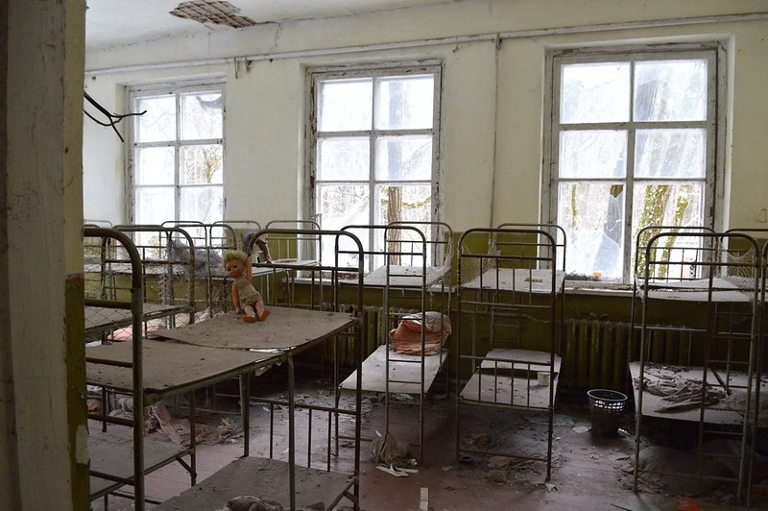
Chernobyl
Why Depleted Uranium Should Have No Place There

It’s sure to be a blood-soaked spring in Ukraine. Russia’s winter offensive fell far short of Vladimir Putin’s objectives, leaving little doubt that the West’s conveyor belt of weaponry has aided Ukraine’s defenses. Cease-fire negotiations have never truly begun, while NATO has only strengthened its forces thanks to Finland’s new membership (with Sweden soon likely to follow). Still, tens of thousands of people have perished; whole villages, even cities, have been reduced to rubble; millions of Ukrainians have poured into Poland and elsewhere; while Russia’s brutish invasion rages on with no end in sight.

The hope, according to Ukrainian President Volodymyr Zelensky, is that the Western allies will continue to furnish money, tanks, missiles, and everything else his battered country needs to fend off Putin’s forces. The war will be won, according to Zelensky, not through backroom compromises but on the battlefield with guns and ammo.

“I appeal to you and the world with these most simple and yet important words,” he said to a joint session of Great Britain’s parliament in February. “Combat aircraft for Ukraine, wings for freedom.”

The United Kingdom, which has committed well over $2 billion in assistance to Ukraine, has so far refused to ship fighter jets there but has promised to supply more weaponry, including tank shells made with depleted uranium (DU), also known as “radioactive bullets.” A by-product of uranium enrichment, DU is a very dense and radioactive metal that, when housed in small torpedo-like munitions, can pierce thickly armored tanks and other vehicles.

Reacting to the British announcement, Putin ominously said he would “respond accordingly” if the Ukrainians begin blasting off rounds of DU.

While the UK’s decision to send depleted-uranium shells to Ukraine is unlikely to prove a turning point in the war’s outcome, it will have a lasting, potentially devastating, impact on soldiers, civilians, and the environment. The controversial deployment of DU doesn’t pose faintly the same risks as the actual nuclear weapons Putin and his associates have hinted they might use someday in Ukraine or as would a potential meltdown at the embattled Zaporizhzhia nuclear facility in that country. Still, its use will certainly help create an even more lethal, all too literally radioactive theater of war — and Ukraine will end up paying a price for it.

The Radioactive Lions of Babylon

Stuart Dyson survived his deployment in the first Gulf War of 1991, where he served as a lance corporal with Britain’s Royal Pioneer Corps. His task in Kuwait was simple enough: he was to help clean up “dirty” tanks after they had seen battle. Many of the machines he spent hours scrubbing down had carried and fired depleted uranium shells used to penetrate and disable Iraq’s T-72 tanks, better known as the Lions of Babylon.

Dyson spent five months in that war zone, ensuring American and British tanks were cleaned, armed, and ready for battle. When the war ended, he returned home, hoping to put his time in the Gulf War behind him. He found a decent job, married, and had children. Yet his health deteriorated rapidly and he came to believe that his military service was to blame. Like so many others who had served in that conflict, Dyson suffered from a mysterious and debilitating illness that came to be known as Gulf War Syndrome.

After Dyson suffered years of peculiar ailments, ranging from headaches to dizziness and muscle tremors, doctors discovered that he had a severe case of colon cancer, which rapidly spread to his spleen and liver. The prognosis was bleak and, after a short battle, his body finally gave up. Stuart Dyson died in 2008 at the age of 39.

His saga is unique, not because he was the only veteran of the first Gulf War to die of such a cancer at a young age, but because his cancer was later recognized in a court of law as having been caused by exposure to depleted uranium. In a landmark 2009 ruling, jurors at the Smethwick Council House in the UK found that Dyson’s cancer had resulted from DU accumulating in his body, and in particular his internal organs.

“My feeling about Mr. Dyson’s colon cancer is that it was produced because he ingested some radioactive material and it became trapped in his intestine,” Professor Christopher Busby, an expert on the effects of uranium on health, said in his court testimony. “To my mind, there seems to be a causal arrow from his exposure to his final illness. It’s certainly much more probable than not that Mr. Dyson’s cancer was caused by exposure to depleted uranium.”

The U.S. Department of Defense estimated that American forces fired more than 860,000 rounds of DU shells during that 1991 war to push Iraqi autocrat Saddam Hussein’s military out of Kuwait. The result: a poisoned battlefield laced with radioactive debris, as well as toxic nerve agents and other chemical agents.

In neighboring southern Iraq, background radiation following that war rose to 30 times normal. Tanks tested after being shelled with DU rounds had readings 50 times higher than average.

“It’s hot forever,” explains Doug Rokke, a former major in the U.S. Army Reserve’s Medical Service Corps who helped decontaminate dozens of vehicles hit by DU shells during the first Gulf War. “It doesn’t go away. It only disperses and blows around in the wind,” he adds. And of course, it wasn’t just soldiers who suffered from DU exposure. In Iraq, evidence has been building that DU, an intense carcinogenic agent, has led to increases in cancer rates for civilians, too.

“When we were moving forward and got north of a minefield, there were a bunch of blown-out tanks that were near where we would set up a command post,” says Jason Peterson, a former American Marine who served in the first Gulf War. “Marines used to climb inside and ‘play’ in them … We barely knew where Kuwait was, let alone the kind of ammunition that was used to blow shit up on that level.”

While it’s difficult to discern exactly what caused the Gulf War Syndrome from which Dyson and so many other soldiers suffered (and continue to suffer), experts like Rokke are convinced that exposure to depleted uranium played a central role in the illness. That’s an assertion Western governments have consistently downplayed. In fact, the Pentagon has repeatedly denied any link between the two.

“I’m a warrior, and warriors want to fulfill their mission,” Rokke, who also suffers from Gulf War Syndrome, told Vanity Fair in 2007. “I went into this wanting to make it work, to work out how to use DU safely, and to show other soldiers how to do so and how to clean it up. This was not science out of a book, but science done by blowing the shit out of tanks and seeing what happens. And as we did this work, slowly it dawned on me that we were screwed. You can’t do this safely in combat conditions. You can’t decontaminate the environment or your own troops.”

Death to Uranium

Depleted uranium can’t produce a nuclear explosion, but it’s still directly linked to the development of atomic weaponry. It’s a by-product of the uranium enrichment process used in nuclear weapons and fuel. DU is alluring to weapons makers because it’s heavier than lead, which means that, if fired at a high velocity, it can rip through the thickest of metals.

That it’s radioactive isn’t what makes it so useful on the battlefield, at least according to its proponents. “It’s so dense and it’s got so much momentum that it just keeps going through the armor — and it heats it up so much that it catches on fire,” says RAND nuclear expert and policy researcher Edward Geist.

The manufacturing of DU dates back to the 1970s in the United States. Today, the American military employs DU rounds in its M1A2 Abrams tanks. Russia has also used DU in its tank-busting shells since at least 1982 and there are plenty of accusations, though as yet no hard evidence, that Russia has already deployed such shells in Ukraine. Over the years, for its part, the U.S. has fired such rounds not just in Kuwait, but also in Bosnia, Iraq, Kosovo, Syria, and Serbia as well.

Both Russia and the U.S. have reasons for using DU, since each has piles of the stuff sitting around with nowhere to put it. Decades of manufacturing nuclear weapons have created a mountain of radioactive waste. In the U.S., more than 500,000 tons of depleted-uranium waste has built up since the Manhattan Project first created atomic weaponry, much of it in Hanford, Washington, the country’s main plutonium production site. As I investigated in my book Atomic Days: The Untold Story of the Most Toxic Place in America, Hanford is now a cesspool of radioactive and chemical waste, representing the most expensive environmental clean-up project in history with an estimated price tag of $677 billion.

Uranium, of course, is what makes the whole enterprise viable: you can’t create atomic bombs or nuclear power without it. The trouble is that uranium itself is radioactive, as it emits alpha particles and gamma rays. That makes mining uranium one of the most dangerous operations on the planet.

Keep It in the Ground

In New Mexico, where uranium mines were primarily worked by Diné (Navajo People), the toll on their health proved gruesome indeed. According to a 2000 study in the Journal of Occupational and Environmental Medicinerates of lung cancer in Navajo men who mined uranium were 28 times higher than in those who never mined uranium. The “Navajo experience with uranium mining,” it added, “is a unique example of exposure in a single occupation accounting for the majority of lung cancers in an entire population.”

Scores of studies have shown a direct correlation between exposure to uranium and kidney diseasebirth defects in infants (when mothers were exposed), increased rates of thyroid disease, and several autoimmune diseases. The list is both extensive and horrifying.

“My family had a lot of cancer,” says anti-nuclear activist and Indigenous community organizer Leona Morgan. “My grandmother died of lung cancer and she never smoked. It had to be the uranium.”

One of the largest radioactive accidents, and certainly the least reported, occurred in 1979 on Diné land when a dam broke, flooding the Puerco River near Church Rock, New Mexico, with 94 million gallons of radioactive waste. The incident received virtually no attention at the time. “The water, filled with acids from the milling process, twisted a metal culvert in the Puerco and burned the feet of a little boy who went wading. Sheep keeled over and died, while crops curdled along the banks. The surge of radiation was detected as far away as Sanders, Arizona, fifty miles downstream,” writes Judy Pasternak in her book Yellow Dirt: A Poisoned Land and the Betrayal of the Navajo.

Of course, we’ve known about the dangers of uranium for decades, which makes it all the more mind-boggling to see a renewed push for increased mining of that radioactive ore to generate nuclear power. The only way to ensure that uranium doesn’t poison or kill anyone is to leave it right where it’s always been: in the ground. Sadly, even if you were to do so now, there would still be tons of depleted uranium with nowhere to go. A 2016 estimate put the world’s mountain of DU waste at more than one million tons (each equal to 2,000 pounds).

So why isn’t depleted uranium banned? That’s a question antinuclear activists have been asking for years. It’s often met with government claims that DU isn’t anywhere near as bad as its peacenik critics allege. In fact, the U.S. government has had a tough time even acknowledging that Gulf War Syndrome exists. A Government Accountability Office report released in 2017 found that the Veterans Affairs Department had denied more than 80% of all Gulf War illness claims by veterans. Downplaying DU’s role, in other words, comes with the terrain.

“The use of DU in weapons should be prohibited,” maintains Ray Acheson, an organizer for the International Campaign to Abolish Nuclear Weapons and author of Banning the Bomb, Smashing the Patriarchy. “While some governments argue there is no definitive proof its use in weapons causes harm, it is clear from numerous investigations that its use in munitions in Iraq and other places has caused impacts on the health of civilians as well as military personnel exposed to it, and that it has caused long-term environmental damage, including groundwater contamination. Its use in weapons is arguably in violation of international law, human rights, and environmental protection and should be banned in order to ensure it is not used again.”

If the grisly legacy of the American use of depleted uranium tells us anything, it’s that those DU shells the British are supplying to Ukraine (and the ones the Russians may also be using there) will have a radioactive impact that will linger in that country for years to come, with debilitating, potentially fatal, consequences. It will, in a sense, be part of a global atomic war that shows no sign of ending.

The Dominion Settlement Is Just the Beginning of Fox and Rupert Murdoch’s Nightmare

Time

The Dominion Settlement Is Just the Beginning of Fox and Rupert Murdoch’s Nightmare

Jeffrey Sonnenfeld – April 19, 2023

Celebrity Sightings In Los Angeles - November 12, 2019
Celebrity Sightings In Los Angeles – November 12, 2019

Rupert Murdoch is seen on November 12, 2019 in Los Angeles, California. Credit – PG-Bauer-Griffin/GC Images

Forget the repetitive media chatter debating the political and societal wins and losses over the historic record $787.5 million settlement between Fox News and Dominion Voting Systems, after the voting machine maker alleged defamation by the cable network for promoting false news stories that Dominion rigged the 2020 presidential election against Donald Trump. Fox settled out of court at the last minute, seemingly panicked over the prospect of a dazed 92-year-old Rupert Murdoch, CEO of Fox News parent company Fox Corporation, having to take the stand to explain how he lost control of his prized creation—his “Foxenstein” monster. But while it’s a historic and record-setting amount to pay to avoid an embarrassing public trial over the airing of an admitted lie, the settlement doesn’t mark the end of Fox’s or Murdoch’s nightmare.

The horror story that is just beginning to unfold and that will continue to haunt the company and its patriarch is the corporate governance catastrophe this case leaves in its wake and the punctured business bravado of the scorching public record of admitted fraud and negligent management oversight. Fox’s celebrity anchors already soiled themselves in emailed evidence revealing they did not believe what they were reporting as truth. Their testimony and emails are in the public record for future litigants. Meanwhile, the judge’s special master, investigating fraudulent representations by Fox and its lawyers in discovery, continue undaunted by this settlement. The rest of Murdoch’s life and the rest of the careers of his board will likely be defined by ongoing fallout.

The Big Winner

There is no disputing that this is a grand slam for Dominion and nothing short of a transformative business success. Dominion is a tiny young company not even 1% the size of Fox, and it was sold to private equity investors Staple Street Capital for just about $40 million in 2018. This week’s settlement is gigantic—more than eight times their company revenues last year of $98 million, which assuming a 20% profit margin means that the settlement results in a whopping 5000% boost in the company’s earnings.

Such a whopping settlement may not have been awarded by a jury in court and very well could have been tossed on appeal. This small a company would have had a tough time proving concrete economic damage and lost revenues equivalent to $787.5 million let alone the $1.6 billion in damages they were seeking had it gone to trial. There are two types of damages—compensatory and punitive—and the idea that a company that may have been valued by its own investors, according to Fox’s lawyers, at no more than $80 million could get anything close to 10 times that as compensatory damages is blatantly ludicrous, while punitive damages are becoming increasingly pegged to the value of compensatory damages.

Even if an appellate court concurred with a possible jury verdict that an actual malice standard was met, the financial damages Dominion asked for were excessive. Plus, unlike the Alex Jones award of $1 billion, which is facing years of byzantine appeals and stalling, Dominion gets this money now—without any more hassle, delay, or expense and without having to deal with anxious insurers and litigation finance hedge funds breathing down their neck.

News Corporation headquarters, home to Fox News, on April 18, 2023 in New York City. Moments before opening arguments were set to begin, Fox News and Dominion Voting Systems said that they had reached a settlement of $787 million in the voting machine company’s defamation lawsuit against Fox.<span class="copyright">Spencer Platt-Getty Images</span>
News Corporation headquarters, home to Fox News, on April 18, 2023 in New York City. Moments before opening arguments were set to begin, Fox News and Dominion Voting Systems said that they had reached a settlement of $787 million in the voting machine company’s defamation lawsuit against Fox.Spencer Platt-Getty Images
The Even Bigger Loser

On the other hand, for Fox Corp., the parent company of Fox News, this is a major strikeout. Incredibly, even though $787.5 million, more than half of the company’s total profit last fiscal year, is four times larger than the prior record for a defamation settlement—in 2017, Disney/ABC News paid out $177 million over misleading reporting on pink slime—Fox’s woes are just beginning.

Sure, some Dominion fans or Fox News haters might be upset that the cable channel did not have to publicly accept responsibility or apologize, rather just releasing a statement of meaningless legalese: “We acknowledge the Court’s rulings finding certain claims about Dominion to be false.” But such disappointment ignores the massive business and financial ramifications that Fox will have to live with for years. We are still only in the early innings of Fox’s struggles.

What now stands as a statement of legal fact for future litigants is the judge’s condemning conclusions.

The judge wrote, “the evidence does not support that FNN conducted good-faith, disinterested reporting.”

In another finding, the judge wrote that the “evidence developed in this civil proceeding demonstrates that is CRYSTAL clear that none of the statements relating to Dominion about the 2020 election are true.”

These rulings were accepted by Fox with “no contest” and stand as legal fact and cannot be appealed.

Other companies, such as Smartmatic, will surely be emboldened in their own defamation suits against Fox, which share basically the same fact patterns as Dominion’s. Furthermore, the condemning depositions of Fox anchors and executives, admitting that they knew their stories were false and sources were ludicrous, opens Fox’s board to serious claims of negligence and breaches of fiduciary duty—violations of a board’s duty of care and duty of loyalty under Delaware corporate law.

Plaintiffs’ attorneys are rushing to file derivative shareholder class action lawsuits on behalf of the 60% of Fox shares not held by the Murdoch family. Fox has a sophisticated board with accomplished individuals, such as former House Speaker Paul Ryan, Managing Partner of Quinn Emanuel William Burck, former Ford CEO Jacques Nasser, and Formula One CEO Chase Carey, all of whom have a lot to lose—whether by way of reputation or liability—by more embarrassing disclosures coming out of depositions and trials.

Already two of many law firms queuing up filed suit in Delaware Chancery Court, charging: “Fox knew—from the Board on down—that Fox News was reporting false and dangerous misinformation about the 2020 Presidential election, but Fox was more concerned about short-term ratings and market share than the long-term damages of its failure to tell the truth.”

While some media commentators have suggested that insurance might cover a large portion of Fox’s Dominion settlement, the company’s breaches of fiduciary duty could absolve insurers from having to cover the payout on top of permitting them to charge the company permanently higher insurance premiums. Even worse for Fox, unless the company reforms its coverage and corporate governance processes, insurers might recoil from underwriting the insurance of Fox’s board directors and officers, much the way Elon Musk was once forced to personally underwrite the insurance of Tesla’s board directors and officers after every insurance company refused to stomach the risk.

Admissions by Murdoch, Ryan, Fox News CEO Suzanne Scott, and Fox Corp. Chief Legal Officer Viet Dinh demonstrate a failure to act on what they knew to be false—or a failure of their duties of care and duty of loyalty to the shareholders. Their duties were not to protect management or even to please viewers, but to protect the enterprise and shareholder value. Yet, when asked in a January deposition if he could have intervened when falsehoods were being spread on his cable network, Murdoch succinctly replied on the record, “I could have. But I didn’t.”

Alt-right media such as One America News Network and Newsmax are likely facing even greater financial peril as they are facing similar legal challenges as Fox.

Despite his self-proclaimed willingness to testify in court, Murdoch’s rambling, brutally candid, and self-incriminating answers in deposition raise questions over his judgment. Fox cannot retract Murdoch’s sworn testimony, and when they unsuccessfully tried to hide his actual Fox News executive oversight duties, they had to apologize for such deception. Presumably Murdoch will be forced to continue to shed light on how much he knew, when he knew it, and what he did or didn’t do in response, as the drumbeat of investigations rolls on.

For its part, Fox News is already modifying its approach and seeming to take some of these lessons to heart before they become total Faux News. Nobody would mistake Fox today for MSNBC, but the cable network has severely limited former President Trump’s airtime recently, rarely ever showcasing full Trump campaign rallies and speeches as it used to do, while anchors almost always now resort to pre-taped edited clips of Trump rather than offering the unchecked freewheeling surprise live dial-in privileges Trump used to enjoy. Like Samuel Johnson quipped, nothing so focuses the mind like the prospect of an imminent hanging. Still, as Murdoch tries to restrain his out-of-control creation, he has his work cut out for him.

Switzerland has a stunningly high rate of gun ownership — here’s why it doesn’t have mass shootings

Business Insider

Switzerland has a stunningly high rate of gun ownership — here’s why it doesn’t have mass shootings

Hilary Brueck and Azmi Haroun – April 19, 2023

Switzerland has a stunningly high rate of gun ownership — here’s why it doesn’t have mass shootings
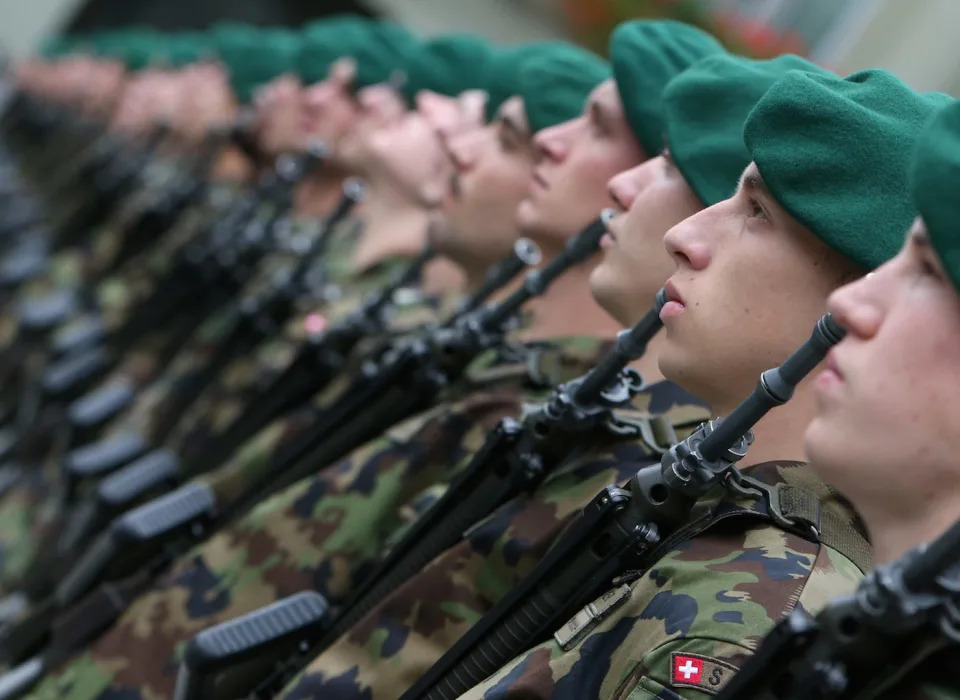
Switzerland Swiss army honor guard soldiers troops military
Members of the Swiss federal army’s honor guard in October 2012.REUTERS/Thomas Hodel

Switzerland hasn’t had a mass shooting since 2001, when a man stormed the local parliament in Zug, killing 14 people and then himself.

The country has about 2 million privately owned guns in a nation of 8.3 million people. In 2016, the country had 47 attempted homicides with firearms. The country’s overall murder rate is near zero.

The National Rifle Association often points to Switzerland to argue that more rules on gun ownership aren’t necessary. In 2016, the NRA said on its blog that the European country had one of the lowest murder rates in the world while still having millions of privately owned guns and a few hunting weapons that don’t even require a permit.

But the Swiss have some specific rules and regulations for gun use.

Insider took a look at the country’s past with guns to see why it has lower rates of gun violence than the US, where after a mass shooting that killed 6 at a school in Nashville, Tennessee, gun-death rates are now at their highest in more than 20 years, and the leading cause of death for children and adolescents.

Switzerland is obsessed with getting shooting right. Every year, it holds a shooting contest for kids aged 13 to 17.

Knabenschiessen swiss guns
Wikimedia Creative Commons

Zurich’s Knabenschiessen is a traditional annual festival that dates back to the 1600s.

Though the word roughly translates to “boys shooting” and the competition used to be only boys, teenage girls have been allowed in since 1991.

Kids in the country flock to the competition every September to compete in target shooting using Swiss army-service rifles. They’re proud to show off how well they can shoot.

The competition values accuracy above all else, and officials crown a Schutzenkonig — a king or queen of marksmen — based on results.

Having an armed citizenry helped keep the Swiss neutral for more than 200 years.

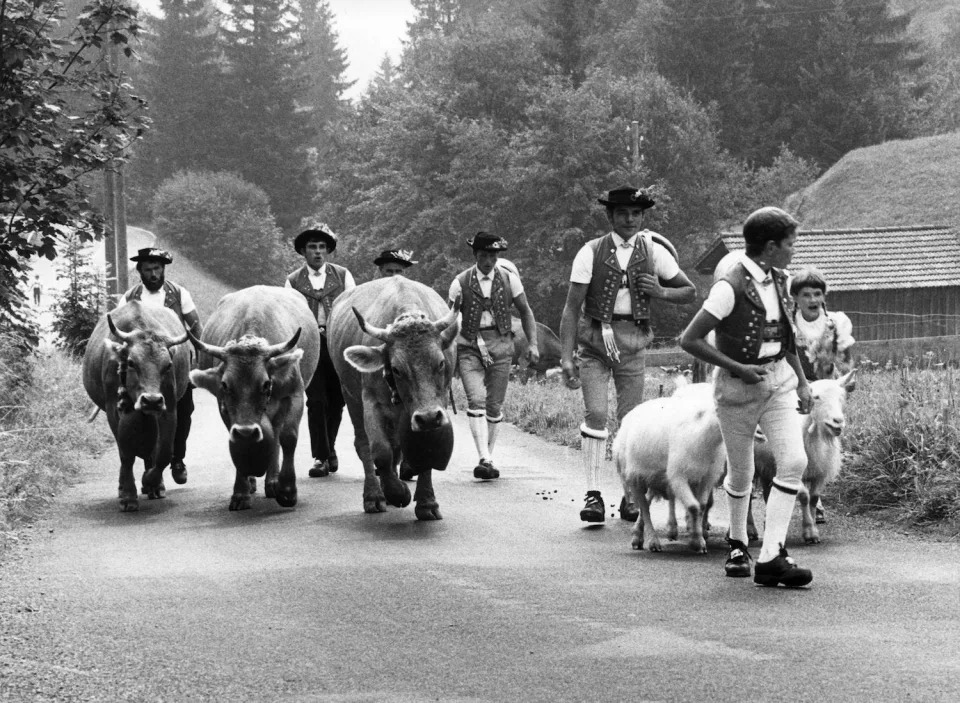
swiss herders
Alpine herdsmen in Toggenburg, Switzerland.Keystone/Getty Images

The Swiss stance is one of “armed neutrality.”

Switzerland hasn’t taken part in any international armed conflict since 1815, but some Swiss soldiers help with peacekeeping missions around the world.

Many Swiss see gun ownership as part of a patriotic duty to protect their homeland.

Most Swiss men are required to learn how to use a gun.

Swiss President Ueli Maurer shooting guns switzerland
Swiss President Ueli Maurer pauses during a shooting-skills exercise — a several-hundred-year-old tradition — with the Foreign Diplomatic Corps in Switzerland on May 31, 2013.REUTERS/Denis Balibouse

Unlike the US, Switzerland has mandatory military service for men.

The government gives all men between the ages of 18 and 34 deemed “fit for service” a pistol or a rifle and training on how to use them.

After they’ve finished their service, the men can typically buy and keep their service weapons, but they have to get a permit for them.

In recent years, the Swiss government has voted to reduce the size of the country’s armed forces.

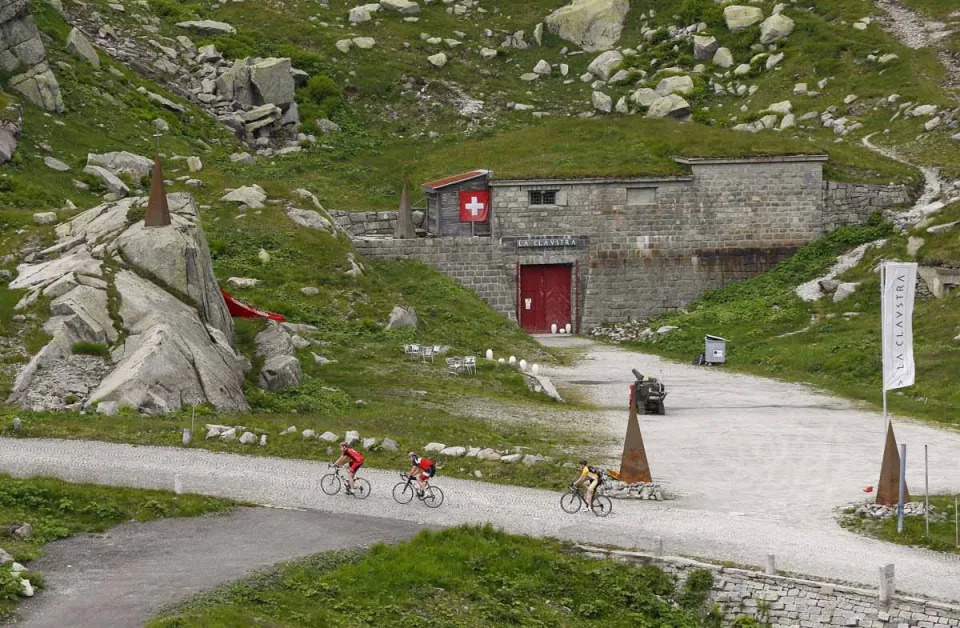
Switzerland is a bit like a well-designed fort.

swiss bunkers
Arnd Wiegmann/Reuters

Switzerland’s borders are basically designed to blow up on command, with at least 3,000 demolition points on bridges, roads, rails, and tunnels around the landlocked European country.

John McPhee put it this way in his book “La Place de la Concorde Suisse”:

“Near the German border of Switzerland, every railroad and highway tunnel has been prepared to pinch shut explosively. Nearby mountains have been made so porous that whole divisions can fit inside them.”

Roughly a quarter of the gun-toting Swiss use their weapons for military or police duty.

swiss-army
AP/Keyston, Lukas Lehmann

In 2000, more than 25% of Swiss gun owners said they kept their weapon for military or police duty, while less than 5% of Americans said the same.

In addition to the militia’s arms, the country has about 2 million privately owned guns — a figure that has been plummeting over the past decade.

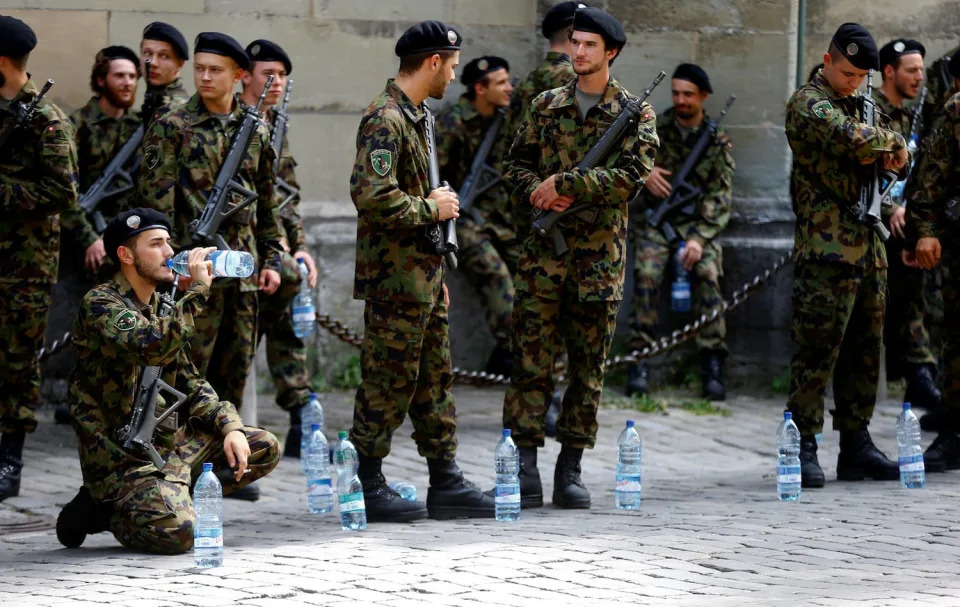
swiss army
Members of an honor guard of the Swiss army.REUTERS/Arnd Wiegmann

The Swiss government has estimated that about half of the privately owned guns in the country are former service rifles. But there are signs the Swiss gun-to-human ratio is dwindling.

In 2007, the Small Arms Survey found that Switzerland had the third-highest ratio of civilian firearms per 100 residents (46), outdone by only the US (89) and Yemen (55).

But it seems that figure has dropped over the past decade. The University of Sydney now estimates that there’s about one civilian gun for every three Swiss people.

Gun sellers follow strict licensing procedures.

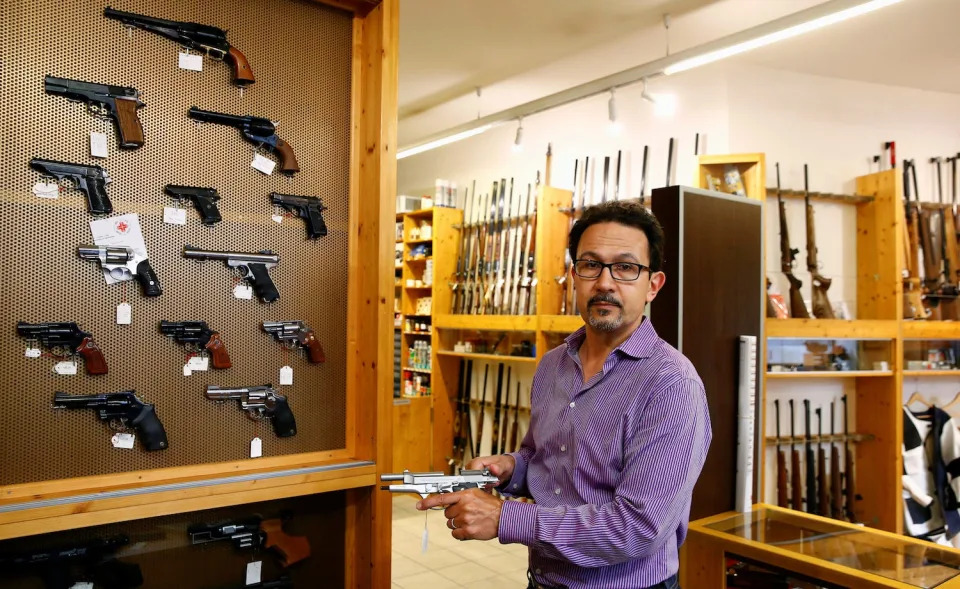
swiss gun shop
Daniel Wyss, the president of the Swiss weapons-dealers association, in a gun shop.REUTERS/Arnd Wiegmann

Swiss authorities decide on a local level whether to give people gun permits. They also keep a log of everyone who owns a gun in their region — known as a canton — though hunting rifles and some semiautomatic long arms are exempt from the permit requirement.

Cantonal police don’t take their duty doling out gun licenses lightly. They might consult a psychiatrist or talk with authorities in other cantons where a prospective gun buyer has lived to vet the person.

Swiss laws are designed to prevent anyone who’s violent or incompetent from owning a gun.

swiss nina christen rifle
Nina Christen of Switzerland at the Olympic Games in Rio in August 2016.Sam Greenwood/Getty Images

People who’ve been convicted of a crime or have an alcohol or drug addiction aren’t allowed to buy guns in Switzerland.

The law also states that anyone who “expresses a violent or dangerous attitude” won’t be permitted to own a gun.

Gun owners who want to carry their weapon for “defensive purposes” also have to prove they can properly load, unload, and shoot their weapon and must pass a test to get a license.

Switzerland is also one of the richest, healthiest, and, by some measures, happiest countries in the world.

Swiss Switzerland flag fan trumpet
Laurence Griffiths/Getty Images

In their 2019 World Happiness Report, the UN ranked Switzerland sixth.

The Swiss have been consistently near the top of this list. In 2017, when the UN ranked Switzerland fourth overall among the world’s nations, the report authors noted that the country tends to do well on “all the main factors found to support happiness: caring, freedom, generosity, honesty, health, income, and good governance.”

Meanwhile, according to the report, happiness has taken a dive over the past decade in the US.

The report authors cite “declining social support and increased corruption,” as well as addiction and depression for the fall.

The Swiss aren’t perfect when it comes to guns.

Swiss flag Switzerland
Harold Cunningham/Getty Images

Switzerland still has one of the highest rates of gun violence in Europe, and suicides account for most gun deaths in the country.

Around the world, stronger gun laws have been linked to fewer gun deaths. That has been the case in Switzerland, too.

Geneva Swiss Switzerland Police Officer
A police officer at Geneva’s airport.REUTERS/Denis Balibouse

After hundreds of years of letting local cantons determine gun rules, Switzerland passed its first federal regulations on guns in 1999, after the country’s crime rate increased during the 1990s.

Since then, the government has added more provisions to keep the country on par with EU gun laws, and gun deaths — including suicides — have continued to drop.

As of 2015, the Swiss estimated that only about 11% of citizens kept their military-issued gun at home.

Most people aren’t allowed to carry their guns around in Switzerland.

swiss hunters
Hunters at a market in central Switzerland offer their fox furs.REUTERS

Concealed-carry permits are tough to get in Switzerland, and most people who aren’t security workers or police officers don’t have one.

“We have guns at home, but they are kept for peaceful purposes,” Martin Killias, a professor of criminology at Zurich University, told the BBC in 2013. “There is no point taking the gun out of your home in Switzerland because it is illegal to carry a gun in the street.”

That’s mostly true. Hunters and sports shooters are allowed to transport their guns only from their home to the firing range — they can’t just stop for coffee with their rifle.

Guns also cannot be loaded during transport to prevent them from accidentally firing in a place like Starbucks — something that has happened in the US at least twice.

Germany’s foreign minister: Parts of China trip ‘more than shocking’

Reuters

Germany’s foreign minister: Parts of China trip ‘more than shocking’

Alexander Ratz – April 19, 2023

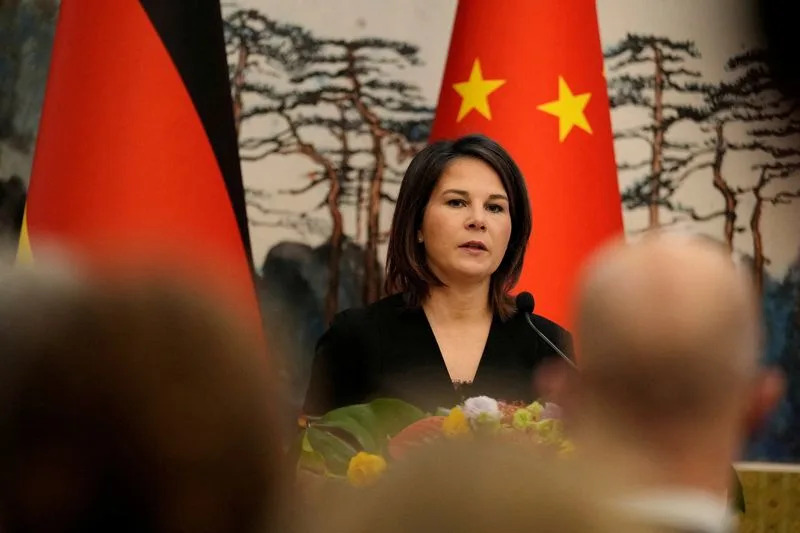
FILE PHOTO: German Foreign Minister Annalena Baerbock visits China
German Foreign Minister Annalena Baerbock visits China
FILE PHOTO: German Foreign Minister Annalena Baerbock visits China
German Foreign Minister Annalena Baerbock visits China

BERLIN (Reuters) – German Foreign Minister Annalena Baerbock on Wednesday described parts of her recent trip to China as “more than shocking” and said Beijing was increasingly becoming a systemic rival more than a trade partner and competitor.

The blunt remarks followed Baerbock’s visit to Beijing last week where she warned that any attempt by China to control Taiwan would be unacceptable.

Beijing claims democratically governed Taiwan as a Chinese province and has never ruled out the use of force to bring the island under its control.

Baerbock had also said China wanted to follow its own rules at the expense of the international rules-based order. Beijing in turn asked Germany to support Taiwan’s “reunification” and said China and Germany were not adversaries but partners.

Speaking to the German Bundestag (lower house of parliament) on Wednesday about her China trip, Baerbock said “some of it was really more than shocking”.

She did not elaborate on specifics, although her remark came after she said China was becoming more repressive internally as well as aggressive externally.

For Germany, she said, China is a partner, competitor and systemic rival, but her impression is now “that the systemic rivals aspect is increasing more and more”.

China is Germany’s largest trading partner, said Baerbock, but this did not mean Beijing was also Germany’s most important trading partner.

The German government wants to work with China but does not want to repeat past mistakes, for example the notion of “change through trade”, she said, that the West can achieve political shifts in authoritarian regimes through commerce.

Baerbock also said China had a responsibility to work towards peace in the world, in particular using its influence over Russia in the war in Ukraine.

She welcomed Beijing’s promise not to supply weapons to Russia, including dual use items, though added that Berlin would see how such a promise worked in practice.

In a departure from the policies of former chancellor Angela Merkel, Olaf Scholz’s government is developing a new China strategy to reduce dependence on Asia’s economic superpower, a vital export market for German goods.

(Writing by Matthias Williams; Editing by Mark Heinrich)