What is the healthiest fruit? This one is high in antioxidants and has cognitive and cardiovascular benefits.

USA Today

What is the healthiest fruit? This one is high in antioxidants and has cognitive and cardiovascular benefits.

Clare Mulroy, USA TODAY – April 25, 2023

An apple a day keeps the doctor away, right?

We grew up hearing the cliched expression, but do you know how much fruit you should actually be eating per day? The recommended intake depends on a number of factors, but adults should generally consume 1.5 to 2 cups of fruit daily, the Centers for Disease Control and Prevention says. One cup of fruit could be an apple, a banana, a cup of blueberries, three medium-size plums or seven slices or chunks of mango, for example.

Here’s your guide to the health benefits of fruit, plus tips for including more in your diet.

What is the healthiest fruit?

While all fruits are healthy, registered dietitian nutritionist Danielle Crumble Smith recommends one nutrient-packed fruit in particular – wild blueberries.

Blueberries contain lots of fiber, which keeps you fuller for longer. They also rank among the fruits and vegetables with the highest antioxidant content. Antioxidants prevent or delay cell damage.

“From a cognitive standpoint, there are a lot of benefits in terms of memory, and some studies show cardiovascular benefits or cancer-fighting compounds,” Crumble Smith says. “Overall, [they] decrease inflammation.”

Still, Crumble Smith says eating wild blueberries is not essential to getting the healthy nutrients of fruits. Eating fruit of any kind will yield healthy results, though some fruits have nutrients that serve different purposes.

For example, apples contain pectin, a fiber that acts as a prebiotic that can aid colon function and digestion.

Vitamin C-rich fruits should also be on your radar, including citrus (oranges, grapefruit and lemons, to name a few) and strawberries.

“Vitamin C helps with collagen production, and in our generation, people are concerned about decreasing wrinkles and hair, skin and nail health,” Crumble Smith says. “Vitamin C is actually really crucial for that.”

Is V8 good for you?: What to know before swapping real fruits and veggies for juice

What is the healthiest vegetable?: Check out these great nutrient-dense options

Is the sugar in fruit OK for you?

Some fruit fears come from their sugar content. Does the high amount of sugar mean fruit is bad for you? Absolutely not, says Crumble Smith.

“Fruit has so many vitamins, minerals, fiber, water and other nutrients that our body needs,” she says.

In fact, fruit can combat the afternoon slump when most people reach for another cup of coffee. Because natural sugar is a healthy source of energy, pairing fruit with protein will give you a similar boost you’d get through caffeine.

Crumble Smith does recommend caution for people with diabetes, insulin resistance or blood sugar issues. In that case, be mindful of portion size or try to pair your afternoon raspberries with a protein, like yogurt or cheese.

Fruit smoothies are an easy and accessible way to get your daily fruit content. Crumble Smith recommends making them at home rather than grabbing one from a smoothie bar or a pre-packaged drink from the store. If you’re going for bottled juice, make sure to read the nutritional label and ingredients thoroughly.

“Just because something says 100% fruit … oftentimes that’s not the best choice,” Crumble Smith says. “Because in that case, all the concentrated fruit tends to be really high in sugar and don’t have any protein to help stabilize blood sugar levels.”

Cutting back on ultra-processed foods?: Tips to avoid poor eating habits

How much caffeine is dangerous?: What to know before reaching for another cup

Is the fat in avocados good for you?

Contrary to popular belief, yes, avocados are fruits and yes, their fat content is an important part of a healthy, balanced diet.

“People sometimes fear fat, but healthy fats coming from avocados, nuts, seeds, olives, olive oil, fatty fish, they have so many anti-inflammatory benefits,” Crumble Smith says.

Avocados are rich in potassium, which can help lower blood pressure and cholesterol. They also contain large amounts of fiber, which can keep you feeling satisfied for longer and help with blood sugar regulation, according to Crumble Smith.

“Oftentimes fruits and veggies can be great sources of fat-soluble vitamins A, E and K,” Crumble Smith says. “With fat-soluble vitamins, we need a fat source for our body to be able to actually absorb them. So having an avocado with a salad enhances your body’s absorption of those nutrients.”

How to incorporate fruit into your diet

Other than upping your smoothie and fruit salad intake, an easy way to get yourself to eat more fruit is to experiment at the grocery store. Crumble Smith says she tells her clients to put a fruit they’ve never tried in their basket every week when they go to the store.

“It’s a great way to expose yourself to that which you’ve never tried and potentially find something you love,” Crumble Smith says. “And it’s not overwhelming; you’re not coming home with all of these different things that you’re afraid are going to go bad.”

But if you’re hesitant to try something new, there’s no harm in eating the same ol’ fruit every day. You’ll still get a host of benefits. And once you’re feeling more adventurous, you can try swapping – maybe blueberries in your oatmeal instead of a banana, or snack on an orange instead of an apple.

Surprise Exit Catches Trumpworld By Surprise

The New York Times

Surprise Exit Catches Trumpworld By Surprise

Jonathan Swan and Maggie Haberman – April 25, 2023

From left: Eric Trump, Rep. Marjorie Taylor Greene (R-Ga.), Tucker Carlson, Donald Trump Jr. and former President Donald Trump at Trump National Golf Club in Bedminster, N.J., July 31, 2022. (Doug Mills/The New York Times)

The announcement on Monday that Fox News was parting ways with its top-rated prime-time host, Tucker Carlson, stunned people in Donald Trump’s orbit. The former president himself was surprised by the news, according to a person with direct knowledge, and his eldest son, Donald Trump Jr., who is a close friend of Carlson’s, described the network’s decision as “mind-blowing.”

“I think it changes things permanently,” Donald Trump Jr. said on “The Charlie Kirk Show,” adding that Carlson was “an actual thought leader in conservatism” and a “once-in-a-generation type talent.”

The casual news observer would be forgiven for thinking that Trump and his family no longer had a relationship with Carlson, given recent disclosures of the Fox host’s scathing private text messages, which emerged as part of the conservative network’s legal battle against Dominion Voting Systems.

In early 2021, as Trump desperately tried to overturn the 2020 election, Carlson texted a confidant that he hated the president “passionately.” He also described Trump as a “demonic force.”

When the texts were released in March, Trump was wounded and called Carlson to talk about them, according to a person familiar with the outreach. But the two men patched it up quickly. Since then, they have talked regularly, exchanged text messages and appeared to have a closer relationship than at any time before, according to two people close to Trump who are familiar with their relationship and who did not want to be identified to discuss their private interactions.

In an interview with Greg Kelly of Newsmax that was recorded shortly after Carlson’s departure became public, Trump offered support for the former anchor. “I’m shocked. I’m surprised,” Trump said. “I think Tucker’s been terrific. He’s been, especially over the last year or so, he’s been terrific to me.”

Carlson did not respond to a request for comment.

Last year, some of Trump’s advisers had worried that Carlson seemed poised to support the potential presidential candidacy of Trump’s top rival, Gov. Ron DeSantis of Florida. Carlson had given DeSantis plenty of airtime and praised his policies. But over the past six weeks, as Trump and Carlson spoke more often, the Trump team felt increasingly confident that Carlson would not be weighing in for DeSantis, who has been heavily promoted by Rupert Murdoch’s media properties including Fox News.

The Trump team liked their odds even more when they learned that Carlson was disgusted with DeSantis’ decision, in late March, to call President Vladimir Putin of Russia a “war criminal.”

Sen. J.D. Vance, R-Ohio, a close ally of both Trump and Carlson, described the Fox News host’s ousting as a shock.

“Tucker is a giant, and the most powerful voice against idiotic wars and an economy that placed plutocrats over workers,” Vance said in a text message. “This is a huge loss for a conservative movement that hopes to be worthy of its own voters. I assume he’ll land on his feet and continue to have a powerful voice. If he doesn’t it will be terrible for the country.”

“The best decision I ever made was leaving Fox. Good for you, @TuckerCarlson. You’re free & uncensored!” Kari Lake, a Republican who lost the governor’s race in Arizona last year, wrote in a tweet. Lake left her job as an anchor at a local Fox channel in 2021.

Rep. Lauren Boebert, R-Colo., struck an upbeat tone in a Monday tweet: “Wherever Tucker Carlson goes, America will follow!”

Joe Kent, a Republican who ran unsuccessfully for Congress in Washington state, tweeted, “Standing by for the launch of the Tucker news network, the people demand it!”

One close ally of Trump said he was happy that Carlson would not be able to give rocket fuel to any other candidate on Fox’s airwaves. Yet for some candidates in the Republican primary field, the loss of Carlson could mean a minefield they would have to navigate is now gone from a prominent platform.

For instance, DeSantis’ statement to Carlson weeks ago describing the Russian invasion of Ukraine as a “territorial dispute” set off alarm bells and a wave of criticism among Republicans in Washington and some donors. It represented the beginning of what has been a period of concern about DeSantis’ expected candidacy from some who had seen him as the best option to stop Trump.

A Trump adviser, who spoke on the condition of anonymity, said the sense in Trump’s world was that any pro-Trump host at Fox News had something of a target on their back after the Dominion lawsuit.

Trump’s longest-serving adviser, Roger Stone, who is also an old friend of Carlson’s, said in an interview that Fox News had “essentially canceled the single most influential conservative commentator in the country, at the same time killing a cash cow for the network.”

He predicted that Carlson would take his “massive audience” wherever he ends up next.

Top Kremlin propagandist tells Tucker Carlson he should run for president and ‘You are always welcome in Russia and Moscow’

Insider

Top Kremlin propagandist tells Tucker Carlson he should run for president and ‘You are always welcome in Russia and Moscow’

Nicholas Carlson – April 24, 2023

ucker Carlson speaks during the Mathias Corvinus Collegium (MCC) Feszt on August 7, 2021 in Esztergom, Hungary.
Former Fox News host Tucker Carlson.Janos Kummer/Getty Images
  • Vladimir Solovyov is a notorious Russian propagandist.
  • He says Tucker Carlson should run for President of the United States.
  • Back when Carlson had a Fox News show he would often parrot Kremlin talking points.

The US Department of State describes Vladimir Solovyov as perhaps “the most energetic Kremlin propagandist around today.”

Solovyov is also, apparently, a Tucker Carlson fan.

On Telegram, Solovyov says that after he learned that Carlson and his long time cable network, Fox News, were parting ways, he sent him an email.

“You have our admiration and support in any endeavor you choose for yourself next, be it running for president of the United States (which you should totally do, by the way) or making an independent media project. We’ll happily offer you a job if you wish to carry on as a presenter and host!”

Soloyvov also welcomed Carlson to visit Russia.

You can read it here:

RT, the Russian state television network focused on a US audience, also appeared to offer Carlson a job today.

Carlson is popular with Russian propagandists because, back when he had a show on Fox News, he would regularly use his air time to share points of view on the war in Ukraine that were eerily similar to Russian talking points.

Last year, he said the war, which was started by Russia when it invaded a neighboring independent country, was “designed to cause regime change in Moscow” and was also “payback for the 2016 election.”

In March 2022, Mother Jones obtained a directive the Kremlin gave to state-friendly media outlets in Russia: “It is essential to use as much as possible fragments of broadcasts of the popular Fox News host Tucker Carlson.”

Now that Carlson doesn’t have a show, that directive will be more difficult for the next little while. 

Harry Belafonte, Calypso King Who Worked for African American Rights, Dies at 96

Variety

Harry Belafonte, Calypso King Who Worked for African American Rights, Dies at 96

Chris Morris – April 25, 2023

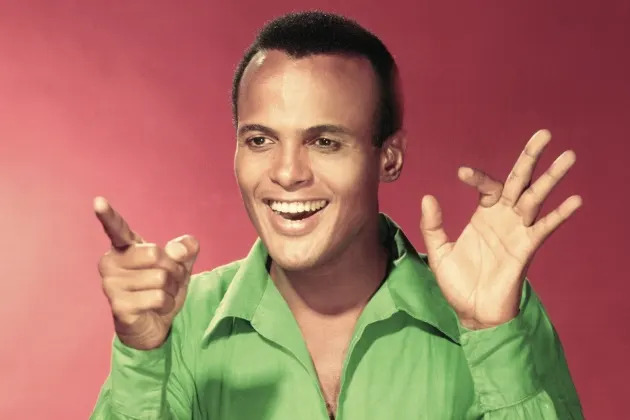
Singer, actor, producer and activist Harry Belafonte, who spawned a calypso craze in the U.S. with his music and blazed new trails for African American performers, died Tuesday of congestive heart failure at his Manhattan home. He was 96.

An award-winning Broadway performer and a versatile recording and concert star of the ’50s, the lithe, handsome Belafonte became one of the first Black leading men in Hollywood. He later branched into production work on theatrical films and telepics.

More from Variety

As his career stretched into the new millennium, his commitment to social causes never took a back seat to his professional work.

An intimate of Dr. Martin Luther King Jr., Belafonte was an important voice in the ’60s civil rights movement, and he later embarked on charitable activities on behalf of underdeveloped African nations. He was an outspoken opponent of South Africa’s apartheid policies.

Among the most honored performers of his era, Belafonte won two Grammy Awards (and the Recording Academy’s Lifetime Achievement Award in 2000), a Tony and an Emmy. He also received the Motion Picture Academy’s Jean Hersholt Humanitarian Award at the Governors Awards ceremony in 2014.

Harold George Belafonte Jr. was born in New York but was sent to live with his grandmother in Jamaica at age 5, returning to attend high school in New York. But Jamaica’s indigenous calypso and mento would supply crucial material for his early musical repertoire.

After serving in the war, Belafonte gravitated to the New York theatrical scene. An early mentor was the famed Black actor, singer and activist Paul Robeson. He studied acting with Erwin Piscator and attended Broadway shows — on a single ticket he would hand off at intermission — with another struggling young actor, Sidney Poitier. Like Poitier, he performed at Harlem’s American Negro Theater.

Belafonte first made his mark, however, as a nightclub singer. Initially working in a pop and jazz vein, Belafonte began his singing career at New York’s Royal Roost and made his recording debut in 1949 on Roost Records. He soon developed a growing interest in American folk music.

A national tour and dates at New York’s Village Vanguard and Blue Angel followed. A scout for MGM spotted him at the latter venue and, following a screen test, Belafonte secured a role opposite Dorothy Dandridge in “Bright Road” (1953).

The same year, Belafonte made his Rialto debut in the revue “John Murray Anderson’s Almanac,” for which he received the Tony for best performance by a featured actor in a musical.

Ironically, while Belafonte was cast as a lead in Otto Preminger’s 1954 musical “Carmen Jones” — based on Oscar Hammerstein II’s Broadway adaptation of Bizet’s opera “Carmen” — his singing voice was dubbed by opera singer LeVern Hutcherson. Belafonte would soon explode in his own right as a pop singer.

He made his RCA Records debut in 1954 with “Mark Twain and Other Folk Favorites”; he had performed the titular folk song with his guitarist Millard Thomas in his Tony-winning Broadway turn. The 1956 LP “Belafonte,” featuring a similar folk repertoire, spent six weeks at No. 1.

Those collections were a mere warm-up to “Calypso.” The 1956 album sparked a nationwide calypso craze, spent a staggering 31 weeks at No. 1 and remains one of the four longest-running chart-toppers in history. It spawned Belafonte’s signature hit, “Banana Boat Song (Day-O),” which topped the singles chart for five weeks. A parody of that ubiquitous number by Stan Freberg reached No. 25 in 1957. Director Tim Burton employed the tune to bright effect in his 1988 comedy “Beetlejuice.”

Belafonte would cut five more top-five albums — including two live sets recorded at Carnegie Hall — through 1961. His 1960 collection “Swing Dat Hammer” received a Grammy as best ethnic or traditional folk album; he scored the same award for 1965’s “An Evening With Belafonte/Makeba,” a collaboration with South African folk artist Miriam Makeba.

He also supplied early employment for a future folk icon: His 1962 album “Midnight Special” featured harmonica work by Bob Dylan.

A frequent guest on TV variety shows, Belafonte became the first Black performer to garner an Emmy with his 1959 special “Tonight With Belafonte.”

Belafonte made his first steps into film production with two features he toplined: end-of-the-world drama “The World, the Flesh, and the Devil” (1959) and the heist picture “Odds Against Tomorrow” (1960). However, discontent with the roles he was being offered, he would remain absent from the big screen for the remainder of the ’60s and busied himself with recording and international touring as his involvement in the civil rights movement deepened.

Closely associated with clergyman-activist King, Belafonte provided financial support to the civil rights leader and his family. He also funded the Freedom Riders and the Student Non-Violent Coordinating Committee and was a key figure in the organization of the historic March on Washington of August 1963.

The racial tumult of the ’60s hit close to home: In 1968 he became the center of a furor when he appeared as a guest star on an NBC special hosted by British pop singer Petula Clark. During a performance of an anti-war ballad, Clark clutched Belafonte’s arm. Doyle Lott, VP for sponsor Chrysler-Plymouth, was present at the taping and demanded the number be excised, saying the “interracial touching” might offend Southern viewers. But Clark, who owned the show, put her foot down and the show aired as recorded, while exec Lott was fired by the automaker.

Belafonte returned to feature films in 1970 in the whimsical “The Angel Levine” alongside Zero Mostel. He co-starred with old friend Poitier in the comedies “Buck and the Preacher” (1972) and “Uptown Saturday Night” (1974), both directed by Poitier.

His acting appearances would be sporadic for the remainder of his career. Notably, he appeared opposite John Travolta in “White Man’s Burden” (1995), an alternate-universe fantasy-drama about racism; Robert Altman’s ensemble period drama “Kansas City” (1996); and “Bobby” (2006), Emilio Estevez’s account of Sen. Robert Kennedy’s 1968 assassination.

In 1985, Belafonte’s activism and musicianship intertwined when he helped organize the recording session for “We Are the World,” the all-star benefit single devoted to alleviating African famine. His appearance on that huge hit led to “Paradise in Gazankulu” (1988), his first studio recording in more than 10 years.

His latter-day production work included the 1984 hip-hop drama “Beat Street” and the 2000 miniseries “Parting the Waters,” based on historian Taylor Branch’s biography of Martin Luther King Jr.

In 2002, “The Long Road to Freedom: An Anthology of Black Music,” an immense collection of African and African-American music recorded and compiled by Belafonte over the course of a decade and originally set for release by RCA in the ’70s, was finally released as a five-CD set on Universal’s Buddha imprint. It garnered three Grammy nominations.

In later years, Belafonte remained as outspoken as ever, and his views sometimes courted controversy. He was a foe of South African apartheid, opposed the U.S.’s Cuban embargo and denounced George W. Bush’s military incursion into Iraq.

Belafonte was the son of a Jamaican housekeeper and a Martiniquan chef, spending the early and late parts of his childhood in Harlem but the crucial middle period in Jamaica. He enlisted in the Navy in 1944; during his service, he encountered the writing of W.E.B. DuBois, co-founder of the NAACP and a key influence.

He was accorded the Kennedy Center Honor in 1989 and the National Medal of the Arts in 1994.

Belafonte published his memoir “My Song,” written with Michael Shnayerson, in 2011. Susanne Rostock’s biographical documentary “Sing Your Song” was released in early 2012.

He is survived by his third wife Pamela; daughters Shari, Adrienne and Gina; son David; stepchildren Sarah and Lindsey; and eight grandchildren.

Garden planning from the book cellar

Resiliance – Food and Water

Garden planning from the book cellar

By Eliza Daley, orig. pub. by: By my solitary hearth – April 24, 2023

garden
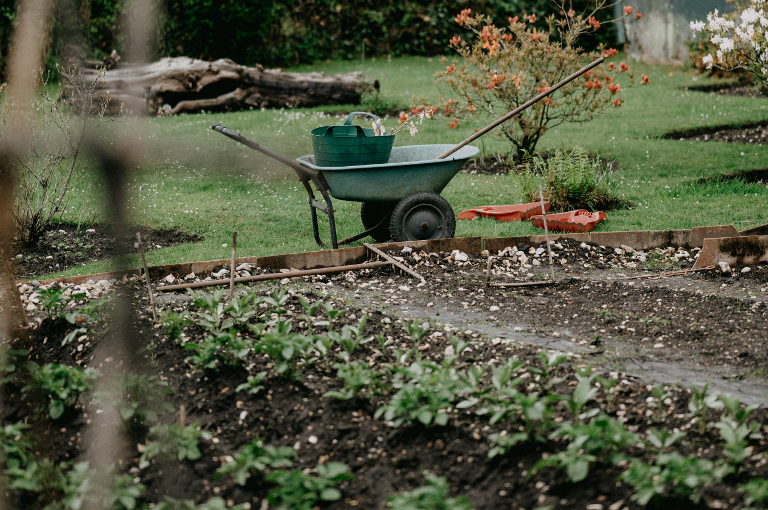
Photo by Annie Spratt on Upsplash

It’s spring, so obviously it’s time to get the garden in production. For those who don’t know where to start or who just want more tips I have some recommendations on books that I use every year in planning and implementing food production. I know I just talked about my book-free kitchen, however, this is one very important caveat — I definitely use books for the intersection of kitchen and garden. These books are less about cooking than growing, processing and storing the harvest, and all three affect food safety. So reference books are necessary.

I am reading a new one — The Backyard Homestead Book of Kitchen Know-How by Andrea Chesman (2015, Storey Publishing). Chesman lives on an acre in Vermont, so this book is highly relevant to me. However, with her decades of practical experience — in addition to her homestead life, she’s written many books and teaches classes on storing the harvest — there are tips for anyone anywhere who grows typical garden produce. I have already found useful suggestions and I have almost as much experience as she does, so I feel like this is a good book to recommend to anyone with a veg plot. One caution: her methods do tend to lean toward agricultural extension agency practices, lots of plastic and electricity. She acknowledges that not everybody is going to have the capacity to run two refrigerators and a chest freezer, but she also doesn’t talk as much about lower-energy preservation methods. However, she includes the most detailed instructions on drying food that I’ve ever encountered. Mostly without electricity. And since she does this in Vermont — in normal, New England summer humidity — I think I may have found my solution to that problem.

She also spends a bit at the beginning of the book talking about what you should grow. For example, if you don’t like stuffing squash in summer heat, don’t plant round varieties. And if your family is less than Victorian in number, then don’t plant more than a few bushes of all the summer squashes put together. But she doesn’t talk as much about gardening as she does about produce, so there isn’t good information on yields and varieties. I have other books for that.

Keeping the Harvest by Nancy Chioffi and Gretchen Mead (1991, Storey Publishing) is a slim but indispensable reference for basic recipes and techniques. It also contains a chart I have been using for decades: the yields of frozen veg per unit of harvest (bushels, heads, pounds, etc). This table is gold! Nothing is more annoying than running out of pint containers in the middle of processing veg, especially the chiles. With this chart, I know that I need at least 18 pint containers washed and ready when I tackle the 25 pound box of Big Jim peppers in August. They also give yields per unit of planting area (row feet, square feet, bushes, trees, etc). So if you are unsure about how many potatoes you should plant for a given yield or how much space will be necessary for that yield or even how much ‘yield’ you will be able to eat, then buy this book.

Another extremely useful reference book is Rosalind Creasy’s The Complete Book of Edible Landscaping (1982, Sierra Club Books). This is a permaculture book from before permaculture. I learned how to grow abundant food in small spaces from this one book. More a gardening manual than food processing book, Edible Landscaping contains general guides to growing and using just about every kind of fruit, veg and herb that might be grown in temperate climates. (And a few from more tropical conditions.) Creasy gives hardiness, growing season length, light and moisture needs, soil types and whatever else you need to grow a plant. She describes the different growing needs of different varieties of a given species also. For example, you may not live in a climate with the 1000 chill hours needed by Wolf River apples (my favorites), but there are plenty of apple varieties that can be grown in regions with warmer winters.

These two books are my main garden production planning references. I have many other books, but these are the ones that come out every year. I definitely recommend getting them if you are new to producing and storing your own food, or even if you just want to learn more about these skills that everyone will be needing in the not so distant future. However, I would also advise you to get at least one recently published reference on canning and preserving. This is one type of cookbook that I do use. Nobody should improvise on this stuff!

My two go-to garden planning books have plenty of recipes, however there have been many changes in the intervening decades on food safety recommendations. For just one example, it’s been determined that tomatoes are not high enough in acid to kill harmful microbes, so pressure-canning is safer than the water-bath canning I used to use on canned tomato sauce. Most of the recipes are fine and obviously I’m still alive after using them for many years, but that might just be because I’ve been lucky. (That, and botulism doesn’t stand a chance in my sterile kitchen…) But still, preserving low-acid veg is flirting with food poisoning even in the best conditions. So use up-to-date information on how to avoid that nightmare. I use Saving the Seasons by Mary Clemens Meyer and Susanna Meyer (2010, Herald Press), and I have the most recent copy of the USDA’s Complete Guide to Home Canning and Preserving (2008). I have a few other books on jams, chutneys and other high-acid things, but I always cross-reference cooking times and temperatures with the books I trust implicitly. And sometimes I even go look things up on extension agency websites, which presumably have the most recent information available.

So those books go very far toward planning a garden, including what use you’ll make of the produce. But to round out garden planning, especially for those who are looking to create a landscape that needs little maintenance and very few inputs, I have two other book recommendations. These are not quick reads, and maybe I should have suggested starting them last November, but they are invaluable in garden planning. The first is the classic ecology book by Donald Worster, Nature’s Economy (1977, Sierra Club Books). From how ecological balance is physically achieved to the history and ethics of the conservation movement, Worster’s book is a complete education. I only include one other book because it is written specifically for the garden: Ecology for Gardeners by Steven B. Carroll and Severn D. Salt (2004, Timber Press). If there is a fault in Worster’s book, it’s that he doesn’t talk as much as I’d like about the kinds of plants we grow intentionally. Carroll and Salt make up for that — and include lots of images! I don’t know about you, but I will never be able to sort out the good caterpillars from the evil spawn of hell without a good visual guide.

Hope these references help! They’ve inspired me to try new things and see the garden in new ways each year. And speaking of… it’s time to cut up the potatoes so they’ll be cured before planting time. So… I’m off to the cellar now.

Eliza Daley

Eliza Daley is a fiction. She is the part of me that is confident and wise, knowledgable and skilled. She is the voice that wants to be heard in this old woman who more often prefers her solitary and silent hearth. She has all my experience — as mother, musician, geologist and logician; book-seller, business-woman, and home-maker; baker, gardener, and chief bottle-washer; historian, anthropologist, philosopher, and over it all, writer. But she has not lived, is not encumbered with all the mess and emotion, and therefore she has a wonderfully fresh perspective on my life. I rather like knowing her. I do think you will as well.

Can lawmakers save the collapsing Florida home insurance market?

Bankrate

Can lawmakers save the collapsing Florida home insurance market?

Cate Deventer – April 24, 2023
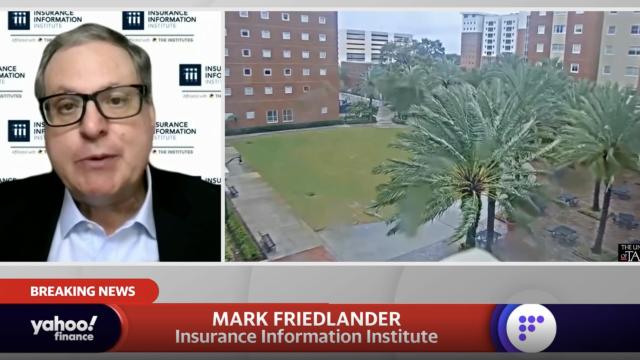
Hurricane Ian could be ‘one of the most severe loss events in U.S. history’: Insurance expert

Insurance Information Institute Director Mark Friedlander joins Yahoo Finance Live to discuss the fraud and over-litigation in Florida’s insurance markets, the losses expected from Hurricane Ian, and insurance reform legislation.

The Florida home insurance market has spent most of 2022 tumbling toward collapse, but recent legislation just might avert disaster. Bankrate dug deep into the Florida insurance industry to discover the cause of the problem and to report on the proposed solutions. We can help you understand why the Florida home insurance crisis is happening and your options if you receive a cancellation or nonrenewal notice on your homeowners insurance policy.

Lightbulb Key insights Governor Ron DeSantis signed a second insurance reform bill into law on December 16, 2022. Combined with earlier legislation, these new regulations may stabilize the spasming home insurance market.

Florida accounts for only 9 percent of the country’s home insurance claims but 79 percent of its home insurance lawsuits, many of them fraudulent.
Because of the fraudulent lawsuits and the high overall claim risk in Florida, insurance companies have faced two consecutive years with net underwriting losses over $1 billion.
The devastating damage from Hurricane Ian will likely put further strain on Florida insurers and could worsen the crisis.

The crisis in the Florida insurance market

Florida has always been a complex home insurance market, but recent issues are pushing the state’s market to the point of collapse. Since 2017, six property and casualty companies that offered homeowners insurance in Florida liquidated. Five more are in the liquidation process in 2022. Other insurance companies are voluntarily leaving the state. Even more are choosing to nonrenew swaths of home insurance policies, drastically tighten their policy eligibility requirements or request substantial rate increases.

For Florida homeowners, this is resulting in fewer home insurance companies and increased premiums. When a company goes insolvent, the Florida Insurance Guaranty Association (FIGA) takes on any claims that still need to be paid by that company. In late August, FIGA’s board and the Florida Office of Insurance Regulation (OIR) approved a .7 percent assessment to help cover the costs of open claims associated with the liquidated companies. That’s the second assessment this year, with a 1.3 percent assessment approved in March. Homeowners will pay these fees regardless of the insurance company they are with.

According to Logan McFaddin, Vice President of State Government Relations at the American Property Casualty Insurance Association,

Florida’s property insurance market is in crisis as insurers grapple with out-of-control litigation costs and billions in losses from recent natural disasters.

Florida’s Insurance Consumer Advocate (ICA) Tasha Carter agrees, saying, “Homeowners insurance options in Florida have become more and more limited, and consumers are facing dire consequences.”

Why are home insurance companies leaving Florida?

Florida insurers are canceling policies, leaving the state or liquidating at a rapid pace. Why? What is behind these companies’ aversion to insuring Florida homes?

Florida has always presented a risky market to home insurance companies due to the high threat of widespread weather-related damage, but the current crisis is caused by a number of factors reaching a boiling point at the same time.

Insurance fraud in Florida

The biggest issue right now in Florida is home insurance fraud, driven by fraudulent roofing claims. A proclamation from the office of Governor Ron DeSantis notes that, although Florida only accounts for 9 percent of the country’s home insurance claims, it is home to 79 percent of the country’s home insurance lawsuits. Many of these lawsuits are fraudulent. ICA Carter explains how the scams generally work:

  1. First, roofers canvas neighborhoods and offer inspections to unsuspecting homeowners. These contractors inevitably “find damage” on the roof and often promise a “free roof” to the homeowner, claiming they can have the home insurance deductible waived.
  2. Homeowners are pressured to sign an assignment of benefits form, giving contractors the right to file an insurance claim on their behalf.
  3. claims adjuster from the insurance company inspects the alleged damage. The adjuster either finds no damage or far more minimal damage than the contractor found, and the claim payout is less than what the contractor demanded.
  4. The contractor brings legal action against the insurance company, demanding a claim payout for the contractor’s original quote. Remember, the homeowner signed the benefits of the policy to the contractor, so the contractor doesn’t need the homeowner’s permission to do this.
  5. The insurance company now has a choice: it can pay the legal costs to fight the lawsuit or pay the costs to settle out of court. Either way, the insurance company loses money due to the legal action.

ICA Carter notes that “these schemes are real and are happening more frequently,” which puts more and more financial pressure on insurance companies, especially in a state with high claims costs due to weather-related events.

According to Mark Friedlander, Director of Corporate Communications at the Insurance Information Institute, “Florida property insurers are projected to post a cumulative underwriting loss of $1.7 billion for 2021” due to these runaway litigation costs. The governor’s office reports that, for two consecutive years, net underwriting losses have exceeded $1 billion. It’s no wonder that so many companies are going insolvent or leaving the state before they reach that point.

On top of that, Florida also previously had a “one-way attorney fee” system. This meant that, when a court ruled in favor of the plaintiff (in this case, a home insurance policyholder or the third-party contractor who filed the claim), the defendant (in this case, the insurance company) was responsible for paying the plaintiff’s attorney fees. So not only were insurers paying for fraudulent lawsuits, they were also paying for the fraudster’s legal costs. Friedlander notes that the insurance reform bill passed in December 2022 “addresses the two root causes of Florida’s residential insurance crisis — litigation abuse and assignment of benefits (AOB) abuse…Eliminating both is necessary to slow down the mass volume of lawsuits being filed against Florida insurers.” Going forward, assignment of benefits forms are banned for home insurance losses and Florida will no longer operate a one-way attorney fee system.

Roof age

Instead of leaving altogether, some companies are tightening their underwriting restrictions to lessen the risk of these scams. This may be the reason why several companies — including Southern Fidelity, Progressive and Universal — have chosen to continue operations in Florida but have nonrenewed tens of thousands of policies.

However, companies are now prohibited from denying coverage solely based on roof age if the roof is fewer than 15 years old and has a life expectancy of five years at the time the policy is issued. That said, insurers will have to decide if they are comfortable with these restrictions or if they will continue leaving Florida.

Storm risk

Risk will always be a consideration for home insurance companies in Florida. The state’s shape and geographic location mean that it could get hit from either side by a hurricane. Because the peninsula is so thin, even homes in the interior counties aren’t entirely protected.

To make matters worse, fraudulent claims may be more common after severe storms — and storms are not uncommon in the state. Hurricane Ian made landfall on September 28 as a powerful Category 4 storm, causing widespread damage. The damage and financial fallout could push the already-teetering home insurance market into collapse due to increased home repair expenses, including the potential of fraudulent roof claims.

However, although the risk of hurricane damage complicates things, it isn’t what’s driving the market to the brink of collapse. After all, other risky states don’t have this problem. A high likelihood of damage generally means paying a higher premium to offset that risk, but coverage is usually still available. Oklahoma, for example, has the highest average cost of home insurance in the nation at $3,593 per year for $250K dwelling coverage due to the likelihood of tornado damage, but homeowners in the state don’t face the same difficulty finding coverage that Floridians do.

Is anything being done to curb the crisis?

Yes, although the full effects of the measures have yet to be seen. Senate Bill 76 went into effect in July 2021 and included several provisions to curb fraudulent claims causing insurers so much strain. One such provision is aimed at reducing the solicitation tactics that fraudulent contractors often use at the start of a scam. While this legal measure may help solve the problem, Sean Harper, CEO of Kin Insurance, warns that “there will need to be additional action taken to restore the market to health.”

Florida lawmakers met for a special session from May 23 through May 27. The Legislature passed an insurance reform bill that includes several provisions to help slow the spiral of the market. The provisions included setting up the My Safe Florida Home Program, which provides grants to help Florida homeowners strengthen their homes against damage. Additionally, home insurance companies will not be able to deny coverage for homes solely based on roof age if a roof is less than 15 years old and still has five years of useful life left (older roofs may still be denied as they present a high risk of damage). Finally, lawyers will be restricted in the rates they can charge for property insurance claims cases, hopefully discouraging fraudulent lawsuits and decreasing litigation costs.

Update: December Special Session yields promising reform legislation

Additional legislation was signed into law on December 16, 2022. Senate Bill 2-A. The bill has numerous provisions but focuses on one-way attorney fees and the assignment of benefits scam. Friedlander told Bankrate:

“This is the strongest insurance reform package we have ever seen passed in Florida. It shows Florida’s new legislative leaders understand the enormity of the state’s property insurance crisis and are initiating decisive actions to create a path toward stability of the market.”

Doing away with one-way attorney fees and assignment of benefit forms could potentially remove massive financial pressure from insurance companies and reduce the number of fraudulent lawsuits. The combination of actions included in Senate Bill 2-A will hopefully buoy the rapidly-sinking insurers in the Florida market.

However, Friedlander notes that change won’t happen overnight: “…it will take time to see positive impacts of the legislative reform. We expect home insurance rates in Florida to remain high in 2023 due to expenses associated with ongoing litigation, combined with soaring reinsurance rates and double-digit replacement cost increases driven by escalating prices of construction materials and labor.”

In other words, relief may be coming, but it’ll likely take some time for homeowners and insurers to feel it.

Demotech responds to potential rating downgrades

Because many home insurance companies have been hit hard by the rampant and fraudulent litigation, they may no longer be as financially stable as they were. In late July 2022, financial strength rating company Demotech announced it was considering downgrading the financial strength ratings of 27 property insurance companies.

The situation is complex. While these carriers may no longer have the financial strength they used to, downgrading also causes issues. Downgrading financial ratings impacts homeowners with federally-backed mortgages — those from Fannie Mae and Freddie Mac — because these lenders require home insurance companies with Demotech ratings to maintain at least an ‘A’ level. Demotech has not released the names of the companies it is considering downgrading.

“Preliminary evaluations are just that — preliminary,” Demotech President Joe Petrelli told Bankrate. Some of the 27 could retain an ‘A’ or higher rating. But if these downgrades happen, homeowners whose coverage is with an affected company may need to find another insurance carrier in a market where options are already limited or expensive.

While a rating downgrade may present challenges for a company and its insureds, that hardship cannot, and does not, factor into our ratings, which are based on specific data and the objective application of our rating methodology.— Joe PetrelliPresident of Demotech

The Florida OIR established a reinsurance fund through its last-resort insurer, Citizens. This means that if an insurance company’s financial strength rating is downgraded below the ‘A’ level, the downgraded company could purchase coverage from Citizens to back it, similar to a co-signer backing a loan. Reinsurance through Citizens would allow the downgraded insurance company to meet Fannie Mae and Freddie Mac’s requirements. This is important because it would prevent policyholders from being required to find a new property insurer. However, a reinsurance solution further strains Citizens, which is already taking on substantial risk by insuring more policyholders in the state as other insurance companies exit Florida.

Learn more: Demotech downgrades and what they might mean for the Florida property insurance market

Update: Florida seeks to replace Demotech

On September 9, the Florida legislature approved a $1.5 million plan to search for a financial strength rating company to replace Demotech. The state will hire a consultant to seek out alternatives that may include finding another company or creating a state-backed financial strength rating agency. Petrelli released a statement in response:

“Since 1996 in Florida, Demotech has provided neutral, unbiased ratings to property insurers, among the approximately 50,000 such ratings we have produced across the country. Our review and analysis process has remained consistent throughout this time. Currently, at least four rating organizations acceptable to the government-sponsored mortgage enterprises operate in Florida and countrywide, and a research effort on rating alternatives could be accomplished at no cost to the taxpayers by reviewing existing Freddie Mac and Fannie Mae sellers or servicer guides. Today’s action is an unnecessary response to a problem that does not exist. The reality is that when Hurricane Andrew devastated the state nearly 30 years ago, the rating agencies involved in Florida chose to step away — but Demotech stepped up.”

It remains to be seen if finding another ratings agency will produce meaningful results toward correcting the Florida home insurance crisis. As always, Bankrate continues to monitor the situation.

How to lessen your risk of nonrenewal

If you live in Florida, having a plan could help you lessen your risk of receiving an insurance nonrenewal. There’s nothing you can do to prevent your company from pulling out of the state, but there are steps you can take to make your home as insurable as possible:

  • Keep your roof updated and in good shape: Inspect your roof regularly and repair minor damage as it happens. If you can afford to, replace your roof before it reaches 15 years of age to lessen the risk of being nonrenewed.
  • Install wind mitigation features: State law requires Florida home insurance companies to offer discounts for certain wind protection features, such as hurricane straps and other roof-bracing measures. These features lessen the risk of severe damage to your home, thus making your property more attractive to insurers.
  • Maintain your property: Generally, maintaining your property will make finding insurance coverage easier. Along with checking your roof, also regularly check the rest of the exterior features of your home for damage. You should also make sure no large tree branches or other potential hazards overhang your home, as these could put you at risk of roof damage in a windstorm.

Additionally, there are ways you can lessen the impact of home insurance fraud and help keep companies from having to liquidate. ICA Carter points out that “consumers have the power to help stop contractor fraud by being informed and reporting fraud.”

  • Know the signs and stay educated: ICA Carter created educational resources called “Demolish Contractor Fraud: Steps to Avoid Falling Victim” that may help homeowners recognize the signs of fraud, stop it before it happens and report it.
  • Be wary of solicitation: Soliciting business isn’t against the law, but contractors who canvas neighborhoods after storms — and especially those who offer incentives and rebates for an inspection — may be part of a scam. Instead, contact your insurance company if you are concerned your home sustained damage after a storm.
  • Do not sign an assignment of benefits form: These forms have been banned by Senate Bill 2-A, but keeping an eye out for them as you work with a contractor could still be useful. By keeping control of your policy, you decide if a lawsuit is filed, which vastly cuts down on fraudulent litigation. It’s worth noting that these forms are often buried within otherwise legitimate-looking contracts. Once you’ve signed, the form is legally binding, so it’s important to read everything you are asked to sign. Do not let a contractor simply point out a signature section on paperwork or scroll past the details on a tablet screen. Read the entire document carefully.

Additionally, some companies now offer a discount if you agree to make your policy unassignable. Kin is one such company, and Harper notes that having a high number of unassignable policies has shielded the company from much of the litigation nightmare ensnaring other carriers.

What to do if your home insurance has been canceled

If you’ve received a Florida homeowners insurance cancellation, act quickly. With hurricane season approaching and the insurance market in turmoil, getting another policy could be difficult, but it is possible.

McFaddin recommends that you “work closely with your insurer or insurance agent to see what options may be available to you.” ICA Carter’s advice was similar, advising that “consumers should contact their insurance agency immediately to determine what their options are for homeowners insurance.”

If you’re struggling to find home insurance coverage in Florida, there are still a few companies that may be able to help.

Kin

No home insurance company in Florida is immune to the ripping effects of raging litigation, but Harper notes that his company has “some things that we’re doing that allow us to stay open in Florida when other folks aren’t or are going out of business.” In addition to the bulk of the company’s policies being unassignable, the company also employs a unique system for assessing claim damage.

Harper explains that Kin uses software that monitors weather systems and accurately pinpoints which houses may be damaged. The company can then proactively reach out to homeowners to determine if a claim needs to be filed, thereby cutting out potentially predatory contractors.

It sounds crazy, right, to be an insurance company that is asking our customers for claims? But it actually pays off.— Sean HarperCEO of Kin Insurance

Citizens Property Insurance Corporation

Citizens is often one of the only options for homeowners in many areas of the state. The company has experienced rapid growth due to other carriers leaving the market. In 2018, the company had only 414,000 active policies; by August 2022, that number had ballooned to over 1,000,000. Michael Peltier, the spokesperson for Citizens, told Bankrate that the company is writing 5,000 to 6,000 new policies per week, and that in many parts of the state, Citizens is “the only game in town right now.”

Even so, Peltier says that “we do have underwriting guidelines,” so it may not be an option for all homeowners. Citizens is also affected by the same issues that are plaguing other insurance carriers and have recently raised their rates. Although the company requested a 10.7 percent increase on standard home insurance policies, the Florida OIR approved a 6.4 percent increase. While 6.4 percent is certainly better than 10.7 percent, it’s likely that many Citizens policyholders will still feel the strain of a larger bill. The rate increase will go into effect on September 1.

Additionally, Friedlander warns that, because Citizens is insuring so many of the high-risk homes that other carriers have walked away from, “a major hurricane striking Florida could have devastating effects” on the company and the industry. Offering reinsurance to companies if Demotech does downgrade ratings will add more risk to Citizens if a disaster strikes.

Citizens may get some relief from the December 2022 reform bill, though. Policyholders must now accept private insurance quotes if they are no more than 20 percent higher than Citizens’ quotes. Additionally, Citizens’ rates must be actuarially sound but are now required to be non-competitive with the private insurance market. Finally, Citizens policyholders will be required to carry flood insurance. Rates for a last-resort policy are likely to be higher going forward, but that should theoretically help curb the influx of policies that could drown Citizens entirely.

Update: Slide Insurance takes on some St. Johns and UPC policyholders after insolvency

Since its 2021 inception, Tampa-based company Slide Insurance has embraced taking on books of business from insolvent Florida home insurance companies.

In February of 2022, the Florida OIR announced that Slide would absorb about 147,000 policyholders from St. Johns Insurance Company when it reported its insolvency. In a similar move, approximately 72,000 UPC Insurance policyholders were transferred to Slide when UPC went belly-up in February 2023.

But what is Slide Insurance? Founded by former Heritage Insurance CEO Bruce Lucas, Slide is an insurtech that relies on AI and large data sets for its underwriting models. The company claims this is the edge it needs to thrive in the challenged Florida homeowners insurance market. Slide is rated A (Exceptional) by Demotech.

If you’re one of the many homeowners who have found themselves transferred to Slide, you might be wondering what’s next. According to the company, policyholders have no actions to take — as long as you pay your premiums, there will be no lapse of coverage. Additionally, Slide will notify your mortgage company for escrow purposes (if applicable).

One important thing to note is that Slide will not handle any open UPC claims that occurred before February 1, 2023. Instead, those that need help with an existing UPC claim should contact the UPC claims center directly.

Update: Florida OIR announces Tailrow Insurance Company as newest carrier to enter the Florida home insurance market

In April 2023, the Florida OIR announced that it approved the application for Tailrow Insurance Company, bringing a new carrier into the state.

While Tailrow is yet to be formed (the company has provisions to meet before the OIR will authorize it to do business), this may be a promising first step in stabilizing the market. Bankate’s experts are committed to staying on top of this story and will bring our readers new information as it unfolds.

The bottom line

Florida home insurance has always been complex due to the state’s high risk of storm damage, but the incidence of fraudulent roofing claims has pushed the market to the brink of collapse. The problem may not stay in Florida, either; if other high-risk states like Louisiana and California see an increase in insurance fraud, those markets could begin to degrade. There is hope, though, as measures are put into place to protect companies and policyholders from financial strength rating downgrades, laws are passed that could help curb scams and carriers take a different approach to insuring homes in the Sunshine State. But will these measures be enough to save a market in turmoil?

Joe Biden Wants to Make This Big Social Security Change

Joe Biden Wants to Make This Big Social Security Change — and Most Americans Could Be on Board With It

Updated Keith Speights – April 24, 2023

Key Points
  • Biden’s earlier plan for Social Security included a change similar to one he proposed recently to bolster Medicare.
  • The president’s idea appears to have solid public support from Americans.
  • While more changes will be needed to ensure Social Security’s solvency, this proposal would significantly reduce the program’s projected shortfall.
Two surveys — one in 2023 and another last year — appear to show that Americans like one of the president’s ideas to fix Social Security.

Social Security is in trouble. You know it. I know it. The program’s trustees definitely know it, recently reporting that Social Security will become insolvent one year earlier than previously forecast.

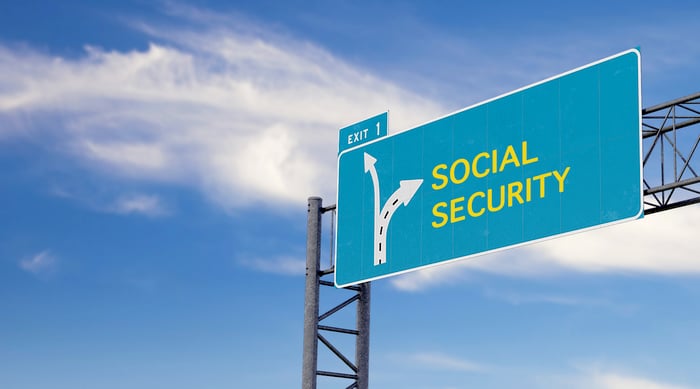
The president is also aware that something needs to be done to preserve Social Security. While his administration hasn’t proposed major reforms to Social Security yet, Joe Biden wants to make a big Social Security change based on his previous statements. And there’s reason to believe that most Americans could be on board with it.Social Security displayed on a highway sign.

Getty Images.

Biden’s big change

When Biden campaigned for president in 2020, he proposed several benefit increases for Social Security recipients. For example, he wanted to boost the benefits for older Americans who had been retired for at least 20 years. He also sought to increase the minimum benefit, allow surviving spouses to receive higher benefits, and eliminate penalties for public-sector workers.

However, the biggest Social Security change in Biden’s plan was to ask “Americans with especially high wages to pay the same taxes on those earnings that middle-class families pay.” In particular, he proposed increasing the payroll tax cap to $400,000. This cap is currently $160,200.

Thus far in his presidency, Biden hasn’t put forward a plan including this change. He did, though, include a similar idea for Medicare in his proposed 2023 budget. Biden called for a tax increase on all annual earnings above $400,000 to help preserve the federal healthcare program. 

What Americans think

A poll conducted by The Associated Press-NORC Center for Public Affairs Research last month appears to show that many Americans agree with the president’s ideas. Although this poll didn’t specifically ask about raising the Social Security payroll tax cap, the responses to other questions likely made the White House happy.

For example, a whopping 79% of Americans polled oppose reducing Social Security benefits. Three-quarters of those responding were against raising the full retirement age from 67 to 70. This aligns well with Biden’s commitments to prevent any cuts to Social Security. 

When asked about increasing taxes on households making more than $400,000 to help pay for Medicare, 58% of Americans favored the idea with another 19% on the fence. This doesn’t necessarily mean that similar numbers of Americans would favor raising the payroll tax cap to $400,000 to help fund Social Security. However, it seems to bode well for the president’s chances to gain public support should he move forward with the proposal.

Another survey conducted by the University of Maryland’s Program for Public Consultation (PPC) last year also looked good for Biden. The PPC survey found that 81% of respondents supported the proposal to apply payroll taxes to all income over $400,000 to fund Social Security. Importantly, the idea received bipartisan support, with 79% of Republicans and 88% of Democrats in favor.  

More changes needed

At least at this point, increasing the payroll tax cap appears to be one of the most likely reforms to help preserve Social Security’s benefits. However, this proposal won’t be enough on its own to ensure the program’s solvency over the long term.

The Social Security Administration estimates that raising the payroll tax cap to $400,000 beginning in 2024 would eliminate roughly 64% of the projected Social Security shortfall. This projection is close to the PPC’s estimate made last year that the change would reduce the program’s shortfall by 61%. 

The good news for retirees is that there are plenty of other alternatives available that would prevent Social Security from becoming insolvent in 2034. It’s also a positive sign that politicians from both major political parties are at least talking about ways to preserve the program.

While consensus hasn’t been reached on the best solutions yet, a bipartisan plan to fix Social Security remains a real possibility. In the meantime, the best thing for Americans approaching retirement to do is to save as much as they can and research ways to boost their overall retirement income.

Dangers from future technologies? It’s the current ones that are killing us

Resilience – Environment

Dangers from future technologies? It’s the current ones that are killing us

By Kurt Cobb, originally published by Resource Insights 

April 23, 2023

vision of the future
Image: “A futuristic vision: the advance of technology leads to rapid transport, sophisticated tastes among the masses, mechanization, and extravagant building projects. Coloured etching by William Heath” (1829). Via Wikimedia Commons https://commons.wikimedia.org/wiki/File:A_futuristic_vision_Wellcome_V0041098.jpg

Certainly, there a plenty of horror stories about possible disasters awaiting us from emerging technologies. I’ve written about two of them: 1) the possibility of small cheap, AI-guided drones used to commit mass slaughter (or targeted assassinations) and 2) lethal synthetic viruses for warfare or released by an apocalyptic cult trying to bring the apocalypse forward on the calendar. More recently, some have predicted that advances in artificial intelligence will ultimately lead to the destruction of humanity.

As bad as these sound, it’s possible that doomscrolling our way through the breathless coverage of dangerous new technologies is distracting us from what is already happening in right front of us: Existing technologies are already pushing humans quickly down the path to extinction (along with many plants and animals). Pretending that dangers to the survival of the human species come ONLY from the future is a perilous diversion.

In fact, the combination of climate change; the increasingly toxic pollution of the soil, water and air; depletion of arable soil, water, energy and critical metals; galloping development of wild and farm lands; and second order effects such as habitat and biodiversity loss, acidification of the oceans and dramatic loss of Greenland’s ice that may lead to a breakdown in the Gulf Stream ocean current that keeps much of Europe temperate—all this has gathered so much momentum that, frankly, we don’t need any help from the future to kill ourselves as a species. (Oh, I almost forgot; we could obliterate ourselves with a nuclear winter without any new nuclear technology or warheads needed.)

It turns out that we may be doing such a good job of threatening our species already that the emerging technologies we fear most will never get a chance to fully emerge. In the not-too-distant future, we humans may already be gone or our societies so degraded that launching a second apocalypse with the help of new technologies will be a practical impossibility. We won’t have the functioning infrastructure to do it!

And, that is basically the key to the lethality of most emerging technologies: connectivity. If communities become so isolated that inhabitants cannot travel to distant places harboring designer virus outbreaks, humanity will paradoxically be saved from extinction because of the loss of technology and any attendant mobility. Contemplate that for moment!

As for artificial intelligence, well, it needs a vast infrastructure of connected information sources to be effective. When I asked friends recently why we can’t literally just pull the plug on AI if it becomes dangerous, they had many explanations. But, perhaps the most telling one was that we have become so networked across the globe and AI will be so distributed, that we’d effectively have to pull the plug on ourselves—and we are not willing to do that even if not pulling the plug ultimately leads to our destruction.

Of course, the public has been told again and again that emerging technologies will bring abundance for all, solve climate change, get rid of pollution, cure most diseases, produce so much energy we’ll never have to think about the cost, and actually help regenerate the soil and the forests while increasing biodiversity.

I don’t know what they’ve been waiting for, but the tech overlords who’ve sold us this story had better get busy right now. There isn’t much time left for them to build out their “solutions.”

Kurt Cobb

Kurt Cobb is a freelance writer and communications consultant who writes frequently about energy and environment. His work has appeared in The Christian Science Monitor, Common Dreams, Le Monde Diplomatique, Oilprice.com, OilVoice, TalkMarkets, Investing.com, Business Insider and many other places. He is the author of an oil-themed novel entitled Prelude and has a widely followed blog called Resource Insights. He is currently a fellow of the Arthur Morgan Institute for Community Solutions.

Amy Silverstein speaks up for change in drugs tied to organ transplants, “while I still can”

CBS – Sunday Morning

Amy Silverstein speaks up for change in drugs tied to organ transplants, “while I still can”

By Amy Silverstein – April 23, 2023

Our commentary is from Amy Silverstein, one of this nation’s longest-surviving heart transplant recipients, and author of “Sick Girl” and “My Glory Was I Had Such Friends”:


Last night, I climbed the 13 stairs that lead to my bedroom, and when I got to the top, I put my hand to my heart and said thank you, because the climb was so easy, because the climb was propelled by a magnificent, healthy donor heart.

I’ve lived with two donor hearts over 35 years. I had my first transplant at 25, and when that failed, I had my second at 50. But in January my daily runs became difficult. Tests showed my heart was perfect. But additional tests revealed I have incurable cancer. It is in my lungs now. I will die soon.

I’ve had an extraordinary life. I finished law school, had an epic love with my husband, got to raise our son. I had the most glorious friendships. I wrote two books.

And I am so grateful, like every transplant patient I’ve ever met.

amy-silverstein-1280.jpg
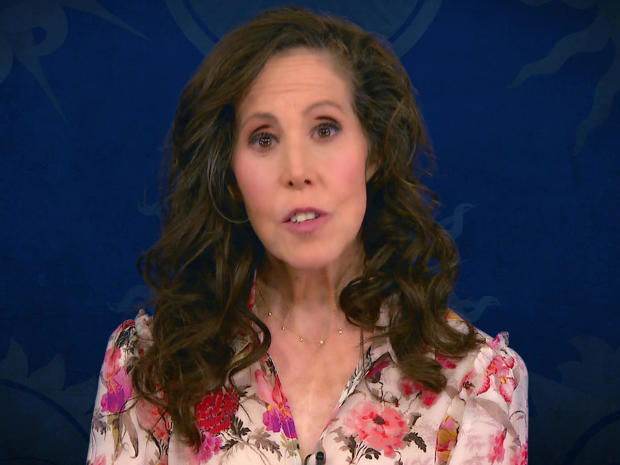
Author and two-time heart transplant recipient Amy Silverstein. CBS NEWS

But all too often this intense gratitude creates a cloak of silence that hides the realities of transplant life.

Video: https://bd3daeb79ef6df53976060af31ac242b.safeframe.googlesyndication.com/safeframe/1-0-40/html/container.html

The fact is, organ donation is miraculous. Transplant medicine is not.

In 40 years, there has been very limited change in the medicines that patients take daily to prevent rejection of their donor organs. These immunosuppressive drugs continue to wreak havoc on the body, dramatically increasing the risk of diabetes, kidney failure, dangerous infections and, yes, cancers.

And all of this is hidden well behind that pervasive gratitude recipients feel for their donor organs. When you are given everything, there is subtle and explicit pressure to ask for nothing more.

This constrains honest dialogue, and removes a sense of urgency to make meaningful improvements to the existing transplant drug regimen.

Perhaps this is why life expectancy for heart transplant patients has not changed substantially since my first transplant in 1988. 

Or why the federal agency metric for transplant success sets an embarrassingly low bar of one-year survival.

Or why research for new transplant medicines is chronically underfunded.

So, I am speaking up now, while I still can, for change, and for all the transplant recipients I’ve known who died because the medicines fell short.

And for the donor families who gave life to these patients.

They deserve so much more.

And there’s nothing ungrateful about saying so.

My Transplanted Heart and I Will Die Soon

By Amy Silverstein – April 23, 2023

Ms. Silverstein is the author of “Sick Girl” and “My Glory Was I Had Such Friends.

CreditCredit…By Marine Buffard

Today, I will explain to my healthy transplanted heart why, in what may be a matter of days or weeks at best, she — well, we — will die.

I slide my hand across my chest and speak aloud, palm to my heart’s crisp beating. “I’m so sorry, sweet girl.” She is not used to hearing me this way, outside my head, beyond the body we share. Up until now, the understanding between us has been internal. Like on our daily runs, when my ’70s yacht rock playlist propels each stride; this heart from a 13-year-old donor revolts in my body with thumps of Oh puh-lease — and we giggle together, picking up our pace to sprinting.

“She was an athlete,” the doctor told me after a surgeon removed my failing heart (the first transplanted one — yes, I’ve had two) and sewed this second beauty beneath my breastbone. Three weeks later, at my high school track I began the trial-and-error process of figuring out how to defy the uncomfortable staccato of her adrenaline-fueled pulse — a consequence of the permanently severed nerves that cannot regrow to full electrical function inside a recipient’s chest. The idea to run with my new donor heart stemmed from the lessons of my previous one that taught me the importance of mastering maximum heart rate sensations early on.

My 35 years living with two different donor hearts (I was 25 at the time of the first transplant) — finishing law school, getting married, becoming a mother and writing two books — has felt like a quest to outlast a limited life expectancy. With compulsive compliance, I adhered to the strictest interpretation of transplant protocols. I honored my gifts of life with self-discipline: not one pat of butter; not one sip of alcohol; running mile after mile hoping to stave off vasculopathy, an insidious artery disease that often besets transplanted hearts within about 10 years.

I carried my own detailed medical notes in and out of every doctor’s appointment trying to strategize, along with my doctor’s input, to head off serious issues at the earliest opportunity. I gave my all to sustaining my donor hearts despite daunting odds, and the hearts rewarded me with extraordinary years. I have been so lucky.

But now I lower my chin and whisper the words malignant … metastatic … lungs … terminal. It is the end of the road for my heart and me — not because we didn’t achieve and maintain sparkling cardiac health. But because the sorry state of transplant medicine took us down.

Organ transplantation is mired in stagnant science and antiquated, imprecise medicine that fails patients and organ donors. And I understand the irony of an incredibly successful and fortunate two-time heart transplant recipient making this case, but my longevity also provides me with a unique vantage point. Standing on the edge of death now, I feel compelled to use my experience in the transplant trenches to illuminate and challenge the status quo.

Over the last almost four decades a toxic triad of immunosuppressive medicines — calcineurin inhibitors, antimetabolites, steroids — has remained essentially the same with limited exceptions. These transplant drugs (which must be taken once or twice daily for life, since rejection is an ongoing risk and the immune system will always regard a donor organ as a foreign invader) cause secondary diseases and dangerous conditions, including diabetes, uncontrollable high blood pressure, kidney damage and failure, serious infections and cancers. The negative impact on recipients is not offset by effectiveness: the current transplant medicine regimen does not work well over time to protect donor organs from immune attack and destruction.

My first donor heart died of transplant medicines’ inadequate protection of the donor heart from rejection; my second will die most likely from their stymied immune effects that give free rein to cancer.

Transplantation is no different from lifelong illnesses that need newer, safer, more effective medicines. Improvements in drug regimens are needed for lupus, Parkinson’s and a host of others. The key difference is that only in transplantation are patients expected to see their disease state as a “miracle.” Only in transplant is there pressure to accept what you’ve been given and not dare express a wish, let alone a demand, for a healthier or longer life.

The side effects of transplant immunosuppression can be sickening day to day, as my small posse of stalwart organ recipient girlfriends knows well; we talk about the vomit bags stashed in our purses, the antacid tablets we tuck into our front pockets for quick-nibble access at a cocktail party or when giving a presentation at work. We’ve encouraged one another to be inventive and keep finding little fixes or at least ameliorations.

Yet over time, each of us tolerate significant challenges and damage, the kind that prompt us to call late at night in tears, reeling from the intractable infections that land us in emergency rooms and hospital beds, the biopsies that pluck pieces of our donor organs leaving us scarred and shaken, the skin cancers that blossom rapidly beside an eyelid or ear. We’ve learned that there can be no clearing every single cancer cell with a suppressed immune system; we will get cut again, and again and again.

But with rattled resolve, we push one another to squeeze laughter out of our common experiences, recounting in mimicking tones all the doctors and all the ways they’ve said to us: “You have taken too much of those medicines for too long. Things are bound to go sideways.”

Too much for too long.

I’ve had the opportunity to sit in on a few closed-door meetings of professional transplant organizations where physicians speak about the problem openly, if briefly, in a safe space for voicing regret and frustration. They admit with shrugged shoulders that after the first five years post-transplant, they don’t know how much immunosuppressive medicine will keep a transplanted organ protected and a recipient’s body safe from harm.

“These 40-year-old medicines have had their day,” the doctor at the head of a virtual conference table professed. “They’re insufficient to prevent cellular and antibody-mediated rejection long term, and if by chance they do, their effects become deadly. I’m talking malignancies.” His colleagues lowered their eyes and sighed.

And yet there is criticism and even vitriol waiting for transplant recipients who express discontent with the status quo. In 2007, in response to my memoir, “Sick Girl,” where I described my full range of emotions after my first heart transplant, I received hostile letters and barbed online comments: Stop complaining … shut up and take your medicine … the doctors should have let you die.

Because a transplant begins with the overwhelming gift of a donor organ that brings you back from the brink of death, the entirety of a patient’s experience from that day forward is cast as a “miracle.” And who doesn’t love a good miracle story? But this narrative discourages transplant recipients from talking freely about the real problems we face and the compromising and life-threatening side effects of the medicines we must take.

This “gratitude paradox,” as I’ve come to think of it, can manifest itself throughout the transplant professional communities as well. Without vigorous pushback, hospitals and physicians have been allowed to set an embarrassingly low bar for achievement. Indeed, the prevailing metric for success as codified by the Health Resources and Services Administration is only one year of post-transplant survival, which relieves pressure for improvement.

And with a muted patient cohort, it has been way too easy for federal, state and nonprofit funding sources to overlook transplantation. Compare this with the influence and substantial research funding generated by engaged parents advocating fiercely on behalf of Type 1 diabetes patients — a worthy cause but one whose absolute number of new patients each year is not that different than that of organ transplant recipients. Perhaps this is why life expectancy after heart transplantation is little changed compared to when I received a heart in 1988.

I am hopeful that with the Senate Finance Committee revealing improprieties, mishandling and wastefulness of donated organs by the Organ Procurement and Transplantation Network/United Network for Organ Sharing, a similar light will be shone on the state of transplant medicine so that positive change can finally begin. For now, though, deeply entrenched problems remain, and the most ungrateful thing I could do would be to stay silent in my remaining days.

I am speaking out while I still can for my magnificent hearts.

And for the patients who have called me or written from their post-transplant deathbeds, dismayed, “I did my best, I took every pill, every day. …”

I am speaking for the organ donor families I’ve met, one mother in particular whom I watched rub the mid-back of a man who’d received her daughter’s kidney; she mashed her body against the place where her girl might still reside. She called me two years later, sobbing, because this kidney recipient had died, as had the patients who had received the liver and lungs.

I am speaking for my transplant cardiologist, the finest physician I have ever known, who sat across from me last month and cried into his palms when he told me I had incurable cancer.

I sat quietly for a moment before replying. “I sacrificed my whole body for this beautiful heart,” I said. “But there’s a victory here, too. I kept her perfect to the end.”

My doctor and I were grateful.

We were horrified.

A true heart transplant goodbye.