March 19th Town Hall Meeting on Income Inequality

IBEW shared a U.S. Senator Bernie Sanders video  

March 16, 2018

Whether or not it’s talked about on the major networks, income and wealth inequality is one of the defining issues of our time. Please join me, Elizabeth Warren, Michael Moore, Darrick Hamilton and o

Tune in March 19th for the Inequality Town Hall

Whether or not it's talked about on the major networks, income and wealth inequality is one of the defining issues of our time. Please join me, Elizabeth Warren, Michael Moore, Darrick Hamilton and others on Facebook Monday, March 19 for an incredibly important discussion.

Posted by U.S. Senator Bernie Sanders on Thursday, March 15, 2018

Britain had a school shooting that changed the country’s gun laws

NowThis

March 13, 2018

22 years ago today, Britain had a school shooting that changed the country’s gun laws—this year, the families affected have a message of hope and solidarity for Parkland

Dunblane Tragedy Survivors Send Message to Parkland Community

22 years ago today, Britain had a school shooting that changed the country's gun laws—this year, the families affected have a message of hope and solidarity for Parkland

Posted by NowThis on Tuesday, March 13, 2018

Top bottled water brands contaminated with plastic particles: report

AFP

Top bottled water brands contaminated with plastic particles: report

Kerry Sheridan, AFP      March 14, 2018 
   

Miami (AFP) – The world’s leading brands of bottled water are contaminated with tiny plastic particles that are likely seeping in during the packaging process, according to a major study across nine countries published Wednesday.

“Widespread contamination” with plastic was found in the study, led by microplastic researcher Sherri Mason of the State University of New York at Fredonia, according to a summary released by Orb Media, a US-based non-profit media collective.

Researchers tested 250 bottles of water in Brazil, China, India, Indonesia, Kenya, Lebanon, Mexico, Thailand and the United States.

Plastic was identified in 93 percent of the samples, which included major name brands such as Aqua, Aquafina, Dasani, Evian, Nestle Pure Life and San Pellegrino.

The plastic debris included nylon, polyethylene terephthalate (PET) and polypropylene, which is used to make bottle caps.

“In this study, 65 percent of the particles we found were actually fragments and not fibers,” Mason told AFP.

“I think that most of the plastic that we are seeing is coming from the bottle itself. It is coming from the cap. It is coming from the industrial process of bottling the water.”

Particle concentration ranged from “zero to more than 10,000 likely plastic particles in a single bottle,” said the report.

On average, plastic particles in the 100 micron (0.10 millimeter) size range — considered “microplastics” — were found at an average rate of 10.4 plastic particles per liter.

Even smaller particles were more common — averaging about 325 per liter.

Other brands that were found to contain plastic contaminated included Bisleri, Epura, Gerolsteiner, Minalba and Wahaha.

Experts cautioned that the extent of the risk to human health posed by such contamination remains unclear.

“There are connections to increases in certain kinds of cancer to lower sperm count to increases in conditions like ADHD and autism,” said Mason.

“We know that they are connected to these synthetic chemicals in the environment and we know that plastics are providing kind of a means to get those chemicals into our bodies.”

– Time to ditch plastic? –

Previous research by Orb Media has found plastic particles in tap water, too, but on a smaller scale.

“Tap water, by and large, is much safer than bottled water,” said Mason.

The three-month study used a technique developed by the University of East Anglia’s School of Chemistry to “see” microplastic particles by staining them using fluorescent Nile Red dye, which makes plastic fluorescent when irradiated with blue light.

“We have been involved with independently reviewing the findings and methodology to ensure the study is robust and credible,” said lead researcher Andrew Mayes, from UEA’s School of Chemistry.

“The results stack up.”

However, representatives from the bottled water industry took issue with the findings, saying they were not peer-reviewed and “not based on sound science,” according to a statement from the International Bottled Water Association.

“A recent scientific study published in the peer-reviewed journal Water Research in February 2018 concluded that no statistically relevant amount of microplastic can be found in water in single-use plastic bottles,” it added.

“There is no scientific consensus on the potential health impacts of microplastic particles. The data on the topic is limited and conclusions differ dramatically from one study to another.”

Jacqueline Savitz, chief policy officer for North America at Oceana, a marine advocacy group that was not involved in the research, said the study provides more evidence that society must abandon the ubiquitous use of plastic water bottles.

“We know plastics are building up in marine animals, and this means we too are being exposed, some of us every day,” she said.

“It’s more urgent now than ever before to make plastic water bottles a thing of the past.”

The Artifice of the Deal

Yahoo News

Matt Bai’s Political World

The Artifice of the Deal

Matt Bai, National Political Columnist            March 15, 2018

President Trump at a rally in support of Republican congressional candidate Rick Saccone, in Moon Township, Pa. (Photo: Joshua Roberts/Reuters.

Remember that time, way back about two weeks ago, when President Trump berated leaders of his own party, in front of a room full of cameras, for being afraid of the NRA, and he vowed to pass a bipartisan bill that would make it harder for kids to get assault rifles?

Yeah, well, in case you missed the latest — which wouldn’t have been hard, since the one-day story was instantly eclipsed by a Cabinet shakeup and a special election — that whole thing went away Monday with a mumbled “never mind” from the White House.

Apparently gun control is really hard, and you actually have to focus on it and change some minds and anger some of your friends, and why go through all that when you’ve already gotten the headline you were after. Kind of like the time in January when Trump did the same thing on immigration, summoning lawmakers from both parties to the White House and declaring his full support for a bipartisan compromise. That lasted until breakfast the next day.

And you can already see where this alleged breakthrough summit with the North Korean dictator, Kim Jong Un, is probably headed. The shocking announcement last Thursday played on TV like the dramatic opening of a thriller. It’s been a silent movie ever since.

We’ve been covering this presidency for more than a year now, and we’ve seen enough to know that it really isn’t the wild, unpredictable ride we keep saying it is, which is also what Trump would like you to believe. In fact, there’s a highly predictable pattern here, and it all adds up to a breathtaking hypocrisy.

The president who ran an entire campaign against the phoniness and timidity of conventional politics turns out to be phonier and more timid than any of those who came before.

This was Trump’s big appeal to a lot of moderate and independent voters who were understandably disgusted by the state of Washington — the ones who didn’t find his neo-nativism all that inspiring. Trump was supposed to be a man of action and deal-making.

Whatever came of it, good or ugly, this wasn’t a guy who would settle for a presidency built on empty slogans and Rose Garden photo-ops.

Trump’s pitch was that candidates were always talking about challenging the norms of Washington, but once they got elected, all they ever did was mouth platitudes from a teleprompter. That’s what Trump meant when he told an Ohio audience last year: “It’s so easy to act presidential, but that’s not going to get it done.”

He was back on this theme even last week, at a rally in Pennsylvania, when he comically mimicked the way a typical president is supposed to endorse candidates, shuffling around the stage and mumbling like a zombie.

Well, all right. But can you imagine, for a moment, what would have happened if President Obama had announced to the world a plan to remake the health care system, and then decided never to bring it up again?

Can you picture a world in which George W. Bush would have gone before Congress vowing to drive the Taliban from Afghanistan, and then issued a terse statement a few days later saying it was too hard so never mind?

This is exactly what Trump does, again and again. Forget the standard photo ops; his entire presidency, save for a giveaway-laden tax bill that actually originated in Congress, is a string of dramatic flourishes, without even the aspiration to translate them into something like actual governance.

Even this big tariff program he announced, which instantly sent world markets into a spiral, turns out to be mostly bravado. The administration is exempting our biggest source of steel imports, Canada, along with Mexico, and it’s already hinting at a deal with the Europeans. In the end, for all the big (and, I think, misguided) talk of protectionism, a fraction of imports will be affected.

And then there was Trump, just this week, visiting the prototype for his long-promised wall in San Diego. You know, the one the Mexicans were supposed to be paying for.

Theatrics, nothing more.

I’d be remiss if I didn’t mention, too, another idea Trump floated the other day, bringing a thousand sleepy headline writers to life: a new space force for the military. (“That could be the big, breaking story,” Trump said helpfully, in case the assembled reporters didn’t know an entertaining nugget when they heard one.)

Never mind that this idea, as the Atlantic wisely noted, has already been out there a while, and Trump’s administration is on record opposing it. Trump was just looking for an attention-getter. He’ll have Mattis training junior Jedis in Disneyland before he ever gets around to following up on that one.

None of this should surprise us. As I’ve written many times, Trump personifies the entangling of politics and entertainment.

He comes from the world of “unscripted television,” which is only unscripted in the sense that the actual words aren’t written down for the actor to recite. The plot lines are pre-ordained and calibrated to explode in primetime, the overarching directive being to never bore an audience.

Before that, in the 1980’s, Trump honed his celebrity as New York’s serial self-promoter, gaming the gossip columnists the way J. Edgar Hoover once played Walter Winchell. Trump the socialite developer learned at least as much about building brands and expectations as he did about building gaudy towers.

Trump isn’t really a man of action. He’s a man of artifice. He talks and he talks and he talks, the world’s foremost expert on dominating a news cycle, knowing all along that by the time we realize none of it’s real, he’ll have ushered us along to whatever’s next.

And this is the point – that, as an industry, we who chronicle this president and his novel brand of politics seem always to be a step behind the game. During the primaries in 2016, the ratings-obsessed cable channels let Trump call in to shows and carried his rallies live and unedited. (They still do, apparently.)

Only when Trump was well on his way to the nomination did they realize that they’d been played for free advertising. By then, though, Trump had figured out that he could manipulate campaign coverage just by tweeting something outrageous whenever he wanted to change the subject.

Now that Trump is president, we’ve done what we must, which is to cover his various pronouncements with at least some of the solemnity the office demands. When the president of the United States says he’s warming to the idea of a new fleet of space soldiers, because maybe he caught the last half hour of “Contact” on Starz last weekend, we are duty bound to note it.

Generally, I think the media have done a pretty good job of injecting both fact-checking and skepticism into our coverage of Trump, in a way we would have resisted a generation ago.

But we’re still letting this president perform for the cameras as if he were actually planning to govern, without giving nearly as much attention to what happens on the issue once the cameras are gone. We’re still allowing ourselves to be carried along by one dramatic turn after another, because Trump knows instinctively that if he keeps us moving today, we won’t have time to dwell on whatever he promised yesterday.

Trump was dead right about our politics over the years — too much of it became a tired kind of stagecraft. But that kind of stagecraft was almost always designed to sell an agenda.

And that’s the distinction between a serious politician and a con artist. The latter only sells himself.

Read more from Yahoo News:

Papadopoulos says that Trump personally encouraged him to arrange meeting with Putin, new book reports

Red tape traps teenagers seeking refuge in U.S.

As Trump visits border, Latino voters are watching and biding their time

Will Kim Jong Un give Trump a mulligan?

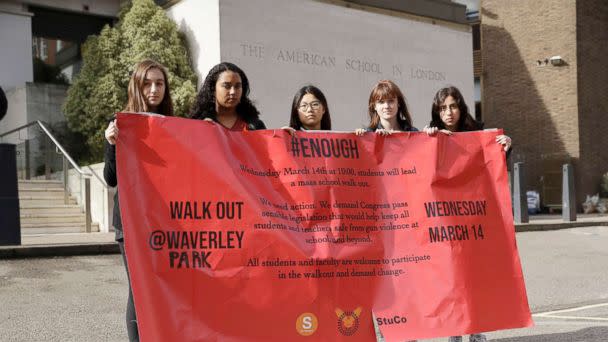
Photos: Kids unite for National School Walkout calling for tighter gun control

Trump administration wages a ‘war on information,’ group charges

McClatchy – D.C. Bureau

Trump administration wages a ‘war on information,’ group charges

By Anita Kumar     March 13, 2018

President Donald Trump speaks at a rally in Moon Township, Pa., March 10, 2018. In a 75-minute performance in western Pennsylvania, it was vintage 2016 Trump: rambling and fiery, boastful and jocular — the part of being president that he loves perhaps the most. Tom Brenner NYT White House

Washington: The Trump administration has halted a new policy that would have required large companies to report what they pay their employees by race and gender. It has stopped a study of serious health risks for people who live near coal mine sites in Central Appalachia. And it has collected less crime data from across the nation than previous years.

In a new report to be released Tuesday, watchdog group Public Citizen outlined 25 ways President Donald Trump and federal agencies have conducted a so-called war on information over the last 14 months, largely eliminating data it finds inconvenient.

In most cases, the information already had been previously collected by the government. But in other cases, a plan was in place for the government to start collecting the information.

“A president who cares little about facts and has a dubious understanding of the concept of truthfulness sets the tone for his overall administration,” Robert Weissman, president of Public Citizen, told McClatchy. “But it’s not just that the administration is sloppy with the facts; it has engaged in a deliberate campaign to suppress information that contradicts its corporate and ideological extremist agenda.”

Public Citizen said the Trump administration is terminating studies that contradict its positions on big business priorities, manipulating data to promote an anti-immigrant agenda and failing to seek input from scientists and other experts. The study is not comprehensive but does show how the administration has denied facts, rejected expert advice and promoted falsehoods, its authors say.

In some cases, the administration has reversed course after being criticized, according to the report.

In one example, the report said the Department of Agriculture in February 2017 removed thousands of animal welfare documents from its website, including documents on the number of animals kept by research labs, circuses, companies and zoos. It began posting the information again later that month after animal rights groups complained, though it redacts some information citing “privacy” concerns.

In another instance, the report said, the Federal Emergency Management Agency deleted statistics in October 2017 on the percentage of Puerto Ricans with power and access to drinking water following Hurricane Maria. FEMA later began posting the information again that same month after the media reported it.

Even before Trump was sworn into office, he was accused of hiding information. Trump never released his tax returns, despite the common practice of presidents for four decades of releasing them and refused to post visitor logs for the White House until it settled a lawsuit that would reveal some details.

The White House did not respond to a request for comment about the Public Citizen report.

“These are not random suppressions of data and evidence, simply a byproduct of carelessness,” the report states. “The Trump administration-wide information suppression is a considered and concerted effort to serve corporate and extremist ideological interests.”

Other examples cited in the report:

Suspending a study to update an offshore oil and gas operations inspection program.

Scaling back research of the environmental impact of copper mining in a northern Minnesota wilderness area.

Removing information about climate change from websites.

Abandoning an international effort to require energy and mining firms to disclose payments given to governments.

Barring student loan services from responding to information requests from third parties, including state regulators.

No longer mandating contractors bidding on federal projects disclose all labor law violations for the past three years

Not requiring the Census Bureau to ask about sexual orientation or gender identity on its two biggest surveys.

Public Citizen also cited the example of a commission Trump created to look into voter fraud after he said millions of people voted illegally in 2016, though he provided no proof. The commission was later disbanded after states revolted.

“Members of the Trump administration seem eager to dish off the record about the daily drama of a dysfunctional White House,” said Alan Zibel, research director for Public Citizen’s Corporate Presidency Project and co-author of the report. “But they routinely suppress far more consequential information about how Trump’s dangerous worker safety, public health and environmental policies will impact Americans.”

Today, activists placed 7,000 pairs of children’s shoes in front of the Capitol

Fusion is with Splinter.

Haunting.

Today, activists placed 7,000 pairs of children’s shoes in front of the Capitol—equalling the estimated number of kids killed by gun violence since Sandy Hook.

These Shoes Represent Kids Killed by Gun Violence

Haunting.Today, activists placed 7,000 pairs of children's shoes in front of the Capitol—equalling the estimated number of kids killed by gun violence since Sandy Hook.

Posted by Fusion on Tuesday, March 13, 2018

7,000 Pairs of Empty Shoes on the Capital Lawn

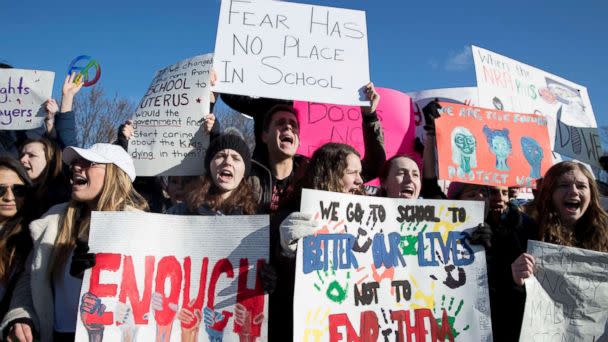
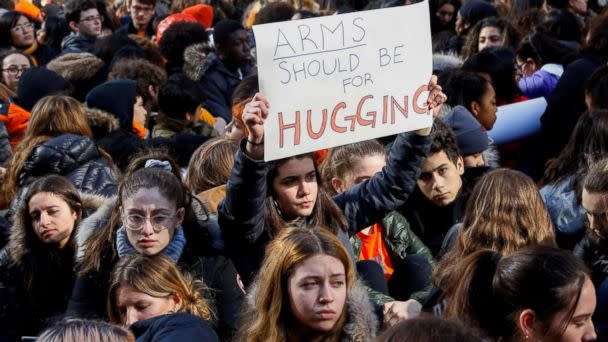
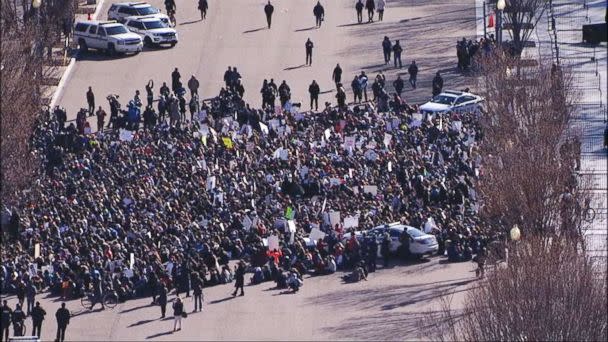
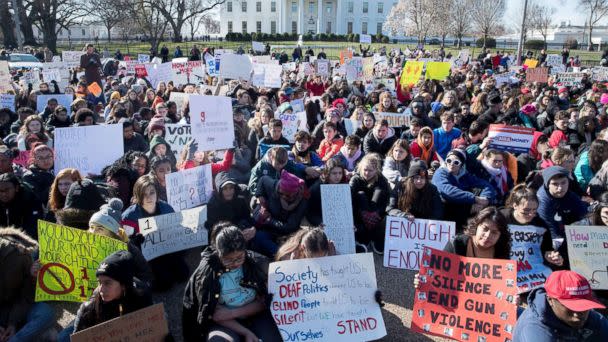
Thousands of students rally in solidarity to end gun violence

ABC – Good Morning America

NATIONAL SCHOOL WALKOUT LIVE: Thousands of students rally in solidarity to end gun violence

Emily Shapiro, Good Morning America        March 14, 2018 

With Mike Pompeo, Trump will have a hardcore climate denier at State

Mashable – Science

With Mike Pompeo, Trump will have a hardcore climate denier at State

By Andrew Freedman      March 13, 2018

A protest about climate change in New York City.A protest about climate change in New York City. Image: Lightrocket/Getty

The climate science and policy community was taken aback when President Donald Trump nominated Rex Tillerson, then the head of ExxonMobil, to take over the State Department in January 2017. Tillerson spent his entire career at the oil and gas giant, and was present at the company during the time when its scientists detailed the heat-trapping dangers of burning fossil fuels.Exxon is now under legal scrutiny in multiple jurisdictions for ignoring its own scientists and instead working with think tanks and other groups to convince the public that the science of climate change was unsettled at best, bogus at worst. The prospect of having Tillerson at State sparked protests outside the Capitol during his confirmation hearing, and significant opposition from Democrats in the Senate.

Now, climate advocates may miss the ex-oil man, considering his replacement. On Tuesday, Trump fired Tillerson via twitter and announced the nomination of CIA Director Mike Pompeo to lead the State Department in his place.

Pompeo has long-questioned the links between fossil fuel burning and climate change, which climate scientists regard as irrefutable.

In the scientific community, there’s virtually no debate about what is causing global warming based on multiple lines of observational evidence, as well as basic physics.

Next to the president and Environmental Protection Agency administrator, the Secretary of State is the U.S.’s most prominent official on climate change. The State Department is in charge of the nation’s role in international climate talks, including how to walk the delicate dance of working on the implementation of the Paris Climate Agreement while also planning to withdraw from it in 2020, as Trump plans to.

The U.S. is the only country in the world to announce its withdrawal from this agreement, which seeks to keep global warming to “well below” 2 degrees Celsius, or 3.6 degrees Fahrenheit, of warming compared to preindustrial levels by the year 2100.

For his part, Pompeo is a former Republican congressman from Kansas and a member of the Tea Party movement.

He also has longstanding, close ties to Charles and David Koch, the billionaire conservatives who continue to fund efforts to discredit mainstream climate science and sow doubt among the public. In fact, he is the duo’s top funding recipient currently in the Trump administration, having taken in more than $1 million during his time in Congress.

Pompeo declined to state his views on climate change during confirmation hearings for the CIA post, arguing it was outside the scope of the position despite the fact that global warming poses an array of national security threats.

He has made past statements, though, that clearly indicate where he stands on this issue.

“Look, I think the science needs to continue to develop. I’m happy to continue to look at it,” he said on C-SPAN in 2013. “There are scientists who think lots of different things about climate change. There’s some who think we’re warming, there’s some who think that the last 16 years have shown a pretty stable climate environment.”

He has also revealed that he questions whether global temperatures are increasing, and if so, if human activities are the main cause.

Pompeo also criticized the Obama administration’s work on the Paris Agreement, calling it a “radical” treaty.

Once in office, Tillerson was seen as a comparatively moderate voice on climate change, advocating that the U.S. stay in the Paris Climate Agreement, for example.

However, under Tillerson, the U.S. had not yet issued a report on its climate actions due to the U.N. on March 1, prompting a lawsuit from the Center for Biological Diversity, an environmental group. That group, and others, reacted with alarm at the Pompeo appointment on Tuesday.

“If Tillerson was a speed bump for our international cooperation on climate, Pompeo could be a wrecking ball,” said Jean Su, an attorney with the Center for Biological Diversity’s Climate Law Institute, in a statement.

May Boeve, the executive director of 350.org, also came out swinging against Pompeo.

“We’ve gone from Exxon’s CEO to the Koch Brothers’ most loyal lapdog,” she said in a statement. “Pompeo received over a million oil and gas dollars during his political career, has deep ties to the Kochs, and is a climate denier to the core. Trump’s State Department is a vehicle for big oil and billionaires, regardless of whether Tillerson or Pompeo are at the helm.”

It’s possible that Pompeo could yank the State Department out of the U.N. Framework Convention on Climate Change, under which these negotiations are held, which would truly make the U.S. a pariah state on this issue. He could also scuttle a separate agreement on so-called super-greenhouse gases, which Tillerson supported.

Or, perhaps he’ll follow the course that Tillerson set in motion, and simply ignore the climate issue entirely, choosing instead to focus on higher priorities, like the nuclear agreement with Iran and participating in the delicate talks with North Korea.

Pompeo must be confirmed by the Senate to take his post, and he will likely face climate policy questions from Democratic members of the Senate Foreign Relations Committee.

The Koch Brothers Get Their Very Own Secretary of State

The Nation

The Koch Brothers Get Their Very Own Secretary of State

Trump’s pick to replace Rex Tillerson is an errand boy for billionaires.

By John Nichols      March 13, 2018

Mike Pompeo testifies before the Senate Intelligence Committee on February 13, 2018. (Reuters / Aaron P. Bernstein)

In the Republican wave election of 2010, when Charles and David Koch emerged as defining figures in American politics, the greatest beneficiary of Koch Industries largesse was a political newcomer named Mike Pompeo. After his election to the House eight years ago, Pompeo was referred to as the “Koch Brothers’ Congressman” and “the congressman from Koch.”

Now Pompeo is positioned to become a Koch brothers–influenced secretary of state.

After serving for a little more than a year as Donald Trump’s top yes-man at the Central Intelligence Agency, Pompeo is Trump’s pick to replace Rex Tillerson, the administration’s listless placeholder at the Department of State.

In a measure of the extent to which Trump and Tillerson had disengaged from one another, the outgoing secretary of state apparently learned of his firing via Twitter Tuesday morning—when an aide showed the nation’s top diplomat a tweet from the president announcing the transition. A statement from the department indicated that Tillerson was “unaware of the reason” for his removal.

Tillerson displayed a measure of independence from Trump on issues ranging from Russian cyber attacks to the aggressive approach of Saudi Arabia to Qatar and other countries.

Donald Trump has decided to put “the congressman from Koch” in charge of the State Department and, by extension, the engagement of the United States government with a world in which the brothers Koch have many, many interests.

Pompeo’s pattern of deference to his political benefactors is likely to make him a better fit with a self-absorbed president. He will also bring to the position an edge that Tillerson lacked. Pompeo is a foreign-policy hawk who fiercely opposed the Iran nuclear deal, stoked fears about Muslims in the United States and abroad, opposed closing the Guantánamo Bay detention camp, and defended the National Security Agency’ sunconstitutional surveillance programs as “good and important work.” He has even gone so far as to say that NSA whistle-blower Edward Snowden “should be brought back from Russia and given due process, and I think the proper outcome would be that he would be given a death sentence.”

Pompeo’s open disregard for privacy rights in particular and civil liberties in general, as well as his penchant for extreme language and more extreme policies, are anything but diplomatic. That’s likely to make him an even more troublesome Secretary of State than Tillerson, who was relentlessly corporate in his worldview but not generally inclined to pick fights—even when it came to standing up for a State Department that decayed on his watch.

In addition to being a hothead, Pompeo has long been one of the most conflicted political figures in the conflicted city of Washington, thanks to his ties to the privately held and secretive global business empire that has played a pivotal role in advancing his political career. Pompeo came out of the same Wichita, Kansas, business community where the Koch family’s oil-and-gas conglomerate is headquartered. Indeed, Pompeo built his own company with seed money from Koch Venture Capital.

More important, from a political standpoint, is the fact that Pompeo made the leap from business to government with a big boost from the Koch brothers and their employees. “I’m sure he would vigorously dispute this, but it’s hard not to characterize him as the congressman from Koch,” says University of Kansas political science professor Burdett Loomis.

In fact, that’s a generally appropriate characterization for the man whom Donald Trump is angling to make his secretary of state. (With due regard to the Kochs, they can be somewhat more nuanced than their caricatures suggest. As thoughtful observers with publications such as The American Conservative remind us, projects funded by the Kochs have over the years diverted from the bombastic language and stances of more-militaristic conservatives. Unfortunately, as is so often the case with Republican recipients of Koch cash and encouragement, it is the advocacy by these billionaire businessmen and their allies for domestic and international policies that favor multinational corporations that tends to influences the likes of Pompeo.)

As the Center for Food Safety, which has wrangled with Pompeo on food-labeling issues that are of tremendous interest to the global agribusiness and grocery industries, noted in 2014:

“Congressman Mike Pompeo was the single largest recipient of campaign funds from the Koch Brothers in 2010. After winning election with Koch money, Congressman Pompeo hired a Koch Industries lawyer to run his office. According to The Washington Post, Congressman Pompeo then introduced bills friendly to Koch Industries while Koch hired outside lobbyists to support them.”

Recalling the 2010 election, the Center for Responsive Politics explained that “Koch Industries had never spent as much on a candidate in a single cycle as it did on Pompeo that time around, giving him a total [of] $80,000. Koch outdid itself again in the 2012 cycle by ponying up $110,000 for Pompeo’s campaign.”

When Pompeo ran for reelection in 2014, he faced a tight primary contest with another local Republican who had Koch ties. One of the biggest turning points in that race came when the Kochs sided with Pompeo. “KOCHPAC is proud to support Mike Pompeo for Congress based on his strong support for market-based policies and economic freedom, which benefits society as a whole,” Mark Nichols, the vice president of government and public affairs for Koch Industries, told Politico.

Just as the Kochs have been loyal to Pompeo, so Pompeo has been loyal to the Kochs. He’s a regular at their behind-closed-doors gatherings, and he’s outspoken in their defense, claiming that President Obama and “Nixonian” Democrats have unfairly “vilified” Charles and David Koch.

But, of course, the supposed vilification has simply involved the appropriate questioning of the influence wielded by billionaires in general and the Kochs in particular over American politics and governance. That’s hardly an unreasonable concern, considering that, as one of the most prominent Koch-backed politicians in the country, Pompeo was called out just weeks after taking office for proposing legislative initiatives that “could benefit many of [the Kochs’] business interests.”

“The measures include amendments approved in the House budget bill to eliminate funding for two major Obama administration programs: a database cataloguing consumer complaints about unsafe products and an Environmental Protection Agency registry of greenhouse-gas polluters,” reported The Washington Post in 2011. “Both have been listed as top legislative priorities for Koch Industries, which has spent more than $37 million on Washington lobbying since 2008, according to disclosure records.”

“It’s the same old story—a member of Congress carrying water for his biggest campaign contributor,” Common Cause’s Mary Boyle complained at the time.

Now, however, it’s a different story, because Donald Trump wants to put “the congressman from Koch” in charge of the State Department and, by extension, the engagement of the United States government with a world in which the brothers Koch have many, many interests.

(This piece is being regularly updated with details and analysis regarding Tuesday’s transition at the State Department.)

Get unlimited access to The Nation for as little as 37 cents a week!

SUBSCRIBE

John Nichols is The Nation’s national-affairs correspondent. He is the author of Horsemen of the Trumpocalypse: A Field Guide to the Most Dangerous People in America, from Nation Books, and co-author, with Robert W. McChesney, of People Get Ready: The Fight Against a Jobless Economy and a Citizenless Democracy.