
Farmland Values Hit Record Highs, Pricing Out Farmers

The New York Times

Farmland Values Hit Record Highs, Pricing Out Farmers

Linda Qiu – November 13, 2022

Farmland outside of Clark, S.D., on Oct. 26, 2022. (Tim Gruber/The New York Times)

Joel Gindo thought he could finally own and operate the farm of his dreams when a neighbor put up 160 acres of cropland for sale in Brookings County, South Dakota, two years ago. Five thousand or six thousand dollars an acre should do the trick, Gindo estimated.

But at auction, Gindo watched helplessly as the price continued to climb until it hit $11,000 an acre, double what he had budgeted for.

“I just couldn’t compete with how much people are paying, with people paying 10 grand,” he said. “And for someone like me who doesn’t have an inheritance somewhere sitting around, a lump sum of money sitting around, everything has to be financed.”

What is happening in South Dakota is playing out in farming communities across the nation as the value of farmland soars, hitting record highs this year and often pricing out small or beginning farmers. In the state, farmland values surged by 18.7% from 2021 to 2022, one of the highest increases in the country, according to the most recent figures from the Agriculture Department. Nationwide, values increased by 12.4% and reached $3,800 an acre, the highest on record since 1970, with cropland at $5,050 an acre and pastureland at $1,650 an acre.

A series of economic forces — high prices for commodity crops like corn, soybeans and wheat; a robust housing market; low interest rates until recently; and a slew of government subsidies — have converged to create a “perfect storm” for farmland values, said Jason Henderson, a dean at the College of Agriculture at Purdue University and a former official at the Federal Reserve Bank of Kansas City, Missouri.

As a result, small farmers like Gindo are now going up against deep-pocketed investors, including private equity firms and real estate developers, prompting some experts to warn of far-reaching consequences for the farming sector.

Young farmers named finding affordable land for purchase the top challenge in 2022 in a September survey by the National Young Farmers Coalition, a nonprofit group.

Already, the supply of land is limited. About 40% of farmland in the United States is rented, most of it owned by landlords who are not actively involved in farming. And the amount of land available for purchase is extremely scant, with less than 1% of farmland sold on the open market annually.

The booming housing market, among a number of factors, has bolstered the value of farmland, particularly in areas close to growing city centers.

“What we have seen over the past year or two was, when housing starts to go up with new building construction, that puts pressure on farmland, especially on those urban fringes,” Henderson said. “And that leads to a cascading ripple effect into land values even farther and farther away.”

Government subsidies to farmers have also soared in recent years, amounting to nearly 39% of net farm income in 2020. On top of traditional programs like crop insurance payments, the Agriculture Department distributed $23 billion to farmers hurt by President Donald Trump’s trade war from 2018 to 2020 and $45.3 billion in pandemic-related assistance in 2020 and 2021. (The government’s contribution to farm income decreased to 20% in 2021 and is forecast to be about 8% in 2022.)

Those payments, or even the very promise of additional assistance, increase farmland values as they create a safety net and signal that agricultural land is a safe bet, research shows.

“There’s an expectation in the market that the government’s going to play a role when farm incomes drop, so that definitely affects investment behavior,” said Jennifer Ifft, a professor of agricultural economics at Kansas State University.

Eager investors are increasingly turning to farmland in the face of volatility in the stock and real estate markets. Bill Gates, the Microsoft co-founder and billionaire, is the biggest private farmland owner in the country and recently won approval to buy 2,100 acres in North Dakota for $13.5 million.

The number of private equity funds seeking to buy stakes in farmland has ticked higher, said Tim Koch, a vice president at an agricultural financial cooperative in the Midwest, Farm Credit Services of America. Pension funds also consider farmland a stable investment, Ifft said.

Farmers, too, have witnessed an influx of outside interest. Nathaniel Bankhead, who runs a farm and garden consulting business in Chattanooga, Tennessee, has banded with a group of other agricultural workers to save up to $500,000 to buy about 60 acres of land. For months, the collective has been repeatedly outbid by real estate developers, investors looking to diversify their portfolios and urban transplants with “delusional agrarian dreams,” he said.

“Places that I have looked at as potential farmland are being bought up in cash before I can even go through the process that a working-class person has to do to access land,” he said. “And the ironic thing is, those are my clients — like I get hired by them to do as a hobby what I’m trying to do as a livelihood. So it’s tough to watch.”

Bankhead characterized the current landscape as a form of “digital feudalism” for aspiring working farmers. Wealthy landowners drive up land prices, contract with agricultural designers like himself to enact their vision and then hire a caretaker to work the land — pricing out those very employees from becoming owners themselves.

“They kind of lock that person to this new flavor of serfdom where it’s, you might be decently paid, you’ve got access to it, but it will never be yours,” he said.

Unable to afford land in her native Florida, Tasha Trujillo recently moved her flower farm to South Carolina. Trujillo had grown cut flowers and kept bees on a parcel of her brother-in-law’s 5-acre plant nursery in Redland, a historically agricultural region in the Miami area, about 20 miles south of downtown.

When she sought to expand her farm and buy her own land, she quickly found that prices were out of reach, with real estate developers driving up land values and pushing out agriculture producers.

A 5-acre property in the Redlands now costs $500,000 to $700,000, Trujillo said. “So I essentially didn’t have a choice but to leave Miami and Florida as a whole.”

“Farming is a very stressful profession,” she added. “When you throw in land insecurity, it makes it 20 times worse. So there were many, many times where I thought, oh, my God, I’m not going to be able to do this. This isn’t feasible.”

As small and beginning farmers are shut out — the latest agricultural census said that the average age of farmers inched up to 57.5 — the prohibitively high land values may have ripple effects on the sector at large.

Brian Philpot, CEO of AgAmerica, an agricultural lending institution, said his firm’s average loan size had increased as farms consolidated, squeezing out family farms. This, he argued, could lead to a farm crisis.

“Do we have the skills and the next generation of people to farm it? And two, if the answer is going to be, we’re going to have passive owners own this land and lease it out, is that very sustainable?” he said.

Henderson also warned that current farmers may face increased financial risk as they seek to leverage their high farmland values, essentially betting the farm to expand it.

“They’ll buy more land, but they’ll use debt to do it,” he said. “They’ll stretch themselves out.”

Economists and lenders said farmland values appear to have plateaued in recent months, as the Federal Reserve raised interest rates and the cost of fertilizer and diesel soared. But with high commodity prices forecast for next year, some believe values will remain high.

A native of Tanzania who moved to South Dakota about a decade ago, Gindo bought 7 acres of land to raise livestock in 2019 and currently rents an additional 40 acres to grow corn and soybeans — all the while working full time as a comptroller to make ends meet.

For now, he has cooled off his search for a farm of his own even as he dreams of passing on that land to his son. The more immediate concern, he said, was whether his landlord would raise his rent. So far, the landlord has refrained because Gindo helps him out around the farm.

“He really doesn’t have to lend me his land,” Gindo said. “He can make double that with someone else.”

In Florida, Trujillo said, the owner of the land where her brother-in-law’s nursery sits has spoken of selling the plot while prices remain high, so he too has begun looking for his own property.

“That’s a big fear for a lot of these farmers and nursery owners who are renting land, because you just never know when the owner’s just going to say, ‘You know what, this year, I’m selling, and you’ve got to go,’” she said.

In Tennessee, Bankhead said he considered giving up on owning a farm “multiple times a day” as friends who have been longtime farmers leave the profession.

But so far, he remains committed to staying in the field and doing “the work of trying to keep land in families’ hands and showing there’s more to do with this land than to sell it to real estate developers,” he said. “But the pain of not having my own garden and not being able to have my animals where I live, it never stings any less.”

Extremists in Uniform Put the Nation at Risk

The Editorial Board – Nov. 13, 2022

Credit…Justin Metz

This editorial is the second in a series, “The Danger Within,” urging readers to understand the danger of extremist violence and possible solutions. Read more about the series in a note from Kathleen Kingsbury, the Times Opinion editor.

On May 29, 2020, Steven Carrillo decided that his moment to take up arms against the government had arrived.

It was a Friday in downtown Oakland, Calif., and at 9:44 p.m., Mr. Carrillo opened the sliding door of a white van and, according to court documents, opened fire with a rifle at the Ronald V. Dellums Federal Building and courthouse. Officer David Patrick Underwood was killed inside a guard booth, and his partner was seriously injured. The van sped away into the night.

About a week later, Mr. Carrillo, who was tied to the antigovernment paramilitary boogaloo movement, was arrested after he ambushed and murdered a police officer and wounded several others with homemade explosives and an assault rifle in another attack some 60 miles away. Mr. Carrillo wasn’t just linked to an antigovernment paramilitary group; he was also an active-duty sergeant in the Air Force. This summer, he was sentenced to 41 years in prison for attacking agents of the government he’d sworn to protect and defend.

There has been a steady rise in political violence in the United States — from harassment of election workers and public officials to the targeting of a Supreme Court justice to an attack on the husband of the speaker of the House of Representatives and, of course, the attack on the Capitol on Jan. 6. An alarming number of Americans say that political violence is usually or always justified, and this greater tolerance for violence is a direct threat to democratic governance.

America needs to reduce this threat. In recent years, the majority of political violence has come at the hands of members of right-wing extremist groups or unaffiliated adherents of their white supremacist and antigovernment ideologies. This editorial board argued in the first of this series that better enforcement of state and federal laws banning private paramilitary activity could help dismantle some of the groups at the vanguard of this violence.

One of the most troubling facts about adherents of extremist movements is that veterans, active-duty military personnel and members of law enforcement are overrepresented. One estimate, published in The Times in 2020, found that at least 25 percent of members of extremist paramilitary groups have a military background.

Still, only a tiny number of veterans or members of the active-duty military or law enforcement will ever join an extremist group. Their overrepresentation is partly due to extremist groups focusing on recruiting from these populations because of their skills. But the presence of these elements within the ranks of law enforcement is cause for extra concern. Of the more than 900 people arrested in connection with the Jan. 6 attacks, 135 had military or law enforcement backgrounds. The Program on Extremism at George Washington University found that among those in policing, 18 are retired, and six are active. One Capitol Police officer who was not on the scene that day but was aware of the attack later advised a participant on how to avoid being caught.

For decades, police departments, the Pentagon and the Department of Veterans Affairs have known about the problem, yet they have made only halting progress in rooting out extremists in the ranks.

Jan. 6 changed that. Secretary of Defense Lloyd Austin was so alarmed by the events of that day that he ordered all military commands to reinforce existing regulations prohibiting extremist activity and to query service members about their views on the extent of the problem. The Defense Department standardized its screening questionnaires for recruits and changed its social media policies, so that liking or reposting white nationalist and extremist content would be considered the same as advocating it. Service members could face disciplinary action for doing so. The department also began preparing retiring members to avoid being recruited by extremist groups.

But those reforms were more easily ordered than executed. A department inspector general report released this year found that the Pentagon’s sprawling bureaucracy was unable to identify the scope of the problem across the services because it used numerous reporting systems that were not interconnected. Commanders often didn’t have a clear understanding of what was prohibited. As a result, the department “cannot fully implement policy and procedures to address extremist activity without clarifying the definitions of ‘extremism,’ ‘extremist,’ ‘active advocacy’ and ‘active participation,’” the report concluded.

After 20 years of the war on terrorism, the country is now seeing many veterans joining extremist groups like the Proud Boys.

The end of wars and the return of the disillusioned veterans they can produce have often been followed by a spike in extremism. The white power movement grew after the end of the Vietnam War, with veterans often playing leading roles. Antigovernment activity climbed in the 1990s after the first Iraq war, culminating in the bombing of the Alfred P. Murrah Federal Building in Oklahoma City by Timothy McVeigh, an Army veteran who had served in Operation Desert Storm. “These groups can give disaffected veterans a sense of purpose, camaraderie, community once they leave military service,” said Cassie Miller, an extremism researcher at the Southern Poverty Law Center.

In 2012, Andrew Turner ended his nine-year Navy career at Walter Reed National Military Medical Center with a shattered hand and loathing of the government. He’d served around the world, from South Korea to Iraq, and the experience had left him disabled and furious. “When the military was done with me, they threw me on a heap. I took it personally and was so angry,” he said in an interview.

In 2013 a fellow service member suggested that he check out a group called the Oath Keepers. Mr. Turner, then 39, joined the Maryland chapter, paid his dues and “initially felt that esprit de corps that I’d missed from the military,” he said. He felt a bond and even spent time with the group’s founder, Stewart Rhodes, who is currently on trial and charged with seditious conspiracy for his role in the Jan. 6 attacks. (Mr. Rhodes has denied ordering the group to attack the Capitol and stop the certification of the 2020 election results, as the government contends.) There’s a photo of them at the World War II Memorial in Washington, holding an Oath Keepers banner.

But Mr. Turner soon realized that the group was not the apolitical, service-oriented veterans’ association he thought it to be. In private online forums, discussions were full of racist language, and members flirted with violence. He walked away after six months. “It’s easy to find vulnerable people at their weakest moments. I was naïve, but if anyone joins the Oath Keepers today, they know exactly what they’re getting into,” he said.

Experts in the field recommend some basic steps the military should take that could make a difference. Better training, counseling and discussion of the true nature of extremism are vital and must start long before service members retire and need to continue after they do. Better staff training and better funding for the Department of Veterans Affairs are also critical to meeting this challenge, so that members who are struggling can be coaxed down a different path.


While the military can exert fairly strict control over men and women in uniform, civilian law enforcement agencies face a different set of challenges in addressing extremists or extremist sympathizers in the ranks.

At least 24 current and former police officers have been charged with crimes in relation to the Jan. 6 attacks, and dozens of others have been identified as part of the crowd at the Capitol. Some officers who participated wanted things to go further than they did. “Kill them all,” Peter Heneen, a sheriff’s deputy in Florida, texted another deputy during the attack. The streets of the capital, he wrote, needed to “run red with the blood of these tyrants.”

Experts who track the tactics of extremist movements have been sounding the klaxon about the growing presence of antigovernment and white supremacist groups in law enforcement for years. “Although white supremacist groups have historically engaged in strategic efforts to infiltrate and recruit from law enforcement communities, current reporting on attempts reflects self-initiated efforts by individuals, particularly among those already within law enforcement ranks, to volunteer their professional resources to white supremacist causes with which they sympathize,” an F.B.I. intelligence assessment concluded in 2006.

Last year a leaked membership roster of the Oath Keepers, a violent paramilitary group involved in the Jan. 6 attacks that recruits police officers and military personnel, included some 370 members of law enforcement and more than 100 members of the military, according to an Anti-Defamation League Center on Extremism analysis. An investigation by Reuters this year found that several police trainers around the country — who together have trained hundreds of officers — belong to extremist paramilitary groups or expressed sympathy for their ideas. One trainer, for instance, posted on social media that government officials disloyal to Donald Trump should be executed and that the country was on the brink of civil war.

A recent investigation by the Marshall Project found that hundreds of sheriffs nationwide are part of or are sympathetic to the ideas behind the constitutional sheriffs movement, which holds that sheriffs are above state and federal law and are not required to accept gun laws, enforce Covid restrictions or investigate election results. The Anti-Defamation League describes the Constitutional Sheriffs and Peace Officers Association as an “antigovernment extremist group whose primary purpose is to recruit sheriffs into the antigovernment ‘patriot’ movement.”

Identifying members of extremist groups and those sympathetic to their ideology to make sure they don’t join the thin blue line in the first place should be a priority for departments and governments nationwide. Yet most departments don’t have explicit prohibitions on officers joining extremist paramilitary groups, according to a 2020 study by the Brennan Center for Justice.

Since Jan. 6, however, some states have successfully pushed for reforms. This fall, California passed a law that requires law enforcement agencies to screen candidates for participation in groups that promote hate crimes or genocide. In April, Minnesota’s police officer standards board proposed a series of rule changes, including barring people who belong to or support extremist groups from getting a law enforcement license. Public hearings‌, which are set to be held‌ on those changes, deserve support. Other states and communities should look closely at these measures as a model.

Prosecutors in communities all over the United States also have a powerful tool already at their disposal: cross-examination during criminal trial. All defendants in criminal cases have a constitutional right to know about potentially exculpatory evidence. If an arresting officer is a member of a hate group or expresses extremist beliefs, that should be a subject of cross-examination by the defense.

If prosecutors were more aggressive about vetting police officers for extremist views, “defendants will get fairer trials, the public will be informed of problem officers through public trials, and police and prosecutors get the opportunity to identify problematic police officers and take action to rid the force of these officers,” wrote Vida Johnson, a professor at Georgetown Law, in a 2019 law review article.


Americans have a nearly unlimited right to free speech and association, and any effort to stop extremist violence must ensure that those rights are protected. Reforms should be carefully structured to avoid the abuses that occurred in the wake of the Sept. 11 attacks — the violations of civil liberties, mass surveillance and the accelerated militarization of the police, to name a few. But protecting freedom of expression need not stand in the way of tackling extremism in police departments.

Officers around the country have rightly been fired for racist or extremist actions. But punishment for harboring extremist sympathies is a finer line, because Americans have the right to believe what they like. So, the treatment of officers with extremist beliefs and extremist connections is often uneven. This year, a New York prison guard who belonged to a right-wing hate group was ultimately fired — not just for membership but also for trying to smuggle hate literature into the prison. This may be a useful model in determining where extremist ideology crosses the line to actions that can be addressed by law or regulation.

Other recent attempts to root out extremism have been less clear-cut. An unidentified police officer in Chicago was given a four-month suspension but was not dismissed after it was discovered that he had ties to the Proud Boys. Last month, a police officer in Massachusetts was found to have been involved in the Unite the Right rally in Charlottesville, Va. He resigned, and the district attorney announced an investigation into all closed and pending cases he had worked on.

Coordinating the efforts of the nation’s roughly 18,000 law enforcement agencies has been notoriously difficult. Federal standards or even guidelines about how to deal with extremism — in recruiting officers, disciplining existing ones or even sharing information — would go a long way toward harmonizing law enforcement’s response. But carrying out such changes would require both local attention to detail and the political will to do so. It would also require staffing law enforcement with people committed to the rule of law, rather than rule by force. As one congressional staff member working on homeland security issues put it: “People have to decide this is a priority. We can’t legislate hearts and minds.”

Across the board, extremists and their sympathizers, whether they act on their beliefs or just spread them, erode the public’s trust in the institutions that are designed to keep the country safe. Extremists bearing badges can put at risk ongoing police investigations by leaking confidential information. In the military, extremists pose a threat to good order and discipline. In law enforcement, extremists — particularly white supremacists — pose a threat to the people they are meant to protect, especially people of color. In federal agencies, extremists can compromise national security and make our borders even less secure. Protecting those institutions and the nation they serve demands urgent action.

With Herschel Walker, the Stupidity Is the Point

Rolling Stone

With Herschel Walker, the Stupidity Is the Point

George Chidi – November 13, 2022

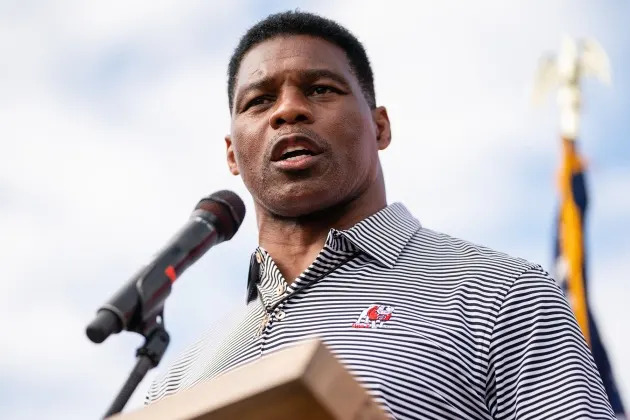
herschel-walker-greatest-asset.jpg - Credit: Elijah Nouvelage/Getty Images
herschel-walker-greatest-asset.jpg – Credit: Elijah Nouvelage/Getty Images

About half of Georgia voters cast a ballot for Herschel Walker on Tuesday. Most of these voters wouldn’t trust Walker to run the check-out at a Family Dollar. But that’s the whole point.

Herschel Walker has repeatedly proven himself to be stupid. Herschel Walker’s voters aren’t necessarily stupid. That’s too easy.

More from Rolling Stone

Georgia Republicans aren’t stupid. But they see safety in stupid politicians. The stupidity of Herschel Walker isn’t a problem for them. It’s a feature. And writing off Georgia Republicans as country idiots is a kind of smug, lazy thinking that oversimplifies a complicated political problem, not just in Georgia but across the country.

Herschel Walker was not nominated to govern. He was not nominated to bargain. He was not nominated to formulate policy. He was not nominated to exercise judgment. He was nominated to mash the R button whenever a vote comes up, no matter what.

“It could be Daffy Duck for all I care,” one such voter told the Atlanta Journal-Constitution at a Walker rally in Baxley, Ga. “Just get the Democrats out of Washington.”

Electing Walker is like replacing that check-out clerk with an automated self-scanner.

A smart man certainly wouldn’t have held up a fake badge during a debate after being accused of pretending to be a police officer. Rather than own up to the mistake, Walker started doing interviews with news reporters while wearing the badge. The number of children Walker was publicly willing to acknowledge were his has grown twice over the course of the campaign, surprising his own campaign staff with the revelations. Walker’s response to the revelations has been to argue that the children he doesn’t see aren’t campaign props, and please ignore the one who is shouting from the high hilltops about having to move six times in six months as his mother evaded Walker’s abuse.

Walker has argued for a national ban on abortion with no exceptions for rape or incest in interviews as late as August. He denied that he ever said he held a position that extreme, in his first debate with Warnock, but the record of his comments is crystal clear. “I believe in life,” Walker said at a forum in August. “And I said, you know, if anyone wants to have an exception, I said, ‘Not in my book,’” Walker said. “I said, ‘I’m sorry. I feel bad for anyone that’s a victim of any kind of crime.’ I do. I feel like that. That is terrible and that’s horrible, but we deal with that as it comes.”

He’s plainly a pro-life candidate either way.

Two women have come forward to say that Walker pressured them into getting abortions. One, the mother of one of Walker’s (known) children, had a check signed by Walker and a receipt from the abortion clinic. Normally, this would fall into the category of career-ending political scandals. But Walker’s stupidity is an asset. Wisdom might prevent mistakes, but it also generates the kind of self-reflection that creates a conscience, and that’s a problem.

On Tuesday, Republican Gov. Brian Kemp earned roughly 200,000 more votes than Herschel Walker, out of about four million cast. Sen. Raphael Warnock earned about 140,000 more than Stacey Abrams. That means that only about 1 in 20 voters saw the trainwreck that Walker presented – a history of mental illness, violence against women, plain lies about his charitable work with veterans and his business dealings, an absolutist stand on abortion and his connection to Donald Trump – and bailed. Only about two-thirds of those voters who walked away from Walker were actually willing to cross the aisle and vote for Warnock.

If you want a clearer example of bipartisanship’s death, well… you’re not going to find it.

An introspective candidate with Walker’s skeletons would never have run in the first place. But an introspective candidate wouldn’t have had Walker’s skeletons. This may seem counter-intuitive, but for a lot of Georgians, these kinds of mistakes solidify the view among Georgia’s right that Walker must have never thought he would go into politics and hasn’t lived the sterile careerist lifestyle of the political elite … which is the best qualification they know for higher office.

So rather than slink into a corner and collapse after the abortion stories, Walker simply denied everything and threatened to sue The Daily Beast for its reporting on the abortions he allegedly paid for. (So far, he hasn’t followed through on the threat.) He has continued to campaign on an unapologetically pro-life platform.

Wednesday, Susan B. Anthony Pro-Life America announced it would back Walker with $1 million in spending on the runoff.

A senator who stops to consider the personal or political consequences of his actions might vote for bills that don’t “own the libs.” For many Republican voters, this alone is enough reason to vote for Walker.

For example, Georgia did not expand Medicaid under the Affordable Care Act. The state contributes extra money into the national treasury for medical care that it does not receive, for no real reason other than keeping doctors away from poor people. Hospitals are closing across the state, mostly in communities with poor white residents, though the most significant recent closure was of a major Level 1 trauma center in downtown Atlanta.

The policy is profoundly stupid. It also hurts more Black people than white people in Georgia, so many Republicans support it. A smart politician would be looking for a policy workaround that brings that money to Georgia. But Republicans don’t want a smart politician. They want Walker.

Before you start feeling superior about your choices, the tribal desire to beat a political enemy is also the fundamental political motivation for most Democrats. Even Raphael Warnock has had issues surface during the campaign which might give voters a pause.

Warnock was arrested in 2002 and briefly accused of obstructing an investigation into child abuse at a summer camp. The charge was dropped once it became clear to a judge that Warnock was trying to prevent children from being questioned by police without parents or a lawyer. Walker’s campaign ran ads showing police body camera footage from a domestic case, where Walker’s ex-wife told cops he ran over her foot after an argument in 2020. Paramedics found no injuries on her.

Warnock’s church, the famed Ebenezer Missionary Baptist of Atlanta, owns a nonprofit which owns Columbia Tower at MLK Village, a senior residential housing complex. Some of its tenants have been served eviction notices for paltry sums in recent years, a point that Walker gleefully made during their debate. Warnock replied that no one had actually been evicted.

As a practical matter, none of these attacks mattered. Democrats voted for Warnock anyway. Politics have become tribal in Georgia.

That means a government that’s more dysfunctional, where there’s no incentive to agree to help people. That’s the whole point.

Tucker Carlson and others on the far right have been steadily reinforcing fears of the “Great Replacement” in the hearts of America’s white middle class. The threat of demographic change – and the concomitant political change – is the heart of this message. Sooner or later, they tell white conservatives, you’re going to be outnumbered. Once that happens, white nationalists argue that white people will become the targets of discrimination (instead of Black people.) They’re already arguing that in Georgia: Steven Miller’s team flooded TV and mailboxes with ads reminiscent of Jesse Helms’ “White Hands” ad with White people need not apply messages on jobs. The less functional and less legitimate that government is when the turnover happens, the easier it will be to fight.

Disabling the government is fundamental to white nationalist politics, and those politics have an audience in Georgia. But they can’t say that directly, because most voters reject that message and don’t like who is delivering it.

To be clear: most white Republicans are not crypto-white nationalists. But virtually all white nationalists will vote Republican, and they form a large-enough bloc within the party to influence primary contests in Georgia.

Ironically, Walker’s ethnicity is an added asset here. It’s harder to describe a Black man as a shill for a white nationalist agenda. Win or lose, it amuses the 4Chan wing of the party to amplify all the things they can’t say aloud in the voice of a Black man.

Usually, that play doesn’t work this well. Vernon Jones, a former CEO for majority-Black DeKalb County turned MAGA provocateur, ran for Congress with Trump’s blessings. He made it to a runoff and was thoroughly trounced.

It didn’t used to be like this. Georgia has produced highly educated, politically savvy, even smart Republican leaders over the years, from Newt Gingrich to David Perdue. The problem for the common Republican voter is that these guys – and they’re usually guys – have also tended to be corrupt. Elites are part of the problem. They know how to save their own skin if the ship is sinking. Georgia’s Republicans have decided it’s better to send in someone who wouldn’t know better.

And given the choice between a crooked brainiac and a simpleton, today’s GOP has made its preference clear.

As world population hits 8 billion, China frets over too few babies

Reuters

As world population hits 8 billion, China frets over too few babies

November 13, 2022

FILE PHOTO: People walk and ride vehicles along a street, amid the coronavirus disease pandemic, in Shanghai

BEIJING/HONG KONG (Reuters) – Chinese software developer Tang Huajun loves playing with his two-year-old in their apartment on the outskirts of Beijing but he said he is unlikely to have another child.

Such decisions by countless people like Tang will determine the course not only of China’s population but that of the world, which the United Nations says is projected to reach 8 billion on Tuesday.

Tang, 39, said many of his married friends have only one child and, like him, they are not planning any more. Younger people aren’t even interested in getting married let alone having babies, he said.

The high cost of childcare is a major deterrent to having children in China, with many families in an increasingly mobile society unable to rely for help on grandparents who might live far away.

“Another reason is that many of us get married very late and its hard to get pregnant,” Tang said. “I think getting married late will definitely have an impact on births.”

China was for decades preoccupied with the prospect of runaway population growth and imposed a strict one-child policy from 1980 to 2015 to keep numbers in check.

But now the United Nations expects China’s population will start shrinking from next year, when India will likely become the world’s most populous country.

China’s fertility rate of 1.16 in 2021 was below the 2.1 OECD standard for a stable population and among the lowest in the world.

The anguish of the coronavirus pandemic and China’s strict measures to stamp it out may also have had a profound impact on the desire of many people to have children, demographers say.

New births in China are set to fall to record lows this year, demographers say, dropping below 10 million from last year’s 10.6 million – which was already 11.5% lower than in 2020.

Beijing last year began allowing couples to have up to three children and the government has said it is working towards achieving an “appropriate” birth rate.

OLD PEOPLE, NEW PROBLEMS

For planners, a shrinking population poses a whole new set of problems.

“We expect the aging population to increase very rapidly. This is a very important situation facing China, different to 20 years ago,” said Shen Jianfa, a professor at the Chinese University of Hong Kong.

The proportion of the population over the age of 65 is now about 13% but is set to rise sharply. A declining labour force faces an increasing burden of looking after the rising numbers of old folk.

“It will be very high for some years,” Shen said of the proportion of elderly in the population. “That’s why the country has to prepare for the coming aging.”

Alarmed by the prospect of an ageing society, China has been trying to encourage couples to have more children with tax breaks and cash handouts, as well as more generous maternity leave, medical insurance and housing subsidies.

But demographers say the measures are not enough. They cite high education costs, low wages and notoriously long working hours, along with frustration over COVID curbs and the overall state of the economy.

A key factor is job prospects for young people, said Stuart Gietel Basten, professor at Hong Kong’s University of Science and Technology.

“Why would you have more babies when the people you have cannot even get jobs?”

(Reporting by Thomas Suen and Farah Master; Editing by Robert Birsel)

Gov. Stitt claims Oklahoma for Jesus, but Tuesday showed America is still a secular nation – for now.

DailyKos

Gov. Stitt claims Oklahoma for Jesus, but Tuesday showed America is still a secular nation – for now.

Aldous J. Pennyfarthing – November 10, 2022 

Abortion rights activists hold signs reading "Abortion is Healthcare" as they rally in Miami, Florida, after the overturning of Roe Vs. Wade by the Supreme Court on June 24, 2022. (Photo by CHANDAN KHANNA / AFP) (Photo by CHANDAN KHANNA/AFP via Getty Images)

If there’s one big takeaway from Republicans’ tepid showing on Tuesday, it’s that women don’t want Jesus as their OB-GYN. I mean, he was a carpenter, after all. It really doesn’t translate. And it’s a totally different set of tools. Well, in most of the country, anyway. Not so sure about Oklahoma.

In the days leading up to the midterms, Republicans were pretty confident that they’d ride the inflation steamroller to a decisive congressional sweep. Instead, two days later, control of both houses remains in doubt, and the GOP is gobsmacked. Of course, religious extremism—mostly in the form of cruel and draconian abortion restrictions—played a big role in that belly flop. Have they learned their lesson? Pretty doubtful, since many of them have a really long way to go when it comes to fully endorsing religious diversity and the equal rights of nonbelievers.

Case in point: Gov. Kevin Stitt, who won reelection in ruby red Oklahoma on Tuesday, was filmed before the election claiming Oklahoma for Jesus. The whole state. Not just the churches and the Hobby Lobbys. Everything.

RELATED: Five Tribes endorse Hofmeister, call Stitt ‘most anti-Indian governor in the history of’ Oklahoma

Watch:

STITT: “Father, we just claim Oklahoma for you. Every square inch, we claim it for you in the name of Jesus. Father, we can do nothing apart from you. We [wind noise] battle against flesh and blood, against principalities of darkness. Father, we just come against that, we just loose your will over our state right now in the name of Jesus. … We just thank you, we claim Oklahoma for you, as the authority that I have as governor, and the spiritual authority and the physical authority that you give me. I claim Oklahoma for you, that we will be a light to our country and to the world right here on stage. We thank you that your will is done on Tuesday and, Father, that you will have your way with our state, with our education system, with everything within the walls behind me and the rooms behind me, Lord, that you will root out corruption, you will bring the right people into this building, Father, from now on.”

“Are you there, God? It’s me, MAGA-rat. Can you maybe dial down the wind for a second until Gov. Stitt finishes shredding the First Amendment? That’s too much cacophony all at once, brother. Thanks!” 

Now, it’s pretty bold—not to mention exclusionary and wildly inappropriate—for a sitting governor to claim an entire state for a single deity. Can we maybe set aside one synagogue and maybe an ashram or two for someone other than Jesus? Jesus doesn’t step foot in synagogues anyway, except maybe to ask for directions to Kirk Cameron’s house. But these folks have long had trouble imagining what it might be like to walk in someone else’s shoes—and they’re really not keen on secular government, which is supposed to represent everyone, whether they believe in Kevin Stitt’s god or not.

Of course, if Stitt wants to lay his grubby hands on Oklahoma on behalf of Jesus, he better get moving, because he’s running out of time. Tuesday made clear that Americans as a whole don’t want too much religion sprinkled in with their politics, and new polling backs that up.

Pew Research survey conducted in September and released two weeks before the election found that while 45% of Americans want the U.S. to be a “Christian nation,” far fewer want religion to encroach on the political sphere. And while Christian nationalism is rising, it’s still running up against a firewall of church-state separation.

Overall, six-in-ten U.S. adults – including nearly seven-in-ten Christians – say they believe the founders “originally intended” for the U.S. to be a Christian nation. And 45% of U.S. adults – including about six-in-ten Christians – say they think the country “should be” a Christian nation. A third say the U.S. “is now” a Christian nation.

At the same time, a large majority of the public expresses some reservations about intermingling religion and government. For example, about three-quarters of U.S. adults (77%) say that churches and other houses of worship should not endorse candidates for political offices. Two-thirds (67%) say that religious institutions should keep out of political matters rather than expressing their views on day-to-day social or political questions. And the new survey – along with other recent Center research – makes clear that there is far more support for the idea of separation of church and state than opposition to it among Americans overall.

While it’s alarming that so many Americans think the Founders intended the U.S. to be a Christian nation (narrator: they didn’t), it’s a relief that most would still rather leave secular matters up to secular authorities. And it’s reasonably safe to assume that this is the high-water mark for religious fervor in this country. Gallup has been tracking religious sentiment in the U.S. for decades, and the number of people who claim to have no religious affiliation—currently at 21%—has steadily increased over the years. As recently as 1985, that number was just 1%. Meanwhile, the nation’s share of Christians continues to fall. 

Could Tuesday be one of the first indications that the noxious religious-political stew that charlatans like the Rev. Jerry Falwell started cooking up in the ‘80s is finally about to spoil? They’ve brought us to the brink, but it appears they’ve gone as far as they possibly can if they want to keep dipping their fungal right-wing evangelical toes in our secular humanist soup. 

Of course, that’s assuming they don’t take control by force and turn us into Gilead overnight. But that seems less likely now, even with this dude still looming out there:

ScreenShot2022-11-06at10.03.49AM.png

Yeah, I didn’t want you to get too comfortable just yet. Sorry. Now do your best to enjoy the sad remainder of your now-squalid lives. I’ll see myself out.

Vote like your life depends on it, because it does!

The Tarbabys Blog

John Hanno – November 7, 2022

To American’s who still believe in Democracy and in the Democratic institutions that have sustained our Republic as a beacon for the world to admire and emulate, this is not the election to take a pass on.

To all the true Republicans who have been drummed out of your party or have fled the MAGA insanity, please take a stand for representative government.

To all eligible voters who are turned off by the toxic state of our political system, refusing to vote will only make that worse. Sometimes, even a small number of votes in close elections can make a critical difference.

To those who believe they’re not political or aren’t the least bit interested in our political systems, believe that every moment of your family’s existence is impacted by politics, both good and bad. And your vote could make our two party Democratic system much better, and more responsive and accountable.

Erstwhile Republican’s Rep. Liz Cheney, Rep Adam Kinzinger and others have been sounding the autocratic alarm bells even before trump and his MAGAnian conspirators commandeered the Grand Old Party and turned it into the wholly owned trump cult militia, that swarmed, assaulted, terrorized, pummeled and even killed Capitol police officers on January 6,2021, in a futile but consequential attempt to overthrow our Democratic government.

And where would we be if they had succeeded?

The hundreds of state laws republicon legislatures already authored and implemented to restrict voting rights and Democratic representative government would have already become the law of the land.

A women’s right to chose what happens to her body and reproductive rights would have been turned back to the 19th century, in all of America; with no exceptions for rape, incest or the life of the mother. Children as young as ten years old would have been forced to carry another child to birth.

The progress made by workers to improve labor’s rights and increase their diminishing wage value would have been overturned.

Progress made on fighting global warming and the remarkable improvements in alternative energy, would be pushed to the back burners of history.

trump and his republicon party sycophant’s march towards personal wealth enrichment would again be front and center of any legislation or executive orders. His gold tipped sharpie would again be busy rewarding the trump family criminal enterprises and the republicon’s most generous donors.

The separation of church and state would be but a distant memory; and they would proclaim White Christian dogma and the bible as governing principles. Many other parts of our constitution would be in jeopardy, all but the Second Amendment.

I could go on all day, pointing out the chaos created the last time trump held power, but I’ll conclude with reminding voters about the scores of criminal types in trump’s administration, who were forced to resign, were fired, went to prison, were indicted, pardoned or ended up in the right wing media.

Republican’s stated plans if they take control of congress, is to hold the government budget hostage until they get concessions on cutting, or eliminating altogether, Social Security, Medicare and Medicaid. But the safety net assault probably won’t stop there, continued support for programs like food stamps and even military and humanitarian support for Ukraine’s war with Russia are also on the MAGA chopping block.

And the extreme members of a republicon controlled House of Representatives will have as its main goal, a two year long investigation of a long list of their political opponents. Any progress the Democrats and the Biden administration have made addressing America’s critical problems over the last two years, will have to take a back seat to political witch hunts and futile attempts to overturn that progress.

And all this just so they can make permanent, the enormous tax cuts that trump and the republicon’s in congress awarded to their rich benefactors, the last time they held control. America’s colossal wealth disparity between the 1% and all the rest will again be on steroids.

For those who emphatically believe MAGA World is synonymous with freedom, believe me: “Freedom is just another word for, nothing left to lose”

If you paid close attention to the videos of Russian citizens protesting Putin’s “Special Operation” in the streets of Moscow and St. Petersburg, you couldn’t help but notice there wasn’t one single assault weapon or high capacity magazine in sight, and no hunting rifle, handgun or even a pea shooter. Why? Because it’s against putin’s laws to have those weapons in public, if at all. And what we call our First Amendment Rights to say anything that comes to mind, forget it in Putin’s Russia or trump’s America. I remember one courageous Russian women holding up a blank sign, apparently afraid to call Putin’s invasion of Ukraine a war, for fear of the consequential 15 year prison term, yet still wanting to register her displeasure. Unfortunately it didn’t succeed, within 2 or 3 minutes, 4 or 5 security troops dressed in black whisked her, and her blank protest sign, off and into a police van headed for the gulag.

It’s no secret that trump and many congressional republicons admire and support war criminal Vladimir Putin and his invasion and genocide against the Democratic people of Ukraine. They admire strongmen fascists and autocrats like putin and trump and denigrate Joe Biden as weak. Apparently raining down missiles and rockets on innocent civilians, on schools and medical facilities, on apartments, libraries, and shopping centers, killing and maiming children, women, and disabled old folks is manly, but also isn’t a bridge too far for this new MAGAnian cult, as long as the reward is omnipotent power and wealth. Mass graves are just necessary collateral damage.

For those who believe the republicon’s are better on the economy or will do a better job fixing inflation, I’ll repost this November 4th, David Rothkopf and Bernard Schwartz article from the Daily Beast.

Republicans Are Bad for the Economy. Here’s Why.

According to a wave of recent polls, the economy is the dominant issue on the minds of Americans going into next week’s elections.

recent Pew poll concluded nearly eight in 10 voters said the economy will be “very important” to their voting decisions. Another such poll, by ABC News and Ipsos, showed that almost half of respondents cited either the economy or inflation as the issue about which they were most concerned. The poll indicated that concerns about the economy and inflation are “much more likely to drive voters towards Republicans.”

But that impulse is not only ill-considered, every bit of available evidence makes clear that the GOP is the wrong party to which to turn if you seek better U.S. economic performance in the future.

In fact, it is not close. When it comes to the economy, the GOP is the problem and not the solution. If anything, it is a greater obstacle to our economic well-being today than it has ever been.

At the same time, the economic record of President Joe Biden and the Democrats is not just consistent—in creating jobs, reducing the deficit, and enhancing our competitiveness—during the past two years their record has been one of extraordinary, often record-breaking success.

History tells a very stark tale. Ten of the last 11 recessions began under Republicans. The one that started under former President Donald Trump and the current GOP leadership was the worst since the Great Depression–and while perhaps any president presiding over a pandemic might have seen the economy suffer, Trump’s gross mismanagement of COVID-19 clearly and greatly deepened the problems the U.S. economy faced. Meanwhile, historically, Democratic administrations have overseen recoveries from those Republican lows. During the seven decades before Trump, real GDP growth averaged just over 2.5 percent under Republicans and a little more than 4.3 percent under Democrats.

Republicans have also historically presided over huge expansions in the U.S. deficit, while Democrats (since Bill Clinton’s administration) have overseen dramatic deficit reduction. Ronald Reagan more than doubled the deficit from $70 billion to more than $175 billion. George H.W. Bush nearly doubled that to $290 billion. Clinton ended his administration with a $128.2 billion surplus.

George W. Bush inherited that… and left office with a record deficit of more than $1.4 trillion. Obama reduced that by very nearly $1 trillion. Each of Donald Trump’s last two years in office saw federal budgets with deficits of over $3 trillion. In fact, in total, the national debt rose almost $8 trillion during Trump’s time in office. According to ProPublica, it was the third biggest such increase in U.S. history—after George W. Bush and Abraham Lincoln during the Civil War years.

What about job creation?

The U.S. lost jobs under Trump and created relatively few under George W. Bush. Of the 14 presidents since World War II, seven were Democrats and seven were Republican. Of the seven with the highest job creation rates, six were Democrats. Of the seven with the lowest job creation rates, six were Republicans.

There’s No Democrat Equivalent to GOP Election Deniers’ Scumbaggery

What about now? Biden and the current Democratic Congress have created more jobs than the past three Republican administrations combined.

The job creation rate in 2021 was the most ever in a single year. GDP growth in 2021 was the highest since 1984. This year, the unemployment rate fell to 3.5 percent, its lowest level in 50 years. As part of that, we are seeing record low unemployment for Blacks and Latinos.

Ok, you might say, but what about inflation?

Rising prices are a real problem for many Americans. But the origins of inflation have very little to do with the Biden administration or the Congress. Inflation is a global problem that is related, according to economists, primarily to supply chain problems associated with COVID, Vladimir Putin’s escalation of the war in Ukraine, and corporate profiteering.

Dems Do Big F*cking Deals, the GOP Does Fake Big Dick Energy

What makes the Republican focus on this issue so shockingly hypocritical is that Trump’s mismanagement of the COVID crisis, his support for Putin, and Republicans’ protection of Big Oil (and big businesses) actually helped create the conditions that have driven prices up. Further, Republicans unanimously opposed every single measure by the Biden administration to reduce prices and help those hit by inflation—including the landmark Inflation Reduction Act’s efforts to lower drug costs and to help those hardest hit.

Meanwhile, the U.S. just reported stronger than expected growth in the last quarter and the price of gasoline, an oft-cited sign of inflation, has been falling for months.

At the same time, a substantial majority within the GOP have sought to block virtually every single new economic measure proposed or passed by Biden and the Democratic Congress. That includes the America Recovery Act that lifted millions out of poverty and drove job creation, the Chips and Science Act to enhance competitiveness, and even the so-called “Bipartisan Infrastructure Bill” which garnered the support of fewer than half of the GOP caucus in the Senate.

You might assume that if the GOP opposed these initiatives but were critical of what Biden was doing, that they had alternative plans that they have presented to the American people. But, you would be wrong. In fact, Senate Minority Leader Mitch McConnell has bragged that he would not even discuss his agenda until after the election. They have no inflation plan. And the plans they’ve said they admire—like that of the United Kingdom’s prime minister-for-a-second Liz Truss—have been a catastrophe.

The last time the Republicans were in charge, during the Trump years, they passed precisely one significant piece of economic legislation, a tax cut that benefited the very rich at the expense of everyone else and, as we have established, helped explode the federal budget deficit.

Putin’s Last Hope to Win in Ukraine Is a GOP Victory in November

Republicans are just plain bad at managing the economy. They have been for as long as anyone who is alive can remember. And they continue to be—although they are achieving previously unattained new levels of cynicism and obstructionism that make the current crowd of Republicans look even worse than their very unsuccessful predecessors.

History and data make it clear that Democrats are good for the economy—while Republicans, especially the current Republicans in Congress, are not.

Up next for the Republicans are plans to cut Medicare and social security, plans to increase costs for average Americans on a wide variety of fronts, and they’re even contemplating reducing support for Ukraine—at a critical moment in its war to defend its democracy and stop the Russian aggression that threatens not only them, but the West.

Republicans have done a great job fooling voters into thinking that their simplistic economic philosophies of tax cuts and minimal regulation are “good for business.” But facts, history, and logic show otherwise.

David Rothkopf and Bernard Schwartz conclude their case with: If you care about the economy, want to fight inflation, want to create jobs, want a better life for your family, want to preserve democracy, and want to defend your fundamental rights, then you should vote for the Democrats.

—–

John Hanno: And if you’re still inclined to reverse the remarkable progress made by the Biden administration and the Democrat’s thin margin in congress over the last 2 years, and also willing to turn over your children’s and grandchildren’s future to these wannabe Putin like autocrats, think about this latest bit of news:

The world’s richest person and Twitter’s new owner, Elon Musk, implored his more than 110 million followers on Monday to support Republicans in Tuesday’s U.S. midterm elections, saying that Republican control of Congress would act as a balance against Democrats and the Biden administration. Could it be because of the Biden administration and Democrats proposals to tax billionaires and give more tax incentives to union-made electric vehicles. Musk’s Tesla does not have any unions at its U.S. factories. Apparently the world’s richest person doesn’t have enough billions of dollars to pay income taxes, pay prevailing union wages or to live comfortably. That should tell you exactly where this MAGA cult is headed.

Democracy and the big lie are on the ballot today. trump has endorsed those more than 250 election deniers running to thwart one person one vote, free and fair elections. Overwhelm these Democracy deniers with a monumental blue wave.

Like I said, vote November 8th like your and your families lives depends on it, because it surely does.

John Hanno, The Tarbabys Blog

No One Forced Republicans to Do Any of These Things

Jamelle Bouie – November 8, 2022

Donald Trump speaks at an open-air rally.
Credit…Illustration by The New York Times; photograph by Scott McIntyre for The New York Times

In “The Eighteenth Brumaire of Louis Bonaparte,” Karl Marx famously observed, “Men make their own history, but they do not make it as they please; they do not make it under self-selected circumstances, but under circumstances existing already, given and transmitted from the past.”

Our choices are shaped, and even bound, by the histories and institutions we inhabit. And yet they’re still our choices. We are moral agents, responsible for our decisions even if we can’t fully escape the matrix in which we make them.

And yet so much of the conversation about the modern Republican Party assumes the opposite: that Republican politicians are impossibly bound to the needs and desires of their coalition and unable to resist its demands. Many — too many — political observers speak as if Republican leaders and officials had no choice but to accept Donald Trump into the fold; no choice but to apologize for his every transgression; no choice but to humor his attempt to overturn the results of the 2020 presidential election; and now, no choice but to embrace election-denying candidates around the country.

But that’s nonsense. For all the pressures of the base, for all the fear of Trump and his gift for ridicule, for all the demands of the donor class, it is also true that at every turn Republicans in Washington and elsewhere have made an active and affirmative choice to embrace the worst elements of their party — and jettison the norms and values that make democracy work — for the sake of their narrow political and ideological objectives.

Those objectives, for what it’s worth, are nothing new. To the extent that the Trump-era Republican Party has an agenda, it is what it has always been: to be a handmaiden to the total domination of capital, to facilitate the upward redistribution of wealth and to strengthen hierarchies of class and status. To those ends, Republicans in Washington have already announced plans to reduce social insurancecut taxes for the wealthiest Americans and restrict abortion rights.

The crucial midterm elections

Republicans seem to be surging heading into November, with Democrats struggling to break through, as voters turn their focus from abortion to crime and inflation. Even if the polls are as off, as pollsters fear, all signs seem to be pointing toward a strong showing for the G.O.P.

For months now, Times Opinion has been covering how we got here. Chloe Maxmin and Canyon Woodward argued that Democrats abandoned rural America. Alec MacGillis traced how the party ignored the economic decline of the Midwest. And Michelle Cottle described the innovative Republican ground game in South Texas.

Opinion has also been identifying the candidates who could define the future of their party. Sam Adler-Bell captured the bleak nationalism of Blake Masters, the Arizona Republican challenging Senator Mark Kelly. Christopher Caldwell described the transformation of J.D. Vance, the venture capitalist from Ohio who went from Trump critic to proud member of the MAGA faithful. Michelle Goldberg traveled to Washington state to profile Joe Kent, a burgeoning star on the right.

And throughout this election cycle, Opinion has held discussions with groups of experts – hosted by Frank Bruni, Ross Douthat and others – that have followed the season’s twists and turns, from reviewing the primary landscape to a Democratic backlash against the Dobbs decision which gave way to a Republican surge in the fall. And we paused to consider the mysteries of polls and the politically homeless along the way.

What’s striking, again, is the extent to which many political commentators refuse to accept the moral and political agency of Republican politicians and officials. If there is a threat to democracygoes one argument, it’s because liberals and progressives have refused to compromise their priorities in its defense. And according to another, similar argument, which I wrote about last week, the Democratic Party’s rhetoric embracing democracy is, itself, undermining democracy

As it stands, plenty of Republican politicians and officials are making live plans to undermine any election they might lose. According to a report in The Washington Post, “Republican officials and candidates in at least three battleground states are pushing to disqualify thousands of mail ballots after urging their own supporters to vote on Election Day.”

It’s not that those mail ballots are illegal or illegitimate; the problem is that many have presumably been cast by Democrats. If Republicans can invalidate Democratic mail ballots while counting on their supporters to vote in person on Election Day, then they can forge an easier path to victory in closely divided states like Michigan, Pennsylvania and Wisconsin.

Republicans have attacked ballot access for Native Americans in Arizona — a Democratic-leaning group in a contested swing state — and embarked on a project of voter intimidation in Florida. In August, the state’s new election police force arrested 20 people accused of voter fraud. Fifteen were Black voters charged with casting ballots illegally. Several said they thought they qualified to cast a vote under a state constitutional amendment that restored the right to vote to many former felons. And in interviews with investigators, all said they had received a voter registration card from their county election supervisors.

In the absence of any evidence of intent, the state’s case against these supposedly lawbreaking voters will fall apart. But that doesn’t mean the arrests were a failure. Some Floridians, accustomed to helping older family members cast ballots by mail, have refrained from giving assistance for fear of running afoul of the state election police.

The larger point is that we should not treat the Republican effort to suppress and intimidate voters — or invalidate elections — as if it were a force of nature or the automatic result of some mechanical process. Republican politicians in Florida chose to respond to hard-fought elections by burdening their opponents. Republican leaders in Washington, likewise, chose to elevate their most irresponsible colleagues into positions of influence and authority. And Republican politicians nationwide chose to embrace the lies and the conspiracy theories that undergird the idea that the only legitimate elections are the ones Republicans win.

Led by Donald Trump and his many acolytes, the Republican Party is poised to plunge this country into political and constitutional crisis over its refusal to share power or acknowledge defeat. We can treat this as some kind of an inevitability, the only possible outcome given the pieces at play, or we can treat it as what it is: a deliberate choice.

Why are Americans okay with voter suppression? We asked more than 1,200 voters

Fortune

Why are Americans okay with voter suppression? We asked more than 1,200 voters—and they failed to appreciate the impact of restrictions on their own turnout

Geoff Tomaino, Ziv Carmon, Asaf Mazar, Wendy Wood – November 8, 2022

Americans are headed to the polls for the pivotal U.S. midterm elections on Nov. 8. But for voters in some U.S. states, a litany of rules, restrictions, and regulations will make voting more difficult. These voters will face obstacles such as limited polling place access, stricter voter identification requirements, and added administrative burdens for mail-in voting.

At first glance, such obstacles might seem inconsequential. And yet, even seemingly small obstacles matter. People are deterred from voting when their polling place is farther away, when polling stations’ opening hours are limited, and even when it rains.

Why then do many Americans accept these restrictions?

Uncovering the real (and perceived) drivers of voter turnout

Some Americans accept voting restrictions as a way to mitigate perceived voter fraud, while others support such policies with the apparent intent of suppressing opposition votes. But in new research published in the Proceedings of the National Academy of Sciences, we uncover another, more fundamental reason: People may just fail to recognize that these policies suppress turnout.

We surveyed a representative sample of over 1,200 eligible American voters in election-competitive states before the 2020 elections and then followed up with them after the election to see if they voted. Friction mattered a great deal to turnout. Americans who faced more obstacles, such as those who didn’t own a car or would have to get childcare or take time off work to vote, were less likely to cast their vote.

And yet in estimations of what would affect voter turnout, the same group of Americans consistently neglected friction. They assumed that whether someone turns out to vote or not primarily depends on their attitudes and values, such as how strongly they identify as conservative or liberal or see voting as their civic duty.

More specifically, only about one in 10 survey participants mentioned any form of friction when asked to indicate what they think drives turnout. In comparison, about nine in 10 mentioned at least one belief (for example, ideology or party affiliation). In other words, Americans think that turnout is largely driven by beliefs and underestimate the role of friction.

Even seasoned politicians can underappreciate friction. Both Joe Biden and Donald Trump spent most of their budgets on media in their 2020 campaigns. After examining the campaign videos, we found that almost all of them mentioned beliefs, whereas hardly any (~10% for both) touched on friction.

A costly blind spot

This blind spot could be perpetuating limited voter access. People who underestimated the effect of friction on voter turnout tended to endorse friction-imposing policies and oppose policies that make voting easier. This helps shed light on legislators’ and voters’ tacit or even vocal support for measures that restrict voters’ access to the polls.

States are enacting such friction-imposing policies, with some segments of would-be voters being disproportionately affected. In particular, those with scarce resources are commonly held back by (seemingly) trivial barriers. Inaccessible polling stations and long queues can be especially challenging for the frail and less able-bodied. For parents juggling work and childcare, the inability to vote by mail or outside work hours puts voting almost out of reach. In other words, these frictions deprive vulnerable citizens of their fundamental right to equal representation.

Policymakers and voters alike tend to argue that if people are motivated enough, they can easily surmount mundane barriers. This naive view ignores the importance of making civic engagement not just possible, but easy.

Making things easy from the ground up

While implementing automatic voter registration and instituting structural changes through legislative reform could widen voting access, national-level attempts such as the ambitious For the People Act have failed to take off.

Fortunately, while some legislators are limiting voters’ opportunities to make themselves heard, grassroots organizations have stepped up to push back against friction. These groups have introduced initiatives such as the All In to Vote online platform, simplifying the voting process.

The new voting restrictions in the 2022 midterm elections are set to put American agency to the test yet again. And while many voters may fail to appreciate the harmful effects of friction on turnout, new initiatives can help expand voter access.

Geoff Tomaino is a Ph.D. student at INSEAD. Ziv Carmon is the Alfred H. Heineken chaired professor of marketing at INSEAD. Asaf Mazar is a behavioral scientist and postdoctoral research fellow at the Wharton School at the University of Pennsylvania. Wendy Wood is the provost professor of psychology and business at the University of Southern California.

The opinions expressed in Fortune.com commentary pieces are solely the views of their authors and do not necessarily reflect the opinions and beliefs of Fortune.

MAGAnians show their true selves: Republicans Feed Cycle of Misinformation About Pelosi Attack

The New York Times

Republicans Fed Cycle of Misinformation About Pelosi Attack

Annie Karni – November 7, 2022

Breaking down 21 of the elected officials, candidates and other prominent figures who spread misinformation or cast doubt on the attack on Paul Pelosi. (NYT)

WASHINGTON — Within hours of the brutal attack last month on Paul Pelosi, the husband of the speaker of the House, activists and media outlets on the right began circulating groundless claims — nearly all of them sinister, and many homophobic — casting doubt on what had happened. Some Republican officials quickly joined in, rushing to suggest that the bludgeoning of an octogenarian by a suspect obsessed with right-wing conspiracy theories was something else altogether, dismissing it as an inside job, a lover’s quarrel or worse.

The misinformation came from all levels of Republican politics. A U.S. senator circulated the view that “none of us will ever know” what really happened at the Pelosis’ San Francisco home. A senior Republican congressman referred to the attacker as a “nudist hippie male prostitute,” baselessly asserting that the suspect had a personal relationship with Paul Pelosi. Former President Donald Trump questioned whether the attack might have been staged.

The world’s richest man helped amplify the stories.

But none of it was true.

The flood of falsehoods showed how ingrained misinformation has become inside the Republican Party, where the reflexive response of the rank and file — and even a few prominent figures — to anything that might cast a negative light on the right is to deflect with more fictional claims, creating a vicious cycle that muddies facts, shifts blame and minimizes violence.

It happened after the Jan. 6, 2021, attack on the Capitol, which was inspired by Trump’s lie of a stolen election, and in turn gave rise to more falsehoods, as Republicans and their right-wing allies tried to play down, deny or invent a different story for what happened, including groundlessly blaming the FBI and antifa. Pelosi’s attacker is said to have believed some of those tales.

“This is the dynamic as it plays out,” said Brian Hughes, a professor at American University who studies radicalism and extremism. “The conspiracy theory prompts an act of violence; that act of violence needs to be disavowed, and it can only be disavowed by more conspiracy theories, which prompts more violence.”

The Justice Department moved swiftly to bring criminal charges against the suspect in the attack — David DePape, 42 — who prosecutors said broke into the Pelosi home intending to kidnap Nancy Pelosi and shatter her kneecaps, and assaulted her husband with a hammer, leaving him with a cracked skull. The San Francisco district attorney said it was imperative for prosecutors to present the facts to the public, given the misinformation circulating widely about the case.

But by then, it was far too late. In a pattern that has become commonplace, a parade of Republicans — helped along by right-wing media personalities including Fox News host Tucker Carlson, and prominent people including newly installed Twitter owner Elon Musk, the world’s wealthiest man — had already abetted the viral spread of lies about the attack, distorting the account of what happened before facts could get in the way. Finding life on far-right websites and the so-called dark web, conspiracy theories and falsehoods leaped from the fringes to the mainstream.

Although many Republican leaders denounced the violence and some, including former Vice President Mike Pence, expressed sympathy for the Pelosis, none of them publicly condemned the falsehoods their colleagues were elevating or did anything to push back. That left others to fill the void.

“Just produce the police bodycam — why is that so hard?” Carlson demanded on his show Wednesday night. Addressing those criticizing the conspiracy theorizing, he added: “We’re not the crazy people; you’re the liars. There’s nothing wrong with asking questions, period.”

The disinformation surrounding the attack on Pelosi presented many of the standard elements of alt-right conspiracy theories, which relish a culture of “do your own research,” casting skepticism on official accounts, and tend to focus on lurid sexual activities or issues related to children, often driven by a fear of society becoming immoral.

Nina Jankowicz, a disinformation expert, said no amount of evidence — be it police body camera footage or anything else — could get in the way of such falsehoods in the eyes of those who do not want to believe facts.

“It doesn’t matter when there are documents or sworn testimony claiming something is, in fact, not the case,” Jankowicz said. “There will be an elaborate reframing effort. If the footage was released, people would claim it was fabricated. There’s no bottom.”

Many of the Republicans who amplified the fiction couched their comments as jokes, effectively preempting any criticism by suggesting they might not be serious. Hours after the attack, Donald Trump Jr., the former president’s son, shared online a viral image of a costume that included an oversized pair of men’s briefs and a hammer, remarking “the internet remains undefeated.”

A spokesperson for Trump said he “simply posted a joke meme and has always rejected political violence in all forms.”

Rep. Claudia Tenney, R-N.Y., circulated a photograph on Twitter that showed a group of young, white men holding oversized hammers beside a gay Pride flag, commenting simply: “LOL.”

Tenney did not respond to a request for comment.

It is not clear whether the elected officials and media personalities who have trafficked in falsehoods believe the conspiracy theories they are elevating, or simply want to be rewarded by their right-wing base. According to public polling, as many as 70% of Republicans still believe that Donald Trump was the true winner of the 2020 election.

Mary Williams Benefield, a Republican running for a seat in Georgia’s statehouse, said she had responded online to a tweet suggesting the attack was staged because “the official narrative is unwilling to present all the facts.”

“Maybe their daughter has a film crew shooting a documentary on this too,” wrote the mother of three and former music teacher at a church school, making a reference to newly surfaced footage from a documentary that Nancy Pelosi’s daughter Alexandra was filming that showed the speaker in a secure location during the Jan. 6 riot.

In an interview, Benefield brought up a report that the police have debunked, which wrongly asserted that the intruder was dressed only in his underwear. The Fox News affiliate that originally reported the detail issued a correction saying the article had previously “misstated what clothing the suspect was wearing.”

That did nothing to change Benefield’s mind.

“There’s a lot of questions that need to be asked before there’s any legitimacy,” she said.

According to federal charging documents, DePape was enthralled by the conspiracy theories that have portrayed Nancy Pelosi as an enemy of the country. His online activities show him ranting about the 2020 election being stolen, seeming to deny the gassing of Jews at Auschwitz and claiming that schoolteachers were grooming children to be transgender.

His attorney has said he planned to argue that DePape was so influenced by disinformation that it should be considered a mitigating circumstance.

Gates Foundation gives $1.4 billion climate help to smallholder farmers

Reuters

Gates Foundation gives $1.4 billion climate help to smallholder farmers

Simon Jessop and Virginia Furness – November 7, 2022

FILE PHOTO: Paris hosts a global gender equality conference

SHARM EL-SHEIKH, Egypt (Reuters) – The Bill & Melinda Gates Foundation has pledged $1.4 billion to help smallholder farmers cope with the impacts of climate change, part of efforts at global climate talks in Egypt to scale up supply of so-called adaptation finance.

The world is currently not doing enough to help poorer nations withstand the effects of global warming, the United Nations said last week. By 2030, the annual financing need will be $340 billion, it added.

The Gates Foundation’s commitment, announced at the COP27 conference in Sharm el-Sheikh, will help smallholder farmers in sub-Saharan Africa and South Asia build resilience into their work practices and improve food security.

More than 2 billion people depend on smallholder farms for food and income, yet currently less than 2% of global climate-related finance is devoted to helping them adapt to climate change, the foundation said.

“The climate crisis is causing enormous harm every day as it jeopardizes entire regions of people and economies,” Bill Gates, co-chair of the Bill & Melinda Gates Foundation, said in a statement.

“More funding is necessary to ensure agricultural and technological innovations are widely available to vulnerable communities, helping them to adapt to climate change, save lives and increase economic growth.”

The foundation said its funding would go towards climate smart agriculture projects, new applications of digital technologies and other innovations, and to support women farmers.

Women account for 43% of the agricultural workforce in developing countries, but they tend to have far less access to finance, legal rights and education than men as a result of entrenched gender inequality.

“Women in rural Africa are the backbone of their food systems, but they have never had equal access to the resources they need to reach their full potential or build resilience to looming climate threats,” said foundation co-chair Melinda French Gates.

(Reporting by Virginia Furness; Editing by Mark Potter)