The in-your-face activism comes in the wake of stinging criticism of Thomas’ high-profile support of extremist right-wing politics even as her husband continues to rule in support of some of the same issues, raising serious conflict-of-interest concerns.
“Conservative organizations and the millions of grassroots conservatives … are united in our support of the 20 courageous members of Congress seeking to change the status quo in Washington,” said an open letter published Wednesday by the Conservative Action Project organization and signed by Thomas and about 70 other right-wing activists and organization officials.
“We stand behind them and beside them in their courageous efforts to find a Speaker of the House who will represent the interests of conservatives,” the letter added.
Most of the 20 “courageous” lawmakers, as they’re referred to in the letter, who have voted against McCarthy in his repeated bids to become speaker had denied the results of the 2020 presidential election, despite no evidence of their claims of widespread voter fraud.
Thomas backed the Jan. 6, 2021, insurrectionists, even though she testified to members of the House select committee investigating the U.S. Capitol riot that she had no evidence of election fraud.
Text messages previously released by the committee revealed how Ginni Thomas relentlessly pushed Donald Trump’s chief of staff, Mark Meadows, to do what he could to subvert the 2020 election results and keep Trump in power.
Thomas was joined in signing the letter by Cleta Mitchell, the controversial attorney who was on the phone call between Trump and Georgia Secretary of State Brad Raffesnperger after the 2020 election when the then-president demanded that Raffensperger “find” just enough votes to change his loss to Joe Biden into a victory. That phone call is now at the center of a Georgia grand jury investigation.
Mitchell plotted with the right-wing American Legislative Exchange Council to challenge the election in the event Trump lost months before a single vote was cast. Lisa Nelson, the CEO of ALEC, announced to members in early 2020 that the organization had been working with Mitchell on “action items that legislators can take to question the validity” of the election, according to a recording obtained by the watchdog group Documented.
Thomas has been the target of stinging criticism for her role in extremist right-wing politics even as her husband rules on issues dear to her heart.
Supreme Court justices were divided over 2020 election issues but ultimately refused to accept Trump’s claims of election rigging. Clarence Thomas, however, stood out for emphasizing ballot fraud in sympathy with those who, like his wife, refused to accept the results.
Norman Orenstein, emeritus scholar of the conservative American Enterprise Institute, has called it a massive “scandal” that Clarence Thomas continues to rule on issues his “radical insurrectionist” wife is involved in.
“The wife of a Supreme Court justice is a radical insurrectionist. Her husband has refused to recuse himself from any of the cases in which she has been deeply and actively involved. This is a scandal of immense proportions.”
As for McCarthy, the House adjourned until Friday after he lost an 11th vote to become speaker.
Mexico arrests Ovidio Guzman, son of ‘El Chapo,’ city engulfed by violence
Lizbeth Diaz and Dave Graham – January 5, 2023
MEXICO CITY (Reuters) -Mexican drug cartel leader Ovidio Guzman, a son of jailed kingpin Joaquin “El Chapo” Guzman, was arrested, unleashing a violent backlash by gang gunmen on Thursday that shut the airport in the city of Culiacan as authorities told residents to stay indoors.
Defense Minister Luis Cresencio Sandoval told a news conference that security forces had captured the 32-year-old senior member of the Sinaloa Cartel. The arrest comes three years after an attempt to detain him ended in humiliation for the government.
Ovidio was now being held in the capital Mexico City, Sandoval said.
Videos shared on social media, which Reuters was unable to immediately verify, appeared to show heavy fighting overnight in Culiacan, the main city in the northern state of Sinaloa, with the sky lit up by helicopter gunfire.
The city’s airport was the target of violence, with Mexican airline Aeromexico saying one of its planes had been hit by gunfire ahead of a scheduled flight to Mexico City. No-one was hurt, it said. The airport was closed until Thursday night.
Ovidio, who has become a key figure in the cartel since the arrest of his father, was briefly detained in 2019 but was quickly released to end violent retribution in Culiacan from his gang. The incident was an embarrassing setback for the government of President Andres Manuel Lopez Obrador.
His latest capture comes before a North American leaders’ summit in Mexico City next week, which U.S. President Joe Biden will attend and at which security issues are on the agenda.
One of the Mexican officials said Guzman’s arrest was likely to prove a welcome addition to U.S.-Mexico cooperation on security ahead of Biden’s visit.
The United States had offered a $5 million reward for information leading to the arrest or conviction of Ovidio.
It not yet clear whether Ovidio will be extradited to the United States like his father, who is serving a life sentence at Colorado’s Supermax, the most secure U.S. federal prison.
A surge in overdose deaths in the United States, fueled by the synthetic opioid fentanyl, has led to increased pressure on Mexico to combat the organizations – such as the Sinaloa Cartel – responsible for producing and shipping the drug.
The cartel is one of the world’s most powerful narcotics trafficking organizations.
For Tomas Guevara, a security expert at the Autonomous University of Sinaloa, Guzman’s arrest helps save face for Mexican law enforcement following the humiliation of having to let El Chapo’s son go in 2019.
“The detention of Ovidio is finally the culmination of something that was planned three years ago,” he said.
It might also herald a change in approach by the government, Guevara added, after criticism from many security experts that Lopez Obrador was soft on the cartels, an accusation he denies.
The president argues the confrontational tactics of his predecessors were unsuccessful and only caused more bloodshed, saying he would instead pursue a strategy of “hugs not bullets.”
RESIDENTS URGED TO STAY INDOORS
On Thursday morning, security forces were attempting to contain a violent reaction to the arrest in the Culiacan area by Guzman’s associates.
Burned vehicles were scattered on the streets and heavily armed law enforcement patrolled in pickup trucks.
“We continue to work on controlling the situation,” said Cristobal Castaneda, Sinaloa’s public security chief.
Local government urged people to stay indoors and said schools and administrative offices were closed due to the violence. Street blockades had also been erected.
“We ask the citizens of Culiacan not to leave home due to the blockades that have occurred in different parts of the city,” Culiacan Mayor Juan de Dios Gamez wrote on Twitter.
Joaquin Guzman, 65, was convicted in New York in 2019 of trafficking billions of dollars of drugs to the United States and conspiring to murder enemies.
Eduardo Guerrero, director of Lantia Consulting which analyzes Mexican organized crime, said that recent pressure from the Biden administration to target the Sinaloa Cartel had likely motivated Mexico to go after Guzman.
But he warned that while Ovidio’s capture was likely to weaken that cartel, it could help their main rival, the notoriously violent Jalisco New Generation Cartel.
“It’s very important the government bear in mind that the weakening of the Sinaloa Cartel may also bring about an even greater expansion, a greater presence of the Jalisco Cartel.
(Reporting by Lizbeth Diaz, Dave Graham and Diego Ore, additional reporting by Tomas Bravo, Kylie Madry and Jackie Botts, Writing by Stephen EisenhammerEditing by Alistair Bell)
Cartel lays siege to Mexican city after recapture of the son of ‘El Chapo’
Kate Linthicum – January 5, 2023
Ovidio Guzmán, a leader of the Sinaloa drug cartel, is taken into custody by Mexican security forces in 2019. He was released then, but was apparently captured again Thursday. (Associated Press)
Armed men took hostages, burned vehicles and stormed an airport in northern Mexico on Thursday after federal forces captured Ovidio Guzmán, one of the world’s most wanted cartel leaders and the son of drug lord Joaquín “El Chapo” Guzmán.
The drug boss was arrested early Thursday in the city of Culiacan, a stronghold of Guzmán’s Sinaloa cartel, and was later flown to Mexico City, according to Mexican Secretary of Defense Luis Crescencio Sandoval González.
Officials canceled flights, suspended school and ordered residents to shelter in place as videos circulated on social media showing roads blockaded by burning vehicles and gunfire erupting on the tarmac of the Culiacan airport. One local journalist, Marcos Vizcarra, said he had been effectively taken hostage along with other civilians in a hotel, their cars confiscated by armed gunmen to be incinerated in the streets.
The dramatic cartel response was eerily similar to a bloody siege on Culiacan in 2019, the last time federal forces sought to capture 32-year-old Ovidio Guzmán.
Vehicles burn in Culiacan, Mexico, on Oct. 17, 2019, after the arrest of the son of Joaquin “El Chapo” Guzmán there. A similar scene was playing out Thursday as Ovidio Guzmán was reportedly arrested a second time in Culiacan. (AFP via Getty Images)
In 2019, federal forces raided a luxurious Culiacan compound and subdued Ovidio Guzmán, who has helped lead the Sinaloa cartel since his father was sentenced to life in prison in the United States.
But as Mexican national guard members were attempting to take him into custody, hundreds of Sinaloa fighters seized control of the city, taking hostages, blocking intersections with burning vehicles and laying siege to a housing complex for the families of military personnel. Eight people were killed. President Andrés Manuel López Obrador eventually ordered Guzmán’s release to avoid more bloodshed.
Many Mexicans and U.S. law enforcement personnel were furious about the bungled operation, which they said humiliated federal forces and sent a dangerous message to criminal groups.
The recapture of Guzmán comes days before a scheduled visit to Mexico by President Biden. Some in Mexico speculated that it was timed to please the Americans, who have grumbled about the Mexican president’s crime-fighting strategy and in particular his effort to shield a former defense minister charged by U.S. officials with collaborating with organized crime.
Former President Vicente Fox, a major critic of López Obrador, speculated in a tweet that “Ovidio will be the gift for Biden.”
George Israel, a professor at the National Autonomous University of Mexico, said López Obrador was “cleaning the house before Biden arrives, gift in hand with bow and all.”
Meanwhile, the situation on the ground in Culiacan seemed far from contained.
After videos circulated showing gunfire at the airport, Aeromexico, the country’s largest airline, said one of its planes was attacked but said there had been no injuries.
Rubén Rocha Moya, the governor of Sinaloa state, called on citizens “to remain calm and take shelter in their homes.”
Cecilia Sánchez in The Times’ Mexico City bureau contributed to this report.
EXPLAINER: Capitol riot investigation growing 2 years later
Michael Kunzelman – January 5, 2023
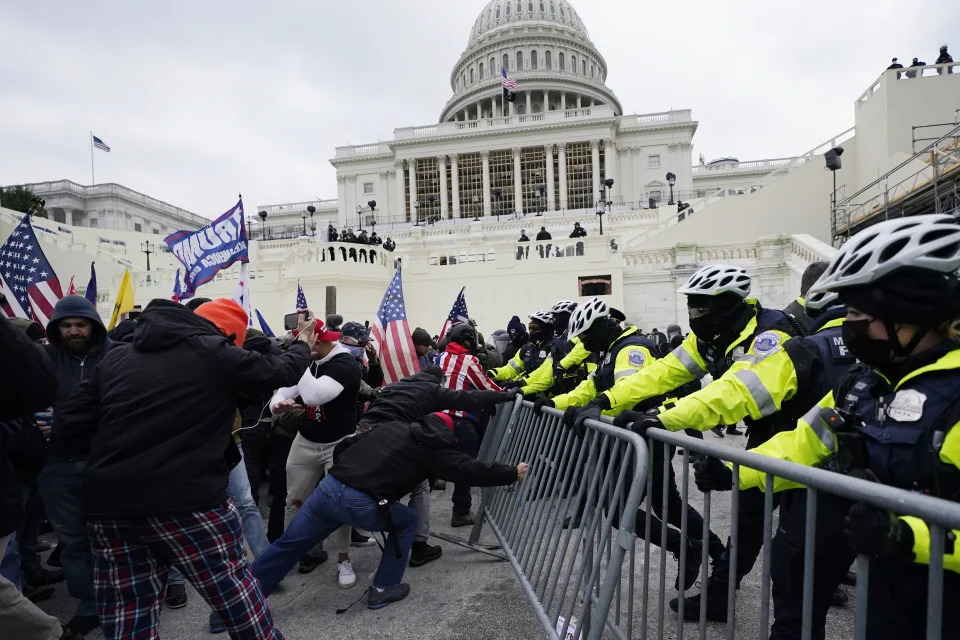
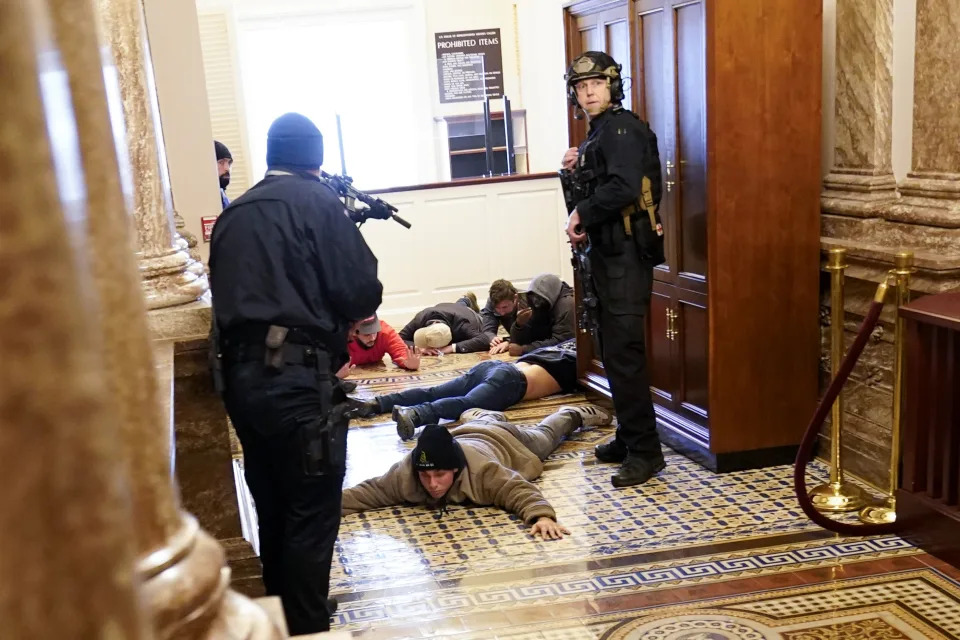
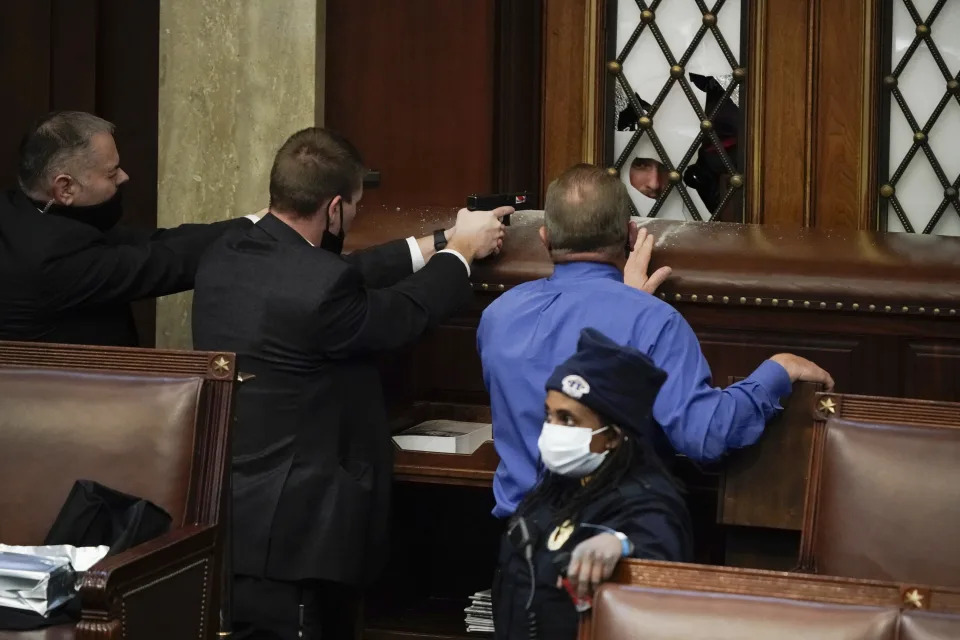
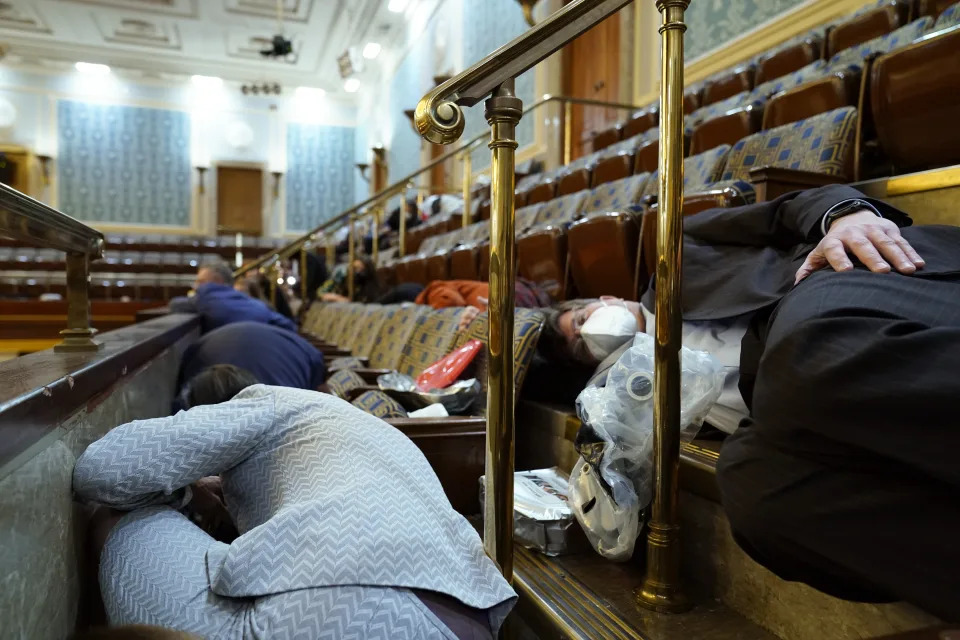
Violent insurrectionists loyal to President Donald Trump try to break through a police barrier on Jan. 6, 2021, at the Capitol in Washington. (AP Photo/Julio Cortez, File)Violent insurrectionists loyal to President Donald Trump, storm the Capitol, Wednesday, Jan. 6, 2021, in Washington. (AP Photo/John Minchillo, File)U.S. Capitol Police hold rioters at gun-point near the House Chamber inside the U.S. Capitol on Jan. 6, 2021, in Washington. (AP Photo/Andrew Harnik, File) Violent insurrectionists loyal to President Donald Trump try to break through a police barrier Jan. 6, 2021, at the Capitol in Washington. (AP Photo/John Minchillo, File) Police with guns drawn watch as rioters try to break into the House Chamber at the U.S. Capitol on Jan. 6, 2021, in Washington. (AP Photo/J. Scott Applewhite, File)People shelter in the House gallery as rioters try to break into the House Chamber at the U.S. Capitol on Jan. 6, 2021, in Washington. (AP Photo/Andrew Harnik, File)
The largest investigation in the Justice Department’s history keeps growing two years after a violent mob of supporters of then-President Donald Trump attacked the U.S. Capitol and challenged the foundations of American democracy.
More than 930 people have been charged with federal crimes related to the siege on Jan. 6, 2021, and the tally increases by the week. Hundreds more people remain at large on the second anniversary of the unprecedented assault that was fueled by lies that the 2020 election was stolen.
A surplus of self-incriminating videos and social media posts has made it difficult for riot suspects to present viable defenses. Federal prosecutors have a near-perfect trial record, securing a conviction in all but one case.
The cases have clogged Washington’s federal court, a building less than a mile from the Capitol. Virtually every weekday, judges are sentencing rioters or accepting their guilty pleas while carving out room on their dockets for trials. Already scheduled for this year are trials for about 140 riot defendants.
At least 538 cases, more than half of those brought so far, have been resolved through guilty pleas, trials, dismissals or the defendant’s death, according to an Associated Press review of court records. That leaves approximately 400 unresolved cases at the outset of 2023.
The Jan. 6 attack as an “assault on our democracy,” Attorney General Merrick Garland said.
“And we remain committed to doing everything in our power to prevent this from ever happening again,” he said in a statement Wednesday.
A look at where the prosecutions stand:
HOW MANY PEOPLE HAVE BEEN CHARGED?
The number of defendants charged with Jan. 6-related federal crimes is approaching 1,000. They range from misdemeanor charges against people who entered the Capitol but did not engage in any violence to seditious conspiracy charges against members of the Oath Keepers and Proud Boys extremist groups accused of violently plotting to stop the transfer of presidential power.
More than 100 police officers were injured at the Capitol. More than 280 defendants have been charged with assaulting or impeding law enforcement officers on Jan. 6, according to the Justice Department. The FBI is posting videos and photos of violent, destructive rioters in seeking the public’s help in identifying other culprits.
Investigators have used facial recognition software, license plate readers and other high-tech tools to track down some suspects. Networks of online sleuths have helped the FBI identify rioters based on digital clues.
Authorities have shared a staggering amount of evidence with defense lawyers — more than nine terabytes of information that would take over 100 days to view. The shared files include thousands of hours of surveillance footage from the Capitol and hundreds of hours of bodycam videos from police officers who tried to hold off the mob.
HOW MANY HAVE PLEADED GUILTY?
Nearly 500 people have pleaded guilty to riot-related charges, typically hoping that cooperating could lead to a lighter punishment.
About three-quarters of them pleaded guilty to misdemeanors in which the maximum sentence was either six months or one year behind bars. More than 100 of them have pleaded guilty to felony charges punishable by longer prison terms.
The first person to plead guilty to a Jan. 6-related crime was Jon Ryan Schaffer, an Indiana musician who joined the Oath Keepers. Schaffer was one of at least eight Oath Keepers who pleaded guilty before the group’s founder, Stewart Rhodes, and other members went to trial on seditious conspiracy charges.
The Justice Department also cut plea deals with several Proud Boys members, securing their cooperation to build a case against former national leader Enrique Tarrio and other top members of the group. A New York man, Matthew Greene, was the first Proud Boys member to plead guilty to conspiring with others to stop Congress from certifying the Electoral College vote.
HOW MANY HAVE GONE TO TRIAL?
Dozens of riot defendants have elected to let juries or judges decide their fates. For the most part, they haven’t fared well at trial.
The Justice Department notched a high-stakes victory in November when a jury convicted Rhodes, the Oath Keepers’ founder, and a Florida chapter leader of seditious conspiracy. It was the first seditious conspiracy conviction at trial in decades. Jurors acquitted three other Oath Keepers associates of the Civil War-era charge, but convicted them of other felony offenses.
The next major milestone is the sedition trial of Tarrio and four other members of the Proud Boys. Jury selection in the trial of the far-right extremist group started last month.
Those defenses fell flat. Jurors unanimously convicted all three men of every charge in their respective indictments.
Federal juries have convicted at least 22 people of Jan. 6 charges. Judges have convicted an additional 24 riot defendants after hearing and deciding cases without a jury.
Only one person, New Mexico resident Matthew Martin, has been acquitted of all charges after a trial. After hearing testimony without a jury, U.S. District Judge Trevor McFadden concluded that it was reasonable for Martin to believe that outnumbered police officers allowed him and others to enter the Capitol through the Rotunda doors on Jan. 6.
HOW MANY HAVE BEEN SENTENCED?
At least 362 riot defendants were sentenced by the end of 2022. Roughly 200 of them have received terms of imprisonment ranging from seven days to 10 years. Prosecutors had recommended a jail or prison sentence in approximately 300 of those 362 cases.
Retired New York Police Department Officer Thomas Webster has received the longest prison sentence. U.S. District Judge Amit Mehta, who sentenced Webster to a decade in prison, also presided over the first Oath Keepers sedition trial and will sentence Rhodes and Rhodes’ convicted associates.
Webster is one of 34 riot defendants who has received a prison sentence of at least three years. More than half of them, including Webster, assaulted police officers at the Capitol.
The riot resulted in more than $2.7 million in damage. So far, judges have ordered roughly 350 convicted rioters to collectively pay nearly $280,00 in restitution. More than 100 rioters have been ordered to pay over $241,000 in total fines.
Judges also have ordered dozens of rioters to serve terms of home detention ranging from two weeks to one year — usually instead of jail time — and to collectively perform more than 14,000 hours of community service.
Democrats Are One Vote Shy of Bypassing the Filibuster. Some Say They Should Have Won It in Wisconsin
Mini Racker – January 3, 2023
WI Democratic Senate Candidate Mandela Barnes Campaigns 2 Days Before Midterms
Wisconsin Lt. Gov. Mandela Barnes, who lost a bid for U.S. Senate last year, speaks to supporters on November 6, 2022 in Milwaukee. Credit – Scott Olson—Getty Images
Senator Chuck Schumer, the majority leader, is set to gavel in the new Senate on Tuesday after midterm elections in which his party retained all of its seats and picked up an additional one in Pennsylvania. Yet despite the good fortunes for Democrats, efforts to advance their agenda in the Senate will largely remain blocked by two speed bumps: Joe Manchin and Kyrsten Sinema.
In the Senate, opponents can derail most bills with a filibuster unless supporters have 60 votes. Democrats need 50 votes to bypass the filibuster. They have 49. Manchin, the most conservative Senate Democrat, opposes changing Senate rules to allow his party to pass more bills with a simple majority. So does Sinema, who recently became an independent and has said she won’t caucus with Democrats. That leaves Democrats one vote shy of bypassing the filibuster on issues like abortion and voting rights.
In the minds of some progressives, the crucial 50th vote was within reach in Wisconsin, where right-wing Sen. Ron Johnson’s margin of victory was 1%. It was the closest Senate race that Democrats lost last year, and one that supporters of Democrat Mandela Barnes say raises uncomfortable questions about the limits of the party’s support for progressive candidates, particularly Black ones.
“I think that there’s certain powers that be that also have a vested interest in progressives and people of color not winning in swing states, because what that means is that the floodgates are open and more progressives can run,” says Adam Green, co-founder of the Progressive Change Campaign Committee, which supported Barnes’ campaign.
In the weeks before Election Day, Republicans seized on crime as a sore spot for Barnes. Ads against the Wisconsin Democrat painted him as “too dangerous” for the state. One included his name overlaid on a crime scene. Critics said the ads played on racist fears of Black men. Democrats both in Wisconsin and nationally feared the strategy was working.
“Every digital outlet, anything with a screen, was screaming with anti-Barnes propaganda,” says Ben Wikler, the chairman of the Wisconsin Democratic Party. “I don’t know a single Democrat in Wisconsin who wasn’t ripping their hair out in September. There was a sense of worry, bordering on panic.”
Barnes’ campaign raised more than $40 million and outside groups spent tens of millions more backing him. But all that paled in comparison to what Johnson supporters poured into the race. Johnson’s backers included the usual Republican juggernauts, as well as a super PAC partly funded by Liz and Dick Uihlein, top GOP megadonors who have a summer home in the state.
While earlier polls saw Barnes leading, Johnson began to eclipse him in September. Johnson ultimately won re-election by about 27,000 votes, out of more than 2.6 million cast. Some Barnes supporters are convinced a little extra money in the final stretch could have made all the difference. “The reality here is, five million more dollars spent in September, we probably win this race,” says campaign manager Kory Kozloski.
‘Garbage Partisan Polls’
Heading into the election season, Johnson was widely viewed as the most vulnerable Republican Senator. Not only was he the only one running in a state that President Biden narrowly won in 2020, but his approval rating was among the lowest in the Senate. In recent years, he has expressed openness to anti-vaccine conspiracy theories, advanced baseless claims of election fraud, and downplayed the Jan. 6 attack. To Democrats, his positions appeared too extreme for voters in battleground Wisconsin.
Throughout the Democratic primary, Barnes remained the frontrunner. The state’s first Black lieutenant governor, Barnes frequently drew comparisons to former President Barack Obama for his potential to make history again—he would have been Wisconsin’s first Black senator—but also for his ability to appeal to a multiracial coalition of working-class people.
His record also included potential drawbacks. While serving in the state assembly, Barnes built a reputation as a staunch progressive, particularly on criminal justice issues. His sponsorship of a plan to end cash bail became an especially salient campaign issue last year after a man released on bail killed six by driving his car through the Waukesha Christmas parade. Barnes argued that his proposed bail reforms would have kept the perpetrator in jail, but Republicans pounced anyway. They also highlighted his history of questioning police budgets and a photo of Barnes holding an “Abolish ICE” T-shirt. His campaign insisted Barnes did not support defunding the police or abolishing U.S. Immigration and Customs Enforcement.
Among Barnes’ progressive allies, there’s a sense that national Democratic strategists and donors may have supported Barnes, but that their support was halfhearted, because they viewed his past statements on criminal justice as major liabilities. In the weeks ahead of Election Day, the pessimism around Barnes’ chances grew, with some Democrats privately predicting he could lose badly.
“The takeaway to me is to not pay attention to garbage partisan polls from the right,” Wikler says.
Maurice Mitchell, the national director of the Working Families Party, argues that those Democrats who painted Barnes as too progressive didn’t support him strongly enough in the aftermath of the primary, a lack of enthusiasm that dampened efforts to get deep-pocketed donors to spend what was needed on his behalf in Wisconsin.
“We have to invest in our young talent,” Mitchell says. “When Mandela is one of the more talented voices in the Democratic Party, this was the opportunity to show full investment, and it was a missed opportunity.”
Apart from their efforts protecting incumbents, Democrats made their most significant investments last year in Pennsylvania, where John Fetterman flipped a Senate seat. He did so despite a criminal justice record that Republicans portrayed as prioritizing the treatment of criminals over public safety—the very same attack that stymied Barnes.
To be clear, national Democrats also put lots of money into helping Barnes win. After Fetterman, Barnes was the non-incumbent who got the most outside spending. Senate Majority PAC, which is affiliated with Schumer, and other affiliates invested over $40 million in paid media in the race, starting attacks against Johnson early in the year and outspending its Republican counterpart during the general election period. But according to data provided by the Barnes campaign, that dynamic shifted drastically in September, when outside spending on ads attacking Barnes dwarfed outside spending on anti-Johnson ads, largely thanks to Johnson’s wealthy backers.
One Wisconsin political strategist noted to TIME that John Stocks, a former executive director of the National Education Association who now advises some of the country’s wealthiest left-of-center donors on which candidates to support, did not push donors to invest in Barnes. Stocks declined to comment.
‘A Strategic Mistake’
The closeness of Johnson’s win has some progressives lamenting the money Democrats spent elsewhere. They complain most frequently about Tim Ryan, the Democratic nominee in the Ohio Senate race who portrayed himself as a moderate and lost by six points to J.D. Vance, the author of Hillbilly Elegy who won the GOP primary with the backing of Donald Trump.
“Whether explicitly or implicitly, it’s like, ‘Oh, we have kind of a white guy populist running in Ohio,’” says Green, with the Progressive Change Campaign Committee. “It spoke to some people in a way that a Black progressive running in Wisconsin did not, and that’s really unfortunate, resulting in some very bad political choices.”
Ryan was long considered a longshot in Ohio, where Trump won two years earlier by 8 percentage points. Senate Majority PAC did not spend in the Ohio Senate race, but other Democratic groups did. Among those who prioritized Ohio was Dmitri Mehlhorn, who advises LinkedIn co-founder Reid Hoffman and other wealthy donors.
“We got [Republicans] to spend a bunch of money,” says Mehlhorn, reflecting on the decision to spend in Ohio. “That money, along with critical attention and time, came at the expense of Republican efforts in other battlegrounds. If the GOP hadn’t had to spend that effort in Ohio, would they win Nevada?”
Mehlhorn adds that his network of donors did invest millions in Wisconsin, including by donating to Barnes’ campaign directly.
“That said, we believe that our allies in Wisconsin benefit from our work to expand the map,” he says.
The contrast between the Ohio and Wisconsin results could inform how Democrats approach a tough Senate map in 2024. Barnes’ narrow loss provides a proof point that a young, Black progressive can be competitive in a swing state in the middle of the country, and suggests the fears about his criminal justice record were not as much of a handicap as some Democrats had feared.
“I think in the end, you see that that underestimated how good a candidate he was,” says Charles Franklin, who runs the Marquette Law School Poll in Wisconsin.
But while progressives suggest that the difference between a win and a loss in Wisconsin was more investment, others wonder if the Barnes campaign made a strategic error in not directly rebutting Johnson’s attacks earlier on.
“The remaining question is, was there a campaign strategy during that first month, where he might have hit back harder, might have moved away from his more positive campaigns sooner?” Franklin asks.
Throughout the general election, Barnes’ campaign centered the Democrat’s own uplifting biography, while attacking Johnson mostly on abortion.
“When [voters] got to know him, they didn’t believe the ads,” says Kozloski. “They saw through all the BS that the Republicans were trying to throw at him.”
Ultimately, what Republicans threw at Barnes cost him the race. What remains to be seen is what strategy Democrats will pursue to shield their candidates from such attacks in the future—or if they’ll pursue any new strategy at all.
“It’s very easy, after electoral losses like that, to learn the wrong lessons, or not learn a lesson at all, and just kind of move forward,” Mitchell says. “And we think that that would be a strategic mistake.”
Incoming Iowa attorney general Brenna Bird tells 19 staffers to resign
Jared Strong/Capital Dispatch – January3, 2023
The incoming, newly elected Iowa attorney general has asked for the resignations of 19 current staffers, including many in leadership positions but also some longtime staff attorneys, according to Lynn Hicks, a spokesperson for the office who was among those asked to resign.
Brenna Bird, a Republican county attorney who defeated longtime Attorney General Tom Miller, a Democrat, in the November election, requested the resignations on Dec. 22, according to letters obtained by Iowa Capital Dispatch.
“We appreciate your past service to the State of Iowa,” wrote Sam Langholz, whom Bird has selected as her chief deputy when she takes control of the office next week. “But the people of Iowa have elected a new attorney general. To best serve them — and to do the things she told Iowans she would do — the Attorney General-Elect is realigning the office and building a new team that matches her vision for the office.”
Bird pledged during her election campaign to more vigorously defend laws enacted by the Republican-controlled Legislature and to challenge policies enacted by President Joe Biden, a Democrat.
Langholz, former senior counsel for Gov. Kim Reynolds, has worked for the attorney general’s office for about two years and has helped defend against challenges to the governor’s policies and administrative actions.
His letter to 19 of his colleagues asked that their resignations be effective at 8:30 a.m. Jan. 3, at the latest.
“We are timing this transition date and time so that you will receive holiday pay on January 2, regular pay for 30 minutes on January 3, and your normal health insurance coverage for the month of January,” Langholz wrote.
He said the notices of resignation were due on Dec. 28 — six days after the letters were sent.
Hicks, who is Miller’s chief of staff, is among at least 10 who have acquiesced to the requests or had already planned to resign, according to copies of the resignation letters and other information he provided to Capital Dispatch with the consent of the employees. He identified a total of 13 of those asked to resign.
The 19 employees represent less than 10% of the total staff, which has about 150 assistant attorneys general and more than 200 people total, according to state salary records.
Replacing top staffers is common when someone new is elected to a statewide executive position, especially when they are tied to a different political party. However, the letters also targeted attorneys more closely involved in litigating cases, several of whom have been with the office for more than two decades.
“It has been my great honor serving the people of the state of Iowa — particularly the most vulnerable amongst us including older Iowans, veterans, and other at-risk individuals — and am disappointed that I was asked to resign,” wrote Chantelle Smith, an assistant attorney general whose focus is elder abuse and who has been employed by the office since about 2000, according to state records.
Hicks said others who were asked to resign include:
Nathan Blake, the chief deputy attorney general.
Jessica Whitney, the deputy attorney general for public protection and the director of the office’s Consumer Protection Division.
Matt Gannon, the first assistant attorney general, who wrote in his resignation letter: “I wish you success. I have my doubts.”
Chandlor Collins, director of the Human Services Division.
Emily Willits, director of the Licensing and Administrative Law Division.
Sandi Tibbetts Murphy, director of the Crime Victim Assistance Division who wrote in her resignation letter: “It has been a singular honor to serve the people of Iowa, and specifically victims of crime, as part of this Division and I hope that its groundbreaking and pivotal work continues unabated.” Bird has said she might overhaul the division, given her experience prosecuting crimes and interacting with victims of those crimes.
Heather Adams, an assistant attorney general who specializes in licensing and administrative law and public health who had worked for the office since 1994. She told Capital Dispatch: “I do not know why I was asked to resign. I, too, was deeply disappointed to be asked to submit my resignation. I have faithfully served the office, the public, and my public health clients for nearly 30 years — in a nonpartisan manner.”
Mari Culver, an assistant attorney general who specializes in consumer protection. She is the spouse of former Iowa Gov. Chet Culver, a Democrat.
Ashlee Kieler, a communications specialist who had already submitted her resignation.
Ellen Ramsey-Kacena, an assistant attorney general who specializes in human services and family law.
Donn Stanley, an assistant attorney general who specializes in consumer protection. Stanley has worked for the office for about two decades and previously held leadership roles. He also took a leave of absence from the office to be campaign manager for Gov. Culver in 2010.
Sharon Wegner, an assistant attorney general in the Special Litigation Division.
Iowa Attorney General Brenna Bird, who took office Tuesday.
Langholz noted that Miller also installed his “own team” to lead the office after he was first elected in 1978, based on media accounts at the time, and that the number of requested resignations are less than 8% of the total staff. They are at-will employees and “can be terminated at any time and for any lawful reason,” Langholz said.
“To implement her vision for the office, the Attorney General-elect will build a new team that shares her goals and values,” according to a prepared statement Langholz provided. “The Attorney General-elect appreciates the service to Iowa from the individuals leaving the office.”
For first time in decades Iowa has an all-Republican congressional delegation. Here’s what they want to do
Katie Akin, Des Moines Register – January 3, 2023
When U.S. Rep-elect Zach Nunn swears into office on Tuesday, it mark the first time since the 1950s that Iowa’s D.C. delegation will be comprised of entirely Republicans.
It’s the result of a strong midterm election cycle for the Iowa GOP: Nunn won election to Iowa’s 3rd District seat in November, ousting two-term incumbent Democrat Cindy Axne. Republican incumbents won reelection to the state’s other three U.S. House seats.
Nunn anticipates Iowa’s four Republican votes will give the state more power in the House, where Republicans will hold a majority in 2023.
“This is the loudest voice that Iowa is going to have in Washington, basically since the Eisenhower administration,” Nunn told the Des Moines Register.
Flanked by his family, 3rd Congressional District candidate Zach Nunn, a Republican, addresses his supporters during the Iowa GOP election night celebration on Tuesday, Nov. 8, 2022, at the Hilton Des Moines Downtown.
However, Iowa’s “red wave” was an outlier in the country where Democrats hung onto seats and cling to their control of the U.S. Senate. After two years of a Democratic trifecta, Congress will be divided in 2023, making it harder for either party to push through their priorities.
In pre-election candidate surveys, recent statements and interviews with the Register, Iowa’s congressional representatives outlined their goals for the upcoming term: curbing inflation, addressing illegal immigration and promoting the year-round sale of biofuels. They also highlighted potential bipartisan efforts, including bills to lower prescription drug prices and support community colleges.
Lawmakers promise to focus on biofuels, economy, ‘reducing government interference’
Incumbent U.S. Reps. Randy Feenstra, Ashley Hinson and Mariannette Miller-Meeks each said in pre-election surveys: promoting and legalizing the year-round use of biofuels would be a top domestic priority for 2023.
Under current law, higher ethanol blends may not be sold in the summer months due to concerns about increased air pollution. President Joe Biden temporarily waived that standard in 2022 to help combat high fuel prices, but Iowa leaders called for a more permanent change.
“I am committed to proving that clean, renewable energy is attainable for every state by using Iowa as a framework to show how it can be done,” Miller-Meeks had said.
Hinson argued that focusing on biofuels will help address inflation, which appeared to be soaring before the election.
“I am championing an all-of-the-above energy strategy that prioritizes Iowa biofuels to bring down the cost of gas and restore our energy independence while boosting Iowa’s agriculture economy,” Hinson had said.
Nunn said his top domestic priority would be addressing inflation and “reducing government interference with our lives.” As he did on the campaign trail, Nunn called for the federal government to mirror Iowa, where the Republican-led Legislature championed tax cuts and a budget surplus.
“It was the number one issue that I heard when I knocked on doors,” he said. “It’s the number one issue that I still continue to get email about.”
Meanwhile, Grassley said Friday he was calling on the Biden administration to make a New Year’s resolution for “border security.”
“The Biden administration’s border policies are allowing Mexican drug cartels to rule the roost along our southern border. And that has created grievous harm to the social fabric of America,” Grassley’s statement said. “Let’s ring in the New Year with a commitment to stop the humanitarian and drug trafficking crises at our border once and for all.”
Ernst also said “our national security and defense remain top of mind” as she goes into the 2023 session.
“While we secured a number of strong priorities in this year’s defense package, I’ll continue to push legislation that ensures our military remains the most lethal fighting force on the face of the planet,” Ernst said in a statement Thursday.
Iowa may be all red but ‘there’s still a lot of opportunity for good bipartisan work’
Republicans won a slim majority in the U.S. House — a power shift that included Nunn’s flipped 3rd District seat.
But with Democrats controlling the Senate and Biden still in office, Iowa’s all-red delegation will need to work across the aisle to get anything signed into law.
“I’m not naive,” Nunn said. “I think it’s gonna be challenging… but there’s still a lot of opportunity for good bipartisan work to happen.”
Nunn and Grassley had said they were interested in working with Democrats to lower the cost of prescription drugs. Grassley has pointed toward a 2019 bill he sponsored with U.S. Sen. Ron Wyden, a Democrat, to cap out-of-pocket prices for medication. That bill passed a Senate Finance Committee vote that year, when Republicans controlled the Senate. It has not advanced since.
“Our bipartisan bill would lower costs without harming life-saving cures and treatments the American people expect,” Grassley has said.
Miller-Meeks, an ophthalmologist, was also hopeful that lawmakers could find common ground on medical issues. She highlighted a bipartisan proposal to improve protocols for step therapy, a practice that requires patients to try cheaper medications before being prescribed more costly prescriptions.
Ernst said she intends to use her role on the Democrat-led Senate Small Business Committee to address childcare shortages. She also emphasized the importance of the annual farm bill, promising to “prioritize the needs of Iowa’s farmers and growers on the Senate Agriculture Committee.”
Hinson said hopes to work with Democrats on community college programs and expanding Pell Grants. Feenstra said he intends to keep pushing for a bipartisan bill to require more price transparency from major meatpacking companies.
Op-Ed: The next stage of Russia’s secular decline comes in 2023
Simon Johnson – January 3, 2023
Russian President Vladimir Putin delivers a speech in September declaring the annexation of four regions of Ukraine. (Associated Press)
After a year of big surprises, led by Russia’s invasion of Ukraine, the global spike in inflation rates, and the collapse of cryptocurrency ventures, what kind of year will 2023 prove to be? This kind of short-run question is hard to answer because repercussions of global events can spread so quickly and unpredictably. But the last 12 months highlighted one major trend that will shape what happens next, in 2023 and beyond: the decline of Russia.
Russian aggression is nothing new. Moscow has been invading other countries since the mid-1990s and has occupied parts of Ukrainian territory since 2014. But the brutality of Russia’s attacks in Ukraine since last February and the most recent phase, destroying civilian energy infrastructure, is widely seen as amounting to a war crime. It is unlikely to change the course of the war, which Russia is losing.
In the bigger picture, Russia has again entered a period of secular decline, during which it will have limited access to Western investment, technology or consumer goods. Russia’s empires have collapsed before, in 1917-18 and again when the Soviet Union imploded in 1989-91. In both cases, the collapse took a while to get going, and then proved quite complete. Of course, historically Russia has also been able to reassert control over time, and during the 1990s, by getting a lot of help from Western companies.
This time, too, we should expect a long struggle for power within Russia, with serious existential risks for the world, including who ends up controlling Russian nuclear weapons. But the more direct economic impact will be reflected in the world energy market.
Demand for Russian fossil fuels is way down. Before its 2022 invasion of Ukraine, Russia produced about 10.8 million barrels of oil per day, of which around 8 million were exported either as crude or refined products. The sharp decline in Russian economic activity means that more oil is available for export, but the European Union, the United States, and their allies are now buying crude from other suppliers — and the same will be true for refined products from February 2023.
The International Energy Agency predicts that Russian oil exports will fall to around 6 million barrels per day over 2023-24. Over the medium term, India might buy 1-2 million barrels and China could sop up the rest — assuming both countries want to become more dependent on a malevolent and unreliable partner.
Purchases by India, China, and a few others can still result in a lot of free cash flow and tax revenue for Russia. Whoever leads Russia will put much of these proceeds into building and buying weapons — including missiles with which it can hit a wide range of countries from long distance. NATO member countries are, one hopes, protected to some extent by the threat of retaliation, but Russia can be expected to engage in sabotage and other deniable attacks on Western energy infrastructure and similar vulnerable strategic targets.
During the Cold War, the Soviet Union was careful not to attack Western Europe and the U.S. too directly (and vice versa). Instead, both sides used proxy wars and other forms of pressure. This time, however, we should expect much more direct confrontation. The Russian elite have boxed themselves into a corner, with a bizarre set of beliefs — right-wing nationalism on steroids — and long-range weapons. Giving ground to these extremists will only embolden them to take more.
The need to limit over time how much cash Russia can spend on aggression is why the price cap on Russian oil exports is so important. The evidence so far is that this is working as intended.
But further measures are needed, including accelerated investments in renewable energy to reduce world demand for oil. If we continue to depend on Russia and its allies in the OPEC+ cartel, the ability to disrupt our economies will remain immense. There is now a pressing national security dimension to the energy transition.
High inflation in the 1970s had multiple causes, beginning with tight economies in the 1960s and the Vietnam War. But the problems were exacerbated by two oil price shocks, in 1973 and 1979. OPEC+ members understand that they have the power to do this again, at a time of their choosing — or the next time Russia asks for a favor.
Oil demand and supply are quite unresponsive to oil prices in the short run, but historically quite responsive over five to 10 years. In 2023 and beyond, the West needs to focus more intently on reducing demand for fossil fuels, particularly oil, and increasing the supply of alternative energy sources outside the control of Russia and OPEC.
Simon Johnson, a former chief economist at the International Monetary Fund, is a professor at MIT Sloan School of Management.
Jared Kushner blocked Biden’s access to COVID-19 planning in the final days of the Trump era, former aide says
Joshua Zitser – December 30, 2022
Jared Kushner blocked Biden’s access to COVID-19 planning in the final days of the Trump era, former aide says
Jared Kushner denied Biden’s team access to COVID-19 plans in late 2020, a former aide said.
Kushner said Biden’s team should “absolutely not” be looped in, claimed Alyssa Farah Griffin.
She made the claim in a newly released transcript of her interview with the Jan. 6 House panel.
Jared Kushner ordered that the incoming Biden administration be excluded from COVID-19 planning in the aftermath of the 2020 election, a former aide said.
Alyssa Farah Griffin made the claim in an interview with the House select committee investigating the Capitol riot, according to a newly released transcript.
Farah Griffin told the panel that Kushner shot down the a suggestion to include President Joe Biden’s transition team in planning discussions after the election had been called for Biden, per the transcript.
At the time, Trump was angrily refusing to concede defeat, and hyping his baseless theory that the election had been stolen. Though he left office in January 2021, he continues to claim he won the 2020 vote.
In the transcript, Farah Griffin described former COVID Task Force coordinator Dr. Deborah Birx asking whether they should be “looping” the incoming Biden transition in.
“Jared just said, ‘Absolutely not,'” Farah Griffin told the panel. “And then we just moved on.”
Farah Griffin’s allegation, which was first reported by The Independent, is the first to directly put blame for the stonewalling on Kushner.
Biden officials complained at the time that the Trump administration was refusing them access to COVID-19 data in the weeks after the election.
Former Surgeon General Vivek Murthy told “Fox News Sunday” on November 15, 2020, that the Trump administration had stonewalled crucial COVID-19 data and plans.
Biden also said that week that Trump officials were harming the US by denying them access, per The New York Times.
“If we have to wait until January 20 to start that planning, it puts us behind,” Biden told reporters, referring to the date of his inauguration. “More people may die if we don’t coordinate.”
In the same speech, Biden pressed the Trump administration to provide more details about the allocation of COVID-19 vaccinations. “The sooner we have access to the administration’s distribution plan, the sooner this transition would be smoothly moved forward,” Biden said, per Politico.
Greta Thunberg’s Response To Andrew Tate Getting Arrested Is One For The History Books
December 30, 2022
Twitter has been pretty fun for the past 24 hours all thanks to Greta Thunberg.
Christopher Furlong / Getty Images
It all started with misogynistic internet personality, Andrew Tate, making a random swipe at Greta.
Karwai Tang / WireImage / Getty Images
In case you didn’t know, Andrew Tate was banned from Twitter in 2017 for hate speech.
Karwai Tang / WireImage / Getty Images
He was recently allowed back on the platform because of the new changes Elon Musk made.
– / Twitter account of Elon Musk/AFP via Getty Images
He took this opportunity to tweet at climate activist Greta Thunberg about owning 33 cars:
Hello Greta Thurnberg: I have 33 cars. My Bugatti has a w16 8.0L quad turbo. My TWO Ferrari 812 competizione have 6.5L v12s. This is just the start. Please provide your email address so I can send a complete list of my car collection and their respective enormous emissions.
Greta responded:
yes, please do enlighten me. email me at smalldickenergy@getalife.com
Andrew Tate:
HelloGreta Thunberg: I have 33 cars. My Bugatti has a w16 8.0L quad turbo. My TWO Ferrari 812 competizione have 6.5L v12s. This is just the start. Please provide your email address so I can send a complete list of my car collection and their respective enormous emissions.
People on Twitter collectively lost their minds over her reply:
George Conway Replying to Greta Thunberg:
“this may well be the greatest tweet of all time”
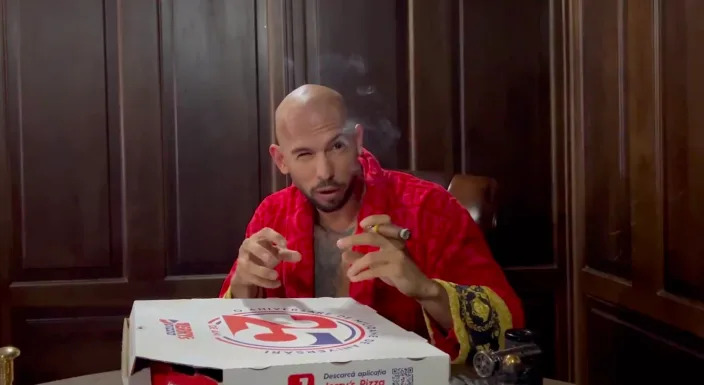
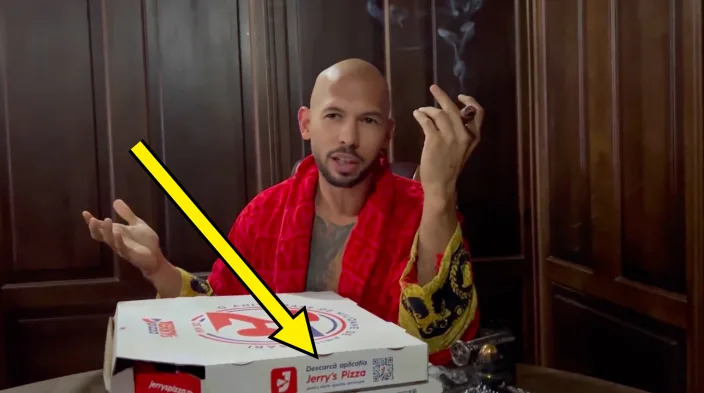
And then Andrew tweeted this cigar smoking rant:
Thank you for confirming via your email address that you have a small penis @GretaThunberg
I think this tweet from George Takei sums it up best:
So…Elon Musk let Andrew Tate back on Twitter, and Tate promptly used it to reveal his whereabouts to authorities in Romania who then arrested him. All because Greta Thunberg owned him so hard his little wee-wee fell off. Do I have that right? Please say I have that right.