Bankruptcy at an Illinois retirement community has financial impact on residents and families too

Chicago Tribune

Bankruptcy at an Illinois retirement community has financial impact on residents and families too

Robert McCoppin, Chicago Tribune – November 15, 2023

Stacey Wescott/Chicago Tribune/TNS

At age 88, World War II veteran Robert Kroll moved to Friendship Village of Schaumburg, Illinois, a retirement community where he would be taken care of until death, and so his children would get their inheritance after he died.

He paid an entrance fee of $124,000, plus about $2,400 a month, to guarantee that he would always get housing and medical care even if he ran out of money, with the understanding that his family would get 90% of his remaining entrance fee after expenses upon his passing.

Kroll died in 2019, but his family still hasn’t gotten their money back. In June, Friendship Village, citing problems caused by the COVID pandemic, filed for Chapter 11 bankruptcy, in which officials say operations will continue as usual, but with some debts unpaid. A company has bid $115 million to buy the facility, but the bankruptcy proposal includes only $2 million to pay back families of former residents — about 10% of what is owed.

“Our family has been waiting for four years with no resolution,” Kroll’s daughter, Michelle Barnes, told the Tribune. “I wanted to share our story to help inform the public and put pressure on our politicians to change the laws in Illinois that will protect seniors from this type of deception in the future.”

Her dispute is over Friendship Village’s policy of only paying back entry fees upon the resale of a resident’s unit. The facility — the largest not-for-profit retirement community in Illinois, with 815 units — didn’t resell Kroll’s one-bedroom unit, so hadn’t paid his family back.

Now that Friendship Village has entered bankruptcy, families of former residents are unlikely to ever receive full repayment, which Barnes and other families see as a betrayal of what they were promised.

Friendship Village officials say the contracts were clear about the arrangement, which had worked well for decades since the retirement community opened in 1977.

“We never expected this to happen,” CEO Mike Flynn said.

Friendship Village provides a full continuum of care from independent living to assisted living and skilled nursing residences. It has a three out of five star overall rating from Medicare.gov, and residents and others the Tribune interviewed spoke highly of the staff and facilities there.

But in 2020, COVID was particularly deadly for older victims, and prompted Illinois Gov. J.B. Pritzker to close general access to nursing facilities. That prevented Friendship Village from showing its units to new customers, and prevented the sale of what normally was a turnover of some 100 units a year. Some expenses increased while demand for nursing homes dropped.

The owner of Friendship Village, Evangelical Retirement Homes of Greater Chicago, estimated allowed claims by bondholders total almost $132 million, for current residents $78 million, and for former residents $20 million. But the bond debt is secured, meaning its repayment is backed by the collateral of the property itself.

The facility has more than 200 creditors, including dozens of residents and family members, many owed hundreds of thousands of dollars.

Because Friendship Village is deemed a not-for-profit business, it does not pay property taxes. It did pay $23 million in employee compensation in 2022, including $406,000 to its prior CEO, Stephen Yencheck. Bankruptcy attorney Bruce Dopke reported he’s been paid $350,000 for legal services, and would be paid for any additional costs. Before bankruptcy, the company had a prospective buyer, but the deal fell through.

The amount available to repay debtors depends on the amount offered by a buyer in auction. The highest bid was recently reported at $115 million by Encore Healthcare Services of New York.

“It would have been nice if somebody stepped up and honored the entrance fee refund,” Flynn said. “That didn’t happen, but at least they’re getting something.”

Besides former residents like Kroll, current residents are also worried about their investment.

Ed and Toby Gordon, age 88 and 87, respectively, moved into Friendship Village in January, in part to be close to their daughter, Michelle Miller, and because they knew they would need more care. They paid more than $300,000 as an entrance fee, Miller said. Under the bankruptcy proposal, residents who die or leave would be repaid over about 16 years.

Miller is upset that her parents did not know about the facility’s dire financial situation.

“My parents should have known how bad those numbers were,” she said, “because they could have been renters instead.”

Residents are concerned that they won’t get the continuing care they expected and won’t get the refunds they were guaranteed. “A lot of people are just scared and don’t know what’s going to happen to them,” she said.

Friendship Village issued a statement reassuring residents that they will be taken care of.

Within the new ownership contract, the statement read, “there are provisions to take care of the current residents who entered the community under an entrance fee agreement for the rest of their lives, regardless of the level of care needed. There is also a benevolent fund that has been doubled by the new owner for those who run out of money through no fault of their own.”

In response to complaints even before the bankruptcy, state Rep. Michelle Mussman, a Democrat whose northwest suburban district includes Friendship Village, introduced a bill that would require repayment of entrance fees in order of those who leave, rather than upon resale of each individual’s unit.

But after getting pushback from the industry, Mussman is taking a step back and talking to stakeholders. Chronological repayment may not be as fair to residents who paid for more desirable units that sell faster, and may impair the ability to care for residents still living there, Mussman said.

“It’s not perfect,” she said. “We’ve not been able to find the right combination that would work.”

Angela Schnepf, president and CEO of LeadingAge Illinois, which represents the senior care industry, said entrance fees are like an insurance policy. The community takes on the risk of caring for residents even if they run out of money, while residents carry the risk of not getting their fee back until their units sell.

She said some residents see the queue system as paying other residents when their own unit sells.

“If their neighbor gets their refund sooner just because they put their unit up for sale sooner, they find this very unfair,” Schnepf said.

If retirement communities were forced to pay back before selling units, she said, it might put them at financial risk.

But under the current arrangement, current and former residents are at risk because of the bankruptcy. A creditors’ committee continues to investigate the management of funds in the case.

The next court hearing to consider the bankruptcy terms is set for Nov. 22 in federal court in Chicago. The proposed repayment plan is subject to a vote by creditors and is scheduled to be ruled on Jan. 17 by U.S. Judge Timothy Barnes.

More broadly, the problems facing Friendship Village also face Life Plan or Continuing Care Retirement Communities in general.

Several such not-for-proft communities nationwide have fallen into financial distress recently and been acquired by for-profit companies, said Dan Hermann, president and CEO of Ziegler, which has provided financing to senior living businesses, including Friendship Village.

The for-profit companies can offer efficiencies by providing their own ancillary services such as pharmacy and tech work, and tighter staffing.

An underlying problem, Hermann said, is that Illinois for years has had low reimbursement rates for Medicaid residents, which make up a significant portion of some retirement communities like Friendship Village.
How Trump and His Allies Plan to Wield Power in 2025

The New York Times

How Trump and His Allies Plan to Wield Power in 2025

Jonathan Swan – November 15, 2023

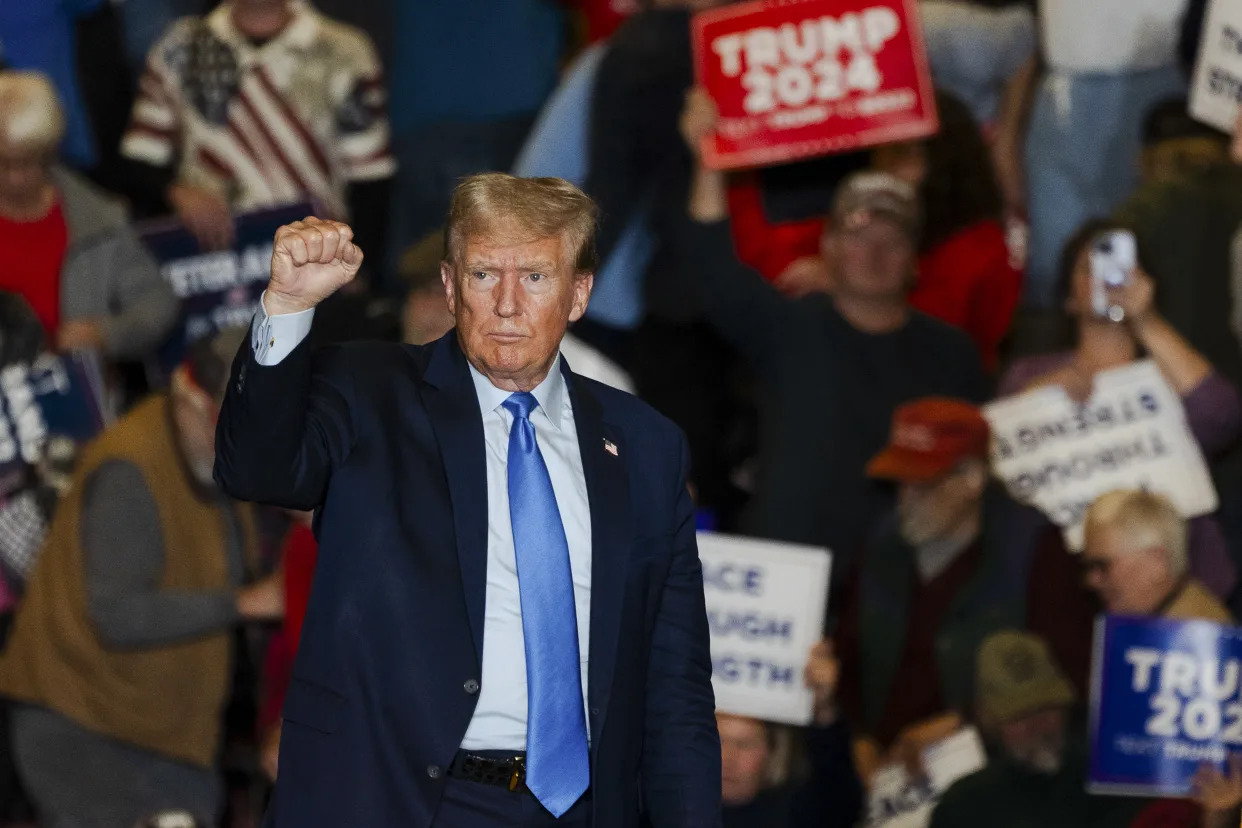
Former President Donald Trump during a campaign event at Stevens High School in Claremont, N.H. on Nov. 11, 2023. (Sophie Park/The New York Times)

Former President Donald Trump declared in the first rally of his 2024 presidential campaign: “I am your retribution.” He later vowed to use the Justice Department to go after his political adversaries, starting with President Joe Biden and his family.

Beneath these public threats is a series of plans by Trump and his allies that would upend core elements of American governance, democracy, foreign policy and the rule of law if he regained the White House.

Some of these themes trace back to the final period of Trump’s term in office. By that stage, his key advisers had learned how to more effectively wield power and Trump had fired officials who resisted some of his impulses and replaced them with loyalists. Then he lost the 2020 election and was cast out of power.

Since leaving office, Trump’s advisers and allies at a network of well-funded groups have advanced policies, created lists of potential personnel and started shaping new legal scaffolding — laying the groundwork for a second Trump presidency they hope will commence on Jan. 20, 2025.

In a vague statement, two top officials on Trump’s campaign have sought to distance his campaign team from some of the plans being developed by Trump’s outside allies, groups led by former senior Trump administration officials who remain in direct contact with him. The statement called news reports about the campaign’s personnel and policy intentions “purely speculative and theoretical.”

The plans described here generally derive from what Trump has trumpeted on the campaign trail, what has appeared on his campaign website and interviews with Trump advisers, including one who spoke with The New York Times at the request of the campaign.

Trump wants to use the Justice Department to take vengeance on his political adversaries.

If he wins another term, Trump has said he would use the Justice Department to have his adversaries investigated and charged with crimes, including saying in June that he would appoint “a real special prosecutor to go after” Biden and his family. He later declared in an interview with Univision that he could, if someone challenged him politically, have that person indicted.

Allies of Trump have also been developing an intellectual blueprint to cast aside the post-Watergate norm of Justice Department investigatory independence from White House political direction.

Foreshadowing such a move, Trump had already violated norms in his 2016 campaign by promising to “lock up” his opponent, Hillary Rodham Clinton, over her use of a private email server. While president, he repeatedly told aides he wanted the Justice Department to indict his political enemies, including officials he had fired such as James Comey, the former FBI director. The Justice Department opened various such investigations but did not bring charges — infuriating Trump and leading to a split in 2020 with his attorney general, Bill Barr.

He intends to carry out an extreme immigration crackdown.

Trump is planning an assault on immigration on a scale unseen in modern American history. Millions of immigrants who entered the U.S. illegally would be barred from the country or uprooted from it years or even decades after settling here.

Bolstered by agents reassigned from other federal law enforcement agencies and state police and the National Guard, officials with Immigration and Customs Enforcement would carry out sweeping raids aimed at deporting millions of people each year. Military funds would be used to erect sprawling camps to hold detainees. A public-health emergency law would be invoked to shut down asylum requests by people arriving at the border. And the government would try to end birthright citizenship for babies born on U.S. soil to parents without legal status.

Trump has plans to use U.S. military force closer to home.

While in office, Trump mused about using the military to attack drug cartels in Mexico, an idea that would violate international law unless Mexico consented. That idea has since taken on broader Republican backing, and Trump intends to make the idea a reality if he returns to the Oval Office.

While the Posse Comitatus Act generally makes it illegal to use federal troops for domestic law enforcement purposes, another law called the Insurrection Act creates an exception. Trump wanted to invoke the Insurrection Act to use troops to crack down on protesters after the 2020 police killing of George Floyd, but was thwarted, and the idea remains salient among his advisers. Among other things, his top immigration adviser has said they would invoke the Insurrection Act at the southern border to use soldiers to intercept and detain migrants who enter the U.S. illegally.

Trump and his allies want greater control over the federal bureaucracy and workforce.

Trump and his backers want to increase presidential power over federal agencies, centralizing greater control over the entire machinery of government in the White House.

They have adopted a maximalist version of the so-called unitary executive theory, which says the president can directly command the entire federal bureaucracy and that it is unconstitutional for Congress to create pockets of independent decision-making authority.

As part of that plan, Trump also intends to revive an effort from the end of his presidency to alter civil-service rules that protect career government professionals, enabling him to fire tens of thousands of federal workers and replace them with loyalists. After Congress failed to enact legislation to block such a change, the Biden administration is developing a regulation to essentially Trump-proof the federal workforce. However, since that is merely an executive action, the next Republican president could simply undo it the same way.

Trump allies want lawyers who will not restrain him.

Politically appointed lawyers sometimes frustrated Trump’s desires by raising legal objections to his and his top advisers’ ideas. This dynamic has led to a quiet split on the right, as Trump loyalists have come to view the typical Federalist Society lawyer — essentially a mainstream Republican conservative — with disdain.

In a potential new term, Trump’s allies are planning to systematically install more aggressive and ideologically aligned legal gatekeepers who will be more likely to bless contentious actions. Trump and his 2024 campaign declined to answer a series of detailed questions about what limits, if any, he would recognize on his powers across a range of war, secrecy and law enforcement matters — many raised by his first term — in a New York Times 2024 presidential candidate survey.

Trump Wants Us to Know He Will Stop at Nothing in 2025

By Jamelle Bouie – November 14, 2023

A mobile billboard with a lit grid shows a Donald Trump speaking before a microphone.
Credit…Damon Winter/The New York Times

Over the past few weeks, we’ve gotten a pretty good idea of what Donald Trump would do if given a second chance in the White House. And it is neither exaggeration nor hyperbole to say that it looks an awful lot like a set of plans meant to give the former president the power and unchecked authority of a strongman.

Trump would purge the federal government of as many civil servants as possible. In their place, he would install an army of political and ideological loyalists whose fealty to Trump’s interests would stand far and above their commitment to either the rule of law or the Constitution.

With the help of these unscrupulous allies, Trump plans to turn the Department of Justice against his political opponents, prosecuting his critics and rivals. He would use the military to crush protests under the Insurrection Act — which he hoped to do during the summer of 2020 — and turn the power of the federal government against his perceived enemies.

“If I happen to be president and I see somebody who’s doing well and beating me very badly, I say, ‘Go down and indict them.’ They’d be out of business. They’d be out of the election,” Trump said in a recent interview on the Spanish-language network Univision.

As the former president wrote in a disturbing and authoritarian-minded Veterans Day message to supporters (itself echoing a speech he delivered that same day to supporters in New Hampshire): “We pledge to you that we will root out the Communists, Marxists, Fascists, and Radical Left Thugs that live like vermin within the confines of our country, lie, steal, and cheat on Elections, and will do anything possible, whether legally or illegally, to destroy America, and the American dream.”

Trump has other plans as well. As several of my Times colleagues reported last week, he hopes to institute a program of mass detainment and deportation of undocumented immigrants. His aides have already drawn up plans for new detention centers at the U.S.-Mexico border, where anyone suspected of illegal entry would be held until authorities have settled the person’s immigration status.

Given the former president’s rhetoric attacking political enemies and other supposedly undesirable groups, like the homeless — Trump has said that the government should “remove” homeless Americans and put them in tents on “large parcels of inexpensive land in the outer reaches of the cities” — there’s little doubt that some citizens would find themselves in these large and sprawling camps.

Included in this effort to rid the United States of as many immigrants as possible is a proposal to target people here legally — like green-card holders or people on student visas — who harbor supposedly “jihadist sympathies” or espouse views deemed anti-American. Trump also intends to circumvent the 14th Amendment so that he can end birthright citizenship for the children of unauthorized immigrants.

In the past, Trump has gestured at seeking a third term in office after serving a second four-year term in the White House. “We are going to win four more years,” Trump said during his 2020 campaign. “And then after that, we’ll go for another four years because they spied on my campaign. We should get a redo of four years.” This, too, would violate the Constitution, but then, in a world in which Trump gets his way on his authoritarian agenda, the Constitution — and the rule of law — would already be a dead letter.

It might be tempting to dismiss the former president’s rhetoric and plans as either jokes or the ravings of a lunatic who may eventually find himself in jail. But to borrow an overused phrase, it is important to take the words of both presidents and presidential candidates seriously as well as literally.

They may fail — in fact, they often do — but presidents try to keep their campaign promises and act on their campaign plans. In a rebuke to those who urged us not to take him literally in 2016, we saw Trump attempt to do what he said he would do during his first term in office. He said he would “build a wall,” and he tried to build a wall. He said he would try to keep Muslims out of the country, and he tried to keep Muslims out of the country. He said he would do as much as he could to restrict immigration from Mexico, and he did as much as he could, and then some, to restrict immigration from Mexico.

He even suggested, in the lead-up to the 2016 presidential election, that he would reject an election defeat. Four years later, he lost his bid for re-election. We know what happened next.

In addition to Trump’s words, which we should treat as a reliable guide to his actions, desires and preoccupations, we have his allies, who are as open in their contempt for democracy as Trump is. Ensconced at institutions like the Heritage Foundation and the Claremont Institute, Trump’s political and ideological allies have made no secret of their desire to install a reactionary Caesar at the head of the American state.

As Damon Linker noted this month in his essay on these figures for Times Opinion, they exist to give “Republican elites permission and encouragement to do things that just a few years ago would have been considered unthinkable.”

Americans are obsessed with hidden meanings and secret revelations. This is why many of us are taken with the tell-all memoirs of political operatives or historical materials like the Nixon tapes. We often pay the most attention to those things that have been hidden from view. But the mundane truth of American politics is that much of what we want to know is in plain view. You don’t have to search hard or seek it out; you just have to listen.

And Donald Trump is telling us, loud and clear, that he wants to end American democracy as we know it.

“That’s game over”: Legal experts say new Jenna Ellis revelation is beyond “devastating” for Trump

Salon

“That’s game over”: Legal experts say new Jenna Ellis revelation is beyond “devastating” for Trump

Igor Derysh – November 14, 2023

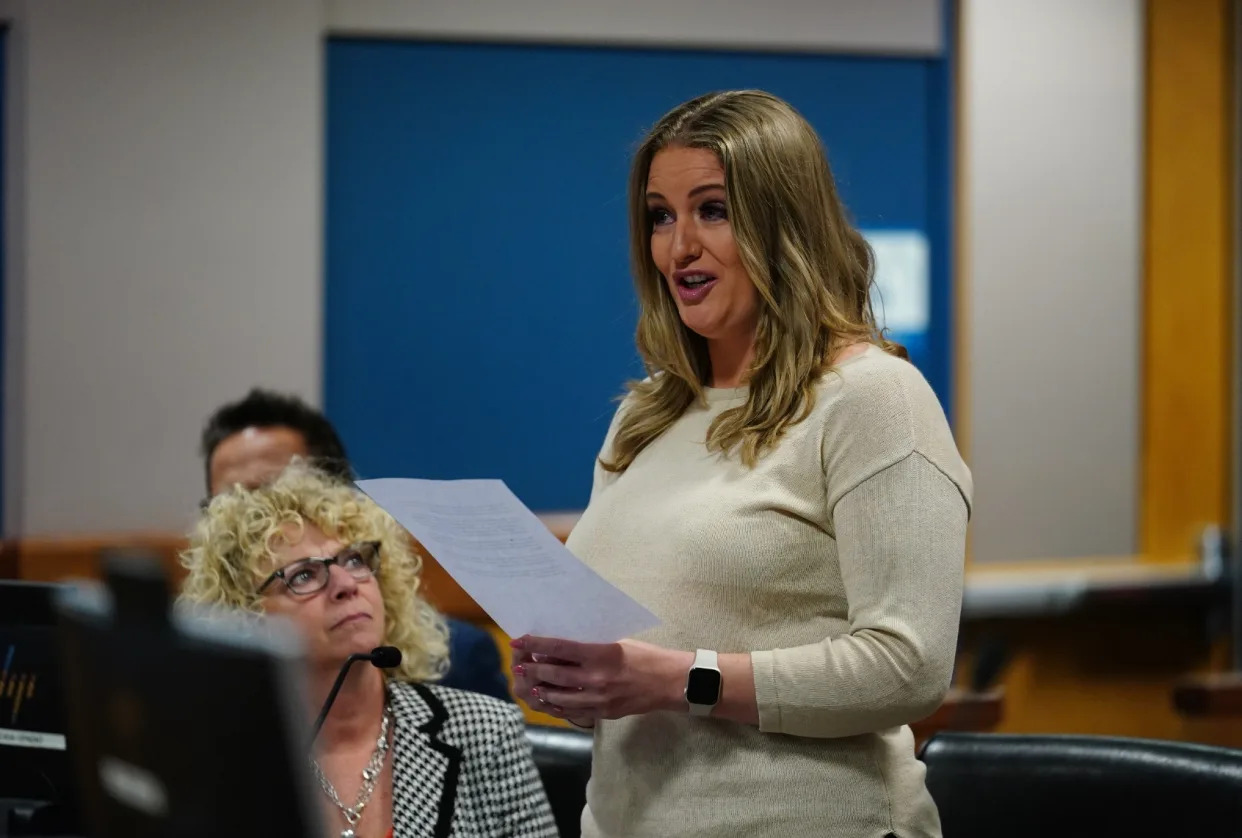
Jenna Ellis John Bazemore-Pool/Getty Images

Former Trump lawyer Jenna Ellis told prosecutors in Fulton County, Ga., that a senior aide to the former president told her he was “not going to leave” the White House even after losing numerous legal challenges.

Ellis in a video of a confidential proffer session with prosecutors obtained by ABC News and The Washington Post said that Trump aide Dan Scavino told her “the boss” would refuse to leave the White House even though she told him that their cause was “essentially over.”

“And he said to me, in a kind of excited tone, ‘Well, we don’t care, and we’re not going to leave,'” Ellis recalled. “And I said, ‘What do you mean?’ And he said ‘Well, the boss’, meaning President Trump — and everyone understood ‘the boss,’ that’s what we all called him — he said, ‘The boss is not going to leave under any circumstances. We are just going to stay in power.'”

Ellis added: “And I said to him, ‘Well, it doesn’t quite work that way, you realize?’ and he said, ‘We don’t care.'”

Ellis also told prosecutors that Scavino’s statement “indicated to me that he was serious and that was in furtherance of something that he had discussed with the boss.

New York University Law Prof. Ryan Goodman, a former special counsel for the Pentagon, told CNN that Ellis’ revelation could be key evidence in the Fulton case as well as Trump’s federal election subversion case in D.C.

“She’s adding something that’s golden evidence for prosecutors both in Georgia and in DC, which is, they don’t have to prove this but if they can show that Trump knew he lost and was still trying to hold on to power, that’s it,” he said. “That’s game over. And that’s exactly what she says is the context of the conversation.”

Gwen Keyes, a former DeKalb County, Ga., district attorney, told MSNBC that Ellis’ testimony may be key to the Fulton case.

“That is a key element of every one of the crimes that is listed in the indictment,” she said. “That being that the defendants knew that they were perpetrating a lie, and so this goes right to the heart of that.”

Former acting Solicitor General Neal Katyal, who was also on the segment, pointed out that the conversation between Ellis and Scavino took place after the safe harbor deadline to resolve state disputes, after state electors met to cast their vote and after the Supreme Court rejected Trump’s legal challenge.

“You might remember, that Jenna Ellis testified before the Jan. 6 Committee, that at a holiday party, Donald Trump said to Mark Meadows, his chief of staff, ‘I don’t want people to know that we lost. It’s embarrassing, figure it out. We need to figure it out.’ So, all of this together paints a really damaging picture for Donald Trump,” he said.

Fellow former TrumpWorld attorney Sidney Powell told prosecutors in her proffer session that she knew nothing about election law when she sought to challenge Trump’s loss.

“Did I know anything about election law? No. But I understand fraud from having been a prosecutor for 10 years, and knew generally what the fraud suit should be if the evidence showed what I thought it showed,” she told prosecutors.

Though Trump has denied that Powell was ever his attorney, Powell described being in close contact with him and said he frequently called her for updates on the legal efforts, even after his campaign publicly distanced from her.

“He always wanted to know where things were in terms of finding fraud that would change the results of the election,” she said.

Powell also confirmed reporting that Trump was “willing to appoint me a special counsel” to investigate fraud and seize voting machines, though the effort fell through.

“I called Mark Meadows the next morning just to run it to ground, and said, ‘Hey, when can I come pick up my badge and my key?'” Powell said. “He essentially laughed — I mean he said, you know, ‘It’s not going to happen.'”

Powell said she was present when multiple advisers told Trump that he lost and prosecutors questioned why the president followed her advice instead of the others.

“Because I didn’t think he had lost,” Powell replied, later adding: “I saw an avenue pursuant to which, if I was right, he would remain president.”

National security attorney Bradley Moss said the revelations from Ellis and Powell were “devastating.”

“Trump never had any intention of complying with the election results. He was told repeatedly in the presence of a convicted co-defendant that he had lost. He ignored it and conspired with his lawyers to overthrow the election anyway,” he tweeted.

“Devastating is an understatement,” agreed former U.S. Attorney Harry Litman, adding: “The series of revelations from the video interviews of the Defendants to pleaded guilty in Fulton County really serves to validate Willis’s strategy of charging broadly then giving pleas. The testimony is just overwhelming.”

Trump attorney Steve Sadow in a statement to ABC News called the “purported private conversation” described by Ellis “absolutely meaningless.”

“The only salient fact to this nonsense line of inquiry is that President Trump left the White House on January 20, 2021, and returned to Mar-a-Lago in Palm Beach, Florida,” Sadow said. “If this is the type of bogus, ridiculous ‘evidence’ DA Willis intends to rely upon, it is one more reason that this political, travesty of a case must be dismissed.”

Ex-Prosecutor Says A Torn-Up Note Could Be Key To Taking Down Donald Trump

HuffPost

Ex-Prosecutor Says A Torn-Up Note Could Be Key To Taking Down Donald Trump

Lee Moran – November 14, 2023

Former federal prosecutor Andrew Weissmann on Monday pointed to a ripped-up note he argued “absolutely” shows Donald Trump’s intent in his failed efforts to overturn his 2020 election loss to President Joe Biden.

Trump aide Jonny McEntee wrote the note after then-U.S. Army Secretary Ryan McCarthy and then-U.S. Army Chief of Staff James McConville issued a statement in December 2020 saying the military could not determine the outcome of a U.S. election.

McEntee wrote: “[Acting Defense Secretary] Chris Miller spoke to both of them and anticipates no more statements coming out. (If another happens, he will fire them).”

The torn-up note was patched up and appeared as part of the House Jan. 6 Committee’s investigation into the deadly U.S. Capitol riot. It is now included in ABC News journalist Jonathan Karl’s new book “Tired of Winning: Donald Trump and the End of the Grand Old Party.”

MSNBC’s Nicolle Wallace asked Weissmann if the note got “right at his [Trump’s] intent of what he wanted them [the military] to do.”

“Absolutely,” replied Weissmann.

The military is “incredibly law-abiding” and “really stands for the rule of law,” he continued. “As much of you think of it as a military organization with a hierarchy, they are also trained that they do not violate the Constitution. And when there’s an invalid order, they know that they cannot follow it because the Constitution comes first.”

Weissman said he was concerned that Trump, who has been indicted over his alleged efforts to thwart democracy and toss out the 2020 result, has now learned “the levers of power,” which he’ll know how to pull immediately should he win a second term.

“I remember when he first started a friend … said this was malevolence matched by incompetence so they weren’t really effective,” he recalled. “The Muslim ban is a perfect example where it took them so many tries to get it ‘right’ so it could pass muster.”

“But I took your book as that it going to be a pale comparison about what will come in a Trump 2.0.,” Weissmann added to Karl.

From a Sergeant, B Battery, 3rd Battalion, 84th Artillery, 7th Army: As a Commander in Chief, Trump was a disgrace.

John Hanno, Tarbabys Blog – Veteran’s Day, November 11, 2023

HuffPost

‘Brilliant’ Joe Biden Ad Torches Donald Trump In Simplest Possible Way

Lee Moran – November 14, 2023

Donald Trump’s derogatory comments about U.S. military service members and veterans were used against him in a powerful new ad released by President Joe Biden’s 2024 campaign to mark Veterans Day.

MSNBC’s Joe Scarborough hailed the spot as “brilliant” because it simply used the former president’s own words “to drive the message home.”

The video highlights Republican 2024 front-runner Trump’s description of fallen soldiers as “suckers” and his criticism of the late Sen. John McCain (R-Ariz.) for being captured during the Vietnam War.

“If you don’t respect our troops, you can’t lead them,” the ad says at the end.

Why Biden Shouldn’t Run for Reelection—According to Biden Himself

The New Republic

Why Biden Shouldn’t Run for Reelection—According to Biden Himself

Rob Anderson – November 14, 2023

When Joe Biden was deciding in late 2018 whether to run for president, he reached out to his network of would-be supporters with a pithy, pragmatic ask. “If you can persuade me there is somebody better who can win, I’m happy not to do it,” he said, according to The New York Times. It turned out there wasn’t somebody better to take on President Trump—or at least, Biden wasn’t persuaded that there was—and a few months later he officially threw his hat into the ring.

It wasn’t exactly a surprise. Biden, already a twice-failed presidential candidate, had been openly weighing another run for years. In a 2017 speech at Colgate University, he said he regretted “not being president” and that he could have beaten Trump. “I had a lot of data,” Biden said. “I was fairly confident that if I was the Democratic Party nominee, I had a better-than-even chance of being president.” And in January 2019, he said, bluntly, “I don’t see the candidate who can clearly do what has to be done to win.”

Within the next three months, though, the Democratic field ballooned with myriad compelling, experienced candidates, most of whom were far younger and more representative of the party’s diverse coalition. Did Biden, then 76 years old, really still believe he was the best hope to stop Trump? It seemed he did, based on a simple calculus. He had the blue-collar bona fides to win over working-class whites in the Midwest, high support among African American voters, thanks in part to his close relationship with the most popular Democratic president of the modern era, and a folksy charm to win over suburban soccer moms. And the polls agreed.

But Biden’s decision to jump into the race wasn’t just strategic; it was moral. As the candidate best positioned to beat Trump, he owed it to the American people to run. “We are in the battle for the soul of this nation,” he said in his April announcement video. “If we give Donald Trump eight years in the White House, he will forever and fundamentally alter the character of this nation—who we are—and I cannot stand by and watch that happen.”

It was a sound—and winning, it turned out—argument. But if you apply the logic of Biden’s 2020 campaign to today’s presidential race, the conclusion is decidedly different, albeit equally clear: He should not be running for reelection.

First, the idea that Biden is uniquely qualified to unify the factions in the Democratic Party, let alone the nation as a whole, no longer holds true. Black voters are as alienated from the Democrats as they have been in decades. Blue-collar voters are defecting en masse. Suburban voters have turned on him too. And after years of commanding the spotlight himself, Biden can no longer bask in the glow of the now-distant Obama years. Today, his approval ratings are on par with Trump’s and Jimmy Carter’s at this point in their presidencies. Even more troubling, they dip below those of George H.W. Bush, Gerald Ford, Richard Nixon, and Lydon Johnson. Things didn’t turn out well for any of them. Why would Biden be any different?

He’s not. Biden has lost all of his advantages in battleground states, trailing Trump in Nevada, Georgia, Arizona, Pennsylvania, and Michigan. A recent Times/Siena poll showed that among registered voters in those five states plus Wisconsin—all of which Biden carried in 2020—he trails Trump by four points (which is barely within the margin of error). His campaign argues that polls always look bad for incumbents at this stage and that it’s easy to overblow an outlier poll here and there. But the Times/Siena poll wasn’t an outlier. Polling data aggregators have consistently shown Trump beating Biden for over two months now.

Democrats looking for a calm, nuanced explanation for why these polls shouldn’t be troubling will have to look elsewhere than the president, who said on Thursday he simply doesn’t believe he’s trailing in battleground states. Even the Biden of 2018 wouldn’t buy that.

It’s true that a lot could change between now and next November. The Biden optimists often note that Trump could become a convicted felon, but it’s not at all clear whether that would actually hurt Trump in the election. Inflation has eased, but prices are expected to remain high—perhaps for good. Russia’s war in Ukraine is at a stalemate, and one can only guess how much worse the conflict in the Middle East will get.

As much as political commentators like to disdain them for it, Americans ultimately pick their presidents on a feeling. The candidate who wins is the one who best recognizes the national mood and taps into it. After years of Bill Clinton’s slipperiness, the idea of grabbing a beer with George W. Bush sounded a lot better than chilling with the sweater-vested Al Gore and kite-surfing John Kerry. Barack Obama made the electorate feel hopeful after years of wars and recession. And in the end, Donald Trump tapped into a powerful feeling of resentment.

In 2020, voters turned to Biden because he promised competence and normalcy after the chaos and negativity that Trump had wrought. There’s no doubt that Biden delivered on that front—and even passed some historic legislation—but ultimately many Americans are still racked by despair and pessimism. In 2024, just like they have in the past, Americans will pull the lever, wisely or not, for whichever candidate they feel will most likely shake us out of our current malaise just to get us someplace different, for better or for worse.

Seen through this lens, the answer to the question that baffles some pundits—why is Biden so unpopular?—seems fairly obvious. The antidote to a world enmeshed in wars, a leaden economy, and an environmental catastrophe is not a mumble-prone 80-year-old incumbent. There’s no tactful way to say it: We want to face the apocalypse with Bill Pullman’s President Whitmore, not Weekend at Bernie’s.

The country is once again facing more than a 1 percent chance of a second Trump term—indeed, perhaps a greater than 50 percent chance. At the top of the Democrats’ priorities should be nominating someone with an overwhelming chance to stop that from happening. That candidate is not Joe Biden.

To be sure, even if Biden were swayed by my modest proposal, dropping out of the race would cause a host of complications. The deadlines for candidates to file in several primaries have already passed. And the candidates most prepared to step into his place—Kamala Harris, Pete Buttigieg, maybe Dean Phillips—wouldn’t be a likelier bet to beat Trump. But were Biden to drop out, it would clear the way for more promising candidates to step in: Michigan Governor Gretchen Whitmer, Kentucky Governor Andy Beshear, Maryland Governor Wes Moore, New Jersey Senator Cory Booker, Illinois Governor J.B. Pritzker, California Governor Gavin Newsom, Pennsylvania Governor Josh Shapiro. And as the likelihood of a second Trump presidency came into view, Democratic voters, as in the run-up to the 2020 election, would eventually flock to the candidate they felt was most likely to take down Trump.

While the strategic arguments for Biden’s candidacy have all but collapsed, the pressing moral argument he made in 2018 remains as true now as ever. If Democrats lose the White House in 2024, they won’t be turning over 1600 Pennsylvania Avenue to a generic Republican or even a Trump mini me like Ron DeSantis. They will most likely be handing the keys back to Trump himself. And if the Biden of 2019 is to be believed, that will fundamentally alter the character of our nation. If only the Biden of today would listen.

The Two Sides of Donald Trump Are Equally Bad

The New Republic

The Two Sides of Donald Trump Are Equally Bad

Alex Shephard – November 14, 2023

Donald Trump is talking like a Nazi again. Over the weekend, in both a speech and a subsequent social media post, he referred to his enemies as “vermin”—a favorite word of fascists and antisemites of yore—and channeled Hitler, declaring that America’s biggest enemies were domestic foes that needed to be “rooted out” and destroyed. “The real threat is not from the radical right; the real threat is from the radical left, and it’s growing every day, every single day,” he said. “The threat from outside forces is far less sinister, dangerous, and grave than the threat from within. Our threat is from within.”

As if doubling down on the authoritarianism, Axios reported on Monday morning that Trump and his allies had formulated a plan to purge the federal government of ideological opponents. Trump and his allies “are pre-screening the ideologies of thousands of potential foot soldiers, as part of an unprecedented operation to centralize and expand his power at every level of the U.S. government if he wins in 2024,” wrote Mike Allen and Jim VandeHei. Although they note that this plan—which they’ve taken to calling “Agenda 47”—has an “authoritarian sounding” name, Allen and VandeHei (the latter of whom has harbored some authoritarian sentiments of his own), ever eager to ingratiate themselves, observe that those in charge of this plan “are smart, experienced people, many with very unconventional and elastic views of presidential power and traditional rule of law.” For sure! 

Finally, to underline the weekend of goose-stepping, Trump spokesperson Steven Cheung responded to the criticism by telling The Washington Post that those “who try to make [the] ridiculous assertion [that Trump is channeling Hitler] are clearly snowflakes grasping for anything because they are suffering from Trump Derangement Syndrome and their entire existence will be crushed when President Trump returns to the White House.” Not exactly a posture aimed at reassuring those who are alarmed by the increasingly fascistic bent of the leading contender for the Republican presidential nomination. 

The response to Trump’s “vermin” comments and the revelation of the “Agenda 47” plan have led to a deserved round of hand-wringing about Trump’s authoritarianism, the threat his political project poses to American democracy, and the media’s role in covering both. In 2016, the press failed to adequately capture the sum total of this threat, partly because Trump’s political career was seen as a doomed project and partly because it was still too abstract. Seven years later, Trump’s rhetoric is substantially darker and we’ve had plenty of hard evidence of his willingness to push past the acceptable boundaries of our democracy in his continued insistence that the 2020 election was stolen from him, as well as in the Capitol riots that this rhetoric inspired.

Emphasizing Trump’s authoritarianism—and the related damage he can do to the fabric of the country—will be a necessity both for the press and for Joe Biden. Trump is rather transparently announcing his intentions to purge and weaponize the federal government against his political opponents, immunize himself against legal prosecution, and manipulate the levers of power to preserve his own for as long as possible. Given the threat of physical violence that so often accompanies his words, this is more or less open fascism. But declaiming against it will not be enough to defeat him. 

“This is not normal” was a potent rallying cry during Trump’s presidency—it was arguably the defining admonition of that period. In many ways, Trump’s abnormality has only metastasized since voters evicted him from the White House. His rhetoric has grown more extreme. He is facing multiple criminal trials and will likely head into the presidential election as both his party’s nominee and as a convicted felon. 

But Trump very much is a normal Republican now. That is true in many frightening ways, certainly. Trump’s political rivals have begun to echo his authoritarianism. Vivek Ramaswamy has arguably an even more insane plan to force the federal bureaucracy to submit to his will (he has suggested firing everyone whose social security number ends in an odd number). Ron DeSantis has called for shooting migrants. Nikki Haley has advocated for invading Mexico. Trump’s positions are the norm in the GOP now, and they will remain that way for the party’s foreseeable future: The GOP has, in eight years, been remade in his image. 

But Trump has also become a normal Republican in the traditional sense, in that he’s more or less ended up embracing the long-standing policy positions of his GOP forebears. During his first term in office, his most important legislative accomplishment was a gigantic tax cut for corporations and the rich. Even though it is unlikely that he will staff his second-term office with the same kind of establishment figures—think Rex Tillerson and Steven Mnuchin—who briefly defined the early part of his presidency, one can rightly assume that he will continue to pursue regressive, supply-side economic policies, especially considering that this is what Republicans in Congress will want to do. The domestic agenda of a second Trump term would likely involve the greatest hits of Republican fiscal policy: tax and entitlement cuts, as well as the elimination of various environmental, labor, and economic regulations. 

For all the talk of Trump’s abnormality, the fact that he’s always marched to the recognizable, old-school beats of the GOP drum has always been the less celebrated aspect of his time in politics. So there’s a danger in continually casting him as a pathbreaking sort of politician. Voters don’t like the status quo. They’ve repeatedly voted to reject the economic dogmas that have defined Republican policymaking for several consecutive elections. They thought that this was what they were getting from Trump in the first place—and the media did a much better job of selling Trump as a change-of-pace candidate, and clung to the notion that he was an economic populist long after he’d demonstrated no real interest in refreshing the Republican brand.

Democratic messaging needs to account for both Trump’s unique authoritarian leanings and his embrace of vintage Republican ideas. To solely advance the idea that Trump is a unique political figure in American life—a wild departure from the norm—runs the risk of implanting the idea that he is a politician bent on shattering the status quo during a time when many might prefer the short sharp shock of change. Ideally, you want to capture Trump as a chaos agent whose plans to sledgehammer the system won’t lead anywhere fruitful or new, but will more deeply entrench the unpopular ideas for which the GOP has long been known.

The clearest and most potent position for Democrats is to push on reproductive rights—it embodies the new post-Dobbs dystopia with the Republican Party’s decades-long effort to bring it about. Trump has, of late, escaped much attention for his abortion policy, in part because he’s skipped the Republican debates and in part because many of his opponents have adopted even more extreme positions. (Trump claims to oppose a nationwide abortion ban, though it seems highly likely he would sign one if he was given the chance.) More to the point, no one in the country is more responsible for the repeal of Roe v. Wade than Donald Trump, who appointed the three justices to the Supreme Court necessary to do the deed. Still, there is nothing new under the sun. Here we see a normal Republican doing normal Republican stuff. It is both odious and unpopular: Republicans have repeatedly lost elections when abortion is on the ballot. It will be again in 2024. 

For Democrats, campaigning against Trump’s reelection will be an exercise in threading a needle between the new threats he poses and bad, old ideas to which he clings. This is something Democrats did successfully in the 2020 presidential election and then refined to great effect in the 2022 midterms; voters said that abortion and threats to democracy were the two issues that were front of mind as they tamed the “red wave” that was supposed to sweep Republicans into power.  With less than a year before the election, both Biden and the press are doing a better job of making the case that Trump is a unique danger to the Republic. They should spend a little time reminding voters that he’s just as bad in other, more banal ways, as well. 

Trump Campaign Officials Try to Play Down Contentious 2025 Plans

The New York Times

Trump Campaign Officials Try to Play Down Contentious 2025 Plans

Maggie Haberman – November 14, 2023

Republican presidential candidate and former U.S. President Donald Trump speaks during a campaign rally in Claremont, New Hampshire, U.S., November 11, 2023. REUTERS/Brian Snyder (Brian Snyder / reuters)

Two top officials on former President Donald Trump’s 2024 campaign on Monday sought to distance his campaign team from news reports about plans for what he would do if voters return him to the White House.

Susie Wiles and Chris LaCivita, who are effectively Trump’s campaign managers, issued a joint statement after a spate of articles, many in The New York Times, about plans for 2025 developed by the campaign itself, and trumpeted on the trail by Trump, as well as efforts by outside groups led by former senior Trump administration officials who remain in direct contact with him.

Wiles and LaCivita focused their frustration on outside groups, which they did not name, that have devoted considerable resources to preparing lists of personnel and developing policies to serve the next right-wing administration.

“The efforts by various nonprofit groups are certainly appreciated and can be enormously helpful. However, none of these groups or individuals speak for President Trump or his campaign,” they wrote, calling reports about their personnel and policy intentions “purely speculative and theoretical” and “merely suggestions.”

Trump’s team has sought to portray him as the most substantive candidate on policy in the Republican Party. But according to several people with knowledge of the internal discussions, who spoke on the condition of anonymity to discuss private conversations, Trump’s campaign advisers have grown enraged at what they perceive alternately as credit-taking by the groups, and headlines that could be problematic for more moderate voters in a general election.

The statement noticeably stopped short of disavowing the groups and seemed merely intended to discourage them from speaking to the press.

One challenge for the Trump team is that the most incendiary rhetoric and proposals have come from Trump’s own mouth.

For instance, an article in the Times in June explored Trump’s plans to use the Justice Department to take vengeance on political adversaries by ordering investigations and prosecutions of them, eradicating the post-Watergate norm of Justice Department investigative independence from White House political control.

Trump said in June: “I will appoint a real special prosecutor to go after the most corrupt president in the history of the United States of America, Joe Biden, and the entire Biden crime family.”

The Times recently published an extensive article on Trump’s immigration plans for a second term. He has promised what he called “the largest domestic deportation operation in American history” and has used increasingly toxic language to describe immigrants, including saying that they are “poisoning the blood of our country.”

The Times article detailed plans for an immigration crackdown in part based on a lengthy interview with Stephen Miller, the architect of the Trump White House immigration policy. The Trump campaign, after being approached by Times reporters about Trump’s immigration agenda, had asked Miller to speak with them.

President Joe Biden’s 2024 campaign pounced on the article concerning immigration — which described plans for mass detention camps, among other things — saying that Trump had “extreme, racist, cruel policies” that were “meant to stoke fear and divide us.”

Other Times articles have focused on plans being fleshed out by close allies of Trump who occupied senior roles in his White House and are likely to return to power if he is elected.

Those plans include efforts to increase White House control over the federal bureaucracy that are being developed, among others, by Russell Vought, who was Trump’s director of the Office of Management and Budget.

But as the Times noted, Vought’s plans dovetailed with statements Trump made in a video his campaign published on its website, including vowing to bring independent regulatory agencies “under presidential authority.”

The Times series has also examined plans by Trump allies to recruit more aggressive lawyers seen as likely to bless extreme policies. Trump fired the top lawyer at the Department of Homeland Security in 2019 after disputes over White House immigration policies and has blasted key lawyers from his administration who raised objections to his efforts to overturn his 2020 election loss.

The statement from Wiles and LaCivita on Monday said that, “all 2024 campaign policy announcements will be made by President Trump or members of his campaign team. Policy recommendations from external allies are just that — recommendations.”

Joe Scarborough Warns Trump Is ‘Going Full-On Hitler’ After Weekend Rhetoric

HuffPost

Joe Scarborough Warns Trump Is ‘Going Full-On Hitler’ After Weekend Rhetoric

Josephine Harvey – November 13, 2023

MSNBC’s Joe Scarborough said Donald Trump is “going full-on Hitler” after the former president referred to political opponents as “vermin” over the weekend.

The “Morning Joe” host took it as a warning ahead of the 2024 election.

“You look at the language of Donald Trump, you look at what Donald Trump says he’s going to do, and you go back to Maya Angelou saying that ‘when somebody tells you who they are, believe ‘em the first time,’” Scarborough said on his morning show Monday, quoting the late civil rights activist.

“We have to believe him, and we also have to believe that this is the most important election probably since 1864,” he added. That election, during the Civil War, saw Abraham Lincoln elected to a second term.

In a Truth Social post on Saturday, Trump vowed to “root out the Communists, Marxists, Fascists, and Radical Left Thugs that live like vermin within the confines of our Country, lie, steal, and cheat on Elections, and will do anything possible, whether legally or illegally, to destroy America, and the American Dream.”

“The threat from outside forces is far less sinister, dangerous, and grave, than the threat from within,” the leading contender for the Republican 2024 nomination added.

He made similar remarks during a Veterans Day rally in Claremont, New Hampshire.

As commentators in the media have noted, Trump’s rhetoric is reminiscent of Nazi propaganda, which referred to Jewish people as “vermin.”

Last month, Trump drew rebuke after he said undocumented immigrants are “poisoning the blood of our country,” another phrase that echoes language used by Nazi dictator Adolf Hitler.