What the framers said about the 14th Amendment’s disqualification clause

ABC News

What the framers said about the 14th Amendment’s disqualification clause: Analysis

Steven Portnoy – December 29, 2023

The intent of the 14th Amendment’s disqualification clause is central to the debate over whether former President Donald Trump’s name should be stricken from GOP primary ballots now that the issue has landed at the steps of the Supreme Court.

Judges and officials across many states around the country are now grappling with language that was written a year after the end of the Civil War. The words “insurrection” and “rebellion” had certain meanings to those who had them added to the Constitution, and a key question for arbiters now is whether the language drafted a century-and-a-half ago should be applied to Trump’s role in the Jan. 6 riot.

As it originally passed the House, the 14th Amendment’s third section was not nearly as broad as the version now being invoked to strike Trump’s name from the ballot. It was narrowly crafted to apply only to those who willingly took part in the Civil War, and it was only meant to deprive former confederates of their right to cast ballots in federal elections. It also had an expiration date.

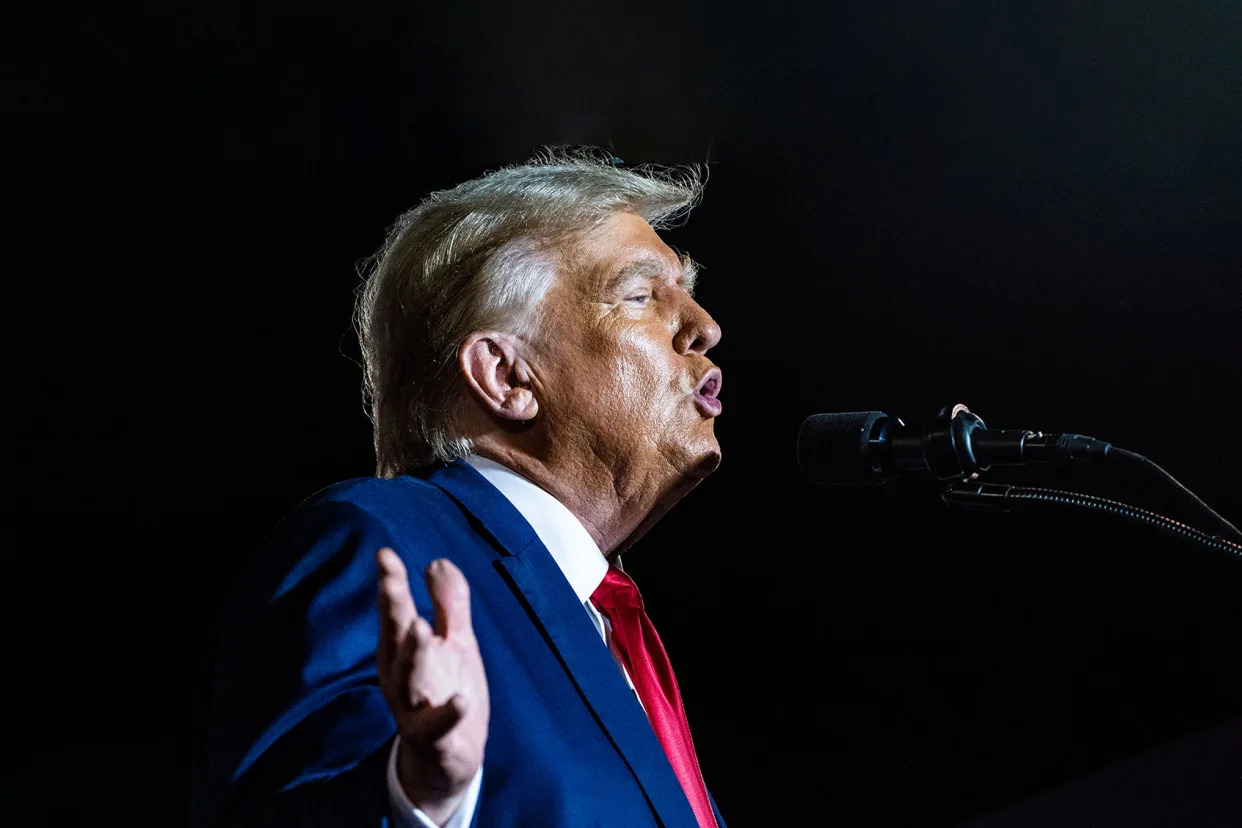
PHOTO: Former President Donald Trump greets the crowd at a campaign rally, Dec. 16, 2023, in Durham, N.H.  (Reba Saldanha/AP)
PHOTO: Former President Donald Trump greets the crowd at a campaign rally, Dec. 16, 2023, in Durham, N.H. (Reba Saldanha/AP)

“Sec. 3. Until the 4th day of July, in the year 1870, all persons who voluntarily adhered to the late insurrection, giving it aid and comfort, shall be excluded from the right to vote for Representatives in Congress and for electors for President and Vice President of the United States,” the original, House-passed version read, according to congressional records of the era.

The Senate spent several days debating the House-passed amendment in the spring of 1866. While the birthright citizenship provisions in Section 1 earned a lot of time in debate, Section 3 was also the subject of an intense back-and-forth on the floor. The transcripts can be read in the Congressional Globe, a forerunner to the Congressional Record.

Sen. Jacob Howard of Michigan, who led the Republicans in debate, insisted that it wouldn’t be enough to deprive the former confederates of their right to vote in federal elections — he wanted them banished from government service altogether.

“I should prefer a clause prohibiting all persons who have participated in the rebellion, and who were over twenty-five years of age at the breaking out of the rebellion, from all participation in offices, either Federal or State, throughout the United States,” Howard said on the Senate floor on May 23, 1866. “I think such a provision would be a benefit to the nation.”

After about a week of discussions with colleagues, Howard offered the Sec. 3 language that was ultimately ratified. Howard’s revision removed specific references to “the” rebellion and added an important qualifier: those who were to be excluded from government service would have to have violated prior oaths to defend the constitution by having “engaged in insurrection or rebellion against [it] or given aid or comfort to the enemies thereof.”

Senators rejected various attempts to re-insert the word “voluntarily,” or to restrict the exclusion to those who violated their oaths during the time they were still serving in office.

There was a great deal of concern voiced in debate that Howard’s exclusion clause might leave the South ungovernable, with so many confederates poised to be disqualified from serving, even in state posts. Opponents expressed fear that the provision might alienate Union-loyal supporters in state legislatures. Nevertheless, the version Howard introduced made it through the entire ratification process and became effective on July 9, 1868.

In 2024, the originalists on the Supreme Court will likely seek to determine whether the ratifiers could have had it in mind 158 years ago that Sec. 3 might not only be applied to the “late insurrection,” as the House-passed version originally had it, but also to any other rebellion that might later take place.

But originalists might take note of what Sen. Peter Van Winkle of West Virginia said as he sought to have the threshold for congressional amnesty in Howard’s version lowered to a simple majority, rather than two-thirds.

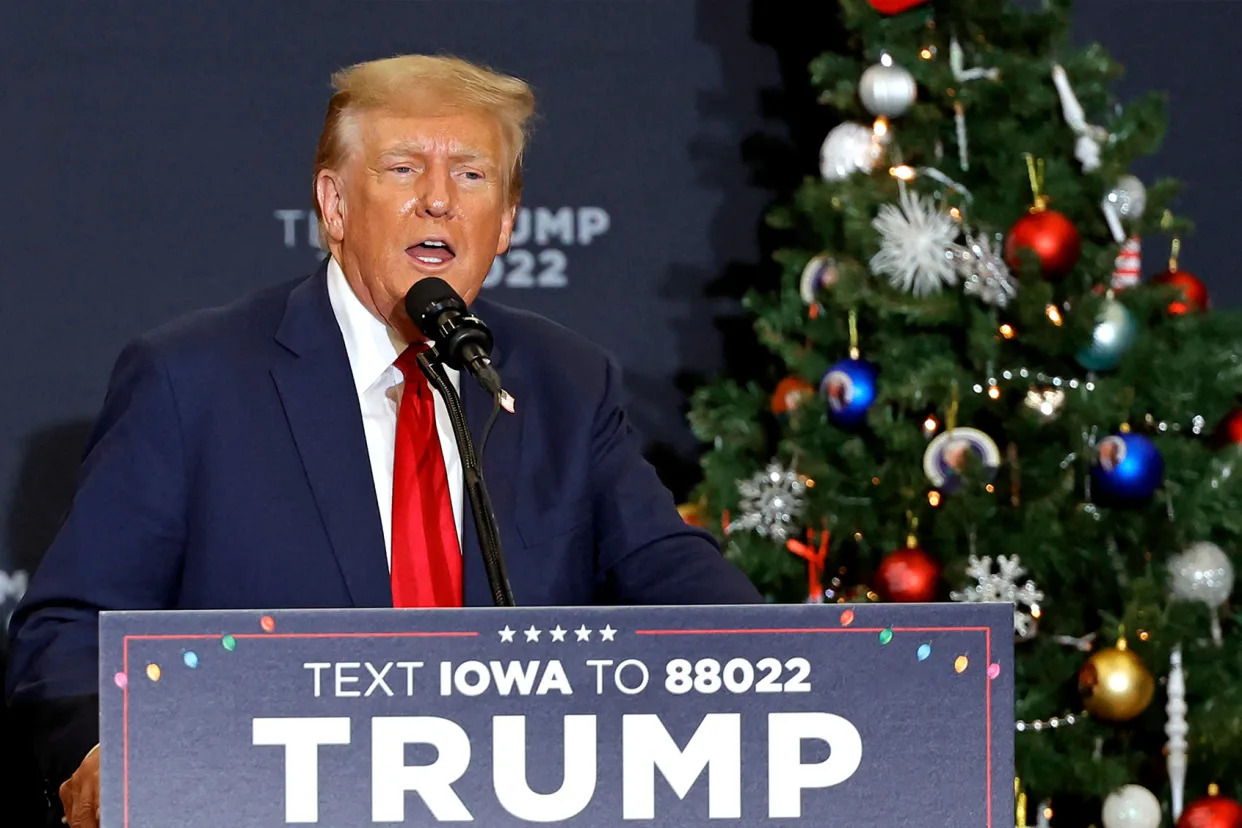
PHOTO: Former President Donald Trump greets the crowd at a campaign rally, Dec. 16, 2023, in Durham, N.H.  (Reba Saldanha/AP)
PHOTO: Former President Donald Trump greets the crowd at a campaign rally, Dec. 16, 2023, in Durham, N.H. (Reba Saldanha/AP)

MORE: Trump ineligible to run for president in Colorado because of Jan. 6, court rules in historic move

“This is to go into our Constitution and to stand to govern future insurrection as well as the present; and I should like to have that point definitely understood,” Van Winkle said at the time.

It’s also worth noting that there was just a single reference in the Senate debate to the fact that the president and vice president were not explicitly mentioned in Howard’s draft as “officer(s) of the United States,” the way members of Congress and state officials had been itemized in the text. Would the disqualification clause of the amendment not cover the top posts in the executive branch?

“Why did you omit to exclude them?” asked Maryland Democratic Sen. Reverdy Johnson.

Maine’s Lot Morrill jumped in to clarify.

“Let me call the Senator’s attention to the words ‘or hold any office, civil or military, under the United States,'” Morrill said, ending the discussion on that point.

Earlier this week, the Colorado Republican Party asked the Supreme Court to answer whether the office of the president is covered by the amendment. Colorado district judge Sarah Wallace ruled last month that it is not. The Colorado Supreme Court overturned her finding last week and a majority of Colorado’s seven justices wrote that the former president “engaged in insurrection.”

Trump is facing more than a dozen tests over his ballot eligibility under the 14th Amendment in various state and federal courts, with challenges or appeals pending in about 15 states.

Michigan, Minnesota and California have kept Trump on their ballots despite efforts to disqualify him.

In a statement Thursday following the decision by Maine Secretary of State Shenna Bellows ruling Trump would not appear on the Republican 2024 ballot, Trump campaign spokesman Steven Cheung said they would “quickly file a legal objection in state court.”

He added that Bellows was a “hyper-partisan Biden-supporting Democrat who has decided to interfere in the presidential election.”

Trump is expected to appeal the decision to disqualify him from the Colorado ballot to the Supreme Court.

“The Colorado Supreme Court issued a completely flawed decision tonight …. We have full confidence that the U.S. Supreme Court will quickly rule in our favor and finally put an end to these un-American lawsuits,” Cheung said in a statement, in part, after the ruling.
Russia’s economy is paralyzed, and Putin’s war machine survives on cannibalizing state-owned firms, Yale researchers say

Business Insider

Russia’s economy is paralyzed, and Putin’s war machine survives on cannibalizing state-owned firms, Yale researchers say

Jason Ma – December 27, 2023

  • Russia’s economy is paralyzed, and its war machine survives by cannibalizing state-owned firms.
  • That’s according to Yale professors pushing back on commentary that Putin is one 2023’s big winners.
  • “We cannot fall into the trap of thinking that all is good for Putin,” they said.

Russia’s economy is paralyzed, and its war machine survives on cannibalizing state-owned firms, two Yale researchers said.

In an op-ed in Foreign Policy on Friday, Jeffrey Sonnenfeld and Steven Tian pushed back on recent commentary that cast Russian President Vladimir Putin as one of 2023’s big winners amid signs of economic resilience.

But Western sanctions and the mass exodus of multinational companies from Russia have inflicted huge costs on the nation’s economy, they said.

“We cannot fall into the trap of thinking that all is good for Putin, and we cannot jettison effective measures to pressure him,” Sonnenfeld and Tian wrote, adding that transferring “worthless” expropriated assets from Western firms to Putin’s cronies didn’t make Russia wealthier.

They also listed several other signs that Russia’s economy had been reeling.

Since Russia invaded Ukraine in early 2022, at least 1 million Russians have fled to other countries, including top tech talent. That’s contributed to a labor shortage that’s nearing 5 million workers and has stoked high inflation.

Meanwhile, $253 billion in private capital left Russia between February 2022 and June 2023, Sonnenfeld and Tian said, citing the Russian central bank’s data.

In addition, Russia has lost access to Western technology and expertise that its companies relied on, while foreign direct investment has nearly dried up.

Making matters worse are strict capital controls that have rendered Russian assets valued in rubles virtually worthless on global markets.

And sanctions that cut off Moscow from much of international finance have prevented Russian companies from issuing any new stock or bond in a Western market.

“Russia, which never supplied any finished goods — industrial or consumer — to the global economy, is paralyzed,” Sonnenfeld and Tian said. “It is not remotely an economic superpower, with virtually all of its raw materials easily substituted from elsewhere. The war machine is driven only by the cannibalization of now state-controlled enterprises.”

Even the Kremlin is bracing for more pain. On Monday, Russia’s central-bank governor, Elvira Nabiullina, said she’s expecting more sanctions.

While Russia has weathered the economic storms of the past two years, Nabiullina warned against thinking the country was “10 feet tall,” a translation from TASS, a state news agency, said. She added that the pressure from sanctions could intensify and the country must prepare for it.

Russian military executes Ukrainian POWs near Robotyne, investigation initiated

The New Voice of Ukraine

Russian military executes Ukrainian POWs near Robotyne, investigation initiated

The New Voice of Ukraine – December 27, 2023

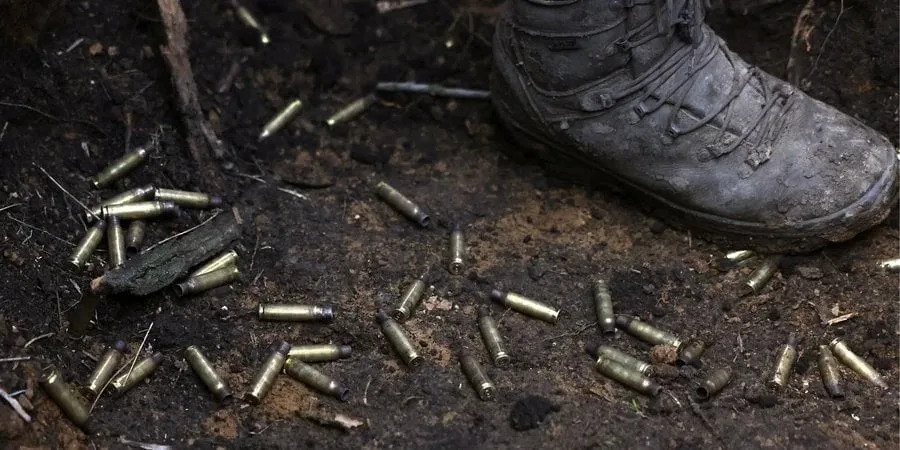
Shell casings on the ground in a trench near the frontline in the east

Russian forces executed Ukrainian prisoners of war near Robotyne in Zaporizhzhya Oblast in December, leading to Ukraine’s Prosecutor General’s Office launching an investigation.

Russian armed forces took three Ukrainian defenders captive during a skirmish with the Ukrainian Defense Forces. An hour later, the captives were shot by the occupiers, and the video surfaced on the internet, Prosecutor General’s Office reported on Telegram on Dec. 27.

Read also: Investigation launched as video reveals Russian troops using Ukrainian POWs as human shields during assaults

The execution by Russians violates Article 3 of the Geneva Convention on the treatment of prisoners of war.

Law enforcement has initiated a criminal case on the fact of violating laws and customs of war, combined with intentional murder.

This is not the first instance where Ukraine has reported the execution of Ukrainian military personnel taken captive by Russian forces. In October, the United Nations documented six such cases in its report.

In early December, a video circulated on social media depicting two Russian military personnel shooting two surrendered Ukrainian soldiers with their hands held behind their heads. This was later confirmed by the Armed Forces of Ukraine. Preliminary findings from investigators place the execution in the vicinity of Stepove village in Pokrovsky district, Donetsk Oblast.

In early September, Ukrainian Prosecutor General Andriy Kostin said that some 90% of Ukrainian POWs had been tortured, raped, threatened with sexual violence, or otherwise ill-treated.

“Terrifying”: Republicans warn court that Trump’s “dangerous argument” opens door to more crimes

Salon

“Terrifying”: Republicans warn court that Trump’s “dangerous argument” opens door to more crimes

Igor Derysh – December 27, 2023

Donald Trump Jabin Botsford/The Washington Post via Getty Images

A group of former Republican federal officials on Tuesday warned a federal court to reject former President Donald Trump’s presidential immunity claim in his D.C. election subversion case.

The group in an amicus brief filed to the Court of Appeals in the District of Columbia warns that ruling that Trump is immune from prosecution would “encourage” future presidents to commit crimes to stay in power.

“Nothing in our Constitution, or any case, supports former President Trump’s dangerous argument for criminal immunity,” the brief said, according to Business Insider.

The Republican authors argued that Trump’s claim that he is immune in the case because he was president at the time is “especially weak.”

“The last thing presidential immunity should do is embolden Presidents who lose re-election to engage in criminal conduct, through official acts or otherwise, as part of efforts to prevent the vesting of executive power required by Article II in their lawfully-elected successors,” they wrote.

Allowing future presidents to commit crimes to alter election outcomes would turn the Constitution “on its head,” they added.

“These terrifying possibilities are real, not remote,” wrote the group, which included former UN Ambassador and Sen. John Danforth, former Reagan Solicitor General Charles Fried, and former CPAC Chairman and Rep. Mickey Edwards.

U.S. District Judge Tanya Chutkan rejected Trump’s immunity argument, writing that the presidency “does not confer a lifelong ‘get-out-of-jail-free’ pass.” The appeals court is set to review the matter after the Supreme Court last week rejected special counsel Jack Smith’s request to fast-track it.

Though the appeals process is likely to delay the case beyond the scheduled March trial date, legal experts widely expect Chutkan’s ruling to hold up.

“It’s kind of ridiculous,” Paul Saputo, a Texas defense lawyer, told The Daily Beast. “We’re not even going to have a 5-4 decision. I don’t think it’s going to be a close call. They realize that in order for them to really keep the country together, it’s got to be pretty unanimous.”

But Michael Waldman, the head of the Brennan Center for Justice at New York University Law School, acknowledged that there is “not much precedent” on post-presidential prosecutions.

“There have been so few presidents as crooked as Trump,” Waldman told the outlet, adding that the Justice Department’s policy against indicting a sitting president relies on the assumption that “you can prosecute someone after-the-fact.”

“Even if the Supreme Court doesn’t want a president always looking over his back… if they want to try to draw a line, what they can say is, ‘This was not just some random act he did while in office,” Waldman explained. “This was his attempt to overthrow the Constitution,” he said. “This was about the presidency. You can’t use presidential immunity… to cling to the presidency.”

Former U.S Attorney Harry Litman told CNN that the D.C. case poses “the biggest threat” to Trump because even with the delays the trial is likely to occur before the election.

“There is still a lot of space, even if we lose a couple months, for that to be tried and go to the jury, conviction, one might think,” he said. “Plenty of time before the election, though; not plenty of time before he secures the nomination. But, that to me, is coming at him with the most seriousness.”

Trump isn’t the real threat to democracy. Christian nationalism is

AZ Central – The Arizona Republic – Opinion

Trump isn’t the real threat to democracy. Christian nationalism is

Herb Paine – December 26, 2023

Less than a year away from what is surely the most fateful presidential election in American history, warnings about the threats to democracy associated with right-wing extremism and Trumpist authoritarianism dominate media’s attention.

Meanwhile, at the local level, a related movement, Christian nationalism, constitutes an equally serious creeping threat to democracy, pluralism and diversity.

Its driving force is the National Association of Christian Lawmakers.

NACL claims to ‘bring Godly change’

NACL’s mission is to “formulate model statutes, ordinances and resolutions based upon a biblical worldview for introduction in cities, states and the Federal government.”

NACL now has a legislative presence in more than 30 states, including Arizona, participating in the drafting of model legislation “to reestablish and protect conservative values in America.”

NACL’s initiatives to Christianize the nation and merge church and state (essentially dismissing the Constitution’s Establishment Clause) are inspired by Christian dominionism.

Its principles are “a world-changing strategy” to “bring Godly change” to America by transforming seven spheres of societal influence: religion, family education, government, media, arts and entertainment, and business.

As this year closes, the evidence grows that state legislatures and local school boards are the fronts on which the movement’s anti-constitutional and anti-democratic policies are being pursued.

How legislation played out in Arizona

In Arizona, the NACL’s objectives are reflected in a pattern of state policy initiatives that extend as far back as 2018 when Senate Bill 1289, modeled after the National Motto Display Act, established “Ditat Deus” (“God enriches”) as Arizona’s state motto.

That may sound benign, but, as a result, whenever ADOT sells an In God We Trust license plate, $17 goes to the Scottsdale-based Alliance Defending Freedom, an anti-choice, anti-LGBTQ+ organization that files lawsuits to enshrine Christianity in government and jurisprudence.

In 2022, House lawmakers proposed House Bill 2507, a bill that the ACLU describes as “religious exemptions on steroids.”

It would a) “give religious organizations blanket immunity from all civil and criminal liability, as long as they claim to be exercising their faith while engaging in the unlawful conduct” and b) forbid the government from imposing fees, penalties, injunctions or damages against these entities.

This year, Rep. David Livingston, who serves as chairman of Arizona NACL, along with 34 other lawmakers, sponsored SB 1600, which would criminalize an abortion clinic, hospital or medical practitioner who fails to “take all medically appropriate and reasonable actions to preserve the life and health of the infant who is born alive,” regardless the newborn’s likelihood of survival.

They pushed book, transgender sports bans

In 2022, lawmakers passed SB 1164, last year’s variation of NACL’s model Heartbeat Bill, that bans abortions after 15 weeks of pregnancy. It makes exceptions for medical emergencies but not for rape or incest.

The constitutionality of that bill is now before the state Supreme Court. However the court decides, the movement’s efforts to intrude upon a woman’s health and family planning choices will continue.

This year’s NACL legislative agenda corresponds to Civics Alliance’s “American Birthright Movement,” which prioritizes a curriculum that exalts America’s past as a Christian nation, its exceptionalism and its achievements, without reference to the nation’s history of repression and exploitation.

When real atheists: Take on fake Christians

Accordingly, Livingston and his fellow legislators introduced measures to:

  • expand school vouchers for religious schools;
  • ban transgender girls and women from participating in girls’/women’s sports teams;
  • ban books in schools that discuss sexuality or race;
  • require schools to disclose information that could “out” LGBTQ+ students to their parents.

They have also introduced or passed legislation to undermine ethical investing strategies by corporations that address racial and gender equality and reproductive rights.

What’s next on Christian nationalist agenda

All these initiatives are a precursor of what is yet to come.

Pending actions include:

  • an amendment to the U.S. Constitution to recognize America’s Christian heritage;
  • the reinstatement of prayer in public schools;
  • the enshrinement of a “Christian nationalist interpretation” of American history in school curricula;
  • immigration restrictions; and
  • stronger governmental actions to restrict “immoral behavior.”

This Christian nationalism agenda is unfolding at school boards throughout the country and in the Phoenix area.

For example, the contract renewals of two teachers in the Peoria Unified School District were challenged earlier this year:

One was on the grounds that the teacher had presented her high school science students with sexually explicit material in the form of a PowerPoint (in fact, information about reproduction in a biology class).

The second had encouraged students and staff to wear transgender colors to celebrate the International Transgender Day of Visibility.

History has revealed the ability of small but tenacious and single-minded groups to overtake the majority.

We are compelled, therefore, amid a global anti-democratic trend, to be vigilant, speak out and vote!

Herb Paine is president of Paine Consulting Services, a social and political commentator, and former congressional candidate. 

Alexei Navalny says he is ‘doing fine’ in special regime Arctic prison

Euro News

Alexei Navalny says he is ‘doing fine’ in special regime Arctic prison

Euronews – December 26, 2023

The imprisoned Russian opposition figure Alexei Navalny, whose fate is causing concern in the West, said on Tuesday that he was “doing well” after a long and “tiring” transfer to a remote prison colony in the Russian Arctic.

His family, who had had no news of him for nearly three weeks, announced on Monday that they had traced him to a penal colony in Kharp, in the Yamalo-Nenets region, beyond the Arctic Circle.

They claim that the Russian authorities are seeking to isolate him even further, a few months before the March 2024 presidential election in which Vladimir Putin‘s victory appears to be a foregone conclusion.

In his first message on social networks since his disappearance, Alexei Navalny said that the 20-day journey to his new place of detention had been “quite tiring”.

“But I’m in good spirits, like Father Christmas”, he added, referring to his “beard” which had grown during the long journey and his new winter clothes suitable for polar temperatures.

“Whatever happens, don’t worry about me. I’m fine. I’m relieved to have finally arrived”, he said.

Alexei Navalny, 47, a charismatic anti-corruption campaigner and Vladimir Putin’s number one enemy, is serving a 19-year prison sentence for “extremism”.

He was arrested in January 2021 on his return from convalescing in Germany for poisoning, which he blames on the Kremlin.

He disappeared at the beginning of December from the prison colony in the Vladimir region, 250 kilometers east of Moscow, where he had been held until then, which meant that he was likely to be transferred to another establishment.

‘Special regime’ colony

According to the verdict for “extremism” against Mr Navalny, the opponent must serve his sentence in a “special regime” colony, the category of establishments where conditions of detention are the harshest and which are usually reserved for lifers and the most dangerous prisoners.

He said he had arrived at his new prison colony on Saturday evening, after a discreet journey and “such a strange itinerary” that he did not expect to be found by his family until mid-January.

“That’s why I was surprised when the cell door opened yesterday and I was told: ‘A lawyer is here for you'”, he said, expressing his gratitude for the “support” he had received.

One of his close associates, Ivan Jdanov, accused the Russian authorities of trying to “isolate” him in the run-up to the presidential election.

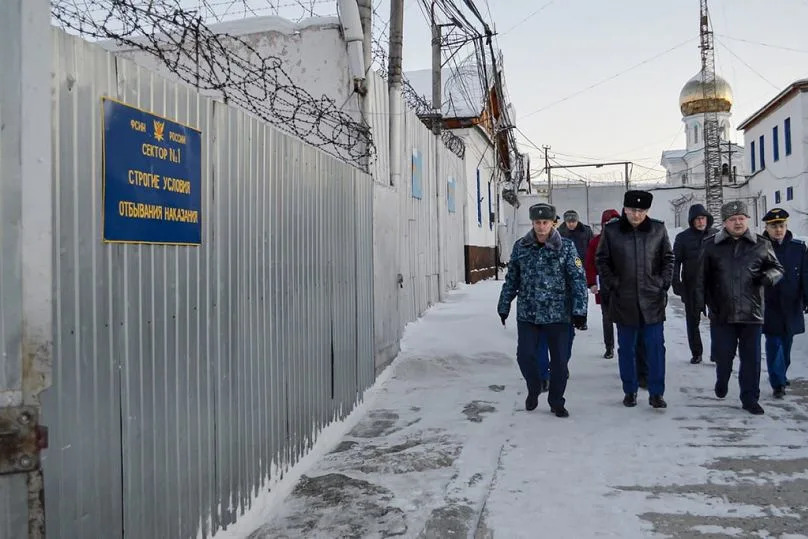
a group of officers walk inside a prison colony in the town of Kharp, in the Yamalo-Nenetsk region.
a group of officers walk inside a prison colony in the town of Kharp, in the Yamalo-Nenetsk region. – AP/Human rights ombudsman of Yamalo-Nenets Autonomous District

According to him, Alexei Navalny is being held in “one of the northernmost and most remote settlements” in Russia, where conditions are “difficult”.

In the West, his disappearance caused concern that was not entirely allayed by his reappearance in a very remote region.

On Monday, the United States said it was “deeply concerned” about Alexei Navalny’s “conditions of detention” and demanded his release.

Mr Navalny’s movement has been methodically eradicated by the authorities in recent years, driving his collaborators and allies into exile or prison.

In early December, the Russian authorities brought new charges of “vandalism” against the anti-corruption activist, which could add another three years to his sentence.

Vladimir Putin is aiming for a new six-year term in the Kremlin in the March presidential election, a term that would take him until 2030, when he turns 78.

Russia’s Navalny describes harsh reality at ‘Polar Wolf’ Arctic prison

Reuters

Russia’s Navalny describes harsh reality at ‘Polar Wolf’ Arctic prison

Andrew Osborn and Olzhas Auyezov – December 26, 2023

FILE PHOTO: Jailed Russian opposition leader Alexei Navalny at a court hearing via video link

MOSCOW (Reuters) -Jailed Russian opposition politician Alexei Navalny on Tuesday confirmed his arrival at what he described as a snow-swept prison above the Arctic Circle and said he was in excellent spirits despite a tiring 20-day journey to get there.

Navalny posted an update on X via his lawyers after his allies lost touch with him for more than two weeks while he was in transit with no information about where he was being taken, prompting expressions of concern from Western politicians.

His spokeswoman said on Monday that Navalny, 47, had been tracked down to the IK-3 penal colony north of the Arctic Circle located in Kharp in the Yamal-Nenets region about 1,900 km (1200 miles) northeast of Moscow.

“I am your new Father Frost,” Navalny wrote jokingly in his first post from his new prison, a reference to the harsh weather conditions there.

“Well, I now have a sheepskin coat, an ushanka hat (a fur hat with ear-covering flaps), and soon I will get valenki (traditional Russian winter footwear).

“The 20 days of the transfer were quite tiring, but I’m still in an excellent mood, as Father Frost should be.”

Navalny’s new home, known as “the Polar Wolf” colony, is considered to be one of the toughest prisons in Russia. Most prisoners there have been convicted of grave crimes. Winters are harsh – and temperatures are due to drop to around minus 28 Celsius (minus 18.4 Fahrenheit) there over the next week.

About 60 km (40 miles) north of the Arctic Circle, the prison was founded in the 1960s as part of what was once the GULAG system of forced Soviet labour camps, according to the Moskovsky Komsomolets newspaper.

Kira Yarmysh, his spokeswoman, has said she believes the decision to move him to such a remote and inhospitable location was designed to isolate him, make his life harder, and render it more difficult for his lawyers and allies to access him.

Navalny, who thanked his supporters for their concern about his welfare during his long transfer, said he had seen guards with machineguns and guard dogs and had gone for a walk in the exercise yard which he said was located in a neighbouring cell, the floor of which he said was covered with snow.

Otherwise, he said he had just seen the perimeter fence out of a cell window. He said he had also seen one of his lawyers.

Navalny, who denies all the charges he has been convicted of, says he has been imprisoned because he is viewed as a threat by the Russian political elite.

The Kremlin says he is a convicted criminal and has portrayed him and his supporters as extremists with links to the CIA intelligence agency who they say is seeking to destabilise Russia.

Navalny earned admiration from Russia’s disparate opposition for voluntarily returning to Russia in 2021 from Germany, where he had been treated for what Western laboratory tests showed was an attempt to poison him with a nerve agent.

In his social media post, he told supporters he was unfazed by what he was facing.

“Anyway, don’t worry about me. I’m fine. I’m awfully glad I finally made it here,” said Navalny.

(Reporting by Andrew Osborn and Olzhas AuyezovEditing by Angus MacSwan, William Maclean)

Trump’s Christmas post screams “intervention”: “MAY THEY ROT IN HELL”: Trump blasted for hitting “new low” in Christmas Truth Social meltdown

Salon

“MAY THEY ROT IN HELL”: Trump blasted for hitting “new low” in Christmas Truth Social meltdown

Gabriella Ferrigine – December 26, 2023

Donald Trump KAMIL KRZACZYNSKI/AFP via Getty Images

Former President Donald Trump spent much of the holiday weekend firing off posts from his Truth Social platform, haranguing President Joe Biden and special counsel Jack Smith, and bemoaning a perceived fall from grace of “our once great U.S.A.”

Trump on Christmas Eve shared a series of messages targeting the committee investigating the Jan 6 Capitol insurrection and the “DERANGED” Smith.

“JOE BIDEN’S MISFITS & THUGS, LIKE DERANGED JACK SMITH, ARE COMING AFTER ME,” Trump wrote. “AT LEVELS OF PERSECUTION NEVER SEEN BEFORE IN OUR COUNTRY???”

“WHY DID THE UNSELECT JANUARY 6th COMMITTEE OF POLITICAL HACKS & THUGS ILLEGALLY DELETE & DESTROY ALL OF THE EVIDENCE THEY USED TO WRITE THEIR FAKE REPORT,” the ex-president fumed on Sunday evening. “WHY DO THEY NOT SHOW THAT I USED THE WORDS ‘PEACEFULLY & PATRIOTICALLY’ IN MY SPEECH? THEY ACTUALLY PRETENDED THAT THESE WORDS WERE NEVER UTTERED. CROOKED POLITICS!!!”

“THEY SPIED ON MY CAMPAIGN,” Trump continued, “LIED TO CONGRESS, CHEATED ON FISA, RIGGED A PRESIDENTIAL ELECTION, ALLOWED MILLIONS OF PEOPLE, MANY FROM PRISONS & MENTAL INSTITUTIONS, TO INVADE OUR COUNTRY, SCREWED UP IN AFGHANISTAN, & JOE BIDEN’S MISFITS & THUGS, LIKE DERANGED JACK SMITH, ARE COMING AFTER ME, AT LEVELS OF PERSECUTION NEVER SEEN BEFORE IN OUR COUNTRY??? IT’S CALLED ELECTION INTERFERENCE. MERRY CHRISTMAS!”

Trump’s Christmas Eve invective followed a major blow to the special counsel’s team, in which the Supreme Court rejected a request to hasten arguments on whether Trump had presidential immunity from federal prosecution for crimes he is accused of commuting while in the White House in election subversion case.

On Monday, the ex-president continued his tirade.

“Merry Christmas to all, including Crooked Joe Biden’s ONLY HOPE, Deranged Jack Smith, the out of control Lunatic who just hired outside attorneys, fresh from the SWAMP (unprecedented!), to help him with his poorly executed WITCH HUNT against ‘TRUMP’ and ‘MAGA,’” he wrote.

“Included also are World Leaders,” Trump added, “both good and bad, but none of which are as evil and ‘sick’ as the THUGS we have inside our Country who, with their Open Borders, INFLATION, Afghanistan Surrender, Green New Scam, High Taxes, No Energy Independence, Woke Military, Russia/Ukraine, Israel/Iran, All Electric Car Lunacy, and so much more, are looking to destroy our once great USA. MAY THEY ROT IN HELL. AGAIN, MERRY CHRISTMAS!”

As noted by the Daily Beast, Trump’s Christmas post included a reference to Smith’s addition of attorney Michael Dreeben — a former member of special counsel Bob Mueller’s team who has argued before SCOTUS more than one hundred times — to his legal team.

MSNBC’s “Morning Joe” panel on Tuesday sharply criticized Trump’s “anger” and “bad faith attacks” to close out the year.

“I think it shows that these indictments and the civil case, despite his pretense otherwise, has gotten to him, because he’s reacting and responding in a way of no one projecting self-confidence or like this is nothing,”  panelist Al Sharpton said.

“I also think it shows an inner kind of anger and displacement that he has, because who spends the holiday with this kind of venom, particularly when he is a guy that claims to be this self-confident, self-made guy with this kind of darkness, unless you are just that kind of dark person,” he continued.

“We’ve certainly gotten used to Trump’s unorthodox holiday messages, ‘the haters,’ but this one hit a new low, even for him,” host Jonathan Lemire agreed.

Dictator On Day One: The Executive Orders That Trump Would Issue From The Start

TPM

Dictator On Day One: The Executive Orders That Trump Would Issue From The Start

Josh Kovensky – December 26, 2023

Donald Trump has said that he would be a “dictator” on his first day in office.

And a review of his campaign’s plans and messaging shows part of what that may mean: a sweeping range of day-one executive orders aimed at remaking the Constitution and the federal government as we know it.

On his first days in office, Trump is planning on issuing orders which would end birthright citizenship, give himself the authority to fire tens of thousands of federal civil servants, and force federal bureaucrats to obey culture war dictates.

Through executive action, Trump plans to proclaim extreme new interpretations of baseline provisions of the Constitution, dramatically expanding the reach of presidential authority while upturning principles of law and American society, like birthright citizenship, that for decades have been taken for granted. Many of the proposed orders are likely to spark court fights, setting up legal battles over bedrock issues destined for a 6-3 conservative Supreme Court.

Other proposed day-one orders lean into the culture wars with real-world consequences, like one which would bar federal agencies from running programs supporting gender-transition education. Another, less seriously, would reinstate Trump’s vaunted “National Garden of American Heroes,” a park which would feature sculptures of Irving Berlin, William F. Buckley, Abraham Lincoln, Alex Trebek, Ruth Bader Ginsburg, Shirley Temple, and others.

There isn’t anything new about presidents issuing rafts of executive orders on their first day in office. But while new administrations typically issue orders which set new policy and proclaim the values of the new presidency, what distinguishes the Trump plans is the ambition of what he’s proposing.

“The substance and content of some of these proposals go far beyond what presidents have done with executive orders,” Blake Emerson, a law professor at UCLA who studies executive power, told TPM.

The proposed orders come in several buckets:

  • Executive orders which strike at key constitutional questions
  • Reissuing and expanding executive orders from his first term
  • Culture war proclamations
  • Rescinding Biden-era executive orders

A Trump campaign spokesman did not return TPM’s request for comment.

Trump’s campaign, along with a cottage industry of MAGA think tanks, have laid out what they believe his day-one agenda should be in part through what they call Agenda47, the closest thing the Trump campaign has to a platform.

At the center is the most extreme measure: an executive order aimed at rescinding birthright citizenship.

The Trump campaign describes the proposal in conclusive language, saying that they’ve already arrived at the “correct interpretation” of the 14th Amendment. Under that interpretation, to be described in a day-one executive order, the children of undocumented immigrants and tourists would no longer receive citizenship. Federal agencies, like the Social Security Administration, would be ordered to stop issuing passports, social security numbers, and other markers of citizenship under the order.

“They must go back,” Trump said in a statement accompanying the announcement, referring to the children of illegal immigrants.

The order would likely be met with near-instantaneous legal challenges, but, Emerson said, would be “unprecedented” in its use of executive power: having the White House proclaim, literally by fiat, a new interpretation of the Constitution.

“He can’t change the Constitution with an exec order,” John Woolley, a professor at UC-Santa Barbara who studies executive orders, told TPM. “But he can make things difficult.”

Trump has committed to a number of culture war executive orders as well. One would ban gender transition education in federal agencies, another would ban “ESG investments,” yet another would reverse a Biden executive order promoting diversity. One proposal from the Heritage Foundation-backed Project 2025 envisions an order banning government programs from supporting the teaching of “critical race theory.”

These may seem like ill-defined values statements, but Trump has said that he would issue another order on day one: a broadened version of his Schedule F proclamation from late 2020. In non-legalese, that’s an executive order which would empower him to fire any federal civil servant with policymaking responsibilities for any reason; a category of people which reaches into the tens of thousands.

Trump has framed it as a plan to “shatter the deep state” on the first day, an explicitly political undertaking.

The result, some civil service experts say, could be the mass exodus of professionals. That would lead to some politicization, but, more swiftly, a decapitation of the functioning of several government agencies.

It’s genuinely unclear from the plans that the Trump campaign has released which government functions they want preserved, in order to use for their own ends, and which they want incapacitated.

One promised day-one executive order, for example, calls for a reinterpretation of the 1974 Congressional Budget Control and Impoundment Act, a bedrock law to the modern budgeting system which, among other things, mandates that the executive branch use funding allocated by the legislative.

Trump himself ran afoul of this law in 2019, when he withheld money that Congress allocated to Ukraine as part of a political extortion scheme to coerce Kyiv into damaging Trump’s then-opponent, Joe Biden. Now, he’s proposing to order federal agencies to use the law to identify where programs can be cut, and push to “overturn the limits” that the law places on the executive.

Other plans, including one put out by the Heritage Foundation, would see Trump issue a day-one executive order gutting the Environmental Protection Administration. That would include “explicit language requiring reconsideration of the agency’s structure with reference to fulfilling its mission to create a better environmental tomorrow with clean air, safe water, healthy soil, and thriving communities.”

Many of these proposals would likely run into a buzzsaw of litigation. Federal employees, their unions, and good government groups would sue to block some of them from going into effect.

But in the meantime, Trump would likely be able to unleash massive shifts in policy. One proposal, for example, would ban the federal government from supporting efforts to fight “dis” or “mis” information; another would bring back the travel ban on Muslim countries.

Emerson, the UCLA professor, said that many of them appear to work in tandem. He described the civil service firing order, for example, to TPM as a one-two punch: executive orders which lay out bans on right-wing culture war hobbyhorses, and an executive order with the muscle to fire people who disobey.

“You have a really potent combination where people could be getting fired from civil service posts because they’re not toeing the line on critical race theory, or what have you,” Emerson said.

Instead of $32,000, crippled Russian soldier given two buckets of carrots, onions

The New Voice of Ukraine

Instead of $32,000, crippled Russian soldier given two buckets of carrots, onions — photo

The New Voice of Ukraine – December 26, 2023

A Russian soldier, who was seriously injured in the war against Ukraine, was compensated by local authorities in the form of vegetables

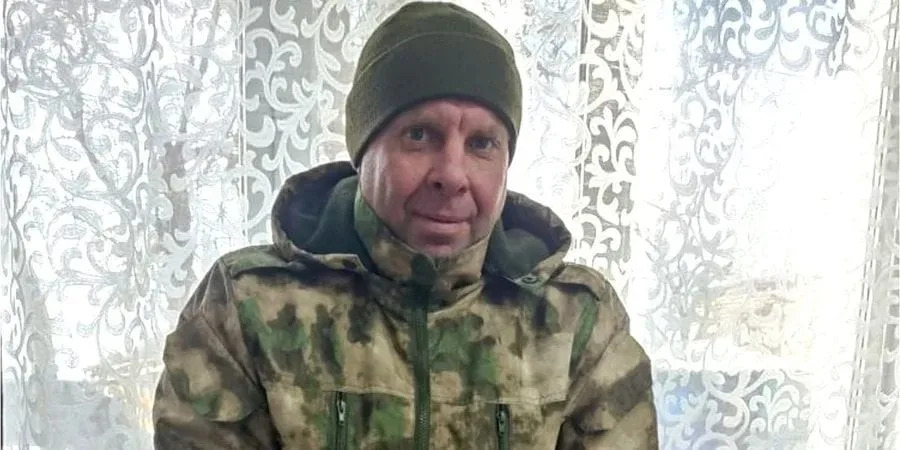
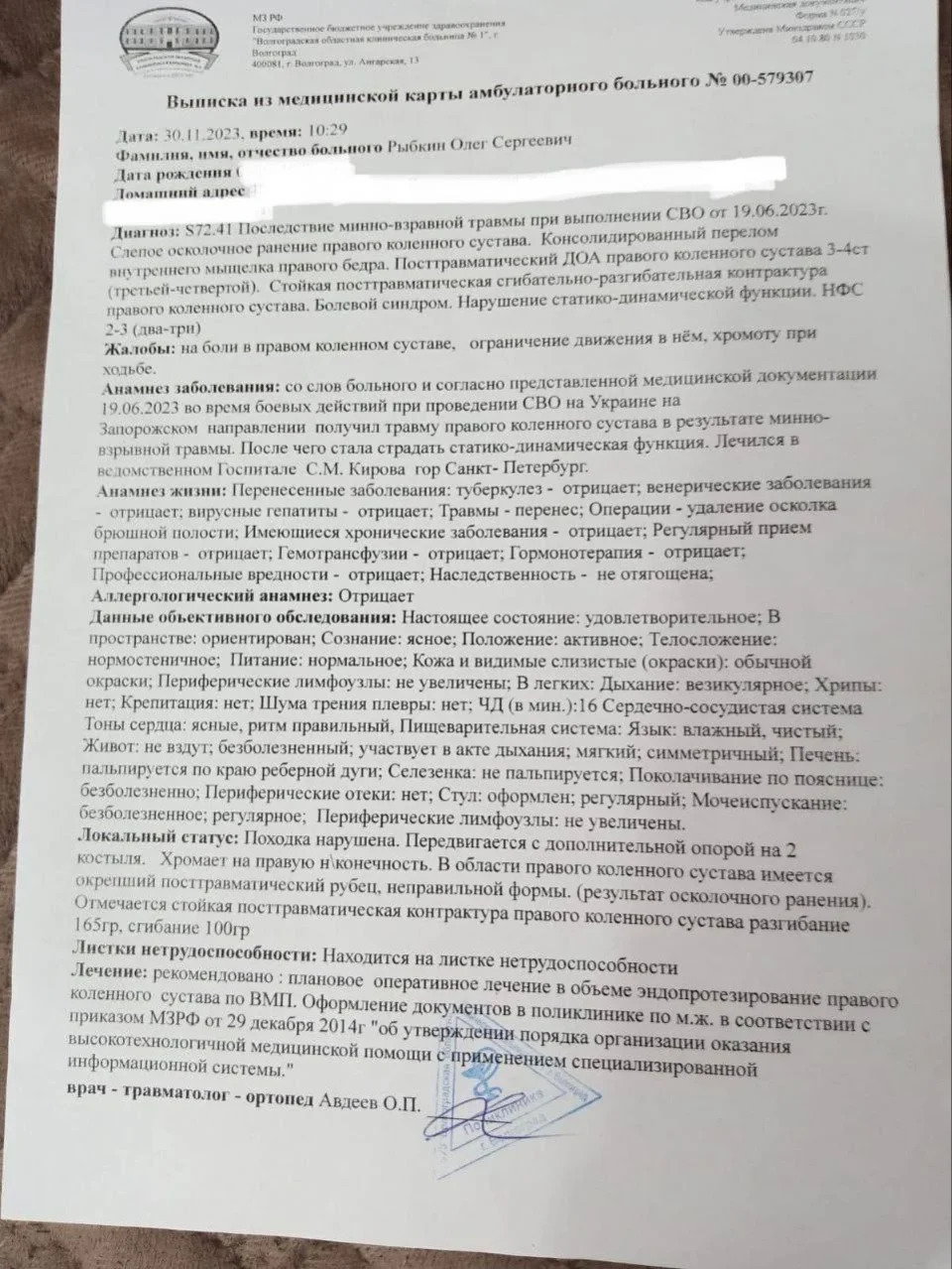
A Russian soldier from Volgograd Oblast, who was seriously injured fighting against Ukraine, has been compensated by local authorities with kilograms of vegetables, the Telegram news channel iStories reported on Dec. 26.

Oleg Rybkin, 45-years-old, was mobilized on Sept. 25, 2022 and found himself near the village of Robotyne, Zaporizhzhya Oblast, just as the Ukrainian Armed Forces liberated the settlement.

Read also: CNN reports evidence Russian troops in Ukraine may be fueled by drugs in grueling battles

He sustained injuries to his abdomen, liver, kidneys, and legs during the following battle.

“He has severe pain, his knee does not bend, and he cannot walk without crutches. He is on painkillers and sleeping pills,” his wife said.

<span class="copyright">pointmedia.io</span>
pointmedia.io

Rybkin reportedly needs to have his knee joint replaced but the authorities are not interested in helping him.

Read also: Former Russian soldier ready to testify about Russian crimes in Ukraine

Indeed, Rybkin was supposed to be entitled to compensation worth 3 million rubles (approximately $32,000) and receive a life pension.

However the only “help” that he and his family received was two buckets of carrots and a bag of onions.

<span class="copyright">pointmedia.io</span>
pointmedia.io

“I was at work, they brought it to my mother-in-law,” Rybak’s wide said.

“Local farmers — those who grow it here — are obliged by the administration to ‘help’ (in quotation marks).”

Read also: Photos show remains of Russian IFV carrying dummy soldiers, revealing new deception tactics used

However, she was actually lucky, as the residents of Rostov Oblast only received a brick with an ante-mortem message instead of their son, who died in Ukraine.

<span class="copyright">pointmedia.io</span>
pointmedia.io