‘Lethal’ Chinese Gifts to Putin Could Spark ‘New Cold War’ With U.S.
Jose Pagliery – February 19, 2023
Sputnik/Sergey Bobylev/Pool via REUTERS
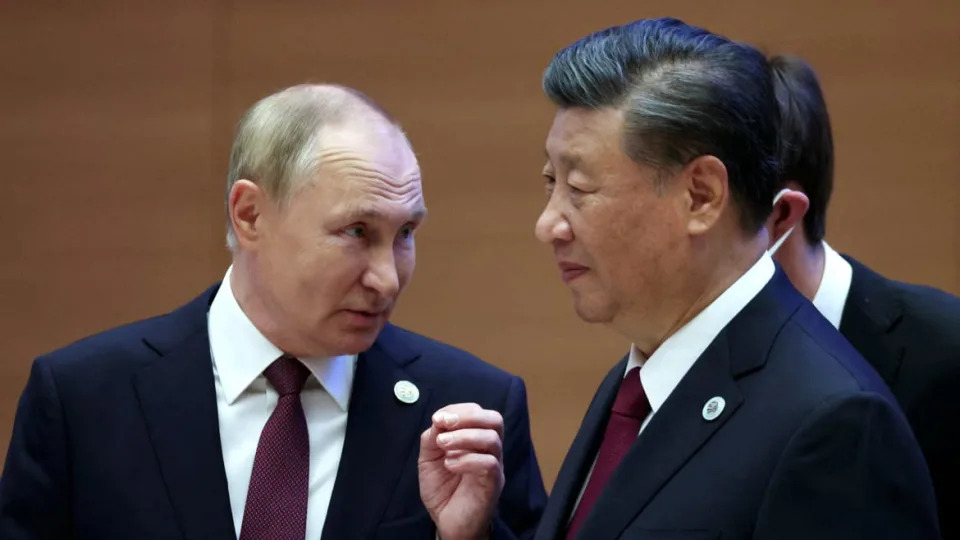
China is now considering a new escalation against the West by delivering weapons and ammunition to Russia in its war against Ukraine—crossing a red line that could spark a “new Cold War,” U.S. Secretary of State Antony Blinken revealed on taped Sunday morning news programs.
The claim, if true, would be a startling change that would squarely position China on Russia’s side, violating the U.S.-led international pressure campaign to isolate and punish Russian President Vladimir Putin for his expansionary military campaign.
“We see China considering this. We have not seen them cross that line,” he said. “We are concerned that this is something that China was not doing for many months but may be considering now.”
On CBS and NBC, Blinken said the United States is only now sharing this intelligence with allies, hinting that China’s sudden shift is a relatively new development.
Blinken spoke from Munich, Germany, where he is attending the Münchner Sicherheitskonferenzan, an annual international security meeting that’s been going on since the height of the last Cold War in 1963.
Although he would not clarify what kinds of weapons China is preparing to send Russia’s way, he did classify it as “lethal aid” that would include arms and ammunition—and possibly more. He did, however, note that the Chinese Communist Party’s approach to economics allows little differentiation between the government and corporations there, a hint that could mean that weapon deliveries might come from Chinese companies that would be “separate” from Chinese officials themselves.
Discussing the matter with CBS “Face the Nation” moderator Margaret Brennan, the American secretary of state said that China’s recent moves on Russia—coupled with the recent Chinese spy balloon debacle, poses a major threat to world stability.
Blinken warned about the danger of “veering into conflict” with “a new Cold War,” a claim he also made on NBC’s “Meet the Press” with moderator Chuck Todd. Blinken said he cautioned China’s top diplomat, Wang Yi, about the dangers when they met on Saturday in Munich.
He stressed “the importance of not crossing that line” and said “it would have serious consequences.”
Cemetery workers pre-digging graves in anticipation of more military funerals at a cemetery in Kharkiv, last month.Credit…Lynsey Addario for The New York Times
As we approach the first anniversary of Russia’s brutal and unprovoked invasion of Ukraine, two ominous trends are emerging at once. First, Russia is doubling down. It’s pouring fresh troops into Ukraine and launching new offensive operations.
Second, poll after poll after poll demonstrate that American support for Ukraine is slipping away. While Americans have sympathy for Ukraine, declining percentages are willing to spend American resources to keep Ukraine in the fight.
Yet the outcome of the war is simply too important — to America as well as Ukraine — to allow our support to falter. On the war’s anniversary it’s time for a concerted effort to persuade Americans of a single idea: We should support Ukraine as much as it takes, as long as it takes, until the Russian military suffers a decisive, unmistakable defeat.
Instead, domestic agreement is fraying. As The Washington Post reported last week, the Biden administration is telling Ukraine there are no guarantees of future support, and it’s “raising the pressure” on Ukraine “to make significant gains on the battlefield” in the short term, while Western aid still flows.
According to The Post, the administration is even qualifying the meaning of President Biden’s State of the Union pledge to support Ukraine “as long as it takes.” It quotes an administration official saying, “‘As long as it takes’ pertains to the amount of conflict,” but “it doesn’t pertain to the amount of assistance.”
This is a dangerous notion. Despite the remarkable success of the Ukrainian military thus far, pushing Ukraine to mount a premature offensive could have catastrophic results. It will take time for Ukraine to receive the deliveries of advanced Western tanks, for example. And deploying those tanks before Ukrainian soldiers are fully trained and before Ukraine has a maintenance infrastructure in place could result in unacceptable losses and squandered resources.
Compounding the challenge, the modest numbers of new Western weapons may not be enough to decisively break Russian lines, especially given that Russia has had time to build an “immense” network of fortifications in the Donbas region. Ukraine needs both quality and quantity to defeat the Russian military, and while dribbling small numbers of tanks, infantry fighting vehicles and other weapons into the fight is much better than nothing, it is likely to be far short of adequate for the demands of combat on this scale. Ukraine, after all, is confronting one of the world’s great powers — even if it is not quite as great as we may have believed a year ago.
Rather than press Ukraine to undertake offensive operations, the administration and Democratic and Republican congressional allies must impress upon the American public the extraordinary high stakes for America in the outcome of a war fought so many thousands of miles from our shores.
One of the miracles of modern life is that it’s been generations since the great powers have gone to war against one another. The humanitarian catastrophes of the first two world wars are the stuff of history books for everyone but the last surviving veterans of World War II. But those same history books teach us that large-scale European conflicts implicate vital American interests and draw Americans into deadly conflict. There is no better way to prevent American men and women from dying in European battlefields than helping Ukraine defeat Russia and thereby deterring a general European war.
What more, if Russia defeats Ukraine, a dangerous precedent will be set. Nuclear-armed powers will prove they can invade smaller foes and then rattle the nuclear saber to deter an effective response, creating a one-way ratchet toward territorial aggression. Ironically enough, the effort to placate Russia to avoid escalation is likely to result in more aggression from nuclear-armed foes.
Moreover, if Russia ultimately defeats Ukraine, Vladimir Putin will have a message for his people: Russia confronted Ukraine and NATO, and Russia won. Russian victory will have a galvanizing impact on illiberal and authoritarian movements in the West. Western retreat from a winnable war will prove in many quarters the Russian critique of the “woke” West, that it is simply too self-indulgent, decadent and individualistic to survive and thrive.
Make no mistake, this is a winnable war. Yes, Ukraine alone cannot withstand Russia over the long term. It lacks the personnel and the industrial base. But American industrial outputdwarfs Russia’s, and our superior arms can help address the personnel gap. Better weapons can overcome the challenge of fewer people. America, the arsenal of democracy, has the capacity to help Ukraine win even a long fight. The question is whether we have the will.
American defenders of Ukraine will have to make their case, repeatedly, persuasively, and firmly. They’ll have to overcome not only the natural reluctance of the American people to spend large sums abroad when there are undeniable problems at home, but also a vicious and vitriolic new right that hates the Ukrainian cause, and is spewing that hatred to an audience millions strong.
Consider these words, from prominent right-wing Americans, when President Volodymyr Zelensky of Ukraine addressed Congress last December. Tucker Carlson of Fox News derided Zelensky for wearing fatigues in the Capitol, saying he “dressed like the manager of a strip club.” The popular right-wing podcaster Candace Owens said, “I just want to punch him” in response to a video of Zelensky thanking Americans for their support. Not to be outdone, Donald Trump Jr. called Zelensky an “international welfare queen.”
Insults are not arguments. But insults can be answered by arguments. And the argument for defeating Russian aggression, destroying the offensive capability of the Russian military, and thereby potentially deterring future aggression in Ukraine and beyond, are overwhelming. Ukraine needs American aid to win its war, and America can help Ukraine win while expending a fraction of the cost of the American defense budget.
In 1990, as the United States and its allies mobilized their militaries to respond to Saddam Hussein’s brutal and unprovoked invasion of Kuwait, Prime Minister Margaret Thatcher of Britain told President George H.W. Bush, “This is no time to go wobbly.” At that moment, American troops and American treasure were on the line. Now only American treasure is at stake. But the same words apply — they apply to President Biden, to Congress, and, crucially, to the American people. This is no time to go wobbly.
It’s awful to say this about any war, given the horrific loss of life, but this one is winnable. And Russian aggression cannot prevail.
One Year Into War, Putin Is Crafting the Russia He Craves
In Ukraine, President Vladimir V. Putin’s invasion has met setback after setback. But its effect at home has been very different.
Anton Troianovski from Berlin, and Valerie Hopkins fromMoscow
February 19, 2023
A patriotic mural in Moscow dedicated to victory in World War II. The Kremlin is tapping into Russian pride in the nation’s victory over the Nazis to demonize Ukraine.
Photographs by Nanna Heitmann
The grievances, paranoia and imperialist mind-set that drove President Vladimir V. Putin to invade Ukraine have seeped deep into Russian life after a year of war — a broad, if uneven, societal upheaval that has left the Russian leader more dominant than ever at home.
Schoolchildren collect empty cans to make candles for soldiers in the trenches, while learning in a new weekly class that the Russian military has always liberated humanity from “aggressors who seek world domination.”
Museums and theaters, which remained islands of artistic freedom during previous crackdowns, have seen that special status evaporate, their antiwar performers and artists expunged. New exhibits put on by the state have titles like “NATOzism” — a play on “Nazism” that seeks to cast the Western military alliance as posing a threat as existential as the Nazis of World War II.
Many of the activist groups and rights organizations that have sprung up in the first 30 years of post-Soviet Russia have met an abrupt end, while nationalist groups once seen as fringe have taken center stage.
As Friday’s first anniversary of the invasion approaches, Russia’s military has suffered setback after setback, falling far short of its goal of taking control of Ukraine. But at home, facing little resistance, Mr. Putin’s year of war has allowed him to go further than many thought possible in reshaping Russia in his image.
Schoolchildren during a tour of the Victory Museum in Moscow, dedicated to Russia’s sacrifices and ultimate victory over Nazi Germany in World War II.An exhibit at the Victory Museum titled “Everyday Nazism” includes artifacts from Ukraine’s Azov Battalion as evidence for the false assertion that Ukraine is committing “genocide” against Russians.
“Liberalism in Russia is dead forever, thank God,” Konstantin Malofeyev, an ultraconservative business tycoon, bragged in a phone interview on Saturday. “The longer this war lasts, the more Russian society is cleansing itself from liberalism and the Western poison.”
That the invasion has dragged on for a year has made Russia’s transformation go far deeper, he said, than it would have had Mr. Putin’s hopes for a swift victory been realized.
“If the Blitzkrieg had succeeded, nothing would have changed,” he said.
The Kremlin for years sought to keep Mr. Malofeyev at arm’s length, even as he funded pro-Russian separatists in eastern Ukraine and called for Russia to be reformed into an empire of “traditional values,” free of Western influence. But that changed after the invasion, as Mr. Putin turned “traditional values” into a rallying cry — signing a new anti-gay law, for instance — while styling himself as another Peter the Great retaking lost Russian lands.
A Russian Mole in Germany?: A director at Germany’s spy service was arrested on suspicion of passing intelligence to Russia. German officials and allies worry just how deep the problem goes.
Most important, Mr. Malofeyev said, Russia’s liberals have either been silenced or have fled the country, while Western companies have left voluntarily.
That change was evident last Wednesday at a gathering off the traffic-jammed Garden Ring road in Moscow, where some of the most prominent rights activists who have remained in Russia came together for the latest of many recent farewells: The Sakharov Center, a human rights archive that was a liberal hub for decades, was opening its last exhibit before being forced to shut under a new law.
The center’s chairman, Vyacheslav Bakhmin, once a Soviet dissident, told the assembled crowd that “what we just couldn’t have imagined two years ago or even a year ago is happening today.”
An exhibition of military equipment in Moscow in August.The exhibition included toy tanks for children to drive.
“A new system of values has been built,” Aleksandr Daniel, an expert on Soviet dissidents, said afterward. “Brutal and archaic public values.”
A year ago, as Washington warned of an imminent invasion, most Russians dismissed the possibility; Mr. Putin, after all, had styled himself as a peace-loving president who would never attack another country. So after the invasion started — stunning some of the president’s closest aides — the Kremlin scrambled to adjust its propaganda to justify it.
It was the West that went to war against Russia by backing “Nazis” who took power in Ukraine in 2014, the false message went, and the goal of Mr. Putin’s “special military operation” was to end the war the West had started.
In a series of addresses aimed at shoring up domestic support, Mr. Putin cast the invasion as a near-holy war for Russia’s very identity, declaring that it was fighting to prevent liberal gender norms and acceptance of homosexuality from being forced upon it by an aggressive West.
The full power of the state was deployed to spread and enforce that message. National television channels, all controlled by the Kremlin, dropped entertainment programming in favor of more news and political talk shows; schools were directed to add a regular flag-raising ceremony and “patriotic” education; the police hunted down people for offenses like antiwar Facebook posts, helping to push hundreds of thousands of Russians out of the country.
“Society in general has gone off the rails,” Sergei Chernyshov, who runs a private high school in the Siberian metropolis of Novosibirsk, said in a phone interview. “They’ve flipped the ideas of good and evil.”
Students visiting the Victory Museum wore green army caps.Fireworks burst over a military music festival in Red Square in August.
Mr. Chernyshov, one of the few Russian school heads who has spoken out against the war, described the narrative of Russian soldiers fighting in defense of their nation as so easily digestible that much of society truly came to believe it — especially since the message meshed seamlessly with one of the most emotionally evocative chapters of Russian history: their nation’s victory in World War II.
A nationwide campaign urging children to make candles for soldiers has become so popular, he said, that anyone questioning it in a school chat group might be called a “Nazi and an accomplice of the West.”
At the same time, he argued, daily life has changed little for Russians without a family member fighting in Ukraine, which has hidden or assuaged the costs of the war. Western officials estimate that at least 200,000 Russians have been killed or wounded in Ukraine, a far more serious toll than analysts had predicted when the war began. Yet the economy has suffered much less than analysts predicted, with Western sanctions having failed to drastically reduce average Russians’ quality of life even as many Western brands departed.
“One of the scariest observations, I think, is that for the most part, nothing has changed for people,” Mr. Chernyshov said, describing the urban rhythm of restaurants and concerts and his students going on dates. “This tragedy gets pushed to the periphery.”
In Moscow, Mr. Putin’s new ideology of war is on display at the Victory Museum — a sprawling hilltop compound dedicated to the Soviet Union’s defeat of Nazi Germany. One new exhibit, “NATOzism,” declares that “the purpose of creating NATO was to achieve world domination.” A second, “Everyday Nazism,” includes artifacts from Ukraine’s Azov Battalion, which has far-right connections, as evidence for the false assertion that Ukraine is committing “genocide” against Russians.
“It was scary, creepy and awful,” one patron named Liza, 19, said of what the exhibit had shown her, declining to give her last name because of the political sensitivity of the subject. She said she was distressed to learn of this behavior by the Ukrainians, as presented by Russian propaganda. “It shouldn’t be that way,” she said, signaling her support for Mr. Putin’s invasion.
Hundreds of students were visiting on a recent afternoon, and primary schoolchildren marched in green army caps as their chaperone called out, “Left, left, one, two, three!” and addressed them as “soldiers.” In the main hall, the studio of Victory TV — a channel started in 2020 to focus on World War II — was filming a live talk show.
A priest blessing men who had just been conscripted into the Russian Army at a recruiting office in Moscow in November.Families of conscripted Russian men saying farewell.
“The framework of the conflict helped people to come to terms with it,” said Denis Volkov, the director of the Levada Center, an independent pollster in Moscow. “The West is against us. Here are our soldiers, there are the enemy soldiers, and in this framework, you have to take sides.”
Weeks after launching his invasion, Mr. Putin declared that Russia faced a much-needed “self-purification of society.” He has glibly wished “all the best!” to Western businesses that have left the country and said their departures created “unique development opportunities” for Russian companies.
But in Khabarovsk, a city on the Chinese border in Russia’s Far East, Vitaly Blazhevich, a local English teacher, says the locals miss Western brands like H&M, the clothing retailer. When it came to the war, he went on, the dominant emotion was one of passive acceptance and the hope that things would end soon.
“People are nostalgic for what turned out to have been the good times,” he said.
Mr. Blazhevich taught at a Khabarovsk state university until he was forced to resign on Friday, he said, for criticizing Mr. Putin in a YouTube interview with Radio Liberty, the American-funded Russian-language news outlet. They were the kind of comments that would probably not have been punished before the war. Now, he said, the government’s repression of dissent “is like a steamroller” — “everyone is just being rolled into the asphalt.”
Mr. Malofeyev, the conservative tycoon, said Russia still needed another year “for society to cleanse itself completely from the last fateful years.” He said that anything short of “victory” in Ukraine, complete with a parade in Kyiv, could still cause some of the last year’s transformation to be undone.
“If there is a cease-fire in the course of the spring,” he said, “then a certain liberal comeback is possible.”
In Moscow, at the farewell event at the Sakharov Center, some of the older attendees noted that in the arc of Russian history, a Kremlin crackdown on dissent was nothing new. Yan Rachinsky, chairman of Memorial, the rights group forced to disband in late 2021, said the Soviets banned so much “that there was nothing left to ban.”
“But you can’t ban people from thinking,” Mr. Rachinsky went on. “What the authorities are doing today does not guarantee them any longevity.”
Conscripted soldiers being greeted as they returned to Moscow.
Anton Troianovski is the Moscow bureau chief for The New York Times. He was previously Moscow bureau chief of The Washington Post and spent nine years with The Wall Street Journal in Berlin and New York.
Valerie Hopkins is an international correspondent for The Times, covering the war in Ukraine, as well as Russia and the countries of the former Soviet Union.
Russia tells Macron: Don’t forget Napoleon when you talk of regime change
February 19, 2023
Plenary meeting of the Forum for the Islam of France (FORIF) in ParisRussian foreign ministry’s spokeswoman Zakharova attends a meeting in Moscow
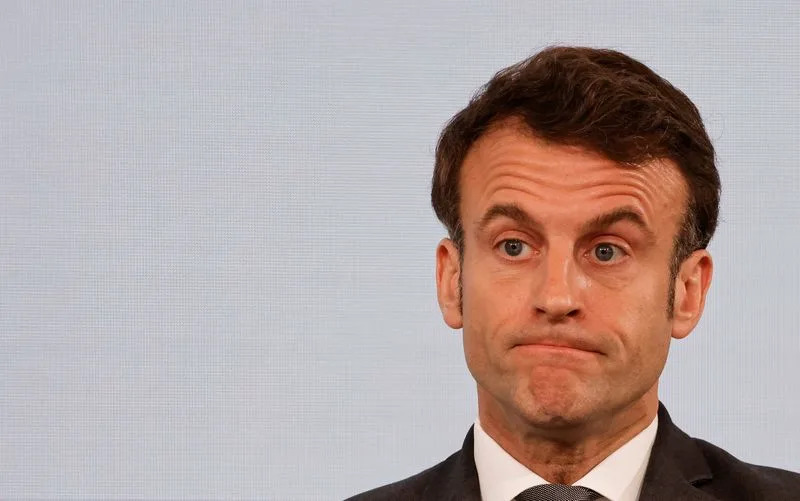
MOSCOW (Reuters) – Russia on Sunday scolded Emmanuel Macron over remarks about wanting to see Russia defeated, saying Moscow still remembered the fate of Napoleon Bonaparte and accusing the French president of duplicitous diplomacy with the Kremlin.
Macron told paper Le Journal du Dimanche France wanted Russia to be defeated in Ukraine but had never wanted to “crush” it.
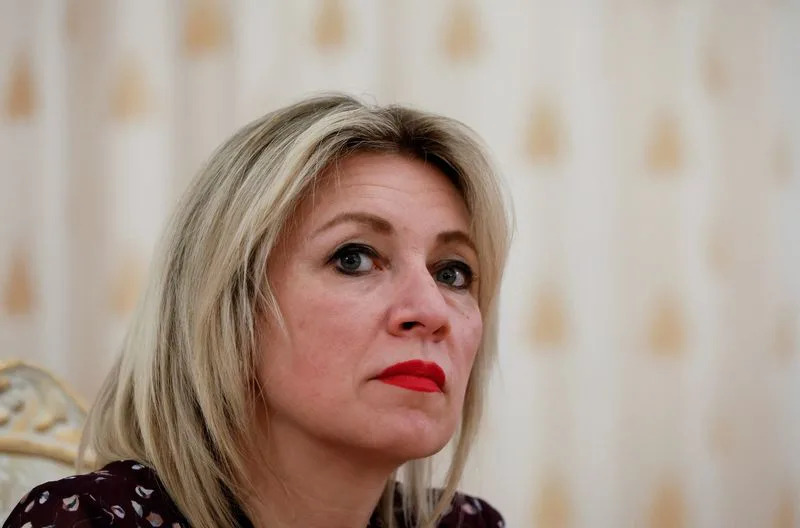
“About ‘Never’: France did not begin with Macron, and the remains of Napoleon, revered at the state level, rest in the centre of Paris. France – and Russia – should understand,” Foreign Ministry spokeswoman Maria Zakharova said.
“In general, Macron is priceless,” she said, adding that his remarks showed the West had engaged in discussions about regime change in Russia while Macron had repeatedly sought meetings with the Russian leadership.
Macron has drawn criticism from some NATO allies for delivering mixed messages regarding his policy on the war between Ukraine and Russia, with some considering Paris a weak link in the Western alliance.
On Friday, Macron urged allies to step up military support for Ukraine, but also said he did not believe in regime change and that there would have to be negotiations at some point.
“Let’s be clear, I don’t believe for one second in regime change, and when I hear a lot of people calling for regime change I ask them, ‘For which change? Who’s next? Who is your leader?'”
Clarifying those comments, he said in the paper that he did not believe a democratic solution from within civil society would emerge in Russia after years of a hardening of Moscow’s position and conflict. He added that he saw no alternative to Putin, who had to be brought back to the negotiating table.
“All the options other than Vladimir Putin in the current system seem worse to me,” Macron said.
(Reporting by Guy Faulconbridge in Moscow and John Irish in Munich; Editing by Hugh Lawson)
Macron wants Russia’s defeat in Ukraine without ‘crushing’ Russia
The Kyiv Independent news desk – February 18, 2023
On the flight back from the Munich Security Conference on Feb. 18, French President Emmanuel Macron told reporters that while he wanted Moscow’s defeat in Ukraine, France would never advocate for “crushing Russia.”
“I want Russia to be defeated in Ukraine, and I want Ukraine to be able to defend its position, but I am convinced that in the end, it will not be concluded militarily,” Macron said, French newspaper Le Figaro reported.
“I don’t think, like some, that Russia should be totally defeated, attacked on its soil. These observers want, above all, to crush Russia. This has never been France’s position, and it never will be.”
The security conference held on Feb. 17-19 brought together multiple leaders, including German Chancellor Olaf Scholz and French President Emmanuel Macron.
German Defense Minister Boris Pistorius pledged continued support of Ukraine. Macron similarly called on Europe as a whole to “invest more in defense.”
President Volodymyr Zelensky joined the event online, giving a video address on Feb. 17. In his speech, Zelensky said that “there are no alternatives” to Ukrainian victory, the country’s membership in the EU and NATO.
“There is no alternative to our unity. Therefore, there is and will be no alternative to getting rid of Russian aggression once and for all, liberating the land and the people,” Zelensky said.
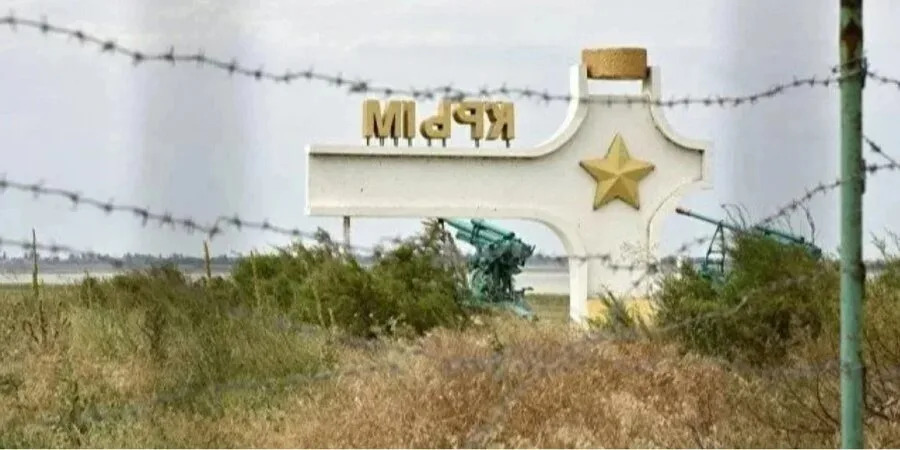
“Never since the beginning of the occupation has the resistance been so palpably pro-Ukrainian and visualized as pro-Ukrainian,” Tasheva said. “Because the resistance in Crimea until 2022 was more about human rights.”
Tasheva said that now on the peninsula you can hear Ukrainian songs at weddings and in classrooms, and people on the streets distribute leaflets with information about the full-scale invasion and victims of Russian aggression.
“Now we see the inscriptions ‘Glory to the Ukrainian Armed Forces’ on the walls of Crimean houses, Crimeans send each other private messages with photos of the military man who told the Russian warship where to go. We see many other types of resistance.”
The Pentagon does not believe that Ukraine can or will soon be able to oust Russian troops from Crimea, U.S. news website Politico wrote on Feb. 2, citing four senior officials of the U.S. Department of Defense.
Through a year of war in Ukraine, the U.S. and most European nations have worked to help counter Russia, in supporting Ukraine both with armaments and in world energy markets. Russia was Europe’s main energy supplier when it invaded Ukraine, and President Vladimir Putin threatened to leave Europeans to freeze “like a wolf’s tail” – a reference to a famous Russian fairy tale – if they imposed sanctions on his country.
But thanks to a combination of preparation and luck, Europe has avoided blackouts and power cutoffs. Instead, less wealthy nations like Pakistan and India have contended with electricity outages on the back of unaffordably high global natural gas prices. As a global energy policy analyst, I see this as the latest evidence that less wealthy nations often suffer the most from globalized oil and gas crises.
I believe more volatility is possible. Russia has said that it will cut its crude oil production starting on March 1, 2023, by 500,000 barrels per day in response to Western energy sanctions. This amount is about 5% of its current crude oil production, or 0.5% of world oil supply. Many analysts expected the move, but it raises concerns about whether more reductions could come in the future.
How Europe has kept the lights on
As Russia’s intent toward Ukraine became clear in late 2021 and early 2022, many governments and energy experts feared one result would be an energy crisis in Europe. But one factor that Putin couldn’t control was the weather. Mild temperatures in Europe in recent months, along with proactive conservation policies, have reduced natural gas consumption in key European markets such as Germany, the Netherlands and Belgium by 25%.
With less need for electricity and natural gas, European governments were able to delay drawing on natural gas inventories that they built up over the summer and autumn of 2022. At this point, a continental energy crisis is much less likely than many forecasts predicted.
European natural gas stockpiles are around 67% full, and they will probably still be 50% full at the end of this winter. This will help the continent position itself for next winter as well.
The situation is similar for coal. European utilities stockpiled coal and reactivated 26 coal-fired power plants in 2022, anticipating a possible winter energy crisis. But so far, the continent’s coal use has risen only 7%, and the reactivated coal plants are averaging just 18% of their operating capacity
The U.S. role
Record-high U.S. energy exports in the summer and fall of 2022 also buoyed European energy security. The U.S. exported close to 10 million cubic meters per month of liquefied natural gas in 2022, up 137% from 2021, providing roughly half of all of Europe’s imported LNG.
Although domestic U.S. natural gas production surged to record levels, some producers had the opportunity to export into high-priced global markets. As a result, surpluses of summer natural gas didn’t emerge inside the U.S. market, as might otherwise have happened. Combined with unusually hot summer temperatures, which drove up energy demand for cooling, the export surge socked U.S. consumers with the highest natural gas prices they had experienced since 2008.
Prices also soared at U.S. gas pumps, reaching or exceeding US$5 per gallon in the early summer of 2022 – the highest average ever recorded by the American Automobile Association. The U.S. exported close to 1 million barrels per day of gasoline, mainly to Mexico and Central America, plus some to France, and consolidated its position as a net oil exporter – that is, it exports more oil than it imports.
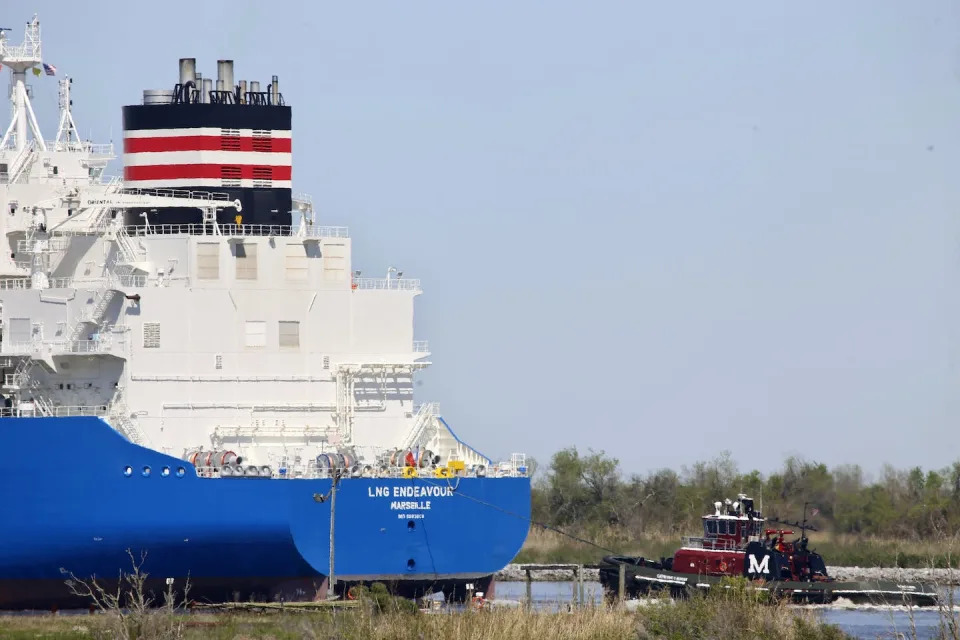
A tugboat helps guide the LNG Endeavor, a French liquefied natural gas tanker, through Calcasieu Lake near Hackberry, La., March 31, 2022. U.S. LNG exports to Europe reached record levels in 2022 as the continent prepared to sever energy ties with Russia. AP Photo/Martha Irvine
Much like Europeans, U.S. consumers had to pay high prices to outbid other global consumers for oil and natural gas amid global supply disruptions and competition for available cargoes. High gasoline prices were a political headache for the Biden administration through the spring and summer of 2022.
However, these high prices belied the fact that U.S. domestic gasoline use has stopped growing. Forecasts suggest that it will decline further in 2023 and beyond as the fuel economy of U.S. cars continues to improve and the number of electric vehicles on the road expands.
While energy prices were a burden, especially to lower-income households, European and American consumers have been able to ride out price surges driven by the war in Ukraine and have so far avoided actual outages and the worst recessionary fears. And their governments are offering big economic incentives to switch to clean energy technologies intended to reduce their nations’ need for fossil fuels.
Developing nations priced out
The same can’t be said for consumers in developing nations like Pakistan, Bangladesh and India, who have experienced the energy cutoffs that were feared but didn’t occur in Europe. Notably, Europe’s intensive energy stockpiling in the summer of 2022 caused a huge jump in global prices for liquefied natural gas. In response, many utilities in less developed nations cut their natural gas purchases, creating price-related electricity outages in some regions.
The energy challenge that the Russia-Ukraine crisis has bred in developing countries has intensified global discussions about climate justice. One less examined impact of giant clean tech stimulus plans enacted in wealthy nations, such as the United States’ Inflation Reduction Act, is that they keep much of the available funding for climate finance at home. As a result, some developing country leaders worry that a clean energy technology knowledge gap will widen, not shrink, as the energy transition gains momentum.
Worsening the problem, members of the G-7 forum of wealthy nations have tightened their monetary policies to control war-driven inflation. This drives up the cost of debt and makes it harder for developing countries to borrow money to invest in clean energy.
The U.S. is supporting a new approach called Just Energy Transition Partnerships, in which wealthy nations provide funding to help developing countries shift away from coal-fired power plants, retrain workers and recruit private-sector investors to help finance decarbonization projects. But these solutions are negotiated bilaterally between individual countries, and the pace is slow.
When nations gather in the United Arab Emirates in late 2023 for the next round of global climate talks, wealthy nations – including Middle East oil producers – will face demands for new ways of financing energy security improvements in less wealthy countries. The world’s rich nations pledged in 2009 to direct $100 billion yearly to less wealthy nations by 2020 to help them adapt to climate change and decarbonize their economies, but are far behind on fulfilling this promise.
U.N. Secretary-General Antonio Guterres has called on developed nations to tax fossil fuel companies, which reported record profits in 2022, and use the money to fund climate adaptation in low-income countries. New solutions are needed, because without some kind of major progress, wealthy nations will continue outbidding developing nations for the energy resources that the world’s most vulnerable people desperately need.
Ukraine war has exposed the folly – and unintended consequences – of ‘armed missionaries’
Ronald Suny, Professor of History and Political Science, University of Michigan – February 17, 2023
Putin’s decision to go to war has seen great geopolitical ripples. Getty Images
The evening before Russia invaded Ukraine, it seemed to many observers – me included – nearly unimaginable that Putin would carry through with weeks of a threatened military attack. As I wrote at the time, Putin is not as erratic or rash as he is sometimes painted.
I had failed to take into account that Putin is, in the words of French statesman and revolutionary Maximilien Robespierre, an “armed missionary.” Writing in 1792, Robespierre explained, “The most extravagant idea that can take root in the head of a politician is to believe that it is enough for one people to invade a foreign people to make it adopt its laws and constitution. No one likes armed missionaries; and the first advice given by nature and prudence is to repel them as enemies.”
Those words seem fitting as Vladimir Putin’s disastrous war in Ukraine reaches a grim first anniversary on Feb. 24, 2023.
As a fading power, Putin’s Russia has refused to accept its own limitations, both economically and militarily. In invading its smaller neighbor, Russia made a bid to upset the international systemheaded by the United States. It also sought to establish its own hegemony over Ukraine, and by implication, over much of the former Soviet Union.
But Russia’s failure to “decapitate” the Ukrainian government, which in turn inspired heroic resistance by Ukrainians, proved a disastrous example of what might be called “imperial overreach” – when a state tries to expand or control other states beyond its own capacity to do so.
It has produced a weakened Russia – an isolated pariah state perceived as a threat to democracies and the rules-based liberal international security system.
Putin deploys rhetoric about dangerously subversive liberal, democratic values and practices – echoing right-wing politicians like Hungary’s Victor Orbán and Giorgia Meloni, the far-right Italian leader. It appears that a new “International” – just as ominous to the liberal West as the Communist International was – is being formed of illiberal and authoritarian states, with Russia a key member.
This view of the Ukrainian war as a cultural struggle plays in the Russian media as an emotional rallying cry to mobilize the basest fears of Putin’s people.
Propaganda disguised as news, social media posts and the screeds of government officials are being deployed to shape ordinary Russians’ perceptions of the war.
Toward a multipolar world?
The consequences of Putin’s miscalculation are not limited to the war itself, or to Europe. Rather, they have had reverberations far beyond the battlefields of Ukraine and the homes of Russians whose sons have been slaughtered or fled abroad.
Putin’s imperial aggression against Ukraine – implausibly proclaimed to be a defense of a united Russia and of Ukrainian peoples against Nazi usurpers – has a long genealogy.
Ever since his famous speech at the Munich Security Forum in 2007, Russia’s president has railed against the “unipolar” military and economic dominance of the United States. What he wants is “multipolarity” – that is, the ability of other great powers to hold sway over their neighborhoods.
In such a multipolar world, Ukraine and Georgia would never join NATO and much of the former Soviet Union would fall under the umbrella of Russia. China would have paramount influence in East Asia, likewise India in South Asia. And perhaps this is Iran’s ambition in much of the Middle East.
To countries hostile to the United States – and even to some friendly states – this multipolar rearrangement of the international order has considerable appeal.
Yes, the war in Ukraine has solidified the Western alliance around its idea of the rules-based international order that has been in place since 1945. But it has also awakened the aspirations of “the Global South” – those countries in neither NATO nor the former Soviet bloc, largely in the Southern Hemisphere.
Countries from Latin America and Africa to Pacific Island nations have urged a greater dispersion and sharing of international clout. The two most populous countries in the world, India and China, have expressed their supportfor a new multipolar international order and have not been openly critical of Russia’s aggression against Ukraine.
Redefining regional, global power struggles
The war in Ukraine has also had ripple effects on other global tensions.
With Taiwan as a potential flashpoint and saber-rattling by North Korea, Japan, South Korea and the Philippines are gravitating toward closer military cooperation with the United States in East Asia. China and North Korea are moving in the opposite direction, closer to Russia.
The Ukraine war is also reshaping the long-festering conflict between Armenia and Azerbaijan. Both states desire sovereign power over the disputed region of mountainous Karabakh. But with Russia bogged down militarily and economically, Putin has been disinclined to aid Armenia, its one loyal ally in the South Caucasus. This is despite the fact that Azerbaijan has repeatedly violated the borders of its neighbor.
Azerbaijan, by contrast, has been increasingly aided by its regional allies Israel – spurred by a shared hostility to Iran – and Turkey. Both have supplied Azerbaijan with advanced weaponry, giving the country an upper hand in the conflict.
The Ukraine conflict also has an effect on the great global power struggle to come: China and U.S. With EU states and regional rivals to China forging closer ties with Washington, Beijing may eye a growing threat – or even an opportunity to exert its influence more aggressively as regional power dynamics evolve.
American policymakers in both the Trump and Biden administrations have warned that the rise of China, economically and militarily, is a serious threat to the continued position of the U.S. as the strongest, richest state on the globe. To its competitors on the global stage, the U.S. also looks like an armed missionary.
The uncertainty of the Ukraine war, and the still uncertain ways in which it is reshaping geopolitics, will do little to dislodge those fears. Rather, it may encourage international relations scholars, such as Harvard professor Graham Allison, who believe in the “Thucydides’ Trap.” Based on the ancient Greek historian’s explanation for the origins of the Peloponnesian War, the theory has it that when an emerging power threatens to displace a regional or global hegemon, war is inevitable.
As someone trained to look to the past to understand the present and possible futures, I believe that nothing in history is inevitable; human beings always have choices. This was true for Putin on the eve of the Feb. 24, 2022, invasion, and it is true for policymakers around the world today.
But the decision to invade Ukraine underscores a clear danger: When statesmen perceive the world as a Darwinian zero-sum game of winners and losers, a clash between the West and the rest, or as an ideological conflict between autocracies and democracies, they can create the conditions – through provocation, threat or even invasion – that lead to wars with unintended consequences.
A Ukrainian serviceman of the 80th Air Assault Brigade carries a shell to load into an M119 Howitzer artillery weapon to be fired towards Russian troops
Another day, and yet more worrying news from the frontline: Ukrainian troops are firing as many as 6,000 artillery shells a day to try and beat back Russia’s new offensive. It is an expenditure rate the West is struggling to feed; so high that Defence Secretary Ben Wallace has said that Ukraine’s forces could run out of ammunition unless they use it more sparingly. His comments remind us of an essential truth: that brute force and, critically, the ability to sustain and replenish it over an extended period, is historically what wins wars in the end.
This rule counters the orthodox interpretation of this war so far. For many, Ukraine’s early success against apparently overwhelming Russian force suggested that high-tech weaponry – and nimbleness in strategy and deployment – were enough to defeat larger forces. It also vindicated the British military consensus that we should invest in cyber, computers, unmanned vehicles, and “ranger” units to train, advise and mentor allies rather than in combat infantrymen, heavy armour and other conventional weapons – sometimes disparagingly referred to as “legacy” capabilities.
But that is not what the war has shown us at all. Indeed, it would be disastrous if Vladimir Putin’s failures fooled the West into thinking that hard military power is a thing of the past. His forces have struggled not because they have relied on the massive use of tanks, armoured vehicles, and troops against a nimbler opponent, but because those capabilities have not been deployed effectively.- ADVERTISEMENT -https://s.yimg.com/rq/darla/4-10-1/html/r-sf-flx.html
And on the Ukrainian side, yes, cyber and drones have played a role, with electronic intelligence and airborne surveillance also pivotal. But the true game-changers have been the heavy, punchier weapons provided by the US, such as HIMARS, which have been particularly devastating against Russian logistics bases, starving front line forces of vital combat supplies. Likewise, tanks and armoured infantry fighting vehicles have shown their persistent combat utility, which is why they are at the top of Zelensky’s list for military aid.
But as in all major 20th century conflicts, it is artillery that has been the greatest life-taker on both sides in Ukraine. Not for nothing is it nicknamed the “King of Battle”.
All this underlines the foolishness of the current British defence strategy. It is not enough to invest in small amounts of high-tech weaponry which, at the expense of conventional combat power, was the emphasis of our recent defence review. Britain needs to focus also on the heavy metal of hard ground combat forces. It remains shocking that heavy machines are afforded such low priority that we are down to fewer than 200 tanks – to be reduced to 148 – and Warrior, our only armoured infantry fighting vehicle, is being phased out without obvious replacement.
Equally shocking is the lack of investment in artillery. Some have suggested that, faced with a conflict like Ukraine, the British Army would run out of ammunition in a matter of days. That is because, under budgetary pressures, we do not have anything like adequate stocks of ammunition.
Thankfully, Wallace – a true military man – seems to recognise this, and is reportedly asking for a £11 billion increase in the defence budget. But we need more than just money; we need a shift in mindset. It was embarrassing enough that, at the end of the Cold War, we had to cannibalise three armoured divisions to send just one small division to fight in the 1990-1991 Gulf War. But what is worse is that we couldn’t do anything like that today.
In Afghanistan, with equipment shortages everywhere, no attempt was made to put the defence industry on a war footing, and armoured vehicles were manufactured with all the urgency of a family saloon, at the cost of British soldiers’ lives. We see this same failure to bite the bullet in the debate on replenishing Ukrainian ammunition stocks, which should have been dealt with many months ago when it became obvious this was going to be a long war.
Every day, Russian guns are blasting out three times as many shells as Ukraine’s, but Moscow’s defence industry is on a war footing, with production ramping up and no sign of ammunition shortages. The current arms race between Russia and the West, which we are losing, should serve as a dire warning over the state of our own national defences.
Colonel Richard Kemp is a former infantry commander.