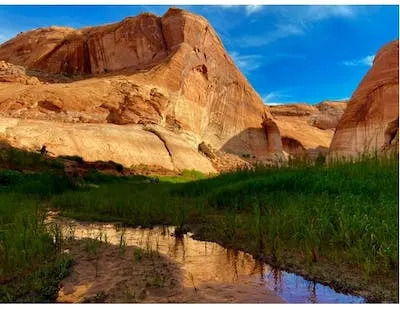
The Colorado River should really be named the California River

VC Star – Ventura County Star

The Colorado River should really be named the California River

Joe Mathews – February 9, 2023

Why do we still call it the Colorado?

Sure, the river begins in the Colorado Rockies. But in law and practice, the waterway making headlines is clearly the California River. And the first provision of any deal to save the river should rename it accordingly.

This condition wouldn’t be about Golden State pride. Instead, a name change would more accurately reflect the imperial role California plays out in the movement of water, people and power in the American West.

Right now, the Grand Canyon-sized divide over how to reduce the amount of water drawn from the rapidly diminishing river is being portrayed as a dispute between states. On one side, six states that rely on California-nee-Colorado water — Arizona, Colorado, Nevada, New Mexico, Utah and Wyoming — have come together to demand cuts in water use that would fall heaviest on California.

In response, California water officials have produced a plan emphasizing how our state’s rights to the water are more senior than those of our Southwest neighbors. Their newly released plan would cut less from California’s take, and more from Arizona and Nevada. In the Wild West of Water, this argument — We stole it first! We stole it fair and square! — is a strong legal position.

But such descriptions of the fight fail to capture the true dynamics of the situation — that California is less a state than an empire, and the six states challenging it over water are California colonies. California is by far the richest and most dynamic area in this half of North America. California has more residents and a bigger economy than all the other western states of the U.S. put together.

In recent generations, California, like other great empires through history, has grown so much that it has exported people, money, and culture to nearby territories. California’s investment has helped make the intermountain West the nation’s fastest-growing region.

Many of the greater West are native Californians, or immigrants who came through the Golden State. Nevada is the most Californian state; with nearly as many California natives (20%) as Nevada natives (25%), and more than 90% of its population living within 50 miles of the California border. But Californians have also provided sizable percentages of new residents to Utah, Colorado, and Arizona, where one out of every 10 residents was born here.

Are these transplanted Californians grateful for our largesse? Of course not. Colonists don’t freely thank their emperors, which is why every so often, the L.A. Times or New York Times interviews some real estate agent in Phoenix or Las Vegas or Denver, who whines about how the California ex-pats are driving up housing prices.

Oh, you denizens of western deserts and mountains, please forgive us Californians for making you wealthier!

With water, our successful colonization policies create headaches for us. We seized the water of the Western wilderness to build the world’s fourth-largest economy. But that wilderness is now full of former Californians and their communities, which now mercilessly seek a bigger share of the water.

Alas, the patently strong argument that Californians should keep the water because we do more things with it is not politically palatable in our colonies. Nor should we expect the president, from the tiny corporate tax haven of Delaware, to choose the needs of our great empire over the demands of those swing state deserts, Arizona and Nevada.

Instead, we have little choice but to behave like wise empires, and do for our colonies what they won’t do for themselves. “The price of greatness,” Winston Churchill observed, “is responsibility.”

California must develop and finance a water plan not just for itself but for the West — with more water recycling, more capture of stormwater, more desalination, and more water for everyone — so that our empire is no longer dependent on that workhorse river.

In return, everyone should start calling our river by its proper name.
A secret Russian satellite has broken apart in orbit, creating a cloud of debris that could last a century

Business Insider

A secret Russian satellite has broken apart in orbit, creating a cloud of debris that could last a century

Morgan McFall-Johnsen – February 8, 2023

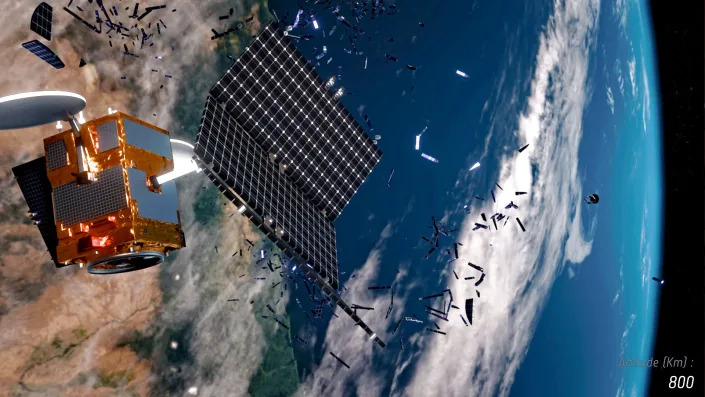
illustration shows satellite shedding bits of metal debris high above earth
An illustration of a satellite breaking up above Earth.ESA/ID&Sense/ONiRiXEL, CC BY-SA 3.0 IGO

A mysterious Russian satellite with a shady mission has broken apart in Earth’s orbit, creating a hazardous cloud of debris zipping around the planet and menacing other satellites, US Space Force announced.

The 18th Space Defense Squadron said on Twitter Monday that it had confirmed a satellite called Kosmos 2499 had broken apart into 85 pieces.

Previous collisions and satellite break-ups have created far larger and more hazardous debris fields than this.

But the pieces of Kosmos 2499 are orbiting at an altitude of about 745 miles — so high that they’ll probably be there for a century or longer before Earth’s atmosphere drags them down and burns them up, according to NASA.

Kosmos 2499 is one of three satellites that Russia launched secretly from 2013 to 2015. Its beginning is even more mysterious than its end.

NASA and the US Department of Defense did not immediately respond to Insider’s requests for comment.

The satellite was launched secretly and made ‘suspicious’ maneuvers in orbit
rocket spews orange flame lifts off in the arctic
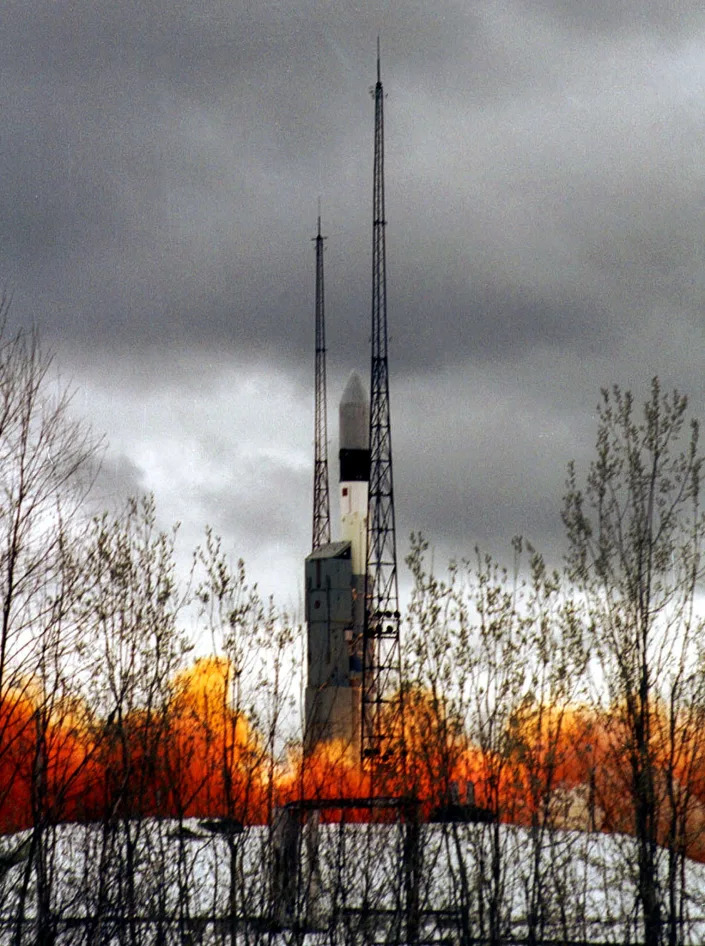
A Russian “Rokot” rocket lifts off from a launch pad near the town of Plesetsk in Arctic Russia.Reuters

On Christmas Day 2013, Russia launched a small Rokot rocket into the skies above Plesetsk, carrying three military communications satellites into orbit.

It seemed like a standard launch, until space trackers noticed that the Rokot had released a fourth object into orbit, according to Anatoly Zak, an English-language reporter who covers Russia’s space program and runs Russianspaceweb.com.

A few months later, Russia admitted to the United Nations that it had launched a fourth satellite, which came to be known as Kosmos 2491. Its purpose was unclear.

Russia launched another secret satellite in May 2014, and it soon began maneuvering itself in orbit, dropping and raising its altitude until it brought itself “suspiciously close” to the rocket stage that had delivered it to orbit, according to Zak. The US military designated the object Kosmos 2499.

For nearly half a year, this mystery satellite trailed its rocket stage and maneuvered up close to it repeatedly. Then it transmitted telemetry data back to Earth in Morse code, according to Zak.

The bizarre behavior led to speculation that Russia was testing technology to follow or wreck other satellites, according to Space.com.

The head of Roscosmos at the time, Oleg Ostapenko, assured the world in a December 2014 press conference that Kosmos 2491 and Kosmos 2499 were not “killer satellites,” Zak reported. Ostapenko said the satellites had peaceful, educational purposes and that “they completed their mission.” Zak said the Roscosmos chief never specified what that mission was.

A similar Rokot launch sent a third unregistered satellite into orbit the next year.

The first secret satellite, Kosmos 2491, broke apart in 2019. Kosmos 2499 just met the same fate.

The satellite may have exploded, rather than crashing

The cause of the satellite’s disintegration is not yet clear.

Brian Weeden, a space-debris expert at the Secure World Foundation, told ArsTechnica that he doesn’t think a collision caused it, since two of the secretive satellites have gone out like this.

“This suggests to me that perhaps these events are the result of a design error in the fuel tanks or other systems that are rupturing after several years in space rather than something like a collision with a piece of debris,” Weeden told ArsTechnica.

That aligns with a preliminary analysis by LeoLabs, a company that tracks objects in Earth’s orbit. The company tweeted that its early data “points toward a low intensity explosion,” likely from the satellite’s propulsion system.

LeoLabs said its models had “moderate confidence” in this finding.

“As more of the fragments get cataloged and included in the analysis we will be able to provide a more definitive cause of the event,” the company wrote, adding that “understanding why these types of events occur is key to preventing them in the future.”

‘Superbugs’ caused by climate change are becoming a greater threat to humanity, report finds

The Week

‘Superbugs’ caused by climate change are becoming a greater threat to humanity, report finds

Devika Rao, Staff writer – February 8, 2023

Bacteria on agar petri dish held by gloved hands.
Bacteria on agar petri dish held by gloved hands. Rodolfo Parulan Jr./Getty Images

new report from the UN Environment Programme (UNEP) has identified antimicrobial resistance (AMR) and the rise of “superbugs” as major threats to humanity.

“The development and spread of AMR means that antimicrobials used to prevent and treat infections in humans, animals and plants might turn ineffective, with modern medicine no longer able to treat even mild infections,” the UNEP explained in a news release.

“[H]igher temperatures and extreme weather patterns, land-use changes that alter its microbial diversity, as well as biological and chemical pollution” — all of which comprise the “triple planetary crisis” — contribute to the “development and spread” of AMR, which is predicted to cause “10 million additional direct deaths by 2050,” the UNEP said in the report.

Climate change, specifically warming temperatures, has been proven to make AMR worse because it causes microbes to grow and spread faster, thereby hastening the spread of resistant genes. The genes themselves are becoming more prevalent because of the widespread use of antimicrobial products like disinfectants and antibiotics, which are finding their way into waterways and soil and interacting with microbes. The germs that survive those interactions then end up multiplying and creating stronger strains.

“Climate change, pollution, changes in our weather patterns, more rainfall, more closely packed, dense cities and urban areas – all of this facilitates the spread of antibiotic resistance,” Dr. Scott Roberts, an infectious diseases specialist at Yale School of Medicine, told CNN.

AMR is also expected to disrupt the global economy, causing annual GDP to drop by at least $3.4 trillion by the end of the decade, per the UN. “The impacts of anti-microbial resistance could destroy our health and food systems,” warned UNEP Executive Director Inger Andersen.

Barbados Prime Minister Mia Mottley, who is also chair of the One Health Global Leaders Group on AMR added: “We must remain focused on turning the tide in this crisis by raising awareness and by placing this matter of global importance on the agenda of the world’s nations.”

Climate change contributing to spread of antibiotic-resistant ‘superbugs’: UN report

The Hill

Climate change contributing to spread of antibiotic-resistant ‘superbugs’: UN report

Zack Budryk – February 7, 2023

Climate change is heightening the risk posed by antibiotic-resistant viruses, according to research published Tuesday by the United Nations Environment Program.

The report found so-called superbugs have been exacerbated by climate change due to increased bacterial growth caused by warmer temperatures and pollutants that have increased the spread of antibiotic-resistance genes.

The analysis notes that overuse of antimicrobials and pollutants can spread resistance, while contact with resistant microorganisms can create resistance in bacteria already present in air, water and soil. Pollution associated with wastewater, particularly from hospitals, is a major factor, as well as runoff from pharmaceutical production and agriculture, according to the report.

The risk is particularly great for historically polluted waterways, which are more likely to provide shelter for microorganisms that foster antibiotic resistance. A combination of increased pollution and decreased resources for pollutant management has made the problem worse in combination with resistance in health care and agriculture settings.

Meanwhile, 2021 research published in the journal Sci Total Environ suggests urban flooding is also increasing the threat from antibiotic resistance due to disruptions of soil, with the risk possibly lingering for up to five months after major floods or hurricanes.

“While the relationship between environmental pollution and AMR [antimicrobial resistance] and the reservoir of resistance genes in the environment has been established, the significance and its contribution to AMR globally is still unclear,” researchers wrote. “Even so, there is enough knowledge to implement measures to reduce the factors that influence AMR from an environmental perspective; this will also address the triple planetary crisis by addressing sources, sinks and waste.”

The report calls for stronger regulatory frameworks to address the spread of AMR, as well as increased incorporation of environmental factors into National Action Plans for antimicrobial resistance and international standards for signs of antimicrobial resistance.

Policymakers should also develop stronger water sanitation standards, U.N. Environment Program researchers wrote.

Scientists Discover Molten Layer of Rock Beneath Earth’s Crust

Gizmodo

Scientists Discover Molten Layer of Rock Beneath Earth’s Crust

Kevin Hurler – February 8, 2023

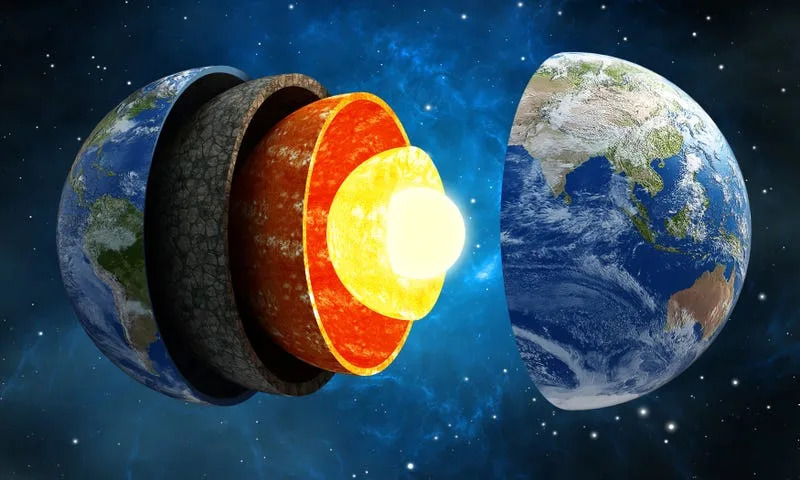
The layer of molten rock corresponds with the upper mantle, also known as the asthenosphere.

Earthquakes and volcanic eruptions are a result of the movement of large swaths of Earth’s crust, but while the theory of plate tectonics has been widely accepted as a fundamental law of geology, there are still things to be discovered. New research from the University of Texas Austin points to the presence of a partly molten layer of rock underneath Earth’s surface that could provide some explanation for how the plates move like they do.

The layer is about 100 miles (160 kilometers) below Earth’s surface, and while scientists have found patches of melt at this depth previously, new research published in Nature Geosciences indicates that molten rock could be more widespread. Through analysis of seismic data, a team led by Junlin Hua identified that the molten layer—which belongs to the upper part of the mantle, called the asthenosphere—probably has little to no bearing on how Earth’s tectonic plates move over the mantle.

“When we think about something melting, we intuitively think that the melt must play a big role in the material’s viscosity,” said lead author Hua, a postdoctoral fellow at University of Texas Jackson School of Geosciences, in a press release. “But what we found is that even where the melt fraction is quite high, its effect on mantle flow is very minor.”

The mechanism that helps fuel the motion of Earth’s tectonic plates is one of the great mysteries of geology. Hua and his colleagues’ research suggests that convection currents in the mantle could be the cause. While the interior of Earth is mainly solid, the mantle can be thought of as an incredibly viscous liquid, that shifts and flows over long periods of time.

“We can’t rule out that locally melt doesn’t matter,” said Thorsten Becker, a co-author on the paper and a professor of geology at University of Texas Austin, in the release. “But I think it drives us to see these observations of melt as a marker of what’s going on in the Earth, and not necessarily an active contribution to anything.”

For a planet that is 4.5 billion years old, Earth is still full of surprises.

Quantum breakthrough could revolutionize computing

BBC News

Quantum breakthrough could revolutionize computing

Pallab Ghosh – Science correspondent – February 8, 2023

Winfried Hensinger
Twenty years ago Winfried Hensinger was told by other scientists that developing a powerful quantum computer was impossible. Now he has made the system behind him that he believes will prove them wrong

Scientists have come a step closer to making multi-tasking ‘quantum’ computers, far more powerful than even today’s most advanced supercomputers.

Quantum computers make use of the weird qualities of sub-atomic particles.

So-called quantum particles can be in two places at the same time and also strangely connected even though they are millions of miles apart.

A Sussex University team transferred quantum information between computer chips at record speeds and accuracy.

Chip
The researchers connected two chips together and sent record amounts of quantum information at unprecedented speeds and reliability

Computer scientists have been trying to make an effective quantum computer for more than 20 years. Firms such as Google, IBM and Microsoft have developed simple machines. But, according to Prof Winfried Hensinger, who led the research at Sussex University, the new development paves the way for systems that can solve complex real world problems that the best computers we have today are incapable of.

“Right now we have quantum computers with very simple microchips,” he said. “What we have achieved here is the ability to realise extremely powerful quantum computers capable of solving some of the most important problems for industries and society.”

Rolls Royce
Rolls-Royce is investing in quantum computing research to see if it can speed up the design process for their aircraft engines

Currently, computers solve problems in a simple linear way, one calculation at a time.

In the quantum realm, particles can be in two places at the same time and researchers want to harness this property to develop computers that can do multiple calculations all at the same time.

Quantum particles can also be millions of miles apart and be strangely connected, mirroring each other’s actions instantaneously. Again, that could also be used to develop much more powerful computers.

Cleanroom
The quantum computer chips have to be set up in a clean room an put into a vacuum container as even the slightest contamination can reduce its performance

One stumbling block has been the need to transfer quantum information between chips quickly and reliably: the information degrades, and errors are introduced.

But Prof Hensinger’s team has made a breakthrough, published in the journal Nature Communications, which may have overcome that obstacle.

The team developed a system able to transport information from one chip to another with a reliability of 99.999993% at record speeds. That, say the researchers, shows that in principle chips could be slotted together to make a more powerful quantum computer.

Sarha
The research team can see individual atoms floating above their chips as the test out their quantum computer

Prof Michael Cuthbert, who is the director of the newly established National Quantum Computing Centre in Didcot, Oxfordshire and is independent of the Sussex research group described the development as a “really important enabling step”. But he said that more work was needed to develop practical systems.

“To build the type of quantum computer you need in the future, you start off by connecting chips that are the size of your thumbnail until you get something the size of a dinner plate. The Sussex group has shown you can have the stability and speed for that step.

“But then you need a mechanism to connect these dinner plates together to scale up a machine, potentially as large as a football pitch, in order to carry out realistic and useful computations, and the technology for communications for that scale is not yet available.”

Entanglement
Quantum computers harness two weird properties of particles at the very small scale – they can be in two places at the same time and be strangely connected even though they are millions of miles apart.

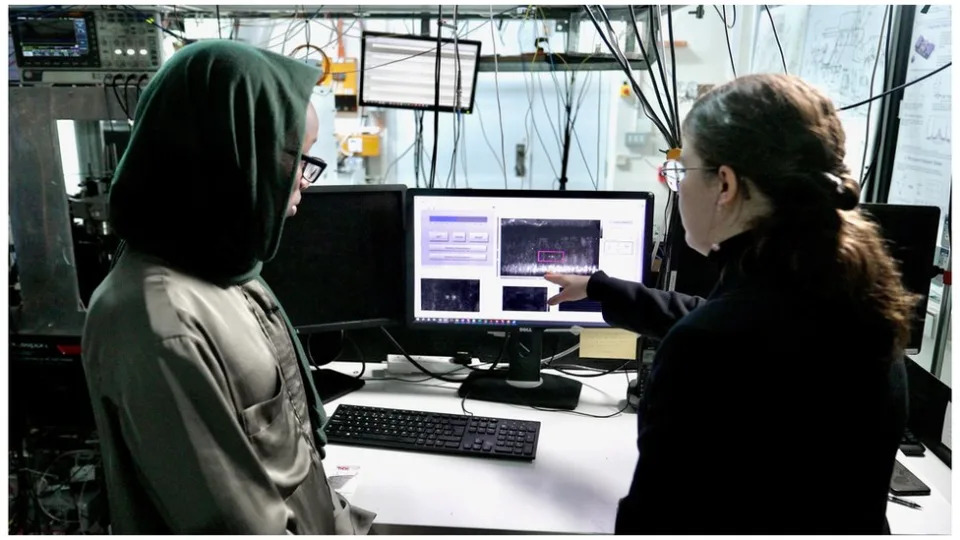
PhD student Sahra Kulmiya, who carried out the Sussex experiment, says that the team are ready for the challenge to take the technology to the next level.

“It is not just solely a physics problem anymore,” she told BBC News.

“It is an engineering problem, a computer science problem and also a mathematical problem.

“It is really difficult to say how close we are to the realisation of quantum computing, but I’m optimistic in how it can become relevant to us in our everyday lives.”

One of the UK’s leading engineering firms, Rolls Royce, is also optimistic about the technology. It is working with the Sussex researchers to develop machines that could help them design even better jet engines.

Powerful supercomputers are used to model the flow of air in simulations to test out new designs of aircraft engines.

Transforming engineering

A quantum computer could in principle track the airflow with even greater accuracy, and do so really quickly, according to Prof Leigh Lapworth, who is leading the development of quantum computing for Rolls-Royce.

“Quantum computers would be able to do calculations that we can’t currently do and others that would take many months or years. The potential of doing those in days would just transform our design systems and lead to even better engines.”

The technology could potentially also be used to design drugs more quickly by accurately simulating their chemical reactions, a calculation too difficult for current supercomputers. They could also provide even more accurate systems to forecast weather and project the impact of climate change.

Prof Hensinger said he first had the idea of developing a quantum computer more than 20 years ago.

“People rolled their eyes and said: ‘it’s impossible’.”

“And when people tell me something can’t be done, I just love to try. So I have spent the past 20 years removing the barriers one by one to a point where one can now really build a practical quantum computer.”

Worried about having a gas stove? Here’s how to limit risks.

THe Washington Post

Worried about having a gas stove? Here’s how to limit risks.

Allyson Chiu, The Washington Post – February 7, 2023

Note: This article has been updated to include additional safety information about using induction hot plates.

The raging gas stove debate might have you reassessing how you cook. But replacing a gas stove with an induction stove – a commonly recommended alternative – isn’t always feasible.

Renters are often limited in what they can do. For homeowners, swapping out a gas range can be expensive and complicated, especially if it involves electrical updates.

Still, even if you cannot get rid of your gas stove, you can take several steps to help protect your health and the planet:

Get reacquainted with your other appliances

A whole world of versatile and convenient cooking devices exist outside of your gas stove.

“There’s a lot of appliances available that can address different things you might need to do in the kitchen, and so you can go a long way toward electrifying all of your cooking,” said Talor Gruenwald, a research associate at Rewiring America, a nonprofit group focused on electrification.

Beyond the trusty microwave, you might have one or more of the following appliances taking up space in your kitchen: toaster oven, air fryer, Instant Pot (or some other multicooker), or an electric kettle or hot water heater.

Using them more, particularly for smaller meals, can help reduce the amount of pollutants, such as nitrogen dioxide, released into your home when you turn on your gas burners. Research has linked nitrogen dioxide to increased risk of childhood asthma and worsening asthma symptoms. A recent peer-reviewed study estimated that about 12.7 percent of childhood asthma cases nationwide could be attributed to gas cooking.

Here are some creative ways you can use your appliances:

– Microwaves: They can do much more than just zap cold leftovers. You can bake (remember mug cakes?), steam vegetables and in some situations even toast, fry or caramelize food. For more detailed tips on how you can make the most out of your microwave, read this article from my colleague Becky Krystal.

– Toaster ovens: Reheating leftovers, such as pizza or fries, that you don’t want to eat soggy? Broiling seafood, vegetables or a cheesy open-face sandwich? Baking savory casseroles or sweet desserts? Most modern toaster oven models can likely do it all. Read more here.

– Air fryers: You can make entire balanced and healthy meals in an air fryer in less than 30 minutes with inexpensive ingredients and minimal cleanup afterward, as my colleague Anahad O’Connor writes. You can also bake in air fryers.

– Instant Pots or multicookers: Aside from its handy pressure cooker feature, they can serve as effective steamers and slow cookers, and are even “equipped with a sauté or sear function, meaning you can use them as you would a pot or skillet on a traditional stovetop,” Krystal writes.

Pay attention to ventilation

If you do need to use your gas stove or oven, it can help to turn on your range hood while cooking, Gruenwald said.

Brady Seals, a manager in the carbon-free buildings program at RMI, a clean-energy think tank, recommends using the rear burners on your stovetop where the range hood can be more effective.

If your hood isn’t vented outside or you don’t have one, you should open your windows, experts said.

“You just want to try to move air and bring in clean air,” Seals said, noting that people can try turning on a bathroom fan. “Even opening a window for five minutes can sometimes be helpful in removing some of the pollutants.”

And don’t forget to maintain your gas stove. Some research has found that unused stoves can still leak methane, a powerful greenhouse gas, as well as other hazardous air pollutants, such as benzene. If you’re concerned about leaks, consider having a professional examine the fittings on your stove, Gruenwald said.

Experiment with induction

You can also buy a low-cost induction hot plate that plugs in to a regular outlet. Models are available with single or double burners.

What’s more, experts say you can turn your gas stove into a makeshift induction cooktop by first closing the gas valve behind the stove and then placing an electric hot plate on top. Make sure to double check that no gas is coming out of your burners and that all the knobs are also turned off. It may be helpful to use a butcher block or other sturdy flat surface to provide a firm footing for the hot plate.

“If you are curious about induction but aren’t able to make the switch because you’re a renter or other reasons, it’s a good way to try out the speed and see all the other benefits,” Seals said.

As climate change and overuse shrink Lake Powell, the emergent landscape is coming back to life – and posing new challenges

The Conversation

As climate change and overuse shrink Lake Powell, the emergent landscape is coming back to life – and posing new challenges

Daniel Craig McCool, Prof. Pol. Sci., Univ. of Utah – February 6, 2023

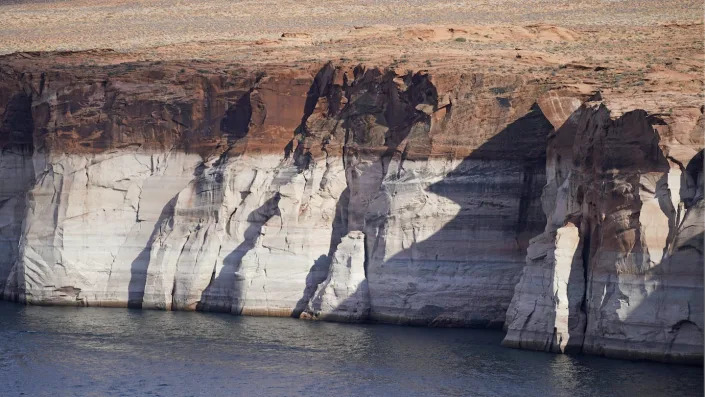
The white 'bathtub ring' around Lake Powell, which is roughly 110 feet high, shows the former high water mark. <a href=
The white ‘bathtub ring’ around Lake Powell, which is roughly 110 feet high, shows the former high water mark. AP Photo/Rick Bowmer

As Western states haggle over reducing water use because of declining flows in the Colorado River Basin, a more hopeful drama is playing out in Glen Canyon.

Lake Powell, the second-largest U.S. reservoir, extends from northern Arizona into southern Utah. A critical water source for seven Colorado River Basin states, it has shrunk dramatically over the past 40 years.

An ongoing 22-year megadrought has lowered the water level to just 22.6% of “full pool,” and that trend is expected to continue. Federal officials assert that there are no plans to drain Lake Powell, but overuse and climate change are draining it anyway.

As the water drops, Glen Canyon – one of the most scenic areas in the U.S. West – is reappearing.

This landscape, which includes the Colorado River’s main channel and about 100 side canyons, was flooded starting in the mid-1960s with the completion of Glen Canyon Dam in northern Arizona. The area’s stunning beauty and unique features have led observers to call it “America’s lost national park.”

Lake Powell’s decline offers an unprecedented opportunity to recover the unique landscape at Glen Canyon. But managing this emergent landscape also presents serious political and environmental challenges. In my view, government agencies should start planning for them now.

A tarnished jewel

Glen Canyon Dam, which towers 710 feet high, was designed to create a water “bank account” for the Colorado River Basin. The U.S. Bureau of Reclamation touted Lake Powell as the “Jewel of the Colorado” and promised that it would be a motorboater’s paradise and an endless source of water and hydropower.

Lake Powell was so big that it took 17 years to fill to capacity. At full pool, it contained 27 million acre-feet of water – enough to cover 27 million acres of land to a depth of one foot – and Glen Canyon Dam’s turbines could generate 1,300 megawatts of power when the reservoir was high.

Soon the reservoir was drawing millions of boaters and water skiers every year. But starting in the late 1980s, its volume declined sharply as states drew more water from the Colorado River while climate change-induced drought reduced the river’s flow. Today the reservoir’s average volume is less than 6 million acre-feet.

Nearly every boat ramp is closed, and many of them sit far from the retreating reservoir. Hydropower production may cease as early as 2024 if the lake falls to “minimum power pool,” the lowest point at which the turbines can draw water. And water supplies to 40 million people are gravely endangered under current management scenarios.

These water supply issues have created a serious crisis in the basin, but there is also an opportunity to recover an amazing landscape. Over 100,000 acres of formerly flooded land have emerged, including world-class scenery that rivals some of the crown jewels of the U.S. national park system.

Bargained away

Glen Canyon made a deep impression on explorer John Wesley Powell when he surveyed the Colorado River starting in 1867. When Powell’s expedition floated through Glen Canyon in 1869, he wrote:

“On the walls, and back many miles into the country, numbers of monument-shaped buttes are observed. So we have a curious ensemble of wonderful features – carved walls, royal arches, glens, alcove gulches, mounds, and monuments … past these towering monuments, past these oak-set glens, past these fern-decked alcoves, past these mural curves, we glide hour after hour.”

This side canyon emerged in recent years as Lake Powell shrank. The white ‘bathtub ring’ on the rock wall shows past water levels. Daniel Craig McCool, <a href=
This side canyon emerged in recent years as Lake Powell shrank. The white ‘bathtub ring’ on the rock wall shows past water levels. Daniel Craig McCool, CC BY-ND

Glen Canyon remained relatively unknown until the late 1940s, when the Bureau of Reclamation proposed several large dams on the upper Colorado River for irrigation and hydropower. Environmentalists fiercely objected to one at Echo Park in Dinosaur National Monument on the Colorado-Utah border, alarmed by the prospect of building a dam in a national monument. Their campaign to block it succeeded – but in return they accepted a dam in Glen Canyon, a decision that former Sierra Club President David Brower later called his greatest regret.

New challenges

The first goal of managing the emergent landscape in Glen Canyon should be the inclusion of tribes in a co-management role. The Colorado River and its tributaries are managed through a complex maze of laws, court cases and regulations known as the “Law of the River.” In an act of stupendous injustice, the Law of the River ignored the water rights of Native Americans until courts stepped in and required western water users to consider their rights.

Tribes received no water allocation in the 1922 Colorado River Compact and were ignored or trivialized in subsequent legislation. Even though modern concepts of water management emphasize including all major stakeholders, tribes were excluded from the policymaking process.

There are 30 tribes in the Colorado River Basin, at least 19 of which have an association with Glen Canyon. They have rights to a substantial portion of the river’s flow, and there are thousands of Indigenous cultural sites in the canyon.

Another management challenge is the massive amounts of sediment that have accumulated in the canyon. “Colorado” means “colored red” in Spanish, a recognition of the silt-laden water. This silt used to build beaches in the Grand Canyon, just downstream, and created the Colorado River delta in Mexico.

But for the past 63 years, it has been accumulating in Lake Powell, where it now clogs some sections of the main channel and will eventually accumulate below the dam. Some of it is laced with toxic materials from mining decades ago. As more of the canyon is exposed, it may become necessary to create an active sediment management plan, including possible mechanical removal of some materials to protect public health.

The creation of Lake Powell also resulted in biological invasives, including nonnative fish and quagga mussels. Some of these problems will abate as the reservoir declines and a free-flowing river replaces stagnant still water.

On a more positive note, native plants are recolonizing side canyons as they become exposed, creating verdant canyon bottoms. Restoring natural ecosystems in the canyon will require innovative biological management strategies as the habitat changes back to a more natural landscape.

Finally, as the emergent landscape expands and side canyons recover their natural scenery, Glen Canyon will become a unique tourist magnet. As the main channel reverts to a flowing river, users will no longer need an expensive boat; anyone with a kayak, canoe or raft will be able to enjoy the beauty of the canyons.

Glen Canyon National Recreation Area, which includes over 1.25 million acres around Lake Powell, was created to cater to people in motorized boats on a flat-water surface. Its staff will need to develop new capabilities and an active visitor management plan to protect the canyon and prevent the kind of crowding that is overrunning other popular national parks.

Other landscapes are likely to emerge across the West as climate change reshapes the region and numerous reservoirs decline. With proper planning, Glen Canyon can provide a lesson in how to manage them.

Read more:

Mt. Washington records coldest wind chill in US history

The Hill

Mt. Washington records coldest wind chill in US history

Amanda Pitts – February 6, 2023

MT. WASHINGTON, N.H. (WPRI) – New Hampshire’s Mount Washington, the highest peak in the Northeast, recorded the coldest wind chill in the history of the United States on Saturday morning when an arctic air mass hit New England.

The Mount Washington Observatory recorded a new, record-low air temperature of -46.9 degrees Fahrenheit as of Saturday morning at 4:10 a.m, according to overnight summit conditions.

The previous record daily low of -32 degrees Fahrenheit was set in 1963.

The previous wind chill record was shattered overnight, when wind chills dropped to -108.4 degrees at different points on Friday night and Saturday morning. The previous record was -102.7 degrees Fahrenheit.

“Winds will also remain elevated Saturday morning, with wind speeds ranging from 100-115 mph with gusts up to 135 mph,” the observatory wrote in a summit forecast on Saturday. “Strong winds and harsh cold temperatures will continue to produce dangerously low wind chill values, with wind chill values remaining at 100 below to 110 below Saturday morning.

What is ‘thundersnow’? Weather phenomenon explained

The record-cold temps come amid what experts call a “generational Arctic outbreak” throughout the Northeast, a branch of the National Weather Service (NWS) told CNN.

On Saturday morning, dangerously cold temperatures remained, along with wind chills that dropped to -45 to -50 degrees Fahrenheit in many areas. On Sunday, however, the frigid temperatures in the region are expected to move out, and possibly rise to the 40s.

The Associated Press contributed to this report.

Huge chunk of plants, animals in U.S. at risk of extinction -report

Reuters

Huge chunk of plants, animals in U.S. at risk of extinction -report

Brad Brooks – February 6, 2023

A Venus flytrap is seen at the meat-eating plant exhibition "Dejate Atrapar" (Let Yourself Get Caught), in Bogota
A Venus flytrap is seen at the meat-eating plant exhibition “Dejate Atrapar” (Let Yourself Get Caught), in Bogota
Endangered Key Deer are pictured in a puddle following Hurricane Irma in Big Pine Key, Florida
Endangered Arizona hedgehog cactus is seen in the Oak Flat recreation area outside Superior, Arizona
A full moon rises over a cactus in Phoenix
The endangered dusky gopher frog, a darkly colored, moderately sized frog with warts covering its back and dusky spots on its belly, is shown in this handout photo

(Reuters) -A leading conservation research group found that 40% of animals and 34% of plants in the United States are at risk of extinction, while 41% of ecosystems are facing collapse.

Everything from crayfish and cacti to freshwater mussels and iconic American species such as the Venus flytrap are in danger of disappearing, a report released on Monday found.

NatureServe, which analyzes data from its network of over 1,000 scientists across the United States and Canada, said the report was its most comprehensive yet, synthesizing five decades’ worth of its own information on the health of animals, plants and ecosystems.

Importantly, the report pinpoints the areas in the United States where land is unprotected and where animals and plants are facing the most threats.

Sean O’Brien, president of NatureServe, said the conclusions of the report were “terrifying” and he hoped it would help lawmakers understand the urgency of passing protections, such as the Recovering America’s Wildlife Act that stalled out in Congress last year.

“If we want to maintain the panoply of biodiversity that we currently enjoy, we need to target the places where the biodiversity is most threatened,” O’Brien said. “This report allows us to do that.”

U.S. Representative Don Beyer, a Democrat who has proposed legislation to create a wildlife corridor system to rebuild threatened populations of fish, wildlife and plants, said NatureServe’s work would be critical to helping agencies identify what areas to prioritize and where to establish migration routes.

“The data reported by NatureServe is grim, a harrowing sign of the very real problems our wildlife and ecosystems are facing,” Beyer told Reuters. “I am thankful for their efforts, which will give a boost to efforts to protect biodiversity.”

HUMAN ENCROACHMENT

Among the species at risk of disappearing are icons like the carnivorous Venus flytrap, which is only found in the wild in a few counties of North and South Carolina.

Nearly half of all cacti species are at risk of extinction, while 200 species of trees, including a maple-leaf oak found in Arkansas, are also at risk of disappearing. Among ecosystems, America’s expansive temperate and boreal grasslands are among the most imperiled, with over half of 78 grassland types at risk of a range-wide collapse.

The threats against plants, animals and ecosystems are varied, the report found, but include “habitat degradation and land conversion, invasive species, damming and polluting of rivers, and climate change.”

California, Texas and the southeastern United States are where the highest percentages of plants, animals and ecosystems are at risk, the report found.

Those areas are both the richest in terms of biodiversity in the country, but also where population growth has boomed in recent decades, and where human encroachment on nature has been harshest, said Wesley Knapp, the chief botanist at NatureServe.

Knapp highlighted the threats facing plants, which typically get less conservation funding than animals. There are nearly 1,250 plants in NatureServe’s “critically imperiled” category, the final stage before extinction, meaning that conservationists have to decide where to spend scant funds even among the most vulnerable species to prevent extinctions.

“Which means a lot of plants are not going to get conservation attention. We’re almost in triage mode trying to keep our natural systems in place,” Knapp said.

‘NATURE SAVINGS ACCOUNT’

Vivian Negron-Ortiz, the president of the Botanical Society of America and a botanist with the U.S. Fish and Wildlife Service, who was not involved in the NatureServe report, said there is still a lot scientists do not know and have not yet discovered about biodiversity in the United States, and that NatureServe’s data helped illuminate that darkness.

More than anything, she sees the new data as a call to action.

“This report shows the need for the public to help prevent the disappearance of many of our plant species,” she said. “The public can help by finding and engaging with local organizations that are actively working to protect wild places and conserve rare species.”

John Kanter, the senior wildlife biologist with the National Wildlife Federation, said the data in the report, which he was not involved with, was essential to guiding state and regional officials in creating impactful State Wildlife Action Plans (SWAPs), which they must do every 10 years to receive federal funding to protect vulnerable species.

Currently $50 million in federal funding is divided up among all states to carry out their SWAPs. The Recovering America’s Wildlife Act, whose congressional sponsors say will be reintroduced soon, would have increased that to $1.4 billion, which would have a huge impact on the state’s abilities to protect animals and ecosystems, Kanter said, and the NatureServe report can act as roadmap for officials to best spend their money.

“Our biodiversity and its conservation is like a ‘nature savings account’ and if we don’t have this kind of accounting of what’s out there and how’s it doing, and what are the threats, there’s no way to prioritize action,” Kanter said. “This new report is critical for that.”

Read more:

GRAPHIC-The collapse of insects

Penguins offer varied clues to Antarctic climate change

ANALYSIS-U.N. nature deal can help wildlife as long as countries deliver

(Reporting by Brad Brooks in Lubbock, Texas; Additional reporting by Julio-Cesar Chavez in Washington; Editing by Lisa Shumaker)