DeSantis Says No Thanks to $377 Million in Federal Energy Funds
Ari Natter – July 11, 2023
DeSantis says no to federal energy funds
(Bloomberg) — Florida Republican Governor and 2024 presidential contender Ron DeSantis quietly rejected hundreds of millions of dollars in federal energy funding, as the Biden administration touts the benefits of its marquee climate law on the campaign trail in battleground states.
The funding, totaling about $377 million, included hundreds of millions of dollars for energy-efficiency rebates and electrification as part of the Inflation Reduction Act, as well as money from the bipartisan infrastructure legislation that became law in 2021.
The Florida Department of Agriculture and Consumer Services’s Office of Energy notified the Energy Department last month it was “respectfully” withdrawing applications for the funds after DeSantis issued a line-item veto for a $5 million federal grant for the state to set up programs to distribute the rebates.
The move comes as US President Joe Biden and others have taken to the road to show how funding from the Inflation Reduction Act and other administration policies are helping Republican states, even as every single Republican voted against approving his signature climate law – which included some $374 billion in funding for clean-energy programs and tax credits.
It also comes amid Republican backlash against “woke” energy-efficiency standards, including from DeSantis himself who has proposed spending millions of dollars to enact tax credits for gas stoves.
A Florida government official, speaking on background, said the $5 million in funding was earmarked to hire people to administer the money for the energy efficiency home-rebate program, including a website and other necessary planning to distribute the funds. The official, who wasn’t authorized to speak on the record about the matter, characterized the decision as surprising.
DeSantis also rejected a $24 million federal grant from the bipartisan Infrastructure Investment and Jobs Act that would have been used to upgrade rural waste-water systems. These grant funds were among some $511 million in line-item vetoes made by DeSantis before signing the state’s $116.5 million budget into law last month.
Following the governor’s move, applications for grant funding totaling some $377 million were withdrawn, according to the Florida Department of Agriculture and Consumer Services. That included nearly $174 million set aside for rebates for energy-efficiency improvements and another $173 million for a rebate program for the purchase of energy-efficient home appliances. Another $7 million was poised for a training program for electrification contractors.
“These programs directly benefit home owners and renters and these rebates mean that people in Florida would get lower utility bills and healthier and more comfortable homes as well as lower greenhouse gas emissions,” said Lowell Ungar, director of federal policy for the American Council for an Energy-Efficient Economy. “The federal money will help pay for that so it will be a real loss if they don’t implement these programs.”
A DeSantis spokesman declined to comment.
An administration official said Florida still has the option of applying for the funding at a later time.
DeSantis’ rejection of the funds was first reported by The Capitolist, a blog with ties to NextEra Energy Inc.’s Florida Power & Light Co., a state utility.
WANTAGH, NEW YORK – JULY 07: A new shark-monitoring drone monitors the waters for sharks as people swim at Jones Beach State Park on July 07, 2023 in Wantagh, New York. Governor Kathy Hochul announced that local beach communities on Long Island and New York City will receive shark-monitoring drones as the state addresses beachgoer safety in response to shark sightings over the 4th of July holiday and reports of people being bitten by sharks at some of New York’s most popular beaches. (Photo by Michael M. Santiago/Getty Images) (Michael M. Santiago via Getty Images)More
Try not to think about the ocean. Because if you’re the type of person prone to listless anxiety, a simple question – What’s a submersible? Where do orcas live? – might take you to a deep, dark place. A place like the Hadal Zone, named for the Greek god of hell, where there is absolutely no light and the only creatures that can survive the crushing pressure are characterized by their transparent, gooey skin. Or maybe a place in the Gulf of Mexico called the “Hot Tub of Despair,” an underwater lake full of methane that kills any organism that enters it. Or perhaps a remote part of the Pacific Ocean that has earned the nickname “White Shark Cafe.”
We are having a “Jaws” Girl Summer. It’s giving Moby-Dick Energy. We’re in our Ancient Mariner Era. Is the ocean more terrifying than usual this year, or are we suddenly just more aware of how terrifying the ocean can be?
Here’s an illustrative roundup of recent horrors. Orcas have trained one another to attack boats off the coast of Spain and Portugal. Over the July Fourth holiday, four people were bitten by sharks on New York beaches, and approximately 200 people needed to be rescued from rip currents in Virginia and North Carolina. A man on a fishing trip to a Freeport, Tex., beach last month arrived to discover that tens of thousands of dead fish had washed ashore. Homes in the Outer Banks are toppling into the waves.
Don’t forget the beach where severed human feet wash ashore on a regular basis in a northwest Washington county that recently announced that it is crowdfunding an investigation to identify a recent set of remains. Or the awful video of the teen who jumped off the party boat in the Bahamas in May, only to be swallowed up by the inky black water, and never seen again. Or the fact that Japan is planning to release more than 1 million cubic meters of treated radioactive water – approximately 500 Olympic-size swimming pools, an amount that is considered “safe” – from the 2011 Fukushima nuclear disaster into the Pacific this summer.
Then there was the OceanGate catastrophe, which made millions of people ponder the specifics of an excruciating death: Trapped at the bottom of the ocean in a claustrophobic metal coffin-like tube, in a dark blacker than any night, with 96 hours of oxygen left to contemplate the unlikelihood of rescue and your imminent suffocation. What actually happened was no less horrific, but somehow seemed kinder: being crushed to death in milliseconds by as much as 6,000 pounds of pressure per square inch.
In the ocean, that’s a good way to go.
That’s what Alexandria Neonakis realized during the days she spent transfixed by the submersible crisis.
“At every step, every fact that you learned about it” – The video game controllers! The strange knocking noises! The fact that it was bolted shut from the outside! – “was so much worse, and it kept getting worse,” says the 38-year-old artist. “Social media just enabled that to go even crazier, because it takes your imagination and it amplifies it, because everybody’s thinking insane things,” such as: Did one of the rich men on the submersible kill another one of the rich men to conserve oxygen?
The speculation became “a feeding frenzy,” she says. Which is yet another terrifying thing you find in the ocean.
Space is also a terrifying void, but “that’s pretty far. I don’t have to worry about that,” Neonakis says. She does not have a quarter of a million dollars to spend on space tourism, so she won’t end up on a rocket anytime soon. And, yes, that’s the same price the now-defunct OceanGate charged people for a trip down to the wreckage of the Titanic, but unlike space, you can get swept away by the ocean for free. “It’s like, right there,” Neonakis says. Near Los Angeles. Where she lives.
The term for fear of the ocean is thalassophobia. Myths about deep-sea monsters can be found in ancient cultures from all across the globe. “The lack of adoration, desire for interaction, or simply fear itself, towards the deep sea is not irrational but rather primal,” wrote a team of marine researchers in a 2021 paper examining why the public seems to not care about deep-sea exploration as much as space exploration. We associate “up” with heaven, and “down” with hell.
And the fear of the unknown, combined with the vastness of a seemingly infinite horizon and improbability of rescue, makes great horror fodder, which is why the ocean has been the setting for so many scary movies. Most are fiction, such as “The Meg” and “The Shallows,” but some, such as 2003’s “Open Water,” about a couple mistakenly left to die during a scuba expedition, are based on true stories. As “Jaws” taught us, you don’t have to be out in the deep ocean to encounter its frights: Just last week, a dorsal fin popped up at Navarre Beach near Pensacola, Fla., prompting a chaotic scramble amid screams of, “Get out of the water!” Jellyfish wrap their tentacles around an ankle. Stingrays slink around the shallows. Something you can’t see just brushed past your thigh.
Mark Fryers, a British researcher who studies media representations of marine culture, says he wouldn’t be surprised if we eventually get a movie based on the ill-fated submersible.
“The sea is something of a castigating mirror: It reflects back our bad deeds,” Fryers says. “We know we’re creating, as a species, more damage in the ocean. It comes back to haunt us. It all washes back to us. There’s a pervasive sense of death and decline and self-examination.”
The problem, too, is that we focus on the unlikely catastrophes and ignore the more commonplace ones: A coast guard that allows a boat full of migrants to capsize. An ocean that is rapidly warming. Microplastics. Instead, we think about the sharp fangs of the anglerfish, or the tentacles of a colossal squid, or the spindly six-foot-long (!) legs of the Japanese spider crab. Those glow-in-the-dark fish with a bajillion fangs. Something called a goblin shark. Even the most delicious creatures in the ocean can be kind of gross, when you think about it: As a popular meme reminds us, shrimps is bugs.
Even if those creatures don’t give you anxiety, there is one that might: the great white shark.
We may have been hearing more about sharks lately – Cape Cod has become “one of the largest white shark hotspots in the world,” according to Scientific American – but it’s been a pretty typical year so far, says Gavin Naylor, director of the Florida Program for Shark Research at the University of Florida.
“We’ve had a similar number of bites thus far this year as we did at this stage last year,” Naylor tells us via email. “Every year people seem to think ‘This year is different.’ I guess they must forget how they felt this time last year.”
It’s related to a phenomenon researchers call “sea blindness,” which sounds like something that afflicted pirates and castaways, but is actually contemporary: It refers to how oceanic issues “tend to disappear from our consciousness, our daily life,” Fryers says, until an event or flash point brings them abruptly back. Like the submersible.
“Every horrifying story about the ocean is so f—ing horrifying. It’s not like it’s a little horrifying. It’s like, ‘Wow, that’s the worst thing I’ve ever heard,'” Neonakis says. Better to just brave the myriad horrors on dry land.
‘It’s brutal’: As premiums continue to soar, another home insurer is leaving Florida
Alex Harris, Lawrence Mower – July 11, 2023
Pedro Portal/pportal@miamiherald.com
Another insurer is leaving Florida, where homeowners are paying more than ever for insurance, despite the state’s attempt to shore up the wobbling market.
Tuesday, Farmers Insurance informed the state it was dropping home, auto and umbrella policies across Florida, potentially affecting tens of thousands of people. It’s the fourth company to leave the Florida market in the last year — most citing rising risks from hurricanes. Farmers, a large company with a national presence, also has reduced new business in California, citing extreme weather and wild fire threats.
“This business decision was necessary to effectively manage risk exposure,” the company wrote in a statement.
Farmers said the decision to withdraw affects about 30% of its overall policies around the state, but not ones issued through its subsidiary companies. Those — including auto insurer Bristol West and home insurer Foremost — are unaffected.
The company declined to speak on the record about how many people would lose coverage. Figures from Florida’s Office of Insurance Regulation show that Farmers has about 93,000 current home and auto policies, but an industry source suggests that number is currently closer to 100,000.
The day before Farmers made the decision public, Florida’s Chief Financial Officer Jimmy Patronis tweeted that his office has “zero communication” with the company and vowed to “explore every avenue possible for holding them accountable” for leaving Florida.
Florida’s Office of Insurance Regulation said in a statement that the office was reviewing Farmers’ notice, which was sent to the office on Monday and marked a “trade secret,” limiting what regulators could say about it.
Under state law, insurers are required to give 120 days’ notice to customers before their policies are dropped. Customers who receive a notice are encouraged to contact their agent immediately to find alternative coverage, the office said in a statement.
Later Tuesday, the office also formally chastised Farmers for not giving the office a heads-up before deciding to pull out of the state. In a letter, Florida Insurance Commissioner Michael Yaworksy also noted that Farmers made the decision to leave Florida “independently” of the state’s insurance reforms.
“We are disappointed by the hastiness in this decision and troubled by how this decision may have cascading impacts to policyholders,” Yaworsky wrote. “Farmers has noted this decision only impacts about 26.6% percent of their Florida policyholders, but any impact which impacts policyholders should not be taken lightly.”
Leaving despite reforms
Tuesday’s announcement follows a mid-June decision from Farmers to stop writing new policies in Florida due to the skyrocketing costs of hurricane recovery and rebuilding.
“With catastrophe costs at historically high levels and reconstruction costs continuing to climb, we implemented a pause on writing new homeowners policies to more effectively manage our risk exposure,” Farmers said in a statement.
Notably, Farmers did not mention lawsuits, which has been the main culprit Florida insurers point to when asked why costs are rising so fast. However, financial autopsies of failed insurers in Florida regularly point to excessive payouts, high salaries and fees to affiliated companies as the main problem that leads to bankruptcy.
The decision by Farmers follows years of turmoil in the state’s property insurance market, triggered by a series of hurricanes starting in 2017. Floridians pay the highest property insurance premiums in the nation, and 13 companies have gone insolvent in recent years. Many others have stopped writing new policies or pulled out of Florida.
Gov. Ron DeSantis and state lawmakers have responded by making it harder to sue insurance companies and assigning $3 billion to help them withstand storm seasons. A report by the state’s Office of Insurance Regulation released last week indicated that the industry broke even during the first quarter of 2023, after years of heavy losses.
But the legislation has failed to reduce premiums for homeowners. Premiums continue to go up, according to the office’s report. Between November and March, rates increased 5% in Miami-Dade County, to an average of $5,665.
But the rate increases were higher in Hillsborough and Pinellas counties, rising 9.5% and 9.25%, respectively. Homeowners in Hillsborough County are paying an average of $2,752 and $3,210 in Pinellas County.
Friedlander said the average premium in Florida is 42% higher than last year’s and miles ahead of the average premium nationwide — $1,700.
“It’s brutal, said Vince Perri, head of Key Biscayne-based public adjuster firm Elite Resolutions. “The premiums are through the roof. It’s always been high here but it’s worse now.”
Perri, who’s been in the business for more than a decade, said he sees the back-to-back storms in recent years as a major factor in rising prices. Hurricane Ian last year was Florida’s most expensive storm, causing more than $109 billion in damages across the state.
If Florida can scrape by a few more years without a hurricane landfall, Perri said, he believes insurance costs will start to go down again.
“It’s going to take a couple of years for the market to level out again,” he said. “I think insurance premiums are going to be high for awhile.”
Relentless rain causes floods in Northeast, prompts rescues and swamps Vermont’s capital
Lisa Rathke and John Minchillo – July 10, 2023
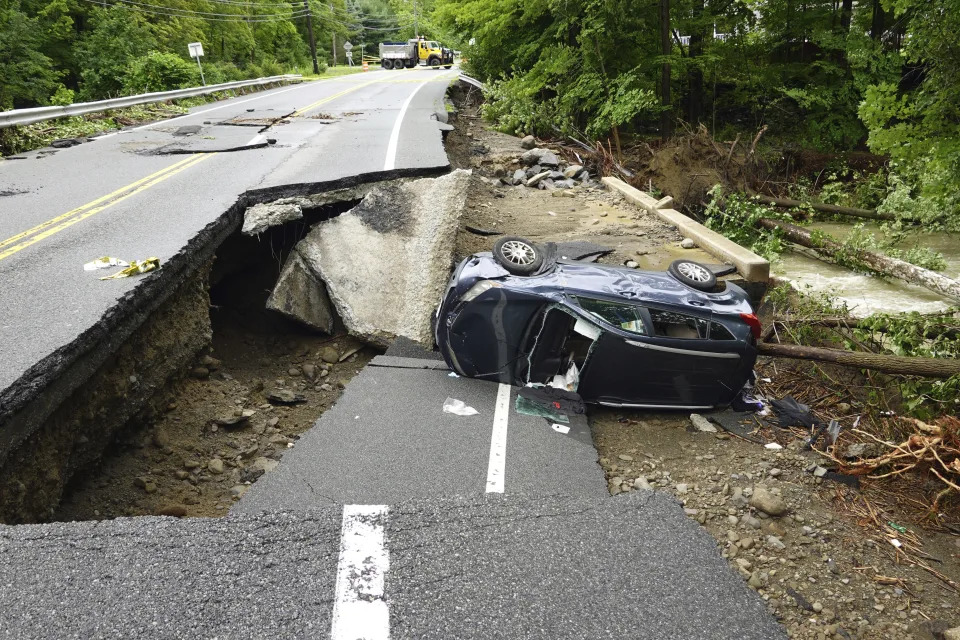
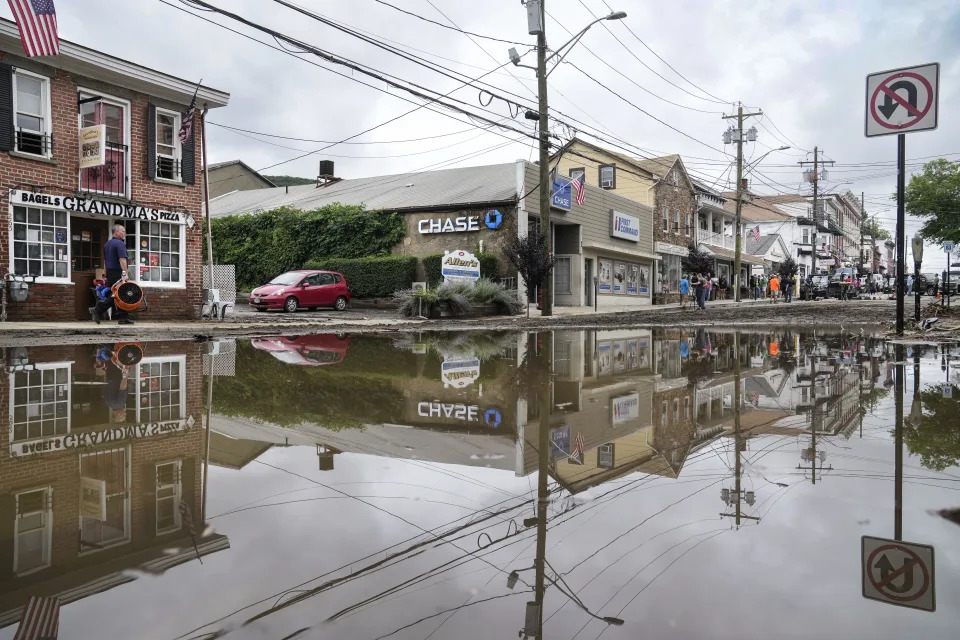
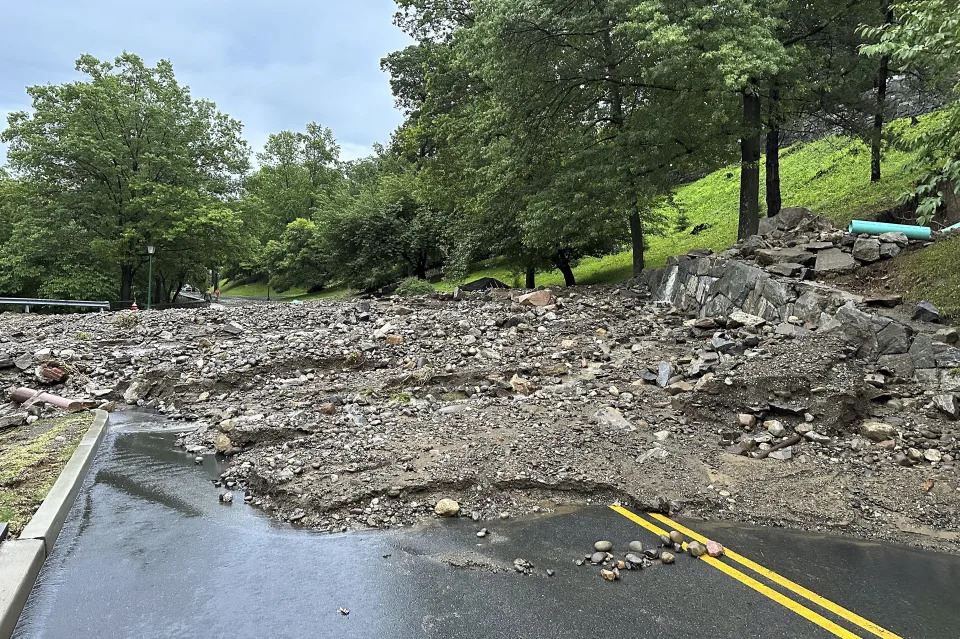
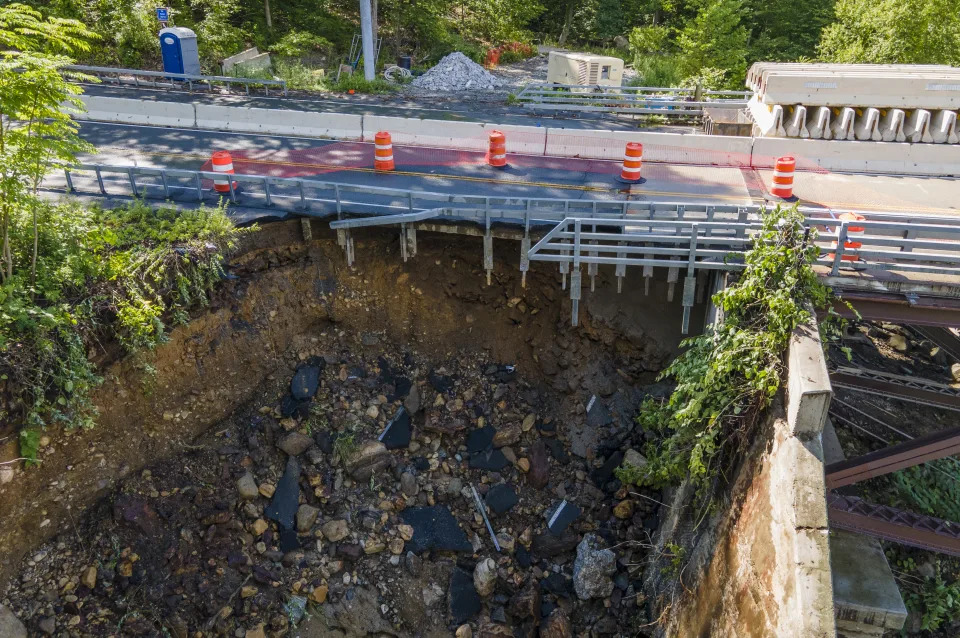
A damaged car lays on a collapsed roadway along Route 32 in the Hudson Valley near Cornwall, N.Y., Monday, July 10, 2023. Heavy rain has washed out roads and forced evacuations in the Northeast as more downpours were forecast throughout the day. (AP Photo/Paul Kazdan)Residents, journalists, and emergency service workers walk around a flooded Main Street, Monday, July 10, 2023, in Highland Falls, N.Y. Heavy rain has washed out roads and forced evacuations in the Northeast as more downpours were forecast throughout the day. One person in New York’s Hudson Valley has drowned as she was trying to leave her home. (AP Photo/John Minchillo)Mud, rocks and debris from Sunday’s flash flood cover a road on the campus of the United States Military Academy at West Point, Monday, July 10, 2023 in West Point, N.Y. Heavy rain has washed out roads and forced evacuations in the Northeast as more downpours were forecast throughout the day, Monday. (Courtesy of the USMA via AP)Erosion damage is seen after heavy rains washed down Bear Mountain near the Popolopen Bridge along U.S. Route 9W in Highland Falls, N.Y., rendering the bridge unsafe and impassable for vehicles, on Monday, July 10, 2023. (AP Photo/Ted Shaffrey)
ANDOVER, Vt. (AP) — Rescue teams raced into Vermont on Monday after heavy rain drenched parts of the Northeast, washing out roads, forcing evacuations and halting some airline travel. One person was killed in New York’s Hudson Valley as she tried to escape her flooded home.
Mike Cannon of Vermont Urban Search and Rescue said crews from North Carolina, Michigan and Connecticut were among those helping to get to towns that have been unreachable since torrents of rain belted the state. The towns of Londonderry and Weston were inaccessible, Cannon said, and rescuers were heading there to do welfare checks. Water levels at several dams were being closely monitored.
The U.S Army Corps of Engineers said late Monday they expected two dams to release water overnight, causing “severe flooding” downstream likely to affect multiple towns.
Flooding hit Vermont’s state capital, with Montpelier Town Manager Bill Fraser estimating Monday night that knee-high waters had reached much of downtown and were expected to rise a couple more feet during the night. Montpelier had largely been spared during Tropical Storm Irene, which struck the region in 2011.
“For us, this is far worse than Irene. We got water but it went up and down. There were some basements flooded but it didn’t last long,” Fraser said, comparing this flooding to the Montpelier Ice Jams in 1992. “We are completely inundated. The water is way, way higher than it ever got during Irene.”
During Irene, Vermont got 11 inches (28 centimeters) of rain in 24 hours. Irene killed six in the state, washed homes off their foundations and damaged or destroyed more than 200 bridges and 500 miles (805 kilometers) of highway.
There have been no reports of injuries or deaths related to the latest flooding in Vermont, according to state emergency officials. Roads were closed across the state, including many along the spine of the Green Mountains.
Some people canoed their way to the Cavendish Baptist Church in Vermont, which had turned into a shelter. About 30 people waited it out, some of them making cookies for firefighters who were working to evacuate and rescue others.
“People are doing OK. It’s just stressful,” shelter volunteer Amanda Gross said.
Vermont Rep. Kelly Pajala said she and about half dozen others had to evacuate early Monday from a four-unit apartment building on the West River in Londonderry.
“The river was at our doorstep,” said Pajala. “We threw some dry clothes and our cats into the car and drove to higher ground.”
The slow-moving storm reached New England in the morning after hitting parts of New York and Connecticut on Sunday. Additional downpours in the region raised the potential for flash flooding; rainfall in certain parts of Vermont had exceeded 7 inches ( 18 centimeters), the National Weather Service in Burlington said.
One of the worst-hit places was New York’s Hudson Valley, where a woman identified by police as Pamela Nugent, 43, died as she tried to escape her flooded home in the hamlet of Fort Montgomery.
The force of the flash flooding dislodged boulders, which rammed into the woman’s house and damaged part of its wall, Orange County Executive Steven Neuhaus told The Associated Press. Two other people escaped.
“She was trying to get through (the flooding) with her dog,” Neuhaus said, “and she was overwhelmed by tidal wave-type waves.”
Officials say the storm has already wrought tens of millions of dollars in damage. In New York, Gov. Kathy Hochul said at a news conference Monday the storm sent “cars swirling in our streets” and dumped a “historic” amount of rain.
“Nine inches of rain in this community,” Hochul said during a briefing on a muddy street in Highland Falls. “They’re calling this a ‘1,000 year event.’”
As of Monday evening, several washed-out streets in Highland Falls remained impassable, leaving some residents stuck in their homes but otherwise OK, Police Chief Frank Basile said in a telephone interview.
Massachusetts Gov. Maura Healey said there were reports of flooding in central and western Massachusetts and that state emergency management officials were in touch with local authorities.
The U.S. Military Academy at West Point was pounded with more than 8 inches (20.32 centimeters) of rain that sent debris sliding onto some roads and washed others out. Superintendent Lt. Gen. Steven W. Gilland said recently arrived new cadets and others at the historic academy on the Hudson River were safe, but that assessing the damage will take time.
Atmospheric scientists say destructive flooding events across the globe have this in common: Storms are forming in a warmer atmosphere, making extreme rainfall a reality right now. The additional warming that scientists predict is coming will only make it worse.
The storm also interrupted air and rail travel. There were hundreds of flight cancellations at Kennedy, LaGuardia and Newark airports and more than 200 canceled at Boston’s Logan Airport in the last 24 hours, according to the Flightaware website. Amtrak temporarily suspended service between Albany and New York.
Swift water rescue teams in Vermont have done more than 50 rescues, mainly in the southern and central areas of the state, Vermont Emergency Management said Monday night.
Among the buildings flooded Monday was the Weston Playhouse in Weston, Vermont, which had been performing “Buddy — The Buddy Holly Story” to sold-out audiences.
The Weston Theater Company’s executive artistic director Susanna Gellert said the call was made at around 4 a.m. to evacuate 11 people associated with the production to higher ground and another 15 in nearby Ludlow. The three-floor playhouse, which had been damaged during Irene, was also flooded, with the dressing room and props room under water.
“As a theater, we were just starting to get back from the COVID shutdown,” Gellert said. “To have this happen right now is painfully heartbreaking.”
Cara Philbin, 37, of Ludlow, Vermont, was awakened by a neighbor early Monday and told to clear out of her second-floor apartment because the parking lot was already flooded.
“He told me me, ‘You need to get out of here … your car is going to float away, and I suggest you do not stay,’” said Philbin. The neighbor took her car keys and moved her car to a higher spot, while she called her parents and then drove to their home to ride out the storm, she said.
Ross Andrews and his wife were driving back home to Calais, Vermont, on Monday when he saw trucks parked at a 230-year-old dam with crews trying to keep it from failing. There were trees down everywhere.
“The interstate was closed right at our exit. Our road was closed right at our driveway. We managed to thread our way back just in the nick of time,” he said.
Minchillo reported from Highland Falls, New York. Kathy McCormack in Concord, New Hampshire; Michael Hill in Albany, New York; and Mark Pratt and Steve LeBlanc in Boston contributed.
Be on the lookout for invasive, jumping “earthworms on steroids”
Li Cohen – July 10, 2023
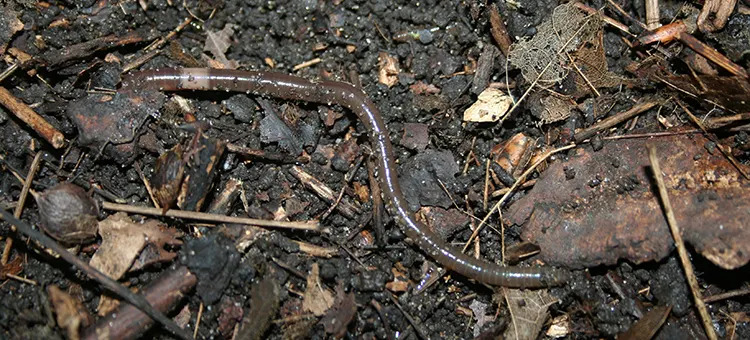
As you tend to your garden this summer, there’s a creepy, crawly creature to be on the lookout for: an invasive worm that moves like a snake, thrashes around, jumps into the air and will even shed its tail in an attempt to escape.
While worms are generally considered to be an excellent addition to help soil and gardening, there are thousands of species — not all of them equally welcome. Invasive jumping worms are one species known to actually worsen soil and make it “inhospitable” to many plants. They have been spotted in recent years, and most recently, may have even been seen in Wisconsin.
Here’s what to know about the invasive species.
What are invasive jumping worms?
Invasive jumping worms, Amynthas agrestis, go by many names, according to the USDA: Alabama jumpers, Jersey wriggles, wood eel, crazy worms, snake worms and crazy snake worms. But all those names stem from one notable feature of the critter.
“Invasive Asian jumping worms got their name because of the way they thrash around,” Forest Service researcher Mac Callaham said in a post by the USDA last year. “They can flip themselves a foot off the ground.”
The worms are thought to have first made it to the U.S. some time in the early to mid 1900s from eastern Asia, and can be transported to new areas in shipments of mulch or potted plants.
The invasive jumping worm has popped up across the U.S. in summer months after they reach maturity. / Credit: DNR
Where are they found?
The critters, which been described as “earthworms on steroids,” had infiltrated Connecticut and more than 30 other states as of last summer. According to the Connecticut Agricultural Experiment Station, the worms are often found in the eastern U.S. and parts of Canada, where the climate is “similar to the area in Japan where jumping worms come from.”
“Jumping worms are well adapted to these humid continental and humid subtropical climates, and so they have a strong potential to invade the entire eastern half of the United States and parts of Canada,” the department says.
And most recently, they may have been found in Wisconsin.
Wisconsin officials said the Door County Invasive Species Team received a report from a local resident that there may be jumping worms in a mulch pile at Sturgeon Bay’s compost site. The city, which issued a statement on July 6, said it is investigating the report and that the site will be treated “as if it is infested” until it is proved otherwise.
The Wisconsin Department of Natural Resources says the worms typically live within the top inch or two of the soil’s surface, often in debris and leaves, and can be found in yards, gardens, mulch, compost and potted plants. They spend the summer months eating and growing and are most noticeable in the late summer and early autumn once they reach maturity and start to reproduce — which they can do without mates.
Why are jumping worms bad?
Wisconsin officials explain that the worms eat the organic matter in soil and leave behind waste that looks like “hard little pellets,” known as castings, that “alter the texture and composition of soil” to make it look like large coffee grounds. That soil lacks the structure and support necessary for many native plants to survive.
The worms are also known to have build-ups of toxic metals within their systems, including mercury, cadmium, copper and lead, according to the Connecticut Agricultural Experiment Station. If those metals, which are found in soil, reach high levels within the worms, it can “negatively impact” the birds that may feed on them, researchers said.
What do invasive jumping worms look like?
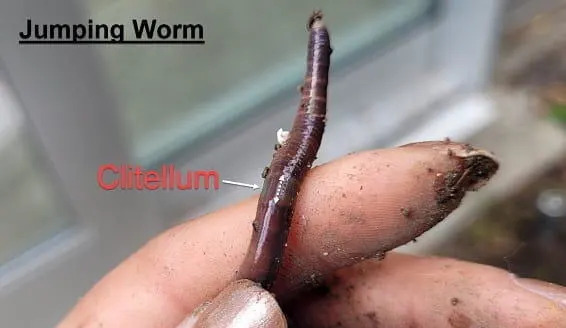
The Wisconsin Department of Natural Resources describes invasive jumping worms as having a “smooth, glossy dark gray/brown color” with a cloudy-white to gray-colored band, known as the clitellum. The worms are known to have a “snake-like movement,” are often found in large numbers, and will “thrash, spring into the air and can even shed their tails to escape,” when they are disturbed, the department says.
Invasive jumping worms often have a gray or milky white clitellum band that’s flat against the rest of their bodies. / Credit: Shikha Singh, JLW CISMA/Michigan Invasive Species Program
How can you prevent and get rid of invasive jumping worms?
There are not yet any official methods to help control or prevent jumping worms, but Wisconsin officials say the best thing people can do is to educate themselves about how to recognize the creatures. People are also encouraged to clean soil and debris if moving it between areas, and only sell or purchase plants and gardening materials inspected and believed to be jumping worm-free.
If jumping worms are found, remove and destroy them by sealing them in a bag and throwing that bag in the trash, Wisconsin officials say. They also said research has shown that the worms and their cocoons can’t live through temperatures of 104 degrees Fahrenheit or above for more than three days — a temperature that can be easily hit in compost piles or can be reached by putting clear plastic over garden topsoil exposed to the sun.
Father claims he ‘ended’ his young son’s health problems by making one small change in his home: ‘[It] offers zero benefit’
Brett Aresco – July 9, 2023
The national debate over gas stoves in homes has reached a fever pitch, with advocates praising their cooking precision and critics condemning their adverse health effects. With more Americans than ever debating the costs and benefits, many have started sharing their own stories about abandoning gas stoves on social media.
Writer Jamelle Bouie is one person who’s gone through that questioning — and come out the other side praising the benefits of induction stoves over gas-powered ones. Bouie, a dad, says the decision to switch had a major effect on his son’s health.
Bouie posted a TikTok explaining his reasoning, in which he says that “there is a lot of evidence going back many decades that gas stoves produce levels of indoor pollution that would be considered highly dangerous if experienced outside.”
“I’m not here to tell you that you can’t have a gas stove,” Bouie adds, noting that he and his family purchased an induction range in 2022 and have already seen the benefits.
“My son had pre-asthma,” Bouie goes on, “and removing the gas stove from our house pretty much ended any respiratory problems he had.”
Research now shows that gas stoves are a major contributor to childhood asthma cases because they release dangerous chemicals like nitrogen dioxide and formaldehyde. According to the California Air Resources Board, “Natural gas and propane stoves can release carbon monoxide, formaldehyde, and other harmful pollutants into the air, which can be toxic to people and pets.”
Induction stoves are an excellent alternative that can eliminate many of the problems with gas stoves. They’re also lightning-fast, easy to clean, and usually cheaper than their gas counterparts. Bouie says his induction range “cooks as good as gas,” and he found a lot of support for his switch from fellow TikTokers who commented on the video.
“We switched to an induction stove a few months ago,” one user writes. “I like it better than gas, heats up cast iron fast and boils water very fast.”
“Induction is better by every metric,” writes another. “Gas offers zero benefit.”
Other commenters lamented that they lived in rented homes and didn’t have the power to replace their gas stoves. “I would get rid of the stove,” one writes, “but I’m in an apartment.”
“Renters need recourse,” another commenter writes. “Not like we can legally replace them ourselves.”
Join our free newsletter for easy tips to save more, waste less, and help yourself while helping the planet.
Toxic algae that can cause lung infections and neurological disorders is taking over a giant lake in Florida, and ecologists say the bloom will only grow
Katie Hawkinson – July 9, 2023
More than half of Lake Okeechobee is covered in algae blooms.Joe Raedle/Getty Images
Florida’s Lake Okeechobee is already half full with toxic algae, and the bloom will only grow.
Fumes from the algae can cause several health complications, like lung infections.
Climate warming and pollutant run-off from nearby crops help it thrive, experts say.
The largest freshwater lake in Florida, which is a draw for fishing and boating in the summer months, likely won’t see many faces this year.
That’s because Lake Okeechobee is already half-full with a bright green, toxic algae that researchers say will only grow as algae season continues on through the summer. The algae can cause several health complications, including lung infections, organ damage, and neurological disorders, The New York Times reports.
Experts told the Times the severity of this year’s bloom is, in large part, due to the warming climate that has resulted in increased rainfall and rising levels of carbon dioxide, which the algae feeds on. The algae also thrives among the fertilizer and manure that runs into the lake from nearby crops.
This is not a new problem for Florida. In 2018, former Governor Rick Scott declared a state of emergency across seven counties in an effort to combat the same toxic algae in Lake Okeechobee that was also inundating a nearby river.
Finding a solution to this toxic bloom has been a challenge.
Florida plans to build a reservoir to stop the algae from flowing out of the lake and into other bodies of water — though the Times reports that the reservoir would fill to capacity after depleting Okeechobee by only six inches.
Environmentalists are also calling on the state of Florida to implement rules limiting the run-off of pollutants from nearby crops that feed the algae, the Times reports.
This policy would take decades to make a large impact, thanks to the phosphorous-rich sediment already present in the lake.
Las Vegas Valley is making major changes to its landscape to keep up with its fast-growing population — here’s what’s happening
Mary Swansburg – July 9, 2023
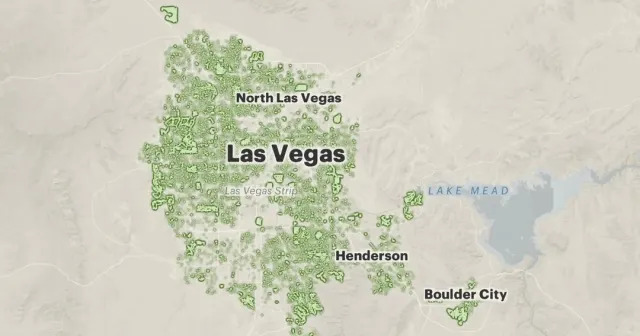
The Las Vegas Valley is working with its citizens to help them ditch their grassy yards and embrace Nevada’s natural landscape instead.
The news was shared in an article by ProPublica that was reposted on Reddit.
Photo Credit: u/WhoIsJolyonWest / Reddit
The effort will conserve water and allow the population in Vegas to continue growing.
Community members have already done their part to conserve water indoors, and Nevada treats and recycles all indoor water. Outdoor water, however, cannot be recycled in the same way because it evaporates or settles into the ground.
Because of this, the state is turning toward grass reduction because growing grass in the desert climate requires a significant amount of water.
A similar plan has been utilized before and helped the conservation effort, but it encountered some pushback from homeowner associations (HOAs.) Also, some citizens want to preserve the aesthetic of green lawns, so the state is making an effort to find a compromise.
The state is targeting “nonfunctional” grass first, like grass that lines roadways and lakes, with the goal to get rid of all of it by 2027. Citizens upset about grass removal can submit an exemption request — many of which are approved — making the pushback from HOAs minimal.
In addition, some companies like Par 3 Landscape and Maintenance are offering ideas for alternative plantlife that is native to the area, such as evergreens and desert-friendly shrubs.
Families that choose to embrace the natural landscape will lower their water bills while leaving resources for the addition of new residents and businesses. On top of that, they’ll be helping to fight rising global temperatures.
Princeton reported that 800 million gallons of gasoline, which releases planet-warming gases, are used by lawn equipment each year, and an additional 17 million gallons are spilled in the process.
Plus, the Natural Resource Defense Council reported that lawns are responsible for consuming almost three trillion gallons of water each year. And when grass is grown outside of its natural habitat, it doesn’t benefit the local wildlife either.
One Redditor echoed this in the comments. “Lawns do NOT belong in the southwest,” they wrote.
Luckily, the Las Vegas Valley is setting a great example for communities looking to conserve water.
“If everyone else takes on similar initiatives, we’ll be able to sustain our community and communities across the Colorado River Basin for future generations,” said Howard Watts, Nevada state representative.
How do I fix an overwatered plant? The warning signs – and ways to combat excessive moisture
Drew Swainston – July 8, 2023
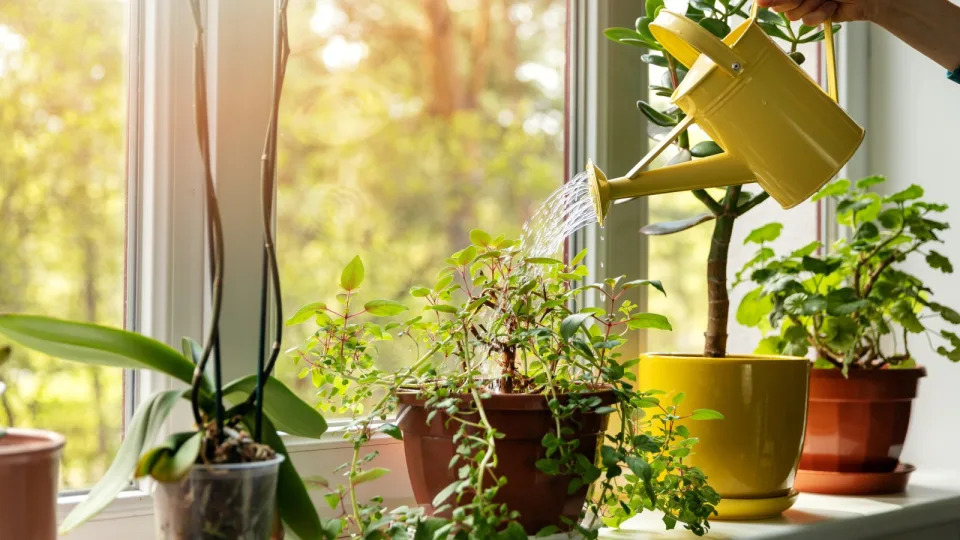
Watering houseplants on a windowsill
Overwatering plants is a common mistake to make and many people do not realize it can be as dangerous as underwatering. There is the potential for plants to be killed by overwatering as the roots can essentially be suffocated by too much moisture in the soil.
However, rest assured that there are tried-and-tested methods of fixing a plant that has been overwatered and getting it back to a healthy and thriving state again. The measures can be as simple as stopping watering until the soil dries out, to moving the plant or repotting it into a new soil mix.
Judging when to water plants is always tricky, especially so for a novice gardener, so it pays to know those classic signs of overwatering so you can spot them quickly and make any moves required to deal with that excess moisture in the soil.
What should I do if I overwater my plant?
watering potted plants
Overwatering plants happens. It is often a case of over-enthusiasm and mis-judging how much moisture the plants need, though it can be a year-round issue and equally as problematic during the winter months as when watering plants in hot weather.
However, there are tell-tale signs that any plant has been overwatered which are important to recognize. This includes yellowing or browning leaves, wilting, and also the soil can look green as a result of algae growth.
At the first sign of any of these, move quickly to see if overwatering could be the cause. While it is more common to overwater houseplants or those in containers, overwatering outdoor plants does also often occur and the signs to look out for will be the same.
The first move should be to check how wet the soil is around the base of the plants. When watering plants in containers, always use your fingers to see the moisture levels a few inches down in the pot. The soil may look dry on top, but still be very sodden below the surface and adding more moisture can easily lead to overwatering. An alternative to using your fingers is to get a soil moisture meter that can be inserted and give an instant reading with regards to water levels. Sonkir’s meter is by far Amazon’s best seller with over 30,000 positive reviews, and can also test soil pH.
If you fear overwatering to be the issue, then there are simple steps to take. Which one is the best step is likely to be dependent on how fast you spotted the signs of this garden watering mistake and how waterlogged the soil got.
It may seem obvious, but the main thing to remember is to stop giving an overwatered plant any more water. Continuing to add more water to an already overwatered plant can further exacerbate the issues and increase the chance of root rot.
It may take many days for the soil to dry out, but hold off from watering the plant while it dries out. If the problem has been identified quickly then merely letting the soil dry out and then adjusting your watering schedule to better suit the plant can often do the trick.
Woman watering plants
2. Re-pot the plant
To help the plant to recover from overwatering, it can be beneficial to re-pot it and improve the soil type in which it is living. Depending on how sodden the soil is, it might be possible to lift the plant out of the pot and allow the soil to dry in the air for a few hours. If the soil is so wet this seems unlikely, then it would be best to re-pot it completely into a better soil mix.
How to repot an overwatered plant in 5 simple steps:
Remove the plant from the pot and try to remove as much of the wet soil as you can.
Inspect the roots and cut off any rotting sections, they will look brown and potentially have a decaying odor.
Pick a pot and make sure there are holes in the bottom for drainage. You can reuse the same pot, but it is best to wash it out beforehand.
Place the pot in a shady spot and refrain from watering until the soil mix feels dry.
Repotting a houseplant
3. Move the pot
While the instinct might be to move the plant to the sunniest spot possible to help dry out the soil, this can actually do the plant further harm. It is far better to move the plant into a shaded spot to allow it to dry out.
A plant that has been overwatered will struggle to move water to its upper leaves, which can leave the upper levels of the plant at risk of drying out due to evaporation in full sun. This can further stress the plant, it is better to move the plant to a shady spot and remove any flowers or fruits that are towards the top. Removing theses helps the plant focus its energy into recovery and surviving.
Plants in pots on a balcony
4. Increase air flow
Increasing the air flow can help to dry a plant out. This can be particularly beneficial if you can lift the plant out of the pot and air dry the soil around the root ball. Air flow can help to dry out soil that is holding too much moisture, especially if they are in porous terracotta pots, and it can dry soil throughout the whole container. This can be achieved by placing a fan nearby.
If you can lift the root ball, lay it on a rack and get some air movement around it to help reduce some of that excess moisture. Once dried, the root ball can go back into the pot again.
FAQs
How long does it take for a plant to recover from overwatering?
The time it takes for a plant to recover from overwatering will depend on certain factors, including how sodden the soil is, the pot size, and temperature. It is a case of playing the waiting game and monitoring how long it takes for the soil to dry out completely before starting to water again. It can take between one and two weeks for a plant to dry out and start the recovery process from being overwatered.
What are signs of root rot?
The tricky thing with root rot is that, while there can be signs of the issue showing above the ground, you cannot be sure until you lift the plant. By this time there could be a lot of damage done to the plant’s overall health. The signs to look for include yellowing leaves, wilting, overall slow growth of plants, and also a rotting smell from the soil. Roots affected by rot will be brown or black in color, potentially slimey, and smelling of decay. There is no treatment for root rot, you can trim off any affected sections if you catch it in time and hope there are enough healthy roots remaining to maintain the plant.
Should I re-pot after overwatering?
There are many scenarios where it is helpful to re-pot a plant after overwatering. This is especially the case where the plant is living in a pot that does not have holes in the bottom for drainage. If there is nowhere for the water to go, the bottom of the pot can fill with moisture and start to suffocate the roots. If the soil is very sodden, or the pot does not have holes for excess water to escape through, then it is important to repot the plant.
Should I water an overwatered plant?
No, you should not water an overwatered plant. Continuing to add more moisture further increases the risk of root rot and the eventual demise of your plant. Stop watering and carefully monitor the plant until the soil dries out. Check the moisture levels regularly using your fingers to see the level a few inches into the soil. Only when the soil becomes dry to the touch should you start adding water and alter the watering schedule to prevent overwatering again.
Overwatering can often be a problem with container plants and houseplants, though it does not need to be the end of the road for any affected plant. Always get to know your plants, learn what watering they need to be at their best. and tailor any schedule to them. Never treat all plants the same when it comes to watering, as that can spell trouble. And monitor them closely, the sooner you see any troublesome signs the quicker you can act and the more likely it is the plant can pull through fine.
Texas considered a bill that would severely limit residents’ use of solar power: ‘[It] would turn all of Texas into an HOA’
Laurelle Stelle – July 8, 2023
The Texas legislature recently considered a bill to heavily restrict the generation of wind and solar energy, University of Texas at Austin research scientist Joshua D. Rhodes revealed in a tweet.
The bill in question was Texas SB 624, co-sponsored by Senators Lois Kolkhorst, Mayes Middleton, and Bryan Hughes. It would have established new permit requirements for affordable “renewable energy” — not for dirty energy sources, such as coal. In a win for clean energy, it failed to get out of committee.
According to the latest version of the bill (as of late May), any Texas resident with a large solar or wind system who wanted to connect to the grid would have needed a permit. The lengthy permitting process would have required a public meeting to allow comments, multiple surveys and assessments, and a website with information about the project.
SB 624 would also have required that wind turbines be placed a whole 3,000 feet — more than half a mile — away from the property line, except with the permission of neighboring property owners.
“Texas #SB624 would turn all of Texas into an HOA where your neighbors are now going to be able to tell you what you can and can’t do on your own property,” tweeted Rhodes.
As written, the bill applied to facilities with a capacity of 10 megawatts or higher to connect “with a transmission facility.” That wouldn’t include small residential systems, which are usually between one and four kilowatts (0.001 to 0.004 megawatts), according to Yes Energy Solutions.
However, it would have applied to the many wind farms set up by rural property owners across Texas, Rhodes said.
“Our current and expected fleet of renewables are set to pay landowners tens of billions of dollars over their lifetimes, but those Texans might get less if their neighbors protest,” he said in a comment.
Power Up Texas said the new bill would not only have harmed Texas landowners financially but would also have made the energy grid less stable and raise the cost of electricity for everyone.
According to state legislators, the bill’s purpose was to protect wildlife, water, and land from the effects of energy generation. But it’s telling that the proposed law applied only to nonpolluting wind and solar, rather than heavily polluting energy sources like coal and oil that have a much harsher impact on our air and our planet.