Texas traps pregnant migrants in razor wire, pushes kids back into Rio Grande, state trooper complains

The Week

Texas traps pregnant migrants in razor wire, pushes kids back into Rio Grande, state trooper complains

Peter Weber, Senior editor – July 18, 2023

Razor wire at U.S. border in Texas
Razor wire at U.S. border in Texas Suzanne Cordeiro / AFP via Getty Images

Rolls of razor wire Texas installed along the U.S. side of the Rio Grande have ensnared several migrants, including a pregnant woman “in obvious pain” while having a miscarriage and a father trying to free his child “stuck on a trap” of razor wire–covered barrels in the water, a Texas state trooper wrote in July 3 email to a superior, the Houston Chronicle reported Monday.

The Dallas Morning News also obtained the email and a corroborating July 4 note from a second Department of Public Safety trooper. Both were identified by name. In recent weeks, as part of Gov. Greg Abbott’s (R) “Operation Lone Star” border initiative, Texas has rolled out about 88 miles of razor wire along the Rio Grande and also put buoys in the middle of the river to deter migrants from crossing over from Mexico. This has sparked conflicts with the U.S. Border Patrol, complaints from local businesses, and legal challenges from Mexico.

The trooper, stationed in Eagle Pass, said Operation Lone Star service members have been ordered to push children back into the Rio Grande and told not to give water to asylum seekers even as Texas sweltered in extreme heat.- ADVERTISEMENT -https://s.yimg.com/rq/darla/4-11-1/html/r-sf-flx.html

He recounted seeing National Guard soldiers push a 4-year-old girl trying to cross the razor wire back into the river “due to the orders given to them,” adding that the girl then passed out from exhaustion in temperatures “well over 100 degrees.” The 4-year-old girl, 19-year-old pregnant woman, and others lacerated by the razor wire or injured trying to avoid it in the June 30 incidents were transferred to emergency medical services, the trooper wrote.

On June 25, he added, troopers came across a group of 120 hungry and exhausted people, including small children and nursing babies, resting along the river. The shift officer in command ordered the troopers to “push the people back into the water to go to Mexico,” the trooper recounted, and when the troopers refused and asked for new guidance, they were told to drive off. Other troopers and federal Border Patrol agents then stepped in and provided care to the migrants.

“I truly believe in the mission of Operation Lone Star,” the trooper wrote. “I believe we have stepped over a line into the inhumane.” He specifically said migrants need to be given water, and “the wire and barrels in the river needs to be taken out as this is nothing but a in humane [sic] trap in high water and low visibility.”

DPS spokesman Travis Considine told the Chronicle there is no policy against giving water to migrants and passed along emails from DPS Director Steven McCraw acknowledging seven additional cases in July of migrants needing “elevated medical attention” due to the razor wire. McCraw called for a safety audit and investigation of the trooper’s reports. A spokesman for Abbott said “Texas is deploying every tool and strategy to deter and repel illegal crossings between ports of entry,” criticizing President Biden’s border policies.

What record warm ocean temperatures could mean for hurricane season

CNN

What record warm ocean temperatures could mean for hurricane season

Jennifer Gray – July 17, 2023

Editor’s Note: A version of this article originally appeared in the weekly weather newsletter, the CNN Weather Brief, which is released every Monday. You can sign up here to receive them every week and during significant storms.

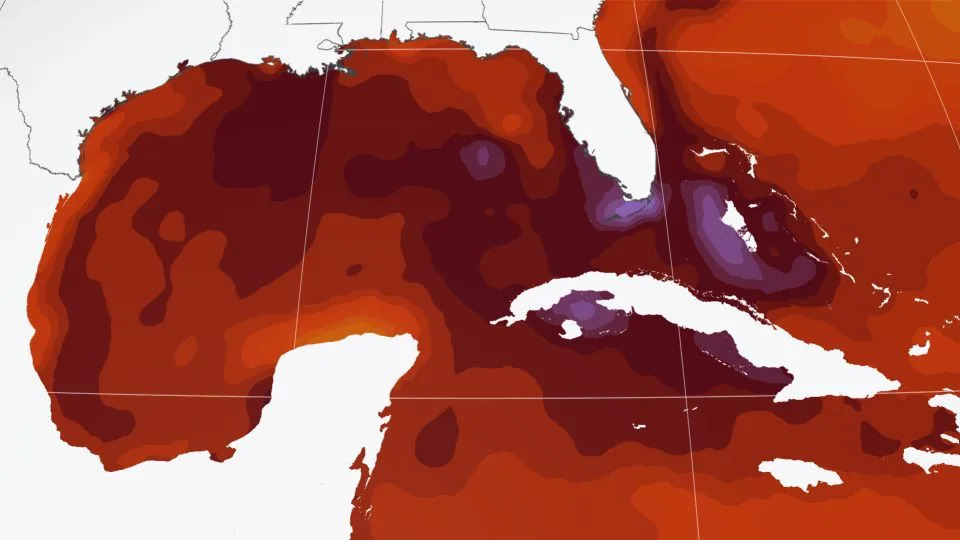
The Atlantic hurricane season is headed into uncharted territory with water temperatures in the Atlantic Ocean and the Gulf of Mexico warmer than they have ever been on record.

Seasonal forecasters are warning it means you need to prepare for a more uncertain forecast for the rest of the season with the potential for more storms and stronger ones.

Sea surface temperatures around parts of Florida and the Bahamas are warmer than 90 degrees Fahrenheit, shown here in shades of purple. - CNN Weather
Sea surface temperatures around parts of Florida and the Bahamas are warmer than 90 degrees Fahrenheit, shown here in shades of purple. – CNN Weather

Warm ocean water is one of the key ingredients for fueling hurricanes and it’s been in abundance so far this year. Scientists first sounded the alarm in April and the ocean warmth has only escalated since. Water in the Gulf of Mexico and the Atlantic has been record warm, especially for this early in the year. It includes off the coast of Florida, where water temperatures in the Florida Keys were close to 97 degrees in some spots last week.

It is important because warm ocean water breeds stronger, bigger and wetter storms. It gives hurricanes the energy they need to grow and sometimes rapidly intensify, something hurricane forecasters told CNN we could see more of this season. Warm oceans can also lead to more evaporation and wring out more rainfall falling from any storms.

But hurricane season predictions involve more than just warm water. It’s just one factor in the birth and survival of tropical cyclones, and it is creating more uncertainty than usual in what could happen the rest of the hurricane season.

“Uncertainty, uncertainty, uncertainty! That’s really the story going forward with this season,” Dr. Phil Klotzbach, a research scientist in the Department of Atmospheric Science at Colorado State University told me.

Klotzbach and the team at CSU are some of the pioneers of long-term hurricane season outlooks, and just increased the number of expected hurricanes and major hurricanes in their prediction for this season due to the warmer water in the Atlantic.

What makes this year even more uncertain is we are now under the influence of El Niño which typically suppresses activity in the Atlantic with increased wind shear, the changing of wind direction and speed with height which can blow budding storms to pieces and shred existing storms to death.

Klotzbach said the confluence of these record warm temperatures at the same time as a moderate to strong El Niño hasn’t been “observed historically.”

The million-dollar question right now is which will win out: warm ocean temperatures or El Niño. Early season predictions called for a near-average season, but Klotzbach and team seem to think the warm water will win out and are now calling for “an above-normal Atlantic hurricane season.”

Warm water won in June. According to Klotzbach, June had the lowest wind shear in the southern Atlantic Basin since 1988. Arlene, Bret and Cindy formed as a result.

Wind shear and dry air from Saharan dust picked up in the month of July, suppressing hurricane activity for the most part, but August through October could be different.

“Most climate models are forecasting slightly to somewhat-below normal shear in August, September and even into October,” Klotzbach said. “If that were the case, we would likely have an extremely busy season given how warm the Atlantic is.”

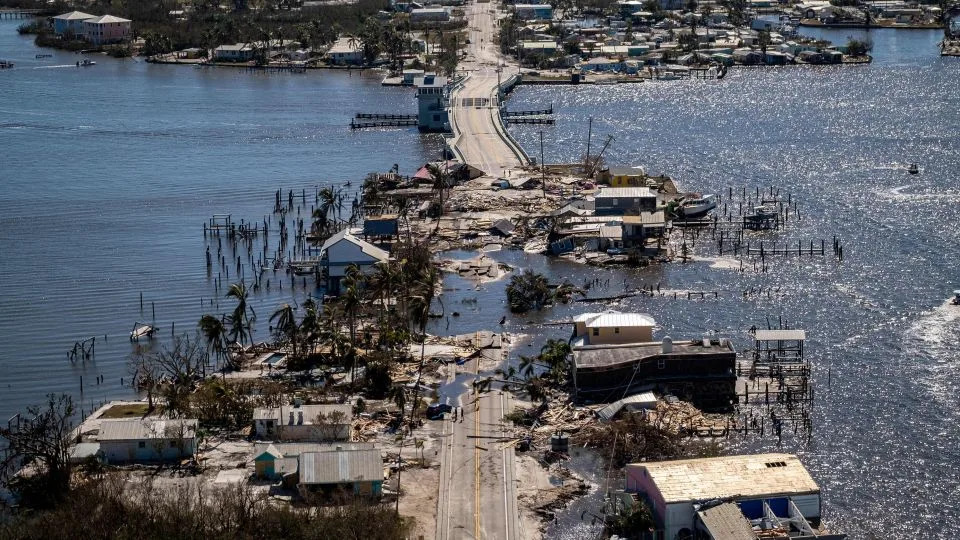
An aerial picture taken on September 30, 2022, shows the only access to the Matlacha neighborhood destroyed in the aftermath of Hurricane Ian in Fort Myers, Florida. - Ricardo Arduengo/AFP/Getty Images
An aerial picture taken on September 30, 2022, shows the only access to the Matlacha neighborhood destroyed in the aftermath of Hurricane Ian in Fort Myers, Florida. – Ricardo Arduengo/AFP/Getty Images

As of now, there’s not much noteworthy on the horizon as far as tropical development goes. Subtropical Storm Don is meandering around the north-central Atlantic but poses no threat to land. Forecast models aren’t picking up any development this week. Forecasts for next week are hinting at some tropical development, but it’s far too early to have confidence in how, if or when this could materialize.

What we do know is hurricane season typically starts ramping up as we head into August. The first hurricane usually forms in early to mid-August. The eight-week span from mid-August through mid-October is when ocean temperatures are nearing their highest levels in the Atlantic, wind shear lessens considerably and when nearly 90% of all hurricane activity in the Atlantic happens.

The bottom line is this season is already unprecedented given the hot ocean temperatures, so forecasting the season in the uncharted territory we’ve entered is a challenge. We’ve got a lot of hurricane season left to go, which means you should prepare for the worst and hope for the best.

Russia’s economy has gone from bad to worse in a matter of months. Here’s where the country is feeling pain the most.

Business Insider

Russia’s economy has gone from bad to worse in a matter of months. Here’s where the country is feeling pain the most.

Zahra Tayeb – July 16, 2023

Russian President Vladimir Putin sitting in a chair in front of a Russian flag.
Russian President Vladimir Putin.Gavriil Grigorov/Sputnik, Kremlin Pool Photo via AP
  • Russia’s economy is going from bad to worse as Western sanctions hammer the country’s key sectors.
  • From slumping car sales to a plunging Russia ruble, the problems Russia faces keep on growing.
  • Here are key signs showing how Moscow’s economy is spiraling.

Russia’s economy just keeps getting worse – and there are plenty of ways to show that.

From plunging car sales to a dramatic collapse in its current-account surplus, there’s no way to hide Moscow’s troubles.

The country’s economic woes have multiplied since its invasion of Ukraine early last year. The conflict has triggered a wave of sanctions from the Western world. Some have even blamed Russian President Vladimir Putin for inflicting so much pain on the nation, with Yale researchers saying he’s “cannibalizing” Russia’s economy in his urge to conquer Ukraine.

“The lion’s share of the economy is controlled by the state, the energy and financial sectors, and Putin is taking from the seed capital of those businesses to use as a cookie jar for his war chest,” researchers Jeffrey Sonnenfeld and Steven Tian said.

Russians are buying fewer cars

Russia’s car industry is one part of the economy that’s being squeezed.

Insider’s Phil Rosen reported that car sales in Moscow have tanked by nearly 75% since the Ukraine war broke out. The decline has been fueled by a mix of three factors: soaring prices, decreasing supply, and deteriorating consumer sentiment.

“Russians are just buying less cars, period,” Tian said. “That speaks to the weakness of the consumer in Russia. This is as close to a proxy to deteriorating consumer sentiment as there is, and the story it tells is profoundly distressing. Russians just aren’t spending money.”

At the same time, the number of Russians buying foreign-branded cars – typically viewed as luxury purchases – has neared a standstill. Instead, consumers are buying locally sourced cars, many of which are riddled with mechanical issues.

Plunging exports

Another sign that Russia’s economy is flailing is the dramatic collapse in its current-account balance.

Moscow’s central bank posted a 93% year-on-year drop in its current-account surplus for the April-June quarter. it fell from a record $76.7 billion to $5.4 billion.

The rough financials show how badly Western sanctions are biting the country, particularly its key energy sector where its oil-and-gas exports have taken a huge hit after price caps and bans were imposed.

Energy export revenue

Moscow garners a big chunk of its revenue from sales of oil and gas products, but Western penalties have eroded that income stream.

In June, Russia’s Finance Ministry said that revenue from oil-and-gas taxes fell 36% compared to a year ago to about 571 billion rubles, and that profits from crude and petroleum products tumbled 31% to 426 billion rubles.

Ruble in freefall

Adding to Russia’s troubles is a tumbling ruble. The country’s currency slumped to a 15-month low of 94.48 against the dollar earlier in July, triggered by capital flight, shrinking tax revenues, and declining central-bank reserves.

“The ruble doesn’t have anywhere to go but down,” Konstantin Sonin, a University of Chicago economist, said in a tweet.

Concerns about the currency’s volatility have prompted a wave of domestic withdrawals from the country’s central bank, amounting to over $1 billion. The bank run was mainly fueled by the recent Wagner revolt.

Russia’s weakening currency has forced the country to take desperate measures. Recently, Russia’s foreign minister urged Southeast Asian countries to dump the dollar and use local currencies to conduct trade.

Death Valley visitors drawn to the hottest spot on Earth during ongoing US heat wave

Associated Press

Death Valley visitors drawn to the hottest spot on Earth during ongoing US heat wave

TY O’NEIL  – July 14, 2023

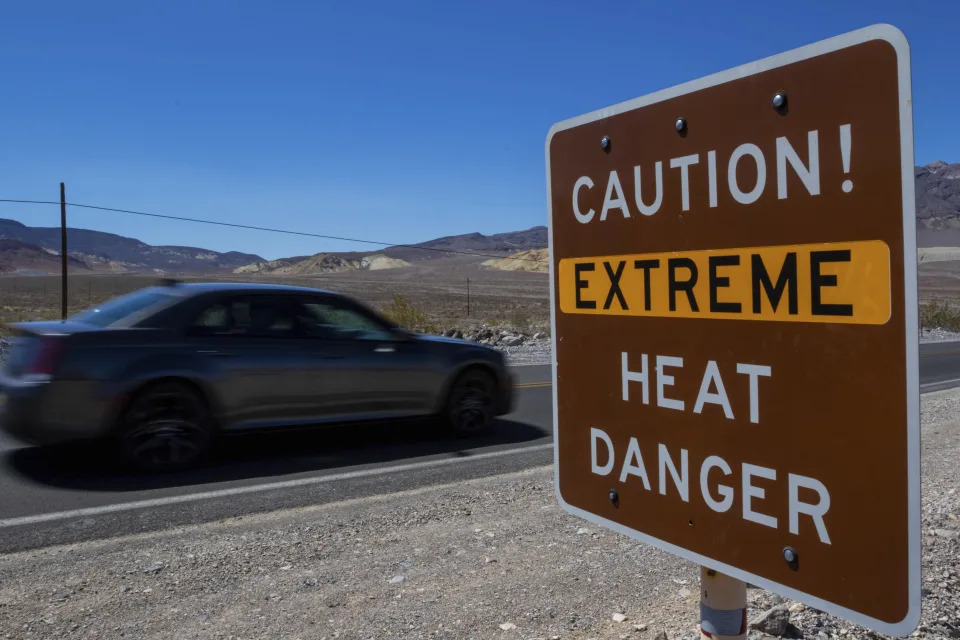
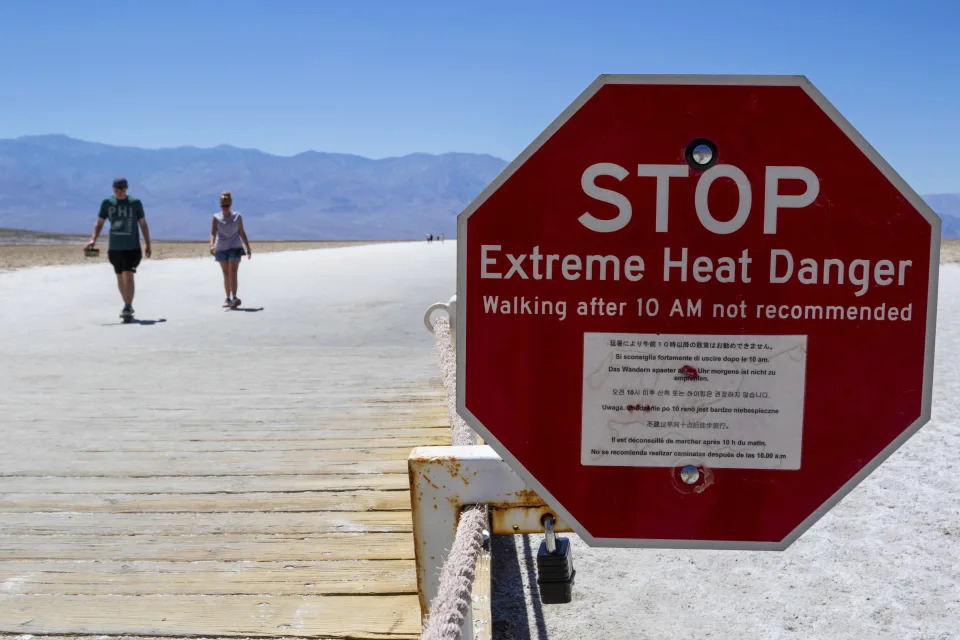
A sign stands warning of extreme heat Tuesday, July 11, 2023, in Death Valley National Park, Calif. July is the hottest month at the park with an average high of 116 degrees (46.5 Celsius). (AP Photo/Ty ONeil)
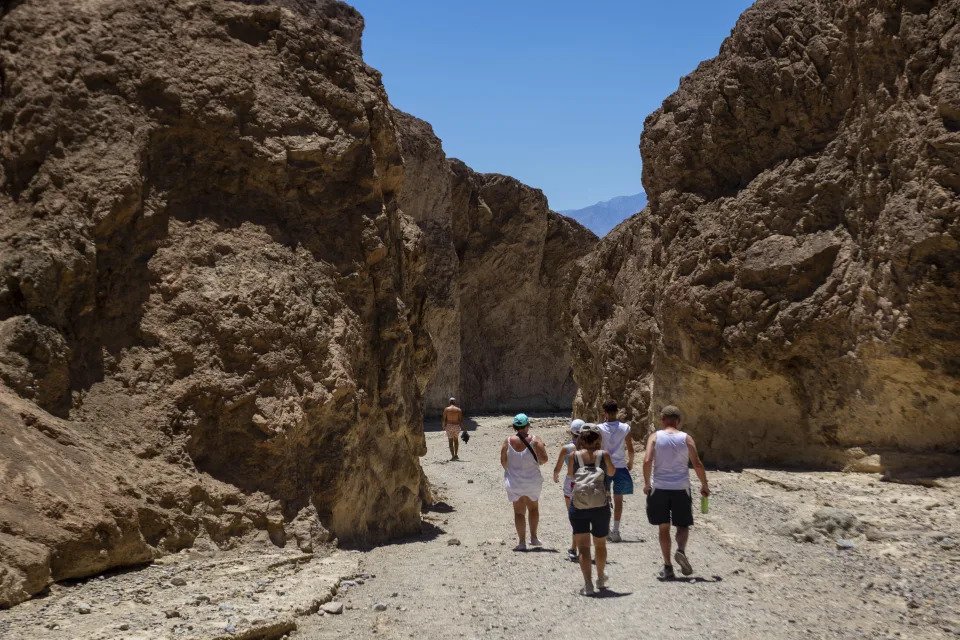
Hikers turn back to their vehicles in Golden Canyon on Tuesday, July 11, 2023, in Death Valley National Park, Calif. July is the hottest month at the park with an average high of 116 degrees (46.5 Celsius). (AP Photo/Ty ONeil)
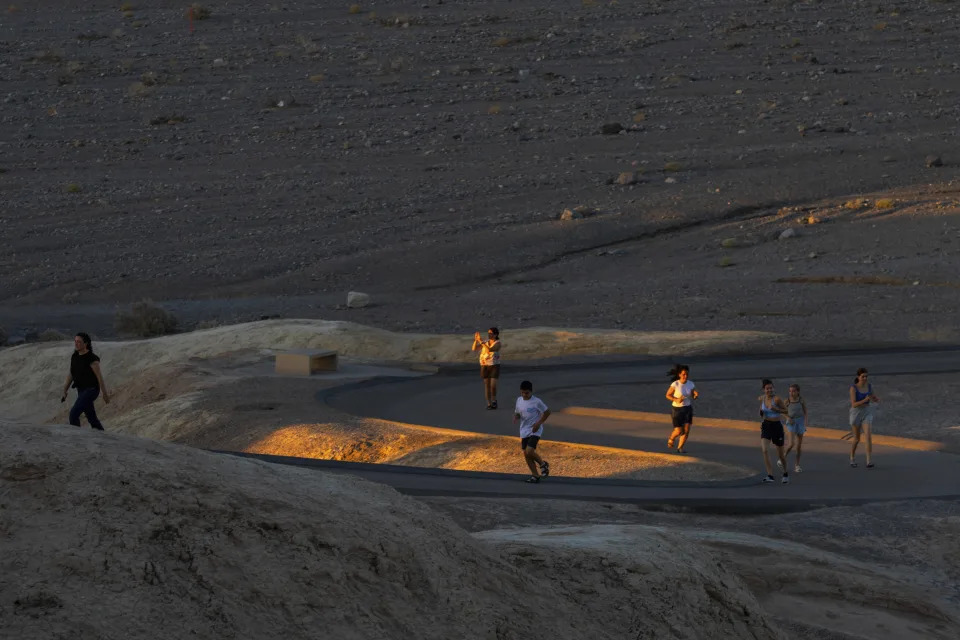
People run to get sunset photos at Zabriskie Point on Saturday, July 8, 2023, in Death Valley National Park, Calif. July is the hottest month at the park with an average high of 116 degrees (46.5 Celsius). (AP Photo/Ty ONeil)
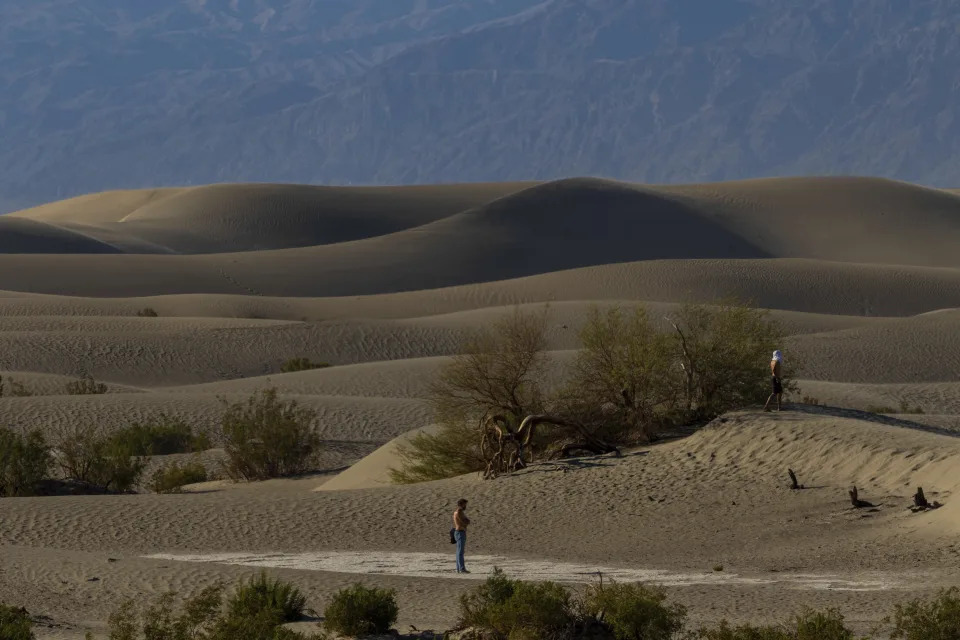
A man explores the Mesquite Flat Sand Dunes on Tuesday, July 11, 2023, in Death Valley National Park, Calif. July is the hottest month at the park with an average high of 116 degrees (46.5 Celsius). (AP Photo/Ty ONeil)
A sign warns people of extreme heat in multiple languages on Tuesday, July 11, 2023, in Death Valley National Park, Calif. July is the hottest month at the park with an average high of 116 degrees (46.5 Celsius). (AP Photo/Ty ONeil)

DEATH VALLEY NATIONAL PARK, Calif. (AP) — As uninviting as it sounds, Death Valley National Park beckons.

Even as the already extreme temperatures are forecast to climb even higher, potentially topping records amid a major U.S. heat wave, tourists are arriving at this infamous desert landscape on the California-Nevada border.

Daniel Jusehus snapped a photo earlier this week of a famed thermometer outside the aptly named Furnace Creek Visitor Center after challenging himself to a run in the sweltering heat.

“I was really noticing, you know, I didn’t feel so hot, but my body was working really hard to cool myself,” said Jusehus, an active runner who was visiting from Germany. His photo showed the thermometer reading at 120 degrees Fahrenheit (48.8 degrees Celsius).

Most visitors at this time of year make it only a short distance to any site in the park — which bills itself as the lowest, hottest and driest place on Earth — before returning to the sanctuary of an air-conditioned vehicle.

This weekend, the temperatures could climb past 130 F (54.4 C), but that likely won’t deter some willing to brave the heat. Signs at hiking trails advise against venturing out after 10 a.m., though nighttime temperatures are still expected to be over 90 F (32.2 C). The hottest temperature recorded at Death Valley was 134 F (56.6 C) in July 1913, according to the National Park Service.

Other parks have long-standing warnings for hikers. At Grand Canyon National Park in Arizona, officials are cautioning people to stay off the trails for most of the day in the inner canyon, where temperatures can be 20 degrees hotter than the rim.

In west Texas, Big Bend National Park near the Rio Grande is expected to be at least 110 F (43.3 C). The National Weather Service has said it’s best to just stay off the trails in the afternoon.

The precautions vary across parks and landscapes, said Cynthia Hernandez, a park service spokesperson. Certain trails might be closed if conditions are too dangerous. Alerts and restrictions are posted on websites for individual parks, Hernandez said.

Preliminary information form the park service shows at least four people have died this year from heat-related causes across the 424 national park sites. That includes a 65-year-old man from San Diego who was found dead in his vehicle at Death Valley earlier this month, according to a news release.

Death Valley National Park emphasizes self-reliance over expectations of rescue. While rangers patrol park roads and can assist motorists in distress, there’s no guarantee lost tourists will get aid in time.

More than 1.1 million people annually visit the desert park, which sits over a portion of the California-Nevada border west of Las Vegas. At 5,346 square miles (13,848 square kilometers), it’s the largest national park in the Lower 48. About one-fifth of the visitors come in June, July and August.

Many are tempted to explore, even after the suggested cutoff times. Physical activity can make the heat even more unbearable and leave people feeling exhausted. Sunbaked rocks, sand and soil still radiate after sunset.

“It does feel like the sun has gone through your skin and is getting into your bones,” said park Ranger Nichole Andler.

Others mentioned feeling their eyes drying out from the hot wind sweeping through the valley.

“It’s very hot. I mean, especially when there’s a breeze, you would think that maybe that would give you some slight relief from the heat, but it just really does feel like an air blow dryer just going back in your face,” said Alessia Dempster, who was visiting from Edinburgh, Scotland.

Death Valley is a narrow, 282-foot (86-meter) basin that is below sea level but situated among high, steep mountain ranges, according to the park service’s website. The bone-dry air and meager plant coverage allows sunlight to heat up the desert surface. The rocks and the soil emit all that heat in turn, which then becomes trapped in the depths of the valley.

The park’s brownish hills feature signage saying “heat kills” and other messaging, such as a Stovepipe Wells sign warning travelers of the “Savage Summer Sun.”

Still, there are several awe-inspiring sites that draw tourists. Badwater Basin, made up of salt flats, is considered the lowest point in all of North America. The eye-opening 600-foot (183-meter) Ubehebe Crater dates back over 2,000 years. And Zabriskie Point is a prime sunrise viewing spot.

Eugen Chen from Taiwan called the park “beautiful” and an “iconic … very special place.”

Josh Miller, a visitor from Indianapolis who has been to 20 national parks so far, shared that sentiment.

“It’s hot, but the scenery is awesome,” he said. ___ Associated Press writer Terry Tang in Phoenix contributed to this story.

The Energy Transition Is Underway. Fossil Fuel Workers Could Be Left Behind.

The New York Times

The Energy Transition Is Underway. Fossil Fuel Workers Could Be Left Behind.

Madeleine Ngo – July 14, 2023

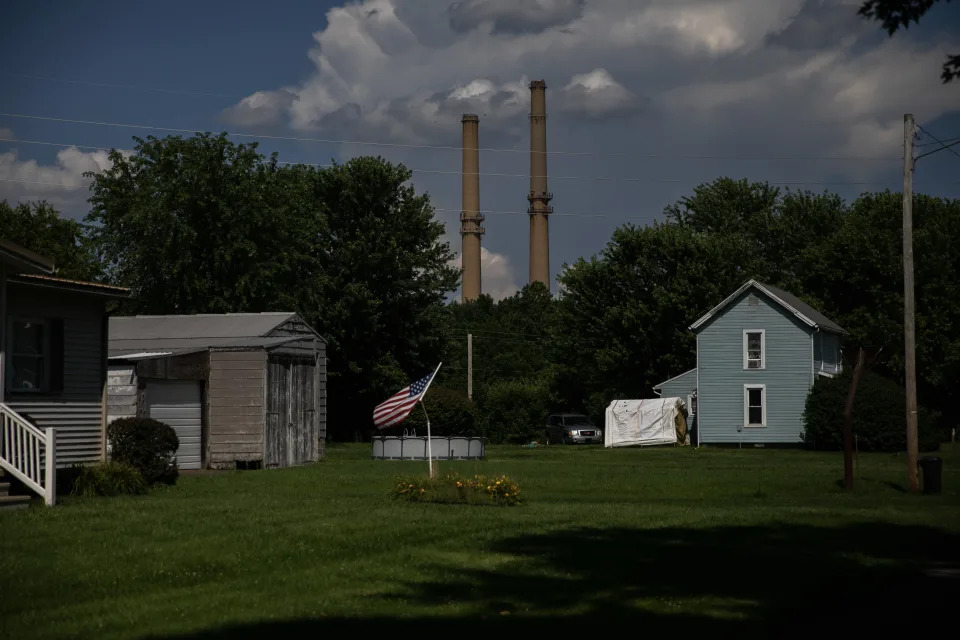
The decommissioned Conesville Power Plant in Conesville, Ohio, on July 5, 2023. (Maddie McGarvey/The New York Times)

WASHINGTON — Tiffany Berger spent more than a decade working at a coal-fired power plant in Coshocton County, Ohio, eventually becoming a unit operator making about $100,000 annually.

But in 2020, American Electric Power shut down the plant, and Berger struggled to find a job nearby that offered a comparable salary. She sold her house, moved in with her parents and decided to help run their farm in Newcomerstown, Ohio, about 30 minutes away.

They sell some of the corn, beans and beef they harvest, but it is only enough to keep the farm running. Berger, 39, started working part time at a local fertilizer and seed company last year, making just one-third of what she used to earn. She said she had “never dreamed” the plant would close.

“I thought I was set to retire from there,” Berger said. “It’s a power plant. I mean, everybody needs power.”

The United States is undergoing a rapid shift away from fossil fuels as new battery factories, wind and solar projects, and other clean energy investments crop up across the country. An expansive climate law that Democrats passed last year could be even more effective than Biden administration officials had estimated at reducing fossil fuel emissions.

While the transition is projected to create hundreds of thousands of clean energy jobs, it could be devastating for many workers and counties that have relied on coal, oil and gas for their economic stability.

Estimates of the potential job losses in the coming years vary, but roughly 900,000 workers were directly employed by fossil fuel industries in 2022, according to data from the Bureau of Labor Statistics.

The Biden administration is trying to mitigate the impact, mostly by providing additional tax advantages for renewable energy projects that are built in areas vulnerable to the energy transition.

But some economists, climate researchers and union leaders said they are skeptical the initiatives will be enough. Beyond construction, wind and solar farms typically require few workers to operate, and new clean energy jobs might not necessarily offer comparable wages or align with the skills of laid-off workers.

Coal plants have been shutting down for years, and the nation’s coal production has fallen from its peak in the late 2000s. U.S. coal-fired generation capacity is projected to decline sharply to about 50% of current levels by 2030, according to the Energy Information Administration. About 41,000 workers remain in the coal mining industry, down from about 177,000 in the mid-1980s.

The industry’s demise is a problem not just for its workers but also for the communities that have long relied on coal to power their tax revenue. The loss of revenue from mines, plants and workers can mean less money for schools, roads and law enforcement. A recent paper from the Aspen Institute found that from 1980 to 2019, regions exposed to the decline of coal saw long-run reductions in earnings and employment rates, greater uptake of Medicare and Medicaid benefits and substantial decreases in population, particularly among younger workers. That “leaves behind a population that is disproportionately old, sick and poor,” according to the paper.

The Biden administration has promised to help those communities weather the impact, for both economic and political reasons. Failure to adequately help displaced workers could translate into the kind of populist backlash that hurt Democrats in the wake of globalization as companies shifted factories to China. Promises to restore coal jobs also helped Donald Trump clinch the 2016 election, securing him crucial votes in states such as Pennsylvania.

Federal officials have vowed to create jobs in hard-hit communities and ensure that displaced workers “benefit from the new clean energy economy” by offering developers billions in bonus tax credits to put renewable energy projects in regions dependent on fossil fuels.

If new investments like solar farms or battery storage facilities are built in those regions, called “energy communities,” developers could get as much as 40% of a project’s cost covered. Businesses receiving credits for producing electricity from renewable sources could earn a 10% boost.

The Inflation Reduction Act also set aside at least $4 billion in tax credits that could be used to build clean energy manufacturing facilities, among other projects, in regions with closed coal mines or plants, and it created a program that could guarantee up to $250 billion in loans to repurpose facilities like a shuttered power plant for clean energy uses.

Brian Anderson, the executive director of the Biden administration’s interagency working group on energy communities, pointed to other federal initiatives, including increased funding for projects to reclaim abandoned mine lands and relief funds to revitalize coal communities.

Still, he said that the efforts would not be enough, and that officials had limited funding to directly assist more communities.

“We’re standing right at the cusp of potentially still leaving them behind again,” Anderson said.

Phil Smith, the chief of staff at the United Mine Workers of America, said that the tax credits for manufacturers could help create more jobs but that $4 billion likely would not be enough to attract facilities to every region. He said he also hoped for more direct assistance for laid-off workers, but Congress did not fund those initiatives.

“We think that’s still something that needs to be done,” Smith said.

Gordon Hanson, the author of the Aspen Institute paper and a professor of urban policy at the Harvard Kennedy School, said he worried the federal government was relying too heavily on the tax credits, in part because companies would likely be more inclined to invest in growing areas. He urged federal officials to increase unemployment benefits to distressed regions and funding for workforce development programs.

Even with the bonus credit, clean energy investments might not reach the hardest-hit areas because a broad swath of regions meets the federal definition of an energy community, said Daniel Raimi, a fellow at Resources for the Future.

“If the intention of that provision was to specifically provide an advantage to the hardest-hit fossil fuel communities, I don’t think it’s done that,” Raimi said.

Local officials have had mixed reactions to the federal efforts. Steve Henry, the judge-executive of Webster County, Kentucky, said he believed they could bring renewable energy investments and help attract other industries to the region. The county experienced a significant drop in tax revenue after its last mine shut down in 2019, and it now employs fewer 911 dispatchers and deputy sheriffs because officials cannot offer more competitive wages.

“I think we can recover,” he said. “But it’s going to be a long recovery.”

Adam O’Nan, the judge-executive of Union County, Kentucky, which has one coal mine left, said he thought renewable energy would bring few jobs to the area, and he doubted that a manufacturing plant would be built because of the county’s inadequate infrastructure.

“It’s kind of difficult to see how it reaches down into Union County at this point,” O’Nan said. “We’re best suited for coal at the moment.”

Federal and state efforts so far have done little to help workers like James Ault, 42, who was employed at an oil refinery in Contra Costa County, California, for 14 years before he was laid off in 2020. To keep his family afloat, he depleted his pension and withdrew most of the money from his 401(k) early.

In early 2022, he moved to Roseville, California, to work at a power plant, but he was laid off again after four months. He worked briefly as a meal delivery driver before landing a job in February at a nearby chemical manufacturer.

He now makes $17 an hour less than he did at the refinery and is barely able to cover his mortgage. Still, he said he would not return to the oil industry.

“With our push away from gasoline, I feel that I would be going into an industry that is kind of dying,” Ault said.

The #1 Sign You Aren’t Drinking Enough Water—Plus, How To Tell if You’re *Overhydrated*

Parade

The #1 Sign You Aren’t Drinking Enough Water—Plus, How To Tell if You’re *Overhydrated*

Emily Laurence – July 13, 2023

There are times when nothing sounds better than gulping down a big glass of water, like after an intense workout or coming inside after spending hours in the sun. But if you only drink water when you’re sweating, your body isn’t going to function properly. Staying properly hydrated is immensely important—playing a role in body temperature control, delivering nutrients to cells, keeping organs functioning and staying mentally sharp. Even when fluid loss is just 1% of body weight, it will negatively impact brain function and mood.

This is exactly why it’s important to drink enough water continuously, even before signs of dehydration start to show. But how can you make sure you’re drinking enough? Doctors share the tell-tale signs that you need to up your water intake.

Related: Eat Your Way to Better Hydration! Try These 7 Fresh and Hydrating Foods

How To Tell You Aren’t Drinking Enough Water: The Number One Sign

According to integrative medicine doctor and Cure medical advisor Dr. Dana Cohen, MD, the number one sign you aren’t drinking enough water is if it’s been more than three hours since you went to the bathroom last and when you do go, your pee is dark yellow. “The best way to measure your hydration levels is super easy: the frequency and color of your pee. You should be getting up to pee every two to three waking hours, and if you’re not, you’re probably dehydrated,” she says.

Dr. Cohen says that urine that’s pale yellow is a good indicator that you’re drinking enough. If it’s dark yellow, orange or brown, that means you’re not drinking enough. If your urine is clear, she says that’s a sign that you’re actually overhydrated, drinking more water than you need.

Related: Summer is Here! Learn the 10 Key Signs of Dehydration (and How to Fight It)

The one caveat to this, she says, is if you’ve eaten foods linked to discoloring urine, such as asparagus or beets. If you have, there’s another easy way to know you aren’t drinking enough water: if you’re thirsty. “The most common sign of inadequate hydration is feeling thirsty. If you consistently feel thirsty, it’s an indication that your body needs more fluids,” says Dr. Patrick Carter, DO, a board-certified family practitioner and the medical advisor for Prime IV Hydration & Wellness. However, he adds that there are other reasons someone may feel thirsty unrelated to hydration, including having certain medical conditions (like diabetes or sickle cell anemia).

Both doctors say that if you feel dizzy, fatigued, have a headache, or are experiencing muscle cramps and weakness, these are all signs of dehydration. Dr. Cohen says that signs of extreme hydration include anuria (no urine output), dizziness rendering the person unable to stand or walk normally, low blood pressure, fast heart rate, fever, lethargy, confusion and can lead to seizures, shock or coma. “These symptoms require immediate medical attention,” she says.

Related: This Is How Much Water People 50 and Older Should Drink Every Day, According to a Urologist

How To Stay Hydrated

Both doctors say hydration needs vary from person to person, but Dr. Carter says a good general guideline to follow is aiming to drink eight eight-ounce glasses of water a day. However, he adds that it’s important to take into account your individual needs, such as how active of a lifestyle you lead. “It’s always a good idea to consult with a healthcare professional to determine the appropriate amount of water for your specific needs,” Dr. Carter says.

When it comes to staying hydrated, both doctors say that while drinking water is important, drinking other liquids can help you meet your hydration goals. This includes herbal tea, unsweetened fruit juices, milk and electrolyte drinks. “I also recommend a green smoothie with chia seeds, as the fiber in the green smoothie acts like a sponge and holds onto hydration longer, while the minerals help move fluids into the center of your body more efficiently than plain bulk water,” Dr. Cohen explains. She adds that chia seeds hold up to 30 times their weight in water, which allows fluids and electrolytes to be held in the body longer.

If you struggle with remembering to drink enough water, Dr. Carter recommends setting reminders using your phone or an app like WaterllamaMy Water, or Aqualert. He also recommends carrying a reusable water bottle with you wherever you go, which serves as both a visual reminder and a way to meet your hydration needs.

Remember: It’s important to hydrate before you notice any symptoms of dehydration. Be mindful of your intake throughout the day and use your urine color and frequency as a hydration monitor. That way, you can function at your absolute best.

Next up, check out these 11 low-calorie drinks that will help you stay hydrated.

Florida orange harvest sees worst season since before World War II

Fox Weather

Florida orange harvest sees worst season since before World War II

Andrew Wulfeck – July 13, 2023

Florida orange harvest sees worst season since before World War II

MIAMI – Growers of the official fruit of the Sunshine State are continuing to struggle with orange production, which has reached its lowest levels since before World War II.

The U.S. Department of Agriculture held a teleconference on Wednesday when it announced the final 2022-23 season forecast of 15.85 million boxes of oranges, levels not seen since harvests in the 1930s.

The figure was in line with previous expectations and, like many other fruits, saw a significant drop in production from levels reported just one year ago.

During the 2021-22 season, over 41 million boxes were harvested, which was just a fraction of amounts produced during the late 1990s and early 2000s.

According to the USDA, orange production peaked in 1998 at 240 million boxes but saw a significant decline after the historic 2004 hurricane season.

ORANGE JUICE PRICES ON THE RISE: WHY WEATHER EXTREMES ARE TAKING A TOLL ON STRUGGLING FLORIDA CITRUS INDUSTRY

Harvesters have blamed weather disasters and citrus greening in recent years for the reduction in fruit production.

Citrus growers previously described the setbacks as “unprecedented” and told FOX Business that they were just trying to survive for a better day.

A report from the University of Florida’s Economic Impact Analysis Program estimated agriculture losses from 2022’s Hurricane Ian at around $1 billion.

The figure was on top of Hurricane Irma’s $2.5 billion in damage in 2017 and several billion dollars done by hurricanes in 2004.

FLORIDA SUFFERS $1 BILLION HIT TO AGRICULTURE INDUSTRY FROM HURRICANE IAN

In addition to weather disasters, citrus greening from an Asian bug discovered in the Lower 48 back in 1998 has been rampant.

According to university experts, once a tree becomes infected, its nutrient flow will slow and eventually impair its ability to produce fruit.

There is no known cure for citrus greening, meaning that a plant with the disease will deteriorate until it dies.

Trees producing grapefruits, lemons, tangerines, tangelos and other fruits are also susceptible to the disease.

According to USDA estimates, harvesters produced around 45% fewer boxes of grapefruit than last season and tangerines and tangelos saw a decline of around 36%.

Most major citrus operations have reached the end of the harvest season and won’t start up in earnest again until the fall and winter.

Another insurer is leaving Florida. How much is DeSantis to blame?

Tampa Bay Times, St. Petersburg, Fla.

Another insurer is leaving Florida. How much is DeSantis to blame?

Jay Cridlin, Tampa Bay Times – July 13, 2023

Gov. Ron DeSantis has signed more than 300 bills into law this year.

They include measures that touched on a broad swath of issues, including abortion, immigration, transgender care, space exploration, the death penalty, college diversity programs, phosphogypsum in road construction, alimony, a law enforcement registry for people with disabilities, drag shows, affordable housing and election reforms.

What wasn’t signed into law was a measure that might have prevented Farmers Insurance from announcing this week it was dropping tens of thousands of home, auto and umbrella policies in the state, following the lead earlier this year of insurers like United Property & Casualty.

In his bid for the Republican presidential nomination, DeSantis is promoting his record as governor, particularly how he’s led a reshaping of Florida’s education, diversity and investment policies.

But despite DeSantis signing multiple legislative packages since May 2022 designed to curtail skyrocketing rates, the state’s property insurance problem is still far from solved. More than a half-dozen insurers have withdrawn from Florida or faced insolvency in the past 18 months, all as record Atlantic Ocean temperatures have spurred hurricane forecasters to boost predictions for an above-average season this year.

DeSantis spokesperson Jeremy Redfern pointed to new laws targeting frivolous lawsuits against insurance companies and billions in funding to help insurers obtain backup reinsurance as evidence of the governor’s attention to the problem. The state is already seeing some progress in the form of new insurers entering the market, Redfern said.

“Even the most aggressive reforms will take time to affect the insurance industry,” Redfern said in an email. “The 2021, 2022, and 2023 legislative efforts will be effective.”

During a Wednesday radio appearance on the Howie Carr Show, DeSantis touted those legislative efforts, saying that, “because we did those reforms, it now is more economical for companies to come in. I think they’re going to wait through this hurricane season, and then I think they’re going to be willing to deploy more capital to Florida.”

”Knock on wood, we won’t have a big storm this summer,” DeSantis said. “Then I think you are going to start to see companies see an advantage.”

But Farmers’ abrupt exit Tuesday has opened DeSantis up to a fresh round of criticism that he and the Republican-led Legislature haven’t done enough to calm Florida’s insurance market.

“Knock on wood??? That’s not how this works,” Rep. Anna Eskamani, D-Orlando, said on Twitter. “Floridians need action on property insurance — not this.”

“It’s the No. 1 issue I hear about when I go talk to my constituents,” said Rep. Dan Daley, D-Coral Springs. “They’re not talking about drag shows. They don’t give a s—t about any of that. They care about being able to pay their property insurance bill and not being dropped by their insurer, and what we’ve done in this state is not really address that.”

Incremental change and patience

Property insurance reform was an issue in Florida long before DeSantis took office in 2019.

His first major action on the matter came that spring in the form of a bill limiting “assignment of benefits” claims, when contractors, not homeowners, seek reimbursement from insurers. DeSantis called it “meaningful” reform that “will protect Florida consumers from predatory insurance practices.” It was widely seen as a long-sought win for the insurance industry.

That more substantial changes weren’t an immediate priority reflects as much on the Legislature as it does on DeSantis, said former Republican state Sen. Jeff Brandes.

“This isn’t the battle he was taking on back then,” Brandes said. “He would tell you his statement was, ‘I will sign whatever the Legislature puts in front of me on property insurance.’ He said that comment multiple times. The Legislature chose not to send him anything.”

In May 2022, DeSantis convened a special legislative session designed to “stabilize the insurance market,” with an emphasis on targeting the “thousands of frivolous lawsuits” filed against insurance companies. The package that emerged included $2 billion in tax money to subsidize insurers’ reinsurance costs and $150 million to help hurricane-proof homes and tightened restrictions on suing insurers. DeSantis called it “the most significant reforms to Florida’s homeowners insurance market in a generation.”

After Hurricane Ian struck Southwest Florida, DeSantis called another session designed to “implement necessary reforms to the property insurance market.” In December, he signed a bill creating a $1 billion reinsurance fund and further tightening restrictions on lawsuits. Again, he called the reform “meaningful.”

“The issues in Florida’s property insurance market did not occur overnight, and they will not be solved overnight,” he said in a statement after signing. “The historic reforms signed today create an environment which realigns Florida to best practices across the nation, adding much-needed stability to Florida’s market, promoting competition, and increasing consumer choice.”

Then, during this year’s regular session, he signed a bill dubbed the Insurer Accountability Act, designed to impose transparency requirements on insurers and stiffen penalties on those that exhibited bad behavior. The law, he said, would “reinforce our commitment to Florida policyholders” and “protect consumers from predatory insurer practices.”

With each bill, supporters said it would take time to have a real impact.

“I do think that they were bold moves that will show positive changes for the homeowners’ industry over the coming years, but it is going to take two, three, four years for those changes to bear any fruit,” said Trevor Burgess, CEO of St. Petersburg flood insurer Neptune Flood. “And that’s because, for the past 10 years, there’s just been so much damage done. You’ve had all of these insurance companies fail. Those that haven’t failed have struggled, and so it’s been very difficult for anyone to make any money or build up any reserves.”

Brandes said that Farmers won’t be the last insurer to withdraw, and that he thinks rates will go up another 10% to 15% next year before stabilizing in 2025. But if DeSantis and the Legislature had done nothing, he said, “you wouldn’t have a market in Florida. You would have had 10 companies leaving instead of just one.”

Democrats say the changes under DeSantis represent positive steps; the bipartisan Insurer Accountability Act passed unanimously. But they’ve been too narrowly focused on tort reform, said House Minority Leader Fentrice Driskell, D-Tampa. In a statement explaining why it was leaving, Farmers didn’t even mention lawsuits.

In recent sessions, Democrats have proposed changes including a publicly elected insurance commissioner and blocking certain insurers from claiming insolvency. None gained traction.

“They don’t really know what to do,” Driskell said of Republican legislative leadership. “They keep trying to scramble and put together these piecemeal solutions that haven’t really stabilized the market or brought rates down. To me, it’s not so much a commitment of, ‘Oh, yes, we’re on top of this, there’s more to do, stay tuned.’ It’s more, ‘Eh, let’s try this. Oh, that didn’t work. Let’s see what we can try next.’”

That’s not all on DeSantis, she said; the House speaker and Senate president also have “so much power and authority in terms of shaping the policy agenda of this state.” But she also doesn’t see DeSantis pushing a more cohesive plan before a Legislature that rarely pushes back.

“I don’t even know what his plans and desires are with respect to property insurance, because he doesn’t articulate them,” she said. “He can articulate a blueprint for how to destroy DEI (diversity, equity and inclusion) in higher education. I have yet to see any blueprint for property insurance.”

“Distracted” by 2024

Since the Insurer Accountability Act was introduced in the Senate on March 31, DeSantis has spent at least 40 days out of state. He’s taken multiple campaign trips to the early-primary hotbeds of Iowa, New Hampshire and South Carolina; and he spent five days on an international trade trip to South Korea, Japan, Israel and the United Kingdom.

DeSantis hasn’t faced many questions about homeowners insurance on the presidential campaign trail. The most it became an issue was weeks before he officially entered the race, when former President Donald Trump took to social media, calling Florida’s latest insurance bill “the biggest insurance BAILOUT to Globalist Insurance Companies, in HISTORY.”

“He’s also crushed homeowners whose houses were destroyed in the Hurricane,” Trump wrote on his Truth Social platform. “They’re getting pennies on the dollar. His Insurance Commissioner does NOTHING, while Florida’s lives are ruined. This is the worst Insurance Scam in the entire COUNTRY!”

In stump speeches, DeSantis speaks about his legal battles with The Walt Disney Co., about his trips to the southern border with Mexico and about his campaign against corporate environmental, social and governance programs. He says little to nothing about Florida’s latest property insurance laws.

“He’s so ambitious and he’s so focused on that big goal that he’s let a lot of the everyday stuff go,” Driskell said. “You can’t just have a diet of red meat. You need some vegetables as well.”

One thing DeSantis does talk about is people moving to “the free state of Florida,” building and buying homes to escape “states governed by leftist politicians.”

“All I have to look at to see whether Chicago’s doing well, I just look at real estate values in Naples,” he said recently in New Hampshire. “When those are going up, I know Chicago’s done something stupid again, and people are fleeing.”

With pricier homes come pricier rates, though, which is keeping some residents from continuing to afford living here, said state Rep. Hillary Cassel, D-Dania Beach.

“If you can’t guarantee what your cost of insurance is going to be to insure that home, you can’t now become a homeowner,” Cassel said. “If your cost is going to increase 30% year after year after year, you can’t buy a house.”

In 2022, DeSantis called two special sessions on property insurance. Now that he’s running a national campaign, Driskell said he might be too “distracted” to do it again — although another catastrophic storm this season could change that.

Absent the right political motivation — whether it comes from a hurricane or from pressure on the campaign trail — Cassel isn’t sure lawmakers will swing back into action.

“Not with this leadership,” Cassel said. “Nope.”

How Hot Is the Sea Off Florida Right Now? Think 90s Fahrenheit.

The New York Times

How Hot Is the Sea Off Florida Right Now? Think 90s Fahrenheit.

Catrin Einhorn and Elena Shao – July 12, 2023

Beach goers take a dip in the Atlantic Ocean at Hollywood Beach, Monday, July 10, 2023, in Hollywood, Fla. The world’s oceans are already record hot, especially the Atlantic, water surrounding much of Florida is in the 90s, hitting 96 degrees Fahrenheit around the keys. (AP Photo/Wilfredo Lee) (ASSOCIATED PRESS)

Florida’s coral reefs are facing what could be an unprecedented threat from a marine heat wave that is warming the Gulf of Mexico, pushing water temperatures into the 90s.

The biggest concern for coral isn’t just the current sea surface temperatures in the Florida Keys, even though they are the hottest on record. The daily average surface temperature off the Keys on Monday was just over 90 degrees Fahrenheit (32.4 Celsius), according to the National Oceanic and Atmospheric Administration.

The real worry, scientists say, is that it’s only July. Corals typically experience the most heat stress in August and September.

“We’re entering uncharted territories,” said Derek Manzello, an ecologist and the coordinator of NOAA’s Coral Reef Watch program.

Coral reefs are natural wonders that support myriad species and blunt damage from storms. In the United States, reefs generate economic benefits to the tune of $3.4 billion annually for fisheries, tourism and coastal protection, according to NOAA.

But oceans have absorbed some 90% of the additional heat caused by humans as we burn fossil fuels and destroy forests. When sea temperatures rise too high, corals bleach, expelling the algae they need for sustenance. If waters don’t cool quickly enough, or if bleaching events happen in close succession, the corals die. For decades, scientists have been warning that climate change is an existential threat to coral reefs. Already, the world has lost a huge proportion of its coral reefs, perhaps half since 1950.

“To be blunt, it can be very depressing,” Manzello said. “Unfortunately, I’m a scientist watching it happen.”

Marine heat isn’t just affecting the Gulf of Mexico. Globally, about 40% of the planet is experiencing a marine heat wave, according to Dillon Amaya, a physical scientist at NOAA who studies them.

“Florida is one patch in a terrible quilt right now,” Amaya said.

In part, that’s because the planet is entering a natural climate phenomenon known as El Niño, which typically brings warmer oceans. But now, El Niño is coming on top of long-term warming caused by greenhouse gas emissions.

While coral is especially vulnerable, heat waves harm untold species, and the effects are different around the world, as species are adapted to different temperature ranges.

In general, fish need more oxygen when the water is warmer. That’s a problem, because warmer water holds less oxygen.

“Large-scale fish kills are becoming more frequent as our climate changes,” said Martin Grosell, a professor of ichthyology at the University of Miami.

Coral reefs are particularly important because so many species rely on them. About 25% of all marine life, including more than 4,000 kinds of fish, depend on reefs at some point in their lives, according to NOAA.

While there aren’t yet reports of bleaching in Florida, it has already begun on reefs to the south, Manzello said, off Belize, Mexico, El Salvador, Costa Rica and Colombia.

Florida’s coral reef system stretches about 350 miles, from the St. Lucie inlet on the mainland south and west past the end of the Keys, and is frequented by sea turtles, manta rays, flounder and lobster.

What happens in Florida will depend on conditions over the next few weeks. Storms, which churn up deeper, cooler water and reduce sunshine, could provide relief, scientists say. El Niño periods are typically associated with below-average Atlantic hurricane seasons, but that might not hold true this year.

Researchers who care about coral are deeply troubled.

“I do lose sleep over it,” said Andrew Baker, a professor of marine biology at the University of Miami, where he directs the Coral Reef Futures Lab. “But I don’t want to write the eulogy just yet.”

Scientists like Baker are racing to come up with ways to help coral become more resilient to higher temperatures, for example by crossing Florida’s corals with varieties that seem to withstand more heat. But ultimately, the survival of corals and countless other species relies on the ability of humans to rein in climate change.

“You have to go to the root causes,” said Lizzie McLeod, the global oceans director at The Nature Conservancy. “We have to be reducing emissions, we have to move to clean energy, we have to reduce subsidies to the fossil fuel industry.”

In Key West, beachgoers expressed surprise at the warmth of the ocean, comparing it to bath water. Lynsi Wavra, a captain and ecotour guide, said her mother had lived there for 20 years and had witnessed the coral declining.

“She’d come home crying,” Wavra said.

Tick Bite Symptoms

Outdoor Life

Tick Bite Symptoms

Katie Hill – July 12, 2023

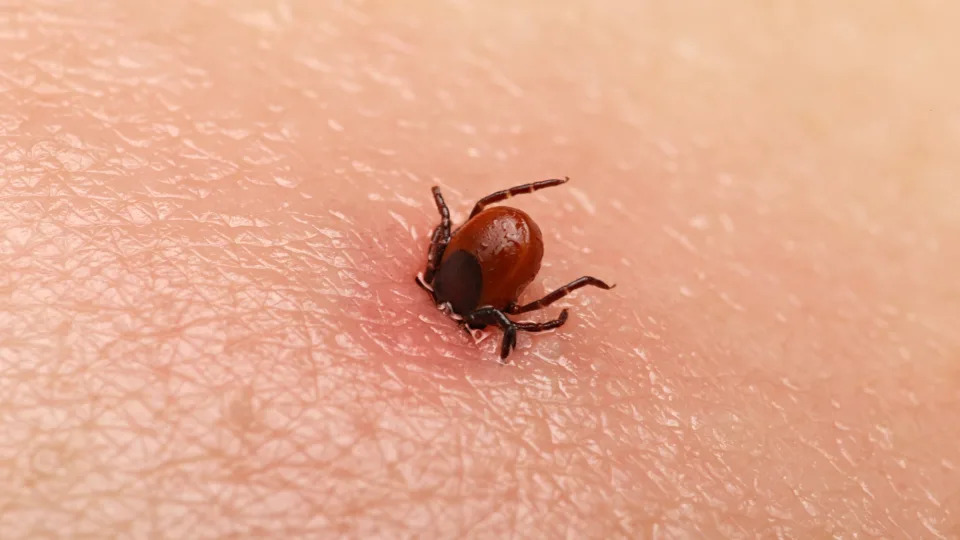
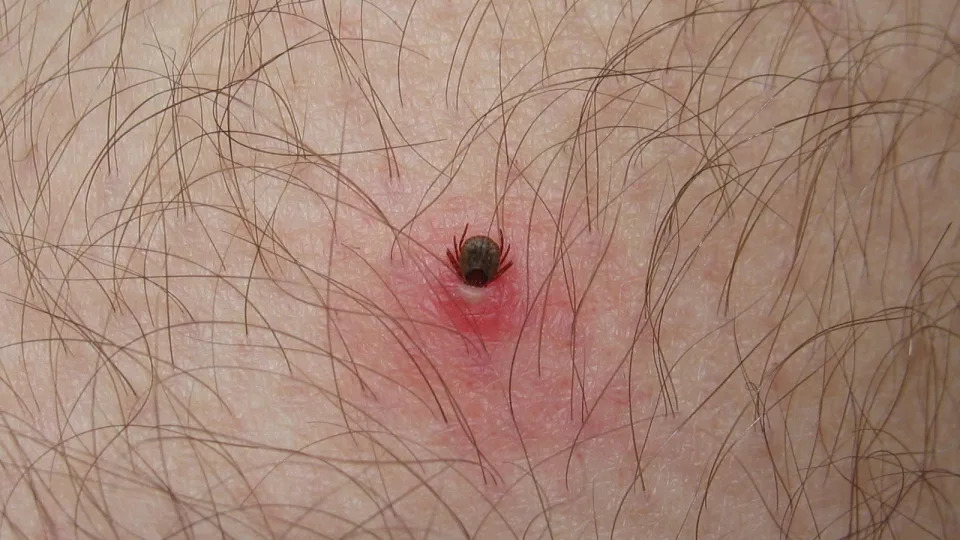
tick embedded in skin
Ticks take multiple hours, sometimes up to two days, to transmit any diseases to their hosts.

Everything we know about tick bite symptoms seems to have been watered down to a single telltale warning sign: the bullseye rash. If no red rings show up around the site of your tick bite, then you’re fine, right? Not necessarily, according to the experts.

There are plenty of tick bite symptoms that warrant a visit to your doctor’s office. While increasingly common (and now of concern year-round in some parts of the country), tick bites are not something to take lightly. The health consequences can range from an irritated bite mark that lasts a few weeks to a serious illness that lands you in the hospital or with chronic complaints.

We spoke with public health entomology expert Phurchhoki Sherpa, coordinator for the Purdue University Public Health Entomology Program. Medical entomology is a fancy term for the area of medicine concerning insect-borne diseases like Lyme and malaria. Sherpa has spent countless hours in the field collecting ticks for research purposes, and she knows more than her fair share about what can happen when a tick bites you.

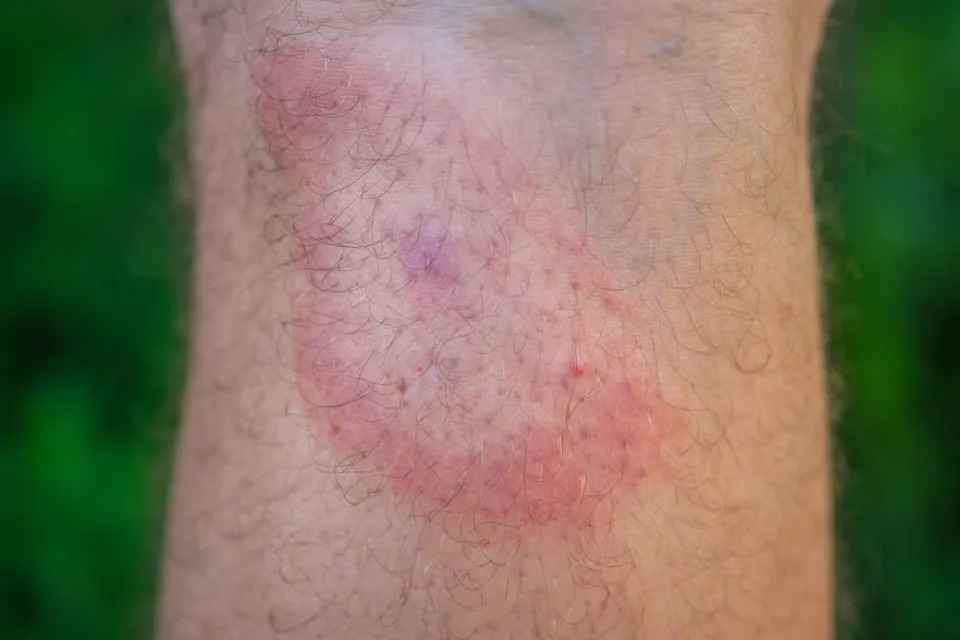
tick bite symptoms bullseye rash
A bullseye rash might emerge around a tick bite. It could also show up on other parts of the body where the bite didn’t occur.
What to Do When a Tick Bites You

If you find a tick latched onto your skin, first you should review how to remove a tick and follow that procedure. (Quick refresher: grab your tweezers or tick removal tool, grasp the tick as close to your skin as possible, and pull until it releases.) The best immediate tick bite treatment options involve cleaning the bite with some sort of disinfectant—hydrogen peroxide or rubbing alcohol are good options—and applying an antibiotic ointment of your choosing. Your tick bite may look and feel like any other bug bite in the days that follow, or you may find that an angry, itchy bump persists for weeks as it heals.

“It can look as benign as a mosquito bite, like a little itchy welt, especially if the tick has fallen off without you realizing you had it,” Sherpa tells Outdoor Life. She notes that such circumstances are common with tiny, immature ticks that are hard to see. “It can also look kind of scary, with a scab on the bite mark. It varies.”

tick embedded in skin
A tick bite might start out looking and feeling like any average bug bite.
Common Tick Bite Symptoms

Sherpa is referring to the rashes, scabs, and swelling that can accompany a tick bite. Always keep an eye out for a bullseye rash (the traditional symptom that is present in some, though not all, Lyme disease cases). A bullseye rash can appear not just around the bite mark, but anywhere on the body. Small, hard scabs might form around the bite. If they’re dark and crusty, this might be an early sign of a type of tick-borne disease known as spotted fever (more on this in a minute). If the bite mark exhibits other signs of infection, like extreme swelling, pustules, blistering, or anything else abnormal, seek medical treatment immediately.

Beyond the early, visible symptoms of a tick bite, be on the lookout for these more systemic symptoms that most or all tick-borne illnesses share. These symptoms might pop up anywhere from a day to a few weeks after the bite:

  • Fever
  • Chills
  • Headache
  • Muscle ache
  • Fatigue
  • Nausea/vomiting
  • Joint aches/arthritic pain
Tick-Borne Illnesses You Should Know About

Most tick bites will not cause you any further trauma than a mosquito bite would. After all, half or fewer of all ticks are infected with transmissible diseases. If the tick wasn’t latched deep into your skin or wasn’t engorged with blood yet, it probably didn’t get the chance to transmit anything. For example, it usually takes at least 36 hours for an attached tick to transmit Lyme disease to its human host.

But if your tick bite does transform into something of concern, it’s good to know about the various tick-borne illnesses you could develop. The risk of each tick-borne illness changes depending on where in North America you picked up the tick, Sherpa says. This is because different types of ticks carry different diseases.

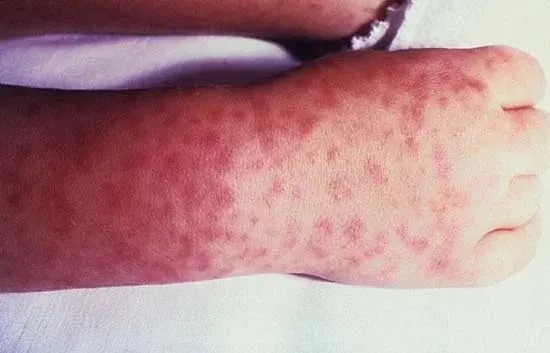
tick bite symptoms rocky mountain spotted fever
Rocky Mountain spotted fever can cause a dotted, patchy rash once the disease has progressed. The rash is especially common in children.

This is not an exhaustive list of all possible tick-borne illnesses. But here are eight tick-borne diseases that you should absolutely know about.

Anaplasmosis

Regions: Most common in East and Upper Midwest, some cases along Pacific Coast and portions of Southwest
Ticks that carry it: Black-legged ticks, Eastern and Western
Symptoms:

  • Chills
  • Headache/muscle aches
  • Nausea/vomiting/diarrhea
  • Respiratory issues
  • Bleeding issues
  • Organ failure

Type of disease: Bacterial
Treatment: Antibiotics, commonly Doxycycline

Babesiosis

Regions: Northeast and Upper Midwest
Ticks that carry it: Black-legged ticks, especially nymphs (tiny, immature ticks that are hard to see)
Symptoms:

  • Fever
  • Chills/sweats
  • Headache/body aches
  • Nausea/loss of appetite
  • Fatigue

Type of disease: Parasitic
Treatment: Unnecessary if asymptomatic. For symptomatic patients, a combination of anti-parasitic/antifungal drugs and antibiotics.

Colorado tick fever

Regions: Mountain West, Pacific Northwest, Southwest
Ticks that carry it: Rocky Mountain wood tick
Symptoms: 

  • Headache/body aches
  • Fever (sometimes “biphasic,” or two stages of fever interrupted by short period of relief)
  • Chills
  • Fatigue
  • Occasional nausea/diarrhea/vomiting
  • Occasional sore throat and rash

Type of disease: Viral
Treatment: Fluids, pain meds, severe cases should seek hospitalization for IV fluids and medication

Ehrlichiosis

Regions: Southeastern and South-central U.S., from East Coast to West Texas
Ticks that carry it: Lone Star tick, some Eastern black-legged ticks
Symptoms: 

  • Fever
  • Chills
  • Severe headache/muscle aches
  • Splotchy or dotted rash (especially in children)
  • Confusion
  • Nausea/diarrhea/loss of appetite
  • Brain swelling and damage to nervous system
  • Respiratory failure
  • Uncontrolled bleeding
  • Organ failure
  • Death

Type of disease: Bacterial
Treatment: Antibiotics, commonly Doxycycline

Lyme disease

Regions: Eastern half of U.S., Pacific coast 
Ticks that carry it: Black-legged ticks, Eastern and Western
Symptoms: 

  • Fever
  • Chills
  • Headache
  • Fatigue
  • Muscle/joint aches
  • Swollen lymph nodes, joints
  • Rash (particularly bullseye) that grows
  • Facial palsy/drooping

Type of disease: Bacterial
Treatment: Oral or IV antibiotics, depending on severity. Severe cases might require chronic lyme disease treatment.

Powassan virus

Regions: Northeast, Great Lakes region
Ticks that carry it: Black-legged tick, Groundhog tick, Squirrel tick
Symptoms: 

  • Often asymptomatic
  • Fever
  • Headache
  • Vomiting
  • Weakness
  • Encephalitis (Brain infection)
  • Meningitis (Swelling of brain and spinal cord)

Type of disease: Viral
Treatment: Fluids and pain medication, severe cases should seek hospitalization for IV fluids, meds, and support with any brain/spinal cord swelling or respiratory issues

Rocky Mountain spotted fever

Regions: Nationwide, most common in Mid-Atlantic and lower Appalachia 
Ticks that carry it: American dog tick, Rocky Mountain wood tick, Brown dog tick
Symptoms: 

  • Fever
  • Headache
  • Rash (splotchy or dotted)
  • Nausea/vomiting
  • Stomach pain
  • Muscle pain
  • RMSF develops quickly and can cause moderate to severe damage to tissues and extremities if left untreated. Amputations might be necessary. Hearing loss, paralysis, and loss of mental function are also possible.

Type of disease: Bacterial
Treatment: Antibiotics, commonly Doxycycline

Tick Bite Prevention

Fortunately, with proper tick bite prevention, there’s no reason to avoid the outdoors—especially not during the most enjoyable months of the year.

Dress, Treat, and Check

Tick bite prevention goes beyond simply drowning yourself in the best tick repellent. It also involves wearing the right clothes, treating your gear with permethrin, and doing multiple tick checks in the field and after the day is over.

“I tell [hikers] to wear light-colored clothing so they can detect ticks earlier and faster, especially the ones that would go unnoticed if we wore patterns or dark clothing,” Sherpa says. “Tuck your shirt into your pants, tuck your pant legs into your socks, always wear close-toed shoes with long socks when you’re outdoors.”

Sherpa also acknowledges that hunters have to do things a little differently if they want to avoid tick bites and the scary symptoms that can come with them. We spend more time bushwhacking than we do on trails, we wear dark and patterned clothing (hello camouflage), and we’re outside for a long time.

“When you’re hunting, you’re in the field for a while. You’re waiting, walking around. So do a tick check every few hours. The faster you can find the tick and get rid of it, the better,” she says. “When you get home, check yourself and your camo clothing. If you have a dryer, put your clothes in the dryer on high heat for about 20 minutes. The heat will decimate the ticks. And the sooner you can take a shower, the better.”

If showers and dryers are unavailable back at camp, or you refuse to put your expensive merino wool or rain gear in a dryer, treating your clothes with permethrin is the best line of defense. Make sure to follow the instructions on the bottle and wear gloves to avoid getting any on your skin.

Parts of the Body Likely to Get Tick Bites

When it comes to tick checks, close attention to detail makes all the difference. Check under your armpits, behind your ears, along your hairline, in your groin area, between your toes, behind your knees, and even in your belly button. Sherpa highlights all these spots as dark, easy-to-overlook hiding holes for ticks of all sizes.

If your legs and arms are bare, not only is there a chance they bite your ankles or inside your elbows, but they could also crawl under your shirt or shorts. By wearing long sleeves and pants and tucking in all your layers, you limit a tick’s chances of accessing any skin, let alone skin in a hard-to-reach place.

Tick Bite FAQs

What happens to a tick after it bites you?

Once a tick latches on and starts feeding, it will suck blood for several days before eventually becoming fully engorged and falling off. This “blood meal” gives the tick the nutrition it needs to develop into its next life phase.

What kills ticks on humans?

The only way to kill a tick on a human is by removing it properly and disposing of it by crushing it between tweezers and throwing it away. Don’t listen to any advice that involves burning the tick, dousing it in nail polish remover, or squirting hand sanitizer all over it. None of these tricks will get the tick to detach.

How do you treat a tick bite?

The best immediate tick bite treatment involves disinfecting the small wound and putting an antibiotic ointment on it. Hydrogen peroxide, antiseptic wipes, and rubbing alcohol are all great options for quick disinfecting. If you’re in a serious pinch, you can use an alcohol-based mouthwash or even a few drops from your flask of campfire whiskey. After that, apply an antibiotic ointment. To treat underlying symptoms of a tick-borne disease, see your doctor.

hikers in tall grass
If your hike or hunt will take you through tall grass, take the necessary preventative measures to avoid tick bites.
Final Thoughts

Tick bite symptoms can range from a small, itchy welt to a series of flu-like ailments that could land you in the hospital if left untreated. That’s why it’s crucial to know what types of ticks live in your area and what diseases they might carry.

Read Next: How to Remove a Tick From a Dog

The good news is that these scary tick-borne diseases with their array of side effects are all avoidable, thanks to the time-tested prevention strategies outdoorswomen and men now swear by. The age-old adage about an ounce of prevention being worth a pound of cure holds true, Sherpa says.

“We as humans are lazy. We don’t like dealing with that extra work. But prevention goes a long way when it comes to tick bites and tick-borne diseases. It is really important to take preventative measures when you go out,” Sherpa says. “If people aren’t sure about the worthiness of prevention measures, they should talk to someone who has had a tick-borne disease before.”