Why is leprosy spreading in Florida? What to know about recent rise in US cases

Today

Why is leprosy spreading in Florida? What to know about recent rise in US cases

Caroline Kee  – August 2, 2023

Cases of leprosy, also known as Hansen’s disease, are on the rise in Florida, and the infectious disease may be endemic in the Southeastern United States, a new report suggests.

Despite its biblical-sounding name, leprosy not a disease of the past. Leprosy still occurs in more than 120 countries, and there are over 200,000 new cases reported every year, according to the World Health Organization.

Leprosy is a chronic infectious disease caused by the bacteria Mycobacterium leprae, which affects the skin and nervous system.

“Leprosy is a pretty unusual infection in the United States, and cases had been dropping very steadily over a long period of time, but then recently, there’s been a bit of a slow uptick,” Dr. William Schaffner, professor of infectious diseases at Vanderbilt University Medical Center, tells TODAY.com.

Are there cases of leprosy in Florida?

Yes, there are cases of leprosy in Florida. So far this year, there have been 15 cases of leprosy in Florida, NBC affiliate WESH reported.

In 2020, 159 new leprosy cases were reported in the U.S., and Florida was among the top states reporting cases, according to a research letter in the journal Emerging Infectious Diseases, published by the U.S. Centers for Disease Control and Prevention.

There has been a drastic reduction in cases in the U.S. since the 1980s, per the CDC, but the number of cases of leprosy has more than doubled in Southeastern states over the last decade.

Why is leprosy spreading in Florida?

The short answer it’s still not known why leprosy is spreading in Florida or why it’s happening now. “Frankly, these cases are still are a bit of a mystery,” says Schaffner, adding that further public health investigation is needed.

Previously, leprosy in the U.S. affected people who had immigrated from leprosy-endemic countries, per the CDC. “Most of the cases we’ve seen in the past have been in people who came from their homeland where there was much more leprosy,” says Schaffner.

But more recently, the rate of new diagnoses in people born outside of the U.S. has been declining, even though the incidence of leprosy in the U.S. has been increasing overall, the CDC said in its report.

About 34% of new cases between 2015 and 2020 appear to have been acquired locally, per the CDC report. In other words, more and more people are being infected with leprosy in the U.S., Schaffner adds — and Florida may be a hotspot.

Additionally, the CDC said several of the recent cases in Florida showed no evidence of traditional risk factors. The report highlights a case of leprosy in a 54-year-old Florida man who reported that he had no known contact with an infected person, no exposure to armadillos (a known animal reservoir for the bacteria that causes leprosy), and no travel history to leprosy-endemic countries.

The CDC report noted that many Florida residents, like the 54-year-old, spend time a lot of time outdoors, so “environmental reservoirs” should be investigated “as a potential source of transmission.”

Where is leprosy in Florida?

Central Florida seems to be where most of the cases of leprosy in the state are located, based on recent data. Of the 15 cases reported so far this year, most were in Brevard County, in East Central Florida.

Of the 2020 data analyzed in the CDC report, Central Florida accounted for about 81% of the cases reported in the state in 2020 and nearly one-fifth of cases reported nationwide, according to the CDC report. The agency did not specify where in Central Florida had the most leprosy cases.

By most definitions, Central Florida includes the Greater Orlando area and sometimes the Tampa Bay area. Other major cities in Central Florida, according to VisitFlorida.com, include St. Petersburg, Clearwater, Palm Bay, Lakeland and Deltona.

How common is leprosy in Florida?

The rate of leprosy in Florida overall is low, as is the case in all of the U.S. So far this year, only 15 cases have been reported in the state. With a population of 22 million across the whole state, that’s a very low risk of coming in contact with someone with leprosy.

That said, the recent trends and cases add to a growing body of evidence that leprosy is endemic in the Southeastern U.S., namely in Florida. Endemic means a virus is consistently present in a population within a geographic area, according to Medline Plus.

“I keep my fingers on the pulse of communicable diseases in this country, and that number (159 cases in the U.S.) surprised me. It was higher than I thought,” says Schaffner.

There are no Leprosy-related travel warnings for Florida, but the CDC said in its report that travel to Florida should be considered during contact tracing for leprosy in any state.

It’s also important to keep in mind that leprosy is “usually difficult to acquire and requires close, persistent, prolonged contact with a person who has leprosy,” says Schaffner. You cannot get leprosy from casual contact like hugging, shaking hands, or sitting next to someone who has leprosy, per the CDC.

“Leprosy is not communicable in the classic sense the way influenza or COVID-19 is,” says Schaffner. According to the CDC, the risk of getting Leprosy is very low because more than 95% of people have natural immunity.

It’s not fully understood how leprosy is spread, per the CDC, but it is thought to be spread through respiratory droplets produced when an infected person coughs or sneezes. There is also evidence humans can contract leprosy from armadillos, a known animal reservoir for the bacteria, says Schaffner. In this case, transmission would also require prolonged contact with the animal — fortunately most people aren’t getting that close to armadillos, he adds.

Is there a cure for leprosy?

“We used to think it was untreatable, but we can treat and cure this disease now,” says Schaffner. Leprosy is typically treated with a combination of antibiotics and treatment usually lasts one to two years, per the CDC.

“It is a very slowly multiplying bacteria in the body, so you have to take the appropriate antibiotics for a long period of time,” says Schaffner.

If left untreated, leprosy can cause permanent damage to the nerves, skin, hands, feet and eyes, which may result in paralysis or blindness, per the CDC. Early diagnosis is important to avoid long-term disfigurement and disability from the disease.

Previously, leprosy was thought of to be highly contagious and patients were isolated in remote areas, Schaffner explains, but today the disease can be safely managed at home.

Pictures of leprosy

Lepromatous leprosy in a 54-year-old man in central Florida in 2022. (CDC)

Leprosy can cause skin symptoms, including lesions, discolored or flat rashes, thick or stiff patches of skin, growths and painless ulcers (often on the feet) that do not heal over time, according to the CDC.
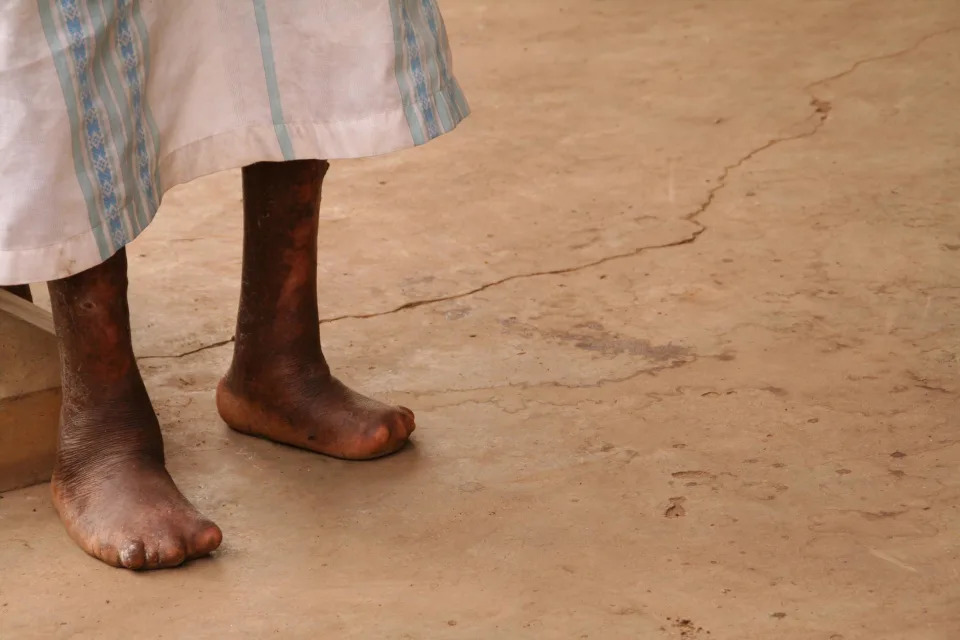
Disfigured feet on someone with leprosy. (Shutterstitch / Getty Images/ iStockphoto)

Symptoms affecting the nerves include numbness in the affected areas of the skin, muscle weakness, nerve pain, paralysis and eye issues. Leprosy can also affect the mucous membranes lining the nose, mouth, and inside of the eyes and cause bleeding, tissue damage, impaired speech and vision loss, per Medline Plus.

CDC issues leprosy warning for people making Florida travel plans

South Florida Sun Sentinel

CDC issues leprosy warning for people making Florida travel plans

Cindy Krischer Goodman, Sun Sentinel – August 1, 2023

Omar Havana/Getty Images North America/TNS

The U.S. Centers for Disease Control and Prevention is warning that cases of leprosy, also known as Hansen’s disease, are surging in Florida and should be considered when making travel plans.

The infectious disease primarily affects the skin and nervous system and can be easy to treat if caught early.

Leprosy has been historically uncommon in the United States, but has more than doubled in the South over the last 10 years. In a case report issued Monday, the Centers for Disease Control and Prevention said that Central Florida has accounted for 81% of reported cases in the state and almost one-fifth of reported cases nationwide.

Of the 159 new leprosy cases reported in the United States in 2020, Florida was among the top reporting states with nearly 30 cases. The Florida Department of Health reported 19 cases from July 2022 to July 2023, with one South Florida case in Palm Beach County.

The CDC said if untreated, the disease can progress to paralysis, blindness, the loss of one’s eyebrows, physical disfigurement, and even the crippling of hands and feet. Symptoms include loss of feeling in hands and feet, nasal congestion and possibly dry, stiff, sometimes painful skin.

The warning comes because of what health officials learned when examining patients diagnosed with leprosy.

“Whereas leprosy in the United States previously affected persons who had immigrated from leprosy-endemic areas, about 34% of new case-patients during 2015–2020 appeared to have locally acquired the disease,” the CDC report says. According to the World Health Organization, medical officials report more than 200,000 cases of leprosy every year in more than 120 countries. While the reason behind the rising cases in Florida is unclear, there is some support for the theory that international migration to Central Florida of people with leprosy is fueling the locally-acquired transmission.

“Prolonged person-to-person contact through respiratory droplets is the most widely recognized route of transmission,” the CDC report says.

When contact tracing cases in Central Florida, health officials found no associated risk factors, including travel, zoonotic exposure, occupational association, or personal contacts. “The absence of traditional risk factors in many recent cases of leprosy in Florida, coupled with the high proportion of residents who spend a great deal of time outdoors, supports the investigation into environmental reservoirs as a potential source of transmission,” the report says.

Because Florida, particularly Central Florida, may represent an endemic location for leprosy, the CDC recommends that physicians consider leprosy if patients who recently have traveled Florida show symptoms.

Is the Atlantic Ocean current system nearing collapse? Scientists weigh in

CBS News

Is the Atlantic Ocean current system nearing collapse? Scientists weigh in

Li Cohen – July 31, 2023

A study out this week raised a dire warning about the future of the planet and humanity, suggesting a system of currents in the Atlantic Ocean could totally collapse as early as 2025 — a frightening scenario that was the premise for the 2004 film “The Day After Tomorrow.”

But some scientists say that while a collapse is possible, it’s just one of many potential scenarios that could unfold and is unlikely to occur this century.

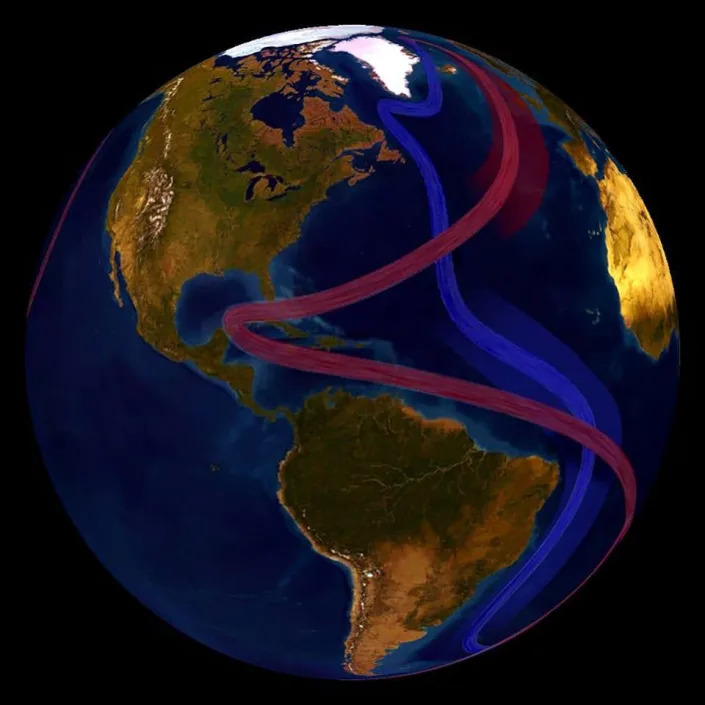
The study, published in Nature Communications, focuses on the Atlantic Meridional Overturning Circulation, or AMOC, a system of ocean currents in the Atlantic Ocean. This system is part of a global conveyor belt as it circulates water from north to south in the Atlantic, helping disperse warm waters. This system, along with other ocean currents, is crucial to helping maintain the Earth’s climate — and scientists believe it is being affected by climate change, as melting ice alters the balance in northern waters.

The AMOC “is a major tipping element in the climate system and a future collapse would have severe impacts on the climate in the North Atlantic region,” the study says, adding that there has been other research in recent years indicating that its circulation is weakening.

“We estimate a collapse of the AMOC to occur around mid-century under the current scenario of future [carbon] emissions,” it says.

Peter Ditlevsen, a professor at the University of Copenhagen’s Niels Bohr Institute and the lead author of the study, told CBS News he believes it’s “most likely” the system could collapse in about 30 years, around 2057. In the study, the range for a collapse was estimated to be anywhere between 2025 and 2095.

But, he says, there’s an “uncertainty”: “You cannot be completely sure.”

That’s because measurements of the AMOC only go back 20 years, providing a small amount of data to work into configurations. So his team looked at records of sea surface temperatures and climate model simulations to try to predict the fate of the current system.

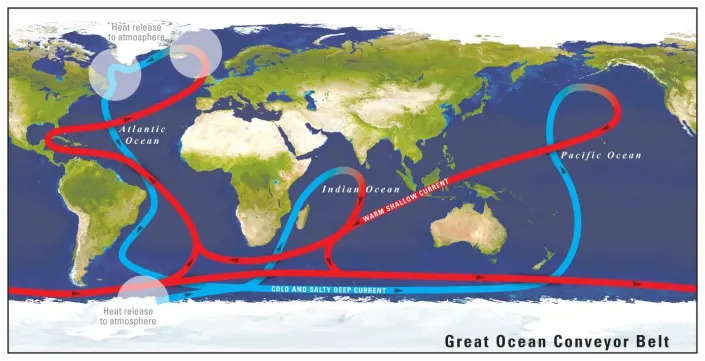
The global conveyor belt, shown in part here, circulates cool subsurface water and warm surface water throughout the world / Credit: NOAA

“We know that there’s a tipping point out there in the future. And that when you approach that tipping point, they start to be unstable in a very specific way,” Ditlevsen said.

But Marlos Goes, a scientist at NOAA’s Atlantic Oceanographic and Meteorological Laboratory, said the likelihood of this study’s results coming to fruition within this century “is very small.” Such a timeframe, he said, is just “one scenario … out of hundreds.”

According to state-of-the-art climate models and the U.N.’s Intergovernmental Panel on Climate Change, a group that works to assess the science behind climate change, “it’s not going to collapse in the 21st century at all,” Goes said.

“It may in the following century. It depends on the [emissions] pathways,” he told CBS News. “If the emissions go unabated the way they are going right now … that could be a potential force for this collapse. But the probability of that single scenario that they analyzed in that study is very unlikely.”

What is the Atlantic Meridional Overturning Circulation?

The AMOC is a long current cycle in the Atlantic Ocean that transports warm water across the globe. It’s an incredibly slow-moving system that takes roughly 1,000 years to move any given cubic meter of water through its entirety, according to NOAA.

It is part of the global conveyor belt, a system of deep ocean currents driven by temperature, salinity and the wind on the ocean surface. The belt begins where warm water from the Gulf is thrust into a cold atmosphere of the Norwegian Sea. From there, the now much cooler water sinks lower into the ocean and is carried south. The conveyor belt takes that cold water all the way down to Antarctica.

 / Credit: USGS
/ Credit: USGS

Is the Gulf Stream going to collapse?

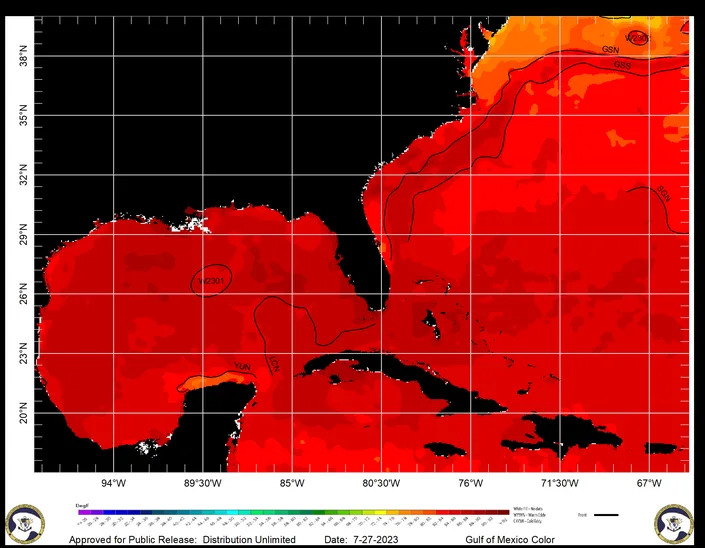
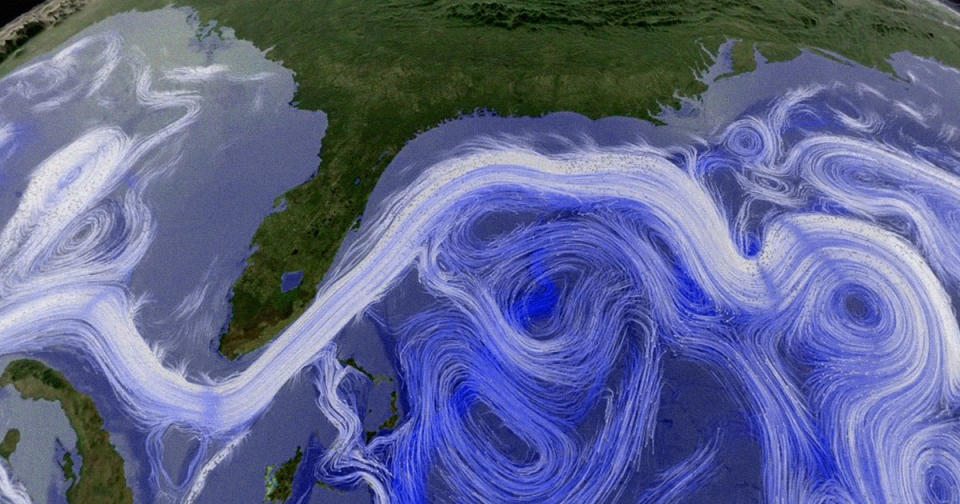
The Gulf Stream is a warm ocean current that runs from the coast of Florida and up to North Carolina, where it then diverts and goes across the Atlantic. It’s also part of the Atlantic Meridional Overturning Circulation. The latest study makes no mention of the Gulf Stream, specifically, but because it is part of this system, it would be impacted by such a collapse.

However, Goes told CBS News that wouldn’t disappear. The Gulf Stream is primarily driven by wind rather than temperature and salinity, as the AMOC as a whole is, meaning it would still function.

This image by NOAA's Ocean Prediction Center shows the temperature of the Gulf Stream along the U.S. East Coast. / Credit: NOAA Ocean Prediction Center
This image by NOAA’s Ocean Prediction Center shows the temperature of the Gulf Stream along the U.S. East Coast. / Credit: NOAA Ocean Prediction Center

“We would have a Gulf Stream just if we had the wind, if we didn’t have this formation in the North Atlantic,” Goes said. “…So even if the AMOC collapses, we’ll still have a Gulf Stream, but it would be much weaker.”

What would happen if the AMOC shut down?

A collapse of the system was the inspiration for the 2004 disaster film “The Day After Tomorrow.” In the movie, ocean current systems stopped because of global warming, triggering another Ice Age.

But Ditlevsen said, “That’s not gonna happen.” The principle of it, however, is the same, he said.

“You get colder Europe, northern Atlantic region, which is maybe not nice for us living in Scandinavia because it will be more similar to what’s going on in Alaska,” he said.

“But worse is that, the heat that’s not coming here stays in the tropics, heating them even more,” he continued. “The livelihood of people in the tropics can be severely threatened by this. … These are climate changes that are going to happen very fast.”

The AMOC won’t collapse just yet, some say — but it is slowing

Even though Goes says the chances of the AMOC collapsing within the next few decades are low, the current system is at risk. In 2021, another study found that the system is the weakest it’s been in at least 1,600 years. Researchers found that the current has slowed down an “unprecedented” amount — 15% since 1950.

Other research has found that it could be reduced up to 45% within the next 70 years or so.

Goes said that even just a slowdown of the currents, and not a total collapse, could impact people around the world.

“Generally, when the AMOC weakens or collapses, you have a cooling of the North Atlantic because this heat wouldn’t be carried further north, and there’s a warming of the South Atlantic. This would shift the precipitation patterns further south,” he said. “And that could influence all the sub-Sahara, the African and South American continents in the tropical bands. It would have influence on the storms in the North Atlantic, in Europe.”

But it would also release even more carbon dioxide into the atmosphere. The ocean absorbs 90% of the carbon dioxide from the atmosphere, and without the current, the ocean won’t be able to absorb as much, Goes said, a situation that would only add to the already rampant global warming the planet is facing. It would also increase sea levels along the U.S. coast.

Urgent action could stop a slowdown

A drastic change or shutdown of the AMOC wouldn’t necessarily be detectable right away, Goes said. In fact, it could take 40 to 50 years to emerge.

“By the time we detect that, it will be too late,” he said. “We really need to act now. This is one of the tipping points of the world.”

Once a tipping point such as a slowdown or shutdown of the AMOC is passed, it could cause a cascade of impacts that could cause “irreversible and severe changes in the climate system,” according to the Organization for Economic Co-operation and Development. Even though a full collapse of the AMOC within the next few decades isn’t probable, it is possible, Goes said, and it could come with high risk.

Scientists are continuing to monitor the system to learn what they can about its current state. But to help prevent a continued slowdown or a potential full shutdown, both Goes and Ditlevsen agreed that global emissions must be reduced drastically. Those emissions, largely from the burning of fossil fuels, are trapping heat in the atmosphere and causing sea ice to melt. When that ice melts, it adds fresh water to the AMOC, disrupting the salinity and temperature it relies on to move.

“If we stop our emissions, it will not collapse,” Ditlevsen said. “The disturbing part about this study is that we have to react much faster than we perhaps would like to do. … It’s yet another wake-up call or warning sign that we have to react faster than we do.”

Scientists Say Atlantic Current Collapse Could Lead to Extreme Cold in Europe and North America

Futurism

Scientists Say Atlantic Current Collapse Could Lead to Extreme Cold in Europe and North America

Victor Tangermann – July 31, 2023

Researchers are warning that the crucial ocean currents known as the Atlantic Meridional Overturning Circulation (AMOC) could collapse as soon as 2025 — an impending, climate change-fueled disaster that could usher in a new era of extreme temperature fluctuations.

It’s important to note that not every scientist is convinced by this assessment. And though the researchers say the collapse could take place as soon 2025, they also say it could take another 70 years.

That said, a team of researchers led by Peter Ditlevsen, professor and climate researcher at the University of Copenhagen in Denmark anticipate in a paper published in the journal Nature Communications that the currents could collapse anywhere between 2025 and 2095 — if we don’t cut global carbon emissions, that is.

If it were to collapse, much of the Western world could be plunged into an extended period of extreme cold — a counterintuitive result of climate change. Previous collapses, which have predominantly occurred during ice ages many thousands of years ago, have indeed led to temperatures going haywire.

“I think we should be very worried,” Ditlevsen told The Guardian. “This would be a very, very large change. The AMOC has not been shut off for 12,000 years.”

Back in 2021, researchers at the Potsdam Institute for Climate Impact Research in Germany warned in a separate paper that the AMOC is being driven to the brink of collapse due to climate change. In the short term, this collapse could cause temperatures to plunge in Europe and North America, resulting in prolonged periods of extreme cold.

And if the planet’s past history is anything to go by, the stakes are significant. 12,000 years ago, the melting of a massive glacial lake plunged Europe into an extreme cold spell for almost a millennium.

Now, by analyzing statistics from the last 150 years, Ditlevsen and his team say they’ve calculated with a 95 percent certainty that the AMOC will collapse between 2025 and 2095.

“Shutting down the AMOC can have very serious consequences for Earth’s climate, for example, by changing how heat and precipitation are distributed globally,” Ditlevsen said in a statement.

“While a cooling of Europe may seem less severe as the globe as a whole becomes warmer and heat waves occur more frequently, this shutdown will contribute to increased warming of the tropics, where rising temperatures have already given rise to challenging living conditions,” he added.

This change could be far more rapid than the incremental 1.5 degrees Celsius rise caused by climate change over a century. With a collapsed AMOC, we’d be looking at far more extreme changes in the ten to 15 degrees Celsius range over just a decade.

“Our result underscores the importance of reducing global greenhouse gas emissions as soon as possible,” Ditlevsen said.

But while researchers generally agree with this final conclusion, not everybody is convinced the AMOC is about to, well, run amok.

For one, the conclusion contradicts the latest findings of the United Nations’ Intergovernmental Panel on Climate Change (IPCC), which found in its most recent report that the current was unlikely to just collapse within this century.

“The work provides no reason to change the assessment of the [IPCC],” Jochem Marotzke of the Max-Planck-Institute for Meteorology in Hamburg, told Politico.

“We just don’t have the evidence to state that it has declined,” Penny Holliday, researcher at the UK’s National Oceanography Center, told the BBC. “We know that there is a possibility that AMOC could stop what it’s doing now at some point, but it’s really hard to have certainty about that.”

At the same time, while we may never get a 100 percent accurate prediction — after all, our planet’s climate systems are incredibly complex — we should still heed Ditlevsen and his colleagues’ warning.

“We do still have to take the idea seriously that there could be abrupt changes in the North Atlantic climate system,” University of Reading atmospheric scientist Jon Robson told the BBC. “But the exact predictions that it will happen — and within this time frame — you have to take that with some skepticism.”

The Mojave Desert is burning in California’s biggest fire of year, torching Joshua trees

Los Angeles Times

The Mojave Desert is burning in California’s biggest fire of year, torching Joshua trees

Grace Toohey, Alex Wigglesworth – July 31, 2023

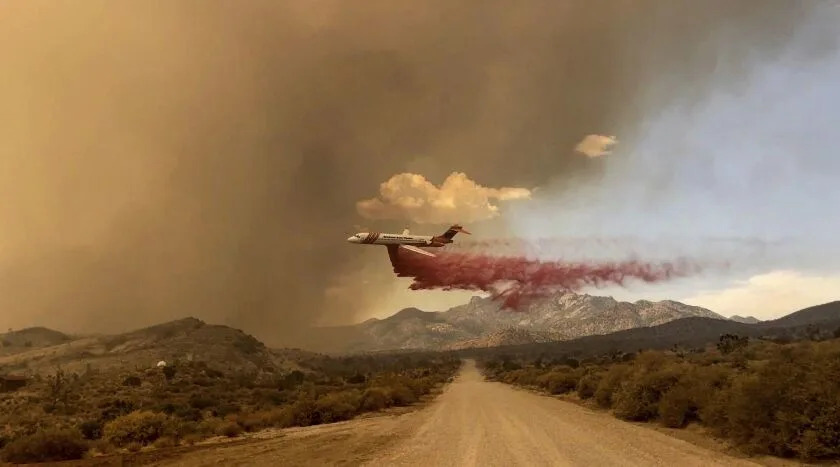
An air tanker making a fire retardant drop over the York fire in Mojave National Preserve on Saturday, July 29, 2023.
An air tanker drops fire retardant over the York fire in the Mojave National Preserve on Saturday. (R. Almendinger / National Park Service)

California’s biggest wildfire of the year — burning through delicate Joshua Tree forests along the California-Nevada border — is an unusual desert blaze being fueled in part by the rapid growth of underbrush from this winter’s record rains.

The York fire had scorched 77,000 acres as of Monday, with no containment. After first being observed Friday, the blaze has spread mainly across the Mojave National Preserve in eastern San Bernardino County, but recently jumped into western Nevada. No evacuations have been issued as a result of the fire, which is burning in mostly remote areas.

“It’s a public misconception that the desert doesn’t burn, but we’re seeing right here that that’s not case,” said Sierra Willoughby, a supervisory park ranger at Mojave National Preserve. “They’re not as rare as we would hope them to be.”

Just 10 days before this wildfire was spotted in the New York Mountains area of the Mojave National Preserve, park officials warned of extreme fire risk for the federally protected desert, banning all open flames.

“Even though we had a good moisture year with the [winter] season, the very high temperatures that came in July were a concern for our fire folks,” Willoughby said.

Read more: Wildfire burns at California-Nevada border, spawning fire tornadoes, torching desert landscape

Southern California’s wet winter and cool spring helped foster increasing levels of invasive grasses and underbrush in the Mojave and Colorado deserts, federal officials said, which has made the region exceptionally susceptible to brush fires this summer as those plants dry out.

This year’s climate patterns have provided a “more continuous fuel bed” than is typical for desert ecosystems, UCLA climatologist Daniel Swain said on Twitter. 

“Big fires in the desert are entirely consistent with the fire season outlook for 2023,” Swain wrote, noting that poses a major concern for ecologists and desert conservationists.

Fire regimes tend to vary on a gradient from climate-limited, in which there is an abundance of fuel but conditions are often too wet to carry fire, to fuel-limited, in which the climate is generally conducive to fire but there is usually not enough vegetation to carry it.

For this reason, forecasters had called for a less active fire season in California’s higher-elevation forests, which are dense but remain moist from the wet winter. But at lower elevations, the rains helped more grasses grow, and then several weeks of high temperatures caused the vegetation to dry out — or cure — priming it to become wildfire fuel.

Already, a June 10 wildfire burned more than 1,000 acres in the Pleasant Valley area of Joshua Tree National Park. Invasive grasses played a role in stoking that fire, known as the Geology fire, which burned in an area populated by Joshua trees, Mojave yucca, creosote and senna, park officials said.

“Most of the deserts in the southwestern U.S. are fairly fuel-limited in dry years, so there was that kind of natural fire break between plants or keeping it confined to relatively small areas,” said Christopher McDonald, a natural resources advisor at UC Cooperative Extension.

But after a year of above-average rainfall, there’s more fuel connecting perennial shrubs and Joshua trees, which enables fire to spread among the plants, he said. Hot, windy conditions further primed vegetation to burn.

Read more: Wet winter may delay — but not deter — 2023 fire season; ‘We must not let our guard down’

Joshua trees and other desert plants have limited natural defenses to fires, officials said, and would struggle to recover from such blazes.

The extent of the plants and animals at risk in the York fire are still under investigation, Willoughby said, noting that the blaze has already burned through Joshua tree, juniper and pinyon pine groves. Stephanie Bishop, a National Park Service public information officer and a spokesperson for the York fire, said endangered tortoises that live in the region also could be harmed.

“What we’ve seen is fires go through these areas and take out quite a bit,” Willoughby said. The York fire is burning in some of the areas that last saw flames in 2005 from the Hackberry Complex fire, which eventually burned more than 70,000 acres. Willoughby said many of the forests harmed in that blaze 18 years ago still have not recovered.

Read more: California wildfires map

The 2020 Dome fire, which burned more than 40,000 acres across the southwestern California desert — including in the national preserve, but in a different area from the York fire — destroyed an estimated 1 million Joshua trees. Crews and volunteers are trying to replant and revitalize those groves.

In the Eastern Mojave, the heavy winter rains stoked the growth of native grasses, including big galleta, said ecologist Laura Cunningham, California’s director at the Western Watersheds Project and co-founder of conservation group Basin and Range Watch. The area doesn’t have as many invasive grasses, such as red brome and cheatgrass, which are more common in low-creosote deserts, but it does have a big Sahara mustard problem, which could be adding to the fuel, she said.

Some models suggest that increased global temperatures as a result of climate change are bringing more rain to the Mojave desert, fueling grass growth and the risk of lightning strikes, Cunningham said. On top of that, more humans traveling into desert areas increases the risk of sparks — from a bullet glancing off a rock while someone is target shooting or a chain dragging on the pavement while someone is hauling a trailer, she said.

The New York Mountains in the Mojave National Preserve have an enormous density of rare plants, including blue blossom, manzanita and uncommon chaparral shrubs, that could be devastated by fire, she said.

“In those desert areas, the mountains are like sky islands, they call them,” she said — they rise from the “sea” of the hot desert floor that surrounds them and host dramatically different populations of plants and animals.

She thinks the vegetation and plants will recover from the fire, but probably very slowly — too slowly for one person to witness in their lifetime, she said.

“It’s kind of sad because it won’t be when we can see it,” she said. “We can watch it recover slowly, but those old-growth Joshua tree woodlands and shrublands, we won’t see those again in our lifetimes.”

California’s other big fire of the year — the Bonny fire, which has charred 2,300 acres in Riverside County — is also burning across some arid landscapes as well as through the mountains. It has forced 122 people to evacuate their homes, with almost 800 structures threatened, according to officials with the California Department of Forestry and Fire Protection.

The Bonny fire, burning south of Anza, was 20% contained as of Monday morning. One structure has been destroyed, and at least one firefighter was injured in the effort to control the flames. Almost 2,000 personnel are working that blaze, which began Thursday. Its cause is under investigation.

Read more: What wet winter? California prepares for peak wildfire season

Winds remain a major concern for both fires, officials have said.

A challenging weekend of high winds up to 30 mph sparked dangerous fire whirls that pushed the York fire across the Mojave National Preserve, said Bishop, a spokesperson for the York fire and a National Park Service public information officer. The weather overnight into Monday had improved slightly, with winds that were not as strong and some precipitation, which allowed for some groundwork and minimal fire growth, she said.

A monsoonal influence in the area could produce more of that helpful precipitation, but that pattern typically comes with heavy winds, officials said, and the test of the hot desert heat remains.

Read more: Multiple fires erupt as heat wave descends on Southern California

“The biggest challenge today that they’re going to be dealing with is limited visibility due to thick smoke,” Bishop said, noting that visibility has dropped to one mile in some areas.

Federal, state and local firefighting teams are battling the York fire, with more than 260 personnel assigned, officials said. The fire has also moved into the Avi Kwa Ame National Monument, which is Bureau of Land Management land, Willoughby said.

What ignited the fire remains under investigation, but Bishop said it was determined to have started on private land within the preserve.

Cunningham expressed concern for area residents — as people live in Fourth of July Canyon, right next to Caruthers Canyon, where there are inholdings within the preserve. The fire is also spreading toward Nipton and Searchlight, she said.

“Today is going to be a windy monsoonal stormy day, so we’ll see,” she said. “This ain’t over till it’s over.”

Big fires in the Mojave Desert are “unfortunately becoming a greater concern,” McDonald said.

“Historically, in general, deserts tended to burn fairly infrequently,” he said. “And that’s one of the reasons why you have a lot of these long-lived plants that can grow into big giant Joshua trees, or saguaros in the Sonoran Desert. But as more and more invasive plants, especially invasive grasses, have grown in desert areas, they’re able to carry fire and burn those long-lived plants and cause a change in the fire regime.”

An increase in fire can also lead to a shifting of habitats into something new, Cunningham said.

“If there are too many fires that happen in the same place over and over again, that can eliminate Joshua trees and other plants and turn it into some other type of vegetation,” she said. “So that’s definitely a concern. And again, if temperatures get hotter, that can cause vegetation to sort of migrate upward in elevation or more northerly.

“We know climate change is impacting the earth, so we have to really protect these special places now — really try to maintain them in a resilient way,” she added. “If there’s going to be a fire, we have to help them recover. They will restore themselves, but we can maybe speed up the process by preventing other fires in those same locations, maybe actively planting some seeds out there to help the plants regrow.”

Why Republicans can’t get out of their climate bind, even as extreme heat overwhelms the US

CNN

Why Republicans can’t get out of their climate bind, even as extreme heat overwhelms the US

Analysis by Ella Nilsen, CNN – July 30, 2023

Deadly heatwaves are baking the US. Scientists just reported that July will be the hottest month on record. And now, after years of skepticism and denial in the GOP ranks, a small number of Republicans are urging their party to get proactive on the climate crisis.

But the GOP is stuck in a climate bind – and likely will be for the next four years, in large part because they’re still living in the shadow of former president and 2024 Republican frontrunner Donald Trump.

Even as more Republican politicians are joining the consensus that climate change is real and caused by humans, Trump’s inflammatory rhetoric has driven the party to the right on climate and extreme weather. Trump has called the extremely settled science of climate change a “hoax” and more recently suggested that the impacts of it “may affect us in 300 years.”

Scientists this week reported that this summer’s unrelenting heat wave would have been “virtually impossible” were it not for the planet-warming pollution from burning fossil fuels. They also confirmed that July will go down as the hottest month on record – and almost certainly that the planet’s temperature is hotter now than it has been in around 120,000 years.

Yet for being one of the most pressing issues of the 21st century, climate is rarely mentioned on the 2024 campaign trail.

“As Donald Trump is the near presumptive nominee of our party in 2024, it’s going to be very hard for a party to adopt a climate-sensitive policy,” Sen. Mitt Romney, a Republican from Utah, told CNN. “But Donald Trump’s not going to be around forever.”

When Republicans do weigh in on climate change – and what we should do about it – they tend to support the idea of capturing planet-warming pollution rather than cutting fossil fuels. But many are reticent to talk about how to solve the problem, and worry Trump is having a chilling effect on policies to combat climate within the party.

“We need to be talking about this,” Rep. John Curtis, a Republican from Utah and chair of the House’s Conservative Climate Caucus, told CNN. “And part of it for Republicans is when you don’t talk about it, you have no ideas at the table; all you’re doing is saying what you don’t like. We need to be saying what we like.”

Extreme weather changes GOP minds

With a few exceptions, Republicans largely are no longer the party of full-on climate change denial. But even as temperatures rise to deadly highs, the GOP is also not actively addressing it. There is still no “robust discussion about how to solve it” within the party, said former South Carolina Rep. Bob Inglis, who now runs the conservative climate group RepublicEn, save for criticism of Democrats’ clean-energy initiatives.

“The good news is Republicans are stopping arguing with thermometers,” Inglis told CNN. Still, he said, “when the experience is multiplied over and over of multiple days of three-digit temperatures in Arizona and record ocean temperatures, people start to say, ‘this is sort of goofy we’re not doing something about this.’”

Meanwhile, the impacts of a dramatically warming atmosphere are becoming more and more apparent each year. Romney and Curtis, two of the loudest climate voices in the party, both represent Utah – a state that’s no stranger to extreme heat and drought, which scientists say is being fueled by rising global temperatures.

“There are a number of states, like mine, that are concerned about wildfires and water,” Romney said, adding he believes Republican governors of impacted states have been vocal about these issues.

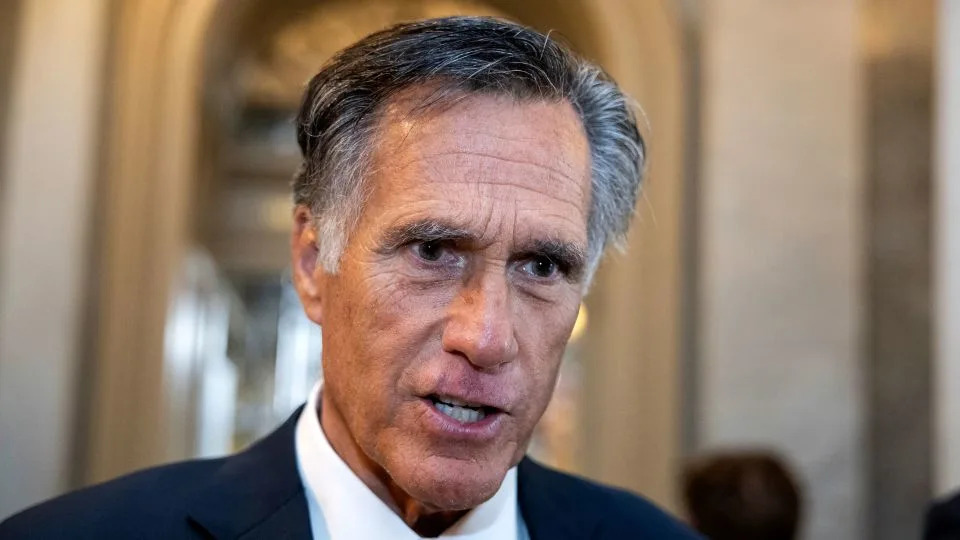
Sen. Mitt Romney is one of a handful of Republicans who wants the party to get proactive on climate solutions. - Francis Chung/POLITICO/AP
Sen. Mitt Romney is one of a handful of Republicans who wants the party to get proactive on climate solutions. – Francis Chung/POLITICO/AP

Utah and other Western states are looking for ways to cut water use to save the West’s shrinking two largest reservoirs, Lakes Powell and Mead. And even closer to home, Utah’s Great Salt Lake has already disappeared by two-thirds, and scientists are sounding alarms about a rapid continued decline that could kill delicate ecosystems and expose one of fastest-growing metropolitan areas in the nation to toxic dust.

“I think the evidence so far is that the West is getting drier and hotter,” Romney told CNN. “That means that we’re going to have more difficulty with our crops, we’re going to have a harder time keeping the rivers full of water. The Great Salt Lake is probably going to continue to shrink. And unfortunately, we’re going to see more catastrophic fires. If the trends continue, we need to act.”

An issue ‘held hostage’

While Republicans blast Democrats’ clean energy policies ahead of the 2024 elections, it’s less clear what the GOP itself would prefer to do about the climate crisis.

As Curtis tells it, there’s a lot that Republicans and Democrats in Congress agree on. They both want to further reform the permitting process for major energy projects, and they largely agree on the need for more renewable and nuclear energy.

As the head of the largest GOP climate caucus on the Hill, Curtis’ Utah home is “full solar,” he told CNN, and is heated using geothermal energy.

While at a recent event at a natural gas drilling site in Ohio, as smoke from Canada’s devastating wildfire season hung thick in the air, House Speaker Kevin McCarthy was asked how he would solve the climate crisis. He suggested planting a trillion trees to help offset the pollution created by burning fossil fuels – a bill House Republicans introduced in 2020. The measure has not yet passed the House and has an uncertain future in the Senate.

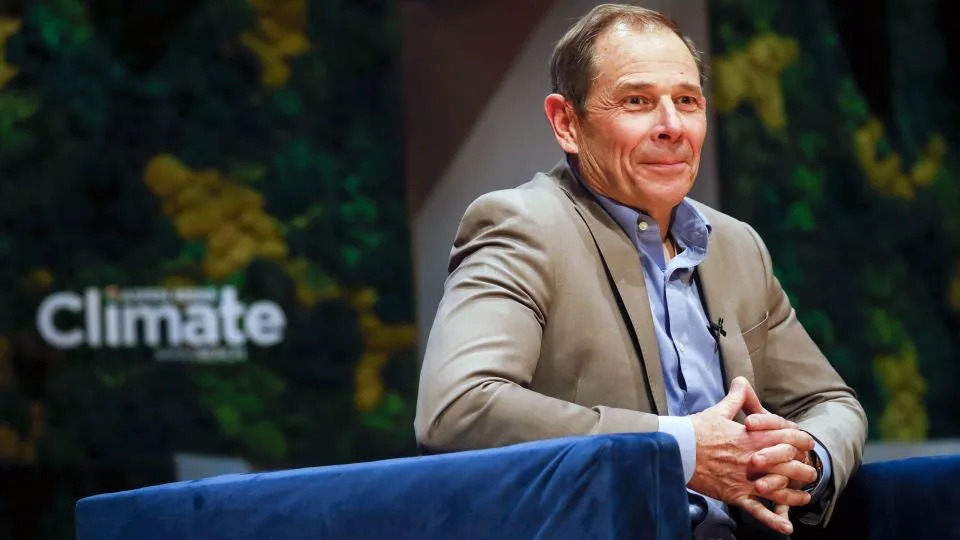
Rep. John Curtis, a Utah Republican, said his home is decked out in solar panels and geothermal energy. - Eva Marie Uzcategui/Bloomberg/Getty Images
Rep. John Curtis, a Utah Republican, said his home is decked out in solar panels and geothermal energy. – Eva Marie Uzcategui/Bloomberg/Getty Images

But the biggest and most enduring difference between the two parties is that Republicans want fossil fuels – which are fueling climate change with their heat-trapping pollution – to be in the energy mix for years to come.

Democrats, meanwhile, have passed legislation to dramatically speed up the clean energy transition and prioritize the development of wind, solar and electrical transmission to get renewables sending electricity into homes faster.

On Wednesday, Senate Majority Leader Chuck Schumer of New York said Democrats want to pass more climate legislation if they take back a full majority in Congress. He later told CNN the GOP is “way behind” on climate and there’s been “too little” progress on the party’s stances.

“I think we’d get a lot more done with a Democratic House, a Democratic president and continuing to have a Democratic Senate,” Schumer told CNN. “Unfortunately, if you look at some of the Republican House and Senate Super PACs, huge amounts of money come from gas, oil and coal.”

Even though Curtis and Romney are aligned on the party needing to talk about climate change, they differ on how to fix it. While Curtis primarily supports carbon capture and increased research and development into new technologies, Romney is one of the few Republicans speaking in favor of a carbon tax – taxing companies for their pollution.

“It’s very unlikely that a price on carbon would be acceptable in the House of Representatives,” Romney said. “I think you might find a few Republican senators that would be supportive, but that’s not enough.”

The idea certainly doesn’t have the support of Trump, or other 2024 candidates for president, and experts predict climate policy will get little to no airtime during the upcoming presidential race.

“Regrettably, the issue of climate change is currently being held hostage to the culture wars in America,” Edward Maibach, a professor of climate communication at George Mason University and a co-founder of a nationwide climate polling project conducted with Yale University, told CNN in an email. “Donald Trump’s climate denial stance will have a chilling effect on the climate positions of his rivals on the right — even those who know better.”

Even if climate-conscious Republicans say Trump won’t be in the party forever, Inglis said even a few more years may not be enough time to counteract the rapid changes already happening.

“That’s still a long way away,” Inglis said. “The scientists are saying we can’t wait, get moving, get moving.”

Just what does home insurance cost in Florida? Estimates vary widely, and new state data might surprise you

South Florida Sun-Sentinel

Just what does home insurance cost in Florida? Estimates vary widely, and new state data might surprise you

Ron Hurtibise – July 30, 2023

Just what does the average Florida homeowner pay for property insurance? Good luck figuring that out based on wildly varying estimates quoted across the media.

About the only thing everyone agrees on is that the state’s insurance rates have been rising sharply. Insurers say they need higher premiums to offset mounting losses from hurricane claims, severe weather events, high rates of litigation, and resulting increases in the cost of reinsurance — insurance that insurers must buy to make sure they can pay all claims after a disaster.

Reforms enacted in 2022 to curtail costs from litigation are expected to eventually stabilize premium costs, but that hasn’t happened yet.

Meanwhile, online insurance aggregators publish estimates that are all over the map.

Policygenius says average Florida homeowners pay $2,442 for home insurance.

Bankrate says $1,981 — but that’s just to insure the dwelling and doesn’t include other vital elements like liability coverage, loss of use, or personal property.

Insurify crunched numbers from 10 Florida ZIP codes and estimated average homeowners are paying a whopping $7,788 this year.

For a report comparing insurance costs across the nation, USA Today estimated that Floridians pay an average of $2,389.

And Insurance Information Institute, an industry-funded nonprofit organization, estimated Florida’s average home insurance premium was $4,321 last October and $6,000 currently.

Which number is closest to what Florida homeowners are actually paying? It’s impossible to say because the estimates are calculated based on “proprietary methods,” said Mark Friedlander, corporate communications director for the Insurance Information Institute.

Insurance agents in South Florida say their clients are paying on the high side of the estimated range of average premiums.

Yet, recently released data by the Florida Office of Insurance Regulation include figures that some might find surprisingly low in comparison to the higher estimates.

The state’s most recent data comes from insurers themselves — sent to OIR each quarter under a law enacted in May 2022.

The data sent by insurers was used to create county-by-county estimates of premiums paid to insure single-family homes, Those estimates were included in the office’s twice-yearly Property Insurance Stability Report released in early July.

State data shows average rates are lower

The report found that on March 31:

Homeowners in 48 of Florida’s 67 counties paid estimated average premiums between $2,000 and $2,999. Averages were below $2,000 in four counties — Sumter, Marion, Baker and Hernando.

Average premiums were in the $3,000s in seven counties: Lee, Okeechobee, Escambia, Okaloosa, Gulf, Pinellas, and Indian River.

Residents of three counties — Walton, Franklin, and Collier — paid average premiums in the $4,000s.

And homeowners in the five southernmost counties — Martin, Palm Beach, Broward, Miami-Dade, and Monroe — paid average premiums of more than $5,000.

In fact, average premiums in Palm Beach, Broward and Miami-Dade exceeded $5,500 while homeowners in Monroe, which includes the Florida Keys, paid an average $7,584.

Premium amounts calculated by the Office of Insurance Regulation preceded rate hikes tied to higher reinsurance rates that insurers secured as hurricane season began on June 1. Renewal prices charged after companies secured their reinsurance rates will reflect the higher costs. That means the next six-month report will likely reflect significant rate increases.

Missing from the twice-yearly report is a statewide average premium.

The Sun Sentinel tallied data in a separate release by the office of company-level data that includes numbers of policyholders per coverage category and corresponding direct written premium totals. Direct written premiums are the total dollar amount of all premiums paid to the company by its policyholders. Dividing the number of policyholders into the direct written premium data reveals the average premium charged by the company.

Dividing the total number of policyholders into the total direct written premium total for all Florida-regulated insurance companies reveals Florida’s average homeowner insurance premium on March 31 was $3,134.

How many homeowners in Florida’s five southernmost counties would like to be paying that right now?

Probably all clients of Fort Lauderdale-based insurance agent Phil Portnoy, who works at Donna Carrara Insurance Agency.

“The average I’ve seen from private insurers is anywhere from $6,000 to $10,000 for, say, $350,000 in coverage,” Portnoy said last week. “I’ve seen renewals down in Pinecrest for as much as $17,000 for a million in coverage and as much as $27,000 for a Palm Beach County intracoastal renewal of $1 million in coverage.”

Al Mendez, partner in Mendez & Associates Insurance in Pembroke Pines, says his average policies range from $4,200 to $6,000 to insure homes in the tri-county region with replacement costs of $300,000 to $500,000.

Mendez calls the current state of the insurance market — with rate increases of 25% to 70% over each of the past three years — “the worst I’ve experienced” in 30 years in the industry.

Some of his clients have seen increases of 100% to 200%, he said. “Florida is now the most expensive state to live in,” he said.

South Florida insurance costs are higher

Mark Friedlander of the Insurance Information Institute said he stands by his organization’s estimates that statewide average premiums increased from $4,231 last fall to $6,000 this year as “verified as accurate by numerous third parties, including insurers and insurance agents.”

As Friedlander is a popular source of insurance information, the $6,000-a-year estimate has shown up in stories by numerous national publications about Florida’s insurance crisis.

Two weeks ago, Friedlander said, “a Barron’s reporter verified our premium data with numerous industry analysts and confirmed its accuracy.”

Insurify, Policygenius and USA Today each used insurance data from a single source — Quadrant Information Services — to produce different estimates.

Chase Gardner of Insurify, which calculated an average estimate of $7,788 for Florida, said the company developed its estimates by using average costs in 10 zip codes “representative of each state’s population distribution.” Zip codes with larger populations were weighted more heavily in calculating the average, he said, which may explain why his company’s estimates were so much higher that Insurify’s and Bankrate’s numbers.

“Even though we both collected Florida data from Quadrant Information Services, prices vary a lot depending on where you live in the state,” Gardner said. “For example, we found that average prices were closer to $2,000 to $3,000 per year or less in northern, inland parts of the state, whereas prices could skyrocket to more than $10,000 per year in southern coastal cities like Miami.”

Friedlander said that the Insurance Information Institute’s estimates looked only at private sector policies and excluded policies sold by the insurer of last resort, state-owned Citizens Property Insurance Corp.

Citizens insured 719,347 single-family homes for an average premium of $3,254 in the first quarter of 2023, the state data shows.

That’s high from a statewide perspective but low for South Florida.

In March 2022, Citizens produced a chart that showed its average premium in Broward, Palm Beach and Miami-Dade, where 52% of its policyholders are located, was $4,196 — 28% less than the $5,856 combined average of 13 competitors selected for the comparison.

Ultimately, the only home insurance cost estimates that matter are the ones offered to you to cover your home for the upcoming year. And at least for the near future, they’re continuing to increase, agents say.

Ron Hurtibise covers business and consumer issues for the South Florida Sun Sentinel. 

Excess Deaths Among Republicans Skyrocketed After Covid Vaccine Became Available, Study Finds

Gizmodo

Excess Deaths Among Republicans Skyrocketed After Covid Vaccine Became Available, Study Finds

Nikki Main – July 26, 2023

More Republicans died than Democrats after the Covid vaccine was released

As covid vaccines started to roll out in February 2021, misinformation and conspiracy theories surrounding the shot were on the rise—as were the deaths of Republican voters.

A new study from Yale University looked at 538,159 people in Ohio and Florida starting on May 1, 2021, and focused on counties that reported lower vaccination rates. In the first year of the pandemic, the number of covid-related deaths was evenly dispersed among both Democrats and Republicans, but that quickly changed within a month after the vaccine became available to all U.S. adults.

The study found the “excess mortality was significantly higher for Republican voters than Democratic voters after COVID-19 vaccines were available to all adults, but not before,” noting that the death rate for Republican voters was 43% higher than for Democratic voters after the vaccine was widely available. However, the study notes that the data did not include whether the individual was vaccinated or if their deaths were directly linked to covid-19, but researchers looked at the divide in political party-affiliated deaths between January 2018 and December 2021 and compared the pre-pandemic death rate to deaths recorded post-Covid vaccine.

“We’re not saying that if you took someone’s political party affiliation and were to change it from the Democratic Party to the Republican Party that they would be more likely to die from covid-19,” the study’s lead researcher Jacob Wallace told The Wall Street Journal.

This study is not the first to reflect an increase in deaths following the rollout of the Covid-19 vaccine, with KFF estimating in April of last year that at least 234,000 Covid deaths recorded between June 2021 and March 2022 could have been prevented if the individuals had received the vaccine. “These findings suggest that differences in vaccination attitudes and reported uptake between Republican and Democratic voters may have been factors in the severity and trajectory of the pandemic in the US,” the study says.

The higher rate of Republican deaths has been widely attributed to misinformation and mistrust in official sources of information surrounding both the vaccine and the pandemic. Liz Hamel, the vice president of public opinion and survey research at the Kaiser Family Foundation told NPR in 2021, “An unvaccinated person is three times as likely to lean Republican as they are to lean Democrat.” The NPR analysis found that people in counties that primarily voted for Donald Trump in the 2020 presidential election were three times as likely to die from covid-19 compared with those living in counties that leaned toward President Joe Biden.

Despite Wallace and his team’s findings, Florida Governor and presidential candidate Ron DeSantis continues to claim that Florida got it right when it came to its handling of the pandemic and filed a petition to investigate vaccine makers for fraud. He filed the petition to the Florida Supreme Court in December, alleging conspiracies about the scientific evidence that the vaccine is resistant to new variants. “It is impossible to imagine that so many influential individuals came to this view on their own,” he wrote. “Rather, it is likely that individuals and companies with an incentive to do so created these perceptions for financial gain.”

The rise in misinformation about Covid vaccines is still affecting the number of people who believe it is safe, with only 49% of Republicans reporting they are “very” or “somewhat” confident in the vaccine versus 88% of Democrats, according to a March study conducted by Stephen Neely at the University of South Florida.

Speaking on the Yale study, Neely told The Post the findings were important because they shed light on how a response to the Covid vaccine has shaped how the death toll played out. “It’s one of the most telling metrics I’ve seen in how the politicization of the pandemic has played out in the real world,” he said.

Watch Moment Amazon Driver Dives Fully Clothed Into Customer’s Swimming Pool to Cool Off

People

Watch Moment Amazon Driver Dives Fully Clothed Into Customer’s Swimming Pool to Cool Off

Kirsty Hatcher – July 26, 2023

Watch Moment Amazon Driver Dives Fully Clothed Into Customer’s Swimming Pool to Cool Off

The moment was captured on the Californian homeowner’s CCTV amid the soaring temperatures in the U.S.

Well, that’s one way to cool off!

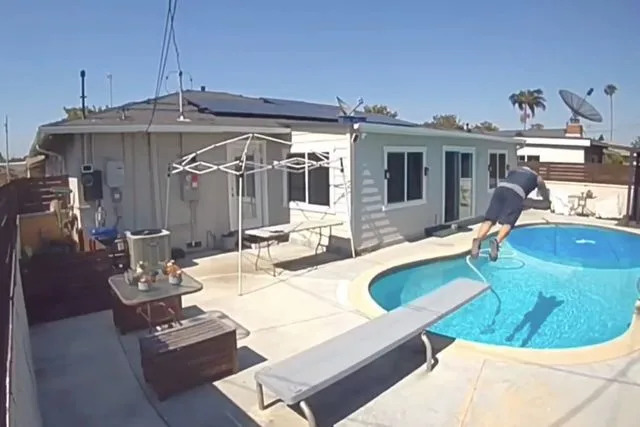
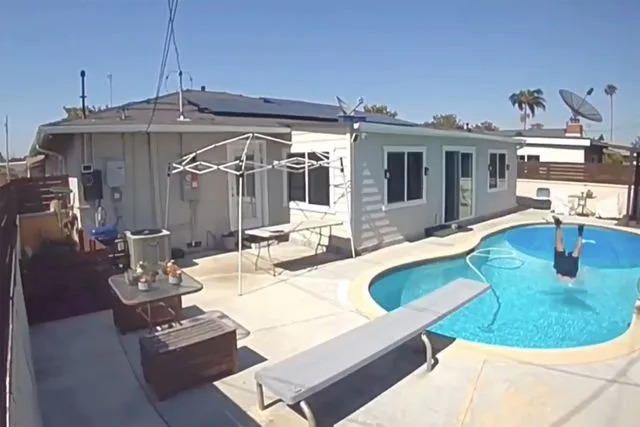
After making a delivery, an Amazon driver dived fully clothed into a customer’s swimming pool to beat the soaring temperatures.

The driver, who even kept his shoes and cap on, used the customer’s diving board to dive head-first into the pool of the home in Gardena, California.

The moment, which occurred on June 30, was captured on one of the home’s security cameras and has since gone viral.

According to ViralHog, the customer left a note in the delivery instructions that read, “If you want to go for a swim, you are welcome to.”

<p>Mario Fermin via ViralHog</p> Amazon driver dives fully-clothed into customer's pool
Mario Fermin via ViralHogAmazon driver dives fully-clothed into customer’s pool

In the video, the driver is seen leaving the customer’s parcel outside a door in the backyard. He then walks over to the diving board and takes a dip.

Parts of the U.S. have been experiencing a heatwave over the last few weeks. According to Reuters, Death Valley, Phoenix and Las Vegas were among some of the hottest places in the U.S. earlier this month.

And Fourth of July was reported to have been the hottest day ever recorded on Earth — and it broke the record set just one day before. 

<p>Mario Fermin via ViralHog</p> Amazon driver dives fully-clothed into customer's pool
Mario Fermin via ViralHogAmazon driver dives fully-clothed into customer’s pool

Related: July 4 Breaks Record for the Hottest Day Ever — 1 Day After the Previous Record Was Broken

On that day, the global average temperature hit 62.92 degrees Fahrenheit, according to the Climate Change Institute at the University of Maine. It was the hottest day recorded since temperatures began to be documented in 1979 with satellite stock recording — and it’s believed to have been one of the hottest days in at least 125,000 years, according to The Washington Post.

The day before, the global temperature average was 62.62 degrees Fahrenheit, making it until then the hottest day on record. Before that, the last highest recorded temperature average was 62.46 degrees in August 2016, per the Post.

Rising temperatures amid global climate change are “a death sentence for people and ecosystems,” Friederike Otto, a senior lecturer at the Grantham Institute for Climate Change and the Environment, told Bloomberg.

In a tweet, author and climate scientist Bill McGuire also wrote that the record-breaking July 4 heat was “totally unprecedented and terrifying.”

Last week, a 71-year-old man died at a trailhead in Death Valley National Park. Hours before his death, Steve Curry spoke to a reporter about braving the extreme heat.

Curry, who was identified as the victim by the Inyo County Coroner’s Office, spoke to The Los Angeles Times hours before collapsing outside the restroom at the Golden Canyon hiking trail, CW affiliate KTLA-TVNBC affiliate KNBC-TV and The Independent reported.

That day, temperatures in the park reached 121 degrees.

What frightens me about the climate crisis is we don’t know how bad things really are

The Guardian – Opinion Climate Crisis

What frightens me about the climate crisis is we don’t know how bad things really are

Roger Harrabin – July 25, 2023

As the barrage of bad news from places like Greece continues, all we can be certain of is there are many surprises lying ahead.

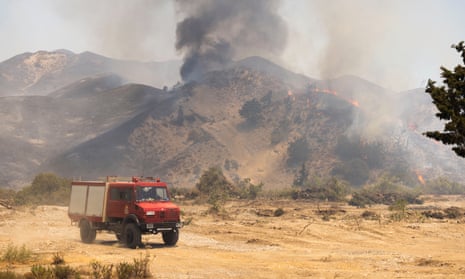
Firefighters tackle wildfires on the Greek island of Rhodes
‘What is the use of a net zero policy if it relies in part on planting trees that may crackle in wildfire?’ Firefighters tackle wildfires on the Greek island of Rhodes, 25 July 2023. Photograph: Graeme Robertson/The Guardian

Over the past few decades, climate scientists have made huge strides in understanding the future climate. But after recent weeks of extreme heat and devastating floods it’s clear that, although climate models have provided good information about overall rising temperatures, they can’t be sure what level of destruction each notch on the thermometer will bring.

Climate modelling is extremely complex, but its fundamentals rely on basic physics – X tonnes of emissions will bring Y increase in temperature, with some error bars. Supercomputers have been able to factor in shifts in land use that will change the reflectivity of the Earth’s surface. Improved temperature records helped verify their findings.

But lately, leading researchers have made a painful confession: even their most sophisticated models can’t yet foresee exactly how Earth systems will respond to those higher temperatures.

The influential Intergovernmental Panel on Climate Change (IPCC) says cranking up global temperature by half a degree will bring much more extreme weather, and it can be more often, more intense, or extended in duration – but exactly how much more, it can’t precisely say.

So, for instance, we’ve already had a global temperature rise of about 1.2C: that’s in line with IPCC projections. Yet the panel couldn’t warn us about the appalling heat dome that’s been searing North America. I can’t find heat domes mentioned in the bible of climate change, the IPCC report. This periodic report inevitably lags behind new science and – under pressure from some governments and industries, as well as a desire not to scaremonger – its pronouncements tend to be conservative.

The models also couldn’t warn us accurately about the emergence of the heat trapped deep in the ocean, which soaks up 90% of the world’s excess warmth. In the 35 years I covered the environment for the BBC, I recall speculation that the warmth could stay deep for decades, perhaps centuries – not that some of it would suddenly burst up to the surface off the coast of northern Britain.

Major uncertainties remain, too, over rainfall. Good information about the future of monsoon rain would be a godsend for farmers who rely upon it – not just in India but in southern China. Unfortunately, good information on precipitation is proving a bit tricky to find.

The macro models also failed to project the effect of current elevated temperatures on ice at both poles. The former IPCC chief, Prof Bob Watson, told me: “I am very concerned. None of the observed changes so far (with a 1.2C temperature rise) are surprising. But they are more severe than we predicted 20 years ago, and more severe than the predictions of five years ago. We probably underestimated the consequences.”

This is a massive admission. He added: “Scientists are only now starting to understand the response of large ice sheets in Greenland and Antarctica – and it is very disturbing.”

Prof Jane Francis, director of the British Antarctic Survey, told me a few months ago the latest science on ice melt was “truly scary”.

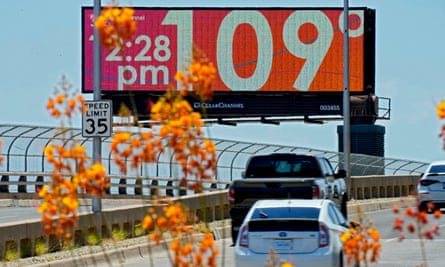
A digital billboard displays temperature in downtown Phoenix.
‘The US has considered itself less vulnerable. But tell that to people in Phoenix trapped under that heat dome.’ Photograph: Matt York/AP

Watson said at current rates the world would almost certainly exceed the agreed maximum temperature rise of 1.5-2C. We would be lucky to get away with 2.5C, he said. More likely, we’re heading towards 3C.

That number positively frightens many climate scientists. But, as India starts stockpiling rice with a temperature rise of 1.2C, what useful advice can scientists offer for a 3C world? Just how bad will things be by then?

Should holidaymakers avoid buying homes in Greece? China is vulnerable to extremes – how should its economy adapt? The US has considered itself less vulnerable. But tell that to New Yorkers choking on wildfire smoke, or people in Phoenix trapped under that heat dome.

While immediate harm to people grabs the headlines, what’s even more destructive could be the impact of heat and humidity on food production for an expanding population. A global shift towards a plant-based diet could halve the land and water used for agriculture – and halve the carbon emissions – but politicians fear angering voters by recommending a dietary shift.

Facing all this gloom means we need imagineers as well as climatologists. Watson said civilization will still exist in the future, but with much worse living conditions. But what sort of a degraded civilization might that be? By then we may even have triggered some natural tipping points that could result in a massive release of trapped methane in the tundra – let’s hope not.

What we do know is that so far, the effects of heating the climate are sooner and worse than many scientists projected (in public at least). This has policy implications. The world has agreed to cut emissions to net zero by 2050, but the UN secretary general, António Guterres, says rich countries should be aiming to squeeze the timetable to 2040. But what is the use of a net zero policy if it relies in part on planting trees that may shrivel in future drought or crackle in wildfire?

To make matters worse, climate heating is one thing on a list of huge environmental problems – including pollution of the air and water, destruction of wildlife habitats, overfishing, insect population declines, loss of birds, plastic pollution, nitrates, soil loss and more.

Watson says we don’t know how these phenomena will interact with each other, but he urges politicians to err on the side of caution, as the stakes are so very high. Every 0.1C warming matters, scientists say: 1.5C is better than 1.6C. That in turn is less bad than 1.7C.

As the barrage of bad news continues, all we can be certain of is that there are many climate surprises lying ahead of us. Governments, companies and individuals need to urgently squeeze down emissions to insulate ourselves as far as possible from what we may face.

  • Roger Harrabin is an energy and environment analyst and a former BBC correspondent

I hope you appreciated this article. Before you move on, I was hoping you would consider taking the step of supporting the Guardian’s journalism. 

From Elon Musk to Rupert Murdoch, a small number of billionaire owners have a powerful hold on so much of the information that reaches the public about what’s happening in the world. The Guardian is different. We have no billionaire owner or shareholders to consider. Our journalism is produced to serve the public interest – not profit motives.

And we avoid the trap that befalls much US media – the tendency, born of a desire to please all sides, to engage in false equivalence in the name of neutrality. While fairness guides everything we do, we know there is a right and a wrong position in the fight against racism and for reproductive justice. When we report on issues like the climate crisis, we’re not afraid to name who is responsible. And as a global news organization, we’re able to provide a fresh, outsider perspective on US politics – one so often missing from the insular American media bubble. 

Around the world, readers can access the Guardian’s paywall-free journalism because of our unique reader-supported model. That’s because of people like you. Our readers keep us independent, beholden to no outside influence and accessible to everyone – whether they can afford to pay for news, or not.

If you can, please consider supporting us just once from $1, or better yet, support us every month with a little more. Thank you.