America’s dirtiest city is revealed — and it’s not NYC or anywhere near the north
Mary K. Jacob – May 28, 2024
The dirtiest city in America is not exactly what you would expect it to be.
Do you think New York’s filthy sidewalks, gross subway cars and rat infestations make it America’s dirtiest city? You’re in for quite a surprise.
A recent study by LawnStarter has crowned Houston, Texas, as the nation’s dirtiest city — bumping Newark, New Jersey from the top spot.
New York City, despite its notorious grime, didn’t even crack the top 10. It landed in 12th place. While the Big Apple dodged the title of dirtiest, it’s still grappling with its trash and pest problems.
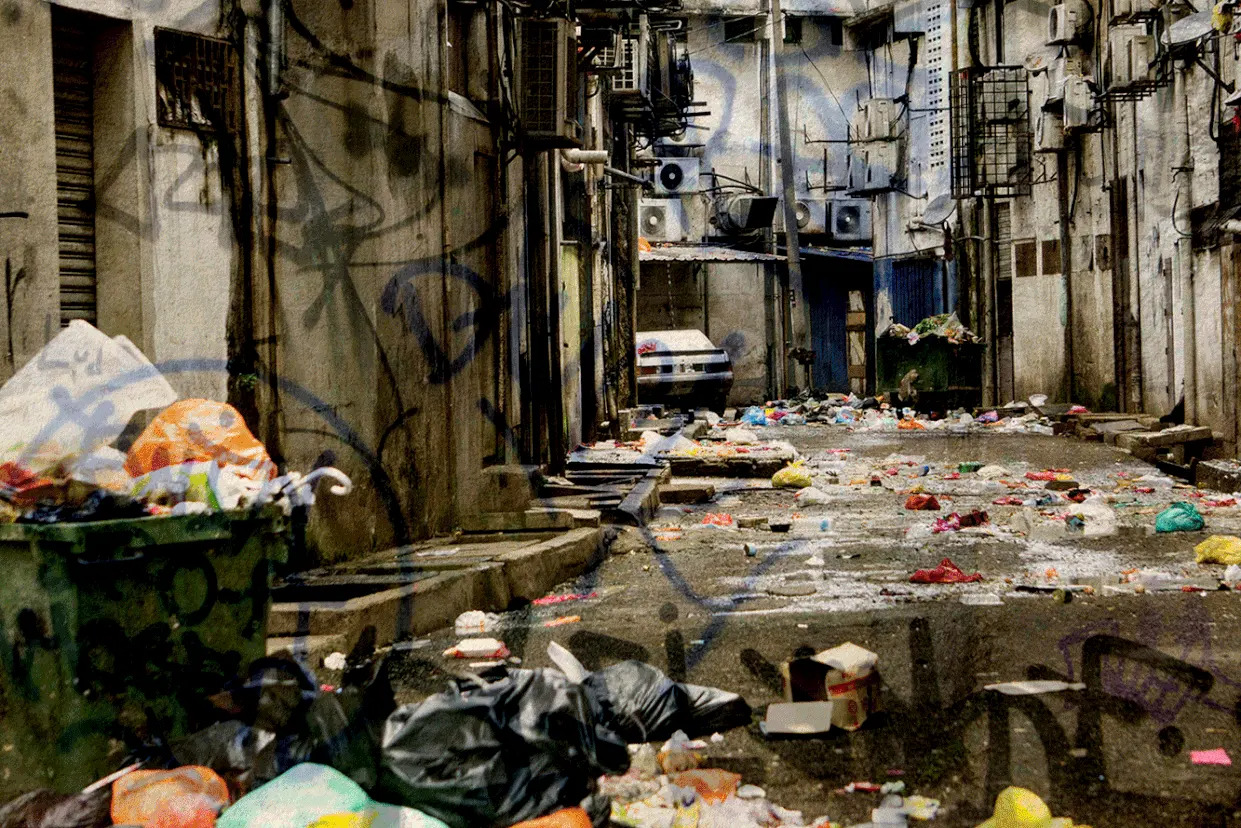
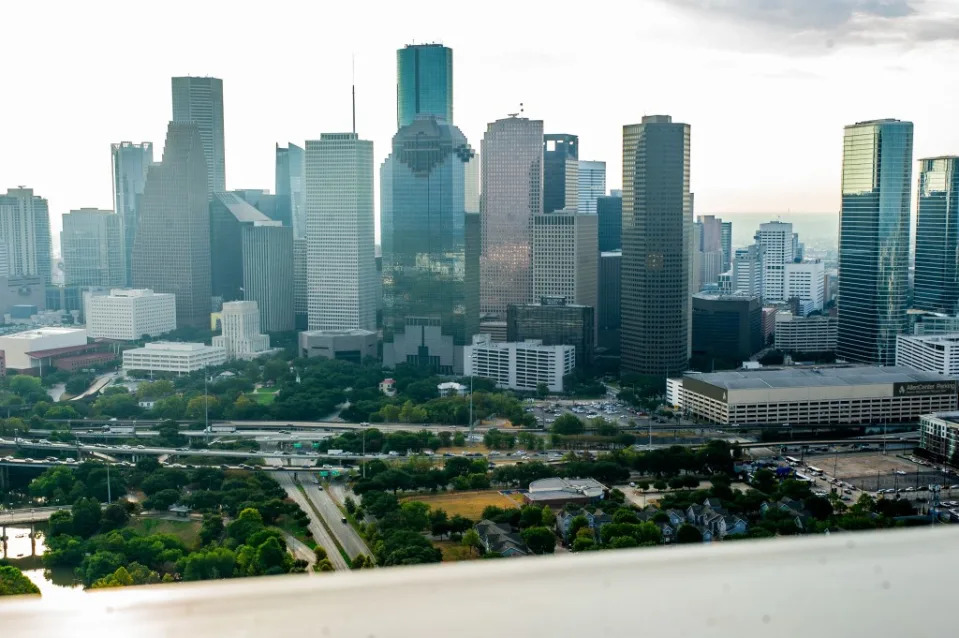
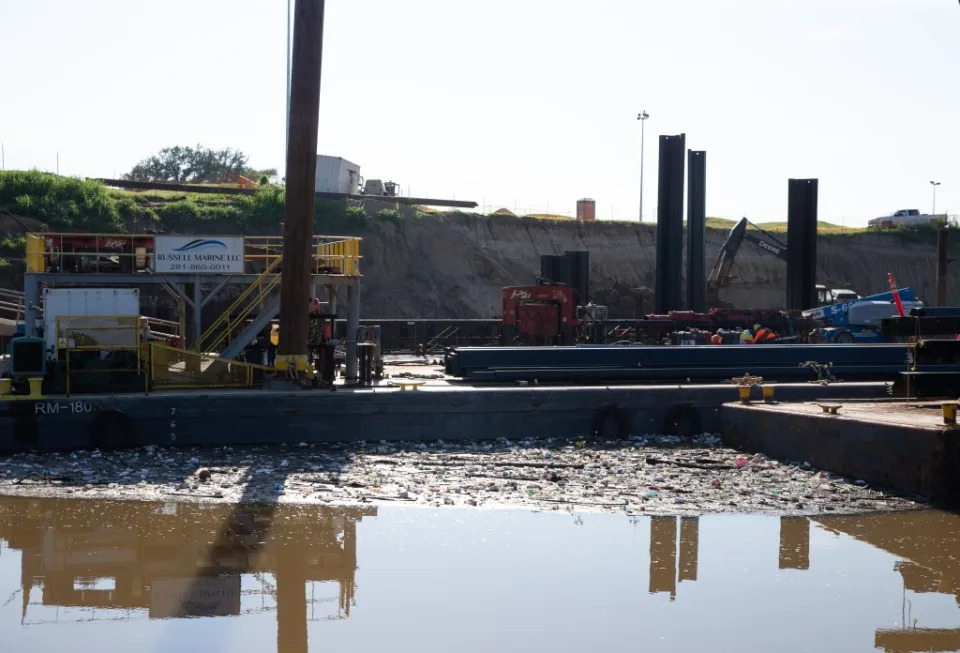
The dirtiest city in America is not exactly what you would expect it to be. NY Post compositeA recent study found that Houston currently stands as the dirtiest city in America. Houston Chronicle via Getty ImagesTrash floating around a construction barge at Buffalo Bayou in Houston. Houston Chronicle via Getty Imag
Houston’s new dubious honor stems from its terrible air quality, infrastructure woes and a staggering number of pests invading homes.
LawnStarter’s sister site PestGnome pulled data showing Houston has the worst cockroach problem, with the city crawling with the creepy critters.
It’s not just Houston; southern cities seem to be a haven for cockroaches. San Antonio, Texas and Tampa, Florida, join Houston in the top three for cockroach infestations.
If cockroaches aren’t your nightmare, steer clear of Boston, Philadelphia and Baltimore. These cities top the list for rodent-infested homes.
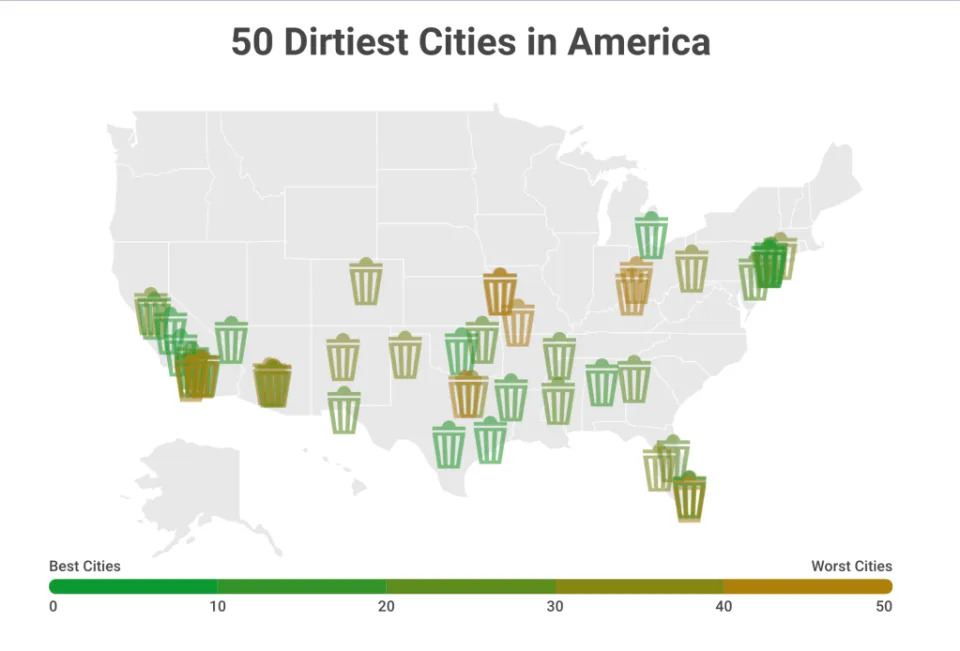
A chart showing the nation’s worst offenders. Lawn Starter
Despite California’s hefty spending on cleaning efforts, several of its cities still rank poorly. San Bernardino, notorious as the “armpit” of California, ranks fourth dirtiest due to atrocious air quality.
Riverside and Ontario, also in the LA metro area, share this dismal air status, now plagued by pollution-heavy warehouses that have replaced orange groves and vineyards.
San Francisco, however, shines as a cleaner gem in California. With a $72.5 million street cleaning spree in 2019 and an additional $16.7 million budget in 2023, it’s among the cleaner half of US cities.
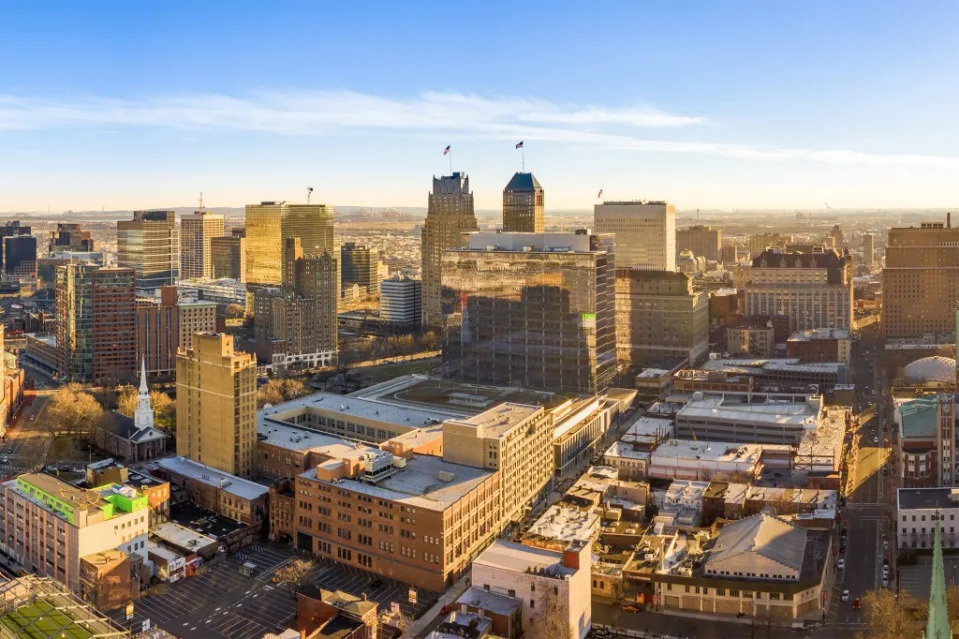
Newark, New Jersey ranked second of the dirtiest cities in America. mandritoiu – stock.adobe.com
But this doesn’t account for the rising homeless and drug epidemic facing the city.
Dirty air isn’t the only issue — drinking water contamination is rampant in the southwest. Except for Salt Lake City, every major southwest city violated the Safe Drinking Water Act in 2020. Las Vegas, ranking 19th dirtiest overall, has the most unsafe water in the region.
Ohioans have a particular knack for littering cigarette butts. With five Ohio cities boasting the highest share of smokers, the state is battling an onslaught of discarded cigarettes, despite local campaigns urging residents to kick the habit.
Surprisingly, many of the cleanest cities are coastal, with Virginia Beach topping the list.
However, being near water isn’t a cleanliness guarantee — Fremont, California, and Winston-Salem, North Carolina, also rank among the most pristine cities despite their inland locations.
Don’t look up. South Korean authorities warned residents along the border with North Korea that an “air raid” was underway. But it wasn’t rockets that were incoming. Rather: floating overhead were more than 150 balloons carrying trash and what’s believed to be feces.
An emergency disaster text alert was sent across cities on Tuesday night, according to South Korean newspaper Hankyoreh, ordering residents to “refrain from outdoor activities and report [objects] to military bases when identified,” along with the message in English: “Air raid preliminary warning.”
The incursion comes days after North Korea warned it would retaliate against anti-Pyongyang leaflets sent over by activists in South Korea earlier this month.
South Korean news agency Yonhap reported that South Korea’s military detected the balloons flying and falling in various locations across the country from Tuesday evening to Wednesday morning local time, going as far as South Gyeongsang, a province more than 180 miles from the demilitarized zone border between the two countries.
The balloons appeared to carry trash—like plastic bottles, batteries, shoe parts, and even feces—a South Korea Joint Chiefs of Staff official said. The military is working with police to collect the materials for analysis, local paper Chosun Ilbo reported, and has advised residents not to come into contact with the droppings and instead report them to authorities.
This photo provided by South Korea Defense Ministry, shows trash from a balloon presumably sent by North Korea, in Seoul, South Korea, Wednesday, May 29, 2024. South Korea Presidential Office—AP
“Tit-for-tat action will be also taken against frequent scattering of leaflets and other rubbish by [South Korea] near border areas,” North Korea’s vice minister of national defense said on Sunday. “Mounds of wastepaper and filth will soon be scattered over the border areas and the interior of [South Korea] and it will directly experience how much effort is required to remove them.”
South Korea’s military condemned the act, saying on Wednesday that the balloons “clearly violate international law and seriously threaten our people’s safety.”
It’s not the first time North Korea has flown in garbage through balloons: in 2016, it sent what were initially feared to be biochemical substances but eventually turned out to be cigarette butts and used toilet paper.
North Korean defectors and activists in South Korea have also flown balloons the other way with propaganda payloads for years, in hopes of convincing North Korean residents to stand up against Kim Jong-un’s totalitarian regime. Pyongyang has long bridled against the practice, which it has labeled “psychological warfare.”
Park Sang-hak, center, a refugee from North Korea who runs the group Fighters for a Free North Korea, and South Korean activists prepare to release balloons bearing leaflets during an anti-North Korea rally near the border village of Panmunjom in Paju, South Korea, on April 15, 2011.Lee Jin-man—AP
Earlier this month, a group of North Korean defectors sent about 20 large balloons carrying some 300,000 leaflets criticizing Kim. The balloons also reportedly carried about 2,000 USB sticks containing K-pop content, including songs from members of Korean boyband sensation BTS. (Kim has called South Korean K-pop a “vicious cancer.”)
As tensions escalate between North and South Korea, experts emphasize that this kind of exchange of balloons remains far preferable to missiles. Peter Ward, a research fellow at the Sejong Institute, told Reuters: “These kinds of grey zone tactics are more difficult to counter and hold less risk of uncontrollable military escalation, even if they’re horrid for the civilians who are ultimately targeted.”
North Korean trash balloons are dumping ‘filth’ on South Korea
Jessie Yeung and Yoonjung Seo – May 29, 2024
North Korean trash balloons are dumping ‘filth’ on South Korea South Korea’s Joint Chiefs of StaffSouth Korean authorities said the balloons, which landed in several locations, were filled with “filth and garbage.” – South Korea’s Joint Chiefs of StaffThe deflated balloon that carried the North Korean trash bags. Balloons have previously been used by South Korean activists to send materials across the border. – South Korea’s Joint Chiefs of Staff
North Korea has adopted a new strategy to contend with its southern neighbor: sending floating bags of trash containing “filth” across the border, carried by massive balloons.
The South Korean military began noticing “large amounts of balloons” arriving from the North starting Tuesday night, detecting more than 150 as of Wednesday morning, according to the country’s Joint Chiefs of Staff (JCS).
Photos released by the JCS show plastic bags carried by two giant balloons, with some broken packages spilling scraps of plastic, sheets of paper, and what appears to be dirt onto roads and sidewalks.
The balloons so far contain “filth and garbage” and are being analyzed by government agencies, said the JCS, adding that the military was cooperating with the United Nations Command.
South Korean authorities said the balloons, which landed in several locations, were filled with “filth and garbage.” – South Korea’s Joint Chiefs of Staff
“North Korea’s actions clearly violate international law and seriously threaten the safety of our citizens,” it added. “All responsibility arising from the North Korean balloons lies entirely with North Korea, and we sternly warn North Korea to immediately stop its inhumane and low-level actions.”
Local governments also sent messages to residents in the northern Gyeonggi and Gangwon provinces to warn of the “unidentified objects,” and advised against outdoor activities. The packages risk damaging residential areas, airports and highways, said the JCS.
The move, according to North Korean state media KCNA, was to retaliate against South Korean activists who often send materials to the North – including propaganda leaflets, food, medicine, radios and USB sticks containing South Korean news and television dramas, all prohibited in the isolated totalitarian dictatorship.
Campaigners in the South, including defectors from North Korea, have long sent these materials through balloons, drones, and bottles floating down the cross-border river – even after South Korea’s parliament banned such actions in 2020.
“Scattering leaflets by use of balloons is a dangerous provocation that can be utilized for a specific military purpose,” said Kim Kang Il, North Korea’s Vice Minister of National Defense, KCNA reported on Sunday.
He accused South Korea of using “psychological warfare” by scattering “various dirty things” near border areas, declaring that the North would take “tit for tat action.”
The deflated balloon that carried the North Korean trash bags. Balloons have previously been used by South Korean activists to send materials across the border. – South Korea’s Joint Chiefs of Staff
“Mounds of wastepaper and filth will soon be scattered over the border areas and the interior of (South Korea) and it will directly experience how much effort is required to remove them,” Kim said, according to KCNA. “When our national sovereignty, security and interests are violated, we will take action immediately.”
Kim also decried joint US-South Korea military drills, which have increased in recent years as tensions have risen in the Korean peninsula.
The 2020 law that prohibited sending leaflets also restricted loudspeaker propaganda broadcasts, which the South’s military once championed as part of psychological warfare against the North until it withdrew the equipment following a 2018 summit between the two Koreas.
But even after parliament passed the ban, activists told Reuters they planned to continue – including the defector Park Sang-hak, who had been sending materials back to his homeland for 15 years, vowing to continue in an effort to give North Koreans a rare glimpse of the outside world.
Earlier this month, Park’s organization Fighters for a Free North Korea said in a statement it had sent 20 balloons toward North Korea, containing 300,000 leaflets that condemned Kim Jong Un and 2,000 USB sticks containing K-pop and music videos.
“In order to appeal and urge the North Korean people to rise up and put an end to Kim Jong Un … the group is sending the leaflets to the compatriots in North Korea,” the organization said in a statement.
For decades, North Korea has been almost completely closed off from the rest of the world, with tight control over what information gets in or out. Foreign materials including movies and books are banned, with only a few state-sanctioned exceptions; those caught with foreign contraband often face severe punishment, defectors say.
Earlier this year a South Korean research group has released rare footage that it claimed showed North Korean teenagers sentenced to hard labor for watching and distributing K-dramas.
Restrictions softened somewhat in recent decades as North Korea’s relationship with China expanded. Tentative steps to open up allowed some South Korean elements, including parts of its pop culture, to seep into the hermit nation – especially in 2017 and 2018, when relations thawed between the two countries.
But the situation in North Korea deteriorated in the following years and diplomatic talks fell apart – prompting strict rules to snap back into place in the North.
‘Just brutal’: Why America’s hottest city is seeing a surge in deaths
Ariel Wittenberg – May 28, 2024
Summer burns in Phoenix.
Scorching pavement blisters uncovered skin. Pus oozes from burned feet and bacteria-teeming wounds fester under sweat-soaked bandages for people living on the street.
They might be the lucky ones.
Relentless heat led to 645 deaths last year in Maricopa County, the most ever documented in Arizona’s biggest metropolitan area. The soaring number of heat mortalities — a 1,000 percent increase over 10 years — comes as temperatures reach new highs amid exploding eviction rates in the Phoenix area, leading to a collision of homelessness and record-setting heat waves.
The crisis has left local officials searching for answers in a region that regularly relies on churches more than the government to save people’s lives by offering them a cool place to hide from the desert air.
Almost half of the victims last year were homeless — 290 people. Twenty died at bus stops, others were in tents, and an unrecorded number of people were found on the pavement, prone as if on a baking stone. More than 250 other people — who tended to be older, ill or unlucky — died in uncooled homes, on bikes or just going for a walk.
“There’s no getting away from it,” said George Roberts, who goes by “Country” and lived on the streets of Phoenix until a year ago. “You just try to find some shade and hope it keeps you cool enough to live.”
Phoenix officials are trying to reduce this year’s death count — but their fleeting plans hinge on temporary funding. They’re using nearly $2 million in federal pandemic-relief funding to operate new cooling centers. Unlike previous efforts, the centers will remain open into the evening, or even overnight, in areas with high heat death rates.
The splurge of one-time funds marks the first time there has been a significant federal investment to keep people safe from heat in America’s hottest city. Strapped-for-cash municipalities are often left to fend for themselves during withering heat waves.
Nowhere is that more true than in Phoenix, which is facing a collection of crises all at once: crashing budgets, rising homelessness and the prospects of a super-hot summer turbocharged by climate change.
It’s unclear what will happen to the new cooling centers when the pandemic funds run out in two years.
“We are lucky this year we have funding, but we need to be able to maintain that,” said Maricopa County Medical Director Rebecca Sunenshine. “It’s critical for people’s survival.”
‘Dog and pony show’
Phoenix’s heat safety net is struggling to save people, leaving officials who oversee the program bewildered at the lack of money as deaths soar.
With no stable federal funding, the location of cooling centers and bottled water distribution points changes each year, depending on whether fleeting resources will be provided by the city, county or state. Churches and local charities supplement government aid with their own donations of water and cool spaces.
That’s ludicrous, said David Hondula, Phoenix’s director of heat response and mitigation.
“Every winter in New England, are the churches trying to raise money to buy the snow plow? And then that’s the only snow plow the community has? I’m guessing not,” Hondula said in an interview.
Though heat has killed hundreds of people in Maricopa County every summer for the past four years, the idea that heat can be deadly is newly shocking to many decision-makers, said Melissa Guardaro, an extreme heat researcher at Arizona State University.
“Every year, we do a dog and pony show to cobble together funding,” she said. “Heat kills people who aren’t in the social circle of those in charge. And the people in power need to understand that it is through no fault of these vulnerable people that they are at risk.”
Last summer, there were about 117 cooling centers at libraries, community centers and churches throughout Maricopa County. But none of the centers in Phoenix were open overnight, when temperatures often remained above 90 degrees. Of the 17 centers operated by the city, just one was open Sundays — and only from 1 p.m. to 5 p.m.
Many private and public centers don’t allow pets, a rule that pushed some people to stay in the stifling heat with their dogs, according to surveys conducted by the county.
That’s flabbergasting to Austin Davis, who works with the homeless and in previous years has received grant funding to turn his personal minivan into a mobile cooling center.
“It’s like five months of complete crisis and danger for hundreds of people who don’t deserve to be in danger,” he said. “They’re told, ‘Well, church rules say we can’t have this person because they want to bring their dog.’”
“Well, this person and their dog might die today, then.”
Temperatures peaked above 110 degrees and rarely dipped lower than 95 at night for nearly 30 days in a row last July.
“It was just brutal, and it’s frustrating,” said Mark Bueno, outreach medical director for Circle the City, a nonprofit that provides health care to the homeless. Last summer, his doctors treated heat-caused dehydration, organ damage, pavement burns and rhabdomyolysis, a process of muscular breakdown linked to methamphetamine use.
“There’s a limit to what we can do for them,” he said. “I can give some extra water or an IV Bag, but it’s not going to solve the issue. What they really need is a house.”
The County Medical Examiner recorded 645 heat-related deaths last summer. Nearly 400 of them occurred in Phoenix, where half of all deaths were among the unhoused. One-third of all heat-related 911 calls in the city occurred outside of “regular business hours,” when cooling centers were closed.
“The consequences of not having extended-hour and overnight capacity became apparent last year,” said Hondula, the city’s heat official.
Pushed over the edge
Phoenix’s population is booming, making it the second-fastest growing U.S. city from 2021 to 2022, according to the U.S. Census Bureau. That’s also when heat deaths started to surge, after the U.S. Supreme Court ended a pandemic-era eviction moratorium, pushing more people onto the streets.
Now, heat is the second-biggest killer of homeless people in the county, behind drug overdoses. About 23 percent of homeless deaths are from heat alone, and another 18 percent involve both heat and drugs.
“So many people were living near the edge and got pushed over it,” said Jeff Johnston, chief medical examiner for Maricopa County, in an interview. “We’re still seeing the effects of that.”
The number of unhoused people in Maricopa County has doubled since 2017, hovering at roughly 9,600 people in January 2023. Rising rents have made the problem particularly stark in Phoenix, where in 2022 the number of people living on the street was nearly double the capacity of city-run homeless shelters.
In downtown Phoenix, a single encampment grew to an estimated 1,000 people in 2022, earning it the nickname “The Zone.” That same year, the city was sued twice over its treatment of homeless people.
First, businesses surrounding The Zone alleged the city was enabling a health and safety hazard by refusing to dismantle it, imperiling economic stability. In another lawsuit, a number of unhoused people represented by the American Civil Liberties Union alleged that city police were so aggressive in dismantling other homeless camps that they destroyed important documents like state I.D. cards and “survival items” like tents and bottled water. Those allegations were later included in a Department of Justice probe into the Phoenix Police Department.
“Both lawsuits were right,” said Elizabeth Venable, a homelessness advocate and plaintiff in one of the cases. “The city created the blight of The Zone by not addressing the homeless population in any way whatsoever. They didn’t build shelters, and they didn’t enforce anything, and it attracted everyone over there.”
Courts agreed. In summer 2023, as temperatures started to rise, the city was under dueling court orders to simultaneously begin clearing out The Zone before a mid-July court date, and preventing the city from enforcing no-camping ordinances and public sleeping bans against people who had nowhere else to go.
Venable believes the lawsuits may have helped save lives last summer by requiring the city to offer services to those being removed from The Zone. She hopes the city will be more proactive in helping its most vulnerable residents escape the heat this year, if only because they see it as “a liability.”
“A lot of people, even if they don’t empathize with people who live on the street or don’t want them to be able to camp out, they don’t really want them to literally bake on the sidewalk,” she said.
‘Surprising’ number of deaths
Hondula, the Phoenix heat official, is hoping a combination of data and federal cash can save lives — even if the city’s elected officials aren’t sold on his plan.
His team spent the winter looking at data from heat deaths and 911 calls to pinpoint city “hot spots” that will host new cooling centers this year.
Phoenix will operate two overnight cooling centers in the downtown area. In addition, three libraries will have respite centers with 50 beds each that will be open until 10 p.m. All the sites will be open seven days a week from May through September. Visitors will be steered toward services such as energy assistance, mental health, homeless shelters and substance abuse treatment programs.
“We are surging resources to these locations in the hopes that it helps people get out of the heat, but also get out of unsheltered homelessness,” Hondula said. “We are trying to solve the upstream challenges in addition to the immediate lifesaving mission.”
Not everyone in city leadership appreciates that plan. Though the City Council recognizes heat as a danger to residents, some members have questioned using city resources to protect the homeless.
At a February meeting, multiple councilors noted that libraries and senior centers have seen budget cuts, and said it wasn’t fair to open them to homeless people.
Councilman Jim Waring expressed disbelief that the program would lead to homeless people getting treatment for addiction or mental heath issues. The cooling initiative was taking resources away from tax-paying families, he said.
“Do I really think some hard-core meth addict is going to walk into the backroom of one of our libraries and turn [their life] around? No I don’t. That doesn’t seem realistic to me in any way,” Waring said. “I appreciate you guys are trying, but at some point we are crowding out the people who are paying for all of this and making their facilities less inviting.”
He did not respond to requests for comment.
The debate over which city residents deserve heat protection is on hold, for now, thanks to the American Rescue Plan. The federal Covid relief package passed in 2021 is funding half of the $3.5 million cost of operating the city’s cooling centers this summer, and the city has also relied on the measure to fund a shelter building blitz, expanding its number of beds by roughly 800 by next year. Maricopa County is also getting cooling money from the program.
“This is really the first time that there is significant federal funding in the heat relief network,” said Sunenshine, the county’s medical director.
But she worries about what will happen when the money disappears in 2026.
The high death toll last summer prompted soul-searching at the state level, resulting in a 55-page “Extreme Heat Preparedness Plan.” Democratic Gov. Katie Hobbs hired a statewide cooling center coordinator and a chief heat officer.
“It was surprising to see the number of deaths in Maricopa County, which has the most resources,” said newly minted chief heat officer Eugene Livar, in an interview. “But with all those efforts in place there is always something more that can be done if we have resources for that expansion.”
Around the same time the pandemic funding runs out, the city will also lose $130 million in tax revenue due to a change in state law.
Hondula says he “can only hope” the city’s budget office will have found a solution by then.
CLARIFICATION: This story has been edited to use a more precise term to describe the effects of rhabdomyolysis.
North Korea Accused of Launching Floating Poop Balloon Attack
Dan Ladden-Hall – May 29, 2024
Yonhap via Reuters
South Korea’s military on Wednesday accused North Korea of floating balloons loaded with trash and manure across the border and immediately demanded that Pyongyang halt its “inhumane and vulgar” operation.
More than 260 balloons have already been detected in South Korea since the operation began on Tuesday night, South Korea’s Joint Chiefs of Staff said. Images released by the military appear to show the balloons carrying plastic bags—one of which had the word “excrement” written on the side, according to Reuters.
A JCS official told the Seoul-based Yonhap News Agency that the balloons—all of which have fallen to the ground—carried trash, including bits of shoes, plastic bottles, and manure.
No damage or injuries have been reported so far in connection with the balloons, but the military has deployed bomb disposal units and other experts to collect them. Residents have been warned against touching the objects.
“These acts by North Korea clearly violate international law and seriously threaten our people’s safety,” the JCS said, adding a stern warning to “North Korea to immediately stop its inhumane and vulgar act.”
The balloons started arriving days after Kim Kang Il, North Korea’s vice defense minister, slammed propaganda leaflets criticizing the Pyongyang regime that North Korean defectors in the South have been attaching to balloons and sending northward for years.
The minister on Sunday accused Seoul of “despicable psychological warfare” by “scattering leaflets and various dirty things near border areas” and vowed to deliver “tit-for-tat action” in response.
“Mounds of wastepaper and filth will soon be scattered over the border areas and the interior of [South Korea] and it will directly experience how much effort is required to remove them,” he said.
Climate change caused 26 extra days of extreme heat in last year: report
AFP – May 28, 2024
Heat is the leading cause of climate-related death (Nhac NGUYEN)
The world experienced an average of 26 more days of extreme heat over the last 12 months that would probably not have occurred without climate change, a report said on Tuesday.
Heat is the leading cause of climate-related death and the report further points to the role of global warming in increasing the frequency and intensity of extreme weather around the world.
For this study, scientists used the years 1991 to 2020 to determine what temperatures counted as within the top 10 percent for each country over that period.
Next, they looked at the 12 months to May 15, 2024, to establish how many days over that period experienced temperatures within — or beyond — the previous range.
Then, using peer-reviewed methods, they examined the influence of climate change on each of these excessively hot days.
They concluded that “human-caused climate change added — on average, across all places in the world — 26 more days of extreme heat than there would have been without it”.
The report was published by the Red Cross Red Crescent Climate Centre, the World Weather Attribution scientific network and the nonprofit research organisation Climate Central.
2023 was the hottest year on record, according to the European Union’s climate monitor, Copernicus.
Already this year, extreme heatwaves have afflicted swathes of the globe from Mexico to Pakistan.
The report said that in the last 12 months some 6.3 billion people — roughly 80 percent of the global population — experienced at least 31 days of what is classed as extreme heat.
In total, 76 extreme heatwaves were registered in 90 different countries on every continent except Antarctica.
Five of the most affected nations were in Latin America.
The report said that without the influence of climate change, Suriname would have recorded an estimated 24 extreme heat days instead of 182; Ecuador 10 not 180; Guyana 33 not 174, El Salvador 15 not 163; and Panama 12 not 149.
“(Extreme heat) is known to have killed tens of thousands of people over the last 12 months but the real number is likely in the hundreds of thousands or even millions,” the Red Cross said in a statement.
“Flooding and hurricanes may capture the headlines but the impacts of extreme heat are equally deadly,” said Jagan Chapagain, secretary general of the International Federation of the Red Cross.
In this far-flung Arizona neighborhood, residents dream of the arrival of a gas station or grocery store
Alexandra Hardle, Arizona Republic – May 28, 2024
Terrell Hannah and his family enjoy living in Tartesso, a master-planned community in northwest Buckeye. But when he needs to fill up his car or get a gallon of milk, he does wish that it came with basic city amenities.
Like a gas station or a grocery store. The nearest gas station is 15 minutes away; the nearest Walmart, 15 minutes away; the nearest Costco, 20 minutes away.
Hannah and his wife also have two young children and drive them about 25 minutes to school near downtown Buckeye. On top of that, Hannah has a 35- to 45-minute commute to Luke Air Force, where he works.
Hannah, who moved into the community in 2022, said he likes the residential feel.
“One of the attractive features of that neighborhood is that it’s away from all of the heavy industry that is really coming up at every corner in Phoenix,” Hannah said.
Realtor Martin Partida has been a Tartesso resident since 2020. He and his family moved from Phoenix because they wanted to live somewhere quieter, and Tartesso fit the bill. Partida said he also needs to drive about 15 minutes to get to the nearest grocery store or gas station.
A big frustration among Tartesso residents has been the pace of development. The community now has about 10,000 residents and 3,400 houses but so few amenities, they say.
Many residents feel Tartesso has been left out as other areas of the city develop more quickly.
“When we compare what we have to other communities that have been developed like Verrado, it just seems unbalanced. We’re not sure why it’s taking so long to get things moving out here,” Partida said.
Partida said he also hopes for a high school to be built. Currently, Tartesso’s schools only go to the fifth grade. It also would be nice to have a recreational center in Tartesso, Partida said.
Residents also hope for coffee shops, jobs
Cameron James has lived in Tartesso since 2009. At this point, James said he and other residents are used to commuting for work and stopping at places like Costco on the way home.
“You get used to it after about a year. I mean, we feel spoiled now because we have food trucks,” James said.
James said he understands why the community needs more rooftops before commercial development follows.
Paige Stein, who works in the hospitality industry in Goodyear, has lived in Tartesso for about four years after moving from from Festival Foothills neighborhood, also in Buckeye. Stein said she and her family always have preferred to live in places that are more isolated.
Stein said the most important thing to her is that more jobs come to Tartesso for the people who live there, particularly young people still at home with their parents who don’t have the option to move. Stein currently commutes about 30 minutes to her job in Goodyear.
“I don’t see that as something that someone just getting out of school should have to do,” Stein said.
After a gas station, she would like Tartesso to get a coffee shop.
“Something where the students that get out of school can go hang out, so they don’t have to go straight home or hang out in the heat,” Stein said.
Stein said she currently spends a lot of her free time in Tempe to go to new shops and favorite places.
Residents hope for less industrial development
Chris Barr, principal of Buckeye Tartesso LLC, said he hears the complaints. A controversial new rezoning of land to industrial from residential is part of a potential solution, he said. The change axed some 6,000 planned homes.
While some residents are skeptical and hope the plan shifts away from industrial zoning, adding jobs is necessary for creating both rooftops and the commercial and retail development Tartesso residents are asking for, Barr said.
Accelerating economic growth will in turn accelerate the growth of community amenities, including grocery stores and gas stations, he said.
Tartesso, along the southwestern part of the Sun Valley Parkway, is projected to have about 100,000 residents at build-out.
Hundreds of thousands of residents eventually will live along Sun Valley Parkway, Barr said. It once was known as the “Road to Nowhere,” with not much around it. But communities are slowly growing, including Festival Ranch along the northern part of the parkway.
A vast majority of Buckeye’s residents commute east for work. Barr hopes to change that by adding more employment opportunities along the parkway.
The Tartesso community development borders the desert in Buckeye. It’s one of the last noticeable developments on the way out of the Phoenix area.
Obtaining the necessary certificates for industrial development is easier than getting approval for residential from a water standpoint. But Barr said that’s not the reason the land was rezoned.
“We just wanted to create some employment opportunities and really good-paying jobs for people in that region that don’t want to hop on the freeway and potentially have to leave the city of Buckeye to drive to and from their job every day,” Barr said.
Tartesso LLC bought the development in 2016. When Barr came in, the community was still recovering from the Great Recession, which had greatly slowed down growth, Barr said. Right now, Barr said the focus is on housing, which will later bring in retail amenities.
While some land is zoned for commercial use and was purchased years ago, Barr said many projects were halted by the recession.
“They had a lot of rooftop projections that took a long time to materialize because the market got effectively shut down for a couple of years,” Barr said.
Ultimately, it is up to the purchasers of the land to decide what to do with it and when. Additional amenities like a recreation center also would come with additional HOA fees, and not everyone would be happy to pay those.
“The demand is, we need affordable housing in the Valley. And we’ve got a big problem staring us down if we don’t come to some solutions that allow for building on Sun Valley Parkway, which is going to be a great place for affordable housing,” Barr said.
In a statement to The Arizona Republic, a Buckeye spokesperson said the city’s development teams were actively collaborating with brokers, developers and service providers to attract growth in Buckeye, including in Tartesso and Festival Ranch.
“While commercial development is currently thriving in the eastern parts of Buckeye, our growth trajectory is set to extend westward along Sun Valley Parkway. This will foster expansion and development in those areas,” the city statement said. “This growth trajectory is already attracting new investment, including a recent commitment from QT (QuikTrip) to develop a new location south of Tartesso.”
What’s still to come at Tartesso?
The QuikTrip announcement means Tartesso residents’ wishes for a gas station soon will come true, although a timeline for the opening was not set.
The gas station will be located about a mile from the community’s main entrance. The nearest gas station is currently a Love’s Travel Shop located nearly 10 miles away from Tartesso on Miller Road.
As for what’s next aside from industrial development, Barr said Tartesso currently has applications for certificates of assured water supply pending with the Department of Water Resources for about 5,700 homes.
Those certificates are necessary for the next phase of construction to begin.
Barr said Tartesso has begun discussions with major builders for those homes. Once the development figures out its water certificates, Barr said the launch would be relatively quick.
And those homes, combined with new jobs to the area, should make way for the amenities that Tartesso residents have been asking for, such as grocery stores, more gas stations, movie theaters and hospitals, most of which look to have a certain number of rooftops within a certain radius.
“I don’t think we’re quite there,” Barr said. “But I believe activity breeds more activity.”
Temperatures in Pakistan cross 52 degrees Celsius — that’s more than 125°F
Reuters – May 28, 2024
Temperatures rose above 52 degrees Celsius (125.6 degrees Fahrenheit) in Pakistan’s southern province of Sindh, the highest reading of the summer and close to the country’s record high amid an ongoing heat wave, the met office said on Monday.
Extreme temperatures throughout Asia over the past month were made worse most likely as a result of human-driven climate change, a team of international scientists have said.
In Mohenjo Daro, a town in Sindh known for archaeological sites that date back to the Indus Valley Civilization built in 2500 BC, temperatures rose as high as 52.2 C (126 F) over the last 24 hours, a senior official of the Pakistan Meteorological Department, Shahid Abbas told Reuters.
The reading is the highest of the summer so far, and approached the town’s and country’s record highs of 53.5 C (128.3 F) and 54 C (129.2 F) respectively.
Mohenjo Daro is a small town that experiences extremely hot summers and mild winters, and low rainfall, but its limited markets, including bakeries, tea shops, mechanics, electronic repair shops, and fruit and vegetable sellers, are usually bustling with customers.
But with the current heat wave, shops are seeing almost no footfall.
A vendor selling ice, slices a piece from an ice block for a customer at his shop on a hot summer noon in in Karachi on May 27, 2024. – Rizwan Tabassum/AFP/Getty Images
“The customers are not coming to the restaurant because of extreme heat. I sit idle at the restaurant with these tables and chairs and without any customers,” Wajid Ali, 32, who owns a tea stall in the town.
“I take baths several times a day which gives me a little relief. Also there is no power. The heat has made us very uneasy.”
Close to Ali’s shop is an electronic repairs shop run by Abdul Khaliq, 30, who was sat working with the shop’s shutter half down to shield him from the sun. Khaliq also complained about the heat affecting business.
Local doctor Mushtaq Ahmed added that the locals have adjusted to living in the extreme weather conditions and prefer staying indoors or near water.
“Pakistan is the fifth most vulnerable country to the impact of climate change. We have witnessed above normal rains, floods,” Rubina Khursheed Alam, the prime minister’s coordinator on climate, said at a news conference on Friday adding that the government is running awareness campaigns due to the heat waves.
The highest temperature recorded in Pakistan was in 2017 when temperatures rose to 54 C (129.2 F) in the city of Turbat, located in the Southwestern province of Balochistan. This was the second hottest in Asia and fourth highest in the world, said Sardar Sarfaraz, Chief Meteorologist at the Pakistan Meteorological Department
The heat wave will subside in Mohenjo Daro and surrounding areas, but another spell is expected to hit other areas in Sindh, including the capital, Karachi — Pakistan’s largest city.
La Niña, which means “little girl” in Spanish, is a climate phenomenon characterized by the cooling of sea surface temperatures in the central and eastern equatorial Pacific Ocean. La Niña and its opposite, El Niño, as well as a neutral phase, are part of a larger climate pattern known as the El Niño-Southern Oscillation. The tropical Pacific can be in either one of those three states.
According to scientists, El Niño years tend to bring cold, wet winters to California and the southern U.S. but warm, dry conditions to the Pacific Northwest and the Ohio Valley. La Niña tends to bring the opposite: dry conditions for the whole southern half of the country but colder, wetter weather for the Pacific Northwest.
La Niña is an oceanic and atmospheric phenomenon that is the colder counterpart of El Niño, as part of the broader El Niño–Southern Oscillation climate pattern.
How does La Niña affect Texas weather?
La Niña has a notable impact on Texas weather, primarily influencing temperature and precipitation patterns. Here’s how La Niña typically affects Texas, according to NOAA:
Temperature: La Niña often brings warmer-than-average temperatures to Texas during the winter months. The warmer conditions are a result of the jet stream shifting northward, reducing the frequency of cold air masses moving into the region. Summers during La Niña years can also be hotter than normal, with higher heatwaves and increasing demand for water and energy.
Precipitation: La Niña is usually associated with drier-than-normal conditions across Texas, particularly in the fall and winter months. The northward shift of the jet stream tends to divert storm systems away from the state, reducing the overall rainfall. The reduced precipitation can lead to an increased risk of drought. Texas may experience significant water shortages, affecting agriculture and water supply and increasing the likelihood of wildfires.
Severe weather: Due to warmer temperatures during La Niña winters, the likelihood of severe weather, such as snow and ice storms, is generally lower. However, La Niña can increase severe weather events like tornadoes in Texas due to enhanced instability and favorable atmospheric conditions.
Hurricane season: La Niña can contribute to a more active Atlantic hurricane season. This means Texas might face a higher risk of hurricanes and tropical storms making landfall, bringing heavy rainfall and potential flooding. The NOAA predicts between 17 and 25 named storms this season, with 4 to 7 becoming major hurricanes classified as category 3, 4, or 5.
Schools that never needed AC are now overheating. Fixes will cost billions.
Anna Phillips and Veronica Penney – May 24, 2024
Nearly 40 percent of schools in the United States were built before the 1970s, when temperatures were cooler and fewer buildings needed air conditioning.
That has changed. In recent decades, heat has crept northward, increasing the number of school days with temperatures above 80 degrees Fahrenheit.
Large parts of the country, where temperatures were previously cooler, now experience at least one month of school days with temperatures above 80 degrees Fahrenheit. Many schools still don’t have air conditioning.
America’s aging school buildings are on a collision course with a rapidly warming climate.
Last fall, school officials were forced to send students home across the Northeast and the Mid-Atlantic – just as many were returning from summer break – because of extreme heat and schools lacking air conditioning. In Baltimore and Detroit, high heat led to early dismissals, the same as it had four months earlier when summer temperatures struck in May.
In Philadelphia last year, administrators moved the first day of school from late August to after Labor Day, in part to avoid a repeat of heat-related school closures in previous years. But the weather didn’t cooperate. They ended up closing more than 70 schools three hours earlier than usual for the entire week.
Hot weather is not a new concern for school districts. But as the burning of fossil fuels heats the planet, it’s delivering longer-lasting, more dangerous heat waves, and higher average temperatures. Across much of the northern United States, where many schools were built without air conditioning, districts are now forced to confront the academic and health risks posed by poorly cooled schools. Fixing the problem often requires residents to pass multimillion dollar school repair bonds, which can be hard to do. Climatic change is arriving faster than most can adapt.
“We have had situations where it’s been 88 degrees outside but the real feel in the classrooms is well over 90 degrees because of the humidity,” said Shari Obrenski, president of the Cleveland Teachers Union. Although most of the district’s schools have air conditioning, 11 switched to virtual instruction during a period of high heat in 2022. “It’s miserable,” she said, “students throwing up, not being able to keep their heads up, just horrible conditions.”
Because of the highly localized nature of U.S. public schools, data on school air conditioning is scarce and researchers rely on surveys to gather information.
In 2021, when the environmental advocacy group Center for Climate Integrity set out to examine air conditioning, its researchers collected information on more than 150 schools and school districts across the country. They found that in places where temperatures historically hit 80 degrees Fahrenheit at least 32 days during the academic year, the vast majority of schools already had air conditioning.
Using this as their threshold for when AC is needed, they modeled what it would cost to keep schools cool in the near future under a moderate warming scenario. Their answer: more than 13,700 public schools in the United States that did not need air conditioning in 1970 need it today. Some have already installed it, some are working on it now and some can only dream of having enough money. The estimated cost of this huge investment exceeds $40 billion.
Paul Chinowsky, a professor emeritus of engineering at the University of Colorado at Boulder who led the analysis, said it showed two distinct trends in America: Northern school districts experiencing hotter school year temperatures that are overheating classrooms and forcing closures, especially in old buildings without enough electrical capacity to run air conditioners. And Southern districts with aging cooling systems outmatched by abnormally hot weather.
A generation ago, few would have imagined that school districts from Denver to Boston would need to spend millions of dollars on cooling. Today, the reality is different.
Aging schools, built for a different climate
The scene at Dunbar Elementary was so distressing that, six years later, it is still fresh in Jerry Jordan’s mind.
In late August 2018, a punishing heat wave gripped Philadelphia just as public school students were returning from summer break. Jordan, the president of the local teachers union, was holding a news conference at Dunbar to demand the state help pay to air-condition schools. Before the event, he walked through the building to get a feel for what its students and staff were experiencing.
“I ran into one teacher as she was walking her first-grade class down to computer science – she was wearing a dress and the back of the dress was literally soaked right through. It was sticking to her,” Jordan said. A little boy got out of line and lay down on the concrete floor. He stayed put, even when the teacher urged him to rejoin the class. “But it’s cool here,” Jordan remembers him pleading.
Today, roughly 30 percent of Philadelphia public schools don’t have fully air-conditioned classrooms, according to district officials. In interviews, teachers said many more buildings don’t have cooling in gyms, cafeterias and libraries. The district has made progress since that 2018 heat wave, thanks in large part to millions of dollars in federal pandemic aid and a $200,000 donation from Philadelphia Eagles quarterback Jalen Hurts. But it still has many buildings with only enough power to support window AC units in every other classroom, or on certain floors. Some units are broken or barely functional. At one school, parents said the units are window dressing – they can’t be switched on for fear of using more electricity than the building can safely handle.
The district’s goal is to have all classrooms air-conditioned by 2027, but its pandemic money is about to run out and state funding remains uncertain. “The aspirational is absolutely dependent on funding,” said Superintendent Tony Watlington Sr.
In interviews, teachers said that classroom temperatures have climbed into the high 80s to low 90s in the early fall, past the point when studies have shown heat can impede learning.
“94 degrees F in my classroom today,” teacher Trey Smith wrote on X, formerly Twitter, on a day in late August, posting a photo of a thermometer in his third-floor un-air-conditioned classroom at Marian Anderson Neighborhood Academy. Smith said that, for years, he has had to endure high temperatures with only fans and a portable AC unit that trips the circuit breaker.
“I’m angry,” he said. “Not at the district and not at my administration, it’s just that as a state we’ve underfunded our schools. That’s the crime.”
As hotter-than-normal temperatures become more common in the late spring and early fall, they pose a risk to students’ academic success. Researchers have linked heat exposure to reduced learning, in addition to a range of well-known health effects such as dizziness, headaches and worsening asthma symptoms. Teachers aren’t immune either – especially in places that aren’t used to hot weather.
“On those really really hot days, our attendance is low because kids don’t want to boil in a classroom and asthmatic kids are being kept home by their parents,” said Olney High School teacher Sarah Apt, who also has asthma. “Those are days I have used my inhaler and kind of take it slower.”
Climate change is expanding the swath of the country facing these problems.
At the same time, as school shootings become more frequent, district leaders are under pressure to turn their buildings into fortresses to stop an attacker.
“We’ve got schools that want to button up for security reasons, but that’s making them hotter, stuffier and requiring more mechanical air conditioning,” said Chinowsky. “You’ve got two different goals working against each other.”
Well-off school districts often address this problem by putting a bond before voters, asking them to support higher taxes to pay for cooling. But despite its improving poverty rate, Philadelphia is still the poorest big city in the nation. And a quirk in state law bars the school district from raising its own revenue, leaving it few options but to ask the city and state for money. That hasn’t worked out so well – last year, a state court found that Pennsylvania’s funding formula leaves some schools so underfunded that it violates students’ constitutional right to an education.
Parents and teachers have become increasingly vocal in demanding healthier conditions following scandals over asbestos and lead contamination in schools. The teachers union now employs a director of environmental science and commissioned an app that allows teachers to report extreme temperature problems, as well as leaks and pest infestations.
Yet some families don’t know their children attend schools without air conditioning.
Sherice Workman was among them. When she chose Paul Robeson High School in West Philadelphia for her youngest son, Juelz, she was unaware how hot it was inside until he began bringing deodorant to school to mask his constant sweating. He came home with stories of students sleeping through class to deal with the heat. She and some of the school’s staff delivered a petition to district leaders two years ago.
“When it is 80 degrees outside, it is 90 to 100 in the classrooms. When it is 90 degrees outside, it is 100 to 105 degrees in the classrooms,” the petition read. “This extreme heat in our building has caused our children to pass out and miss classes due to dehydration-related headaches.”
The district installed window air conditioners at Robeson the next year, an experience that Workman said taught her the value of speaking out. When it comes to air conditioning in neighboring suburbs’ schools, she said, “It’s just something they have. Our fight isn’t their fight.
Hotter school days and no cheap fixes
Fall in Colorado’s Front Range can be glorious – with blue skies and aspens changing color in the Rockies. But it is also the time of year when Colorado has experienced its greatest warming, with temperatures rising by 3.1 degrees Fahrenheit from 1980-2022, according to a state report.
That’s when kids are in class. In the northern Colorado city of Fort Collins, classroom temperatures in some buildings reach upward of 90 degrees when the school year starts in mid-August, said middle school social studies teacher Jacque Kinnick, and the heat is lasting longer in the season.
“I used to need sweaters,” in October said Kinnick. “Now, I wear short sleeves.”
Kinnick said one of her colleagues compared the test scores of students in her morning and afternoon classes and found that the children performed worse later in the day, when the heat was highest.
“It’s like you can actually see kids just wilting,” she said. “They’re sweating, they’re laying their heads on the desk.”
University of Pennsylvania economist R. Jisung Park has studied the effect of rising temperatures on students. He found that, even when other factors are controlled for, students who are exposed to days in the 80s and 90s perform worse on standardized tests. His research also suggests that, in the United States, heat has a greater effect on Black and Latino students, who are less likely to have air conditioning at school or home.
The effect may not be noticeable at first – a one-degree hotter school year is linked to learning loss of about one percent – but the damage accumulates and the impact is likely underestimated. A federal analysis published last year noted that while these losses only account for students’ exposure to hot days during high school, newer research suggests heat experienced by elementary and middle school students also impedes learning.
Some of the coldest parts of the country will eventually have to face overheating schools, too. The federal study found that at the 2 degrees Celsius threshold, the states with the highest projected learning losses per student, because of low AC coverage in schools, will be Maine, Michigan, New Hampshire, Vermont and Wyoming.
Heat also affects students’ well-being. It increases ozone pollution in cities, extends the pollen season, worsens asthma symptoms and can exacerbate a host of other medical conditions, forcing students to leave their classes in search of relief. Children become dehydrated easily and turn woozy and irritable. After sitting in a hot classroom all day, they may struggle to play sports or participate in after-school activities.
Schools along the Front Range have historically counted on the region’s overnight low temperatures to cool off their buildings. But as climate change causes nights to warm faster than days, such methods are proving ineffective.
Jeff Connell, chief operations officer of the Poudre School District, which is centered in Fort Collins and includes surrounding towns, said the district recorded temperatures between 85 and 90.5 degrees in an elementary school classroom last fall. Poudre’s leaders have discussed postponing the start of school, but with extreme daily highs becoming more common, “it’s harder to know with certainty that if we move the calendar, we’ll avoid the hot days,” said Connell.
Fort Collins exemplifies two trends that confront public education as climate change intensifies. Heat is one problem – in part because urban schools are often ringed by heat-reflecting asphalt parking lots and playgrounds.
Demographics are another. Since funding is tied to enrollment, some school districts face budget crises as their student populations shrink – yet they need more money for air conditioning projects to keep their schools habitable.
Fort Collins’ affordability and easy access to the mountains has long-fueled the city’s growth. But the increasing number of high heat days has put a strain on teachers and students as enrollment is beginning to decline, prompting the school district to consider closing schools. Poudre has a $700 million deferred maintenance backlog. Last year, an assessment of how much it would cost to fully air-condition 36 school buildings came in at more than $200 million – money the district does not have.
The city is hardly an outlier.
In 2020, the Government Accountability Office found that an estimated 41 percent of school districts surveyed needed to replace or update their HVAC systems in at least half of their schools. But the report also found that roughly 40 percent of districts rely on state money for large-scale facilities improvements and don’t have the capacity to issue bonds or raise property taxes.
Persuading school board members and voters to fund air conditioning in schools can be a tough sell. This is an acute problem in Southern school districts where cooling was installed decades ago, but is now breaking down from near-constant use, Chinowsky said.
“The people making these decisions have a tendency to say, ‘We dealt with it when we were in school,’ Or, ‘It’s only hot for a couple of days,’” Chinowsky said. “And the fact is that’s not really the truth anymore.”
Often, the states aren’t coming to districts’ aid. Neither is the federal government. Advocates for more school funding said the Federal Emergency Management Agency, which rebuilds schools once they’re destroyed, is the biggest source of government money.
Decades of planning help keep classrooms cool
Some communities have more latitude to address the problem.
In Denver, about an hour south of Fort Collins, school officials have slowly been preparing their buildings for a hotter world. It began a decade ago with simple measures such as blinds and nighttime cooling. But as the years progressed and nights didn’t cool off like they once did, officials decided they were going to have to install air conditioning. The district began prioritizing retrofits based on factors such as student poverty levels and disabilities, the age and condition of the buildings and indoor temperatures.
Denver residents have approved multiple bond measures to pay for the upgrades and they may be asked to vote on one again soon. The district expects that 30 schools still won’t be fully air-conditioned by the end of the year. Fixing them will cost an estimated $290 million.
“The voters have been pretty receptive,” said Trena Marsal, chief operating officer of Denver Public Schools. “We’ve heard from our teachers, from our community members and our parents that the classrooms are hot.”
Among the districts where voters have agreed to support facilities bonds, some have used the money to not only air-condition their classrooms, but to also electrify their heating and cooling systems with air source or geothermal heat pumps. In St. Paul, Minn., the school district has finished installing a geothermal system at one of its high schools, where heat is pumped out of the building during the summer, transferred to water and stored deep underground in pipes. That heated water is pumped back into the buildings in winter to warm them.
Some of these systems can qualify for major federal subsidies. Yet to the chagrin of environmentalists, large school districts in cities such as New York City, Boston and Philadelphia are buying thousands of window units, which gobble up electricity and break down easily.
“They’re a maintenance nightmare. They’re an operating cost nightmare,” said Sara Ross, co-founder of the group UndauntedK12, which advocates for green building improvements in schools. “The decision to use window units is only going to worsen these districts’ challenges in terms of their emissions because they’re using much more energy.”
The picture in selected areas
Philadelphia: 3.7°F warmer since 1970
197,115 students enrolled
67 out of 218 schools are not fully air-conditioned.
By 2025, students will experience 22 more days with temperatures above 80°F. In 1970, 28 days were above 80°F. In 2025, it is predicted that 50 days will be above 80°F.
Fort Collins, Colo.: 3.4°F warmer since 1970
29,914 students enrolled
36 out of 49 schools are not fully air-conditioned.
By 2025, students will experience 17 more days with temperatures above 80°F. In 1970, 25 days were above 80°F. In 2025, it is predicted that 42 days will be above 80°F.
Denver: 1.3°F warmer since 1970
89,235 students enrolled
37 out of 207 schools are not fully air-conditioned.
By 2025, students will experience 18 more days with temperatures above 80°F. In 1970, 32 days were above 80°F. In 2025, it is predicted that 50 days will be above 80°F.
About this story
Sources: Resilient Analytics and the Center for Climate Integrity (hot school days); NOAA Regional Climate Centers via the Applied Climate Information System (temperature trends); Denver Public Schools.
The Post used data from Resilient Analytics and the Center for Climate Integrity that estimates the increase in hot school days by 2025 using downscaled climate projections for North America from CMIP5. The gridded data has a resolution of 3.7 miles. To calculate the increase in hot days by 2025, researchers used the middle-of-the-road RCP 4.5 scenario.
There are some U.S. counties where varying terrain affects county-level temperature projections. Monroe County, Fla. – just west of Miami-Dade – includes mainland, coasts and islands. The varied terrain creates microclimates that make county-level averages cooler than neighboring counties, even if mainland areas of the county remain very hot.
School years days were defined separately for each state using the 2018-2019 school year calendar for the state’s largest school district. Charter schools are not included in the analysis.
To determine the increase in average temperature for each school district, The Post used station temperature records from NOAA Regional Climate Centers via the Applied Climate Information System. Maximum temperature records for 1970-2023 were analyzed using a linear regression to determine the average rate of warming over the time period. Days with missing temperature measurements were excluded.