Devastating consequences’: At least six dead as wildfires rage across West Coast

NBC News

Devastating consequences’: At least six dead as wildfires rage across West Coast
David K. Li and Matteo Moschella and Whitney Lee and Tim Stelloh and Sarah Kaufman                      September 10, 2020.
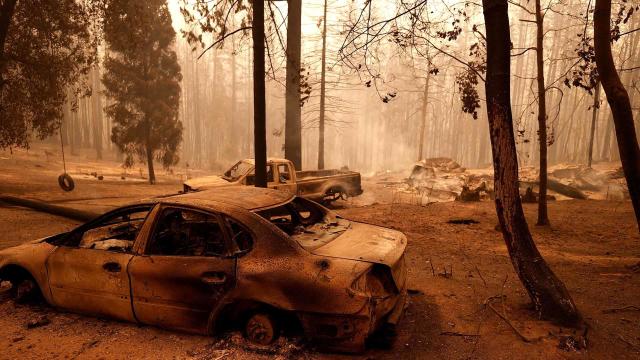
Scenes of devastation as two wildfires merge in Northern California

Wildfires continued to rage out of control throughout California and the Pacific Northwest on Wednesday, killing at least six people and devastating half a dozen towns in Oregon.


Oregon Gov. Kate Brown said that in the last 24 hours, the state had “experienced unprecedented fire with significant damage and devastating consequences.”

“This could be the greatest loss of human lives and property due to wildfire in our state’s history,” she said at a news conference.

In Washington State, Commissioner of Public Lands Hilary Franz said that a child had died in one of the state’s largest wildfires, the 163,00-acre Cold Springs fire. The blaze is burning mid-way between Spokane and Seattle. Franz didn’t offer details but said she was devastated by the death.

“The pain that family is going through is unfathomable,” she said.

In Oregon, wildfires burning east of the state capital tore through the small city of Lyons, killing Wyatte Tofte, 12, and his grandmother, Peggy Mosso, according to the boy’s father, Christopher Tofte. The boy’s mother, Angela Mosso, suffered severe burns and is in critical condition, he said.

And in Butte County, California, where the state’s deadliest fire on record killed 85 people and all but destroyed the town of Paradise two years ago, the remains of three people were found Wednesday after a wildfire burned through the area, Sheriff Kory Honea told reporters.

Two people were found at the same location, Honea said. The third was found elsewhere. Honea declined to provide additional details until the remains are identified.

In Southern Oregon, officials in the town of Talent told their 6,600 residents to stay outside the city limits because there’s scant electricity and it’s not safe stepping around fallen power lines.

While City Hall, the police department and other government buildings survived, there were whole neighborhoods and blocks of businesses completely gutted by the blaze.

“The fire ripped through the core of our (Oregon Route) 99 corridor,” the main stretch of town, Talent Mayor Darby Ayers-Flood told NBC News. “Where it burned, it burned completely and totally. I’m exhausted and shocked by it.”

City officials were hoping that their fast-acting residents, who evacuated Tuesday and Wednesday, would keep deaths at zero.

“I believe that most everyone is safe, it could have been far worse,” Ayers-Flood said.

Brown enacted a fire conflagration act for the first time in state history, with at least 35 fires scorching more than 300,000 acres of land in Oregon.

“Our number-one priority right now is saving lives,” Brown said on Twitter Wednesday. During the news conference, she said that six towns in Marion, Lane, and Jackson counties have been “substantially destroyed.”

Meanwhile, up the road in Medford, residents in the southern end of the city were ordered to evacuate on Wednesday as the Almeda Fire made its way north.

And to make matters worse, another blaze dubbed the Obenchain Fire was gaining strength north of Medford, according to Jackson County Emergency Management, prompting more evacuation orders.

“Level 3 (evacuation order), that’s as serious as it gets,” Rudy Owens, spokesman for the Oregon Office of State Fire Marshal, said of the emergency actions taken in and around Medford.

Huge swaths of tinder-dry brush across the western U.S. were ablaze on Wednesday as firefighters battled flames, hot weather and high winds.

There were 14,000 firefighters on the lines in California as 28 wildfires burned out of control, according to the California Department of Forestry and Fire Protection (Cal Fire).

Near the Oregon border, a fire that began Monday had exploded to 30,000 acres by Wednesday and destroyed an estimated 150 homes in the small community of Happy Camp, the U.S. Forest Service said.

In the central part of the state, the Creek Fire had consumed nearly 167,000 acres by Wednesday evening, officials said. In Butte County, the blaze that killed three people, the Bear Fire, prompted evacuation warnings for part of the town of Paradise.

Remarkably, three other fires still burning on Wednesday — the August Complex, SCU Lightning Complex and LNU Lightning Complex blazes — were classified as the second, third and fourth biggest wildfires in state history, firefighters said Wednesday.

Before Wednesday, wildfires had killed eight people in California, including five during the LNU fire, which was sparked by a rare summer thunderstorm last month. The state has seen a record 2.5 million acres burn this year.

While these flames were burning well outside the state’s biggest cities, their smoke had enveloped large urban cores.

An eerie orange and brown glow filled the sky above the Bay Area, a mixture of fog and smoke from the fires that cast San Francisco in a perpetual rust colored haze on Wednesday.

Citing the “unprecedented” and “historic fire conditions” in California, 10 national forests were ordered closed on Wednesday, meaning that all 18 national forests in the state were shut down.

“These temporary closures are necessary to protect the public and our firefighters, and we will keep them in place until conditions improve and we are confident that National Forest visitors can recreate safely,” Regional Forester Randy Moore said in a statement.

Wildfires in the state of Washington also continued to burn on Wednesday, with more than 576,400 acres charred since a series of blazes were touched off on Labor Day, said state Department of Natural Resources spokesman Joe Smillie.

In the small community of Malden, near the Idaho state line, most of the town was destroyed by a fast-moving blaze that swept through the area Monday. Larry Frick, who stayed and fought the fire as it surrounded his home, compared the scene Wednesday to a war zone.

“There were explosions going off non-stop and some really big ones where I could feel it shake the ground,” he said in an interview.

Frick said he tried to save his neighbor’s house, but the wind-whipped flames roared through its facade, reducing the structure to rubble in what seemed like minutes. The fire, which has destroyed 98 buildings, had grown to nearly 18,000 acres by Wednesday, fire officials said.
Federal Report Warns of Financial Havoc From Climate Change

The New York Times

Federal Report Warns of Financial Havoc From Climate Change

Coral Davenport and Jeanna Smialek                     September 9, 2020
Southern California Wildfires
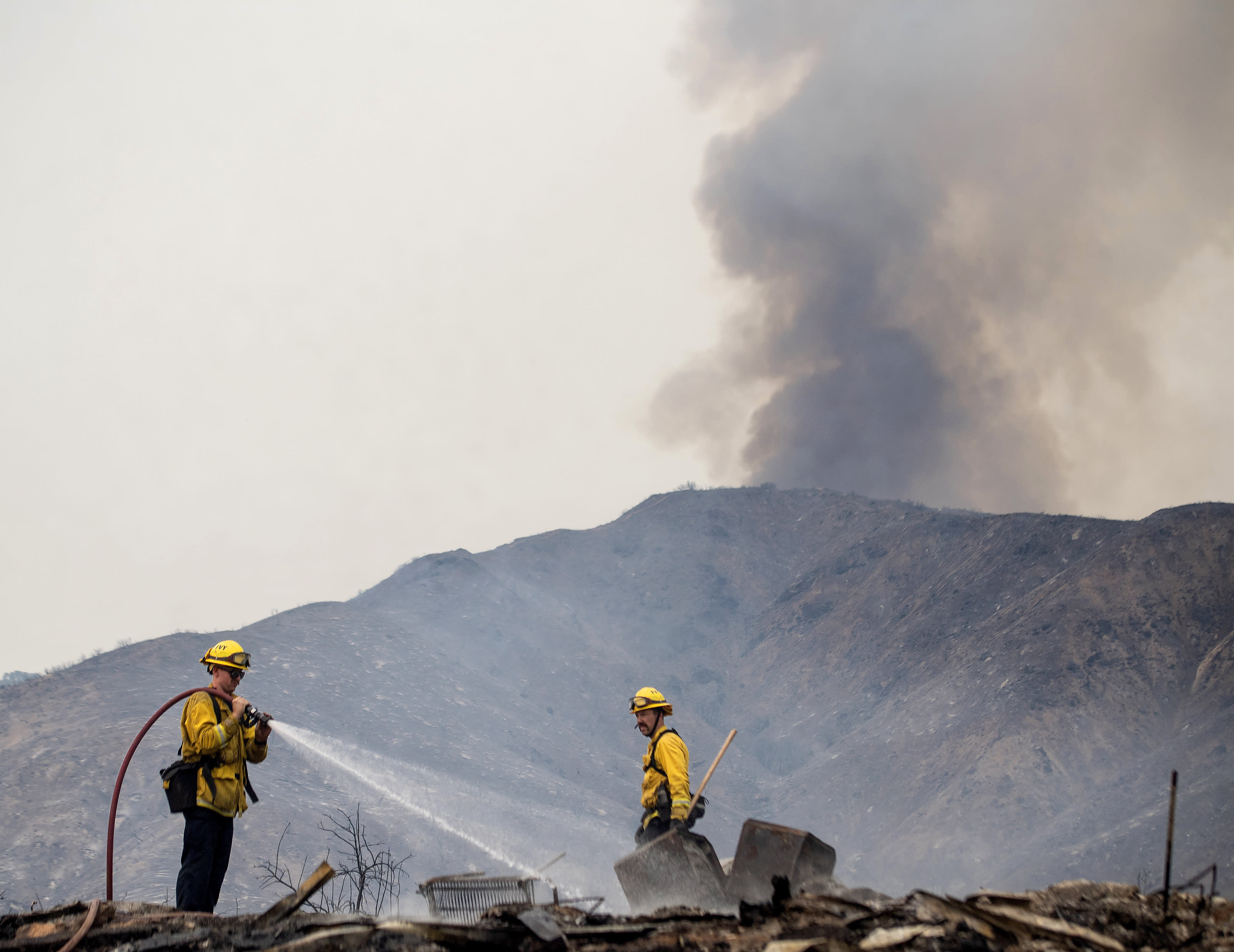
Fountain Valley, Caif., firefighters extinguish hot spots at a structure destroyed by the El Dorado wildfire on Monday, Sept. 7, 2020, near Yucaipa, Calif. A couple’s plan to reveal their baby’s gender went up not in blue or pink smoke but in flames when the device they used sparked a wildfire east of Los Angeles. The fire started Saturday morning in dry grasses at El Dorado Ranch Park, a rugged natural area in the city of Yucaipa. (Cindy Yamanaka/The Orange County Register/SCNG via AP)


WASHINGTON — A report commissioned by federal regulators overseeing the nation’s commodities markets has concluded that climate change threatens U.S. financial markets, as the costs of wildfires, storms, droughts and floods spread through insurance and mortgage markets, pension funds and other financial institutions.

“A world wracked by frequent and devastating shocks from climate change cannot sustain the fundamental conditions supporting our financial system,” concluded the report, “Managing Climate Risk in the Financial System,” which was requested last year by the Commodity Futures Trading Commission and set for release Wednesday morning.

Those observations are not entirely new, but they carry new weight coming with the imprimatur of the regulator of complex financial instruments like futures, swaps and other derivatives that help fix the price of commodities like corn, oil and wheat. It is the first wide-ranging federal government study focused on the specific impacts of climate change on Wall Street.

Perhaps most notable is that it is being published at all. The Trump administration has suppressed, altered or watered down government science around climate change as it pushes an aggressive agenda of environmental deregulation that it hopes will spur economic growth.

The new report asserts that doing nothing to avert climate change will do the opposite.

“This is the first time a government entity has looked at the impacts of climate change on financial markets in the U.S.,” said Robert Litterman, the chairman of the panel that produced the report and a founding partner of Kepos Capital, an investment firm based in New York. “Rather than saying, ‘What’s the science?’ this is saying, ‘What’s the financial risk?’ ”

The commodities regulator, which is made up of three Republicans and two Democrats, all of whom were appointed by President Donald Trump, voted unanimously last summer to create an advisory panel drawn from the world of finance and charged with producing a report on the effects of the warming world on financial markets. The initial proposal for the report came from Rostin Behnam, one of the panel’s two Democrats, but the report is written by dozens of analysts from investment firms including Morgan Stanley, S&P Global and Vanguard; oil companies BP and ConocoPhillips; and agricultural trader Cargill, as well as academic experts and environmental groups.

It includes recommendations for new corporate regulations and the reversal of at least one Trump administration policy.

“It was shocking when they asked me to do this,” Litterman said. “This is members of the entire community involved in financial markets saying with one voice, ‘This is a serious problem, and it has to be addressed.’”

A White House spokesman, Judd Deere, declined Tuesday to comment on the report because the White House had not yet seen it.

Douglas Holtz-Eakin, president of the American Action Forum, a conservative research organization, who served as economic adviser to John McCain’s 2008 presidential campaign, said: “This was initiated by the Trump administration. It is the only document of its type.”

He added, “If you’re denying this exists, you don’t ask for a report on it.”

The Republican chairman of the CFTC, Heath Tarbert, acknowledged the risk of climate change, but he noted that the report also detailed what the regulators called “transition risk” — the financial harm that could befall the fossil fuel industry if the government enacted aggressive policies to curb carbon dioxide pollution.

“I appreciate Commissioner Behnam’s leadership on convening various private sector perspectives on the important topic of climate risk,” Tarbert said in a statement. “The subcommittee’s report acknowledges that ‘transition risks’ of a green economy could be just as disruptive to our financial system as the possible physical manifestations of climate change, and that moving too fast, too soon could be just as disorderly as doing too little, too late. This underscores why it is so important for policymakers to get this right.”

The authors of the report acknowledged that if Trump is reelected, his administration is all but certain to ignore the report and its recommendations.

Instead, they said they saw the document as a policy road map for a Joe Biden administration.

Biden’s climate policy proposals are the most ambitious and expensive ever embraced by a presidential candidate, and most of them would meet resistance in Congress. But even without legislation, he could press forward with regulatory changes. Lael Brainard, a Federal Reserve governor who is seen as a top contender to be Treasury secretary in a Biden administration, has called for financial regulators to treat climate change as a significant risk to the financial system.

Joe Biden, the Democratic presidential nominee, speaks in Wilmington, Del., Sept. 2, 2020. (Michelle V. Agins/The New York Times)


In calling for climate-driven policy changes, the report’s authors likened the financial risk of global warming to the threat posed by the coronavirus today and by mortgage-backed securities that precipitated the financial crash in 2008.

One crucial difference, they said, is that in the case of climate change, financial volatility and loss are likely to be spread out over time, as they hit different regions and markets. Insurance companies could withdraw from California in the wake of devastating wildfires, and home values could plummet on coastlines and in floodplains. In the Midwest, banks could limit loans during or after extended droughts that drastically lower crop yields. All of those problems will be exacerbated by climate change, but they are unlikely to hit all at once.

“Financial markets are really good at managing risk to help us provide credit, so that the economy can flourish,” said Leonardo Martinez-Diaz, an editor of the report who served as senior official at the Treasury Department during the Obama administration. But, he added, the system breaks down “when it’s no longer able to manage risk, when it’s invisible, it’s not captured by the price of stocks.”

“That’s what we saw in the financial crisis of 2008, and it’s as relevant now on climate change as it was then on mortgage-backed securities,” he said.

Among the first of those risks already pervading the markets, the report’s authors say, are falling home prices and rising mortgage default rates in regions where wildfires and flooding are worsening.

“Climate change is linked to devaluing home values,” said Jesse Keenan, an editor of the report and a professor of real estate at Tulane University in New Orleans.

“If in your town, your house is devalued, that makes it harder for your local government to raise money,” he said. “That’s one set of risks that could lead to a contagion and broader instability across financial markets.”

Extreme weather could cause swings in agricultural commodity prices, the report warns, and climate-spurred market volatility could afflict pension and retirement funds, which invest across a range of asset classes.

“Climate change is one of the top three risks to our fund,” said Divya Mankikar, an author of the report and an investment manager at the California Public Employees’ Retirement System, the country’s biggest public pension fund. “We pay pension and health benefits to over 2 million current and former state employees. So the payout is decades out.”

The report makes several concrete recommendations for inoculating the financial system against potential harm.

It emphasizes the need to put a price on carbon emissions, which is often done either by taxing or through an emissions trading system that caps carbon emissions and allots credits that polluters can buy and sell under that cap.

The report calls for the reversal of a proposed rule being put forward by the Trump administration’s Labor Department that would forbid retirement investment managers from considering environmental consequences in their financial recommendations.

“If there’s any class of investors that should be thinking about the long run, it’s retirement funds and pension funds,” said Nathaniel Keohane, an author of the report and an economist at the Environmental Defense Fund, an advocacy group.

The report suggests that the Financial Stability Oversight Council, a Treasury Department-led body created in the wake of the 2008 crisis, incorporates climate risks into its annual report and its communications with Congress. It suggests that the Federal Reserve and other major financial regulators join international coalitions that focus on climate threats.

The report also suggests that bank regulators should roll out a climate risk stress testing pilot program. Such stress tests, which assess how bank balance sheets and the broader system would fare in bad climate-related economic scenarios, have been under development in Britain and elsewhere in Europe.

The authors also recommend that another financial regulator, the Securities and Exchange Commission, strengthen its existing requirements that publicly traded companies disclose the risks to their bottom lines associated with climate change.

Coca-Cola has noted in its financial disclosures that water shortages driven by climate change pose a risk to its production chains and profitability. But many other companies “just check the box” on that requirement, Keohane said.

Such disclosures should also include the risk to companies’ bottom lines posed by future policies designed to mitigate climate change, such as taxes or regulations on carbon dioxide pollution, which could hurt fossil fuel producers.

“If carbon risk is priced, this will add cost to the oil and gas industry,” said Betty Simkins, a report author and professor of finance at Oklahoma State University in Stillwater. “But they need to be prepared for this. It’s better for the companies to disclose the risk and be as financially fit as possible.”

Summer 2.0 has reached B.C., here’s how hot it’ll get

The Weather Network

Summer 2.0 has reached B.C., here’s how hot it’ll get

Tyler Hamilton, The Weather Network                 September 6, 2020
Summer 2.0 has reached B.C., here's how hot it'll get
Summer 2.0 has reached B.C., here’s how hot it’ll get


Summer 2.0 has set in across British Columbia, and its accompanying warmth looks to stick around for a bit, will likely make up for lost ground.

Early summer was a bit of a bummer for the province, as below-normal temperatures spilled well into July.

By early next week, a record-breaking ridge that’s settled in offshore of the province is forecast to reach peak heights. Current modelling suggests temperatures could be up to 10 degrees above average for some as the atmosphere pushes outside the boundaries of climatology.

records

The province’s all-time temperature records for September are tough numbers to beat, as a similar setup in 2017 developed a thermal trough caused by down-sloping winds from the higher terrain inland. This pattern is known to bring warm, dry air down-sloping towards the ocean; consequently, shutting off the natural air-conditioning – onshore flow and marine air.

setup

Here’s a fun hypothetical scenario: If this were winter, this same upper air pattern would likely bring low elevation snow down to sea-level. The warm, dry air would be dense, bitter air flowing out of the Fraser River.

smoke

Throughout the summer, the South Coast has dodged the forest fire smoke. The latest smoke models indicate this may change late-Thursday and beyond as the high pressure off the coast of California siphons smoke north.

Climate change has arrived

The Week

Climate change has arrived

The Week Staff                September 6, 2020

The connection between hellacious weather and man-made climate change is becoming undeniable. Here’s everything you need to know:

What has shifted?

For years, climate scientists have been wary of attributing extreme weather directly to man-made atmospheric warming, but that’s changing in the face of historic heat waves and cascading natural disasters. In recent weeks alone, a “derecho,” a complex of unusually powerful, hurricane-like storms, tore through the Midwest, destroying homes and crops across a 745-mile path; Hurricane Laura crashed into the Gulf Coast with sustained 150-mph winds; and hundreds of California wildfires incinerated an area the size of Rhode Island in just a week. The Southwest suffered a punishing heat wave with a high of 130 in Death Valley, perhaps the hottest day in world history. It followed highs of 125 in Iraq and a record 100-degree day in the Siberian town of Verkhoyansk, a once-in-100,000-years event. These freak patterns, researchers say, are almost certainly the result of mankind pumping 2.6 million pounds of CO2into the atmosphere per second. “We’ve gotten to the point where, when it comes to extreme heat waves, there is almost always a human fingerprint,” said UCLA climate scientist Daniel Swain.

How strange is recent weather?

The expression “500-year storm” is losing its meaning: Houston has suffered five of them in a five-year span. California’s wildfires — ignited by 1,200 lightning strikes in a 72-hour span — produced the second- and third-worst blazes in state history, even without the aid of the fall’s strong Santa Ana winds. The Atlantic coast has seen 10 named storms so far this season, a mark typically hit in October, and upcoming storms are projected to be twice as intense as usual, because of extremely warm ocean waters. Hurricanes have done $335 billion in damage over the past three years, compared with $38.2 billion across the entire 1980’s, adjusted for inflation. Climate disasters of all types inflicted $807 billion in damage during the 2010’s, the hottest decade on record.

What’s the link to climate change?

Weather patterns are shaped by an intricate web of atmospheric and oceanic conditions, which is why scientists traditionally resist drawing causal links between climate change and any one event. But when both rising temperatures and disasters become consistent and pervasive, the connection becomes obvious. The average daily highs in Northern California during wildfire season are 3 to 4 degrees warmer than they were in 1900. Warming of the planet’s surface causes atmospheric instability than can producer stronger, more frequent storms, while rising ocean temperatures and unusually moist air spawn hurricanes that grow rapidly more powerful, then stall after making landfall and dump torrential rain.

Where is it worst?

The future of climate chaos is being previewed in northern latitudes, where a CO2 domino effect plays out: Warm winters melt more snow, causing the ground to absorb more heat, which leads to dry soil that fuels wildfires and thaws permafrost, releasing carbon into the atmosphere. In Russia this summer, thawing permafrost caused a power-plant fuel tank to collapse, spilling more than 20,000 tons of diesel into the Ambarnaya River. Russia’s average temperature was nearly 11 degrees above its January-to-April norm, the largest anomaly ever for any country. In February, Antarctica hit a record 69 degrees, causing a 120-square-mile chunk of glacier to break off.

How else is climate change felt?

Disrupted weather patterns are rippling around the globe, creating bizarre, almost biblical catastrophes. Extreme temperatures in the Indian Ocean caused drought and wildfires in Australia while spawning cyclones in eastern Africa. The torrential rain there created perfect conditions for desert locusts, which reproduced at terrifying rates. By March, hundreds of billions of the finger-length insects swept across the region, devouring every crop in their path, and pushing tens of millions of Africans to the brink of starvation. People are even experiencing climate change through their sinuses. Airborne pollen increases as temperatures climb, which is why residents of Alaska, where warming is happening twice as fast as the global average, report especially bad allergies. “There’s irrefutable data,” said Jeffrey Demain, director of an Alaskan allergy center.

What does the future hold?

Much depends on the oceans, which play a critical role in absorbing CO2 and heat, and regulating weather. “The amount of heat we have put in the world’s oceans in the past 25 years equals 3.6 billion Hiroshima atom bomb explosions,” said Lijing Cheng, a Beijing physics professor. Warming oceans are circulating more slowly — by about 15 percent in the Atlantic Ocean since 1950. The reduction in their moderating influence could cause warmer summers, colder winters, changing rainfall patterns, and more destructive storms. Climate change is no longer a theoretical threat. In California, average temperatures have climbed 1.8 degrees since 1980 while precipitation has dropped 30 percent, doubling the number of extreme-risk days for wildfires each year. A few weeks ago, rancher Taylor Craig drove for his life as flames raced toward his Northern California home. Later, sitting in a Walmart parking lot, Craig said he realized he had joined a new and growing club. “I’m a climate refugee,” he said.

A CO2 silver lining

The pandemic forced automobile and airplane travel to fall off a cliff, and satellite images of pollution in the atmosphere offered a striking before-and-after contrast. At the height of April’s coronavirus lockdowns, Google’s mobility data indicated that 4 billion people cut their travel in half. As a result, worldwide daily CO2 emissions dropped by an estimated 18.7 million tons, falling to levels not seen since 2006. Reduced car, bus, and truck traffic contributed to 43 percent of the drop-off, although emissions from residential buildings ticked up 2.8 percent, mostly from people running air conditioners while stuck at home. Scientists, however, are not celebrating. They anticipate just a 7 percent decline in carbon emissions this year, and point to historical evidence of emissions shooting back up after declines during recessions or world wars. “It goes to show just how big a challenge de-carbonization really is,” said Zeke Hausfather, a climate scientist at the University of California, Berkeley. To reach the global emissions targets of the 2015 Paris climate accord, CO2 would need to drop as it did in 2020 every year for the next decade.

Winter suddenly arrives for the Rockies three days after temperatures hit 100 degrees

NBC News

Winter suddenly arrives for the Rockies three days after temperatures hit 100 degrees

Kathryn Prociv, NBC News                         September 8, 2020
Winter suddenly arrives for the Rockies three days after temperatures hit 100 degrees

The calendar might still read early September, but the snow and cold temperatures look and feel more like early November.

As many as 15 inches of snow fell over parts of western South Dakota overnight Monday into Tuesday, with heavy snow expected to continue through the day.

Across parts of the northern and the central Rockies, including Denver, some 6 million people were under winter alerts Tuesday. Across this region, 4 to 8 inches of snow could fall, with locally higher amounts of 12 to 18 inches at the highest elevations through Wednesday. As the day broke, snow was already falling across parts of Idaho, Utah and Wyoming and moving into northern Colorado. By mid-morning Tuesday, the snow was expected to spread across Colorado and last through Wednesday morning.

Winter hadn’t just arrived through precipitation: Temperatures 30 to 40 degrees below average were forecast to lead to numerous records Tuesday and Wednesday.

Lows were forecast to dip into the teens and 20’s with wind chills in the single digits, with highs that will struggle to get out of the 30’s for several locations from the Rockies to parts of the Plains.

The widespread record cold (and associated snow) is due to an anomalously strong dip in the jet stream causing cold air to blast down from Canada. The cold plunge is actually connected to Typhoon Maysak in the Pacific last week. As the calendar turns to the fall, typhoons in the Pacific often amplify the jet stream downstream, thereby influencing the weather in North America.

IMAGE: Snow in Arvada, Colo. (@Bartleb13 / via Twitter)


But what makes this preseason winter blast particularly remarkable is that the same areas seeing snow Tuesday experienced a stretch of record heat, which in some places exceeded 100 degrees, only a few days ago.

Take Denver: On Saturday, the city hit 101 degrees. Not only was that a daily record high, But it also set an all-time hottest temperature record for the month of September in the city, and it was the furthest into September the city had ever hit 100. The previous record was 98 degrees, set last September.

On Monday, Denver hit a high of 93 degrees, making it the 73rd day in 2020 to exceed 90 degrees. That tied the all-time record of 73 days set in 2012.

Just 12 hours later, Denver was nearly 60 degrees colder Tuesday morning, with light snow beginning to fall around the area.

So, in three days, Denver went from a record-shattering 101 degrees to one of its earliest snowfalls on record.

From sweating to snow shovels. “Rare” barely begins to describe the climate shifts.

Who will clean up Alaska’s ‘orphaned’ oil infrastructure?

Op-Ed: Who will clean up Alaska’s ‘orphaned’ oil infrastructure?

George Schaller and Martin Robards         September 8, 2020
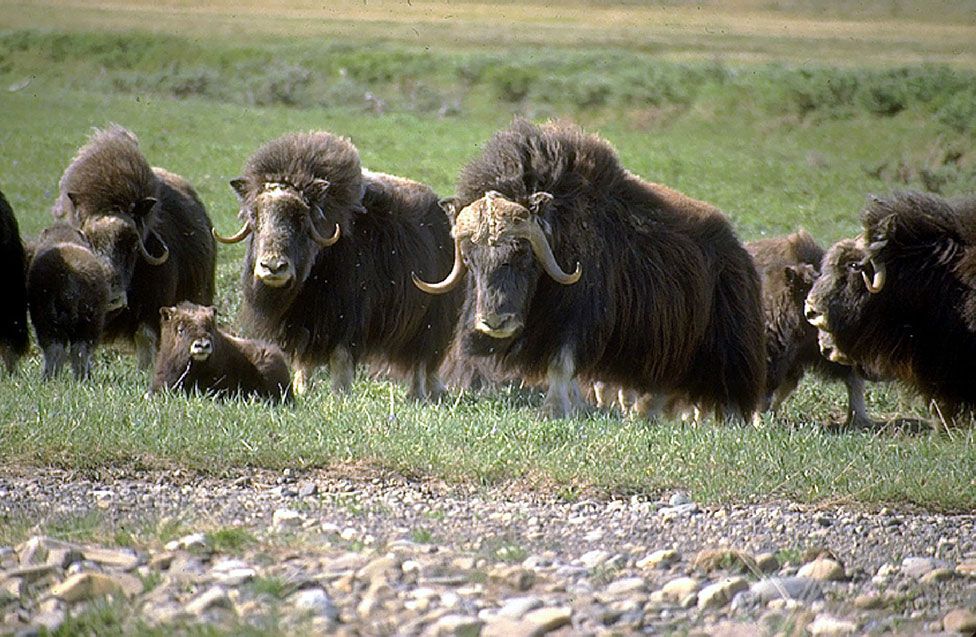
A small herd of musk oxen roam the Arctic refuge’s coastal plain. (U.S. Fish and Wildlife Service / Associated Press).


You can feel the encroaching decay in the sides of buildings, in the limp remains of a once-proud drill rig slowly rusting into the waterlogged gravel and tundra. In the 1950’s, one of us, George, was part of the expedition that explored and then advocated for the formation of the Arctic National Wildlife Refuge. At that time, he worried the region would end up resembling the disrupted skylines and greasy sheens of Texas’s aging and abandoned oil fields.

More recently, we visited the sprawling spaghetti of pipelines, metallic shells of buildings and this defunct drill rig, now worrying that a legal and regulatory morass will bring George’s dystopian fears to fruition. There has been little formal preparation for what happens when oil ends, even as the Trump administration has announced plans to fast-track the auction of leases for drilling in pristine areas of the Arctic refuge, with similar plans for parts of the Teshekpuk Lake Special Area in the National Petroleum Reserve-Alaska.

If we ignore the costs for plugging and abandoning wells, dismantling and removing accompanying infrastructure, and fully restoring impacted tundra, we allow for a vast overestimate of the economic value of oil in these outstanding Arctic ecosystems. Unless the intent is to walk away and just leave the mess behind.

For generations, people arriving in Alaska have done just this. Alaska’s legacy of abandoned infrastructure and contaminants has wrought havoc on numerous remote sites, and for many communities. In our travels across the Arctic coastal plain, we encountered abandoned drill sites where metal shards and sun-bleached wood punctuate rotting gravel pads, the acrid smells a clear olfactory reminder of what should not be there.

In the absence of plugging and proper abandonment, fluids and gases left in wells and underground reservoirs can seep to the surface. Added to this chronic challenge are corrosion of well bores from salts and water, the settling of land and changes in the climate that contribute to erosion of the hard surface permafrost.

In a few decades, the bulk of revenues from Alaska’s North Slope will be dispersed, and this decaying industrial mess will be someone else’s problem, if it is dealt with at all.

The Government Accountability Office stated in 2002 that there were inadequacies in planning for the proper and effective cleanup of abandoned sites on the North Slope of Alaska. The GAO restated its concerns in 2003, 2010 and 2011. The Department of the Interior Inspector General in 2015 and the Congressional Research Service in 2018 echoed these concerns.

Other large oil fields, such as in Texas, Louisiana and California, do not offer much solace as the number of their “orphaned” wells grow. In Louisiana, there are over 4,000 abandoned and unplugged wells, many of them in deteriorating condition. Texas has over 6,000, and California another 5,500, that are abandoned or at high risk of becoming so. Thousands of inactive additional wells will likely add to these numbers as the years tick by.

The decline in oil prices since 2014 has exacerbated the trend of well abandonment, particularly among smaller operators who may also be facing bankruptcy. These declines further reduce the already-inadequate revenues allocated to cleanup funds for these abandoned sites.

Alaska is starting to experience these pressures. The bankruptcy of Aurora Gas in 2018 left the state the responsible party for cleaning up three wells on state land. Recent news that BP is closing shop in Alaska and selling to the smaller Hilcorp is consistent with this trajectory.

Decommissioning costs cannot be an afterthought. The Bureau of Land Management spent $90 million in northern Alaska, remediating just 18 of 136 “legacy wells” that the federal government drilled between 1944 and 1981. On Alaska’s North Slope, cleanup of a 60-acre oil-field logistics site ran up a $2-million bill and is still not complete. There are now over 3,000 active wells on the North Slope and another 800 suspended or idle, linked by a labyrinth of pipes, buildings and gravel roads.

Current bonding levels, the funds put aside by the industry to ensure adequate decommissioning of wells and other infrastructure, barely touch what’s needed for cleaning up what’s been built or drilled to date. Former State Commissioner Cathy Foerster previously expressed doubt that the bonds would “even pay for the engineering study needed to plan the plugging operations, much less any of the actual plugging costs” — and these plugging costs are just one small component of cleaning up the accumulated debris of a specific drill site, never mind the new oil fields that continue to sprawl outward from the Prudhoe Bay hub. Operators can hold blanket bonds for their entire operations that may not even cover a single site’s cleanup.

There has been reticence from the industry and regulators to absorb the burdens of decommissioning at the outset. However, if the state of Alaska or other local representatives do not insist on a bond to cover all costs of potential cleanup and restoration prior to approval of an operation, experience in North America and around the world strongly suggests it will not be done.

If we cannot afford a plan to fully clean up and restore an area, this is just one more of the many reasons why we cannot afford to drill new wells.

George Schaller is a senior conservationist at the Wildlife Conservation Society. Martin Robards is regional director for the Arctic Beringia program at WCS.

Arctic warming: are record temperatures and fires arriving earlier than scientists predicted?

The Conversation

Arctic warming: are record temperatures and fires arriving earlier than scientists predicted?

Christopher J White, Senior Lecturer in Water & Environmental Engineering, University of Strathclyde            September 8, 2020
LuYago / Shutterstock


It was a grim record. On June 20 2020, the mercury reached 38°C in Verkhoyansk, Siberia – the hottest it’s ever been in the Arctic in recorded history. With the heatwaves came fire, and by the start of August around 600 individual fires were being detected every year. By early September, parts of the Siberian Arctic had been burning since the second week of June.

CO₂ emissions from these fires increased by more than a third compared to 2019, according to scientists at the Copernicus Atmosphere Monitoring Service. The wildfires produced an estimated 244 megatons of CO₂ between January and August, releasing thousands of years’ worth of stored carbon.

The summer of 2019 was already a record breaker for temperatures and fires across the Arctic. Seeing these events unfold again in 2020 – on an even larger scale – has the scientific community worried. What does it all mean for the Arctic, climate change and the rest of the world?

Sooner than predicted?

Even with climate change, the severe summer heatwave of 2020 was expected to occur, on average, less than once every 130 years. Wildfire observations in the Arctic are fairly limited prior to the mid-1990’s, but there is no evidence of similarly extreme fires in the years before routine monitoring started.

Higher temperatures globally are likely to be driving the increase in wildfire frequency and duration. But modelling wildfires is difficult. Climate models don’t predict wildfires, and they cannot indicate when future extreme events will occur year-on-year. Instead, climate modelers focus on whether they are able to predict the right conditions for events like wildfires, such as high temperatures and strong winds.

Read more: Siberia heatwave: why the Arctic is warming so much faster than the rest of the world

And these climate model projections show that the kind of extreme summer temperatures we’ve seen in the Arctic in 2020 weren’t likely to occur until the mid-21st century, exceeding predictions by decades.

So even though an increasing trend of high temperatures and conditions suitable for wildfires are predicted in climate models, it’s alarming that these fires are so severe, have occurred in the same region two years in a row, and were caused by conditions which weren’t expected until further in the future.

<span class="caption">The Arctic is warming at a faster rate than the global average.</span> <span class="attribution"><a class="link rapid-noclick-resp" href="https://www.shutterstock.com/image-photo/forest-fire-burned-trees-after-wildfire-501036100" rel="nofollow noopener" target="_blank" data-ylk="slk:Yelantsevv/Shutterstock">Yelantsevv/Shutterstock</a></span>
The Arctic is warming at a faster rate than the global average. Yelantsevy / Shutterstock 
Climate feedback loops

So what is causing this rapid change? Over recent decades, temperatures in the most northerly reaches of Earth have been increasing at a faster rate than the rest of the world, with the polar region heating at more than twice the rate of the global average.

The fires caused by these hot, dry conditions are occurring in remote and sparsely populated forests, tundra and peat bogs, where there is ample fuel.

But these extreme events are also providing worrying evidence of climate “feedback loops”, which were predicted to happen as the climate warms. This is where increasing concentrations of greenhouse gases in the atmosphere contribute to further warming by promoting events – like wildfires – which release even more greenhouse gas, creating a self-perpetuating process that accelerates climate change.

Read more: Arctic breakdown: what climate change in the far north means for the rest of us

Record CO2 emissions released from burning Arctic forests during the summer of 2020 will make future conditions even warmer. But ash and other particulates from the wildfires will eventually settle on the ice and snow, making them darker and accelerating their melting by reducing how easily their surface reflects sunlight.

Climate change is not the direct cause of this summer’s fires, but it is helping to create the right conditions for them. The extreme temperatures and wildfires seen throughout the Arctic in 2020 would have been almost impossible without the influence of human-induced climate change – and they are feeding themselves.

<span class="caption">Soot-stained ice absorbs more of the sun’s heat and melts more quickly.</span> <span class="attribution"><a class="link rapid-noclick-resp" href="https://www.shutterstock.com/image-photo/background-texture-dirty-spring-snow-soot-1674811552" rel="nofollow noopener" target="_blank" data-ylk="slk:Trifonov Aleksey/Shutterstock">Trifonov Aleksey/Shutterstock</a></span>
Soot-stained ice absorbs more of the sun’s heat and melts more quickly. Trifonov Aleksey / Shutterstock 
What about the rest of the world?

When we think of the Arctic, we don’t tend to picture wildfires and heatwaves – we think of snow and ice and long, brutal winters. Yet the region is changing before our eyes. It’s too early to say whether the last two summers represent a permanent step-change, or new “fire regime”, for the Arctic. Only observations over a much longer timescale could confirm this.

But these record-breaking events in the Arctic are being fueled by human influences that are changing our world’s climate sooner than many expected. With climate models predicting a future where already hot and fire-prone areas are likely to become more so, 2020’s record temperatures paint a worrying trend towards more of the same.

The Arctic is at the frontline of climate change. What we are witnessing here first are some of the most rapid and intense effects of climate change. While the impact is devastating – record CO₂ emissions, damaged forests and soils, melting permafrost – these events may prove to be a portent of things to come for the rest of the world.

The Conversation
The Conversation: Christopher White receives funding from the Engineering and Physical Sciences Research Council (EPSRC), the Low Carbon Power and Energy Program, and various Australian and Tasmanian State Government research funding program.

What is California’s wildfire smoke doing to our health? Scientists paint a bleak picture

What is California’s wildfire smoke doing to our health? Scientists paint a bleak picture

Erin McCormick in Berkeley                   September 4, 2020
<span>Photograph: Xinhua/Rex/Shutterstock</span>
Photograph: Xinhua/Rex/Shutterstock. Historic wildfires burning across California have sent a 500-mile-long gray blob of smoky air swirling above the western United States, and Stanford researcher Bibek Paudel is already seeing the health effects build up.


In the days after lightning sparked hundreds of fires across the north of thstate, Paudel, who studies respiratory illness at Stanford’s allergy and asthma research center, saw hospital admissuch as strokes jump by 23%. Based on the center’s studies of recent fires, Paudel expects that th

The research is part of a growing body of scientific evidence painting a dire picture of the effects of wildfire smoke on people, even those living hundreds of miles away. Many researchers worry that those debilitating effects will only intensify the risks of the Covid-19 pandemic. “Wildfire smoke can affect the health almost immediately,” said Dr Jiayun Angela Yao, an environmental health researcher in Canada.

Related: ‘An impossible choice’: farmworkers pick a paycheck over health despite smoke-filled air

This summer, Yao co-authored a study for the University of British Columbia showing that, within an hour of fire smoke descending upon the Vancouver area during recent wildfire seasons, the number of ambulance calls for asthma, chronic lung disease and cardiac events increased by 10%. The study found that within 24 hours greater numbers of people were calling for help with diabetic issues as well.

Studies after the bushfires that raged throughout Australia last year found even bleaker outcomes. Researchers from the University of Tasmania identified 417 extra deaths that occurred during 19 weeks of smoky air, and reported 3,100 more hospital admissions for respiratory and cardiac ailments and 1,300 extra emergency room visits for asthma.

The fires and the smoke are complicating the response to the coronavirus pandemic. Meanwhile, social distancing requirements are exacerbating the risks of smoke pollution. “For communities that are exposed to both fire smoke and Covid-19, it’s going to be a double threat,” Yao said.

<span class="element-image__caption">A satellite image shows smoke plumes from the California wildfires migrating across the American west.</span> <span class="element-image__credit">Photograph: Nasa/AFP/Getty Images</span>A satellite image shows smoke plumes from the California wildfires migrating across the American west. Photograph: Nasa/AFP/Getty Images


For health workers and first responders, dealing with both a pandemic and a fire season at the same time comes with significant logistical challenges. Evacuees and firefighters forced to live in shared housing may face additional Covid-19 exposure. The pandemic has already stretched the resources available from local government agencies thin.

Residents wanting to get away from the smoke may no longer have the option of sheltering at the library or mall or staying with friends because of shutdowns and pandemic risks. “We are not in a situation where people can just leave to get away from the smoke as they might like,” said Peter Lahm, an air resource specialist with the USDA Forest Service, who specializes in monitoring wildfire smoke.

Researchers also fear the smoke can act more deeply to hamper the body’s ability to fend off infection.

Science has long shown that air pollution can cause numerous deadly health effects, including increasing the severity of respiratory infections, such as flu and pneumonia. Research this year from Harvard University showed a significant link between increases in long-term exposure to air pollution particles and Covid death rates. The study, led by researcher Xiao Wu, has not yet been peer-reviewed.

Many US regions have managed to reduce pollution from industrial smokestacks and automobile tailpipes, but wildfire smoke has become an increasing threat.

Fire smoke is a volatile mixture of gases that can contain hundreds of different toxins, depending on the heat of the fire, the wind conditions and the composition of what is burning – whether it is trees, grasses or houses filled with plastics and manmade chemicals.

The spray of very fine particles – known as PM2.5 – that wildfires launch into the air causes the biggest concerns. These particles are small enough to be inhaled through the lungs, where they can cause disruptions to health that are just beginning to be fully understood.

“We know that pollution, in general, is going to make your immune system less healthy and its responses more chaotic,” said Dr Mary Prunicki, who oversees Stanford’s smoke studies as the director of research for the Sean N Parker Center for Allergy & Asthma Research. “It requires a healthy immune system to fight infections like Covid-19. And, if your immune system isn’t working as well, it puts you at greater risk.”

Prunicki and her team are working to learn more about how wildfire smoke affects the workings of the human body. Even as her own home was threatened with possible evacuation from Santa Clara county’s SCU Lightning Complex fires, Prunicki was working to send out more than 100 blood testing kits to volunteers for a study that researchers hope will help establish how conditions like inflammation are affected by the smoke.

<span class="element-image__caption">San Francisco is blanketed under a thick layer of unhealthy smoke-filled air.</span> <span class="element-image__credit">Photograph: Peter Dasilva/EPA</span>San Francisco is blanketed under a thick layer of unhealthy smoke-filled air. Photograph: Peter Dasilva/EPA

Earlier studies of young people, who were exposed to even distant wildfire smoke, showed dramatic changes.

“We found, even in teenagers, if we drew their blood after a wildfire, we saw a systematic increase in inflammatory markers,” said Prunicki, who added that “a lot of chronic disease is related to inflammation”.

With clouds of smoke from the fires floating around the country, people as far away as Idaho and Colorado are choking on California’s smoke. “We had several days when we were just socked in,” said Sally Hunter, an air specialist with the Idaho department of environmental quality, who said smoke travelled north to spark health warnings in Boise, even though there were no fires nearby. “I got up to go get groceries and I couldn’t see down to the end of my street. I got a headache and my sister in-law got itchy, watery eyes.”

Since California’s fires started months earlier than usual, experts worry that this will be an especially smoky year.

The worst year on record for California fire smoke was 2008 when lightning fires started in June and continued all summer, according to Lahm. Fires from 2017 and 2018 also unleashed huge amounts of smoke.

Paudel and the Stanford researchers found that, since 2011, the number of smoky days occurring each year has increased in California and in the entire western US. Unfortunately, some of the largest increases were in counties with the biggest population centers, such as those around Los Angeles or along California’s Central Valley.

When a gray curtain of smoke descended on the Bay Area last week, 76-year-old Berkeley resident Barbara Freeman, who suffers from pulmonary conditions, tried to follow all the advice. She regularly checked environmental air monitor readings, stayed inside, sealed her windows and turned on her two air cleaners.

Still Freeman lost her voice and found breathing painful. She worried, if she had to evacuate, she would have nowhere to turn to escape the smoke and the danger of coronavirus. But one of the things she found the hardest was not being able to go outside to walk her dog.

“That was how I was maintaining what sanity I had left,” she said.

Arctic National Wildlife Refuge: The animals at risk from Alaska oil drilling

BBC News – U.S. and Canada

Arctic National Wildlife Refuge: The animals at risk from Alaska oil drilling

August 20,  2020

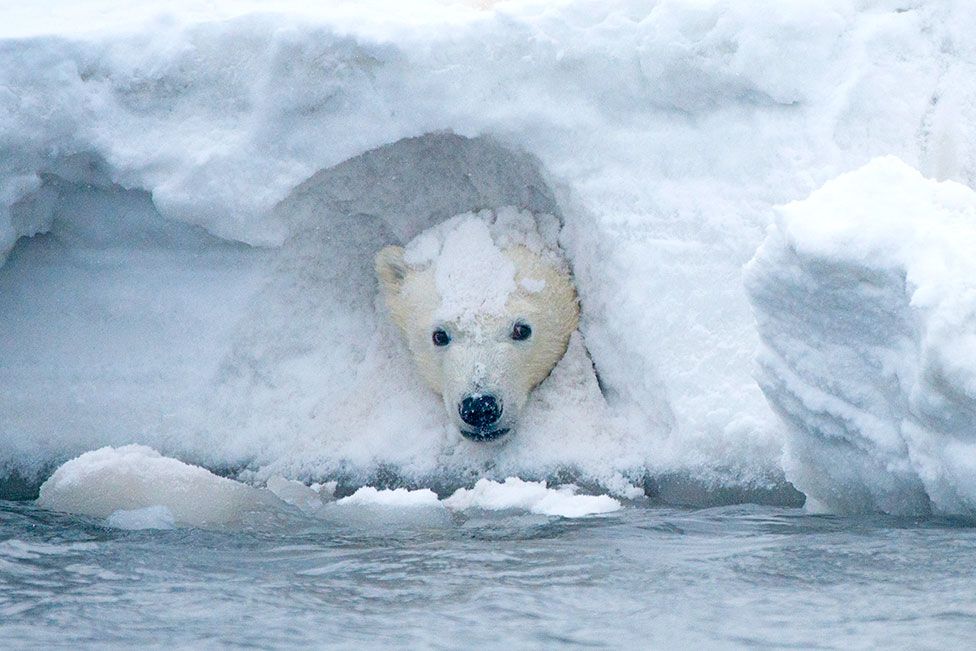
A polar bear cub plays in a snow drift at the 1002 area of the Arctic National Wildlife Refuge in 2014GETTY IMAGES. Image caption: Polar bears are particularly at risk of dying in oil spills.


The US government is pushing forward with controversial plans to allow drilling in the Arctic National Wildlife Refuge, by laying out the terms of a leasing program that would give oil companies access to the area.

The wildlife refuge in north-eastern Alaska sits above billions of barrels of oil. However, it is also home to many animals, including reindeer, polar bears and different species of bird.

The idea of drilling in the area did not originate with President Donald Trump and his administration. Rather, the leasing program is just the latest step in a controversy that has been ongoing since the late 1970’s.

One side argues that drilling for oil could bring in significant amounts of money, while providing jobs for people in Alaska.

Others, however, are fearful of the impact drilling would have on the many animals that live there – as well as the damage burning more fossil fuels would have on our rapidly warming planet.

This push from the Trump administration comes just two months after the Arctic circle recorded its highest ever temperatures.

MuskoxenGETTY IMAGES. Image caption: Muskoxen are one of many species of animals in the refuge.


“This plan could devastate the amazing array of wildlife that call the refuge home through noise pollution, habitat destruction, oil spills, and more climate chaos,” Kristen Monsell, from the US-based Center for Biological Diversity, told the BBC.

“The coastal plain is the most important land-based denning habitat for polar bears and is the birthing grounds of the Porcupine caribou herd.

1px transparent line

“Over 200 species of birds are found in the refuge along with Arctic foxes, black and brown bears, moose and many others.”

Any oil spills, for example, would not only harm nearby wildlife and their habitat, they could be fatal.

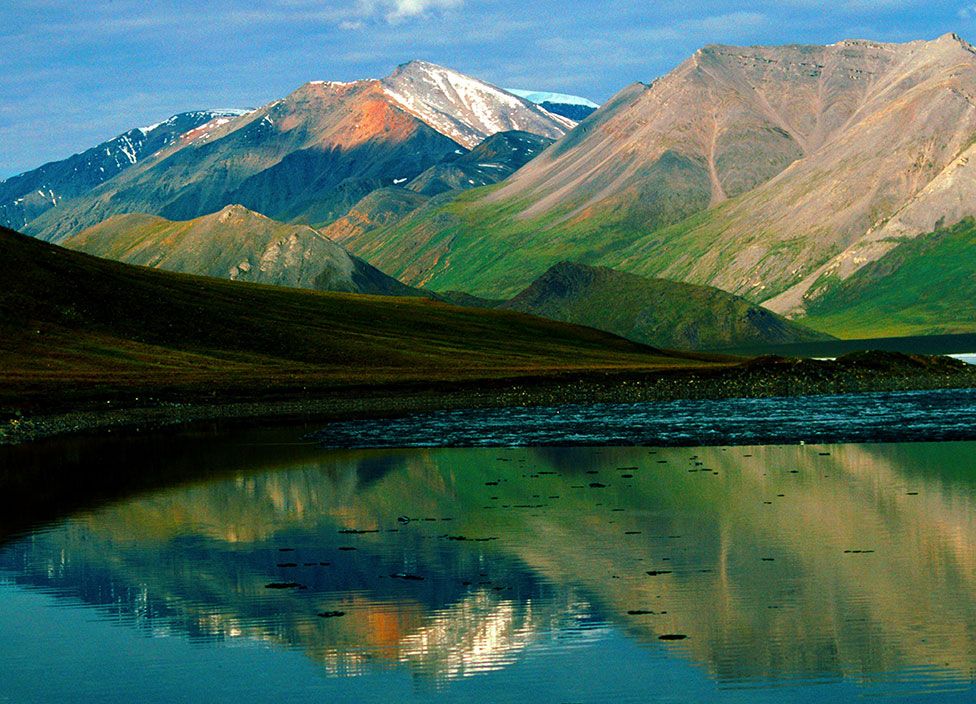
Arctic National Wildlife RefugeGETTY IMAGES.  Image caption: The controversy over drilling in the Arctic National Wildlife Refuge has been ongoing since 1977.


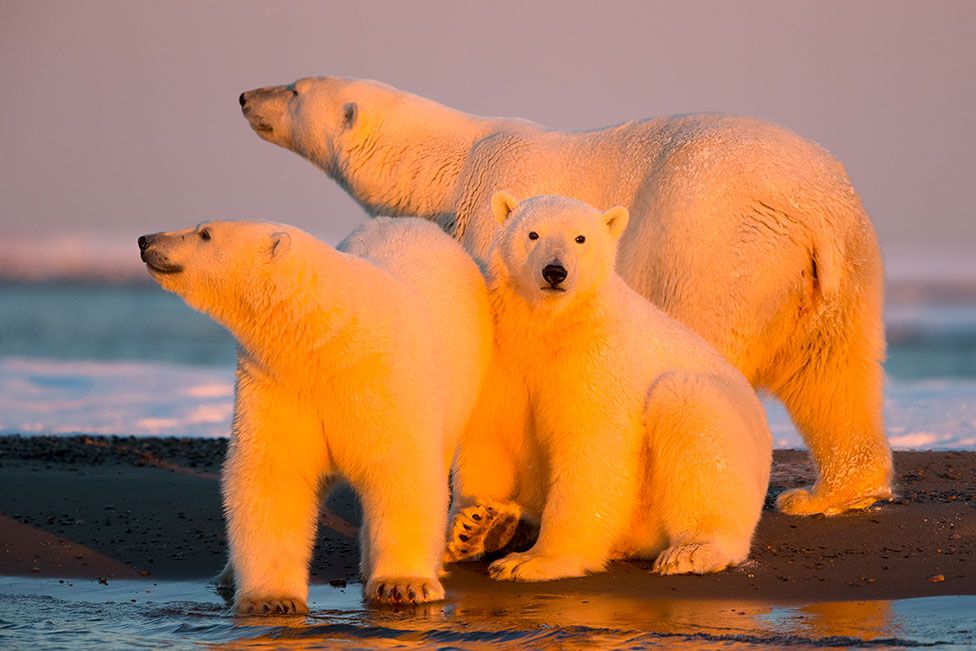
Polar bears, Ms Monsell adds, are “particularly vulnerable” to oil spills.

“Polar bears must maintain a pristine hair coat as insulation against the cold – but when a polar bear comes into contact with spilled oil, it can soak a polar bear’s fur and persist for several weeks. It will be groomed and ingested, irritate the skin, and destroy the insulating abilities of the fur,” she says.

“Studies show that fatalities can occur from effects on the lungs, kidneys, blood, gastrointestinal tract, and other organs and systems. An oil-coated bear that is not cleaned and rehabilitated will probably die.”

Polar bearsGETTY IMAGES. Image caption: Oil can destroy a polar bear’s fur, which protects it from the harsh environment.


Oil industry bosses insist they have a well-established record of environmentally responsible development of Alaska’s energy resources. But environmentalists say the US government has not adequately considered the risks to wildlife and local communities.

Meanwhile, polar bears are far from the only animals who rely on this large stretch of wilderness.

The refuge is home to more than 200 types of bird. Prof Natalie Boelman, an environmental scientist from Columbia University, describes it as “a huge nursery for avian species”.

“If you go up there in the spring it’s crazy, every little puddle, even if it’s just half a metre by half a metre… you can barely see the water, it’s just covered in ducks and geese,” she tells the BBC.

She is particularly concerned about the impact sound levels from any drilling would have on animals in the refuge, as well as on the indigenous communities that live nearby.

“With industrial activity comes a great deal of sound, from aeroplane noise, helicopter noise, truck noises, seismic activity,” she says.

“There’s been very little scientific study into how this impacts the many different animals up there, but there’s a lot of anecdotal evidence that sounds that are associated with any anthropogenic activity really bother them.”

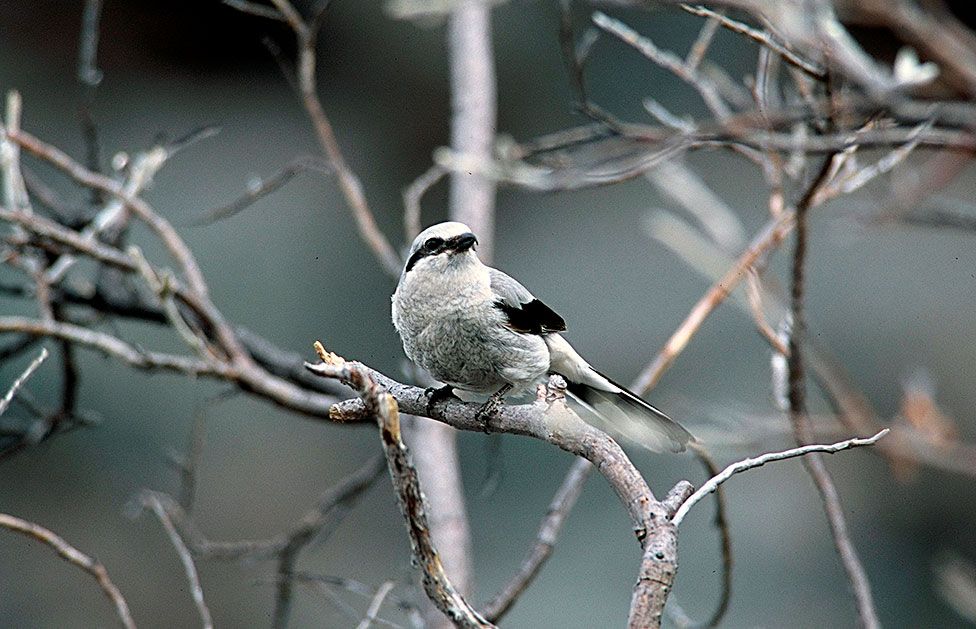
Northern shrike on a branch in Arctic refugeGETTY IMAGES. Image caption: The refuge is home to more than 200 species of bird including the northern shrike.


This anecdotal evidence, she adds, comes from the Native Alaskan communities that live near the refuge.

“Subsistence hunters who are really dependent on both caribou and waterfowl to sustain themselves and their families, they have a really hard time hunting when there’s air traffic going by,” Prof Boelman says.

“They report having to just give up hunting a specific animal as soon as a helicopter or aeroplane goes by, because it just wakes the animal up – and that’s a huge loss for them.

“So we know it has an impact on the behavior of the animals, and also that this then has an effect on the subsistence of communities. But also, what does that noise do to animals’ stress levels? What does that do to their reproductive success?”

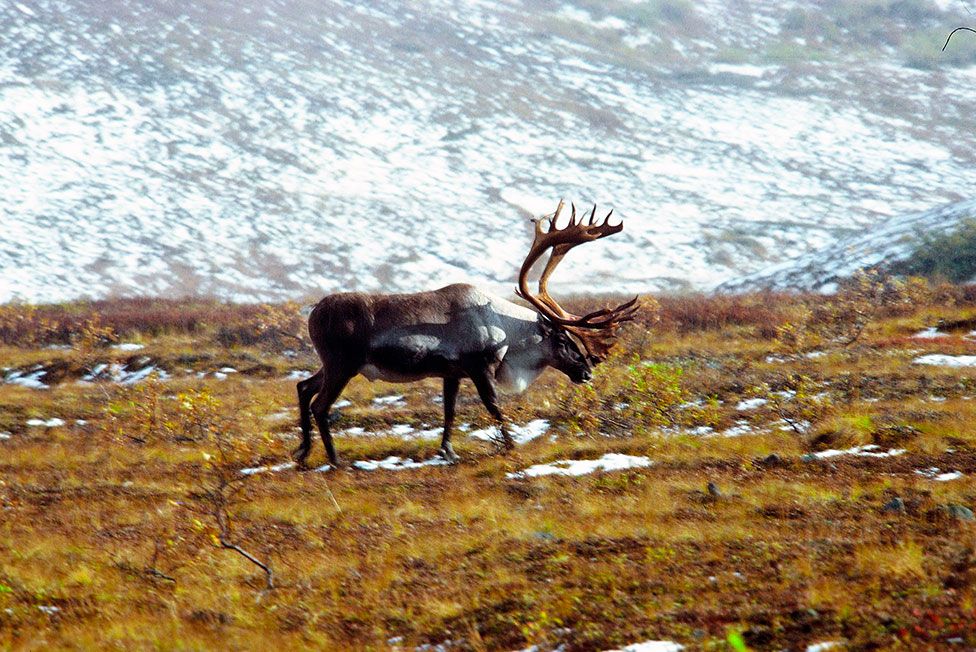
CaribouGETTY IMAGES. Image caption: The refuge’s caribou herd is particularly vulnerable.


Conservationists also fear for the Porcupine caribou, a breed of North American reindeer which roams the Arctic National Wildlife Refuge. The coast – where proposed drilling would take place, should it go ahead – is particularly important to them.

Maggie Howell, executive director of the Wolf Conservation Center, tells the BBC: “That coastal plain is the calving route for caribou, and the caribou also has one of the most impressive migrations of any land mammal.


“The herd travels north to the coastal plain every year, about 400 miles (644 km) each way, and that’s where they’re having their babies. Any drilling is going to impact their lives drastically, as well as all the other animals and people who depend on that caribou.”

One animal that predates on caribou, and would therefore also be at risk, is the Alaskan tundra wolf. Ms Howell says her team has “already seen” the damage done by drilling in other areas with caribou and wolf populations, such as Alberta in Canada.

“As a refuge, it’s there to be preserved,” Ms Howell says. “It’s not only a safe haven for the wildlife, but also a symbol of our country’s national heritage.

“And if these animals can’t be safe in a wildlife refuge, where can they be? Where can they be just left alone to live their lives and fulfill their own purpose?”

Trump must win the Midwest. But out here his breezy reelection gambit falls flat

Trump must win the Midwest. But out here his breezy reelection gambit falls flat

Art Cullen                     August 29, 2020
<span>Photograph: Charlie Neibergall/AP</span>
Photograph: Charlie Neibergall/AP


It’s dry. So dry that my neighbor Steve Drey, the tractor parts man who hears it first, figures that the combines might start rolling through the brown corn in just a week or two. Some farmers are cutting corn for livestock silage, and it’s punky.

One hundred fifty bushels per acre should be the ballpark crop yield around Storm Lake, Iowa, which is in severe drought along with much of the Corn Belt. That’s a 25% yield chop off expectations. It makes farmers itch to start harvesting before the paper-dry corn falls to a freak wind. A hurricane-like derecho wind flattened 14 million acres in the Tall Corn State just a couple weeks ago. This, as corn prices are at their lowest point in a decade.

The cicadas of late August called children back to school where vulnerable teachers and staff awaited them. Most come from meatpacking households – Latino, Asian and African – whose breadwinners were ordered into close working quarters in April by a President who demanded slower virus testing. We were among the hottest spots in the land.

The infection rate shot up in the college towns as the students returned. Governor Kim Reynolds ordered the bars shut down in six of the state’s 99 counties. She sailed to election in 2018 but has since watched her numbers slide as her mind melded to Trump’s. Our virus rate refuses to recede. Fourteen teacher aides in Storm Lake quit just before classes resumed for fear of infection. The governor ordered everyone back to class but didn’t tell schools how to do it. Our superintendent begged patience. She regrets saying “I just don’t know” so often when asked how to pull this off safely.

Nobody does know. The state last week acknowledged that it was disseminating faulty data about Covid infection as recently as July. The meatpacking industry is doing its own testing of employees on a selective basis. Deaths and hospitalizations have ebbed here. Children have their temperatures checked at the school door. We have no idea what the infection rate really is, or how long we can conduct classes. Masks are not required, but everyone was wearing them in class this week. The kids here seem to get it. Grandma, who takes care of them after school, is nervous.

It’s shouting distance of Labor Day, when people normally start fixing on the elections. Labor is restless. John Deere laid off Davenport and Waterloo workers last fall and this spring. Deere reported strong profits last week as a result, despite slumping sales from the Trump Trade Wars. There’s the disconnect between the stock market and Main Street – the Dow rises while enhanced unemployment benefits expire.

Atop all this – a pandemic, a climate crisis inspiring a mega-drought and derecho, rotten farm prices and incompetent government – another unarmed black man was shot, this time in Kenosha, Wisconsin. Not so far from Minneapolis, where George Floyd became a household name. Now it’s Jacob Blake, whose mother Julia Jackson pleaded for prayer and healing on national TV, for her son, for the police, for this nation. The Bucks and Brewers refused to play.

Trump simply must win Iowa and Wisconsin. So he cast a convention against this backdrop of anxiety and fear – godless looters are coming for yours – and roped in our governor, former Wisconsin Governor Scott Walker, and Senator Joni Ernst of Iowa to play in the tragedy. Few were inclined to listen. When the corn calls, you are too busy removing fallen trees from your machine shed. Trump dropped into the Cedar Rapids airport for an hour shortly before the convention to promise assistance after the derecho pulverized our Second City. After he left, he approved homeowner and business relief for just one of the 27 counties the governor had requested.

For that, Governor Reynolds told the TV convention that Trump “had our back.” Senator Ernst, trailing Democratic challenger Theresa Greenfield in fundraising and polling, landed a prime-time cameo to praise her fearless leader. The one who knocked down soybean prices. The one who helped the corn-fueled ethanol industry implode. The one who ordered children in cages to be separated from their mothers.

Farmers are anxious. Latinos are afraid. Unemployed machinists are frustrated. That prized demographic, suburban women in Urbandale next to Des Moines, are encouraging the school board to sue the governor over her in-person school orders.

A few Latino organizers gathered in the park on the sweltering evening when Trump would commandeer the Rose Garden for his reality show.

“Our people came here to be free of the corruption and violence,” said Storm Lake City Councilman José Ibarra. “Now it has come back to find us. Where can we go? What can we do but vote?”

They said their older folks who never saw a reason before have finally found one.

Even some of those farmers are wondering about Trump as they dig into a harvest so meager that wraps up as they vote. An ill wind blows for incumbents.

  • Art Cullen is editor of The Storm Lake Times in Northwest Iowa, where he won the Pulitzer Prize for editorial writing on agriculture. He is a Guardian US columnist and author of the book, Storm Lake: Change, Resilience, and Hope in America’s Heartland