California is bone dry. Will March bring more misery or a miracle?

California is bone dry. Will March bring more misery or a miracle?

Paul Duginski                      March 5, 2021
The most recent U.S. Drought Monitor data released Thursday.
The most recent U.S. Drought Monitor data released Thursday. (Paul Duginski / Los Angeles Times)

California, and Southern California in particular, is bone dry.

The calendar says spring officially begins with the equinox March 20, but the meteorological winter — consisting of December, January and February — is already in the record books. In other words, the wettest months are over. Let’s take a look at where the Golden State stands.

How dry?

Downtown Los Angeles received 1.84 inches of rain in December, when it normally would get 2.33 inches. Some 2.44 inches of rain fell in January, when L.A. normally expects 3.12 inches. And just a trace (that is, not enough to be measured) fell in February, when 3.80 inches normally falls. January and February are normally the two wettest months in L.A., after which the chances for rain diminish rapidly with the approach of spring and the end of the rainy season.

A graph of rainfall in downtown Los Angeles shows this year's monthly totals far below normal
Disappointing rainfall in downtown Los Angeles reflected a dry winter in Southern California. (Paul Duginski / Los Angeles Times)

Just 4.55 inches of rain fell over Los Angeles as of Thursday, when it normally should have received 11.68 inches to date.

It’s not just Southern California

Los Angeles and Southern California have lots of company in this respect. The state and the West are gripped by persistent drought, including large areas of exceptional drought in the Southwest, where the 2020 monsoon was a no-show, as the most recent U.S. Drought Monitor report shows. Many water agencies are discussing water conservation measures, and the North Marin Water District is considering voluntary and mandatory water conservation orders.

A map of California with percentage of normal rainfall in various cities ranging from 38% to 79%
California’s rainfall picture looks bleak as the meteorological winter — the state’s wettest months — comes to a close. (Paul Duginski / Los Angeles Times)


Talk of conservation is likely to spread if the drought persists, as is expected, according to the outlook below.

A map of the U.S. shows drought in most of the U.S. expected to continue or worsen
Persistent drought will continue in the West. (Paul Duginski / Los Angeles Times)
Why is this happening?

California has been plagued by an unusual and persistent upper-level ridge of high pressure in the Pacific off the West Coast. This has been blocking the storm track since last fall, making for a dry pattern that favors Santa Ana winds.

A weather map shows an arrow representing a storm track being pushed by high pressure over the Pacific
The predominant weather pattern since Oct. 1 has favored dry weather with more Santa Ana winds in Southern California. (Paul Duginski / Los Angeles Times)


This pattern is consistent with La Niña, which is still in effect in the equatorial Pacific. La Niña occurs when the sea surface temperatures in the central and eastern equatorial Pacific are below average. Easterly winds over that region strengthen, and rainfall usually decreases over the central and eastern tropical Pacific and increases over the western Pacific, Indonesia and the Philippines. This pattern favors warmer, drier conditions across the southern part of the U.S. and cooler, wetter conditions in the northern U.S.

A globe with radar imagery showing ocean surface temperatures
La Niña continues in the equatorial Pacific, indicated here by the blue area of cooler sea surface temperatures. (NASA Jet Propulsion Laboratory and Los Angeles Times)


In the big picture, the drought in the West can be seen as a long-term event, interspersed with a few wet years, that has continued over the last two decades. The longer it lasts, the worse it gets, as climatologist Bill Patzert points out. It affects groundwater and the wildfire situation, and the effects build over time. The longer the drought goes, the greater the push for conservation.

A graph on drought conditions in the western U.S. from 2000 to 2021 shows a current peak
Except for a few wet years, the West has been suffering drought for the last two decades. (Paul Duginski / Los Angeles Times)

Not only is the drought stubborn, as the chart above shows, but the dramatic rise in extreme and exceptional drought after 2020, compared with the extremes in other years since 2000, is also notable.

What are the chances of a ‘March miracle’?

The outlook for March isn’t overly encouraging. Cooler-than-average temperatures are forecast in California, and the Southwest either looks drier than average, or has equal chances of being wetter or drier than average. In other words, no “March miracle” appears to be in the offing.

Two maps show cooler than normal temperatures for the West and drier than normal precipitation for the Southwest
The temperature and precipitation outlooks for March. (Paul Duginski / Los Angeles Times)

“Now that the ides of March are approaching, the snow and rain drama is whether California will have March misery or a miracle,” Patzert said.

Last-minute relief in March and April 2020 brought Southern California up to about normal, but record-breaking heat in the summer and fall intensified the existing widespread drought throughout the West.

Given that the seasonal average for downtown Los Angeles is 14.93 inches, “there is only one March in the historical record that would put downtown L.A. above average. That was the super El Niño year of 1884, the wettest March and rain year in our history,” Patzert said. “That El Niño delivered colossal March rains of 12.36 inches. In the present modest-to-strong La Niña year, that would be the longest of shots. Think of shooting a basket from the Forum to Staples Center.”

Nalleli Cobo: How a nine-year-old fought an oil company and won

Nalleli Cobo: How a nine-year-old fought an oil company and won

Patricia Sulbarán Lovera – BBC Mundo, Los Angeles     March 5, 2021
Nalleli Cobo
Nalleli Cobo


When a Latino community in Los Angeles began their fight against an oil company they claimed was polluting their neighborhood, a young woman played a central role.

Nalleli Cobo was nine years old when she started suffering from asthma, nosebleeds and headaches.

It was the beginning of a battle against an active oil well site located in front of her house in South Los Angeles.

Nalleli and her mother soon found out that some of their neighbors were also getting sick.

The community, mostly composed of low-income families, protested until the site was temporarily shut down.

Cobo didn’t stop there. Joined by a group of young activists and organizations, they sued the city to demand more regulations in oil extraction. And they won.

A criminal case against the company, Allenco, and its handling of the site, resumes later this month. They declined to comment for this story but have previously stated that they invested capital to comply with regulations.

She has been compared to Greta Thunberg, although her name has been recognized locally for over a decade.

Nalleli Cobo and Greta Thunberg
Nalleli Cobo and Greta Thunberg have worked together on environmental campaigns.


Cobo paused her activism activities in early 2020 after being diagnosed with cancer at the age of 19.

Her doctors don’t know what caused her illness.

After three surgeries and medical treatment, she has recently been declared cancer-free.

This is her story.

I grew up in University Park, in South Central Los Angeles, 30ft across the street from an oil well owned by AllenCo from 2009.

I lived with my mom, my three siblings, my grandma, my great grandpa, my great grandma all in one apartment. We were eight people, including me.

My mom is from Mexico and my dad is from Colombia. He was deported when I was two years old and my mom raised me.

It was the year 2010 and I was nine years old. All of the sudden I started having stomach pains, nausea.

I got body spasms so severe I couldn’t walk, my mom would have to carry me because I would freeze up like a vegetable.

I got nosebleeds so severe that I would have to sleep sitting down so I wouldn’t choke on my own blood at night.

Nalleli Cobo at 9 years old
Nalleli Cobo started suffering from nosebleeds, body spasms and other symptoms at nine years old


I was being poisoned in my home by a silent killer.

It was crazy to notice not just how my health was affected but everybody else’s in different ways.

My mother got asthma at 40 which is really rare, my grandma got it at 70 which is even more rare. My sister had fibroid problems, my brother had asthma, everybody had some kind of health issue.

But it wasn’t just my family, it was most of our community.

Moms started talking to each other and the word spread that there was there was something wrong.

We could smell it in the air. It smelled like rotten eggs and once it got into your house it wouldn’t go away, even if you close the windows, turned on fans and put air purifiers in the traverses of the windows.

Other times it would smell like guava or chocolate. These were artificial smells.

At the beginning, we started looking into if it was a leak in the building until we found a group of toxicologists to come speak to our community.

They explained that certain chemicals are used for oil extraction and emissions can harm human health if exposed for a long time.

The oil well that AllenCo operated from 2009 is located in a residential area, close to buildings and schools in South Los Angeles.
A pipeline that signals "Warning Petroleum Pipeline" close to Nalleli's childhood home.
A pipeline that signals “Warning Petroleum Pipeline” close to Cobo’s childhood home.


That is when we made the connection with the oil well across the street.

So we started organizing in the community and created the campaign People Not Pozos (“pozos” means oil wells in Spanish).

We filed complaints with the South Coast Air Quality Management District and we knocked on doors asking people if they’d be willing to share their stories at a City Hall hearing.

It was so powerful to know that this community, the Spanish-speaking, black and brown immigrant community that nobody cared about was coming over to the City Hall to make our voices heard.

Nalleli Cobo speaking in a public hearing with LA elected officials.


They would ask me if I could share my story and I would use my little note cards and talk.

I was always super shy but I always felt comfortable doing public speaking.

The Los Angeles Times wrote a story about us and it captured the attention of former US California Senator Barbara Boxer.

At the press conference, Boxer brought investigators from the EPA (Environmental Protection Agency) and they went in to do a check up.

They were in there for a few minutes because they started getting sick from the smells.

(After local and federal investigations, AllenCo agreed to shut down the site temporarily).

(The city of Los Angeles sued the company and in 2016 secured a court order that requires AllenCo to follow stringent regulations if it wants to resume drilling).

We were happy when this was announced but it took time. We started organizing in 2010 and it shut down in 2013.

And now we want it to shut down permanently.

Nalleli Cobo in January 2020.
Nalleli Cobo became a figure of environmental activism in Los Angeles.

When we started campaigning, we noticed that we weren’t the only community being affected.

There are 580,000 angelenos that live within a quarter of a mile or less to an active oil and gas well.

https://www.youtube.com/watch?v=n4KpTsapzUg

Most are low-income communities of color.

Whenever I go somewhere to talk about this and I say I’m from Los Angeles, people are like: “Oh! That’s awesome, the Walk of Fame, Hollywood, celebrities…”

Well, LA is home to the largest urban oil field in the country and we don’t talk about it.

Nalleli Cobo
Cobo is studying Law and wants to become a civil rights attorney.


I am one of the cofounders of South Central Youth Leadership Coalition and along with other organizations we sued the city of Los Angeles in 2015 for a violation of the California Environmental Quality Act.

We won, and that means that when opening or expanding wells there is a new application process.

Even though I moved out of University Park, I’m campaigning to set up a 2,500 feet health and safety buffer zone between oil wells and schools, hospitals and parks.

At the same time, I am a normal kid. I am obsessed with makeup, I am a dancer, I love travelling and I am in college.

The only thing that makes me different is that I found my passion much earlier.

Nalleli Cobo and Mark Ruffalo in a tour around oil wells in Los Angeles in 2016.
Cobo’s activism has been praised by Hollywood figures such as Mark Ruffalo and Jane Fonda


I was diagnosed with cancer on January 15 of 2020.

For a while I kept it quiet because it was such a scary word to process. The “C word” is something you never expect to hear at such a young age.

My mom and I were also worried about medical bills because I had to undergo surgery.

But we were fortunate enough to reach our goal through a crowd funding campaign.

Physically and emotionally the hardest thing was getting a radical hysterectomy. It took me 6 weeks to get out of bed.

My mom had to bathe me for six months and I had to take dozens of pills.

My oncologist still doesn’t know why I got cancer; they have been able to know by doing tests that it is not genetic.

I told them where I had grown up and asked if there was an environmental test I could take.

Nalleli Cobo
Cobo has recovered from cancer after a year of surgeries and medical treatment.


She said that, until we have new science, I am just a question mark.

I am recently cancer-free as of 18 January and feel really happy and excited about that.

I want to pursue my career as a civil rights attorney and go into politics afterwards.

My definition of environmental justice is the ability to breathe clean air despite my age, my gender, my ethnicity, social economic status or zip code.

It is fighting, it is protecting my community, my home.

Biodegradable plastic production in China outpacing ability to break down waste, says Greenpeace

Biodegradable plastic production in China outpacing ability to break down waste, says Greenpeace

Marcus Parekh        Greenpeace
A man carries a bag of plastic bottles on a roof at a recycling centre in Hefei - Jianan Yu /Reuters
A man carries a bag of plastic bottles on a roof at a recycling center in Hefei – Jianan Yu /Reuters


China has begun producing biodegradable plastic at such a rate that it can no longer break down the material at the same pace, according to a new report from Greenpeace.

According to the report, companies in China have ramped up production of biodegradable plastic to a capacity of 4.4 million tons per year. That capacity is expected to reach five million tons in the e-commerce sector alone by 2025, when a nationwide ban on non-biodegradable plastics is set to come into effect.

“Switching from one type of plastic to another cannot solve the plastics pollution crisis that we’re facing,” said Dr Molly Zhongnan Jia, a Greenpeace East Asia plastics researcher. “We need to take a cautious look at the effect and potential risks of mainstreaming these materials, and make sure we invest in solutions that actually reduce plastic waste.”

Non-biodegradable plastics take decades to decompose and release microplastics, which contaminates soil, water and the food chain.

People sort plastic bottles for recycling at a reclamation depot on in Qingdao - Hong Wu /Getty Images AsiaPac 
People sort plastic bottles for recycling at a reclamation depot on in Qingdao – Hong Wu /Getty Images AsiaPac


By contrast, current forms of biodegradable plastic take up to six months to be broken down, but they require specific industrial treatment at high temperatures and humidity. If the material is left in landfill, the process takes much longer and still releases carbon into the atmosphere.

Most households do not have the ability to properly dispose of biodegradable plastics as they are often not suitable for household recycling and composting.

This results in many forms of biodegradable plastic being thrown away after a single-use, compounding the problem of plastic pollution.

“Reusable packaging systems and a reduction in overall plastic use are much more promising strategies to keep plastic out of landfills and the environment,” said Dr Jia.

From Pollution to the Pandemic, Racial Equity Eludes Louisiana’s Cancer Alley Community

DeSmog

From Pollution to the Pandemic, Racial Equity Eludes Louisiana’s Cancer Alley Community


Louisiana funeral home
Courtney Baloney in full PPE at work in his funeral home, the Treasures of Life Center for Life Funeral Services in St. James Parish. Credit: Julie Dermansky

Mary Hampton, president of the Concerned Citizens of St. John the Baptist Parish, a community group in Louisiana fighting for clean air, opted to do everything in her power to avoid getting the coronavirus after Robert Taylor, the group’s founder, was hospitalized with COVID-19 earlier this year. So she got vaccinated as soon as she could. “Either the vaccine is going to make me sick,” Hampton reasoned, “or the virus is going to kill me.”

Like many African Americans, Hampton’s hesitation around vaccination stems from hearing about the way Black men were left to suffer during the Tuskegee syphilis study, an experiment between 1932 and 1972 which withheld lifesaving treatment, and from her own lifetime of experiences with unequal healthcare access. She told me that she and her family often had to wait hours to see a doctor for medical care while white people would go right in.

Mary Hampton at her home near the Denka plant, in St. John the Baptist Parish on February 9, 2021. Credit: Julie Dermansky.

The Denka Performance Elastomer Plant in St. John the Baptist Parish. Credit: Julie Dermansky

Hampton and Taylor live less than a mile from the Denka Performance Elastomer chemical factory in Louisiana’s St. John the Baptist Parish. This community lies in the middle of Cancer Alley, an 80-mile stretch along the Mississippi River between New Orleans and Baton Rouge that is lined with more than a hundred refineries and petrochemical plants.

Their fenceline community had been exposed to harmful air pollution for 46 years before DuPont sold this petrochemical factory, which produces synthetic rubber, to Denka on November 1, 2015.

Robert Taylor visiting the Zion Travelers Cemetery, next to the Marathon Refinery, in Reserve, Louisiana where some of his relatives are buried on December 3, 2020. Credit: Julie Dermansky.

Then, in late 2016, Taylor started the citizens group when the small, majority Black community learned that for decades this factory had been exposing them to many toxic chemicals, including chloroprene, which the Environmental Protection Agency (EPA) found is a likely human carcinogen.

According to the EPA’s National Air Toxics Assessment published in 2015 — which evaluates air contaminants and estimates health risks — residents near Denka’s plant were determined to have the highest lifetime risk of cancer from air pollution in the country, nearly 50 times the national average.

Covid Hotspot

In mid-March last year as the pandemic spread in the United States, Louisiana was identified as a hotspot for the virus, with the steepest curve of COVID-19 infections in the country.

At an April 5, 2020 press conference, Louisiana Gov. John Bel Edwards identified the African-American community in St. John the Baptist Parish as having an alarming death rate. A few days later, the governor announced the new Louisiana COVID-19 Health Equity Task Force, created to look at how health inequities are affecting communities most impacted by the coronavirus.

Bodies coronavirus victims at the Treasures of Life Funeral home during the second surge of the pandemic. Credit: Julie Dermansky.

Almost a year later, Hampton told me that she doesn’t find anything equitable about how her community has been treated during the pandemic. The Concerned Citizens group believes that equity for their community should start with the government making the Denka plant cut its emissions to meet the maximum level of chloroprene deemed safe by the EPA for humans to inhale over a lifetime.

The Concerned Citizens group isn’t satisfied with Denka’s emission reductions, which were cut by as much as 85 percent after the Louisiana Department of Environmental Quality (DEQ) and the EPA ordered Denka to do so. Emissions, however, are still consistently above the EPA’s recommended level, and the group wants the government to do more.

If the state is serious about creating health equity, Hampton thinks her community should have received access to the vaccines first, given their compromised immune systems and chronic exposure to harmful air pollution. “But that isn’t happening,” Hampton explained.

“I was able to get a vaccine since I’m over 80 years old, but I couldn’t get them for my children who are all in their 50s, and they need them too.”

CF Industries in St. James Parish  at the foot of the Sunshine Bridge. Credit: Julie Dermansky.

Covid and Chronic Pollution

Dr. Chip Riggins with the Louisiana Department of Health told me by phone that the state is doing everything it can to get vaccines to the Mississippi River Parishes including St. John the Baptist and nearby St. James Parish, but admits it isn’t happening as fast as they would like. Riggins explained numerous obstacles, from lack of pharmacies and health centers particularly on the West bank of the river to bad weather and a limited quantity of supply with the vaccine rollout.

Kevin Litten, a communications strategist with the Louisiana Department of Health, said via email, “Statewide, we have seen COVID-19 disproportionately affect communities of color.”

He pointed me to Louisiana’s COVID-19 dashboard and data provided on the department’s website when I asked if the health department could quantify the disparity in cases and deaths in St. John the Baptist and St. James Parish, compared to the rest of the state.

Rock Zion Baptist Church near Baton Rouge next to an industrial site. Credit: Julie Dermansky.

Dow’s St. Charles Chemical plant in Hahnville that recently made a settlement with the government to lower harmful emissions. Credit: Julie Dermansky.

A new study published in the European Journal of Environment and Public Health did just that. It used that exact data to evaluate the relationship between chronic exposure to air pollution and COVID-19 in Cancer Alley. The study found higher rates of COVID-19 infection and death in Cancer Alley’s 11 parishes. Residents of St. John the Baptist were more than five times as likely to die of the disease than people in other parishes, the researchers found.

The findings support other research connecting the impacts of chronic air pollution on the pandemic in China, Europe, and other parts of the United States.

“These effects in the United States are due to inaction on environmental and structural injustices and health inequities in Louisiana,” the authors wrote. (Longtime Cancer Alley advocate and  Louisiana GreenARMY founder, retired Lt. General Russel Honoré contributed to the study.)

The Burden on Black Communities

Courtney Baloney at work at his funeral home in St. James Parish, LA. Credit: Julie Dermansky.

One place where these racial injustices and inequities become magnified is in funeral homes. Courtney Baloney, the owner of the Treasures of Life Center for Life Funeral Services in St. James Parish has been busy since the start of the pandemic. I photographed Baloney at work early in the pandemic and returned to his funeral home when the second surge of infections and deaths started late last year and into this year.

Baloney finds it heartbreaking to watch the pandemic’s impact on the community, and he goes the extra mile to give those who have lost loved ones to the coronavirus all the support he can.

The Louisiana Department of Health acknowledged that it isn’t looking at potential connections between air pollution and COVID-19 hospitalization and death rates in Cancer Alley communities like St. John the Baptist Parish. “With COVID-19 being so new to Louisiana, the U.S., and the world, connecting the effects of the disease to environmental implications is still highly challenging. In Louisiana, we don’t currently have enough information to make these connections,” Litten said by email.

Baloney isn’t surprised that the Louisiana health department isn’t looking for a connection between air pollution and the pandemic’s death count, but he says that he sees the impacts in his own Cancer Alley community and in his work every day.

The Tulane Environmental Law Clinic published an analysis of the connection between COVID-19 and fenceline communities in May 2020. That early study found Black communities are overburdened with both COVID-19 deaths and air pollutants that harm the respiratory and immune systems.

The COVID-19 pandemic reveals the urgent and critical need to reduce the burden of air pollution on Louisiana’s black and economically disadvantaged communities,” Kimberly Terrell, one of the authors of the report, later published in the journal Environmental Justice, said in a news release. “Our study, along with many others, provides evidence that long-term exposure to harmful air pollutants should be considered a pre-existing condition for COVID-19.”

Wilma Subra is a technical advisor to the environmental advocacy group Louisiana Environmental Action Network and has been working with the Concerned Citizens group since 2016. “If you wanted to study the connection between pollution and the impact COVID-19 is having on fenceline communities, more monitoring for volatile organic compounds and particulate matter should be done,” she told me. According to Subra, ideally the state should be monitoring both of these type of pollutants at the fencelines of all polluting plants next to residential areas. “Then you would look at results compared to the hospital records of the people that get the sickness,” Subra said

Taylor, now out of the hospital and regaining his strength, told me over the phone that he is not surprised that the State of Louisiana is not examining the potential connections between the bad air in his community and impacts from the coronavirus.

He and members of his group believe that state environmental regulators and the health department have been working against the group from the start. Taylor pointed out that Dr. Chuck Carr Brown, Secretary of the Louisiana Department of Environmental Quality, labeled the group as fearmongers at December 2016 Parish Council meeting when they asked the parish council to force Denka to cut chloroprene emissions to the level deemed safe by the EPA. Brown later tried to backtrack his comment but never expressed support for Denka to lower emissions more than 85 percent.

A health study done by the University Network for Human Rights (UNHR) that was released in July 2019 provided evidence that Taylor’s community is at pronounced risk of cancer and other negative health effects due to toxic chemicals in the air. A peer-reviewed and updated version of that report, which Taylor and Hampton contributed to, was published this year on February 18 by the journal Environmental Justice.

In November 2019, the Louisiana Department of Health announced plans to conduct a first-ever scientific inquiry into cancer cases around the Denka plant near St. John the Baptist Parish.

“Instead of doing anything to help us after the health study was published, the state decided to do its own study,” Taylor said. While he welcomes the state’s effort, he doesn’t think it should stop state regulators from acting to protect the community from the plant’s emissions in the meantime. “The EPA indicated an elevated risk of cancer for our community. We shouldn’t have to wait till we get cancer and can prove the EPA right.”

The Board of Health tasked the Louisiana State University to send students to homes within a 1.5 mile radius of the Denka plant to collect data on incidences of cancer and then match the data from residents with medical reports. If the data differs from what they find in the Louisiana Tumor Registry, which tracks the state’s cancer incidences, then that data will be updated.

Due to the pandemic, the survey is being done by phone instead of in person. However, Taylor doesn’t see how that approach can succeed in this community. He has yet to receive a call from anyone tied to the study, and the few community members he knows who have received a call told him that the questions they were asked didn’t make much sense to them. Hampton pointed out that community members she knows who did participate didn’t feel comfortable talking about their family’s health status over the phone.

Counting Deaths

A victim of Covid-19 being buried in St. Charles Parish, LA, on January 30, 2021. Credit: Julie Dermansky.

While the Louisiana Tumor Registry’s records don’t show an increase in deaths caused by cancer incidences linked to industrial pollution in Cancer Alley, some environmental advocates say they don’t have much confidence in the accuracy of those records. Neither does  Baloney, the funeral home owner, who says he has no doubt that the oil refineries and petrochemical plants around him impact his community’s health.

The tumor registry bases its cancer count on reports from medical records, Baloney pointed out, but he has tended to many families who lost loved ones who hadn’t sought medical help before they died. With the increased deaths during the pandemic, the tumor registry will likely see a decline in deaths attributed to cancer, he says, because the coronavirus was the main cause of death for so many people, even if they also suffered from cancer.

Courtney Baloney leading pallbearers at a funeral in St. John the Baptist parish on October 10, 2020. Credit: Julie Dermansky.

Woman wearing an K95 mask at a funeral on January 30, 2021 for a loved one who died from Covid-19. Credit: Julie Dermansky.

Funeral in St. John the Baptist Parish in October 10, 2020 while the second surge of the pandemic hit Louisiana. Credit: Julie Dermansky.

On top of that, Baloney suspects that the state of Louisiana has undercounted the number of deaths due to the coronavirus from the start, due to the lack of free testing sites in Cancer Alley. Numerous people whose bodies he embalmed last year were never tested or examined by the coroner, so there is no way to determine whether or not the people he helped lay to rest died of COVID-19.

Some churches in Louisiana still don’t hold funeral services, and many of those in Cancer Alley communities don’t allow open caskets. That reality hits especially hard for Black families, says Baloney, because viewings are a deeply ingrained part of Black culture in America.

People leaving Samuel Gordon’s funeral in St. James Parish on December 5, 2020. Credit: Julie Dermansky.

Family members at Samuel Gordon’s funeral in St. James Parish in a church set up where every other row was in use. Credit: Julie Dermansky.

Samuel Gordon’s burial in St. James Parish on December 5, 2020. Credit: Julie Dermansky.

He considers depriving Black families a viewing following the death of a loved one to be another form of racial injustice. According to the CDC, there are no known risks of attending a service for someone who died of COVID-19. When churches are open for funerals but forbid viewings, Baloney says he holds viewings at his funeral home, and when necessary, the funerals too. He says he makes sure those attending follow safety protocols for social distancing and masking.

With a front-seat to the grief and devastation caused by this pandemic, especially for Black communities in Cancer Alley, Baloney says he is looking forward to a return to normal. But like many, he feels that time can’t come fast enough.

Photos in this report were produced with the support of a grant from the Magnum Foundation.

US House passes historic public lands bill pledging to protect nearly 3m acres

US House passes historic public lands bill pledging to protect nearly 3m acres

Annette McGivney                      

The US House of Representatives has passed a historic public lands preservation bill that pledges to protect nearly 3m acres of federal lands in Colorado, California, Washington and Arizona.

The act combines various bills that languished without Senate approval during the Trump administration. Key provisions include permanently banning new uranium mining on land surrounding the Grand Canyon, giving wilderness designation to 1.5m acres of federal land, and preserving 1,000 river miles by adding them to the Wild and Scenic Rivers System.

“This is one of the largest public lands protection bills to ever go before Congress,” said Kristen Brengel, senior vice-president of government affairs for the National Parks Conservation Association. “Wilderness designation is the strongest protection there is to ensure the lands will never be developed. And it can’t be undone with the stroke of pen.”

Related: Who will clean up the ‘billion-dollar mess’ of abandoned US oilwells?

The bill, called the Protecting America’s Wilderness and Public Lands Act, has strong support from the Biden administration, in part because it will help the president achieve his goal of protecting at least 30% of US land from development by 2030 in order to combat climate change.

Still, the bill must first pass a divided Senate. Given partisan opposition to the measure from some Republican senators, approval could come down to Vice-President Kamala Harris casting a tie-breaking vote.

Sponsored by the Colorado representative Diana DeGette, the bill passed the House in a 227 to 200 vote, generally along party lines. During debate on Thursday, Republican congressional representatives opposing the act argued that it would, among other things, inhibit firefighting abilities in areas close to or surrounded by wilderness in California and Colorado, and create additional burdens for land managers.

“This bill won’t help the environment but will instead kill jobs and imperil our national security and American energy dependence,” said the Arkansas congressman Bruce Westerman, the highest-ranking Republican member on the House natural resources committee.

The package of eight individually sponsored bills incorporated into the Act include:

Arizona

The Grand Canyon Protection Act would provide a victory in the decades-long battle fought by the Havasupai tribe, who live at the bottom of the Grand Canyon, to protect their drinking water from uranium mining contamination. The bill permanently withdraws more than 1m federally owned acres north and south of Grand Canyon from eligibility for new mining claims.

“Grand Canyon is the homeland of indigenous peoples, a primary driver of Arizona’s outdoor recreation and tourism-fueled economy, and a worldwide wonder,” said Amber Reimondo, energy director for the Grand Canyon Trust. “The risks of uranium extraction are not worth it now and never will be. We look forward to the Grand Canyon Protection Act becoming law.”

California

Four different bills significantly enhance public lands recreation opportunities in the Golden state. A new 400-mile trail along the central coast would connect northern and southern wilderness areas in the Los Padres national Forest. In north-west California, a total of 306,500 acres would be protected through wilderness designation. In southern California, popular recreation areas in the Santa Monica mountains and San Gabriel mountains would be significantly expanded and protected from development.

Colorado

Initially introduced by DeGette more than a decade ago, a Colorado measure will add 660,000 acres of public land to the National Wilderness Preservation System. While many of Colorado’s towering mountain peaks are already designated wilderness, the new bill specifically protects lower-elevation areas that are popular for recreation and critical wildlife habitat. Like all lands in the wilderness system, the areas will be off limits to motorized vehicles and resource extraction. An additional measure provides protection to 400,000 acres of federal land through wilderness designation and limiting oil and gas development.

Washington

This bill seeks to expand designated wilderness on Washington’s Olympic Peninsula and adds 460 river miles to the National Wild and Scenic Rivers System.

Atlantic Ocean circulation weakens, sparking climate worries

Atlantic Ocean circulation weakens, sparking climate worries

Jeff Berardelli                       February 26, 2021


An influential current system in the Atlantic Ocean, which plays a vital role in redistributing heat throughout our planet’s climate system, is now moving more slowly than it has in at least 1,600 years. That’s the conclusion of a new study published in the journal Nature Geoscience from some of the world’s leading experts in this field.

Scientists believe that part of this slowing is directly related to our warming climate, as melting ice alters the balance in northern waters. Its impact may be seen in storms, heat waves and sea-level rise. And it bolsters concerns that if humans are not able to limit warming, the system could eventually reach a tipping point, throwing global climate patterns into disarray.

The Gulf Stream along the U.S. East Coast is an integral part of this system, which is known as the Atlantic Meridional Overturning Circulation, or AMOC. It was made famous in the 2004 film “The Day After Tomorrow,” in which the ocean current abruptly stops, causing immense killer storms to spin up around the globe, like a super-charged tornado in Los Angeles and a wall of water smashing into New York City.

As is the case with many sci-fi movies, the plot is based on a real concept but the impacts are taken to a dramatic extreme. Fortunately, an abrupt halting of the current is not expected anytime soon — if ever. Even if the current were to eventually stop — and that is heavily debated — the result would not be instant larger-than-life storms, but over years and decades the impacts would certainly be devastating for our planet.

Recent research has shown that the circulation has slowed down by at least 15% since 1950. Scientists in the new study say the weakening of the current is “unprecedented in the past millennium.”

Because everything is connected, the slowdown is undoubtedly already having an impact on Earth systems, and by the end of the century it is estimated the circulation may slow by 34% to 45% if we continue to heat the planet. Scientists fear that kind of slowdown would put us dangerously close to tipping points.

Importance of the Global Ocean Conveyor Belt

Because the equator receives a lot more direct sunlight than the colder poles, heat builds up in the tropics. In an effort to reach balance, the Earth sends this heat northward from the tropics and sends cold south from the poles. This is what causes the wind to blow and storms to form.

The majority of that heat is redistributed by the atmosphere. But the rest is more slowly moved by the oceans in what is called the Global Ocean Conveyor Belt — a worldwide system of currents connecting the world’s oceans, moving in all different directions horizontally and vertically.

 / Credit: NOAA
/ Credit: NOAA


Through years of scientific research it has become clear that the Atlantic portion of the conveyor belt — the AMOC — is the engine that drives its operation. It moves water at 100 times the flow of the Amazon river. Here’s how it works.

A narrow band of warm, salty water in the tropics near Florida, called the Gulf Stream, is carried northward near the surface into the North Atlantic. When it reaches the Greenland region, it cools sufficiently enough to become more dense and heavier than the surrounding waters, at which point it sinks. That cold water is then carried southward in deep water currents.

Through proxy records like ocean sediment cores, which allow scientists to reconstruct the distant past going back millions of years, scientists know that this current has the capacity to slow and stop, and when it does the climate in the Northern Hemisphere can change quickly.

One important mechanism through the ages, which acts as a lever of sorts controlling the speed of the AMOC, is the melting of glacial ice and resulting influx of fresh water into the North Atlantic. That’s because fresh water is less salty, and therefore less dense, than sea water, and it does not sink as readily. Too much fresh water means the conveyor belt loses the sinking part of its engine and thus loses its momentum.

That’s what scientists believe is happening now as ice in the Arctic, in places like Greenland, melts at an accelerating pace due to human-caused climate change.

 / Credit: Climate Central
/ Credit: Climate Central


Recently scientists have noticed a cold blob, also known as the North Atlantic warming hole, in a patch of the North Atlantic around southern Greenland — one of the only places that’s actually cooling on the planet.

The fact that climate models predicted this lends more evidence that it is indicative of excess Greenland ice melting, more rainfall and a consequent slowdown of heat transport northward from the tropics.

Almost all of the globe is warming except for a cold blob in the North Atlantic. / Credit: NASA


In order to ascertain just how unprecedented the recent slowing of the AMOC is, the research team compiled proxy data taken mainly from nature’s archives like ocean sediments and ice cores, reaching back over 1,000 years. This helped them reconstruct the flow history of the AMOC.

The team used a combination of three different types of data to obtain information about the history of the ocean currents: temperature patterns in the Atlantic Ocean, subsurface water mass properties, and deep-sea sediment grain sizes, dating back 1,600 years.

While each individual piece of proxy data is not a perfect representation of the AMOC evolution, the combination of them revealed a robust picture of the overturning circulation, says lead author of the paper, Dr. Levke Caesar, a climate physicist at Maynooth University in Ireland.

“The study results suggest that it has been relatively stable until the late 19th century,” explains Stefan Rahmstorf from the Potsdam Institute for Climate Impact Research in Germany.

The first significant change in their records of ocean circulation happened in the mid 1800s, after a well-known regional cooling period called the Little Ice Age, which spanned from the 1400s to the 1800s. During this time, colder temperatures frequently froze rivers across Europe and destroyed crops.

“With the end of the Little Ice Age in about 1850, the ocean currents began to decline, with a second, more drastic decline following since the mid-20th century,” said Rahmstorf. That second decline in recent decades was likely due to global warming from the burning and emissions of fossil fuel pollution.

Nine of the 11 data-sets used in the study showed that the 20th century AMOC weakening is statistically significant, which provides evidence that the slowdown is unprecedented in the modern era.

Impact on storms, heat waves and sea-level rise

Caesar says this is already reverberating in the climate system on both sides of the Atlantic. “As the current slows down, more water can pile up at the U.S. East Coast, leading to an enhanced sea-level rise [in places like New York and Boston],” she explained.

On the other side of the Atlantic, in Europe, evidence shows there are impacts to weather patterns, such as the track of storms coming off the Atlantic as well as heat waves.

“Specifically, the European heat wave of summer 2015 has been linked to the record cold in the northern Atlantic in that year — this seemingly paradoxical effect occurs because a cold northern Atlantic promotes an air pressure pattern that funnels warm air from the south into Europe,” she said.

According to Caesar, these impacts will likely continue to get worse as the Earth continues to warm and the AMOC slows down even further, with more extreme weather events like a change of the winter storm track coming off the Atlantic and potentially more intense storms.

CBS News asked Caesar the million-dollar question: If or when the AMOC may reach a tipping point leading to a complete shutdown? She replied: “Well, the problem is that we don’t know yet at how many degrees of global warming to hit the tipping point of the AMOC. But the more it slows down the more likely it is that we do.”

Moreover, she explained, “Tipping does not mean that this happens instantaneously but rather that due to feedback mechanisms the continued slow down cannot be stopped once the tipping point has been crossed, even if we managed to reduce global temperatures again.”

Caesar believes if we stay below 2 degrees Celsius of global warming it seems unlikely that the AMOC would tip, but if we hit 3 or 4 degrees of warming the chances for the tipping rise. Staying below 2 degrees Celsius (3.6 degrees Fahrenheit) is a goal of the Paris Agreement, which the U.S. just rejoined.

If the tipping point is crossed and the AMOC halts, it is likely the Northern Hemisphere would cool due to a significant decrease in tropical heat being pushed northward. But beyond that, Caesar says that science does not yet know exactly what would happen. “That is part of the risk.”

But humans do have some agency in all this, and the decisions we make now in terms of how quickly we transition away from fossil fuels will determine the outcome.

“Whether or not we cross the tipping point by the end this century depends on the amount of warming, i.e. the amount of greenhouse gases emitted to the atmosphere,” explains Caesar.

Gulf Stream is weakest it’s been in more than 1,000 years, study says

Gulf Stream is weakest it’s been in more than 1,000 years, study says

Mark Puleo                      February 26, 2021
This Tuesday, Nov. 10, 2020, satellite image made available by NOAA shows Tropical Storm Eta at 10:40 a.m. EST in the Gulf of Mexico, Theta, right, and a tropical wave to the south that became Tropical Storm Iota. An overheating world obliterated weather records in 2020 – an extreme year for hurricanes, wildfires, heat waves, floods, droughts and ice melt – the United Nations’ weather agency reported Wednesday, Dec. 2, 2020. (NOAA via AP)

A group of scientists from Europe presented new research this week claiming that the Gulf Stream is weaker now than it’s been at any point over the last 1,000 years. The Gulf Stream is an Atlantic Ocean current that plays a largely hidden role in shaping weather patterns in the United States. Much has been researched and learned about the influential current over the past 500 years, particularly due to the expertise of one of America’s Founding Fathers, Benjamin Franklin.

But in recent decades, a shift in the Gulf Stream’s circulation has become weaker than any other time over the last millennium, according to a recently published study by scientists from Ireland, Britain and Germany. The weakening of the Gulf Stream, formally known as the Atlantic Meridional Overturning Circulation (AMOC), can be mostly pinned to one catalyst, the researchers said: human-caused climate change.

The Gulf Stream current moves a massive amount of water across the Atlantic Ocean. According to Stefan Rahmstorf, one of the study’s authors, it moves nearly 20 million cubic meters of water per second, acting like a giant conveyor belt.

How strong of a current is that? “Almost a hundred times the Amazon flow,” he told the Potsdam Institute.

The Gulf Stream location in the Global Real-Time Ocean Forecast System model (RTOFS) from 2016. (Image via NOAA)

The main function of the Gulf Stream is to redistribute heat on Earth by way of the ocean current. The ocean circulatory system plays a crucial role in many weather patterns around the world, particularly along the U.S. East Coast.

Rahmstorf said that his team’s research was groundbreaking for being able to combine previous bits of research to piece together a 1,600-year-old picture of the AMOC evolution.

“The study results suggest that it has been relatively stable until the late 19th century,” he said. “With the end of the little ice age in about 1850, the ocean currents began to decline, with a second, more drastic decline following since the mid-20th century.”

An original mapping of the Gulf Stream from Timothy Folger and Benjamin Franklin from 1768. (Image via Library of Congress)

So what are the implications of this decline in the ocean currents? AccuWeather Senior Meteorologist Bob Smerbeck said it could plausibly lead to rising sea levels if water levels are warmed this year. However, Smerbeck added that it is tricky to know just how warm the waters could get.

Previously, studies have shown that rising water temperatures and higher sea levels can lead to more extreme weather events such as stronger tropical storms, a higher likelihood for extreme heat waves or a decrease in summer rainfall.

However, other researchers have also come out with contrasting data, suggesting that the Gulf Stream hasn’t actually declined over the past 30 years. Using a different data modeling system, researchers from the United Kingdom and Ireland pieced together data from climate models that they said in a study published earlier this month showed “no overall AMOC decline.”

“Our results reinforce that adequately capturing changes to the deep circulation is key to detecting any anthropogenic climate-change-related AMOC decline,” the authors write in their study, which was written just days before Rahmstorf’s team published its research on the topic.

Smerbeck, who has been a meteorologist at AccuWeather for nearly 25 years, urged caution in how to interpret the new research claims.

“One possible repercussion discussed in article 1 [the first study mentioned above] about warming waters along the east coast from an AMOC slowdown could lead to rising sea levels due to thermal expansion of the seawater. This seems plausible,” Smerbeck said. But, he added that the amount of seawater rise would depend on how warm that waters could get and he wasn’t ready to speculate on that.

This undated engraving shows the scene on July 4, 1776, when the Declaration of Independence was approved by the Continental Congress in Philadelphia, Pa. The document, drafted by Thomas Jefferson, Benjamin Franklin, John Adams, Philip Livingston and Roger Sherman, announces the separation of 13 North American British colonies from Great Britain. The formal signing by 56 members of Congress began on Aug. 2. (AP Photo)

How was the Gulf Stream as we know it today discovered? Well, the discovery was fueled by a need for increased efficiency with the mail service and was inspired by the empiricism of whalers.

In 1768, Benjamin Franklin was working in London as deputy postmaster, according to The Smithsonian Magazine, responsible for overseeing the arrival of mail to and from the American colonies. His cousin, Timothy Folger, worked as a captain of a merchant ship at that same time.

One day, Franklin asked Folger why his merchant ships arrived at the colonies much faster than Franklin’s mail ships made it back to England. Folger explained to his cousin that merchant captains followed the advice of whalers, who followed a “warm, strong current” to track and kill whales.

While Franklin said mail captains were too prideful to follow the advice of “simple American fishermen,” sailing against the current was costing precious time, according to author Laura Bliss.

So Folger sketched out a general location of the current for Franklin, dubbing it the “Gulph Stream.” However, Franklin’s mail carriers refused to follow the directions.

A chart of the Gulf Stream, published in 1786 in the Transactions of the American Philosophical Society. (Image via Library of Congress, Geography and Map Division)

But when Franklin switched allegiances to the burgeoning United States during the Revolutionary War, he mapped out a more precise route of the AMOC and gave it to French allies, providing them a key advantage in the battle of European Maritimers, according to The Smithsonian. The combination of Folger’s whaling knowledge and Franklin’s mapping would become crucial in later understanding the importance of the current, even if they originally were just trying to figure out how to deliver mail faster.

While knowledge of the AMOC may only go back a few hundred years, Smerbeck said the dating of the currents can be done in a variety of different ways. Direct measurements with deep-ocean instruments only go back to 2004, he said, but other methods can help piece together the puzzle, such as analysis of coral and historical data from ship logs.

“Tree rings can tell how wet or dry the nearby land climate was in the past, which can be linked to sea surface temperatures,” Smerbeck explained. “Ice cores can pretty much tell the same thing as well as how warm or cold it was in the past,” he said. “Ocean sediments can show if there were high or low runoff periods from nearby precipitation over land, which could be linked to how warm or cold sea surface temperatures were in the past.” Researchers have used all of these clues to inform the understanding, which stretches back more than a millennium, they’ve developed of the Gulf Stream.

One Third of Freshwater Fish Face Extinction, New Report Warns

One Third of Freshwater Fish Face Extinction, New Report Warns

Olivia Rosane                February 23, 2021


One Third of Freshwater Fish Face Extinction, New Report Warns
The numbers of migratory freshwater fish such as salmon have declined 76 percent since 1970. Mike Bons / 500px / Getty Images

The latest warning of the Earth’s mounting extinction crisis is coming from its lakes and rivers.

A new report from a coalition of 16 conservation groups warns that almost a third of freshwater fish species face extinction because of human activity.

“Nowhere is the world’s nature crisis more acute than in our rivers, lakes and wetlands, and the clearest indicator of the damage we are doing is the rapid decline in freshwater fish populations. They are the aquatic version of the canary in the coal mine, and we must heed the warning,” Stuart Orr, WWF global freshwater lead, said in a statement Tuesday announcing the report.

WWF is one of the many organizations behind the report, along with the Alliance for Freshwater Life, Conservation International and The Nature Conservancy, to name a few. Together, the groups emphasized the incredible diversity of the world’s freshwater fish and their importance for human wellbeing.

There are a total of 18,075 freshwater fish species in the world, accounting for 51 percent of all fish species and 25 percent of all vertebrates. They are an important food source for 200 million people and provide work for 60 million. But their numbers are in decline. The IUCN Red List of Threatened Species has declared 80 to be extinct, 16 of those in 2020 alone. The numbers of migratory freshwater fish such as salmon have declined 76 percent since 1970, while mega-fish such as beluga sturgeon have fallen by 94 percent in the same time period. In fact, freshwater biodiversity is plummeting at twice the rate of biodiversity in the oceans and forests.

Despite this, freshwater fish get much less attention than their saltwater counterparts, the report authors say. Titled “The World’s Forgotten Fishes,” it argues that policy makers rarely consider river wildlife when making decisions.

The main threats to freshwater fish include building dams, syphoning river water for irrigation, releasing wastewater and draining wetlands. Other factors include overfishing, introducing invasive species and the climate crisis.

“As we look to adapt to climate change and we start to think about all the discussions that governments are going to have on biodiversity, it’s really a time for us to shine a light back on freshwater,” Orr told NBC News.

To protect these forgotten fishes, the report authors outlined a six-point plan:

1. Let rivers flow more naturally;
2. Improve water quality in freshwater ecosystems;
3. Protect and restore critical habitats;
4. End overfishing and unsustainable sand mining in rivers and lakes;
5. Prevent and control invasions by non-native species; and
6. Protect free-flowing rivers and remove obsolete dams.

They also called on world leaders to include freshwater ecosystems in an ambitious biodiversity agreement at the upcoming UN Convention on Biological Diversity conference in Kunming, China.

But the solution will require more than just government action.

“It’s now more urgent than ever that we find the collective political will and effective collaboration with private sector, governments, NGOs and communities, to implement nature-based solutions that protect freshwater species, while also ensuring human needs are met,” Carmen Revenga of The Nature Conservancy told BBC News.

Trash fills Bosnia river faster than workers can pull it out

Trash fills Bosnia river faster than workers can pull it out

Elmar Emric                          February 24, 2021


This aerial photo shows a dam garbage floating in the Drina river near Visegrad, eastern Bosnia, Wednesday, Feb. 24, 2021. Environmental activists in Bosnia are warning that tons of garbage floating down the Balkan country's rivers are endangering the local ecosystem and people's health. The Drina River has been covered for weeks with trash that has piled up faster than the authorities can clear it out. (AP Photo/Kemal Softic)

VISEGRAD, Bosnia-Herzegovina (AP) — Environmental activists in Bosnia are warning that tons of garbage floating down the Balkan country’s rivers are endangering the local ecosystem and people’s health.

The Drina River, located on the border between Bosnia and Serbia, has been covered for weeks with trash that has piled up faster than the authorities can clear it out.

Weeks of wet winter weather that swelled the Drina and its tributaries pulled plastic bottles, rusty barrels, used tires, old furniture and other rubbish into the water.

Near the eastern Bosnian town of Visegrad, islands of garbage can be seen floating on the emerald-colored water as they advance toward the dam of the local hydroelectric power plant.

Activists say the situation is similar for miles up and downstream from Visegrad.

“This is a problem of huge proportions,” warned Dejan Furtula of the local environmental group Eko Centar Visegrad. “I am appealing on all institutions and everyone who can help to join the (clearing) process.”

Local authorities have been working to remove the garbage, but more trash is constantly arriving from upstream, carried also by the Drina’s tributaries in Serbia and Montenegro. The waste eventually piles up by the Visegrad dam. The 346-kilometer long (215-mile-long) Drina later flows into the Sava River.

Furtula said that micro plastics and toxins from the garbage end up in the food chain, threatening both wildlife and humans.

“The entire ecosystem is in danger,” he said. “We all eat fish here.”

Waste management is a problem in many Balkans nations, where the economies are struggling and environmental issues often come last, after efforts to step up employment and industry production.

Serbia recently faced a similar garbage-clogging emergency at an accumulation lake. Unauthorized waste dumps dot hills and valleys throughout the country, while trash litters roads and plastic bags hang from the trees.

The Drina clearing effort in Bosnia received a boost this week from a startup based in Germany that brought in a garbage-picking vessel dubbed Collectix.

Everwave co-founder Clemens Feigl said “shocking” images of the trash-covered river motivated the company to come over to help.

“We will try in the next days to get as much waste as possible out of the water.,” he said. “We will be in action for the next 14 days and will give it our everything.”

In addition to river pollution, many countries in the Western Balkans have other environmental woes. One of the most pressing is the extremely high air pollution affecting a number of cities in the region.

“We just need to all to work more to boost ecological awareness,” Frutula said.

Scientists say removing Snake River dams ‘is necessary’ to restore salmon population

Scientists say removing Snake River dams ‘is necessary’ to restore salmon population

Eric Barker, Lewiston Tribune, Idaho               February 23, 2021
On the Northwest's Snake River, the Case for Dam Removal Grows - Yale E360

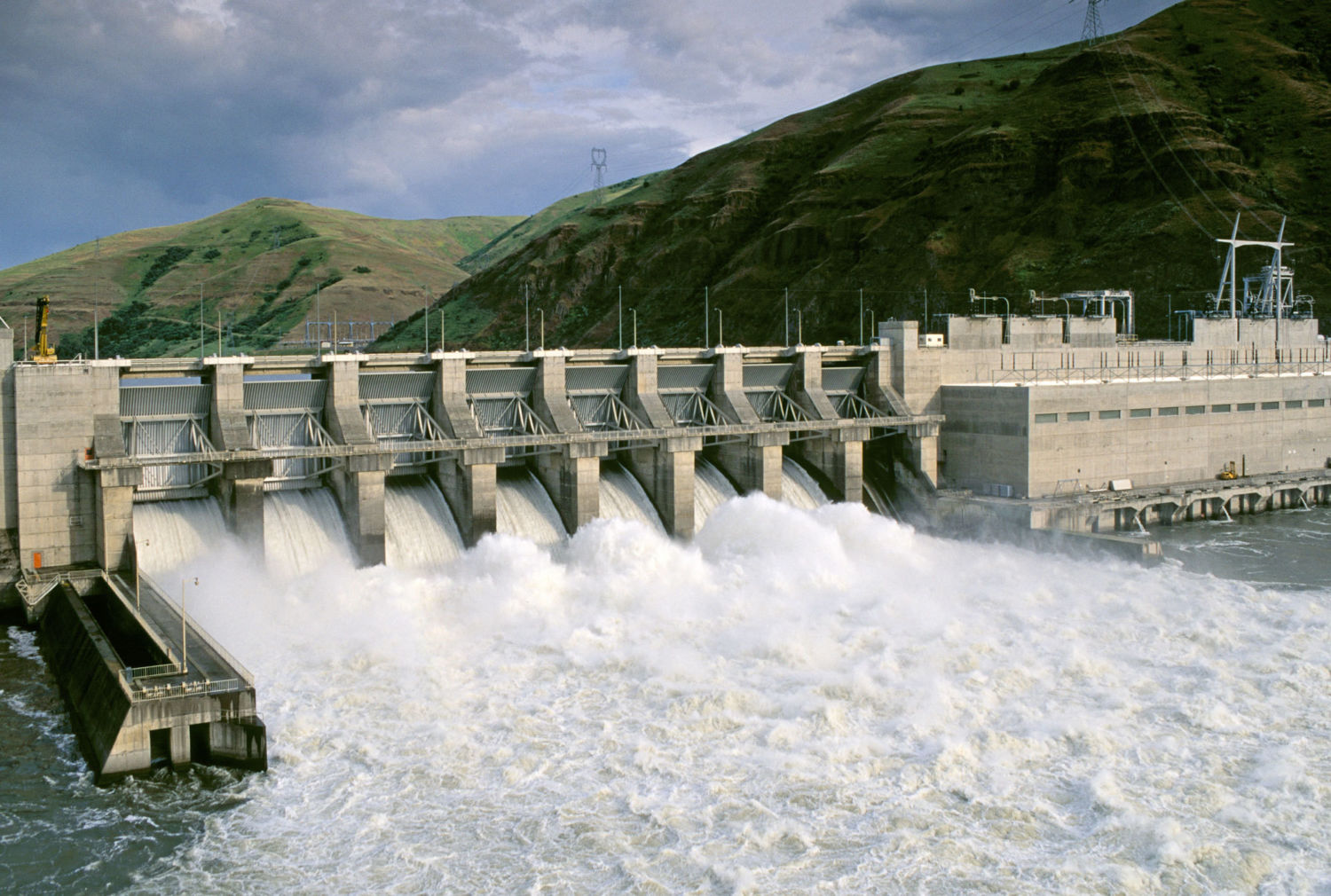
Another set of scientists, this one more than five-dozen deep, is sounding the alarm over Snake River salmon and steelhead, saying if the imperiled fish are to be saved, the four lower Snake River dams must go.

On Monday, 68 fisheries researchers from the Pacific Northwest released a letter penned to the region’s congressional delegation, governors and fisheries policymakers methodically making the case for breaching the dams.

“This scientific recommendation wasn’t taken lightly. This is relying on a review of a large preponderance of information that a bunch of us analyzed over and over again over the years,” said Howard Schaller, a retired fisheries research biologist who worked for the U.S. Fish and Wildlife Service.

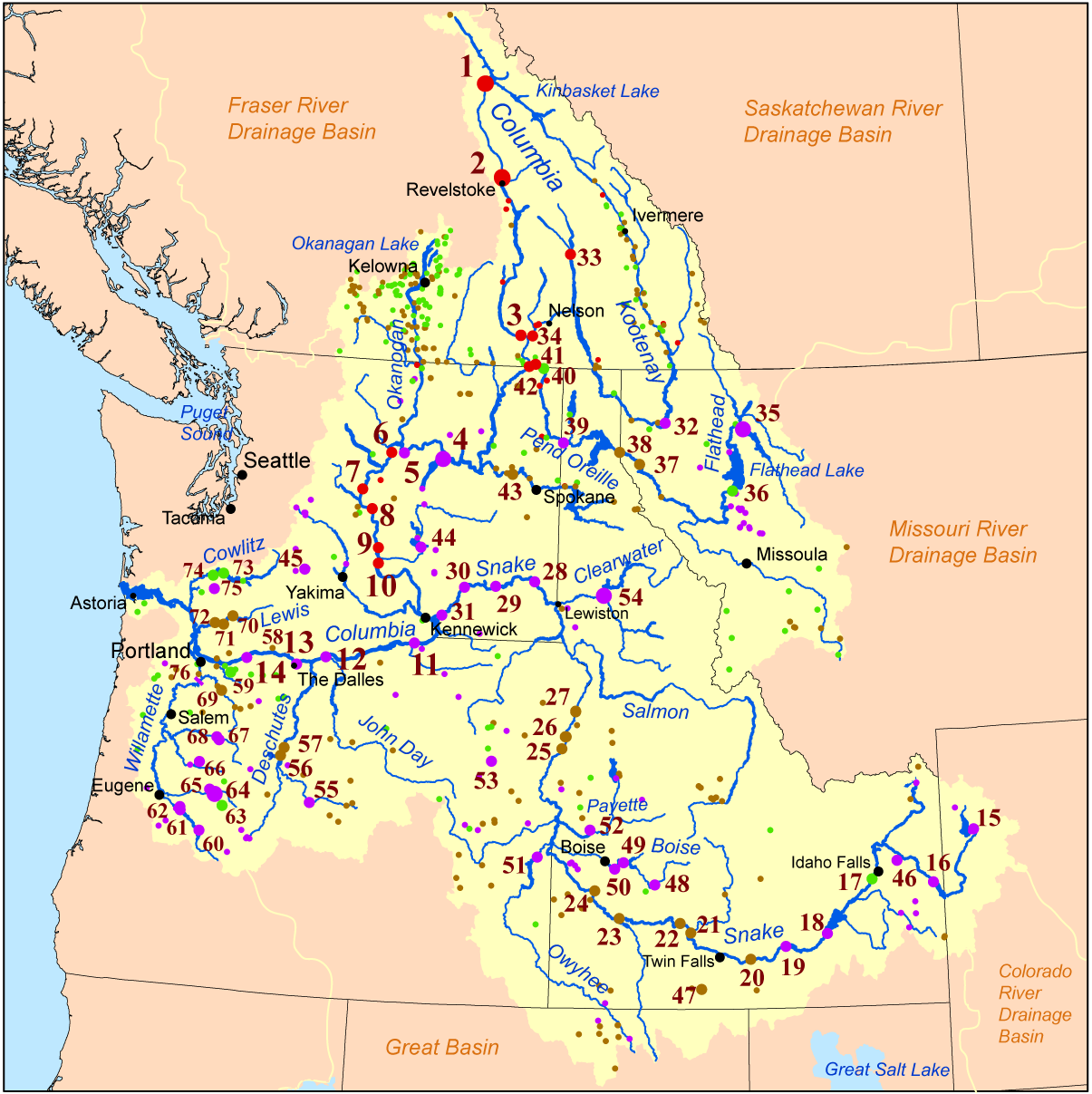
They compared the lifecycle survival, known as smolt-to-adult survival rates, of Snake River salmon and steelhead, and note the runs which must pass eight dams as they migrate to and from the ocean have lower survival rates than similar stocks in the Columbia Basin that only have to make it past four or fewer dams.

For example, wild steelhead from the John Day River in Oregon have an average smolt-to-adult return rate of 5 percent and wild chinook from the same river have a survival rate of 3.6 percent. The Northwest Power and Conservation Council has set a survival goal of 2 percent to 6 percent for anadromous fish runs from the Snake and Columbia rivers. At 2 percent, the runs replace themselves. At an average of 4 percent, they grow.

But the smolt-to-adult return rate for wild Snake River steelhead is 1.4 percent, below replacement level, and for wild spring and summer chinook, it is just 0.7 percent.

The difference, they say, is caused by the number of dams and reservoirs each run encounters during juvenile outmigration. For the fish from the John Day River, it’s three dams. Snake River fish must pass eight dams. At each one, they face hardships, including delays caused by slowed water velocity, predation, injury and stress. The scientists point to research that indicates many of the young fish that make it past each of the eight dams succumb from delayed mortality, the result of accumulated stress and injuries incurred along the way.

“When all of the existing credible scientific evidence is taken into account, it is clear that removing the four lower Snake River dams, with adequate spill at the remaining lower Columbia River dams, is necessary to restore Snake River salmon populations,” they write.

4 A. "Lower Four Snake River Dams" - SaveOurDams

The work they cite was looked at during last year’s Columbia River Systems Operation Environmental Impact Statement, authored by the Army Corps of Engineers, Bureau of Reclamation and Bonneville Power Administration. The federal agencies concluded removing the four lower Snake River dams would produce the highest likelihood of saving the fish. But the agencies instead chose a plan that calls for water to be spilled at each of the dams during the juvenile outmigration period.

4 A. "Lower Four Snake River Dams" - SaveOurDams

Lower Four Snake River Dams

“They basically came to the conclusion themselves that breaching was the action that had the highest benefit,” Schaller said.

Terry Holubutz, a retired fisheries researcher and manager who spent most of his career with the Idaho Department of Fish and Game, said dam breaching would allow more wild salmon and steelhead to survive and return to Idaho’s mostly pristine spawning habitat. That is critical, he said, now that ocean conditions are poor and expected to be influenced by climate change.

“I think anyone that goes through the data that has been developed over the years would say that survival of downstream migrants is the key factor for the Snake River stocks, and if we (breach the dams) that our fish would be in a better position to handle the ocean conditions right now. So our group feels strongly this is something we have to do.”

Last week, a study by federal fisheries scientists said Snake River chinook face grim odds which will grow substantially worse with climate change. Some of those who worked on the study said dam breaching should be considered while others said measures to improve conditions in the ocean are more important.

Earlier this month, Idaho Congressman Mike Simpson released a $33 billion concept that calls for breaching the four lower Snake River dams and mitigating affected communities and industries. The plan has been endorsed by many conservation organizations but criticized by some local government officials, farmers and shippers.

Holubutz said Simpson’s blueprint is a promising development that the region should look at and help shape so that it accomplishes its goal of saving the fish and offsetting the negative impacts of breaching.

“It’s a start, and that is what we need — a start.”

File:Columbia dams map.png - Wikimedia Commons