Three Renewable Energy Numbers to Impress Your Friends With: 7, 43, 50

EcoWatch

Union of Concerned Scientists

https://resize.rbl.ms/simage/https%3A%2F%2Fassets.rbl.ms%2F10209057%2Forigin.jpg/1200%2C600/jaZ2bwyMNvQZhtz2/img.jpg

Three Renewable Energy Numbers to Impress Your Friends With: 7, 43, 50

By John Rogers August 5, 2017

Next time you’re talking with a friend about the exciting things happening in our electricity sector (aren’t you always?), here are three easy numbers for remembering how we’re doing: 7, 43 and 50. That’s: wind energy’s progress, solar energy’s growth and the number of states making it happen.

Wind’s Growth = 7

Renewables on the Rise, a new report from the Environment America Research & Policy Center and the Frontier Group, details some of the progress we’ve made in this country over the last decade, and includes handy accompanying graphics. Here’s a glimpse of what it all looks like.

Photo published for Renewable Energy Booming After a Decade of Progress

Growth in renewable energy in recent years has meant we produced almost seven times as much wind-powered electricity in the U.S. in 2016 as we did in 2007. And wind’s share of our national electricity generation increased from 0.8 percent to 5.5 percent.

All told, the tens of thousands of wind turbines dotting the landscape generate enough to cover the electricity needs of some 25 million typical American homes.

Environment America / Frontier Group

The wind action is taking place from coast to coast and particularly in plenty of places in between, from coal-has-been-king-but-here-comes-wind Wyoming to where cod rule (think offshore wind).

And, increasingly, wind is an energy option that decision makers ignore (or get wrong) at their peril.

Solar’s Growth = 43

Recent gains have in some ways been even more impressive for solar. The baseline is maybe a little tough to pin down (and our own calculations suggest an even greater growth), but the new report says that we got 43 times as much electricity from solar in 2016 as in 2007.

Environment America / Frontier Group

That steep upward trajectory has taken solar from a minuscule 0.03 percent of U.S. electricity generation to 1.4 percent. Still small, but definitely noticeable—and definitely worthy of notice, in terms of solar past and future. As my colleague Julie McNamara points out in that post, our 19.5 billion kilowatt-hours of solar generation in 2016 would have been enough to cover residential electricity needs in half the states.

And solar, like wind, isn’t resting on its laurels. Just last year, the U.S. industry installed enough new solar capacity to provide 2 million homes’ worth of electricity.

States Involved = 50

So where’s all this progress coming from? Though some are still finding their way, every state has some generation from solar and wind, and some have taken those technologies to pretty impressive heights.

For Texas, it (mostly wind) added up last year to 59 billion kilowatt-hours of electricity—enough to keep 4 billion light bulbs burning every evening of the year. In North Dakota, wind generation added up to the equivalent of 45 percent of the state’s electricity consumption; in Iowa, 42 percent. For California and Hawaii, solar, with help from wind, produced enough to have accounted for one out of every six kilowatt-hour consumed.

Sure, some states really need to get in on the action in a much bigger way (the details in the back of the new report help highlight leaders and … others). And they’d benefit in doing that by reaping all that renewables have to offer.

But even states without much yet on the generation side are contributing—and benefiting—in other ways, through manufacturing, for example, of components for solar or wind installations (see map). And that progress has meant jobs—in most cases, more solar and wind jobs than coal has to offer.

Our 50 united states are far from done. Every one of them has a lot more potential in solar, wind and other renewables. Taking it the next step, and beyond, will be crucial.

But for a moment, acknowledging and celebrating clean energy progress is really important. For that, for the near term, just remember 7, 43 and 50.

American Wind Energy Association

John Rogers is a senior energy analyst with expertise in renewable energy and energy efficiency technologies and policies at the Union of Concerned Scientists.

The Poison Papers: Secret Concerns of Industry and Regulators on the Hazards of Pesticides and Other Chemicals

EcoWatch

The Poison Papers: Secret Concerns of Industry and Regulators on the Hazards of Pesticides and Other Chemicals

By Center For Media and Democracy July 27, 2017

https://resize.rbl.ms/simage/https%3A%2F%2Fassets.rbl.ms%2F10126244%2Forigin.jpg/1200%2C630/F0N7iVpOYvrBA1rj/img.jpgRisa Scott / RF Scott Imagery

The Bioscience Resource Project and the Center for Media and Democracy released a trove of rediscovered and newly digitized chemical industry and regulatory agency documents Wednesday stretching back to the 1920s. The documents are available here.

Together, the papers show that both industry and regulators understood the extraordinary toxicity of many chemical products and worked together to conceal this information from the public and the press. These papers will transform our understanding of the hazards posed by certain chemicals on the market and the fraudulence of some of the regulatory processes relied upon to protect human health and the environment.

“These documents represent a tremendous trove of previously hidden or lost evidence on chemical regulatory activity and chemical safety. What is most striking about these documents is their heavy focus on the activities of regulators,” Dr. Jonathan Latham, executive director of the Bioscience Resource Project, said. “Time and time again regulators went to the extreme lengths of setting up secret committees, deceiving the media and the public, and covering up evidence of human exposure and human harm. These secret activities extended and increased human exposure to chemicals they knew to be toxic.”

The Poison Papers are a compilation of more than 20,000 documents obtained from federal agencies and chemical manufacturers via open records requests and public interest litigation. They include scientific studies and summaries of studies, internal memos and reports, meeting minutes, strategic discussions and sworn testimonies.

The majority of these documents have been scanned and digitized for the first time and represent nearly three tons of material. The regulatory agency sources of these documents include: the U.S. Environmental Protection Agency (EPA), the U.S. Department of Agriculture Forest Service, the U.S. Food and Drug Administration, the Veterans Administration and the Department of Defense. Chemical manufacturers referenced in the documents include: Dow, Monsanto, DuPont and Union Carbide, as well as many smaller manufacturers and the commercial testing companies who worked for them.

The Poison Papers catalogue the secret concerns of industry and regulators over the hazards of pesticides and other chemicals and their efforts to conceal those concerns.

Most of the Poison Papers were collected by author and activist Carol Van Strum.

“In total, the stark truth revealed by these 50 years of documents is that the entire pesticide industry could not exist without lies, coverups, rampant fraud, and government enablers,” said Van Strum, who authored the 1983 book Bitter Fog: Herbicides and Human Rights.

Corporate concealment is not a new story. What is novel in the Poison Papers is the abundant evidence that EPA and other regulators were often knowing participants or even primary instigators of these cover-ups. These regulators failed to inform the public of the hazards of dioxins and other chemicals; of evidence of fraudulent independent testing; and of widespread human exposure. The papers thus reveal, in the often-incriminating words of the participants themselves, an elaborate universe of deception and deceit surrounding many pesticides and synthetic chemicals.

The chemicals most often discussed in the documents include dioxins, herbicides and pesticides (such as 2,4-D, Dicamba, Permethrin, Atrazine and Agent Orange) and PCBs. Some of these chemicals are among the most toxic and persistent ever manufactured. Except for PCBs, almost every chemical discussed in the Poison Papers is still manufactured and sold today, either as products or as product contaminants.

“The Poison Papers will be a tremendous resource for researchers, the media, and everyday Americans worried about many of the chemicals used on farm fields and in common consumer products,” said Mary Bottari of the Center for Media and Democracy.

Explore: Some of the 20,000+ documents in this repository have surfaced over the years. Many have never been seen online or publicly written about. The Poison Papers therefore offer a unique opportunity for researchers, the public and the media to discover much more about what was known about chemical toxicity, when and by whom.

Access: You can access the papers at PoisonPapers.org. Important instructions on how best to search these old documents are also available here and on the website.

Poison Papers Reveal:

Secrecy — They disclose EPA meeting minutes of a secret high-level dioxins working group that admitted dioxins are extraordinarily poisonous chemicals. Internal minutes contradict the agency’s longstanding refusal to regulate dioxins or set legal limits.

Collusion — They demonstrate EPA collusion with the pulp and paper industry to “suppress, modify or delay” the results of the congressionally-mandated National Dioxin Study, which found high levels of dioxins in everyday products, such as baby diapers and coffee filters, as well as pulp and paper mill effluents.

Deception — They provide important new data on the infamous Industrial Bio-Test (IBT) scandal. By the late 1970s, it was known that more than 800 safety studies performed by IBT on 140 chemicals produced by 38 chemical manufacturers were nonexistent, fraudulent, or invalid. The Poison Papers, however, show that EPA and its Canadian counterpart, the Health Protection Branch (HPB), colluded with pesticide manufacturers, to keep invalidly registered products on the market and covered up massive problems with many IBT tests.

Cover-up — The papers also show that EPA staff had evidence that this IBT scandal involved more independent testing companies and more products than ever officially acknowledged.

Concealment —Show that EPA concealed and falsely its own studies finding high levels of dioxin–2,3,7,8-TCDD–in environmental samples and human breast milk following routine use of 2,4-D and 2,4,5-T (Agent Orange) by the federal Forest Service and Bureau of Land Management.

Intent — Show that Monsanto chief medical officer George Roush admitted under oath to knowing that Monsanto studies into the health effects of dioxins on workers were written up untruthfully for the scientific literature such as to obscure health effects. These fraudulent studies were heavily relied upon by EPA to avoid regulating dioxins. They also were relied upon to defend manufacturers in lawsuits brought by veterans claiming damages from exposure to Agent Orange.


Why arguments against WaPo’s Oval Office leaks are wrong

CJR Columnist

Why arguments against WaPo’s Oval Office leaks are wrong

By Trevor Timm On Press Freedom      August 4, 2017

The Washington Post made waves on Thursday when it published the full transcripts of President Trump’s erratic phone calls with the leaders of Mexico and Australia that occurred just after he was inaugurated.

Despite their clear news value, some journalists and pundits questioned whether the leaked transcripts should be published. David Frum, a George W. Bush speechwriter and current editor at The Atlantic, led the charge in a widely cited article, claiming that “leaking the transcript of a presidential call to a foreign leader is unprecedented, shocking, and dangerous.”

The hyperbolic nature of this statement is only surpassed by Lawfare’s Paul Rosenzweig, who wrote that the person who leaked the transcripts is “doing as much damage, if not more, to the United States than he ever will. Really.”

Really?

Far from being criticized for publishing these leaked transcripts, The Washington Post should be commended. The Trump administration has spent the last few months trying to cut off all avenues of transparency to the White House, refusing to release visitor logs, keeping Trump’s schedule opaque, limiting the information in readouts of calls to foreign leaders, refusing to hold a presidential press conference since February, and even demanding journalists do not record the administration’s daily press briefings. At the same time, the president spent his days rattling the leaders of foreign countries, expanding wars across the Middle East, and starting international incidents via Twitter.

The Trump administration may complain all day about leaks, but leaks are increasingly the only way the American public can learn what the administration is really doing. And the news value of these transcripts could not be more obvious: They showed Trump did not know basic facts, that he asked a foreign leader to lie to the press for him, that he knew from the start that his signature campaign promise to “make Mexico pay for the wall” was bogus, and that he has no sense for how allies should cooperate with each other.

Yet, as Frum argues:

“No leader will again speak candidly on the phone to Washington, D.C.—at least for the duration of this presidency, and perhaps for longer. If these calls can be leaked, any call can be leaked—and no leader dare say anything to the president of the United States that he or she would not wish to read in the news at home.”

First, you’ll notice that no one criticizing these leaks seems to be arguing Trump or his counterparts said anything remotely sensitive in these calls that would constitute “damage” to national security. The worry seems to lie in the hypothetical idea that because the Post published a transcript of Trump’s calls on this one occasion, it will lead to an avalanche of leaks where no call with a foreign leader—no matter how sensitive—is safe, thereby grinding diplomatic relations to a halt.

This is absurd. The Washington Post does not just blindly publish anything and everything that is leaked to them (and a leak like this has always been and will always be incredibly rare). Newspapers, when they receive sensitive information like this, almost always go through a process of skeptically looking at whether publishing a particular document will affect national security. Clearly here, the public interest far outweighed any damage, which was speculative at best.

By and large, national security “experts” are always making ominous and vague pronouncements about how one leak or another will lead to catastrophe at some point in the future when, in fact, it never actually comes to pass. We can look to Chelsea Manning’s disclosure of State Department cables in 2010 for an apt analogy here. While Manning’s leaks were incredibly newsworthy—cited thousands of times in countless publications over the years—many denounced them at the time on the grounds they would lead to a total breakdown in diplomacy. Only Secretary of Defense Robert Gates was willing to be truthful to the American people. He said at the time:

“Now, I’ve heard the impact of these releases on our foreign policy described as a meltdown, as a game-changer, and so on. I think those descriptions are fairly significantly overwrought. The fact is, governments deal with the United States because it’s in their interest, not because they like us, not because they trust us, and not because they believe we can keep secrets. Is this embarrassing? Yes. Is it awkward? Yes. Consequences for U.S. foreign policy? I think fairly modest.”

It turns out he was right. And the exact same principle applies to Trump’s calls. Of course foreign leaders are going to continue to talk to the president. Regardless, foreign leaders are well versed on Trump’s incompetence at this point, and will make adjustments about the sensitivity of their calls whether there are leaks or not—especially given Trump’s penchant for broadcasting sensitive information himself.

Now, of course, no one is arguing that the president shouldn’t be able to ever have confidential conversations, or that no leaks can potentially be dangerous. (For example, Frum was a key member of the Bush administration when they were making the public case for the war in Iraq. The White House or its allies notoriously leaked intelligence to an unskeptical post-9/11 press that turned out the be false yet led to the nation’s worst foreign policy disaster in a generation.) But there is no question that what The Washington Post published is important for the American public to know.

If there’s anything that’s “unprecedented, shocking, and dangerous” about these leaks, it’s Donald Trump’s foreign policy. And the more the American public knows about it, the better.

Has America ever needed a media watchdog more than now? Help us by joining CJR today.

Trevor Timm is the executive director of Freedom of the Press Foundation, a non-profit organization that supports and defends journalism dedicated to transparency and accountability. He is also a twice-weekly columnist for the Guardian, where he writes about privacy, national security, and the media.

The Gulf Of Mexico’s Dead Zone Is The Biggest Ever Seen

NPR Food For Thought-The Salt, What’s on Your Plate

The Gulf Of Mexico’s Dead Zone Is The Biggest Ever Seen

Dan Charles, Heard on Morning Addition     August 3, 2017

 The teal blue area along the Louisiana coastline represents a “dead zone” of oxygen-depleted water. Resulting from nitrogen and phosphorus pollution in the Mississippi River, it can potentially hurt fisheries. NASA/Getty Images

It has become a rite of summer. Every year, a “dead zone” appears in the Gulf of Mexico. It’s an area where water doesn’t have enough oxygen for fish to survive. And every year, the National Oceanic and Atmospheric Administration commissions scientists to venture out into the Gulf to measure it.

This week, NOAA announced that this year’s dead zone is the biggest one ever measured. It covers 8,776 square miles — an area the size of New Jersey. And it’s adding fuel to a debate over whether state and federal governments are doing enough to cut pollution that comes from farms.

The debate actually goes back many years, at least to 1985, when Don Scavia was a scientist at the NOAA. He and his colleagues asked some scientists, for the first time, to go look for a dead zone in the Gulf.

“We expected it to be there,” Scavia recalls. They expected to find it because they knew that the Mississippi River delivers a heavy load of nutrient pollution, specifically nitrogen and phosphorus, into the Gulf.

Every year, the National Oceanic and Atmospheric Administration tasks scientists with measuring the dead zone in the Gulf of Mexico. This year’s map, based on that data, shows a zone the collective size of New Jersey. Courtesy of NOAA
“Most of the nitrogen and phosphorus that drives this problem comes from the Upper Midwest,” Scavia says. “It’s coming from agriculture.”

Farmers use those nutrients on fields as fertilizer. Rain washes them into nearby streams and rivers. And when they reach the Gulf of Mexico, those nutrients unleash blooms of algae, which then die and decompose. That is what uses up the oxygen in a thick layer of water at the bottom of the Gulf, in a band that follows the coastline.

“Fish that can swim will move out of the way. Organisms that are living on the bottom, that the fish feed on, can’t move, and they often die,” says Scavia, who now is a professor of environment and sustainability at the University of Michigan.

The record-breaking dead zone this year is the result of unusually heavy rains in the Midwest, which flushed a lot of nutrients into the Gulf.

The dead zone is invisible from the surface of the ocean. Scientists lower instruments into the water to measure oxygen levels near the bottom. But Scavia describes it as a kind of hidden environmental disaster. “You know, it’s 8,000 square miles of no oxygen. That can’t be good!” he says. Potentially, it could have huge economic costs as well, because it imperils Louisiana’s shrimp industry.

Federal and state agencies have promised to take action against the dead zone. As part of their “action plan” to shrink it, they’re encouraging Midwestern farmers to try to keep nutrients from washing away by doing such things as planting wide grassy strips along streams to trap fertilizer runoff.

Scavia, however, recently published a blog post calling these voluntary measures inadequate. In a separate scientific paper, he also calculated that meeting the government’s goal for a smaller dead zone will require dramatic cuts in nutrient pollution from farms.

Scavia argues that the Gulf should get the same kind of protection as the Chesapeake Bay, on the East Coast. The Chesapeake has had a similar dead zone problem. In 2010, though, despite fierce objections from farmers, the federal government set mandatory limits on nutrient pollution entering the bay. State governments spent billions of dollars to meet those targets. Now pollution in the bay is down, and some wildlife in the Chesapeake is starting to recover.

Largest dead zone ever hits the Gulf of Mexico

ThinkProgress

Largest dead zone ever hits the Gulf of Mexico

And climate change will only make dead zones worse.

Natasha Geiling       Aug 3, 2017

(AP Photo/Patrick Semansky)

 (AP Photo/Patrick Semansky)

Scientists have measured a dead zone the size of New Jersey in the Gulf of Mexico, making it the largest-ever dead zone recorded in the area, according to the National Oceanic and Atmospheric Association.

A dead zone occurs when nutrient pollution — largely from agricultural runoff like fertilizer and manure — makes its way into bodies of water, fueling algal growth. When the algae dies, it decomposes, creating oxygen-free zones that can no longer sustain marine life.

This year’s dead zone measures 8,776 square miles, beating out the previous record of 8,497 square miles set in 2002. For the last 32 years of monitoring, the dead zone in the Gulf has averaged 5,309 square miles.

“The results from this year reflect the nitrate flux into the Gulf, which was high,” says Nancy Rabalais, a research professor at the Louisiana Universities Marine Consortium (LUMCON), who helped measure the dead zone, told National Geographic. “It’s a matter of addressing the sources of the nitrate—where they first start—which is in a field of agricultural crops.”

Rabalais said that this year’s especially large dead zone is likely a result of heavier stream flows in the spring, which helped carry more nutrient pollution from the agricultural fields of the Midwest down to the Gulf.

But a report by the environmental group Mighty suggests that this year’s extra-large dead zone is a direct result of industrial meat production, which feeds nutrient runoff both through manure produced by the animals and fertilizer used to grow animal feed. The report looks at companies responsible for large amounts of nutrient runoff, and implicates Tyson Foods, the largest meat company in the United States, as a key culprit behind the dead zone. According to the report, Tyson has major processing facilities in every state listed by the United States Geological Survey as states from which nutrient runoff flows to the Gulf.

Another report, released last year by Environment America, found that Tyson dumps more waste into American waterways each year than companies like Exxon or Dow Chemical.

“Americans should not have to choose between producing food and having healthy clean water,” Mighty Earth campaign director Lucia von Reusner said in a statement. “Big meat companies like Tyson have left a trail of pollution across the country, and have a responsibility to their customers and the public to clean it up.”

While this year’s dead zone is record-shattering, it’s likely that these zones will only increase in size in the future, as climate change drives more intense precipitation and, in turn, more nutrient pollution. A recent study in Science found that increased precipitation from climate change would translate to a 19 percent increase in nitrogen — a nutrient found in both manure and agricultural fertilizer — in Americans rivers by the end of the century.

Under the Obama administration, the United States Department of Agriculture had begun to take steps to help farmers reduce their nutrient runoff, from encouraging farmers to use precision agriculture techniques — where fertilizer is applied more sparingly to fields, in precise locations — to investing millions in programs aimed at boosting soil health. The Obama Environmental Protection Agency also provided millions of dollars in grants to states to help target non-source pollution.

That appears to be changing under the Trump administration, however. The Trump administration’s budget zeroes out EPA grants for non-source pollution, arguing that the USDA should be the only agency tackling the program. And Trump’s Secretary of Agriculture Sonny Perdue owned an inorganic fertilizer company before entering into politics, raising questions about a potential conflict of interest in regulating fertilizer use in agriculture.

Quinnipiac poll: President Trump’s job approval sinks to 33%

USA Today

Quinnipiac poll: President Trump’s job approval sinks to 33%

Jessica Estepa, USA TODAY       Aug. 2, 2017

President Trump’s approval rating hits new low

A growing majority of American aren’t fans of how President Trump is doing his job, according to a new poll out Wednesday.

Per the Quinnipiac Poll, only 33% approve of how Trump is doing his job, compared to 61% who disapprove. That’s down from June 29, when the poll found Trump had a 40% job approval rating, with 55% saying they disapproved.

These newest numbers are the lowest approval and highest disapproval numbers from this particular poll that Trump has received since his inauguration.

The poll also found that several negative views of the president

  • 54% said they were embarrassed to have him as president
  • 57% said they he was abusing the powers of his office
  • 60% said they believed he was above the law
  • 71% said Trump was not levelheaded
  • 62% said Trump was not honest
  • 63% said Trump did not have good leadership skills
  • 59% said he did not care about average Americans
  • 63% said he did not share their values

“It’s hard to pick what is the most alarming number in the troubling trail of new lows for President Donald Trump,” poll assistant director Tim Malloy said in a statement. “Profound embarrassment over his performance in office and deepening concerns over his level-headedness have to raise the biggest heads.”

The poll did find two positive views of the president’s traits: 58% said the president was strong and 55% said he was intelligent.

The poll surveyed 1,125 voters around the country from July 27 to Aug. 1. It has a margin of error of 3.4 points.

Read the full poll results here.

These are the greatest fears that people have in the world

Business Insider-World

These are the greatest fears that people have in the world

Rebecca Harrington, Skye Gould, Business Insider, August 3, 2017  

Around the world, ISIS and climate change are neck-and-neck for the leading threats people perceive today.

In the 2017 Pew Research Center security threats survey released this week, nearly 42,000 people in 38 countries ranked eight threats, with the militant group and environmental shift topping the list:

BI Graphics_Greatest fears chart

(Skye Gould/Business Insider)

When you look at the results country by country, however, some interesting nuances emerge.

First, the US, most European countries, and Russia see ISIS as the foremost security concern. This was the case last year, as well.

But a growing number of people, particularly those in Africa and the Americas, are now saying that climate change is a bigger threat to them than terrorism, cyber attacks, the refugee crisis, or the economy.

In countries that are hurting economically, like Venezuela and Greece, survey respondents predictably said the condition of the global economy was their biggest concern.

While many Middle Eastern and European countries are still grappling with the worst refugee crisis since World War II, only Hungary listed it as the top threat.

People in South Korea and Vietnam both listed China’s power and influence as the main security issue facing their nations.

BI Graphics_Greatest fears map

(Skye Gould/Business Insider)

And while it didn’t rank as the top threat for any nation, more people now say they worry about the United States’ power and influence than in previous years before President Donald Trump took office.

Worldwide, only 22% of people said in a separate Pew survey that they have confidence in Trump, compared to 64% when former President Barack Obama was in office. Similarly, 49% now have a favorable view of the US, vs. 64% at the end of Obama’s presidency.

Related:


The United States Power Scares These Seven Countries, Which See It as a National Threat

Newsweek-World

The United States Power Scares These Seven Countries, Which See It as a National Threat

By Greg Price, Newsweek       August 1, 2017 


The United States is viewed as a major national threat—taking a place alongside the Islamic State militant group (ISIS), global climate change and cyberattacks—by majority of citizens from seven countries, including some long-standing American military allies, according to a 38-country Pew Research Center survey released Tuesday.

Though 18 of the countries pegged ISIS as the biggest threat, strong majorities in countries including South Korea (70 percent), Japan (62 percent) and Turkey (72 percent) see U.S. power and influence as significant threats to their respective nations.

Sixty-two percent of people in Mexico, the U.S.’s immediate neighbor to the south and often a punching bag for President Donald Trump’s immigration policies, register the U.S. as a threat, and it is seen that way by 59 percent in Spain, 55 percent in Indonesia and 57 percent in Chile.

The survey also asked respondents about potential fears regarding Russia’s and China’s power and influence. South Korea listed China at 83 percent, perhaps a result of its being viewed as enabling the rival North, and Russia at 46 percent. The Japanese also expressed more concern with China than the U.S., but only slightly at 64 percent. Just 43 percent listed Russia as a threat.

Turkey’s numbers dropped significantly when respondents were asked about Russia and China, coming in at 54 percent and 33 percent, respectively.

Historically, the U.S. has had a deep and strong military presence in Turkey, Japan and South Korea, particularly Japan following the end of World War II and South Korea after the Korean War in the early 1950s. As of the end of last year, almost 39,000 U.S. troops were stationed in Japan, and nearly another 23,500 were in South Korea.

But of late, conflicts in the Middle East and the potential for another major conflagration in East Asia may have upset the balance in the three countries, which have been pivotal in the U.S.’s military operations for decades.

Both Japan and South Korea stand at the forefront of opposition to North Korea and leader Kim Jong Un’s missile and nuclear tests. The most recent launch, on July 28, involved an intercontinental ballistic missile that traveled 2,300 miles in the air and covered a distance of 621 miles before splashing down near Japan. One expert told CNN that if the missile was set up to fly on a flat or standard trajectory, it was capable of reaching such major U.S. cities as Los Angeles, Chicago or New York.

South Koreans were particularly angered that the U.S. deployed the THADD anti-missile system in their country, viewing it as an escalation and a potential provocation to Kim. And the relocation of a Marine Corps air base in Okinawa has raised tensions among Japanese residents.

Turkey has helped the U.S. in its fight against ISIS in Syria and Iraq, but its government was angered by the Americans’ arming of the Syrian Kurdish YPG militia to oppose ISIS. The Turks consider the YPG to be a security threat and an arm of the Kurdistan Workers’ Party, which has led an insurgency against the Turkish government for decades, according to Reuters.

In May, a top Turkish newspaper published an editorial that called for U.S. troops and warplanes to be kicked off the Incirlik Air Base because of the YPG arming.

Union, feds at odds on countering surge in coal mine deaths

FILE - In this Jan. 13, 2015 file photo, Joe Main, third from left, Assistant Secretary of Labor for Mine Safety and Health, and Patricia Silvey, center, Deputy Assistant Secretary for Operations with MSHA, speak with workers at the Gibson North mine, in Princeton, Ind. Deaths in U.S. coal mines this year have surged ahead of last year’s, and federal safety officials say the inexperience of those new to a mine could share the blame. But the nation’s coal miner’s union says the mine safety agency isn’t taking the right approach to fixing the problem. Silvey said eight of the coal miners who died this year had less than a year’s experience at the mine where they worked. "We found from the stats that category of miners were more prone to have an accident,” Silvey said in an interview with The Associated Press before the 10th death occurred at a mine in Pennsylvania on July 25.

FILE – In this Jan. 13, 2015 file photo, Joe Main, third from left, Assistant Secretary of Labor for Mine Safety and Health, and Patricia Silvey, center, Deputy Assistant Secretary for Operations with MSHA, speak with workers at the Gibson North mine, in Princeton, Ind. Deaths in U.S. coal mines this year have surged ahead of last year’s, and federal safety officials say the inexperience of those new to a mine could share the blame. But the nation’s coal miner’s union says the mine safety agency isn’t taking the right approach to fixing the problem. Silvey said eight of the coal miners who died this year had less than a year’s experience at the mine where they worked. “We found from the stats that category of miners were more prone to have an accident,” Silvey said in an interview with The Associated Press before the 10th death occurred at a mine in Pennsylvania on July 25. Timothy D. Easley, File AP Photo


Louisville, Ky. Deaths in U.S. coal mines this year have surged ahead of last year’s, and federal safety officials say workers who are new to a mine have been especially vulnerable to fatal accidents.

But the nation’s coal miner’s union says the mine safety agency isn’t taking the right approach to fixing the problem.

Ten coal miners have died on the job so far this year, compared to a record low of eight deaths last year.

The U.S. Mine Safety and Health Administration is responding to the uptick in deaths with a summer initiative, sending officials to observe and train miners new to a particular mine on safer working habits. The push comes during a transition for the agency, amid signals from President Donald Trump that he intends to ease the industry’s regulatory burden.

The miner’s union, the United Mine Workers of America, says the agency initiative falls short. It notes federal inspectors who conduct such training visits are barred from punishing the mine if they spot any safety violations.

“To take away the inspector’s right to issue a violation takes away the one and only enforcement power the inspector and the agency has,” union president Cecil Roberts wrote in a recent letter to the federal agency.

Patricia Silvey, a deputy assistant secretary at the Mine Safety and Health Administration, or MSHA, said eight of the coal miners who died this year had less than a year’s experience at the mine where they worked.

“We found from the stats that category of miners were more prone to have an accident,” Silvey said in an interview with The Associated Press before the 10th death occurred at mine in Pennsylvania on July 25.

Silvey pointed to a death last May at West Virginia’s Pinnacle Mine where a miner riding a trolley rose up and struck his head on the mine roof. She said the fatality could have been due to the miner’s unfamiliarity with the mine. The miner had worked there nine weeks, according to an accident report. And in the most recent death, a miner less than two weeks into the job at a mine in eastern Pennsylvania was run over by a bulldozer July 25.

Five of the 10 coal mining deaths this year have occurred in West Virginia, and two more in Kentucky. Alabama, Montana and Pennsylvania each had one coal mining death. Nine of the miners killed this year had several years’ experience working at other mines.

The mine safety agency’s injury numbers show that workers who were new to a mine had more than double the injuries. Going back to October 2015, miners who worked at a specific mine less than a year suffered 903 injuries, compared to 418 for miners working at a mine one to two years.

The mine safety agency says it will visit mines and “offer suggestions” on training miners who have been at a mine less than a year. Silvey said the union is correct that inspectors won’t be writing safety violations, but that the initiative “has in no way undermined our regular inspection program.”

The miner’s union said the federal agency should not expect safety suggestions to carry the same weight as citations and fines.

“To believe that an operator will comply with the law on their own free will is contrary to historical experience and naive on MSHA’s part,” the letter said.

A former MSHA official said the agency would be “tying the hands” of inspectors if they don’t allow them to write citations on the training visits.

“The record low fatal injury rate among coal miners in recent years is because of strong enforcement of the law,” said Celeste Monforton, who served on a governor-appointed panel that investigated West Virginia’s 2010 Upper Big Branch mine disaster that killed 29 miners. There were 12 coal mining deaths in 2015 and 16 in 2014.

“It would be a disgrace to see that trend reversed,” she said.

Phil Smith, a spokesman for the miner’s union, said the union’s safety department met recently with MSHA on the dispute, but MSHA maintained it has the authority to conduct observation visits without enforcement.

The mine safety agency’s top position has been vacant since former Assistant Secretary of Labor Joe Main left in January. Main, a former miner’s union official, focused on eliminating hazards at troubled mines by increasing aggressive inspections after West Virginia’s Upper Big Branch explosion. Main declined to comment.

Silvey said a vacancy at the mine safety agency’s top position hasn’t hindered their efforts. She said she knew of no timetable for hiring a new assistant secretary of Labor to oversee the mine safety agency.

“I know one thing, it’s a presidential appointment,” she said.

Read more here: http://www.miamiherald.com/news/business/article165133337.html#storylink=cpy

Why drilling for oil in the Arctic is pointless

Tennessean

Why drilling for oil in the Arctic is pointless

Whitfield Bailey Published     July 31, 2017

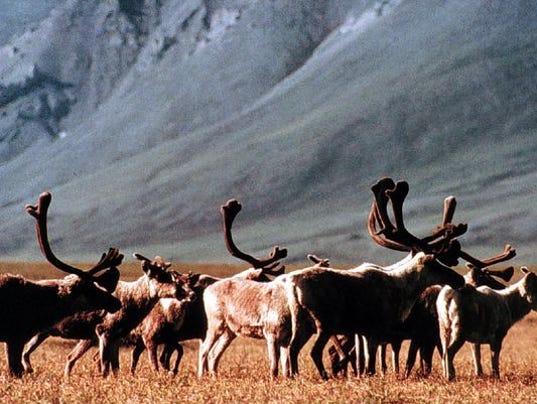
Arctic National Wildlife Refuge

(Photo: U.S. Fish and Wildlife Service via AP)

Story Highlights

  • Opinion: Trump’s proposal suggests Arctic National Wildlife Refuge could be opened for oil drilling.
  • Whitfield Bailey resides in Knoxville.

As both a fiscal conservative and someone who cares deeply about protecting our nation’s natural resources, I was appalled to see a certain provision tucked away in President Trump’s budget proposal: an unwarranted sneak attack on one of our nation’s most prized units of public land, the Arctic National Wildlife Refuge.

The Arctic Refuge in northern Alaska is the crown jewel of America’s National Wildlife Refuge System and is an internationally recognized wildlife haven renowned for its biodiversity. Fifty species of mammals and more than 200 species of migratory birds from all 50 states, like the yellow-rumped warbler, call this refuge home. The refuge remains one of the largest pristine ecosystems in the world.

From a fiscal point of view, the proposal to desecrate the Coastal Plain of the refuge with a web of destructive pipelines and drills makes little sense. Alaska politicians have been pushing this misguided attack on the refuge because they believe that drilling would lead to a windfall for Alaska. But this supposed revenue is highly theoretical, if not downright dubious.

In 1985, Chevron spent $40 million to drill three miles below the refuge to see if there was oil there. The results of this test have been kept secret ever since, suggesting nothing too exciting was found.

In the 1980s, oil prices were skyrocketing and Americans were eager to drill.  But we are in a different position now. Oil and gas prices have been falling for years as the United States moves towards energy independence. New drilling technologies have fueled the Shale Revolution and allowed us to tap into previously inaccessible oil and natural gas fields. Additionally, the renewable energy industry is experiencing a boom in production, intense job growth, and rapid decreases in costs. President Trump’s own budget acknowledges this new state of affairs, since it proposes selling off half of the Strategic Petroleum Reserve, further underscoring the fact that the United States is not as reliant on foreign oil today.

If we are willing to sell off half of the SPR, then surely we do not need to drill in the Arctic Refuge.

The environmental value of the refuge is immeasurable, and drilling there would be incompatible with the mission of the refuge to protect wildlife. Proponents of drilling argue that oil companies would only drill in a few square miles of the Coastal Plain.  But this argument is specious, because a drill site that only takes up a few square miles depends on a spider web of pipelines, pads, roads, and other infrastructure – and an oil leak from even a small pipeline can have devastating effects on the fragile ecosystem of the pristine Coastal Plain.

The Coastal Plain is home to grizzlies, muskoxen, wolverines, and arctic foxes, and is an important denning site for polar bears.  It is home to the 180,000-strong Porcupine caribou herd, one of the largest herds in North America.  This herd is especially important for the native Gwich’in people who live in the area.

The Gwich’in rely on the caribou to maintain their centuries-old subsistence way of life and cultural identity. This is the reason the Gwich’in refer to the Coastal Plain as “the sacred place where life begins.” It is not just an economic and environmental issue – it is also a human rights issue.

Congress should reject President Trump’s dangerous budget proposal – for the sake of wildlife, for the Gwich’in people, and for basic economic sense.

Whitfield Bailey resides in Knoxville.