This week’s New Yorker cover

Read About The Tarbaby Story under the Category: About the Tarbaby Blog

Al Vicens September 27, 2019
im Weber/The Commercial AppealZuma Press
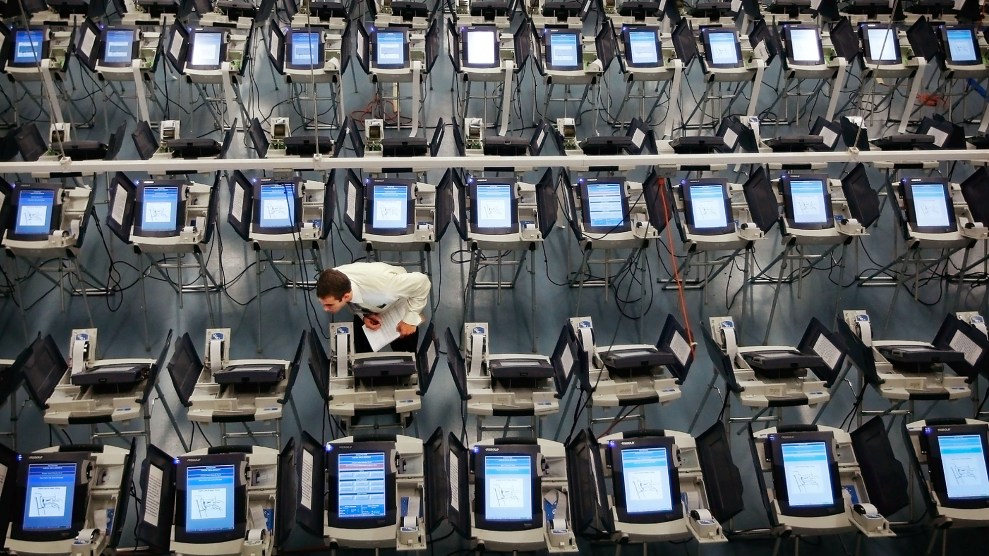
A report issued Thursday by some of the country’s leading election security experts found that voting machines used in dozens of state remain vulnerable to hacks and manipulations, warning that that without continued efforts to increase funding, upgrade technology, and adopt of voter-marked paper ballot systems, “we fear that the 2020 presidential elections will realize the worst fears only hinted at during the 2016 elections: insecure, attacked, and ultimately distrusted.”
The 47-page report is the product of researchers who organized a shakedown of voting machines at the annual DefCon conference, one of world’s biggest information security gatherings frequented by hackers, government officials, and industry workers. First incorporated into DefCon in 2017 with the aim of improving voting machine security, this year’s version of the now-annual “Voting Machine Hacking Village” assembled over 100 machines and let hackers loose to find and exploit their vulnerabilities. While election officials have criticized the effort’s utility as a testing ground, deriding it as a “pseudo environment,” some have seen value in letting machines’ flaws become more known and potentially lead to security improvements.
“Once again, Voting Village participants were able to find new ways, or replicate previously published methods, of compromising every one of the devices in the room,” the authors wrote, pointing out that every piece of assembled equipment is certified for use in at least one US jurisdiction. The report’s authors, some of whom have been involved with election machine security research going back more than a decade, noted that in most cases the participants tested voting equipment “they had no prior knowledge of or experience” in a “challenging setting ” with less time and resources than attackers would be assumed to marshal.
The report urges election officials to use machines relying on voter-marked paper ballots and pair those with “statistically rigorous post-election audits” to verify the outcome of elections reflects the will of voters. The authors also warn that supply chain issues “continue to pose significant security risks,” including cases where machines include hardware components of foreign origin, or where election administrators deploy foreign-based software, cloud, or other remote services. The report lands as officials in several states are working to upgrade election equipment, and as lawmakers in Washington, D.C. debate federal election security legislation and funding.
Ultimately, the report notes flaws that have been acknowledged for years.
“As disturbing as this outcome is, we note that it is at this point an unsurprising result,” the authors conclude. “However, it is notable—and especially disappointing—that many of the specific vulnerabilities reported over a decade earlier…are still present in these systems today.”
Ties between the National Rifle Association and influential Russians were substantial and potentially lucrative enough to render the politically potent gun lobby an “asset” of Russia, according to a Senate Democrat’s year-plus investigation.
More than 4,000 pages of NRA records provided to Sen. Ron Wyden, the top Democrat on the finance committee, documented deep connections between the beleaguered gun group and Maria Butina, who in December pleaded guilty to conspiring to act as a Russian agent without registering with the Justice Department. Wyden’s report, released Friday and undertaken without the cooperation of committee Republicans, indicates that greed motivated some NRA officials to engage in the outreach.
Butina also made clear to NRA officials long before their controversial Butina-facilitated December 2015 trip to Moscow that Alexander Torshin, her patron and an ally of Russian President Vladimir Putin, was a man with mysterious pull in the Kremlin. She emailed former NRA president David Keene in January 2015 that Torshin’s appointment to the Russian central bank was “the result of a ‘big game’ in which he has a very important role. All the details we can discuss with you only in person.”
“During the 2016 election, Russian nationals effectively used the promise of lucrative personal business opportunities to capture the NRA and gain access to the American political system,” Wyden said.
Representatives for the NRA did not immediately respond to a request for comment.
In addition to scrutinizing the December 2015 NRA trip, Wyden found that the NRA hosted former Russian ambassador Sergei Kislyak for a three-hour tour of its headquarters in August 2015. Kislyak was a key figure in Russia’s 2016 election interference before former national security adviser Mike Flynn pleaded guilty to misrepresenting his conversations with him to the FBI. An NRA calendar entry provided to Wyden suggests that NRA leaders took Kislyak hunting at the Grand National Waterfowl Hunt weeks before the Moscow trip.
Wyden’s report shows the NRA officials, donors, and supporters meeting with Russian officials under U.S. sanctions during the Moscow trip, something previously reported. But it also shows that Butina ensured the NRA would send sufficiently senior leaders, something necessary to enhance Torshin’s prestige, by dangling opportunities for NRA luminaries to enrich themselves. While U.S. sanctions do not make meeting with foreigners under sanction illegal, U.S. nationals can’t conduct business with them.
Returning from Moscow further inclined the NRA to aid its Russian friend Butina, who presented herself as the head of a rare Russian gun-rights foundation. Soon after, the NRA bought Butina and Torshin memberships in a hunters’ advocacy group known as Safari Club International. Later, one of the key NRA figures on the Moscow trip, Pete Brownell, confirmed to Wyden that he personally introduced Butina to Donald Trump Jr. at the NRA’s 2016 annual meeting, though Brownell’s counsel dismissed it as a “chance encounter.” Butina would also write to NRA heavies for formal invitations to their events, something she said would help her get visas to enter the country.
The NRA has attempted to distance itself from the Moscow trip after it became politically controversial. It told Wyden’s office in May that any relationship “certain individuals, including NRA supporters and volunteers” had with Butina and Torshin was entirely distinct from NRA business.
Yet Wyden’s report shows then-NRA president Allan Cors, who backed out of the trip, contemporaneously referring to it in an email to Torshin as a chance to “represent the NRA” to influential Russians. Among those Russians were Butina’s reputed moneyman, Igor Pisarsky, whom Butina presented as Putin’s “campaign manager”; the sanctioned Russian deputy prime minister for the defense industry, Dimitry Rogozin; and Foreign Minister Sergei Lavrov. Documentation the NRA provided, the report notes, did not show “action to discourage or prevent its officers from using organization resources to explore business opportunities or to meet with sanctioned individuals and entities” during the trip.
Cors’ absence from the trip was a problem for Butina. Without a senior NRA leader to show off to the influential Russians who had agreed to meetings, Torshin could lose face. “Many powerful figures in the Kremlin are counting on Torshin to prove his American connections—a last minute important member cancellation could affect his political future,” she emailed. In November, Butina turned to Brownell, the NRA’s then-vice president and Cors’ future successor, with an urgent plea for his attendance.
Outside the NRA, Brownell runs a business that sells guns, ammunition, and firearms accessories. A Brownell spokesperson told The Daily Beast in February that Brownell took the trip “understanding that it was an NRA-related event organized with the support of the organization.” His corporate compliance officer later said Brownell could meet with sanctioned Russians insofar as his trip was not business but an NRA “cultural exchange.”
But materials Wyden acquired cast doubt on that. Butina, in emails, told Brownell that while it was an NRA trip, “especially for you and your company I have something more.” She told him that Russian gun manufacturers “are ready to meet you and talk about export and import deals.” Another email, this one from Brownell, records the NRA vice president musing that he was “not interested in attending if [it is] just an NRA trip.” In another email, Brownell called the “strictly diplomatic” trip a chance to “introduce our company to the governing individuals throughout Russia.” Among the people the NRA met with in Russia were representatives of the Kalashnikov Concern, a weapons manufacturer under U.S. sanctions. The report states that later Brownell explored a deal with someone he met on the trip but ultimately canceled because the Russian was unable to follow proper import-export rules.
Brownell recently resigned from the NRA’S board, a move seen as part of the organization’s recent turmoil. In April, its president Oliver North resigned after losing a power struggle to longtime NRA magnate Wayne LaPierre. The group is locked in bitter litigation with its former ad firm, which might be the least of its legal woes, considering investigations into its tax status by attorneys general in New York and the District of Columbia.
A representative for Brownell did not immediately respond to a request for comment.
Brownell was not the only one to whom Butina appealed with an offer unrelated to NRA business. Wyden’s report corroborated a Daily Beast report that Butina told trip attendee Keene, who was also the Washington Times’ opinion editor, that one of the meetings was with a Russian media oligarch who would be able to secure Keene an interview with Putin for the paper.
Butina also dangled to the NRA a meeting with Putin himself, though no such meeting appears to have manifested. An email ahead of the trip from Butina’s since-indicted boyfriend, the GOP consultant Paul Erickson, to Brownell promised “private meetings with the top ministers in Putin’s government and private lunches in oligarch’s dachas.” Butina fronted money for the attendance of another trip attendee, NRA donor Jim Liberatore, for which the NRA reimbursed her with $6,000 from its president’s budget.
The NRA was an open door for Butina and Torshin, whose goal was to use the organization as a lever to move U.S. politics in a direction more agreeable to Russian interests. In addition to welcoming the two to the NRA’s own events, the NRA aided them in attending other conservative-friendly gatherings, including the National Prayer Breakfast in Washington, a staple event for politicians of both parties. Butina asked then-presidential candidate Donald Trump a question about U.S.-Russian relations at a campaign stop in Las Vegas, boasted of being a conduit for his campaign’s communications to Russia, and was photographed with prominent GOP politicians like Wisconsin Gov. Scott Walker.
Wyden stopped a step short of recommending the NRA lose its tax-exempt status, citing insufficient cooperation from the group. “A broader review of NRA’s activities in recent years” from the IRS was needed to determine if the NRA’s Russian connections fit within a “persistent pattern of impermissible conduct,” the report concluded.
“The totality of evidence uncovered during my investigation, as well as the mounting evidence of rampant self-dealing, indicate the NRA may have violated tax laws. This report lays out in significant detail that the NRA lied about the 2015 delegation trip to Moscow,” Wyden said. “This was an official trip undertaken so NRA insiders could get rich—a clear violation of the principle that tax-exempt resources should not be used for personal benefit.”

Donald Trump’s attempt to use congressionally approved military aid for his own benefit, now the subject of an impeachment inquiry, falls in the same category as his other attacks on democracy. Photograph by Andrew Harrer / Bloomberg / Getty
There was always going to be a last straw, a single event that would launch impeachment proceedings against Donald Trump. On Tuesday, the House Speaker, Nancy Pelosi, declared that Trump had finally gone too far, by “asking the President of Ukraine to take actions that would benefit him politically.” As a result, she was officially announcing the transition from investigation to an impeachment inquiry. “The President must be held accountable,” she said. “No one is above the law.”
The Rubicon that Pelosi crossed is more rhetorical than procedural. As my colleague John Cassidy has pointed out, the six congressional committees that have been investigating Trump in a de-facto impeachment inquiry will continue their work, incorporating the newly urgent investigation of Trump’s July phone call with the Ukrainian President, Vlodymyr Zelensky, and the whistle-blower report that apparently, at least in part, stemmed from it. But what makes this event different from all the other malfeasances of the Trump Presidency? Trump has been credibly accused of breaking the law many times—nearly two hundred pages of the Mueller report document the President’s attempts to obstruct justice. Now he appears, judging from a newly released summary of the call, to have pressured a foreign leader to dig for dirt on a potential electoral opponent, tied the release of congressionally approved military aid, explicitly or implicitly, to this request, and stopped the acting director of National Intelligence from releasing the resulting whistle-blower report to Congress. Why are these alleged crimes the ones that, in the estimation of Pelosi and her colleagues on the Democratic caucus, warrant impeachment proceedings?
This is less a legal question than a political one. Hours before Pelosi’s announcement, Vox’s Zack Beauchamp argued that the Ukraine revelation changed the mathematics of impeachment because it concerned an “ongoing attempt to hijack American foreign policy in service of the president’s reelection.” Impeachment stemming from the Mueller report would constitute punishment for past misdeeds, while impeachment stemming from the whistle-blower report would serve to prevent further harm. This, Beauchamp argues, would make it harder for Republicans to dismiss the inquiry.
The inquiry gains additional urgency because it concerns the 2020 Presidential election. For the first two and a half years of the Trump Presidency, congressional Democrats and much of the legacy media have concentrated on investigating and relitigating the 2016 election, sometimes at the expense of paying attention to the events of the Presidency itself. Now the focus is shifting to 2020, with Ukraine upstaging Russia and the entire story already upstaging current events (such as, for just one example, Trump’s isolationist, anti-immigrant speech at the United Nations on Tuesday). An election gave us Trump, and, impeachment proceedings notwithstanding, an election has the potential to rid us of him. For the past two and a half years, Trump has aspired to autocracy—attacking institutions, undermining and subverting the separation of powers—but, as long as his Presidency can be ended by an election, he has not consolidated autocratic power.
Evan Osnos on what it would take to cut short Trump’s Presidency.
And yet we habitually overstate the importance of elections. We have a way of talking about elections as though they were synonymous with democracy. They are not: they are merely a very imperfect way of creating the possibility of democracy, which is the government of the governed. Ideally, democracy is what would happen between elections. Trump’s attacks on democracy include his war with the media, his redefinition of American identity in white-male supremacist terms, his isolationism, his use of the Presidency for personal profit, his campaign of packing the federal courts, his verbal attacks on judges, and his treatment of the judiciary as a nuisance on the way to getting things done—a view that he applies to the separation of powers in general. These are just some of his high crimes.
Trump should be impeached. The event that finally got Pelosi to say so is, in fact, a straw: an incident that resembles a succession of other incidents in which Trump has used his office for personal gain and sabotaged the system of checks and balances. His attempt to use two hundred and fifty million dollars of congressionally approved military aid for his own benefit falls in the same category as his and his children’s foreign business deals, brokered on the back of American diplomacy; his use of the Presidency to attract lobbyists, dignitaries, and perhaps entire summits as paying guests to his properties; and his use of taxpayer funds for incessant leisure travel. Trump’s attempt to quash the whistle-blower’s report is similar to his attempt to pressure the F.B.I. director James Comey to stop the investigation of the national-security adviser Michael Flynn, or his attempt to get the White House counsel Don McGahn to lie to the public. This time, Trump succeeded, at least for a while, surely in part because Joseph Maguire is the third person in the course of his Presidency to hold the National Intelligence job, and because, like an ever-growing number of Administration officials, Maguire has the word “acting” in front of his job title. As the impeachment inquiry moves forward, it would behoove congressional Democrats, and all of us, to focus less on Ukraine and the eternal spectre of election contamination by a foreign power and more on Trump’s pattern of abuse of executive power and the destruction it has wrought on American government. This is what will require repair in the time after Trump.
September 25, 2019
‘We’ve been talking about saving the Amazon for 30 years.’ — Harrison Ford urged UN leaders to listen to young people and let them save the planet from the climate crisis
Harrison Ford Urges Leaders to Get Out of Young Activists' Way on Climate
‘We’ve been talking about saving the Amazon for 30 years.’ — Harrison Ford urged UN leaders to listen to young people and let them save the planet from the climate crisis
Posted by NowThis Politics on Wednesday, 25 September 2019
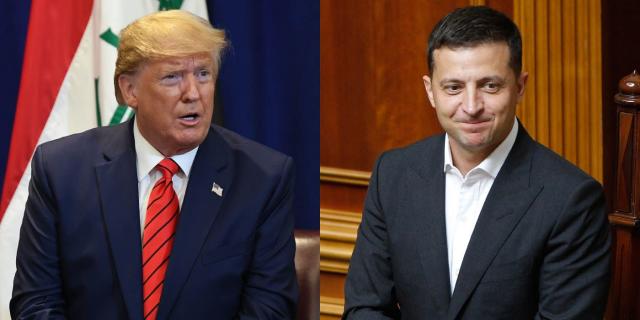
What the president and his associates billed as a “transcript” of his call with the president of Ukraine is not actually a full, verbatim transcript of the call, so it’s not really a transcript. There are ellipses throughout—particularly, as some have pointed out, when Trump is making requests of Volodymyr Zelensky—and the indications are that a substantial chunk of the 30 – minute phone call has not been included. Even still, the president just provided documentary evidence of what he’d already admitted to: he pressured the leader of a foreign government to open an investigation into a U.S. citizen, who happens to be a political opponent, thereby inviting foreign interference in our elections. He put his personal political gain over the interests of the United States and violated his oath of office. He should be impeached.
Folks will now turn, with good reason, to demanding the full transcript—if it (still) exists—and calling for Congress to get access to the whistleblower’s complaint. It reportedly documents more of the context surrounding Trump’s dealings with Zelensky and whether the demands for a Biden investigation are tied to the president’s order to hold back hundreds of millions in military aid for Ukraine. That would be the quid pro quo Trump and his toady associates like Lindsey Graham are yelling isn’t in the transcript, which is why Trump released it. (He telegraphed this strategy when he announced the release.) It’s not yet clear there’s no QPQ in the transcript—more on that shortly—and you don’t need it for this to be an impeachable offense. But it’s worth exploring further.
There’s another side to the Ukraine call that demands attention, however. It has to do with how Zelensky approached his interaction with the President of the United States. He started off by very obviously flattering Trump:
ZELENSKY: Well yes, to tell you the truth, we are trying to work hard because we wanted to drain the swamp here in our country. We brought in many many new people. Not the old politicians, not the typical politicians, because we want to have a new format and a new type of government … You are a great teacher for us and in that.
Trump gushed in response, then went on a rant about all the problems he has with other European leaders and emphasized about how “good” the U.S. has been to Ukraine. Zelensky agrees with everything he says without caveats, and in fact works to boost his claims. He then mentions Ukraine wants to buy more Javelins—anti-tank missiles—from the U.S., and Trump responds immediately by asking for “a favor though because our country has been through a lot.” This smells a bit like the kind of quid pro quo Lindsey Graham told me wasn’t in there, although Trump does not mention Biden specifically until the next exchange. He did, however, repeatedly suggest putting the Ukrainians in contact with Rudy Giuliani and Attorney General William Barr for the purposes of said investigation.
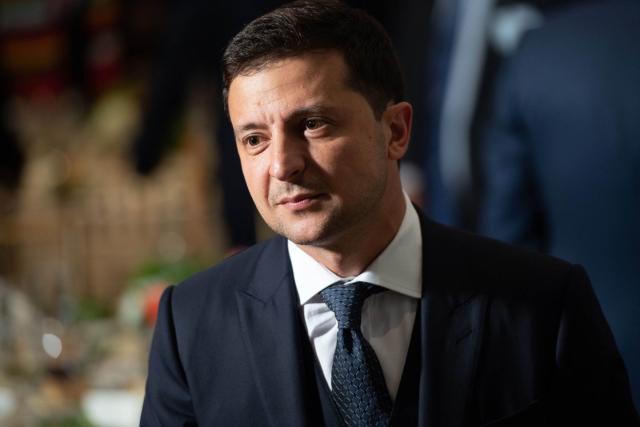
ZELENSKY: I would like to tell you that I also have quite a few Ukrainian friends that live in the United States. Actually last time I traveled to the United States, I stayed in New York near Central Park and I stayed at the Trump Tower. I will talk to them and I hope to see them again in the future.
And there it is. Having flattered Trump relentlessly and nodded along to whatever he said, Zelensky came in with the tried-and-true finish: I stayed at your property and put money in your pocket. This is the way you do business with the United States of America now. You call up our president, tell him he’s a very good boy who everyone loves, and then hint that there’s money in it for him if you have a productive relationship. It’s very likely that this is now standard procedure for foreign leaders. It certainly is for Saudi Arabia, and it is for corporate types, too: T-Mobile celebrated it’s proposed merger with Sprint, which would need approval from Trump’s administration, by spending a bunch of money at Trump’s hotel in D.C. The CEO stomped around the lobby in his T-Mobile shirt, just to make sure the message was received.
This is not some intricate corruption caper. The president has maintained his business holdings while running the country. This is an obvious conflict of interest, particularly when it comes to foreign actors. As Vox’s Matt Yglesias pointed out, Trump has vetoed five bills since he took office, and four of them were efforts to reduce U.S. support for Saudi Arabia. Is that because he, like many previous presidents, thinks we can’t do anything to jeopardize our alliance with the Saudis? Or is it because they’re putting money in his pocket? This is why the Constitution has an Emoluments Clause, which forbids presidents from accepting sizable gifts from foreign leaders. Trump is accepting gifts every day, in violation of the Constitution, as part of The Great American Heist. The public can never be sure he’s made a decision in their interests as opposed to his own. It’s just another reason he should be removed from office.
The president is lawless, and has violated his oath to defend the Constitution. Make Republican senators defend him and what he’s done.
By Jack Holmes, Esquire September 23, 2019
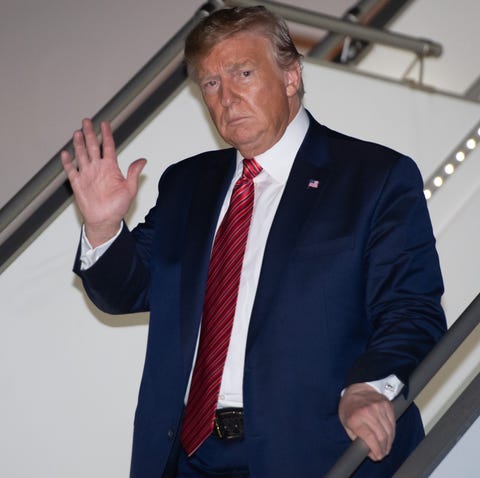 SAUL LOEB/GETTY IMAGES
At the risk of sounding a bit repetitive, Democratic leaders must come to grips with who and what Donald Trump is—and the nature of the Republican Party he leads—before this crew tramples what’s left of the republic. One of our two major political parties is now an authentic authoritarian outfit, where the political playbook at both the state and federal levels consists of using the mechanisms of democracy to strangle the popular will and entrench minority rule. Anything is acceptable if it helps you maintain your grip on power.
Just as important, every party official now marches in lockstep with The Leader, who will do anything he feels will benefit him personally as long as there are no concrete consequences. This is how Trump has behaved his entire life—strong-arming opponents, bending or breaking the law, using mobspeak to hint at the quid pro quo—and gotten away with it, except now he is President of the United States. The authoritarian knows only force, and until Democrats impose consequences for the president’s behavior in the form of legal force, Trump will continue to break the law and destroy institutions of the republic until the landscape of our politics is unrecognizable.
So far, Democrats have completely failed to make Trump believe there will be repercussions if he breaks the law or violates his oath to defend the Constitution. The Mueller Report detailed multiple instances in which the president blatantly attempted to obstruct justice in an investigation into whether he and his associates accepted help from a hostile foreign power in 2016. Democrats chose not to impeach the president, despite the fact that he’d broken the law repeatedly, and so far have failed to even call many of the key witnesses to testify before Congress.
No wonder, then, that Trump reportedly called the Ukrainian president the day after Mueller’s testimony and hinted, likely in mobspeak, that he would hold up $250 million in military aid until they got to work investigating Trump’s political opponent. There were no consequences for what we learned about Trump’s activities in 2016 and during the subsequent investigation, so why would there be consequences if he got up to the same—or more—in 2020? And in between, he has continued to destroy the separation of powers that forms the essential architecture of our Constitution and relentlessly profited from his office.
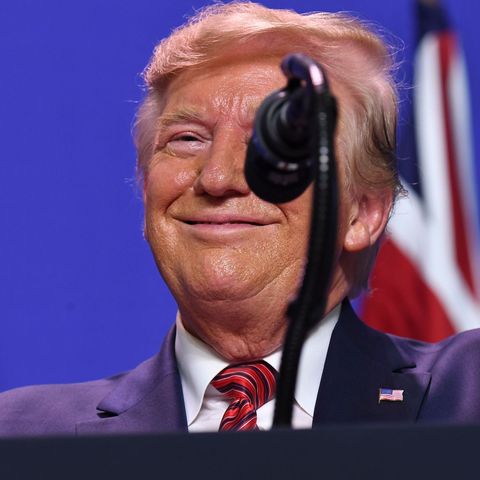
Democratic leadership, led by Speaker Nancy Pelosi, has thus far held the line that the best way to rid the republic of Trumpism is to defeat Trump at the ballot box in 2020. But this rests on a number of tenuous premises, not least that the elections will be free and fair. Domestically, the Republican Party will work overtime using the time-tested shenanigans: voter purges, voter suppression, closing polling places, old-fashioned ratfucking. And now the president has essentially put up a neon sign for the world’s shadiest operators: do me a favor and ratfuck my opponent, and there could be something in it for you down the line. Bonus points if you put money in my pocket at one of my hotels. He said we were waiting for word from the Saudis on whether the U.S. military should strike Iran, for Christ’s sake.
The simple fact is that the president is lawless and must be made accountable to the law, or his lawlessness will continue to spread and metastasize. Democrats must initiate impeachment proceedings against him on the basis that he has betrayed the republic and violated his oath of office. Along the way, they should call every witness they need and hold those who refuse to testify in contempt. They should literally be held in jail. Those who do testify but make a mockery of proceedings, like Cory Lewandowski did last week, should also be held in contempt.
The president is not going to suddenly see the light and stop doing crimes because they’re the wrong thing to do. He will stop doing crimes if someone stops him from doing crimes. This is what he’s up to more than a year out from the election. What will he do between now and November if he is not held accountable, particularly when he knows that a failure to win reelection could mean a federal indictment?

Democratic leaders have also relied on the excuse that impeachment will not succeed in the Senate even if the House initiates proceedings. This is also absurd, particularly if you’re banking on winning the next election. Impeachment hearings function as an airing of the president’s misconduct, putting it on blast for the whole nation to see. Just 19 percent of the public supported impeaching Richard Nixon when the Watergate hearings began. By the time he resigned, it was 57 percent, because people learned the extent of his treachery. Support for Trump’s impeachment already hovers between 35 and 38 percent.
And along the way, it’s not just the president who will come under pressure for what he’s done. Senate Republicans will have to defend their defense of a criminal president, some of them while they’re running for reelection. Does Cory Gardner want to defend the president’s behavior while defending his seat in purple Colorado? Also, if you care about that kind of thing, they’ll have to live out the rest of their lives knowing they, too, betrayed everything they claimed to hold dear to stay in favor with The Base.
Simply put, Democrats must impeach Trump because he has likely committed high crimes and misdemeanors. It is the right thing to do in defense of the republic. But it will also be good election-year politics as they try to sink Trump and take the Senate, without which any Democratic legislative agenda is dead on arrival. The only reason they wouldn’t, at this point, is that they are afraid. Or maybe Pelosi and her leadership team still think they’re playing chess when Trump and his crew upended the board years ago.

JUST IMPEACH HIM – Randy Rainbow Parody
***NEW VIDEO***#SummerJam #JustImpeachHim #Adderall ☀️🌈🎶☁
Posted by Randy Rainbow on Tuesday, May 28, 2019
September 18, 2019
Where Your Tax Dollars Really Go
Donald Trump and Republicans in Congress claim that America spends too much on things like food stamps, welfare, and foreign aid. But let’s look at how the government actually spends your federal tax dollars each year.
Posted by Robert Reich on Wednesday, September 18, 2019

Nearly 10,000 farmers and ranchers are endorsing the Green New Deal as the climate policy battleground expands from the oil fields to the agricultural fields.
In a letter sent to Congress on Wednesday morning, the newly formed bipartisan coalition U.S. Farmers & Ranchers for a Green New Deal threw its weight behind the sweeping industrial plan outlined in a resolution that Rep. Alexandria Ocasio-Cortez (D-N.Y.) proposed in February.
But zeroing out the country’s planet-heating emissions by mid-century requires a transformation in agriculture as dramatic as shifting the energy sector away from fossil fuels, the letter says.
“We believe these climate goals are achievable,” the letter argues, “but only if the GND includes policies that spur two large-scale transitions: the transition away from fossil fuels toward renewable energy alternatives, and the transition away from industrial agriculture toward family farm-based organic and regenerative farming and land-use practices that improve soil health and draw down and sequester carbon.”
The letter was signed by more than 500 individual farms and 50 organizations representing close to 10,000 members. Regeneration International, a sustainable farming nonprofit, organized the missive with the climate justice group Sunrise Movement. It also hosted a Wednesday morning press conference in Washington.
A month ago, the United Nations released a dire new report urging major changes to food production and land management and warning that emissions cuts alone will fall short of halting catastrophic global warming.
Taking cues from those pushing for a Green New Deal, several Democratic presidential hopefuls have made farming practices central to their climate proposals. Sen. Bernie Sanders (I-Vt.) earmarked $410 billion in his Green New Deal proposal to help “farms of all sizes transition to ecologically regenerative agricultural practices.” Sen. Elizabeth Warren (D-Mass.) called for breaking up agriculture monopolies as part of her broad rural platform. South Bend, Indiana, Mayor Pete Buttigieg vowed to “support farmers” by “paying them to capture carbon.”
Yet even as farmers reel from the effects of President Donald Trump’s trade war with China, Democratic candidates are far from guaranteed their votes. Farmers supported the Trump administration’s proposal last week to finalize the rollback of the Obama-era Waters of the U.S. rule, which had put new restrictions on which waterways agribusiness could pollute. Early on, Republican opposition to the Green New Deal itself coalesced around the idea that such a program would ban beef production, although supporters have clearly said it would not.
“We call on Congress to put the ‘Green’ in the Green New Deal,” Wednesday’s letter reads, “by empowering us to revitalize the health and economic security of this country’s middle class, to make family farming economically viable again, and to help reverse climate change and improve America’s air and water quality by making our ecosystems healthy again.”