Just Another Cowardly MAGA Politician: Nikki Haley wants to ban TikTok, not guns: Takeaways from her 2024 campaign stop in N.H.

USA Today

Nikki Haley wants to ban TikTok, not guns: Takeaways from her 2024 campaign stop in N.H.

Ken Tran, USA TODAY – March 28, 2023

DOVER, N.H. – At her second stop in this early voting state, hours after a mass shooting at a Nashville, Tennessee, elementary school, Nikki Haley let Granite State Republicans know she wants to ban TikTok, not guns.

The presidential hopeful and former South Carolina governor is in the middle of two town halls – one in Dover Monday night and another in Salem on Tuesday night – as she tries to court voters. She has competition here, with former New Jersey Gov. Chris Christie hosting a town hall of his own Monday night and Florida Gov. Ron DeSantis slated to visit the state in a few weeks.

In Dover on Monday evening, Haley sought to differentiate herself from the presidential field, being more accessible to New Hampshire voters who have been eager to meet candidates face-to-face in her town hall events.

Here’s how Haley made her pitch to voters in the first-in-the-nation state.

Who is Nikki Haley?: Former S.C. GOP governor announces run for president in 2024
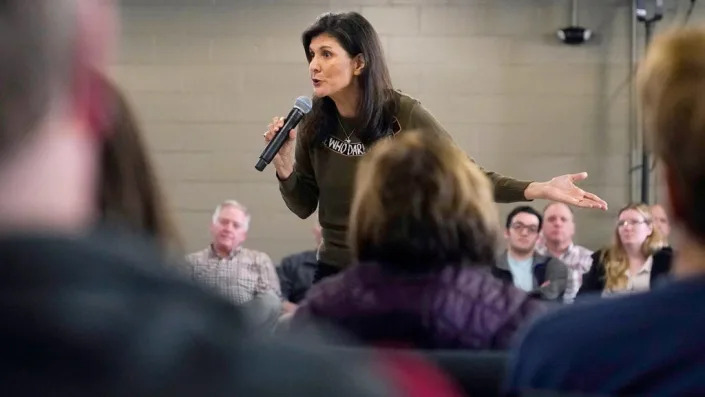
Republican presidential candidate, former ambassador to the United Nations Nikki Haley addresses guests during a campaign stop Monday, March 27, 2023, in Dover, N.H.
After Nashville school shooting, Haley opposes more gun laws

Haley’s town hall opened against the backdrop of a deadly school shooting in Nashville.

The Republican presidential hopeful started her pitch by addressing the shooting and telling voters she wants more metal detectors, not more gun control legislation. She called for schools to have one entrance and to use the metal detectors there.

“It’s OK if there are metal detectors. There are those guests coming in out, the kids see them in an airport, they see them wherever they go. Why don’t we do that to protect those kids?” Haley said.

“Everybody wants to talk about gun control. My thing is, I don’t want to take away your ability to protect yourself until they do those things that protect those kids,” Haley added.

Haley calls for a TikTok ban
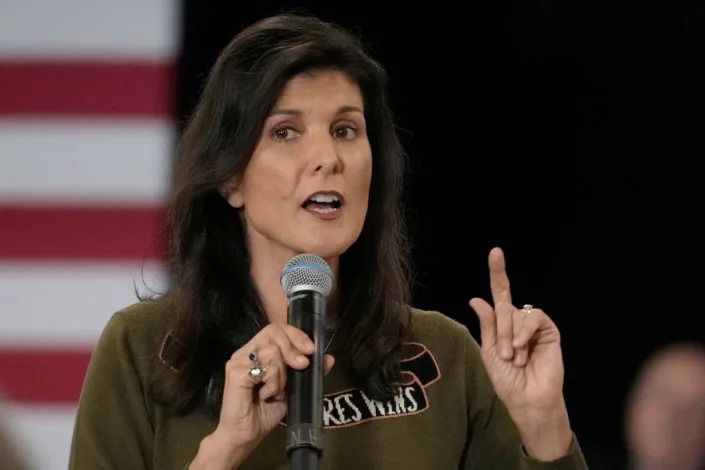
Republican presidential candidate, former ambassador to the United Nations Nikki Haley addresses guests during a campaign stop Monday, March 27, 2023, in Dover, N.H.

With lawmakers on Capitol Hill clamoring for a TikTok ban after CEO Shou Zi Chew testified to Congress, Haley told voters she’s all for an outright ban.

“We’re going to ban TikTok. Ban TikTok everywhere,” Haley said, also taking a jab at President Joe Biden for not banning the app.

The White House has recently threatened the app’s Chinese owners to sell its stakes in the company or face a nationwide ban.

“What are we waiting on? Joe Biden’s worried he’s going to lose younger voters? Is that why you hold off on (banning) it?” Haley said.

Haley leans into GOP culture wars, still campaigning on her identity
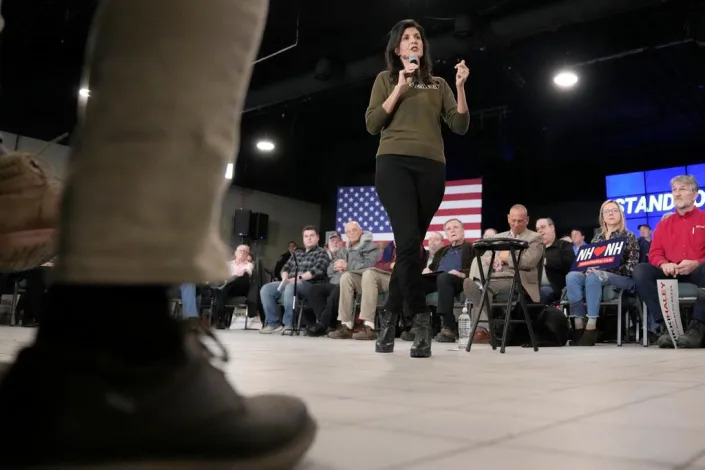
Republican presidential candidate, former ambassador to the United Nations Nikki Haley addresses guests during a campaign stop Monday, March 27, 2023, in Dover, N.H.

Her pitch in Dover sounded largely similar to her previous town halls, partly anchoring her campaign on her background as the daughter of Indian immigrants. 

“I was born and raised in rural South Carolina. We were the only Indian family in that small southern town.” Haley said. “We weren’t white enough to be white. We weren’t Black enough to be Black.”

But even then, Haley embraced the GOP’s culture wars against public education, alleging nearly all American students are learning critical race theory.

“Teachers need to teach. Parents need to parent. And we need to separate that once and for all,” Haley said to raucous applause.

‘Freaks.’ ‘Big spenders.’: Why 2024 GOP hopefuls Trump, Haley, DeSantis are ripping their own party

Meeting 2024 voters face-to-face in New Hampshire

Haley was the first candidate to jump in the race after former President Donald Trump. Entering the race early, when so many other presumptive candidates are still waiting in the wings, gives Haley a head start on meeting voters face-to-face.

Her accessibility compared to other figures such as DeSantis is something especially appreciated among Granite State voters. 

John Burns, 75, a Dover resident, said Haley’s early stops in the state impressed him and that he loves the “small town meetings.” Her town halls are a sign she respects “the New Hampshire public,” he said. 
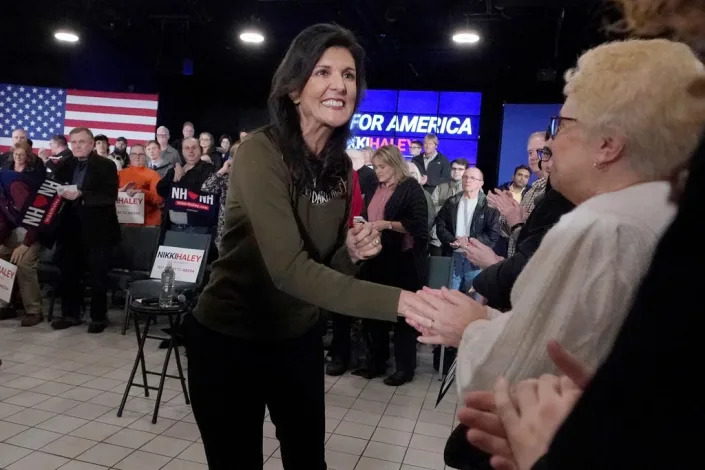
Republican presidential candidate, former ambassador to the United Nations Nikki Haley shakes hands with guests during a campaign stop Monday, March 27, 2023, in Dover, N.H.
Nikki Haley’s age is a plus, voter says

Haley’s relative youth at 51 years old, compared to high-profile politicians in Washington, is one of her greatest appeals to Dover resident Jeanne Stonehouse.

“I think it’s time we get some young people in there,” said Stonehouse, who is 76.

Core to that appeal is also how hard Haley has campaigned on her possibly being the only woman in the field, telling voters it is time to “send a badass Republican woman to the White House.”

That unapologetic campaigning is something Stonehouse especially appreciates.

“I kind of thought she had a lot of gumption,” Stonehouse said. That gumption is needed in the White House, she said.

Stonehouse’s grandson, who came with her to see the former South Carolina governor, said he’s eyeing a more moderate Republican candidate who can win the general election.

“I feel like the Republicans have drifted a little more towards the ultra conservative side,” said 20-year-old Alex Leighton, who said he wants a GOP nominee that can attract younger voters like him. 
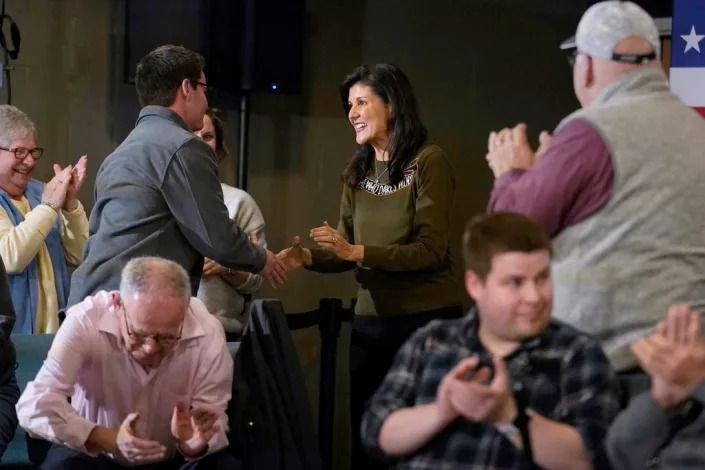
Republican presidential candidate, former ambassador to the United Nations Nikki Haley shakes hands with guests while being introduced during a campaign stop Monday, March 27, 2023, in Dover, N.H.

The Physical Toll Systemic Injustice Takes On the Body

Time

The Physical Toll Systemic Injustice Takes On the Body

Arline T. Geronimus – March 28, 2023

abstract portrait symbolizing depression and psychotherapy. Profile of a woman with a road and tears

Credit – Getty Images

The pathologists who performed Dr. Martin Luther King Jr.’s autopsy noted he had the heart of a 60 year old, although he was 39 when he died. His damaged heart was duly noted in the official record as a curiosity, but there was no question as to the cause of death: homicide; indeed, assassination. A racist hate crime.

But if we were to try to understand the poor condition of his heart, we might be flummoxed. Our general repertoire for understanding the early onset of heart disease points us to demographic and behavioral risk factors like poverty, low education, family breakdown, unhealthy diet, and little exercise. King certainly looked physically fit, capable of leading miles-long civil rights marches. He was well-educated, not impoverished. He grew up in an “intact” household and had a strong father figure. His faith was unswerving, as was his sense of purpose. He had a loving wife and family.

We might ask, did he partake of a particularly unhealthy diet? Did he have a genetic predisposition, a family history of heart disease? We can neither rule out nor rule in such possibilities for King. Yet, the more likely explanation, according to data on the prevailing causes of heart conditions, is that chronic stress or exhaustion took a toll on his heart. But what does that really mean? Would his heart have been healthy if he had managed his stress with meditation? (We don’t know that he didn’t.) Or if he reduced his travel and public engagements to get more rest? Perhaps marginally. But those strategies alone would not have addressed the source of his most severe and chronic stressors—the fact that he lived continuously on alert to threats, maintaining his composure, nonetheless, and in survival mode. This chronic vigilance and adaptation takes a huge health toll on the human biological canvas—a condition known as “weathering.”

More from TIME

After almost 40 years of research in public health and a lifetime of wrestling with questions of racial and class injustice, I have concluded that a process I call “weathering” is critical to understanding why someone like King, whom we’d consider young and healthy by all conventional measures, would have the damaged heart of someone in late middle age. Weathering afflicts human bodies—all the way down to the cellular level—as they grow, develop, and age in a systemically and historically racist, classist, stigmatizing, or xenophobic society. Weathering damages the cardiovascular, neuroendocrine, immune, and metabolic body systems in ways that leave people vulnerable to dying far too young, whether from infectious diseases like COVID-19, or the early onset and pernicious progression of chronic diseases like hypertension. Because of the physiological impacts of unrelenting exposure to stressors in one’s physical and social environment, as well as the high physiological effort that coping with chronic stressors entails, weathering means that relatively young people in oppressed groups can be biologically old.

Take Erica Garner. She became a tireless advocate for racial justice after her father, Eric Garner, was murdered by a New York City in 2014 police officer who placed him in an illegal chokehold for the crime of selling untaxed cigarettes. Her father’s dying words, “I can’t breathe,” became a rallying cry for the Black Lives Matter movement. Afterward, though she was initially apprehensive, Garner became a major force in the movement for police accountability. She died at age 27 in 2017, only three and a half years after the death of her father, and four months after the birth of her second child. Her own difficulty breathing, due to asthma, precipitated a major heart attack that killed her. According to her doctors, the pregnancy had stressed Garner’s already enlarged heart, so her death was classified as a maternal death. But why did she have an enlarged heart at her young age?

In the weeks before her death, Garner described the stress, exhaustion, and frustration she suffered as a spokeswoman for the Black Lives Matter movement. “I’m struggling right now with the stress and everything,” she said. “This thing, it beats you down. The system beats you down to where you can’t win.” Or as her sister, Emerald Snipes Garner, described it a week after Garner’s death, “It was like a Jenga”; they were “taking out pieces, taking out pieces, ripping her apart.”

Read more: Toxic Stress Load Is the Biggest Barrier to Living Longer. Here’s How to Reduce It

Weathering is a life-or-death game of Jenga. The Jenga tower appears strong and upright as the first pieces are removed, one by one. To all appearances, it continues to stand strong as pieces keep being taken away until the removal of one last fateful block exposes the many weaknesses of its interior, and the tower collapses. In spring 2020, COVID-19 turned out to be that last fateful block for tens of thousands of people of color. Every day, towers collapsed, as they continue to do, before our eyes.

“The only thing I can say is that she was a warrior,” Garner’s mother, Esaw Snipes, said after she died. “She fought the good fight. This is just the first fight in 27 years she lost.” After she had spent 27 years of battling headwinds, fighting the same system that had killed her father for selling a few cigarettes, those headwinds took their toll and killed her too. She was weathered to death.

I think the same could be said of Fannie Lou Hamer, the 1960s voting rights activist who famously observed at age 46 that she was “sick and tired of being sick and tired.” She died 13 years later at age 59, of breast cancer and complications of hypertension. I think she intuitively understood the price she paid for her years of activism. After failing the literacy test in her first attempt to register to vote, she told the registrar of voters, “You’ll see me every 30 days till I pass.” In later years, as she reflected on her persistence, her words suggest she knew she was being weathered: “I guess if I’d had any sense, I’d have been a little scared—but what was the point of being scared? The only thing they could do was kill me, and it kind of seemed like they’d been trying to do that a little bit at a time since I could remember.”

“A little bit at a time,” piece by Jenga piece, the assaults on the body continue to accumulate as weathering. You don’t have to be a high profile political activist to experience weathering. Any marginalized person who persists daily to survive or overcome and to see to their family’s and community’s needs in the face of long odds and systemic barriers will weather, to greater or lesser extent. Through my decades of research, I have seen how cultural oppression and economic exploitation move from society to cells in the bodies of people of color, working-class people, political refugees, the deplored or stigmatized, and the impoverished who sustain ferocious hope as they work hard and play by the rules.

However, as the Reverend William Barber, co-chair of the Poor People’s Campaign, asserted in June 2020, “Accepting death is not an option anymore.” He emphasized that the imperative extends far beyond the issue of police brutality. Echoing Fannie Lou Hamer, he said, “In everything racism and classism touch, they cause a form of death.”

Barber’s words read as metaphor, but they are the literal truth. The country is waking up to what Black Americans have known for centuries and what public health statistics have shown us for decades: systemic injustice—not just in the form of racist cops, but in the form of everyday life—takes a physical, too often deadly toll on Black, brown, and working-class or impoverished communities. Contrary to popular opinion and accepted wisdom, healthy aging is a measure not of how well we take care of ourselves—but rather of how well society treats and takes care of us. When society treats our community badly, it doesn’t just “cause a form of death,” it causes damage that can literally age and kill us.

Adapted excerpt from the book WEATHERING by Arline Geronimus. Copyright © 2023. Available from Little, Brown Spark, an imprint of Hachette Book Group, Inc.

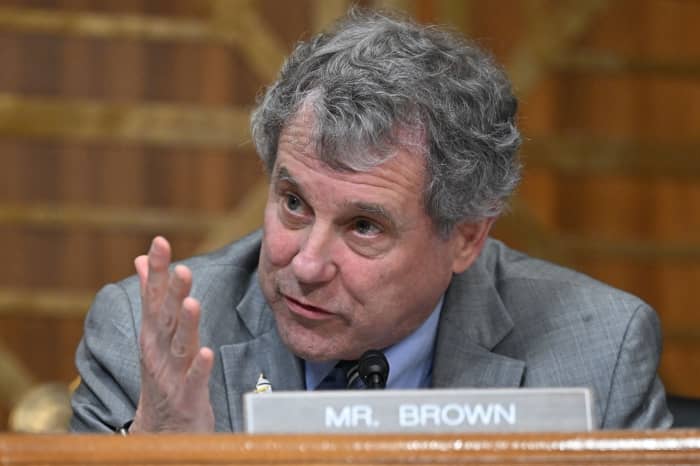
Sen. Sherrod Brown: American consumers losing power over their savings and paychecks is an emergency, too.

MarketWatch – Outside the Box

Opinion: Sen. Sherrod Brown: American consumers losing power over their savings and paychecks is an emergency, too.

The Consumer Financial Protection Bureau holds Wall Street and big banks accountable. The U.S. Supreme Court must protect it, writes Sen. Sherrod Brown.

Sherrod Brown – March 27, 2023

U.S. Senator Sherrod Brown (D-OH) says the CFPB must remain strong and independent. AGENCE FRANCE-PRESSE/GETTY IMAGES

The collapse of Silicon Valley Bank sent shockwaves through the global economy and had the makings of another crisis. Depositors raced to withdraw money. Banks worried about the risk of contagion. I spent that weekend on the phone with small business owners in Ohio who didn’t know whether they’d be able to make payroll the next week. One woman was in tears, worried about whether she’d be able to pay her workers. 

The Federal Deposit Insurance Corporation (FDIC) and the Federal Reserve responded quickly, took control of the bank, and contained the fallout. Consumers’ and small businesses’ money was safe. That Ohio small business was able to get paychecks out.

The regulators were able to protect Americans’ money from incompetent bank executives because when Congress created the Federal Reserve in 1913 and the FDIC in 1933, it ensured that their funding structures would remain independent from politicians in Congress and free from political whims. 

But now, as the U.S. Supreme Court considers the case of Community Financial Services Association v. CFPB, these independent watchdogs’ ability to keep our financial system stable faces an existential threat.

The Consumer Financial Protection Bureau is the only agency solely dedicated to protecting the paychecks and savings of ordinary Americans, not Wall Street executives or venture capitalists. Corporate interests have armies of lobbyists fighting for every tax break, every exemption, every opportunity to be let off the hook for scamming customers and preying on families.

The CFPB’s funding structure is designed to be independent, just like the Fed and the FDIC.

Ordinary Americans don’t have those lobbyists. They don’t have that kind of power. The CFPB is supposed to be their voice — to fight for them. The CFPB’s funding structure is designed to be independent, just like the Fed and the FDIC. Otherwise, its ability to do the job would be subject to political whims and special interests — interests that we know are far too often at odds with what’s best for consumers.

Since its creation, the CFPB has returned $16 billion to more than 192 million consumers. It’s held Wall Street and big banks accountable for breaking the law and wronging their customers. It’s given working families more power to fight back when banks and shady lenders scam them out of their hard-earned money. 

The CFPB can do this good work because it’s funded independently and protected from partisan attacks, just as the Fed and the FDIC are. So why, then, does Wall Street claim that only the CFPB’s funding structure is unconstitutional?

Make no mistake — the only reason that Wall Street, its Republican allies in Congress, and overreaching courts have singled out the CFPB is because the agency doesn’t do their bidding. The CFPB doesn’t help Wall Street executives when they fail. It doesn’t extend them credit in favorable terms or offer them deposit insurance like the other regulators do. The CFPB’s funding structure isn’t unconstitutional — it just doesn’t work in Wall Street’s favor.

If the Supreme Court rules against the CFPB, the $16 billion returned to consumers could be clawed back. What would happen then — will America’s banks really go back to the customers they’ve wronged with a collection tin?

Invalidating the CFPB and its work would also put the U.S. economy — and especially the housing market — at risk.

Invalidating the CFPB and its work would also put the U.S. economy — and especially the housing market — at risk. For more than a decade, the CFPB has set rules of the road for mortgages and credit cards and so much else, and given tools to help industry follow them. If these rules and the regulator that interprets them disappear, markets will come to a standstill. 

By attacking the CFPB’s funding structure and putting consumers’ money at risk, Wall Street is putting the other financial regulators in danger, too. 

The Fifth Circuit’s faulty ruling against the CFPB is astounding in its absurdity — the court ruled that the authorities that other financial agencies, like the Federal Reserve and the FDIC, have over the economy do not compare to the CFPB’s authorities. In other words, the court is claiming that the CFPB supposedly has more power in the economy than the Fed.

That’s ridiculous. Look at the extraordinary steps taken to contain the failures of Silicon Valley Bank and Signature Bank — the idea that the CFPB could take action even close to as sweeping is laughable.

But we know why the Fifth Circuit put that absurd assertion in there — they recognize the damage this case could do to these other vital agencies, and to our whole economy.

Imagine what might happen if another series of banks failed and the FDIC did not have the funds to stop the crisis from spreading.

The FDIC’s own Inspector General has stated that the Fifth Circuit ruling could be applied to their agency. If that happens, the FDIC and other regulators could be subject to congressional budget deliberations, which we all know are far too partisan and have resulted in shutdowns. Imagine what might happen if another series of banks failed and the FDIC did not have the funds to stop the crisis from spreading, or the Deposit Insurance Fund to protect depositors’ money. Imagine if politicians caused a shutdown, and we were without a Federal Reserve. 

U.S. financial regulators are independently funded so that they can respond quickly when crises happen. It’s telling, though, that plenty of people in Washington don’t seem to consider the CFPB’s issues in the same category. Washington and Wall Street expect the government to spring into action when businesses’ money is put at risk. But when workers are scammed out of their paychecks, that’s not an emergency — it’s business as usual. 

When Wall Street’s abusive practices put consumers in crisis, the CFPB must have the funding and strength it needs to carry out its mission — to protect consumers’ hard-earned money. 

U.S. Sen. Sherrod Brown (D-OH) is chairman of the U.S. Senate Committee on Banking, Housing, and Urban Affairs.

More: Supreme Court to hear case that will decide the future of consumer financial protection

As Jimmy Carter lives his final days, we wonder if he and the country were cheated

The Sacramento Bee – Opinion

As Jimmy Carter lives his final days, we wonder if he and the country were cheated | Opinion

Jack Ohman – March 27, 2023

AP

As President Jimmy Carter lives out his final days in hospice care, America has already begun observing something of a pre-state funeral for a good man whose stature has only grown in the 42 years since he left the White House.

During Carter’s one term in office, he was labeled an “incompetent” politician by some critics, largely because 52 American diplomats and foreign service workers were taken hostage in Iran, and Carter was unable to bring them home in time to save his own presidency.

That stroke of bad luck, a terrible hand that Carter’s presidency drew, came on the heels of a recession, an energy crisis and the lingering aftermath of the Vietnam/Watergate era that dampened American patriotism. Carter, ever the honest soul, made the hostages and sagging American optimism his primary concerns, to his political detriment.

If he had been more cunning and less earnest, Carter would have played performative politics and appealed to our latent jingoism and xenophobia. That’s what Ronald Reagan did to throttle Carter at the polls in 1980.

But did Reagan have clandestine help that we never knew about until now?

It was a bitter irony that as Carter lay dying in his hometown of Plains, Georgia, a dirty story about the Iran hostages materialized out of the mists of time.

Peter Baker, the White House Bureau Chief for The New York Times, published an article on March 18 with this opening paragraph:

“It has been more than four decades, but Ben Barnes said he remembers it vividly. His longtime political mentor invited him on a mission to the Middle East. What Mr. Barnes said he did not realize until later was the real purpose of the mission: to sabotage the re-election campaign of (President Jimmy Carter).”

Barnes was a former lieutenant governor of Texas, arguably the most powerful political job in the state, and a longtime aide to the late Texas Gov. John Connally. Connally died in 1993, after surviving the assassination attempt that claimed the life of President John F. Kennedy.

When Reagan won the GOP nomination for president in 1980, Connally “resolved to help Reagan beat Carter,” and then make the case to Reagan that he should be defense secretary, wrote The New York Times.

How?

“What happened next Mr. Barnes has largely kept secret for nearly 43 years. Mr. Connally, he said, took him to one Middle Eastern capital after another that summer, meeting with a host of regional leaders to deliver a blunt message to be passed to Iran: Don’t release the hostages before the election. Mr. Reagan will win and give you a better deal,” according to The Times.

A perusal of President Carter’s memoir, “Keeping Faith,” shows no reference to Barnes, and only one derisive mention of Connally about his debate performance.

There is this poignant passage, however:

“It was very likely I had been defeated and would soon leave office as President because I had kept these hostages and their fate at the forefront of the world’s attention, and had clung to a cautious and prudent policy in order to protect their lives during the preceding fourteen months.”

I can tell you that the political milieu of October 1980 featured the oft-expressed bleatings of Republicans warning voters of a sneaky “October surprise,” orchestrated by President Carter.

Carter had ordered a hostage rescue mission in April 1980. This attempt ended tragically when a chopper hit one of the mission’s C-130 transport planes. Another chopper was about to fail, and the mission was aborted.

Of course, this tragedy was widely trumpeted by the GOP as Carter’s latest incompetent failure.

About half of the Iran hostages are still alive, and The New York Times reported on March 22 that they are divided about whether the Barnes revelations were meaningful, or whether Connally’s efforts were effective.

We’ll never know. But we know this: Jimmy Carter did his best to be an honorable president. He reached the twilight of his life at peace, unlike Barnes who shared a story with The New York Times that reeked of the opportunism and dirty politics that are all too common in our republic today. Carter was as decent a man in The White House as he was when he left the White House.

It’s why some are already shedding tears for Jimmy Carter ahead of an emotional state funeral to come.

Kerry: Americans don’t need to have ‘lower quality of life’ to fight climate change

Yahoo! News

Kerry: Americans don’t need to have ‘lower quality of life’ to fight climate change

Ben Adler, Senior Editor – March 24, 2023

Americans do not have to compromise on their quality of life in order to help prevent catastrophic climate change, special presidential envoy for climate John Kerry told Yahoo News.

When asked about the recent backlash regarding proposals to restrict the use of private jets or gas stoves, Kerry argued that no such changes are necessary in order to dramatically reduce greenhouse gas emissions.

“When you say ‘change your lifestyle,’ people feel, ‘Oh, you’re challenging me to have a lower quality of life,’” the former secretary of state and United States senator said in a Friday interview at Yahoo News’ New York City offices. “No, we don’t have to have a lower quality of life.”

John Kerry
Climate czar John Kerry. (Photo illustration: Yahoo News; photos: Ethan Hill for Yahoo News)

Even while addressing climate change, Kerry maintained, Americans will still be able to enjoy the comforts of modern life as long as they choose lower-emission alternatives as a part of their lifestyle.

“Do you have to change some of the choices you make in your life? Yeah, I have now a solar field outside the house that’s feeding the house,” Kerry said. “I drive an electric car now. I didn’t do that five years ago. And when I got in the electric car, I said, ‘Why did I wait so long?’ It’s a fabulous drive. So I think that, yes, we have to make different decisions, but they do not have to — and shouldn’t, absolutely shouldn’t — reduce the quality of life of our citizens.”

Although home solar panels and electric vehicles have long been unaffordable to many Americans, the Inflation Reduction Act, signed into law by President Biden last year, includes subsidies for families making less than $150,000 to buy EVs, solar panels and other low-emissions technology.

But even with the passage of Biden’s new climate law, the U.S. is projected to fall short of the president’s pledge to cut emissions by 50% by 2030. Kerry acknowledged that current policies are insufficient to achieve that goal and said new initiatives are needed to speed up the switch to clean energy.

“Despite all the efforts, we’re not at the pace we need to be to meet the goals we’ve set,” Kerry conceded. “So we have to pick up the scale, pick up the efforts of transition.

“Frankly, nobody should fear this,” he added. “It’s not a challenge to our quality of life. There are great jobs in this transition. Last year, the year before, the fastest-growing job in America was wind turbine technician and the third-fastest-growing job was solar panel installer.”

Projections from the Bureau of Labor Statistics show that over the coming decade, demand for workers in those fields will be among the fastest growing in the nation.

Kerry has been accused of hypocrisy by conservative media outlets such as Fox News for the fact that, until last summer, his wife’s family owned a plane through a charter-flight company. Studies have shown that private jets cause five to 14 times the amount of greenhouse gas emissions per passenger than commercial flights. Kerry noted that he doesn’t use a private jet to travel the world meeting with other governments to work on climate change agreements.

“I didn’t fly private while I was in this job,” Kerry said. “I’ve had one, maybe two private flights, which were military flights in order to get to China during COVID, where we were forced into that, but I fly commercially.” (A spokesperson has previously stated that Kerry isn’t an owner of the company that had the airplane.)

Carbon offset programs have come under increasing scrutiny, however, with critics accusing them of overestimating their environmental benefits.

Kerry went on to say that the aviation sector will ultimately see its emissions reduced through the substitution of biofuels, which are made from feedstocks like corn and manure, for traditional jet fuel.

“We’re already moving on sustainable aviation fuel,” Kerry said. “Boeing and United and others have joined in a pledge. Now 5% of the fuel they’re going to use is going to be sustainable aviation fuel — even though it’s far more expensive than other fuel available. … But we have to be thoughtful about [the fact that] we’re not going to suddenly wipe out every aircraft in the world and not fly.”

Similarly, Kerry suggested that gas stoves and home heating units won’t necessarily all have to be replaced with electric models, if their manufacturers can find a way of eliminating their emissions. “That’s the challenge for the industry, to capture their emissions,” the 2004 Democratic presidential nominee said.

Kerry, 79, is now a grandfather and has been in public service for the last four decades. Asked what the planet will look like when his young grandchildren are his age, he said the answer is up to the older generations.

“It depends entirely on the decisions their parents and grandparents make today,” he said. “We have it in our hands to guarantee them a healthy and strong future. We also — by virtue of indifference, arrogance, inattention — have it in our capacity also to really foul the planet beyond recognition.”

He also urged young people who will be most impacted by climate change to try to shape the future they will live in.

“Get involved,” Kerry said. “We need you desperately. Young people have, historically, in our country … been the agents of change. … It was kids in college who went down South and helped to break the back of Jim Crow.”

“I think that we need young people again to make sure they’re talking to their parents, their grandparents, and going out and acting on their beliefs,” he added.

Do Anti-ESG States Know They’re Facing Some of the Worst Climate Change Hazards?

The Motley Fool

Do Anti-ESG States Know They’re Facing Some of the Worst Climate Change Hazards?

By The Daily Upside   – March 24, 2023 

Unless the data are dead wrong, it is increasingly clear that many of the U.S. states facing some of the greatest climate change hazards appear to be the ones most virulently opposed to environmental, social and governance (ESG) policies.

The data also show something else that we don’t like to talk about: Americans are already dying due to climate change and have been since around 2005. U.S. cities from coast to coast are experiencing fatalities in the double digits yearly, especially south of the Mason-Dixon line, according to an in-depth project surveying more than 24,000 regions of the world, led by the United Nations Development Program and New York-based Rhodium Group, a provider of independent research, data and analytics tackling mission-critical global topics.

In Texas, the fatality rate due to climate change – for instance, from heat stroke or other underlying causes – is estimated to be 14 people a year per 100,000 of the population in both Dallas and Austin. Those numbers will rise to 38 and 39, respectively, by 2040, and leap to 130 and 131 people a year, respectively, by 2080, according to the data.

The situation in Phoenix is even more dire, with an annual fatality rate of 17 people per 100,000 of the population, climbing to 46 by 2040 and 148 people a year by 2080. In Atlanta, the fatality rate is estimated to be around 10 people a year per 100,000, with that number at 29 by 2040 and shooting to 100 people by 2080.

“The mortality impact is some of the most striking of the data,” says Hannah Hess, associate director at Rhodium, who worked on the project. “When you look at the year 2040, it can seem really far out and distant in the future, but the people most affected by the heat are 65 and older – those are people in their 40s today who will be impacted.” 

By the same token, those in their 20s and 30s will be confronting even higher temperatures, and those who are currently in their teens or younger will be forced to contend with some of the most extreme climate challenges of anyone alive.

This week, President Biden cast his first veto since taking office, rejecting a bill that would have scuttled a Labor Department rule he put in place allowing money managers to account for climate change when making investment decisions for their clients’ retirement savings. The Biden rule supplanted a Trump-era rule that sought to impede the consideration of ESG principles in investing, “even in cases where it is in the financial interest of plans to take such considerations into account.”

In issuing the veto, Biden blasted “MAGA House Republicans” and others for risking Americans’ retirement plan savings by making it illegal to weigh ESG principles. “Your plan manager should be able to protect your hard-earned savings, whether Rep. Marjorie Taylor Greene likes it or not,” he said, noting strong opposition from the Republican congresswoman from Georgia.

Two Democrats also backed the bill. Sen. Joe Manchin of West Virginia, who charged that Biden’s veto was “absolutely infuriating” and denounced the administration’s “radical” and “progressive agenda,” and Jon Tester of Montana, who voted alongside the Senate’s Republicans to overturn the Biden rule.

Both Georgia and West Virginia are forecast to sustain pronounced effects from climate change relative to northern states, like Montana.

The ESG fight, not surprisingly, is focused on money – primarily, how resources will be marshaled or redirected in anticipation of future shifts that are expected to devastate real estate, housing and jobs markets. “Without concerted and urgent action, climate change will exacerbate inequalities and widen gaps in human development,” the UNDP projected at the end of last year.

A smattering of top money managers and private equity firms have begun to prepare for the transition, touting pro-ESG investing principles that aim to capture a profit. But they have also warned adopting these strategies poses heightened financial and reputational risks with the growing anti-ESG backlash.

The world’s biggest private-equity firm, Blackstone, disclosed in a recent filing that pushback from states across the country over so-called “boycotts” of investments in the fossil fuel industry could affect the company’s fundraising and revenue and will be perceived negatively by some stakeholders. Others signaling similar headwinds include KKR & Co., State Street, Carlyle Group, T. Rowe Price, TPG Inc., Ares Private Equity Group, Raymond James, and BlackRock.

While partisanship seems to be ruling the debate, it’s worth looking closely at what is forecast for some of the states that are most assiduously pursuing anti-ESG legislation, many of which are expected to experience some of the most serious fallout of climate change. Among them are Texas, Arizona, Oklahoma, Idaho, Louisiana, Arkansas, Tennessee, Kentucky, West Virginia, South Carolina and Florida.  

Over the past few years, these states have sought to introduce or pass legislation barring companies from discriminating against investing in fossil fuel developers or energy companies contributing to climate change. Those succeeding in passing legislation against so-called “woke capitalism” include Texas, Arizona, Oklahoma, Idaho, Louisiana, Tennessee, Kentucky, West Virginia, South Carolina and Florida. 

Other states that have tried or are still trying to pass anti-ESG legislation include North Dakota, South Dakota, Colorado, Wyoming, Montana, Arkansas, Nebraska, Minnesota, Pennsylvania and New Hampshire, according to the National Conference of State Legislatures, a Denver nonpartisan research organization. Meanwhile, Arizona, Texas, Oklahoma, South Carolina, Tennessee and Florida have more anti-ESG legislation pending, in addition to what they’ve already enacted, even though all of them are now dealing with fatalities from climate change.

Hess says research shows that some states’ attitudes may change on climate change as “those places start to feel the impact,” but, until then, states suffering the ongoing fatalities of climate change while fighting to ban ESG-friendly policies, sustainability practices and “social credit scores” to protect investments in fossil fuels is “an odd reality.”

Worth noting are the states that have pursued anti-ESG legislation, but will not feel the impact of climate change as strongly as some of the states mentioned above. They are Pennsylvania, New Hampshire, Indiana, Missouri, Kansas, Nebraska, Utah, Wyoming, Montana, Minnesota, North Dakota, South Dakota and Alaska.

The one state that will be hard hit by climate change but is working to bolster pro-ESG initiatives – and block any attempts to stop it from doing so – is California. According to the UNDP-Rhodium data, the state’s cities are already sustaining some of the highest annual fatality rates in the country due to climate change. At present, the death toll is estimated to be around a dozen people per 100,000 of the population in San Francisco and Sacramento, but is seen rising to 30 and 33, respectively, by 2040, and 104 and 113 people a year, respectively, by 2080.

Other cities that are being impacted by climate change include Los Angeles, Houston, San Antonio, Las Vegas, Nashville, Memphis, New Orleans, Miami, Virginia Beach, Raleigh, Charlotte and Washington, DC, according to the data.

Interestingly, the data show a handful of states will see some benefits from climate change, at least in theory. Rising temperatures likely will contribute to fewer mortality rates in cooler cities such as Seattle, Portland, Denver, Kansas City, Minneapolis, Milwaukee, Chicago, Indianapolis, Louisville, Cincinnati, Pittsburg, Philadelphia, New York and Boston. These benefits stem from the fact that, as temperatures rise, annual fatality rates resulting from cold weather will ease, Hess says.

Even with fewer fatalities in some regions, by the end of the century, the effects of climate change will eventually overtake much of the U.S., whether through rising temperatures, changes in precipitation, droughts, serious weather patterns, or what is expected to be an influx of displaced populations – also known as “climate refugees” – who will need to migrate to safer locations to survive. That means anyone living in safe zones will find their regions more and more crowded. 

“Income will matter a lot in how people will be able to adapt and respond to the impact of climate,” Hess says.

Banking industry intent on killing the golden goose: Bye banks: Recent turmoil is spurring many to move their money

The Washington Post

Bye, banks: Recent turmoil is spurring many to move their money

Abha Bhattarai, The Washington Post – March 24, 2023

FILE – Customers and bystanders form a line outside a Silicon Valley Bank branch location, Monday, March 13, 2023, in Wellesley, Mass. The sudden crisis in the U.S. banking industry is sure to cause some tightening of lending and credit and a slowdown in the pace of borrowing and spending. If it does, the crisis could actually end up aiding the Federal Reserve in the elusive goal the Fed has been pursuing for a full year: A much lower inflation rate. (AP Photo/Steven Senne, File) (ASSOCIATED PRESS)

Dan Ushman isn’t sure where he’ll end up stashing his company’s money. But he’s been thinking a lot about it these days.

The start-up founder recently moved savings out of Silicon Valley Bank, whose spectacular collapse this month set off tremors across the financial industry, and parked it in accounts at Bank of America and Chase while he contemplates what’s next – brokerage accounts, perhaps, or money market funds, Treasury-backed trusts or certificate of deposit accounts.

The goal, he says, is simple: to reduce risk while maximizing interest.

“Having SVB collapse out from under us gave us a lot of pause,” said Ushman, 38, founder of a software firm in Chicago. “We’re thinking hard about how to spread our cash around. We want higher yields and safety. But the thing about business savings is that they’re savings until you need them, so we don’t want to lock anything up long-term.”

Across the country, millions of Americans are making similar calculations, trying to figure out how to best allocate their money following the implosion of two U.S. banks and the emergency takeover of European banking giant Credit Suisse last weekend, which set off fears of a global financial crisis.

The crisis so far doesn’t seem to have come, and the government has taken great pains to reassure depositors that bank accounts are safe. But that hasn’t stopped people from shifting their money around. Americans are moving hundreds of billions of dollars out of banks – especially smaller, regional banks – into larger institutions, as well as money market funds, government bonds, high-yield online savings accounts, even cryptocurrencies and gold.

In the two weeks since SVB’s dramatic collapse, investments in money market funds, a type of mutual fund focused on low-risk securities, have ballooned by nearly $240 billion, according to the Investment Company Institute. Yields on 2-year Treasury bonds have fallen 24 percent as a result of booming demand. Money market funds are not insured by the government the way bank accounts less than $250,000 are. But even riskier investments are thriving, too: Bitcoin prices have risen 40 percent, and gold is up about 10 percent.

Overall, an estimated $550 billion in deposits have moved from smaller and regional banks to large banks and money market funds in the past two weeks, according to an analysis by JPMorgan.

“Turmoil in the markets always puts money in motion,” said Danielle Lucht, a financial adviser in Cape Coral, Fla., who is fielding twice as many calls from clients as she was a few weeks ago. “The big concern right now is: Is my money safe? How can I make it safer? People who have cash in simple savings accounts are using this as an opportunity to move their money.”

About 12 percent of Americans say they have taken money out from the bank “because of the collapse of Silicon Valley Bank,” and 18 percent say they are considering doing so, according to a Yahoo News/YouGov poll released Tuesday. (It is also worth noting, though, that most people – 55 percent – said they are confident the banking system is safe.)

The recent shift builds on a trend that began a year ago, when the Federal Reserve began raising interest rates after years of keeping them near zero. Suddenly regular bank accounts – that pay very little, if any, interest – became much less attractive than other investments offering higher returns.

That steady movement out of bank accounts took on a life of its own this month after fears of bank failures led customers at SVB and Signature Bank of New York to take out billions of dollars in cash in a matter of a few hours. The result was a bank run that triggered the collapse of both institutions.

The Federal Reserve and other regulators were quick to step in with emergency measures aimed at stemming similar runs at other banks. But panic persists: This week, shares of PacWest Bancorp, a regional California institution, tumbled 17 percent after it said it had lost 20 percent of its deposits this year. Economists say that lack of confidence in a company’s stock can be self-fulfilling if it prompts customers to remove their money, leaving the bank in even worse shape.

At First Republic Bank, not even a $30 billion rescue package from the nation’s biggest banks has been enough to keep people from taking out their money. In all, customers have withdrawn about $70 billion in recent weeks, or roughly 40 percent of the bank’s deposits, the Wall Street Journal reported this week.

“People are looking around and saying, ‘I really don’t want to be uninsured,'” said Itamar Drechsler, a finance professor at the Wharton School at the University of Pennsylvania. “They’re buying government bonds and going to bigger banks at the expense of regionals.”

The federal government insures deposits of up to $250,000 in any given bank account, though there are looming questions about whether it might raise that cap or extend protection to all deposits as it did at SVB and Signature Bank of New York this month. Treasury Secretary Janet L. Yellen struggled to manage the fallout from remarks Wednesday over the extent to which the federal government could insure deposits over the limit at other banks if they failed; markets fell after she spoke, and she later amended her written testimony to stress that the government has “tools we could use again” and would be “prepared to take additional action if warranted.”

Still, the recent panic has been enough to spook those with large sums piled into traditional bank accounts. Brenton Wickam, 53, a commercial real estate investor in Silicon Valley, hadn’t thought twice about keeping his personal savings in one bank account – until recently.

When SVB collapsed, Wickam started getting a barrage of text messages all saying the same thing: “First Republic’s next.” That was particularly troubling to Wickam, who had been banking there for years.

Last week, he showed up at a local branch to begin moving his savings into new accounts, in $250,000 chunks so they’d be insured by the government. The leftover money he took to Wells Fargo, though he plans to invest it in money markets or Treasurys.

“I felt like the dumbest guy in the room, keeping all of my cash in one bank account,” Wickam said. “I’ve been around awhile – 2000, 2008, I’ve seen what a financial crisis looks like – but I was just being lazy.”

The exodus of deposits, particularly from smaller banks, is particularly worrisome because it could have a chilling effect on how much those institutions are able to loan. Nearly 70 percent of commercial real estate loans, for example, come from small and midsize banks, Fed data shows.

“The consequence of this is manyfold,” said Torsten Slok, chief economist at Apollo Global Management. “The reality is, banks finance themselves through deposits.”

A drop in deposits, he said, would mean banks have less money on hand to make loans. If someone walked in looking for a $40,000 car loan, for example, and a bank didn’t have much in deposits, it would have to borrow that money from wholesale markets, where interest rates have risen rapidly in the past year. As a result, borrowers could face higher interest rates and stricter standards, Slok said.

“If banks across the country suddenly say, ‘We’re going to tighten lending standards for anyone who would like to buy a car or a house or get a corporate loan’ – if they stop lending money out, you could have a sudden stop in the economy,” he said. “That begins to raise the risk of a recession.”

Fed Chair Jerome H. Powell pushed back against that fear this week, saying the banking system is “sound and resilient.”

“We took powerful actions with Treasury and the FDIC, which demonstrate that all depositor savings are safe and that the banking system is safe,” Powell said in a news conference on Wednesday. “Deposit flows in the banking system have stabilized over the last week.”

Verbal assurances aside, the interventions of regulators have raised more questions than answers for many Americans. They’ve also prompted many people to stop and consider their investment habits, since interest rates are at their highest level in 16 years.

“The silver lining in this debacle is that it’s caused people to pause and ask, ‘Is my money OK at the bank?,'” said Rick Salmeron, a financial adviser in Dallas, who has seen a rush toward high-yield online savings accounts. “They’re realizing, ‘Wow, I have all of this cash making a paltry 0.01 percent interest in the bank when I could be getting 3.5 percent.'”

Steve Miller, 51, a stay-at-home dad in Orange County, Calif., recently moved his family’s savings from a large bank to a Vanguard federal money market account. It wasn’t so much panic over recent bank failures that prompted the move, he said, but rather the realization that he could be earning much higher interest on his money. Now he’s earning 4.65 percent interest.

“We have always kept our cash reserves parked in the bank, but this was a good trigger,” he said. “It made me realize we could be earning much more by being invested in Treasury bills.”

The Washington Post’s Jeff Stein contributed to this report.

GOP needs an intervention: Trump, Turning Up Heat, Raises Specter of Violence if He Is Charged

The New York Times

Trump, Turning Up Heat, Raises Specter of Violence if He Is Charged

Maggie Haberman – March 24, 2023

Former President Donald Trump at an America First Education Policy event at in Davenport, Iowa on March 13, 2023. (Desiree Rios/The New York Times)

In an overnight social media post, former President Donald Trump predicted that “potential death and destruction” may result if, as expected, he is charged by the Manhattan district attorney in connection with hush-money payments to a porn star made during the 2016 campaign.

The comments from Trump, made between 1 a.m. and 2 a.m. on his social media site, Truth Social, were a stark escalation in his rhetorical attacks on the Manhattan district attorney, Alvin Bragg, ahead of a likely indictment on charges that Trump said would be unfounded.

“What kind of person,” Trump wrote of Bragg, “can charge another person, in this case a former president of the United States, who got more votes than any sitting president in history, and leading candidate (by far!) for the Republican Party nomination, with a crime, when it is known by all that NO crime has been committed, & also that potential death & destruction in such a false charge could be catastrophic for our country?”

“Why & who would do such a thing? Only a degenerate psychopath that truely hates the USA!” the former president wrote.

A spokesperson for Bragg did not immediately respond to a request for comment. In an email to his staff last week, Bragg wrote that the office “will continue to apply the law evenly and fairly, and speak publicly only when appropriate.”

“We do not tolerate attempts to intimidate our office or threaten the rule of law in New York,” he added.

Trump is also being investigated by the Justice Department in connection with his efforts to stay in power leading up to the attack on the Capitol on Jan. 6, 2021.

In a post this past Saturday, Trump erroneously claimed that he was to be arrested three days later and urged people to protest and “take our nation back.”

Since then, he has called Bragg, the first Black district attorney in Manhattan, an “animal” and appeared to mock calls from some of his own allies for people to protest peacefully, or not at all.

“Our country is being destroyed as they tell us to be peaceful,” Trump said in a post Thursday.

Trump has also attacked Bragg for having received indirect financial support from billionaire philanthropist George Soros.

So far, Trump’s calls for protests have been largely ignored, with just handfuls of people coming out for a demonstration Monday organized by some of his New York Republican allies.

In a statement published Friday in Politico’s New York Playbook newsletter, a group of civil rights leaders, including the Rev. Al Sharpton and former Gov. David Paterson, condemned Trump’s statements.

This disgraceful attack is not a dog whistle but a bullhorn of incendiary racist and antisemitic bile, spewed out for the sole purpose of intimidating and sabotaging a lawful, legitimate, fact-based investigation,” they said. “These ugly, hateful attacks on our judicial system must be universally condemned.”

Bragg is weighing charges against Trump in connection with hush money his former fixer and lawyer, Michael Cohen, paid late in the 2016 campaign cycle to Stormy Daniels, a porn star who claimed to have had an affair with Trump.

‘Gerbil banking’ preceded the Great Depression. We’re seeing it again today

Fortune

‘Gerbil banking’ preceded the Great Depression. We’re seeing it again today

Maureen O’Hara – March 23, 2023

‘Gerbil banking’ preceded the Great Depression. We’re seeing it again today

The recent action by a consortium of banks to deposit money in First Republic Bank harkens back to an earlier attempt to counter bank runs: the U.S. Postal Savings system.

Banking in the 19th century was notoriously unstable, with bank runs or “panics” coming all too frequently. By the turn of the 20th century, such runs were almost seasonal, prompting depositors to withdraw in advance of what might be a coming run, thereby, of course, precipitating liquidity crises at banks. This came to a head in the Panic of 1907, the granddaddy of panics, when the banking system collapsed.

Congress at that time considered an array of solutions to bank instability such as deposit insurance (favored by the Democrats), postal savings (favored by the Republicans), and a central bank (favored by almost none of them but viewed as something to study). Republican William Howard Tafts’ election in 1908 sealed the deal, and we got a Postal Savings system.

The idea of Postal Savings was simple. There were post offices everywhere and they would take deposits from individuals, paying them a slightly lower interest rate than the banks offered (a maximum deposit of $2,000 was also imposed to reduce competition with the banks). Now, when individuals became concerned about bank solvency and withdrew their funds, they could put the money in Postal Savings instead of under their mattresses. And what would the Postal Savings system do with the funds? Put the money back into the banks!

This gerbil-like treadmill would thus keep the funds in the banking system, while giving the Postal Savings system interest on its bank deposits to pay the system’s depositors. The circularity of flows out of and then back into the banking system at the heart of the Postal Savings system did have a certain cleverness to it.

As David Easley and I showed in a research paper, this system worked pretty well until the onset of the Great Depression. Faced with growing numbers of bank failures, even the Postal Savings system lost faith in the banks, and so shifted its investments from deposits to government bonds. While certainly not the major cause of banking’s problems, we showed that this action contributed to the liquidity problems undermining the banking system. With the collapse of the banking system in 1933, the view that the Postal Savings system could restore stability to the banking system similarly vanished, setting the stage for the establishment of FDIC deposit insurance.

The latest banking woes demonstrated once again that when concerns arise, depositors flee–but this time to the largest banks which are viewed as “Too Big to Fail”. And what did they do with the money? Already awash with deposits, they made the decision to put some back into First Republic. The gerbil lives again!

The actions of the large banks are admirable, but clearly, this is only a short-run answer. Is a new U.S. Postal Savings System the answer? No. Deposit insurance has proven its worth in protecting retail depositors, who, if they have amounts above the insurance cut-off can simply open accounts at multiple banks.

Corporations also qualify for deposit insurance and they face the same $250,000 limit–but is this the appropriate level? The reported inability of some companies to make payroll payments following Silicon Valley Bank’s closure and the need for a larger scale to meet basic corporate banking needs suggests it’s not.

The argument for insurance limits is based on limiting moral hazard at banks. But where this cut-off limit should be is debatable, and the FDIC’s willingness to deviate from its stated level when the need arises underscores the arbitrary nature of this guarantee limit. SVB’s corporate customer-driven bank run underscores why it is time to re-examine this important aspect of our banking system protection.

Maureen O’Hara is the Purcell Professor of Finance at the Johnson College of Business, Cornell University, and a former President of the American Finance Association.

The opinions expressed in Fortune.com commentary pieces are solely the views of their authors and do not necessarily reflect the opinions and beliefs of Fortune.

More must-read commentary published by Fortune:

Not Stopping Russia in Ukraine Would Force ‘Doubling’ of US Defense Budget, Milley Says

Military.com

Not Stopping Russia in Ukraine Would Force ‘Doubling’ of US Defense Budget, Milley Says

Rebecca Kheel – March 23, 2023

The top general in the U.S. military warned Thursday that not supporting Ukraine now would lead to a massive increase in future defense budgets — and global conflict that has been avoided since World War II ended.

“If that rules-based order, which is in its 80th year, if that goes out the window, then be very careful,” Chairman of the Joint Chiefs Gen. Mark Milley testified to Congress on Thursday. “We’ll be doubling our defense budgets at that point because that will introduce not an era of great power competition. That’ll begin an era of great power conflict. And that’ll be extraordinarily dangerous for the whole world.”

Milley’s remark at a House Appropriations Committee defense subcommittee hearing comes amid growing skepticism from Republicans about the price tag of U.S. aid to Ukraine. Milley was testifying alongside Defense Secretary Lloyd Austin about the Biden administration’s $842 billion request for Pentagon spending for fiscal 2024.

Read Next: Army Identifies Command Sergeant Major Who Was Killed Alongside 3 Children

Congress has approved about $113 billion in aid to Ukraine since the war began when Russia invaded its neighbor in February 2022. While that includes humanitarian and economic assistance, the bulk of the funding has gone toward providing weapons to the Ukrainian military.

While still a minority of the party, some members of the GOP have been increasingly vocal about questioning whether support for Ukraine is a good use of U.S. funding, arguing there are more pressing domestic needs or that there has not been enough oversight to ensure the money isn’t misused.

For example, expected Republican presidential candidate and Florida Gov. Ron DeSantis, who was a vocal supporter of arming Ukraine when he was in Congress, last month said the war in Ukraine is a “territorial dispute” that is not a “vital” U.S. national security interest. He has since walked back the comment after criticism from Republican senators.

Even as some Republicans voice more opposition to the aid, the Biden administration continues to take heat from other Republicans over not providing more advanced weapons to Ukraine.

On Thursday, subcommittee Chairman Ken Calvert, R-Calif., while reiterating House GOP leadership’s talking point that it will not provide a “blank check” to Ukraine, criticized the administration for “giving Ukraine just enough assistance to survive, but not enough to win.”

Milley, without calling out any specific criticism of U.S. aid, described the war as an “important national interest” and “fundamental to the United States, to Europe and to global security.”

The general was responding to a question from Rep. Mario Díaz-Balart, R-Fla., who said he thinks “it’s important to defeat [Russian President Vladimir] Putin in the Ukraine” but that it would be “helpful” if U.S. officials more clearly defined their strategic goals.

“The strategic end state is that the global rules-based international order that was put in place in 1945 is upheld,” Milley said. “How do you do that, how do you know you’ve achieved that end state? You achieve that end state when Ukraine remains a free, sovereign, independent country with their territory intact.”

Rep. Chris Stewart, R-Utah, who said he counts himself among those growing more skeptical of the aid, also pressed Milley on whether U.S. goals include Ukraine retaking Crimea, which Russia illegally annexed in 2014.

Milley reiterated that, while he personally believes taking back Crimea would be “an extraordinarily difficult goal to achieve militarily,” whether to try to do so is a decision for the Ukrainians.

“Our task is to help Ukraine defend itself,” Milley added. “The United States is not at war with Russia, even though Russia tries to portray that.”