U.S. Courts Jailing Thousands over Civil Debts ‘Without Due Process,’ ACLU Says

Newsweek

U.S. Courts Jailing Thousands over Civil Debts ‘Without Due Process,’ ACLU Says

 Chantal Da Silva, Newsweek      February 21, 2018

Scott Walker to sign bills that will deprive poor families of public assistance

ThinkProgress

Scott Walker to sign bills that will deprive poor families of public assistance

Even more rules designed to kick low-income families further down the economic ladder.

Alan Pyke       February 21, 2018

Wisconsin Governor Scott Walker (R) with Donald Trump at a campaign event in 2016. Credit : Chip Somodevilla/Getty Images)

Poor families in Wisconsin will soon get kicked off of food stamps and evicted from their public housing under a package of laws passed Tuesday by the state Senate.

Gov. Scott Walker (R) pushed state lawmakers to double down on his previous tweaks to the Supplemental Nutrition Assistance Program (SNAP) and other safety net systems. Taken together, the earlier changes and those passed Tuesday make Wisconsin a living experiment with very old conservative policy ideas. The changes are hard-hearted and soft-brained, a recipe for greater human misery masquerading as a plan to lift the destitute back toward dignity.

One bill ups existing work requirements for food stamps. Another sets humiliating new conditions for eligibility to live in public housing. Others set aside money to pay private companies that contract with the state if those companies can realize further savings.

Food stamps recipients are already required to work to receive the meager stipend SNAP provides. Though media coverage often portrays legislation like Wisconsin’s as a new corrective action, the truth is SNAP families already work. When unemployment reaches a crisis level in a given geographic area, state administrators are allowed to waive the federal requirement that able-bodied adults without dependents (ABAWDs) work or volunteer at least 20 hours per week. That flexibility is essential to the program’s ability to cushion recessions. If there are no jobs and a family that can’t find work loses food benefits, the program can’t do what it’s supposed to, and poor people will go hungry.

Walker has already stripped his state’s food aid system of that essential responsiveness to economic conditions. A law he signed in 2015 barred Wisconsin from ever waiving the work rules, regardless of unemployment levels. For every person who found a job that met that 2015 bill’s requirements, 3.5 food stamps recipients were kicked off of the program, according to the Journal-Sentinel.

How Do You Help A Food Stamp Recipient Get A Job?

That kind of lopsided outcome — three or four times as many people dumped into the gutter as lifted into the workforce — will be replicated under the additional changes adopted this week. One bill approved by the Senate Tuesday will increase the existing work requirement from 20 hours a week to 30.

Wisconsin’s newest tweaks to food stamps rules spotlight the deception inherent to conservative policy ideas on poverty. Even if you accept the premise that a hard-and-fast requirement to work helps move people toward self-sufficiency — which you shouldn’t, since requiring work does nothing to create job opportunities— it is absurd to think that raising the bar for qualifying work hours by 50 percent will do the same.

Someone who’s been able to find a part-time job would suddenly lose food stamps anyhow if their boss won’t schedule them for 10 more hours a week. Resetting the definition of an acceptable food stamps beneficiary to “someone clocking 30 hours a week” only narrows the eligibility pool. This is a plan to kick people off of food stamps, not to improve anyone’s quality of life.

Walker’s agenda will cost Wisconsin taxpayers $38 million a year to implement. The inevitable savings from kicking people off of anti-poverty programs will accrue to the U.S. Treasury, not his state. Benefits are covered entirely through federal dollars, with states paying only a share of the administrative costs of SNAP.

Wisconsin Republicans Don’t Want Food Stamp Recipients Buying Beans, Potatoes, Pasta Sauce

Other bills passed Tuesday go even further to restrict access to safety net systems. The state will impose an asset test for food stamps, barring anyone who owns a home appraised at more than $321,200 or whose car is worth $20,000. Like work rules, asset tests are an old idea long understood to depress quality of life without any positive impact on poverty. Several states have gone the other direction in recent years and abandoned old asset rules.

Walker’s policy package also extends the same logic he has used for food stamps to public housing. Wisconsin residents who live in subsidized housing would have to submit to drug tests and find paying work or be booted onto the street.

Walker got his votes, but under a cloud of undemocratic illegitimacy. The governor is holding two seats — one in the Senate and another in the Assembly — vacant throughout this year’s legislative session, seemingly for fear that anti-Republican sentiment would hand the two chairs to Democrats.

Republicans would still hold majorities in each chamber even if the two vacancies went blue, and Walker would probably still get to sign the same poverty-increasing package. But his defiance of state laws mandating special elections “as promptly as possible” casts the policy changes in a dim light.

Surrounded by Big Agriculture, Ron Rosmann Innovates and Inspires

Civil Eats

Surrounded by Big Agriculture, Ron Rosmann Innovates and Inspires

Long committed to biodiversity, this Iowa farmer stands out for his commitment to stewarding the land and teaching others.

When I met Ron Rosmann last winter, he’d just had a small windfall. The Harlan, Iowa farmer was in the process of building a new hoop house for his farrow-to-finish pork operation and he’d come into some high-quality farrowing equipment—the parts needed to keep sows and their piglets warm and safe during the first weeks of their life—for a bargain. But the circumstances were bittersweet.

Rosmann’s friend and a fellow hog farmer in the area was selling off the equipment because he had gotten out of hog production. “It’s sad because he has a quarter of a million dollars worth of facilities,” Rosmann said. “He used to raise [hogs] conventionally and now there’s no money in it unless you’re huge.” The farmer in question was nearing retirement age and he had no family members willing to take over the operation, so he’d decided to shut it down completely. This was just the latest in a series of family farmers Rosmann has seen close up shop over the last few decades. “It’s just typical of what farming is like out here in the Midwest,” he told me.

Rosmann is in a different position. He and his wife Maria raise certified organic pork and beef under their own private label and for Organic Prairie, as well as corn, soy, and a range of other grains and hay in a diverse rotation on 700 acres. And as they look toward retirement—Ron Rosmann is about to turn 68—their sons, David and Daniel, are working to succeed them. In fact, their family was just chosen as Organic Farmers of the Year by the Midwest Organic & Sustainable Education Service (MOSES).

Ron and Maria Rosmann in their farm store.

You could say he’s one of the lucky ones. But, if you meet Rosmann and his family, you’ll quickly realize that luck has had very little to do with it.

Take their commitment to biodiversity. The farm is divided into around 40 different fields, and in order to maintain soil health and reduce pressure from pests, they grow corn, soy, hay, oats, popcorn, turnips, and other crops in a constantly changing rotation. Some of those crops leave the farm, but much of it gets fed to the pigs and cows they raise. “We don’t buy anything!” said Rosmann.

It can be a challenge to keep this ever-changing rotation straight, he adds. But that’s key to his approach. “You have to be willing to change your mind all the time,” said Rosmann. “You can’t be set in your ways. But that’s what I love about this kind of farming. You have to be responsive to the indicators and the information out there.”

For instance, the farm survived the farm crisis of the 1980s—a time when many families in the area lost their operations due to mounting debt—by expanding on a modest scale, and taking out a bank loan to put in a farrowing nursery. Then they were early in the transition to organic and secured a coveted contract with one of the only companies paying a consistent premium for organic meat on a national scale.

Rosmann's hogs eating. (Photo courtesy of the Iowa Food Systems Council)

Rosmann’s hogs eating. (Photo courtesy of the Iowa Food Systems Council)

Surrounded by miles and miles of conventional corn and soy, just 50 miles east of Omaha, Rosmann Family Farms also serves as a beacon for those looking for local food in the area. Maria runs a small on-farm store where she stocks everything from their farm’s meat and eggs to locally made gifts and holistic body products. Meanwhile, their son Daniel and his wife Ellen run a farm-to-table delivery service and a restaurant called Milk and Honey that sources many of its ingredients directly from the farm.

And aside from running his own business, and preparing to pass it on to his sons, Rosmann has also been an avid spokesman on the issues affecting small- and medium-scale farmers like himself.

After earning a degree in biology from Iowa State, Rosmann returned to his family farm for a trial year in 1973. But his parents gave him more autonomy than most, and he realized he decided to dig in and make it his own. “I was chastised by some people who said, ‘why did you come back, if you’re a college graduate?’ You’re supposed to leave the farm, leave rural areas to improve your life.” But Rosmann felt just the opposite; he stayed, in part, he said, because “you could make a difference in a small community” by sticking around.

Rosmann’s father was an early adopter when it came to using synthetic fertilizers and pesticides, but after his father passed away, Rosmann says he began experimenting with alternative methods, and by 1983 he decided to reverse course.

One of the major revelations came when he went to a field day at the farm of fellow Iowan Dick Thompson, who had eschewed conventional pesticides and fertilizers in the late ‘60s.

“He had a cleaner farm than we did and he wasn’t using any pesticides. I said, ‘I can do what he’s doing,’” Rosmann recalled. He was also intrigued by Thompson’s use of on-farm research using replicable, randomized strips. “These were environmentally friendly practices that didn’t hurt your pocketbook—in fact they helped. The goal was to get the same yields using less pesticides and fertilizers and then have proof that it would work, and learn from other farmers who were experimenting as well.”

Three years later, in 1986, Rosmann joined Thompson as a founding board member of Practical Farmers of Iowa (PFI), a nonprofit organization that has remained dedicated to these goals ever since, and has grown from around 50 farmers to more than 3,000.

Farmers like Rosmann and Thompson relied on tools like the late-spring soil test, which allows them to measure the amount of nitrate in the top layer of soil when their corn plants were young, so they could accurately gauge the amount of nitrogen they would need to add to the soil before harvest time. “It helped us place that nitrogen very precisely. We were cutting our nitrogen 50-75 percent and sometimes we found that we didn’t need to add nitrogen at all.”

David Rosmann at the family's manure composting area. (Photo courtesy of Ron Rosmann)

David Rosmann at the family’s manure composting area. (Photo courtesy of Ron Rosmann)

The idea was to help farmers maintain autonomy in the face of massive farm consolidation and changes to the industry. Rosmann says that while there was a lot of interest in the late-spring soil test at the time, the tool’s popularity soon waned as the seed and chemical companies began to get a tighter hold on commodity agriculture.

“Biotech and Roundup came along. Farms were getting bigger, prices were low for commodities. The attrition of farmers kept going at a steady pace,” said Rosmann. Soon, he adds, “most farmers weren’t even willing to cultivate [as an alternative to using herbicide to control weeds] or test their nitrogen. They became paranoid, and said, ‘we’ve got to get this done in the fall.’ That’s the norm now. They put the nitrogen on in the fall, and 40-50 percent ends up in the groundwater because of leaching and warm weather.”

In Iowa, over the last few decades, this shift has had a nearly disastrous affect. Thirty years later, the ongoing nitrogen and phosphorous pollution has resulted in a high-profile lawsuit and a recent decision by state lawmakers to spend $282 million over the next 12 years on cleanup and prevention. Since then, PFI has played an important role in helping farmers diversify their farms, transition to organic in some cases, and just work in harmony with the natural world more generally.

Although PFI has remained an apolitical organization in an effort to reach farmers from both organic and conventional farms, Rosmann himself has always believed it was important to engage with policy. He and Maria have lobbied congress with organizations like the Pew Charitable Trust and Center for Rural Affairs on issues like farm consolidation and the overuse of antibiotics on farms. He also served as a board member and president of the Organic Farming Research Foundation for a number of years.

And he remains committed to on-farm research. For instance, Rosmann uses a lesser-known approach called ridge-tilling, which reduces the disturbance of the soil and helps retain organic matter—and he has produced data to support its efficacy. “I’ve done research trials comparing conventional disk-tilling and ridge-tilling. Every year, we get 5-7 percent more weeds in the area we disk till. So it’s a good tool for organic farmers,” said Rosmann, who adds that it’s hard to find the equipment because the practice has gone out of vogue in recent years.

Daniel Rosmann hand-counting weeds in a soybean field during the ridge-till vs. conventional till trial. (Photo courtesy Ron Rosmann)

Daniel Rosmann hand-counting weeds in a soybean field during the ridge-till vs. conventional till trial. (Photo courtesy Ron Rosmann)

He also prides himself on fixing his own farm equipment and acquiring much of the farm’s machinery used, an approach that is increasingly rare in the age of $250,000 tractors that can only be repaired by the companies that make them.

In all these ways, Rosmann stands out as a modern version of Jefferson’s educated yeoman farmer, “an enlightened citizen, trained in many fields,” motivated by the opportunity to be a steward the resources of land and community.

It’s a noble life, but also a lonely one, and Rosmann doesn’t always see eye to eye with many of the farmers in his community. So he relies on the PFI network as a way to stay connected to the handful of other “elder statesmen” farmers around Iowa and beyond.

“There are very few of us left with native knowledge passed down from our fathers,” said Rosmann. “But that’s the beauty of having Daniel and David here.” With his sons, he adds, the desire to stay curious and continue working at a human scale is a given.

Near the end of my visit to his farm—after I’d perused the hand-stitched tea towels in Maria’s shop, heard about the details of farrowing piglets, and toured the barn Rosmann’s father had built—we ducked into small stand of white pine trees he had planted in 1993 as a windbreak and wildlife refuge. The trees attract deer, a pest, but they also provide a rare home for pheasants, the occasional quail, and several other types of upland birds.

After a windy climb up a small hill, we stepped between the branches and the sound of the wind came to a stop. In that hushed environment, it was easy to imagine a time when many of Iowa’s diverse farms were dotted with trees. “We have more pheasants on our farm than any other in the county,” said Rosmann, lowering his voice so as not to scare off the visitors. And I pictured him and his family members stepping in among the trees every now and then when the day-to-day work of swimming against the agriculture tide becomes too much.

Then we turned and waded back through the February mud so Rosmann could take me to see his cows.

Top 2 photos by Twilight Greenaway.

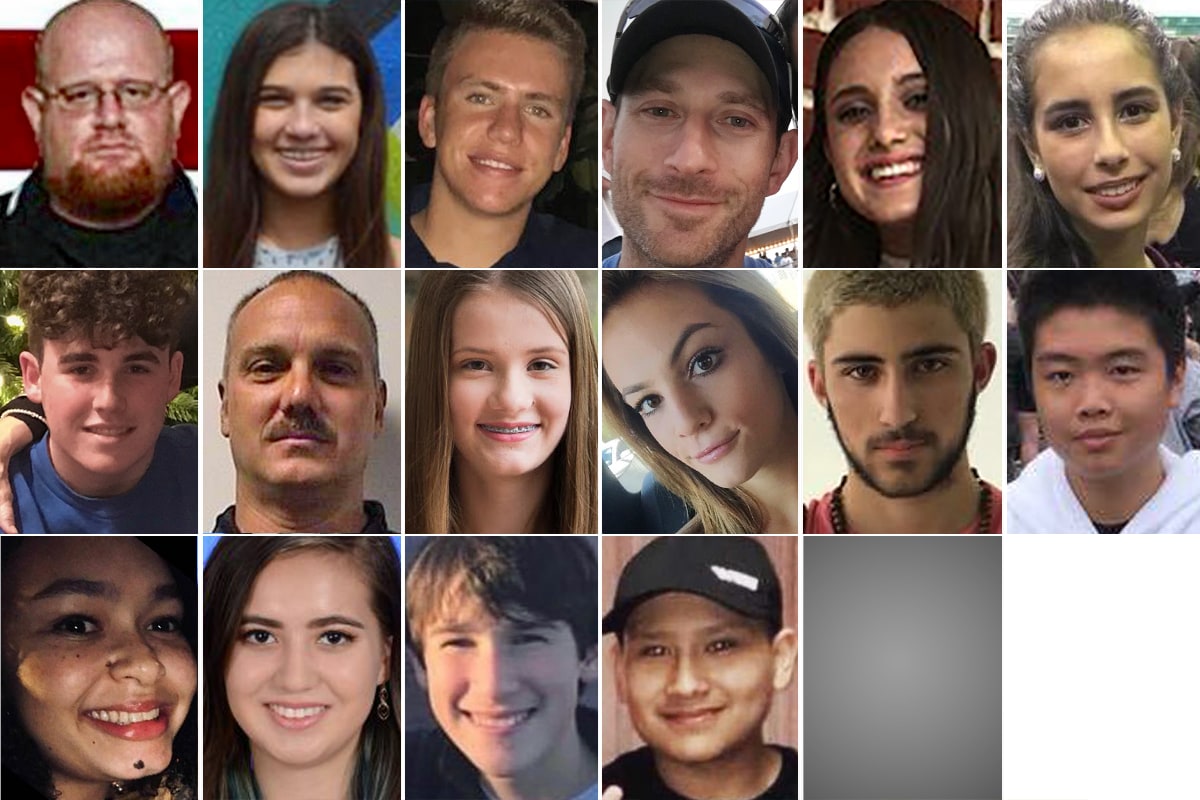
Florida school shooting: These are the 17 victims

NBC News

Florida school shooting: These are the 17 victims


Image: 16 of the 17 fatal victims of the Parkland school shooting.
16 of the 17 fatal victims of the Parkland school shooting. 


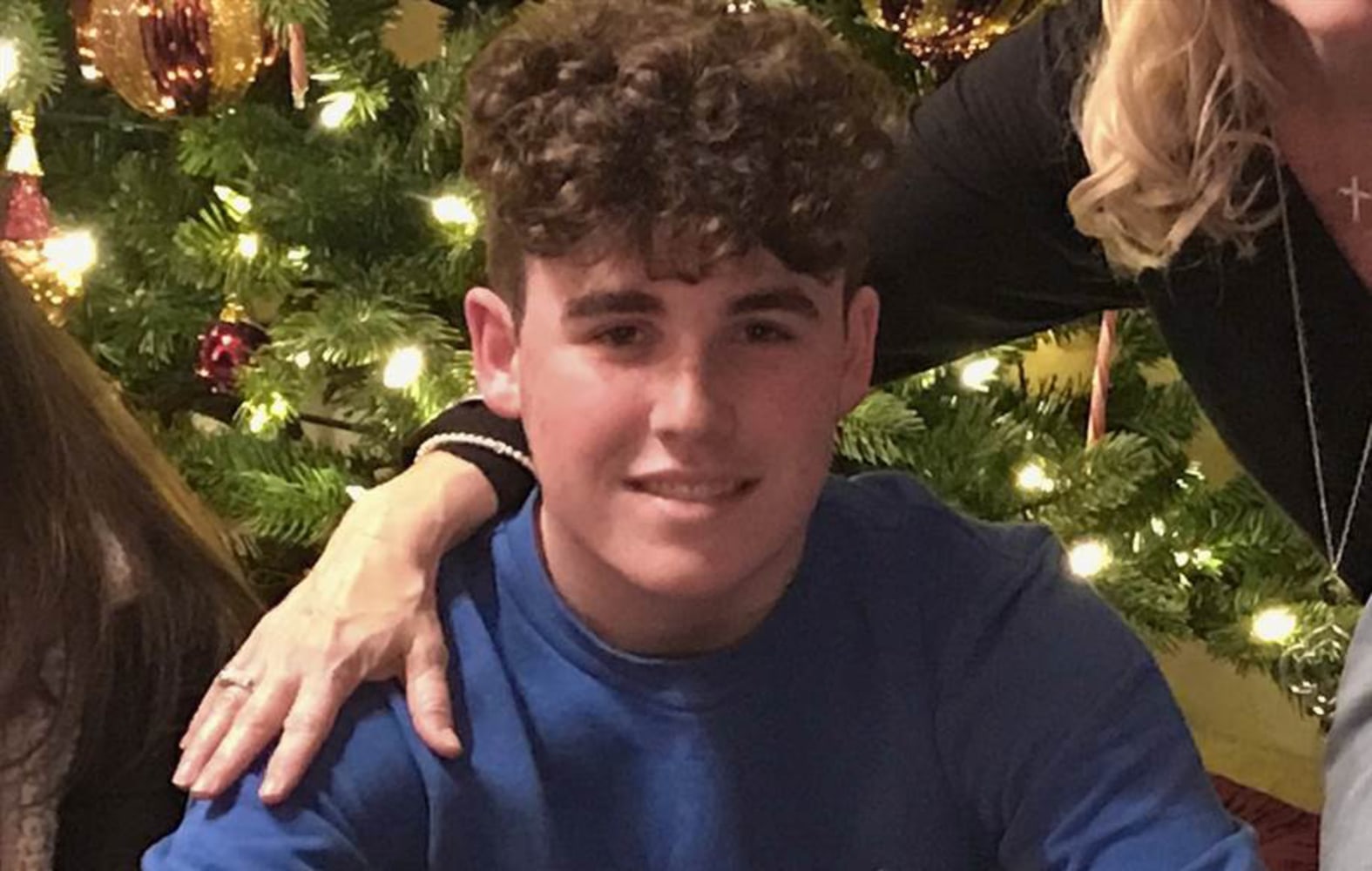
Alyssa Alhadeff, 14 – Student

Image: Alyssa Alhadeff

Alyssa wanted to become a lawyer as well as a professional soccer player, according to her mother Lori, who attended a vigil for victims on Thursday.

She was a member of the school’s Parkland Soccer Club, who honored her in a Facebook post.

“Alyssa Alhadeff was a loved and well respected member of our club and community. Alyssa will be greatly missed. Our thoughts and prayers go out to her family and all the other victims of this tragic event,” the post read.

Scott Beigel, 35 – Geography Teacher and Cross Country Coach

Image: Scott Beigel

Scott Beigel Family photo

Beigel was one of several adults at the school who died while protecting students from streams of gunfire.

According to the Sun-Sentinel, Beigel was shot and killed when he unlocked his classroom door in order to allow students to take refuge from the gunman. He was mortally wounded while trying to re-lock the door.

Martin Duque Anguiano, 14 – Student

Image: Martin Duque

Martin Duque. Courtesy Miguel Duque

Martin was described as “a very funny kid, outgoing and sometimes really quiet,” in a description posted by his older brother, Miguel, on GoFundMe.

According to the Sun-Sentinel, Miguel also paid tribute to his brother on Instagram, stating, “Words can not describe my pain. I love brother Martin you’ll be missed buddy. I know you’re in a better place. Duques forever man I love you junior!!! R.I.P Martin Duque!” The caption was accompanied by a photo of Martin.

RELATED: FBI got tip on Florida shooter Nikolas Cruz in January, but didn’t ‘follow protocols’

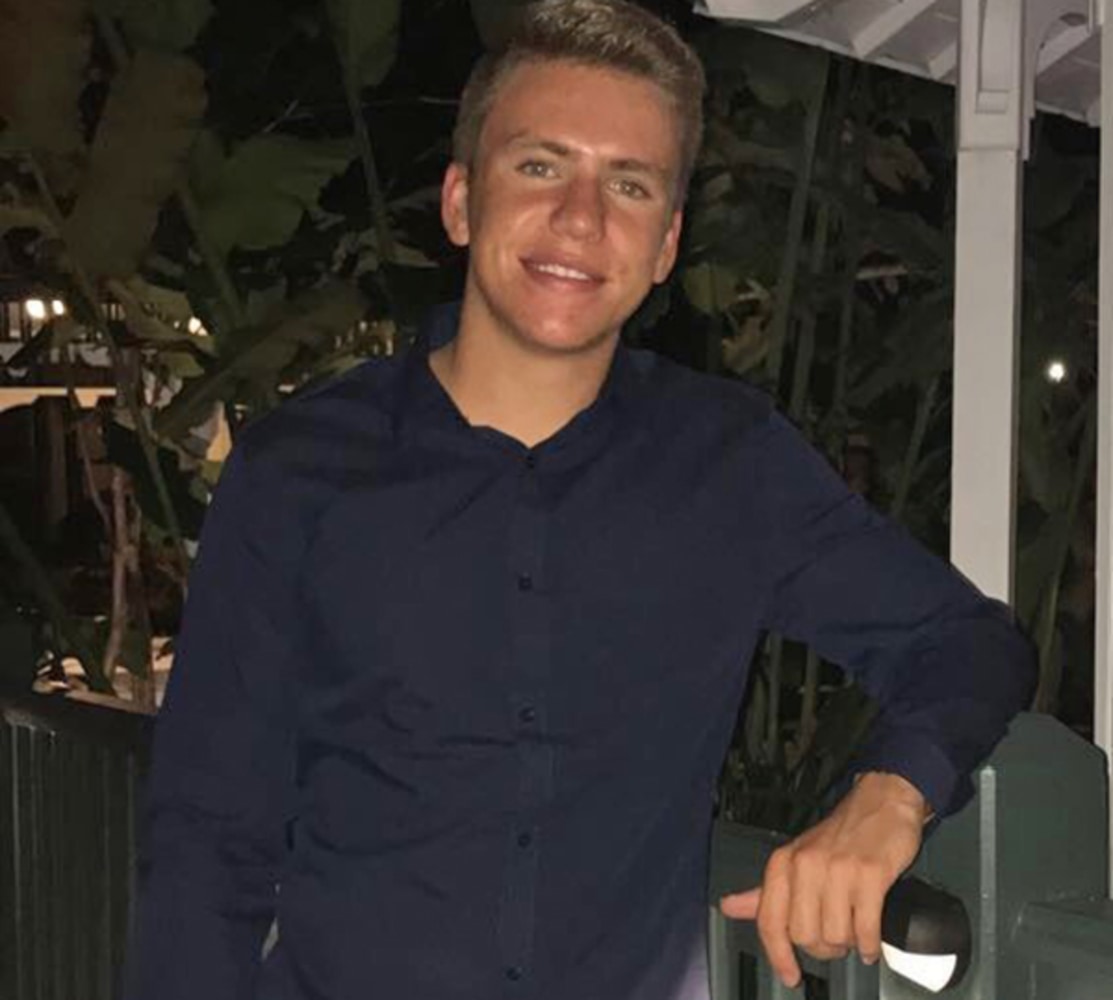
Nicholas Dworet, 17 – Student

Image: Nicholas Dworet

Nicholas Dworet

Nicholas was a swimmer at the school who had committed to competing at the college level at the University of Indianapolis at the beginning of February. He was named by the Sun-Sentinel a second-team All-County swimmer in Broward County for his 100-yard freestyle time.

His brother, Alexander, was grazed by a bullet in the back of his head.

In a statement made on Friday, Nicholas’ family said that he “dreamed of making the Olympic swim team and going to the 2020 Olympics in Tokyo” and that “he believed he could accomplish anything as long as he tried his best.”

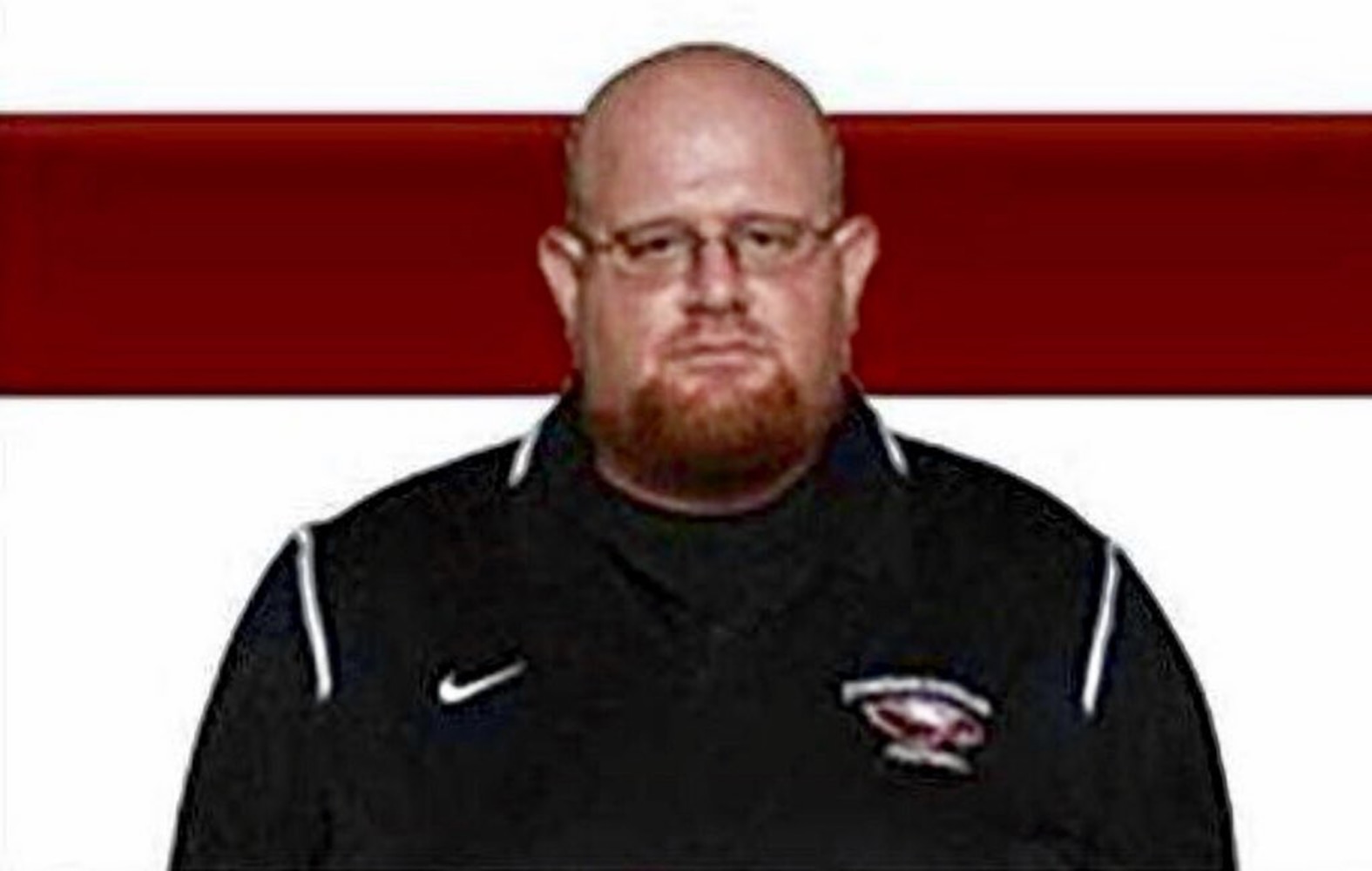
Aaron Feis, 37 – Assistant Football Coach and Security Guard

Image: Coach Aaron Feis has been identified as a deceased victim in the shooting that took place at Marjory Stoneman Douglas High School on Feb. 14, 2018.

Coach Aaron Feis Marjory Stoneman Douglas High School Football team

Feis died while using his body to shield students from bullets as the gunman opened fire.

Broward County Sheriff Scott Israel, a personal friend of Feis’, noted that the Marjory Stoneman Douglas High School alum and former football player was a beloved protector of those in the community.

“When Aaron Feis died — when he was killed, tragically, inhumanely — he did it protecting others, you can guarantee that, cause that’s who Aaron Feis was,” Israel said. “The kids in this community loved him, they adored him. He was one of the greatest people I knew, he was a phenomenal man.”

RELATED: Parkland school shooting: Football coach Aaron Feis died shielding students

Jaime Guttenberg, 14 – Student

Parkland shooting

Jaime Guttenberg via Facebook

Guttenberg was a dancer who was described as the “life of the party” during a statement made by her father, Fred, at a candlelight vigil on Thursday.

“My heart is broken. Yesterday, Jennifer Bloom Guttenberg and I lost our baby girl to a violent shooting at her school. We lost our daughter and my son Jesse Guttenberg lost his sister. I am broken as I write this trying to figure out how my family get’s through this,” Fred wrote in a Facebook post that was also made on Thursday.

Guttenberg’s Facebook page has been made into a memorialized account and features photos of her posing with friends and family.

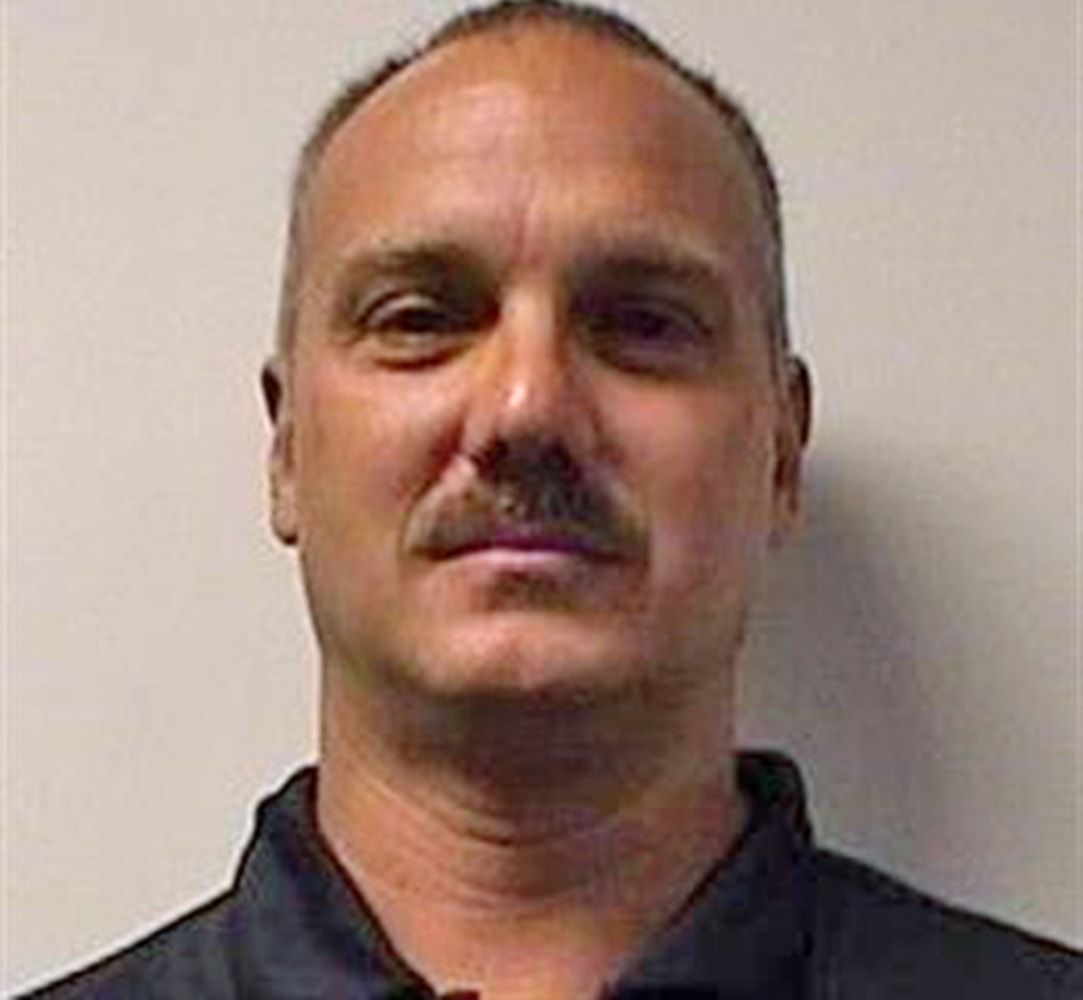
Christopher Hixon, 49 – Athetic Director, Wrestling Coach and Security Specialist

Image: Chris Hixon

Chris Hixon Marjory Stoneman Douglas High School

Hixon came from a family with an extensive background in the military and served in the U.S. Navy. He also was a huge influence on the school’s wrestling team and was killed while patrolling the school’s campus as part of his job as security specialist.

Douglas wrestler Karlos Valentin described the impact that Hixon has on his wrestlers in a statement made to the Sun-Sentinel.

“Coach Hixon, for me, was a father figure,” said Valentin, a senior heavyweight. ”We were pretty much with him six days a week – three-to-four-to-five hours. His loss was just terrible.”

Luke Hoyer, 15 – Student

Image: Luke Hoyer

Luke Hoyer Family photo

Luke was described as a “good kid” who “never got in trouble” by his grandparents, who live in South Carolina.

His uncle, Toni Brownlee, also posted about his death on Facebook: “This has devastated our family and we’re all in shock and disbelief. Our hearts are broken. Luke was a beautiful human being and greatly loved.”

RELATED: Day before Parkland, grandmother foiled grandson’s alleged school shooting plans

Cara Loughran, 14 – Student

Cara was a beach-lover and dancer whose death was felt deeply by her aunt, Lindsay Fontana.

“This morning, I had to tell my 8-year-old daughters that their sweet cousin Cara was killed in the shooting at Stoneman Douglas High School yesterday. We are absolutely gutted,” Fontana wrote in a Facebook post on Thursday. “While your thoughts are appreciated, I beg you to DO SOMETHING. This should not have happened to our niece Cara and it can not happen to other people’s families.”

According to The Baltimore Sun, Loughran’s death was also felt by Baltimore Ravens running back Alex Collins, who received Irish dance training at the Drake School in Florida. Loughran was one of three dancers at the school who also attended Douglas.

Gina Montalto, 14 – Student

Image: Gina Montalto

Gina Montalto via Facebook

Gina’s family described her as a hardworking student with a keen sense of humor who “melted each heart with an infectious smile that light up a room.”

“She was a kind spirit, always eager to lend a helping hand,” the family said in a statement. “Gina will be missed not only by her family, but by everyone whose life she touched.”

Gina was also a member of Douglas’ winter guard on the school’s state-champion marching band, which was scheduled to perform at a regional competition in Tampa on Saturday, according to the Sun-Sentinel.

The winter guard’s instructor, Manuel Miranda, wrote a Facebook post about Montalto on Wednesday.

“My heart is broken into pieces. I will forever remember you my sweet angel,” Miranda wrote.

Joaquin Oliver, 17 – Student

Image: Florida Victim Joaquin Oliver

Joaquin Oliver

Joaquin was a hip hop and sports lover who became a naturalized American citizen in January 2017, after moving to the United States from Venezuela at the age of 3, according to the Sun-Sentinel.

Because students often had difficulty pronouncing his name, Oliver went by the nickname “Guac,” short for “guacamole.”

“He’s just a goofball. He’s the only kid you’d know that would dye his hair bleach-blond, walk around school, put some tiger stripes in and just be unique. He was a unique soul,” said Tyra Hemans, 19, who said she had been friends with Oliver since freshman year.

Alaina Petty, 14 – Student

Image: Alaina Petty

Alaina Petty Courtesy of the family

Alaina was extremely devoted to her local community, according to a statement made by her family via the Latter-day Saints Living publication.

“It is important to sum up all that Alaina was and meant to her family and friends,” the statement said. “Alaina was a vibrant and determined young woman, loved by all who knew her. Alaina loved to serve.”

RELATED: After Florida shooting, Trump offers comfort — to gun owners

Meadow Pollack, 18 – Student

Image: Meadow Pollack

Meadow Pollack via Facebook

According to her cousin, Jake Maisner, Meadow was the youngest member of her family and enjoyed spending time with her family, the ­Sun-Sentinel reports.

Maisner also added that his cousin had planned on attending Lynn University in Boca Raton after she graduated.

Helena Ramsay, 17 – Student

Image: Helena Ramsey

Helena Ramsey via Facebook

Her relative, Curtis Page Jr., posted on Facebook that Helena was “a smart, kind hearted, and thoughtful person. She was deeply loved and loved others even more so. Though she was some what reserved, she had a relentless motivation towards her academic studies, and her soft warm demeanor brought the best out in all who knew her. She was so brilliant and witty, and I’m still wrestling with the idea that she is actually gone.”

Page also noted that Helena was planning on going to college next year.

Alexander Schachter, 14 – Student

Image: Alex Schachter

Alex Schachter via Facebook

According to a GoFundMepage setup by Schachter’s family in the wake of his death, Schachter played the trombone and baritone as a member of Douglas’ marching band.

Schachter’s family stated on the page that “He was a sweetheart of a kid!” and “survived by his heartbroken parents, three siblings, grandparents and countless cousins, aunts, uncles and friends.”

Carmen Schentrup, 16 – Student

Image: Carmen Schentrup

Carmen Schentrup via Broward County Schools

Last September, Carmen was named one of 53 National Merit Scholarship Program semifinalists in the county. She was one of 10 Douglas students to qualify as a semifinalist, according to The Eagle Eye, the school’s student-run news magazine.

Carmen was also a piano student who had performed on Saturday at Broward College for the South Florida Music Teachers Association Spring Festival.

Peter Wang, 15 – Student

Image: Peter Wang

Peter Wang. via Sun Sentinel

Peter was a member of the JROTC program at Douglas. His cousin, Aaron Chen, told the Miami Heraldthat Peter was last seen wearing his uniform and holding the door open so that people could escape. He had planned on celebrating the Chinese New Year with his family.

Peter’s friend, Gabriel Ammirata, also told the paper that he “funny, nice and a great friend. He’s been my best friend since third grade.”

Wisconsin GOP takes over gun bill from Democrats

Associated Press

Wisconsin GOP takes over gun bill from Democrats

Scott Bauer and Todd Richmond, Associated Press    February 21, 2018

MADISON, Wis. (AP) — Wisconsin Democrats tried to pressure Republicans into passing universal background checks for gun buyers Tuesday but GOP leaders outmaneuvered them, seizing control of the legislation and rewriting it to fund armed guards in schools.

The move capped a day of furious debate over gun control in the state Capitol in the wake of a mass shooting at a Florida high school that left 17 people dead.

Republican Attorney General Brad Schimel began the day by telling WTMJ-AM radio he would be open to letting teachers and others go armed in schools.

“Law-abiding gun owners don’t go and shoot up schools,” Schimel said. “When you make a school a gun-free school zone, the only person you’re stopping is the law-abiding gun owner who doesn’t want to get in trouble.”

Democrats, meanwhile, held a morning news conference demanding the GOP pass Democratic measures that would institute universal background checks, prohibit people convicted of misdemeanor domestic violence from buying guns and ban bump stock sales.

Students from all of Madison’s high schools appeared alongside the Democrats and demanded action.

“The incompetence of legislators who are bought out by the (National Rifle Association) has barred us from change that is long overdue,” Madison East High School junior Anne Motoviloff said.

Republicans control both houses of the Legislature. Assembly Speaker Robin Vos dismissed the Democrats’ demands as a “sad, cynical” political stunt to capture headlines. He said none of the bills have broad support in the Assembly and Democrats have never tried to talk to him about the proposals.

Minutes after the Assembly convened Tuesday afternoon, Democrats made a motion to place the universal background check proposal on the day’s agenda. In a surprise move, Republicans voted to take up the bill.

They then immediately amended it to wipe out the background checks. They added language that would create a state grant program to fund armed guards in schools. The NRA has suggested placing armed guards in every American school.

Under the Wisconsin bill, the guards would have to be police officers or former police officers. A number of schools in the state already have police liaison officers.

The GOP added other language to the bill that would make buying a gun for someone who can’t legally possess one a felony punishable by up to a decade in prison — right now it’s a misdemeanor punishable by up to nine months in jail — and create a mandatory four-year prison sentence for repeat gun violators. The mandatory sentence would end in mid-2022, when the state Justice Department would produce a report reviewing the sentence’s effectiveness.

Democrats howled that Republicans had hijacked their bill, saying armed guards can’t prevent school shootings and Republicans would take stronger action if people were dying from measles. They tried to amend the bill to restore background checks, bringing the chamber to a halt for hours as Republicans tried to decide how to handle the amendment. Republicans eventually defeated the amendment 60-35.

“This is a real, real public health crisis our state is facing,” Rep. Melissa Sargent, a Madison Democrat, said. “We need to address it as such.”

Rep. Joel Kleefisch, an Oconomowoc Republican, said celebrities and politicians use armed guards.

“Why don’t we insist our children are protected with the same fervor?” Kleefisch said. “I’m flabbergasted at the disingenuousness of our colleagues’ challenges to this real measure.”

In the end, the bill passed 71-24 with nine Democrats voting for it. Democratic Minority Leader Gordon Hintz insisted that he put Republicans right where he wanted them by forcing them to vote against background checks, a stance that will help Democrats on the campaign trail.

The measure now goes to the state Senate, which passed its own bill Tuesday that would make buying a gun for someone who can’t legally possess one a felony punishable by six years in prison. That bill now goes to the Assembly.

‘There’s just no reason for assault rifles to be in the hands of ordinary citizens’

Yahoo News

One of America’s best marksmen on gun control: ‘There’s just no reason for assault rifles to be in the hands of ordinary citizens’

Eric Adelson, Yahoo Sports        February 21, 2018 

American biathlete Lowell Bailey has no interest in owning a weapon that is “designed to kill another human being.” (Getty)

PYEONGCHANG, South Korea – Lowell Bailey is one of the best marksmen in America. The North Carolina native is so proficient with a gun that he has made a living off it. He is an Olympian biathlete. So his opinion on the roiling gun debate in his country is worth hearing.

On Tuesday night, after he had finished competing, he gave it.

“We’re a sport that uses a .22-caliber rifle,” Bailey said. “A .22-caliber rifle that shoots a single round is a much different thing than an AR-15. In my opinion, there’s just no reason for assault rifles to be in the hands of ordinary citizens.”

Bailey said he does not own an AR-15 and has no desire to get one.

“I have no interest in owning a weapon that can kill another human being – that’s designed to kill another human being,” he said. “And to do it in an expeditious way. Why is that allowed? It’s maddening.”

It’s especially maddening in the wake of yet another deadly school shooting back in the States. Since Bailey and his teammates have arrived here to live their Olympic dreams, America has mourned the deaths of 17 innocent people who lost their lives in a high school in Parkland, Florida. These athletes have mourned, too.

“Every time something like that happens, it makes me sick to my stomach, to think about,” said another member of the U.S. mixed relay team, Susan Dunklee. “This is so far removed from that kind of shooting. This is precision shooting. We’re using a .22. But there is that association of being a firearm, and it takes a lot of the joy I have out of pursuing a sport like this.”

Biathlon requires incredible physical fitness and mental strength. It also requires daily training and responsibility when using a firearm. The shadow of gun violence is beyond distressing to them.

“All of us are very saddened by it,” said Joanne Firesteel Reid. “We have to take it in our own way. As a target shooter you don’t even associate what you’re doing with something like that.”

Bailey says he supports the assault weapons ban that was in place in the U.S. for 10 years and then allowed to expire in 2004. He added that his nation’s gun laws come up in conversations he has with competitors from other countries.

“They’re absolutely baffled,” he said. “They’re baffled at the political landscape of the United States, and how we can continue to put an assault rifle into the hands of anyone who wants to walk into a gun store and buy one.”

Gun laws in South Korea are quite strict. So strict, in fact, that it affects this sport. While in most competitions, biathletes are allowed to store their rifles in their rooms, that practice is forbidden here. Competitors must keep their guns at the venue, locked away at all times unless they are using them for practice.

“They’re under lock and key,” Dunklee said. “We each have our own key. We ski around with them, then we bring them right back. Very controlled. Russia does that too.”

It is inconvenient to an extent. “It would be like if you’re a runner and someone locked up your running shoes,” said Reid. But it’s something the biathletes understand. Rules are rules, and they’re there for safety.

It’s somewhat telling that in this country, some of the most responsible and careful gun owners on the planet, the Olympic biathletes, are kept from having their own rifles in their rooms.

“Sometimes it’s even nice not to have a gun staring you in the face all day,” said the fourth member of Team USA, Tim Burke.

American Tim Burke, an avid hunter, says: “If locking up all of my sports rifles, my hunting rifles, meant saving one life, I would do it.”
Burke also spoke up on Tuesday after the team’s race, in which it finished 15th. He was not as expressive as Bailey and Dunklee, but it was clear he was upset by what happened in Florida.

“Not only am I a biathlete, I’m also an avid hunter,” he said. “If locking up all of my sports rifles, my hunting rifles, meant saving one life, I would do it.”
The fear among many American gun owners is that the government will confiscate their weapons and infringe upon their Constitutional right to bear arms. The reasons for that concern go back to the founding of the country, and a wariness of a too-powerful government that lasts to this day.

But there’s a way to preserve the sanctity of the Second Amendment and make a change for safety’s sake. There is a path to preserve our history, protect our kids and defend our way of life.

“There was a time in our country when the means to defend yourself against an oppressive government was an appropriate justification,” Bailey said. “That time has passed.”

He paused for a second before continuing: “That’s a debate. But I think there needs to be a respectful dialogue, an open dialogue without special interests involved. It’s time our politicians sat down and made some tough choices. What’s more important? Owning an AR-15 or having innocent school children get killed?”

Bailey, who is not a member of the National Rifle Association, has a daughter and another child on the way. His heart breaks for the families affected by this tragedy and all the others. This matters to him as a citizen and as a parent.

“I compete against all these World Cup nations,” he said. “Germany, Norway. How good are they on the range? They’re great at rifle marksmanship. Do you know how strict their gun control laws are? It’s a travesty that America hasn’t changed and continues to go down this path.

“It makes me want to cry.”

Billionaire Bill Gates says his taxes are too low.

CNN
February 18, 2018

Bill Gates says he’s paid more than $10 billion in taxes but that the government should make wealthy people like him “pay significantly higher taxes” http://cnn.it/2Cuj7th

Billionaire Bill Gates says his taxes are too low

Bill Gates says he's paid more than $10 billion in taxes but that the government should make wealthy people like him "pay significantly higher taxes" http://cnn.it/2Cuj7th

Posted by CNN on Sunday, February 18, 2018

Teen invents device to protect students from shooters.

CNN
February 20, 2018

When this teen noticed a major flaw in his school’s active-shooter emergency plan, he devised a solution in his metal shop class http://cnn.it/2ooXqWK

Teen invents device to protect students from shooters

When this teen noticed a major flaw in his school’s active-shooter emergency plan, he devised a solution in his metal shop class http://cnn.it/2ooXqWK

Posted by CNN on Tuesday, February 20, 2018

New Pennsylvania congressional map could impact balance of power in the US House

ABC News

New Pennsylvania congressional map could impact balance of power in the US House

By John Verhovek, Adam Kelsey          February 20, 2018

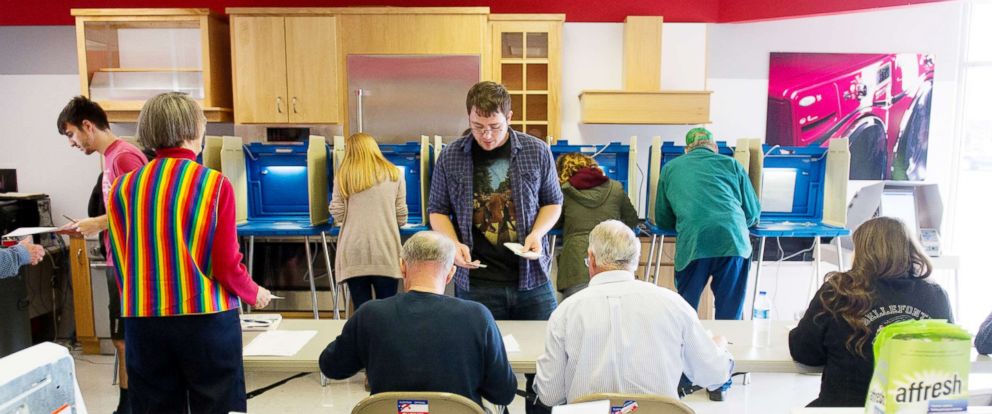
PHOTO: Voters cast their ballots in a polling location inside Mikes TV and Appliance on Nov. 8, 2016, in State College, Pa. Jeff Swensen/Getty Images FILE. Pennsylvania district’s special election could be bellwether for 2018 midterm elections


The Pennsylvania Supreme Court has issued a new congressional map for the state — a decision that could have major ramifications for the balance of power in the U.S. House of Representatives.

The court issued the map after Governor Tom Wolf, a Democrat, and the Republican-controlled state legislature, were unable to submit a map satisfying both parties by the court-ordered Thursday night deadline.

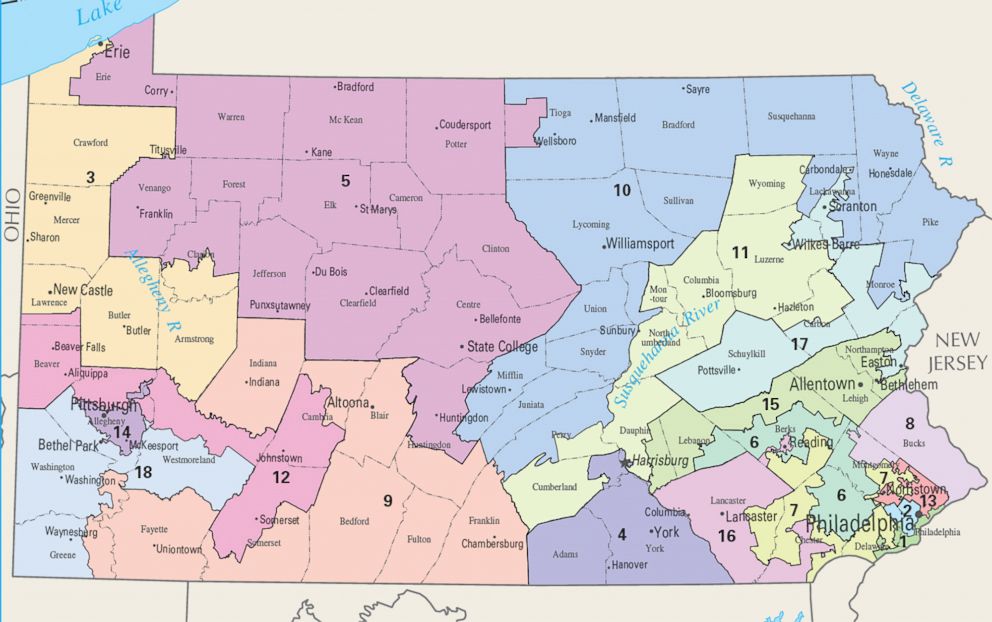
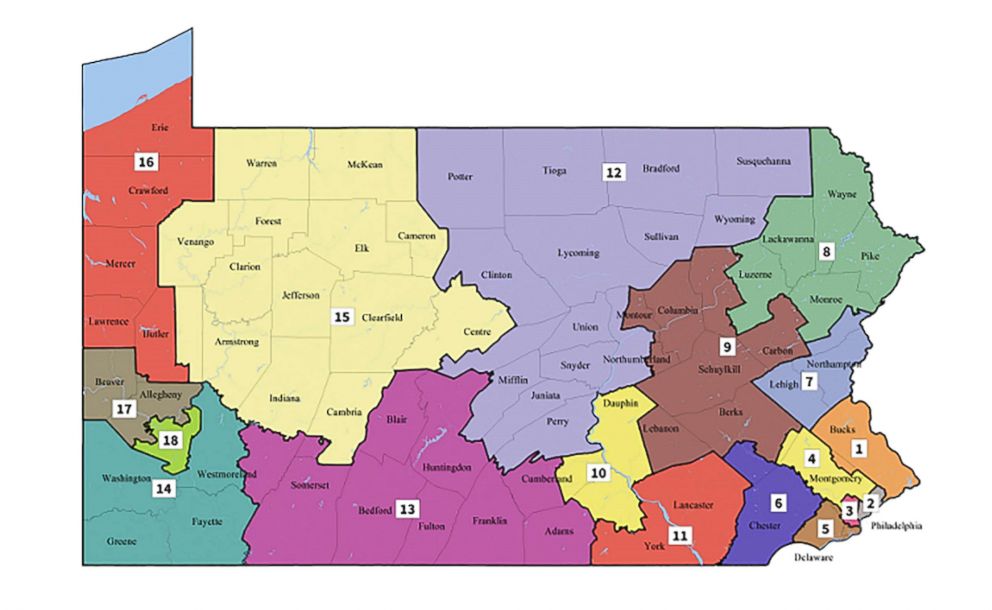
PHOTO: A new congressional map issued by The Pennsylvania Supreme Court.The Supreme Court of Pennsylvania. A new congressional map issued by The Pennsylvania Supreme Court. Republicans in the state are expected to challenge the new map in court.


“Implementation of this map would create a constitutional crisis where the Pennsylvania Supreme Court is usurping the authority of the Legislative and Executive branches. We anticipate further action in federal court,” Pennsylvania House Speaker and State Senate President Pro Tempore Joseph Scarnati wrote in a statement Monday.

The new map significantly redraws the districts that encompass the Philadelphia suburbs, a key purple part of a purple state where Democrats are poised to pick up seats, and it creates another competitive district in northeast Pennsylvania near the Allentown area.

Hillary Clinton defeated Donald Trump in both the suburban Philadelphia districts currently represented by Rep. Pat Meehan and Ryan Costello in the 2016 presidential election.

Thirteen of the districts in the previous map went to Donald Trump in the 2016 presidential election, while just five went to Hillary Clinton. Ten of the districts in the new map were won by Trump, while eight went to Clinton, according to an analysis by redistricting expert Dave Wasserman of the Cook Political Report.

Republicans currently hold 12 of the state’s 18 congressional districts, while Democrats control just five. One seat is currently vacant but will be filled following the March 13 special election to replace former Rep. Tim Murphy, R-Penn., who resigned over a sex scandal last year.

Under the newly issued map, both candidates in the March special election, Conor Lamb and Rick Saccone, would find themselves living outside of the 18th congressional district for which they are currently running to represent.

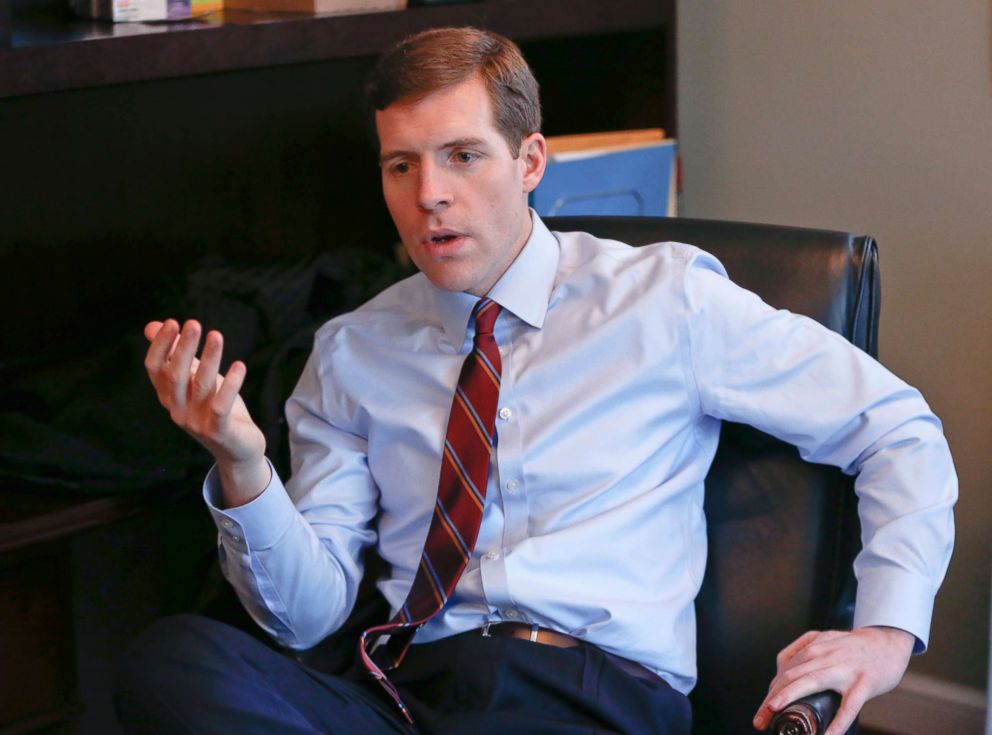
Democrat Conor Lamb, who lives in Mt. Lebanon, would find himself in the new 17th district, parts of which are currently represented by Republican Rep. Keith Rothfus. It’s an area that would receive an influx of suburban Pittsburgh Democratic voters and a race that could become more competitive than it has been in the past.

PHOTO: Conor Lamb, the Democratic candidate for the special election in Pennsylvanias 18th Congressional District, talks about his campaign at his headquarters in Mount Lebanon, Pa. on Feb. 7, 2018.Keith Srakocic/AP. Conor Lamb, the Democratic candidate for the special election in Pennsylvania’s 18th Congressional District, talks about his campaign at his headquarters in Mount Lebanon, Pa. on Feb. 7, 2018.


Republican Rick Saccone, who lives in Elizabeth, moves into the new 18th district encompassing much of the current 14th district which is presently represented by Democratic Rep. Mike Doyle. Democrats would continue to have a distinct advantage given the district’s inclusion of Pittsburgh’s urban core.

Prior to the court’s decision, both candidates have signaled that they are interested in running again in November, win or lose. In a statement provided to ABC News, Saccone called the new map “partisan,” but said he was “going to run and win in whatever district I compete in because it’s not about the lines that are drawn, but about the values I represent.” Lamb’s campaign did not immediately respond to a request for comment.

Despite the uncertainty ahead, outside groups remain focused on a potentially momentum-shifting victory in the district next month.

American Bridge, a Democratic Super PAC, is releasing a new digital ad this week bashing Saccone for “out of touch” comments on the region’s opioid crisis. But by happenstance, the ad will run on Facebook for users across Pennsylvania, not just in the 18th district, according to a PAC official, a move that could pay dividends should Saccone run elsewhere come November.

Numerous map submissions from both sides of the aisle were presented to the state Supreme Court, which ordered the state’s congressional boundaries redrawn late last month. But after Wolf vetoed a map submitted Republican leaders in the statehouse last Tuesday, it became clear both sides were not going to reach an agreement by the February 16 deadline.

Republicans in the state harshly criticized Wolf for rejecting the map they submitted, saying his decision “sets forth a nonsensical approach to governance.”

“This entire exercise, while cloaked in ‘litigation,’ is and has been nothing more than the ultimate partisan gerrymander – one brought about by the Democrat Chief Executive of the Commonwealth acting in concert with politically-connected litigants in order to divest the General Assembly of its Constitutional authority to enact Congressional districts,” Pennsylvania House Speaker Mike Turzai and State Senate President Pro Tempore Joseph Scarnati wrote in a statement last Tuesday.


Wolf submitted his own map last week that he claimed “combined features of legislative submissions” and was “statistically more fair than the Republican leaders’ submission.”

“From the outset, I have made clear I wanted a map that was fair and removed the partisanship that Pennsylvanians have been forced to live under since the 2012 elections,” Governor Wolf said in a statement Thursday. “This map takes features from Republican and Democratic submissions, while still meeting the court’s orders and opinion, to provide Pennsylvanians with a fair map.”


“If the Pennsylvania map changes, it’s hard to imagine how the Republicans hold control of the House so maybe that’s why we’re seeing the desperation we’re seeing,” Michael Li, a redistricting expert at the Brennan Center for Justice, a non-partisan public policy institute, told ABC News.

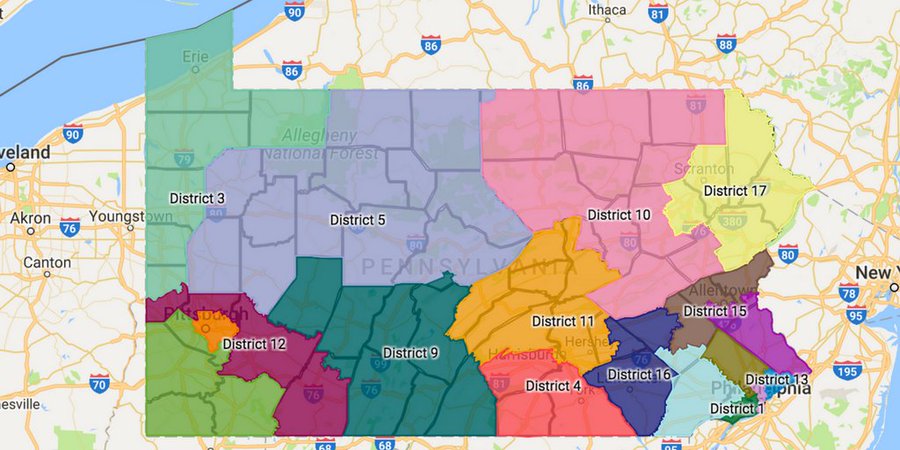
PHOTO: A map from the National Atlas shows Pennsylvanias congressional districts for the 113th Congress.nationalatlas.gov. A map from the National Atlas shows Pennsylvania’s congressional districts for the 113th Congress.

ABC News’ Emily Goodin contributed to this report.

Trump Administration Takes Another Step To Roll Back Obamacare

HuffPost

Trump Administration Takes Another Step To Roll Back Obamacare

Jonathan Cohn, HuffPost          February 20, 2018 

Republican efforts to roll back the Affordable Care Act’s insurance reforms continued Tuesday, when the Trump administration proposed regulations that would make it easier for health insurers to sell cheap, short-term policies that leave out key benefits and are available only to people in good health.

Announcement of the proposal, which has been in the works for several months, came two months after President Donald Trump signed Republican legislation eliminating the individual mandate, which makes people pay a financial penalty if they don’t have insurance.

Taken together, the two steps ― getting rid of the mandate and then changing the rules on short-term plans ― could accelerate an evolution already underway for people buying insurance on their own, rather than through an employer.

In many states, premiums have risen substantially in the past few years, as plans have struggled to attract customers in relatively good health. Federal tax credits, which the Affordable Care Act also created, insulate low- and many middle-income people from these increases ― allowing them to get comprehensive coverage, regardless of medical status, at low prices.

But people at higher incomes receive no such assistance and, in some cases, the premiums make it difficult or even impossible for them to get traditional insurance. This is particularly true in more rural parts of the country, and especially for older consumers, thanks to a combination of factors ― some related to the design of the ACA, and some related to the way hostile Republican officials at the state and national level have implemented it.

The regulation that the administration proposed on Tuesday would make it easier for some of these people to get short-term plans, which are generally cheaper because they do not have to follow all of Obamacare’s rules. They do not have to cover mental health and other “essential benefits,” for example, and they can have annual or lifetime limits on the bills they will pay.

But short-term plans are generally not available to people with pre-existing conditions and wouldn’t cover the expenses of people with some serious illnesses anyway. If short-term plans were to draw off a substantial number of relatively healthy customers, they would drive up the price of traditional, fully regulated insurance plans even more.

In the end, the new regulation could allow some people ― especially those who find current coverage unaffordable ― to buy ultra-cheap, relatively skimpy plans.

“It’s time to offer more affordable coverage options,” Seema Verma, administrator of the Centers for Medicare and Medicaid Services, said during a conference call Tuesday. “It’s about allowing individuals, not the government, to make decisions about what works for them and their families.”

But the new regulations would also render the law’s insurance reforms less effective, making it more difficult for people who need or want more comprehensive coverage to get it.

“This is the Trump administration’s end run around Congress,” Sabrina Corlette, research professor at Georgetown University’s Center on Health Insurance Reforms, told HuffPost. “The end result will be higher premiums and fewer plan choices for people with health care needs, as well as for healthy people who want the kind of benefits and financial protection that real insurance is supposed to provide.”

A key variable in all of this is the states, which have authority to regulate such plans on their own. Several already have strong rules on the book, as a recent survey of state policies from the Commonwealth Fund noted. More states could take similar action.

The Kind Of Insurance Obamacare Was Supposed To Eliminate

Short-term plans are a vestige of the old health care system, the one that existed before the ACA took effect and made comprehensive coverage more widely available. At least in theory, these plans are primarily for people with temporary gaps in coverage ― because they are in between jobs, or perhaps about to have a change in their life circumstance like getting married.

Obamacare allowed insurers to keep selling such plans, but it also gave the federal government authority to regulate them tightly.

The Obama administration did just that. When it wrote the rules for the individual mandate, the administration said that short-term plans would not count as qualifying coverage, which meant that people who had these plans would still have to pay the penalty. The administration also limited these short-term policies to durations of just three months — although that regulation just took effect this year, and some insurers have found ways to sell a year’s worth of coverage even with that regulation in force. (Basically, they allow customers to buy four plans, each for a duration of three months, at one time.)

The Obama administration made these decisions because the whole point of the ACA’s private insurance reforms was to transform the market for people buying coverage on their own, so that everybody ― healthy and sick, young and old ― was paying into one pool and was part of the same system. That way, insurers would have enough money to cover the bills of people with serious medical conditions.

But the Obama administration wasn’t simply out to ensure the newly reformed insurance markets could work. Regulations on short-term plans were also meant to protect consumers.

Frequently, people who bought short-term plans ended up facing crushing medical bills, because agents or insurers hadn’t made limits on these plans clear ― or because insurers had found reasons not to cover bills after the fact. In one case that’s currently the subject of a lawsuit in federal court, a heart attack victim who had a short-term policy is on the hook for $900,000, according to a story on short-term plans by Reed Abelson of The New York Times.

Now, Republicans are undoing these reforms. The regulations that the Trump administration just proposed would rescind the Obama administration’s limit on short-term plans, so that insurers could sell policies that last a full year. Starting in 2019, people buying such plans wouldn’t have to worry about paying the individual mandate penalty, since the GOP’s new tax legislation reduces that penalty to zero.

These steps could help split insurance markets into two ― one with relatively cheap, skimpy short-term plans that would be available to people who are in good health, and one with highly expensive comprehensive insurance that would be available to anybody, regardless of pre-existing conditions.

People who bought the short-term plans would frequently save money, as long as they didn’t get sick and find themselves on the hook for bills the short-term plans don’t cover. But premiums for those comprehensive policies could get even higher than they are now.

The majority of people buying coverage on their own are eligible for tax credits that offset premiums, which get bigger as premiums go higher. In general, they won’t have to pay more for coverage, even as it gets more expensive. But people who earn too much to qualify for the tax credits ― anybody with income above four times the poverty line, or $98,400 for a family of four ― would bear the full brunt of those higher premiums.

It’s a problem that already exists in some states, like Iowa and Tennessee, but it could get worse and affect even more Americans if the Trump administration regulations go into effect, especially if the new measures cause more insurers to abandon markets altogether.

Just how big a difference this regulation would ultimately make is difficult to say. In a fact sheet accompanying the proposed regulations, HHS said that for 2019 it expects 100,000 to 200,000 people to drop traditional coverage and buy short-term policies instead. That is not a huge number.

But over time, the plans could draw even more people, especially if insurers and the independent brokers who sell plans push them aggressively. And some experts think that rough estimate, of just 100,000 to 200,000 people shifting plans initially, is too low.

The Regulation Isn’t Final Yet ― And States Will Have Their Say

The regulations must go through a formal, 60-day comment period before they become final. During that period, the three departments issuing the regulation ― Health and Human Services, Labor, and Treasury ― are likely to hear from a variety of experts, advocates, and industry groups wary of the changes.

One of them is America’s Health Insurance Plans, the largest trade organization representing insurers. “While we are reviewing the proposed rule to understand its impact on the people we serve, we remain concerned that expanded use of short-term policies could further fragment the individual market, which would lead to higher premiums for many consumers, particularly those with pre-existing conditions,” Kristine Grow, group’s senior vice president for communications, said on Tuesday.

But not all insurers will be unhappy if these new regulations are finalized. UnitedHealth, which dropped out of AHIP a few years ago, already sells such policies. In an earnings call in October, the company’s chief executive said the opportunity to sell more of them ― along with so-called “association health plans,” which allow small businesses to buy policies that are also exempt from some of the Affordable Care Act’s regulations ― would be a profit opportunity.

The proposed regulation also seeks comment on the question of whether, somehow, these short-term plans should be “renewable” ― that is, whether insurers should allow people to stay on the same plans, year after year. Of course, doing so would seem to mean they aren’t really short-term plans at all, but rather an alternative form of long-term insurance that simply isn’t subject to regulations protecting people with pre-existing conditions. In theory, that is not legal under the Affordable Care Act.

If and when the regulation becomes final, as seems likely, attention will shift quickly to state officials, who can regulate insurance plans on their own. States could decide to keep the three-month limit in place, for example. Or they could go as far as New Jersey did, and prohibit short-term plans altogether.

They could also decide, separately, to introduce their own form of the individual mandate, as officials in at least some states are already talking about doing.

This article has been updated to include comment from an America’s Health Insurance Plans representative.