For Decades, Our Carbon Emissions Sped the Growth of Plants — Not Anymore
Yale Environment 360 – August 14, 2023
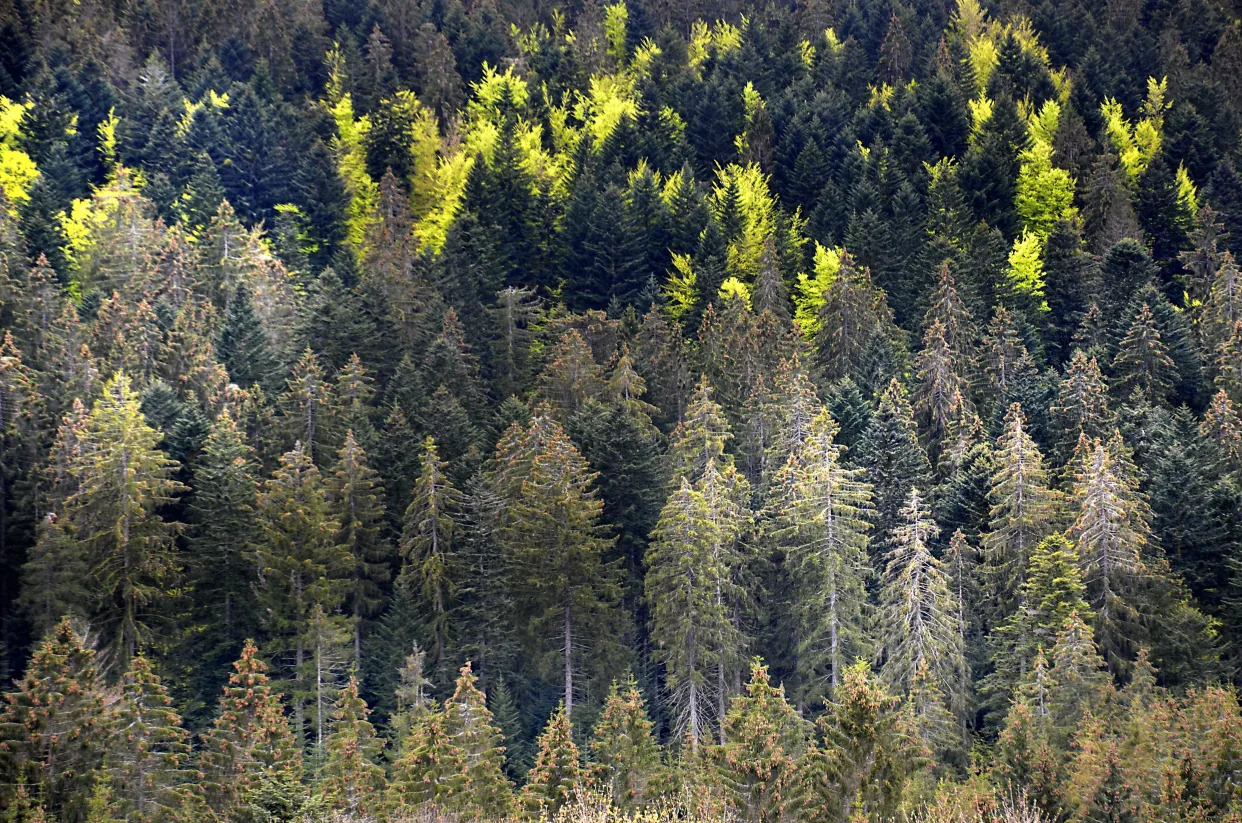
A forest afflicted by drought. pxfuel
For the last century, rising levels of carbon dioxide helped plants grow faster, a rare silver lining in human-caused climate change. But now, as drier conditions set in across much of the globe, that uptick in growth is leveling off, a new study finds.
Through photosynthesis, plants convert water and carbon dioxide into storable energy. By burning fossil fuels, humans have driven up carbon dioxide levels, from around 280 parts per million before the Industrial Revolution to 417 parts per million last year. That extra carbon dioxide has sped up photosynthesis, spurring plants to soak up more of our emissions and grow faster. Since 1982, plants globally have added enough leaf cover to span an area roughly twice the size of the continental U.S.
But the effect appears to be wearing off. While carbon dioxide levels continue to climb, more than a century of warming has also made the climate more hostile to plants. Drier conditions in many parts of the world mean that, even as plants get more carbon dioxide, they are getting less of the other key ingredient needed for photosynthesis — water.
For the new study, scientists gathered data from ground monitors measuring levels of carbon dioxide and water in the air from 1982 to 2016. They compared these data with satellite images of forests, grasslands, and farms, using artificial intelligence to spot changes over time. Small differences in the green hue of plants, for instance, indicate a shift in the rate of photosynthesis.
The study found that photosynthesis sped up until around the year 2000, at which point it began to level off. Looking ahead, authors say, the rate of photosynthesis could flatten out entirely, making it harder to keep rising carbon emissions — and warming — in check. The findings were published in the journal Science.
Vivek Ramaswamy says US ‘climate change agenda’ is a ‘hoax’
Nick Robertson – August 12, 2023
GOP presidential candidate Vivek Ramaswamy railed against climate-conscious business policy at an Iowa State Fair appearance Saturday.
In an fireside chat with Iowa Gov. Kim Reynolds, Ramaswamy said that environmental, social, and corporate governance (ESG) business policies are among the “grave threats to liberty,” and said “the climate change agenda” is a “hoax.”
“They’re using our money… to implement social and environmental agendas through the backdoor. Through corporate America,” Ramaswamy said. “Using your retirement funds and your investment accounts to vote for racial equity audits or Scope 3 emissions caps that you didn’t know they were using your money to do, and that Congress would have never passed through the front door.”
ESG has become a political punching bag for conservatives, who view it as corporations overreaching into the political space. The policies increase diverse hiring, reduce carbon emissions and manage how they invest their money with climate in mind.
“This is actually one of the grave threats to liberty today. Wherever you stand on climate change — I think most of the climate change agenda is, I’m just going to say it, is a hoax,” Ramaswamy said. “I’m going to call that for what it is.”
The entrepreneur also claimed ESG is comparable to the “back-rooms deals” of Old World Europe, and called for more public debate on the topic.
“Wherever you stand on that, we should settle that through free space and open debate in the public square in a constitutional republic,” he said. “That’s the way we do things, post-1776, on this side of the Atlantic.”
Conservatives’ crusade against ESG has drawn ire from Democrats, who have called many of the follies a waste of time. Rep. Katie Porter (D-Calif.) called a House hearing over the issue the “stupidest hearing I’ve ever been to.”
Ramaswamy’s campaign has gained steam in recent months, rising from an unknown political figure to third in national polling averages — passing former Vice President Mike Pence last month. A biotech entrepreneur from Ohio, Ramaswamy has garnered about 7 percent support in recent polls.
Protecting oneself from the summer sun and its damaging ultraviolet rays is often not straightforward. And public health messaging around when and how to be screened for skin cancer has become somewhat confusing.
In April 2023, the U.S. Preventive Services Task Force, an independent national panel of science experts, provided updated recommendations on skin cancer screening following a systematic review of existing research. The task force concluded that the evidence does not support annual widespread skin screening of adolescents and adults, but that catching cancers at the earliest stages reduces the risk of death from skin cancer.
At first glance, these statements appear conflicting. So The Conversation asked dermatology experts Enrique Torchia, Tamara Terzian and Neil Box to help unravel the task force recommendations, what they mean for the public and how people can minimize their skin cancer risk.
Basal cell carcinoma and squamous cell carcinoma – collectively known as keratinocyte cancers – account for more than 97% of skin cancer cases, but invasive melanomas cause the most deaths. Keratinocyte cancers arise from basal cells and the more differentiated squamous cells in the epidermis – the top layer of skin – whereas melanoma comes from melanocytes found at the junction of the epidermis and the dermis, or middle layer.
Unlike normal cells, skin cancer cells grow without constraints, acquiring the ability to invade down into the dermis.
Invasive melanomas are classified by stages 1 through 4. The higher the number, the more invasive the tumor is into the dermis and to other organs of the body in a process called metastasis.
What are the main causes of skin cancer?
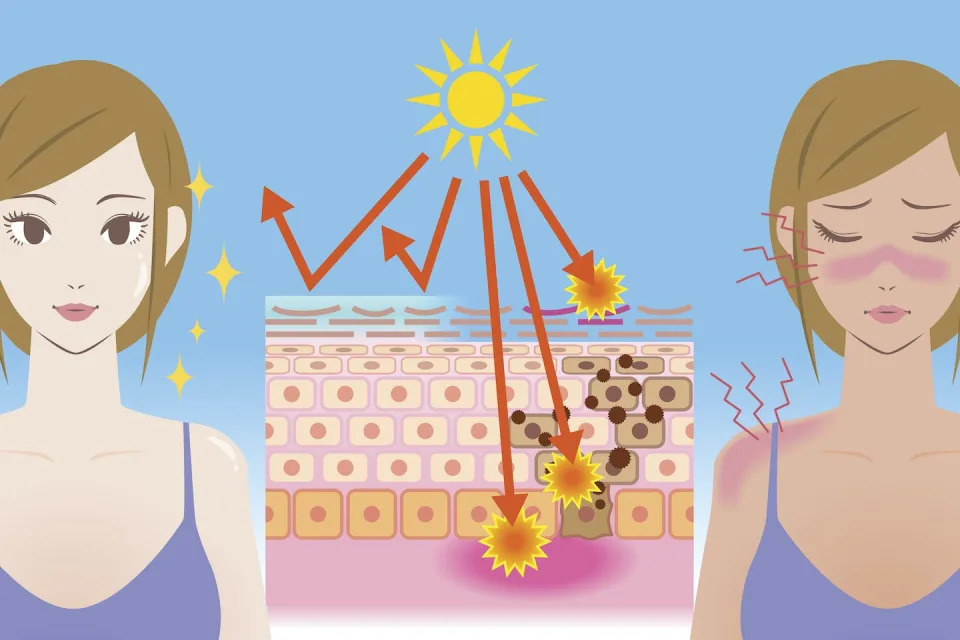
Overexposure to ultraviolet rays causes the majority of skin cancers. Both light- and dark-skinned people can get skin cancer, but light-skinned individuals have a greater risk. Those with light skin, light or red hair, or with numerous moles, are more susceptible to skin damage and severe burns by ultraviolet rays. Darker-skinned individuals produce more of the protective pigment called melanin.
Overexposure to UV light damages skin, causing sunburns and stimulating melanocytes to make melanin, the protective pigment that darkens skin during tanning. Sunscreen can protect skin from UV damage. chombosan/iStock via Getty Images Plus
Tanning serves as the body’s protective response to skin damage from ultraviolet rays, stimulating melanocytes to produce melanin. People who use tanning beds are at a higher risk of skin damage and skin cancers. This is why the American Academy of Dermatology and others recommend avoiding tanning beds. Outdoor workers or those who spend time outdoors recreationally, especially at higher elevation, are exposed to more ultraviolet light.
A history of sunburns also puts people at greater risk of developing skin cancer. Because the damage from ultraviolet, or UV, exposure is cumulative, skin cancer is more prevalent in people over 55 years old.
Survivors of skin cancers are also more likely to get another cancer in their lifetime. Moreover, those who had a squamous cell carcinoma may be at higher risk of dying from noncancer causes. The reasons for these observations are not well understood but may be linked to inflammation or altered immunity, or both, in skin cancer survivors.
What is the debate behind screening?
The ongoing debate revolves around whether more screening reduces the death toll from melanoma.
Since the early 1990s, the incidence of melanoma has risen dramatically in the U.S. This increase may be due in part to more emphasis on early detection. More melanomas have been found, particularly those identified at the earliest stage, also known as stage 0 or melanoma in situ.
Despite this, the rate of death per capita from melanoma has remained unchanged over the last 40 years. Researchers have attributed this fact to overdiagnosis, in which suspicious lesions are diagnosed as early melanomas, even though they may not actually be melanomas or progress to be invasive melanomas, which have the worst prognosis.
This observation suggests that widespread screening may result in unnecessary surgical biopsies and increased psychological stress associated with a cancer diagnosis.
However, a recent study published after the task force recommendations showed that patients with melanoma in situ had a slight risk of death from melanoma, but lived longer than the average person. The authors speculated that the diagnosis of early stage melanoma resulted in a greater awareness of the patient’s overall health, leading to more health-conscious behavior. So, there may be additional benefits to screening the public.
What did the task force base its new recommendations on?
The task force reviewed current and past data on the major types of skin cancers. The expert panel relied in part on the results of a large public skin cancer screening program in Germany. This program initially examined 20-year-olds from a single state and subsequently expanded the program nationwide to include people over 35. However, death rates from melanoma were unchanged compared to areas where skin exams were not offered.
The results of the German screening program did not provide strong confidence that annual widespread public screening of adults would reduce skin cancer deaths compared with current practices. However, the task force did conclude, based on numerous studies involving millions of patients, that detecting melanoma at early stages when tumors are less invasive improved patient survival.
When should you get a skin exam?
The American Academy of Dermatology, the Skin Cancer Foundation and the CDC recommendmonthly self-checks. This requires familiarity with your skin or that of your family members. Luckily, there are many online guides on detecting suspicious skin lesions.
Whenever you have a concern about a spot on your skin, seek medical advice. Annual or more frequent exams are also recommended for high-risk groups. This includes those who are older or susceptible to getting skin cancers, skin cancer survivors and immunocompromised people like organ transplant recipients.
Between 8% to 30% of the U.S. population gets an annual skin exam, but the numbers are imprecise because screening rates have not been well studied. Access to screening may also be challenging for some people. In response, nonprofits like the American Academy of Dermatology, the Skin Cancer Foundation and The Sun Bus provide resources for free exams. However, these opportunities are often few and far between.
Based on internal unpublished data from The Sun Bus, our mobile clinic operating in the central and southern U.S., a significant number of individuals seeking free exams were primarily motivated by concerns about a skin lesion and the cost of visiting a dermatologist.
Our data suggests that screening programs attract individuals who are proactive and health-conscious.
How can you minimize the risk of skin cancer?
Strategies that limit UV exposure will reduce skin cancer risk. This includes avoiding sunburns by:
Finding shade
Covering exposed skin
Using a hat and sunglasses
Using and reapplying sunscreen routinely
A broad-spectrum sunscreen and lip balm with a Sun Protection Factor (SPF) of at least 30 when applied correctly will block 97% of ultraviolet rays. Apply these products 15-20 minutes before heading out into the sun and reapply every two hours.
UV light is most intense between the hours of 10 a.m. to 4 p.m. It is a good idea to pay attention to the UV index – a forecast by zip code that projects risk of UV exposure on a scale of 0 to 11. A UV index below 2 is the safest, whereas 11 represents extreme danger.
Ideally, clothing should be rated with an Ultraviolet Protection Factor (UPF) of 50. Wearing regular long-sleeved clothing and pants will also provide some protection.
These measures can keep your skin healthy into your golden years by reducing skin aging and cancer caused by ultraviolet light.
This article is republished from The Conversation, an independent nonprofit news site dedicated to sharing ideas from academic experts. If you found it interesting, you could subscribe to our weekly newsletter.
Enrique Torchia received funding from American Cancer Society and Dermatology Foundation.
Neil Box receives funding from the National Institutes of Health and the American Skin Association. He is affiliated with Caris Life Sciences and the Colorado Melanoma Foundation.
Tamara Terzian received funding from National Institutes of Health, Dermatology Foundation, Skin Cancer Foundation, American Skin Association, American Cancer Society, Cancer League of Colorado, and Colorado Clinical Translational Sciences Institute. She is affiliated with the Colorado Melanoma Foundation and the University of Colorado.
Humans have pumped so much groundwater from the Earth that it’s actually caused the planet’s axis to shift, a new study found
Carla Delgado – August 11, 2023
We’re moving so much water from under the continents to the oceans that it’s affecting our axial tilt, a new study found.DrPixel / Getty Images
New research shows that persistently pumping groundwater has shifted Earth’s axis.
The reason is that we’re moving all that water mass from under the continents to the oceans.
Most groundwater ends up in our oceans and raised sea levels by 6.24 mm from 1993-2010.
Below the Earth’s surface lies over a thousand times more water than all the rivers and lakes in the world.
This groundwater accounts for almost all the freshwater on the planet.
But in many areas of the world, groundwater is being extracted faster than the rate that it naturally recharges.
A recent study found that humans are pumping so much groundwater that it’s not only increasing sea levels, it’s actually shifting the entire planet on its axis.
How groundwater depletion affects Earth’s rotational pole
The Earth’s rotational pole normally changes and wanders by about several meters each year.
Many factors contribute to this axial wobble, including the melting of snow and ice in the Northern Hemisphere every spring, which significantly changes the distribution of water mass on Earth.
Extracting groundwater also redistributes water mass. Groundwater naturally exists under continents, but about 80% finds its way to the ocean through rivers after extraction, therefore shifting all that water mass from Earth’s continents to its oceans.
And we’ve been extracting so much groundwater that it caused the Earth’s rotational pole to drift 78.48 cm toward 64.16 degrees east at a rate of about 4.36 cm per year from 1993 to 2010, researchers reported in the journal Geophysical Research Letters in June.
For comparison, a different study reported that the accelerated melting of the glaciers drove a polar drift of 26 degrees east at about 3.28 milliarcseconds (or about 9.84 centimeters) per year after the 1990s.
Since Earth’s rotational pole periodically wanders by several meters per year, this contribution of a few centimeters from groundwater depletion is unconcerning, one of the researchers told Insider.
“What we found in this study about drift of the pole would be negligible compared with such several meters oscillations. So, at this point, we wouldn’t worry about it,” said Ki-Weon Seo, geophysicist and associate professor in the Department of Earth Science Education at Seoul National University, who led the study. He added that the rotational pole returns to previous positions most of the time.
What is concerning, however, is groundwater’s contribution to sea level rise.
Why humans pump so much groundwater and its negative effects on the Earth
Groundwater is used for about 40% of global irrigation and provides almost half of all drinking water.
To put it simply, groundwater depletion contributes to sea level rise because water is being transferred from the continents to the oceans.
The recent study found that groundwater depletion caused a 6.24-millimeter rise in global sea level from 1993 to 2010. This is significant because each millimeter rise in sea level is said to make the shoreline retreat an average of 1.5 meters.
Pumping too much groundwater too quickly can also decrease water flow from natural streams, another study found. Groundwater naturally feeds into streams, but when groundwater levels drop due to human extraction, it can reduce or even stop streamflow altogether.
In turn, this threatens the many ecosystems that rely on water flow both in and around streams.
Without better management, an estimated 42% to 79% of all watersheds that pump groundwater may no longer be able to maintain healthy ecosystems by 2050.
Correction August 10, 2023 — An earlier version of the article misstated how much Earth’s rotational pole has drifted. Earth’s rotational pole has drifted 78.48 cm toward 64.16 degrees east at a rate of about 4.36 cm per year.
Rising flood risks threaten many water and sewage treatment plants across the US
Suman Naishadham, Brittany Peterson and Camille Fassett – August 10, 2023
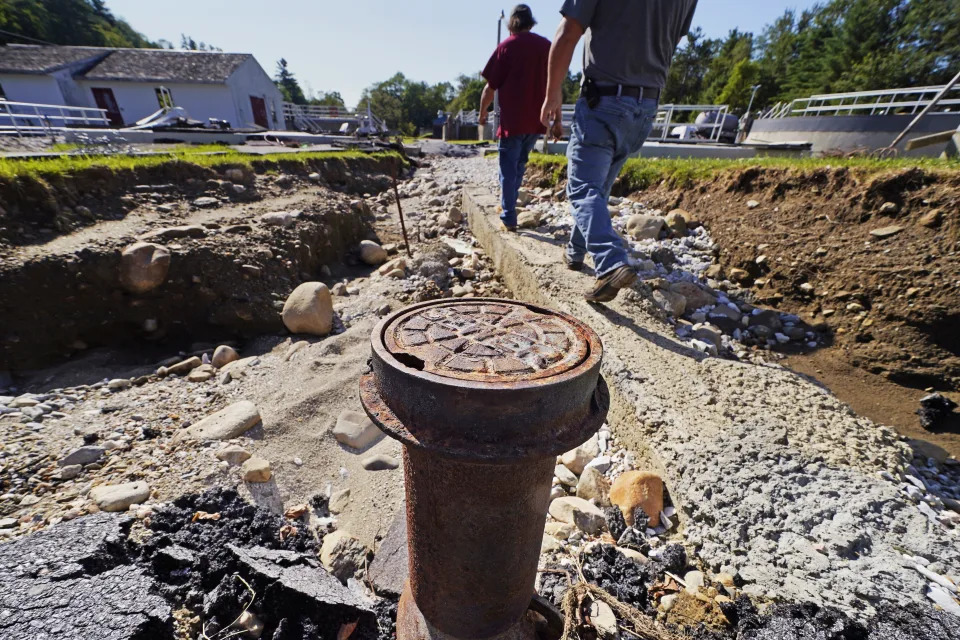
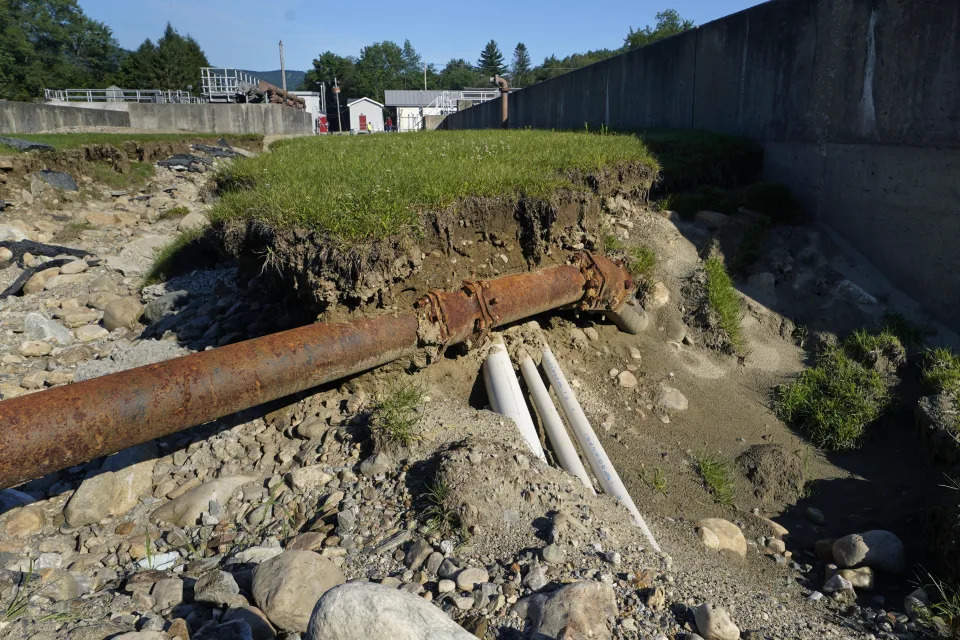
A sewer pipe is exposed due to eroded land at the wastewater treatment plant following July flooding, Wednesday, Aug. 2, 2023, in Ludlow, Vt. Across the U.S., municipal water systems and sewage treatment plants are at increasing risk of damage from floods and sea-level rise brought on in part or even wholly by climate change. The storm that wallopedA sewer pipe is exposed due to eroded land at the wastewater treatment plant following July flooding, Wednesday, Aug. 2, 2023, in Ludlow, Vt. Across the U.S., municipal water systems and sewage treatment plants are at increasing risk of damage from floods and sea-level rise brought on in part or even wholly by climate change. The storm that
LUDLOW, Vermont (AP) — The crack of a summer thunderstorm once comforted people in Ludlow, Vermont. But that was before a storm dropped eight inches of rain on the village of 2,200 in two days last month. And it was before the devastation of Tropical Storm Irene in 2011. Now a coming rainstorm can stir panic.
“We could lose everything again,” said Brendan McNamara, Ludlow’s municipal manager.
The rainfall that walloped Vermont last month hit Ludlow so hard that floodwaters carried away cars and wiped out roads. It sent mud and debris into homes and businesses and forced officials to close a main road for days.
Thankfully, the facility that keeps the village’s drinking water safe was built at elevation and survived. But its sewage plant fared less well. Flooding tore through it, uprooting chunks of road, damaging buildings and sweeping sewage from treatment tanks into the river. Even now the plant can only handle half its normal load.
It’s not just Ludlow. Water infrastructure across the country is vulnerable as climate change makes storms more unpredictable and destructive, flooding low-lying drinking water treatment plants and overwhelming coastal sewage systems.
“Wastewater systems are not designed for this changing climate,” said Sri Vedachalam, director for water equity and climate resilience at Corvius Infrastructure Solutions LLC. “They were designed for an older climate that probably doesn’t exist anymore.”
A big reason is geography. Wastewater systems — which deal with sewage or stormwater runoff — are often near water bodies because that is where they discharge. But this makes them vulnerable.
Wastewater systems typically are at the lowest point in the community,” Vedachalam said, noting they often flow by gravity. “In many cases, if you have a really large storm, those are the ones that do get flooded first.”
When storms drop inches of rain onto lakes and rivers over a short period of time, water and debris can clog wastewater systems, power can be knocked out, and service disrupted.
Government flood maps are not up to date; they don’t reflect the risk of flooding in a changing climate. So the risk analysis firm First Street Foundation took a respected climate model and applied it to 5,500 wastewater treatment plants. Then it looked at the possibility of those flooding today and 30 years from now.
The Associated Press then determined the 25% of plants most at risk currently, and where the situation will worsen the most over time, mapping both.
Some metro areas have an especially large proportion of sewage treatment centers at risk if a mega flood occurred today, AP found. They include: South Bend-Elkhart-Mishawaka, bridging Indiana and Michigan; Charleston-Huntington-Ashland, bridging West Virginia, Ohio and Kentucky; Madison-Janesville-Beloit in Wisconsin and Syracuse-Auburn, New York.
Drinking water treatment plants are also at risk. Most U.S. cities and towns get drinking water from rivers and lakes, and water treatment plants tend to be near the water bodies from which they draw.
“Simply by having water purification plants close to where we are getting the water from, that water source is affected by climate change,” said Darren Olson, a Chicago-based water resources engineer and member of the American Society of Civil Engineers.
The fact that the nation’s water pipes are aging adds to the risk. The engineering society estimates that a water main breaks in the U.S. every two minutes, leading to six billion gallons of lost water each day, or enough to fill 9,000 swimming pools.
Recent federal spending packages commit billions of dollars to upgrading the nation’s water systems, but the roughly $55 billion for upgrades in the Biden administration’s $1 trillion infrastructure law represent a fraction of what’s needed to address climate-related risks to water and sewage systems. Part of the reason is that other problems — such as lead pipes — need urgent attention. Often, they have little to do with a changing climate, said Olson.
And while larger cities such as Boston and Chicago can fund new projects in part by raising rates on customers, smaller cities and towns have to find other funding sources — often through state or federal grants — to avoid driving up bills, according to Adam Carpenter, manager of energy and environmental policy at the American Water Works Association.
“Wastewater treatment facilities are not cheap,” said Vedachalam. The hundreds of millions of dollars needed to rebuilt one, he said, can equal several times a town’s annual budget.
When Tropical Storm Irene battered Vermont twelve years ago, it cut off power — including to Ludlow’s wastewater plant. Officials rebuilt it according to stricter guidelines from the Federal Emergency Management Agency, said Joe Gaudiana, the village’s chief water and sewer operator.
They put the plant’s backup generator up on a block of concrete the height of a professional basketball player.
But July’s deluge knocked the whole block askew and wiped out the generator’s controls, rendering it useless. Municipal manager McNamara still isn’t sure how that much concrete got moved, or what Ludlow will do next.
“In a town such as ours, sometimes your options are limited because of geography, because of the terrain,” McNamara said.
Gaudiana would like the town to build a V-shaped wall to steer floodwaters away from the critical place where he works protecting people and the river from raw sewage. He called it “simple insurance that would definitely prevent all this.”
“Unless the wall failed,” he added.
Naishadham reported from Washington, D.C. Fassett reported from Seattle.
The Associated Press receives support from the Walton Family Foundation for coverage of water and environmental policy. The AP is solely responsible for all content. For all of AP’s environmental coverage, visit
Bone dry on the range: Texas cattle ranchers battle drought, extreme heat
Evan Garcia – August 10, 2023
Cattle move throughout a pasture during a heat wave in Tennessee ColonyRancher David Henderson watches his herd of cattle after pouring them animal feed on his ranch in Tennessee ColonyCattle gather in the shade during a heat wave in Tennessee Colony
TENNESSEE COLONY, Texas (Reuters) – The brown and black cattle of Texas, beloved symbols of the Lone Star state, walk through desiccated grass and stand in shrunken watering holes while their ranchers struggle to get them enough food.
For the second summer in a row, drought and extreme heat are stressing the health of cattle in Texas – the top beef-producing state in the U.S. by far – leading some ranchers to think about thinning their herds to save money on animal feed and hay.
“The grass is just not growing and primarily because it’s thirsty,” said rancher David Henderson. “Now we hit August and this is normally our hottest, driest time of the year … and the only thing I can think of, sometimes it calls for selling cows.”Henderson, 62, manages a herd of about 150 cows in Tennessee Colony in East Texas, and said he sold roughly 30 cows in 2022 due to the drought.
Dry conditions last year drove ranchers in East Texas to sell more than 2.66 million cattle from January 2022 through August 2022 — an increase of more than 480,000 cattle compared to that time period the previous year, according to the Texas Farm Bureau.
Texas State Climatologist John Nielsen-Gammon predicts extreme heat spurred by global warming will become the norm.
“Well, certainly for the next few decades, the trends are going to continue,” Nielsen-Gammon said. “This sort of heat will become normal in the summertime for Texas. And that, in addition, means that the heat extremes will be that much hotter and that much more severe.”
The drought, triple-digit heat and lack of food impacts just about every facet of the cattle industry – how much milk the calves get, how the cows fatten up, how much they reproduce, and how much that coveted steak will cost.
Jimmy Reed owns the Cattle Ranch Supply store in Tennessee Colony and, with pastures diminished, has been sending out feed deliveries to ranchers in early August instead of the normal time in mid-November.
“With everybody wanting to eat that rib eye and that T-Bone or those ribs, there’s going to be less supply. So the price of beef will once again take a rise,” Reed said.
Rancher Corey Davis, 39, said after plentiful spring rains he had been optimistic.
“This year, I thought being a young farmer, I said, ‘Well, we’re going to make a bunch of hay,'” Davis said.
“I was excited and you know, four or five months later, no rain for a month. So, we’re back in a drought again.”
(Reporting by Evan Garcia; Writing by Mary Milliken; Editing by Rosalba O’Brien)
Some of the ways extreme heat will change life as we know it
Julia Jacobo – August 10, 2023
Some of the ways extreme heat will change life as we know it
Life as we know it could soon change if extreme, dangerous heat continues to inundate regions for longer stretches of time and at higher temperatures, according to experts.
A large part of the U.S., including much of the southern portion stretching from the West Coast, across Texas and to the Southeast, has been experiencing triple-digit temperatures and heat indexes for weeks on end.
Record-breaking temperatures have been the norm in several cities in recent weeks, including Phoenix, which has now seen more than 40 consecutive days at about 110 degrees.
Hotter-than-ever temperatures, and longer periods of time when they occur, will become the norm unless greenhouse gas emissions are drastically curbed, mitigating further global warming, according to climate scientists. Americans could see an average of 53 more days of extreme heat by 2050, if emissions aren’t reduced, according to climate modeling data released by the ICF Climate Center in June.
The increased heat is guaranteed to alter how society operates, experts told ABC News.
Summer is synonymous with time spent outdoors for school-aged children all over the world.
But parents may be cautious about letting their kids spend prolonged periods of time outdoors when temperatures are nearing triple digits, especially if air quality is poor or UV indexes high, experts told ABC News.
“The great outdoors go from being a magical place of exploration to a threatening place, full of fear,” Lise Van Susteren, a general and forensic psychiatrist who has researched how climate change has affected the psychological health of young people, told ABC News.
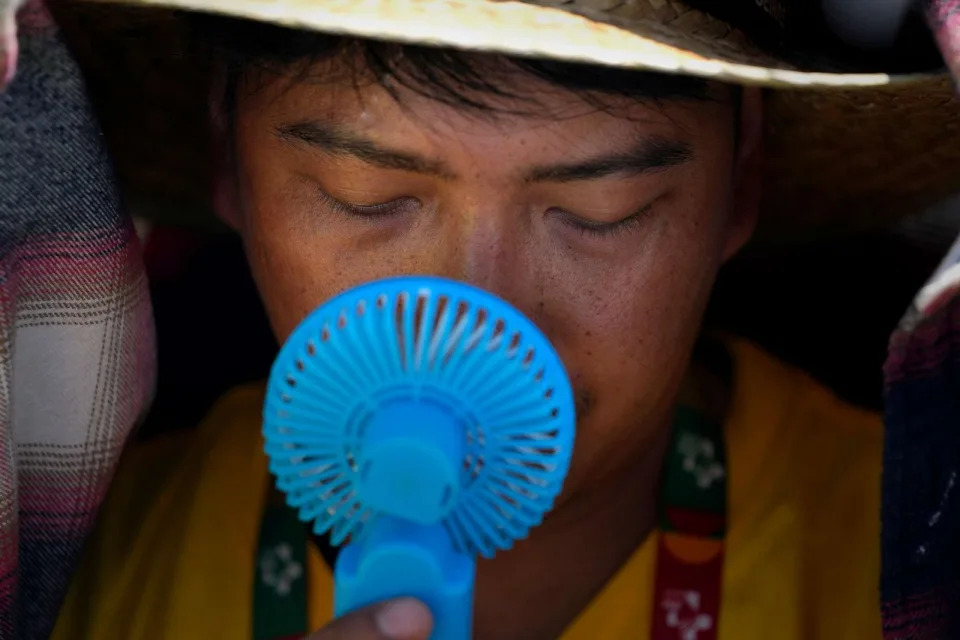
PHOTO: A World Youth Day volunteer uses a small fan to cool off from the intense heat, just outside Lisbon, Portugal, Aug. 6, 2023. (Armando Franca/AP)
Less time outdoors could also be detrimental for children’s development. Research shows outdoor time is linked with improved motor development and lower obesity rates and nearsightedness in children. Outdoor play also promotes curiosity, creativity and critical thinking and is linked with behavior displaying less anger and aggression, studies have shown.
Few things could be more injurious to a child’s development than to be cooped up inside year-round, Van Susteren said, adding that humans have evolved to find the sounds and sights of nature meaningful and necessary for a healthy outlook.
“Yeah, you could always build something artificial. But don’t expect it to do for us mentally, which includes our ability to empathize and be generous, and to feel a sense of adventure,” she said.
Evidence that being holed up indoors is detrimental to kids’ mental health surmounted during the COVID-19 pandemic, which added more to the preexisting psychological distress among young people, according to the U.S. Surgeon General.
Athletes of all ages and levels will likely need to alter their training to stay safe during extreme heat, but those training for intense competitions that take place in a scorching climate need to be especially careful, said Brian Maiorano, coach liason for Core, a wearable tech that allows athletes to measure their core body temperature on the go.
Those training for competitions and races will need to adapt to the higher temperatures in order to participate safely, said Maiorano, who has coached athletes for running competitions and triathlons for 15 years.
“The human body is extremely adaptable, if given the right training,” he said.
Rather than training indoors in a climate-controlled setting, athletes will need to train outside and get their core body temperature to a level that will cause physiological adaptions, Maiorano said. Otherwise, athletes will suffer on race day.
Temperatures in the 90s are considered extreme for endurance athletes, while temperatures in the 80s would be considered extreme for those training for an event with even more difficulty and physical exertion, like the Ironman Triathlon, Maiorano said. About 80% of the heat in the body is generated by the power in the muscles, he said.
“It’s like literally having a space heater inside of you,” he said.
PHOTO: Baltimore Ravens tight end Mark Andrews gets relief from the heat next to a water mister during the team’s NFL football training camp, July 29, 2023, in Baltimore. (Nick Wass/AP)
Up until a few years ago, heat training was an “imprecise practice,” Maiorano said.
People training for events in warm climates — like the Hawaii Ironman and the Western States Endurance Run, which is a 100-mile race through the desert in California — were likely told by their coaches to go out during the hottest part of the day while wearing multiple layers of clothes.
“Cook yourself, but don’t overcook yourself, which is some really vague guidance,” Maiorano said. “It’s guidance you can give to a top athlete and hope that they don’t cause themselves heatstroke, but it’s not something that you can tell an age group athlete to do.”
Extreme heat will affect travel decisions people make in the summer, the peak travel season while kids are out of school, Erika Richter, spokesperson for the American Society of Travel Advisers, told ABC News.
“The climate crisis will impact where we go, when we go, and, in some cases, if we go,” Richter said.
The travel industry is already seeing shifts for travel to Greece, France and Spain, Richter said. While the peak tourist season is typically around July, Europe has been reaching record temperatures in recent years during that time. Combined with wildfires, the climate is causing people to travel to those destinations in the spring or early summer instead, Richter said.
People are also starting to choose cooler places for the summer travel season, such as Northern Europe, Alaska and the Pacific Northwest, Richter said.
PHOTO: Tourists refresh with water near the Parthenon temple at the Acropolis hill during a heat wave on July 20, 2023 in Athens, Greece. (Milos Bicanski/Getty Images)
Extreme heat is also heavily affecting air travel.
It is difficult for planes to take off in hot temperatures because as the air warms, it expands, so the number of molecules available to push the plane up is reduced. In June, Richter experienced a six-hour delay on a flight from Washington, D.C., to Portland because the plane could not take off with the number of passengers, she said.
While some passengers took the $1,000 credit offered to give up their seat, the originally nonstop flight had to stop in Missouri to refuel, because the plane could not handle the fuel load needed for the transcontinental flight, Richter said.
Extreme heat can also increase the amount of turbulence passengers experience. A 2017 study found that climate change may cause nearly three times as much clear-air turbulence as current conditions by the period between 2050 and 2080. Clear-air turbulence, which occurs without a visual warning like clouds or thunderstorms and is usually at high altitudes, is currently on the rise worldwide and at varying altitudes, the study found.
There have been several reports of heavy turbulence this summer, including a Hawaiian airlines flight in July that injured several flight attendants and passengers.
The wildfires in Canada, which have been so severe this season in part due to higher temperatures and drought, have impacted travel in the U.S., Richter said.
With more heat and humidity comes the possibility of thunderstorms grounding flights, as well, Richter said.
“We’re used to the thunderstorms for summer travel season,” she said. “But they are becoming much more violent, and they are grounding many more flights.”
As climate change continues to worsen, regions that traditionally did not need air conditioning may need to brace for more heat waves by installing equipment to keep their homes cool.
In places like the Pacific Northwest and the San Francisco Bay Area, the majority of households are not equipped with central air conditioning. In 2021, when a historic heat wave struck the region, window and portable air conditioners were flying off the shelves, Jennifer Amann, senior fellow of the American Council for an Energy-Efficient Economy’s building program, told ABC News.
Incorporating efficient cooling methods, like using the same pumps that heat homes to cool them, as well, and using efficient window air-conditioning units, will help households keep temperatures bearable in their homes, Amann said,
PHOTO: Ben Gallegos sits on the porch of his family’s home with his dog as the daytime high temperature soars toward triple digits, July 27, 2023, in north Denver. (David Zalubowski/AP)
Heat is the No.1 weather-related killer, with more than 600 people dying from heat-related illnesses every year in the U.S., according to the Centers for Disease Control and Prevention. When temperatures do not cool down overnight, it exacerbates the risk to human health.
Buying an air conditioner is the short-term solution, but people will also need to adapt their homes to better deal with extreme heat, and builders will need to design new homes with more passive mechanisms to navigate the changing climate, Amann said.
MORE: Dangerous temperatures have been recorded in the US for weeks. Is the extreme heat coming to an end soon?
Countries in Europe like France, Italy, Spain, Romania and Germany have been the most affected by climate-related disasters over the past 20 years, an analysis by the Centre for Economic Policy Research found.
Domestically, Texas loses an average of $30 billion a year due to its climate and the large number of people working outdoors, according to a 2021 report by the Adrienne Arsht-Rockefeller Foundation Resilience Center, a Washington, D.C.-based think tank.
PHOTO: A tour guide fans herself while working in Times Square as temperatures rise, July 27, 2023, in New York City. (John Minchillo/AP)
The cumulative global economic loss between 1992 and 2013 reached between $5 trillion and $29.3 trillion due to the impact of human-caused heat waves, according to a study published in 2022 in Science Advances.
The poorest countries in the hottest climates suffered the most, researchers found.
Heat also affects people’s moods, which is essentially survival mode kicking in, Van Susteren said.
“If we’re in a bad mood, we’re not buying,” she said.
In one image from the company Maxar Technologies, the historic area of Banyan Court — home to the island’s oldest living banyan tree, at 150 years old — appears to have mostly been reduced to ash.
Other images showed similar devastation in and around Lahaina Square, a shopping area, and a neighborhood on the southern end of the town of roughly 12,700.
“I still don’t know where my little brother is,” she said. “I don’t know where my stepdad is.”
The fires, which have also hit the island of Hawaii, have been fueled by strong, erratic winds from a Category 4 hurricane.
“This is not going to be a short journey,” said Lt. Gov. Sylvia Luke, who is acting governor until the governor returns early from a trip. “It’s going to take weeks and maybe months to assess the full damage.”
Scientists warn that extreme ‘wet bulb temperature’ events are becoming more common with human-caused climate change (Frederic J. BROWN)
Scientists have identified the maximum mix of heat and humidity a human body can survive.
Even a healthy young person will die after enduring six hours of 35-degree Celsius (95 Fahrenheit) warmth when coupled with 100 percent humidity, but new research shows that threshold could be significantly lower.
At this point sweat — the body’s main tool for bringing down its core temperature — no longer evaporates off the skin, eventually leading to heatstroke, organ failure and death.
This critical limit, which occurs at 35 degrees of what is known “wet bulb temperature”, has only been breached around a dozen times, mostly in South Asia and the Persian Gulf, Colin Raymond of NASA’s Jet Propulsion Laboratory told AFP.
None of those instances lasted more than two hours, meaning there have never been any “mass mortality events” linked to this limit of human survival, said Raymond, who led a major study on the subject.
But extreme heat does not need to be anywhere near that level to kill people, and everyone has a different threshold depending on their age, health and other social and economic factors, experts say.
For example, more than 61,000 people are estimated to have died due to the heat last summer in Europe, where there is rarely enough humidity to create dangerous wet bulb temperatures.
But as global temperatures rise — last month was confirmed on Tuesday as the hottest in recorded history — scientists warn that dangerous wet bulb events will also become more common.
The frequency of such events has at least doubled over the last 40 years, Raymond said, calling the increase a serious hazard of human-caused climate change.
Raymond’s research projected that wet bulb temperatures will “regularly exceed” 35C at several points around the world in the coming decades if the world warms 2.5C degrees above preindustrial levels.
– ‘Really, really dangerous’ –
Though now mostly calculated using heat and humidity readings, wet bulb temperature was originally measured by putting a wet cloth over a thermometer and exposing it to the air.
This allowed it to measure how quickly the water evaporated off the cloth, representing sweat off of skin.
The theorised human survival limit of 35C wet bulb temperature represents 35C of dry heat as well as 100 percent humidity — or 46C at 50 percent humidity.
To test this limit, researchers at Pennsylvania State University in the United States measured the core temperatures of young, healthy people inside a heat chamber.
They found that participants reached their “critical environmental limit” — when their body could not stop their core temperature from continuing to rise — at 30.6C wet bulb temperature, well below the previously theorised 35C.
The team estimated that it would take between five to seven hours before such conditions would reach “really, really dangerous core temperatures,” Daniel Vecellio, who worked on the research, told AFP.
– The most vulnerable –
Joy Monteiro, a researcher in India who last month published a study in Nature looking at wet bulb temperatures in South Asia, said that most deadly heatwaves in the region were well below the 35C wet bulb threshold.
Any such limits on human endurance are “wildly different for different people,” he told AFP.
“We don’t live in a vacuum — especially children,” said Ayesha Kadir, a paediatrician in the UK and health advisor at Save the Children.
Small children are less able to regulate their body temperature, putting them at greater risk, she said.
Older people, who have fewer sweat glands, are the most vulnerable. Nearly 90 percent of the heat-related deaths in Europe last summer were among people aged over 65.
People who have to work outside in soaring temperatures are also more at risk.
Whether or not people can occasionally cool their bodies down — for example in air conditioned spaces — is also a major factor.
Monteiro pointed out that people without access to toilets often drink less water, leading to dehydration.
“Like a lot of impacts of climate change, it is the people who are least able to insulate themselves from these extremes who will be suffering the most,” Raymond said.
His research has shown that El Nino weather phenomena have pushed up wet bulb temperatures in the past. The first El Nino event in four years is expected to peak towards the end of this year.
Wet bulb temperatures are also closely linked to ocean surface temperatures, Raymond said.
The world’s oceans hit an all-time high temperature last month, beating the previous 2016 record, according to the European Union’s climate observatory.
Americans are pulling money out of their 401(k) plans at an alarming rate
Alicia Wallace, CNN – August 8, 2023
More Americans are tapping their 401(k) accounts because of financial distress, according to Bank of America data released Tuesday.
The number of people who made a hardship withdrawal during the second quarter surged from the first three months of the year to 15,950, an increase of 36% from the second quarter of 2022, according to Bank of America’s analysis of clients’ employee benefits programs, which are comprised of more than 4 million plan participants.
It’s a “pretty troubling” development if more people are resorting to making hardship withdrawals, Matt Schulz, chief credit analyst at LendingTree, told CNN.
“You understand why people do that in the heat of the moment, but the opportunity costs on that are really, really high over time,” he said.
Bank of America’s latest Participant Pulse report also found that a greater percentage of participants borrowed from their workplace plans from the first quarter, and average contributions trailed off as well.
However, overall employee contributions continued to hold steady for the first half of the year, and a greater share of participants upped their contribution rate than decreased it.
“The data from our report tells two stories — one of balance growth, optimism from younger employees and maintaining contributions, contrasted with a trend of increased plan withdrawals,” Lorna Sabbia, head of retirement and personal wealth solutions at Bank of America, said in a statement. “This year, more employees are understandably prioritizing short-term expenses over long-term saving.”
While the labor market remains strong, the economy is growing and consumers are spending, the global pandemic followed by two years of persistently high inflation have taken their toll on household finances.
Since 2019, household debt balances have increased by nearly $3 trillion, according to New York Federal Reserve data through the first quarter of 2023.
Separately on Tuesday, the New York Fed reported that US households’ credit card debt surpassed the $1 trillion mark for the first time ever. The $45 billion increase in credit card debt helped to drive overall household debt levels to $17.06 trillion at the end of the second quarter.
“There’s only so much hard debt that people can handle before delinquencies really spike,” Schulz said. “Ultimately, you just have a lot of people who are doing OK now, but it wouldn’t take a whole lot for them to find themselves in a pretty sticky situation financially, whether that is a medical emergency, job loss, or even just student loan payments restarting.”
Federal student loan payments are set to resume in October following a more than three-year pause due to the Covid-19 pandemic and the Biden Administration’s push to forgive debt.