New report reveals a stunning fact about the future of wind and solar power: ‘The more you install, the cheaper it gets’
Leo Collis – September 9, 2023
In a hugely encouraging update in the move toward clean energy, a new report has suggested renewable sources could be responsible for one-third of the world’s electricity production by 2030.
A study from the Rocky Mountain Institute concluded that exponential growth in the sector will lead to 33% of global energy being produced by wind or solar generation. It marks a significant increase from the 12% generated by the same sources now.
While it’s excellent news for the planet in terms of reducing reliance on dirty fuel for energy — with emissions from those sources contributing to global heating — it will also make a massive difference to the bank balance of consumers.
According to the RMI report, as more solar projects are completed — and costs are reduced due to increased production — the price per megawatt could reduce from $40 to $20.
The study provides hope for our energy future, but positive developments are happening now. According to Systems Change Lab, as detailed in RMI‘s report, eight countries have already invested enough in solar and wind power to do their part to limit global heating to 34.7 degrees Fahrenheit.
Such rapid progress toward global climate goals suggests that similar feats can be achieved on a wider scale if the infrastructure and funding is available.
The RMI data also noted that fossil fuel demand in terms of electricity production will also fall by as much as 30% by 2030.
In a statement, Kingsmill Bond, senior principal of RMI, said: “Exponential growth of clean energy is an unstoppable force that will put more spending power in the pockets of consumers. The benefit of rapid renewable deployment is greater energy security and independence, plus long-term energy price deflation because this is a manufactured technology — the more you install, the cheaper it gets.”
Part of the reason for the increase is this reduction in the costs of materials, especially batteries. According to RMI, “solar and battery costs have declined 80% between 2012 and 2022.”
Meanwhile, RMI quoted Bloomberg New Energy Finance data that found the cost of both offshore (73%) and onshore (57%) wind generation have decreased.
Join our free newsletter for cool news and actionable info that makes it easy to help yourself while helping the planet.
18 times US presidents told lies, from secret affairs to health issues to reasons for going to war
James Pasley – September 8, 2023
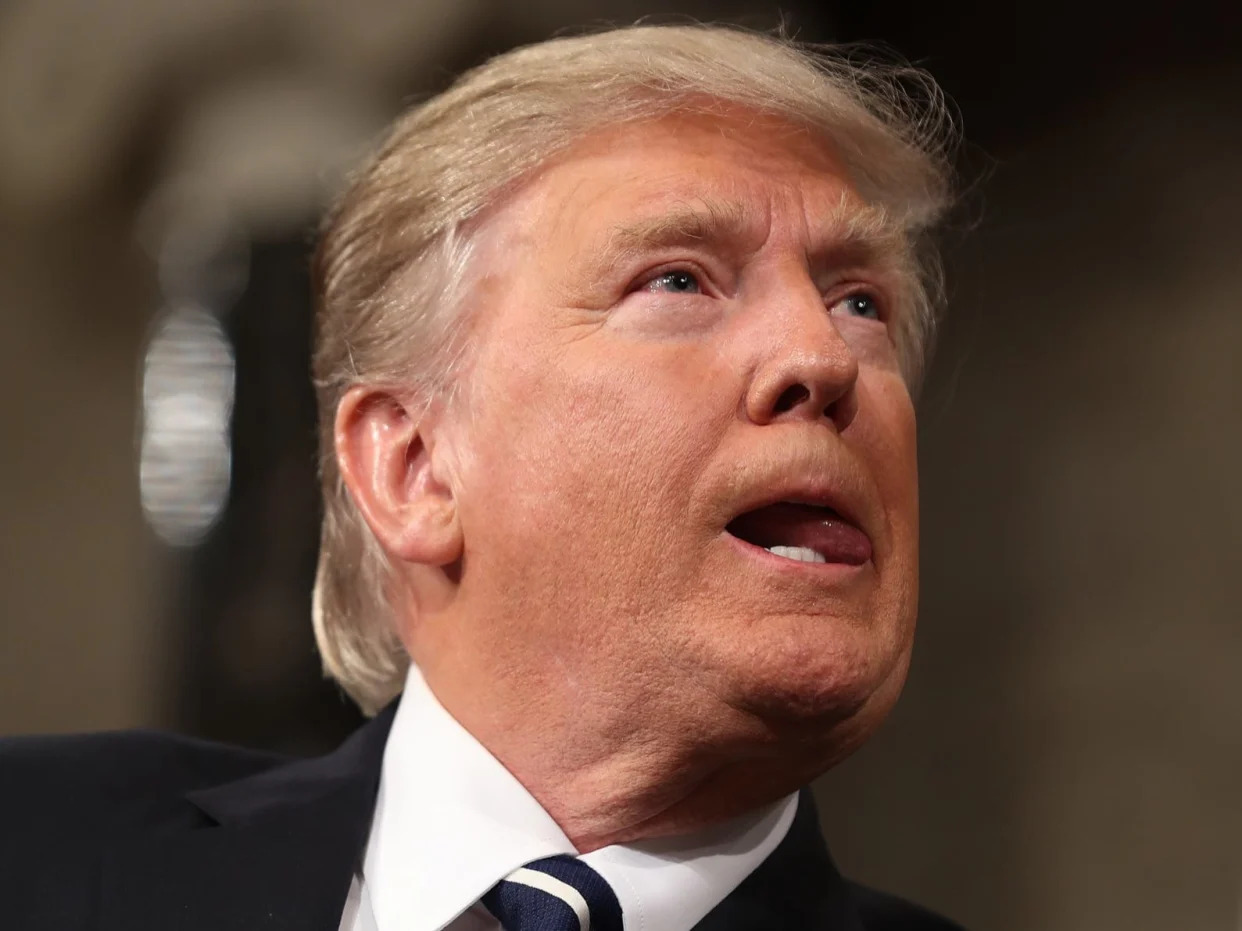
US President Donald J. Trump delivers his first address to a joint session of Congress from the floor of the House of Representatives in Washington, United States on February 28, 2017. Traditionally the first address to a joint session of Congress by a newly-elected president is not referred to as a State of the Union.Jim Lo Scalzo/EPA/Pool/Anadolu Agency/Getty Images
Every US president has told a lie — from war and taxes to health conditions and extramarital affairs.
When Dwight D. Eisenhower was caught lying by Russia, he said it was his greatest regret in office.
President Donald Trump made more than 30,000 false or misleading statements while in office.
“This is what we will say publicly but now, let’s talk about what we will actually do,” President Richard Nixon wrote in a memo about secret bombings in Cambodia in 1970.
“Every president has not only lied at some time, but needs to lie to be effective,” Ed Uravic, who wrote “Lying Cheating Scum,” told CNN.
From President James Polk lying to invade Mexico in 1846 to then-presidential candidate George H.W. Bush famously promising no new taxes, here are some of the most famous lies US presidents have ever made.
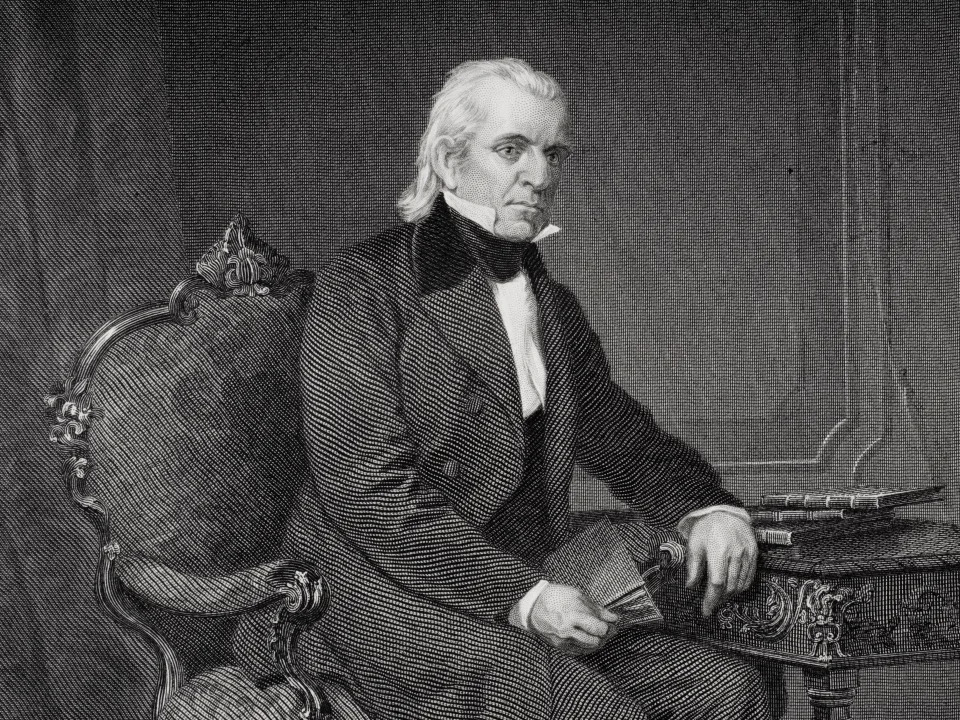
In the 1840s, President James Polk told Congress that Mexico had invaded the US.
Former President James Polk.Universal History Archive/Getty Image
This was a lie. In actual fact, his administration had ordered US soldiers to occupy an area in Mexico near the Texan border in 1846. Then when Mexican forces attacked the US soldiers, Polk claimed it was an attack against the US.
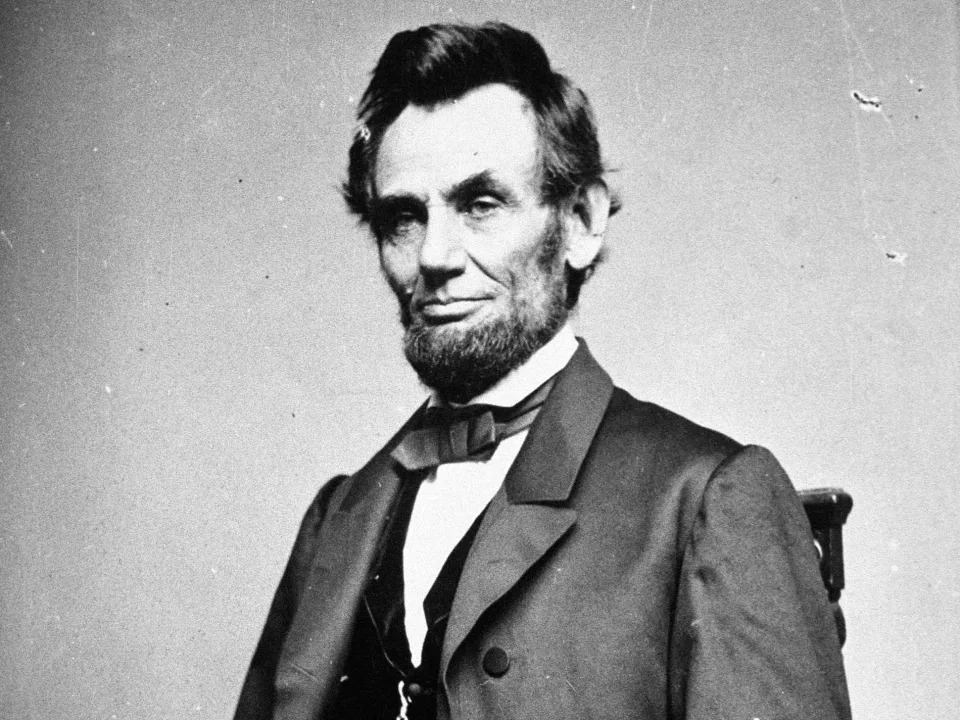
In 1865, President Abraham Lincoln, also known as “Honest Abe,” might not have lied, but he wasn’t always truthful.
Former President Abraham Lincoln.Getty Images / Staff
In response to rumors that he was about to meet with Confederate representatives in Washington, he told the House that no representatives were on their way to Washington, The Washington Post reported.
He wasn’t lying — they were on their way to Virginia, where he would later meet them. He didn’t tell the whole truth at the time because he didn’t want his meeting to impact the passing of the 13th Amendment.
Political theory professor Meg Mott told The Conversation his use of truth when dealing with the Confederacy was “devious.”
In 1898, President William McKinley declared Spain had attacked a US warship called the USS Maine in Cuba, killing 355 sailors.
Former President William McKinley.Library of Congress
The actual cause of the sinking has never been conclusively proven.
Although reluctant to go to war with Spain, his insistence that the Spanish were behind the attack led to war, per the Columbus Dispatch.
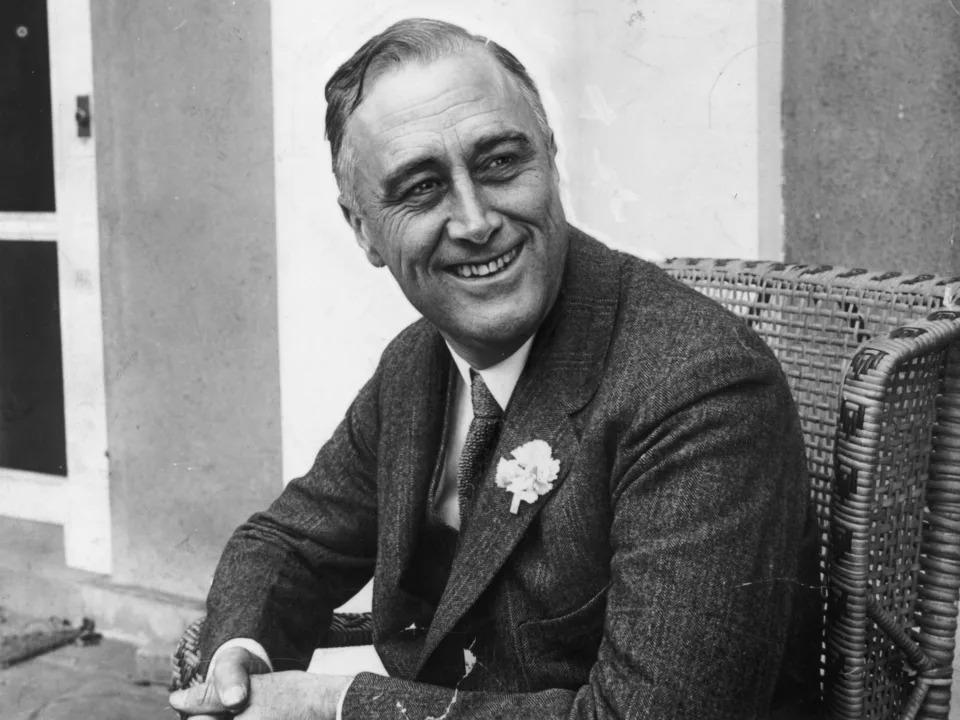
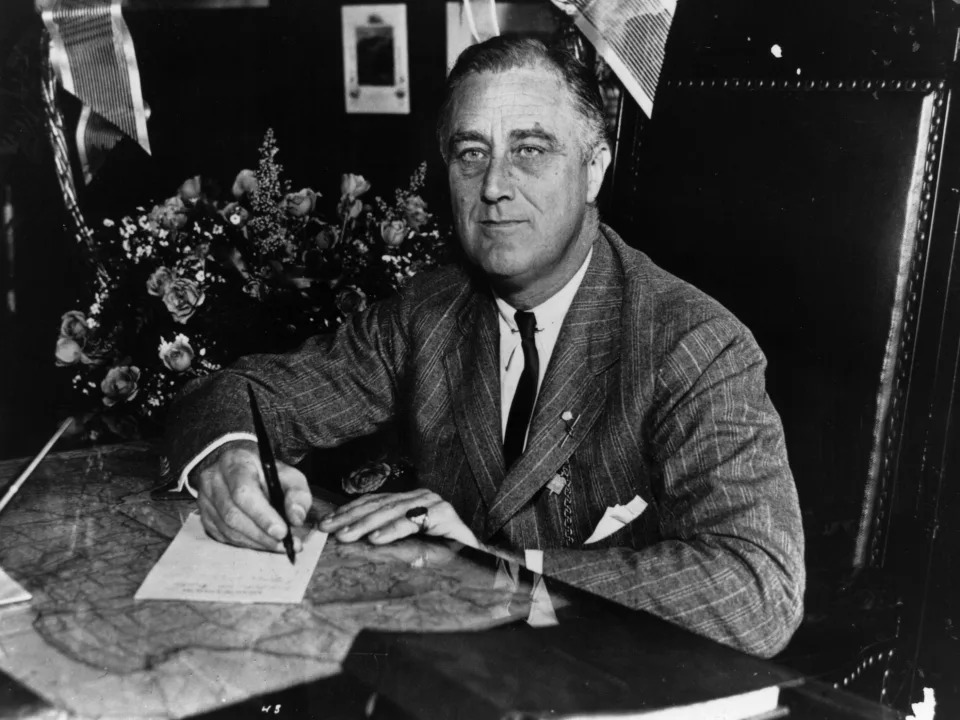
In 1940, during World War II, President Franklin D. Roosevelt promised the nation that “your boys are not going to be sent into any foreign wars.”
Former President Franklin D. Roosevelt.Hulton Archive/Getty
But Roosevelt was already preparing to enter the war. His declaration was an election promise — one he would not keep — made during his campaign against Wendell Willkie.
After his speech, his speechwriter, Sam Rosenman, asked him why he hadn’t said the final part of the speech, which was, “Except in case of attack.”.
Roosevelt responded, “If we’re attacked, it’s no longer a foreign war.”
The following year, in 1941, Roosevelt lied again. This time, he said a German submarine had attacked a US ship called the Greer without provocation.
Former President Franklin D. Roosevelt.Keystone Features/Getty Images
In actuality, the Greer had been protecting British ships crossing the Atlantic Ocean and had been following that German submarine and letting the British know its path.
Roosevelt used the attack as a provocation to prepare the US for entering World War II.
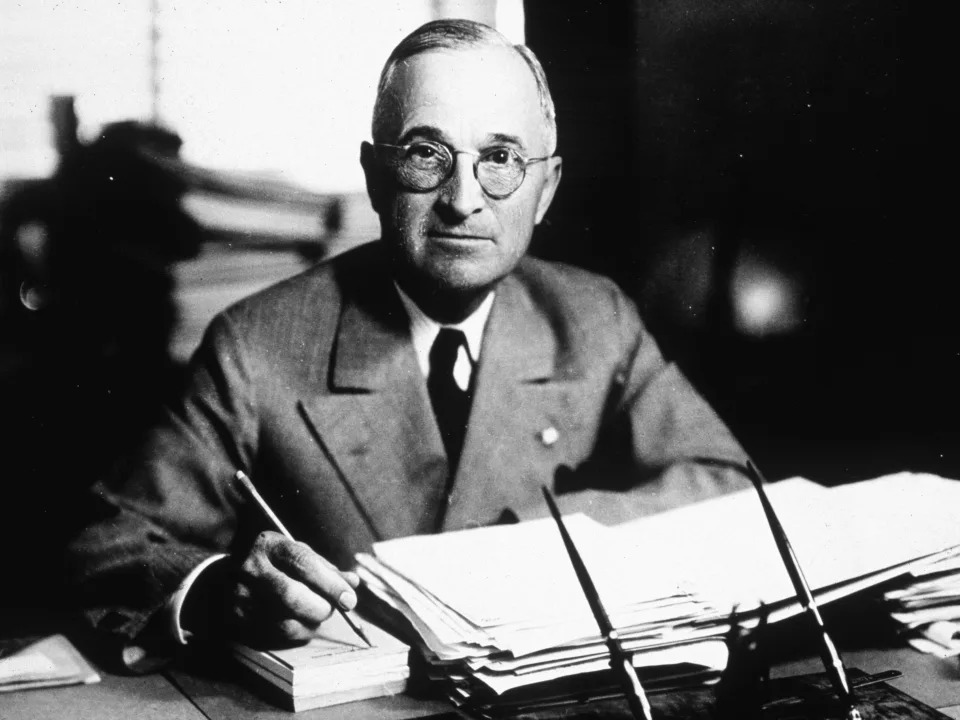
In August 1945, the Truman administration issued a press release after the first atomic bomb was dropped on Hiroshima, describing it as “an important military base.”
Former President Harry Truman in 1945.MPI/Getty
Hiroshima was home to 350,000 people, although it did have a military base in the city.
About 10,000 soldiers were killed in the blast, but most of the 125,000 people who died were civilians.
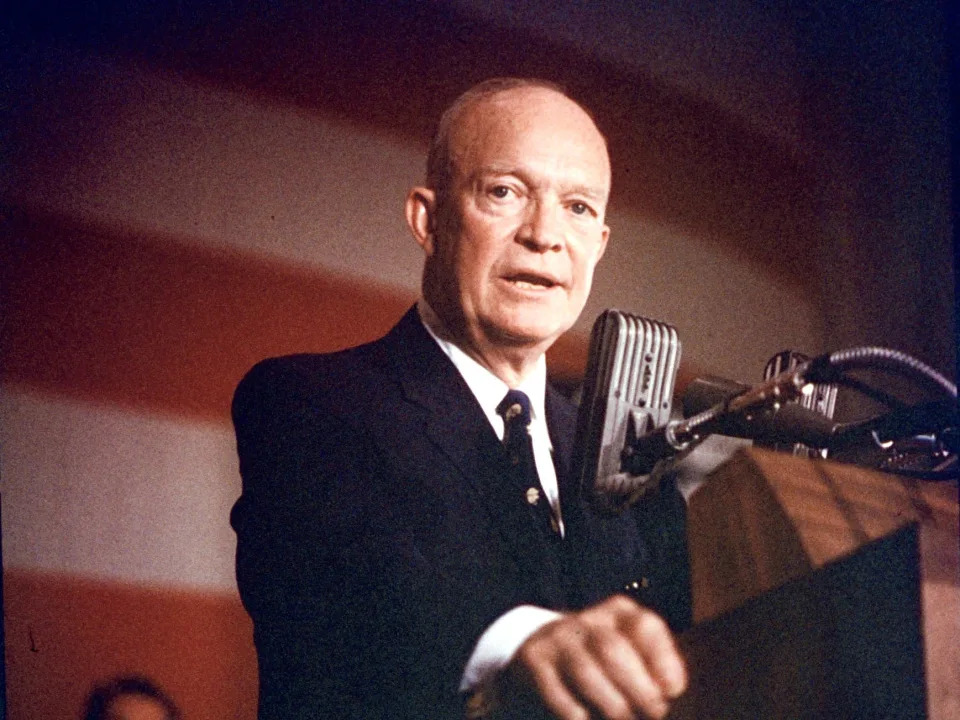
In 1960, President Dwight Eisenhower dismissed claims that the US had flown spy planes over Russia after one of its planes was shot down.
Former President Dwight Eisenhower.Getty Images
Thinking the pilot was killed, he approved a number of statements that said it was a weather plane. But when Russia announced it had one of the pilots named Gary Powers in custody, he had to admit he had been lying.
“I didn’t realize how high a price we were going to pay for that lie,” he said.
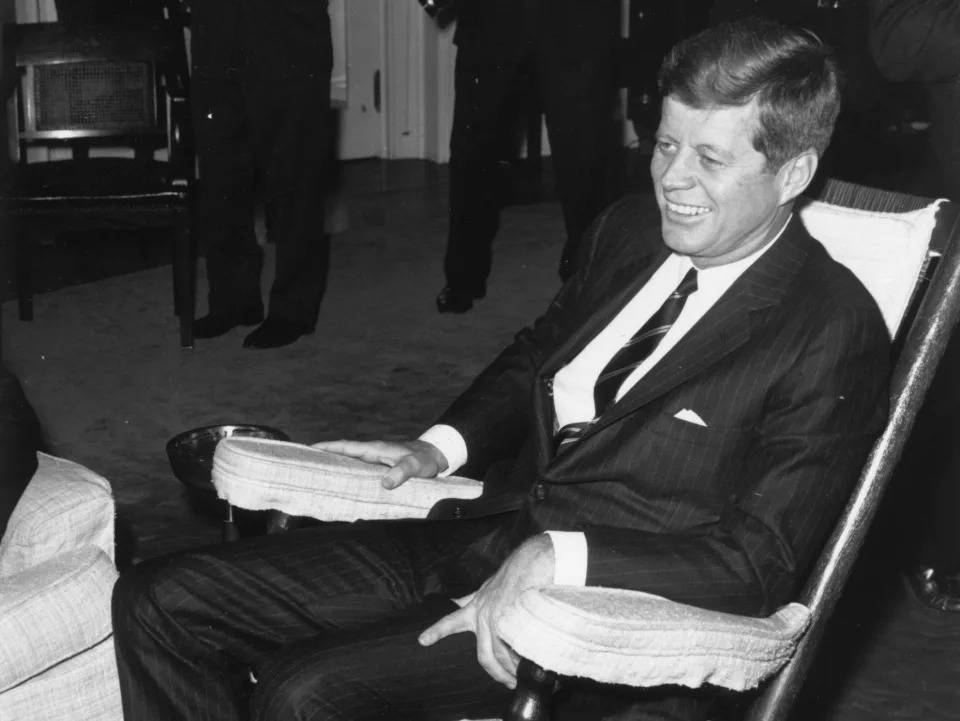
On October 20, 1962, President John F. Kennedy told America he had a cold.
Former President John F. Kennedy in the Oval Office signing copies of his official portrait in 1961.Henry Burroughs/AP
The truth was he was dealing with a crisis. Intelligence agents had found that the Soviets were creating a missile base in Cuba.
To ensure the public didn’t panic, Kennedy told the press he had to leave Chicago where he was campaigning because he had a fever. In reality, he had to attend a meeting back at the White House to decide whether to invade Cuba.
He also claimed that the Russians had more nuclear weapons than the US.
Though he lied about having an illness, Kennedy lied about not having another one. In 1960, he said he had “never” had Addison’s disease.
Former President John F. Kennedy in the White House in 1963.Keystone/Getty Images
Despite scientists later confirming he had the disease, in his primary campaign against Lyndon B. Johnson, he called himself “the healthiest candidate for President in the country.”
Kennedy wasn’t the only president who lied about his health. Numerous presidents — including Chester Arthur, Grover Cleveland, Woodrow Wilson, Calvin Coolidge, Franklin D. Roosevelt, and Dwight D. Eisenhower — lied about their health at some point.
In 1964, President Lyndon B. Johnson said in a televised speech, “We still seek no wider war.”
Former President Lyndon B. Johnson in the Oval Sitting Room of the family quarters of the White House.Bettmann/Getty Images
This was in reference to the Gulf of Tonkin incident, in which North Vietnamese patrol boats had reportedly attacked US ships in the Gulf of Tonkin.
In the same speech, he declared, “Aggression by terror against the peaceful villagers of South Vietnam has now been joined by open aggression on the high seas against the United States of America.”
Johnson’s administration claimed that the US ships were out on routine patrols, but they were actually on a secret mission in North Vietnamese territory. The attacks were used to increase the US’s presence in Vietnam.
Johnson’s lies didn’t end there either. He went on to withhold information from the public and Congress about how much was spent on the Vietnam War and how badly the war effort was going.
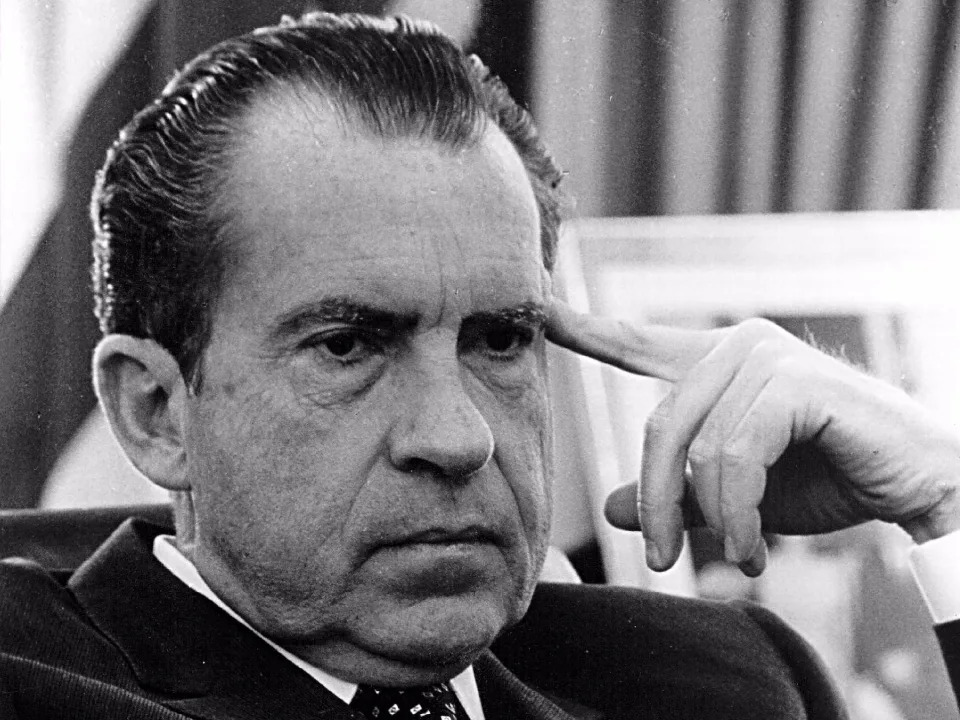
In 1970, President Richard Nixon lied to the country about a US covert bombing campaign in Cambodia.
Former President Richard Nixon.Getty Images
After the bombings were made public, Nixon let people believe the attacks on Cambodia were over.
He advised his staff to tell the public that the soldiers were providing support for local soldiers when, in fact, the attacks continued.
In a memo, Nixon wrote, “This is what we will say publicly but now, let’s talk about what we will actually do.”
In 1974, Nixon declared, “I’m not a crook” after being accused of obstructing justice and lying during the Watergate scandal.
Former President Richard Nixon in 1969.Bettmann/Getty Images
He claimed he was not involved in the scandal, but an investigation found evidence that he was. He later resigned as president instead of potentially being impeached.
In 1986, President Ronald Reagan promised the nation: “We did not — repeat, did not — trade weapons or anything else for hostages, nor will we.”
Former President Ronald W. Reagan in the Oval Office in 1985.Diana Walker/Getty Images
This was during the Iran-Contra Affair, where the US government secretly traded weapons with Iran in exchange for the release of US hostages being held by terrorists in Lebanon.
The government then used the money from the weapons to fund anti-communist groups in Nicaragua.
Despite Reagan’s promise, it later turned out the US had in fact traded arms for hostages.
He later said, “My heart and my best intentions still tell me that’s true, but the facts and the evidence tell me it is not.”
In 1988, then-Republican presidential nominee George H.W. Bush said, “Read my lips: No new taxes.”
Former President George H.W. Bush.Diana Walker/Time Life Pictures/Getty Images
His whole statement was: “My opponent won’t rule out raising taxes. But I will. And the Congress will push me to raise taxes, and I’ll say no. And they’ll push, and I’ll say no, and they’ll push again, and I’ll say, to them, ‘Read my lips: no new taxes.'”
At the time, the six words were seen as a successful political slogan.
But Bush was later forced to raise taxes during negotiations with a Senate and House controlled by Democrats. After he did so, The New York Post went with a headline that said: “Read my lips: I lied.”
His U-turn on taxes was widely seen as one of the reasons he did not get re-elected for a second term.
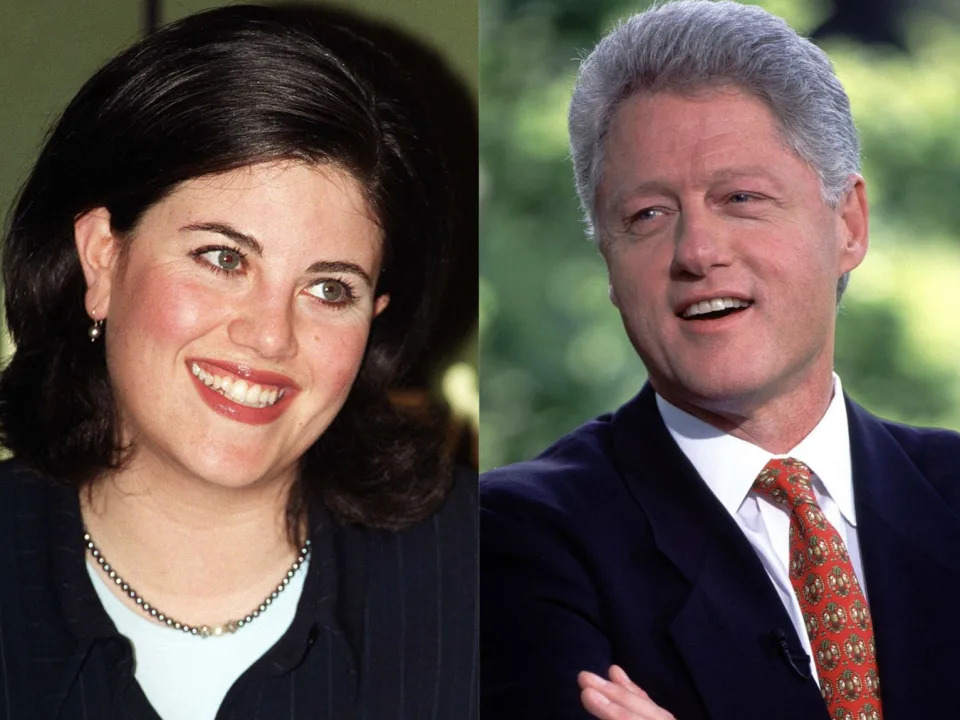
In 1998, President Bill Clinton said before a federal grand jury, “I did not have sexual relations with that woman,” referring to his intern Monica Lewinsky, with whom he did, in fact, have an affair.
Monica Lewinsky and former President Bill Clinton.Fiona Hanson – PA Images/PA Images via Getty Images. Jeff Overs/BBC News & Current Affairs via Getty Images.
Clinton was impeached for lying under oath, but he was acquitted by the Senate.
It was thought to be the first time a president was caught lying about their sex life because it was the first time a president had ever really been asked about it.
In 2003, two months after the US invaded Iraq, President George W. Bush claimed to have found weapons of mass destruction to justify the war.
Then-Texas Gov. George W. Bush in 1999.David Hume Kennerly/Getty Images
“We found the weapons of mass destruction,” he said. “For those who say we haven’t found the banned manufacturing devices or banned weapons, they’re wrong; we found them.”
Bush later said, “We do not know whether or not [Iraq] has a nuclear weapon.”
However, then-CIA Director George Tenet later testified that Bush was advised there were no nuclear weapons and it would be unlikely that the country could even make one until 2007.
In 2008, when President Barack Obama was pushing through his new Affordable Care Act, Obamacare, he promised people wouldn’t need to change their plans if they didn’t want to.
Former President Barack Obama in 2017.Stephane Cardinale – Corbis/Corbis via Getty Images
“If you like your plan, you can keep it,” Obama said. But it wasn’t true.
In the end, millions of people had to change their plans. He also didn’t just say it once, but around 37 times, Politico reported.
“I am sorry that they are finding themselves in this situation based on assurances they got from me,” he said in 2013.
President Donald Trump made more than 30,000 false or misleading statements while in office.
Former President Donald Trump speaks to supporters during a political rally on July 29, 2023 in Erie, Pennsylvania.Jeff Swensen/Getty Images
This averaged out at about 21 false claims a day, The Washington Post reported.
Some of Trump’s lies included his claim that the pandemic was “totally under control,” the altering of a weather map with a Sharpie after he wrongly said Alabama was at risk from Hurricane Dorian, or his claim that Rep Ilhan Omar supported al Qaeda.
He also falsely claimed the election was stolen from him.
Florida dermatologists warn about how to spot the skin cancer that killed Jimmy Buffett
Cindy Krischer Goodman – September 8, 2023
Joe Raedle/Getty Images North America/TNS
Florida dermatologists say the skin cancer that killed Jimmy Buffett is becoming more common in the Sunshine State and urge residents to look out for a few unique features.
While rare, the aggressive skin cancer pops up most often in skin areas exposed to the sun, such as the face, scalp or neck. People who are fair-skinned, older than 50, and exposed regularly to the sun are at higher risk of developing Merkel cell carcinoma. The key to survival is finding out early, and acting quickly.
People diagnosed and treated for this form of skin cancer while it is still localized have a five-year survival rate of 75%, but once it spreads to a distant organ, the survival rate plunges to only 24%.
What to look for
In Delray Beach, dermatologist Steven Hacker says he has many patients he is treating or following that have Merkel cell carcinoma.
“It looks like a very non-specific bump that is flesh-colored or reddish blue and can be the size of an eraser tip on a pencil,” he said. “It needs to be biopsied to make a diagnosis. The sooner it’s caught, the better your chances are.”
If something looks like a pimple or bug bite and doesn’t go away, get checked by a dermatologist, he said. It some cases, the original bump spawns more nearby.
Merkel cell carcinoma can be aggressive, especially when it spreads to distant parts of the body. It is the second most common cause of skin cancer-related death, after melanoma.
“While it’s rare in the U.S., in Florida we actually see a lot of it,” said Dr. Michael Kasper, director of radiation oncology with Lynn Cancer Institute, part of Baptist Health, at Boca Raton Regional Hospital. “We see it a couple of times a month.”
And, while it is more common in men, Kasper says they see women with it too. “With the population living in Florida, one of biggest things that sets us apart is the suppressed immune system that happens as we age.”
Kasper said with Merkel, the nodule below the skin’s surface tends to be hard or firm, although not at all painful. “It can grow fairly quickly. Sometimes, doctors who don’t know what it is will try to drain it and nothing will come out,” he said. “It should not be drained. If you know what you are looking at, you know not to drain it. If you find it early and it is localized, most of the time it can be cured.”
A virus called Merkel cell polyomavirus may play a role in causing most cases of the cancer, Kasper said. Just how this virus causes Merkel cell carcinoma is still unknown.
When a biopsy shows Merkel cell carcinoma, doctors will remove the nodule, but also do radiation to completely get rid of cancerous tissue and reduce the chance of recurrence. There also will be a biopsy of the nearby lymph node and a full body PET scan to see if the cancer has spread to organs. Oncologists recommend immunotherapy if the Merkel cell carcinoma has spread or is inoperable. In 2019, the federal government approved an new immunotherapy to treat people with advanced Merkel cell carcinoma.
Other skin cancers
Although skin cancer is the most common cancer diagnosis is the U.S., most Americans fail to get checked regularly, according to an online survey in January of more than 2,000 people by Prevent Cancer Foundation. The survey found 70% of Americans 21 and older have not had a skin check in the past year.
The three most common types of skin cancer are basal cell carcinoma, squamous cell carcinoma, and melanoma. Anyone, regardless of skin color, can get these, although those with freckles, fair skin and light hair are most at risk.
Basal cell carcinomas typically grow slowly and don’t spread to other areas of the body. But if this cancer isn’t treated, the cells can expand deeper and penetrate into nerves and bones. Squamous cell cancer usually is not life-threatening, but if not treated, can grow large or spread to other parts of the body. Melanoma is the most serious type of the more common skin cancers because it is most likely to grow and spread.
Merkel cell carcinoma is is 40 times rarer than melanoma. Buffett, the “Margaritaville” singer and legendary Florida beach fan, had been battling it for four years.
About a dozen other rare types of skin cancer also exist.
Legendary Jamaican singer, musician and songwriter Bob Marley died of a rare skin cancer when he was only 36 years old. He had acral lentiginous melanoma that appeared as a dark spot under his toenail. ALM typically develops under nails, on the soles of the feet or the palms of the hands and is the most common form of melanoma found in people of color.
“If you have a spot that is evolving or changing rapidly over weeks or months have it checked out,” said Dr. Charles Dunn, a dermatology resident with ADCS Orlando Dermatology “You can get skin cancer in areas that are not even exposed to sun.”
Dunn said with all skin cancers, but particularly with Merkel, “time is of the essence.” Early detection, he said, results in better survival statistics.
Be vigilant, get checked
Dr. Rajiv Nathoo, a dermatologist and complex clinic director for Advanced Dermatology and Cosmetic Surgery Clinics in Orlando, said there is a lot of misdiagnosis with skin cancer and advises Floridians to get their regular skin check with board-certified dermatologists. “The general public should be aware of red flags and seek out care, but skin cancer is complex and it’s why we exist as field.” Nathoo said he has a patient in hospice with Merkel who was misdiagnosed, and the skin cancer has now spread. “It’s a big deal because of the mortality statistics. A third of the time with Merkel it has metastasized by the time it’s diagnosed.”
Although genetics and an individual’s immune system play a role, dermatologists recommend wearing sunscreen, avoiding sunburns, and staying indoors during the hottest times of the day. In addition, Nicotinamide, a form of vitamin B3, has been shown to reduce the number of skin cancers when taken orally, but the benefits are lost once you stop taking it, according to a report in Harvard Health Publishing.
“Talk with your dermatologist to see if you are a candidate for Nicotinamide,” Hacker said.
While dermatologists recommend annual skin checks, those over 65 might consider twice a year.
“It’s really crucial to now what’s normal for you and your skin,” said Heather Macky, senior director of cancer prevention and early detection at the Prevent Cancer Foundation. “If you notice a mole, freckle or bump that’s changing in size, shape or color, bring it to the attention of your provider, and don’t wait.”
To keep workers going in the heat, companies try fledgling cooling tech
Jacob Bogage – September 8, 2023
In crop fields, on construction scaffolding, beside drive-through lanes, working conditions are getting hotter, igniting a small but fast-growing industry to cool workers down.
There are vests packed with ice and pressed against the skin, and others soaked in water to evaporate on the body. There are high-tech stickers that measure sweat content and core temperature. One commercial lab is attempting to make fabric that reflects sunlight, mimicking the skin of a desert ant.
Gus Lackerdas, a national sales manager at cooling-gear firm Techniche and parent company OccuNomix, has a quick and easy pitch for prospective buyers, who include developers, contractors and road pavers: “Not only can your people be more productive, which I know you want, but they’ll be safer, which I know your HR department wants.”
It has been a successful pitch so far. By the company’s estimates, the cooling-gear sector has grown from $30 million to $100 million in sales over the past three years. Cooling products for Techniche and OccuNomix have brought in at least $3 million to $5 million in annual revenue over that span, Lackerdas said.
The new interventions offer alternatives to the well-established fundamentals of heat safety: water, rest and shade. In a warming world – 2023 is on track to be the hottest year in Earth’s recorded history, according to multiple recent climatological studies – those simple yet effective strategies may not be enough to keep workers safe, some experts say.
“We need a more robust kind of system in place for workers to be able to protect themselves,” said Roxana Chicas, a nurse and scientist at Emory University. “I think that includes cooling devices, personal protective equipment.”
Heat killed 121 workers between 2017 and 2022, according to federal data, but some research suggests the real number is much higher because heat-related deaths and injuries are often blamed on accidents or underlying health conditions. A 2021 study published by the IZA Institute of Labor Economics concluded that occupational injury data from California – a state used as a stand-in for federal measurements – may undercount heat-induced injuries by a fivefold margin.
Occupational cooling technology remains a largely unproven field, with a small body of academic research on certain devices in workplace settings. Much of the research has been conducted using athletes or military members, who are not reliable stand-ins for a civilian workforce, experts say.
But the U.S. economy cannot stop when it gets hot, said Justin Li, co-founder and CEO of Qore Performance, which makes ice vests. To a large extent, his business model relies on the idea that some employers will seek ways to keep work viable at any temperature.
“In a free market, it creates open space for your competition to beat you, because maybe you choose not to try to manipulate the environment,” Li said. “But what if your competitor does figure out how to manipulate that environment?”
What are the options?
For Chick-fil-A franchisee Troy Seavers, the complaints hit a crescendo in 2020. Why, customers asked, were drive-through employees at his restaurant near Phoenix outside in the hottest part of the day?
So Seavers tallied the investments he made to keep workers safe in the desert heat and distributed the list to the customers who raised concerns.
He built a shade canopy over part of the drive-through and bought a misting station and a swamp cooler. At 100 degrees or more, drive-through workers must wear Qore ice vests. No one is allowed to work outside for more than an hour at a time, and all workers receive paid cooling breaks. Those working outdoors wear two-way radios in case they need to call for help.
“The guests need to see that I proactively am protecting my team from the sun,” he said. “I haven’t had a guest call me in three years.”
At Dutch Bros. Coffee, a popular West Coast chain with locations 10 minutes away, franchisee Josh Hayes purchased more than 200 ice vests for employees across multiple stores, he said. He bought extra freezers for each location, so there’s always another frozen vest available.
DPR Construction, a general contractor with worksites across the Sun Belt, distributes cooling caps and neck towels that can be dunked in water for evaporative cooling. During breaks, supervisors hand out electrolyte ice pops. But in the Southeastern United States, DPR worksites have started moving away from those items in favor of longer, better rest periods, said Lance Wafler, who leads the company’s field operations in the region.
Wafler’s break areas have complete shade and running water. At particularly hot sites, DPR will rent an air-conditioned storage container, he said, and put picnic benches inside. The company has cut down on overtime, especially during heat waves.
“We are very cautious of trying to push our craft of trying to work longer, harder because of several safety concerns,” Wafler said. “Heat illness is one of them. But construction is inherently hazardous.”
Still, on a construction site, no one asks whether it’s “too hot to work,” he said.
Qore’s ice vest, which presses cold surfaces against the back, sides and abdomen, has been used by fast-food chains such as Chick-fil-A, Raising Cane’s and Dutch Bros. Coffee.
Meanwhile, Techniche’s evaporative vest, common among industrial workers, can decrease skin temperature by 10 to 15 degrees Fahrenheit, the company says, depending on ambient humidity.
These interventions are supposed to interrupt the effects of heat, said Margaret Morrissey-Basler, an assistant professor of health sciences at Providence College. They’re designed to work by keeping the body cool enough that natural heat reactions don’t kick in, or start at a higher temperature.
That’s noteworthy, she said, because water, rest and shade are normally sufficient on their own. “If you don’t have those in your work environment, you’re already off to a bad start,” said Morrissey-Basler, who also works with the University of Connecticut’s Korey Stringer Institute to help employers put together heat safety protocols.
Water replenishes fluid, which ensures there’s enough blood in the body and allows you to keep sweating. Rest slows or stops aerobic activity, so your muscles don’t produce as much heat. Shade gets you out of direct sunlight, giving your body the ability to radiate heat to your surroundings.
Don Chernoff, founder of the commercial research firm Small World Sciences, is working with North Carolina State University and University of Chicago researchers to produce textiles for “clothing that essentially lets you wear the shade on your body.” Tiny pyramids built into the fabric are designed to deflect sunlight, much like the leaves of a tree overhead – or similar tiny pyramids on the skin of the Saharan silver ant.
The bugs are so well adapted to searing conditions, they venture out during the hottest periods of the day, feasting on the decaying carcasses of animals that died in the heat.
Chernoff’s firm and research partners have not yet been able to make an economically feasible textile that could be woven into garments. “It theoretically should work,” he said.
A few inventors have touted other new ideas.
For workers in construction and agriculture, CalidGear is a garment that can be worn underneath work attire, as opposed to cooling vests or towels normally worn on top of other clothes. Tayyaba Ali, a 24-year-old entrepreneur, is hoping to roll the product into another start-up that makes water filtration monitoring software.
Young Ko, a mechanical engineering PhD student at MIT, developed a cooling wrap that in tests reduced skin temperature by 50 degrees Fahrenheit in dry conditions.
Sheng Xu, a wearable-tech researcher and nanoengineering professor at the University of California at San Diego, and a team of graduate students created a battery-powered fabric patch designed to conduct heat away from the wearer.
Do any of these things work? The ideas are promising, Chicas of Emory University said, but many emerging heat devices haven’t yet faced sufficient scientific or job site scrutiny.
For example, Chicas and co-authors from Tulane University and Boston University studied the effects of cooling bandannas and ice vests on farm and landscaping workers in Florida in 2020. The bandanna did prove effective, reducing the odds that a worker’s core temperature exceeded the dangerous threshold of 100.4 degrees. But the vest did not: 40 percent of workers wearing it reported symptoms of heat-related illness, and 60 percent had core temperatures greater than 100.4 degrees.
Chicas noted that her sample of 84 workers was too small to draw definitive conclusions. But it was an encouraging start to more research, she said.
What happens when you overheat?
When your body gets hot, hundreds of thousands of years of physiology kick in to cool you down.
Your heart pumps blood to the surface of your skin, where it’s not as warm. You sweat, causing water to evaporate off your body and provide relief, but it makes you lose fluid, decreasing blood supply.
When your internal temperature reaches around 100.4 degrees Fahrenheit, your body has to make difficult choices. Which organs are going to get that limited amount of blood?
Eventually, your body reacts like it’s fighting an infection, pitching your temperature even higher and shunting blood away from your skin to protect vital organs, said Pope Moseley, a research professor at Arizona State University’s College of Health Solutions.
“Then you’re really screwed because now you’re not cooling,” said Moseley, who is also an intensive-care physician.
Our bodies also adjust to regular high heat exposure in a process called acclimatization, which experts say can take about a week. Effective acclimatization yields cell-level changes that help us retain fluids and keep core temperature low. For example, Moseley said, a heat-acclimated body sweats at a cooler temperature – essentially leaving your internal air conditioner on. Your blood volume increases so your body doesn’t have to make as many tough choices.
Tracking workers’ health signs
Because heat affects individuals differently, Moseley said, it’s hard to give workers solid health advice. One farmworker may be fine in conditions that are debilitating to a colleague an arm’s length away.
“We are not seeing the totality of the impact of heat,” Moseley said. “We are missing this massive number of people, both in the workplace and not, who are highly vulnerable, and we’re going to be seeing more of this.”
Some emerging technologies in the heat-safety industry are designed not to keep workers cool but to provide precise measurements of when they are in danger.
A skin patch developed by Epicore Biosystems measures sweat content and skin temperature and contains an accelerometer to measure work rate. The company markets the patches to industrial employers, CEO Roozbeh Ghaffari said. Bluetooth transmitters in each patch communicate to management when workers need more hydration, electrolytes or just a break. If a wearer sweats out 2 percent of their body weight, the patch vibrates.
“You can begin to predict based on the skin temperature and accelerometer data what risk profiles start to look like,” Ghaffari said.
Meanwhile, Chicas is researching a patch that’s worn on the chest and measures core temperature, respiratory function and other biomarkers to predict when heat strain, a precursor to the more dangerous heat stress and heat stroke, sets in. But she wonders whether employers will draw the right conclusions from the data.
Sensors can have their own drawbacks, said Andrea Matwyshyn, a professor in the law and engineering schools at Pennsylvania State University. In certain cases, she said, their accuracy can be affected by darker skin complexions, certain medications or even hair spray.
And sensor data by itself isn’t always a reliable predictor of health. A worker can feel ill without showing symptoms of heat stress. Data should always be combined with human feedback, she said.
There are also privacy concerns. A supervisor could use health sensor data to claim an employee isn’t working hard enough, Chicas noted. Matwyshyn has a similar worry and wonders whether a manager could use that data to weed out workers seen as too unhealthy.
“There’s always a trade-off,” Chicas said. “But doing nothing I don’t think is an option.”
Saket Soni, whose nonprofit Resilience Force advocates for thousands of disaster response workers, says there’s one clear reason behind the shift: Florida’s new immigration law, which Gov. Ron DeSantis has championed.
In a survey Resilience Force conducted over several months this summer, Soni says more than half of the nonprofit organization’s roughly 2,000 members said they would not travel to Florida to help with hurricane recovery efforts because of the law. And in the aftermath of Hurricane Idalia, he says, many remain concerned.
“They felt very fearful,” says Soni, the organization’s executive director. “No amount of money would be worth it if it meant they would be incarcerated or deported.”
Normally, Soni says Resilience Force workers wouldn’t think twice before heading to a disaster zone.
The group is made up largely of immigrants, many of whom are undocumented, Soni says. And much like migrant workers who follow harvest seasons and travel from farm to farm, they crisscross the US to help clean up and rebuild when disaster strikes. Soni says many of them see the skills they’ve honed over years of responding to major storms as a calling, in addition to a means of supporting their families.
“Sadly,” he says, “you have all of these workers sitting in Houston and in New Orleans, coming to our offices, asking us, is there a chance this law will be repealed? Is there any chance they could go?”
DeSantis touted the law as ‘ambitious.’ Immigrant rights advocates call it ‘draconian’
CNN has reached out to DeSantis’ office for comment. In May, the Florida governor and aspiring GOP presidential candidate signed what he touted as “the most ambitious anti-illegal immigration laws in the country.” The measure – also known as SB1718 – went into effect on July 1. It includes provisions that:
– Make it a third-degree felony to “knowingly and willfully” transport someone who’s undocumented into the state
– Require business with at least 25 workers to use E-Verify, a federal program that checks workers’ immigration status
– Invalidate driver’s licenses issued to unauthorized immigrants in other states
– Require certain hospitals in Florida to ask patients about their immigration status
At a press conference after he signed the bill, DeSantis described its passage as a “great victory.”
“In Florida, we want businesses to hire citizens and legal immigrants. But we want them to follow the law and not (hire) illegal immigrants, and that’s not that hard to do,” he said. “And once we get that kind of as a norm in our society, I think we’re going to be a lot better off.”
Supporters of the law have said stopping undocumented immigrants from coming to the state and pushing out those who already live in Florida is part of their aim.
Critics call the law “draconian” and argue that it’s hurting the state’s economy and putting immigrant communities on edge.
“People are living in fear,” says Adriana Rivera, communications director of the Florida Immigrant Coalition.
Before it went into effect, the law spurred a travel advisory from one of the most prominent Latino advocacy groups in the United States. And immigrant advocates warn that concerns over the law have already caused some workers in key industries like agriculture and construction to leave Florida.
“This law is particularly problematic because it really doesn’t benefit anyone. This law was created to demonize the state’s immigrant communities that have been so critical in building our state and growing our economy,” says Samuel Vilchez Santiago, Florida state director for the American Business Immigration Coalition.
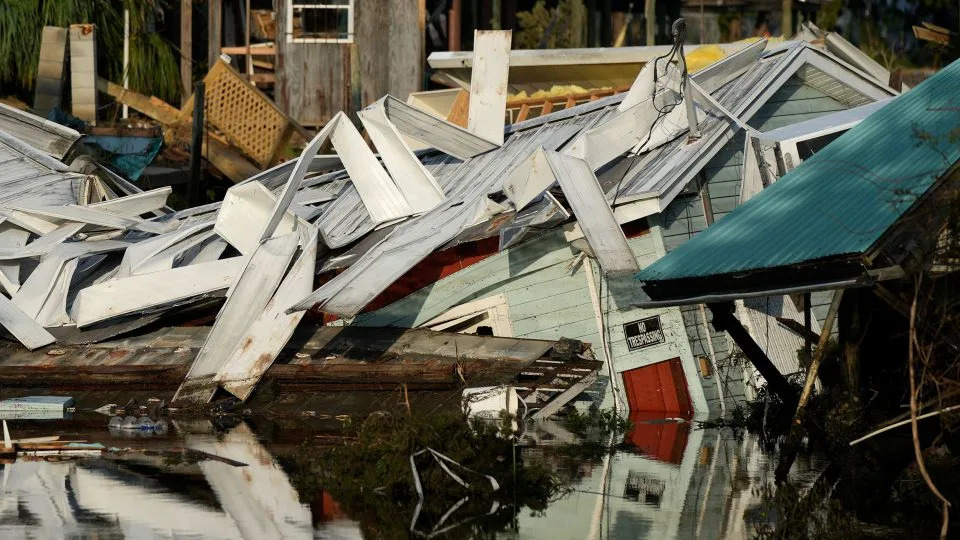
An unstilted home that came off its blocks sits partially submerged in a canal in Horseshoe Beach, Florida, on September 1, two days after Hurricane Idalia hit. – Rebecca Blackwell/AP
CNN teams reporting in Florida since Idalia hit haven’t observed any worker shortages.
But in recent months, Vilchez says he’s received multiple reports from managers who’ve showed up to construction sites expecting to see workers and instead found the worksites abandoned.
Soni, Resilience Force’s executive director, says he watched a similar scene unfold a week after the law passed.
“I remember being there one afternoon and talking to a worker at lunchtime. … And he, quite literally, while he was talking to me was packing his tools into his pickup truck and leaving with his crew.”
It was an early sign, Soni says, of harms caused by the immigration law.
“It’s really undermining the ability of Floridians to recover after a hurricane,” he says. “It’s upending the possibility of homes being rebuilt.”
‘I can’t lose my family just to earn a few more dollars’
For Josue, a 23-year-old from Honduras who lives in Texas and works in home remodeling, it’s been hard to watch news reports from Florida showing Hurricane Idalia’s aftermath.
“I feel powerless, seeing how all these people need help,” he says.
Josue, who asked to be identified only by his first name because he’s undocumented, says he knows how hard it is for families to clean up and move forward after disaster strikes.
“We’ve had hurricanes like this hit Honduras, and people have helped us,” he says. “And that’s one reason I want to help. We do it with all our hearts. We do it because we are all equal.”
Last year, he spent months in the Fort Myers area rebuilding homes “from top to bottom” – some still swamped with floodwaters, some with roofs ripped off.
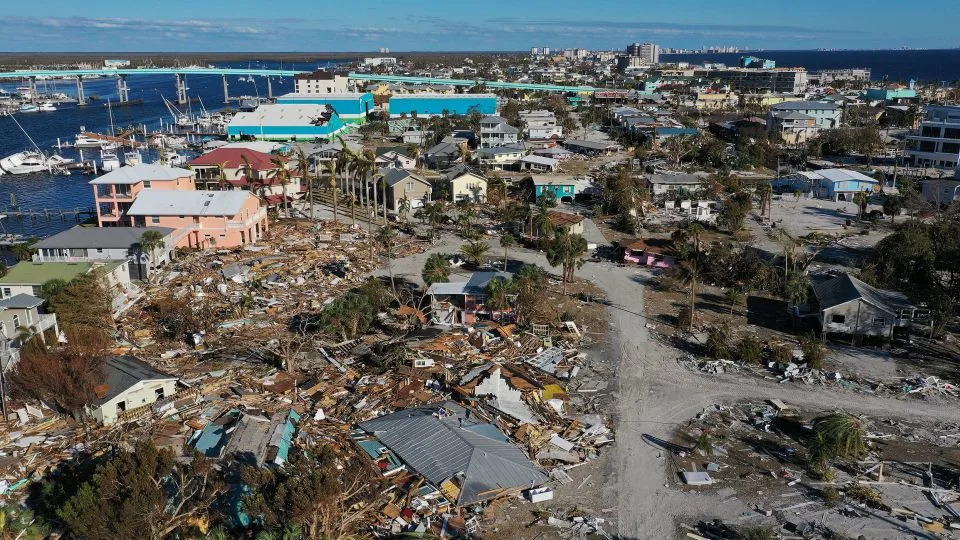
In this aerial view, destruction left in the wake of Hurricane Ian is shown in Fort Myers Beach, Florida, on October 2, 2022. – Win McNamee/Getty Images
This year, he says he doesn’t feel safe returning to the state.
Neither does 30-year-old Javier, who lives in New Orleans and also asked to be identified only by his first name because he’s undocumented.
After a few months remodeling homes in Fort Myers after Hurricane Ian last year, Javier says he sensed the atmosphere in the community shifting. Rumors swirled of undocumented workers getting arrested. He fled to Louisiana after hearing that more raids were imminent.
“If it was like that then, imagine how it would be now, with this law,” he says.
He thinks of the many family members he’s supporting, like his 12-year-old daughter in Honduras, who wants to be a surgeon when she grows up. And he thinks of his two sons living in Louisiana.
“I can’t lose my freedom,” he says. “I can’t lose my family just to earn a few more dollars.”
He’s worried about damage from this hurricane – and the next one
Officials are still surveying the damage Hurricane Idalia left behind when the Category 3 storm made landfall last week in Florida’s Big Bend region.
So far, despite the storm’s intensity, experts say the damage appears to be less extensive than other major hurricanes, partly because Idalia made landfall in a less populated region.
Saket Soni, executive director of Resilience Force, speaks to workers in a parking lot in LaPlace, Louisiana, on February 07, 2022. – Josh Brasted/Getty Images
Even though the damage from this storm isn’t as extensive, Soni says his contacts in the state still report that significant help is needed.
“There’s pretty major devastation in rural areas. There’s a lot of fallen trees. There’s a lot of homeowners in rural areas trying to clean their yards, and an older population of homeowners that needs the help,” Soni says.
While worker shortages in the wake of Idalia haven’t been reported, Soni says that’s a very real possibility if another major storm strikes the state this hurricane season, which ends November 30.
Forecasters are currently eying Hurricane Lee in the Atlantic, although they say it’s too soon to know whether the storm will strike the mainland US.
“Thankfully this recent hurricane, Idalia, did not hit a major city, but the next hurricane could hit the day after tomorrow,” Soni says. “It could come for Jacksonville or Tampa or Tallahassee. And at that point the governor would have a massive rebuilding effort on his hands, and no workers to fuel it. That’s really the situation that I’m concerned about.”
That, too, would be a disaster, Soni says – but one that he says is man-made, and avoidable.
CNN’s Matt Egan, Gloria Pazmino, Bill Kirkos, Carlos Suarez, Denise Royal, Isabel Rosales, Laura Robinson and Elisabeth Buchwald contributed to this report.
We just had the hottest August on record. What does it mean?
Ben Adler, Senior Editor – September 6, 2023
A thermometer reads 45 degrees Celsius (113 degrees Fahrenheit) on Aug. 23 in Toulouse, France. (Alain Pitton/NurPhoto via Getty Images)
Labor Day has passed, but cities including New York are still sweltering through a stretch of above 90-degree Fahrenheit temperatures this week, in what has been the world’s hottest summer on record. The Northeast, from northern Virginia to New England, is under a heat advisory, with Washington, D.C., expected to reach 100°F on Wednesday, according to Bloomberg News.
Wednesday also brought more evidence of global warming. Last month was the hottest August ever recorded and the second-hottest month ever measured, behind only July 2023, the World Meteorological Organization and the European Union’s Earth Observation Program, known as Copernicus, announced.
“The dog days of summer are not just barking, they are biting,” U.N. Secretary-General António Guterres said in a statement. “Climate breakdown has begun.”
A Salvation Army volunteer gives water to a man at the organization’s heat relief station in Phoenix on July 11. (Matt York/AP)
“The three months that we’ve just had are the warmest in approximately 120,000 years, so effectively human history,” Samantha Burgess, deputy director of Copernicus, told AFP. Burgess is predicting that 2023 will end up being the hottest year to date.
Temperatures spiked before summer even officially began on June 21. June saw global average temperatures 1°F above those documented between 1991 and 2020 for the same month, easily breaking the previous record from 2019 of 0.7°F above average.
“Regionally, much of northwestern Europe also saw record temperatures, while parts of North America, Asia and eastern Australia saw temperatures considerably above average” this June, the Hill reported.
The first three weeks of July were so hot that the WMO and Copernicus were able to accurately predict that it would be the hottest month ever before it was even over. The heat was felt all over the United States, with as many as 150 million Americans under heat alerts at one time. During that month, Phoenix experienced a record-breaking 31 straight days of temperatures above 110°F, filling emergency rooms with victims of extreme-heat exposure.
August continued the trend. Like July, last month saw temperatures 2.7°F hotter than the average for the same month in the second half of the 19th century.
August temperatures were well above average in the Southern Hemisphere, where it is winter, including in Australia, several South American countries and much of Antarctica. In early August, parts of Argentina, Chile and Paraguay had temperatures in the high 80s Fahrenheit, way above their normal winter weather, which would be in the 40s.
The oceans also broke heat records last month. The warmest ocean temperature ever was recorded on Florida’s Gulf Coast, a Jacuzzi-esque 101.1°F. For the month as a whole, the global average ocean temperature of 69.8° F was also the hottest on record.
Smoke and flames rise from the Smith River Complex Fire in Gasquet, Calif., on Aug. 16. (Caltrans via AP)
Extreme heat has direct consequences such as deaths from heatstroke, but also a number of indirect consequences that have been felt all over the country this summer.
High ocean temperatures can kill coral reefs, fish and shellfish, and sea grasses.
And higher air temperatures cause more water to evaporate, which both worsens droughts and makes rainfall heavier. Due to unusually dry conditions in Canada, the nation’s wildfire season started early and severely this year, causing wildfire smoke to billow across much of the Northern U.S. So far, an area larger than Greece has burned in Canada this year.
A view of Lahaina, Hawaii, on Aug. 11 after the wildfires there. (Rick Bowmer/AP)
Scientists are virtually unanimous in saying that this year’s heat is driven primarily by global warming, which is caused by increased concentrations of heat-trapping gases, mostly from burning fossil fuels.
“Global warming continues because we have not stopped burning fossil fuels — it is that simple,” Friederike Otto, a climate scientist at Imperial College London, said in response to the announcement from the WMO and Copernicus.
This year is also especially warm because of El Niño, which is associated with a band of warm ocean water that develops in the Pacific Ocean.
Many experts say the rising temperatures and their deadly effects should spur governments to take more action to reduce greenhouse gas emissions.
“2023 is the year that climate records were not just broken but smashed,” Mark Maslin, a professor of climatology at University College London, told reporters. “Extreme weather events are now common and getting worse every year — this is a wake-up call to international leaders.”
China is building new coal power so fast that ‘energy transition’ by the West is meaningless
David Blackmon – September 6, 2023
China will soon have more brand-new coal power than the US does in total – Michael Reynolds/EPA
Several interesting things have happened lately.
Bloomberg reported on August 30 that a recent update by British/Dutch oil giant Shell seems to have quietly abandoned a previously-announced radical plan to cut the company’s carbon emissions. Meanwhile Shell will increase investment in finding and producing more oil and natural gas.
The same media platform reported August 29 that China’s government has now approved the building of more new coal-fired power plants than are currently operating in the United States. The researchers who worked this out stated that these new coal plants are mostly in places with lots of existing coal power, and will provide capacity beyond that needed to back up renewables. This would appear to be a tacit admission that more fossil fuel energy is required to meet rising demand for electricity, even as Chinese population growth has stagnated.
Also on August 29, Rystad Energy released a new report which finds the “reinvestment rate among a group of 18 public shale companies hit 72 per cent in Q2 2023, the highest since Q2 2020,” as US shale producers strive to raise production to meet rising demand.
All these stories, and others, are indicative of industries and governments refocusing investments away from less productive green energy schemes, plowing more capital into efforts to increase production and generation. The driving factor behind this rededication to growth is obvious. The world continues to demand more oil, natural gas, and yes, coal to provide reliable and affordable energy to the masses.
Unlike Shell, BP and other European oil giants, US major ExxonMobil has never apologized for or scaled back investments in its core business efforts even as it has ramped up major new investments in various emissions-reducing projects through its Low Carbon Solutions business unit in recent years. ExxonMobil always has been and plans to remain at its core an oil and gas company, and the reasons why are spelled out in the 2023 edition of its annual Global Energy Outlook that was also published this week.
The key point in the Outlook that grabbed the most headlines in the renewables-obsessed legacy media is the finding that the world has fallen well behind the progress needed to meet the UN’s goal of having a “net-zero” energy mix by 2050, and that dynamic is unlikely to change over the next 27 years. This conclusion is hardly novel at this point – that view has in fact become part of a rising consensus among energy experts over the course of 2023. But most of the corporate media is so heavily invested in pushing the climate alarmist talking points that this finding still becomes the main headline related to a report that contains all manner of other interesting and valuable findings.
ExxonMobil’s projected shifts in the global energy mix between now and 2050 are a good example. The Global Outlook forecasts that fossil fuels – oil, natural gas, and coal – will still provide 69 per cent of global primary energy in 2050, which compares to the 80 per cent derived from those sources in 2022. The report projects the world will still demand the use of 25 billion metric tons (BMT) of oil in 2050, more than double the 11 billion projected by the International Energy Agency, whose initial findings seem to always be heavily optimistic in favor of a rapid transition, yet also always seem to require later, more pessimistic revisions.
That 25 BMT projection for 2050 will be a noticeable fall from the projected peak at 34 BMT of oil later in this decade. By contrast, the Global Outlook projects natural gas demand to increase by over 20 per cent during the next 27 years, “…given its utility as a reliable and lower-emissions source of fuel for electricity generation, hydrogen production, and heating for both industrial processes and buildings.” That finding also runs contrary to the IEA’s projection, as well as to the overarching media narrative related to the energy transition. But then again, almost everything currently happening in the energy space also conflicts with those things, so why should this Global Outlook be any different?
To further emphasize the continuing intractability of rising global energy demand, ExxonMobil’s researchers find that “energy from solar and wind is projected to more than quintuple, from 2 per cent of the world’s supply to 11 per cent.” The study also finds overall global CO2 emissions dropping dramatically by 2050, from a projected peak of roughly 34 BMT later this decade to about 25 BMT. But that reduction comes up well short of the UN’s goal of 11 BMT by 2050.
The report’s conclusion advocates for continuing public policy support for development of low carbon solutions, but the authors emphasize the need for these solutions to be “market-driven,” “technology-agnostic,” and to “incentivize all approaches, equally.”
Given that all these crucial energy policy decisions are being made by politicians beholden to their own preferred solutions which help fund their election campaigns, there is little reason to think any of those directional goals will be adopted. Thus, there is every reason to expect this heavily subsidized “energy transition” to continue to fail to meet its stated goals.
David Blackmon had a 40 year career in the US energy industry, the last 23 years of which were spent in the public policy arena, managing regulatory and legislative issues for various companies. He continues to write and podcast on energy matters
Mike Huckabee Hints at Violence if Trump Loses in 2024: Will Be Last Election ‘Decided by Ballots Rather Than Bullets’ (Video)
Dessi Gomez – September 6, 2023
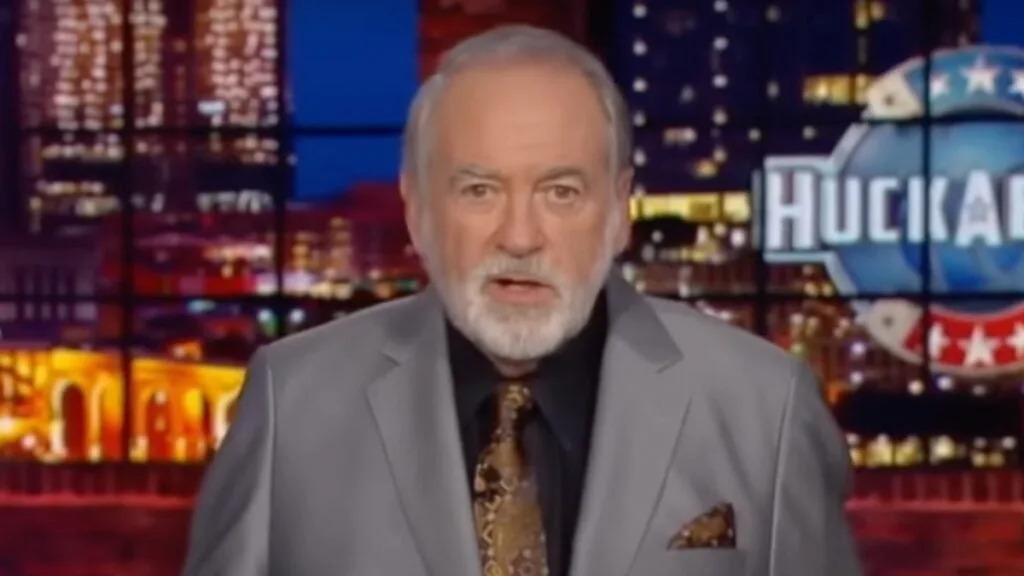
Former Arkansas Gov. Mike Huckabee warned on the latest episode of his “Huckabee” program on the Trinity Broadcasting Network that the 2024 election may be the last decided by “ballots rather than bullets” if former President Donald Trump does not win.
Huckabee, himself a failed presidential candidate, began the segment by accusing President Joe Biden with enacting similar policing tactics seen in “third-world dictatorships” to silent his primary political opponent.
“Do you know how political opponents to those in power are dealt with in third-world dictatorships, banana republics and communist regimes?” Huckabee asked during his monologue of Saturday night’s episode. “The people in power use their police agencies to arrest their opponents for made-up crimes in an attempt to discredit them, bankrupt them, imprison them, exile them or all of the above.”
For Huckabee, the multiple indictments against Trump fall under the “made-up crimes” category. Trump became the first American president to be indicted in March with charges relating to 2016 hush money payments made to adult film actress Stormy Daniels. And he has faced three indictments since then, most recently a series of charges out of Fulton County, Georgia, relating to alleged efforts to overturn the state’s 2020 election results.
While it’s unfounded by fact, Huckabee said he believes that Trump’s legal woes surrounding alleged hush-money payments, conspiracies to defraud the United States, mishandling of classified documents and more are a direct result of Biden trying to silence his political opponent.
“If you are not paying attention, you may not realize that Joe Biden is using exactly those tactics to make sure that Donald Trump is not his opponent in 2024,” Huckabee said.
“This kind of thuggery at tax payer expense isn’t supposed to happen in the United States,” he continued. “No, we’re supposed to be a nation of laws and not a nation of powerful people. But the Biden administration is in full meltdown mode to hide the money laundering, influence peddling and outright bribery that Joe, his son Hunter and their associates have been conducting for well over a decade that has enriched them to the tune of tens of millions of dollars.”
And that’s where the former politician intimated of violence to come if the legal actions against Trump are to cost him the 2024 presidential election.
“Here’s the problem: If these tactics end up working to keep Trump from winning or even running in 2024, it is going to be the last American election that will be decided by ballots rather than bullets,” he said.
Watch Huckabee’s full opening monologue in the video above.
‘The Old Farmer’s Almanac’ Predicts That Winter Will Be Frigid and Snowy Everywhere But Here
Karla Walsh – September 1, 2023
‘The Old Farmer’s Almanac’ Predicts That Winter Will Be Frigid and Snowy Everywhere But Here
“Hearst Magazines and Yahoo may earn commission or revenue on some items through these links.”
Since 1792, when Robert B. Thomas founded his publication The Old Farmer’s Almanac, the brand has been releasing long-long-term seasonal forecasts.
These conjectures are based on a formula that combines old methods like solar science and the study of sunspots (magnetic storms on the sun’s surface, which were once thought to affect conditions on Earth), with new ones, such as climatology and the study of weather patterns, meteorology, and the atmosphere.
Admittedly, many meteorologists believe that you can’t reliably trust a forecast beyond 10 days. However, with a self-reported 80 percent accuracy average, there’s something tempting about taking a peek about the Almanac’s predictions to see if we can tell the meteorological future.
So what’s ahead for around the next solstice, December 21, 2023? The Old Farmer’s Almanac 2023-2024 Winter Forecast claims to have our answers. Apparently, it’s a wise idea to have your coat and mittens ready, because “the 2024 Old Farmer’s Almanac predicts snow, seasonable cold, and all of winter’s delights,” the authors explain. “This winter’s forecast is sure to excite snow bunnies and sweater lovers alike, promising a whole lot of cold and snow across North America!”
In nearly all snow-prone parts of the country, expect higher-than-usual rates of snowfall, with an early start and late end to flurry season. Alongside the frosty scenery, you can anticipate colder-than-common temps. Central and Eastern states might be blasted with another frigid polar vortex this winter. In fact, “only snowy New England and the Atlantic Corridor will enjoy winter temperatures which are milder than what’s typical for their regions,” the Almanac says.
Shop NowThe 2024 Old Farmer’s Almanacamazon.com$8.22More
In the Deep South, Texas, and California, rain will prevail, and residents along the majority of the Eastern coastline may experience a mix of mild and cool temps. The Pacific Northwest is one region that’s expected to remain “relatively dry and cold throughout the season.”
If you’re curious about what the crystal ball says about your particular locale, check out this region-by-number map to determine where you land. Then check out your specific weather prediction below. (Psst…we’ve called out all the spots where you may be able to look forward to a white Christmas, in case sledding, snowball fights, or simply feeling like you’re sitting inside a snowglobe are treasured parts of your holiday traditions.)
Region 1: Northeast — “The snowiest stretches occur in mid-to late November, mid-December and early to mid-January,” the Almanac says. Overall, the temps appear to be tracking above normal, with chilly spurts in mid- to late November, early to mid-January, and early to mid-February.
Region 2: Atlantic Corridor — Snowfall is expected to be 2 to 3 inches above monthly averages, with the snowiest parts of the season at the tail end of December, late January, and mid-February. Temperatures should be above normal, except for a cold spell from late January to the middle of February.
Region 3: Appalachians — You may notice above-normal overall precipitation and snowfall, however. As far as the mercury levels, they are on track to be just below average.
Region 4: Southeast — While it’s unlikely to be a white Christmas, it might be a wet one, folks! Overall precipitation rates seem higher than usual, as do temps, which are expected to be mild and slightly above normal.
Region 5: Florida — Wet and mild rules the day for most of the state (except the dryer south). Snowbirds will be happy to hear that Florida’s winter temps are anticipated to be milder than usual this year.
Region 6: Lower Lakes — North of I-90, Santa might bring you a white Christmas! Beyond that, the snowy, colder-than-average periods are expected for late January through mid-February.
Region 7: Ohio Valley — With a wetter and colder than usual winter on the horizon, residents can look forward to a snowy week around Hanukkah and Christmas. “The coldest spells will occur in late December, early January, and late January through mid-February,” the authors say.
Region 8: Deep South — Get your rain boots ready; you’ll need them for much of the wet and mild yet colder-than-common season. The chilliest times are forecasted for late December, early and late January, as well as early February.
Region 9: Upper Midwest — Go ahead and start dreaming of a white Christmas, because the authors claim that this is one of the few regions that is expected to entirely be treated to a fluffy, white gift on December 25. Winter temps are anticipated to be below normal, especially during the second half of November, the majority of December, the start and end of January, and early February. Snowfall is also expected to be above normal rates.
Region 10: Heartland — Keep that scarf handy. The forecast for this region includes colder than normal climate. You can also anticipate a white Christmas, with winter’s snowy peak from late December to mid-January.
Region 11: Texas-Oklahoma — With just a bit more precipitation and temps leaning ever so colder in the north but warmer in the south, conditions are looking about on par for the course in these states.
Region 12: High Plains — Precipitation and snowfall will be a bit higher than most years, and “it will be extra cold,” the Almanac explains, with the glacial temps foreshadowed for late November, late December, and early to mid-January.
Region 13: Intermountain — Who’s ready for some soup? Temps are prophesied to be an estimated 4° F below average, and “we’re looking at above-normal snowfall. The snowiest periods will be in mid- to late November, early and late January, and mid-February,” the authors claim. “Expect a white Christmas!”
Region 14: DesertSouthwest — In parts of this region that typically receive snow, folks can await more flakes than normal, with the snowiest times during the second half of January and mid-February. Temps will be cooler than usual, especially in late November, at the start and end of December, and throughout late January.
Region 15: Pacific Northwest — Although this region is known for its frequently dreary conditions, residents can look forward to a colder yet drier-than-normal winter. The coldest weeks will fall in mid-November, late December, and mid-January.
Region 16: Pacific Southwest — It’s going to be a wet, stormy, and cold season, with the most precip predicted during early and late January, early to mid-February, and mid-March.
Region 17: Alaska — With a white Christmas and snowier-than-usual season ahead, you may guess that it will also be a frigid season. But the Almanac claims that temps should be about 4° F above average.
Region 18: Hawaii — Rainy and mild is the M.O. for the islands, the Almanac predicts. “Expect the stormiest periods in early November in the east and early January and mid-February.”
According to Exxon Mobil, oil giant and one of the more prominent architects of our planet’s fossil fuel-laden doom, humanity is likely to fail its climate goals of halting a global temperature rise of two degrees Celsius by 2050.
As The Wall Street Journal reports, Exxon published its grim prediction in a Monday climate report, effectively arguing that while global climate change efforts have made some progress — CO2 emissions caused by world fossil fuel consumption, the company posits, will fall by 25 billion metric tons by 2050, which will mark a 26 percent decrease from this decade’s “peak of 34 billion,” according to the WSJ — it simply won’t be enough to curb that dreaded two-degree global temperature uptick.
“An energy transition is underway,” reads the Exxon report, according to Reuters, “but it is not yet happening at the scale or on the timetable required to achieve society’s net-zero ambitions.”
Very bleak! And yet, according to the WSJ, Exxon also, in the very same report, argued that fossil fuels are conveniently still necessary to power worldwide economic growth.
“Fossil fuels remain the most effective way,” said the oil producer, “to produce the massive amounts of energy needed to create and support the manufacturing, commercial transportation, and industrial sectors that drive modern economies.”
Great. Thanks for nothing.
Cigarette Marketing
We really can’t stress enough how ludicrous it is to receive such dismal climate projections from Exxon specifically. To back up for a second: in 2015, an investigation revealed that executives at Exxon were made aware of the threat of greenhouse gas-caused climate change back in 1977, long before the public knew anything about it. They chose to ignore the risk, even spending millions to launch a long series of climate misinformation campaigns. Today, as the WSJ notes, the company is currently embroiled in a number of lawsuits related to climate deception.
That’s all to say that this latest report feels much like the cigarette lobby publishing a memo declaring that people are still dying from lung cancer, before turning around and explaining why cigarettes are still super useful and necessary long-term for social progress, actually. (Indeed, there are a lot of similarities between the cigarette lobby and oil giants.) And in June of this year, it’s worth noting, Exxon and Chevron shareholders rejected a series of proposals aimed to further limit emissions.
To Exxon’s credit, it’s probably right. The Earth is in a verybad place — and as long as Exxon’s still making upwards of $56 billion in oil sales annually, hitting our 2050 emissions targets is unlikely.