State Farm is closing its doors to millions of new customers exposed to ‘rapidly growing’ catastrophes — here’s who’s affected
Laurelle Stelle – September 18, 2023
The EPA reports that wildfires are getting worse as the planet gets warmer. In response to this and other factors, major insurer State Farm has announced that it will no longer offer homeowner’s insurance to new applicants in fire-prone California.
What’s happening?
According to the EPA, the area burned by wildfires each year has been increasing since the 1980s. The 10 most destructive years on record have happened in the past 20 years, causing more damage thanks to the plentiful dry plants left behind by drought.
While the effects are felt across the U.S., California is famous for its yearly wildfires and the resulting smoke. This year has been particularly hard for the state due to a devastating combination of storms, floods, drought, and fire.
As Axios reports, this became too much risk for State Farm. The company cited “historic increases in construction costs outpacing inflation” and “rapidly growing catastrophe exposure” in its decision to close applications across California in May.
Why does it matter?
For homeowners in California, it will now be harder to find affordable coverage for their property. Without it, residents run the risk of losing everything in a fire. Owners that already have coverage are still protected, but State Farm won’t accept any new applications in California, it says.
But the problem extends beyond California. Disasters of all kinds have become more common and more destructive as rising temperatures across the world have caused the weather to become less stable.
If insurers find it too risky to cover areas affected by these disasters, then more and more regions could find themselves without coverage. Louisiana and Florida are already losing coverage thanks to predictions of an active hurricane season, Axios reports. Ironically, State Farm has announced its intent to remain in Florida despite large competitors like Farmers and AAA pulling out.
What’s being done?
Michael Soller, the California deputy insurance commissioner, told Axios in an email that the California Department of Insurance is dedicated to protecting consumers in the long run.
“We have been here before after major wildfires,” he said. “What’s different is the actions that we are taking with the first-ever insurance discount program for wildfire safety and unprecedented wildfire mitigation investments from the Legislature and Governor.”
In other words, the CDI is working with the state government to lower insurance costs and reduce the risk of wildfires so that insurers can be secure operating in the area once again.
Scientists find shocking new use for cocoa beans that could affect our entire planet — and it has nothing to do with chocolate
Roberto Guerra – September 17, 2023
A novel way to counter climate change is taking place in the German port city of Hamburg.
It’s a process that begins with cocoa bean shells going in one end of a factory and coming out as a black powder called biochar, which is doing its part to slow climate change.
What is biochar?
Biochar is the black powder mentioned above, and it’s produced by — in this case — heating cocoa husks in a room that has no oxygen to a temperature of 1,112 degrees Fahrenheit, according to Phys.org. Biochar producers can also use other organic wastes as raw materials.
The process prevents plant-warming toxic gases from entering the atmosphere, and the final product can be turned into fertilizer or an ingredient for concrete that is environmentally friendlier than traditional concrete, per Phys.org.
How does the process work?
Biochar captures the carbon dioxide present in the husks of the cocoa shells from the European plant mentioned above, and this method can be implemented by any other facility.
If the cocoa shells were discarded conventionally, the carbon within the unused byproduct would be released into the atmosphere during its decomposition.
Rather than following the usual disposal method, where the carbon within the unused cocoa shells would be released into the atmosphere, which heats up the planet, it is instead stored in the biochar for a very long time.
David Houben, an environmental scientist at the UniLaSalle Institute in France, told Phys.org that the biochar could hold onto the planet-warming gas for centuries.
Why is biochar important?
The United Nations’ Intergovernmental Panel on Climate Change (IPCC) says that biochar could potentially capture billions of tons of the environmentally damaging gases released by our species every year.
This is important because human activities, such as electricity production and transportation, spew around 77 billion tons of planet-warming gases into the atmosphere each year. So far, this warming has triggered an increase in heatwaves, floods, droughts, and forest fires over the past few decades.
Some experts believe implementing renewable energy to reduce the amount of planet-warming emissions into the atmosphere isn’t enough and that it may already be too late to prevent the most damaging effects of a warming planet.
That’s why carbon sequestration, or the process of removing the planet-warming gases we’ve already injected into the atmosphere, is considered so important by many climate experts, and the use of biochar does exactly that.
However, the production of biochar is still difficult to scale up to the levels where it could actually slow the overheating of the planet.
“To ensure the system stores more carbon than it produces, everything needs to be done locally, with little or no transport. Otherwise it makes no sense,” Houben, the environmental scientist, told Phys.org.
However, even though challenges remain, the number of biochar initiatives is increasing rapidly. As reported by Phys.org, the production of biochar is expected to nearly double this year compared to last year.
Join our free newsletter for easy tips to save more, waste less, and help yourself while helping the planet.
AP PHOTOS: Moroccan earthquake shattered thousands of lives
Sam Metz and Mosa Ab El Shamy – September 16, 2023
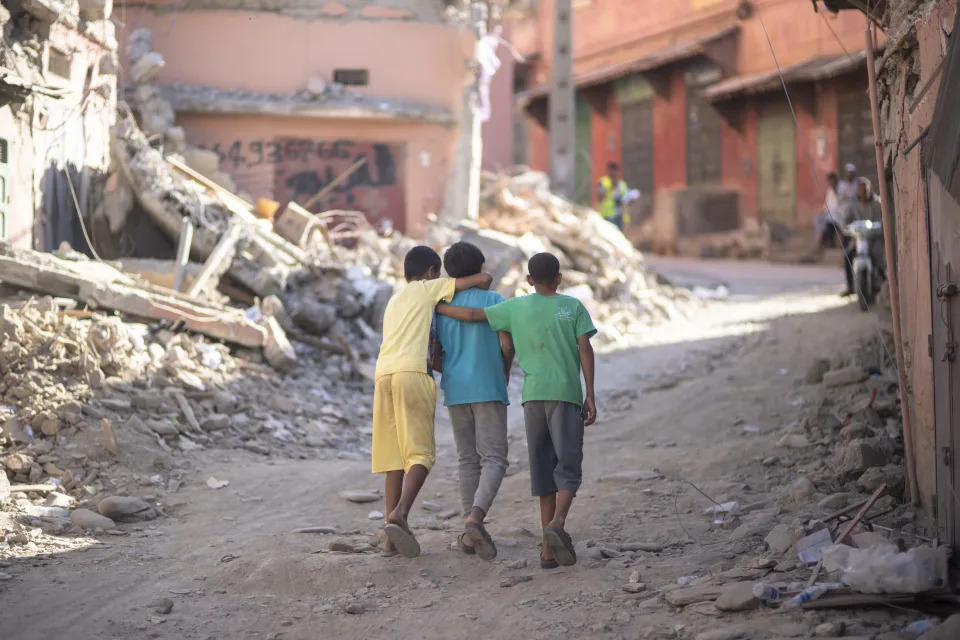
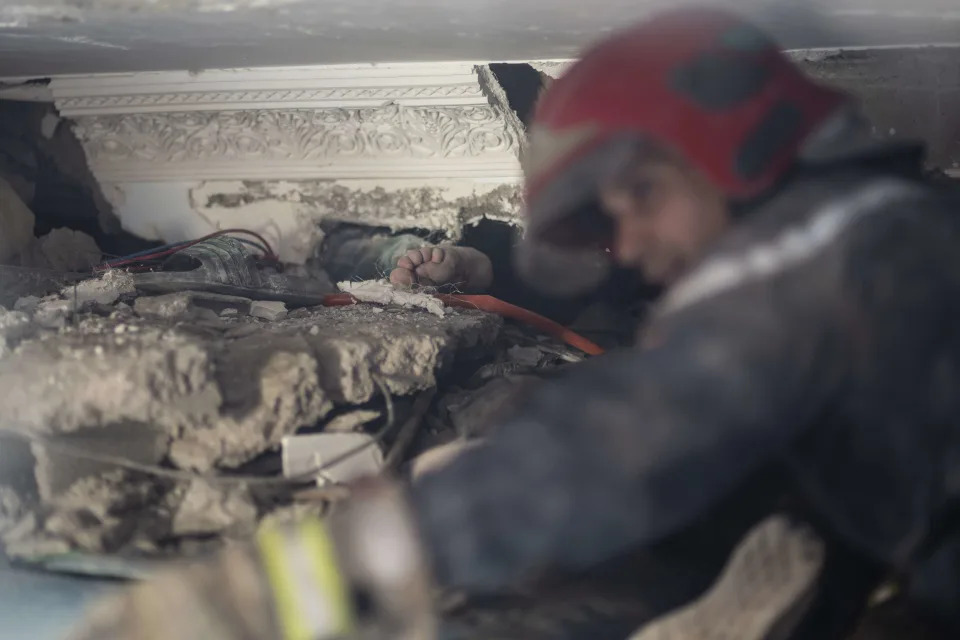
Children walk through the rubble of their town of Amizmiz which was damaged by the earthquake, outside Marrakech, Morocco, Thursday, Sept. 14, 2023. (AP Photo/Mosa’ab Elshamy)A child reacts after inspecting the damage caused by the earthquake, in her town of Amizmiz, near Marrakech, Morocco, Sunday, Sept. 10, 2023. An aftershock rattled Moroccans on Sunday as they prayed for victims of the nation’s strongest earthquake in more than a century and toiled to rescue survivors while soldiers and workers brought water and supplies to desperate mountain villages in ruins. (AP Photo/Mosa’ab Elshamy)The foot of a man stuck under rubble while a rescue operation for him is underway, after an earthquake, in Moulay Brahim village, near Marrakech, Morocco, Saturday, Sept. 9, 2023. A rare, powerful earthquake struck Morocco late Friday night, killing more than 800 people and damaging buildings from villages in the Atlas Mountains to the historic city of Marrakech. But the full toll was not known as rescuers struggled to get through boulder-strewn roads to the remote mountain villages hit hardest. (AP Photo/Mosa’ab Elshamy)A woman tries to recover some of her possessions from her home which was damaged by the earthquake in the village of Tafeghaghte, near Marrakech, Morocco, Monday, Sept. 11, 2023. Rescue crews expanded their efforts on Monday as the earthquake’s death toll continued to climb to more than 2,400 and displaced people worried about where to find shelter. (AP Photo/Mosa’ab Elshamy)A rescue team recovers the body of a woman who was killed by the earthquake, in the town of Imi N’tala, outside Marrakech, Morocco, Tuesday, Sept. 12, 2023. (AP Photo/Mosa’ab Elshamy
AMIZMIZ, Morocco (AP) — With their arms around each other, three boys walked through the streets of their town at the foot of Morocco’s Atlas Mountains.
It could have been a scene like millions around the world that day. But in the Moroccan town of Amizmiz, the boys were walking through rubble, one week after an earthquake rattled their community’s homes, schools, mosques and cafes. Their possessions were buried beneath tons of mud and clay bricks, along with an untold number of people whom the boys knew.
A little girl held her palms to her cheeks, stunned at the destruction.
Entire villages higher up the mountains were leveled. In many, at least half of the population appears to have died.
Photos of the disaster show how fathers, mothers, children and their animals remain trapped under bricks, appliances and fallen ceilings. Going without power for days, residents see at night by the light of their phones.
“It felt like a bomb went off,” 34-year-old Mohamed Messi of Ouirgane said.
When mud and clay brick — traditional materials used for construction in the region — turn to rubble, they leave less space for oxygen than collapsed construction materials in countries like Turkey and Syria, which were also hit by quakes this year.
The day after the quake, hundreds of residents of the mountain town of Moulay Brahim gathered to perform funeral rites, praying on rugs arranged neatly in the street before carrying blanket-covered bodies from the town’s health center to its cemetery.
“People are suffering here very much. We are in dire need of ambulances. Please send us ambulances to Moulay Brahim. The matter is urgent. This appeal must reach everyone, and on a large scale. Please save us,” said Ayoub Toudite, the head of a community group in Moulay Brahim. “We hope for urgent intervention from the authorities. There is no network. We are trying to call, but to no avail.”
The United Nations reported that roughly 300,000 people were likely affected by the earthquake. UNICEF said that likely included 100,000 children.
As the Moroccan government approved only limited assistance from four countries and certain NGOs, Salah Ancheu, a 28-year-old from Amizmiz, told The Associated Press that nearby villages desperately needed more assistance. Residents of his town swept all the rubble off the main road so that cars, motorycles and aid crews can reach villages further along the mountain roads. A giant pile of steel rods, baskets and broken cinderblocks lay just off the center of the road.
“It’s a catastrophe,” he said. ‘’There aren’t ambulances, there aren’t police, at least for right now. We don’t know what’s next.’’
In parts of Amizmiz that weren’t leveled by the temblor, families began to return on Sunday to sort through the wreckage and retrieve valuables from homes where at least one floor remained standing. People cheered the trucks full of soldiers speeding through the road bisecting the town, as women and children sat under tents eating bread, cheese and vegetable stew.
Hafida Fairouje, who came from Marrakech to help her sister’s family in Amizmiz, said smaller nearby villages had nothing left, expressing shock that it took authorities about 20 hours after the earthquake to reach some of the nearby villages.
Morocco on Monday created a special government fund for earthquake-related efforts, to which King Mohammed VI later donated the equivalent of $97 million (91 million euros). Enaam Mayara, the president of the parliament’s House of Councilors, said it would likely take five or six years to rebuild some affected areas.
A foul stench permeated the air through the beginning of the week as rescuers worked to dig out bodies and sort through wreckage in smaller villages.
Aid began to arrive and piles of flour, blankets and yogurts were stacked in villages where most buildings were reduced to rubble. People said they had been given food and water, but they still worried about shelter and their long-term prospects.
Moroccan military forces and international teams from four approved countries — Qatar, Spain, the United Arab Emirates and United Kingdom — erected tents near Amizmiz while their teams wound through mountain roads to contribute to ongoing rescue efforts in villages such as Imi N’Tala, where a slice of mountain fell and destroyed the vast majority of homes and killed many residents.
Young boys sang “Hayya Hayya” — the theme song of the 2022 World Cup hosted in Qatar — as the country’s trucks drove through the mountains.
“The mountain was split in half and started falling. Houses were fully destroyed,” a local man, Ait Ougadir Al Houcine, said Tuesday as crews worked to recover bodies, including his sister’s. “Some people lost all their cattle. We have nothing but the clothes we’re wearing. Everything is gone.”
Families and children relocated to yellow tents provided by Moroccan authorities as fears set in about the time it would likely take to rebuild their homes.
“We just started the new school year but the earthquake came and ruined everything,” Naima Ait Brahim Ouali said, standing under an umbrella outside of a yellow tent as children play inside. “We just want somewhere to hide from the rain.”
After King Mohammed VI donated blood in Marrakech and later presided over an emergency response meeting, Moroccan officials said the government would fund both emergency relief and future rebuilding for residents of roughly 50,000 homes that were damaged or destroyed by allocating cash, depending on the level of destruction.
Scientists develop unreal solution to get toxic microplastics out of our drinking water: ‘[They] pose a growing threat’
Ben Raker – September 16, 2023
Widely available sawdust and plant-based materials could be the keys to filtering plastic from our drinking water, according to research led by scientists at the University of British Columbia.
Although it’s still at the testing stage, the study’s filter technology may provide a natural and effective solution to the problem of microplastics in water supplies.
The filtration material, which the researchers named “bioCap” and described in a recent paper, is composed of wood sawdust and tannins. Tannins are “natural plant compounds that make your mouth pucker if you bite into an unripe fruit,” as a university news release described them.
The scientists showed in tests that the sawdust with tannins removed 95.2 to 99.9% of microplastics in a column of water.
“There are microfibers from clothing, microbeads from cleansers and soaps, and foams and pellets from utensils, containers, and packaging,” Orlando Rojas, director of the university’s BioProducts Institute and the project’s lead researcher, stated for the news release. “[O]ur bioCap solution was able to remove virtually all of these different microplastic types.”
One study showed that 83% of drinking water samples taken from around the world contained microplastics, with 94% of U.S. samples containing them, the Guardian reported.
The World Health Organization said that “no reliable information suggests” that microplastic in drinking water is a human health concern. However, it also points to “insufficient information” on the topic and recommends generally firmer control of plastics getting into the environment.
Other experts are wary of microplastics because of the limited information, the known toxicity associated with certain plastics, and how widespread microplastics have become.
The bioCap technology may provide some peace of mind for those who would prefer to keep plastics out of their hydration routines.
Various other researchers are also looking at ways to remove plastic from water, including one team in Korea that reportedly removed a similar percentage of particles using advanced filtration.
The advantages bioCap has are its use of natural materials and its flexibility.
“Most solutions proposed so far are costly or difficult to scale up,” Rojas noted for the news release. “We’re proposing a solution that could potentially be scaled down for home use or scaled up for municipal treatment systems.”
He added that bioCap “uses renewable and biodegradable materials: tannic acids from plants, bark, wood, and leaves, and wood sawdust — a forestry byproduct that is both widely available and renewable.”
It’s unclear how long it might take before this technology could be used widely, but the research team suggested that it could be scaled up quickly with an industry partner. Rojas told the Vancouver Sun that the BioProducts Institute already works with forest companies to supply wood byproducts for their creative approach.
“Microplastics pose a growing threat to aquatic ecosystems and human health, demanding innovative solutions,” Rojas said.
Scientists are sounding the alarm about a dangerous problem that will soon affect 2 billion people — here’s what to know
Laurelle Stelle – September 15, 2023
As the world has gotten hotter, more people are exposed to dangerously high temperatures each year. Recent findings published in Nature Sustainability show that without policy changes, the world will heat up enough by the end of the century that more than 2 billion people will live in life-threatening hot climates, as Science Hub reported.
What’s happening?
So far, the world’s average temperature has risen by just under 1.2 degrees Celsius (about 2 degrees Fahrenheit) above preindustrial level due to human activity, according to Science Hub. The Paris Agreement — an international treaty to limit heat-trapping gases produced by each country and stop the world from getting hotter — proposed to cap the increase at 2.7 degrees Fahrenheit.
However, the new study found that with the current laws, population growth, and environmental conditions, the world will likely reach about 4.8 degrees Fahrenheit above the preindustrial benchmark, per Science Hub.
The researchers then looked at which areas would be most affected if the temperature increased to that level. They defined “unprecedented heat” zones as areas where the average temperature throughout the year, counting all seasons, is 84.2 degrees Fahrenheit or higher.
Science Hub reported that 40 years ago, only 12 million people worldwide lived in regions with temperatures surpassing that heat. Today, thanks to the warming we’ve already experienced, about 60 million people are affected.
The study found that by 2100, 2 billion out of the world’s projected population of 9.5 billion will live in areas with an average temperature higher than 84.2 degrees Fahrenheit. The most affected areas will be countries around the equator, noted Science Hub: India, Nigeria, Indonesia, the Philippines, and Pakistan.
Why is this heating worrisome?
The hotter the world gets, the more heat waves, droughts, and wildfires we experience. As Science Hub reported, studies have also linked the rising heat to everything from more contagious diseases to lower labor efficiency and more conflict between people.
“That’s a profound reshaping of the habitability of the surface of the planet, and could lead potentially to the large-scale reorganization of where people live,” study author Tim Lenton, director of the Global Systems Institute at the University of Exeter, told ScienceAlert.
What’s being done?
Science Hub reported that if the global community reaches the goal set by the Paris Agreement, the affected population would be limited to half a billion people instead of 2 billion.
In the meantime, individuals can protect themselves from heat waves with these tips for cooling off.
Earth is outside its ‘safe operating space for humanity’ on most key measurements, study says
Seth Borenstein – September 13, 2023
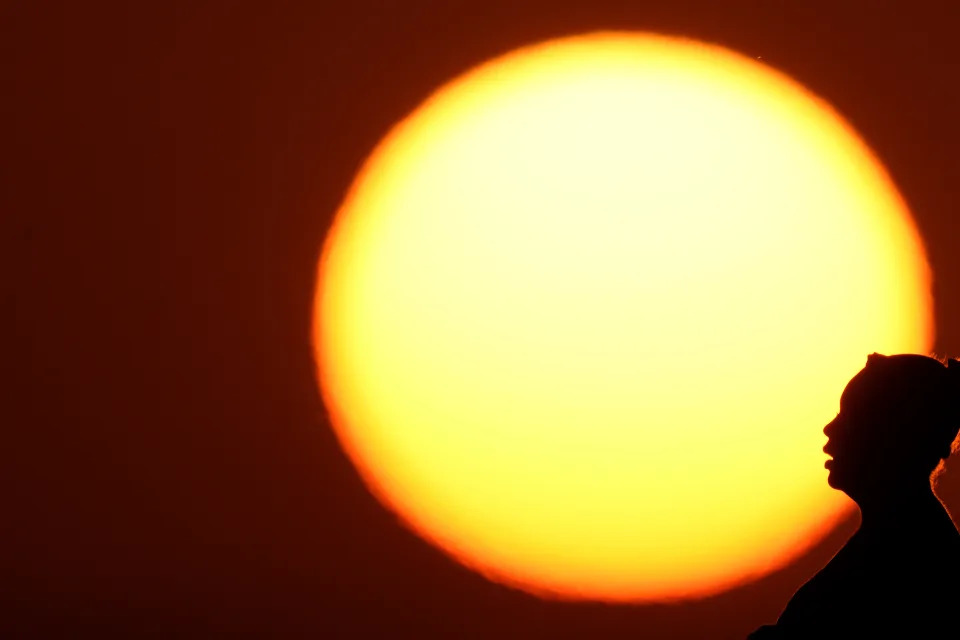
A woman is silhouetted against the setting sun as triple-digit heat indexes continue in the Midwest, Aug. 20, 2023, in Kansas City, Mo. Earth is exceeding its “safe operating space for humanity” in six of nine key measurements of its health, and two of the remaining three are headed in the wrong direction, a new study said. (AP Photo/Charlie Riedel, File)Haze blankets the main business district in Jakarta, Indonesia, Aug. 11, 2023. Earth is exceeding its “safe operating space for humanity” in six of nine key measurements of its health, and two of the remaining three, one being air pollution, are headed in the wrong direction, a new study said. (AP Photo/Dita Alangkara, File)
Earth is exceeding its “safe operating space for humanity” in six of nine key measurements of its health, and two of the remaining three are headed in the wrong direction, a new study said.
Earth’s climate, biodiversity, land, freshwater, nutrient pollution and “novel” chemicals (human-made compounds like microplastics and nuclear waste) are all out of whack, a group of international scientists said in Wednesday’s journal Science Advances. Only the acidity of the oceans, the health of the air and the ozone layer are within the boundaries considered safe, and both ocean and air pollution are heading in the wrong direction, the study said.
“We are in very bad shape,” said study co-author Johan Rockstrom, director of the Potsdam Institute for Climate Impact Research in Germany. “We show in this analysis that the planet is losing resilience and the patient is sick.”
In 2009, Rockstrom and other researchers created nine different broad boundary areas and used scientific measurements to judge Earth’s health as a whole. Wednesday’s paper was an update from 2015 and it added a sixth factor to the unsafe category. Water went from barely safe to the out-of-bounds category because of worsening river run-off and better measurements and understanding of the problem, Rockstrom said.
These boundaries “determine the fate of the planet,” said Rockstrom, a climate scientist. The nine factors have been “scientifically well established” by numerous outside studies, he said.
If Earth can manage these nine factors, Earth could be relatively safe. But it’s not, he said.
In most of the cases, the team uses other peer-reviewed science to create measurable thresholds for a safety boundary. For example, they use 350 parts per million of carbon dioxide in the air, instead of the Paris climate agreement’s 1.5 degrees (2.7 degrees Fahrenheit) of warming since pre-industrial times. This year carbon in the air peaked at 424 parts per million.
The nine factors are intermingled. When the team used computer simulations, they found that making one factor worse, like the climate or biodiversity, made other Earth environmental issues degrade, while fixing one helped others. Rockstrom said this was like a simulated stress test for the planet.
The simulations showed “that one of the most powerful means that humanity has at its disposal to combat climate change” is cleaning up its land and saving forests, the study said. Returning forests to late 20th century levels would provide substantial natural sinks to store carbon dioxide instead of the air, where it traps heat, the study said.
Biodiversity – the amount and different types of species of life – is in some of the most troubling shape and it doesn’t get as much attention as other issues, like climate change, Rockstrom said.
“Biodiversity is fundamental to keeping the carbon cycle and the water cycle intact,” Rockstrom said. “The biggest headache we have today is the climate crisis and biodiversity crisis.”
University of Michigan environmental studies dean Jonathan Overpeck, who wasn’t part of the study, called the study “deeply troubling in its implications for the planet and people should be worried.”
“The analysis is balanced in that it clearly sounds a flashing red alarm, but it is not overly alarmist,” Overpeck said. “Importantly, there is hope.”
The fact that ozone layer is the sole improving factor shows that when the world and its leaders decide to recognize and act on a problem, it can be fixed and “for the most part there are things that we know how to do” to improve the remaining problems, said Carnegie Mellon chemistry and environment professor Neil Donahue.
Some biodiversity scientists, such as Duke’s Stuart Pimm, have long disputed Rockstrom’s methods and measurements, saying it makes the results not worth much.
But Carnegie Mellon environmental engineering professor Granger Morgan, who wasn’t part of the study, said, “Experts don’t agree on exactly where the limits are, or how much the planet’s different systems may interact, but we are getting dangerously close.”
“I’ve often said if we don’t quickly cut back on how we are stressing the Earth, we’re toast,” Morgan said in an email. “This paper says it’s more likely that we’re burnt toast.”
The Mighty American Consumer Is About to Hit a Wall, Investors Say
Reade Pickert and Vildana Hajric – September 11, 2023
(Bloomberg) — After staving off recession for longer than many thought possible, the US consumer is finally about to crack, according to Bloomberg’s latest Markets Live Pulse survey.
More than half of 526 respondents said that personal consumption — the most important driver of economic growth — will shrink in early 2024, which would be the first quarterly decline since the onset of the pandemic. Another 21% said the reversal will happen even sooner, in the last quarter of this year, as high borrowing costs eat into household budgets while Covid-era savings run down.
The finding is at odds with the optimism that’s permeated US equity markets for most of the summer, as cooling inflation and low unemployment bolstered hopes for a so-called soft landing. Should the economy stop growing — a scenario that’s quite likely if consumer spending contracts — it could mean more downside for stocks, which have already slipped from late-July highs.
“The likelihood of a soft landing, falling inflation, an end to Fed tightening, a peak in interest rates, a stable dollar, stable oil prices — all those things helped drive the market up,” says Alec Young, chief investment strategist at MAPsignals. “If the market loses confidence in that scenario, then stocks are vulnerable.”
‘It Is Not Sustainable’
Right now, the US economy appears to be speeding up rather than stalling. Growth is forecast to accelerate in the third quarter on the back of a recent pickup in household spending, which jumped in July by the most in six months.
To some analysts, it looks a bit like a last hurrah.
“The big question is: Is this strength in consumption sustainable?” says Anna Wong, Bloomberg Economics’ chief US economist, who expects a recession to start by year-end. “It is not sustainable, because it’s driven by these one-off factors” – notably a summer splurge on blockbuster movies and concert tours.
Read More: Barbenheimer, Swift, Beyonce = Mirage of US GDP Boom
The enduring strength of the US job market has propped up household spending in the face of the biggest price increases in decades. It’s led some analysts to push out their expectations for a recession — or even scrap them altogether.
Economists at Goldman Sachs Group Inc. expect the consumer to outperform yet again in 2024 — and keep the economy growing — amid steady job growth and pay hikes that beat inflation.
‘Really Struggling’
But there are plenty of headwinds looming.
Researchers at the Federal Reserve Bank of San Francisco say the excess savings that have helped consumers get through the price spike will run out in the current quarter — a sentiment that three-quarters of the MLIV Pulse respondents agreed with.
“There’s increasingly an issue where the lower end of the income and wealth spectrum is really struggling with the accumulated inflation of the last couple years,” while wealthier Americans are still cushioned by savings and asset appreciation, said Thomas Simons, Jefferies’ US economist.
In the aggregate, consumers have been able to bend under the weight of higher prices, he said. “But there will come a point where that’s no longer feasible.”
Read full results: Savings Dwindle, US Student Debts Come Due: MLIV Pulse Results
Delinquency rates on credit cards and auto loans are rising, as households feel the financial squeeze after the Fed raised interest rates by more than 5 percentage points.
And another kind of debt — student loans — is about to come due again for millions of Americans who benefited from the pandemic freeze on repayments.
A majority of investors in the MLIV Pulse survey pointed to the declining availability and soaring cost of credit — mortgage rates are near two-decade highs — as the biggest obstacle for consumers in the coming months.
Some three-quarters of respondents said auto or retail stocks are the most vulnerable to declining excess savings and tighter consumer credit – a concern that’s not entirely priced in by the markets. While General Motors Co. and Ford Motor Co. have essentially missed out on this year’s wider stock rally, Tesla Inc. more than doubled in value.
‘Just Taking Longer’
Since the economy’s fate hinges on what US consumers will do next, investors are looking in all kinds of places for the answer.
Asked what they consider a good leading indicator, MLIV Pulse respondents pointed to everything from the most standard measures – like retail sales or credit-card delinquencies — to airline bookings, pet adoptions, and the use of “Buy Now Pay Later” installment plans.
That’s perhaps because conventional guides have often proved to be unreliable amid the turbulence of the past few years.
“The traditional playbook for the economy and markets is challenging in this post-pandemic environment,” said Keith Lerner, co-chief investment officer at Truist Wealth. “Things are just taking longer to play out.”
The MLIV Pulse survey of Bloomberg News readers on the terminal and online is conducted weekly by Bloomberg’s Markets Live team, which also runs the MLIV blog. This week, the MLIV Pulse survey asks whether investors have fully regained the confidence in UK assets that they lost during the short-lived premiership of Liz Truss. Click here to share your views.
SEPTEMBER 6th 2023: A New York federal judge rules that former president Donald Trump is liable for defamation in the second E. Jean Carroll case and must go to trial to determine damages. – AUGUST 7th 2023: A New York judge dismisses a defamation countersuit brought by Donald Trump against columnist E. Jean Carroll. – JULY 19th 2023: A New York judge denies the request from former President Donald Trump for a new trial in the E. Jean Carroll sexual abuse, rape and defamation civil case. – MAY 9th 2023: A New York federal jury finds former President Donald Trump liable for sexual abuse and defamation in civil lawsuit and awards $5 million in damages to accuser E. Jean Carroll. – MAY 1st 2023: A New York judge has denied the request from Donald Trump’s legal team for a mistrial in the rape and defamation lawsuit brought columnist E. Jean Carroll. – NOVEMBER 24th 2022: Ex-magazine columnist E. Jean Carroll files a new lawsuit against former President Donald Trump for battery and defamation under the provisions of a new New York State law that allows adults alleging sexual assault to bring claims years after the attack. – SEPTEMBER 20th 2022: Former President Donald Trump to face a new lawsuit alleging sexual assault to be filed by columnist E. Jean Carroll who claims Trump raped her in the 1990s. – File Photo by: zz/Dennis Van Tine/STAR MAX/IPx 2015 6/16/15 Donald Trump announces his 2016 candidacy for President of The United States of America on June 16, 2015 at Trump Tower in New York City. (NYC) (zz/Dennis Van Tine/STAR MAX/IPx)More
The early polls show Donald Trump and President Joe Biden tied nationwide. Does that mean Trump has a clear advantage in the battleground states that decide the Electoral College?
It’s a reasonable question, and one I see quite often. In his first two presidential campaigns, Trump fared far better in the battleground states than he did nationwide, allowing him to win the presidency while losing the national vote in 2016 and nearly doing it again in 2020.
But there’s a case that his Electoral College advantage has faded. In the midterm elections last fall, Democrats fared about the same in the crucial battleground states as they did nationwide. And over the last year, state polls and a compilation of New York Times/Siena College surveys have shown Biden running as well or better in the battlegrounds as nationwide, with the results by state broadly mirroring the midterms.
The patterns in recent polling and election results are consistent with the trends in national surveys, which suggest that the demographic foundations of Trump’s Electoral College advantage might be fading. He’s faring unusually well among nonwhite voters, who represent a larger share of the electorate in noncompetitive than competitive states. As a consequence, Trump’s gains have probably done more to improve his standing in the national vote than in relatively white Northern states likeliest to decide the presidency, like Pennsylvania and Wisconsin.
Midterm results typically don’t tell us much about the next general election. Polls taken 15 to 27 months out don’t necessarily augur much, either. But the possibility that Republicans’ Electoral College advantage is diminished is nonetheless worth taking seriously. It appears driven by forces that might persist until the next election, like Biden’s weakness among nonwhite voters and the growing importance of issues — abortion, crime, democracy and education — that play differently for blue and purple state voters.
Of course, there is more than a year to go. Biden may regain traction among nonwhite voters or lose ground among white voters, which could reestablish Trump’s Electoral College edge. Perhaps his Electoral College edge could grow even larger than it was in 2020, as some Democrats warned after that election.
But at this point, another large Trump Electoral College advantage cannot be assumed. At the very least, tied national polls today don’t mean Trump leads in the states likeliest to decide the presidency.
There are three basic pieces of evidence suggesting that Trump’s key advantage might be diminished today: the midterms, the Times/Siena polls and state polls.
The Midterms
The 2022 midterms were a surprise. Republicans won the national vote, just as the polls anticipated. With Republicans usually faring better in the battlegrounds in recent cycles, a national popular vote advantage might have been expected to yield a “red wave.”
But Democrats held their ground in the battleground states, allowing them to retain the Senate and nearly hold the House. Nationally, Republican House candidates won the most votes by about 2 percentage points (after adjusting for uncontested races). The margin was almost identical in the presidential battlegrounds, like Arizona, Pennsylvania and Wisconsin, where Republican House candidates also won by 2 points.
The shrinking gap between the key battleground states and the national popular vote wasn’t just because of Democratic resilience in the battlegrounds. It was also because Republicans showed their greatest strengths in noncompetitive states like California and New York as well as across much of the South, including newly noncompetitive Florida. Democratic weakness in these states was just enough to cost them control of the House of Representatives, but did even more to suppress Democratic tallies in the national popular vote, helping erase the gap between their strength in the battlegrounds and the national vote.
Does the House popular vote tell us much about the Electoral College two years later? Possibly, though not necessarily. The 2018 midterm results showed House Republicans running well in key battleground states, foreshadowing Trump’s expanded Electoral College advantage two years later. Republican strength by state in the House mirrored the presidential race in 2020 as well. Perhaps it should be expected to foreshadow the presidential vote by state again.
But today, it’s harder than it was at this time in the last cycle to connect voter attitudes about the House with presidential preference. One major issue: the House results weren’t highly correlated with Biden’s approval rating. In contrast, the tight relationship between the House vote and Trump’s approval rating back in 2018 made it reasonable to believe the distribution of the House vote told us something about his strength heading into 2020.
The midterms are an important clue, but additional data is probably needed to connect what happened last November to what might happen next November.
Times/Siena Polls
Times/Siena polling over the last year offers additional evidence of such a connection.
Overall, Trump has gained in the places where Republicans fared well in the midterms, while Biden is holding up well in the states where Democrats fared well in the midterms, based on a compilation of 4,369 respondents to Times/Siena polls.
On average, Biden continues to match his 2020 performance in the states where Democrats fared better than average in the midterms, a group that includes every major battleground state. Instead, all of his weakness in Times/Siena national polling is concentrated in the states where Democrats fared worse than average last November.
In the sample of 774 respondents in the battleground states, Biden leads Trump, 47-43, compared with a 46-44 lead among all registered voters nationwide. On the other hand, Biden leads by 17 points, 50-33, in a sample of 781 respondents in California and New York — the two blue states that primarily cost Democrats the House last November — down from a 27-point margin for Biden in 2020.
In general, I am loath to look at geographic subsamples in our polling; results by state are just so sensitive. For this analysis, it makes a huge difference whether Biden is tied in the battlegrounds or up 5 points.
But in this particular case, the specific findings are part of the broader pattern supported by larger samples. Splitting our sample into two groups, we have over 2,000 respondents in states where Republicans did well and states where Democrats held up. The trends in both groups align with those of the midterms, and, while the sample is small, the pattern also appears to filter down to the crucial battlegrounds.
State Polls
There aren’t too many polls of the key battleground states at this early stage. But the available survey data doesn’t show any sign of an Electoral College advantage for Trump, either.
Over the last year, Biden leads by 1.3 points in national polls, while he leads by at least 1 point in the average of polls taken in Michigan, Pennsylvania and Wisconsin — three states that would probably be enough to reelect him.
In contrast, Biden won the national vote by 4.5 points in 2020 while winning Wisconsin by just 0.6 points. The key measure of Electoral College strength, relative to the national vote, is the difference between the national vote and the “tipping-point state” — the state that pushes a candidate over the Electoral College threshold. That difference was roughly 3.8 percentage points in Republicans’ favor in 2020 and 2.9 points in 2016, with Wisconsin the tipping-point state in each case. In the state polling today, that gap is essentially nonexistent.
On the other end of the competitiveness spectrum is New York, one of the most solidly blue states in the country. Biden will surely win the state, but he may not do as well there as he did in 2020. He holds a 48-35 lead in eight polls over the last year, including a 47-34 lead in a Siena College poll last month. For what it’s worth, you can add a 49-36 margin in the Times/Siena compilation of 256 respondents in New York.
In one sense, New York was the worst state in the nation for House Democrats in 2022, based on their mere 9-point aggregate House win compared with iden’s 23-point win in the state in the 2020 presidential election. The state numbers today look as reminiscent of the midterms as the last presidential election. Results like these in blue states will hurt Biden in the national polls and popular vote, but won’t do anything to hurt his chances in the Electoral College.
The New Issues
Together, the midterms, the state polling and the Times/Siena polls offer three serious if imperfect data points suggesting Trump isn’t faring much better in the battleground states compared with nationwide, at least for now.
But why? Broadly speaking, there are two major theories: the issues and demographics.
First, the issues. In the aftermath of the midterms, Democratic strength in key battleground states appeared attributable to specific issues on the ballot, like abortion, crime and democracy. This helped explain some aspects of the election, including the failures of anti-abortion referendums and stop-the-steal candidates — and perhaps New York Democrats.
It’s possible these new issues are helping to shift the electoral map heading into 2024 as well. New issues that have emerged since 2020 — abortion rights, trans rights, education, the “woke” left and crime — are primarily state and local issues where blue, red and purple state voters inhabit different political realities, with plausible consequences for electoral politics.
Moderate voters in a blue state — say around Portland, Oregon — have no need to fear whether their state’s conservatives will enact new restrictions on transgender rights or abortion rights, but they might wonder whether the left has gone too far pursuing equity in public schools. They might increasingly harbor doubts about progressive attitudes on drugs, the homeless and crime, as visible drug use among the homeless in Portland becomes national news.
But moderate voters in a purple state — say those who live around Grand Rapids, Michigan — might have a different set of concerns. The “woke” left could be a very distant worry, if they understand what it is at all. They’ve probably never heard of the gender unicorn. Their city’s crime, homelessness and drug problems don’t make national news.
What does make national news is the conduct of their state’s Republican Party, which not only tried to ban abortion last fall but also embraced the stop-the-steal movement. The “threat to democracy” is not an abstraction for Biden voters here: It was their votes that Trump and his allies tried to toss out.
This is a plausible explanation, if one that’s hard to put to the test. The apparent relationship between the midterms and presidential polling is perhaps the best piece of evidence, if we stipulate that the pattern in the midterms was indeed explained by the varying salience of these state and local issues.
Shifts Among Demographic Groups
Trump’s Electoral College advantage was built on demographics: He made huge gains among white voters without a college degree in 2016, a group that was overrepresented in the key Northern battleground states. It let him squeak by in states like Wisconsin, Michigan and Pennsylvania, even as his weakness among college-educated voters cost him votes — and ultimately the popular vote — in the Sun Belt and along the coasts.
The polls so far this cycle suggest that the demographic foundations of Trump’s advantage in the Electoral College might be eroding. Biden is relatively resilient among white voters, who are generally overrepresented in the battleground states. Trump, meanwhile, shows surprising strength among nonwhite voters, who are generally underrepresented in the most critical battleground states. As a consequence, Trump’s gains among nonwhite voters nationwide would tend to do more to improve his standing in the national vote than in the battleground states.
Overall, 83% of voters in Wisconsin, Michigan and Pennsylvania were white in the 2020 election, according to Times estimates, compared with 69% of voters elsewhere in the nation. Or put differently: If Biden struggled among nonwhite voters, it would do a lot more damage to his standing outside of these three states than it would in the states that make up his likeliest path to 270 electoral votes.
Is this enough to explain Trump’s diminished advantage? It could explain most of it. If we adjusted Times estimates of the results by racial group in 2020 to match the latest Times/Siena polls, Trump’s relative advantage in the Electoral College would fall by three-quarters, to a single point.
In this demographic scenario, Biden would sweep Wisconsin, Pennsylvania and Michigan. He would lose Arizona, Georgia and Nevada, just like in the state polls conducted so far. It would be a narrow Biden win if everything else went as expected: He would earn 270 electoral votes, exactly the number needed to win.
There’s also a chance that maybe, just maybe, Democrats might defy these unfavorable national demographic trends in states like Arizona and Georgia. After all, these two states lurched leftward in 2020, even though nonwhite voters shifted to the right nationally in that election as well. Clearly, other state-specific trends canceled out Trump’s gains among nonwhite voters: White voters moved more toward the left than elsewhere in the country; the nonwhite share of the electorate grew more than it did elsewhere; and Democratic support among nonwhite voters appeared relatively sturdy, for good measure.
If those state-specific trends prevail over the national ones again, perhaps Biden can hope to get the best of both worlds: good results in the Northern battlegrounds, thanks to his national strength among white voters, with resilience in the blue-trending Sun Belt states where idiosyncratic factors might cancel out unfavorable national demographic trends.
With more than a year to go, none of this is remotely assured to last until the election. But at least for now, a tied race in the national polls doesn’t necessarily mean that Mr. Trump has a big lead in the Electoral College.
New tool reveals swaths of American coastline are expected to be underwater by 2050: ‘Time is slipping away’
Brittany Davies – September 11, 2023
If you ask Climate Central — which has a coastal risk screening tool that shows an area’s risk for rising sea levels and flooding over the coming decades — Texas’s coastline is in trouble.
The new map-based tool compiles research into viewable projections for water levels, land elevation, and other factors in localized areas across the U.S. to assess their potential risk.
The predictive technology indicates that, under some scenarios, many of Texas’s coastal areas, such as much of Galveston Island, Beaumont, and the barrier islands, will be underwater during floods by 2050.
What’s happening?
Coastal areas face threats from rising sea levels caused by melting ice caps and warming oceans, as well as flooding from storms intensified by changing temperatures. The Environmental Protection Agency (EPA) estimates more than 128 million people live in coastal communities, many of which will be severely impacted by the effects of higher tides and dangerous storms.
CNN reports that coastal flooding could cost the global economy $14.2 trillion in damages, not including loss of life and well-being, by the end of the century. The loss of land due to sea level rise is also detrimental to the entire ecosystem, disrupting important wetlands and freshwater supplies.
Why is this concerning?
The coastal risk screening tool provides startling insight into how many areas will likely be affected by rising tides and floods, especially if nothing is done to mitigate Earth’s rapidly rising temperatures. As 2050 quickly approaches, time is slipping away to prepare and protect communities and ecosystems from the rising waters.
Planning, approving, and implementing new infrastructure and other major projects to keep communities safe can take years to complete. Because the wheels of bureaucracy turn slowly, cities need to start planning now before they find themselves in too deep.
What’s being done to reduce the risk?
Many of the most vulnerable regions are densely populated and people are already dealing with personal and economic damages from intensified flooding. While some may be able to move or make changes to their homes and communities to prepare for rising waters, not everyone has the means or desire to make these changes.
Several actions may be taken by individuals, organizations, municipalities, and the government to reduce the impacts of coastal flooding. The first step is understanding where the vulnerabilities are, indicates Peter Girard of Climate Central. Protecting existing wetlands and utilizing nature-based solutions such as living shorelines or sand dunes can lessen the impacts of flooding, storm surges, and erosion.
Community developers are encouraged to consider those most vulnerable when implementing coastal resiliency strategies such as shifting populations or building flood walls. Individuals living in flood zones should learn about the risks and obtain insurance protection if available.
Wealthy Homeowners in Florida Are Facing Sky-High Insurance Premiums to Protect Their Waterfront Properties
Abby Montanez – September 11, 2023
The cost of owning a waterfront home in Florida is going up fast.
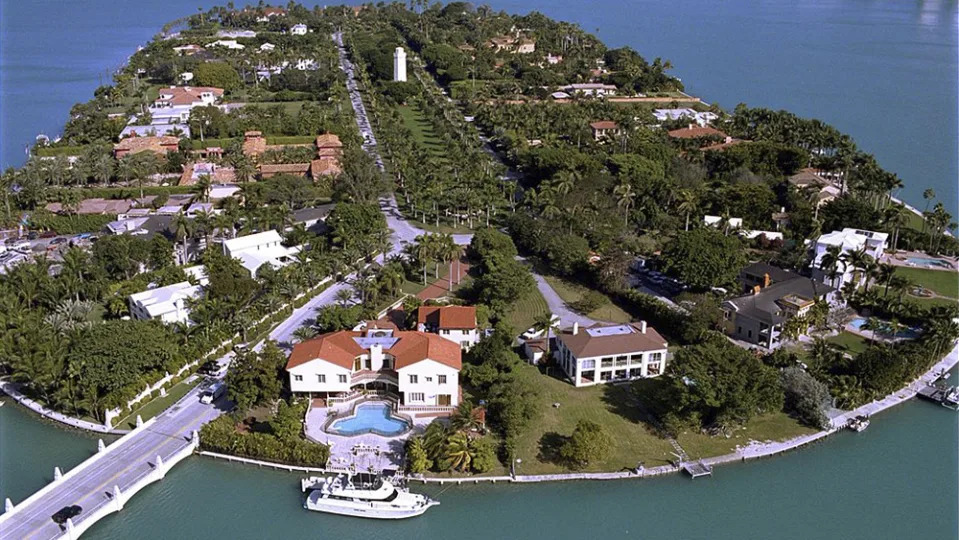
Rick Ross. Diddy. Jennifer Lopez. These are just a few celebs who call Florida’s uber-exclusive Star Island home. While the multimillion-dollar Miami Beach enclave is known for being one of the most expensive neighborhoods in the country, the mega-mansions along this stretch of Biscayne Bay are also subject to climate-related disasters such as rising sea levels and tropical storms—including Hurricane Isalia, which rocked the Gulf Coast last month. As a result, well-heeled property owners are now being hit with five- to six-figure insurance policies to protect their coastal abodes, Bloomberg reported.
“I’ve done this for 32 years, and I’ve never seen rates rise the way it’s happening today. If you’re getting a rate increase under 20 percent, it’s almost a gift,” Cindy Zobian, managing director at insurance broker Alliant Private Client, told Bloomberg. Zobian noted that increases of 800 percent are closer to the new standard. (Nope, that is not a typo!)
While not all Floridians are paying the same sky-high rate, the numbers are still way above the norm. The average premium for property insurance in Florida clocks in at $6,000 per year. For context, that’s a 42 percent uptick just this year, and more than three times the average rate nationally. While hurricanes and flooding are the main factors at play here, inflation is also causing rates to spike.
Insurance rates in Florida have tripled in the last three years.
To put things into perspective, insurance rates across Florida have tripled over the past three years. The owner of a $50 million residence on Star Island was recently shopping around for a new carrier, and to his surprise, he was hit with an eye-watering $622,000-per-year quote. In another example, Chris Rim, a resident of one of Miami Beach’s low-lying man-made islands, got a $98,000 bill.
“Florida was the beginning,” Oscar Seikaly, chief executive officer at NSI Insurance, told the outlet. “But now, between the fires and the floods and everything else that’s happening, it’s trickling to other areas.”
Wildfires in places like Aspen and California are also causing home insurance premiums to climb. In the Golden State, major companies, including Allstate and State Farm, have even stopped selling owners new policies, blaming wildfire risks and soaring construction costs.
“Only wealthy Americans are going to be able to afford to buy homes in some of these coastal communities,” Mark Friedlander, a director at the Insurance Information Institute, told Bloomberg.