Former Speaker Paul Ryan says Republicans will lose if Donald Trump is nominee
Scott Bauer – September 26, 2023
FILE – Speaker of the House Rep. Paul Ryan, R-Wis., listens to President Donald Trump speak during a meeting with Republican lawmakers in the Roosevelt Room of the White House in Washington on Sept. 5, 2018. Former House Speaker Ryan said Tuesday, Sept. 26, 2023, that Republicans will lose the presidential election if Trump is the nominee and that he expects hard-right followers of Trump to force a government shutdown within days. (AP Photo/Evan Vucci, File) (ASSOCIATED PRESS)More
MADISON, Wis. (AP) — Former House Speaker Paul Ryan said Tuesday that Republicans will lose the presidential election if Donald Trump is the nominee and that he expects hard-right followers of Trump to force a government shutdown within days.
Ryan, who left office in 2019 and had a sometimes contentious relationship with Trump, said he hoped that another Republican nominee would gain enough momentum early next year to overtake Trump after the first primaries. Ryan represented southeastern Wisconsin in Congress for 20 years, the last four as speaker.
“The party that puts the first fresh face forward wins this election,” Ryan said at an event on the University of Wisconsin campus organized by the Robert M. La Follette School of Public Affairs.
If the race is between Trump and President Joe Biden, Ryan said, “I think Biden wins.”
“I think leaders should endeavor to be honest, ethical, moral people who try to set standards for themselves and lead by example across the country,” Ryan said. “Donald Trump doesn’t try to do any of that. He does the opposite, frankly. So I just don’t think he’s fit for the job here.”
Ryan said in the small number of swing states, including Wisconsin, the election will come down to winning over suburban voters.
“Do you think those suburban voters like Donald Trump more since Jan. 6?” Ryan said. “I mean, good grief. They didn’t vote for him this last time, they’re not going to vote for him again.”
Ryan also had harsh words about Trump’s followers in Congress, who he said were not interested in governing or finding a solution to avoid a government shutdown.
But with just five days to go before Saturday’s government shutdown deadline, the Senate is trying to stave off a federal closure as hard-right lawmakers seize control of the House. Senators unveiled a bipartisan stopgap measure to keep offices funded temporarily, through Nov. 17, to buy time for Congress to finish its work.
Ryan was speaker of the House during the last government shutdown in 2018, which lasted a record-long 36 days.
“There are a bunch of people who I think feel this is in their interest,” Ryan said of a shutdown. “So I fear that is going to happen.”
Ryan faulted Republicans in Congress for not proposing an alternative.
“It’s nihilism, is what it is,” he said. “We look like fools. We look like we can’t govern.”
Florida’s coastal homes may lose value as climate-fueled storms intensify insurance risk
Kate Cimini, USA TODAY- Florida – September 25, 2023
Climate-fueled disasters like Hurricane Ian are wreaking havoc on home values across the nation, but Florida’s messy insurance market makes it one of the most stressed, new research out of a nonprofit climate modeling group indicates.
High insurance premiums and a state-backed requirement that homeowners covered by the state-backed insurer of last resort enroll in the National Flood Insurance Program over the next three years could drop home values up to 40% in Florida in the next 30 years, data provided by First Street Foundation shows. And climate and insurance experts say that may further gentrify Florida’s coastal regions and barrier islands.
Using what First Street representatives described as a typical institutional-investing calculation, First Street Foundation found some homes, adjusting for 2023 insurance costs, have already lost up to 19% of their value.
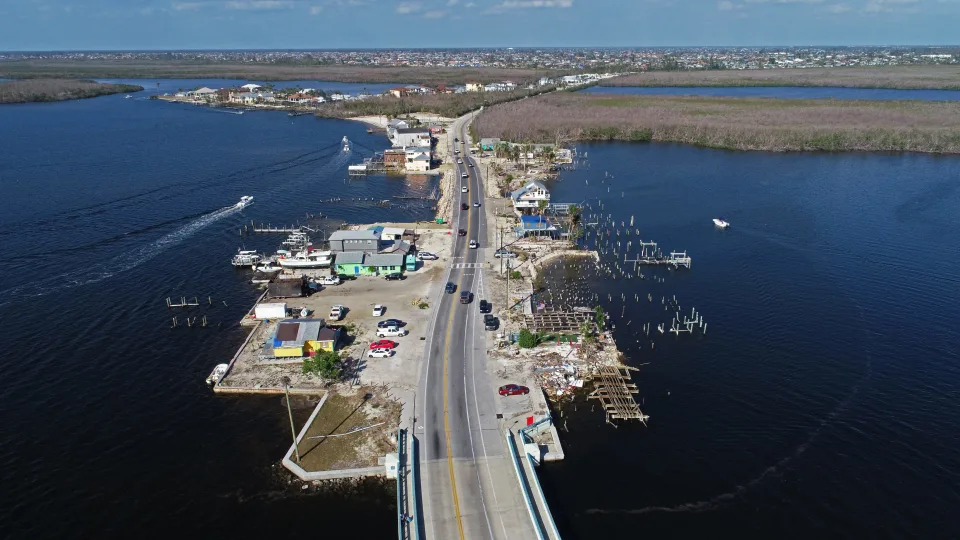
The News-Press reported earlier this month on middle-class families being forced off Fort Myers Beach due to the rising costs associated with living on a barrier island in a time of stronger storms, including more stringent, expensive building requirements and a high demand for Beach property.
Experts say this trend will likely continue in coastal communities as high-income buyers who can afford to go without insurance rebuild and repair out of pocket. They say it will take a concerted effort among state and federal officials, as well as insurance and reinsurance companies to avoid climate-spurred migration and subsequent gentrification of Florida’s coast.
Do property values go down after a hurricane in Florida?
Geographer Zac Taylor, a professor with the Delft University of Technology in Norway, studies the connection between climate change and the insurance industry in Florida. Taylor uses they/them pronouns.
They urged caution in reassessing home values but agreed that this was a possible outcome based on current climate models.
Some of Florida’s more vulnerable coastline may even see corporations purchasing homes with the intent to rent them out, Taylor said, though real estate investor purchases of single-family homes dropped 45% in the second quarter of 2023, compared to a year ago, per realty company Redfin.
Soon, “only wealthy people will be able to afford to remain in coastal areas,” said Taylor.
What areas are being gentrified in Florida?
Gentrification of Florida’s coastline may have already begun in areas hardest-hit by Ian.
This is likely to continue as a number of factors drive up the costs associated with living along the Sunshine State’s coast thanks to sea level rise, a 2022 study out of Florida State University predicted.
“Eventually, people are likely to start moving inland from coastal areas as the costs of staying become too great,” the report reads. “Those that are further inland are more likely to be displaced by higher income residents who eventually move inland in the process of relocating to higher ground.”
On Pine Island, a community whose year-round residents are largely working-class, people are cutting back their monthly budgets and searching desperately for cheaper insurance after rates rose in response to Hurricane Ian’s devastation of the barrier island. Some are leaving the island after too many problems with insurance, said nonprofit civic group Matlacha Hookers president Joanne Correia.
Guylinda DeMyers and her husband have lived in Pine Island’s St. James City for 20 years, she estimates, but after this most recent hurricane, she said they plan to sell their home and leave for safer climes − once their insurance company pays their claim.
They’ve yet to see a penny of their claim from People’s Trust, she said, even though it’s been almost a year. In fact, it’s been so long, their policy has expired. They haven’t pursued a new one because “there’s nothing to insure,” DeMeyers said. “It’s broken.”
She doesn’t think they’ll get what the home was worth before the storm, but says her realtor has told her the property itself – an ocean-front lot ‒ is valuable enough by itself.
But DeMeyers is determined to see her claim through – if not for her, then for her husband, who has Alzheimer’s. She’s lived through three major hurricanes and subsequent rising insurance costs.
“It’s not safe here anymore,” DeMeyers said. “We need a stable place.”
On Fort Myers Beach, another one of Florida’s vulnerable barrier islands, coastal gentrification is already underway. Renters and low-income homeowners are finding there’s nothing in their budget on the island anymore. The island is home to just 5,700 residents year-round, and the loss of even a few is significant.
“I feel like I’ve lost my community,” former Fort Myers Beach resident Cheri Warren told Chad Gillis of The News-Press in early September. Warren’s one-story home was destroyed during Hurricane Ian; now, she and her husband found it was too costly to repair it and have left the barrier island for the mainland. They plan to sell their lot at a later date, when the market has stabilized.
Has home insurance gone up in Florida?
For its new study, released in September, First Street Foundation founder and CEO Matthew Eby said the nonprofit, like institutional investors, calculated home values by dividing the amount of what a property would rent for over the course of a year, minus operating costs (which includes insurance costs), by 5%, an average risk amount.
While most homeowners look at the prices their neighbors homes are selling for in order to figure out how much theirs could be worth, this approach can take a while to show fluctuations in real home value, said First Street Foundation’s head of climate implications Jeremy Porter. Institutional investors use a standard calculation that First Street Foundation employed to “take the uncertainty out of the equation,” he said.
But with the cost of insurance rising due to both inflation and natural disasters like hurricanes and fires, risks increase as well. That means that operating costs have increased, particularly for Floridians who have no option for insurance other than state-created nonprofit Citizens Property Insurance Corporation. Citizens was created to insure homes that all other carriers refused to insure − the riskiest properties.
Not only is Citizens often more expensive than other carriers, as state law allows them to charge an actuarially-sound amount, but Florida legislators recently passed a law requiring homeowners who get their insurance through Citizens also enroll their homes in the National Flood Insurance Program, a federal insurance program.
That increases a homeowner’s operating costs even further.
“When … you don’t have anywhere else to go and you are beholden to whatever increase in prices that they just decide to put on you, there’s no way out,” Eby said.
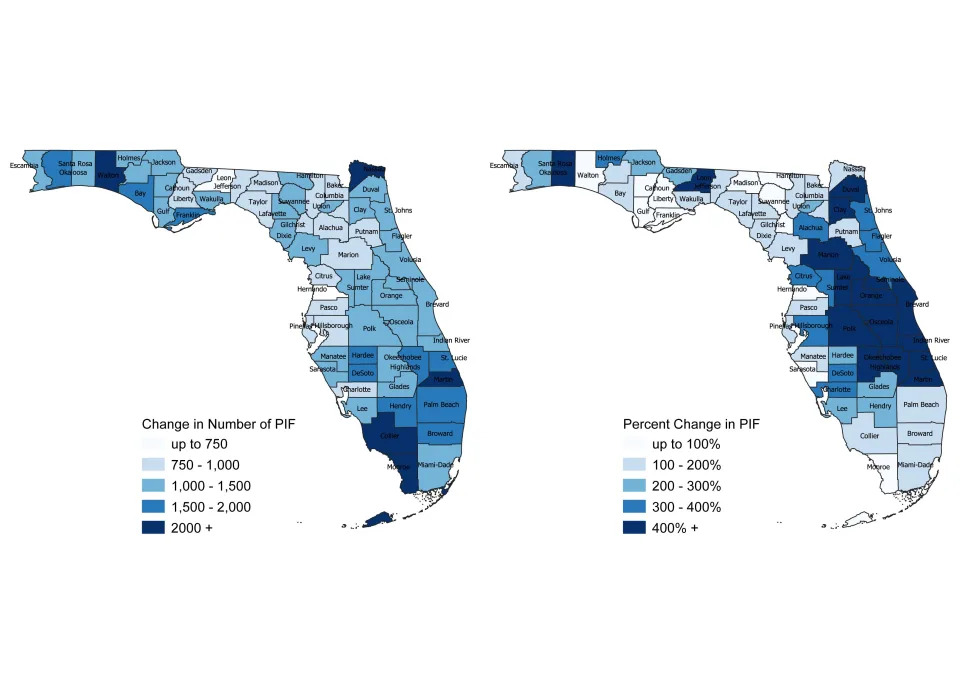
Since 2017, Citizens’ number of policies have increased 168%, while the average premium has also increased from roughly $2,000 to more than $3,000 annually.
Citizens spokesman Michael Peltier said Citizens is held to a policy premium increase of 12% annually, and increases are subject to state approval.
Although California and Louisiana are facing rocketing insurance costs as well, according to First Street Foundation’s data, Eby said, “Florida has the biggest problem.”
The nonprofit examined the number of policies Citizens holds in Florida going back to 2017, when Citizens held roughly 500,000 policies. Eby noted that increased over time, and dramatically grew in 2021 as private insurance companies began to pull out of the state. After Ian, it shot up once again.
Citizens currently holds 1.5 million policies in force, and, Peltier said, expects that to increase to 1.7 million by the end of 2023.
“The major insurance companies have all been pulling out of Florida, leaving Citizens the largest insurer in the state,” said Eby. “The insurance company of last resort, the very last one that you want to go to for your insurance, is now the insurer for the entire state.”
Rising homeowners’ insurance bill have yet to translate that to loss of equity, Porter said.
“When you go to sell it, that’s when the property devaluation becomes realized – at the closing table,” Porter said. But even those who hang on to their homes may feel it the next time Florida gets hit by another major weather event like Ian, he cautioned.
Then, he said, taxpayers will be the ones hurting.
“At some point, the amount of exposure on Citizens is too much, relative to its premiums,” said Porter. “If it’s not accounted for properly there has to be some kind of a subsidy from Florida taxpayers one way or another.”
Eventually, Porter predicted, “the state of Florida is going to have to ask the federal government for a bailout if they if they end up getting hit by a disaster that empties the coffers.”
According to Peltier, Citizens has a number of backstops to keep itself solvent. First, he said, if the state-created nonprofit goes through its premium-driven surplus, like all other insurers in the state it has access to the Florida hurricane catastrophe fund. It also purchases reinsurance to cover the possibility that the catastrophe fund is exhausted. Finally, Peltier said, Citizens is required by law to levy assessments on policyholders to make up any deficits.
Not your grandfather’s black lung: Federal rule seeks to save coal miners from silica dust
Eduardo Cuevas, USA TODAY – September 25, 2023
Workers may get respite from breathing the toxic dust that remains omnipresent in U.S. mining operations, despite decades of evidence of its deadly consequences.
The federal Mine Safety and Health Administration has proposed cutting by half the level at which miners may be exposed to silica dust stirred up during drilling for coal and other ores. The new regulations align with exposure limits already in place in other job sectors. The fine dust, crystalline silica, is a primary driver for harmful respiratory illnesses known as pneumoconioses, with symptoms that include scarring in the lungs and restricted lung capacity. There is no cure for these diseases.
Growing evidence indicates that silica dust contributes to black lung disease, or coal workers’ pneumoconiosis, as well as its more deadly form, progressive massive fibrosis.
“Silica is actually quite toxic dust,” said Dr. Leonard Go, an assistant professor at the University of Illinois Chicago’s School of Public Health, who has studied silica’s effects on miners. Despite silica being common in the earth’s crust, he said, “This is bad stuff, and it can cause quite severe disease. It’s clear that, in the case of coal mining, the current regulation is not effective in preventing disease.”
What the rule does
The federal rule would drastically limit silica dust permissible in mining to just 50 micrograms per cubic meter, with an action level at 25 micrograms, for an eight-hour workday. That’s the equivalent of a tiny, short strand of hair appearing once a day, in fine dust form, within the space of a cardboard box, Go estimated.
Notably, the rule would also require, for the first time, that workers mining metal, nonmetal, stone, sand and gravel receive early and ongoing health screenings at no cost. Coal miners have had mandatory on-site screenings, check ups and X-rays since Congress passed the Federal Coal Mine Health and Safety Act of 1969, which established the Coal Workers’ Health Surveillance Program. The public comment period for the new rule ended in mid-September, and a final rule is expected to be issued later this fall.
For years, regulators and labor groups have kept an eye on breathing hazards for coal miners. The new rule will likely benefit coal miners in Central Appalachia, where more than a fifth of long-tenured workers are estimated to have pneumoconiosis. But coal workers now make up a declining share of the workforce, about 55,000 people nationwide, compared with nearly 200,0000 metal, nonmetal, stone, sand and gravel workers, who operate in what has been until now a far less regulated sector.
The harms of silica have been known since at least the 1930s, when the Department of Labor led a campaign to “Stop Silicosis,” a pneumoconiosis associated with inhaling silica dust.
Decades later, in the late ’60s, the federal government began regulating coal dust, prompted by concerns about the prevalence of black lung disease among coal miners. From that period through the 1990s, doctors saw a steep decline in the disease. Now a growing body of evidence shows an increase in silica dust across U.S. mining operations, which has contributed to miners becoming more ill and even exacerbating cases of black lung in recent decades.
Academic experts and regulators attribute the increase in severe black lung in younger workers to thinner coal seams as workers drill through more layers of rock containing silica. At the same time, advances in technology mean workers handle heavier machinery that kicks up more dust than older miners, who often relied on hand tools.
‘Just about all of them did’ get black lung
Former coal miner Leonard Fleming, 81, of Whitesburg, Kentucky, has a severe form of black lung disease. He relies on a myriad of medical devices to help his breathing, including various portable oxygen tanks, a nebulizer that mists liquid and a vest to dislodge mucus. He no longer takes warm showers. He estimates he can take about 20 steps before he has to stop to huff for air.
Fleming’s grandfather and father had black lung. After serving in the Army, Fleming saw its effects as a 24-year-old lab assistant in a coal miners’ hospital, wearing a white lab coat and dress pants, conducting pulmonary function tests. Eventually, he turned to the mines like his family members had before him, for the wages, which supported his late wife, Norma, and their two children, who never worked in the mines.
“Anybody that goes in the mines just assumes they’re not going to get it,” Fleming said, wheezing as he talked. “Just about all of them did.”
Now that he’s retired, Fleming said, he longs to watch the dirt track car racing or baseball games, but his body can’t handle the exertion.
What he’s lived through is now better understood.
Silica’s effects on the body
In a 2022 study in Annals of the American Thoracic, Go and other researchers viewed tissue samples from 85 deceased coal miners born before and after 1930, in many cases from people who lived through the implementation of federal regulations on coal dust levels. The samples indicated that people who’d mined in recent years had higher concentrations of silica in their lungs and endured severe lung disease, often at earlier ages than the previous generations of miners who showed severe disease that tended to be derived from coal dust.
These findings square with the 2020 review of the Coal Workers Health Surveillance Program by the National Institute for Occupational Safety and Health, which showed a resurgence in pneumoconiosis and progressive massive fibrosis, especially in Appalachia.
Dr. Noemi Hall, a research epidemiologist at NIOSH’s Respiratory Health Division in Morgantown, West Virginia, said miners are contracting more severe forms of disease in their 30s and 40s.
Silica dust, she explained, can break down into even smaller pieces and lodge itself permanently in the lungs.
“These miners can’t get rid of it,” she said. “Once it goes in there, it stays in there.”
Inside the lungs, it causes inflammation and scarring that results in a limited capacity to take in oxygen. Symptoms include coughing, fatigue, shortness of breath and chest pain. Workers who develop pneumoconiosis are also at greater risk of issues such as tuberculosis, lung cancer and chronic obstructive pulmonary disease, or COPD.
Decades of inaction
Concerns about silica dust arose long before the 21st century. In fact, in 1974, NIOSH recommended cutting silica dust levels, just five years after the federal law regulating coal and its effects on miners. Labor advocates attribute the delay in addressing the danger to the aggressive lobbying by coal companies and other industries, which centered on denying silica’s harm on the body.
The official consensus seems to have shifted across the industry. Christopher Williamson, assistant secretary for the Mine Safety and Health Administration, said the consensus is that miners should have the same protection as other workers with silica dust. Other occupations, such as construction, where workers are exposed to greater quantities of silica, are already covered under Occupational Safety and Health Administration standards implemented in 2016.
“The timing is right to move forward on it,” Williamson, whose West Virginia family members worked in coal mines and developed black lung, told USA TODAY. “We know that miners need greater levels of protection from exposure to this toxic dust, and that’s why we’ve proposed it.”
What does industry, labor say?
The National Mining Association, which represents mining companies, supports lower silica exposure levels, but it took issue with proposals that called for respirators, or personal protective equipment. The rule under consideration uses respirators as a temporary supplemental measure when silica levels are high.
Paul Krivokuca, vice president for health and safety at the National Mining Association, wrote in final comments there were some “times and places where use of PPE is the best way to protect miners when other measures have proven unable to reduce personal exposure.”
Go, of the University of Illinois Chicago, said he thinks masking against dust is the least effective means of protection, and it can cause communication problems in the workplace. Preventing dust from being in the atmosphere, whether by watering it down or through better ventilation, is safer, he said.
Officials from the United Mine Workers of America told federal regulators they were concerned about enforcement of the rule by mine operators, who are currently expected to conduct sampling of exposure levels but don’t always do so. The union told federal officials in final comment the rule is “vulnerable to being gamed.”
“This would be like each driver on a highway being responsible for reporting their own violations of law,” union President Cecil Roberts said.
“We know that would never work,” he said. “You need a number of things in order to protect miners. You need good laws. You need those laws to be obeyed and, if they’re not obeyed, you need good enforcement.”
At Temple University Medical Center, in Philadelphia, Dr. Jamie Garfield, a professor of thoracic medicine and surgery, sees miners who travel into the city for lung transplant evaluations, at late stages in the disease.
The new rule could reduce that risk, she said.
“Anytime that we can identify a condition that is completely avoidable with better surveillance, oversight and protection,” she said, “that is an opportunity for a major public health triumph.”
Eduardo Cuevas covers health and breaking news for USA TODAY.
This Is the #1 Bad Habit Contributing to Low Energy, According to Primary Care Docs
Beth Ann Mayer – September 25, 2023
You likely recharge your phone’s battery every night. If you have a hybrid, you probably charge your car regularly (and if you don’t, you hit a gas station before your tank hits E).
But if you feel like you’realways running on empty and feel like you could use a charger yourself, you may have what some doctors call “low energy.”
“Low energy is a feeling a patient has when he or she feels tired and fatigued throughout the day,” Dr. Jared Braunstein, DO, board-certified internist with Medical Offices of Manhattan and contributor to LabFinder.com, says.
We all have low-energy days, of course, but experts say chronic bouts are problematic.
“Everyone experiences low energy at some point, but if it starts to impact your life negatively or at inconvenient times, you may need to take a closer look at what’s causing your symptoms,” says Dr. Karla Robinson, MD, a medical editor at GoodRx.
However, primary care physician says that people with low energy often experience it chronically.
“Usually, by the time a person realizes they have low energy, things have not been going well for a while,” says Dr. Howard Pratt, DO, the board-certified Medical Director at Community Health of South Florida, Inc. (CHI) and a psychiatrist.
Sometimes, low energy is a result of health issues like sleep apnea. Other times, Dr. Pratt and other primary care doctors say that habits may also be to blame for low energy, including one in particular.
There are no diagnostic criteria in the DSM-5 for low energy, but doctors say people with low energy often experience hallmark symptoms.
“If you have low energy, you may have trouble feeling refreshed, even when you first wake up,” Dr. Robinson says. “You may find yourself dozing off easily during the day or finding it difficult to concentrate on tasks.”
Low energy is often chronic and persistent.”Typically, this drop in energy is something that has been bothering them for some time,” Dr. Pratt says. “One common indicator is that things that they would have normally been able to do without difficulty in the past have become much more difficult to accomplish.”
What’s the Biggest Habit Contributing to Low Energy?
Dr. Braunstein says poor sleep hygiene, or getting up and going to bed at different times, is the worst energy-zapping habit. Dr. Pratt agrees that poor sleep hygiene is problematic and involves more than unpredictable wake and bedtimes. “[Good sleep hygiene is] about using your bed for sleep only,” Dr. Pratt says.
But Dr. Pratt says people often use screens before bedtime, like TV or phones, which can make falling asleep and staying asleep harder.
But why is poor sleep hygiene so bad for energy levels? Because it can trigger poor sleep. Naturally, you’ll likely feel fatigued if you don’t sleep well—particularly if it’s happening chronically.
“When you don’t get enough restorative sleep, your body and mind don’t have the opportunity to recharge, leading to fatigue,” explains Dr. David Cutler, MD, a board-certified family medicine physician at Providence Saint John’s Health Center in Santa Monica, California.
“Continued poor sleep hygiene is easy to fall into as we are often prone to take our cell phones to bed with us, but it means we never develop a set sleep schedule and can find ourselves trying to make up for lost sleep on weekends, oversleeping or drowsing throughout the day,” Dr. Pratt says.
Lean into your circadian rhythm, or the body’s natural sleep-wake cycle, by having a consistent bedtime including on weekends, Dr. Pratt says.
“If we don’t go to bed at a certain time and wake up at a certain time daily, we are disrupting our sleep cycle,” he says, referring to the body’s circadian rhythm, or natural sleep-wake cycle.
Ditto for technology, especially phones. A 2020 study suggested that people who spent less time on their phones before bed for a month were likelier to experience better quality and longer sleep. Research from 2019 found that people who used their phones before hitting the sack were at a higher risk for poor sleep.
“Scrolling on your phone long after you’ve turned your lights off can make it much more difficult to fall asleep,” Dr. Robinson explains. “Blue light signals your brain to be on, plus you might find it hard to wind down if you’ve been consuming particularly exciting or engaging content.”
Cue the low energy and an unpleasant ripple effect. “Over the long term, this can complicate our performance at work and other activities and can diminish our overall health,” Dr. Pratt says.
In other words, power down your phone before bedtime or recharge it out of arm’s reach so you can also recharge.
Of course, poor sleep hygiene isn’t the only reason why people experience low energy. Here are some other possible reasons:
1. You’re dehydrated
Dr. Braunstein says poor fluid intake can lower blood pressure and flow to the brain. Dr. Pratt agrees drinking up is critical, but avoid trying to get your daily fluid intake in right before bedtime.
“Be sure to drink enough water throughout the day while being mindful that most of this liquid intake isn’t happening right before going to bed, which will likely mean waking up mid-sleep to go to the bathroom,” Dr. Pratt says.
2. Your diet needs work
Dr. Braunstein says skipping meals can lead to low blood sugar, zapping energy in the process. But what you eat matters. “Not consuming enough nutrients can leave you feeling sluggish,” Dr. Cutler says. “Nutrient-rich foods provide the energy your body needs to function optimally. Carbohydrate-rich diets can cause fluctuations in blood sugar, which may result in feeling low energy.”
Dr. Robinson recommends sticking to fruits, vegetables and whole grains high in fiber as often as possible to keep energy flowing and avoid blood sugar spikes and crashes.
3. You’re stressed out
Can’t stop ruminating or staring at the ceiling, thinking about everything that went wrong today and could go awry tomorrow? Not surprisingly, this is probably affecting your energy.
“High levels of stress or chronic anxiety can be mentally and physically draining even when they don’t interfere with sleep,” Dr. Cutler says. “Constant worry and tension can sap your energy over time.”
Another dust advisory starts tonight for Coachella Valley. What to know
City News Service – September 25, 2023
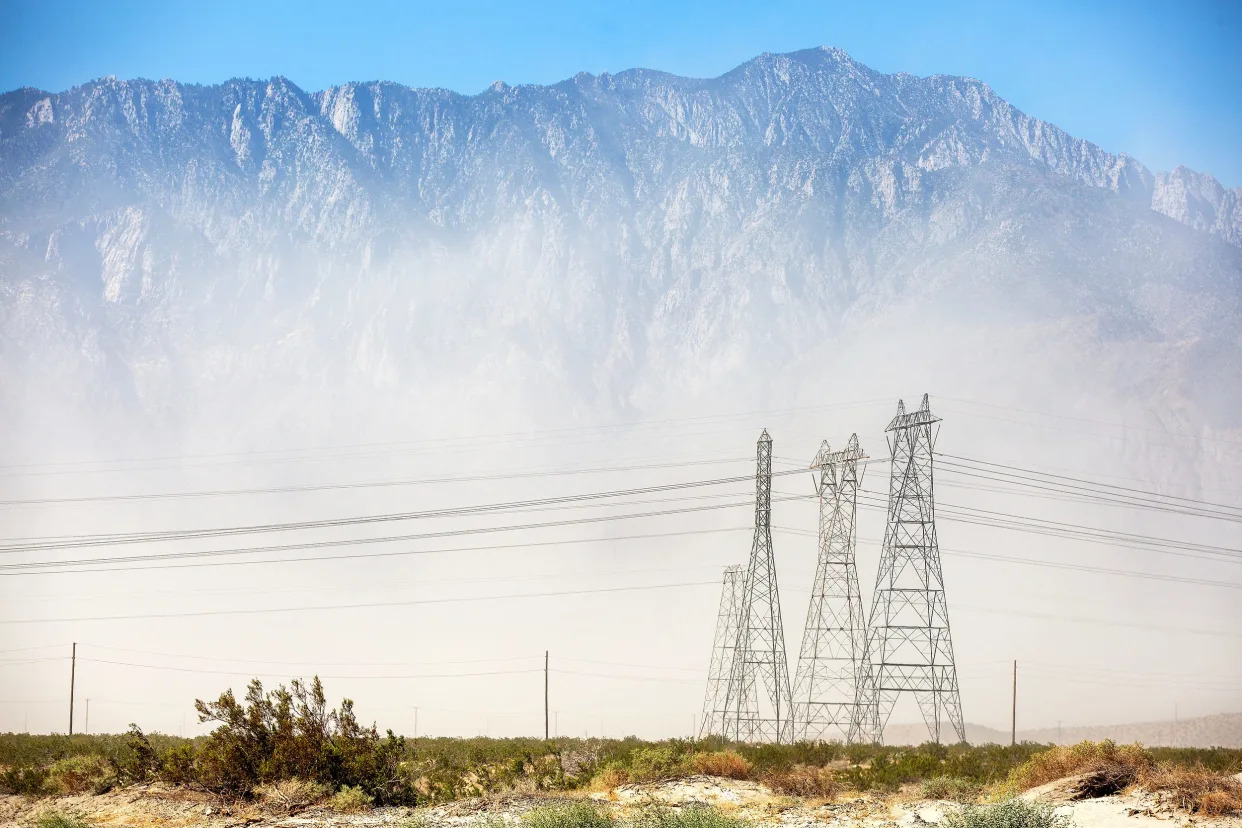
A dust advisory will go into effect Monday and is expected to last until Wednesday for parts of Riverside County, mostly in the Coachella Valley.
The advisory will begin at 6 p.m. Monday and is expected to be in place until 8 a.m. Wednesday, according to the South Coast Air Quality Management District.
Forecasted gusty winds in the Coachella Valley, which can lift dust and soil, can result in air quality index levels that are unhealthy or worse, SCAQMD officials said. The highest levels are expected overnight when winds are expected to be the strongest.
“Elevated levels are resulting from much lower windspeeds than in the past,” SCAQMD officials wrote. “The public is encouraged to pay close attention to the current conditions reported.”
In areas directly impacted by high levels of windblown dust, people were advised to limit their exposure by remaining indoors with windows and doors closed, avoid vigorous physical activity, run their air conditioner or air purifier, and avoid using whole house fans or swamp coolers that bring in outside air.
Officials added that serious health problems can occur as a result of exposure to high-particle pollution levels.
The desert has been plagued with unusually dusty conditions since August when Tropical Storm Hilary caused major flooding that left residual dirt and dust cross the valley.
More information about air quality in the area can be found at aqmd.gov.
Floridians stunned by Citizens Insurance ‘depopulation’ letters
Ron Hurtibise – September 25, 2023
Tens of thousands of customers of Florida’s state-owned Citizens Property Insurance Corp. are getting a stunning surprise in their mailboxes.
It’s a letter from Citizens’ “Depopulation Unit” stating their policies have been assumed by a private-market company.
Cause for celebration? Not if the private company’s estimated annual premium is higher than what the policyholder is paying Citizens.
Delores Smerkers, a Davie retiree, said her Citizens policy renewed in July for $5,523 — $650 more that what she paid last year. Less than two months later, in late August, she received a letter saying her coverage was being assumed by Safepoint Insurance Co.
The letter stated that her estimated cost to renew her Safepoint policy will be $6,650 — an increase of $1,127.
That’s a substantial price hike, but because it’s less than 20% above her Citizens premium, she is ineligible to reject the offer and stay with Citizens.
Smerkers says she doesn’t know how many more insurance price hikes she and her disabled husband can endure as they try to live out the remainder of their lives in the modest 1,750-square-foot villa they bought new in 1978.
“It’s a shame,” she said. “People on fixed incomes are hurting the most. We’re not rich. We worked like dogs all our lives. Now look at where we are at.”
More than 300,000 Citizens policyholders are getting letters stating that their policies have been selected for removal in October by one or more of five private-market companies.
Targeted policyholders are ineligible to remain with Citizens if their letter identifies a private company’s “estimated renewal premium” that’s less than 20% over Citizens’ estimated renewal premium for comparable coverage.
But if all estimated renewal premiums exceed 20% of Citizens’, the policyholder can opt to remain with Citizens by logging onto the company’s website or asking their insurance agent to make the selection for them.
Removal is automatic for those who don’t take action
October marks the first of two depopulation efforts. Another is scheduled in November.
Five companies have been approved to take 184,000 policies from Citizens in October: Florida Peninsula (up to 19,000 policies), Monarch (10,000), Safepoint (30,000), Slide (100,000) and Southern Oak (25,000).
Letters sent to selected policyholders state that the transfer will take place on Oct. 17 unless the policyholder selects another option by Oct. 5. But the Oct. 5 deadline was moved to Oct. 10 after a vendor handling the mail-outs fell behind, leaving some recipients with only a couple weeks to act.
Of 311,250 policyholders informed that they’ve been selected for takeout in October, 99,500 have so far elected to remain with Citizens, according to data provided by Citizens spokesman Michael Peltier. Just 9% — 28,750 — have selected a private company. And the majority, 183,000, have not yet registered a selection.
Anyone who fails to make a selection will automatically be transferred on Oct. 17 to the private company identified in their letter with the lowest premium, Peltier said.
Targeted policyholders don’t have to pay more now
Some policyholders who have received a depopulation letter say they were confused about the estimated renewal premiums identified in the letter.
The premiums are just estimates of the following year’s insurance costs and don’t have to be paid right away. Even if a policyholder accepts the transfer, the coverage remains in place at the current Citizens rate until the policy expires.
In Smerkers’ case, she won’t owe the new $6,650 premium until her Citizens policy is set to expire in July.
Deerfield Beach resident Jeff Torrey said it took a phone call to his agent to clarify that he didn’t owe more money immediately.
He received a letter in mid-September saying Slide was assuming his policy on Oct. 17 and that he was ineligible for Citizens because Slide’s estimated renewal premium was nearly $1,000 more but $185 under the 20% threshold.
“I thought come Oct. 17, I was going to have to pay more,” Tolley said in an interview. The agent told him “the letter is not very clear. It’s confusing.”
In addition, those estimates could change prior to the policy renewal date, and that could change policyholders’ eligibility to remain with Citizens.
Policyholders currently ineligible to remain with Citizens are advised to wait until 90 days before their policies are set to renew with the new company and then look at the difference between the actual renewal rates at that time. If the difference falls below 20%, the policyholder will be eligible to return to Citizens.
Steve Rogosin, a Plantation-based insurance agent, said 55 of his clients have received depopulation letters and of those, only half are currently eligible to remain with Citizens.
“I tell them to carefully read the offer, and then on an individual basis, we help them make their decision,” he said.
Most who remain eligible to stay with Citizens are choosing to do so, he said. Other options are available beyond the private companies identified in the letters, but “they’re not cheaper than Citizens,” he said.
Brian Murphy, co-owner of a Brightway Insurance agency in Palm Beach Gardens, said one of his clients who’s currently paying $4,400 for his Citizens policy received a letter estimating the new company would charge him $8,200 when it comes time to renew his policy.
“So he gets to stay in Citizens,” Murphy said.
New law will make more ineligible to stay in Citizens
The current round isn’t like recent depopulation efforts.
What’s new is the 20% threshold. It’s being used to reduce the number of policies held by the state’s “insurer of last resort.”
Citizens’ board of governors and legislators that oversee the program have become anxious in recent years about the company’s renewed growth. As private-market companies stopped writing policies or were driven to bankruptcy, Citizens’ policy count increased from 420,000 in 2019 to 1.4 million currently.
Such a large number of policies sets off alarm bells, because if a major hurricane wipes out Citizens’ ability to pay claims, the company will have to levy surcharges and assessments to make up the shortfall.
Citizens’ policyholders would first face surcharges of up to 45% of their premiums.
If that’s not enough, a special assessment would be imposed to collect 2% of the cost of every homeowner, auto, specialty and surplus lines policy in the state.
And there’s more. If those two levies don’t generate enough, Citizens has the right to impose on all policies — Citizens and private-market — an emergency assessment of up to 10% for each of Citizens’ three accounts.
Until this year, Citizens customers targeted for removal could opt out for any reason.
And that worked for awhile, as a 10-year stretch without a major hurricane making landfall in Florida enabled some private-market companies to offer rates lower than Citizens.
But over the past five years, the private insurance market has hemorrhaged tens of millions of dollars, forcing companies to raise their rates far above Citizens.
Citizens, in turn, was prohibited from keeping pace by raising its rates more than an average 10% each year.
Last year, the state Legislature enacted the 20% threshold and put Citizens on a path to increase rates by increasing the rate cap by a percentage point a year until it reaches 15% in 2026.
More companies signal an improved insurance market
Murphy said his firm has a team of people answering questions from clients about their depopulation letters.
They’ve haven’t heard many complaints, he said, possibly because clients understand that Citizens is “stretched” and has to depopulate.
But he sees the number of companies willing to assume Citizens policies as a good sign that the market is poised to recover.
A big reason companies are reentering the market, experts say, is that reforms enacted by the state Legislature last year remove enticements for repair contractors and plaintiffs attorneys to file lawsuits against insurers.
Removing those enticements reduces potential for losses and should help convince insurers that they’ll again be able to make a profit in the Florida market, they say.
“Other carriers are coming in with some appetite,” Murphy said. “And I believe we’re going to see more in 18 months.”
Meanwhile, depopulation targets who were able to remain in Citizens shouldn’t get too comfortable. They might soon get targeted again.
Agents are gearing up for a fresh round of depopulation offers to start going out in late September.
Six companies, including the four participating in this month’s round, have been approved to remove up to 196,399 Citizens policies on Nov. 21.
According to letters informing policyholders about the Oct. 17 takeouts, “If your policy is not successfully assumed, you may continue receiving future offers from private-market insurance companies interested in removing your policy from Citizens.”
AAA says it now costs more than $12,000 a year to drive a vehicle
Jonathon Ramsey – September 25, 2023
It’s time for the American Automobile Association’s (AAA) 2023 “Your Driving Costs” study. The spreadsheet breaks down the average yearly costs of owning a new vehicle and driving it for either 10,000, 15,000, or 20,000 miles. The five top-selling vehicles of 2023 across nine categories are included, from small sedan to half-ton pickup, hybrid, and EV. Sample costs factored in are fuel, maintenance, full-coverage insurance, registration and taxes, finance charges, and depreciation at each mileage level. In 2019, Your Driving Costs came up with an annual outlay of $9,282 for the first five years of ownership, driving 15,000 miles per year. That was a 5% bump over 2018. In 2021, the annual cost had risen to $9,666 for the same use case. This year’s study is out, and no one will be surprised to find costs are up: AAA says it costs an average of $12,182 every year — $1,015.17 every month — to drive for five years at 15,000 miles per year.
That’s almost $1,500 more last year’s study result of $10,728 annually.
The average annual cost to own and maintain a small sedan is $8,939. A compact front-wheel drive SUV needs $10,066, a midsize AWD SUV is $11,971, an electric vehicle is $10,112. It’s the enormous popularity of half-ton crew cab pickups that drives the final figure, their annual costs $15,858. We’d be interested in results that excluded pickups just to see the difference.
No denying it costs more to own any kind of car, though. It starts with MSRPs still being elevated. The knock-on effect is elevated car payments, especially with more new buyers choosing shorter terms to get manufacturer incentives that don’t come with the 84-month terms. And higher interest rates eat up savings no matter the term. Earlier this month, Experian Automotive research said the average monthly car payment is $729 for a new car and $528 for a used car. J.D. Power followed that up with news about the rising costs of auto insurance, rates getting so high that more households have stopped buying coverage. The same story explained that higher insurance premiums are partly due to skyrocketing vehicle repair costs.
Of note, the AAA study doesn’t include luxury cars, so the average MSRP of the new cars among the field is $35,000. Even though that’s up 4.7% from last year, there’s quite the gap between that number and the most recent data on average transaction prices; KBB information for July put the average price paid for a new non-luxury vehicle at $44,700, an amount that’s held pretty steady throughout the year. The KBB number jives with Experian Automotive’s finding that the average loan amount for a new vehicle in Q1 of this year was $40,851.
Going lightly used was once a slam dunk for big savings, but those days are gone for now. A new study from iSeeCars showed that buyers spending $23,000 could get a three-year-old car in 2019, but now, that amount struggles to buy a six-year-old vehicle.
California workers who cut countertops are dying of an incurable disease
Emily Alpert Reyes, Cindy Carcamo – September 24, 2023
Leobardo Segura Meza, 27, of Pacoima suffers from silicosis, an incurable lung disease that has been afflicting workers who cut and polish engineered stone high in crystalline silica. (Mel Melcon / Los Angeles Times)
Inside the row of workshops in an industrial stretch of Pacoima, men labored over hefty slabs of speckled stone, saws whining over the sounds of Spanish-language rock.
Pale dust rose around them as they worked. Many went without masks. Some had water spurting from their machines, but others had nothing to tamp down the powder rising in the air.
“Nobody uses water,” one man in a Dodgers cap said in Spanish when Maria Cabrera approached, holding flyers about silicosis, an incurable and suffocating disease that has devastated dozens of workers across the state and killed men who have barely reached middle age.
Cabrera, a community outreach worker with the nonprofit Pacoima Beautiful, urged him and others at the Branford Street site to try to protect themselves. Silicosis can ravage the lungs of workers after they inhale tiny particles of crystalline silica while they cut and grind stone that contains the mineral.
The disease dates back centuries, but researchers say the booming popularity of countertops made of engineered stone, which has much higher concentrations of silica than many kinds of natural stone, has driven a new epidemic of an accelerated form of the suffocating illness. As the dangerous dust builds up and scars the lungs, the disease can leave workers short of breath, weakened and ultimately suffering from lung failure.
“You can get a transplant,” Cabrera told the man in Spanish, “but it won’t last.”
In California, it has begun to debilitate young workers, largely Latino immigrants who cut and polish slabs of engineered stone. Instead of cropping up in people in their 60s or 70s after decades of exposure, it is now afflicting men in their 20s, 30s or 40s, said Dr. Jane Fazio, a pulmonary critical care physician who became alarmed by cases she saw at Olive View-UCLA Medical Center. Some California patients have died in their 30s.
“They’re young guys who essentially have a terminal diagnosis,” Fazio said.
In Pacoima, a 27-year-old father said he now has to hustle home from the park with his 8-year-old daughter and 5-year-old son because his oxygen tank starts to run out as they play. Leobardo Segura Meza said he could no longer run around on the soccer field or exercise the way he used to.
Nor is he able to work. For a decade, he made a living by cutting, polishing and installing countertops in and around Los Angeles County. Dust was everywhere, he said, and he was given only a dust mask — one he said was inadequate for the job — to protect himself. Sometimes he brought a hose and tried to attach it to the machine to reduce dust, but there were no machines dispensing water as they were cutting, he said.
He began to suffer a cough that wouldn’t go away and lost his breath when going up stairs, he said. His weight dropped. At one point, he was hospitalized when one of his lungs collapsed.
Segura Meza had never heard of silicosis before he was diagnosed. “There’s no cure for this illness. The only thing they can do is a lung transplant,” he said in Spanish.
What he fears, he said, is that as more workers grow ill, “there aren’t enough lungs for us.” At a state hearing this summer, Segura Meza said two of his co-workers had already died waiting for transplants.
To warn workers about the threat, Cabrera and another Pacoima Beautiful outreach worker, Claudia Vasquez, made their rounds at the parking lot of the Home Depot in San Fernando, where laborers in long-sleeve shirts waited for people to drive up and offer them work. Few had heard of the disease.
“It’s very dangerous, this illness?” asked one man in Spanish, leaning against a palm tree in the parking lot.
Cabrera told him there was no cure. She urged him to use wet saws to limit any dangerous dust rising in the air and NIOSH-approved respirators to avoid breathing it in. Workplace safety regulators have recommended a suite of measures including water spraying systems, ventilation and vacuum systems to clear dust, in addition to protective respirators for workers — ones covering the entire face if silica levels in the air are high.
A construction worker sands a kitchen counter inside a unit of Building 207 that is being refurbished as housing for veterans on the Veteran Affairs West LA campus in Los Angeles on June 23, 2022. (Genaro Molina/Los Angeles Times)
The risk is serious for workers in the industry: Although estimates of its prevalence vary from study to study, some screenings in Australia have found roughly 1 in 5 stone workers had the disease. In California, workplace safety regulators have estimated that out of roughly 4,000 workers in the industry across the state, silicosis will afflict between 485 and 848 — and that as many as 161 could ultimately die.
A recent study by UCLA and UCSF physicians found that among dozens of California workers who got silicosis from grinding countertops, nearly a fifth had died. Their median age at death was 46. More than half had suffered delays in getting diagnosed, as the disease was mistaken for bacterial pneumonia or tuberculosis, and over a third already had severe scarring in their lungs when they were diagnosed.
Los Angeles County has been an epicenter of the debilitating disease, with 60 out of the 83 cases among countertop workers identified across the state since 2019 by the California Department of Public Health.
The San Fernando Valley is a hub for the stone “fabrication” industry — those who cut and polish the slabs made by manufacturers — and county officials also said that growing awareness spurred by Fazio and others may have resulted in better reporting of such cases in L.A. In July, the state sent out an advisory to healthcare providers about the threat, recommending that physicians ask if ailing patients have worked as countertop cutters and urging them to report any identified cases of silicosis to the state.
California workplace safety regulators are now drafting emergency rules to try to protect workers as engineered stone has come to dominate the countertop industry. The material is also sometimes called artificial or synthetic stone, made with crushed quartz bound together with resin. L.A. County is exploring whether to go further and ban the sale and installation of “silica engineered stone” entirely.
Existing safety standards must be followed, but “we feel that there need to be additional changes to the standards to make it even more safe in the workplace,” said Dr. Nichole Quick, deputy director of health protection with the L.A. County public health department.
The county department is now preparing a report requested by county supervisors on options for a potential ban, as well as other possible steps. It has also partnered with Pacoima Beautiful to provide outreach. “This is a preventable disease,” Quick said, “and we want to take appropriate action to make these workplaces safer.”
One question before the county — and government regulators across the globe — is whether any safeguards will effectively protect workers grinding materials so high in silica. The Agglomerated Stone Manufacturers Assn., an international group representing manufacturers of engineered stone, maintains its products can be cut “with no safety issues or health hazards if it is performed according to the best practices.”
In a statement, the association said the risk lies not with engineered stone itself, but poor adherence to safety measures by fabricators, arguing that safety regulations need to be “simplified and rigorously enforced.” Members of the Stone Coalition, which represents fabricators as well as manufacturers, said an L.A. County ban would have “severe economic consequences” and argued for additional enforcement and training on workplace safety, especially efforts to eliminate “dry cutting.”
And the Los Angeles County Business Federation contended that enforcing safety regulations “will do more to prevent disease, while not adversely [affecting] the cost of construction at a time when Los Angeles is seeing a devastating housing crisis.”
But Raphael Metzger, a Long Beach attorney who represents Segura Meza and other workers suing manufacturers of engineered stone such as Cambria and Caesarstone for damages, argued that typical respirators and other standard measures don’t go far enough. Even with many “wet methods,” workers can be exposed to dangerous levels of silica and need additional protection, NIOSH research has found.
Nearly half of the workers suffering silicosis in the UCLA and UCSF study said their workplaces were using water to control dust. Roughly a quarter said they always had respiratory protection. Fazio said studies have found that in many shops, dust is so thick in the air that respirators cannot filter out a sufficient amount.
Metzger argued that the kind of sophisticated and costly measures that would be needed to reliably protect workers cutting engineered stone are not economically plausible in an industry where immigrant workers typically labor in small shops and are often paid in cash. Engineered stone “is too dangerous to be used safely,” he said. “If there’s any industrial product that should be banned, this is the product.”
Segura Meza agreed, calling it “very deadly.” Vasquez, with Pacoima Beautiful, said that when she and Cabrera started talking to workers about engineered stone and silicosis, many of them asked, “How come they don’t do anything with the stores that sell the products?”
In Australia, where the government is weighing whether to ban engineered stone, a professional group whose members assess worker health hazards concluded that the high concentration of silica in engineered stone makes it difficult for measures such as wet cutting and ventilation to adequately protect workers.
Additional measures for respiratory protection are needed, but such systems “have largely been absent from this sector,” the Australian Institute of Occupational Hygienists wrote. In light of those concerns, it recommended prohibiting engineered stone containing more than 10% crystalline silica, but said it would also support banning all engineered stone because of the rigorous compliance needed even at a 10% level.
In California, existing rules to protect workers have often not been followed, state regulators found. Cal/OSHA, which is now hustling to draft emergency standards to protect California workers in the stone cutting and polishing industry, found rampant violations of the current standards when it looked closer in 2019 and 2020.
Despite the rise of the deadly disease, homeowners and other consumers shopping for countertops know little about the threat it could pose to the workers behind the surfaces in their kitchens and bathrooms, Fazio said. Engineered stone is now estimated to represent more than 60% of materials used for countertops, the L.A. County business federation said, and market researchers say its popularity is only expected to rise.
Engineered stone “is everywhere and people have no idea,” Fazio said. Consumers “have a right to know that the countertop that might be the cheapest one … may really be costing folks’ lives.”
How climate change threatens some of the world’s most coveted real estate
Kathleen Magramo and Chris Lau – September 23, 2023
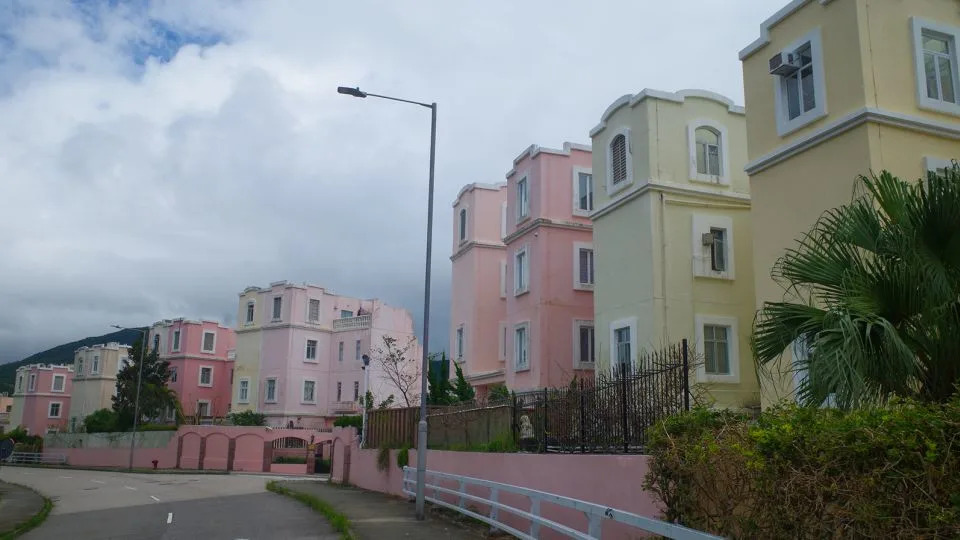
Until recently, the upscale homes of the Redhill Peninsula seemed like an oasis for rich Hong Kongers aspiring to a tranquil lifestyle in an otherwise notoriously cramped metropolis of 7.5 million.
Its cliffside location and unobstructed views of the South China Sea made for great Feng Shui and offered the perfect antidote to the hustle and bustle of city life for its gated community of tycoons, expats and celebrities.
But that same pristine location worked against it on September 8, when a storm brought the heaviest rainfall in nearly 140 years to Hong Kong, wreaking havoc across the city.
Two people were killed and more than a hundred injured as more than 600mm (23.6 inches) of rain barreled down on the coastal city, flooding metro stations and turning roads into rivers.
The chaos was not confined to the flooded lowlands. Up on the edge of the cliff separating the Redhill Peninsula from the sea below it chipped away at the soil, leaving three millionaire homes perilously close to the edge and prompting an evacuation.
In a city that had just experienced its hottest summer on record, the unprecedented rainfall – itself the product of the second typhoon to have hit the city in the space of a week – was a potent demonstration of the threat posed by climate change and its associated extreme weather.
But for the residents of the Redhill Peninsula it was also a reminder that climate change is rewriting the rules of what can be considered “safe” construction, and that even the costliest, most well-constructed homes can be vulnerable.
For some it may even be a reminder that such rules exist at all. City authorities say they are investigating whether building code violations in some of the houses contributed to the problem, in a development likely to fuel perceptions that the rich don’t play by the same rules as the poor.
Whatever those investigations find, experts say extreme weather events like that of September 8 will become more frequent and when they do rich and poor alike will suffer the consequences – whichever rulebook they play by – even if the former have far more ability to bounce back from disasters than the latter.
As Benny Chan, the president of Hong Kong Institute of Architects, points out, Hong Kong has long been prone to typhoons and torrential downpours and has “plenty of experience building these kinds of cliffside houses.”
It also has stringent safety standards designed over many years with landslides in mind, he says. So it would have been reasonable – at least until a couple of weeks ago – to expect somewhere like the Redhill Peninsula to be a safe place to be in a storm.
But the old rules, experts say, may no longer apply.
Houses at the Redhill Peninsula, a luxurious residential estate in the Tai Tam area of Hong Kong, on September 13. – Chris Lau/CNN
A ‘sensitive’ issue
That is likely to be an uncomfortable realization for anyone who has invested in the Redhill Peninsula – one of the most expensive neighborhoods in one of the world’s most expensive property markets.
Properties here have the sort of appeal and cachet of the Malibu coast in Los Angeles. They have a distinctive Mediterranean style, with colors alternating in hues of cream and pink, and many have french windows overlooking the cove of Tai Tam, a scenic spot with a lush hiking trail nearby and ample shelter for luxury yachts to anchor below.
They can go for between $10 million-$20 million for a 2,400-3,600 square foot home (and rent for up to $20,000 a month). Or at least, they could before the recent downpour. Local real estate agents say what effect the storm will have on property prices is a “sensitive” issue for some in the community.
When CNN visited Redhill last week, sports cars and SUVs sporting the logos of Porsche, Land Rover and Ferrari were among the vehicles that cruised past the palm-tree-lined entrance, where a security guard stood like an impenetrable wall preventing the gaggle of assembled journalists from going in.
The real pull of the district, according to a real estate agent with more than two decades of experience selling properties here, is its tight-knit community.
“It has an international school and kids can hang out with one another at home after school,” said the agent, speaking on the condition of anonymity due to the sensitivity of the issue. She was referring to the Hong Kong International School, one of the most prestigious in town.
“Almost every house comes with a view of the sea,” she said, adding that while the development is far from the hustle and bustle of the city, it offers a convenient shuttle bus service to ferry residents around.
The three houses most affected by the landslides were between 2,700 and 3,000 square feet in size, each valued at up to $11.5 million, the agent said.
She added that she had noticed a change of mood in recent days and expects anyone trying to sell a property – especially one near to the sea – to lay low for a while.
“It’s sensitive timing,” she said.
Flooded roads after heavy rains in Hong Kong on September 8. – Tyrone Siu/Reuters
The old rules may not apply
Heavy rain is far from unusual in Hong Kong, especially during the summer months.
Even so, recent weather patterns have been unsettling to many, with two consecutive typhoons sweeping across the region within a space of less than two weeks.
Typhoon Saola, which barreled through Hong Kong on September 1, was the strongest to hit the city in five years. A week later, the remnants of Typhoon Haikui unleashed the rains that caused the problems at Redhill, dozens of landslides and left large swathes of the city underwater.
Scientists say climate change will make such weather events only more frequent and some are urging Hong Kong to rethink its rain mitigation strategy.
Leung Wing-mo, former assistant director of the city’s weather observatory, told public broadcaster RTHK that rainstorms are becoming harder to predict because of climate change.
“In the past few decades, record-breaking events have been occurring much, much more frequently…This is a clear indication that climate change has a role to play. As a matter of fact, climate change is making extreme weather more extreme,” Leung said.
With that in mind, architects and civil engineers are also calling for the city to review standards set decades ago for hillside buildings, including many luxury mansions.
The city experienced some of its worst landslides in the 1970s, including one that knocked down a series of residential buildings in the city’s upscale Mid-Levels district, causing 67 deaths.
The same powerful rain that caused the Mid-Levels landslide in 1972 also triggered a hill in a district of Hong Kong’s Kowloon Peninsula to collapse, decimating a squatter site in Sau Mai Ping causing a further 71 deaths.
Structural engineering professor Ray Su, from the University of Hong Kong, said that the series of catastrophic incidents had prompted the government of the time to reinforce slopes across the city, turning Hong Kong into one of the most resilient places against landslides and floods in the world.
But some engineers fear safety rules that seemed adequate in the past may no longer be enough.
Su noted that some of the city’s low-rise houses were still built on shallow footings.
In extreme rain scenarios, “they will take a big hit when landslides crumble down,” he said.
The Redhill Plaza shopping center in the Tai Tam area of Hong Kong on September 13, 2023. – Chris Lau/CNN
‘A ticking time bomb’
Complicating matters in the case of the Redhill Peninsula is the suggestion by authorities that some of properties in danger may not even have been playing by the old rules.
In the wake of the storm, government authorities detected what they suspect may be illegal alterations made to the three Redhill properties – alterations that experts say may have contributed to the disaster.
That suggestion is something of a third rail issue in a city that has a track record of scandals involving wealthy individuals and politicians altering their properties and violating building codes with the sort of illegal extensions skeptics say the less well-off wouldn’t get away with.
Hong Kong’s Buildings Department says among those unauthorized modifications are basements, a swimming pool, and a three-story extension.
So controversial is the issue that even the city’s leader John Lee has stepped in, vowing that the government will investigate and prosecute anyone found to have violated building codes.
“The landslide at Redhill Peninsula has already shown us that part of the estate carries risks, so relevant departments will target the estate for inspections,” he said last week.
Preliminary investigations have shown a retaining wall was demolished in one of the houses.
Chan, from the Hong Kong Institute of Architects, said the modification could destabilize the structure of the cliff below and greatly affect the drainage of the soil underneath, ultimately causing landslides.
“The more the water is trapped, the less the slope can maintain a high steepness,” Chan said.
He said while painful lessons in the past had given rise to high standards on building retaining walls and drainage systems, the old set of requirements is slowly losing relevance.
“These standards were set a long time ago,” he said.
“Can the present standards withstand that much rain? It is time for the government to look at them again,” he added.
Chan Kim-ching, founder of Liber Research Community, a non-government organization that focuses on scrutinizing the authorities on land policies, said the safety problems that arose from illegal modifications went far further than the cases at Redhill.
His group recently compared contracts available on public records and identified at least 173 individual houses across the city suspected of violations on public land.
“We studied it in the past because it involves the fair use of public resources. Never did it strike us that it’s an issue that would threaten public safety,” he said.
How Texas became the new “homebase” for white nationalist and neo-Nazi groups
Areeba Shah – September 23, 2023
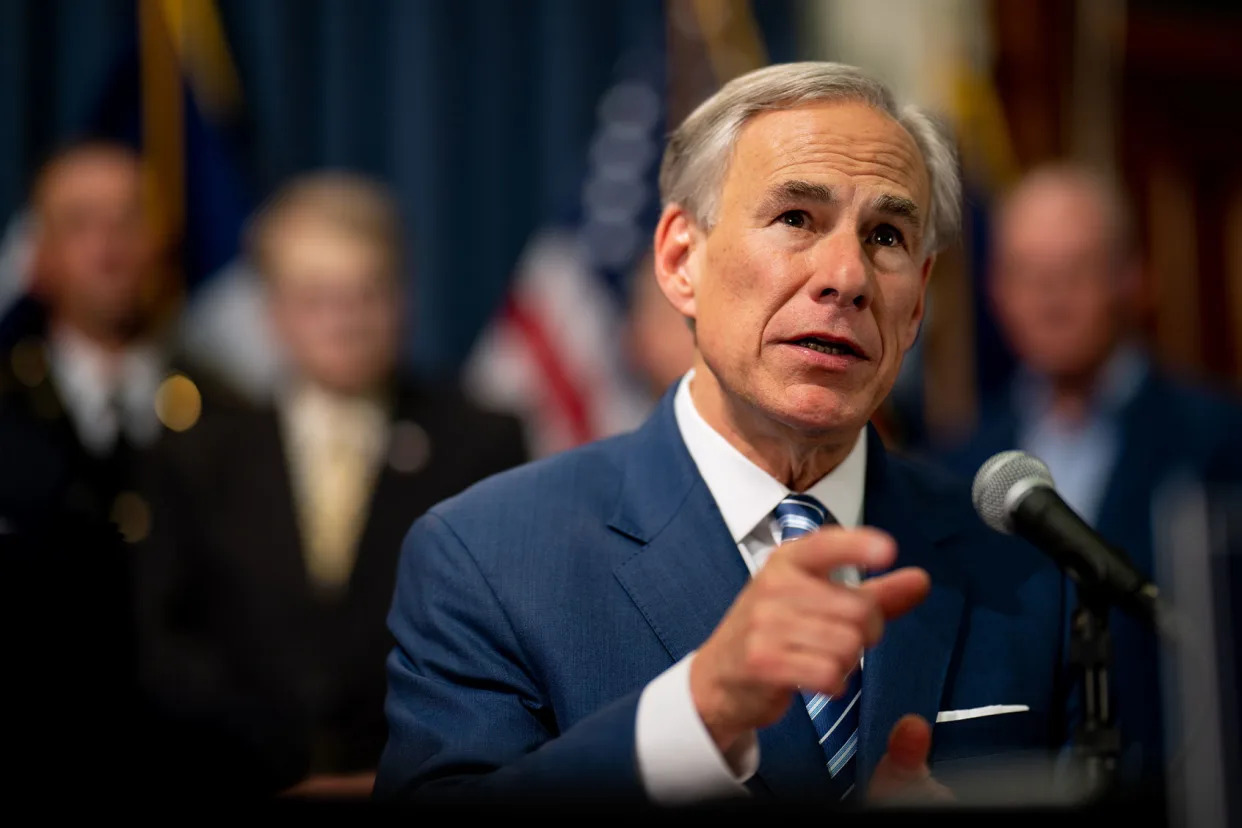
Greg Abbott Brandon Bell/Getty Images
Texas has seen a sudden surge in extremist activity within the past three years, with white supremacist and anti-LGBTQ+ groups making the Lone Star state its base of operations.
According to a new report by the Anti-Defamation League, there has been an 89% increase in antisemitic incidents in Texas from January 2021 to May of this year. Along with six identified terrorist plots and 28 occurrences of extremist events like training sessions and rallies, Texas also saw an increase in the frequency of propaganda distribution.
“Texas has a long history of white nationalist activity and for many years has had a very active presence of white nationalist and neo-Nazi groups in the state, but the report’s findings really do paint a very troubling picture of the current situation,” Stephen Piggott, who studies right-wing extremism as a program analyst with the Western States Center, a civil rights group, told Salon.
“Texas is the homebase for a number of really active white nationalist and neo-Nazi groups, such as the Patriot Front and the Aryan Freedom Network.”
This is one of the main factors driving extremism in the state. Patriot Front has contributed to Texas experiencing the highest number of white supremacist propaganda distributions in the United States in 2022, the report found.
The group has a “nationwide footprint,” with members all around the country and their messaging contributing to 80% of nationwide propaganda in 2022 – a trend replicated every year since 2019, according to the report.
Patriot Front has also held rallies in major cities across the country, including Washington, D.C., Boston, Philadelphia and Indianapolis, where the events are frequently the largest public white supremacist gatherings.
Texas’ close proximity to Mexico also makes it a hotbed for anti-immigrant activity, Piggot added, pointing to a growing number of nationalist and neo-Nazi groups focusing on immigration issues.
“They’ll have rallies where a lot of the rhetoric is focused on demonizing immigrants and using dehumanizing rhetoric about immigrants,” he said. “They’re focused on the issue of immigration because Texas is a border state, but also an avenue for getting more recruits.”
The political context further amplifies this phenomenon, Peter Simi, a sociology professor at Chapman University and an expert on white supremacists in the U.S., told Salon.
“When you look at the political context of what’s happening in Texas as far as [the movement of] anti-CRT, anti-reproductive rights, anti-gay… that is extremely conducive and consistent with groups like the Patriot Front, so they kind of thrive,” Simi said.
Last year, 31 members of Patriot Front were arrested near Idaho after police stopped a U-Haul truck near a “Pride in the Park” event and found members dressed uniformly and equipped with riot shields. Every present Patriot Front member was charged with criminal conspiracy to riot.
But this hasn’t deterred the group from putting on public demonstrations and in many cases, even documenting them. In July, close to 100 masked group members recognized Independence Day by holding a flash demonstration in Austin while carrying riot shields, a banner reading “Reclaim America” and upside-down American flags.
“Whenever they have a gathering or any type of kind of public demonstration, they have folks filming and they put out really kind of flashy videos on social media, especially on places like Telegram and it’s all designed to make it look cool and edgy,” Piggot said.
Extremist groups often use online platforms to recruit and spread their ideology. Over the past year, ADL found that online hate and harassment rose sharply for adults and teens ages 13-17.
Among adults, 52% reported being harassed online in their lifetime, the highest number we have seen in four years, up from 40% in 2022, ADL spokesperson Jake Kurz said.
“Many online platforms either recommend more extreme and hateful content or make it easier to find once searched,” Kurz said pointing to the report’s findings. “For some, this could lead to a dark spiral into hate and extremism.”
Patriot Front has emerged as one of the most aggressive groups in terms of distributing propaganda, Simi pointed out. They often even post pictures of the propaganda they’ve distributed online and circulate those images more broadly.
“In a nutshell, they’re trying to really be aggressive in establishing a physical presence through [distributing] flyers as well as through actual demonstrations,” Simi said. “They’ve also been known to do these flash mob style demonstrations and sometimes more coordinated demonstrations where they’ve shown up in places, like our nation’s capital.”
As a part of their recruitment strategies, white supremacist groups have consistently targeted the LGBTQ+ community, disrupting drag shows, targeting pride events and even going after businesses that support LGBTQ+ events. They have used slurs like “groomers” when talking about the LGBTQ+ community to draw more individuals to their movement.
“The anti-LGBTQ+ animus is probably the single greatest driver of white nationalist and anti-democracy activity that we’re seeing across the country right now,” Piggot said.
ADL tracked 22 anti-LGBTQ+ incidents in 2022 across Texas. While some actions involved extremists, others engaged more mainstream anti-LGBTQ+ entities, offering extremists opportunities to expose new audiences to different forms of hate.
“Hate and extremism seem to be a growing issue across the United States,” Kurz said. “The number of antisemitic incidents across the country are the highest we have ever measured. Instances of white supremacist propaganda are high and we are seeing an alarming amount of violence motivated by hate and misinformation.”
Kurz added that people should look at the Texas report and recognize that while some of the types of extremism are different, extremism is a problem in every community in the country.
The communities that are being targeted in Texas mirror those targeted nationwide, said Rachel Carroll Rivas, deputy director for research, reporting and analysis at the SPLC.
“Some of the real intense false conspiracies that circulate around QAnon are resulting in an increase in the sovereign citizen movement – a conspiratorial movement that is not followed and and even recognized a lot in the U.S.,” Carroll Rivas said.
Other trends in Texas that are indicative of broader extremism patterns in the country include the targeting of school curriculums, she added.
The reason why these groups feel comfortable operating in Texas is because of the role that elected officials in the state are playing in “echoing white nationalist talking points,” Piggot said.
He pointed to Texas Governor Greg Abbott’s extreme anti-immigrant actions, putting up barbed wire across the Rio Grande and a chain of buoys with circular saws.
“Governor Abbott is essentially doing the work for white nationalists by echoing and then amplifying their dehumanizing rhetoric,” Piggot said. “Just this week, he declared an invasion [at the border]. That’s a phrase that white nationalists have used to describe what’s happening on the U.S. [and] Mexico border for decades.”
In both Texas and Florida, neo-Nazis and white nationalists are “feeling energized” and have increased their activities due to seeing this type of messaging from Abbot and Florida Gov. Ron DeSantis, he added.
“We need elected officials to be closing the political space for these groups and denouncing them instead of amplifying their messages for them,” Piggot said.