STORY: Mexican authorities on Friday sent a planeload of migrants from Piedras Negras, near the US border, to southern Mexico to be returned to their countries of origin.
The move came just hours after Mexican President Andres Manuel Lopez Obrador announced that his government will reinforce measures to contain migration.
As the United States copes with record numbers of people trying to reach the U.S. border, Mexico is looking to help.
“We will boost as much as we can to help maintain an orderly flow,” said Lopez Obrador, adding “Recently, there was an abnormal surge.”
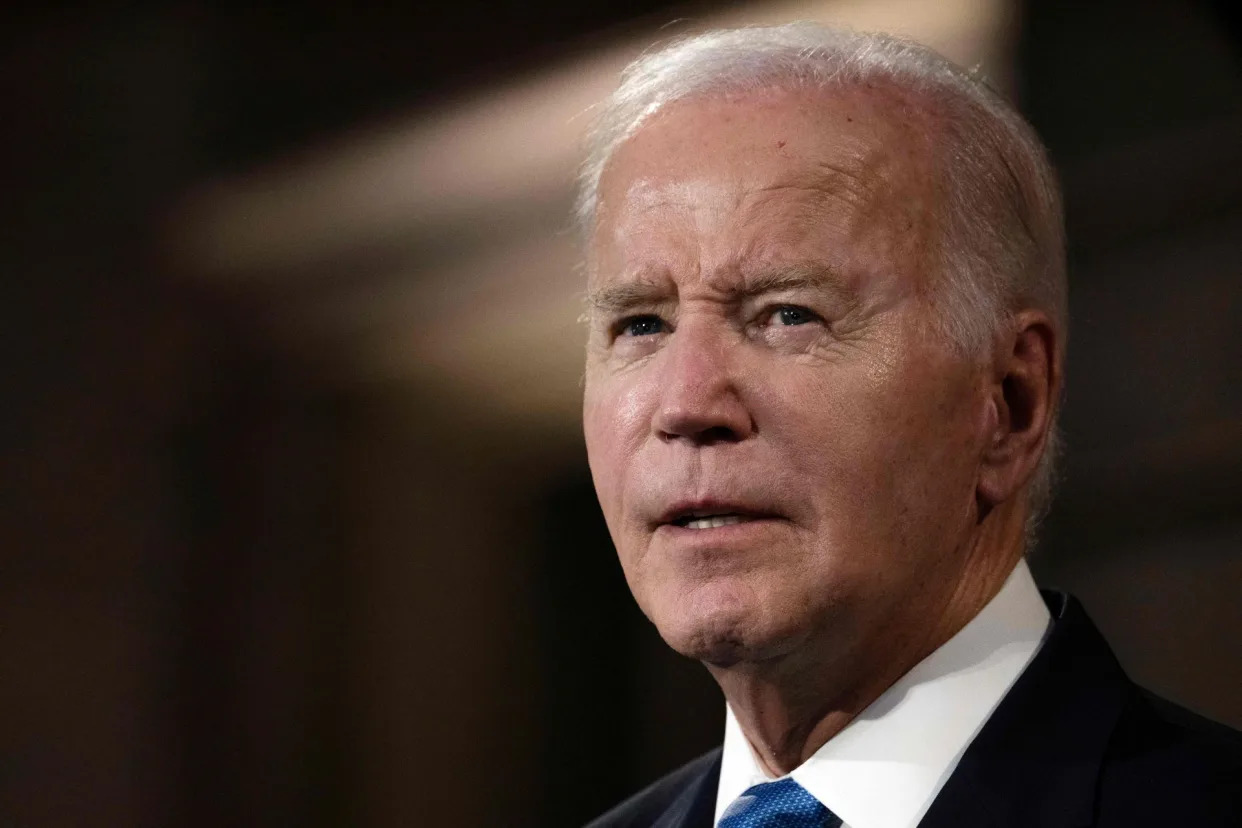
Lopez Obrador’s comments came a day after he spoke with U.S. President Joe Biden.
Both agreed that more enforcement was needed at their shared frontier, as record numbers of migrants disrupt border trade.
This year, the number of migrants crossing the perilous Darien Gap straddling Colombia and Central America topped half a million – double that of last year’s record.
News of Lopez Obrador’s comments reached migrants as they made their way through Mexico to the U.S. border.
Honduran migrant Kerlin Silva said the new rules might mean he won’t be able to, (quote) “fulfill the American dream.”
According to the United Nations, migrants are heading through Mexico to the U.S. to escape violence, economic distress, and the negative impacts of climate change.
Lopez Obrador said Mexico would also step up containment efforts on its southern border with Guatemala as his government seeks agreements with other countries to manage the northbound migrant flows.
Top U.S. officials are set to visit Mexico next week to follow up on the call between Lopez Obrador and Biden.
A Record Number of Billion-Dollar Weather Disasters Hit the U.S. in 2023
Yale Environment 360 – December 20, 2023
Billion-dollar weather disasters in the U.S. by year. Climate Central
In 2023, the U.S. experienced a record 25 billion-dollar weather and climate disasters — three more than the previous record, set in 2020.
As greenhouse gases continue to accumulate in the atmosphere, extreme events — hurricanes, severe storms, heavy rainfall, flooding, wildfires, extreme heat, and drought — are becoming ever more frequent, intense, and dangerous. Between 1980 and 2022, the U.S averaged eight billion-dollar weather disasters each year, according to NOAA. Between 2018 and 2022, it recorded 18 such disasters on average. This year saw an unprecedented 25 billion-dollar disasters.
Not surprisingly, the average time between billion-dollar disasters has dramatically shrunk. In the 1980s, according to an analysis of government data by Climate Central, there was an average of 82 days between such disasters. Between 2018 and 2022, with more carbon in the atmosphere and more people and property in harm’s way, the lull between billion-dollar disasters dropped to an average of just 18 days. In the first eleven months of 2023, that lull was just 10 days.
Average number of days between billion-dollar disasters in the U.S. Climate Central
Today’s climate impacts reflect around 1.1 degrees C of global warming, said Climate Central, noting that impacts worsen with every bit of additional warming. But “if we commit to rapid and sustained cuts in carbon pollution, it could set younger generations on a path toward a far safer future with less warming and fewer risky extreme events.”
‘A Very Large Earthquake’: How Trump Could Decimate the Civil Service
Ian Ward – December 20, 2023
For the past two decades, Max Stier has distinguished himself as Washington’s foremost champion of the federal civil service, a quiet but influential voice in favor of practical reforms to make federal bureaucracy work better both for the people who serve in it and for the people that it serves. The Partnership for Public Service — the nonpartisan, nongovernmental organization that Stier helped found in 2001 and still runs today — works largely behind the scenes in Washington to grease the wheels of the bureaucracy, doing everything from crafting common sense proposals for modernizing government programs to hosting a much-beloved annual awards ceremony honoring the country’s top performing civil servants.
These days, though, Stier is increasingly preoccupied with what he sees as a fundamental threat to that work: former President Donald Trump’s sweeping proposal to convert thousands of career civil servants into political appointees if he wins a second term in the White House. That plan — which has won the support of powerful, Trump-aligned conservative think tanks such as the Heritage Foundation and the America First Policy Institute — is modeled on an executive order from Trump’s first term that redesignated 20,000 civil servants in policy-related positions as “Schedule F” employees, thereby allowing them to be fired unilaterally by the president.
The Biden administration reversed the Trump administration’s order upon assuming office in 2021, but Trump has vowed to reinstitute an expanded version of the Schedule F order if he is reelected in 2024, converting as many as 50,000 civil servants into political appointees and stripping them of the career protections that they currently enjoy.
For Stier, Trump’s proposal is as ironic as it is dangerous. Although Trump and his allies have argued that their plan is necessary to vanquish the “deep state” that allegedly undermined Republican policy initiatives during Trump’s first term, Stier argues that a revamped order on Schedule F would in fact go a long way toward creating the sort of “deep state” that conservatives now rail against.
“If you were to convert a significant segment of that professional workforce into one that is being chosen by political fiat, then you end up in a system that is responsive to the political desires of the individual rather than the larger responsibilities to the Constitution and to law,” Stier said when I spoke to him recently. “You wind up with a workforce that is not only going to deliver poor service, but also that is going to be a tool for retribution and actions that are contrary to our democratic system.”
Even so, Stier cautioned, Americans should not underestimate the damage that the reforms would do to the federal government’s ability to deliver basic services in a timely and efficient manner. “At the end of the day, it’s intuitive,” he said. “If you are selecting people on the basis of their political persuasion or their loyalty as opposed to their expertise and their commitment to the public good, you’re going to wind up with less good service and more risk for the American people.”
The following has been edited for concision and clarity.
How seismic would the changes wrought by Trump’s proposal be? Is there any precedent for it?
It would be a very large earthquake. There is precedent, but it’s precedent from the 19th century. In effect, when you talk about implementing Schedule F, you’re talking about turning the clock back to the late 19th century, when our government operated under the spoils system. That all changed, importantly, when President [James] Garfield was assassinated by a disgruntled job seeker [in 1881], resulting in the passage of the first piece of legislation that professionalized our government, the Pendleton Act.
Frankly, Schedule F is now used as a handle for a larger set of dramatic changes to our government, but they are entirely designed to — and will have the consequence of — making our government responsive to the will of the individual holder of the office of the president rather than the broader allegiance to our Constitution and the rule of law.
Is there evidence that a merit-based civil service — as opposed to a bureaucracy run according to the spoils system — actually makes the government more effective?
No question. One way to know that is to look at our peer countries across the world, and the reality is that every effective democracy on the planet today has a professionalized, merit-based civil service that is the core of their governmental function. If anything, we are an outlier in the numbers and the extent to which political appointees are [spread] throughout government institutions. We have 4,000 political appointments that are made by a president — and that is dramatically more than anybody else out there. So one direct piece of evidence is to look at our peers to see how capability and government performance are directly related to the professional capability of the other civil service. In our own country, the same is true. We have many instances in which organizations have foundered when they’ve had too many political appointees.
At the end of the day, it’s intuitive: If you are selecting people on the basis of their political persuasion or their loyalty as opposed to their expertise and their commitment to the public good, you’re going to wind up with less good service and more risk for the American people.
Do we know which career positions would likely be converted to appointed positions under a second Trump administration?
The best evidence we have so far is what was attempted at the back end of the last Trump administration. At that point, they were looking at converting effectively the entire Office of Management and Budget. For most people, that’s just another government acronym, but in fact, it’s the nerve center of the entire government and the office that really is responsible for coordinating and allocating all the resources of our government — and it’s one of the most capable and professionalized elements of our government.
If you converted just those positions alone, then all kinds of choices in government would be made not on the basis of what delivers the best service to the public, and not on the basis of choosing according to transparent criteria that match Congress’ objective desires. They would be entirely based on the political implications — and that is a worse world.
What about beyond OMB?
We don’t know what the full sweep would be, but it’s also true that you don’t have to convert all the positions to have a much larger impact. The chill that would exist for the larger workforce would be profound. For instance, we currently have a system that respects whistleblowers in order to make sure that if something illegal is occurring inside an agency, the individuals who raise them are actually protected. In a world with Schedule F, that would be incredibly hard to see that happening.
Which areas of the government stand to suffer the most under a return to the “spoils system,” as you called it? What would that look like in terms of the delivery of government services?
It depends a lot on how broad of a brush is ultimately wielded in making the changes. You can start from the most obvious, life-saving components of our government.
If you ask the public today if they want a professional government service, they say “yes” in very, very large majorities. So I think that the intuitive point is very strong. The challenge is that there’s a narrative that has been sold around this notion of a deep state, which is just wrong. Indeed, the proposals that are on the table would create a deep state, rather than the effective state that we all should be pursuing.
What do you mean?
I don’t think we have a deep state today. The vast bulk of career civil servants understand that their role is to execute the policy choices that our elected leaders make and that they have a responsibility to follow the law and to make sure their actions are consistent with the Constitution. But if you were to convert a significant segment of that professional workforce into one that is being chosen by political fiat, then you end up in a system that is responsive to the political desires of the individual rather than the larger responsibilities to the Constitution and to law.
You wind up with a workforce that is not only going to deliver poor service, but also that is going to be a tool for retribution and actions that are contrary to our democratic system.
The Biden administration has issued a rule that’s designed to limit the scope and efficacy of any subsequent Schedule F reforms by future administrations. How effective do you think that rule will be?
It’s an important effort and recognition that it would be wrong and damaging. At the end of the day, though, Congress speaking to this would be much more efficacious. I actually think that, even absent the rule or legislation, there would be real legal reasons to challenge the creation of something like Schedule F.
What would a legal challenge look like?
There are statutes that Congress passed that enshrined the merit principles, and one of the main principles is that employees should actually be hired on the basis of merit and not on the basis of politics. So I believe there would be credible and important legal questions that could be raised about those kinds of changes.
But again, I’m not suggesting that they necessarily win — and in the meantime, an awful lot of damage could happen. The very effort and attempt [to reimplement schedule F] would be incredibly damaging in and of itself, so people should not feel sanguine about the possibility that this couldn’t happen or could be delayed, because the harm is profound even in just attempting to do so.
Past administrations from both parties have struggled to fill the 4,000 appointed jobs that currently exist. Is it feasible for a future administration to fill somewhere in the ballpark of 50,000 appointed roles?
The biggest challenge in placing political appointees comes from the Senate confirmation process and all the delays and difficulties that are involved in actually nominating and getting the Senate to confirm them. That’s a deeply broken process. But none of these positions would require that. So I don’t believe that people should be heartened by the notion that they can convert them and it won’t matter because they won’t be able to fill those jobs. I don’t think that is either a true or adequate answer to the problem.
I imagine many people reading this will think, “Well, our government doesn’t work all that efficiently as it is, so what’s the problem with making it a little bit less efficient?” How do you answer that?
This is a difference in kind and not in degree. It’s not like, Yeah, we might just have a slightly less efficient government. No — we would actually have a government that fundamentally fails in its responsibilities to the American people. It would become an instrument of political achievement rather than an instrument of problem-solving and addressing critical issues for the public.
But I think the point is a very important one, because the American public should demand even better than they’re getting right now from our government. I believe that there actually are really good ways of improving the capability of the civil service that do not involve burning down our government. That’s fundamentally the choice that is here to be made. I don’t think it’s efficient to simply say that Schedule F is bad. You also have to offer a plan of attack on improving our government — and frankly, we have that. We have a whole roadmap of the changes that should take place. But the reality is that none of it should be viewed as an indictment of career public servants. It’s an indictment of the leadership over the years that has failed to modernize and invest in the systems of our government.
What does that roadmap look like?
To give one example, the pay system is based on a law from 1949 and it fundamentally hasn’t been modernized since then. That ought to be modernized, because it was built at an age in which our federal workforce was largely clerical, whereas today it’s largely professional. The system isn’t designed for market connectivity to get the technologists, the AI specialists and so on that are necessary to deliver the best services to the public.
There are changes that ought to take place in the way accountability is done in our government. You can actually fire federal employees — and many do leave because they’re threatened with being fired for performance issues — but the systems should be modernized and updated and simplified. There are lots of things that can be done that would actually improve the public service and that would result in better outcomes for the public, rather than blowing it up.
What happens to those reforms in a world with Schedule F? Is there a kind of dual-track future where you can do sensible civil service reform even with Schedule F in place, or are they completely crosswise with each other?
I think they’re crosswise because they come from different visions. One vision is a spoils system, and the other is a professional, capable and effective state. Those are very, very different visions, so I don’t think you can marry the two.
Ultimately, the Schedule F approach swamps the entire system. It cuts the legs out from the idea that we want people who are not only selected on the basis of their capabilities but also based on the fact that their loyalty is to the rule of law and our Constitution rather than to the individual [in power]. Again, we have way too many political appointees as it is, and it really is important for people to see that we are such an outlier in the world — in a bad way.
I suspect that some people on the right simply do not care if government efficiency suffers as a result of these reforms. In fact, that might be part of the goal. How do you think about appealing to people who might be thinking about it that way?
There’s an entirely legitimate and appropriate debate to be had about the role of our government. But there should be no debate about ensuring that, whatever the public actually desires the government to do, it’s done well and effectively. The vast majority of civil servants are focused on national security issues — on actually keeping us safe. I don’t think there are very many Americans who would dispute the value of that outcome or the need for an effective government to do it.
How aware are people in Washington of the potential consequences of these reforms? And how prepared do you think they are to deal with them?
I do not believe that the public has good insight into the nasty consequences that would come out of the proposals that are part of Project 2025. At the end of the day, if you look at the polling [about the public’s view of the civil service] it’s clear as can be: Americans actually want the people who are serving them to be chosen because they’re the most expert and capable — not because they’ve sworn loyalty to the person in the Oval Office.
More Than Half of Children Losing Medicaid Coverage Live in Just 5 States
Michael Rainey – December 19, 2023
Getty Images
As individual states continue to disenroll millions of people from Medicaid and the Children’s Health Insurance Program (CHIP) now that pandemic-era suspension of participation guidelines has come to an end, new data from the U.S. Department of Health and Human Services shows that more than 50% of the children who have lost health coverage this year come from just five states.
From March 2023, when the disenrollment process began, to the end of September, 2.2 million children were removed from Medicaid and CHIP, two programs that overlap and are typically lumped together. The five states with the largest total declines in enrollment – Texas, Florida, Georgia, Ohio and Arkansas – accounted for 54% of the reductions, or more than 1.2 million children.
All five states are led by Republicans, and the first three have refused to expand their Medicaid systems as allowed by the Affordable Care Act. In terms of total disenrollment, the 10 states that have refused Medicaid expansion – Texas, Florida, Georgia, Mississippi, Alabama, South Carolina, Tennessee, Kansas, Wisconsin and Wyoming – have removed more children from coverage than all of the expansion states combined, HHS said.
Echoing the worries of many healthcare experts, the Biden administration has expressed concerns that some states have been too aggressive in removing beneficiaries from their Medicaid and CHIP rolls, with many people losing coverage simply because they failed to complete various kinds of paperwork. HHS said Monday that Secretary Xavier Becerra has sent letters to the nine states with the highest disenrollment rates urging them to “adopt additional federal strategies and flexibilities to help prevent children and their families from losing coverage due to red tape.”
Among other things, Becerra called on governors to remove barriers to participation such as CHIP enrollment fees and premiums; to make it easier to automatically renew children for coverage; to expand efforts to contact families facing renewal; and to expand their Medicaid programs so that children do not fall into a coverage gap. “I urge you to ensure that no eligible child in your state loses their health insurance due to ‘red tape’ or other bureaucratic barriers during the Medicaid enrollment process,” he wrote.
Trump would install loyalists to reshape U.S. foreign policy. Diplomats gird for “doomsday”
Gram Slattery, Simon Lewis, Idrees Ali, Phil Stewart – December 18, 2023
Republican presidential candidate and former U.S. President Trump campaigns in Reno
WASHINGTON (Reuters) –Donald Trump in a second term would likely install loyalists in key positions in the Pentagon, State Department and CIA whose primary allegiance would be to him, allowing him more freedom than in his first presidency to enact isolationist policies and whims, nearly 20 current and former aides and diplomats said.
The result would enable Trump to make sweeping changes to the U.S. stance on issues ranging from the Ukraine war to trade with China, as well as to the federal institutions that implement – and sometimes constrain – foreign policy, the aides and diplomats said.
During his 2017-2021 term, Trump struggled to impose his sometimes impulsive and erratic vision on the U.S. national security establishment.
He often voiced frustration at top officials who slow-walked, shelved, or talked him out of some of his schemes. Former Defense Secretary Mark Esper said in his memoir that he twice raised objections to Trump’s suggestion of missile strikes on drug cartels in Mexico, the U.S.’s biggest trade partner. The former president has not commented.
“President Trump came to realize that personnel is policy,” said Robert O’Brien, Trump’s fourth and final national security adviser. “At the outset of his administration, there were a lot of people that were interested in implementing their own policies, not the president’s policies.”
Having more loyalists in place would allow Trump to advance his foreign policy priorities faster and more efficiently than he was able to when previously in office, the current and former aides said.
Among his proposals on the campaign trail this year, Trump has said he would deploy U.S. Special Forces against the Mexican cartels – something unlikely to get the blessing of the Mexican government.
If he returns to power again, Trump would waste little time cutting defense aid to Europe and further shrinking economic ties with China, the aides said.
O’Brien, who remains one of Trump’s top foreign policy advisers and speaks to him regularly, said imposing trade tariffs on NATO countries if they did not meet their commitments to spend at least 2% of their gross domestic product on defense would likely be among the policies on the table during a second Trump term.
The Trump campaign declined to comment for this article.
Unlike in the lead-up to his 2016 election, Trump has cultivated a stable of people with whom he speaks regularly, and who have significant foreign policy experience and his personal trust, according to four people who converse with him.
Those advisers include John Ratcliffe, Trump’s last Director of National Intelligence, former U.S. Ambassador to Germany Richard Grenell, and Kash Patel, a former Trump staffer who held several positions in the intelligence and defense communities.
None of those people responded to interview requests.
While the specific policies of these informal advisers vary to some degree, most have been vocal defenders of Trump since he left office and have expressed concerns that America is paying too much to support both NATO and Ukraine.
“DOOMSDAY OPTION”
Trump has a commanding lead in the Republican presidential nomination race. If he becomes the Republican nominee and then defeats Democratic President Joe Biden next November, the world will likely see a much more emboldened Trump, more knowledgeable about how to wield power, both at home and abroad, the current and former aides said.
That prospect has foreign capitals scrambling for information on how a second Trump term would look. Trump himself has offered few clues about what kind of foreign policy he would pursue next time around, beyond broad claims like ending the Ukraine war in 24 hours.
Eight European diplomats interviewed by Reuters said there were doubts about whether Trump would honor Washington’s commitment to defend NATO allies and acute fears he would cut off aid to Ukraine amid its war with Russia.
One Northern European diplomat in Washington, who spoke on condition of anonymity because of the sensitivity of the issue, said he and his colleagues had kept talking to Trump aides even after the former president left the White House in 2021.
“The story from there was, ‘We were not prepared (to govern), and next time it has to be different,'” the diplomat said. “When they got into the Oval Office in 2017, they didn’t have any idea what the hell to do with it. But this won’t happen again.”
The diplomat, whose country is a NATO member, and one other diplomat in Washington said their missions have outlined in diplomatic cables to their home capitals a possible “doomsday option.”
In that hypothetical scenario, one of multiple post-election hypotheses these diplomats say they have described in cables, Trump makes good on pledges to dismantle elements of the bureaucracy and pursue political enemies to such a degree that America’s system of checks and balances is weakened.
“You have to explain to your capital. ‘Things might go rather well: the US keeps on rehabilitating herself’ (if Biden is re-elected),” said the diplomat, describing his mission’s view of American politics. “Then you have Trump, a mild version: a repetition of his first term with some aggressive overtones. And then you have the doomsday option.”
RETREAT FROM GLOBALISM
Michael Mulroy, the Deputy Assistant Secretary of Defense for the Middle East under Trump, said the former president would likely appoint individuals who subscribed to his isolationist brand of foreign policy and were unlikely to confront him.
All U.S. presidents have the power to name political appointees to the most senior jobs in the federal bureaucracy, including the State Department, Pentagon and the CIA.
“I think it will be based primarily on loyalty to President Trump,” Mulroy said, “a firm belief in the kind of foreign policy that he believes in, which is much more focused on the United States, much less on a kind of globalist (policy).”
Trump clashed with his own appointees at the Pentagon on a number of issues in his first term, from a ban on transgender service members that he supported to his 2018 decision to pull U.S. troops from Syria.
When his first defense secretary, Jim Mattis, resigned in 2018, the former four-star general stated he had significant policy differences with Trump. While Mattis did not explicitly lay them out, he stressed in his resignation letter the need to maintain an ironclad bond with NATO and other allies, while keeping enemies, like Russia, at arms-length.
Ed McMullen, Trump’s former ambassador to Switzerland and now a campaign fund-raiser who is in contact with the former president, stressed that most foreign service personnel he knew served the president faithfully.
But, he said, Trump was aware of the need to avoid choosing disloyal or disobedient officials for top foreign policy posts in a second term.
“The president is very conscious that competency and loyalty are critical to the success of the (next) administration,” he said.
Outside of Trump’s top circle of advisers, a potential Trump administration plans to root out actors at lower levels of the national security community perceived to be “rogue,” according to Agenda47, his campaign’s official policy site.
Such a step would have little precedent in the United States, which has a non-partisan bureaucracy that serves whichever administration is in office.
Trump has said he plans to reinstate an executive order he issued in the final months of his first term, which was never fully implemented, that would allow him to more easily dismiss civil servants.
In a little-reported document published on Agenda47 earlier this year, Trump said he would establish a “Truth and Reconciliation Commission,” which would, among other functions, publish documents related to “Deep State” abuses of power. He would also create a separate “auditing” body meant to monitor intelligence gathering in real time.
“The State Department, Pentagon, and National Security Establishment will be a very different place by the end of my administration,” Trump said in a policy video earlier this year.
NATO PULLOUT? NEW TRADE WAR
During a second term, Trump has pledged to end China’s most favored trading nation status – a standing that generally lowers trade barriers between countries – and to push Europeans to increase their defense spending.
Whether Trump will continue vital U.S. support for Ukraine in its war with Russia is of particular importance to European diplomats in Washington trying to prepare, as is his continued commitment to NATO.
“There are rumors that he wants to take the US away from NATO or withdraw from Europe, of course it sounds worrying but … we are not in a panic,” said a diplomat from one Baltic state.
Despite worries about the future of NATO, several diplomats interviewed for this article said pressure from Trump during his first term did lead to increased defense spending.
John Bolton, Trump’s third national security adviser who has since become a vocal critic of the former president, told Reuters he believed Trump would withdraw from NATO.
Such a decision would be earth-shaking for European nations that have depended on the alliance’s collective security guarantee for nearly 75 years.
Three other former Trump administration officials, two of whom are still in contact with him, played down that possibility, with one saying it would likely not be worth the domestic political blowback.
At least one diplomat in Washington, Finnish Ambassador Mikko Hautala, has spoken to Trump directly more than once, according to two people with knowledge of the interactions, which were first reported by The New York Times.
Those discussions centered on the NATO accession process for Finland. Hautala wanted to make sure Trump had accurate information about what Finland brings to the alliance and how Finland joining benefits the U.S., one of the people said.
(Reporting by Gram Slattery, Simon Lewis, Idrees Ali and Phil Stewart; Additional reporting by Jonathan Landay, Arshad Mohammed and Steve Holland; editing by Ross Colvin, Don Durfee and Daniel Flynn)
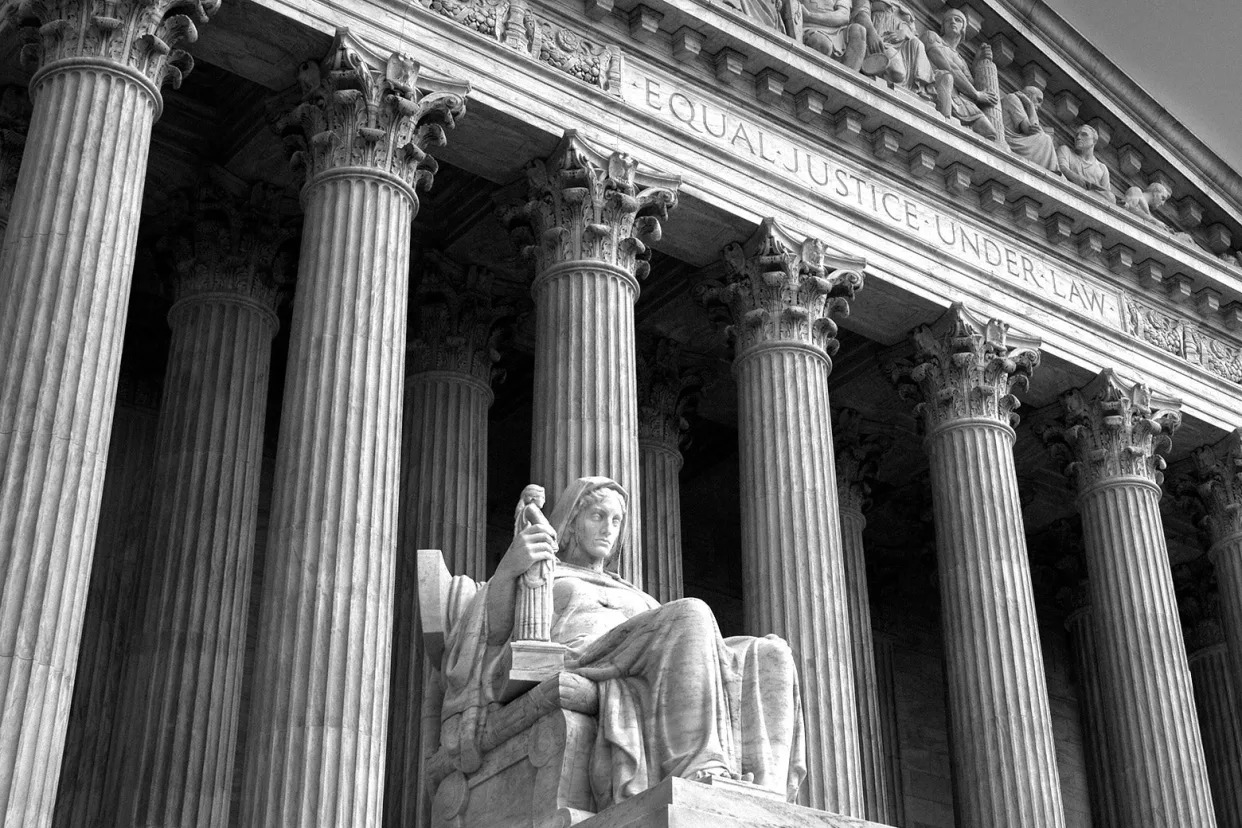
Is SCOTUS Finally Losing Patience With the Far Right’s Bogus Cases?
Dahlia Lithwick and Mark Joseph Stern – December 17, 2023
Last week, the Supreme Court made two big moves in hot-button cases with major consequences for civil liberties in the United States. On Monday, the court refused to take up Tingley v. Ferguson, a First Amendment challenge to Washington state’s ban on LGBTQ+ conversion therapy for minors. Then, on Wednesday, the court agreed to hear a case that seeks to ban mifepristone, the “abortion pill,” in all 50 states—making the most common method of abortion inaccessible throughout the country.
On Saturday’s Slate Plus segment of Amicus, Dahlia Lithwick and Mark Joseph Stern discussed the court’s flurry of activity as the year draws to a close. Their conversation has been edited and condensed for clarity.
Dahlia Lithwick: The court’s decision not to take this case means Washington state’s restrictions on conversion therapy can stay in place. And I think the move was a bit of a surprise, right?
Mark Joseph Stern: Yes, absolutely. Twenty-one states and the District of Columbia have enacted some form of a ban on conversion therapy for minors. And while the court turned away these challenges in the past, the conservative majority has been dropping hints in recent years that it might be ready to abridge or abolish these laws. So when Tingley hit the docket, a lot of us thought it was time for a showdown. But that didn’t happen. Three justices—Clarence Thomas, Samuel Alito, and Brett Kavanaugh—would’ve taken up the case. And since it takes four votes to hear an appeal, that means John Roberts, Neil Gorsuch, and Amy Coney Barrett voted against taking it up. That’s quite surprising, again, because those three justices are pretty far right when it comes to these First Amendment protections for religious speech and for laws that allegedly target conservative Christians. This case seemed to serve up those issues on a silver platter.
That, of course, leads to the question of why. Before I get into my theory, what’s yours?
I’m just going to keep saying, till the cows come home, that I just do not believe at any given moment that there are five, much less six, votes on the current Supreme Court to be justices in 2027 sitting on the smoldering dumpster fire of what’s left of all constitutional theory and history. I think they’re exercising caution. That’s my working theory.
It’s a decent one! But I have another. So, the first thing I want to flag is that this plaintiff, Brian Tingley, was represented by Alliance Defending Freedom. And our dear friends at ADF have concocted a number of other high-profile cases that turned out to be fake—including last year’s 303 Creative v. Elenis, where ADF falsely claimed that a same-sex couple asked this graphic designer to make a wedding website. It was all a lie. The court ruled for her anyway, but it drew a lot of ridicule and scorn in the process.
This case seems equally fake. Brian Tingley, the plaintiff challenging Washington state’s law, refuses to say whether he wants to perform conversion therapy and whether he intends to perform it. Yet, in their filings, ADF scrupulously avoids ever saying that Tingley actually wants to counsel a gay or transgender youth to change their orientation or gender identity. Instead, the complaint is all framed in these abstractions—that he just wants to be able to participate in the debate and speak about the realities of this ongoing controversy, yada, yada, yada. Well, none of that stuff is prohibited under this law. The only thing that’s prohibited is using your time and resources as a professional counselor to try to convert a child in exchange for money.
This particular issue was spotted by Jenner and Block’s Adam Unikowsky, who represented Equal Rights Washington, a group that intervened to defend the law. Adam pointed out the plaintiff, Tingley, does not have standing because he hasn’t said that he intends, or even wants, to violate this law. It’s still completely hypothetical. Adam also made the related point that the case isn’t ripe yet: There’s not an actual dispute here, since Tingley hasn’t said he wants to do a thing that Washington state prohibits. And on top of everything else, there’s no factual record. This was a problem that plagued 303 Creative, one that I think did come back to bite the justices: There was no factual record in that case, and the few “facts” that ADF put forward turned out to be lies or exaggerations.
Adam said, Look, these laws are in almost half the states. Why don’t you just wait until a real conflict comes up, and then you can hear the case with a real factual record that shows how the state applied the law? There will be a genuine controversy for you to resolve then. But there isn’t one here, so just deny this case. And on Monday, that’s what the court did. I think Adam’s argument was powerful for some of the justices who maybe felt like they had been taken in by ADF and decided, You know, we’re not going to play the suckers in this case. Even though Roberts and Gorsuch and Barrett probably want to tackle these conversion therapy bans, maybe they realized this was not the right case to do so because it would look to the public like they were reaching out and grabbing a controversy that does not actually exist for resolution in the courts yet.
That’s a flawless segue into another case where the totality of the injury is “I might have feelings someday”: The abortion pill case that SCOTUS took up on Wednesday, where the complete theory of standing is that a bunch of doctors might someday have sadness over the possibility of future abortion.
Right. The plaintiffs challenging mifepristone, the first drug in a medication abortion, are just doctors who hate abortion. Their theory of standing is as follows: Some woman somewhere is going to be prescribed mifepristone by a different doctor. She is going to have complications. She is going to come to our emergency room. We will have to treat her by completing her abortion. And doing that will make us extraordinarily sad.
We’ll have feelings. We’ll have standing because of our future feelings.
Exactly. Treating this hypothetical future patient will hurt our hearts too badly. The vibes will be off for the rest of the week, if not the month. The office Christmas party will be ruined. And that, they say, gives us standing to sue.
I don’t think that’s what this Supreme Court wants. I think this court is going to rule against the plaintiffs solely on standing grounds and by a lopsided vote. And if it does, I think that’s a point in favor of my theory about Tingley, right? Because guess who represents these anti-abortion doctors? Alliance Defending Freedom. The same lawyers who represent Tingley. ADF fabricated this case too. It seems like maybe ADF’s history of telling shameless lies to the courts, including SCOTUS, is starting to catch up to them. Maybe justices like Roberts and Barrett are getting a little pissed that ADF is creating so much extra work for them just to please donors and achieve victories that they couldn’t through the normal democratic process.
I think it’s worth saying here that if the Supreme Court does toss the mifepristone case on standing, it’ll get headlines that say “Supreme Court Preserves the Right to Medication Abortion,” and that will dampen an immense amount of political enthusiasm around reproductive rights. The conventional wisdom will be that the Supreme Court has taken itself out of the 2024 election, at least on this issue. Which won’t be true, because the court could still invoke the Comstock Act later to make abortion illegal in all 50 states.
But the larger point is that the Supreme Court could manage to deflate all the energy and enthusiasm among women and people who’ve been organizing after Dobbs. And that would be a really big indicator that the Supreme Court keeps gaming the press. It will make the court bottom of mind as we launch into a 2024 election where the court should be top of mind.
Revealed: House speaker did little to fight toxic ‘burn pit’ his father campaigned against
Oliver Laughland in Shreveport, Louisiana and Stephanie Kirchgaessner in Washington – December 13, 2023
Composite: Rory Doyle, Getty Images, Rachel Woolf
Mike Johnson was a few months away from assuming elected office in late 2014 when he was confronted with an impassioned appeal by the man he would later pay tribute to in his first speech as House speaker: his father Patrick.
The elder Johnson, a former firefighter in the Louisiana city of Shreveport, had survived a near fatal industrial explosion when Mike was 12 years old, a defining event in both men’s lives. He had just joined a local community environmental group, working to fight against US government plans to burn – in the open air – over 15m pounds of toxic munitions. It had thrust Patrick and his future wife Janis Gabriel onto the frontlines of Louisiana environmental advocacy.
As authorities were on the brink of approving the “open burn”, which would have sent vast quantities of known carcinogens into the air, Patrick and Janis turned to the most influential person they knew.
Then an ambitious, rightwing constitutional lawyer, Mike Johnson would in a matter of weeks fill the vacancy for Louisiana’s eighth state legislative district – whose borders are just 20 miles from Camp Minden, a military base where the illegal munitions dump – the largest in US history – was located. A small amount of the munitions had spontaneously exploded two years before, causing a 4-mile blast radius.
The pair drove to Mike Johnson’s legal offices in the late morning, Gabriel recalled, and Patrick Johnson explained to his son the immediate environmental and health dangers the toxic dump posed, not only to residents in the immediate vicinity but to members of the Johnson family living in the region.
“His father and I went to him and said: ‘Mike you need to get involved in this, this is really important. Your family really lives at ground zero,’” Gabriel said in an interview with the Guardian. “We basically begged him to say something, to someone, somewhere.”
A terse back and forth followed, she said.
“He just wasn’t interested,” Gabriel said. “He had other things to do. He was never interested in environmental things.”
The couple left deeply disappointed.
“It just blew my mind that he wouldn’t give five minutes of his time to the effort,” she said. “He basically shut us down.”
A spokesperson for Johnson said he “disputes this characterization as described” but did not respond to an invitation to elaborate further.
Gabriel, 72, has thought about this failed appeal to Johnson repeatedly in recent months, ever since he was thrust from relative obscurity to the US house speakership in October.
A denier of climate science, Mike Johnson has spoken about how his evangelical faith has shaped his political worldview. According to a broad examination of his past statements, Johnson’s anti-climate advocacy often bears the hallmarks of a Christian fundamentalism linked to creationism.
Louisiana’s fourth congressional district, which includes Camp Minden, has long voted staunchly Republican, but many residents still hold deep concerns about pollution and the climate crisis. In a year the district experienced record heat and a number of climate related disasters, some say their representative in Washington, who is now second in line to the presidency, is fundamentally failing them.
Mike Johnson’s views on climate change became publicly apparent in 2017, just five months into his first term in the US Congress. Asked how he felt about the climate crisis by a constituent at a rowdy town hall meeting in Shreveport, Johnson launched into a critique of climate change data, saying he had also seen “the data on the other side”.
“The climate is changing, but the question is: is the climate changing because of the natural cycles of the atmosphere over the span of history, or is it changing because we drive SUVs?
“I don’t believe in the latter. I don’t think that’s the primary driver.”
Some attendees booed.
Two years later, Johnson – who has received almost $350,000 in political donations from the oil and gas industry since his election in 2016 – led the Republican Study Committee as it lobbied against progressive Democratic efforts to implement a Green New Deal. Johnson denounced the sweeping federal blueprint for climate action as a “guise to usher in the principles of socialism” and create a system of “full government control”.
In Louisiana, which is economically dependent on the oil and gas industry, the remarks were consistent with the Republican party’s support for fossil fuels.
But to experts who study the Christian fundamentalist movement of creationism, the comments revealed a worldview that falls far outside traditional Republican pro-industry norms. They see the remarks, and Johnson’s rejection of climate science, as evidence of Johnson’s adherence to young-Earth creationist beliefs, including the presumption that the Earth is just 6,000 years old.
Johnson has been closely associated with the creationist movement since 2014 – before his entry into politics – when he became a vocal supporter and lawyer for Answers in Genesis (AiG), a global fundamentalist Christian organization that built a gigantic Noah’s Ark replica and amusement park in Kentucky. Following a headline-grabbing legal battle, Johnson ultimately helped the group secure taxpayer incentives for the project.
“Creationists can just wave away all of the geologic evidence of climate change because they are convinced that all rock layers were laid down in a global flood about 4,400 years ago,” said David MacMillan, a former Christian fundamentalist who has left the movement.
MacMillan grew up attending creationist conferences, had posts published on AiG’s website, and helped raise money for the establishment of AiG’s first creationist museum near Cincinnati, earning him a spot on a donor wall and a lifetime pass to attend. Now – having left his fundamentalist views behind – he is speaking out about the dangers of science denial.
“They will tell you that hundreds of thousands of annual ice core layers are just a bunch of snow that formed while the Earth was cooling off after Noah’s flood. They believe climate scientists are sifting through meaningless noise to try and find patterns that will get them noticed and promote narratives that please the global elite who want to control us.”
What’s more, MacMillan added, most fundamentalists argue that even if the climate is changing, it should make no difference because they also expect the imminent, apocalyptic, final judgment of the world.
MacMillan, who knows Ham, said the AiG founder pioneered a technique of trying to sow doubts about science by presenting scientific consensus as merely a belief system, much like religion.
In a video interview with the Canadian psychologist and alt-right provocateur Jordan Peterson in November last year, Johnson drew directly from this creationist strategy when asked why Democrats pursue policies to address the climate crisis.
“They regard the climate agenda as part of their religion,” Johnson said. “I don’t know any other way to explain it. They pursue it with religious zeal. And they care not what type of pain these policies inflict upon the people that they are supposed to be serving because they’re not serving the people, they’re serving the planet.”
While many media reports have highlighted Johnson’s controversial relationship with Ham, MacMillan said Johnson’s close association with the group – his bio appears on its website, he has written blog posts for the group, and spoken at an AiG event in Kentucky – means Johnson would likely have had to agree to the group’s statement of faith, which includes the assertion that the Bible is “factually true” and that its authority is not limited to spiritual or redemptive themes, but also history and science.
According to the group’s website: “All persons employed by the AiG ministry in any capacity, or who serve as volunteers, should abide by and agree to our Statement of Faith and conduct themselves accordingly.”
An AiG editorial review board regularly reviews all articles, books and other materials produced or distributed by the group to make sure they are in line with AiG values and that there “is not mission drift”.
In a speech delivered at Ham’s Ark Encounter conference center last year, Johnson raised the apocalypse and Christ’s second coming.
“We are hopeful people because we know how the book ends … God wins,” he said in an address that was met with a standing ovation. “The charge is for us, it’s not yet determined. We’re going to be here until the Lord tarries, when the Lord comes back. And maybe that’s soon, because we’re seeing a lot of signs.”
Mike Johnson and his wife are due to speak at an AiG conference event in April next year, entitled: “Reclaim: overcoming the war on women for the glory of God.”
“There is no doubt that Mike Johnson demonstrated to AiG’s satisfaction that he agrees with every aspect of that statement of faith,” MacMillan said.
A short biography of Johnson is included on AiG’s contributor’s page. A review of the 267 biographies on the AiG site indicates he is one of only two elected officials to post on the fundamentalist group’s website. The other is Tony Perkins, a former Louisiana state representative and the current president of the Family Research Council, a far-right evangelical lobby group. Perkins, one of Johnson’s political mentors, once said he believed floods were sent by God to punish homosexuality and regularly cites the Bible to deny solutions to the climate crisis.
When asked by the Guardian if Johnson had ever endorsed the AiG statement of faith, or if he shared Ham’s views on climate or if he believed the earth was 6,000 years old, a spokesperson said: “The Speaker is not responsible for the views of others” and did not respond to an invitation to elaborate.
AiG did not respond to specific questions about Johnson and the group’s statement of faith and instead commented on his legal work for the organization. “Mr Johnson served the ministry very effectively and professionally in the matter and Answers in Genesis was very pleased and grateful for his services,” said spokesman A Larry Ross.
Janis Gabriel pointed to Mike Johnson’s hardline faith and political pragmatism when explaining her interpretation of why he had brushed aside his father’s appeals to help with the air pollution crisis at Camp Minden.
“It speaks to those religious beliefs,” said Gabriel. “‘Don’t take care of the environment because we have a finite amount of time here and God will take care of you.’ It’s crazy.”
Gabriel, who was discussing her relationship with the House speaker for the first time publicly, said she was disclosing details of private conversations because Johnson now holds a position of immense power. She wanted to further public understanding of “what and who he is and how that will affect the job he’s doing for us.”
“That is the important conversation,” she said.
In his 2022 interview with Peterson, Mike Johnson couched his critique of those seeking climate solutions around conversations he was having with residents in his district.
“When I’m in Louisiana I try to explain to our folks, listen: ‘They have effectively replaced father God with mother Earth. . . . They believe we owe fealty to Mother Earth.”
Even as the speaker rejects concerns about the climate crisis, Louisiana’s fourth congressional district is already experiencing new extremes tied to global heating.
Louisiana, too, endured months of devastating drought, which contributed to a water crisis in the south-east, and hundreds of wildfires in America’s wettest state. The largest wildfire in Louisiana’s history occurred this year in Johnson’s district, scorching a staggering 33,000 acres and decimating the local economy. The heat and drought combined cost Louisiana’s agriculture industry $1.69bn alone this year.
The state also logged a record number of heat-related deaths over the summer, according to a spokesman for the Louisiana health department [LDH], with 69 people dying between June and September this year. This was almost double the death toll of any in the past six years, according to data released to the Guardian by LDH.
A report published this year, which examined all occupational heat related illnesses between 2010-2020 found that the highest rates of illness occurred in Louisiana’s north-west, which has some of the largest rates of poverty in the state and is entirely covered by Johnson’s district.
“Heat exposure is intensifying as the frequency, severity, and duration of extreme heat events increases due to climate change,” the government report acknowledges.
In Shreveport, six people died from extreme heat this year alone – a record year, according to Todd Thoma, who has served as coroner in the Shreveport area for 16 years. “This was an exceptional year to me,” Dr Thoma said, as he combed through each case file in his office, pointing to a combination of prolonged extreme heat, high poverty rates and power outages that contributed to the increased risks for the city’s most vulnerable residents.
A 62-year-old woman who died in June after a tornado knocked out power to her home, leaving her with no air conditioning. A 49-year-old man, found collapsed on the sidewalk just four days later. And, on 13 July, 34-year-old Ted Boykin, a father of one who was found dead inside a trailer home, with no air conditioning, that was used by Shreveport’s unhoused community.
The ambient air temperature inside was 98F, according to the coroner’s report. Boykin’s internal temperature was 107.9F.
In an interview Boykin’s sister, Sandy Boykin-Hays, said she considered her brother a victim of the climate crisis and chastised her congressman and others for a failure to accept science.
“He was let down by the system,” said Boykin-Hays. “And to them [in Washington], I’m sure they wouldn’t believe, even if it [climate change] was staring them in the face, because they’re rich. They have money. They don’t have to worry about air conditioning or where your next meal is coming from.”
Boykin-Hays, who works as a food delivery driver and volunteers with homeless outreach, was forced to take out a $3,000 loan to pay for her brother’s funeral.
“They’re ignoring the true issue because it doesn’t affect them,” she said.
In Washington, where Johnson now holds the power to bring legislation to the House floor, the speaker has not yet expressed a position on a bill introduced by California Democrat Judy Chu, to protect workers from excessive heat, despite it receiving some bipartisan support in committee.
“The denial of the climate crisis by Maga extremists like the Speaker isn’t just a danger to the health of his constituents during summer months,” said Chu. “It’s a danger to the long-term well being of future generations in America and around the world.”
Both Janis Gabriel and Patrick Johnson became board members of the Citizens Advisory Group set up to engage with the EPA over community concerns at Camp Minden, according to meeting minutes reviewed by the Guardian and interviews with two other board members.
Johnson even co-wrote, recorded and performed an original song to help the “stop the burn” efforts, which eventually helped force the EPA into a course change by approving use of a cleaner alternative to dispose of the waste throughout 2016 and 2017.
“Take a stand against the poison, protect our future children’s lives,” Patrick Johnson sings.
The former firefighter had become a national advocate for hazardous material safety after surviving a fiery explosion caused by leaking ammonia at a cold storage facility. Another firefighter died in the 1984 accident. The near-death experience, said Gabriel, changed his spiritual outlook. The couple met in 2013 when Johnson attended Gabriel’s Daoist center as a student in Shreveport to practice tai chi and qigong martial arts. The pair married in October 2016, shortly before Johnson’s death from cancer in December that year.
The elder Johnson, said Gabriel, clearly accepted climate science and was “acutely aware of the environment”. While he “certainly didn’t agree” with Mike Johnson’s “extremist stance” on Christianity, he accepted it. The pair disagreed over support for Donald Trump, Gabriel said.
Mike Johnson has described his father’s survival in the 1984 explosion as an “actual miracle” that “made me a person of very deep faith”. His campaign literature still references the accident and, in his first speech as speaker, Johnson described how his father’s near death “changed all of our life trajectories”.
But from January 2015, when he formally entered politics, Johnson appeared to display little interest in the Camp Minden issue that his father was campaigning on. It was a period described by three organizers as the start of heightened advocacy.
He was given invitations to attend citizens meetings as local campaigning ramped up, according to the board’s chairman Ron Hagar, but did not attend.
“He stayed as far away from it as possible,” said Hagar, a close friend of Patrick Johnson’s. “He had no sense of responsibility to stand up for the people he’s representing.”
A search of public records did not indicate Mike Johnson had spoken on the issue at the time although he was listed as a co-sponsor of a minor 2015 state house resolution to stop the facility from accepting further waste explosives. Photographs show Johnson was also present at a December 2015 press conference at the site, but according to a senior organizer in attendance, Johnson did not speak and the state representative is not quoted in local media.
The issue was championed by a Democratic state representative for the 10th district, which includes Minden, named Gene Reynolds. Reynolds, who is now retired, did not return multiple calls for comment.
A spokesperson for Johnson pointed to public activity cited by the Guardian and “other activities” to dispute claims he had not been involved in the matter.
Johnson’s short tenure in the state legislature was spent focused on far-right policy initiatives tied to his Biblical worldview, including introducing legislation to push back against same sex marriage, and a continued focus on his non-profit law practice, including work with Ham’s Ark Encounter.
Following her husband’s death, Gabriel moved out of state. She began to lose touch with Johnson, although the pair exchanged occasional cordial text messages.
In one May 2019 exchange, seen by the Guardian, Johnson contacted Gabriel to wish her a happy Mother’s Day. Gabriel told him she had left Shreveport permanently and moved to a different state.
“Don’t blame you one bit for staying there! Shreveport is really going downhill now and it’s sad to watch,” Johnson replied.
Gabriel then explained that her decision to leave had come on Patrick’s advice, partly due to his prediction of “worsening environmental problems”. She also told Johnson that his father would be proud of his “love and devotion and support” of his own children.
“Dad was right about the environmental problems in Shreveport. Those and other issues are mounting,” Johnson replied. But in the same message, he moved quickly to update her on his rapid rise in Congress: “I’ve been advanced in leadership in record time (currently the 10th ranked Republican!), and God continues to affirm that we are doing what He has called us to do, so that keeps us encouraged.”
Veterinary doctors disturbed by discoveries during autopsies of several cows
Leo Collis – December 13, 2023
The death of three cows in Kota, India, provides an alarming reminder about the impact of plastic pollution on the natural world.
What happened?
Veterinarians conducted a postmortem on cows that unexpectedly died at a cattle shelter in Bandha Dharampura and found polyethylene and plastic weighing around 40 kilograms, nearly 90 pounds, in the rumen — the largest of a cow’s stomach compartments — of each of the three bovines, according to the Times of India.
According to the outlet, the cow shelter, called a gaushala, had seen several unexplained deaths within a short period, so an investigation was made to understand the potential cause.
Why is this so concerning?
The find suggested that the cows had been eating the polyethylene and plastic material, which got stuck in their digestive systems and led to the animals’ deaths.
The plastic products were likely littered or disposed of inappropriately and ended up at the gaushala, where the cows ingested the plastic.
Plastic is a particular problem when entering the environment because it doesn’t break down naturally, meaning it can remain in ecosystems for years.
The presence of this material in the bodies of animals and humans is an increasing concern, not just because of choking hazards or digestive blockages but because of the harmful toxins plastic contains.
This is not the first time something like this has happened, either. In the United Arab Emirates, for example, plastic has been deemed responsible for the deaths of 1% of camels in the country.
Meanwhile, out at sea, a dugong in Thailand was found to have several pieces of plastic in its stomach after being rescued, which was eventually the cause of its death.
What can be done to stop plastic pollution?
While recycling and disposing of plastic items responsibly will help keep them out of ecosystems on both land and at sea, the most effective way to prevent further pollution is alternative solutions to replace this harmful material.
Opting for reusable bags and water bottles is one solution to avoid some of the most common single-use plastic items. Regarding the latter, the Container Recycling Institute says that 60 million plastic water bottles are thrown away daily in the United States alone.
Otherwise, metal-handled toothbrushes and razors can prevent the volume of plastic pollution from the disposal of these products. Meanwhile, non-plastic sandwich bags can help reduce the use of these plastic single-use alternatives that are often not accepted at recycling facilities because they get caught up in machinery.
Join our free newsletter for weekly updates on the coolest innovations improving our lives and saving our planet.
Biden makes decision that will impact more than 10 million acres of land: ‘It is nearly impossible to overstate the importance of today’s announcements’
Tina Deines – December 12, 2023
In a win for wild lands and wildlife, President Joe Biden recently moved to protect more than 10 million acres of Alaska’s North Slope from oil development. The action permanently bans drilling across large swaths of this region.
In a separate move, Interior Secretary Deb Haaland also canceled drilling leases, which were issued under the Trump administration, inside the Arctic National Wildlife Refuge.
On the other end of the spectrum, some environmentalists said the new protections were not enough to erase the administration’s March approval of the controversial ConocoPhillips Willow project, which is predicted to produce 576 million barrels of oil over the next 30 years.
The Arctic Refuge is also a traditional territory for the Gwich’in, Athabaskan, and Iñupiat people. The Gwich’in call the refuge’s coastal plain “The Sacred Place Where Life Begins” and rely on its caribou herd for clothing and food, as well as to maintain a spiritual connection to the land, according to the environmental group Protect the Arctic.
“Drilling and climate change threaten the future of these vibrant communities and the environment they rely on,” notes the group’s website.
By and large, environmentalists praised the administration’s recent actions.
“Conservation is a very long game and takes decades,” Chris Wood, president of the conservation group Trout Unlimited, told The Washington Post. “It’s rare to have these big-stroke opportunities. So it’s terrific and heartening to see the administration demonstrate they have a bit of a bold streak when it comes to protecting our lands and waters.”
Jamie Williams, president of the Wilderness Society, told AP News, “It is nearly impossible to overstate the importance of today’s announcements for Arctic conservation. Once again, the Arctic Refuge is free of oil leases. Our climate is a bit safer and there is renewed hope for permanently protecting one of the last great wild landscapes in America.”
Chelsea Rae Bourgeois, RDN, LD – December 11, 2023
Cathy Scola / Getty Images
Medically reviewed by Simone Harounian, MS
Kiwi, once called the Chinese gooseberry, is a small fruit with significant nutritional benefits. Native to the hillsides of Southwest China, kiwi is now a popular fruit grown in many areas of the world. It earned its name from New Zealand fruit exporters, who named it after the flightless kiwi bird based on similarities in appearance.
There are several kiwi species, but the two most commonly consumed are known under the scientific names Actinidia deliciosa and Actinidiachinensis. The Actinidia deliciosa species is the typical green kiwi often seen in stores. However, no matter the type, kiwis offer many evidence-based health benefits. They are rich in vitamin C and can support digestive, heart, and eye health, among other health benefits.
Supports Digestive Health
Kiwis contain soluble and insoluble fiber, supporting health on many levels, starting in the digestive system. Soluble fiber supports a healthy gut microbiome, while insoluble fiber helps maintain regular bowel movements. Research has shown that the fiber found in kiwis can influence stool consistency and transit time through its water-retaining capabilities, more than fiber in other fruits.
These digestive benefits can help those experiencing constipation find relief by adding bulk to stool and decreasing the time it spends in the digestive tract. Furthermore, a healthy gut microbiome can support many health goals. Research continues to point to its profound implications in health concerns, such as diabetes, irritable bowel syndrome (IBS), cardiovascular disease, and depression.
Excellent Source of Vitamin C
Kiwi is an excellent source of vitamin C, a powerful antioxidant essential to a healthy immune system. Vitamin C helps protect the body from oxidative damage caused by free radicals, which are molecules or fragments of molecules with at least one set of unpaired electrons. The oxidative stress triggered by free radicals damages healthy cells and is thought to play a role in a variety of diseases. Just one kiwi provides 64 milligrams (mg) of vitamin C, which is 71% of the recommended intake for men and 85% for women.
Research has shown that eating two kiwis daily for as little as four weeks can improve immune cell function in those with low serum vitamin C. These immune cells, called neutrophils, are white blood cells that help protect the body against infection.
May Benefit Heart Health
A diet rich in fruits and vegetables can help support heart health through several mechanisms, and the kiwi can be a contributing benefactor. For example, a study that examined kiwi intake and blood pressure found that participants who ate three kiwis daily experienced lower blood pressure than those who ate other fruits. Besides regular exercise, adding kiwi to a well-balanced diet can help maintain healthy blood pressure levels.
Kiwi may also positively affect cholesterol. Research has shown a link between daily kiwi consumption and reduced total cholesterol and triglycerides. The study even connected kiwis with improved HDL cholesterol, the healthy cholesterol.
Supports Weight Management
Kiwis can be a nutritious addition to a well-balanced diet, especially for those aiming to lose weight. They’re deliciously sweet but low in calories, meaning they can satisfy cravings without adding excessive energy intake.
Kiwis also contain dietary fiber, which adds bulk to the diet without skewing calorie intake. Plus, fiber contributes to feelings of fullness, which can help prevent overeating. For reference, one kiwi provides around 42 calories and 2 g of fiber.
Still, it’s important to remember that sustainable weight management relies on a well-balanced diet of fruits, vegetables, lean proteins, whole grains, and healthy fats. Kiwis should be consumed mindfully with individualized nutrition needs in mind.
May Improve Eye Health
Interestingly, kiwis may also benefit eye health. Their impressive nutrient profile can help maintain optimal vision and reduce the risk of age-related eye concerns, such as macular degeneration and cataracts. The lutein and zeaxanthin carotenoids found in kiwis can help reduce oxidation in the eye, which can ultimately lead to cataracts. Compared to other sources of carotenoids, kiwis offered a high bioavailability.
The vitamin C found in kiwis also plays a role in eye health and eye structure. As an antioxidant, it may help reduce inflammation and the resulting risk of common eye problems like macular degeneration. However, further research is needed better to understand the relationship between vitamin C and eye health.
While there is a need for a deeper understanding of kiwi and its role in the eyes, regular kiwi consumption may benefit those who want to be proactive with their eye health.
Low-Glycemic Index
Carbohydrates are essential to a healthy diet, but not all carbs are created equal. Some provide more nutritional value, while others cause significant blood sugar spikes. The glycemic index ranks carbohydrate-containing foods based on their effects on blood sugar levels. Foods are ranked on a scale from 0 to 100 based on how quickly they raise your blood glucose. The faster their effects, the higher their rank.
Kiwis have a high water content and are considered a low-glycemic index food. The green kiwi varieties have a glycemic index of around 39, and the golden types around 48. Because of its limited effects on blood sugar levels compared to other fruits, the kiwi may be a good choice for those with diabetes.
Nutrition of Kiwi
One kiwi with a 2-inch diameter, or approximately 69 g of the flesh of a raw green kiwi, provides:
Calories: 42.1
Fat: 0.36 g
Sodium: 2.07 milligrams (mg)
Carbohydrates: 10.1 g
Fiber: 2.07 g
Added sugars: 0 g
Protein: 0.79 g
Vitamin C: 64 mg
Vitamin K: 27.8 micrograms (mcg)
Copper: 0.09 mg
The kiwi is a powerhouse fruit, rich in many essential vitamins and minerals. One kiwi provides 10 g of carbs, supplying a boost of energy without causing a rollercoaster of blood sugar levels.
Kiwis are also rich in vitamin C, a potent nutrient for the immune system, and vitamin K, essential for blood clotting and bone health. Lastly, kiwis contain approximately 10% of the recommended daily intake of copper. The body uses copper to carry out many vital functions, including making energy, blood vessels, and connective tissue.
Risks of Kiwi
Kiwis are considered generally safe for the average healthy individual. However, they pose a significant risk for those who have a kiwifruit allergy. Kiwis contain many allergens, including actinidin, a major allergen.
The kiwi is a nutritious fruit that offers many health benefits in addition to its delicious flavor. Consider these tips for consuming kiwi:
To quickly peel a kiwi, cut it in half and scoop the flesh out with a spoon.
The peel can be eaten for an additional boost of fiber.
Once ripe, a kiwi should be refrigerated until eaten.
Kiwi can be found with green or golden flesh.
Combine kiwi chunks with mango, peppers, and cilantro to make a zesty salsa.
Layer kiwi slices with Greek yogurt and low-fat granola to make a nutrient-dense breakfast parfait.
Add kiwi slices to various smoothie recipes to add vitamin C and copper to a nutritious snack.
A Quick Review
Kiwi is a powerhouse fruit, rich in flavor and nutrients. Despite its small size, it provides a significant amount of the recommended daily intake of many vitamins and minerals. Kiwis are rich in vitamin C, copper, and vitamin K and contain smaller portions of many other important nutrients. Their impressive nutrition profile supports many avenues of health, including digestion, weight management, and blood sugar control. They also support heart and eye health and a healthy immune system.
Kiwis are generally considered safe, except for those with a known allergy to the fruit or any of its components. A registered dietitian nutritionist can help you incorporate kiwi and other nutritious fruits into a well-balanced diet to help meet your health and wellness goals.