Why I Am Now Deeply Worried for America

By Paul Krugman – February 12, 2024

Paul Krugman
An American flag in murky water.
Credit…Damon Winter/The New York Times

Until a few days ago, I was feeling fairly sanguine about America’s prospects. Economically, we’ve had a year of strong growth and plunging inflation — and aside from committed Republicans, who see no good, hear no good and speak no good when a Democrat is president, Americans appear to be recognizing this progress. It has seemed increasingly likely that the nation’s good sense would prevail and democracy would survive.

But watching the frenzy over President Biden’s age, I am, for the first time, profoundly concerned about the nation’s future. It now seems entirely possible that within the next year, American democracy could be irretrievably altered.

And the final blow won’t be the rise of political extremism — that rise certainly created the preconditions for disaster, but it has been part of the landscape for some time now. No, what may turn this menace into catastrophe is the way the hand-wringing over Biden’s age has overshadowed the real stakes in the 2024 election. It reminds me, as it reminds everyone I know, of the 2016 furor over Hillary Clinton’s email server, which was a minor issue that may well have wound up swinging the election to Donald Trump.

As most people know by now, Robert Hur, a special counsel appointed to look into allegations of wrongdoing on Biden’s part, concluded that the president shouldn’t be charged. But his report included an uncalled-for and completely unprofessional swipe at Biden’s mental acuity, apparently based on the president’s difficulty in remembering specific dates — difficulty that, as I wrote on Friday, everyone confronts at whatever age. Hur’s gratuitous treatment of Biden echoed James Comey’s gratuitous treatment of Clinton — Hur and Comey both seemed to want to take political stands when that was not their duty.

Yes, it’s true that Biden is old, and will be even older if he wins re-election and serves out a second term. I wish that Democrats had been able to settle on a consensus successor a year or two ago and that Biden had been able to step aside in that successor’s favor without setting off an intraparty free-for-all. But speculating about whether that could have happened is beside the point now. It didn’t happen, and Biden is going to be the Democratic nominee.

It’s also true that many voters think the president’s age is an issue. But there’s perception and there’s reality: As anyone who has recently spent time with Biden (and I have) can tell you, he is in full possession of his faculties — completely lucid and with excellent grasp of detail. Of course, most voters don’t get to see him up close, and it’s on Biden’s team to address that. And yes, he speaks quietly and a bit slowly, although this is in part because of his lifetime struggle with stuttering. He also, by the way, has a sense of humor, which I think is important.

Most important is that Biden has been a remarkably effective president. Trump spent four years claiming that a major infrastructure initiative was just around the corner, to the point that “It’s infrastructure week!” became a running joke; Biden actually got legislation passed. Trump promised to revive American manufacturing, but didn’t. Biden’s technology and climate policies — the latter passed against heavy odds — have produced a surge in manufacturing investment. His enhancement of Obamacare has brought health insurance coverage to millions.

If you ask me, these achievements say a lot more about Biden’s capacity than his occasional verbal slips.

And what about his opponent, who is only four years younger? Maybe some people are impressed by the fact that Trump talks loud and mean. But what about what he’s actually saying in his speeches? They’re frequently rambling word salads, full of bizarre claims like his assertion on Friday that if he loses in November, “they’re going to change the name of Pennsylvania.”

Not to mention confusing Nikki Haley with Nancy Pelosi and mistaking E. Jean Carroll for one of his ex-wives.

As I also wrote last week, Trump’s speeches make me remember my father’s awful last year, when he suffered from sundowning — bouts of incoherence and belligerence after dark. And we’re supposed to be worried about Biden’s mental state?

Over the past few days, while the national discussion has been dominated by talk about Biden’s age, Trump declared that he wouldn’t intervene to help “delinquent” NATO members if Russia were to attack them, even suggesting that he might encourage such an attack. He seems to regard NATO as nothing more than a protection racket and after all this time still has no idea how the alliance works. By the way, Lithuania, the NATO member that Trump singled out, has spent a larger percentage of its G.D.P. on aid to Ukraine than any other nation.

Again, I wish this election weren’t a contest between two elderly men and worry in general about American gerontocracy. But like it or not, this is going to be a race between Biden and Trump — and somehow the lucid, well-informed candidate is getting more heat over his age than his ranting, factually challenged opponent.

As I said, until just the other day I was feeling somewhat optimistic. But now I’m deeply troubled about our nation’s future.

Paul Krugman has been an Opinion columnist since 2000 and is also a distinguished professor at the City University of New York Graduate Center. He won the 2008 Nobel Memorial Prize in Economic Sciences for his work on international trade and economic geography.


U.S. mends fences with El Salvador’s Bukele as China lurks

Reuters

U.S. mends fences with El Salvador’s Bukele as China lurks

Diego Oré, Sarah Kinosian and Nelson Renteria – February 6, 2024

U.S. papers over differences with El Salvador's Bukele with China waiting in the wings

U.S. papers over differences with El Salvador’s Bukele with China waiting in the wings

SAN SALVADOR (Reuters) – When El Salvador President Nayib Bukele published a private WhatsApp conversation with the top U.S. diplomat in the Central American country two years ago, he was sending a message of his own: I will not take orders from the United States.

U.S. officials had for months been protesting Bukele’s support for moves like dismissing judges and bucking constitutional term limits – measures they said endangered the country’s young democracy.

Jean Manes, the chargé d’affaires whose messages intervening on behalf of a detained former mayor were unmasked, left the country. She said the bilateral relationship between the erstwhile allies was “on pause,” citing attacks on the U.S. by Bukele’s “paid media machine.”

Two years later, the United States is publicly cozying up to Bukele, a populist anti-establishment renegade who on Sunday romped to re-election in a landslide – even as it continues to emphasize concerns over the erosion of human rights and democracy.

Now, more than ever, the U.S. needs Central American nations like El Salvador to curb migration to the southern border. It is also striving to offset growing Chinese influence in Latin America.

In October, the State Department’s top Latin America diplomat, Brian Nichols, visited El Salvador and posed for photos with Bukele. He sought to “give a message that democracy is the most important form of government,” the U.S. embassy said at the time.

And on Monday, U.S. Secretary of State Antony Blinken congratulated Bukele on his win, saying the United States would prioritize “good governance” and “fair trials and human rights in El Salvador” as part of its plan to tackle the causes of migration.

Three U.S. State Department officials Reuters spoke to said they have moved more critical diplomacy behind closed doors, a tactic they have found effective given Bukele’s rebellious style and rebukes of perceived foreign meddling.

Bukele has since toned down the kind of inflammatory comments that marked his spat with Manes.

He has also grown savvy at milking the regional tug-of-war for influence between the United States and China.

“(Bukele) has used the approach to China as a negotiating card,” said Ana Maria Mendez, of the Washington Office on Latin America. “(He) threatens or challenges U.S. foreign policy by engaging with China.”

RAPPROCHEMENT

The more reserved public U.S. stance may be a tacit acknowledgement that Bukele’s success in smashing gang violence has led to a decline in migration, officials from both countries said.

Salvadorans fleeing violence and poverty have migrated to the U.S. for decades, hitting record levels in 2021. Following the gang crackdown that began in March 2022, the number of Salvadorans reaching the U.S. southern border fell, dipping 36% from 2022 to 2023, according to U.S. Customs and Border Protection.

Bukele has also implemented measures such as hefty taxes on flights from 57 largely African countries to dampen onward U.S. migration.

Bukele will be conscious of the need to stay on good terms with El Salvador’s largest trading partner and benefactor. The U.S. disbursed $629 million in aid between when Bukele took office in 2019 and 2022 – more than went to Honduras, a country with almost double the population, according to USAID.

The U.S. officials said they recognize Salvadorans support the gang crackdown, but that they are pushing Bukele to wind it down.

Under a “state of exception” stretching nearly two years, Bukele’s government has detained over 75,000 Salvadorans – 1.1% of the country’s population. Rights groups have documented 150 deaths in prison, while Salvadorans have lost their rights to due process.

“We recognize the profound challenge El Salvador faced curbing gang violence,” a U.S. State Department spokesperson said in an email. “(But) the state of exception must be an exception.”

WAITING IN THE WINGS

At the same time, there are growing ties between China and El Salvador.

In recent years, China has spent $500 million in infrastructure projects that include a state-of-the-art sports stadium, a tourist pier and water purification plants.

A futuristic library near the capital’s main square flies a giant Chinese flag and was inaugurated with a drone display of Bukele’s face.

“El Salvador will look to work as closely with China as possible in the coming years. China is an economic partner that is willing to look the other way on human rights and other issues,” said Margaret Myers, from Washington-based think tank Inter-American Dialogue.

China’s embassy in San Salvador was quick to congratulate Bukele and his party “for the historic victory in these elections” this week.

Although of limited commercial importance in itself, El Salvador offers China a foothold in Central America, and in 2018 broke relations with Taiwan in favor of China.

Bukele’s government must walk a careful line, though. In mid-2023 it stopped negotiating a 5G deal with Chinese telecoms provider Huawei, which has been the subject of U.S. sanctions, and now is working with Washington in “to achieve a secure nationwide 5G service using trusted vendors,” said a U.S. State Department spokesperson .

“El Salvador wants to do trade with everyone,” Bukele said during his victory speech on Sunday night. “What we are not going to be is your lackeys.”

(This story has been corrected to rectify the year that El Salvador broke relations with Taiwan in paragraph 24)

(Reporting by Diego Ore in Mexico City and Nelson Renteria and Sarah Kinosian in San Salvador; Editing by Christian Plumb and Rosalba O’Brien)

‘Morning Joe’ Shreds Mike Johnson for Border Bill Shutdown Effort: ‘Worshipping at the Feet’ of Trump | Video

The Wrap

Morning Joe’ Shreds Mike Johnson for Border Bill Shutdown Effort: ‘Worshipping at the Feet’ of Trump | Video

Andi Ortiz – February 5, 2024

Morning Joe” host Joe Scarborough laid into House Speaker Mike Johnson on Monday morning, after Johnson made it clear that he won’t be supporting a bipartisan bill aiming to improve border security. According to the MSNBC host, Johnson is simply “worshipping at the feet of Donald Trump” at this point.

On Sunday, after the text of the bipartisan bill was released — clocking in at 370 pages — Johnson posted on X, still popularly referred to as Twitter, that he’d “seen enough” and that the bill was “even worse than we expected.”

“That’s just a lie. And I’d love to know what bible he’s looking at when he says he lives by the Bible,” Scarborough said disgustedly. “Because it’s bizarre that this guy is worshipping at the feet of Donald Trump. [He] basically does whatever Donald Trump tells him to do, and was, of course, the chief sponsor of the Big Lie in the House of Representatives.”

Indeed, Republican presidential candidate Donald Trump has been vocally against the deal, encouraging Republicans to reject it and making false statements about its contents.

“This is the toughest border bill in a generation,” Scarborough said. “If you’d have read any of that to us a year or two ago, we would all say ‘Oh, yeah, that’s the Republican wishlist.’”

He added, “And now, just because Mike is being told by Donald not to pass this bill … we have a situation where they want to keep the border open, because it’s bad for America, and they believe what’s bad for America is good for Donald Trump.”

You can watch the full discussion from “Morning Joe” in the video above.

Lankford defends border bill amid GOP criticism: ‘Don’t just go off of Facebook’

The Hill

Lankford defends border bill amid GOP criticism: ‘Don’t just go off of Facebook’

Alexander Bolton – February 5, 2024

Lankford defends border bill amid GOP criticism: ‘Don’t just go off of Facebook’

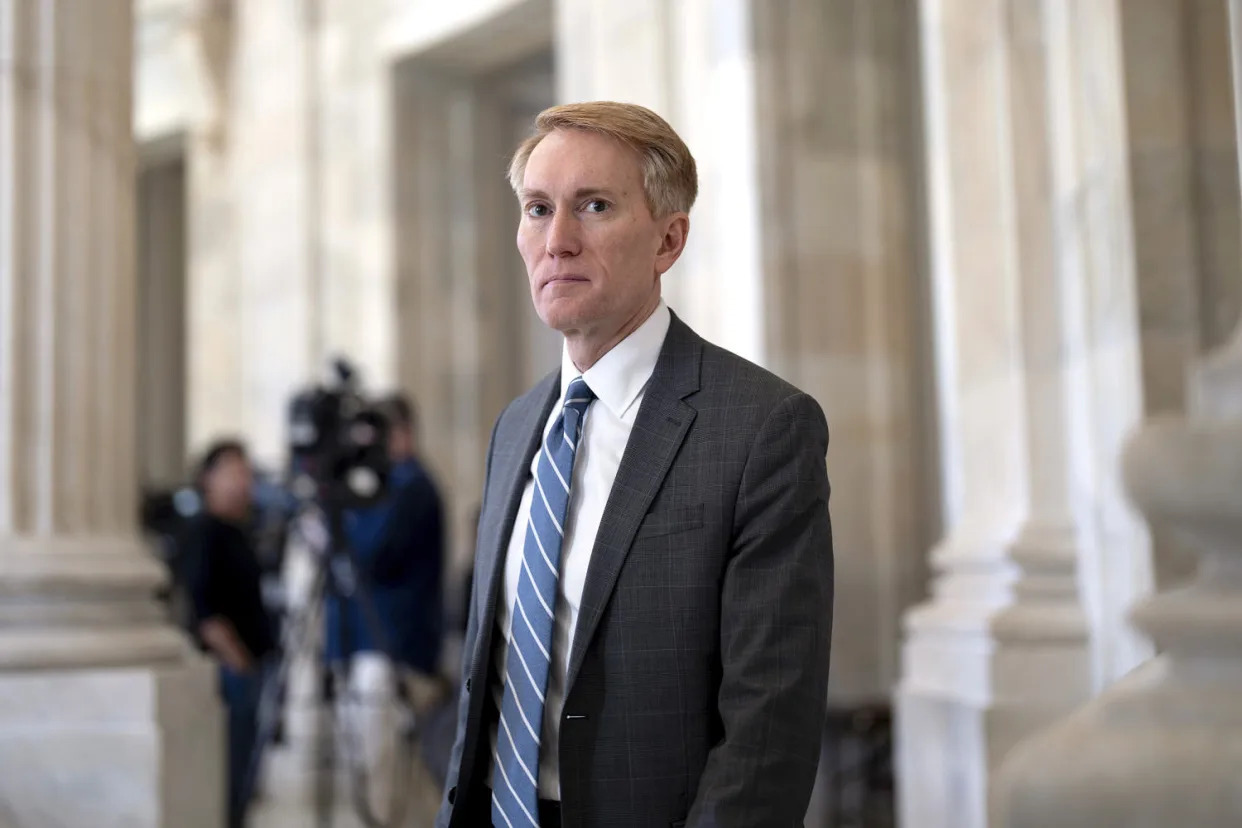
Sen. James Lankford (Okla.), the lead GOP architect of the bipartisan Senate border security deal, pushed back on Republican critics, including Speaker Mike Johnson (R-La.), for rushing to condemn the legislation.

Lankford during an appearance on “Fox & Friends” also responded to the scathing criticism of the legislation by Sen. Mike Lee (R-Utah), who panned the proposal Sunday as the “Border Capitulation Bill” and more bluntly as a “crap-sandwich of a border bill.”

Lankford noted that Lee had previously insisted on giving senators at least three weeks to review the 370-page bill but is expressing opposition after having less than a day to study it.

“He needs three weeks to be able to read it, but he’s already opposed to it. So again, people have to be able to read it and go through it themselves. Don’t just go off of Facebook post somewhere on what the bill says,” Lankford said.

Lankford, who spent four months negotiating the legislation and said it “blew up” his Thanksgiving, Christmas and New Year’s holidays, said it’s “unfortunate” that the Speaker has declared the Senate bill is “even worse than expected” and “dead on arrival” in the House.

The Oklahoma senator lamented Johnson’s condemnation of the bill without taking more time to digest reforms such as raising the standard of migrants seeking asylum, eliminating the backlog at immigration courts and granting the president new power to expel migrants and shut down the border.

“Unfortunate that he would step out and be able to see that right away, before, obviously, he has had a chance to be able to read it as well, and to be able to go through it,” he said of Johnson’s declaration that the bill has no chance of passing the House.

Lankford said Republicans need to make a decision about whether they want to enact some meaningful border security reforms into law or to let the border crisis continue unabated and allow an average of 10,000 people to steam into the country each day, many of them unvetted.

“The key aspect of this, again, is are we, as Republicans, going to have press conferences and complain the border’s bad and then intentionally leave it open after the worst month in American history in December?” Lankford argued.

“Now we’ve got to actually determine, are we going to just complain about things? Are we going to actually … change as many things as we can if we have the shot?” he said.

Lankford has told reporters that under the bill, once the daily average of migrants encountered at the border reaches 5,000, President Biden will be forced to shut down the border until the Department of Homeland Security regains operational control.

And he has dismissed talk among some GOP lawmakers that passing a bipartisan border deal will protect Biden from attacks over his immigration record.

“I’ve had some Republicans say, ‘Well, this will make Joe Biden whole [on immigration].’ I don’t think anyone is going to see Joe Biden as the border security president. I just don’t think there’s any chance of that. Because what we’ve seen the last three years is an open border like our country’s never experienced. So I don’t think when we pass this bill everybody’s going to suddenly think he’s the savior of the closed border,” Lankford told reporters last week.

Trump says border bill ‘very bad’ for Lankford’s career

The Hill

Trump says border bill ‘very bad’ for Lankford’s career

Sarah Fortinsky – February 5, 2024

Former President Trump on Monday railed against the bipartisan border agreement and took aim at Sen. James Lankford (R-Okla.), a key negotiator, for his role in brokering the deal.

In an interview on “The Dan Bongino Show,” Trump denied endorsing Lankford’s candidacy in 2022 — despite doing so publicly — and did not rule out endorsing a primary opponent when Lankford is up for reelection in 2028.

“I think this is a very bad bill for his career, especially in Oklahoma,” Trump said about Lankford when asked whether he would back a primary challenge to the senator.

“I won in Oklahoma,” Trump said. “I know those people. They’re great people. They’re not going to be happy about this. Nobody’s going to be happy about this, but the people in Oklahoma are, these are serious MAGA, these are serious people. They are not going to be happy about this, Dan, when they see this. This is crazy. This is lunacy, this bill.”

Senate negotiators unveiled the 370-page national security legislation Sunday evening after months of negotiations. The bill includes funding for Ukraine, Israel and other foreign policy priorities, as well as significant changes aimed at tightening enforcement at the U.S.-Mexico border.

The border component includes provisions to raise standards for asylum screening and to process claims faster, ends the practice known as “catch and release” and provides the administration with new emergency authority to close the border to most migrants when crossings reach a set threshold. It also seeks to make it easier for migrants to get work authorization and eliminate the immigration court backlog.

The bill has faced significant pushback from progressives and Trump allies in Congress, and House Republican leaders have said it would be dead on arrival in the lower chamber. Still, the Senate plans to take the first procedural vote on the legislation this week.

Ahead of the bill text’s release, Trump had attacked the prospect of the legislation, branding it as a political victory for Democrats ahead of the 2024 election — a message he repeated in Monday’s interview.

“This is a gift to Democrats, and this, sort of, is a shifting of the worst border in history onto the shoulders of Republicans. That’s really what they want. They want this for the presidential election, so they can now blame the Republicans for the worst border in history,” Trump said.

Lankford has fiercely defended the bill and said that if Trump returned to the White House, it would give him the tools to manage the border. He also lamented Speaker Mike Johnson’s (R-La.) rush to disavow the legislation before even having a chance to read it.

“The key aspect of this, again, is, are we, as Republicans, going to have press conferences and complain the border’s bad and then intentionally leave it open after the worst month in American history in December?” Lankford said in a Monday interview on “Fox & Friends.”

“Now we’ve got to actually determine, are we going to just complain about things? Are we going to actually … change as many things as we can if we have the shot?” he added.

“I’ve had some Republicans say, ‘Well, this will make Joe Biden whole [on immigration].’ I don’t think anyone is going to see Joe Biden as the border security president. I just don’t think there’s any chance of that. Because what we’ve seen the last three years is an open border like our country’s never experienced. So I don’t think when we pass this bill everybody’s going to suddenly think he’s the savior of the closed border,” Lankford told reporters last week.

Trump falsely claims he didn’t endorse border bill co-author James Lankford

NBC News

Trump falsely claims he didn’t endorse border bill co-author James Lankford

Kyla Guilfoil – February 6, 2024

Former President Donald Trump falsely claimed in an interview Monday that he did not endorse Sen. James Lankford, R-Okla., for re-election in 2022.

“Just to correct the record, I did not endorse Sen. Lankford. I didn’t do it. He ran, and I did not endorse him,” Trump told right-wing radio host Dan Bongino in an interview after the host noted the former president previously endorsed the Oklahoma Republican.

But in a Sept. 27, 2022, statement, Trump gave Lankford his “Complete and Total Endorsement!”

“Sometimes we didn’t exactly agree on everything, but we do now,” Trump said in a statement ahead of the midterm elections. “He is a very good man with a fabulous wife and family, loves the great State of Oklahoma, and is working very hard on trying to Save our Country from the disaster that it is in.”

Trump also praised Lankford’s commitment to improving border security.

“James Lankford is Strong on the Border, Tough on Crime, and Very Smart on the Economy,” Trump’s statement said.

Trump’s false claim on Monday about not previously endorsing Lankford came after the Oklahoma senator helped negotiate a bipartisan border security bill in Congress that the former president is trying to quash.

The bill aims to address record-high border crossings with a series of provisions that would include language to tighten an asylum system that has been overwhelmed with migrants. The bill also includes aid for Israel, Ukraine and Taiwan.

Trump has demanded Republicans reject the legislation, claiming it would be a “gift” to Democrats and Biden.

In his interview Monday, Trump bashed Lankford’s support of the new border bill, adding that it would hurt the senator’s support in his home state.

“This is a very bad bill for his career and especially in Oklahoma,” Trump said. “I know those people. They’re great people. They’re not going to be happy about this.”

Lankford is not up for re-election until 2028. He has served in the Senate since 2015 and previously served in the House from 2011 to 2015.

How two sentences in the Constitution rose from obscurity to ensnare Donald Trump

Asociated Press

How two sentences in the Constitution rose from obscurity to ensnare Donald Trump

Nicholas Riccardi – February 4, 2024

FILE - Trump supporters participate in a rally in Washington, Jan. 6, 2021, that some blame for fueling the attack on the U.S. Capitol. On Thursday, Feb. 8, the nation's highest court is scheduled to hear arguments in a case involving Section 3 of the 14th Amendment, which prohibits those who “engaged in insurrection or rebellion” from holding office. The case arises from a decision in Colorado, where that state's Supreme Court ruled that Trump violated Section 3 of the 14th Amendment and should be banned from ballot. (AP Photo/John Minchillo, File)
Trump supporters participate in a rally in Washington, Jan. 6, 2021, that some blame for fueling the attack on the U.S. Capitol. On Thursday, Feb. 8, the nation’s highest court is scheduled to hear arguments in a case involving Section 3 of the 14th Amendment, which prohibits those who “engaged in insurrection or rebellion” from holding office. The case arises from a decision in Colorado, where that state’s Supreme Court ruled that Trump violated Section 3 of the 14th Amendment and should be banned from ballot. (AP Photo/John Minchillo, File)
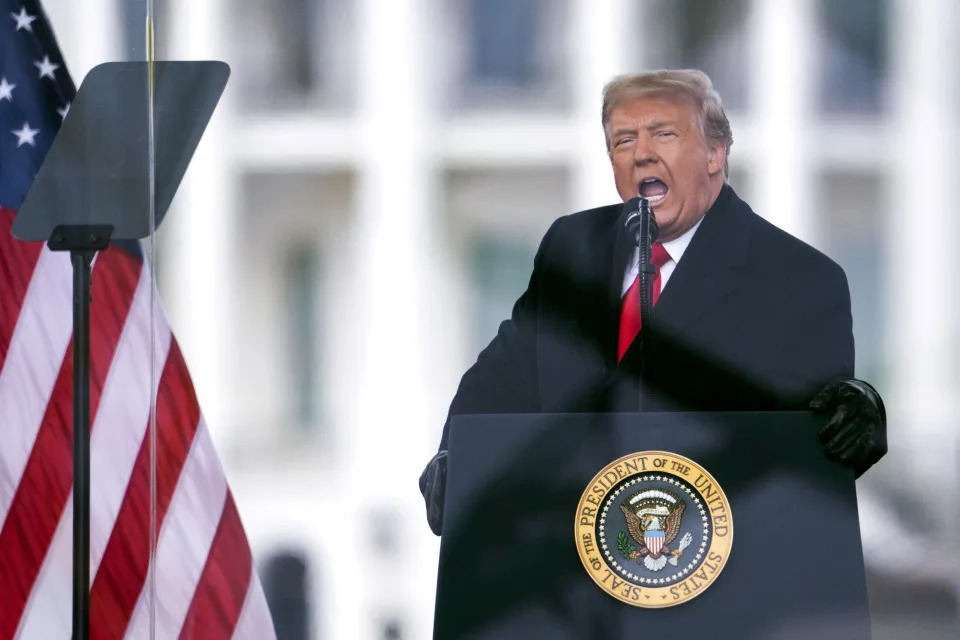
FILE - Then-President Donald Trump speaks during a rally protesting the Elector College certification of Joe Biden's win in the 2020 presidential race, in Washington on Jan. 6, 2021. On Thursday, Feb. 8, 2024, the nation's highest court is scheduled to hear arguments for a case involving Section 3 of the 14th Amendment, prohibiting those who “engaged in insurrection or rebellion” from holding office. The case arises from a decision in Colorado, where that state's Supreme Court ruled that Trump violated Section 3 and should be banned from ballot. (AP Photo/Evan Vucci, File)
Then-President Donald Trump speaks during a rally protesting the Elector College certification of Joe Biden’s win in the 2020 presidential race, in Washington on Jan. 6, 2021. On Thursday, Feb. 8, 2024, the nation’s highest court is scheduled to hear arguments for a case involving Section 3 of the 14th Amendment, prohibiting those who “engaged in insurrection or rebellion” from holding office. The case arises from a decision in Colorado, where that state’s Supreme Court ruled that Trump violated Section 3 and should be banned from ballot. (AP Photo/Evan Vucci, File)
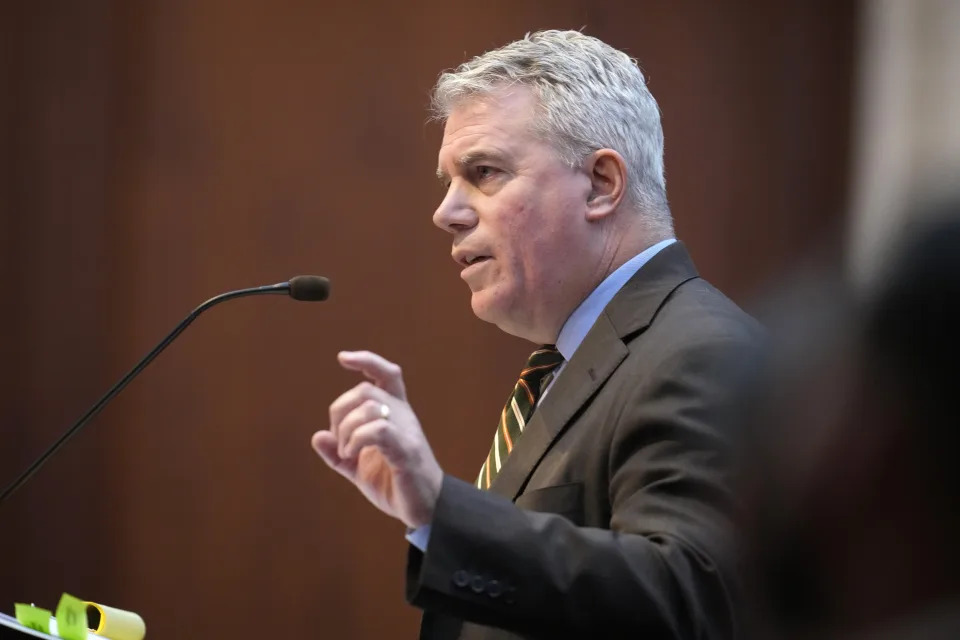
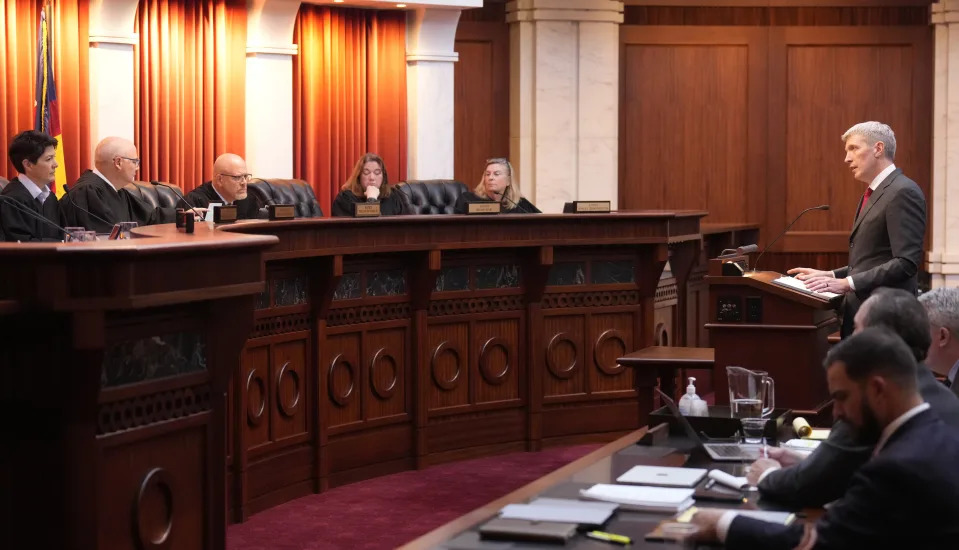
FILE - Attorney Scott Gessler speaks during a hearing before the Colorado Supreme Court for a lawsuit to keep former President Donald Trump off the state ballot, on Dec. 6, 2023, in Denver. On Thursday, Feb. 8, 2024, the nation's highest court is scheduled to hear arguments in a case that arises from the state Supreme Court's decision that Trump violated Section 3 of the 14th Amendment and should be banned from ballot.(AP Photo/David Zalubowski, Pool, File)
 Attorney Scott Gessler speaks during a hearing before the Colorado Supreme Court for a lawsuit to keep former President Donald Trump off the state ballot, on Dec. 6, 2023, in Denver. On Thursday, Feb. 8, 2024, the nation’s highest court is scheduled to hear arguments in a case that arises from the state Supreme Court’s decision that Trump violated Section 3 of the 14th Amendment and should be banned from ballot.(AP Photo/David Zalubowski, Pool, File)
FILE - Trump supporters participate in a rally in Washington, Jan. 6, 2021, that some blame for fueling the attack on the U.S. Capitol. On Thursday, Feb. 8, the nation's highest court is scheduled to hear arguments in a case involving Section 3 of the 14th Amendment, which prohibits those who “engaged in insurrection or rebellion” from holding office. The case arises from a decision in Colorado, where that state's Supreme Court ruled that Trump violated Section 3 of the 14th Amendment and should be banned from ballot. (AP Photo/John Minchillo, File)
Trump supporters participate in a rally in Washington, Jan. 6, 2021, that some blame for fueling the attack on the U.S. Capitol. On Thursday, Feb. 8, the nation’s highest court is scheduled to hear arguments in a case involving Section 3 of the 14th Amendment, which prohibits those who “engaged in insurrection or rebellion” from holding office. The case arises from a decision in Colorado, where that state’s Supreme Court ruled that Trump violated Section 3 of the 14th Amendment and should be banned from ballot. (AP Photo/John Minchillo, File)
FILE - Attorney Eric Olson, far right, argues before the Colorado Supreme Court for a lawsuit to keep former President Donald Trump off the state ballot on Dec. 6, 2023, in Denver. On Thursday, Feb. 8, 2024, the nation's highest court is scheduled to hear arguments in a case that arises from the state Supreme Court's decision that Trump violated Section 3 of the 14th Amendment and should be banned from ballot. (AP Photo/David Zalubowski, Pool, File)
Attorney Eric Olson, far right, argues before the Colorado Supreme Court for a lawsuit to keep former President Donald Trump off the state ballot on Dec. 6, 2023, in Denver. On Thursday, Feb. 8, 2024, the nation’s highest court is scheduled to hear arguments in a case that arises from the state Supreme Court’s decision that Trump violated Section 3 of the 14th Amendment and should be banned from ballot. (AP Photo/David Zalubowski, Pool, File)
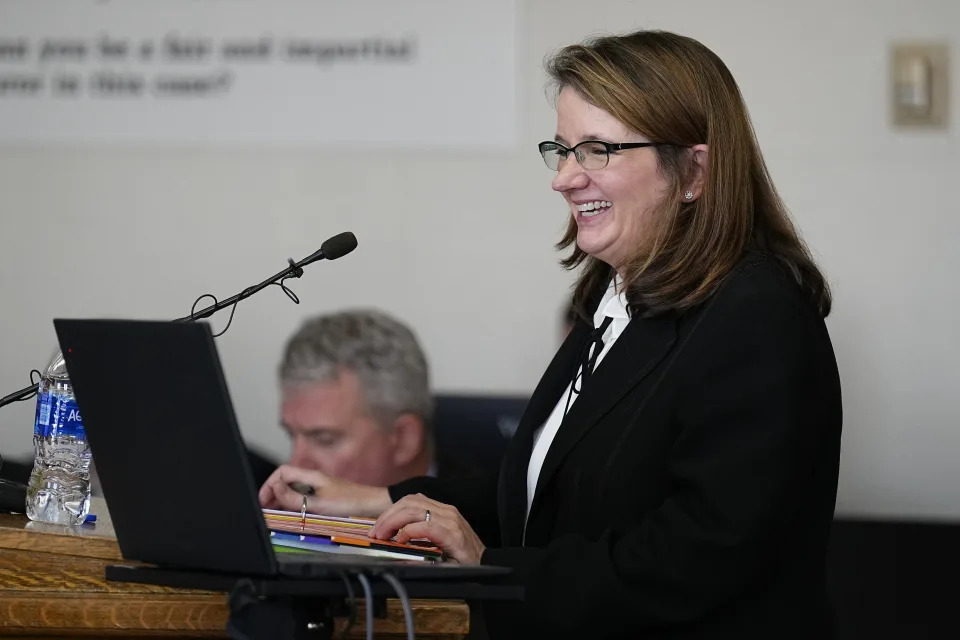
FILE - Attorney Martha Tierney smiles during a hearing for a lawsuit to keep former President Donald Trump off the Colorado ballot in court Oct. 30, 2023, in Denver. On Thursday, Feb. 8, 2024, the nation's highest court is scheduled to hear arguments in a case that arises from the state Supreme Court's decision that Trump violated Section 3 and should be banned from ballot. (AP Photo/Jack Dempsey, Pool, File)
Attorney Martha Tierney smiles during a hearing for a lawsuit to keep former President Donald Trump off the Colorado ballot in court Oct. 30, 2023, in Denver. On Thursday, Feb. 8, 2024, the nation’s highest court is scheduled to hear arguments in a case that arises from the state Supreme Court’s decision that Trump violated Section 3 and should be banned from ballot. (AP Photo/Jack Dempsey, Pool, File)
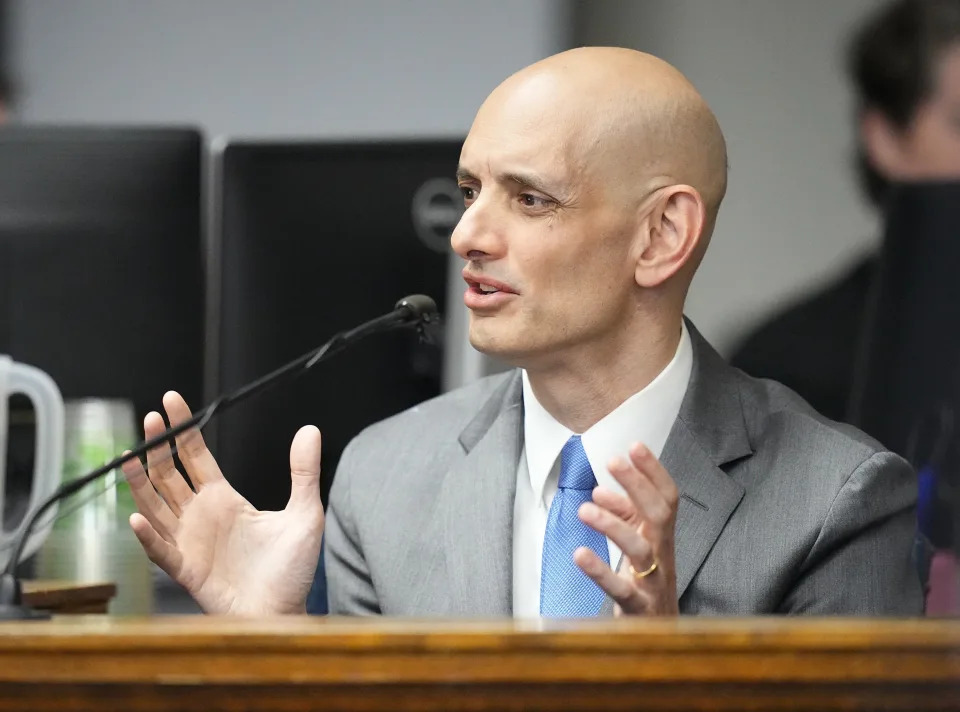
FILE - Gerard Magliocca, a professor at Indiana University's Robert H. McKinney School of Law, testifies during a hearing for a lawsuit to keep former President Donald Trump off the Colorado ballot, Nov. 1, 2023, in Denver. During the coronavirus pandemic, Magliocca began to research the history of two rarely noticed sentences tucked in the middle of the 14th Amendment. (AP Photo/Jack Dempsey, Pool, File)
 Gerard Magliocca, a professor at Indiana University’s Robert H. McKinney School of Law, testifies during a hearing for a lawsuit to keep former President Donald Trump off the Colorado ballot, Nov. 1, 2023, in Denver. During the coronavirus pandemic, Magliocca began to research the history of two rarely noticed sentences tucked in the middle of the 14th Amendment. (AP Photo/Jack Dempsey, Pool, File)
FILE - Trump supporters participate in a rally in Washington, Jan. 6, 2021, that some blame for fueling the attack on the U.S. Capitol. On Thursday, Feb. 8, the nation's highest court is scheduled to hear arguments in a case involving Section 3 of the 14th Amendment, which prohibits those who “engaged in insurrection or rebellion” from holding office. The case arises from a decision in Colorado, where that state's Supreme Court ruled that Trump violated Section 3 of the 14th Amendment and should be banned from ballot. (AP Photo/John Minchillo, File)
Trump supporters participate in a rally in Washington, Jan. 6, 2021, that some blame for fueling the attack on the U.S. Capitol. On Thursday, Feb. 8, the nation’s highest court is scheduled to hear arguments in a case involving Section 3 of the 14th Amendment, which prohibits those who “engaged in insurrection or rebellion” from holding office. The case arises from a decision in Colorado, where that state’s Supreme Court ruled that Trump violated Section 3 of the 14th Amendment and should be banned from ballot. (AP Photo/John Minchillo, File)
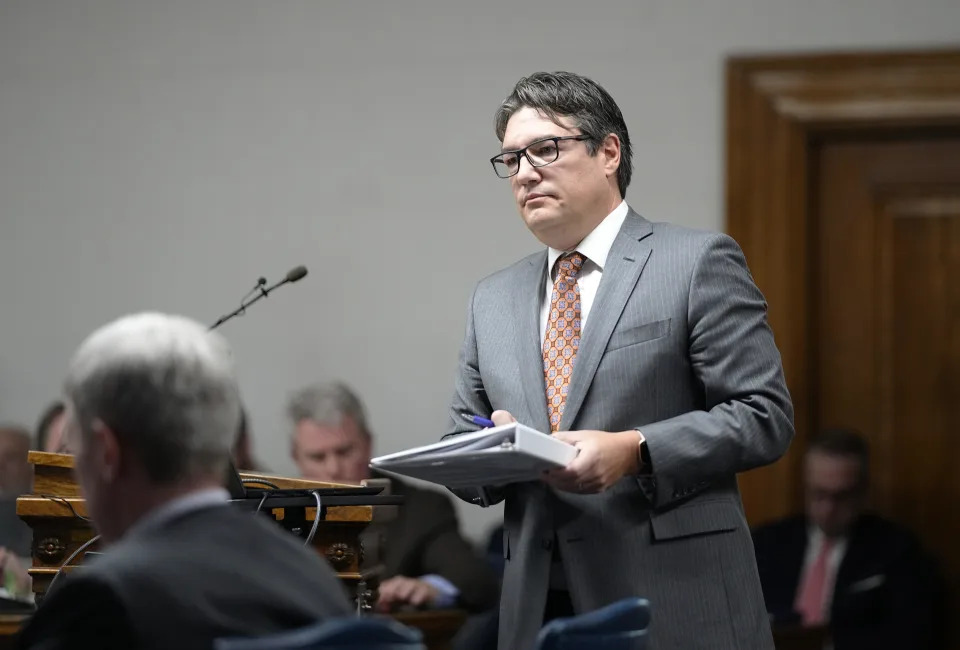
FILE - Sean Grimsley, attorney for the petitioners, delivers closing arguments during a hearing for a lawsuit to keep former President Donald Trump off the Colorado ballot in district court, Nov. 15, 2023, in Denver. On Thursday, Feb. 8, 2024, the nation's highest court is scheduled to hear arguments in a case that arises from the state Supreme Court's decision that Trump violated Section 3 of the 14th Amendment and should be banned from ballot. (AP Photo/Jack Dempsey, Pool, File)
Sean Grimsley, attorney for the petitioners, delivers closing arguments during a hearing for a lawsuit to keep former President Donald Trump off the Colorado ballot in district court, Nov. 15, 2023, in Denver. On Thursday, Feb. 8, 2024, the nation’s highest court is scheduled to hear arguments in a case that arises from the state Supreme Court’s decision that Trump violated Section 3 of the 14th Amendment and should be banned from ballot. (AP Photo/Jack Dempsey, Pool, File)
FILE - Gerard Magliocca, a professor at Indiana University's Robert H. McKinney School of Law, testifies during a hearing for a lawsuit to keep former President Donald Trump off the Colorado ballot, Nov. 1, 2023, in Denver. During the coronavirus pandemic, Magliocca began to research the history of two rarely noticed sentences tucked in the middle of the 14th Amendment. (AP Photo/Jack Dempsey, Pool, File)
Gerard Magliocca, a professor at Indiana University’s Robert H. McKinney School of Law, testifies during a hearing for a lawsuit to keep former President Donald Trump off the Colorado ballot, Nov. 1, 2023, in Denver. During the coronavirus pandemic, Magliocca began to research the history of two rarely noticed sentences tucked in the middle of the 14th Amendment. (AP Photo/Jack Dempsey, Pool, File)

DENVER (AP) — In the summer of 2020, Gerard Magliocca, like many during the coronavirus pandemic, found himself stuck inside with time on his hands.

A law professor at Indiana University, Magliocca figured he would research the history of two long-neglected sentences in the Constitution’s 14th Amendment. Dating to the period just after the Civil War, they prohibit those who “engaged in insurrection or rebellion” from holding office.

On Jan. 6, 2021, after then-President Donald Trump‘s supporters stormed the U.S. Capitol to try to block certification of his loss to Joe Biden, Magliocca watched as Republicans such as Sens. Mitch McConnell and Mitt Romney described the attack as an “insurrection.”

That night, Magliocca composed a quick post on a legal blog: “Section Three of the Fourteenth Amendment,” he wrote, “might apply to President Trump.”

Just over four years later, the U.S. Supreme Court will have to determine whether it does. On Thursday, the nation’s highest court is scheduled to hear arguments over whether Trump can remain on the ballot in Colorado, where the state’s Supreme Court ruled that he violated Section 3.

It’s the first time the Supreme Court has heard a case on Section 3, which was used to keep former Confederates from holding government offices after the amendment’s 1868 adoption. It fell into disuse after Congress granted an amnesty to most ex-rebels in 1872.

Before the attack on the Capitol, even many constitutional lawyers rarely thought about Section 3. It hadn’t been used in court for more than 100 years. Its revival is due to an unlikely combination of Democrats and Republicans, liberals and conservatives, all rediscovering 111 words in the nation’s foundational legal document that have now become a threat to the former president’s attempt to return to office.

In the days after Jan. 6, thanks to scholars such as Magliocca, Section 3 started its slow emergence from obscurity.

Free Speech For People, a Massachusetts-based liberal nonprofit, sent letters to top election officials in all 50 states in June 2021, warning them not to place Trump on the ballot should he run again in 2024.

The group didn’t hear back from any of them.

“People were just treating it as something that was not serious,” recalled John Bonifaz, the group’s co-founder.

In January 2022, Free Speech For People filed a complaint in North Carolina to disqualify Republican Rep. Madison Cawthorn under Section 3. Cawthorn lost his primary, mooting the case.

That same month, the group Citizens for Responsibility and Ethics, also known as CREW, decided to test Section 3 in court.

“It wasn’t just Trump we were focused on,” chief counsel Donald Sherman said in an interview. “One thing we’ve been very careful about is we don’t think it’s appropriate to pursue outside or longshot cases.”

On Sept. 6, 2022, a New Mexico judge ordered Couy Griffin, a rural New Mexico county commissioner convicted of illegally entering the Capitol on Jan. 6, removed from his position after CREW filed against him. It was the first time in more than 100 years an official had been removed under Section 3. Griffin has appealed to the Supreme Court.

Trump announced his campaign for president two months later.

Both Free Speech For People and CREW began scouring state ballot laws, looking for places that allowed the rapid contesting of a candidacy. CREW settled on Colorado.

Sherman and another CREW attorney, Nikhel Sus, contacted Martha Tierney, a veteran election lawyer who also served as general counsel of the state Democratic Party.

Tierney wasn’t acting as the Democratic Party’s lawyer, but CREW wanted to balance its team. Sherman contacted Mario Nicolais, a former Republican election lawyer who had left the party over Trump.

Nicolais’ first interaction with Sherman was a direct message about the case on X, the social media platform previously known as Twitter. Nicolais thought it could be from a crank.

“Is this for real or is this from somebody just angry at the president?” Nicolais recalled wondering.

On Sept. 6, 2023 — one year from the disqualification of Griffin — their 105-page complaint was filed in district court in Denver.

Trump hired former Colorado Secretary of State Scott Gessler to represent him. The Denver judge who got CREW’s complaint, Sarah Block Wallace, said she was obligated to hold a hearing under state election law.

During the five-day hearing, two officers who defended the Capitol testified, along with a University of California professor who was an expert in right-wing extremism, two Trump aides and several other witnesses. One was Magliocca, who laid out the history of Section 3.

Trump’s attorneys were pessimistic, expecting Wallace, who had a history of donating to Democrats, to rule against them. Trump spokesman Jason Miller addressed reporters outside court, complaining that the plaintiffs had intentionally filed in a liberal jurisdiction in a blue state.

Wallace issued her decision on Nov. 17. She found that Trump had “engaged in insurrection” but ruled that — contrary to Magliocca’s testimony — it wasn’t certain that the authors of the 14th Amendment meant it to apply to the president. Section 3 refers to “elector of President and Vice President,” but not the office itself.

Wallace was hesitant to become the first judge in history to bar a top presidential contender unless the law was crystal clear.

“It was a loss that only a lawyer could love,” Sus recalled.

CREW was just a legal sliver away from victory. It just needed the Colorado Supreme Court to uphold all of Wallace’s ruling besides the technicality of whether the president was covered.

The seven justices of the state’s high court — all appointed by Democrats from a pool chosen by a nonpartisan panel — peppered both sides with pointed questions at oral argument three weeks later.

Neither side left feeling certain of victory.

On Dec. 19, the court announced it would issue its decision that afternoon — ruling 4-3 that Trump was disqualified. The decision was put on hold, pending the outcome of the case that will be argued Thursday.

Veterans group spending $45M on Biden, Democrats

The Hill

Veterans group spending $45M on Biden, Democrats

Elizabeth Crisp – February 5, 2024

A progressive political action committee that typically supports veterans’ issues and Democratic-leaning veterans running for office plans to pump $45 million into the effort to reelect President Biden this fall and bolster other Democrats on the ballot.

A spokesperson for VoteVets confirmed the plans to The Hill after The New York Times first reported the effort.

A $15 million push aimed at courting veterans and active-duty military families in the presidential battleground states will be the centerpiece, according to the group.

VoteVets also identified these races among the group’s priorities: Incumbent Democratic senators in Montana, Nevada, Pennsylvania and Ohio; Democratic Reps. Ruben Gallego (Ariz.) and Elissa Slotkin (Mich.), who are running for Senate; and Rep. Andy Kim (N.J.), who is challenging embattled Sen. Bob Menendez (D-N.J.).

Former President Trump, seen as the front-runner for the GOP presidential nomination, has enjoyed robust support among military members in the past, but his edge slipped from the 2016 election to the 2020 cycle.

VoteVets co-founder and chairman Jon Soltz told The Times in an interview that Trump’s vocal support for people who carried out the Jan. 6, 2021 attack on the Capitol and past remarks against military officials and soldiers will be highlighted in the ads.

“There’s political ramifications to all this,” he said. “There’s no other way to explain the disrespect to Gold Star families and the erratic behavior and the attacks on our law enforcement at the Capitol — these are values things.”

The group unveiled part of its plan with a 60-second spot in Pennsylvania last month that highlights remarks attributed to Trump referring to veterans as “losers” and “suckers” and features Gold Star families responding.

VoteVets has in the past shown that it’s messaging beyond military families with its efforts.

In Georgia’s 2022 Senate race, the group released an ad accusing Republican candidate and former football star Herschel Walker of defrauding the government at the expense of veterans. Walker ultimately lost to Democratic Sen. Raphael Warnock.

‘The threat isn’t over’: the expert arguing to the supreme court Trump is an insurrectionist

The Guardian

‘The threat isn’t over’: the expert arguing to the supreme court Trump is an insurrectionist

David Smith in Washington – February 5, 2024

<span>MoveOn members rally outside the supreme court in Washington DC on 1 February.</span><span>Photograph: Paul Morigi/Getty Images for MoveOn</span>
MoveOn members rally outside the supreme court in Washington DC on 1 February.Photograph: Paul Morigi/Getty Images for MoveOn

When Jill Habig had an office down the hall from Kamala Harris in California, Barack Obama was US president, abortion was a constitutional right and January 6 was just another date on the calendar. A lot has happened since then.

On Thursday Habig, now president of the non-profit Public Rights Project (PRP), hopes her arguments will persuade the supreme court that Donald Trump is an insurrectionist who should be disqualified from the 2024 presidential election.

Related: Why Trump made rural Americans turn their backs on Democrats

Habig has filed an amicus brief on behalf of historians contending that section 3 of the 14th amendment to the constitution, which bars people who “engaged in insurrection” from holding public office, applies to Trump’s role in the 6 January 2021 attack on the US Capitol.

The brief gives the supreme court’s originalists, who believe the constitution should be interpreted as it would have been in the era it was written, a taste of their own medicine. Conservative justices Clarence Thomas, Neil Gorsuch, Brett Kavanaugh and Amy Coney Barrett are self-declared originalists while Samuel Alito has described himself as a “practical originalist”.

“Our goal was to bring an originalist historical perspective to the supreme court as it considered the meaning of section 3 of the 14th amendment,” Habig, a former special counsel to then California attorney general Harris, says by phone from Oakland. “The point we make with our historian colleagues is that the history of section 3 is actually very clear. It demonstrates that section 3 was intended to automatically disqualify insurrectionists.”

The amicus brief, led by historians Jill Lepore of Harvard and David Blight of Yale, cites debates from the time in which senators made clear that their view that the provision that would not only apply for former Confederates but to the leaders of rebellions yet to come.

Habig adds: “It was intended to apply not only to the civil war but also to future insurrections and it bars anyone who has betrayed an oath to uphold the constitution from becoming president of the United States.”

The supreme court will hear arguments on a Colorado case in which Trump was stricken from the ballot; a decision in Maine is on hold. Other states have ruled in favor of keeping Trump on the ballot. The flurry of decisions have prompted debate over whether Trump can be fairly considered to have committed insurrection even though he has not been found guilty in a court of law – at least not yet.

Habig, who founded the PRP in 2017, says yes. “It’s clear historically that there was no requirement of a conviction or even of charges, that the framers intended section 3 to be self-executing. The brief goes through a number of examples of people who had taken part in the secession and been on the Confederate side actually petitioning Congress for exceptions. There’s a lot of evidence that it was self-executing. There was no need for a particular conviction.”

She adds: “The evidence that we have seen and heard and watched with our own eyes over the last few years has made it quite clear that President Trump lost an election in 2020 and has spent the months and years since then trying to overturn the results of that election in a variety of ways, including people marching to the Capitol and invading the Capitol.”

It’s difficult to argue with a straight face that these activities don’t qualify for section 3

Jill Habig

Indeed, Blight has pointed out that the US Capitol was never breached during the civil war but was on January 6. Habig comments: “It’s difficult to argue with a straight face that these activities don’t qualify for section 3.”

Still, there are plenty of Republicans, Democrats and neutrals who warn that the 14th amendment drive is politically counterproductive, fueling a Trumpian narrative that state institutions are out to stop him and that Joe Biden is the true threat to democracy. Let the people decide at the ballot box in November, they say.

Habig counters: “It’s important to note that the American people did decide in 2020. We had a political process and then we had a president of the United States who attempted to overturn that political process. ”

Spectacular as it was, the January 6 riot did not occur in a vacuum. Habig and her work at the PRP place it in a wider context of a growing movement to harass and threaten election officials and to interfere with the administration of elections. She perceives a direct line between Trump’s “big lie” and threats to democracy across the country today.

“Regardless of this particular case, the threat isn’t over. It’s actually intensifying. We’re just seeing an array of efforts to rig the rules of the game against our democracy and it’s part of why we’re investing a lot of resources into protecting election officials this cycle, and to litigating and advancing voting rights and free and fair elections this year.”

How did America get here? A turning point was the supreme court’s 5-4 decision in 2013 to strike down a formula at the heart of the Voting Rights Act, so that voters who are discriminated against now bear the burden of proving they are disenfranchised. Since then states have engaged in a barrage of gerrymandering – manipulating district boundaries so as to favor one party – and voter suppression.

Habig reflects: “The gutting of the Voting Rights Act by the supreme court left states to themselves to rewrite the rules of the game in a variety of ways that disenfranchised voters and continued to rig maps against their systems and fair representation.

“We’ve seen the supreme court take itself out of the game of protecting other fundamental rights like abortion and throw that back into the states. What that’s creating is a lot of volatility at the state and local level as officials try to rewrite the rules or pick up the pieces and protect their constituents’ rights. What we’re trying to do is help state and local officials across the country use the power that they have to fight back and advance civil rights in all the ways that they can.

The PRP is building a rapid response hub to provide legal support for 200 election officials to combat harassment and intimidation and targeting election deniers. It is pursuing litigation against gerrymandering, the disqualification of legitimate ballots and state officials who try to prevent voters weighing in on ballot measures to advance abortion rights.

“This is an all-out effort to make sure that we don’t have death by a thousand cuts for our democracy this year,” Habig says. “We are potentially less likely to see one central threat like we did on January 6 or even in the 2020 election. We’ve seen some of the larger counties like Maricopa county, Arizona, Philadelphia, Detroit et cetera, who have been targets in the past, have more resources to fight back.

“What we’re most concerned about is the soft underbelly of our democracy, which is the smaller, less-resourced jurisdictions that just don’t have all of the capacity they need to push back against this harassment and intimidation. Because of our decentralised system, election deniers who are intent on disrupting our elections and disrupting the outcome of our election don’t have to mount a huge effort in one place.

“They can pick apart jurisdiction by jurisdiction, invalidate 250 ballots here, and a thousand ballots there and 500 there, challenge absentee ballots, disrupt targeted polling places and that in the aggregate can actually change election results, sow disillusionment and distrust in our system and have the same or even worse aggregate outcome in terms of undermining the integrity of our election. That’s what we’re mobilising to prevent.”

There was no greater measure of America’s ailing democracy than the 2022 decision to overturn Roe v Wade, the ruling that in effect made abortion legal nationwide, by supreme court justices appointed by presidents who lost the national popular vote. But since then, in a series of ballot measures in individual states, abortion rights have prevailed.

Habig reflects: “Every single time that has been put to voters, abortion rights have won. As a result, we’re actually starting to see a lot of overlap between the reproductive rights fight and the democracy fight because this battle over abortion is fuelling additional efforts to break the rules and prevent voters from having a meaningful say in their rights. We’re mobilising on both fronts because the future of both is interconnected.”

PRP says it has worked with local elected officials to provide legal guidance and filed dozens of amicus briefs in key reproductive rights cases, secured legal access to abortion for 6.5 million people. Habig explains: “We’re working with state and local officials to overturn criminal abortion bans at the state level.

“We’re working to poke holes in existing criminal bans when there’s not a path to overturn them right away. Then we’re working to hold crisis pregnancy centers accountable for deception of women and patients; these are anti-abortion centers that masquerade as health clinics that provide comprehensive healthcare. We’re looking at this multi-pronged approach state by state and across the country.”

Habig, a political strategist who was deputy campaign manager for Harris’s first Senate election campaign in 2016, has no doubt that democracy and abortion rights will play a big part in the November election.

“I appreciate President Biden’s clarity on democracy and the constitution and his leadership on the issue. I do think it’s important for people to understand what democracy means and for their real lives. It can sound abstract sometimes and like an academic debate but bringing it down to the level of, do you have autonomy over your future and your community, do you have autonomy over your own body, is important for people.”

She adds: “That’s why we’ve seen in cases when we’re talking about the fundamental right to vote, people get that. When we’re talking about their autonomy, they get it. When they’re talking about their dignity in the workplace, people get that and feel that on a visceral level. It’s important that we work to build a democracy that actually delivers so that people can feel the value of it in their daily lives.”

ABC News hosts abruptly shuts down interview with J.D. Vance over right-wing nonsense

Salon

ABC News hosts abruptly shuts down interview with J.D. Vance over right-wing nonsense

Gabriella Ferrigine – February 5, 2024

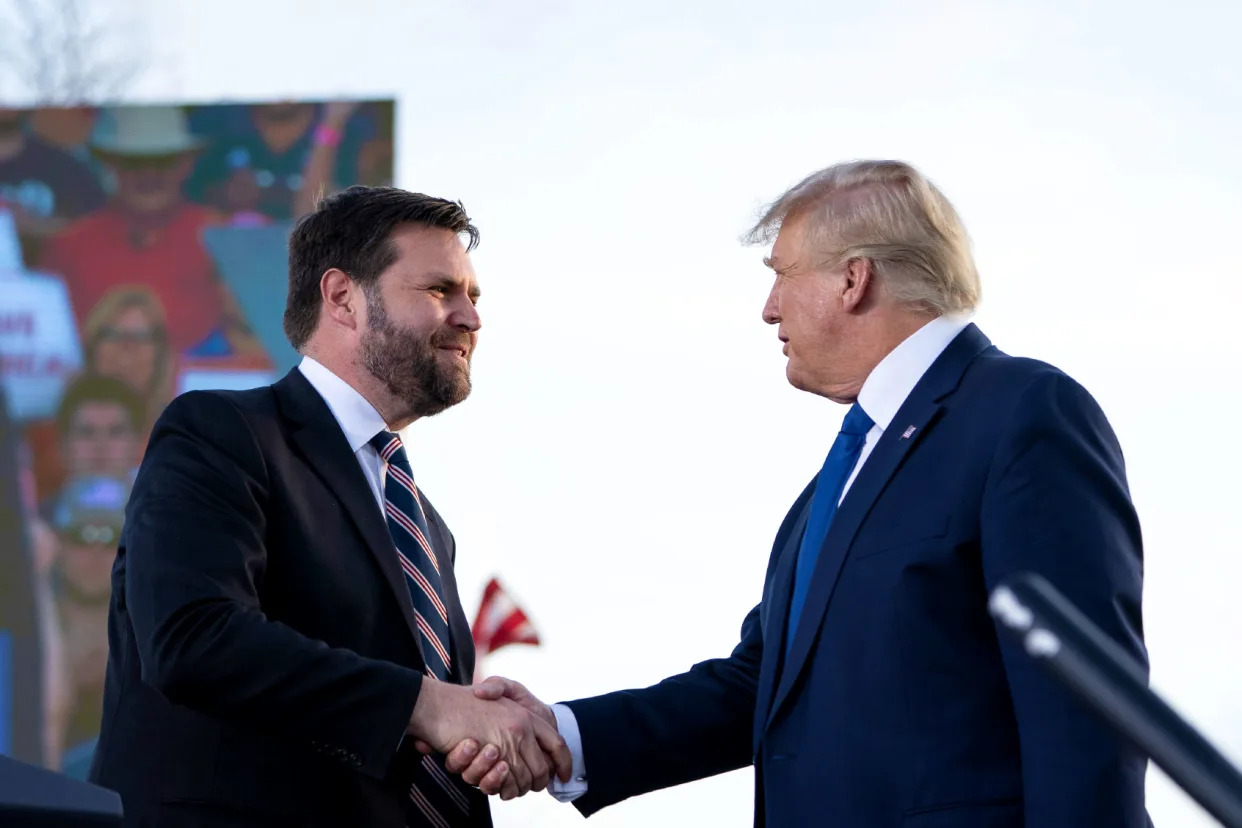
J.D. Vance; Donald Trump Drew Angerer/Getty Images

ABC News host George Stephanopolous abruptly ended a discussion with Sen. J.D. Vance, R-Ohio, on Sunday after the Republican alleged that a president would have the power to ignore the Supreme Court.

“Fire everyone in the government, then defy the Supreme Court? You think it’s OK to defy the Supreme Court?” the anchor asked after Vance said in 2021 that then-president Donald Trump should oust federal civil servants and disregard any Supreme Court ruling that instructed him to do otherwise. Vance at the time claimed Trump should “stand before the country like Andrew Jackson did and say, ‘The Chief Justice has made his ruling, now let him enforce it,’” per The Daily Beast.

“That’s a fundamental component of our government, George, that whoever is in charge, agree or disagree with him, you have to follow the rules,” Vance said.  “If those people aren’t following the rules, then of course, you’ve got to fire them.”

Stephanopolous in response pressed Vance to explicate whether he felt the president had to adhere to SCOTUS rulings.

“The Constitution also says the president must abide by legitimate Supreme Court rulings, doesn’t it?” Stephanopoulos asked, per ABC.

“The Constitution says that the Supreme Court can make rulings … but if the Supreme Court said the president of the United States can’t fire a general, that would be an illegitimate ruling,” Vance said.

“The Constitution says that the Supreme Court can make rulings but if the Supreme Court —and look, I hoped that they would not do this — but if the Supreme Court said the president of the United States can’t fire a general, that would be an illegitimate ruling,” Vance said. “The president has to have Article II prerogative under the Constitution to actually run the military as he sees fit. This is just basic constitutional legitimacy.”

“You’ve made it very clear — you believe the president can defy the Supreme Court,” Stephanopoulos replied. “Senator, thanks for your time this morning.”

Ahead of the conversation’s termination, Vance separately provided his thoughts on the 2020 election after Stephanopolous asked if Vance would have certified the election results if he had been acting as vice president at the time.

The GOP senator at first called the question “ridiculous” and claimed Stephanopolous was “obsessed with talking about this” before clarifying his thoughts.

“Do I think there were problems in 2020? Yes, I do,” Vance said. “If I had been vice president, I would have told the states, like Pennsylvania, Georgia and so many others, that we needed to have multiple slates of electors and I think the U.S. Congress should have fought over it from there. That is the legitimate way to deal with an election that a lot of folks, including me, think had a lot of problems in 2020. I think that’s what we should have done.”

“So, he’s saying he would have engaged in the conspiracy to interfere with the lawful outcome of the election? Out loud?” tweeted former federal prosecutor Joyce Vance.

Former Rep. Joe Walsh, R-Ill., referred to Vance’s remarks as “So dangerous. So unconstitutional. So un-American. So cultish. So MAGA.”

“I’m glad JD Vance stated very explicitly that he believes we should shred American democracy and replace it with a system where the will of the voters is disregarded by partisan legislators,” MSNBC analyst Tim Miller quipped in a tweet. “A lot of Trump defenders talk around this and I appreciate his candor.”

Speaking candidly about Trump’s numerous legal woes — including the $83.3 million he was recently ordered to pay writer E. Jean Carroll in damages — Vance said he felt the former president had been partly wronged. Stephanopolous asked him to offer his thoughts on the argument that supporting Trump is, by extension supporting abusers — last spring Trump was found liable of sexually abusing and defaming Carroll, who has long said he assaulted her in a New York City department store dressing room in the 1990s.

“I think it’s actually very unfair to the victims of sexual assault to say that somehow their lives are being worse by electing Donald Trump for president when what he’s trying to do, I think, is restore prosperity,” Vance said. “If you actually look at so many of the court cases against Donald Trump, George, this is not about prosecuting Trump for something that he did. It’s about throwing him off the ballot because Democrats feel that they can’t beat him at the ballot box. And so, they’re trying to defeat him in court,” he added.

“I think most Americans recognize that this is not what we want to fight the 2024 election on. Let’s fight it over issues,” Vance said.

“So juries in New York City are not legitimate when they find someone liable for … defamation and assault?” Stephanopoulos asked after Vance seemed to wave off findings by “extremely left-wing jurisdictions.”

“Well, when the cases are funded by left-wing donors and when the case has absolute left-wing bias all over it, George, absolutely I think that we should call into question that particular conclusion,” Vance said.