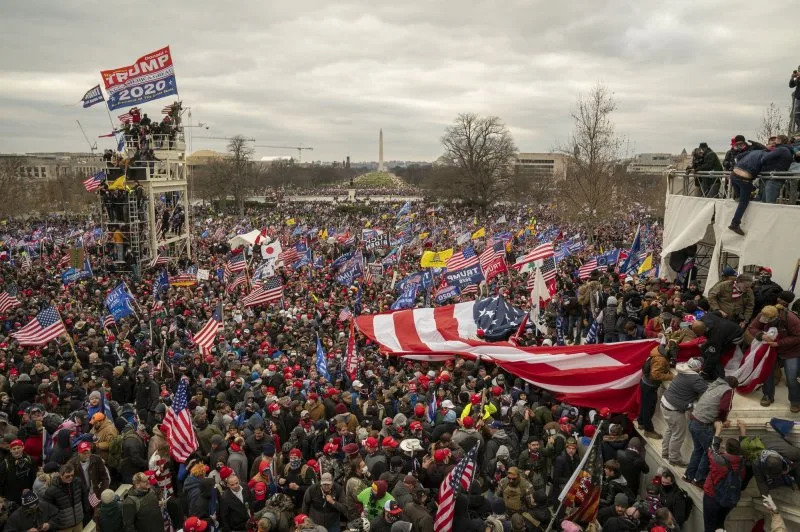
Trump stares down first derailment of his campaign-to-courthouse strategy

CNN

Trump stares down first derailment of his campaign-to-courthouse strategy

Phil Mattingly and Andrew Seger – March 23, 2024

For days, Donald Trump’s fury over the requirement to secure hundreds of millions of dollars in bond money by Monday has been bubbling behind the scenes and through a steady stream of social media posts.

Friday’s public barrage on his Truth Social platform, which included multiple all-caps posts, highlighted his persistent anger with the judge who handed down the $464 million judgment, the New York attorney general who brought the civil fraud case and Trump’s insistence that it’s all designed to derail his presidential campaign.

The posts, including one sent just before 2 a.m. Friday, contained a mix of invective and claims devoid of fact or evidence. (There is no evidence that the White House has played any role in the case brought by New York Attorney General Letitia James, let alone ordered her to pursue her effort. Nor is there any evidence that Trump, as he claimed, has plans to use any of his own money for his presidential campaign.)

But also embedded in the posts was a reality that has pushed Trump’s company and personal finances to the brink with just two days remaining to land a solution.

Trump, as he himself noted, does have a significant amount of cash, according to a review of his most recent candidate financial disclosure and personal financial statements.

It’s a point he made repeatedly in his deposition and testimony during the New York fraud trial though that diverged from his latest social media claim of having “almost five hundred million dollars in cash.” He consistently pegged the number during legal proceedings at $400 million and, barring any recent and unreported cash infusion, a person familiar with his finances confirmed that remains roughly where his cash holdings stand.

Yet even if the higher-end estimate is accurate, as Trump’s lawyers have made clear in sober, detailed filings, it wouldn’t be enough.

The $464 million decision levied in the verdict, and the bond Trump is scrambling to secure to forestall potential seizure of his properties, would require cash or cash equivalent of roughly $557 million based on industry practice.

And at least some of the money Trump does have is tied up in loan agreements that include terms requiring him to have tens of millions of dollars in cash on hand.

In other words, as the clock ticks toward the Monday deadline, securing a bond of the scale required remains – to quote Trump’s own lawyers – a “practical impossibility.”

A deft strategy

Trump’s deft navigation of – and ability to leverage – his unprecedented collision of the campaign and courthouse has defined the path he bulldozed to once again become the Republican Party’s presumptive presidential nominee.

But it was a filing by New York state lawyers at a county clerk’s office 25 miles north of Trump Tower that demonstrated how perilously close the former president is to a dramatic derailment of that strategy.

The move by James’ office to enter judgments in Westchester County marked a first step toward seizing Trump’s assets should he fail to secure a bond.

Westchester County is home to Trump’s golf course and private estate known as Seven Springs.

The initial action, which state lawyers already took in Manhattan, is just the start to what would be a complex and lengthy process.

It also came as Trump’s lawyers have continued to press to reduce or waive the bond requirement, calling it “patently unreasonable, unjust and unconstitutional,” in a Wednesday filing.

But for Trump, a man who has made his brand and his buildings his central animating feature, the filing that put a target on one of his properties crystalized a moment unlike any other he’s faced in his White House comeback bid.

“I think the whole thing is bullsh*t,” one House Republican, who communicates with Trump’s team said of the order to secure the $464 million bond while waiting for a decision on his appeal. “But it had gotten to the point where it seemed like nothing will ever stick to him, so this has been different.”

In other words, there may be actual consequences.

Enduring GOP support

Over nearly a year, as four indictments and 88 charges piled on, Trump’s poll numbers in the GOP primary tracked a steady climb.

Days when Trump faced charges, or showed up at court to face those charges, consistently ranked among his best fundraising days on the campaign.

That money, in part, has covered Trump’s legal bills so he wouldn’t have to on his own.

The lawyers that money financed have been both unequivocal about their pursuit of dilatory strategies – and have repeatedly succeeded in those efforts.

If, as countless former campaign officials say, presidential candidates’ most valuable asset is their time, Trump’s decision to repeatedly attend court hearings when his presence wasn’t required made clear his view of the incentives. So did the voters.

Trump successfully cut down – with relative ease – the best financed and most politically gifted of his primary challengers. He all but locked up the GOP nomination after just two primary contests as the party largely fell in line behind a candidate under whose tenure it lost the House, the Senate and the White House.

Trump was also the same candidate whom some publicly – and many more privately – had hoped would simply disappear after the January 6, 2021, attack on the US Capitol and the steady stream of revelations that he and his advisers had sought to overturn Joe Biden’s 2020 victory.

People around Trump say they’ve seen no sign of any political damage from his latest legal stress test. National polls continue to show a margin-of-error contest with Biden, and more importantly, surveys in the critical swing states haven’t revealed a tangible shift. New CNN polling conducted by SSRS in two battleground states showed Trump tied with Biden in Pennsylvania at 46% each, and ahead in Michigan, 50% to 42%.

Biden flipped both states from Trump’s column in 2020.

Trump’s campaign apparatus trails Biden’s team significantly in fundraising, but those around Trump are confident that the gap will be closed. The former president, these people say, has been privately working the party’s biggest donors in a way they haven’t seen before.

“The money will be there,” one person told CNN. “He’s never been more focused or effective on that front than he is right now.”

One adviser mused that any pursuit of Trump’s properties would only serve to help the campaign politically, pointing to email and text donation appeals with lines like “Keep your filthy hands off Trump Tower!” as evidence to that effect.

A cash dilemma

Still, the threat Trump currently faces cuts equally to his political and personal core. It’s also one that carries a level of irony.

In a career, and now verdict, beset by a steady stream of questions about his net worth and the value of his substantial real estate assets, Trump does have a significant amount of cash – and a valuable portfolio of properties, which could more than cover the bond amount.

But insurers rarely take real estate as collateral, fearing a complex process and skewed market where any bids on that property would come from entities well aware of the need to sell, Trump’s lawyers said.

One insurer, Chubb, underwrote a $91.63 million bond just two weeks ago in another Trump legal loss – E. Jean Carroll’s defamation case.

Trump’s team had been in discussions with Chubb over a second bond for the fraud case that included a mix of liquid assets and property. In the past week, the insurer informed Trump’s team it could not accept property as collateral.

In total, 30 insurers contacted by Trump’s team declined to pursue the effort to secure a bond. Trump, in a Truth Social posting, alluded to that fact when he noted that it “is not possible for bonding companies to do in such a high amount, before I can even Appeal. That is CRAZY! If I sold assets, and then won the Appeal, the assets would be forever gone.”

There has been a steady stream of rumors about some of Trump’s richest backers stepping in to put up the cash.

But so far there has been no confirmation of concrete requests, let alone movement toward any agreement.

Another potential pathway that Trump allies have discussed opened up Friday when investors approved a merger that made the former president’s media enterprise, Trump Media and Technology Group, a public company. Trump’s holdings in the new company would, on their face, net him billions in stock.

But the availability of that cash from the parent company of Truth Social would be subject to a six month “lockup” period that would hamstring Trump’s ability to sell any shares or use them as collateral. The billions Trump stands to gain exist only on paper – and would be subject to the price fluctuations of the stock when it starts to trade.

Any effort by Trump to get around that lockup period in order to monetize his shares would likely have a direct, and negative, effect on the stock’s price.

Watching his image

Trump has repeatedly dismissed the idea of pursuing bankruptcy, which would freeze the proceedings for what would likely be an extended period of time.

The reasons, advisers say, cut across personal and political concerns.

Trump has been publicly vocal about the deep scars he carries from bankruptcies decades ago.

“It was an experience that I don’t think I want to go through it again,” Trump said in a 1992 interview with Charlie Rose. “You’re really in a position where I think that if you had to do it again, I’m not sure you could. I went through a period of two years that was truly tough.”

Trump is also cognizant of the potential threat it could pose to his carefully crafted image that sits at the heart of his political salience: that of a billionaire business tycoon.

“No chance,” one adviser said of Trump pursuing bankruptcy. “He’d rather have Letitia James show up and try and seize his properties.”

Whether that version of the campaign and courthouse convergence plays out will be made clear in the days ahead.

For now, however, it has become clear as the deadline to secure the bond looms ever closer, that the playbook that has driven Trump’s political comeback has run into hurdles in the form of hundreds of millions of dollars.

That’s a problem the only political opponent who has ever defeated Trump is happy to highlight.

“I know not everyone is feeling the enthusiasm,” Biden joked at a Dallas fundraising reception this week. “Just the other day a defeated-looking man came up to me and said, ‘Mr. President, I have crushing debt, and I’m completely wiped out.’ And I had to look at him and say, ‘Donald, I’m sorry. I can’t help you.’”

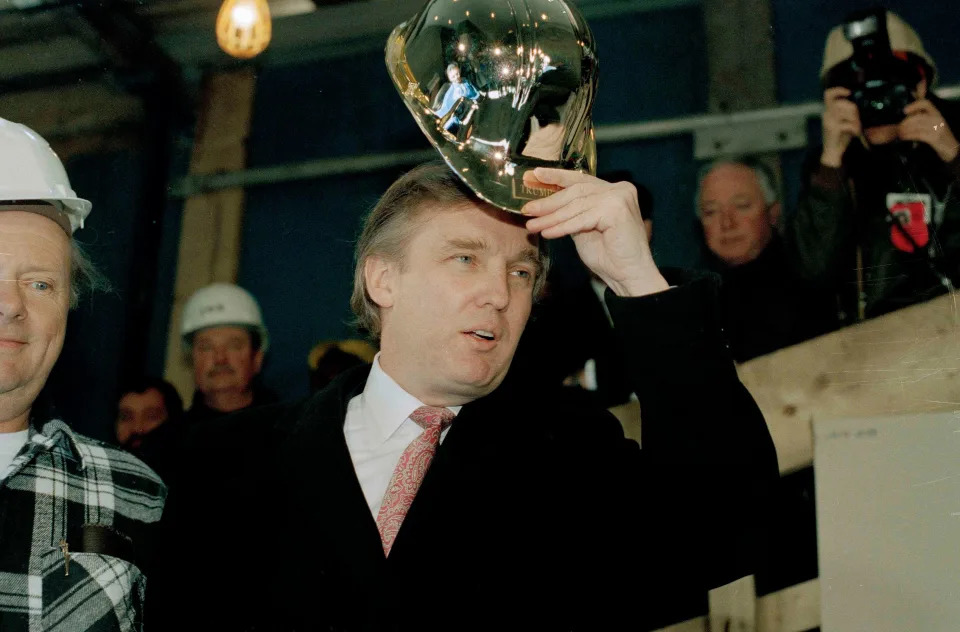
Going once, going twice: How Trump’s cash and properties would be garnished and auctioned to pay his NY fraud debt

Business Insider

Going once, going twice: How Trump’s cash and properties would be garnished and auctioned to pay his NY fraud debt

Laura Italiano – March 23, 2024

  • AG Letitia James plans to go after Trump’s cash and property if he doesn’t pay his civil fraud debt.
  • Trump’s bank accounts could be garnished and his properties sold at sheriff’s auction.
  • One of New York’s top judgment enforcement attorneys explains how that process would play out.

Don’t expect to see a gold-plated toilet dragged to the curb outside Trump Tower. Nor will there be padlocks summarily clapped on the glass revolving doors of 40 Wall Street or Trump Plaza.

Donald Trump’s March 25 deadline for showing Attorney General Letitia James the money — the now $457 million civil fraud judgment he owes New York — will likely come and go without any outward signs of tumult.

But if Trump doesn’t come up with the cash, bond, bankruptcy, or appellate stay that he needs to stop her, James has promised to immediately begin “enforcement,” a process that includes the potential seizing of his bank balances and the sheriff’s sale of some of his New York City and upstate New York properties.

And the estimated $3 billion he’s expected to reap six months from now, from taking Truth Social public, may come too late to ward off the auctioneers.

Bernard D’Orazio is a veteran Manhattan judgment-enforcement attorney who one city Sheriff’s Office insider calls “the best collection lawyer in New York.”

Here is D’Orazio’s myth-dispelling, step-by-step guide to what likely happens next.

Trump doesn’t have to do a thing

Trump is not legally bound to do anything on March 25, said D’Orazio, principal attorney at Bernard D’Orazio and Associates.

“He’s fully within his legal rights to do nothing, and if he fails to pay, he cannot be put in jail,” D’Orazio said.

“We don’t jail debtors anymore. We only jail them, in rare cases, if they don’t comply with court orders and are found in contempt of court,” he said.

“But the burden to do anything falls squarely on the winner, meaning the judgment creditor, which is what we call whoever won the lawsuit,” he added. “It’s their burden to seek enforcement of the judgment.”

So it’s all up to Letitia James?

It’s up to the attorney general to start enfocement, but she will have lots of help from New York’s Civil Practice Law and Rules and the sheriff’s offices of New York City and Westchester County. That’s where Trump has the bulk of his properties and where D’Orazio expects James would focus her efforts.

“The burden is on Letitia James to find Trump’s assets” and decide what she wants garnished or auctioned, he said.

That’ll be the easy part.

After five years of investigating and suing Trump — and regular updates from a court-ordered fraud monitor who’s been watching Trump Organization’s finances these past 16 months — James knows a lot about the worth and location of the GOP frontrunner’s cash and assets, something D’Orazio said will save her a lot of time.

But regardless of whether she decides to target Trump’s cash, his real estate, or a combination of both, it would be the county sheriffs who would actually garnish Trump’s bank balances and auction his real estate, he said.

Trump at Trump Palace
Trump posed outside the 55-story Trump Palace, at 69th Street, between Second and Third Avenue, in 1990.AP Photo/Mark Lennihan

“It is old school,” said D’Orazio. But we’re not talking about old-timey western movie sheriffs with cowboy hats and stars on their chests, he joked.

“Our legal system comes out of the British system, where ultimately, the enforcement of a civil judgment comes down to the sheriff,” he said.

So what happens first?

D’Orazio predicts James would first target the cash that Trump and the Trump Organization keep in New York-registered bank accounts.

“There may be a quick path forward in seeking to freeze his liquid assets,” he said.

“That can be done by the Attorney General sending a letter to the banks where his accounts are located. That doesn’t put the money in your hand yet,” he explained. “It’s just the first step in the process.”

Once the banks confirm to James that the funds are frozen, she’ll then direct the city sheriff’s office to “garnish” — meaning take — that money, he said.

“The sheriff sends a legal document called a ‘levy’ to the banks, demanding that the bank deliver the money to the sheriff,” he said.

“The sheriff then takes the money and takes his fee. The sheriff by law is entitled to 5%,” he said, money that goes into the city’s general fund.

“It’s called a ‘poundage fee,’ and he’s entitled to that by law,” he said.

Say the sheriff collects $100 million cash from Trump’s bank accounts. He would then remit $95 million to the Attorney General’s Office, and that would go toward paying Trump’s judgment.

The other $5 million would go into the city coffers, D’Orazio said.

But when’s the auction?

James probably wouldn’t drain Trump’s corporate bank accounts entirely, D’Orazio predicted.

“How’s he going to meet payroll?” he said. “I don’t think the Attorney General wants to put all the building porters and doormen out of work or close all these businesses.

Instead, she’d need to go after some of his real estate assets to reach her grand judgment total.

James would start by choosing which assets she wants to be sold. She told ABC last month that she already has her eye on 40 Wall Street, AKA “The Trump Building.” Trump owns a ground lease with a net value of around $80 million to that skyscraper, according to Forbes, which James can literally see from the windows of her financial district offices one block north.

The real estate assets James pursues could be physical properties, like 40 Wall, or Trump’s penthouse apartment in Trump Tower.

They could also be intangible assets, like his 30% stake in 1290 Avenue of the Americas, a skyscraper a block north of Radio City Music Hall. Forbes estimates the net worth of this stake alone at $287 million.

See the Trump properties James could target here.

James would inform the sheriff’s office of her choices. The sheriff’s office would then serve Trump with notice that it will be selling the assets.

“This is the ancient process of an execution of sale, a live auction where third parties would attend and bid on the property to be sold,” D’Orazio said.

Again, the sheriff’s office would collect its 5% poundage fee on any auction sale.

All told, the fee on the sales to cover a $500 million judgment could top $25 million, a boon to city coffers that would come straight out of Trump’s wallet.

Could they sell his Manhattan penthouse?

Trump’s Manhattan triplex penthouse — high atop Trump Tower, his flagship Fifth Avenue skyscraper — would be fair game, said D’Orazio.

Forbes estimates the penthouse is worth $52 million free and clear.

“That unit is owned by Trump personally and is not mortgaged and is not his primary residence,” making it a likely target, D’Orazio explained.

“If it were his primary residence, the Attorney General would need to get a court order in order to sell it,” he said.

“But it’s a secondary residence. So the attorney general could try to go after that asset pretty quickly. But pretty quickly means many months.”

Many months? Like, almost Election Day?

A lot has to happen before an actual sheriff’s sale, and Trump can be counted on to try to throw legal monkey wrenches throughout the process.

“The debtor can slow things down,” D’Orazio said.

Trump is already appealing the judgment to a Manhattan appellate court. He’s asking that the court reduce the judgment or to stay — meaning delay — its enforcement while the appeal progresses.

But there are additional monkey wrenches Trump can fling.

“There’s a safety valve feature in judgment enforcement law,” D’Orazio said.

“You can petition the judge for what’s known as a protective order, designed to prevent unnecessary harassment or abuse by the judgment creditor,” meaning by James, he said.

The civil fraud trial judge, state Supreme Court Justice Arthur Engoron, would likely reject a protective order, but that rejection, too, can be appealed by Trump.

“The appellate court doesn’t hear appeals during the summer,” D’Orazio said. “So unless Trump somehow gets on the June calendar, which may be impossible, the next time the appellate court could hear the case would be September.”

A crowd of New Yorkers walk past the gray facade of 40 Wall Street where "The Trump Building" is spelled out in gold letters
Former president Trump owns the $80 million lease for 40 Wall StreetJeff Greenberg
An auction also takes time

Even without these litigation delays, it still takes three or four months to schedule, advertise and then hold an auction, D’Orazio said.

The sheriff’s office must publish a notice of the auction in a public newspaper four times before it can be held, he said.

Auctions are only held once a month in each of New York City’s five boroughs. James can seek to auction multiple properties at a single auction.

Trump’s Manhattan properties would be auctioned in Manhattan. Anyone could attend, but the logistics could be tricky given that there would be huge media and public interest once word gets out.

Whenever such a sale happens — if it happens — Trump would get to keep any proceeds that rise above what’s needed to satisfy the judgment.

But, as he himself has complained, the forced sale of his properties would be at “fire sale prices,” whether a sheriff does it or if he sells it himself to pay for an appeal bond.

“I would be forced to mortgage or sell Great Assets, perhaps at Fire Sale prices, and if and when I win the Appeal, they would be gone,” Trump said in a Truth Social post this week. “Does that make sense?”

Trump’s dark ‘retribution’ pledge at center of 2024 bid, but can he make it reality?

ABC News

Trump’s dark ‘retribution’ pledge at center of 2024 bid, but can he make it reality?

Alexandra Hutzler – March 23, 2024

Donald Trump, in his third run for the White House, has made “retribution” central to his agenda if elected.

“For hard-working Americans, Nov. 5 will be our new Liberation Day,” Trump said as he headlined this year’s Conservative Political Action Conference. “But for the liars, and cheaters, and fraudsters, and censors and imposters who have commandeered our government, it will be their Judgment Day.”

Potential targets include former Rep. Liz Cheney and other individuals critical of his efforts to overturn his 2020 defeat. He recently said Cheney and fellow members of the House committee that investigated him “should go to jail” despite the fact they’ve not been accused of any crimes.

Last year, as he complained of “weaponization” of the Justice Department after being indicted, Trump said he would appoint a special prosecutor to go after President Joe Biden and his family.

MORE: Trump claims Liz Cheney and Jan. 6 committee should be jailed

“Donald Trump’s campaign strategy has been to say that everything is chaotic, that the world is a dangerous place and the nation is falling apart, that Joe Biden is an incompetent leader and the only way to save the nation is to vote for Trump,” said Jennifer Mercieca, a historian of political rhetoric at Texas A&M University. “That’s not unusual for him. He has been saying that since 2016. But the strategy has been darker this time around.”

“He really wants to avenge his loss in 2020,” she added, “and he is very good at using language as a weapon.”

PHOTO: Republican presidential candidate former President Donald Trump arrives at a campaign rally, Mar. 9, 2024, in Rome Ga.  (Mike Stewart/AP)
PHOTO: Republican presidential candidate former President Donald Trump arrives at a campaign rally, Mar. 9, 2024, in Rome Ga. (Mike Stewart/AP)

But how far could Trump go, if elected, in carrying out such a vision? Or how much is it just designed to rile up his supporters, many of whom appear eager to embrace his message.

“The answer is, it depends,” said Bruce Green, a Fordham Law ethics expert who examined this exact issue back in 2018.

At the very least, a retribution campaign as Trump has described would require a significant reshaping of the modern-day Justice Department, which has a tradition of independence dating back to the post-Watergate era.

Internal policies enacted at the department after the Richard Nixon Watergate scandal sought to separate politics from law enforcement, and presidents of both parties have since abided by that construct — until Trump, according to Green.

But those policies aren’t codified by law, Green noted, and if Trump were to appoint an attorney general who embraced his theory of sweeping presidential power and discretion, investigations could be launched into perceived enemies.

PHOTO: Supporters of former President Donald Trump stand outside of the Alto Lee Adams Sr. U.S. Courthouse as they await his arrival on Mar. 1, 2024, in Fort Pierce, Fla.  (Joe Raedle/Getty Images)
PHOTO: Supporters of former President Donald Trump stand outside of the Alto Lee Adams Sr. U.S. Courthouse as they await his arrival on Mar. 1, 2024, in Fort Pierce, Fla. (Joe Raedle/Getty Images)

Even then, there are still backstops in place to deter Trump’s more pointed threats. DOJ officials and prosecutors who are not politically appointed could threaten revolt, as has happened in the past. Evidence of wrongdoing would still need to be presented, and courts could reject politically-motivated cases that lack sufficient proof of a crime.

“So, you’d have whatever the traditional limitations are created by our judicial process, including the Constitution and statutes, but you wouldn’t have the gatekeeping function that we’ve counted on the Justice Department to exercise,” Green said.

MORE: Trump’s ‘retribution’ campaign theme has apparent roots in old Confederate code, new book says

It’s also worth noting Trump tried to target his political foes during his last administration and faced resistance.

He fumed at Jeff Sessions, his first attorney general, when Sessions recused himself from the DOJ’s investigation into Russian meddling into the 2016 election. In various social media posts, he named people Sessions should go after, including then-FBI Director James Comey, Hillary Clinton and Barack Obama.

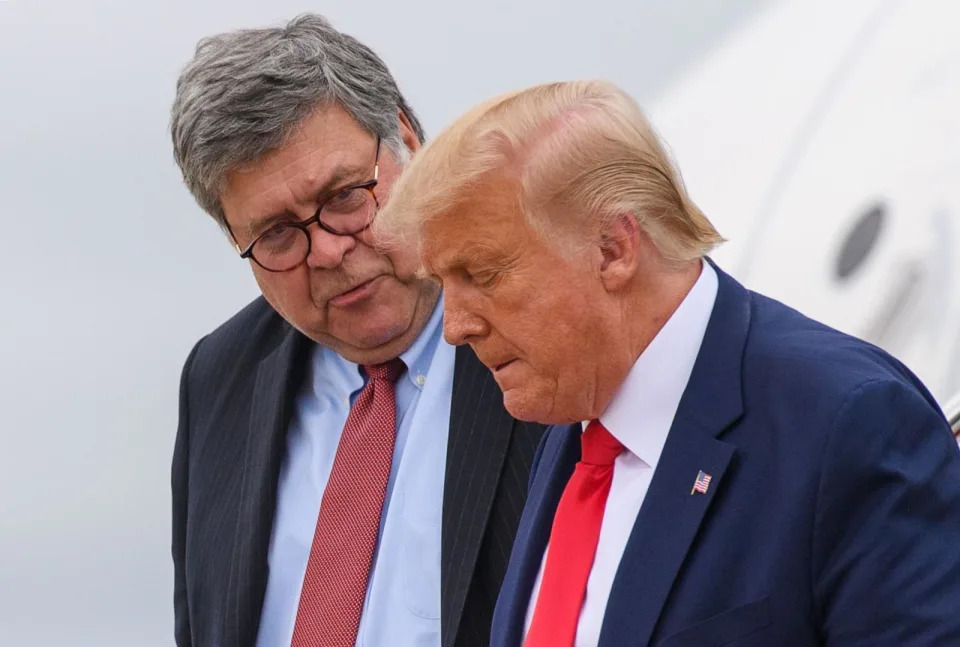
After firing Sessions, Trump found what many believed to be a friendlier ally in Bill Barr. Barr framed special counsel Robert Mueller’s Russia report in what many said were more favorable terms for Trump than the findings warranted. He also drew scrutiny for intervening in the government’s case against Trump’s first national security adviser Michael Flynn and for suggesting a lighter sentence for longtime Trump ally Roger Stone. The actions led many Democrats and former DOJ officials to decry the politicization of the department under Barr’s leadership.

PHOTO: President Donald Trump and Attorney General William Barr step off Air Force One upon arrival at Andrews Air Force Base in Maryland, Sept. 1, 2020. (Mandel Ngan/AFP via Getty Images)

But when Trump urged Barr and the Department of Justice to push a narrative of election fraud after his loss to Biden in November 2020, the attorney general and others declined to fall in line. Then-Vice President Mike Pence, a loyalist to Trump, also resisted his demands to unilaterally reject the election results during the certification on Jan. 6, 2021.

Elaine Kamarck, a senior fellow of governance studies at the Brookings Institution, said she believed Trump would be stopped again if he tried to use his office to go after enemies or other acts of retribution.

“The Founding Fathers anticipated a Donald Trump,” Kamarck said. “They built a system of checks and balances, and it’s working so far. If Donald Trump won, what would it take to dismantle that checks and balances? It would take a clean sweep of the Congress — 60 senators in the Senate and an overwhelming majority in the House of Representatives — and the courts to start the dismantling. And I don’t see that happening at this time and I don’t see it happening within the four years that he has to do it.”

“In other words,” Kamarck said, “we’re not a banana republic yet even if he’d like to make us one.”

Trump campaign spokesperson Steven Cheung, in response to expert comments that retribution would require never-before-seen politicization of the DOJ, told ABC News, “As President Trump has repeatedly said, the best retribution is the overall success of the American people.”

Lost in the malignant normality of the Trumpocene

Salon – Opinion

Lost in the malignant normality of the Trumpocene

Chauncey DeVega – March 21, 2024

Donald Trump KAMIL KRZACZYNSKI/AFP via Getty Images

The Trumpocene is not normal. If you accept that it is normal or otherwise become habituated to it, the neofascists and other enemies of democracy have won.

For at least the last eight years I have been writing several times a week about the rise of Trumpism and the deep cultural and societal rot that birthed the monstrosity. I view this work as a type of chronicle, an ongoing account of America’s surreal misadventure. As Hannah Arendt and other truth-tellers have shown, fascism and other forms of authoritarianism are an assault on reality, the facts, and the very idea of the truth. Chronicling and otherwise documenting these events and their meaning is a way of trying to ensure that the facts are preserved, as public memory is under assault and organized forgetting spreads rapidly.

On this, Arendt famously warned, “the ideal subject of a totalitarian state is not the convinced Nazi or Communist, but people for whom the distinction between fact and fiction (that is, the reality of experience) and the distinction between true and false (that is, the standards of thought) no longer exist.”

Chronicling the Trumpocene and America’s democracy crisis and other struggles in this era is also a type of witnessing, which means not just recording the facts but testifying and feeling the pain of others. As psychohistorian Robert Jay Lifton teaches, “One bears witness by taking in the situation — in this case, its malignant nature — and then telling one’s story about it, in this case with the help of professional knowledge, so that we add perspective on what’s wrong, rather than being servants of the powers responsible for the malignant normality. We must be people with a conscience in a very fundamental way.”

It is not just those of us with a public platform who should be carefully chronicling and documenting the Trumpocene and these aberrant events. Everyone who claims to care about democracy and a free society should be doing the same thing. Moreover, this should be done not just online or in some other digital form but in print. The digital is so ephemeral and can easily be disappeared or otherwise altered. Paper is much more real and permanent — and thus dangerous. That is why fascists and other enemies of truth and democracy censor and burn books.

When reality and truth are under siege, doing this type of intellectual and spiritual work is a way to remain sane. As I tell many of the people who reach out to me about escaping the Trumpocene nightmare and who feel exhausted and confused, “You are not crazy, the Trumpocene (and late capitalism, the culture of cruelty, pandemic politics and trauma, environmental collapse, and future shock etc. etc.) is just making you feel that way.”

During the Trumpocene there have been many days when I feel like Charleston Heston in “Planet of the Apes” screaming “It’s a Madhouse!” or Peter Finch as Howard Beale in “Network” bellowing, “I’m as mad as hell and I’m not going to take this anymore!” And there have also been moments, especially as I watch Trumpism nakedly morph into some version of American Hitlerism where I truly wonder if I am Peter Weller in David Cronenberg’s film “Naked Lunch,” and if I have been exposed to that damn “bug powder.”

I know I am not alone in these feelings.

But I realized some months ago that I had made a fundamental error in my assumptions and method in how I have been chronicling these very bad times. The Trumpocene, like other forms of fascism and such malign forces do not exist in a finite space or in a linear relationship to time; it and they really have no concrete beginning and/or end. Such political formations are a type of force that is like a book or story that continues to have chapters added to it in real time. The challenge then, is how to document and intervene against such a force that is dynamic and not static.

To better orient myself, I have been returning to how the Trumpocene (the Age of Trump, the MAGAverse, TrumpWorld or whatever moniker one applies to these years) as a type of malignant normality. Focusing on that constant wrongness has ironically helped me to keep perspective and reinforced how this state of affairs cannot last forever because such systems almost always collapse inward on themselves. And of course, when the collapse takes place, it will not be without great pain and that euphemism for mass death, “collateral damage.”

In a sharp essay at the Bulwark, Jonathan Last says this about the Trumpocene and malignant normality:

When insanity becomes the norm, it ceases to be insane. As a practical matter, it is impossible for a society to spend a decade listening to an unwell man say crazy, disassociated, garbled words for hours at a time, almost daily, and maintain the position that he is unhinged. At some point, society decides that the man they once regarded as unhinged, simply is. It’s like sitting in a room that stinks of sulfur. At first the smell is intolerable; but after a while you can’t even notice it if you try. This is more than human nature: It’s how our brains are wired to adapt to environmental conditions. That’s one of my big worries about the next eight months: That it will be biologically and psychologically impossible for a crucial percentage of voters to perceive what the Republican candidate for president actually is.

At the New Yorker, Susan Glasser offers this description of Trump’s recent speech in Rome, Georgia, noting how he embodies and projects malignant normality as a type of patient zero and the main character in a twisted politics reality TV show that he is making up as he goes along:

Trump’s appearance in Georgia, by contrast, reflected a man not rooted in any kind of reality, one who struggled to remember his words and who was, by any definition, incoherent, disconnected, and frequently malicious. (This video compilation, circulating on social media, nails it.) In one lengthy detour, he complained about Biden once being photographed on a beach in his bathing suit. Which led him to Cary Grant, which led him to Michael Jackson, which led him back to the point that even Cary Grant wouldn’t have looked good in a bathing suit at age eighty-one. In another aside, he bragged about how much “women love me,” citing as proof the “suburban housewives from North Carolina” who travel to his rallies around the country. He concluded that portion of his speech by saying:

“But it was an amazing phenomenon and I do protect women. Look, they talk about suburban housewives. I believe I’m doing well—you know, the polls are all rigged. Of course lately they haven’t been rigged because I’m winning by so much, so I don’t want to say it. Disregard that statement. I love the polls very much.”

Makes perfect sense, right?

Echoing Glasser’s concerns about Trump and his disconnect from reality, chief of staff at the Department of Homeland Security in the Trump administration, Miles Taylor, who I recently spoke with here at Salon, told MSNBC last Thursday: “The man that I interacted with years ago was very visibly unwell, was observably unstable, and he was the president of the United States then. I can only imagine what’s happened to him since. We’ve witnessed it, we all see it as an American public. But I can’t imagine how unstable he’ll be behind that resolute desk again.”

In another example of how none of this is normal and America’s elites and those so-called guardians of democracy and “the system” have normalized Trump’s deviance and evil, the corrupt ex-president, traitor, Jan. 6 coup attempter, defendant who is facing hundreds of years in prison for serious felonies – which include stealing classified and other top secret documents – will soon be getting intelligence briefings. Why? Because of “tradition” as he is the Republican Party’s presidential nominee. On this perilous absurdity, Tom Nichols warns in the Atlantic:

The decision rests, as always, with the sitting president, and Joe Biden is likely to continue this practice so that he will not be accused of “politicizing” access to intelligence. Such accusations need not be taken seriously; they would only be more meaningless noise from a GOP that has already stumbled in a clumsy attempt to impeach Biden after leveling charges of corruption at both him and his son. And although denying Trump access to classified briefs would produce squawks and yowls from Republicans, it would also serve as a reminder that Trump cannot be trusted with classified information.

The risks of denying Trump these early briefings are negligible. As we learned from his presidency, Trump is fundamentally unbriefable: He doesn’t listen, and he doesn’t understand complicated national-security matters anyway. The problem with giving Trump these briefings, however, isn’t that he’s ignorant. He’s also dangerous, as his record shows.

Indeed, if Trump were a federal employee, he’d have likely already been stripped of his clearances and escorted from the building. I say this from experience: I was granted my first security clearance when I was 25 years old—Ronald Reagan was still president, which tells you how long ago that was—and I held a top-secret clearance when I advised a senior U.S. senator during the Gulf War. I then held a clearance as a Department of Defense employee for more than a quarter century.

Government employees who hold clearances have to attend annual refresher courses about a variety of issues, including some pretty obvious stuff about not writing down passwords or taking money from a friendly Chinese businessman wearing an American baseball cap. (No, really, that’s a scenario in some of the course materials.) But one area of annual training is always about “insider threats,” the people in your own organization who may pose risks to classified information. Federal workers are taken through a list of behaviors and characteristics that should trigger their concern enough to report the person involved, or at least initiate a talk with a supervisor.

Trump checks almost every box on those lists. (You can find examples of insider-threat training here and here, but every agency has particular briefs they give to their organizations.)

Continuing with this betrayal of America’s pluralistic multiracial democracy, Trump recently met with Hungary’s neofascist leader, Viktor Orban. This meeting is part of a much larger pattern where today’s Republican Party and larger “conservative” movement are forging an international alliance with malign actors and other enemies of democracy.

At the Daily Beast, David Rothkopf, sounds this alarm:

Within a 24-hour period, the 2024 presidential campaign kicked off in a way that could not present the choice before the American public more starkly.

Joe Biden stood before the Congress and, in his State of the Union address, made a powerful case that he would fight with every fiber of his being to preserve American democracy and the fundamental freedoms of all Americans.

Then, late Friday, Donald Trump hosted Hungary’s authoritarian ruler, Viktor Orbán, in the kind of pro-Putin, anti-democracy summit that perfectly captured the true nature of today’s MAGA Republican Party. The dinner reception was so important that even Melania Trump made one of her rare appearances at her husband’s side. Trump said, “There’s nobody smarter or a better leader than Viktor Orbán. He’s the boss. He’s a non-controversial figure because he says, ‘This is the way it’s going to be and that’s the end of it.’ He’s the boss. He’s a great leader.”

A day earlier, Orbán—Vladimir Putin’s man in Europe, his acolyte and champion—met behind closed doors with the leaders of the new American right at the Heritage Foundation.

There it is, America. Biden is running to preserve America’s traditional values and institutions. Trump and the GOP have openly embraced autocracy, celebrating the virtues of “strong man” government.

If Donald Trump had actually been put on trial, and properly punished for the crimes of Jan. 6 and his other violations of American democracy, civil society and the law, the Trumpocene and this state of malignant normality would be closer to dissipating. Of course, and in an anti-climax because it confirms what has long been obvious, the Washington Post is reporting that Attorney General Merrick Garland delayed investigating Trump for his obvious crimes of Jan. 6 and the larger coup plot for more than a year. The result of that choice is that Trump will likely not be tried and sentenced before the 2024 Election. If he defeats President Biden, Trump will then ignore the verdicts against him and seek revenge on all people who dared to hold him accountable for his crime spree.

Investigative reporters Carol Leonnig and Aaron Davis detail how:

Hours after he was sworn in as attorney general, Merrick Garland and his deputies gathered in a wood-paneled conference room in the Justice Department for a private briefing on the investigation he had promised to make his highest priority: bringing to justice those responsible for the attack on the U.S. Capitol on Jan. 6, 2021.

In the two months since the siege, federal agents had conducted 709 searches, charged 278 rioters and identified 885 likely suspects, said Michael R. Sherwin, then-acting U.S. attorney for the District of Columbia, ticking through a slide presentation. Garland and some of his deputies nodded approvingly at the stats, and the new attorney general called the progress “remarkable,” according to people in the room.

Congressional staffers barricade doors while taking cover during the attack on the U.S. Capitol on Jan. 6, 2021. (Amanda Voisard for The Washington Post)

Sherwin’s office, with the help of the FBI, was responsible for prosecuting all crimes stemming from the Jan. 6 attack. He had made headlines the day after by refusing to rule out the possibility that President Donald Trump himself could be culpable. “We are looking at all actors, not only the people who went into the building,” Sherwin said in response to a reporter’s question about Trump. “If the evidence fits the elements of a crime, they’re going to be charged.”

But according to a copy of the briefing document, absent from Sherwin’s 11-page presentation to Garland on March 11, 2021, was any reference to Trump or his advisers — those who did not go to the Capitol riot but orchestrated events that led to it.

A Washington Post investigation found that more than a year would pass before prosecutors and FBI agents jointly embarked on a formal probe of actions directed from the White House to try to steal the election. Even then, the FBI stopped short of identifying the former president as a focus of that investigation.

A wariness about appearing partisan, institutional caution, and clashes over how much evidence was sufficient to investigate the actions of Trump and those around him all contributed to the slow pace. Garland and the deputy attorney general, Lisa Monaco, charted a cautious course aimed at restoring public trust in the department while some prosecutors below them chafed, feeling top officials were shying away from looking at evidence of potential crimes by Trump and those close to him, The Post found.

Ultimately, malignant normality through Trumpism, neofascism, white supremac(ies) racism(s) or whatever other type of vessel it uses to inject its poison is a threat to a humane society and a real social democracy. The language and labels we use to describe this reactionary revolutionary project must not distract us from that basic and foundational truth.

As always, Henry Giroux makes an incisive intervention and offers moral clarity. In a new essay at the La Progressive which merits being quoted at length, he offers a warning and a call to action:

The cruel language and practices of human degradation and destructiveness now feed a growing fascist politics in the U.S. Fascist demagogues now boast about their racial fantasies, unchecked adoration of violence, and their aggressive lawlessness. What Ingmar Bergman once called “The Serpent’s Egg,” a metaphor for the birth of fascism, is about to hatch.

In a world shaped increasingly by emerging authoritarianism, it has become increasingly difficult to remember what a purposeful and substantive democracy looks like, or for that matter, what the idea of democracy might suggest. Democracy as an ideal, promise, and working practice is under assault, just as a number of far-right educational, market, military, and religious fundamentalisms are gaining ascendancy in American society. Increasingly, it becomes more challenging to inhabit those public spheres where politics thrives—where thinking, speaking, and acting subjects engage and critically address the major forces and problems bearing down on their lives. In this new moment in history, which too often resembles the nightmares of a fascist past with its banning of books, erasing of history, attack on trans people, and support of white nationalism and supremacy, the question of how society should imagine itself or what its future might hold has become more demanding given the eradication of social formations that place an emphasis on truth, social justice, freedom, equality, and compassion.

Historical and social amnesia have become the organizing principles of U.S. society. Lies morph into the celebration of violence, and language becomes part of the machinery of social death, relegated to the sphere of consumer culture, and devoid of an ethical grammar that is banished to zones of political and social abandonment.

Here, Giroux focuses in on how malignant normality reflects a failure of imagination:

What’s happening in this country is a failure of imagination.

Many of us take our freedoms for granted. We can’t envision a day when our rights would disappear, leaving us at the mercy of a dictatorship that’s accountable to no one.

Human beings are basically optimistic, and many of us haven’t considered the possibility that 248 years of democracy could end on a single election day. But they can, and they might.

Today I’m asking you to be alarmed – to be deeply afraid. But not crippled by that fear. I’m pleading with you to become motivated to avert a national disaster….

That’s right. The Nazi agenda was inconceivable to decent people – and that’s part of the reason it became a reality.

There was a failure of imagination.

But with today’s MAGA fascism, we don’t have to exercise our imagination very much. We just have to fight the temptation to downplay the dangers that Trump and his gang display in public, for all of us to see….

Whatever you do, don’t ignore what’s happening. Be part of the patriotic rescue of your country – something you can take pride in for the rest of your days. Consider it your gift to your children, your grandchildren, and future generations that you’ll never know.

Fight fascism now, while you can. Be a hero to your country.

I often use therapeutic language to describe the Trumpocene because fascism and other such evil forces are not “just” about politics but are an attack on our collective mental, spiritual, and physical – and intellectual – health. Applying that framework, Donald Trump is abusing the American people.

In an abusive relationship, the horrible and wrong becomes normalized and the victim often ends up celebrating those days when there is no abuse. In essence, what should be every day and a baseline becomes something special and “proof” that the relationship can somehow work or is “healthy.” Unfortunately, too many Americans have internalized the abuse, believe they deserve it, and as shown by public opinion polls want Donald Trump back in the White House to punish them (and the people they hate) some more.

70 million Americans drink water from systems reporting PFAS to EPA. Is yours on our map?

USA Today

70 million Americans drink water from systems reporting PFAS to EPA. Is yours on our map?

Austin Fast, Cecilia Garzella and Yoonserk Pyun – March 21, 2024

At least 70 million Americans get their water from a system where toxic PFAS “forever chemicals” were found at levels that require reporting to the Environmental Protection Agency.

That’s according to new data the EPA released in its ongoing 5-year review of water systems across the nation. The number will almost certainly grow as new reports are released every three months.

PFAS, or per- and polyfluorinated alkyl substances, are nearly indestructible chemicals widely used across industries for decades. Found in drinking water, food, firefighting foam, and nonstick and water-repellent items, PFAS resist degradation, building up in both the environment and our bodies.

Salt Lake City; Sacramento, California; Madison, Wisconsin; and Louisville, Kentucky, were among the major systems reporting PFAS contamination to the EPA in the latest data release.

Map: Where the EPA found pollutants

This map shows water systems included in the EPA’s records, as of Jan. 11. It’s based on boundaries developed by SimpleLab, a water-testing company. Click on a system to see the number of pollutants detected at or above the EPA’s minimum reporting levels and how much the most concentrated pollutant exceeded those levels. Points represent systems where the exact boundaries are not available. If you don’t see a map, click here

The man-made chemicals have turned up in water systems large and small, from those serving a few thousand customers to over half a million.

Of about 3,800 systems included so far, 1,245 measured at least one PFAS compound above the EPA’s reporting levels, according to USA TODAY’s analysis.

The EPA plans to collect data from thousands more systems through 2026, including many of the nation’s largest systems, such as Los Angeles, Chicago, Boston and Philadelphia.

Read our previous coverage: EPA detected “forever chemicals” in water systems serving 46 million. Is yours on our map?

What are forever chemicals?

PFAS can lead to serious health problems, including increased risk of some cancers, if people are exposed to them over a long period of time. Even at very low doses, PFAS can pose health risks.

The EPA’s minimum reporting level – the lowest concentrations reliably measured by most laboratories – for some PFAS are measured in parts per trillion. The current thresholds are near zero, replacing older limits that were higher and didn’t detect smaller concentrations of PFAS, said Shalene Thomas, a PFAS industry expert and emerging contaminants program manager at Battelle, a nonprofit research institute.

Read the story: PFAS contamination is Michigan’s biggest environmental crisis in 40 years

“People hear that, and they think, ‘This is really, really low. Why are we concerning ourselves with this?’” Thomas said, referring to the detection levels. “The risk to individuals and the population is based on not just what the concentration is but what the frequency of that exposure is.”

“How often are you exposed, and what’s the duration of the exposure?”

The purpose of the reporting limits, Thomas said, is to trigger water utilities to react and find treatment solutions if needed.

“Why is there a limit? It’s not like if you’re above this number, you’re going to die, and if you’re below that number, you’re going to live,” Thomas said. “It’s about population protection. It’s an action level so that utilities can react and protect you.”

Read our previous coverage: Dangerous levels of PFAS detected in water for 27 million. Did the EPA find it near you?

Is there a national drinking water standard for PFAS? 

There are no enforceable national drinking water standards in the U.S. for PFAS, but the EPA is expected to issue new regulations this year.

Last March, the EPA proposed the first-ever national drinking water standard for six PFAS. Though there are thousands of PFAS chemicals, the six compounds in the regulation had the highest manufacturing volume in the U.S. and are thought to be the most toxic, Thomas said.

If the rule is finalized and implemented, public water systems will be required to monitor for these chemicals, notify the public and reduce PFAS contamination if levels exceed the proposed standards.

Water utilities tasked with treating PFAS

Water utilities didn’t manufacture or use the chemicals, Thomas said, yet they are still tasked with cleaning them up and protecting the public.

Once the EPA’s regulation is finalized, the agency would likely use discretionary authority and focus its efforts on going after primary polluters, Thomas said.

However, not all water utilities are equipped to install advanced and costly treatment systems to reduce PFAS from treated water. Systems vary from region to region, each with their own water sources and technical challenges that can make treatment less feasible.

Adapting to changing climate conditions is a concern for Sacramento, California, where about 80% of water supplies come from the American and Sacramento rivers. During dry years, they use groundwater, but if those wells are contaminated with PFAS, the city might not be able to rely on them, said Carlos Eliason, a spokesperson from the City of Sacramento Department of Utilities.

The city has taken several groundwater sources out of service because they contained levels of PFAS above state guidelines. Upcoming federal regulations could increase the amount of groundwater sources that need to be shut down.

The Shasta Groundwater Treatment Facility is the largest groundwater treatment facility in Sacramento, California. The facility can produce up to 4 million gallons of drinking water per day.

Similarly, 90% of Salt Lake City’s water supply is from surface water, but groundwater wells are still important during droughts. PFAS pollution was found in two wells, one of which is important for peak summertime use, said Laura Briefer, director of Salt Lake City Department of Public Utilities.

“Water is such a priority for us in the western United States, where water is scarce,” Briefer said. “When we have challenges where contaminants can impact our ability to use water for public purposes, that is a really profound issue. We don’t have a lot of water to spare.”

More than 6,000 miles away in Guam, a U.S. island territory in Micronesia with a longtime military presence, civilians rely primarily on water produced from an aquifer in the northern half of the island. Should the aquifer become contaminated, there are no reasonable alternatives, as defined by the EPA.

Of nearly 100 water supply wells that provide water to the island, about a third had PFAS that exceeded the EPA’s proposed regulations.

The level of funding to U.S. territories to cover the cost of treatment is not enough, said Miguel Bordallo, the general manager of Guam Waterworks Authority. The authority will have to significantly raise the rates it charges its customers to finance these capital improvement projects, Bordallo said.

Guam also absorbs costs that most utilities on the U.S. mainland don’t feel, such as shipping hazardous byproducts from PFAS treatment off the island.

“It’s a huge concern, but the way we view it is that it’s the train that’s coming down the tracks and there’s no way to stop that,” Bordallo said of the imminent PFAS rule.

“Rather than trying to stop that train, we’re trying to get ahead of it.”

Austin Fast is a data reporter on the USA TODAY investigations team and Cecilia Garzella is a data fellow. 

Drinking water in US prisons may contain dangerous levels of ‘forever chemicals’: Study

The Hill

Drinking water in US prisons may contain dangerous levels of ‘forever chemicals’: Study

Sharon Udasin – March 21, 2024

Nearly half of American prisons are located downstream from water sources that are likely contaminated with cancer-linked “forever chemicals,” a new study has found.

Due to insufficient water quality testing in and around such sites, officials have only found that 5 percent of U.S. carceral institutions are situated in watersheds that definitively contain these toxic compounds, according to the study, published in the American Journal of Public Health. But tens of thousands of people are incarcerated at those facilities — and presumptive sources of exposure were found near many more sites.

When it comes to toxins like forever chemicals, also known as PFAS, incarcerated populations are of particular concern because they have minimal ability to reduce their exposures and are therefore especially vulnerable to acute health effects, the researchers stressed.

“If you think of the incarcerated population as a city spread out over this vast archipelago of carceral facilities, it would be the fifth largest city in the country,” senior author Nicholas Shapiro, a medical anthropologist the University of California, Los Angeles, said in a statement.

That figurative “city,” he continued, has “potentially very high levels of toxicants in its water and no ability to mitigate exposure.”

Notorious for their ability to persist in both the human body and in the environment, PFAS have been connected to a variety of illnesses — including kidney cancer, thyroid disease and testicular cancer.

There are thousands of types of PFAS (per- and polyfluoroalkyl substances), found in industrial waste, certain types of firefighting foam and household products, such as nonstick pans, waterproof apparel and many cosmetics.

To draw their conclusions about prisons’ potential exposure to the substances, the researchers assembled a list of the country’s 6,118 carceral facilities from the Department of Homeland Security and conducted a geospatial data analysis to pinpoint which sites were situated in watersheds with known or likely PFAS pollution.

They also considered whether watershed boundaries were at higher elevations with respect to the carceral institutions, as such positioning increases the likelihood that pollutants are infiltrating the facility’s water supply.

Ultimately, they identified 310 sites — or 5 percent of the total facilities — situated in such watersheds, at a lower elevation than at least one known source of PFAS contamination.

At least 150,000 people, of which at least 2,200 are juveniles, live in these facilities, according to the study.

But the reality may be far worse. The authors found that nearly half of all U.S. carceral institutions — 47 percent — have at least one presumptive source of PFAS pollution at a higher elevation than the facilities and within their watershed boundaries.

More than half of U.S. juvenile facilities — 56 percent — meet that description, per the findings.

These potentially polluted prisons, jails and detention centers — the majority of which are state- and county-run institutions — house about 990,000 people, including at least 12,800 juveniles, the authors noted.

Many carceral facilities may be contending with multiple PFAS exposures, with 31 percent of U.S. institutions located in areas with more than one presumptive source of contamination, according to the study. About 13 percent have more than five presumptive sources.

Because about a third of the carceral facilities were missing complete population data, however, the total number of individuals exposed could be much higher, the researchers warned.

Co-author Lindsay Poirier, an assistant professor of statistical and data sciences at Smith College, emphasized the challenges the researchers faced in conducting the study due to the “substantial data gaps” in water quality monitoring and population numbers.

“We’re trying to draw attention to areas that have been underassessed,” Poirier said in a statement.

In addition to the lack of transparent information available, the authors pointed to potential environmental justice issues, as the residents of U.S. prisons “are disproportionately Black, Latinx, Indigenous, low-income, and LGBTQ+.”

Incarcerated youths are also disproportionately adolescents of color, with Black youths more than four times more likely than white youths to be held in a juvenile institution, per the study.

U.S. prisons, they explained, are therefore “an important window into how the justice system advances public health inequities,” the researchers stated.

Although the authors could not test whether the polluted water was for sure entering the prisons, they stressed a need for further research, as these toxins can have lifelong health impacts.

“The most rigorous and consistent water testing is done in well-resourced or particularly engaged communities,” Shapiro said, noting that these same communities are best equipped to reduce their exposure.

“Incarcerated populations have a lot in common with marginalized populations elsewhere in the country that lack the resources and political clout to get their water cleaned up,” Shapiro added. “That needs to change.”

Factbox-‘Bloodbath,’ ‘vermin,’ ‘animals’: Trump’s rhetoric on the trail

Reuters

Factbox-‘Bloodbath,’ ‘vermin,’ ‘animals’: Trump’s rhetoric on the trail

Gram Slattery – March 22, 2024

FILE PHOTO: Former U.S. President Trump hosts a campaign rally, in Rome, Georgia

WASHINGTON (Reuters) – Republican presidential candidate Donald Trump has made a series of inflammatory and racist statements on the U.S. campaign trail since declaring his candidacy in November 2022.

In some cases, he has used violent imagery to lambaste immigrants and opponents. He has warned that the United States is on the verge of collapse, and his rhetoric has raised concerns that he might flout democratic norms by using the power of the state to target perceived enemies if he is elected.

Here are some of Trump’s more controversial statements to date:

BLOOD POISONING

Trump has said on several occasions that immigrants in the United States illegally are “poisoning the blood of our country.”

Anti-Defamation League leader Jonathan Greenblatt called the language “racist, xenophobic and despicable.” The campaign of Democratic President Joe Biden compared Trump’s comments to those of Adolf Hitler, who used the phrase “blood poisoning” in his manifesto “Mein Kampf.”

Public opinion polls show that illegal immigration is a leading concern for voters, and Trump has consistently portrayed immigration as a major driver of violent crime and economic decay.

In past statements, Trump has suggested that Democrats are purposefully allowing migrants into the country to grow their political support.

This is a key element of the far-right “Great Replacement” conspiracy theory, which asserts that leftist and Jewish elites are engineering the ethnic and cultural replacement of white populations with immigrants of color that will lead to a “white genocide.”

The debate over the economic effects of immigration is decades-long, though most researchers say immigration broadly boosts economic growth.

Some 33% of Republicans in a February Reuters/Ipsos poll cited immigration as their top issue, while 6% of Democrats said the same.

VERMIN

Trump pledged at a November rally in New Hampshire that he would “root out the communists, Marxists, fascists and the radical left thugs that live like vermin within the confines of our country.”

Those comments drew rebukes from congressional Democrats and some moderate Republicans. Some historians have traced the use of the word “vermin” to Hitler and Italy’s Benito Mussolini.

Political historians say the use of dehumanizing rhetoric – including words like “vermin” – makes it easier to strip away rights from residents and citizens as they are seen as less worthy of democratic or constitutional protections. Nazis, for instance, frequently referred to Jews as lice, rats and vermin.

The Trump campaign has dismissed those comparisons.

BLOODBATH

During a March appearance alongside a Republican Senate candidate in Ohio, Trump warned of a “bloodbath” if he fails to unseat Biden in November’s election.

At the time Trump was discussing the need to protect the U.S. auto industry from overseas competition, and Trump and allies later said he was referring to the auto industry when he used the term.

Trump’s campaign has sought to portray Biden as a threat to automaking jobs in Michigan, a key swing state, due to the Biden administration’s promotion of electric vehicles.

Biden’s campaign team rejected that characterization and condemned what it called Trump’s “extremism,” “his thirst for revenge” and his “threats of political violence.”

IMMIGRANTS ARE ‘ANIMALS,’ ‘NOT PEOPLE’

Trump has frequently referred to immigrants in the country illegally in subhuman terms, for example referring to them as animals who are prone to violence.

“In some cases they’re not people, in my opinion,” he said during his March appearance in Ohio. “But I’m not allowed to say that because the radical Left says that’s a terrible thing to say. “These are animals, OK, and we have to stop it,” he said.

During stump speeches, Trump frequently claims that immigrants crossing the border illegally have escaped from prisons and asylums in their home countries and are fueling violent crime in the United States.

While available data on criminals’ immigration status is sparse, researchers say people in the country illegally do not commit violent crimes at a higher rate than native-born citizens.

BLACK AMERICANS AND CRIME

Trump drew the ire of Biden’s campaign and civil rights leaders and groups in February when he suggested Black voters were more drawn to him because of his criminal indictments. He also said Black voters had come to “embrace” his mugshots.

“And then I got indicted a second time and a third time and a fourth time. And a lot of people said that that’s why the Black people like me because they have been hurt so badly and discriminated against,” Trump said while speaking to a Black conservative group in South Carolina before the state’s primary election, which he went on to win.

Trump’s legal challenges, including federal charges over his alleged efforts to overturn his 2020 election loss and his handling of classified documents, among other state charges and civil lawsuits, differ greatly from the historic inequities Black Americans have experienced in the criminal justice system.

Trump has also described at least two Black prosecutors – Manhattan District Attorney Alvin Bragg and New York Attorney General Letitia James – as “animals.” He has repeatedly referred to James as “Peekaboo,” which rhymes with a racial slur.

Trump allies say his attacks are referring to prosecutors’ conduct, not their race, and they say he is working hard to win the support of Black voters.

APOCALYPSE NOW

Trump frequently leans into apocalyptic imagery on the campaign trail, telling supporters that if he does not win in November – or if he does not otherwise get his way – the country will enter into terminal decline.

At a March campaign event in North Carolina, Trump said Biden’s immigration policies amounted to a “conspiracy to overthrow the United States” through lax security policies that had allowed millions of migrants to stream across the U.S. border with Mexico.

Biden’s administration, Trump contended, seeks “to collapse the American system, nullify the will of the actual American voters and establish a new base of power that gives them control for generations.”

In response, Biden’s campaign pointed to a border security bill in Congress that Trump helped torpedo in February by urging Republicans to vote against it.

DICTATOR ON ‘DAY ONE’

During a televised town hall in December, Trump said he would not be a dictator “other than (on) Day One” of a potential second term. He said he would close the southern border with Mexico and expand oil drilling during the first day of his administration.

Biden’s campaign said the comments were explicit proof that he wants to be an autocrat, while Trump’s allies said he was joking.

Biden has centered his campaign on the contention that stopping Trump from returning to office is crucial, as Trump represents a threat to democracy.

Trump argues that Biden is a more serious threat to democracy, as federal law enforcement agencies under him are prosecuting prominent Republicans, himself included.

Some 44% of Democrats said extremism is their top election issue, according to the February Reuters/Ipsos poll, while 13% of Republicans said the same.

GRAPHIC: Where Biden and Trump stand on the issues.

(Reporting by Gram Slattery, editing by Ross Colvin, Kieran Murray and Howard Goller)

Man who helped drag police officer into mob gets over 5 years in prison for Capitol riot attacks

Associated Press

Man who helped drag police officer into mob gets over 5 years in prison for Capitol riot attacks

Michael Kunzelman – March 21, 2024

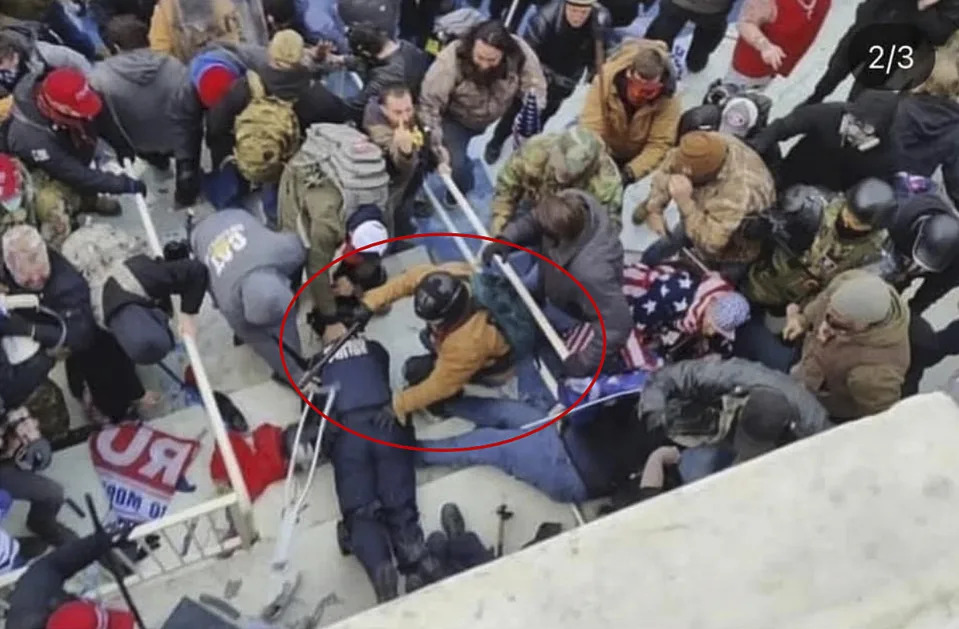
This image from police body-worn camera video, contained and annotated in the Justice Department's government's sentencing memorandum supporting the sentencing of Jeffrey Sabol shows Sabol at the U.S. Capitol on Jan. 6, 2021, in Washington. During the course of an attack on police officers, Sabol ripped the baton out of the hands of a fallen officer, leaving him unable to defend himself against assaults by other rioters. Sabol then helped his co-defendants drag a second officer into the crowd, where that officer was also beaten by rioters. (Department of Justice via AP)
This image from police body-worn camera video, contained and annotated in the Justice Department’s government’s sentencing memorandum supporting the sentencing of Jeffrey Sabol shows Sabol at the U.S. Capitol on Jan. 6, 2021, in Washington. During the course of an attack on police officers, Sabol ripped the baton out of the hands of a fallen officer, leaving him unable to defend himself against assaults by other rioters. Sabol then helped his co-defendants drag a second officer into the crowd, where that officer was also beaten by rioters. (Department of Justice via AP)
This combination of images from police body-worn camera video, contained and annotated in the Justice Department's government's sentencing memorandum supporting the sentencing of Jeffrey Sabol, shows Sabol at the U.S. Capitol on Jan. 6, 2021, in Washington. During the course of an attack on police officers, Sabol ripped the baton out of the hands of a fallen officer, leaving him unable to defend himself against assaults by other rioters. Sabol then helped his co-defendants drag a second officer into the crowd, where that officer was also beaten by rioters. (Department of Justice via AP)
This combination of images from police body-worn camera video, contained and annotated in the Justice Department’s government’s sentencing memorandum supporting the sentencing of Jeffrey Sabol, shows Sabol at the U.S. Capitol on Jan. 6, 2021, in Washington. During the course of an attack on police officers, Sabol ripped the baton out of the hands of a fallen officer, leaving him unable to defend himself against assaults by other rioters. Sabol then helped his co-defendants drag a second officer into the crowd, where that officer was also beaten by rioters. (Department of Justice via AP)
This image from police body-worn camera video, contained and annotated in the Justice Department's government's sentencing memorandum supporting the sentencing of Jeffrey Sabol, shows Sabol at the U.S. Capitol on Jan. 6, 2021, in Washington. During the course of an attack on police officers, Sabol ripped the baton out of the hands of a fallen officer, leaving him unable to defend himself against assaults by other rioters. Sabol then helped his co-defendants drag a second officer into the crowd, where that officer was also beaten by rioters. (Department of Justice via AP)
This image from police body-worn camera video, contained and annotated in the Justice Department’s government’s sentencing memorandum supporting the sentencing of Jeffrey Sabol, shows Sabol at the U.S. Capitol on Jan. 6, 2021, in Washington. During the course of an attack on police officers, Sabol ripped the baton out of the hands of a fallen officer, leaving him unable to defend himself against assaults by other rioters. Sabol then helped his co-defendants drag a second officer into the crowd, where that officer was also beaten by rioters. (Department of Justice via AP)

WASHINGTON (AP) — A Colorado man who helped other rioters drag a police officer into a mob storming the U.S. Capitol was sentenced on Thursday to more than five years in prison for his role in the Jan. 6, 2021, attack.

Jeffrey Sabol ripped a baton from an officer’s hands before pulling another officer into the crowd outside the Capitol, allowing other rioters to assault the officer with weapons.

Sabol, 54, told U.S. District Judge Rudolph Contreras that he knows he is “100%” guilty and would have apologized directly to the officers whom he attacked if they had attended the hearing.

“I accept whatever it is you hand me,” Sabol said. “I’ll be honest: I deserve it.”

The judge sentenced Sabol to five years and three months behind bars. He’ll get credit for the three years and two months that he has already spent in jail since his arrest.

Contreras said Sabol had mischaracterized his violent actions on Jan. 6 as efforts to be helpful.

“It’s hard to imagine how any of this was helpful,” the judge said after describing Sabol’s conduct that day.

Prosecutors recommended a prison sentence of 10 years and one month for Sabol.

Sabol told FBI agents who arrested him that he was filled with “patriotic rage” on Jan. 6 because he believed the 2020 presidential election was stolen from then-President Donald Trump and said he answered a “call to battle” because he was a “patriot warrior,” according to prosecutors.

Contreras convicted Sabol of felony charges last year after a “stipulated bench trial,” which means the judge decided the case without a jury based on facts that both sides agreed to in advance. Such trials allow defendants to admit to certain facts while maintaining a right to appeal a conviction.

Sabol traveled from Colorado to Washington, D.C., with other members of what he called a “neighborhood watch” group. They attended Trump’s “Stop the Steal” rally near the White House on Jan. 6 before Sabol went to the Capitol, where lawmakers were certifying President Joe Biden’s 2020 electoral victory.

Sabol was wearing a helmet when he and other rioters attacked police officers on the west side of the Capitol.

“He entered the fray with the intent to halt the certification of the electoral college vote and to violently combat what he believed was a stolen election,” prosecutors wrote in a court filing.

On the Lower West Terrace, Sabol initially watched as another rioter beat a Metropolitan Police Department officer with a crutch and started to drag that officer down a set of steps. Sabol and a third rioter stepped in and helped drag the officer headfirst down the steps and into the crowd, where other rioters beat him with a flagpole and baton.

After Sabol stole a baton from another officer, other rioters dragged the officer into the crowd, kicked and stomped on him, struck him with poles and ripped off his gas mask before he was pepper sprayed.

Sabol tried to cover his tracks and flee the country after the riot. He microwaved laptops and hard drives, dropped his cell phone out a car window and booked a flight to Zurich, Switzerland, but he didn’t board the flight. Instead, he rented a car and drove to the Westchester, New York, area before he was arrested on Jan. 22, 2021.

Sabol worked as a senior geophysical manager for an environmental services company that fired him after his arrest.

“Jeff Sabol is not a violent man and regrets being caught up in his emotions and engaging in conduct that is not reflective of the law-abiding man and loving father that he has always strived to project,” his attorney wrote in a court filing.

Contreras previously sentenced several other rioters who were charged with Sabol and convicted of attacking the injured officers.

A former Tennessee sheriff’s deputy, Ronald Colton McAbee, was sentenced to five years and 10 months in prison. Florida resident Mason Courson was sentenced to four years and nine months in prison. Arkansas truck driver Peter Francis Stager was sentenced to four years and four months in prison. Michigan resident Justin Jersey was sentenced to four years and three months in prison. Michigan construction worker Logan Barnhart was sentenced to three years in prison. Kentucky business owner Clayton Ray Mullins was sentenced to two years and six months in prison.

Another co-defendant, Georgia business owner Jack Wade Whitton, is scheduled to be sentenced in May.

More than 1,300 people have been charged with federal crimes related to the Capitol riot. Over 800 of them have been sentenced, with roughly two-thirds receiving a term of imprisonment ranging from a few days to 22 years.

Man who helped drag officer into crowd on Jan. 6 sentenced to prison

The Hill

Man who helped drag officer into crowd on Jan. 6 sentenced to prison

Tara Suter – March 21, 2024

A Colorado man charged for helping drag a law enforcement officer into a crowd during the Jan. 6, 2021, attack on the Capitol was sentenced to more than five years in prison Thursday, according to prosecutors.

On top of the sentence, Jeffrey Sabol, 53, was also given three years of supervised release and ordered to pay more than $32,000 in restitution, according to a press release from the U.S. Attorney’s Office for the District of Columbia. He has been convicted of three felony charges including obstruction of an official proceeding in relation to his conduct during the Jan. 6 riot.

Sabol traveled from Colorado to Washington, D.C., to watch former President Trump speak at his “Stop the Steal” rally at the Ellipse on the day of the Jan. 6 riot, according to court documents. He traveled with fellow members of a “self-described ‘neighborhood watch’ group.”

“Before leaving, the group members discussed what to bring with them,” the press release said. “On the advice of one group member, Sabol packed a helmet, a trauma kit, a buck knife, and zip ties.”

Following the rally, he made his way to the Capitol and joined the riot, the release said. At one point, he “assisted two rioters in dragging a law enforcement officer down the steps and into” a mob, where “rioters beat the officer with a flagpole and a baton.”

Later, Sabol “deleted text messages and other communications from his cell phone,” prosecutors wrote.

He also tried to flee the U.S. and booked a flight to Switzerland, but could not board the aircraft and “rented a car and drove toward Westchester, New York, where the FBI arrested him on Jan. 11, 2021,” according to the documents.

Sabol acknowledged during his hearing that he is “100 percent” guilty and said he would have apologized to the officers if they had been present, according to The Associated Press.

“I accept whatever it is you hand me,” Sabol told the judge, per the AP. “I’ll be honest: I deserve it.”

More than 1,300 individuals have been charged with federal crimes related to the insurrection, according to the release. Of those charged, more than 800 have been sentenced.

Self-professed ‘patriot warrior’ sentenced for role in violent Jan. 6 insurrection

United Press International

Self-professed ‘patriot warrior’ sentenced for role in violent Jan. 6 insurrection

Doug Cunningham – March 21, 2024

Jeffrey Sabol, a Colorado man who helped drag a police officer into the violent pro-Trump Jan.6 insurrection mob, was sentenced Thursday to 63 months in prison for three felonies. Pro-Trump rioters breached the security perimeter at the U.S. Capitol in Washington, D.C., on Jan. 6, 2021 (pictured). File Photo by Ken Cedeno/UPI

March 21 (UPI) — A Colorado man who helped drag a police officer into the violent pro-Trump mob during the Jan. 6, 2021, Capitol insurrection was sentenced Thursday to 63 months in prison for three felonies.

Jeffrey Sabol, 53, was accused of beating a police officer who was attempting to help injured rioters.

His charges include an attack on a D.C. police officer. He said in an interview with police following his arrest that he had answered a call to battle because he “was a patriot warrior.”

His actions and the actions of others disrupted a joint session of the U.S. Congress convened to ascertain and count the electoral votes related to the 2020 presidential election,” the Department of Justice said in a statement.

Sabol, of Kittredge, Colo., also was sentenced to 36 months of supervised release and ordered to pay $32,165.65.

Pro-Trump rioters breach the security perimeter and penetrate the U.S. Capitol to disrupt the Electoral College vote count that would certify President-elect Joe Biden as the winner in Washington, D.C. on Jan. 6, 2021. File Photo by Ken Cedeno/UPI

The Justice Department, citing court documents and stipulated facts in the case, said Sabol attended the Trump “Stop The Steal” rally before joining the front of a line of rioters confronting police at the Capitol.

“In a coordinated effort, Sabol and another rioter pushed a third rioter — who, himself, was holding a riot shield — from behind, propelling him forward and up a set of steps, so that the rioter with the shield ran into the line of police,” the DOJ said in a statement. “As the officers attempted to repel the rioters pushing against the police line, Sabol kept pushing forward and slammed into a riot shield held by a Metropolitan Police Department (MPD) officer.”

Pro-Trump rioters breach the security perimeter and penetrate the U.S. Capitol to block the peaceful transfer of presidential power as Congress met to certify the Electoral College results in Washington, D.C., on Jan. 6, 2021. File Photo by Ken Cedeno/UPI

Sabol was in the pro-Trump mob as an MPD officer was pulled into the violent mob, according to the DOJ.

He was convicted of obstruction of an official proceeding and aiding and abetting, federal robbery, and assaulting, resisting, or impeding certain officers with a deadly or dangerous weapon and aiding and abetting.

After the attack on the Capitol Sabol deleted texts and other communications from his cell phone. He also booked a flight to Zurich, Switzerland in an attempt to flee the United States.

After he was unable to board the aircraft Sabol rented a car and drove to Westchester, New York, where he was arrested by the FBI Jan. 11, 2021.

He told officers he was wanted by the FBI after “fighting tyranny in the D.C. Capitol.”

He also destroyed his laptop computers in a microwave oven and dropped his cell phone in a body of water.

The DOJ said Sabol came to the Capitol with a helmet, a buck knife, a trauma kit and zip ties.

During the melee Sabol pulled an officer’s baton from his hands as he was supine on the ground with such force that the officer’s torso was lifted from the ground, according to the DOJ.

Sabol is a geophysicist.

The DOJ said Thursday since Jan. 1, 2021 1,358 people have been charged in nearly all 50 states for crimes related to the Capitol insurrection. More than 486 people have been charged with felonies for assaulting or impeding law enforcement.