Column: Trump wants to round up over a million undocumented migrants from California. Here’s how he might do it

Los Angeles Times

Column: Trump wants to round up over a million undocumented migrants from California. Here’s how he might do it

Doyle McManus – March 25, 2024

Former President Donald Trump speaks during a visit to an unfinished section of border wall with Texas Gov. Greg Abbott, in Pharr, Texas, Wednesday, June 30, 2021. (AP Photo/Eric Gay)
Former President Trump speaks near a section of border wall in Texas in 2021. His plans for a prospective second term include using National Guard troops in mass deportation operations to seize undocumented migrants, transport them to camps in Texas and expel them. (Associated Press )

Former President Trump has focused relentlessly on illegal immigration as a centerpiece of his campaign for the White House, just as when he first ran in 2016.

“They’re poisoning the blood of our country,” he has said of undocumented migrants, using language redolent of the racist doctrines of Adolf Hitler.

He promises to launch “the biggest domestic deportation campaign in American history” on Day One of his new presidency.

His chief immigration advisor, Santa Monica-born Stephen Miller, has spelled out what that would mean: Trump would assemble “a giant force” including National Guard troops to seize undocumented migrants, transport them to camps in Texas and expel them.

“A very conservative estimate would say about 10 million,” Miller told pro-Trump talk show host Charlie Kirk.

If “unfriendly states” — like California — don’t want to cooperate, Miller said, Trump could order Guard units from red states like Texas to cross their borders to enforce the law.

Read more: Column: Trump has big plans for California if he wins a second term. Fasten your seatbelts

The operation would be “as daring and ambitious … as building the Panama Canal,” Miller promised.

That’s a pretty bloodless way to describe a process that would uproot thousands of families, separate children from their parents and disrupt communities. But before we get to that, a preliminary question:

If he wins in Novembercould Trump really do that?

From a legal standpoint, the answer is yes.

If Trump invokes the Insurrection Act and declares that the National Guard is needed to enforce federal immigration law, he could send Texas troops into California whether Gov. Gavin Newsom agrees or not, legal scholars said.

“We normally don’t want the military enforcing the law inside the country; law enforcement is supposed to be provided by police forces that are local — and locally accountable,” said William Banks, an emeritus professor of law at Syracuse University. “But the Insurrection Act gives the president sweeping authority. You could drive a lot of trucks through that law.”

Newsom would presumably file a lawsuit against Trump to try to block the move, but it would almost certainly fail.

Read more: Column: Biden says America is ‘coming back.’ Trump says we’re ‘in hell.’ Are they talking about the same nation?

“No state has ever sued successfully to stop a deployment of the Guard under the Insurrection Act,” warned Joseph Nunn of the Brennan Center for Justice at New York University.

There are also practical concerns. Most National Guard units are neither trained nor equipped for law enforcement missions.

“Tracking down undocumented migrants is complicated and time-consuming,” Nunn noted. “You need people who know how to do it, like ICE [Immigration and Customs Enforcement] agents.

“The Guard would resist that kind of mission mightily,” added Banks. “They hate this kind of stuff. They would be better suited to patrol the border — to stand next to the wall, the fence or the river and discourage people from coming across.”

So if Trump listens to his generals — not a sure thing — he’d be more likely to use Guard units to bolster weak spots on the border and manage those newly built transit camps for deportees.

Read more: Column: Trumponomics? He would impose the equivalent of a huge tax hike

That would free up ICE agents for raids on Central Valley farms and Los Angeles sweatshops — which is what immigration agents did in earlier crackdowns, including the offensively named Operation Wetback, which expelled more than a million Mexican migrants (and some U.S. citizens) in 1954.

So legally, there may not be that much California can do. But the fallout in a state home to an estimated 1.9 million undocumented people — roughly 5% of the population — would be difficult to imagine.

The human impact of uprooting most or all of these California residents would be gigantic. Many undocumented migrants are members of families that include legal residents and U.S. citizens, including children.

Many are deeply rooted in their communities; more than two-thirds have lived in the state longer than 10 years, according to one estimate.

“When you harm the undocumented, you harm U.S. citizens too,” said Angelica Salas, executive director of the Coalition for Humane Immigrant Rights in Los Angeles.

Read more: Column: Will ‘double haters’ determine the outcome of the 2024 presidential election?

“I’ve seen families devastated by the deportation of their loved ones. I’ve seen families, when the father is deported, go right into economic ruin,” Salas said. “The trauma for children, especially small children, is enormous.”

The economic impact of mass deportations would be huge, too. An estimated 1.5 million California workers, more than 7% of the state’s workforce, are undocumented. About half work in agriculture, construction, hospitality and retail, industries that already suffer from severe labor shortages.

Federal Reserve Chair Jerome H. Powell said this month that the growth of immigrants in the workforce had strengthened economic growth. “It’s just arithmetic,” said Powell, a Trump appointee. “If you add a couple of million people to an economy … there will be more output.” Abruptly subtracting a million or more would have the opposite effect.

Trump advisors aren’t planning to stop at removing undocumented people from the country.

Miller wants to go after some people in the country legally too.

He has proposed expanding the criteria for deportation to include people with valid visas “whose views, attitudes and beliefs make them ineligible to stay” in the eyes of the new Trump administration.

Read more: Column: Trump wanted to pull the U.S. out of NATO. In a second term, he’s more likely to try

“The obvious example here would be all of the Hamas supporters who are rallying across the country,” he said.

An immigration task force organized by the conservative Heritage Foundation and led by a former Trump administration official proposed blocking Federal Emergency Management Agency grants to state and local agencies that refuse to cooperate with ICE enforcement operations, a standard that would presumably disqualify most or all California agencies.

The task force also proposed denying federal loans and grants to students at universities that allow undocumented migrants to pay in-state tuition, a rule that would affect UC and the Cal State systems.

It adds up to a recipe for a major collision with California, the state most out of step with Trump’s determination to rid the country of undocumented migrants.

None of this constitutes a defense of the Biden administration’s policies, which have failed to deter thousands of migrants from crossing the border and applying for asylum on often-dubious grounds.

Read more: California poll reveals how minor candidates could throw 2024 presidential race to Trump

But it’s worth remembering that only a few weeks ago, Trump ordered Republicans in Congress to kill a bipartisan bill that would have increased funding for immigration enforcement and raised the bar for asylum claims — because, as he admitted, he didn’t want to allow President Biden to appear as if he was fixing the problem.

When Trump was first elected in 2016, I wrote that on immigration policy, “His bark may prove worse than his bite.”

I was wrong. He turned out to be dead serious.

Trump’s promises of mass deportations and detention camps should be taken seriously — and literally, too.

“If he says he’s going to do it, believe him,” Salas said.

Wealthy Corporations Are Paying Their CEOs More Than They Pay in Taxes

In These Times – Viewpoint

Wealthy Corporations Are Paying Their CEOs More Than They Pay in Taxes

Tesla, Ford, Netflix and T-Mobile are among scores of profitable U.S. firms that pay their top executives more than they pay in federal taxes. It’s a system that rewards the super rich and punishes the rest of us.

Sarah Anderson, William Rice and Zachary Tashman – March 26, 2024

Elon Musk is very happy about the current tax structure—it’s making him incredibly rich.(GETTY IMAGES)

In his State of the Union address, President Biden called out ​“massive executive pay” and vowed to ​“make big corporations and the very wealthy finally pay their share” of taxes.

Corporate tax dodging and CEO pay have gotten so out of control that many major U.S. companies are paying their top executives more than they’re paying the American government.

Tesla is perhaps the most dramatic example. Over the period from 2018 to 2022, the electric car maker raked in $4.4 billion in profits but paid no federal income taxes. Meanwhile, Tesla CEO Elon Musk, already among the incredibly wealthy, saw his fortune skyrocket and became one of the world’s richest men with an estimated net worth of more than $190 billion.

When it comes to fleecing taxpayers while overpaying executives, Tesla is hardly alone. A new report we co-authored for the Institute for Policy Studies and Americans for Tax Fairness analyzes executive pay data for some of the country’s most notorious corporate tax dodgers.

What did we find? In addition to Tesla, 34 other large and profitable U.S. firms — including household names like Ford, Netflix and T-Mobile — paid less in federal income taxes between 2018 and 2022 than they paid their top five executives.

Another 29 profitable corporations paid their top executives more than they paid in taxes in at least two of the five years of the study period.

One company on our list stands out for the infamous role its executives played in the 2008 financial crisis: American International Group (AIG). Back then, the insurance giant ignited a firestorm by pocketing a more than $180 billion taxpayer bailout and then announcing plans to hand out $165 million in bonuses to the very same executives responsible for pushing the company — and the nation — to the brink of collapse.

Today, AIG is playing the same greedy game of overpaying its top brass and sticking taxpayers with the bill. Between 2018 and 2022, the company paid its top five executives more than it paid in federal income taxes, despite collecting $17.7 billion in profits. In 2022, CEO Peter Zaffino alone made more than $75 million.

Lavish executive compensation packages and skimpy corporate tax payments are not unrelated. Executives have a huge personal incentive to hire armies of lobbyists to push for corporate tax cuts because the windfalls from these cuts often wind up in their own pockets.

The 2017 Republican tax law slashed the corporate tax rate from 35% to 21% and failed to close loopholes that whittle down IRS bills even further. As a result, many large, profitable corporations ended up paying no federal taxes at all.

Over the following year, corporations took the savings from those tax cuts and spent a record-breaking $1 trillion on stock buybacks, a financial maneuver that artificially inflates the value of executives’ stock-based pay.

Wealthy executives became even wealthier while the nation lost billions of dollars in corporate revenue that could have been used to lower costs and improve services for ordinary people (not to mention healthcare, housing and other vital areas). Until this self-reinforcing cycle is broken, we’ll have a corporate tax and compensation system that works for top executives — and no one else.

What can we do to break this cycle?

Congress can tackle the entwined problems of inadequate corporate tax payments and excess executive pay on several fronts. Raising the corporate tax rate to 28% (just halfway back to Obama-era levels) would generate $1.3 trillion in new revenue over the next decade.

Congress can also close loopholes and eliminate wasteful tax breaks, for instance by removing the incentives for American firms to shift profits and production offshore. Both of these proposals have been pushed by the White House.

Policymakers also have a wealth of tools to curb excessive executive pay, from tax and contracting reforms to stronger regulations to rein in stock buybacks and banker bonuses.

Under our current system corporations are rewarding a handful of top executives more than they are contributing to the cost of public services needed for our economy to thrive. That needs to change, now. 

This op-ed was distributed by Oth​er​Words​.org.

SARAH ANDERSON directs the Global Economy Project and co-edits Inequal​i​ty​.org at the Institute for Policy Studies. 

WILLIAM RICE is a senior writer at Americans for Tax Fairness.

ZACHARY TASHMAN is a Senior Research and Policy Associate at Americans for Tax Fairness.

Biden Is Building a ‘Superstructure’ to Stop Trump From Stealing the Election

Rolling Stone

Biden Is Building a ‘Superstructure’ to Stop Trump From Stealing the Election

Asawin Suebsaeng and Adam Rawnsley – March 24, 2024

For years, Donald Trump has made it abundantly clear that if he doesn’t win the 2024 presidential election, he is willing to cheat and steal it. Since President Joe Biden’s inaugural address, according to sources with intimate knowledge of the situation, Biden and his inner circle have been drawing up meticulous plans and creating a large legal network focused on wargaming a close election finish, in which the former president and Republican Party launch a scorched-earth, Big Liefueled crusade.

Long before Trump began leading in battleground-state polling — and years before he was a declared 2024 candidate — the ex-president and many of his influential allies were already busy plotting ways to tilt the election in his favor. These yearslong efforts, conducted both secretly and out in the open, have already yielded tangible results for Trump and the conservative election denier movement. These wide-ranging operations have alarmed the Democratic Party elite, who aren’t just worried about Biden’s sagging poll numbers. Numerous Democratic lawmakers, operatives, Biden campaign advisers, and administration officials tell Rolling Stone that if the president does ultimately beat Trump this November, the election will be exceedingly close.

Over the past year, Team Biden has been conducting war games, crafting complex legal strategies, and devoting extensive resources to prepare for, as one former senior Biden administration official puts it, “all-hell-breaks-loose” scenarios. The preparations include planning for a contingency in which Biden’s margin of victory is so razor-thin that Trump and the GOP launch a tidal wave of legal challenges and political maneuvers to rerun his 2020 election strategy: declare victory anyways, and try to will it into existence.

“President Biden has been worried, for a while now, that Donald Trump is going to try to steal the election, if it’s very close on Election Day,” says a source familiar with Biden’s thinking. “If that ends up being the case, we are… also expecting the Republican Party to go into overdrive to help him steal it. We are continuing to build out the infrastructure to ensure that doesn’t happen — again — if President Biden wins and Trump and MAGA Republicans try to confuse [everyone] and sow chaos.”

After the 2020 race was called for Biden, Trump and much of the GOP embarked on a sprawling campaign — a blitz of lawsuits, rabid conspiracy theories, attempts to block certification, and slates of fake electors — to nullify Biden’s clear win. This culminated in the deadly Jan. 6 attack on the U.S. Capitol, which Trump instigated, and led to years of criminal investigations and various indictments, as well as the mainstreaming of the MAGA election-denial movement. The efforts to overturn the election were unsuccessful, largely because Biden had won too many battleground states — unlike when the 2000 presidential race came down to the single state of Florida, and the Republican Party was able to successfully halt the recount of an extremely close vote.

This time around, the race could be much closer, and Trump’s efforts appear significantly more organized. He also has more of the party’s elite behind him and his anti-democratic election lies than he had during the last presidential election. If the 2024 election margins end up being wafer-thin, that level of institutional backing could, of course, redound to Trump’s benefit.

Top officials in both the Trump and Biden camps are expecting an uncomfortably tight election outcome in November, sources in both campaigns have told Rolling Stone on numerous occasions over the past year. Advisers to both candidates say they expect the race will turn on a margin of just tens of thousands of votes in a handful of key battleground states, if not a single state. One Trump adviser says that they had privately told the ex-president and presumptive 2024 GOP nominee to anticipate an electoral “knife fight to the death” on, and likely in the wake of, Election Day.

Team Biden’s in-house counsels and network of outside lawyers are currently preparing legal strategies for scenarios involving recounts that would make, in the words of one Biden official, “make Florida in 2000 look like child’s play.”

Sources in and around the president’s legal and political operations say the Biden campaign’s current wargaming is informed by questions aides asked themselves in the wake of the 2020 election: What if there’s a rematch in four years with Donald Trump? What do we do if Joe Biden wins and Trump tries to steal the election again?

Bidenworld spent a lot of time pondering such a scenario even before the 2020 election.

In the months leading up to November 2020, Trump offered repeated, public signals that he would try to delegitimize any outcome in which he lost the election. As the threats mounted, Biden’s campaign brass began preemptively working through different nightmare scenarios.

That prep work accelerated in the final weeks of the campaign as an armada of lawyers, numbering in the hundreds, sketched out various unconventional scenarios in which the then-president tried to cling to power in the face of defeat, according to current and former senior Biden campaign officials.

Democratic aides walked through a range of authoritarian possibilities, including one scenario in which Trump called out the National Guard either as a show of force or in an attempt to enforce his fictitious victory, the sources say. Another scenario involved gameplans for how to handle Trump refusing to leave the White House the day of Biden’s inauguration, even if the swearing-in had already concluded.

“Biden HQ and the lawyers were essentially preparing for every insane scenario that anyone could think of, so that the campaign wouldn’t be stuck in neutral if the worst actually transpired,” says one attorney familiar with the extensive 2020 wargaming. “Even then, I’m not sure everybody was predicting just how crazy it would become and what Trump would actually do.”

Any attempt by Trump to try and undermine the 2024 election would likely look different than 2020, if only because he lacks the legal authority and access to federal resources he enjoyed as president.

Still, Team Biden has been planning for years sketching out what Trump could do as the leader of the GOP, and has partnered with the Democratic National Committee and a vast network of liberal attorneys and legal groups to conduct similar doomsday-style wargaming.

One swing-state Democratic election official involved with these efforts refers to it as a “superstructure” of various legal teams and liberal operatives who “are going to fight [Team Trump and election deniers] on all fronts and let them have it from all sides, if MAGA wants to tear down our democracy.”

According to two Biden campaign officials and two other sources with knowledge of the operation, draft pleadings and legal motions, for all kinds of possible Trump-related emergencies, are already written and at the ready. In critical swing states such as Georgia, Arizona, and Pennsylvania, Team Biden is regularly in contact with an array of outside counsels and local law firms that have been retained to actively monitor what is happening on the ground, including with regards to the activism of election-denying Trump allies.

Bidenworld’s closely-held list of nightmare scenarios — in which Democratic legal teams would have to battle it out tooth and nail with Republican counterparts before, during, or after Election Day 2024 — has grown “comically long,” says one source with direct knowledge of the matter. Biden campaign officials and other Democrats familiar with the topic tell Rolling Stone that a key concern, for which step-by-step gameplanning has already begun, is how to robustly respond if Trump and other leading Republicans try to engineer another Jan. 6-style power grab.

In these internal wargames among Bidenworld and Democratic attorneys in key states, this kind of Jan. 6 sequel has included scripts in which House Republicans or state officials refuse to certify a Biden victory — an act that prominent GOP politicians, including on Capitol Hill, have publicly dangled as an option.

A spokesperson for the Democratic National Committee tells Rolling Stone that the national party is also setting aside “tens of millions of dollars in a robust voter protection program to safeguard the rights of voters to make their voices heard against relentless attacks from Donald Trump and the GOP.”

“Meanwhile, the Trump campaign and the RNC have invested in an army of conspiratorial, election-denying legal staff to undermine our elections and make it harder for Americans’ ballots to be counted,” says the DNC spokesperson. “We won’t let Republicans get away with these baseless attacks on our democracy, and we will continue to use every tool at our disposal to strengthen our democracy as MAGA extremists attempt to tear it down.”

Of course, if much of the current national and swing-state polling holds, Trump could defeat his successor outright in a 2024 rematch. However, that is almost irrelevant to Trump and his MAGA brain trust’s goals of cementing their “heads I win, tails you lose” philosophy of election administration.

Trump, after all, has continued to falsely claim that the 2016 presidential race was somehow “rigged” in Democratic nominee Hillary Clinton’s favor. And that was the election he won.

Millions of Americans could soon lose home internet access if lawmakers don’t act

CNN

Millions of Americans could soon lose home internet access if lawmakers don’t act

Brian Fung – March 23, 2024

Every week, Cynthia George connects with her granddaughter and great-grandson on video calls. The 71-year-old retiree reads the news on her MSN homepage and googles how to fight the bugs coming from her drain in Florida’s summer heat. She hunts for grocery deals on her Publix app so that her food stamps stretch just a little further.

But the great-grandmother worries her critical lifeline to the outside world could soon be severed. In fact, she fears she might soon have to make a difficult choice: Buy enough food to feed herself — or pay her home internet bill.

George is one of millions of Americans facing a little-known but fast-approaching financial cliff, a catastrophe that policy experts say is preventable but only if Congress acts, and quickly.

By as soon as May, more than 23 million US households risk being kicked off their internet plans or facing skyrocketing bills that force them to pay hundreds more per year to get online, according to the Federal Communications Commission (FCC).

The looming disaster could affect nearly 1 in 5 households nationwide, or nearly 60 million Americans, going by Census Bureau population estimates.

Such broad disruptions to internet access would affect people’s ability to do schoolwork, to seek and do jobs, to visit their doctors virtually or refill prescriptions online, or to connect to public services, widening the digital divide between have and have-nots and potentially leading to economic instability on a massive scale.

‘I have to account for every penny’

The crisis is linked to a critical government program expected to run out of funding at the end of April. Known as the Affordable Connectivity Program (ACP), the benefit provides discounts on internet service valued at up to $30 per month to qualifying low-income households, or up to $75 per month for eligible recipients on tribal lands.

Lawmakers have known for months about the approaching deadline. Yet Congress is nowhere close to approving the $6 billion that President Joe Biden says would renew the ACP and avert calamity for tens of millions of Americans.

This past week, congressional leaders missed what advocates say was the last, best legislative opportunity for funding the ACP: The 11th-hour budget deal designed to avert a government shutdown. The bill text released this week includes no money for the program, heightening the odds of an emergency that will plunge millions into financial distress just months before the pivotal 2024 election.

Now, with time running out for the ACP, the FCC has been forced to begin shutting down the program — halting new signups and warning users their benefits are about to be suspended.

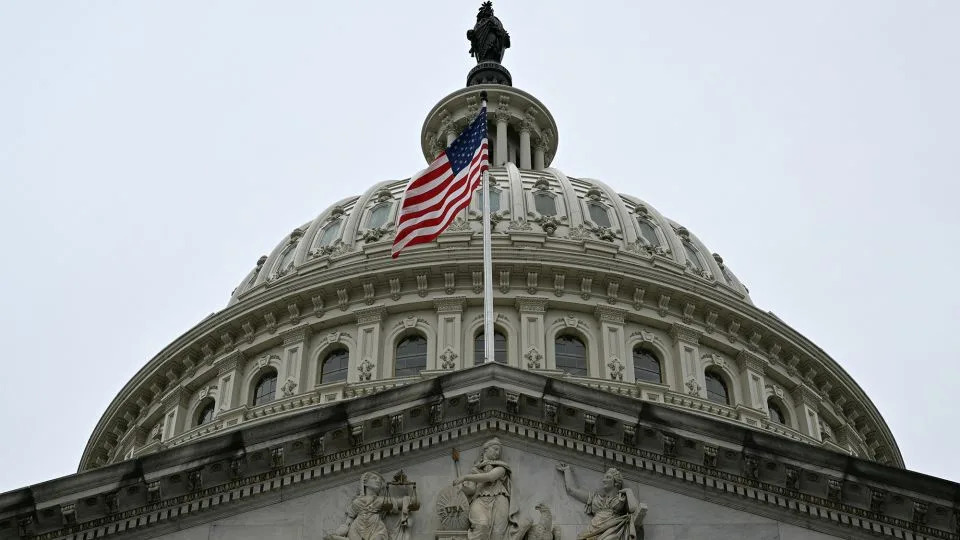
The US Capitol in Washington, DC, on March 22. - Pedro Ugarte/AFP/Getty Images
The US Capitol in Washington, DC, on March 22. – Pedro Ugarte/AFP/Getty Images

“Because of political gameplay, about 60 million Americans will have to make hard choices between paying for the internet or paying for food, rent, and other utilities, widening the digital divide in this country,” said Gigi Sohn, a former top FCC official. “It’s embarrassing that a popular, bipartisan program with support from nearly half of Congress will end because of politics, not policy.”

Without the aid, low-income Americans like George would be priced out of home internet service. The prospect of losing a critical lifeline to the modern economy has put ACP subscribers on edge. Many tell CNN they are irate at Congress for letting them down and, through inaction, taking away a basic, essential utility.

“My grandkids, they make fun of me,” George said with a chuckle. “They say I’m cheap. I go, ‘No, Grandma’s thrifty.’ I don’t have any choice; I have to account for every penny. And this would mean that that food bill would have to be cut down. There’s no place else I would be able to take it from.”

Military families, older Americans and rural residents most at risk

The ACP has quickly gained adoption since Congress created the program in the 2021 bipartisan infrastructure law. It is overwhelmingly popular with both political parties, surveys show.

Military families account for almost half of the ACP’s subscriber base, according to the White House and an outside survey backed by Comcast.

More than a quarter of ACP users live in rural areas, the same survey said, with roughly 4 in 10 enrolled households located in the southern United States alone. As many as 65% of respondents said they feared losing their job without the ACP; 3 out of 4 said they worry about losing online health care services, and more than 80% said they believe their kids would fall behind in school.

Large swaths of the ACP’s user base trend older; Americans over 65 account for almost 20% of the program. And as many as 10 million Americans who use the program are at least age 50.

Michelle McDonough, 49, works part time at a tobacco shop in Maine and lives off Social Security disability payments. She is one statistics class away from earning an associate degree in behavioral health. Not only does she go to class virtually, but she also sees a psychiatrist who only meets patients through telehealth visits.

Michelle McDonough says she would have to cut back on groceries if the ACP goes away. - Courtesy Michelle McDonough
Michelle McDonough says she would have to cut back on groceries if the ACP goes away. – Courtesy Michelle McDonough

Like George, McDonough also expects she’ll have to cut back on groceries if the ACP goes away. There’s a library roughly five miles from her home with internet access, but having to go out of her way would cost her even more time and money she doesn’t have, she said. Besides, McDonough added, her car is dying and the library is rarely open in snowy weather.

If politicians allow the ACP to collapse, it will be a sign of how out of touch they are with their voters, McDonough said.

“I’m trying to become a productive member of society, something that they say people on low income are not,” McDonough said. “I’m trying. And, you know, one of the programs that’s helping me, they’re talking about taking it away — when there are definitely a lot of other things that they probably could take the funding from.”

How the ACP works to bring American communities online

Congress authorized the ACP with an initial $14 billion in funding in 2021. That money has now spread to virtually every congressional district in the country. It is the largest internet affordability program in US history, the government has said, describing it as working hand-in-glove with billions of dollars in new infrastructure spending.

Building out high-speed internet cables is costly; even more so to places that internet providers have traditionally overlooked as unprofitable or hard to reach. Historically, that has left millions of people with no or spotty service or facing sky-high prices just to get a basic internet plan.

Ethernet cables are seen running from the back of a wireless router in Washington, DC on March 21, 2019. - Mandel Ngan/AFP/Getty Images
Ethernet cables are seen running from the back of a wireless router in Washington, DC on March 21, 2019. – Mandel Ngan/AFP/Getty Images

Investing in infrastructure is a first step, but it means nothing if Americans cannot afford the connectivity it provides. So the ACP helps bridge that price gap for consumers while also benefiting internet providers, many of whom say the program ensures a base of demand to support building in otherwise money-losing markets.

“I can think of lots of examples where we’re boring under a river to get to two customers, and that was extremely costly,” said Gary Johnson, CEO and general manager of Paul Bunyan Communications, a Minnesota-based telecom cooperative serving some of the furthest reaches of the state. “To get fiber in the most rocky areas, we’re literally using a rock saw and we’re cutting, slicing a path through that rock so we can put our fiber cable in. The fact you’re dividing that [cost] over a very small number of customers? That’s ultimately challenging.”

In a recent FCC survey, more than half of rural respondents — and 47% of respondents overall — said the ACP was their first-ever experience with having home internet.

Extra shifts, grocery cuts: What an ACP collapse would mean

If the ACP collapses, some, like George and McDonough, will make cuts to their budget to stay online.

Kamesha Scott, a 29-year-old mother in St. Louis who works two jobs delivering Amazon packages and handling restaurant takeout orders, told CNN she would have to pick up extra shifts to make ends meet. And that would mean seeing her two kids even less, she said.

Kamesha Scott, 29, says she would have to work extra shifts to make ends meet if her internet bills go up. - Courtesy Kamesha Scott
Kamesha Scott, 29, says she would have to work extra shifts to make ends meet if her internet bills go up. – Courtesy Kamesha Scott

Expect others to resort to a mishmash of ad hoc solutions, policy experts say.

That could include using the free Wi-Fi at fast-food restaurants, school parking lots, and other public spaces. Or it could mean falling back on cellphone data service, at least where it’s available and plans are still affordable.

Roughly a third of the country’s 123,000 public libraries offer mobile hotspot lending, allowing visitors to borrow palm-sized devices that pump out a cellular signal that can substitute for home internet service in a pinch, said Megan Janicki, a policy expert at the American Library Association. But they aren’t a perfect solution: The cell signal may be weak, or users could have to wait to check one out.

“Depending on how long the waitlist is, they’re waiting at least three weeks, if not longer,” Janicki said.

ACP subscribers could turn to other government aid. The FCC’s Lifeline program, which dates to the Reagan administration, similarly gives low-income households a monthly discount on phone or internet service. But the benefit pales in comparison: It’s worth only $9.25 a month, or $34.25 for tribal subscribers — a fraction of what ACP subscribers are currently eligible for.

Turning low-income Americans into political pawns

Despite the ACP’s popularity, routine congressional gridlock and the politics of an election year have turned low-income Americans into unwitting — and in many cases unwilling — pawns in a much larger battle.

Earlier this year, a bipartisan group of Senate and House lawmakers unveiled legislation to authorize $7 billion to save the ACP — that’s $1 billion more than the Biden administration asked for.

The bill has not moved.

“The House Republicans attempting to demonstrate that they are cutting back on government spending makes re-funding the ACP very difficult,” Blair Levin, a telecom industry analyst at New Street Research, wrote in a research note in January. “It is unlikely the House Republican leadership will allow the bill to go to the floor.”

A crew works on a cell tower in Lake Havasu City, Ariz., on Tuesday, August 24, 2021. - Bill Clark/CQ-Roll Call, Inc/Getty Images
A crew works on a cell tower in Lake Havasu City, Ariz., on Tuesday, August 24, 2021. – Bill Clark/CQ-Roll Call, Inc/Getty Images

But there is growing evidence that money spent through the ACP ends up saving taxpayers in the long run. In a recent study, Levin said, researchers estimated that every $1 of ACP spending increases US GDP by $3.89, while other research has outlined how telemedicine can lead to substantial savings in health care.

Even though extending ACP benefits could help lawmakers from both parties as they head home to campaign, perhaps the biggest political beneficiary may be Biden as his campaign touts the administration’s economic record ahead of the election.

Jonathan Blaine, a freelance software engineer in Vermont and an ACP subscriber, pins the blame on certain Republicans that he says would rather hurt working-class people than give Biden a political victory.

“You guys seem to promote that you’re for the working-class people, but realistically, the working-class people are the ones that you’re screwing over most of the time,” Blaine said, speaking directly to GOP lawmakers. “You’re taking ACP away from the farmers that can check the local produce prices and be able to reasonably negotiate their prices with retailers. You’re removing disabled people’s ability to fill their prescriptions online.”

Lawmakers are likely to feel voters’ wrath in November if the ACP falls apart, Blaine added.

He called it “sickening” that lawmakers keep removing these benefits for poorer Americans from legislation “left and right.”

“But the fact that you sit there and smile to our faces trying to say you’re for the working class? You’re for the poor? You’re for the less fortunate? It’s absolute bulls**t,” he added. “And most of us see right through your bulls**t, and that is why you’re losing seats.”

Ukraine ramps up spending on homemade weapons to help repel Russia

Associated Press

Ukraine ramps up spending on homemade weapons to help repel Russia

Hanna Arhirova – March 25, 2024

A worker assembles mortar shells at a factory in Ukraine, on Wednesday, January 31, 2024. (AP Photo/Evgeniy Maloletka)
A mortar shell on a lathe at a factory in Ukraine, on Wednesday, January 31, 2024. (AP Photo/Evgeniy Maloletka)
Workers check 82mm mortars at a factory in Ukraine, on Friday, December 22, 2023. (AP Photo/Evgeniy Maloletka)
Workers weld reinforced steel for artillery vehicles at a factory in Ukraine, on Wednesday, January 31, 2024. (AP Photo/Evgeniy Maloletka)
An engineer installs components in Kyiv region, Ukraine, on Wednesday, February 7, 2024. (AP Photo/Evgeniy Maloletka)
An engineer assembles parts on a combat drone in Kyiv region, Ukraine, on Monday, February 6, 2023. (AP Photo/Evgeniy Maloletka)
A worker stores mortar shells at a factory in Ukraine, on Wednesday, January 31, 2024. (AP Photo/Evgeniy Maloletka)
Workers moving by crane an armored artillery vehicle hood at a factory in Ukraine, on Wednesday, January 31, 2024. (AP Photo/Evgeniy Maloletka)
Armored vehicles are worked on at a factory in Ukraine, on Friday, December 22, 2023. (AP Photo/Evgeniy Maloletka)
An engineer assembles an antenna for guiding an exploding drone in Kyiv region, Ukraine, on Saturday, February 10, 2024. (AP Photo/Evgeniy Maloletka)
FILE - A sea drone cruises on the water during a presentation by Ukraine's Security Service in Kyiv region, Ukraine, on Tuesday, March 5, 2024. (AP Photo/Evgeniy Maloletka, File)
A sea drone cruises on the water during a presentation by Ukraine’s Security Service in Kyiv region, Ukraine, on Tuesday, March 5, 2024. (AP Photo/Evgeniy Maloletka, File)
Engineers install components on exploding drones in Kyiv region, Ukraine, on Wednesday, February 7, 2024. (AP Photo/Evgeniy Maloletka)
Exploding drones are ready to be shipped to the battlefield in Kyiv region, Ukraine, on Wednesday, February 7, 2024. (AP Photo/Evgeniy Maloletka)
A worker walks past artillery vehicles at a factory in Ukraine, on Wednesday, January 31, 2024. (AP Photo/Evgeniy Maloletka)
Engineers install antennas on a land drone in Kyiv region, Ukraine, on Wednesday, February 7, 2024. (AP Photo/Evgeniy Maloletka)
Workers weld reinforced steel for armored vehicles at a factory in Ukraine, on Friday, December 22, 2023. (AP Photo/Evgeniy Maloletka)

KYIV, Ukraine (AP) — Ukraine needs any edge it can get to repel Russia from its territory. One emerging bright spot is its small but fast-growing defense industry, which the government is flooding with money in hopes that a surge of homemade weapons and ammunition can help turn the tide.

The effort ramped up sharply over the past year as the U.S. and Europe strained to deliver weapons and other aid to Ukraine, which is up against a much bigger Russian military backed by a thriving domestic defense industry.

The Ukrainian government budgeted nearly $1.4 billion in 2024 to buy and develop weapons at home — 20 times more than before Russia’s full-scale invasion.

And in another major shift, a huge portion of weapons are now being bought from privately owned factories. They are sprouting up across the country and rapidly taking over an industry that had been dominated by state-owned companies.

A privately owned mortar factory that launched in western Ukraine last year is making roughly 20,000 shells a month. “I feel that we are bringing our country closer to victory,” said Anatolli Kuzmin, the factory’s 64-year-old owner, who used to make farm equipment and fled his home in southern Ukraine after Russia invaded in 2022.

Yet like many aspects of Ukraine’s war apparatus, its defense sector has been constrained by a lack of money and manpower – and, according to executives and generals, too much government red tape. A more robust private sector could help root out inefficiencies and enable factories to churn out weapons and ammunition even faster.

The stakes couldn’t be higher.

Russia controls nearly a quarter of Ukraine and has gained momentum along the 1,000 kilometer (620 mile) front line by showing a willingness to expend large numbers of troops to make even the smallest of advances. Ukrainian troops regularly find themselves outmanned and outgunned, and this has contributed to falling morale.

“You need a mortar not in three years, you need it now, preferably yesterday,” said Taras Chmut, director of the Come Back Alive Foundation, an organization that has raised more than $260 million over the past decade to equip Ukrainian troops with machine guns, armored vehicles and more.

WARTIME ENTREPRENEURS

Kuzmin, the owner of the mortar factory, fled the southern city of Melitopol in 2022 after Russia invaded and seized his factory that mostly made spare parts for farm equipment. He had begun developing a prototype for mortar shells shortly after Russia invaded Ukraine in 2014, when it illegally annexed the Crimean Peninsula.

Kuzmin took over a sprawling warehouse in western Ukraine last winter. His long-term goals include boosting production to 100,000 shells per month and developing engines and explosives for drones.

He is just one of many entrepreneurs transforming Ukraine’s weapons industry, which was dominated by state-owned enterprises after the break-up of the Soviet Union. Today, about 80 percent of the defense industry is in private hands — a mirror image of where things stood a year ago and a stark contrast with Russia’s state-controlled defense industry.

Each newly made projectile is wrapped in craft paper and carefully packed into wooden crates to be shipped to Romania or Bulgaria, where are loaded with explosives. Several weeks later, they’re shipped back and sent to the front.

“Our dream is to establish a plant for explosives,” said Kuzmin, who is seeking a partner to make that happen.

OBSTACLES TO GROWTH

Ukraine’s surge in military spending has occurred against a backdrop of $60 billion in U.S. aid being held up by Congress and with European countries struggling to deliver enough ammunition.

As impressive as Ukraine’s defense sector transformation has been, the country stands no chance of defeating Russia without massive support from the West, said Trevor Taylor, a research fellow at the Royal United Services Institute, a London-based think tank.

“Ukraine is not capable of producing all the munitions that it needs for this fight,” Taylor said. “The hold up of $60 billion of American help is really proving to be a significant hindrance.”

Russia is also pumping more money into its defense industry, whose growth has helped buffer its economy from the full brunt of Western sanctions. The country’s defense minister, Sergei Shoigu, recently boasted of huge increases in the manufacture of tanks, drones and ammunition.

“The entire country has risen and is working for our victory,” he said.

Compared with last year, Ukraine’s output of mortar shells is about 40 times higher and its production of ammunition for artillery has nearly tripled, said Oleksandr Kamyshin, Ukraine’s minister of strategic industries. There has also been a boom in drone startups, with the government committing roughly $1 billion on the technology — on top of its defense budget.

“We now produce in a month what we used to produce in a year,” said Vladislav Belbas, the director general of Ukrainian Armor, which makes a wide array of military vehicles.

For the Ukrainian army’s 28th brigade, which is fighting near Bakhmut, delays in foreign weapon supplies haven’t yet posed any problems for troops “because we are able to cover our need from our own domestic production,” said Major Artem Kholodkevych.

Still, domestic weapons factories face a range of challenges — from keeping up with changing needs of battlefield commanders, to their own vulnerability to long-range Russian missile strikes.

But perhaps the greatest immediate hindrance is a lack of manpower.

Yaroslav Dzera, who manages one of Ukrainian Armor’s factories, said he struggles to recruit and keep qualified workers, not least because many of them have been mobilized to fight.

CUTTING THROUGH RED TAPE

Weapons companies say another roadblock to growth is bureaucracy.

The government has tried to become more efficient since the war began, including by making its process for awarding contracts more transparent. But officials say the country has a long way to go.

Shortly before he was replaced by President Volodymyr Zelenskyy, Ukraine’s former top general, Valerii Zaluzhnyi, highlighted the problem in an essay he wrote for CNN, saying Ukraine’s defense sector remained “hamstrung” by too many regulations and a lack of competition.

In spite of the challenges, one success story has been Ukraine’s drone industry. Ukrainian-made sea drones have proven to be an effective weapon against the Russian fleet in the Black Sea.

There are around 200 companies in Ukraine now focused on drones and output has soared — with 50 times more deliveries in December compared with a year earlier, according to Mykhailo Fedorov, the country’s minister of digital transformation.

Russia’s war in Ukraine is not a standoff over whose got better drones or missiles, said Serhii Pashynskyi, head of the National Association of Ukrainian Defense Industries trade group.

“We have a war of only two resources with Russia — manpower and money,” he said. “And if we learn to use these two basic resources, we will win. If not, we will have big problems.”

___

Associated Press reporter Volodymyr Yurchuk contributed to this report.

NBC News in revolt over Ronna McDaniel hiring. Will the network reverse course?

Los Angeles Times

NBC News in revolt over Ronna McDaniel hiring. Will the network reverse course?

Stephen Battaglio – March 25, 2024

FILE - Republican National Committee Chair Ronna McDaniel speaks before a Republican presidential primary debate hosted by NBC News, Nov. 8, 2023, at the Adrienne Arsht Center for the Performing Arts of Miami-Dade County in Miami. Facing a cash crunch and harsh criticism from a faction of far-right conservatives, McDaniel, on Friday, Feb. 2, 2024, called for the party to unite behind the goal of defeating President Joe Biden. (AP Photo/Rebecca Blackwell, File)
Then-Republican National Committee Chair Ronna McDaniel speaks before a GOP presidential primary debate hosted by NBC News. (Rebecca Blackwell / Associated Press)

The hosts at NBC News’ cable outlet MSNBC continued to pound away at their parent organization’s decision to hire former Republican National Committee chair Ronna McDaniel as an on-air analyst.

The blowback unfolded throughout the day on the progressive cable news network, presenting a highly unusual situation in which well-known TV personalities went directly to viewers to challenge a decision made by their top managers.

The open rebellion could make it difficult for Comcast-owned NBC News to move forward with any plans to use McDaniel, who resigned from the RNC last month. A representative for NBC News said Monday there was no change in her status. But people familiar with the situation who are not authorized to comment publicly said McDaniel will probably be out before she even begins.

Chuck Todd, the ex-“Meet the Press” moderator, opened the door to the criticism when he appeared on his former program Sunday and blasted the network’s decision to make McDaniel a paid contributor, citing her record of supporting former President Trump’s false claims that the 2020 election was stolen.

MSNBC hosts weighed in on Monday, starting with “Morning Joe” co-hosts Joe Scarborough and Mika Brzezinski saying McDaniel will not be welcome on their daily program, a favorite of politicians and opinion leaders in Washington, D.C., and New York.

“We weren’t asked our opinion of the hiring, but, if we were, we would have strongly objected to it for several reasons.” Scarborough said.

Brzezinski said she hoped NBC News management will reconsider its decision to bring McDaniel aboard.

“Deadline: Washington” anchor Nicolle Wallace praised Todd for his Sunday remarks. “He did something really brave,” Wallace told her viewers. “I talked to him yesterday. I said I’m knitting you a cape.”

Wallace, a former George W. Bush White House communications director who has long been anti-Trump, and Joy Reid both devoted lengthy segments critical of the McDaniel hiring. Reid described McDaniel as “a major peddler of the big lie,” referring to the Trump’s election falsehoods. Reid cited how McDaniel was on Trump’s phone calls to GOP officials in Michigan, urging them not to certify the state’s 2020 election results.

MSNBC host Jen Psaki cited a Liz Cheney tweet that noted how McDaniel once described the Jan. 6 insurrection at the Capitol as “legitimate political discourse.”

“This is about truth versus lies,” Psaki, formerly the Biden White House press secretary, said.

Read more: Nicolle Wallace won’t just be a never-Trumper as her role expands at MSNBC

Rachel Maddow, MSNBC’s biggest star, also asked NBC News management to reverse the decision.

“The fact that McDaniel is on the payroll at NBC News — to me that is inexplicable,” Maddow said on her program. “You wouldn’t hire a wise guy, you wouldn’t hire a made man, like a mobster to work in a D.A.’s office.”

Former NBC News executives took to social media to chastise the move as well. Cheryl Gould, a producer and executive at the division for 37 years, wrote an open letter on her Facebook page to Carrie Budoff Brown, the senior vice president of politics for NBC News who was involved in McDaniel’s hiring.

“We all make mistakes,” Gould wrote. “This happens to be a colossal one that unfortunately makes the network, your bosses and yourself look misguided at best, craven at worst.”

NBC has a long history of hiring former government and political officials as contributors to its news operation. Such deals are done to get exclusive access to insider knowledge — and to keep prominent talking heads from appearing on the competition.

In 1977, the network gave Gerald Ford a $1-million deal — brokered by William Morris Agency — to be a commentator and contributor to a series of specials about his presidency.

In the same year the network signed a similar deal to former Secretary of State Henry A. Kissinger. The move prompted a top news executive at the network, Richard Wald, to leave the company in protest, as he believed the deal siphoned resources from journalism projects. Wald also believed Kissinger owed it to the country to appear on NBC for free.

Political figures have segued into TV news commentary and lucrative TV anchor roles ever since.

NBC already has another former RNC chair on its payroll in Michael Steele, a co-host on the MSNBC program “The Weekend.” Psaki headed to MSNBC immediately after her departure from the Biden White House. Wallace worked on John McCain’s 2008 presidential campaign after her time in the George W. Bush administration.

All TV news organizations stock up on paid contributors during election season.

But the internal hostility toward McDaniel is linked to her support of Trump’s denial of the 2020 voting results, disqualifying her as a credible source to many inside the news organization. Before her appearance Sunday on “Meet the Press,” she had never acknowledged that President Biden won the election fairly.

McDaniel attributed her previous defense of Trump’s claims to her role in the RNC and said she can be “a little bit more of myself” now that she is no longer a party official. But she continues to say there were problems with the 2020 vote due to the dependence on mail-in ballots.

In a memo sent Friday to NBC News staff that was provided to the Times, Brown said McDaniel would provide a valuable perspective to the division’s coverage of the 2024 election with Trump as the presumptive Republican presidential nominee.

“It couldn’t be a more important moment to have a voice like Ronna’s on the team,” Brown said. “As we gear up for the longest general election season in recent memory, she will support our leading coverage by providing an insider’s perspective on national politics and on the future of the Republican Party — which she led through some of the most turbulent and challenging moments in political history.”

Rachel Maddow Calls on NBC News to ‘Reverse’ Ronna McDaniel Hire: ‘Acknowledge When You Are Wrong’

The Wrap

Rachel Maddow Calls on NBC News to ‘Reverse’ Ronna McDaniel Hire: ‘Acknowledge When You Are Wrong’ | Video

Benjamin Lindsay – March 25, 2024

Rachel Maddow weighed in on NBC News’ hiring of Ronna McDaniel Monday night, calling on the network to “acknowledge when you are wrong” and “reverse” the decision to add the former Republican National Committee chair and Donald Trump ally to their payroll.

“This is a difficult time for us as a country, and I think that means we need to be clear-eyed about the implications of it,” the MSNBC host said.

Maddow’s lengthy segment, as shared to her personal X account, began by reflecting on the longstanding pertinence of the “strongman” in American politics who tells “us that we need a new system of government where everything’s under their control and politics is over.” And that prior to former President and 2024 Republican nominee Donald Trump, none have gained the political traction necessary to infiltrate the democratic system.

Without naming her explicitly at first, the MSNBC host in part blamed McDaniel for paving the way for Trump’s rise to power.

“We’ve had a lot of these guys. But our generation’s version of this guy has gotten a lot farther than all the rest of them. And why is that? He would’ve been as forgotten as all the rest of them had he not been able to attach himself to an institution like the Republican Party,” Maddow explained. “And had the leader of that party in his time not decided that she wouldn’t just abide him, she would help. She would help with the worst of it.”

In the next video, Maddow clarified that despite media reports to the contrary, MSNBC leadership has about-faced its initial support of McDaniel’s hiring and assured staffers since Saturday, following “outrage” from many network colleagues, that the Republican figure would not have a place on the network.

“Our leadership at MSNBC heard us, understood and adjusted course. We were told this weekend in clear terms Ronna McDaniel will not be on our air,” Maddow said. “Ronna McDaniel will not be on MSNBC. And I say that and give you that level of detail because there has been an effort since by other parts of the company to muddy that up in the press and make it seem like that’s not what happened at MSNBC. I can assure you, that is what happened at MSNBC. Ronna McDaniel will not appear on MSNBC, so says our boss since Saturday, and it has never been anything other than clear.”

She added that NBC News’ decision to add McDaniel as commentator was “inexplicable” — like hiring a “mobster” to work for the D.A.’s office or a pickpocket to work as a TSA screener.

“I hope they will reverse their decision,” she said, adding that “it’s not about Democratic Party-Republican Party. It’s not about partisanship. It’s not about right vs. left. It’s not about being a political professional vs. some other kind of person. It’s not about being mean or nice to journalists. It’s not about just being associated with Donald Trump and his time in the Republican Party. It’s not even about lying or not lying. It’s about our system of government and undermining elections and going after democracy as an ongoing project.”

Maddow concluded that “this is a difficult time for us as a country,” and that inevitably “mistakes will be made” in how various powers that be conduct themselves in the face of that hardship.

“But part of our resilience as a democracy is going to be us recognizing when decisions are bad ones and reversing those bad decisions,” she emphasized. “Hearing legitimate criticism, responding to it and correcting course. Not digging in, not blaming others. Take a minute, acknowledge that maybe it wasn’t the right call. It is a sign of strength, not weakness, to acknowledge when you are wrong. It is a sign of strength — and our country needs us to be strong right now.”

Watch clips from the “Rachel Maddow Show” segment in the video above

The post Rachel Maddow Calls on NBC News to ‘Reverse’ Ronna McDaniel Hire: ‘Acknowledge When You Are Wrong’ | Video appeared first on TheWrap.

Our criminal justice system is broken. But Donald Trump isn’t a victim.

USA Today – Opinion

Our criminal justice system is broken. But Donald Trump isn’t a victim.

Bill Proctor – March 23, 2024

No one is above the rule of law.

That’s the promise of the American justice system – a promise that is tested by former President Donald Trump.

Trump is facing dozens of criminal charges related to election interference and business dealings.

Like clockwork, what follows Trump news is Trump noise. He hurls insults at judges, prosecutors, investigators and their agencies as he pushes back in an ugly, unprecedented fashion to pump up his already angry-at-America base of supporters.

If we faced criminal charges, we know it would not help our defense if we insulted or threatened that very same criminal justice system.

Former President Donald Trump arrives at the criminal court in New York City on Feb. 15, 2024.
Trump isn’t entirely wrong

Yet Trump says that he is the victim of a witch hunt by Democrats and his enemies, that he is suffering like Alexei Navalny, just like Jesus, just like Black people.

It’s a ludicrous assertion.

But he’s not entirely wrong. The legal system is sometimes unfair, but not in the ways Trump suggests – and not to Trump and people like him.

‘You are going to pay the price’: DeSantis sends state troopers to halt Florida spring break crime. What about Trump’s Mar-a-Lago?

Consider that Trump has bought and will continue to buy the best available defense – with $50 million in legal fees – and what that says about the stark contrast between Trump and those who are struggling and must accept whatever the justice system throws at them.

With money and influence, the usual lawful process can be delayed, compromised or crushed along the way.

Without money and influence, Americans facing criminal charges crimes often lose the game they are forced to play. They’re walking into a meat grinder, almost always represented by struggling, inexperienced court-appointed lawyers without the finances to support a good defense.

There is plenty of evidence that more often than we’d like to think, the truly innocent have gone to prison for crimes they didn’t commit, and not because of politics.

Since 1989, nearly 3,500 Americans have been exonerated, according to the National Registry of Exonerations, after serving more than 31,000 years for crimes they did not commit. Those numbers clearly indicate, and I think most of us would agree, that we have a broken criminal justice system in need of reform.

To understand true legal persecution, look no further than less-privileged Michigan citizens like Temujin Kensu, formerly known as Fredrick Freeman, and Detroit native Ray Gray.

Estimated 25,000 to 30,000 people wrongfully imprisoned

Kensu and Gray are among the estimated 25,000 to 30,000 people condemned to lengthy U.S. prison sentences for crimes there is ample reason to believe they did not commit. The Innocence Project says at least 4% to 6% of the nation’s prison population is factually innocent.

Kensu was convicted in 1987 of murder in Port Huron for the broad-daylight shotgun slaying of 20-year-old Scott Macklem, cut down as he walked away from a classroom building on the campus of St. Clair County Community College.

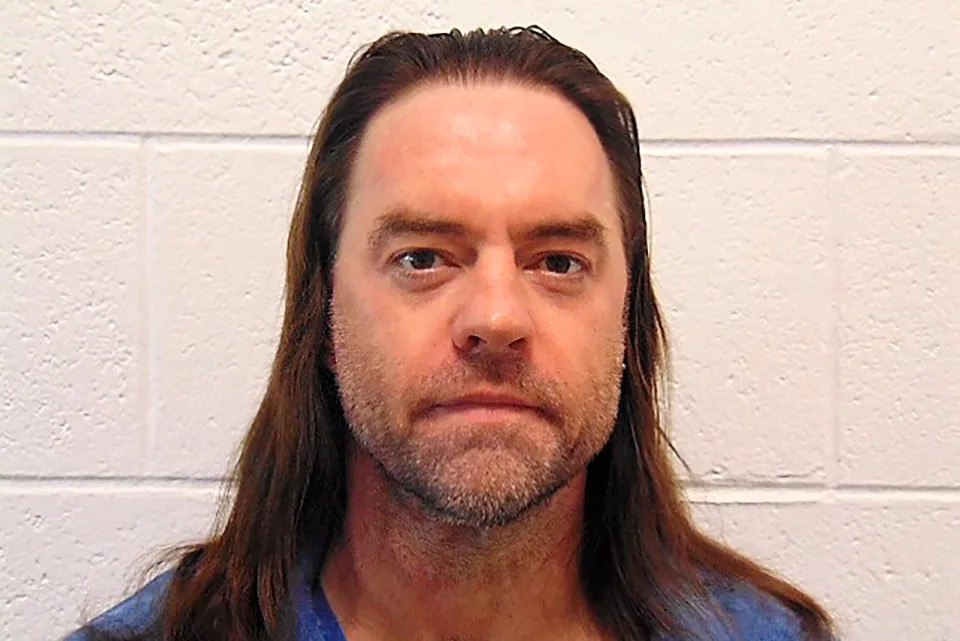
In this Oct. 14, 2018, photo provided by the Michigan Department of Corrections is Temujin Kensu, also known as Fred Freeman.

Several witnesses testified that on the morning of the murder, Kensu was hundreds of miles away. But he was convicted by a jury when the prosecutor, Robert Cleland, presented without any proof a theory that the man with no money, a pregnant girlfriend, no job and living on food stamps chartered a plane to travel 450 miles to commit the murder and return undetected.

When Kensu convinced the federal court that mistakes and harmful acts by the prosecutor, his drug-addicted lawyer and corrupt cops meant he should be released or be granted a new trial, an appeals court decided federal Judge Denise Page Hood’s ruling didn’t count. The Antiterrorism and Effective Death Penalty Act of 1996 time-limited his innocence claim.

At age 60, Kensu remains in prison, very ill and unable to get the governor to commute his sentence.

Criminal justice: Laken Riley’s death made the news, but here’s the real story on undocumented migrants

Released after 48 years in state prison

Raymond Gray spent more than 48 years in state prison in the robbery and murder of a drug dealer, convicted in a bench trial of the 1973 crime based on witness testimony – even though his family and one of the robbery suspects testified that Gray was at home when the crime was committed, styling the hair of one of his barber customers.

Despite police reports of two male perpetrators, one armed with a pistol at the time of the robbery, only Gray was charged and convicted when a judge chose not to believe the testimony of Gray’s relatives.

The Wayne County prosecutor’s office agreed to release Gray only if he pleaded to some element of the crime.

In this photo provided by Bill Proctor, Ray Gray and his wife Barb Gray pose for a photo after he was released from a state prison in Muskegon, Mich., on Tuesday, May 25, 2021. Gray was in prison for 48 years for the fatal shooting of a man in Detroit in 1973. He has long maintained his innocence and provided new evidence in March, 2021. Gray was not exonerated, but prosecutors agreed to drop the conviction in exchange for a no-contest plea to second-degree murder. He was sentenced to time served.
In this photo provided by Bill Proctor, Ray Gray and his wife Barb Gray pose for a photo after he was released from a state prison in Muskegon, Mich., on Tuesday, May 25, 2021. Gray was in prison for 48 years for the fatal shooting of a man in Detroit in 1973. He has long maintained his innocence and provided new evidence in March, 2021. Gray was not exonerated, but prosecutors agreed to drop the conviction in exchange for a no-contest plea to second-degree murder. He was sentenced to time served.More
Wrongfully convicted deserve protection and help

The wrongfully convicted and their families have been awarded billions in compensation for their suffering through judgments or state-mandated payouts. Imagine what the cost to communities would be if the nation recognized and paid damages to all the known victims of the justice system’s shortcomings.

Unjust actions in the criminal justice system have left many wondering why the Constitution didn’t fulfill its promise to them.

Last year, the right-wing majority of Trump’s Supreme Court, led by Justice Clarence Thomas, stacked with a right-wing majority, again slammed the door on innocence claims. Trump is counting on this same Supreme Court to save him from criminal prosecution.

The rule of law claims to grant equal rights and protections to everyone. It’s up to us to make that promise a reality.

Maybe now, as we face the madness of Trump’s bogus claim of unfair treatment, we should consider the real unfairness in our criminal justice system – and enact long-needed reforms and improvements to better protect those of us who aren’t rich and famous from punishment we truly don’t deserve.

Bill Proctor is a private investigator specializing in investigating wrongful convictions with his own firm, which he started after a four-decade career in broadcasting including 33 years as a reporter, producer and anchor in metro Detroit. This column first published in the Detroit Free Press.

Trump’s legal fees are sky high. An elaborate PAC scheme is helping pay them — for now

USA Today

Trump’s legal fees are sky high. An elaborate PAC scheme is helping pay them — for now

Erin Mansfield and Zac Anderson – March 24, 2024

A pro-Trump super PAC has been transferring millions of dollars every month to the former president’s fund for paying his ballooning legal bills. The transfers have kept the fund, Save America, afloat as it bled tens of millions of dollars on legal bills in the year since a New York grand jury indicted former President Donald Trump, the first in a wave of criminal indictments and civil judgments against him.

Save America, started days after Trump lost the 2020 election, is a type of fund called a “leadership PAC” that can only accept $5,000 per election cycle from each donor, but has few restrictions on how it spends money. It is being funded by Make America Great Again Inc., or MAGA Inc., a super PAC that started in 2022 and can raise unlimited amounts of money.

In the past, Save America’s highest spending involved audio-visual expenses for Trump’s public appearances, and donations to other groups, including MAGA Inc. But the money Save America spent on legal bills, including to firms that represent him in civil and criminal cases, has skyrocketed in the past two years.

So MAGA Inc. has stepped in to bail out Save America by paying it back. It sent $5 million at the beginning of every month from last July through February to Save America, totaling $40 million, in addition to $12.3 million that MAGA Inc. transferred in May and June, according to records from the Federal Election Commission.

It’s more money than MAGA Inc. has spent on independent expenditures, such as advertisements for Trump and against opponents like South Carolina Gov. Nikki Haley, since it started in 2022. That totaled $50.5 million since the beginning of 2023, compared to $52.3 million in transfers to Save America since May.

“It’s hard for me to think of another example where this has happened,” said Daniel Weiner, the director of elections and government at the Brennan Center for Justice, an advocacy group on democracy law based at New York University.

MAGA Inc. is sending the money to Save America to refund the $60 million it donated to MAGA Inc. in 2022 while it was on a spending spree. It would be illegal for the super PAC to simply donate its unlimited contributions to Save America, which has to follow federal contribution limits.

“This is certainly out of the ordinary,” Weiner said. “It was out of the ordinary for the leadership PAC to make a giant contribution to a super PAC, and now to do this kind of strange refund system, that is also something you would not normally see.”

Legal spending is tied to Trump’s civil, criminal cases

The transfer scheme has not provided a windfall for Save America, even though it raised more than $200 million since its creation. The PAC spent more than $64 million on legal bills through the end of report year 2023. Other money went to candidates during the 2022 election, outside organizations tied to former White House aides, and paying staff, even the former first lady’s fashion designer.

While public records can’t say what, specifically, law firms are being paid to do, records show Save America has paid more than 70 different lawyers and law firms, and many are listed on court paperwork representing Trump in his civil and criminal cases. And one lawyer who represented a Trump aide during the Jan. 6 Committee has said that Save America had an agreement with him.  Most recently, three of the four firms that submitted a court document saying he couldn’t pay a $454 million judgment in a fraud case against the Trump Organization — Habba Madaio & Associates LLP, Robert and Robert PLLC, and Continental PLLC — are some of Save America’s highest-paid firms.

“He appears to be spending an incredible amount of campaign finance money on legal expenses that range well beyond what would be considered campaign related,” said Michael Kang, a law professor at Northwestern University. “I doubt, however, that we’ll get to the bottom of all this until much later on.”

Leadership PACs like Save America were designed to help leaders in the House and Senate fund the campaigns of their allies. But there is gray area in the law that the Federal Election Commission has declined to close, making them virtual slush funds that have helped support public officials’ lavish lifestyles.

“I don’t think they were ever intended to be these kinds slush funds that could be used for, essentially the personal benefit of the officeholder sponsoring them,” Weiner said. “I’m not saying that any law has been broken. I think this is sort of a legal gray area.”

PACs hire lawyers regularly, but generally for other purposes. Lawyers often file paperwork with the Federal Election Commission, help candidates get on the ballot in various states, or even help get through a recount.

The Jan. 6 Committee dinged Trump for fundraising for an “Official Election Defense Fund” in the days after the 2020 election, when the fund didn’t exist and instead went to Save America. But Trump has more recently used his legal issues to ask his supporters for money, with the money going to a fundraising vehicle that currently pours into his 2024 campaign and Save America. (Campaign money cannot be used for personal expenses.)

After his March indictment, Trump’s fundraising arm sent out a photoshopped fake mugshot in an email seeking donations. Since Wednesday, Trump’s main fundraising arm has sent messages to supporters saying, “Democrats want to seize my properties,” referring to New York Attorney General Letitia James’ ability to seize his personal assets if he fails to pay the $454 million judgment in the Trump Organization case.

To stave off collection while he appeals that verdict, Trump is required to put up the $454 million or a bond for it by Monday, which his lawyers described as a “practical impossibility.” But help may be on the way: a just-announced deal to take his social media platform, Truth Social, and its parent company public could generate more than $3 billion for him.

Meanwhile, much of Save America’s money is coming from ordinary people. The fundraising arm brought in $50.5 million in donations smaller than $200 in 2023 alone, the latest information that is available from the Federal Election Commission.

Former President Donald Trump is seen March 16 in Ohio.
Trump’s ‘drain on resources’ keeps him behind Biden

The enormous legal bills have caused Trump to fall behind in 2024 campaign fundraising, both in his own funds and the funds of the Republican National Committee, which is now under pressure to help Trump out of his legal jeopardy.

Republican consultant Alex Conant said money matters less in presidential politics than it used to. Trump led Biden by two percentage points in a USA TODAY/Suffolk University Poll March 13 poll.

But the election likely will be decided by a small number of votes, so a significant spending advantage could make a difference and Trump’s legal issues are a “distraction and a drain on resources,” he added.

President Joe Biden’s campaign raised $21.3 million in February and spent $6.3 million, increasing its cash from $56 million at the end of January to $71 million at the end of February. In the same time period, Trump’s campaign collected $10.9 million and spent $7.8 million, increasing its cash from $30.5 million in January to $33.5 million.

The numbers show that Biden’s campaign is sitting on $37.5 million more cash than Trump’s, meaning that if the former president hadn’t spent more than $64 million on legal bills, and had instead put the money in his campaign account, he would have more money in the bank than the current president.

“I think both sides are going to have a lot of money, but if Trump has to divert a lot of his resources to his legal problems that’s money that’s not going to be spent on getting out the vote,” said Conant, who worked on U.S. Sen. Marco Rubio’s presidential campaign in 2016.

The Democratic National Committee, which is helping re-elect Biden, also continues to outpace the Republican National Committee, where Trump loyalists have taken hold. The DNC had $26.5 million in cash at the end of February, compared with $11.3 million for the RNC.

The campaign accounts and party committees provide an incomplete picture of the financial resources available to help the candidates. The fundraising arms both candidates use, who also called joint fundraising committees, are not required to provide an update on their finances until April 15.

Biden’s campaign announced this week that it raised $53 million through its various committees and the Democratic National Committee in February and had $155 million in available cash. Trump’s campaign did not announce joint fundraising committee numbers.

Trump and the RNC: Lara Trump says Republicans are willing to pay Donald Trump’s legal bills

Trump will need a new way to pay legal bills going forward

Going forward, Trump will need a new fundraising scheme to pay his legal bills. That’s because MAGA Inc. can only refund up to $60 million back to Save America. It’s refunded $52.3 million through the end of February. At the current rate, the remaining $7.7 million would run out in mid-April.

MAGA Inc. may have that money. The super PAC saw a fundraising boost in February, when it raised $12.8 million last month, up from $7.4 million in January, and has $25.5 million in available cash. That increase was thanks in part to a $5 million donation from Robert Bigelow, a Las Vegas tycoon who believes aliens can be found on earth.

“You could wonder, ‘Why aren’t they just paying the legal bills from the super PAC?'” said Weiner, from the Brennan Center in New York. “But they must feel for whatever reason that it’s more legally advantageous to pay the bills from the leadership PAC.”

A new fundraising vehicle could come to the rescue. His allies have set up a new joint fundraising committee, called the Trump 47 Committee. It will divvy what it raises it among the Trump campaign, Save America, the Republican National Committee, a PAC called the Presidential Republican Nominee Fund 2024 and Republican committees in 37 states, Guam and the District of Columbia.

Contributing: Aysha Bagchi

Lisa Murkowski, done with Donald Trump, won’t rule out leaving GOP

CNN

Lisa Murkowski, done with Donald Trump, won’t rule out leaving GOP

Manu Raju, CNN – March 24, 2024

Sen. Lisa Murkowski, aghast at Donald Trump’s candidacy and the direction of her party, won’t rule out bolting from the GOP.

The veteran Alaska Republican, one of seven Republicans who voted to convict Trump in his second impeachment trial amid the aftermath of January 6, 2021, is done with the former president and said she “absolutely” would not vote for him.

“I wish that as Republicans, we had … a nominee that I could get behind,” Murkowski told CNN. “I certainly can’t get behind Donald Trump.”

The party’s shift toward Trump has caused Murkowski to consider her future within the GOP. In the interview, she would not say if she would remain a Republican.

Asked if she would become an independent, Murkowski said: “Oh, I think I’m very independent minded.” And she added: “I just regret that our party is seemingly becoming a party of Donald Trump.”

Pressed on if that meant she might become an independent, Murkowski said: “I am navigating my way through some very interesting political times. Let’s just leave it at that.”

Murkowski hasn’t always been on the outs within her party. Appointed in 2002 by her father, Gov. Frank Murkowski, the senator’s politics were in line with the president at the time – George W. Bush – as she maintained a tight relationship with the senior GOP senator from her state, Ted Stevens, who helped build Alaska through federal dollars he funneled back home.

She later found herself at odds with Sen. John McCain’s running mate, the then-Alaska Gov. Sarah Palin, who had been sharply critical of her father. As the tea party rose in 2010, Murkowski was at sharp odds with the insurgent right-wing of her party. She lost a primary in 2010 to Republican Joe Miller, only to later hold on to her seat after she became the second candidate ever to win a write-in campaign for Senate in the general election.

Murkowski skated to reelection in her next two elections, even after voting to convict Trump in 2021, voting against Brett Kavanaugh for the Supreme Court in 2018 and supporting Ketanji Brown Jackson in 2022. She had been targeted by Trump and his allies in 2022 but was backed by Senate GOP Leader Mitch McConnell and his high-spending outside group.

In the 2024 cycle, Murkowski – along with Republican Sen. Susan Collins of Maine – offered a late endorsement of former South Carolina Gov. Nikki Haley, just days before she dropped out of the race.

Now, Murkowski is clear she’s ready to move past Trump. Asked about Trump’s recent comments that Jewish people who vote for Democrats must “hate” their religion, Murkowski said it was an “incredibly wrong and an awful statement.”

And Murkowski pushed back when asked last week about Trump’s other controversial rhetoric, namely that he views January 6 prisoners as “hostages” and “patriots” who should be pardoned.

“I don’t think that it can be defended,” Murkowski said. “What happened on January 6 was … an effort by people who stormed the building in an effort to stop an election certification of an election. It can’t be defended.”