If Democrats lose Arizona’s U.S. Senate race, they’ve got a huge Kyrsten Sinema problem
Phil Boas, Arizona Republic – November 2, 2022
Sen. Kyrsten Sinema leads a council of water experts meeting in her office in Phoenix on Oct. 17, 2022. They were discussing how to spend federal drought relief funds available for keeping Colorado River water in Lake Mead.
No one knows who will win the U.S. Senate race in Arizona.
The latest Fox News poll conducted Oct. 26-30 has Mark Kelly up by 2 points and within the margin of error. A toss-up.
Republican Blake Masters has closed a large gap in the past month. A similar poll taken in October showed him down 6 points to Kelly.
If the unexpected happens and the Republican wins this race, it will set up a fascinating dynamic in the post-election:
What to do about Kyrsten Sinema.
If Kelly loses, would Democrats risk another seat?
This is admittedly getting way ahead of things. Kelly, the Democrat, is far outraising Masters to the tune of $75.5 million to $9.9 million as of Sept. 30.
Kelly has been flooding the airwaves and the internet with clever ads in which he plays a working-class guy in a red ballcap festooned not with “Make America Great Again” but the next closest thing, an American flag.
In the background is a big rig splashed with Old Glory.
If Kelly playing a Republican in his ads does not win over enough cross-over Republicans or independents, Arizona Democrats will have a serious dilemma.
Can they still afford to hate Kyrsten Sinema?
Because if the incumbent Kelly goes down, once an improbable outcome, it likely means a red tsunami struck America and the state of Arizona, and more Republicans will be taking their seats and control in Congress and at the Arizona Capitol.
It will mean that Kyrsten Sinema, better than her Democratic cohorts, read the horizon and understood what was coming.
It will demonstrate with stunning clarity that Sinema was farsighted holding fast to the legislative filibuster now that Democrats have become the minority in the U.S. Senate.
And if Democrats continue their hate-fest against Arizona’s senior senator, it could mean they risk losing two U.S. Senate seats in Arizona in two years – as quickly as they gained them.
The party has no love left for Kyrsten Sinema
Will Arizona Democrats who censured Sinema in January for “her failure to do whatever it takes to ensure the health of our democracy” be willing to bury the hatchet to ensure they hold on to their remaining U.S. Senate seat?
Left-wing vitriol aimed at Sinema is a gusher on the internet. She is probably the most detested politician in the country today.
Would Democrats risk running a more liberal candidate such as U.S. Rep. Ruben Gallego in the 2024 Senate primary to knock her out? Would they risk that knowing that the country and state had swung right in the 2020 election?
These are fascinating questions to ponder.
But my guess is we know the answer. The marriage is over. Democrats have decided their differences with Sinema are unreconcilable.
Arizona Democrats reflect the temper of Democrats nationally, and they’re in no mood to compromise.
Will they move left and lose or go with a winner?
With the slimmest of governing majorities, U.S. congressional and Senate Democrats tried to push an industrial-strength progressive agenda with huge spending on the rest of the country. That would have worked had they gotten Sinema and Sen. Joe Manchin, D-W.V., to eliminate the legislative filibuster.
But Sinema and Manchin resisted – to their political damnation.
If Kelly goes down, Arizona Democrats are more likely to self-remove themselves from an Arizona Senate seat than go with a sure winner in Sinema.
It takes a blue dog Democrat to win a Senate seat in Arizona, but Arizona Democrats may not be able to tolerate a blue dog long enough to hold it.
Kelly is not a blue dog.
He has shown some independence when he criticized the White House reversal on Title 42, the public health order that kept some controls on immigration. He showed it again when he opposed a White House pick for wage administrator for the Labor Department.
But he also hid in the shadows for two years as Sinema fought filibuster battles, and he later supported its specific removal to pass voting rights legislation.
All of this makes the present-day race more intriguing.
Which brings us back to Masters and politics today
Mark Kelly is up against Blake Masters, who strikes me as the biggest bull—-er in Arizona politics. I’ve just never believed that Mr. smooth-talking Stanford grad and Big Tech executive is the Trump Republican he plays on TV.
He’s not that stupid.
I’m guessing that in his private moments, Masters understands the toxic downside to Donald Trump. Just a hunch.
His general election conversion to more centrist views further persuades me. Fanatics don’t compromise.
Which makes for quite a spectacle in the 2022 race for U.S. Senate in Arizona.
You have two candidates, a Democrat and a Republican, both playing MAGA guys on TV to win over Arizona voters.
There’s a word for Arizona politics today.
Not “left.”
Not “right.”
Just “whacked.”
Phil Boas is an editorial columnist with The Arizona Republic.
Big agriculture warns farming must change or risk ‘destroying the planet’
Dominic Rushe – November 2, 2022
Photograph: Jeff McIntosh/AP
Food companies and governments must come together immediately to change the world’s agricultural practices or risk “destroying the planet”, according to the sponsors of a report by some of the largest food and farming businesses released on Thursday.
The report, from a taskforce within the Sustainable Markets Initiative (SMI), a network of global CEOs focused on climate issues established by King Charles III, is being released days before the start of the United Nation’s Cop27 climate summit in Egypt.
Many of the world’s largest food and agricultural businesses have championed sustainable agricultural practices in recent years. Regenerative farming practices, which prioritize cutting greenhouse gas emissions, soil health and water conservation, now cover 15% of croplands.- ADVERTISEMENT -https://s.yimg.com/rq/darla/4-10-1/html/r-sf-flx.html
But the pace of change has been “far too slow”, the report finds, and must triple by 2030 for the world to have any chance of keeping temperature rises under 1.5C, a level that if breached, scientists argue, will unleash even more devastating climate change on the planet.
The report is signed by Bayer, Mars, McCain Foods, McDonald’s, Mondēlez, Olam, PepsiCo, Waitrose and others. They represent a potent political and corporate force, affecting the food supply chain around the world. They are also, according to critics, some of those most responsible for climate mismanagement with one calling the report “smoke and mirrors” and unlikely to address the real crisis.
Food production is responsible for a third of all planet-heating gases emitted by human activity and a number of the signatories have been accused of environmental misdeeds and “greenwashing”. Activist Greta Thunberg is boycotting Cop this year having called the global summit a PR stunt “for leaders and people in power to get attention”.
“We are at a critical tipping point where something must be done,” said the taskforce chair and outgoing Mars CEO, Grant Reid. “The interconnection between human health and planetary health is more evident than ever before.” Big food companies and agriculture must play a big part in changing that, said Reid. “It won’t be easy but we have got to make it work,” he said.
Agriculture is the world’s largest industry. Pasture and cropland occupy around 50% of the planet’s habitable land and uses about 70% of fresh water supplies. The climate crisis is challenging the industry across the world but the group’s call for change comes as the industry – which employs 1 billion people – is facing supply chain issues in the wake of the coronavirus pandemic and soaring inflation. It also comes amid mounting skepticism about promises to change from companies that have contributed to climate change.
These current issues must not detract from the need for change, the report argues. “With the inflationary environment and widespread supply chain disruption, it would be easy to reduce our focus on the longer-term challenge of scaling regenerative farming. But we believe it’s vital we maintain a sense of urgency. We must take action now to avoid more acute crises in the future,” its authors write.
Sunny George Verghese, chief executive of Olam, one of the world’s largest suppliers of cocoa beans, coffee, cotton and rice, said: “We cannot continue to produce and consume food and feed and fiber in the way we are doing today unless we don’t mind destroying the planet.
“The only way out for us is how we transition to a more resilient food system that will allow us to meet the needs of a growing population without the resource intensity we have today.”
The report studied three food crops, potatoes, rice and wheat, and has made policy recommendations it will present at Cop27.
The taskforce’s members are working to make the short-term economic case for change more attractive to farmers. “It’s just not compelling enough for the average farmer,” said Reid. More widely the report argues industry and government must also work harder to address the knowledge gap and make sure farmers are following best practices. Third, all parties involved in the agriculture industry from farmers to food producers to government, banks and insurers need to align behind encouraging a shift to more sustainable practices.
“It involves change for all the players including the government, private, public companies and others. No one player can do this on their own, this has to be a collaboration of the willing. What needs to happen now is action and delivery,” said Reid.
Over the next six months, the group will assess how they can spread the taskforce’s work with the aim of establishing a common set of metrics for measuring environmental outcomes, establishing a credible system of payments for farmers for environmental outcomes, easing the cost of farmers transitioning to sustainable practices, ensuring government policy rewards farmers for greening their business and encouraging the sourcing of crops from particular areas converting to regenerative farming.
Devlin Kuyek, a researcher at Grain, a non-profit organization that works to support small farmers, said it was increasingly difficult for big agricultural and food companies to ignore climate change. “But I don’t think any of these companies – say a McDonald’s – has any commitment to curtail the sales of highly polluting products. I don’t think PepsiCo is going to say the world doesn’t need Pepsi.”
Kuyek pointed out that Yara, another signatory to the report, is the world’s largest supplier of nitrogen-based fertilizers, “which are responsible for one out of every 40 tonnes of greenhouse gas emitted annually”.
“It’s pretty disingenuous,” said Kuyek. “Small, local food systems still feed most of the people on the planet and the real threat is that the industrial system is expanding at the expense of the truly sustainable system. Corporations are creating a bit of smoke and mirrors here, suggesting they are part of the solution when inevitably they are part of the problem.”
Considering the controversial histories of some of the companies involved in the report, Verghese said he expected criticism and scrutiny. “All companies have to stand up to the scrutiny of being attacked if there is real greenwashing. There is no place to hide,” he said. “As far as Olam is concerned we are very clear on our targets, we have had the confidence to make these targets public. All of us have progressed along the sustainable journey. It is not that we have not made mistakes in the past but as we have become better at this we are willing to be subject to scrutiny.”
Both Reid and Verghese said the scale of the issues the world’s food supply is facing cannot be underplayed but that more governments and companies were becoming convinced of the need for urgent change. “I believe change can be made,” said Verghese. “I am optimistic. The fact that these kinds of coalitions are emerging is very positive. We are all otherwise very strong rivals and competitors. We hate each other’s guts, we don’t come together on anything unless there is a huge crisis. Everyone is recognizing there is a huge crisis. We need to come together.”
He was accused of stealing huge amounts of water over 23 years. Here’s why no one noticed
Dale Kasler, Ryan Sabalow – November 1, 2022
JOHN WALKER / jwalker@fresnobee.com
California’s water police struggle to track where water is flowing and whether someone is taking more than they’re supposed to.
A criminal case unfolding in the San Joaquin Valley underscores how the federal government seems to have similar problems.
Prosecutors say they uncovered a massive water theft that went on for 23 years without anyone noticing.
Earlier this year a federal grand jury indicted Dennis Falaschi, the former general manager of the Panoche Water District in the western San Joaquin Valley, on charges of conspiracy, theft of government property and filing false tax returns.
Falaschi’s alleged crime stemmed from the federal government’s operation of the Central Valley Project, the system of reservoirs and canals that dates to President Franklin Roosevelt’s administration.
According to prosecutors, Falaschi engineered a brazen scheme to steal $25 million worth of water from the U.S. Bureau of Reclamation, operator of the Central Valley Project. More specifically, Falaschi stands accused of having his underlings siphon water from the Delta-Mendota Canal, the main conduit for delivering federal water to farms along the west side of the San Joaquin Valley and part of Silicon Valley.
He then billed Panoche customers for this stolen water and used the proceeds to pay “himself and other co-conspirators exorbitant salaries, fringe benefits and personal expense reimbursements,” the indictment says.
How Panoche Water District legal trouble started
Falaschi’s legal troubles began in 2017, when the state controller’s office released an audit showing that the financial controls at Panoche were too lax. Among other things, staffers were allowed to use district credit cards to buy Oakland A’s and Raiders season passes, and tickets to a Katy Perry concert.
A month later, Falaschi left Panoche. Then in 2018 the state attorney general’s office charged him and three other former district employees with embezzling $100,000 from Panoche and illegally burying toxic chemicals on district property. Prosecutors said Falaschi allegedly used the embezzled funds to buy a pair of slot machines and some kitchen appliances, among other things. That case is still pending.
The latest indictment covers a scheme that, according to prosecutors, began in 1992 and wasn’t discovered until April 2015 when a canal maintenance worker saw a whirlpool above the equipment that prosecutors say Falaschi had hidden in the canal to siphon off the water.
The theft lasted long enough to enable Falaschi to grab a total of 130,000 acre-feet of water — enough to fill about 13% of Folsom Lake, prosecutors said.
Last year district officials made a civil settlement over the missing water, agreeing to pay $7.5 million to the federal government and another $1 million to an umbrella agency, the San Luis & Delta-Mendota Water Authority, which buys water from the feds.
The indictment came months after the civil settlement. The grand jury says Falaschi had several of his employees install a valve mechanism in the canal — submerged below the water line — near the district’s headquarters in Firebaugh.
Falaschi, who now lives in Aptos, could receive up to 24 years in prison if convicted.
He has pleaded innocent to the criminal charges. In a statement, his Fresno lawyer Marc Days blasted the feds for prosecuting Falaschi “over a leak from the government’s rotted pipe which the government failed to repair,” and for relying on the statements of “unreliable and incompetent witnesses motivated by their own self-interest.”
Days said the amount of water the federal government accuses Falaschi of taking pales in comparison to some of the other leaks from the same canal.
He said area farm districts receive “massive amounts of unmetered water,” including one leak that Days alleges siphons off 200 cubic feet a second, an amount that in a year would surpass the water prosecutors allege Falaschi stole over those two decades. The federal government, Days claims, has known about the problems but fails to do anything to prevent them.
Mary Lee Knecht, a spokeswoman for the Bureau of Reclamation, declined comment because of the pending case.
Why missing water goes undetected
Falaschi’s successor at Panoche, Ara Azhderian, said it’s no secret that water goes missing throughout the Delta-Mendota system. Evaporation alone takes a significant toll, he said.
In fact, Azhderian said Falaschi’s alleged scheme likely went unnoticed for so long due to the sheer size of the Delta-Mendota Canal and the volume of water it delivers.
Two million acre-feet of water moves through the canal in a typical year, and the canal is nearly 117 miles long.
“When you think about the system and how long it is, how big it is,” he said, “… it was such a small amount in the scheme of things as to be undetectable.”
Others say the problems along the canal — whether through massive leaks or by alleged thefts — highlight just how difficult it is to keep tabs on the state’s most precious resource.
“We really don’t know where our water is going,” said Jeffrey Mount, a water expert at the Public Policy Institute of California. “Where it really breaks down for us now is in this ever-tightening water world where we’re having to deal with less. Major chunks of it, we don’t know where it goes and who’s using how much.”
Endorsement: Please, don’t give your vote to Lauren Boebert
Adam Frisch has no desire to impose liberal policies on the people of his district
The Denver Post Editorial Board – November 1, 2022
Five-year-old Jasper Fidura holds a campaign sign for Congresswoman Lauren Boebert of Colorado’s Third Congressional District during a campaign stop at Fort Wooten Veterans Square on October 5, 2022 in Trinidad, Colorado. (Photo by RJ Sangosti/The Denver Post)
We beg voters in western and southern Colorado not to give Rep. Lauren Boebert their vote.
Boebert has not represented the 3rd Congressional District well. Almost exclusively, she has spent her time and efforts contributing to the toxic political environment in this nation.
The good people in this district are not angry and abrasive; they are not hateful and caustic; they do not boast of their own prowess or sling insults as entertainment. The ranchers we know working the Uncompaghre Plateau, the teachers in Durango, the steel mill workers in Pueblo, and the farmers setting down roots in the San Luis Valley keep to themselves, watch their families grow, and pray for better days.
Boebert’s unproductive approach, combined with the efforts of others, has helped erode Congress’ ability to honestly debate public policy that could help people in her district.
Adam Frisch would be a better representative for the people of the 3rd Congressional District. Yes, he is a Democrat from the affluent enclave of Aspen, a ski town that most voters consider a playground for rich out-of-towners. But Frisch, who served on Aspen City Council and whose wife is on the school board, has no desire to impose liberal policies on the people of his district.
He has a pro-oil and gas development position that promotes responsible exploration of oil and gas on public lands while requiring that companies clean up their mess when they leave.
And the oil and gas industry will leave. Mesa County has weathered the boom, bust cycle of the oil and gas industry too many times for its residents not to be wary of promises that drilling and fracking will build a steady economy.
Frisch, a business owner who worked for a time in finance both on Wall Street and internationally, can support oil and gas development in the district while also helping the Western Slope develop a less volatile industry base for companies like Leitner-Poma of America in Grand Junction, Osprey in Cortez, or the many backcountry hunting and fishing guides in Craig.
Boebert, in contrast, is unable or perhaps unwilling to articulate any policy nuance on the extraction of oil and gas owned by taxpayers from our public lands. She has opposed every effort to protect public lands in the district and failed to disclose in a timely manner that her husband made almost $1 million as a consultant for the largest drilling company in the 3rd Congressional District’s Piceance Basin.
Rather than talk about these issues, Boebert slings mud.
Her performance at the Club 20 debate against Frisch was odd, to say the least, and she spent a good chunk of her speaking time talking about Speaker of the House Nancy Pelosi and criticizing the moderator.
In her primary, Boebert called a man born and raised in Montrose County a groomer – a term for a person who sexually abuses children. The remark, directed at Don Coram, a conservative Republican and rancher whose son happens to be gay, is just one example of Boebert’s casual yet crass cruelty, which she puts on display on a daily basis while in Washington, D.C.
Does she feel no remorse for this behavior? She told a joke, more than once, implying that a Muslim member of Congress was a terrorist bomber. She uses the derogatory term “jihad squad” to reference other members of Congress.
This is not what Western Colorado or Southern Colorado stands for.
Frisch’s campaign has taken the high road and not disseminated any of the many unsubstantiated rumors about Boebert that have circulated the community. Nor have we given such rumors credence in editorials.
Boebert took no such high road. Her campaign ran an ad and sent tweets accusing Frisch of giving in to blackmail and having an affair.
Frisch said these accusations are false, and he hopes voters trust him with their vote.
The closest Frisch has gotten to slinging mud in the campaign is accusing Boebert of having ties to a far-right militia group known as the “three percenters.”
Boebert has made no secret of the fact that she embraces the group’s support of her campaign, taking smiling photos with members clad in tactical gear, tweeting encouragement for events and rallies tied to members of the group. She tweeted out “I am the militia,” on June 14, 2020.
The group draws its names from the fable that only 3% of the population of the original colonies fought in the Revolutionary War and the misguided belief that this country is headed for another fight for liberation for which they must prepare to fight – often amassing weapons caches and making bombs.
Members of the group have been implicated in several violent plots – a planned bombing of a mosque in Minnesota, an FBI-foiled bombing attempt of a bank in Oklahoma, and the kidnapping plot of Michigan’s governor. And, of course, the Jan. 6, 2020, attempt to storm the U.S. Capitol and prevent Congress from seating the duly elected next president of the United States.
On Jan. 6, Boebert tweeted out: “Today is 1776.” Was it a reference to the signing of the Declaration of Independence on July 4 of that year and the hope for a peaceful transfer of power under the laws and requirements of the Constitution written in 1787, or was it a reference to the bloodshed of the Revolutionary War and hope that an attack on the Capitol could bring in a new form of government for this nation? We don’t like that we have serious doubts it was the former.
It is not too much to ask that Boebert distance herself from this group instead of making their calls for violence, including against the U.S. government, mainstream. She has refused to address the issue.
We grieve that this is who represents our great state in Congress – a state known for our moderate positions and our policy-first approach to politics.
Rejecting all Boebert has come to represent – angry rants without offering real solutions — is important for the 3rd Congressional District, Colorado and this great nation. Frisch is a solid candidate who will stand in for the district in an honorable way.
It is completely ironic that you, as a male, wrote what you did. Your health is not at risk – women’s health is at risk. The unintended consequences of what’s happening in Arizona around the Dobbs decision is dire and you reduced it to a conversation around compromise.
Your assessment on who will or will not compromise is wrong. As a female, former Republican lawmaker, I can tell you that there is zero room in the Republican caucus to have fact-based conversations about anti-abortion legislation.
Speak up on abortion bills? You’ll be ‘primaried’
I worked for 10 years to make sure that rough edges were smoothed on the “pro-life” bills passed by the Legislature.
What is even more shocking is our Republican congressional delegation, Reps. Andy Biggs, Paul Gosar, Debbie Lesko and David Schweikert, couldn’t even muster the courage to protect the right to contraception, voting against a bill that would codify the right to condoms, the pill, IUDs and other forms of birth control as decided by the Supreme Court in Griswold v. Connecticut.
I served as the House health committee chairwoman for six years. It was nearly impossible to get Republican leadership and enough Republican peers to address the unintended consequences of legislation.
For example, when I tried to get amendments to “pro-life” legislation to address complex policies regarding lethal fetal abnormalities, the risk of limiting training for future OBGYNs in Arizona or the use of taxpayer dollars to advance religious objectives, my objections fell on deaf ears.
I would have members tell me privately, “I agree with you but I don’t want to risk my primary election if I speak out. I am worried about getting attacked.”
They are not wrong. I lost my Republican primary, and the main “attack” on me was related to my work addressing the unintended consequences of anti-abortion legislation.
With 1 party in power, no one compromises
I have spoken privately to many of my Republican former colleagues at the Arizona Capitol and explained the current challenges related to the Dobbs decision. They were shocked to learn what this could mean for Arizona women but expressed the same reservations as before.
They are operating from a place of fear over being called anything less than 100% “pro-life” for having public conversations around the unintended consequences of legislation.
If you truly want compromise, the only path forward is a balance of power. If one party is in charge – meaning the same party in executive office and the majority in the Legislature – there is zero incentive to compromise or negotiate.
If Republican elected officials negotiate within their own party, they will be called out by the party base and will face a massive attack in their next election.
We saw this happen in the Republican primaries, where those Republicans who spoke out – who told the truth about the 2020 election, for example – were called “RINOs” (Republicans in name only) and every single one lost his or her election.
Heather Carter is a former Republican state lawmaker.
The party of Trump is hardly about law and order. (Photo/NPR)
Opinion. The 2022 midterm elections, which are less than two weeks away, are important to the future of our country. On November 9, we will all wake up to discover the pathway to this country’s future.
For the millions of Native Americans who believe in democracy and a pathway to progress for Indian Country, now is the time to pay attention to what is real and what is false.
Last weekend I flew to Madison, Wisconsin to cover the Midterm Elections Town Hall ‘22 event presented by Four Directions, National Congress of American Indians, Native American Rights Fund and Wisconsin Tribes. While I was there, I saw a local TV station air an ad that attempted to portray the U.S. Senate Democratic candidate, Wisconsin Lt. Gov. Mandela Barnes, as being “soft on crime.”
The ad showed clips of the Black man convicted recently of running his vehicle into a 2021 Christmas parade in Waukesha, Wisconsin that killed six people. The violent ad ended with an image placing Barnes, who is Black, next to progressive Democratic House members, all of whom are women of color.
What the ad doesn’t do is explain how Barnes was in any way responsible for the deadly deed committed by the convicted Black man. Nor does the ad give any explanation at all as to why the progressive Democratic lawmakers are in any way linked to the crime — or why they’re even in the ad.
Never mind facts or logic, this ad is just the latest in a long line of GOP election ads that try to stoke fear among White voters by pushing images and false messages that violent crimes are committed by people of color at a disproportionate rate.
Barnes is running against incumbent Sen. Ron Johnson (R-WI), who is an avid Trump supporter and a 2020 presidential election denier.
The attack against Barnes is just one of many GOP ads being shown across the country that imply Democrats are “soft on crime.” The ads reverberate back to the 1988 presidential election when Republicans introduced Willie Horton into the campaign.
Willie Horton, an African American man, is a convicted felon serving a life sentence. In 1986, Horton was released as part of a weekend furlough program, but did not return as scheduled. While on a weekend furlough he committed assault, armed robbery and rape in Maryland.
Supporters of Republican nominee George H.W. Bush used the horrific crimes to attack the Democratic opponent, Massachusetts Gov. Michael Dukakis. A political action committee (PAC) paid for the infamous Willie Horton ad, which was a classic dog-whistle tactic.
Here’s the truth about violent crime rates in the country. The Brennan Center for Justice analyzed the trends in murders across the country. In a report called “Myths and Realities: Understanding Recent Trends in Violent Crime” the data shows that jurisdictions run by Democrats are not necessarily more crime ridden than those run by Republicans.
“Despite politicized claims that this rise was the result of criminal justice reform in liberal-leaning jurisdictions, murders rose roughly equally in cities run by Republicans and cities run by Democrats. So-called ‘red’ states actually saw some of the highest murder rates of all,” the report says.
When Republicans show ads that depict Black and brown people are violent, it’s a racist tactic. Clearly these ads love to portray Democrats as “left-wing fanatics” who don’t care about crime.
Republicans for decades have sold the GOP as the party of law and order. One can even hearken back to 1968 when Richard Nixon ran for office as a “law and order president.” Six years later, he resigned the presidency in disgrace because of illegal activities.
The American voter should take into account one of the largest crimes committed against the United States was the January 6th insurrection.
Speaking in Philadelphia this past summer, President Joe Biden said: “Let me say this to my MAGA Republican friends in Congress: don’t tell me you support law enforcement if you won’t condemn what happened on [January] the 6th.”
If Republicans are really the party of law and order, perhaps they should start at the illegal behavior of their “beloved” leader: Donald Trump, who took boxes and boxes of documents that belong to the U.S. Archives–ultimately to the American public. It stands to reason that if anyone else in the general public took government documents home with us, we would be locked up for taking them.
When voting in November, separate truth from what is false.
About the Author: “Levi Rickert (Prairie Band Potawatomi Nation) is the founder, publisher and editor of Native News Online. Rickert was awarded Best Column 2021 Native Media Award for the print\/online category by the Native American Journalists Association. He serves on the advisory board of the Multicultural Media Correspondents Association. He can be reached at levi@nativenewsonline.net.”
Who we elect on Nov. 8 to send to Washington as the state’s first new U.S. senator in more than a decade will likely matter for generations to come.
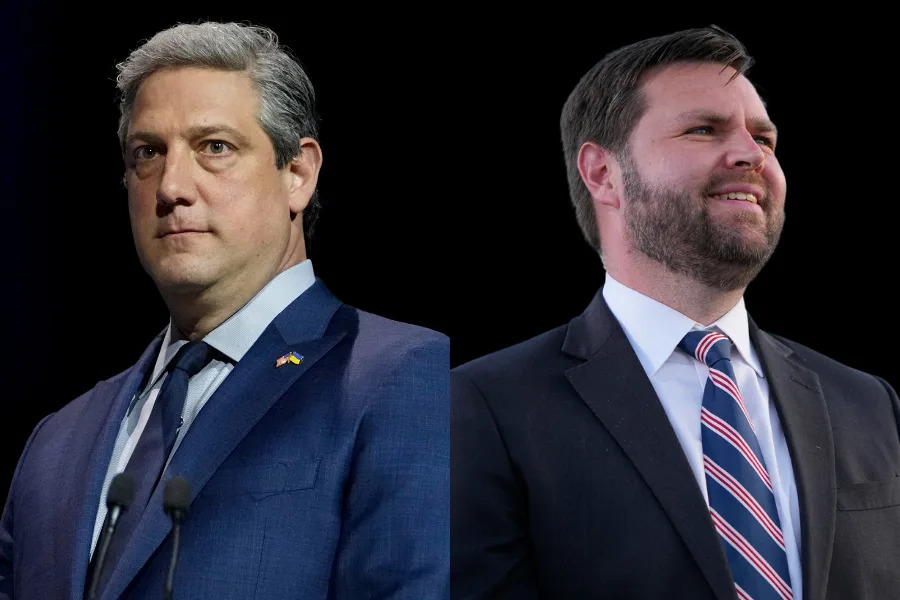
Despite the muck that has been lobbed this election season, it is crystal clear to our board who between Congressman Tim Ryan and author and investor J.D. Vance is best suited to replace Republican U.S. Sen. Rob Portman.
With the U.S. Senate split 50-50 and few seats in play, Ohioans — many still feeling the impacts of the global COVID-19 pandemic — will help decide the Senate’s balance of power.
One thing is for sure, pocketbook issues will and should influence those decisions.
Culture wars may dominate most of the news out of the Ohio Statehouse, but Ohioans are far more concerned about putting food on the table and dealing with high prices than what bathroom a transgender child is allowed to use or whether or not a sixth grader can read Toni Morrison’s “The Bluest Eyes.”
Nearly a third of likely Ohio voters are primarily concerned about inflation and its effect on the economy than any other issue, according to a September USA TODAY Network Ohio/Suffolk University Political Research Center poll.
Columbus is seen as the state’s economic bright spot, but things do not shine even here for everyone.
More than 53% of likely voters who took part in that September poll said economic conditions here are “fair,” but 23% of voters called conditions “poor.”
Nearly 45% of those voters said their standard of living is worse now than four years ago. This comes as little surprise.
The things he has said about the economy are vague and out of a playbook that focuses on energy independence, bashing the Biden administration on spending and inflation and commending the Trump administration’s trade policy.
He’s been light on details and comprehension of what Ohioans need and want.
“I think this is largely a self-inflicted wound. Global commodity prices are always going to shift here and there in ways that you can’t control. But if you look at things like the Keystone pipeline, shutting down that on day one, if you look at the really low number of oil and gas permits the Biden administration has granted, I think that we’ve really shot ourselves in the foot when it comes to energy prices.”
Ryan has focused his economic message on finding bipartisan solutions, taking on China and stopping “stupid” political fights to end “decades of disinvestment, unfair trade and outsourcing, and policies that have boosted the wealthiest and the biggest corporations at the expense of working people.”
Ryan was asked how he would help Ohioans facing financial hardships during a joint meeting with members of our board and others in the USA TODAY Ohio Network.
Vance was invited but declined to participate in the meeting which included questions submitted by readers from around the state.
Ryan told our board that “political people” get themselves in trouble when they think that things are OK because fundamentals of the economy like wages and unemployment seem good.
Tax cuts are needed for individuals and small businesses because those fundamentals are not being felt by Americans, he said.
“We’ve been to all 88 counties. We are going everywhere. It can be a home health care worker, it can be a construction worker— the gas prices are crushing people (as well as) food and general supply chain stuff,” he said. “You have got to put money in people’s pockets right now.”
“Inflation is a global problem. It is a little bit better here than it is in other places, but that does not eliminate the fact that people are being hurt. (There should be) a straight tax cut. Do what we did with child tax credit, advance it. The earned income tax credit, advance it. And then a general tax cut.”
What about the culture wars and social issues?
J.D. Vance shakes hands with former President Donald Trump during a rally at the Delaware County Fairgrounds on April 23, 2022.
News out of Ohio’s Statehouse and words out of J.D. Vance’s mouth leave many with the impression that Ohio is more extreme on social issues than multiple polls indicate.
Ohio needs representation in Washington that appreciates and recognizes the richness and potential of all people — not just those of one particular party or the other.
The 38-year-old “Hillbilly Elegy” author once trashed Trump, but has bent over backwards to win favor with the Trump family. How deep is Vance’s devotion?
Vance, who has taken up for a host of extremists and been flippant about the Russia invasion of Ukraine, does not deserve to replace Portman, a fellow Republican, in the U.S. Senate.
He is no Howard Metzenbaum, George Voinovich, John Glenn, Sherrod Brown, Mike Dewine or Rob Portman.
As senators they worked across party lines in the name of Ohioans. They did not fling insults to win political points, peddle in the “great replacement theory” conspiracy that there is an immigrant invasion or imply a woman should stay with her abusive husband for the good of the kids.
Columbus and the rest of Ohio need a statesman who will stand up for the people of the state.
The 49-year-old, 10-term congressman ran against Democratic leader Nancy Pelosi in 2017 for House minority leader. He has publicly criticized her for a list of issues that include so-called ‘congressional day trading,’ House members using their positions to get rich in the stock market.
“I love the president,” Ryan said at the time. “He’s done a lot for manufacturing. He’s helped us in Youngstown, and he understands the value of manufacturing. But on this particular issue, he is not fully seeing what we should be doing with the American economy.”
What’s important to Ohio?
Ryan supports issues many Ohioans say are important to them: including expanding the economy and supporting seniors, abortion access, affordable health care including mental health, affordable housing, upholding democracy, ending racial disparities and increasing equality for those in the LGBTQ community.
During that recent meeting with the editorial boards, he expressed understanding that Ohio’s future growth cannot be placed squarely on the shoulders of Columbus, which is experiencing the challenges that come with rapid growth including an affordable housing shortage.
Representing forgotten Ohioans
When asked about the $20 billion Intelsemiconductor plant planned for Licking County, Ryan said he’d work with CEOs to make sure the prosperity spreads.
“We need you to locate these suppliers around the state. We have so many forgotten communities that have great people, great culture. Iconic cities,” he said.
He said he’d work with the governor and JobsOhio to help identify and secure the resources and infrastructure cities like Marietta and Portsmouth need to land big employers.
Ryan says he has met with people all over the state, including those in Republican leaning so-called red counties.
“We have to represent these people too … Go get their vote. Go tell them what you’re going to do for them. Go tell them you care about them. We’ve done that. That’s the kind of leader Ohio wants.”
A lot is at stake this election as Republicans and Democrats battle for control of the U.S. House and the Senate.
The person Ohio sends to Washington to replace Portman will help decide what we will become.
That person should be capable and willing to represent all of us.
That person should put the good of Ohioans above political aspirations and loyalty to party.
Endorsement editorials are our board’s fact-based assessment of issues of importance to the communities we serve. These are not the opinions of our reporting staff members, who strive for neutrality in their reporting.
Just 2 Minutes of Exercise Daily Can Decrease Your Risk of Heart Disease and Cancer, New Study Says
Madeline Buiano – October 31, 2022
Young athletic woman jogging on the road in foggy forest.
skynesher / Getty Images
If you want to start exercising but can’t find time in your busy schedule, you’re in luck. A two-part study conducted by scientists in Sydney, Australia found that just two minutes of exercise daily was associated with a lower risk of death.
To obtain their findings, the researchers included adults ages 40 to 69 years from the UK Biobank. Each participant wore an activity tracker on their wrist for seven days straight to measure motion and bursts of activity at different intensities throughout the day.
The first study enrolled 71,893 adults with an average age of 62.5 who had no history of cardiovascular disease or cancer. The scientists measured the total amount of weekly vigorous activity and the frequency of exercise lasting two minutes or less. All of the participants were followed for an average of 6.9 years. During that time, researchers observed the connection between the volume and frequency of vigorous activity with death and incidence of cardiovascular disease and cancer.
According to the study results, the risk of death or incidents of cardiovascular disease and cancer reduced as vigorous physical activity increased. In fact, up to two minutes of intense exercise four times a day was associated with a 27 percent lower risk of death. The researchers note the more exercise the better, though; they found that about 53 minutes of activity a week was associated with a 36 percent lower risk of death from any cause.
In the second study, researchers analyzed 88,412 adults with an average age of 62 who were free of cardiovascular disease. The scientists estimated the volume and intensity of physical activity then observed the participants’ connection with cardiovascular disease. They followed the second group for an average of 6.8 years.
Here, the researchers found that both higher amounts of exercise and greater intensity were associated with lower rates of cardiovascular disease. When the intensity increased, the risk of heart disease decreased. For example, the rate of disease was 14 percent lower when moderate-to-vigorous activity made up 20 percent, compared to 10 percent of activity.
“Our results suggest that increasing the total volume of physical activity is not the only way to reduce the likelihood of developing cardiovascular disease,” says Paddy C. Dempsey, study author and medical research scientist at the University of Leicester and University of Cambridge, in a press release. “Raising the intensity was also particularly important, while increasing both was optimal. This indicates that boosting the intensity of activities you already do is good for heart health. For example, picking up the pace on your daily walk to the bus stop or completing household chores more quickly.”
How Xi sacrificed China’s future in pursuit of total power
Szu Ping Chan – October 30, 2022
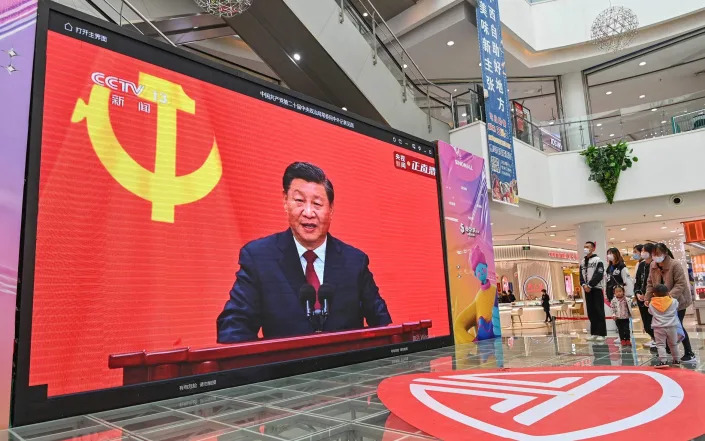
People watch a live broadcast of China’s President Xi Jinping – STR/AFP
They called it the Shanghai diet. Every morning during the two-month lockdown in China’s most populous city, Maggie found herself in a bidding war for spinach and pak choi.
At 8am, supermarkets would update apps with what was available on their virtual shelves that day. A rush to snap everything up would ensue.
“It was like a competition,” the marketing executive says from her Shanghai apartment. “Most of the food would be gone within seconds.”
While she was rarely left empty-handed, rationing meant most of her meals during the 70-day enforced confinement were either missing meat, vegetables or sometimes both. Maggie and her husband often did without. But they wanted to ensure their three-year-old son had enough to eat during the spring lockdown. “I actually lost a few kilograms,” she says jokingly.
The lockdown created an atmosphere of fear. “Everyone felt scared. Not of the virus. But about being sent to these makeshift Covid hospitals,” says Maggie, who didn’t want her surname to be used.
“You didn’t know where you’d be taken to, or how long you’d be there. Some people had their flats broken into in the middle of the night and were taken away. Or their homes were ‘sanitised’ when they were in quarantine and a lot of their belongings were ruined. I didn’t believe this would happen in Shanghai.”
But she believes she’s lucky. A white-collar job meant she could work from home. Others haven’t been so fortunate.
The world’s strictest lockdown has destroyed both lives and livelihoods – and there is no guarantee it won’t come back. But its architect has just become China’s most powerful ruler since chairman Mao.
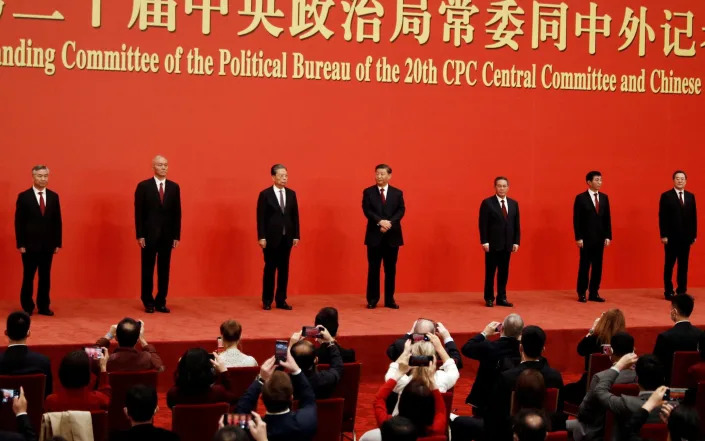
New Politburo Standing Committee members Xi Jinping, Li Qiang, Zhao Leji, Wang Huning, Cai Qi, Ding Xuexiang and Li Xi meet the media following the 20th National Congress of the Communist Party of China – TINGSHU WANG /REUTERS
Total control
Handed an unprecedented third term in office earlier this month, his political position unassailable and his every utterance carefully studied by adoring supporters, Xi Jinping is in total control of his country.
His power, and the sense that he is determined to enforce China’s cultural and military dominance even at the expense of prosperity, has sent a chill through domestic investors and the world order alike.
Proof of Xi’s apparent lack of interest in the economic consequences of his actions can be seen in the Communist leader’s choice for his second in command.
Striding out behind President Xi Jinping at the country’s recently ended Communist Party Congress last weekend, Li Qiang has become a symbol of China’s future.
Li Keqiang, the market-orientated premier, has been sidelined. As have central bank governor Yi Gang and China’s top trade negotiator Liu He. Technocrats are out. Loyalists are in.
“China has paid a high price economically in order to maintain low Covid infection,” says Vera Yuen, a lecturer in economics at the Hong Kong University Business School.
“That zero-Covid policy is likely to continue. That will affect China’s connectivity with the rest of the world.”
The emphasis at the congress on security, science and technology over economic growth and reforms also frightened investors. Not only was Xi unrepentant about lockdowns, but his tighter grip on power has paved the way for him to rule for life.
Ken Rogoff, former chief economist at the International Monetary Fund (IMF), says this will put China on a path of slower growth and greater isolation.
“If you take the post-financial crisis period running to 2020, the IMF says China contributed more than a quarter of global growth,” he says.
“That’s phenomenal. But when China slows down, it’s going to have huge ripple effects. In Europe for example, which is very dependent on selling industrial and luxury goods to China.”
Economic struggles
The IMF warned this month that repeated lockdowns meant the Chinese economy would grow by just 3.2pc this year because of strict Covid controls. An ongoing property crisis has also triggered a wave of debt defaults.
Rogoff, now a Harvard economics professor, said that the economy will struggle to hit 3pc growth for many years. If he is right, the economy will struggle to overtake the US in nominal terms in the next few decades – a task that will become increasingly difficult as its population gets older.
Economic growth isn’t everything. But pulling back from the rest of the world is also likely to accelerate China’s slowdown.
Rogoff says Xi’s “Made in China 2025” initiative, which is designed to reduce Beijing’s dependence on foreign technology, will also struggle.
“China’s talking about catching up in technology. President Xi talked about that a lot. But it’s hard to see how that’s going to work when you’re cracking down on entrepreneurs. State-owned enterprises are not going to be making technological breakthroughs.”
They’re the basic building blocks inside all modern technology. Smartphones, laptops, televisions. Aircraft, cars, cruise missiles. All are powered by tiny chips that make it all possible: semiconductors.
There’s only one dominant manufacturer. And it’s based in Taiwan.
The island, which drives just 1pc of global economic output, punches well above its weight because it’s cornered a large share of the market. Just under 40pc of the world’s processor chip manufacturing capacity is Taiwanese, while its high-end dominance is even greater. Ninety-two per cent of the most advanced semiconductors are made by Taiwan Semiconductor Manufacturing Company (TSMC).
While TSMC’s boss recently warned that advances in the technology are slowing down, nowhere else has been able to catch up yet. China has tried. But after a decade, it’s largely failed. Its global share of the market for semiconductors remains stuck below 20pc, according to Capital Economics.
“It hasn’t increased at all, despite all the money Beijing has spent trying to lure Taiwanese engineers to come over to China to help them,” says Gareth Leather, senior Asia economist at the consultancy.
“I think it just proves how difficult it is for others to replicate what Taiwan has done since it gained this comparative advantage,” he adds.
A decade behind Taiwan
It will take a long time to change this reliance. Precision engineering means building a semiconductor factory takes between two and three years, suggesting the rest of the world is at least another decade behind Taiwan.
Rogoff says it will take this long for the US to catch up, and even longer for China.
“It is remarkable what the Chinese have done,” he says.
“There are certain areas in technology where they are pretty easily on par with the United States. But in terms of private sector commercial activity, they’re behind and cutting themselves off. It’s not a recipe for growth. It’s very worrisome.”
The US is also doing its best to slow China down. It introduced strict export controls on semiconductors made with US technology in October, and also limited exports of manufacturing tools and advanced technology.
Chips for use in artificial intelligence and supercomputers can now only be sold to Beijing with a hard-to-obtain licence. Washington also introduced tough vetting standards for US citizens who want to work with Chinese chip producers. The aim is to stop China looking under the bonnet and stealing America’s intellectual property.
These developments mean the world will rely on Taiwanese semiconductors for longer, which also raises the stakes if geopolitical tensions boil over.
China’s Communist Party knows this. Beijing enshrined opposition to Taiwanese independence in its constitution last weekend, in another thinly veiled threat towards an island that has been governed independently since 1949.
Analysts fear a Chinese attack on Taiwan risks drawing the US into a war.
“If there was a war between Taiwan and China, you could potentially see a complete decoupling of trade between China and the US,” says Leather.
This would put $600 billion (£518 billion) of annual trade between the countries at risk. China is still by far America’s largest goods trading partner, with $559.2 billion sent to US shores in 2020, with machinery, toys, furniture and clothes the biggest imports.
Catastrophic consequences
And this has severe consequences for the rest of the world. “If you think about all the goods that we import from China, suddenly cutting them off would have quite catastrophic consequences for the global economy,” Leather says.
He believes a full-blown war is unlikely. “It is possible to imagine another scenario, for example, where China might, for example, want to have a blockade around Taiwan,” he says.
You’d assume that in this scenario, basic trade between the US and China would continue. But a semiconductor shortage would become apparent quite quickly.
Capital Economics says shortages will push up prices of everything from cars to computers around the world, as they did during the pandemic. It estimates that a 50pc rise in semiconductor prices would add around 2.5 percentage points to global inflation at a time when prices are already in danger of spinning out of control.
Countries such as the Czech Republic, Hungary and Germany, which are key carmaking hubs, will suffer most from shortages, alongside Taiwan and South Korea.
Leather adds: “Without ready access to the fastest chips, innovation in areas such as artificial intelligence will slow.”
China may have sent missiles over Taiwan in August to send a message, but Leather believes it will maintain a cautious approach because the leadership has seen how a war can leave a country ostracised.
“Given how badly the war in Ukraine has gone for Russia, I think it will make the Chinese think very, very carefully about what they’re going to do with Taiwan,” he says.
“All the sanctions that the US has introduced has made China realise how difficult it could be.”
Creeping control
shanghai zero covid policy – ALEX PLAVEVSKI/EPA-EFE/Shutterstock
If there’s any doubt over Beijing’s desire to control citizens’ lives, look no further than the city’s Weather Modification Office. Officials here literally try to make it rain. And they’ve succeeded. There were clear skies during the July 1 Communist Party centenary celebrations thanks to a “cloud-seeding operation” that sprayed chemicals in the sky to bring downpours forward.
This idea of creeping control has also spread to Beijing’s grip on Hong Kong.
A security law introduced two years ago changed the lives of many Hong Kongers, and left a profound impact on the rule of law in the former British colony.
Thousands of international businesses have left or are considering leaving the city, while more than 100,000 Hong Kongers have been granted visas to the UK through a new scheme introduced last year.
Beijing has noticed the brain drain. Hong Kong’s new chief executive John Lee has been given access to a $3.8 billion fund to lure big business and top talent back to the city, but many have grown weary of repeated lockdowns and the uncertain political climate.
His plans largely failed to reassure investors. The Hang Seng share index is down almost 40pc this year alone. The Shanghai Composite index is down 20pc.
“Talent is leaving Hong Kong, mainly due to the stringent Covid-19 policy,” says Vera Yuen.
“This means its economic growth is more dependent on the Chinese economy than ever. More diversification and internationalisation will be needed for the city to continue to shine.”
Those left are also feeling the impact of slower global growth.
“Business hasn’t been that great,” says Herbert Lun, managing director of Wing Sang Electrical, which makes hair dryers and curling irons that are mostly sent to the US. Lun is based in the city and he also employs 500 people at a factory in Shenzhen.
“Traditionally, manufacturing in China would peak at around June, July, August for the Christmas season. And the rush would run through to September,” he says.
“This year, we haven’t actually seen a peak. Since about May a lot of our suppliers and competitors have seen a lot of cutbacks and slowdowns. Everybody’s buying just enough to cling on.”
Lun has been forced to cut his prices to remain competitive, even as the cost of production has gone up sharply.
He says more Chinese businesses are looking to branch out overseas, where pay is lower and workers more abundant. He even considered it himself.
“It used to be all ‘made in China’,” he says. “Now it’s made everywhere. And so we have to make decisions that are best for our companies. And we have been focusing more on automation to essentially that labour shortage out of our equation.”
Rising rates
Rising global interest rates also make it harder to do business. Hong Kong’s monetary policy runs in lockstep with the US Federal Reserve because of a peg that keeps its currency in a tight range of 7.75-7.85 per US dollar.
“I think that’s going to depress a lot of investment going forward. If we look at past experience, where we had drastic rate increases, that always led to some sort of financial crisis in the rest of the world,” says Rogoff.
“Everyone is being a little bit more careful about taking on debt going forward and doing a little bit less investment. All of this is going to have a chilling effect on the economy. And I think that’s where the biggest uncertainty is going to be. How long is this rate hike cycle going to last? And how high will interest rates go?”
Rogoff believes the policy pivot will also transform the economy. “We’ve hit peak China,” he says.
“Historically China’s priority has always been giving people growth. And if you give people growth, they accept intrusion into other parts of their lives. But now growth is going to play second fiddle.”
Rogoff has led warnings about the dangers of a widespread collapse in Chinese property prices. While much attention has been focused on the country’s biggest cities, he says the smaller so-called “tier 3” cities, which account for more than three quarters of China’s housing stock and 60pc of economic output, have suffered from the biggest rates of overbuilding.
Any house price crash will most certainly begin here.
Against a gloomy global backdrop, all this suggests China may no longer be the powerhouse it was.
For decades, it served as the engine behind 90pc of economic growth in East Asia and the Pacific. But analysts at the World Bank now believe the economy will expand by just 2.8pc this year. Growth in the rest of the region is expected to average 5.3pc.
This puts China’s growth rate behind its neighbours for the first time since 1990.
While India continues to expand at a rapid pace, overtaking the UK as the world’s fifth largest economy this year, its trade links are far less established than its eastern neighbour. This leaves no obvious contender to pick up China’s mantle.
Either way, China’s fortunes will continue to be intertwined with the rest of the world.
Unsustainable situations
Economists at Axa believe a “crash-landing” scenario, where the world is plunged into a deep recession like the global financial crisis, will push China’s exports down by 20pc and result in a 3.5pc hit to the economy.
Unlike 2008, Beijing won’t be there to spend the world out of trouble.
But economists like Rogoff have warned about China’s troubles and its Great Wall of debt before. They were wrong then.
More than two decades after it joined the World Trade Organisation, China remains the world’s factory and a leader in payments technology. Rogoff concedes this, but adds that while a downturn may not be imminent, it is inevitable.
“There’s a famous saying from my thesis adviser, Rudi Dornbusch, that unsustainable situations go on for longer than you think,” he says.
“And when they collapse, that happens faster and harder than you think. It’s very hard to call the timing of these things. And China has seen remarkable growth. Their infrastructure is better than in almost any advanced economy. But you can’t keep the economy growing by just building more and more of it.”
Vaccines and lockdowns remain a crucial factor going forward. “Outbreaks have continued to flare up and mobility control has persisted,” says Wei Yao, an economist at Societe Generale.
“We think China needs much more preparation for a smooth exit, especially a much higher vaccination rate among the vulnerable. Currently, the three-dose vaccination rate for people aged over 60 remains insufficient and has been stagnant since summer.”
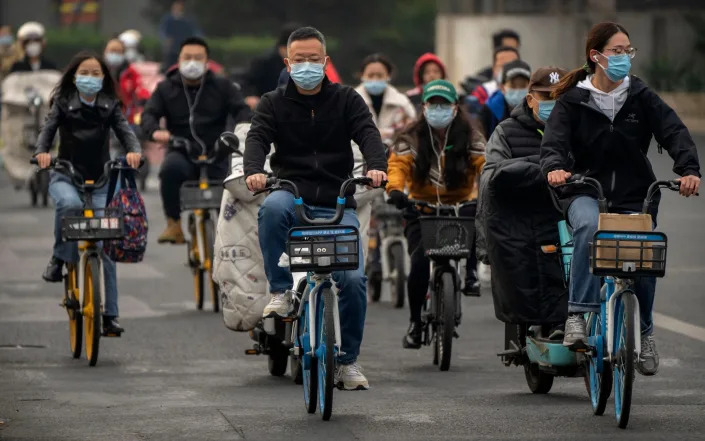
Commuters wearing face masks ride bicycles along a street in the central business district in Beijing – Mark Schiefelbein/AP
The shops and schools are back open in Shanghai, but many believe the city is far from open for business.
More than half of the Chinese companies surveyed by the US Chamber of Commerce in Shanghai believe the country’s economic management is in decline. Its poll last week showed a fifth are cutting back on investment as a direct result of its zero-Covid policy.
For Maggie, who was confined to her apartment yet again last week as part of the city’s aggressive contact tracing policy, nothing will ever be the same again.
“It has changed my life completely,” she says. “I can’t plan any more. I live with uncertainty every day. I worry my son will be taken away on his own to a quarantine hospital.”
She reflects on the future: “In our society, being obedient is very important. For your career, or to get ahead. It’s not about doing the right thing for other people, it’s about following the rules.
“But many people in Shanghai have completely lost their trust and faith in the authorities now. I always believed that Shanghai, my city, would get better. I thought we had better transparency, more justice and less corruption. I’ve lost this belief now.”
Will DeSantis run for president? The candidate I saw during the Florida debate is worrisome.
Carli Pierson, USA TODAY – October 30, 2022
If there were a recipe to make another Florida Gov. Ron DeSantis it might go something like this: Grab some playground bully off the shelf with a heaping teaspoon of science denial, a swig of race-baiting and a lump of LGBTQ bigotry for good measure.
If it sounds nasty, that’s because it is (recipe and politics).
As a former Floridian who visits as often as possible, and because I have close family that still lives there, I care deeply about what goes on in the Sunshine State and worry about where DeSantis is heading politically.
Not everyone agrees with me. During the first and only gubernatorial debate with former Republican Gov. and now Democratic Congressman Charlie Crist on Monday night in Fort Pierce, DeSantis got a concerning amount of applause for his hateful, misleading and divisive comments. Before the debate, DeSantis was also leading in the polls and has proved to be popular in Florida.
After the debate, he went back to being favored to be a GOP candidate running against former President Donald Trump (should he run) in the 2024 presidential election. It’s with that in mind that I’m writing about the debate. What kind of candidate would DeSantis be for the 2024 campaign? And, God forbid, what kind of president?
The debate was a good window into that.
Crist and DeSantis at gubernatorial debate
What DeSantis said during the debate
I didn’t ever imagine myself saying this because I am an atheist, but as I watched Monday night’s debate, I found myself praying Crist becomes governor again. No matter how much I dislike millionaires getting into politics, DeSantis’ far right ideology makes me nervous. But how will more centric and independent voters feel about his rhetoric?
DeSantis made some really troubling comments during the debate. He also has a record of troubling, bigoted leadership that has no place in 2022 America, or 2024:
►When asked by local news anchor Liz Quirantes about his “Stop WOKE” Act and his Florida Parental Rights in Education Act – which critics have called the “Don’t Say Gay” law because it bans classroom instruction on sexual orientation and gender identity for students in kindergarten through third grade – DeSantis went on a tangent dog-whistling about keeping Florida free. He also stooped to his habitual race baiting saying, “I don’t want to teach kids to hate our country,” and claimed that it was false that the United States was built on “stolen lands.”
DeSantis isn’t mature enough to be governor or president
DeSantis, like others in his party, seems to be unable to realize that he is (and would be if elected) the governor of all Floridians, not just the ones who agree with him. But his radical positions send progressives, moderate Democrats and even independents running in the opposite direction.
That won’t stop if he decides to run for president.
DeSantis’ inability to answer Crist’s question about whether he would serve the full term, if elected, made it painfully clear that he doesn’t care about being governor – he wants to be president. Rather than answering the question honestly, he mumbled something and then reverted to his inner playground bully by calling Crist a “worn-out old donkey.” A “yo mamma” joke would probably have had the same effect: Rally the base; make everyone else cringe.
DeSantis doesn’t really want to be governor for much longer and he doesn’t want to listen to American voters – he wants to be president so he can push his radical agenda from the White House.
Carli Pierson, a New York licensed attorney, is an opinion writer and a member of the USA TODAY Editorial Board.