The Water Crisis No One In America Is Fixing

Time

The Water Crisis No One In America Is Fixing

Bryn Nelson – February 16, 2023

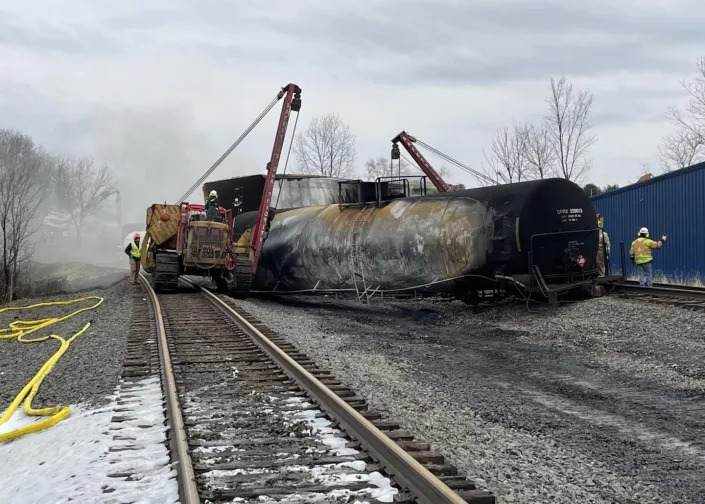
drone photograph showing the continuing cleanup of portions of a Norfolk Southern freight train that derailed Friday night in East Palestine, Ohio

This photo taken with a drone shows the continuing cleanup of portions of a Norfolk Southern freight train that derailed Friday night in East Palestine, Ohio, on Feb. 9, 2023. Credit – Gene J. Puskar—AP

On Feb. 3, 2022, a train loaded with toxic chemicals derailed in East Palestine, Ohio, igniting a fire and forcing the controlled release and burn of vinyl chloride, a known cancer-causing compound, to avert a disastrous explosion. The environmental catastrophe killed thousands of fish in nearby streams and has triggered growing concerns over the impact on residents’ health and on the village’s surface, ground, and well water.

East Palestine joins a long list of other places in the United States facing major threats to clean water. In October 2022, a campaign called “Imagine a Day Without Water” asked Americans to stand with those who lack adequate drinking water, sanitation, or both. In one of the richest countries on Earth, the tally of those who live even without basic indoor plumbing might surprise you: more than 2 million.

The acronym WASH, which stands for “water, sanitation, and hygiene,” is often associated with nonprofits like the World Toilet Organization, working in developing parts of the globe. But the lack of access to clean drinking water, sanitary bathrooms, and treated wastewater is an ongoing emergency for many parts of the U.S. as well. In rural and urban communities throughout the country, water tainted by pollutants, woefully inadequate sewage treatment, and a lack of restrooms (or plumbing at all) have laid bare the legacy of neglect.

This photo provided by the Ohio National Guard, ONG 52nd Civil Support Team members prepare to enter an incident area to assess remaining hazards with a lightweight inflatable decontamination system (LIDS) in East Palestine, Ohio, on Feb. 7, 2023.<span class="copyright">Ohio National Guard/AP</span>
This photo provided by the Ohio National Guard, ONG 52nd Civil Support Team members prepare to enter an incident area to assess remaining hazards with a lightweight inflatable decontamination system (LIDS) in East Palestine, Ohio, on Feb. 7, 2023.Ohio National Guard/AP

In her book Waste: One Woman’s Fight Against America’s Dirty Secret, author Catherine Coleman Flowers describes how rural residents in Lowndes County, Ala., often have no means of wastewater treatment. They lack what most of us take for granted, “because septic systems cost more than most people earn in a year and tend to fail anyway in the impervious clay soil,” Flowers writes. “Families cope the best they can, mainly by jerry-rigging PVC pipe to drain sewage from houses and into cesspools outside.” With her assistance, researchers found that more than one-third of 55 stool samples collected from county residents tested positive for hookworms—intestinal parasites often associated with poor sanitation in developing countries.

To the west, historic flooding incapacitated an aging water treatment plant in Mississippi’s capital of Jackson in September 2022, leaving residents of the predominantly Black city without safe drinking water for weeks. When students returned from their holiday break in January 2023, more than half of the city’s public schools lacked water and had to hold virtual classes after cold weather again damaged the system. The majority-Black Michigan cities of Flint and Benton Harbor faced severe lead contamination in their own drinking water, a consequence of aging lead pipes leaching the toxic contaminant into the water supply. And in West Baltimore, E. coli bacteria contaminated the water, a crisis again blamed on aging water treatment infrastructure.

A 2021 analysis, “The widespread and unjust drinking water and clean water crisis in the United States,” found that nearly half a million U.S. households lacked complete plumbing, while many more were living in communities with unclean water. Surveys suggest that the former problem is a disproportionately rural issue while the latter is disproportionately urban. “As it currently stands, counties with elevated levels of incomplete plumbing and poor water quality in America—which are variously likely to be more indigenous, less educated, older, and poorer—are continuing to slip through the cracks,” the authors of the study concluded.

Without urgent action, those cracks will only continue to widen. The 2021 Report Card for America’s Infrastructure, released by the American Society of Civil Engineering, gave a dismal D+ grade to the country’s more than 16,000 wastewater treatment plants, a significant fraction of which have reached or exceeded their design capacities. The U.S. drinking water infrastructure earned only a marginally better rating, with a C-grade.

Read more: We’re in a Water Crisis. We Need to Act Like It

As local and state investment in vital infrastructure has faltered, so too has federal action. Amid decades of chronic underfunding, the U.S. government’s share of capital costs on water infrastructure fell from more than 60% in 1977 to less than 10% 40 years later. A 2020 report by the American Society of Civil Engineering spelled out the growing investment gap in stark terms. But the costs of failing to update the country’s aging and deteriorating drinking water and wastewater infrastructure could be far greater, with trillions lost in preventable diseases, higher medical costs, lost productivity, and environmental pollution.

That inattention couldn’t come at a worse time. A 2021 study by Just Security, based at the NYU School of Law, explained how extreme weather events—exacerbated by global warming—are leading to even more failures of inadequate and poorly maintained infrastructure. Undoing the harm will require sustained attention, especially in what environmental justice pioneer Robert Bullard at Texas Southern University describes as the “invisible” communities of color that have disproportionately shouldered the burden of environmental racism.

Effecting change will require a major investment in urban and rural systems. Nearly $800 million in federal funds have been earmarked for water projects in Jackson. And in 2022, the U.S. Environmental Protection Agency and Department of Agriculture launched the Closing America’s Wastewater Access Gap Community Initiative, to be piloted in Lowndes County and ten other underserved communities where residents lack basic wastewater management. The federal Inflation Reduction Act provided another $550 million for water systems in disadvantaged communities—not nearly enough but a start in reversing the decades of damage.

Well-considered projects could make a big impact by not only improving public and environmental health, but also redistributing wealth back to those same communities. More wastewater treatment plants are becoming resource recovery facilities, preventing pollution from the treated liquid waste and extracting valuable resources. Biogas and electricity, pure water, charcoal-like biochar, nutrients like nitrogen and phosphorus, and soil amendments can all be recovered, creating new sources of local wealth.

At the grass-roots level, organizations like PHLUSH (Public Hygiene Lets Us Stay Human) are pushing for equitable access to toilets and sanitation systems. PHLUSH has positioned public restrooms as critical elements of the U.S. infrastructure, rightfully arguing that they are “as essential to community well-being as sidewalks, traffic signals and street lighting.” For people experiencing homelessness, a lack of access to sanitary toilets can be dehumanizing, dangerous, and disease-causing. The public health crisis for that segment of the population is growing throughout America, with a recent report calling for more stigma-free access to WASH facilities in rural areas.

In rural communities from Puerto Rico to Hawaii, advocates are introducing advanced biofilters and composting or incineration toilets as more affordable, sustainable, and sanitary alternatives to leaking, broken, or altogether lacking septic systems. Installing these systems in large enough numbers to make a difference will require revisions to outdated or punitive local codes and a rethinking of what might be recouped through long-term investments in our communities.

The Center for Rural Enterprise and Environmental Justice, founded by Flowers, is working to “eliminate the health, economic and environmental disparities suffocating rural and marginalized communities.” Doing so will be easier with renewed local, state, and federal backing, bolstered by public awareness and the recognition that reinvesting in neglected communities helps us and our environment. Most of all, it will require a reaffirmation that access to water and sanitation are fundamental human rights—no matter where you live.

Snowpack continues to grow in California, Colorado River Basin

The Hill

Snowpack continues to grow in California, Colorado River Basin

Sharon Udasin – February 16, 2023

Deep snowpack has continued to accumulate and expand in California, the Great Basin and the Colorado River Basin, federal meteorologists reported on Thursday.

Following a series of severe storms that drenched the region earlier this winter, moderate systems with less moisture have yielded smaller but persistent gains, according to an update from the National Integrated Drought Information System (NIDIS).

Total “snow water equivalent” — the amount of water stored in snowpack — at a subset of monitoring stations in California, Nevada, Utah, Colorado, Wyoming and Arizona has reached the highest or second highest levels to date, NIDIS reported.

Such accumulation is now 150 percent above the mid-February average at many of these stations, according to the agency.

Snow water equivalent levels at many of the long-term snow courses in California’s central and southern Sierra Nevada have achieved record highs not seen in 60 to 90 years, the meteorologists added.

While NIDIS reported good news for snowpack in much of the West, the agency warned that much of Oregon, Washington and Idaho experienced very little growth over the past 30 days.

Most of these areas are not yet considered to be experiencing “snow drought,” but a relatively dry January has left open the possibility that such conditions could develop in the coming months, according to NIDIS.

Another location of concern cited by NIDIS is the Sangre de Cristo Mountains in southern Colorado and northern New Mexico — including the headwaters region for the Rio Grande and Arkansas rivers.

Across this region, snow water equivalent sits at about 45 to 60 percent of quantities typical for the date, the agency reported.

First it was blood pressure medication. Now FDA eyes more drugs for cancer-causing chemical.

USA Today

First it was blood pressure medication. Now FDA eyes more drugs for cancer-causing chemical.

Ken Alltucker, USA TODAY – February 16, 2023

For people managing high blood pressure, recalls of the carcinogen-tainted drug quinapril might sound familiar.

Since 2018, more than 12 million bottles of blood pressure-lowering drugs such as valsartan and losartan have been removed from the market because they contained cancer-risk chemicals called nitrosamines.

The same family of contaminants triggered recalls of the heartburn drug Zantac, the diabetes drug metformin and the smoking cessation medication Chantix.

The flurry of drug recalls because of carcinogens has prompted the Food and Drug Administration to assess the scope of the problem.

The federal regulator has asked drugmakers to evaluate all products for any risk they might contain nitrosamines. Companies that identify any such risk must conduct follow-up testing, report changes and take action by October.

DRUG RECALLS: Full list of FDA recalls since 2012

LATEST: 1 in 10 new drugs don’t achieve main goals despite FDA approval

What are nitrosamines?

Nitrosamines are found in water, cured and grilled meats, dairy products and vegetables, according to the FDA. While nearly everyone is exposed to trace amounts of nitrosamines, studies link the contaminants to increased cancer risk if people are exposed to large amounts over long periods of time.

Public health experts have long been aware of the small risk associated with sustained exposure to these contaminants.

Food safety experts have worked to reduce nitrosamines in food such as cured meats to far below levels found in the 1970s and 1980s, said Dr. Stephen Hecht, a University of Minnesota professor of cancer prevention.

“The difference is with drugs it’s totally avoidable,” Hecht said. “I don’t think this could have happened in the 1970s because there was much greater awareness of the consequences.”

MORE: New cancer therapy takes personalized medicine to a new level

What to do if your prescription drug is recalled

The FDA has said the risk for anyone exposed to nitrosamines in drugs is small.

The agency has set acceptable limits on six types of nitrosamines, which equal up to one case of cancer per 100,000 people exposed to the contaminant.

Some recalled drugs have exceeded that amount. For every 8,000 people on the highest dose of valsartan for four years, FDA scientists concluded there would be one more cancer case above average rates for that population. Europe’s drug regulator, the European Medicines Agency, estimated the risk to be one cancer case for every 3,000 patients.

As with the valsartan and losartan recalls in 2018 and 2019, the FDA has advised people on recalled quinapril to continue the medication until their doctor or pharmacist can identify a replacement.

Dr. Yul Ejnes, a clinical professor of medicine at Alpert Medical School of Brown University, said people might panic and immediately stop their medication when they hear about a recall. For a patient on a blood-pressure-lowering drug to manage conditions such as heart failure, halting the drug can create an immediate medical problem.

He generally recommends people call their pharmacist, who can check whether their drug is part of the recall. If it is, the pharmacist might be able to locate the same version of the drug that’s not part of the recall. Or the pharmacist and doctor can find a substitute drug.

“The key message is it’s a small risk; there’s no imminent danger,” said Ejnes, chair of the American Board of Internal Medicine. “There’s no need to stop the drug. Now, we can find replacements.”

What’s being done to protect consumers?

Though the FDA said the risk is small for people who ingested these drugs, lawyers have filed thousands of lawsuits in state and federal courts on behalf of people who say they have been harmed.

In 2019, heartburn drug Zantac was removed from store shelves after the FDA found unacceptable levels of a nitrosamine called NDMA, or nitrosodimethylamine, in brand and generic versions.

In December, a Florida federal judge dismissed thousands of claims that alleged Zantac caused cancer. The judge ruled that the plaintiffs’ experts did not use reliable methods linking the drug to cancer.

More than 1,000 claims against valsartan manufacturers are pending in federal court.

Meanwhile, FDA officials said the agency expects drug manufacturers who have identified a potential risk to complete testing and report changes they’ve made by Oct. 1.

“We continue to closely evaluate this type of impurity and will continue to investigate and monitor the marketplace and manufacturing efforts to help ensure the availability of safe, quality products for U.S. consumers,” said FDA spokesman Jeremy Kahn.

Makers of generic drugs, which produce about 9 of 10 prescription drugs dispensed in the United States, have pushed back on the FDA’s required comprehensive review. The generic drug’s industry group, the Association for Accessible Medicines, said in a position paper that to review every drug would be a “Herculean task” that would divert resources and focus and could exacerbate drug shortages.

Instead, the organization wants to conduct a more efficient “risk-based” review that looks for the source of such impurities across all facets of drugmaking.

Why are we seeing so many contaminated drugs?

Independent experts say the recent recalls are partly the result of a system that values inexpensive manufacturing over drug quality.

David Light is CEO and co-founder of Valisure, an independent lab that first discovered Zantac and its generic versions contained nitrosamines. His lab’s testing led to the voluntary nationwide recall of the medication for supermarket and drug stores. Since then, his lab has flagged potential harmful contaminants in consumer products such as hand sanitizers and sunscreens.

Though the FDA sets standards for drug companies to follow, it’s up to the drug manufacturers to ensure their products are safe and free from impurities. This regulatory approach is an “honor system,” Light said, adding that “some manufacturers are going to do a better job than others.”

Generic drug manufacturers want to make inexpensive products and seek to control manufacturing costs. Insurers and consumers expect to pay less for generic medications.

“The fact that we have a broken market system where we’re only valuing price and just assuming quality certainly increases the risk for these kinds of issues to crop up,” Light said.

See a list of the latest food and drug recalls from the FDA here.

Plant-based foods may reduce prostate cancer progression, study says

The Washington Post

Plant-based foods may reduce prostate cancer progression, study says

Marlene Cimons, Special to The Washington Post – February 15, 2023

A diet heavy in plant-based foods – fresh fruits and vegetables – can reduce both the progression of prostate cancer and the likelihood that it will return, new research shows.

Eating fruits and vegetables has many health benefits, such as reducing the risk of Type 2 diabetes and cardiovascular disease, and contributes to a longer life span, said Vivian Liu, clinical research coordinator for the Osher Center for Integrative Health at the University of California at San Francisco and lead study author.

Subscribe to The Post Most newsletter for the most important and interesting stories from The Washington Post.

“Now, we have evidence that they can influence this very common – and sometimes deadly – cancer in men,” she said.

Prostate cancer is the second-most common cancer in men, after skin cancer, with an estimated 288,300 new cases and 34,700 deaths projected for this year. Risk factors include age, with most cases occurring in men older than 65; race, with African Americans at an increased risk; and certain gene mutations.

“This is something men can do for themselves with a healthy grocery shopping list,” Liu said. “And it doesn’t require drugs or other medical interventions.”

Higher amount of plant-based foods, lower cancer growth risk

The link between diet and cancer risk has been explored in many studies. Eating certain foods such as low-fat products and shunning others such as red meat have been linked to a lower risk of certain cancers, chief among them breast and colon. For prostate cancer, eating foods rich in the antioxidant lycopene, such as tomatoes, appears to lessen the risk.

Liu and her team focused on men who already had prostate cancer and were at risk of the cancer growing or returning after treatment. The researchers found that men with prostate cancer who reported diets containing the highest amounts of plants had a 52 percent lower risk of disease progression and a 53 percent lower risk of recurrence compared with those whose diets had the lowest amounts of plants.

The disease advanced in 204 of the more than 2,000 participants during the study period, Liu said. “This is a small number, which is significant,” she said.

She said the analysis involved scoring for good and bad foods, and though the participants reported the amounts they ate, it was not possible to state the amounts as individual or recommended servings of fruits and vegetables.

The 2020-2025 Dietary Guidelines for Americans recommend that adults should consume 1 1/2 to 2 cups of fruit equivalents and 2 to 3 cups of vegetable equivalents daily.

The results of this as-yet-unpublished observational study will be presented at the 2023 American Society of Clinical Oncology (ASCO) Genitourinary Cancers Symposium this week in San Francisco. The research was a sub-study of the Cancer of the Prostate Strategic Urologic Research Endeavor, or CaPSURE, which is a large multisite study of 15,000 men started in 1999 and looking at many aspects of prostate cancer.

The plant-based sub-study research began in 2004 and involved 2,038 men with early-stage prostate cancer – cancer that had not spread or whose spread was limited.

They completed questionnaires about how often they ate about 140 foods and beverages, including such items as broccoli, red meat and potatoes, trying to gauge both the good foods and the bad, Liu said.

“We did not tell the men what to eat, since this was an observational study,” she said. “They ate what they wanted to eat and told us what it was.”

Many things influence cancer – people who eat healthy foods often engage in other healthy habits – and the investigators took other factors into account, including walking pace – a faster pace seems to help prostate cancer patients – smoking, diabetes, family history of prostate cancer, household income, education level, height, body mass index, alcohol use, and multivitamin and supplement use.

Implications for future studies

These findings are consistent with previous research “and extend the health benefits” and “few risks of a plant-based diet,” said Donald Hensrud, associate professor of preventive medicine and nutrition at the Mayo Clinic College of Medicine, who was not involved in this recent research. One large study, for example, found that consuming plant-based foods was linked to a lower risk of developing aggressive forms of prostate cancer, especially among men younger than 65.

Other scientists called the work important but said future research needs to include more specific analyses of genetics and metabolism to better understand the impact of foods on prostate cancer.

“More such studies in larger populations of cancer patients, with even more detailed studies of dietary elements and measures of blood and tissue levels of nutrients, will be very helpful in designing a more specific cancer-risk reducing, and even cancer-therapeutic diet,” said Jeffrey Jones, professor of urology at Baylor College of Medicine and a urologic oncology specialist. He was not involved in the study.

“Future studies also need to look at the molecular and genetics of the people, and the mutations driving the cancer,” said Nicholas Mitsiades, professor of medicine and chief translational officer at the University of California at Davis Comprehensive Cancer Center, who also was not part of the research. “We need to know how [the patients’] metabolism is programmed because different people may process food differently.”

Mitsiades also pointed out that socioeconomic status may discourage some populations from eating a healthful diet, as fresh fruits and vegetables often are costly or inaccessible. “It’s more expensive to eat a plant-based diet than to go to McDonald’s and have a burger,” he said. “So, it’s not always easy.”

Still, he always advises his cancer patients to avoid animal saturated fats – especially red meat – and to increase plant intake. “This diet is healthy for many other cancers,” Mitsiades said. “Unfortunately, we have not been able to put all these diets into a pill, which is probably what most Americans would like.”

Liu and her colleagues next plan to analyze plant-based diets in relation to prostate cancer-specific mortality, or death, and quality of life at specific intervals – two, five and 10 years – following diagnosis.

Meanwhile, Liu suggested that men – with or without prostate cancer – fill their plates with plants and stick to fresh foods, avoiding plant-based meat substitutes, which tend to be high in fat, she said.

“I love those burgers myself, but unfortunately not all diets are equal in terms of risk factors,” she said.

Stick to the basics, she advised, “fresh fruit and vegetables – and whole grains. The more you can fit in, the better.”

It is a common refrain that fruits and vegetables are good for you, Liu said. “And now, here’s another reason to say it.”

How dangerous was the Ohio chemical train derailment? An environmental engineer assesses the long-term risks

The Conversation

How dangerous was the Ohio chemical train derailment? An environmental engineer assesses the long-term risks

Andrew J. Whelton, Professor of Civil, Environmental & Ecological Engineering, Director of the Healthy Plumbing Consortium and Center for Plumbing Safety, Purdue University – February 15, 2023

Several cars that contained hazardous chemicals burned after the Feb. 3, 2023, derailment. <a href=
Several cars that contained hazardous chemicals burned after the Feb. 3, 2023, derailment. U.S. Environmental Protection Agency

Headaches and lingering chemical smells from a fiery train derailment in East Palestine, Ohio, have left residents worried about their air and water – and misinformation on social media hasn’t helped.

State officials offered more details of the cleanup process and a timeline of the environmental disaster during a news conference on Feb. 14, 2023. Nearly a dozen cars carrying chemicals, including vinyl chloride, a carcinogen, derailed on the evening of Feb. 3, and fire from the site sent up acrid black smoke. Officials said they had tested over 400 nearby homes for contamination and were tracking a plume of spilled chemicals that had killed 3,500 fish in streams and reached the Ohio River.

However, the slow release of information after the derailment has left many questions unanswered about the risks and longer-term impact. We put five questions about the chemical releases to Andrew Whelton, an environmental engineer who investigates chemical risks during disasters.

Let’s start with what was in the train cars. What are the most concerning chemicals for human health and the environment long term, and what’s known so far about the impact?

The main concerns now are the contamination of homes, soil and water, primarily from volatile organic compounds and semivolatile organic compounds, known as VOCs and SVOCs.

The train had nearly a dozen cars with vinyl chloride and other materials, such as ethylhexyl acrylate and butyl acrylate. These chemicals have varying levels of toxicity and different fates in soil and groundwater. Officials have detected some of those chemicals in the nearby waterway and particulate matter in the air from the fire. But so far, the fate of many of the chemicals is not known. A variety of other materials were also released, but discussion about those chemicals has been limited.

State officials disclosed that a plume of contamination released into the nearby creek had made its way into the Ohio River. Other cities get their drinking water from the river, and were warned about the risk. The farther this plume moves downstream, the less concentrated the chemical will be in water, posing less of a risk.

Long term, the greatest risk is closest to the derailment location. And again, there’s limited information about what chemicals are present – or were created through chemical reactions during the fire.

It isn’t clear yet how much went into storm drains, was flushed down the streams or may have settled to the bottom of waterways.

There was also a lot of combusted particulate matter. The black smoke is a clear indication. It’s unclear how much was diluted in the air or fell to the ground.

How long can these chemicals linger in soil and water, and what’s their potential long-term risk to humans and wildlife?

The heavier the chemical, often the slower it degrades and the more likely it is to stick to soil. These compounds can remain for years if left unaddressed.

After the Kalamazoo River oil pipeline break in Michigan in 2010, the U.S. Environmental Protection Agency excavated a tributary where the oil settled. We’ve also seen from oil spills on the coasts of Alaska and Alabama that oil chemicals can find their way into soil if it isn’t remediated.

The long-term impact in Ohio will depend in part on how fast – and thoroughly – cleanup occurs.

If the heavily contaminated soils and liquids are excavated and removed, the long-term impacts can be reduced. But the longer removal takes, the farther the contamination can spread. It’s in everyone’s best interest to clean this up as soon as possible and before the region gets rain.

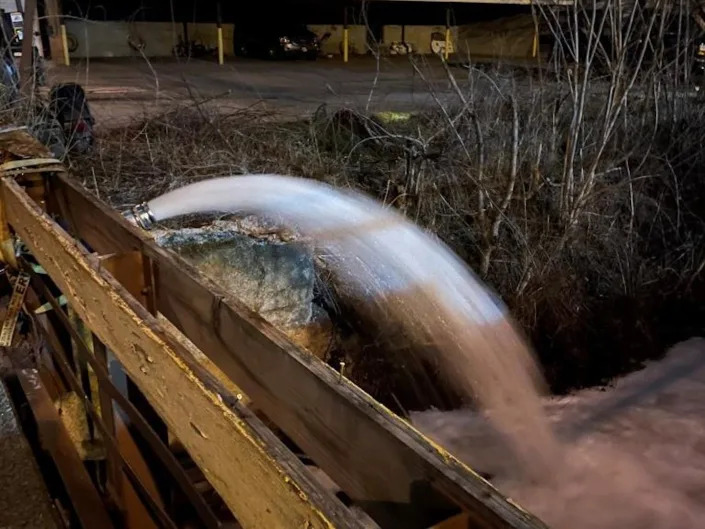
Air-stripping devices, like this one used after the derailment, can help separate chemicals from water. <a href=
Air-stripping devices, like this one used after the derailment, can help separate chemicals from water. U.S. EPA

Booms in a nearby stream have been deployed to capture chemicals. Air-stripping devices have been deployed to remove chemicals from the waterways. Air stripping causes the light chemicals to leave the water and enter air. This is a common treatment technique and was used after an 2015 oil spill in the Yellowstone River near Glendive, Montana.

At the derailment site in Ohio, workers are already removing contaminated soil as deep as 7 feet (about 2 meters) near where the rail cars burned.

Some of the train cars were intentionally drained and the chemicals set on fire to eliminate them. That fire had thick black smoke. What does that tell you about the chemicals and longer-term risks?

Incineration is one way we dispose of hazardous chemicals, but incomplete chemical destruction creates a host of byproducts. Chemicals can be destroyed when heated to extremely high temperatures so they burn thoroughly.

The black smoke plume you saw on TV was incomplete combustion. A number of other chemicals were created. Officials don’t necessarily know what these were or where they went until they test for them.

We know ash can pose health risks, which is why we test inside homes after wildfires where structures burn. This is one reason the state’s health director told residents with private wells near and downwind of the derailment to use bottled water until they can have their wells tested.

The EPA has been screening homes near the derailment for indoor air-quality concerns. How do these chemicals get into homes and what happens to them in enclosed spaces?

Homes are not airtight, and sometimes dust and other materials get in. It might be through an open door or a window sill. Sometimes people track it in.

So far, the U.S. EPA has reported no evidence of high levels of vinyl chloride or hydrogen chloride in the 400 or so homes tested. But full transparency has been lacking. Just because an agency is doing testing doesn’t mean it is testing for what it needs to test for.

Media reports talk about four or five chemicals, but the manifest from Norfolk Southern also listed a bunch of other materials in tanks that burned. All those materials create potentially hundreds to thousands of VOCs and SVOCs.

Are government officials testing for everything they should?

People in the community have reported headaches, which can be caused by VOCs and other chemicals. They’re understandably concerned.

Ohio and federal officials need to better communicate what they’re doing, why, and what they plan to do. It’s unclear what questions they are trying to answer. For a disaster this serious, little testing information has been shared.

In the absence of this transparency, misinformation is filling that void. From a homeowner’s perspective, it’s hard to understand the true risk if the data is not shared.

‘There’s No Spring Break Here’: Florida’s Gulf Coast Fights to Rebound After Hurricane Ian

The New York Times

‘There’s No Spring Break Here’: Florida’s Gulf Coast Fights to Rebound After Hurricane Ian

Shannon Sims – February 14, 2023

Al Marti, 80, watches the waves roll in on a Sanibel beach as work continues to rebuild the area's infrastructure devastated by Hurricane Ian, on Sanibel Island, Fla., Feb. 9, 2023. (Scott McIntyre/The New York Times)
Al Marti, 80, watches the waves roll in on a Sanibel beach as work continues to rebuild the area’s infrastructure devastated by Hurricane Ian, on Sanibel Island, Fla., Feb. 9, 2023. (Scott McIntyre/The New York Times)

On Sept. 28, Hurricane Ian made landfall on Cayo Costa, a barrier island northwest of Cape Coral and Fort Myers, Florida, as a Category 4 storm with sustained winds of more than 150 mph. Killing 149 people in Florida, it was the state’s deadliest hurricane since 1935. More than four months later, the storm’s extraordinary power remains evident: In Fort Myers Beach, multistory oceanfront apartment buildings are still just piles of twisted steel and concrete rubble, and massive shrimping boats sit tilted and smashed together like toys in the corner of a tub.

The storm’s wrath extended up and down the west coast of Florida. But Sanibel Island, one of the area’s most popular vacation destinations, was hit especially hard. The fish-hook-shaped barrier island, some 12 miles long and 3 miles across at its widest, was devastated. Even the causeway that connects it to the mainland was partly destroyed.

On a recent afternoon, sitting at a table outside the Sanibel Grill, which roof and water damage kept closed for months, the mayor of Sanibel, Holly Smith, 61, was blunt. “There’s no spring break here,” she said. “As far as the recovery of tourism, we have a long way to go.”

Smith said that during the storm, the island had “a complete washover” — the 12-foot storm surge covered everything.

Beth Sharer, 66, a homeowner on the island, said when she went back to her ravaged condo, she couldn’t find the high-water mark that flooding usually leaves. “And then I realized there wasn’t one: The water was higher than the entire apartment,” she said.

When Smith visited the island with Gov. Ron DeSantis in the days after the storm, the area looked like a war zone, she said. “It was like ‘Mad Max,’ with dirt across the roads.”

Fears of Becoming a ‘New Miami’

Before the hurricane, Sanibel and Captiva, a smaller island connected to the north of Sanibel by a short bridge, offered an estimated 2,800 lodging units, including hotel rooms and short-term rentals, according to the Sanibel & Captiva Islands Chamber of Commerce. Today there are just 155 available, the chamber said. “We’ve changed our communication strategy from promoting the island to helping manage guest expectations for the next 12 months,” said John Lai, CEO of the chamber, which is now encouraging visitors to sign up for “voluntourism” options like helping to clear trails at the nature reserve or clean debris from the beaches.

By comparison, Fort Myers Beach had 2,384 hotel rooms before the storm, according to the Lee County government. In the wake of the storm, none of those rooms were open. As of this month, 360 of those rooms were available — just 15% of prehurricane inventory.

Before the hurricane, JPS Vacation Rentals, a local agency, had 32 properties available in Fort Myers Beach, said Heidi Jungwirth, the owner. Seven of those remain standing, but all were damaged, and none are currently rentable, she said. She has turned her office into a distribution center for donations. Distinctive Beach Rentals, which used to be the largest vacation management company in Fort Myers Beach, with 400 properties, saw 380 of those units “wiped out,” said Tom Holevas, the area manager, adding that the company has now pivoted to offering more inland rentals.

At the Lighthouse Resort’s Tiki Bar & Grill, where today the bathroom doors are shower curtains and the kitchen consists of a grill behind the outdoor bar, Betsy Anderson, 50, expressed concern about the area’s future. She owns an apartment in Cape Coral, just inland from the beach, that she rents via Airbnb. She said she had several guests cancel after the storm because the beaches were closed, and she is currently renting to a couple fixing up their own flooded house on Sanibel.

She worries that the storm will accelerate change. “We don’t think it can come back,” she said, referring to the area’s laid-back character and “old Florida” style. “Now people are saying big investors are going to come in with big money and turn this into the new Miami.”

Reviving an Economic Lifeline

On Sanibel, the push to rebuild began early, in part because the island draws so many visitors from across the country to its famous shelling beaches. A temporary causeway opened less than two weeks after the storm, allowing a convoy of electrical companies’ cherry picker trucks to reach the island. On Oct. 19, the bridges — one lane in each direction, with reduced speed limits — were opened to residents. For the rest of 2022, piece by piece, the area started to come back online.

“This place is on a lot of people’s bucket lists,” said Smith, alluding to visitors who “just want a shell from Sanibel.” But it will be at least a year before the island can accommodate tourists in any numbers, she said.

It doesn’t help that the island’s beaches are currently suffering from Florida’s persistent red tide, which is caused by a higher-than-normal level of microscopic algae that produce toxins in the water, turning it a rusty brown color and killing fish. The tide can significantly affect visitors’ experiences, aggravating respiratory problems, leaving beaches littered with rotting sea life and discouraging time spent near the water.

Still, residents and businesses are trudging toward getting tourists — their economic lifeline — back to the shore.

In just the past month, the first hotel rooms reopened for visitors at Sanibel’s Island Inn and the ’Tween Waters Resort & Spa on Captiva Island.

Some restaurants that were only lightly damaged have reopened quickly. Others are now operating out of food trucks. Some shops are back open, too, and many outdoor activities are once again available: renting kayaks and stand-up paddleboards or chartering fishing boats.

In early February, the first wedding since the storm was held at ’Tween Waters; the Bailey-Matthews National Shell Museum reopened with limited hours; and the doomsday-ish electronic sign that met visitors as they came off the bridge into Sanibel — “ALL SANIBEL BEACHES CLOSED” — was turned off, as the first beaches were officially reopened to the public. There is a sense on the island now that the wheels of tourism are finally beginning to turn.

Still, many hotels, restaurants and businesses that cater to tourists are a long way from reopening their doors. Some, like Sanibel Inn, are essentially starting from scratch, their buildings in ruins.

That’s why businesses are handing visitors the most useful item a tourist can pick up in Sanibel today: a printed list of what’s open, where and when.

‘It Breaks Your Heart’

For now, a visit to the area is more a pledge of support than a vacation.

On a sunny day in early February, Lisa Taussig of Overland Park, Kansas, and Christy, her adult daughter, were among the few tourists on the beach in front of the Island Inn, where they were staying. They come to the island about three times a year, Taussig said, and this year is no different. “After the storm passed, we just said, ‘You know what? We’re going to come down here and support Sanibel,’” she said.

“You feel welcome here,” she added, before turning and gesturing to the series of plywood-covered, battered condo buildings behind her. “Now it feels isolated, and there aren’t the lush trees that are usually here.

“It breaks your heart,” she said.

In Fort Myers Beach, residents still pick up their mail at a trailer. Glass, nails and unidentifiable twisted debris remain scattered along the ground. Around town, many flags, bumper stickers and T-shirts are emblazoned with “FMB STRONG.”

On a recent Saturday, a tiny spot called the Beach Bar was packed with a crowd of locals who looked storm-weary but exuded an ornery refusal to retreat. Even before the storm, the bar’s physical structure — right off Estero Boulevard, the beach strip that’s historically packed with visitors cruising in top-down vehicles — didn’t amount to much: It was a two-story, open-air wooden building facing the water. Now only the concrete slab remains.

But that hasn’t stopped the regulars. The crowd showed up with beach chairs and coolers, which they set up on the concrete. “They’re operating right now with a trailer, two outhouses and a band,” said Randy Deutsch, 72, from Chicago, who said he’d been coming to the bar since 1972.

“Our concept didn’t change,” said Matt Faller, the manager. “Cold beer, live music, toes in the sand.”

California Reservoirs Refilled by Winter Deluges, Satellite Images Show

Yale Environmental 360

California Reservoirs Refilled by Winter Deluges, Satellite Images Show

February 13, 2023

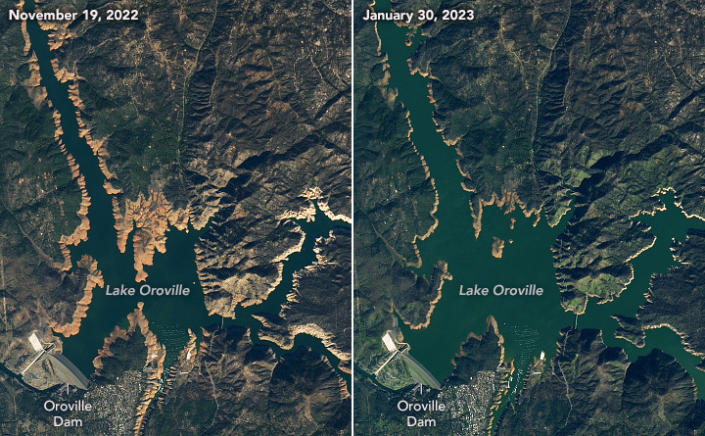
Lake Oroville before and after December's heavy rainstorms. NASA
Lake Oroville before and after December’s heavy rainstorms. NASA

In the wake of a series of destructive storms in late December and early January, California’s long-ailing mountain reservoirs have risen, satellite images from NASA show.

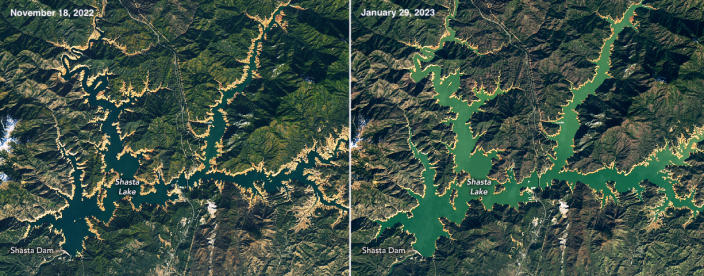
Lake Oroville, which sits in the northern reaches of the Sierra Nevada mountain range, was at just 28 percent of capacity in late November and is now at 69 percent capacity, following the winter deluge. Long depleted by drought, the reservoir is now close to its historical winter level. Lake Shasta, in far northern California, was at just 31 percent of capacity in late November and is now at 58 percent capacity, bringing it in line with the historical average.

Recent storms “certainly helped reservoir storage in California following the driest three years in the state’s recorded history,” Jeanine Jones, an official with the California Department of Water Resources, told the Los Angeles Times. “Over the next two months, it is important that we still see periodic rain and snowstorms to keep an above-average pace for our precipitation totals.”

Shasta Lake before and after December's heavy rainstorms. NASA
Shasta Lake before and after December’s heavy rainstorms. NASA

Experts warn, however, that recent storms will likely do little to ameliorate long-term shortfalls. While this winter’s snow and rain will help recharge stores of groundwater in the near term, “if the climate pattern is the same as before — dry and hot in summer followed by low precipitation — and the water demands are still high, then we expect the groundwater drawdown will continue,” Pang-Wei Liu, a NASA scientist involved in groundwater monitoring, said in a statement.

recent study found that the drop in groundwater in California’s Central Valley has accelerated over the last two decades. “The years 2000–2021 represent the driest 22-year period since at least 800,” authors wrote. They highlighted the need for better management of groundwater “to ensure its availability during the increasingly intense droughts of the future.”

DeSantis’ attempt to roll back diversity, equity, and inclusion is doomed to fail

Tallahassee Democrat – Opinion

DeSantis’ attempt to roll back diversity, equity, and inclusion is doomed to fail | Opinion

Ben Wright – February 12, 2023

I’ve had a front row seat for Gov. Ron DeSantis’ attempts to overhaul Florida’s university system. My eldest son is currently a junior at New College of Florida which is ground-zero in this struggle.  He didn’t choose New College because of some liberal ideology; he was excited about small class sizes, accessible professors, and its designation as an honors college. New College has been a great experience. Now, the rug is being pulled out from under him.  His tiny school is the first test in a state-wide experiment that is coming to a campus near you.

It’s almost guaranteed DeSantis is running for president.  By claiming that Florida’s universities and colleges are filled with radically liberal professors that are indoctrinating our students, the governor has discovered a way to energize his Republican base and present himself as a champion for conservatives.  Are independent voters in Arizona and Pennsylvania going to lose sleep over the reshuffling of Florida’s colleges? Probably not.  He has found an issue where he can win the hearts of Republicans without alienating the independent voters that he needs to win the presidency.

The governor is targeting many aspects of higher education, but his main line of attack is focused on eliminating “diversity, equity, and inclusion” (DEI) programs from state colleges and universities.  Ironically, under DeSantis, the Board of Governors insisted that universities adopt these DEI programs just a few years ago.

DeSantis’ government overreach may be an important building block in his run for the presidency, but it will do long-lasting harm to Florida’s institutions of higher learning.  Florida’s universities spend time, money, and resources to attract talented students and faculty … and they have been successful.  There are many jokes about our weird and wonderful Florida, but our higher education system has garnered well-deserved respect in recent years.

Universities in other states are now poised to start poaching these talented folks with promises of true academic freedom. Florida will lose talented professors and students through attrition and find it more difficult to attract quality replacements.  The governor’s decision to use these schools as pawns in his political games will cause long-term damage to the institutions and the degrees they issue.

In the real world, corporate America has overwhelmingly adopted diversity, equity, and inclusion. All the Fortune 100 companies have made a public commitment to DEI.  Why? Because the young, talented workers they want to attract are demanding it. Employees now expect their employer to promote the values they hold.  Why did Disney come out against DeSantis’ “Don’t Say Gay” law? Because Disney employees around the country wouldn’t stand for anything less.  The unemployment rate is unprecedentedly low … it’s hard to attract top talent. Millennials and Gen-Z are driving the workforce now and they expect DEI to be a priority.

The changes at New College of Florida are just the opening gambit in a much larger plan. DeSantis’ attempt to roll back diversity, equity, and inclusion is doomed to fail.  It’s akin to closing the barn door after the horse has already bolted.  In the meantime, his political ploy will do lasting harm to our state universities and colleges … and undermine the competitiveness of our college graduates.

Tallahassee resident Ben Wright is a third generation Floridian and former captain in the U.S. Air Force. He graduated from Indian River State College, the University of Florida, and Regis University in Colorado with an M.B.A. He works for a Fortune 500 company and his oldest son attends New College of Florida.

Natural disasters, boosted by climate change, displaced millions of people in U.S. in 2022

NBC News

Natural disasters, boosted by climate change, displaced millions of people in U.S. in 2022

Lucas Thompson – February 12, 2023

Ricardo Arduengo

Natural disasters forced an estimated 3.4 million people in the U.S. to leave their homes in 2022, according to Census Bureau data collected earlier this year, underscoring how climate-related weather events are already changing American communities.

The overwhelming majority of these people were uprooted by hurricanes, followed by floods, then fires and tornados. Nearly 40% returned to their homes within a week. Nearly 16% have not returned home (and may never do so), and 12% were evacuated for more than six months.

The Census Bureau count is based on 68,504 responses it received as part of the Household Pulse Survey conducted Jan. 4-Jan. 16. The data collection is one of the few federal efforts to track displaced people, starting only in 2020. The bureau does note that the data is “experimental,” and is extrapolated based on its sample data.

“These numbers are very distressing,” said Michael Gerrard, director of the Sabin Center for Climate Change Law at Columbia University, who was not involved in the data collection. “These numbers are what one would expect to find in a developing country. It’s appalling to see them in the United States. … They’re only going to get worse in the years to come because climate change is making extreme weather events more frequent and more severe.”

Some states experienced far more of an impact than others. Florida had more than 888,000 people displaced. Louisiana had more than 368,000 displaced.

The U.S. was hit by a series of major disasters in 2022. The National Oceanic and Atmospheric Administration said that 18 extreme weather events had each caused at least $1 billion in damage. Climate experts have warned for years to expect more intense weather disasters as global temperatures rise.

The Census Bureau estimate, almost 1.4% of the U.S. adult population, is higher than other estimates. Data from the Internal Displacement Monitoring Center, part of the humanitarian organization The Norwegian Refugee Council, previously estimated that disasters displaced an average of 800,000 U.S. residents a year from 2008 through 2021.

“The United States is not in the least prepared for this,” Garrard said. “Our settlement patterns have not reflected the emerging risks of climate change to the habitability of some parts of the country.”

The data showed that the more than half a million people who never returned home experienced multiple hardships, including lack of housing, food, water, sanitation and child care.

“These are all things that we take for granted in a modern society,” Gerrard added. “Its absence is deeply disruptive to physical and emotional health as well as to child development.”

The data also showed disparities between people of different economic status, race and identities. Those earning less than $25,000 a year had the highest evacuation rate of any economic group, and Black and Hispanic residents had slightly higher evacuation rates than white residents.

According to the data, adults who identify as LGBTQ were disproportionately affected — 4% of LGBTQIA+ adults had to leave their homes compared with 1.2% of straight, cisgender people.

“It’s important to note that a lot of these individuals that are LGBTQ are often also considered to be socially vulnerable, and really putting a strong intersectional lens to disaster response preparedness and recovery,” said Michael Méndez, a professor of environmental policy and planning at the University of California, Irvine.

“Much of the LGBT community that’s vulnerable, and most socially vulnerable to disasters, are those that are African American, transgender and low income,” he said. “Oftentimes, that’s why they’re rendered invisible in the context of disaster policy and planning and preparedness. People write them off as not needing to provide extra resources for this community.”

Imperial Valley has made enough sacrifices already in the water rights war

Palm Springs Desert Sun

Imperial Valley has made enough sacrifices already in the water rights war

Craig William Morgan – February 12, 2023

There is an old saying in the water world that it is better to be upstream with a shovel than downstream with a law book, which is the position California finds itself in as it stands apart from its neighbors on the Colorado River in negotiations over the use of the river’s water.

On Jan. 31, representatives for the six other basin states submitted a proposal to the Bureau of Reclamation describing the measures by which the supply deficit on the Colorado River should be closed in the near term. Not surprisingly, the other basin states have asked that California reduce its water use beyond that which the state had previously proposed last fall. California was right to decline its neighbors’ new proposal notwithstanding its position on the river.

As many readers know, California water users have priority rights to Colorado River water that allow them to receive water first in times of drought. These rights are derived under the appropriative rights doctrine known as “first in time, first in right” that has been a mainstay of western water law for more than a century and a half. Those without such rights are legally bound to reduce their use.

Not surprisingly, those without such rights have developed a new theory of law that effectively says the priority system of water allocation is no longer applicable because of climate change.

The new buzzword describing this change is “aridification.” The terms “shortage” and “drought” that have historically been used they claim are no longer relevant to describing water conditions. The reason for this change in nomenclature is because existing law is very clear that water is apportioned based on priority during times of shortage and drought.

They argue that aridification is somehow different. It is not.

If state and federal courts were to interpret a distinction in such terms, water law would not only be upended along the Colorado River system, but indeed across the entire United States.

The Upper Basin states of Colorado, Wyoming, Utah and New Mexico have joined the chorus of Nevada and Arizona in arguing that aridification demands the priority system be ignored. They also argue that the requirement under the 1922 Colorado River Compact among the basin states guaranteeing a fixed quantity of water be delivered to the Lower Basin states should be ignored on the same grounds. Their fears are that such a requirement will limit their existing and proposed future diversions of Colorado River water. To date, these states’ diversions have been well below their junior allotment. The imbalance on the Colorado River they argue is a Lower Basin concern, not an Upper Basin concern.

But such a position is inconsistent and self-serving. If in fact, aridification demanded that the priority system be ignored along the river, wouldn’t it make sense that all water users within the Colorado River basin take a reduction, not just those in the Lower Basin as Upper Basin users have proposed? It is noteworthy that Upper Basin states thus far have not meaningfully participated in reducing demands on the Colorado River. Yet they should.

Why haven’t Arizona and Nevada looked harder at the Upper Basin states to reduce their water use to balance demands instead of focusing on California? Perhaps they are hoping that California’s Imperial Valley will once again come to the rescue of the river’s water users as was done in 2003 when the Imperial Irrigation District signed the Quantification Settlement Agreement (QSA) and reduced its water use by more than 15 %. As the river’s biggest water user (and least politically potent), surely, they must have more water to spare.

The residents of Imperial Valley are right to be concerned about the future of their community. In 2003, the Imperial Irrigation District, despite holding senior water rights to the river for the benefit of its farming community, succumbed to the political pressures within California and from other basin states to reduce their demands on the Colorado River.

The argument made at the time by the river’s other water users was that the district was wasting water. However, the fact of the matter was that the district’s water use was no different than that of other irrigation districts across the west. The QSA water transfers have created significant hardships on the local communities and an ecological nightmare for the Salton Sea.

As the basin states and federal government move forward in crafting solutions to the water shortage problem on the Colorado River, they must consider the sacrifices that have already been made by those living in Imperial Valley: Sacrifices that have been made by those holding senior water rights. They must also consider the damage that would be done to the legal structure governing water use across the west if the priority system is to be ignored.

Craig William Morgan is a water resources engineer who served as consultant to farmers opposing the QSA. He is the author of the recently published book about the QSA and the fight for Imperial Valley’s water called “The Morality of Deceit.”