Grass-powered gas to heat homes for the first time
Telegraph reporters – February 26, 2023
Green gas will be made from grass material using anaerobic digestion – Ecotricity
Grass-powered gas is set to heat thousands of homes for the first time in the coming weeks.
Green energy firm Ecotricity is expected to begin supplying 5,300 homes from its plant near Reading in April.
Research has estimated that the grass biogas can reduce greenhouse gas emissions by nearly 90 per cent.
It is hoped the scheme can be scaled up to supply fuel to more homes around the country.
The £11 million mill uses bacteria to break down grasses and herbs, which absorb carbon dioxide while growing, in an anaerobic digester.
This produces biogas which is then “scrubbed” to remove some carbon dioxide and upgraded to biomethane for use in the gas network.
An organic fertiliser, which is intended to help grow more grass, is also produced.
Hopes for expansion
Homes in Berkshire will be supplied through the distribution company Southern Gas Networks.
Ecotricity owner Dale Vince hopes to expand across the country, building mills which minimise the use of fossil fuels while avoiding damage to the environment, and boost energy security.
Mr Vince, 61, said: “We are ready to go and once the gas supply company’s measuring and checking equipment is in place we expect to start in April.”
Green gas has previously been made from food waste or “high energy” crops such as maize, but both face sustainability issues and problems with a lack of scale.
Maize, for example, is fertiliser-hungry, attracts birds that struggle to survive in it, and is harvested around autumn, leaving topsoil run-off.
“Our mix of grass with herbs and clovers makes carbon neutral gas, pulling carbon out of the atmosphere,” said Mr Vince. “It’s a cycle of carbon rather than a net emission.
“When you burn fossil fuel it’s carbon from millions of years ago that gets released into the atmosphere.
“We’re buying the grass from farmers. Instead of them using it to grow for animals, they’re selling it to us.
“It’s better for farmers, they get a better price and more security because animal agriculture is a super marginal business. It only exists with massive subsidies.”
Reduce greenhouse gas emissions by 90pc
On average, the amount of grass being used initially could be cultivated every year from around 3,000 acres to provide over 48 million kWh of gas, while saving nearly 12,000 tonnes of carbon dioxide emissions – but the ultimate goal is to expand on a national scale.
A report by Imperial College Consultants estimated the UK has 6.46 million hectares of suitable grassland not involved in food production, enough for 5,400 green gas mills to provide up to 236.5TWh – sufficient to heat 98.8 per cent of British homes if made energy efficient.
The research estimated that gas made from grass can reduce greenhouse gas emissions by nearly 90 per cent when compared to the current use of North Sea gas and synthetic fertilisers.
The report also said the Government’s national air source heat pump roll-out – its alternative plan for heating homes without carbon emissions – would cost six times as much as a green gas roll out and would not be possible in 20 per cent of British homes.
Asked about Ecotricity’s biomethane project, a Department for Energy Security and Net Zero spokesman said: “Initiatives like this show how the UK is leading in the development of innovations in green technologies that can help increase our energy security, tackle climate change and bring down people’s bills.”
Southern Gas Networks said: “We’ve partnered with Ecotricity to deliver a biomethane to grid project at a site in Farley Hill near Reading. The project will supply 5,300 nearby properties with renewable green gas for heat and power, helping to reduce each household’s annual carbon emissions by an equivalent of 2.2 tonnes.
“Our role is to commission the gas entry unit infrastructure at the plant. This equipment will measure the flow of gas into our network and ensure it meets the required specification. Approximately 700m3 of biomethane-powered renewable energy will be injected into our local intermediate pressure network every hour.”
A National Gas Transmission spokesman: “Biomethane will play an important supporting role in the journey to Britain achieving net zero.”
Study Shows Just 20 More Minutes of These Exercises Can Keep You out of the Hospital
Madeleine Haase – February 26, 2023
Study Shows Just 20 More Minutes of These Exercises Can Keep You out of the Hospital
New research shows that just 20 more minutes of exercise per day can lower your risk of being hospitalized in the future.
Researchers saw this association with nine health conditions.
Experts offer tips for getting more active.
We all know that exercise is important for your overall health—its benefits go beyond the physical, it’s even essential to your mental wellness. Now, a new study shows that adding 20 minutes more exercise to your day could lessen your likelihood of future hospitalization due to a serious medical condition.
The study, published in JAMA Network Open, used data from 81,717 UK Biobank participants 42 to 78 years old. Participants wore an accelerometer, a type of fitness tracker, for one week (between June 1, 2013, and December 23, 2015) and researchers followed up with them over 7 years. Those participants with a medical history of a condition were excluded from the analysis specific to that condition—so, a person who already had gallbladder disease was excluded from the analysis for that specific condition.
Time spent in sedentary activity (like driving or watching television), light physical activity (like cooking or self-care), moderate-to-vigorous physical activity (ie. walking the dog or jogging), and sleep were estimated using wearable cameras and time-use diaries among 152 individuals in normal living conditions.
After assessing the activity levels of the participants, researchers used a modeling technique to substitute 20 minutes of moderate-to-vigorous physical activity for sedentary behavior. They found that adding only 20 minutes of physical activity proved to significantly reduce potential future hospitalizations.
Further driving the researchers’ point home, higher levels of physical activity were associated with lower risks of hospitalization for the following nine conditions: gallbladder disease, urinary tract infections, diabetes (both type 1 and type 2), venous thromboembolism, pneumonia, ischemic stroke, iron deficiency anemia, diverticular disease, and colon polyps. Increasing physical activity by only 20 minutes per day was linked to reductions in hospitalization ranging from 3.8% for colon polyps to 23% for diabetes.
Overall, these findings suggest that increasing physical activity by just 20 minutes a day can effectively reduce the risk of hospitalization across a broad range of medical conditions.
Why might exercise help lower the risk of hospitalization?
Exercise and increased physical activity can improve the overall ability to adapt to stressors and decrease frailty, says Dr. Johannes. “It may also reduce the risk of comorbidities, such as ischemic heart disease (coronary artery disease), diabetes, and deconditioning, which can complicate an illness.” Reducing the risk for comorbidities may mean that a medical concern, like a urinary tract infection or pneumonia, may be less severe and in turn, more treatable out of the hospital—therefore preventing hospitalization, he explains.
Since exercise has been associated with a lower risk of ischemic heart disease, it is not surprising that exercise and physical activity are associated with a lower risk of hospitalization due to stroke, which itself is often linked to heart disease, says Dr. Johannes. Exercise can often also improve diabetes management through increasing muscle sensitivity to insulin, so it is not surprising that it is associated with a lower risk of hospitalization due to diabetes complications, he adds.
However, Dr. Johannes explains, it’s important to keep in mind that some of the people who are prone to hospitalization for these certain conditions may have underlying issues that prevent them from being as active, meaning that their lack of physical activity is a result of their medical conditions rather than the other way around.
How can you increase your physical activity?
This study includes walking as moderate to vigorous exercise, so I think this is a great starting point, says Jimmy Johannes, M.D., pulmonologist and critical care medicine specialist at MemorialCare Long Beach Medical Center. “I generally recommend starting out with 10-15 minutes of walking per day, two to three days per week and gradually increasing the time, intensity, and days per week.” For those who have a difficult time fitting exercise into their daily routine, tracking steps with an activity tracker (like on a smartphone or a watch) can help motivate people to stay active by, for instance, taking the stairs instead of the elevator, he adds.
“I recommend getting at least 5,000 steps per day and ideally 7,500 steps or more per day. But in general, something is better than nothing,” says Dr. Johannes.
The bottom line
Exercise can improve strength, balance, energy, mood, cognition, and self-image, says Dr. Johannes. In regard to this new study’s findings, “I think this is more supporting evidence that increased physical activity is associated with better health outcomes. This study provides additional insights about the association between physical activity and lower risk of hospitalization for various conditions that are not typically linked with physical fitness, such as urinary tract infections, gallbladder disease, and pneumonia,” he explains.
At least 150-300 minutes per week is known to lead to a 30-40% reduction in mortality, says Meagan Wasfy, M.D., M.P.H., sports cardiologist from Mass General Brigham. “Exercise can help with risk factors such as blood pressure, blood cholesterol levels, weight management, and type 2 diabetes risk.”
Ultimately, higher levels of physical activity are linked to better long-term health outcomes and decreased risk of hospitalizations for a whole host of conditions across the board, says Dr. Wasfy.
In a California Town, Farmworkers Start From Scratch After Surprise Flood
Soumya Karlamangla and Viviana Hinojos – February 26, 2023
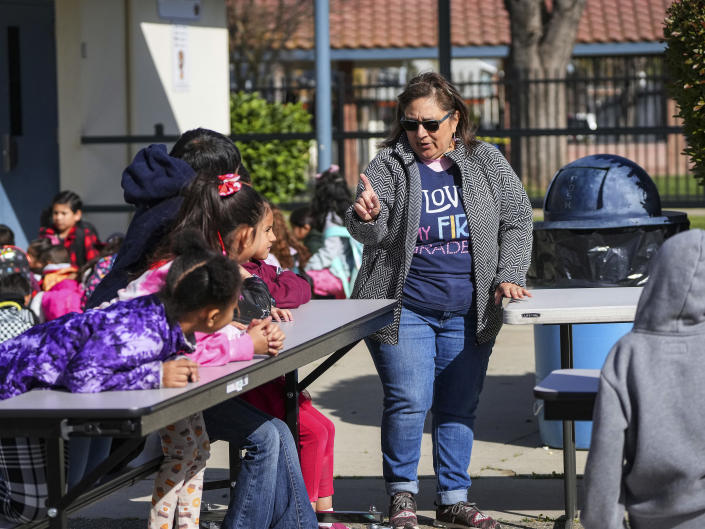
A teacher holds class on a playground at Planada Elementary School because classrooms in the building were flooded, in Planada, Calif. on Feb. 14, 2023. (Jim Wilson/The New York Times)
PLANADA, Calif. — Until the floodwaters came, until they rushed in and destroyed nearly everything, the little white house had been Cecilia Birrueta’s dream.
She and her husband bought the two-bedroom fixer-upper 13 years ago, their reward for decades of working minimum-wage jobs, first cleaning houses in Los Angeles and now milking cows and harvesting pistachios in California’s Central Valley.
The couple replaced the weathered wooden floors, installed a new stove and kitchen sink, and repainted the living room walls a warm burgundy. Here, they raised their three children, the oldest now at the University of California, Davis. They enjoyed tomatoes, peaches and figs from neighbors who worked on the nearby farms.
Birrueta and her husband felt content. Until last month. Until the floodwaters came.
A brutal set of atmospheric rivers in California unleashed a disaster in Planada, an agricultural community of 4,000 residents in the flatlands about an hour west of Yosemite National Park. During one storm in early January, a creek just outside of town burst through old farm levees and sent muddy water gushing into the streets.
For several days, the entire town looked like a lagoon. Weeks after record-breaking storms wreaked havoc across California and killed at least 21 people, some of the hardest-hit communities are still struggling to recover.
The flood ruined the two cars owned by Birrueta and her family and destroyed most of their clothes. The walls with the burgundy paint that she had carefully picked out had rotted through. Their house may need to be demolished.
Birrueta, her husband and their 14-year-old son and 10-year-old daughter had to move into a camp that typically houses migrant farmworkers, who arrive each spring with few belongings and the hope of building a life like the Birruetas had. There, 41 families from Planada are staying in long beige cabins and relying on space heaters for warmth because the camps lack furnaces.
“We came as immigrants, we started with nothing,” said Birrueta, 40, who was born in Mexico. “We bought a place of our own that we thought would be safe for our kids, and then we lost it. We lost everything.”
Nine miles east of Merced in California’s agricultural heartland, Planada’s wide streets are dotted with bungalows and lead to a central park shaded by towering spruce and elm trees. Less than 2 square miles, Planada was created in 1911 to be an idyllic, planned farming community — its name means “plain” in Spanish, a nod to its fertile, low-lying lands — but was eventually abandoned by its Los Angeles developers.
The quiet town, surrounded by almond orchards and cornfields, has since become a desirable place for farmworkers to settle with their families. When California farmworkers marched through Planada last summer on their way to the state Capitol in Sacramento, hundreds of children lined the streets to cheer them on.
The recent floods dealt a painful blow to a community in which more than one-third of households are impoverished. Planada is more than 90% Latino and overwhelmingly Spanish-speaking. Roughly one-fourth of the residents are estimated to be immigrants living in the country illegally, making them ineligible for some forms of disaster relief.
Agricultural workers in California are often on the front lines of catastrophes. They worked during the early, uncertain days of the COVID-19 pandemic, have endured record heat waves and toiled in the smoke-choked air that gets trapped in the Central Valley during wildfires.
During the recent floods, tens of thousands of farmworkers most likely lost wages because of water damage to California’s crops, compounding their already precarious financial situations, said Antonio De Loera-Brust, a spokesperson for the United Farm Workers of America.
“The very workers who put food on our table are getting hot meals from the Salvation Army,” said De Loera-Brust. “Whether California is on fire or underwater, the farmworkers are always losing.”
On a recent morning in Planada, huge piles of furniture were stacked more than 6 feet high along the curb, as if standing guard in front of each home. Once cherished possessions had become trash: A child’s tricycle. A green velvet armchair. An engraved wooden crib.
When Birrueta returned to her home after evacuating Jan. 9, it had a sour smell inside, she said. A floral rug in her daughter’s room that had once been white and blue appeared black after being caked in mud. The girl rushed to grab her soaked toys, some of them recent Christmas gifts. Birrueta had to wrest them from her hands. They threw away her pink wooden dollhouse, a Build-a-Bear she called Rambo, her beloved collection of Dr. Seuss books.
“I don’t really know how to talk to my kids about it,” Birrueta said, choking up.
Birrueta applied for relief from the Federal Emergency Management Agency but has yet to hear back. Although Planada is in a flood zone, most homeowners said they couldn’t afford to pay thousands of dollars for flood insurance. Besides, they said, so many years of severe heat and drought made wildfires seem a much greater concern than a deluge.
Maria Figueroa, a FEMA spokesperson, said the agency would provide, at most, $41,000 per flooded household. The funds are intended to jump-start recovery, not cover a full rebuild. “We’re not an insurance agency,” she said.
In 1910, Los Angeles real estate developer J. Harvey McCarthy decided Planada would be his “city beautiful,” a model community and an automobile stop along the road to Yosemite. “The town will be laid out similar to Paris,” The San Luis Obispo Daily Telegram reported at the time.
An infusion of money brought Planada a bank, hotel, school, church and its own newspaper, the Planada Enterprise, by the next year. But McCarthy eventually abandoned the community when he ran out of funds, leaving its settlers to pick up the pieces.
One thing wasn’t mentioned in advertisements for Planada: the floods. On Feb. 3, 1911, The Merced County Sun reported that during a 48-hour downpour, a creek overflowed its banks and that Planada was “under water.”
More than a century later, Maria Soto, 73, was sleeping when her grandson, who lives in the house behind hers, banged on her door around 2 a.m. A family member was driving a pickup truck through Planada to rescue their relatives, dozens of whom lived there.
Soto clambered onto the truck bed, and her feet dangled in the rising waters as they fled. When the engine stalled momentarily, she was frightened but didn’t tell anyone else that she didn’t know how to swim.
At her low-slung, peach-colored home, with an overgrown avocado tree out front and wind chimes hanging from the eaves, water breached the roof and poured down the walls.
Black patches of mold have begun to spread inside, so she is living at her daughter’s house next door while trying to scrape together money on her fixed income for the repairs.
“This is where I raised my children, and it’s always been dry,” said Soto, who in the late 1970s moved to Planada with her husband, who picked lettuce. “We weren’t prepared. No one was prepared.”
Disasters only exacerbate the health dangers that farmworkers face. Mold in flooded homes, for example, can prompt symptoms of asthma and chronic obstructive pulmonary disease, which are more common in low-income communities. Farmworkers often battle pesticide exposure and, even in good times, can only afford substandard housing.
“A small community like Planada, that has so many low-wage workers, you can only imagine the extent to which these problems were already existing,” said Edward Flores, an associate professor of sociology at University of California Merced and who co-wrote a new study revealing California farmworkers’ poor living conditions.
The flood’s impacts extend beyond inundated homes. Planada Elementary School lost 4,000 books as well as student desks, beanbag chairs and rugs. Hundreds of students had to be relocated to a nearby middle school.
“We were doing a really good job recovering from COVID,” said José L. González, superintendent of the Planada Elementary School District. “This just feels like we’re cut off at the knees again.”
Another major storm arrived this past week in California, bringing rain and snow, but Planada residents have been spared from further disaster.
Birrueta used to tuck sentimental items into suitcases that she stored in her son’s closet. Old photographs of relatives in Mexico, including of her father, who recently died. Socks she crocheted for her children when they were newborns. Pictures of her oldest daughter’s birthday celebrations, from an era before iPhones.
The floodwaters drenched those suitcases and everything inside. Still, Birrueta said she was grateful because her family safely escaped the floods and that they have a roof over their heads, albeit temporarily. Families can stay in the migrant camps until March 15, after which the county may provide other lodging.
Birrueta and her husband plan to rebuild their home in Planada.
“We started with nothing,” she said. “So in a way, we know how to start over again.”
Rail Industry Pushes Sensors Over Brakes After Ohio Train Crash
Thomas Black – February 26, 2023
(Bloomberg) — The train derailment that spilled toxic chemicals into a small Ohio town has revived a long-running debate about railroad safety — and some industry players think they have just the thing to resolve it.
The Feb. 3 crash of the Norfolk Southern Corp. train in East Palestine, Ohio, has renewed a push for railroads to adopt electronic brakes that could help prevent a malfunctioning train from endangering people and property. Electronically controlled pneumatic, or ECP, brakes have been touted for their capacity to bring trains to a halt in shorter distances and prevent dangerous pileups.
The Biden administration has blamed industry stonewalling for blocking regulations that would have mandated use of the systems on some trains — even though it isn’t clear that ECP brakes would’ve done much to mitigate an accident similar to the one in Ohio, and the proposed rules wouldn’t have applied to the train that crashed.
The railroad industry has found itself in a tight spot as the political furor around the accident grows, with former President Donald Trump turning up in East Palestine, and the derailment becoming a talking point on cable news and Capitol Hill. The episode has aggravated fears about the safety of sending chemicals and other hazardous materials over the rails, and raised the specter of new regulation at a time when railroads are coping with restive workers and annoyed customers.
Installing ECP brakes that the Biden administration and safety advocates favor would be expensive and cumbersome for a business beset by complaints about delays and lackluster service. The brakes need to be installed on each car to work properly — a daunting prospect for an industry with some 1.5 million cars on the tracks and little idle capacity.
A coalition that includes railcar makers, shippers and two large railroads say they have a different idea. They want to place sensors on railcars that could flag faulty equipment immediately to a train’s crew and others monitoring remotely. The system is being tested on 400 railcars and could be available commercially by the end of this year, according to the group, which calls itself RailPulse.
Such sensors could potentially catch problems like the overheated wheel bearing that likely caused the East Palestine wreck. Electronically controlled brakes, on the other hand, may not have even done much to mitigate the derailment if they were installed, based on a 2017 study by the National Academy of Sciences.
Notably, a sensor apparatus also would likely be much less expensive for the industry to put into place. RailPulse says its system would cost about $400 to $900 per railcar.
Smart Railcars
The use of remote sensing technology on the railroads isn’t entirely new. Currently, sensors known as wayside heat detectors placed along the tracks screen train cars for defects — and they sniffed out the trouble in Ohio. Wayside detectors were voluntarily adopted by railroads to reduce accidents; Norfolk Southern said it has nearly 1,000 of them.
According to a preliminary report by the National Safety Transportation Board, Norfolk Southern’s wayside detectors in Ohio were working, but caught the overheated wheel too late. The NTSB found that a wayside detector about 20 miles before the crash site measured the wheel bearing at 103 degrees Fahrenheit above ambient temperature — hot, but below a level that calls for the crew to stop and take a look.
However, the next detector, just ahead of the crash site, recorded a wheel temperature at 253 degrees above, a critical level. The sensor sounded an alarm, but it was too late. The wheel failed and caused 38 of the train’s 149 railcars to careen off the rails.
Sensors mounted directly on railcars could diagnose the issue sooner and buy critical time, backers say. Railcars will likely have multiple sensors in the near future that can detect anything from open doors to signs that equipment is in danger of failing, said David Shannon, general manager of RailPulse.
“Our objective is to make railcars smart,” Shannon said.
The group’s pilot program, which is testing five types of sensors, will be on 1,000 railcars by this summer, he said, and should be ready for real-world use by the end of this year. RailPulse plans to provide a subscription service to transmit the data to the cloud, and is counting on manufacturers to design the sensors the industry needs.
ECP Debate
Norfolk Southern was on the forefront of testing ECP brakes before the US Department of Transportation decided to require them on high hazard flammable trains in 2015. The company opposed the mandate because of cost, the brakes’ reliability and the inability to mix locomotives and railcars that didn’t have the system.
One of the biggest drawbacks of ECP brakes is that all the railcars on a train must have them or the system doesn’t work, making it impossible to phase in gradually. The rule followed a spate of derailments by trains shuttling crude oil from fracking hotspots where there were no pipelines to refineries.
As part of an infrastructure bill in 2015, Congress required the transportation department to justify the need for ECP braking. The National Academy of Sciences was ordered to examine computer modeling the department used to support its position that they had a significant safety advantage over conventional brakes.
After tests at a Norfolk Southern rail yard in Conway, Pennsylvania, and the New York Air Brake Facility in Watertown, New York, the academy said in a 2017 report that the department’s efforts to validate its modeling “do not instill sufficient confidence in DOT’s comparison of the estimated emergency performance of ECP braking systems” with other systems. That paved the way for the Trump administration to rescind the mandate.
In a Feb. 19 letter to Norfolk Southern Chief Executive Officer Alan Shaw, Transportation Secretary Pete Buttigieg faulted the industry for opposing ECP brakes. “Rather than support these efforts to improve rail safety, Norfolk Southern and other rail companies spend millions of dollars in the courts and lobbying members of Congress to oppose common-sense safety regulation,” Buttigieg wrote.
However, others in the federal government have pushed back on the idea that the ECP mandate would have prevented the Ohio crash.
“Some are saying the ECP (electronically controlled pneumatic) brake rule, if implemented, would’ve prevented this derailment. FALSE,” NTSB Chairman Jennifer Homendy said in a Feb. 16 tweet. She went on to explain why the Norfolk Southern train wasn’t designated as high hazard flammable. “This means even if the rule had gone into effect, this train wouldn’t have had ECP brakes.”
Uphill Battle
The prospect that regulators would swiftly put the electronic-braking rules in place following the Ohio crash is remote. To reinstate the mandate would be an uphill battle, a senior White House official acknowledged during a Feb. 17 briefing. The rulemaking process takes years and it would be difficult to pull off after Congress weighed in against the technology.
Similarly, persuading the entire railroad industry to go along with RailPulse’s sensors could be a tall order.
Workers are wary of new safety technologies that the industry touts, especially if they are aimed at replacing human inspections, said Mark Wallace, vice president of the Brotherhood of Locomotive Engineers and Trainmen. For the past five years, the railroads’ first priority has been profit, not safety, Wallace said. Operating profit margin for North American railroads increased to 39% last year from 34% in 2017.
“If you’re going to implement the technology, then you have to maintain the technology and you have to have somebody in place to make sure that it’s working properly,” he said.
Additionally, railcars are mostly owned by shippers and by leasing companies. Shippers are pushing to be able to track their freight cars just as they can for trailers on trucks, the railroads’ main competitor for freight. Some large railroads, including CSX Corp. and BNSF Railway, aren’t part of the coalition.
In Town Where Train Derailed, Lawyers Are Signing Up Clients in Droves
Campbell Robertson – February 25, 2023
A welcome sign on the outskirts of East Palestine, Ohio on Feb. 23, 2023. (Maddie McGarvey/The New York Times)
EAST PALESTINE, Ohio — In the three weeks since a freight train derailed in East Palestine and released more than 100,000 gallons of toxic chemicals, lawyers have poured into the little town, signing up clients, gathering evidence and already filing more than a dozen lawsuits in federal court on behalf of local residents.
They have held information sessions nearly everywhere a crowd can gather, including at a nearby Best Western, at the American Legion hall and in the packed cafeteria at East Palestine High School. Their message overall has been one of warning: It may be months, years or possibly even decades before the derailment’s ultimate effect on people’s health, property values or the soil and water becomes clear.
Further, the lawyers say, early moves by Norfolk Southern, the operator of the train, suggest that getting comprehensive answers from the company will not be easy.
Among a public that is deeply skeptical of official test results — Gov. Mike DeWine, a Republican, and other state and federal officials say they have not shown anything alarming so far — or camera-friendly efforts at reassurance, these warnings have resonated.
The distrust has been deepened by a sense that politicians are not being diligent enough in their response to the disaster; on Friday, President Joe Biden said that he had no plans to visit, although he pointed out that federal officials had arrived there within hours of the crash, and that he was “keeping very close tabs on” the situation.
“They get what’s happening,” Rene Rocha, a lawyer with supersize personal injury firm Morgan & Morgan, said during a state hearing about the derailment Thursday in Beaver County, Pennsylvania, just across the border from East Palestine.
Referring to residents there who had spoken at the hearing about headaches, coughs and other classic symptoms of chemical exposure, he added: “They see they’re not getting the truth from the politicians and the company. That leaves the lawyers.”
Norfolk Southern declined to comment Friday on matters involving litigation.
The huge scale of the chemical burn-off and the harrowing images of the fire, as well as the intense politicization of it all, have made the derailment in East Palestine among the most high-profile environmental disasters in the country in years.
Television cameras are still routine fixtures on the sidewalks of the town’s central street. On Friday night, Erin Brockovich, the famed environmental activist who years ago exposed corporate wrongdoing that polluted drinking water, spoke to a packed town hall at the East Palestine High School auditorium.
The event, billed as an “educational seminar” and organized by a law firm based out of Akron, Ohio, consisted mostly of a detailed presentation by Mikal Watts, a prominent Texas lawyer, about the potential health effects of the derailment and the legal landscape that plaintiffs would be facing. But it began with a short speech from Brockovich to the hundreds sitting in the auditorium and watching an overflow screen in the gym.
“You’re going to be told it’s safe, you’re going to be told not to worry: Well that’s just rubbish,” she said. Of the derailment in East Palestine, she said, “I’ve never seen anything in 30 years like this.”
To some local attorneys, the army that has descended on the town is exasperating. “Did they even know where East Palestine was prior to this accident?” fumed David Betras, a lawyer who has spent his career just up the road in Youngstown, Ohio, and is planning to file a suit on behalf of hundreds of local residents. “They come in with this star power. Like, ‘Oh, Erin’s gonna solve it.’”
On Thursday night, Steve and Kelly Davis sat down in a yet-to-be-opened wine bar a short walk from where the train cars left the tracks nearly three weeks earlier. Thousands of their bees had been found dead after the burn-off, thousands of dollars’ worth of boxes that had housed the bees were now in questionable condition and the reputation of the family honey business was in jeopardy.
Their son, on the verge of buying a house downtown, was suddenly getting a cold shoulder from the bank. No one had come to test their well water. And to top it all off, Steve Davis had developed a cough.
They had come to meet with Robert Till, a Texas-based investigator for the law firm of Cory Watson who for weeks has been meeting people at a table set up in the empty bar. Till has met with hundreds so far, he said, talking with people about their health conditions, learning how their businesses have been affected and asking whether they have cleaned their homes — and if they have held onto the cleaning materials, which he said would contain critical data about contamination.
“I’m putting you guys on for priority testing,” he told the Davises.
“For the water?” Steve Davis asked.
“For everything,” Till said.
The legal machinations are in their early stages. Cases might ultimately be consolidated as class-action or multidistrict litigation; most of the suits will almost surely end up bundled before one or several federal judges in an Ohio courtroom.
Norfolk Southern may offer some sort of resolution voluntarily, whether by setting up a compensation fund with an independent administrator, as BP did after the 2010 oil spill in the Gulf of Mexico, or establishing a court-supervised medical monitoring program, where people could come for free testing related to possible health effects.
The company has already been paying $1,000 in “inconvenience compensation” to people who had to evacuate. Although Norfolk Southern insists that the payments do not curtail anyone’s right to sue, many are skeptical.
Lawyers point to certain moves made by the company — including a letter sent Thursday notifying plaintiffs’ attorneys that they had two days to inspect the rail cars before the cars were removed or destroyed — as signs that it would be combative.
There is no shortage of experience among the members of the plaintiff’s bar arriving in town: Train derailments are not unusual in the United States, nor are oil spills, chemical leaks or industrial accidents.
“It looks like these dadgum railroads would get it right after that many years and stop falling off the tracks, but they just can’t do it,” said Calvin Fayard Jr., a Louisiana lawyer who took the lead in a suit after a train carrying vinyl chloride — one of the substances that spilled and burned in East Palestine — derailed in a small Louisiana town in 1982.
As part of a $39 million settlement arising from the 1982 derailment, a commission was set up to monitor long-term health effects and oversee the decontamination of soil and water. That commission continued its work for more than 30 years, dissolving less than a decade ago, said Fayard, whose law partner has been in East Palestine talking with potential clients.
But a program of that magnitude is never a sure thing. After a train carrying vinyl chloride derailed in Paulsboro, New Jersey, in 2012, a federal judge ruled against any medical monitoring program and dismissed the suit; settlements were ultimately reached in state court.
No sooner had Till signed up the Davises as clients Thursday evening than another couple walked in, keeping him at work. The Davises stepped outside to talk with Michael McKim, the owner of the wine bar, which so far remains on track to open next month.
McKim had met Till in a hotel lobby during the town’s initial evacuation, and had been letting him use his place as an office ever since. This was all new to both couples.
“I feel like a baby seal in the middle of the ocean surrounded by great white sharks,” McKim said. But with as big a shark as Norfolk Southern as the defendant, he said, joining up with a law firm was his best chance. “It’s kind of nice to at least hang out with a shark that maybe understands.”
In Less Than a Decade, You Won’t Be Able To Afford a Home in These Cities
Joel Anderson – February 25, 2023
dszc / iStock.com
Rising home values can quickly transition a reasonable housing market into the type of real estate monster that has consumed places like the San Francisco Bay Area and New York City. While the idea of affordable housing in an urban center isn’t implausible for plenty of Americans living in some areas, that’s rapidly changing in many places.
GOBankingRates conducted a study to determine which major U.S. cities are on track to lose their label of affordability. GOBankingRates took the overall U.S. median home value and projected its growth over 10 years using Zillow’s September 2022-23 one-year forecast. This projection was then compared to the projections of 537 U.S. cities that currently have home prices below the national median of $356,026, with those surpassing the national median in the next 10 years (plus its projected growth rate over the same period) being deemed “not affordable.”
GOBankingRates notes that projecting into the future based on a single year’s growth rate might paint an unfair picture in markets where the current rate is an anomaly. Additionally, Zillow’s estimated home values don’t necessarily reflect the list prices or sale prices in each market.
Still, identifying the areas that are outpacing the national average for growth can help shed light on the cities where you should buy a home sooner rather than later. If you end up living in one of these cities 10 years down the line, you might want to check out other cities with more affordable housing.
will_snyder_ / Getty Images/iStockphoto
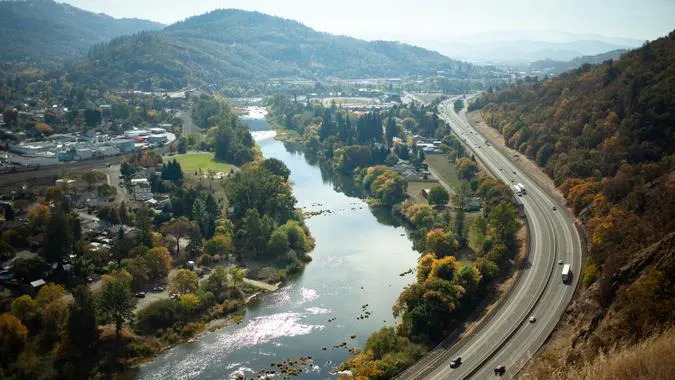
Roseburg, Oregon
August 2022 home value: $321,807
One-year projected growth rate: 20.4%
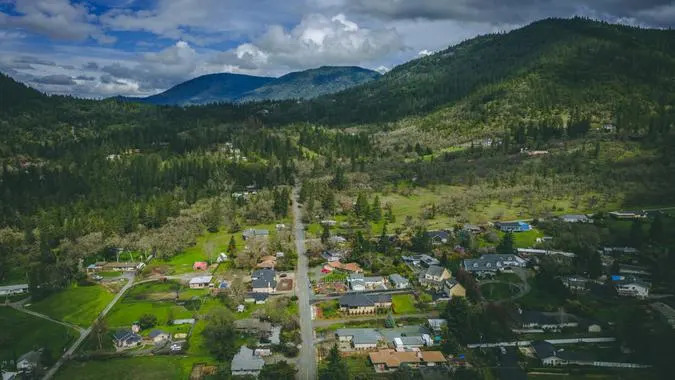
Roseburg is in the Hundred Valleys of the Umpqua in southwestern Oregon, known for having seasonal, but pleasant, temperatures – never too hot or too cold. It sits 123 miles north of the California border.
kaceyb / Getty Images/iStockphoto
When It Will Become Too Expensive
Year: 2023
Projected home value: $387,456
U.S. median projected home value: $382,019
Difference in value: $5,437
2032 projected home value: $2,059,967
Steven Liveoak / Shutterstock.com
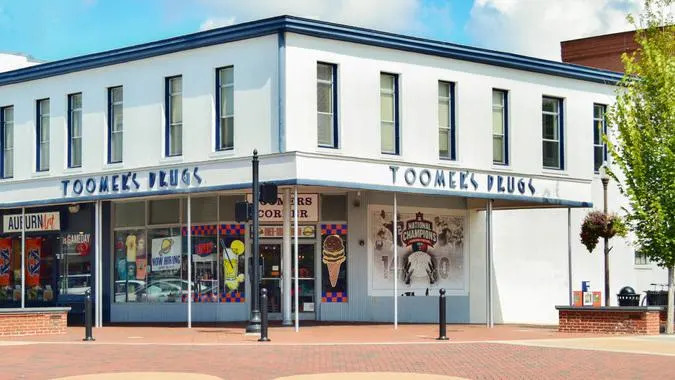
Auburn, Alabama
August 2022 home value: $321,643
One-year projected growth rate: 19.4%
Auburn, in the eastern part of central Alabama, is just 35 miles west of Columbus, Georgia, and a 3 ½-hour drive from vacation spots along the Gulf of Mexico. Auburn University is the city’s largest employer, with about 7,100 people working there
disorderly / Getty Images/iStockphoto
When It Will Become Too Expensive
Year: 2023
Projected home value: $384,042
U.S. median projected home value: $382,019
Difference in value: $2,023
2032 projected home value: $1,894,163
DenisTangneyJr / Getty Images/iStockphoto
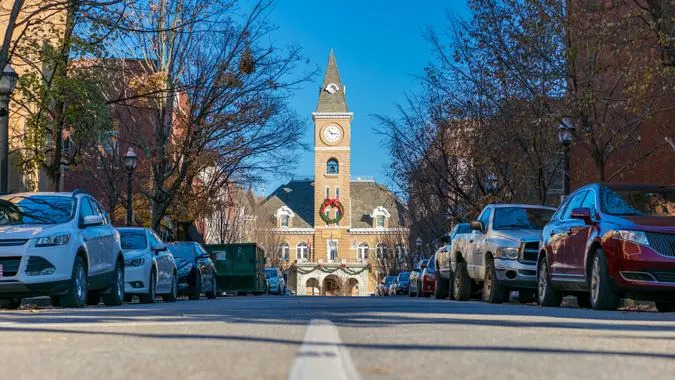
Fayetteville, Arkansas
August 2022 home value: $307,909
One-year projected growth rate: 23.1%
Another college town, Fayetteville is home to the University of Arkansas. Bill and Hillary Clinton called Fayetteville home before he was elected the state’s governor, and then president of the United States, and the home they lived in is now a museum preserving memories of their time in the city.
Shutterstock.com
When It Will Become Too Expensive
Year: 2024
Projected home value: $466,593
U.S. median projected home value: $448,108
Difference in value: $18,485
2032 projected home value: $2,460,384
SeanPavonePhoto / iStock.com
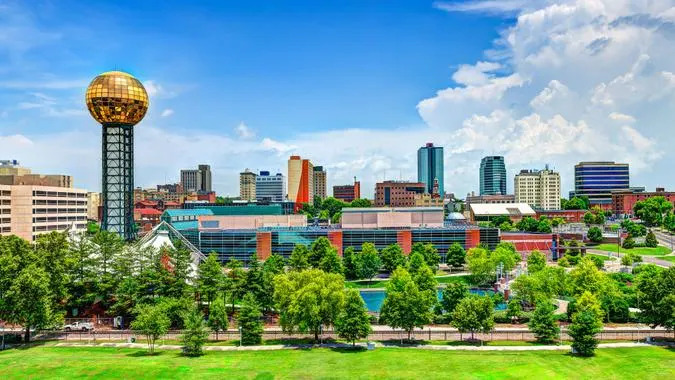
Knoxville, Tennessee
August 2022 home value: $299,342
One-year projected growth rate: 23.1%
Knoxville, Tennessee sits at the foothills of Great Smoky Mountains National Park, and is a diverse city known for celebrating its many different ethnicities in festivals and cultural events. This city of over 192,000 people is also home to the University of Tennessee and the Knoxville Ice Bears professional hockey team.
Shutterstock.com
When It Will Become Too Expensive
Year: 2024
Projected home value: $453,611
U.S. median projected home value: $448,108
Difference in value: $5,503
2032 projected home value: $2,391,928
Patricia Elaine Thomas / Shutterstock.com
Dallas, Texas
August 2022 home value: $308,661
One-year projected growth rate: 22.4%
Dallas, with 1.3 million residents, is the third-largest city in Texas but also the ninth-largest in the United States. It boasts many firsts. The nation’s first planned shopping center (Highland Park Village Shopping Center) and convenience store (7-Eleven) opened in Dallas, and the frozen margarita and precursor to the microchip were invented there.
Trong Nguyen / Shutterstock.com
When It Will Become Too Expensive
Year: 2024
Projected home value: $462,429
U.S. median projected home value: $448,108
Difference in value: $14,321
2032 projected home value: $2,329,678
Chris Rubino / Shutterstock.com
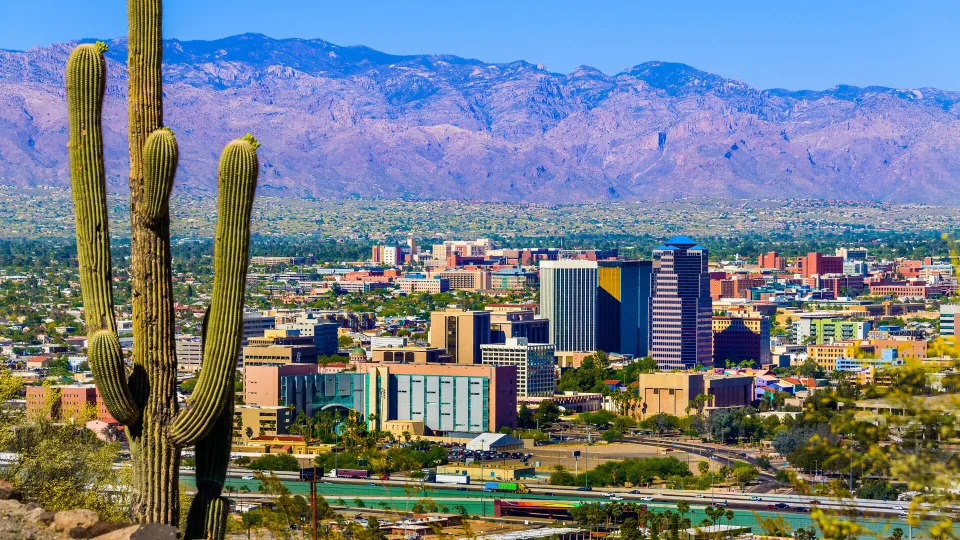
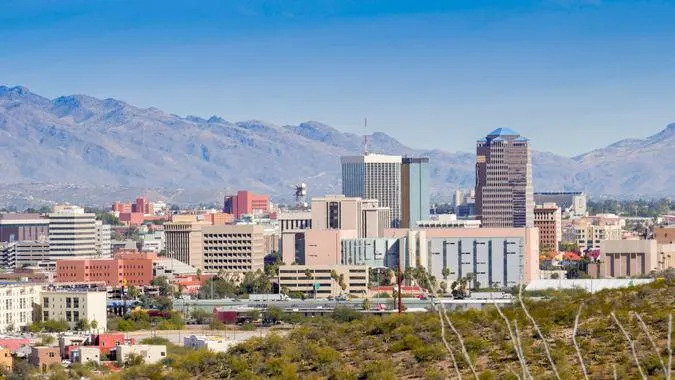
Tucson, Arizona
August 2022 home value: $307,232
One-year projected growth rate: 21.5%
Tucson is an hour north of the border with Mexico, and it lays claim to some of the best Mexican food in the U.S. Start on 12th Avenue in the city to begin your tour of what is called The Best 23 Miles of Mexican food.
Tim Roberts Photography / Shutterstock.com
When It Will Become Too Expensive
Year: 2024
Projected home value: $453,544
U.S. median projected home value: $448,108
Difference in value: $5,436
2032 projected home value: $2,153,918
chapin31 / iStock.com
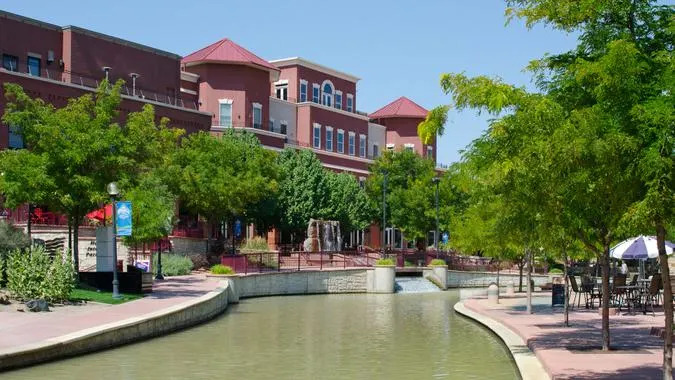
Pueblo, Colorado
August 2022 home value: $291,995
One-year projected growth rate: 22.6%
A city of about 112,000 people, Pueblo is located along the Arkansas River in Colorado, which once was the boundary between the U.S. and Mexico. The Colorado State Fair has been held in Pueblo since 1872.
J. Michael Jones / Shutterstock.com
When It Will Become Too Expensive
Year: 2025
Projected home value: $538,080
U.S. median projected home value: $525,631
Difference in value: $12,449
2032 projected home value: $2,240,166
Shutterstock.com
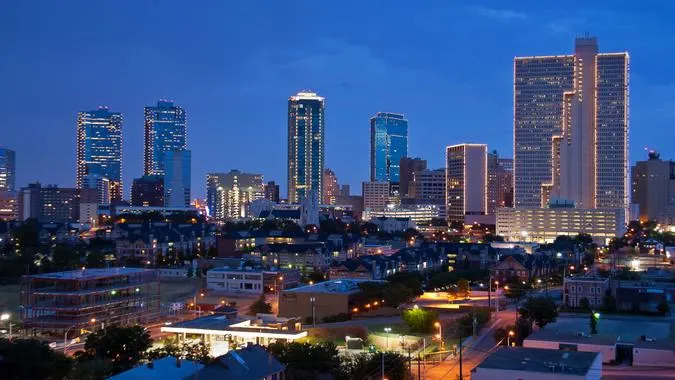
Fort Worth, Texas
August 2022 home value: $292,963
One-year projected growth rate: 22.4%
A city of about 920,000, Fort Worth grew by more than 175,000 people between the censuses of 2010 and 2020. Fun fact: 60 percent of America’s paper money is printed at the U.S. Bureau of Engraving and Printing Western Currency Facility in Fort Worth.
Christopher Boswell / Shutterstock.com
When It Will Become Too Expensive
Year: 2025
Projected home value: $537,226
U.S. median projected home value: $525,631
Difference in value: $11,595
2032 projected home value: $2,211,195
Susilyn / Shutterstock.com
Lakeland, Florida
August 2022 home value: $263,818
One-year projected growth rate: 25.6%
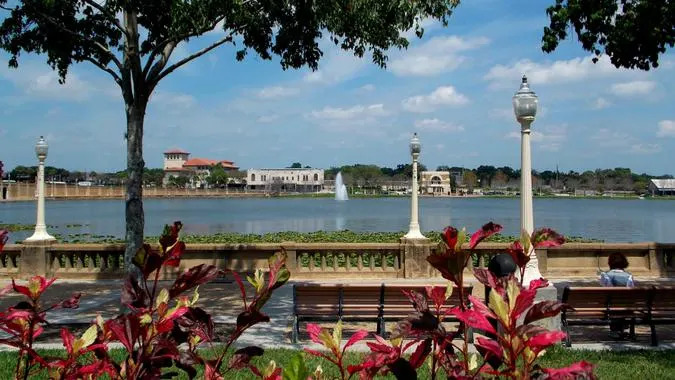
Lakeland is located along Interstate 4 between Tampa and Florida. It’s name is appropriate. Lakeland has 38 named lakes within its 74.4 square miles.
Shutterstock.com
When It Will Become Too Expensive
Year: 2026
Projected home value: $656,543
U.S. median projected home value: $616,565
Difference in value: $39,978
2032 projected home value: $2,577,513
Shutterstock.com
Daytona Beach, Florida
August 2022 home value: $258,118
One-year projected growth rate: 25.5%
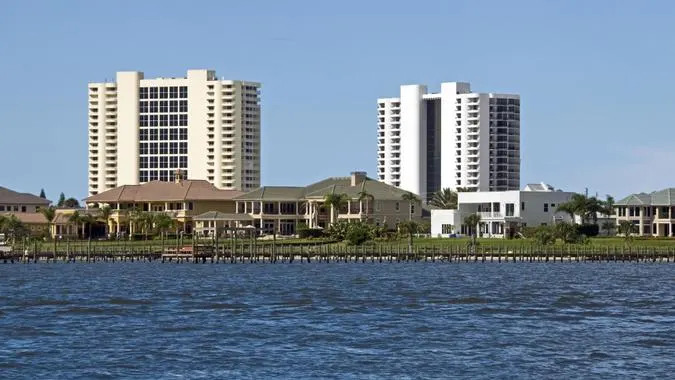
Daytona Beach is known as the home of the Daytona International Speedway and the Daytona 500, but even amateur drivers have a spot in the city. Visitors are allowed to drive – slowly – along designated areas of the 23-mile-long white-sand beaches.
Shutterstock.com
When It Will Become Too Expensive
Year: 2026
Projected home value: $640,314
U.S. median projected home value: $616,565
Difference in value: $23,749
2032 projected home value: $2,501,817
Arizona: 3.00% APY
Yuma, Arizona
August 2022 home value: $266,546
One-year projected growth rate: 24.1%
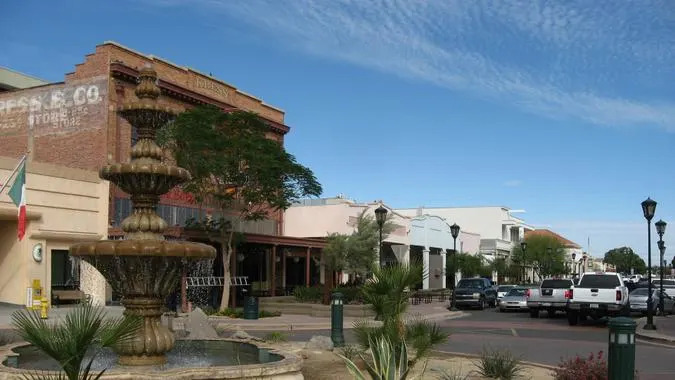
Yuma has about 95,000 residents, and there’s a good many of them help to put some of the food on your table. According to the city’s tourism website, Yuma is the “winter vegetable capital of the world” and produces 91% of the leafy greens served in North America each winter. Instead of watching the ball drop on New Year’s Eve, you can watch the Iceberg Lettuce Drop.
Ken Lund / Flickr.com
When It Will Become Too Expensive
Year: 2026
Projected home value: $632,207
U.S. median projected home value: $616,565
Difference in value: $15,642
2032 projected home value: $2,309,351
Brian Stansberry / Wikimedia Commons
Crossville, Tennessee
August 2022 home value: $262,886
One-year projected growth rate: 24.1%
In 12,000-resident Crossville, residents can test their physical and mental skills. Known as the Golf Capital of Tennessee, it has nine courses. And, Crossville is the headquarters of the United States Chess Federation, too.
Swarmcatcher / Getty Images/iStockphoto
When It Will Become Too Expensive
Year: 2026
Projected home value: $623,526
U.S. median projected home value: $616,565
Difference in value: $6,961
2032 projected home value: $2,277,641
B Brown / Shutterstock.com
Pocatello, Idaho
August 2022 home value: $289,072
One-year projected growth rate: 21.6%
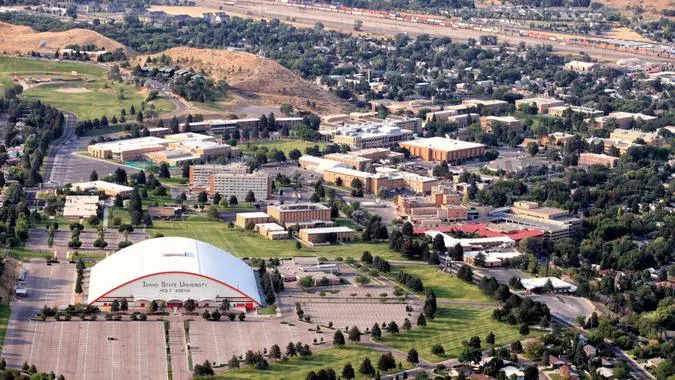
Pocatello is in the southeastern portion of Idaho at an altitude of 4,448 feet. Home of Idaho State University, the city is along the Oregon Trail, in the western foothills of the Rocky Mountains.
Ric Schafer / Shutterstock.com
When It Will Become Too Expensive
Year: 2026
Projected home value: $632,034
U.S. median projected home value: $616,565
Difference in value: $15,469
2032 projected home value: $2,043,345
virsuziglis / Getty Images/iStockphoto
Jacksonville, Florida
August 2022 home value: $281,915
One-year projected growth rate: 21.8%
At 840 square miles, Jacksonville is the largest city in the continental United States in terms of land mass. About 950,000 people live in the city – almost twice the amount of residents of Florida’s second-largest city in terms of population, Miami.
Ron_Thomas / Getty Images/iStockphoto
When It Will Become Too Expensive
Year: 2026
Projected home value: $620,451
U.S. median projected home value: $616,565
Difference in value: $3,886
2032 projected home value: $2,025,774
Ocala, Fla
Ocala, Florida
August 2022 home value: $230,684
One-year projected growth rate: 25.6%
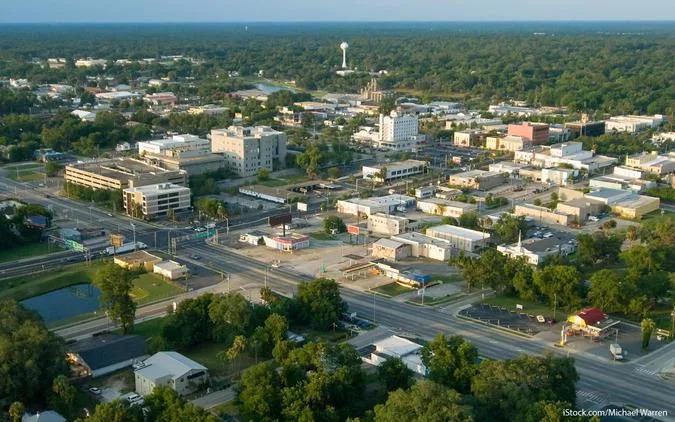
Ocala, the first town in Marion County in the early 1840s, has preserved much of its past in the Ocala Historic Downtown Square. Boutiques, restaurants, galleries and more fill the spaces. About 64,000 people live in Ocala.
Michael Warren / Getty Images/iStockphoto
When It Will Become Too Expensive
Year: 2028
Projected home value: $905,639
U.S. median projected home value: $848,350
Difference in value: $57,289
2032 projected home value: $2,253,792
Lorraine Boogich / Getty Images
Cookeville, Tennessee
August 2022 home value: $262,204
One-year projected growth rate: 22.4%
Incorporated in 1903, Cookeville sits almost midway between two of Tennessee’s biggest cities – 101 miles west of Knoxville and 79 miles east of Nashville. Fun fact: According to the local visitor’s bureau, Cookeville is within a day’s drive of 75% of the nation’s population.
ESB / Shutterstock.com
When It Will Become Too Expensive
Year: 2028
Projected home value: $881,714
U.S. median projected home value: $848,350
Difference in value: $33,364
2032 projected home value: $1,979,035
Sean Pavone / Shutterstock.com
Athens, Georgia
August 2022 home value: $279,410
One-year projected growth rate: 20.3%
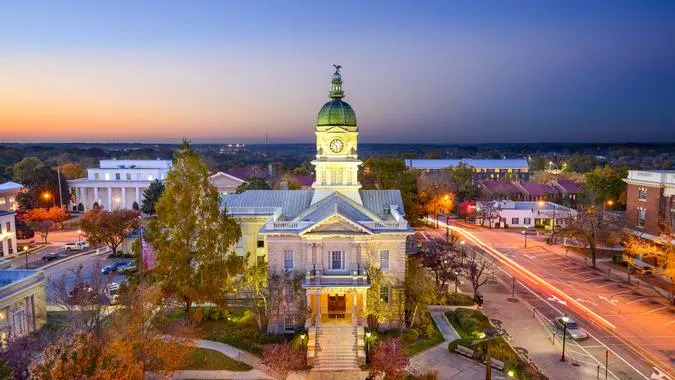
Athens, with a population of 127,300, is 60 miles northeast of Atlanta. The home of the University of Georgia, the city is beaming with pride. Their beloved Bulldogs won the College Football Playoff national championship following the 2021 season – their first since 1980.
Sean Pavone / Shutterstock.com
When It Will Become Too Expensive
Year: 2029
Projected home value: $1,018,829
U.S. median projected home value: $995,115
Difference in value: $23,714
2032 projected home value: $1,773,774
Manuela Durson / Shutterstock.com
Klamath Falls, Oregon
August 2022 home value: $280,201
One-year projected growth rate: 19.9%
Klamath Falls is in the south-central part of Oregon, just north of the California border. The city has a population of nearly 22,000, according to the 2020 U.S. Census. The Klamath Falls website reports the city has the highest concentration of bald eagles in the Pacific Northwest.
Oregon: 66.67 Hours a Month to Afford
When It Will Become Too Expensive
Year: 2029
Projected home value: $998,169
U.S. median projected home value: $995,115
Difference in value: $3,054
2032 projected home value: $1,720,527
Sean Pavone/iStockPhoto
Savannah, Georgia
August 2022 home value: $246,657
One-year projected growth rate: 22%
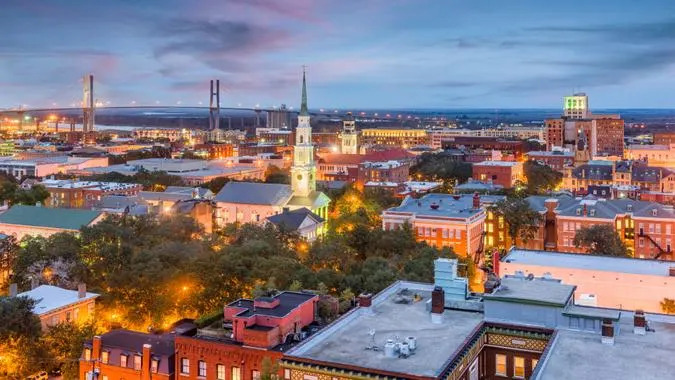
Savannah’s history dates to 1733, and it became the first city in the 13th colony – Georgia – which was named for King George II of England. Today, visitors are drawn by its period architecture, art and boutiques
SeanPavonePhoto / iStock.com
When It Will Become Too Expensive
Year: 2030
Projected home value: $1,210,520
U.S. median projected home value: $1,167,270
Difference in value: $43,250
2032 projected home value: $1,801,738
Shutterstock.com
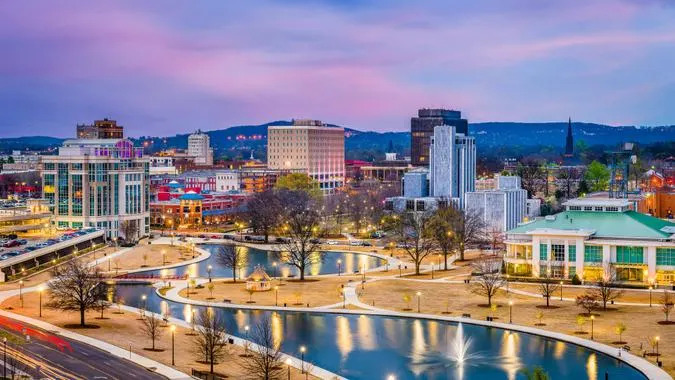
Huntsville, Alabama
August 2022 home value: $266,033
One-year projected growth rate: 20.6%
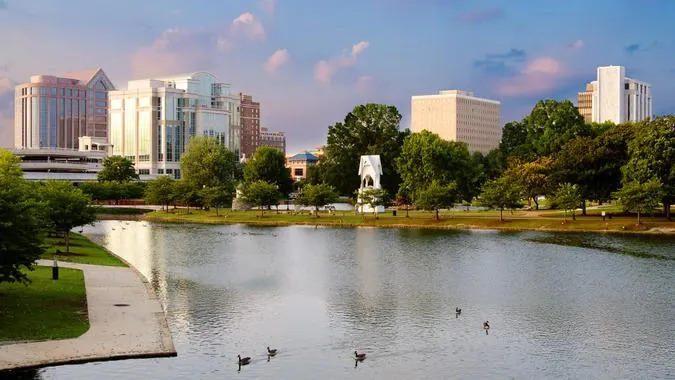
The city is named after John Hunt, who settled there in 1805. It grew rapidly from 2010 to 2020 – from 180,000 to 215,000 people – and is a bustling area for the technology, space and defense industries. NASA’s Marshall Space Flight Center and the U.S. Army Aviation and Missile Command are located in Huntsville.
Sean Pavone / Getty Images/iStockphoto
When It Will Become Too Expensive
Year: 2030
Projected home value: $1,190,458
U.S. median projected home value: $1,167,270
Difference in value: $23,188
2032 projected home value: $1,731,445
DenisTangneyJr / Getty Images/iStockphoto
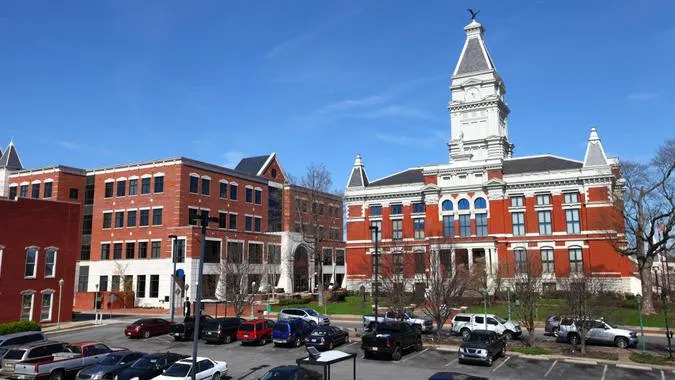
Clarksville, Tennessee
August 2022 home value: $270,758
One-year projected growth rate: 20%
Clarksville is about an hour’s drive north of Nashville and is located just south of the Kentucky border. About 167,000 people live there, and the average age of residents is 29, the city reports.
Google Maps
When It Will Become Too Expensive
Year: 2031
Projected home value: $1,397,052
U.S. median projected home value: $1,369,207
Difference in value: $27,845
2032 projected home value: $1,676,462
ivanastar / Getty Images/iStockphoto
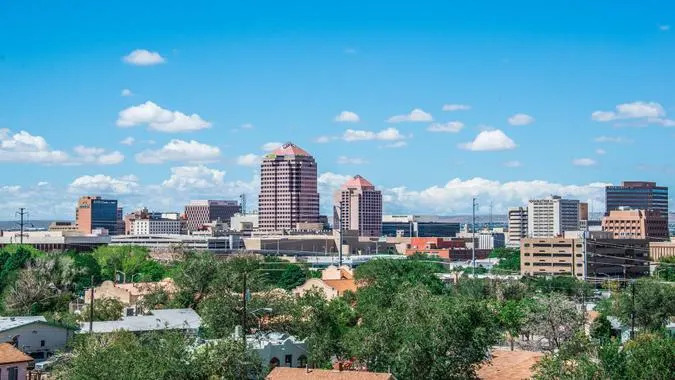
Albuquerque, New Mexico
August 2022 home value: $289,262
One-year projected growth rate: 19%
About 565,000 people live in Albuquerque, and what does it mean if one of them asks you “red or green”? You’re being asked whether you want red or green chiles in your New Mexican fare. Reply “Christmas” if you want both.
photoBeard / Getty Images/iStockphoto
When It Will Become Too Expensive
Year: 2031
Projected home value: $1,384,248
U.S. median projected home value: $1,369,207
Difference in value: $15,041
2032 projected home value: $1,647,256
Jordan Rosenfeld contributed to the reporting for this article.
Methodology: GOBankingRates took the overall U.S. median home value and projected its growth over 10 years using Zillow’s September 2022-23 one-year forecast. This projection was then compared to the projections of 537 U.S. cities that currently have home prices below the national median, with those surpassing the national median in the next 10 years (plus its projected growth rate over the same period) being deemed “not affordable.” For each “not affordable” city over the next decade, GOBankingRates found the following factors: (1) year the city will become “not affordable”; (2) projected home value for that year; (3) US average projected home value for that year; and (4) the difference in value between factors (2) and (3). NOTE: GOBankingRates does not expect growth in home value to stay stagnant at one current rate for the next decade, but using these constant figures gives us an idea where certain markets are heading without unforeseen market disruptors in the future. All data used to conduct this study was compiled and verified on October 11, 2022.
Officials plan to shoot 150 cattle from the sky Thursday. An 11th-hour lawsuit hopes to stop it.
Natalie Neysa Alund, USA TODAY – February 24, 2023
Less than 24 hours before bullets are set to fly, a group of animal activists including the Humane Farming Association hopes an 11th-hour lawsuit stops the planned aerial slaughter of 150 cattle in New Mexico.
During a federally-approved, three day-event set to start Thursday, the U.S. Forest Service plans to shoot feral cattle from a helicopter roaming a southwestern area of the state.
The federal agency announced its decision on Feb. 16, explaining feral cattle on the 560,000-acre Gila Wilderness Area “pose a significant threat to public safety and natural resources.”
Opponents including The New Mexico Cattle Growers’ Association (NMCGA) this week asked a judge to grant a temporary restraining order to stop the mass killing. A hearing on the scheduled slaughter is set for Wednesday morning, court records show.
Federal officials are set to start shooting feral cattle in the Gila Wilderness starting February 23, 2023. A lawsuit filed just two days before the scheduled slaughter hopes to stop it.
On Tuesday, the group jointly filed suit in U.S. District Court for the District of New Mexico against the Forest Service and the Animal and Plant Health Inspection Service (APHIS) to prevent “the inhumane aerial gunning” of cattle.
“No matter what the Forest Service claims, this is unadulterated animal cruelty,” said Humane Farming Association National Director Bradley Miller. “These animals don’t take the shots standing still – they run in fear from the helicopter chasing them. These are not clean kills; the cattle experience horrifically slow deaths. Their orphaned calves are left to starve or be killed by predators.”
USA TODAY has reached out to the Forest Service and the USDA for comment.
The animals are to be shot within the Gila National Forest, a 3-million-acre reserve in New Mexico.
Last year, the NMCGA filed a temporary restraining order in an effort to stop the Forest Service’s plan to use aerial gunning to eliminate free-roaming cattle from the wilderness area, during which 65 cattle were shot at and killed from a helicopter. That legal effort was denied.
A stipulation resulting from last year’s lawsuit required that the agency provide the cattle growers and the public 75 days’ written notice before future shooting commenced, this year’s lawsuit alleges.
“Yet, this year, the Forest Service provided only one week’s notice,” according to a press release from the Humane Farming Association.
APHIS intends “to shoot as many as 150 cattle with high-powered rifles from a helicopter, leaving their carcasses strewn throughout New Mexico’s Gila Wilderness,” the new 31-page lawsuit reads. “Intervention is necessary to put an immediate stop to this unlawful, cruel, and environmentally harmful action, both now and in the future.”
Lawsuit claims violation of law
In the suit, the plaintiffs argue that, in addition to not complying with the 75-day notice, the Forest Service has no legal authority to carry out its aerial gunning plan, in violation of the Administrative Procedure Act, which governs the process by which federal agencies develop and issue regulations.
“Shooting violates the APA because it is not authorized by statute or regulation, exceeds the Forest Service’s authority, and fails to follow the existing regulations for the removal of unauthorized cattle,” the suit continues.
In addition, plaintiffs argue that, by proceeding without first conducting an environmental review of the significant harms to the wilderness ecosystem, the Forest Service is violating the National Environmental Policy Act. Because the Forest Service intends to leave all 150 dead and dying cattle in the wilderness to decompose, the government will cause catastrophic pollution of the Gila River and impermissibly interfere with the natural feeding behaviors of native wildlife.
Natalie Neysa Alund covers trending news for USA TODAY.
People Boycott Popular Beer After Producer Breaks Promise to Pull Out of Russia
It’s not a good look.
Colette Bennett – February 24, 2023
People Boycott Popular Beer After Producer Breaks Promise to Pull Out of Russia
More than 10,000 people are spending their Friday morning on Twitter calling for a boycott of Dutch beer company Heineken.
A tweet featuring an incendiary fan-made image first used the hashtag on Feb. 23, which transformed Heineken’s signature green bottle into pointed bullets and stated “proud supporter of Russian genocide.”
The post also stated: “Heineken launched no less than 61 new products on the #Russian market last year after promising to stop investing there because of the war in #Ukraine.”
Heineken in March 2022 had vowed to pull its business from Russia after the country invaded Ukraine. But an investigative report from Netherlands-based website Follow the Money states that the company’s reports showed its Russian arm “launched 61 new products ‘in record time’ and sold 720,000 hectoliters more beer and soft drinks.”
Heineken was quick to respond to the controversy in a formal statement: “We’re working hard to transfer our business to a viable buyer in very challenging circumstances and we expect at a significant financial loss to the company, amounting to around €300M.
“In the meantime, our local colleagues at Heineken Russia are doing what they can to keep the business going, after fully delisting the Heineken® brand, to avoid nationalisation and ensure their livelihoods are not at risk.”
Ukrainian soldiers with life-changing war injuries posed for portraits saying they are ‘living monuments’ of a brutal war
Mia Jankowicz – February 24, 2023
Oleksandr lost both his lower legs to a Russian missile.Marta Syrko
Ukrainian photographer Marta Syrko has asked war-injured soldiers to sit for her.
Oleksandr, who lost his lower legs, said he wanted to show that injured bodies can be powerful.
The pictures, both stark and tender, are a reminder of the human cost of Putin’s war.
Last summer, 26-year-old Oleksandr was resting in a trench.
Exactly six months earlier, he had been working as a barista while he trained in graphic design. But after Russia invaded, he became a leader in a mortar batallion.
He was exhausted. The safest place to rest would have been under tree cover along with his squad, but there was no more room there. So he drifted off in the trench.
The next thing he knew he was buried in soil, his legs in excruciating pain. After his friends had scrabbled through the earth, they laid him on his front, not wanting him to glimpse his legs.
He told Insider he accepted his injuries “from the first moment” the missile hit him. (He spoke to Insider through an interpreter.)
So when photographer Marta Syrko asked Oleksandr to sit for her, he felt he could send a message with his body: among other things, to show the world the carnage Putin is inflicting and the cost of defending his country.
‘We need an artist, not just a photographer’
One of Syrko’s main subjects is bodies. A skim through her Instagram feed shows the human form in all its glory, from an advertising-perfect washboard stomach to the soft millefeuille creases of her grandmother’s skin.
After Russia’s invasion, however, more and more people were returning to her hometown of Lviv with life-changing wounds.
So she approached a rehabilitation clinic near the city to ask if any of the soldiers — whose bodies had been radically transformed by war — would let her take portraits of them.
Four men agreed, three of whom lost limbs and one who received serious burns.
Serhii agreed to become one of Syrko’s “Heroes.”Marta Syrko
Among the soldiers was Serhii, pictured above cradling his second child, who had his leg torn off in the shockwave of a blast near Izyum, in Kharkhiv Oblast.
Another, Stanislav, also lost a leg last summer, in Bakhmut — one of the most fiercely contested cities in the entirety of Russia’s bloody war.
Syrko said she was inspired by the classical statues she saw in museums like the Louvre.
Foundational for Western art history, they, too, through wear and tear, are often missing limbs.
Illya Pylypenko received severe burns in a tank.Marta Syrko
Later, Neopalymi, a charity devoted to treating and rehabilitating people with severe burns, approached Syrko with a request. They asked her to photograph Illya Pylypenko, a soldier who had burns on much of his body after his tank caught fire.
Syrko’s unflinching photos of Pylypenko show how his face, in particular, was transformed.
A photo portrait by artist Marta Syrko of Ukrainian soldier Ilya, who was badly burned. Ilya is seen topless in a three-quarter view, chin in hand, looking ahead. Skin on his hand and arm, and much of his face, is badly damaged with red-colored burns on his otherwise white skin.
Neopalymi, a burns rehabilitation center, asked Syrko to photograph Illya Pylypenko.Marta Syrko
Maksym Turkevych, Neopalymi’s CEO, told Insider in an email that the project needed “an artist, not just a photographer.”
‘We don’t know what to say. How to behave.’
Syrko’s work has many fans, but she said she’s had occasional comments from people who say she’s exploiting disabled people through her work.
Asked about this, Syrko — who is able-bodied — said her aim is to make a real and complex discussion happen.
“It’s a hard question for Ukrainians now, because we don’t know how to act near them,” she said. “We don’t know what to say, how to behave. And so that’s why we have to discuss it.”
Stanislav also lost his lower leg.Marta Syrko
For Oleksandr, the decision to become a “monument” for Syrko’s photos, as he put it, was a deliberate choice that he embraced.
He liked Syrko’s thinking about statues, saying in an Instagram post that people like him are “living monuments, who have been close-up witnesses to war.”
Serhii, pictured here with his son, lost part of his leg near Izyum.Marta Syrko
But public attitudes can be disappointing, even though he was injured defending their homeland, he said. People “look away, and they break into lively talk when ‘monuments’ walk past.”
Society, he said, stops seeing these bodies as beautiful.
“I wanted to become something that would inspire others like me to feel that people are looking at them not with shame, but with exaltation!” he wrote.
This was Neopalymi’s goal, too. “The main reason for us to do it is to show the society that there is a beauty in it, and that they should not be scared or disgusted by this,” said Turkevych, the CEO.
Syrko’s unflinching images of Illya show the effects of his burns.Marta Syrko
With a 122,000-strong Instagram following, Syrko said she had conversations with her subjects about the exposure the pictures could bring.
“I told them that they are probably going to be a little bit popular,” she said. And so they turned out to be — her pictures have been shared by the Ukrainian Ministry of Foreign Affairs’ Twitter account, and by newspaper Ukrainska Pravda.
Oleksandr told Insider, laughing, about his surprise when he arrived at the studio and realized that Syrko wanted him to pose nearly nude.
But he quickly got comfortable. “Marta’s the kind of person with whom you can feel comfortable and free,” he said.
Rebuilding an accessible Ukraine
Oleksandr spoke to Insider from the US, where thanks to a partnership with Ukrainian organization Without Restrictions, he has been undergoing intensive rehabilitation.
There, he’s learning to walk and run on high-tech prostheses. But for some weeks before he flew out, he was using a wheelchair.
Syrko photographed Stanislav in her contemplative artistic style.Marta Syrko
While the Ukrainian government has not confirmed exact numbers of casualties, the number of people with life-changing injuries — whether civilian or soldiers — is likely to make accessibility a key concern for the country’s future.
It’s a realization echoed by disability organizations supporting relief efforts in Ukraine, who at a joint conference last year issued the Riga Declaration, a document calling for the country’s rebuilding to employ universal design principles.
“A lot of cities are in a rebuilding phase,” Syrko said, envisioning a new, post-war Ukraine. “We can start to build it from zero — why can’t we do it correctly?”
Republicans pushing a plan to remove you (yes, you too) from Arizona’s voter rolls
Laurie Roberts, Arizona Republic – February 24, 2023
Voters wait in line at a polling station at Mesa Community College in Mesa, Ariz. on Election Day.
In August, the attorney general of Arizona wrapped up his investigation into the Cyber Ninjas’ claim that hundreds of dead voters cast ballots in the 2020 election.
To the surprise of absolutely no one, braindead or alive, Attorney General Mark Brnovich concluded that the Senate’s vaunted auditors didn’t know what they were talking about. There was no vast graveyard full of dead voters determined to deny Donald Trump his due.
Not even so much as a small crypt of conspiracy.
So naturally, there’s a bill in the Arizona Legislature to take care of this nonexistent problem … by cancelling your voter registration.
I am not making this up.
Senate Bill 1566 would wipe Arizona’s voter rolls clean every 10 years, requiring millions of Arizonans to re-register to vote.
It is but one of the dozens of kooky bills born of MAGA zealots and their absolute refusal to consider the fact that maybe they are losing statewide races because their candidates just aren’t acceptable to a statewide electorate.
Both the Senate and House election committees are chaired by election deniers.
The chairwoman of the Senate Elections Committee is Sen. Wendy Rogers of Flagstaff, who wanted to decertify the 2020 election and regularly calls for the arrest of elections officials. After being tapped by Senate President Warren Petersen to run point on election bills this year, Rogers vowed to engineer a do-over of Maricopa County’s 2022 election, though it seems more like a fundraising gimmick than an actual plan.
The chairwoman of the House Municipal Oversight and Elections Committee is Rep. Jacqueline Parker of Mesa, who, like Rogers, was a co-sponsor of then-Rep. Mark Finchem’s 2022 proposal to decertify Arizona’s 2020 presidential election. Her panel is packed with election deniers.
Every week, we are treated to veritable buffet of bad bills designed to fix problems that exist only in their fevered imaginations.
There’s a bill to do away with early ballots, the voting method of choice by 8 in 10 voters.
There’s a bill to ban ballot tabulators, never mind that hand counts are considered less accurate and more expensive. Or that a hand count of up to 70 races on 3 million or more ballots is likely to last until Christmas.
There‘s a bill to ban unmonitored ballot drop boxes out of some undocumented fear that Eeyore is lurking about and another to return to voting in precincts, never mind it leads to more voters being disenfranchised when they show up to the wrong place to vote.
There’s a bill that would require elections officials to post online the name, year of birth and address of every voter and another that would allow representatives of the Republican and Democratic parties to challenge your signature on an early ballot.
Then there is SB 1566, requiring you to reregister every 10 years if you want to continue exercising your constitutional right to vote.
In pushing the bill, Sen. Sonny Borrelli, R-Lake Havasu City, noted that he decided to look into the issue after the Attorney General’s Office spent “thousands of hours” investigating claims of dead voters.
“So I had my audit team go through voter registrations on dead voters and bounced that against the people that voted,” he recently told the Senate Elections Committee. “They looked at 30 ballot envelopes. Within 45 minutes they found 17 people that somehow voted after they died.”
Fifty-six percent? Clearly, our elections are being determined by those whose forwarding address lies somewhere near the Pearly Gates … or perhaps a good ways south of there.
Curiously, Borrelli didn’t mention the findings of the Attorney General’s Office after all those hours of investigation.
The ninjas, as part of their five-month audit of Maricopa County’s election, reported that 282 dead voters cast ballots in the November 2020 election. The AG’s Office then said it spent hundreds of hours investigating those claims.
The conclusion: 281 of those 282 voters were alive and kicking when they cast ballots.
“Our agents investigated all individuals that Cyber Ninas reported as dead, and many were very surprised to learn they were allegedly deceased,” Attorney General Brnovich wrote in an August letter to then-Senate President Karen Fann.
AG investigators also checked out four other reports of up to 6,500 supposedly dead people who either cast ballots or were on the voter registration rolls. They came up with “only a handful of potential cases,” all of them isolated instances.
Yet another conspiracy gone kaput – consigned to the graveyard of crazy to rest in peace alongside Sharpies, green buttons, bamboo ballots, hacked machinery and all the other supposedly nefarious ways in which Arizona’s 2020 election was stolen from Donald Trump.
Only to rise again in the Senate Elections Committee, and to heck with federal law.
The National Voter Registration Act outlines how and when a person’s name can be removed from the voter rolls, for example if he or she requests it or moves or dies.
The act also requires states to make “a reasonable effort to remove ineligible persons by reason of the person’s death, or a change in the residence of the registrant outside of the jurisdiction.”
I’m guessing a wholesale wipeout of every Arizonan’s registration every 10 years might be considered a tad, I don’t know, unreasonable?
“It violates federal law,” Jen Marson, of the Arizona Association of Counties, warned the committee. “It’s totally in conflict with NVRA.”
Even some Republicans were queasy about the proposal. Sen. T.J. Shope, R-Coolidge said he doesn’t view the bill as legitimate. Sens. Ken Bennett, R-Prescott, and John Kavanagh, R-Fountain Hills, agreed.
Then all three voted yes and the bill passed on a party line 5-3 vote.
Voters may not be dead but when it comes to the state Capitol, common sense is a goner.
Support local journalism: Subscribe to azcentral.com today.