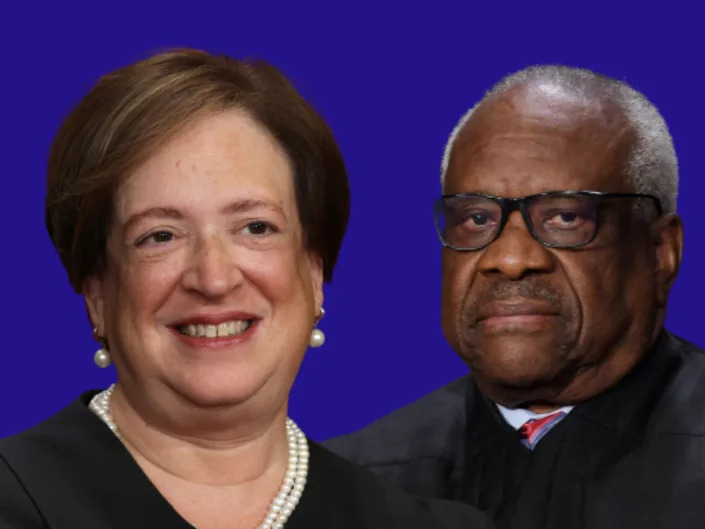
Justice Elena Kagan was worried about the ethics of accepting bagels from friends, while Clarence Thomas was enjoying expensive vacations paid for by a GOP megadonor: report
Joshua Zitser – May 11, 2023
Supreme Court Justices Elena Kagan (l) and Clarence ThomasJoshua Zitser/Insider, Getty Images
Supreme Court Justice Elena Kagan once turned down a care package of bagels and lox, per Forward.
She was concerned she could be violating the court’s ethics rules for accepting gifts, friends said.
Meanwhile, Supreme Court Justice Clarence Thomas was accepting lavish holidays from a GOP megadonor.
At a time when Supreme Court Justice Clarence Thomas was accepting lavish trips paid for by GOP megadonor Harlan Crow, fellow Supreme Court Justice Elena Kagan was turning down bagels and lox from high school friends, over concerns she could be violating the court’s ethics rules for accepting gifts, according to a new report.
Forward reported that friends who attended Hunter College High School in Manhattan with Kagan in the 1970s wanted to send her a “care package” of bagels, lox, babka, chocolates, and other inexpensive items in February 2021.
However, they later scrapped the idea after Kagan expressed concerns about issues it could pose under the Supreme Court’s rules on gifts and disclosures, per Forward.
“We thought it would be a sign of support to send her some lox, but she was too ethical to take the lox,” said Sarah Schulman, a former school friend, according to the media outlet.
Another Hunter College High School alumnus, Ann Starer, told the Forward that Kagan was touched by the offer but it was “creating more stress for her than it was worth.”
She said that Kagan sent her an email, which reportedly said: “I have to take these ethics and reporting considerations very seriously.”
Kagan’s approach seems to directly contrast with that of Thomas when it comes to accepting gifts.
A series of bombshell ProPublica reports have put Thomas at the center of an ongoing scandal involving Crow, a Texas billionaire.
Under the Ethics in Government Act of 1978, all federal judges, including Supreme Court justices, are required to file annual financial disclosures that include reporting on gifts received. But they are exempt from disclosing “personal hospitality” they receive, which covers food, lodging, and entertainment.
And unlike the rest of the federal judiciary, the Supreme Court is not bound by a code of conduct.
Pancreatic cancer rates are spiking in women 55 and under. Experts don’t yet know why.
Korin Miller – May 10, 2023
Pancreatic cancer rates are spiking in women under 55, according to a recent study. (llustration: Blake Cale; Photo: Getty Images)
Allison Lippman-Kuban was just 31 when she was diagnosed with pancreatic cancer in 2017. Lippman-Kuban tells Yahoo Life that she first developed symptoms of the disease after she returned from a vacation in France with her boyfriend.
“I was having severe abdominal pain that shot into my back,” she says. “I had weight loss, fatigue, trouble digesting food — a lot of gastrointestinal issues.”
Lippman-Kuban reached out to her doctor and had tests scheduled with specialists, including a colonoscopy, to try to figure out what was behind her sudden pain. “But the pain got so severe that I ended up going to the hospital,” she says. She was hospitalized for five days, where she underwent a slew of tests. “I left with a diagnosis of neuroendocrine cancer and was later told it was stage 4 pancreatic cancer,” she says.
“I was just shocked,” Lippman-Kuban says. “I questioned everything, including why was my boyfriend staying with me. I had just been promoted at my job — I was nervous that I was going to lose that. Then, the fear of all of that subsided, and it was more, How long do I have to live?“
Lippman-Kuban says she was urged “to do chemo as long as I could,” but her doctor also sent her biopsy to a lab for genetic sequencing. Her specific biomarker (a gene, protein or other substance that provides information about a type of cancer) qualified her for a clinical trial at MD Anderson Cancer Center in Houston. “I’ve been on that trial for five and a half years now,” she says.
She says she’s had a “change of lifestyle” on the trial. “I stopped chemo, I take two pills in the morning and two pills each afternoon,” she says. “Within a month, my strength started coming back, my hair started coming back, and I was able to start rediscovering myself.”
Lippman-Kuban’s cancer isn’t gone, but her tumors have shrunk by 70%. “I now treat my cancer as a chronic illness,” she says. “I just take my medicine in the morning and the evening. I don’t have any side effects from it, which is great.”
Teona Ducre was just 41 when she was diagnosed with stage 3 pancreatic cancer in 2016. She tells Yahoo Life she had “extreme pain” in her lower stomach and lower back, along with exhaustion, indigestion and “substantial” weight loss. “Upon my initial diagnosis, I was in disbelief and did not fully appreciate the significance of the fact that pancreatic cancer is most often terminal,” she says.
Ducre discovered the Pancreatic Cancer Action Network (PanCAN), a patient advocacy and research organization, and received guidance on her form of cancer, along with what to expect for treatment. She then underwent six months of chemotherapy, followed by surgery and five more months of chemotherapy. She’s now a pancreatic cancer survivor. “Survival is not some specified date in the future when the tumor is gone —survival is every single day a person wakes up and did not succumb to the disease,” she says.
Paula Mack Drill was diagnosed with stage 2 pancreatic cancer five years ago, when she was in her mid-50s. She tells Yahoo Life that she had been on sabbatical for three months from her job as a rabbi and “was coming off the most healthy, toxic-free diet” when she started having symptoms. Drill hosted people at her house for Passover Seder and kept eating a chocolate and caramel dessert that she jokingly refers to as “Matzo Crack.” “Around 5 a.m. the next morning, I had terrible stomach pain, which I assumed was from eating Matzo Crack,” she says. “But it got worse and worse as the day went on.”
The pain became so intense that Drill went to the emergency room. She was first diagnosed with pancreatitis — inflammation of the pancreas — but was later informed that the doctors had found a tumor. They suspected that she had pancreatic cancer (something that could only be confirmed with surgery) and needed surgery to remove the tumor, which was scheduled for three weeks from then.
“I was in deep denial,” she says of her diagnosis, noting that she didn’t look up anything about pancreatic cancer online. “I did not understand that pancreatic cancer is a killer,” she added.
Drill’s doctor was Dr. Russell C. Langan, director of surgical oncology, Northern Region at RWJBarnabas Health, Rutgers Cancer Institute of New Jersey. “He saved my life,” she says. He performed a procedure known as a Whipple procedure, to remove the head of the pancreas, where Drill’s tumor was located.
“It’s a very intense, really hard surgery, and he came to me after the surgery and was practically crying,” Drill says. “He was able to take the tumor out. I was encapsulated. It hadn’t spread.”
Drill, who was diagnosed with stage 2 pancreatic cancer, says she had “heavy-duty chemo” after that twice a month for six months, followed by radiation therapy.
Now, she says she feels “100% better.” She just had a five-year scan that was clear. “Now, when I go in, it’s like a little party,” Drill says. “Everyone is happy, and we have a little celebration. I feel great.”
Pancreatic cancer rates are spiking in women of under age 55
While cancer rates have fallen in the U.S. as a whole over the last few years, there’s been a disturbing rise in pancreatic cancer diagnoses. More specifically, rates are spiking in women under the age of 55.
A study published in the journal Gastroenterologyin February analyzed data from nearly 455,000 patients diagnosed with pancreatic cancer between 2001 and 2018 and found that, while rates of the disease rose overall, they climbed in younger women. Specifically, the researchers found that the rates of pancreatic cancer in women under 55 rose 2.4% higher than those of men of the same age. The researchers also noted in the study that the trend did not appear to be “slowing down.”
Pancreatic cancer has a reputation as a fatal disease — its overall five-year survival rate is just 12% — and it used to be known as a cancer for older people. It also typically doesn’t cause symptoms until it is in the advanced stages, Dr. Anne Noonan, a medical oncologist with the Ohio State University Comprehensive Cancer Center-Arthur G. James Cancer Hospital and Richard J. Solove Research Institute, tells Yahoo Life.
While the majority of pancreatic cancer cases are people in their 70s, doctors say they’ve seen an increase in the number of younger patients over the past few years. “We are certainly seeing more patients with pancreas cancer, and some patients are younger than the usual age at which we typically see it,” Noonan says. “Sometimes patients are in their 40s, 30s and even 20s.”
Pancreatic cancer is “still largely a disease of aging,” Dr. Shubham Pant, an associate professor in the department of gastrointestinal medical oncology at MD Anderson Cancer Center, tells Yahoo Life. “We are seeing a handful more of younger patients,” he says. “Before, we would see one or two a year. Now we are seeing five or more a year. It is increasing, but it’s a relative increase.”
Why are pancreatic cancer rates on the rise in women?
It’s not entirely clear. The most recent study only found an increase in cases — and did not explore why they’re on the rise. Langan says it’s possible that this could be due to an increase in obesity rates or alcohol consumption, but it could also be due to a variety of causes. “I would favor the cause being multifactorial,” he tells Yahoo Life.
“There are a number of theories,” Noonan says, including that pancreatic cancer may be linked to a high-fat diet, smoked and processed meats, physical inactivity and certain genetic mutations.
“But it’s very hard to say right now,” Pant says. “While the numbers are increasing, they are still very small.”
Pancreatic cancer symptoms can be easily confused with those of other illness, but may include jaundice, belly or back pain, weight loss and poor appetite and nausea and vomiting, according to the American Cancer Society.
Lippman-Kuban stresses the importance of getting evaluated by a doctor if you develop any symptoms. “If I had not pursued the pain and the treatment, I don’t know if I’d be here,” she says.
Sheriff’s Dept. program to track presence of flesh-eating street drug in Los Angeles
Keri Blakinger – May 10, 2023
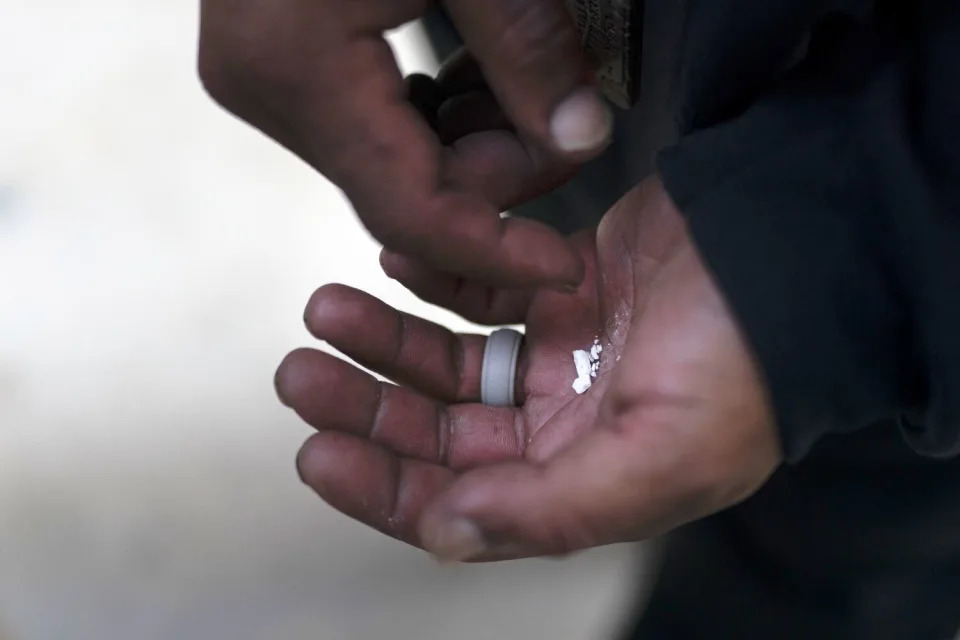
A man smokes fentanyl mixed with methamphetamine in an alley in Los Angeles in August. “In the greater Los Angeles area we are seeing xylazine as an additive within fake fentanyl pills,” said Nicole Nishida, spokesperson for the Los Angeles Field Division of the U.S. Drug Enforcement Administration. (Jae C. Hong / AP)
Amid troubling signs that a dangerous sedative known as “tranq” has spread even further into the local street drug supply, the Los Angeles County Sheriff’s Department has launched a pilot program to better document the drug’s presence.
Xylazine is an animal tranquilizer that began appearing several years ago in illicit pills and powders on the East Coast. It’s been linked to deaths across the country and can cause human tissue to rot, leaving users with grisly wounds that sometimes lead to amputations.
In early March, county health officials initially said they weren’t sure whether the deadly adulterant had begun appearing on the streets of Los Angeles. Weeks later, the Times learned that the Sheriff’s Department crime lab had been detecting signs of xylazine in drug samples for at least four years — but they’d never told the health department or the public.
At the time, department officials said that was because, despite its harms, xylazine is not illegal, so formally tracking it was beyond the scope of their work.
Now, though, the pilot program could help change that.
Starting in mid-April, crime lab analysts began making note of any preliminary signs of xylazine they spotted while testing samples of confiscated drugs. In the past, even when lab workers noticed test results that seemed to show the presence of xylazine, they didn’t typically make any note of it. Instead, they treated it like any other legal substances commonly used as additives in illegal drugs.
“There are a bunch of different additives — like vitamin C, which comes up a lot — that we don’t write down,” said Capt. Ernest Bille, who oversees the department’s Scientific Services Bureau. “The mission, given the volume of the caseload that we have, is to figure out: Is this a controlled substance or not?”
Over the course of a month-long trial run, officials hope to get a better sense of how often they typically see presumptive positives for xylazine. If the number is relatively low, they’ll keep tracking for another month, Bille said. If it’s high, they’ll begin figuring out standards for doing additional confirmatory tests in the future — just as they would for illegal drugs.
“This is going to be very unique for us, because I’m asking them to track a non-controlled substance,” Bille said.
The move to track the dangerous sedative — spurred in part by conversations with UCLA researchers who study illicit drugs — comes as federal data shows an uptick in the drug’s presence across the county and in Southern California.
“In the greater Los Angeles area we are seeing xylazine as an additive within fake fentanyl pills,” said Nicole Nishida, spokesperson for the Los Angeles Field Division of the U.S. Drug Enforcement Administration. “While the numbers are relatively low in our community compared to elsewhere in the United States, the presence of xylazine is now becoming more frequent and the trend is concerning.”
Federal data show that about 23% of fentanyl powder and 7% fentanyl pills seized last year contained xylazine. Nishida said those figures were around 3% and 8% for the greater Los Angeles region over that same period.
A drug user in Los Angeles holds pieces of fentanyl in August. Federal data show that about 23% of fentanyl powder and 7% fentanyl pills seized last year contained xylazine. Those figures were around 3% and 8% for the greater Los Angeles region over that same period. (Jae C. Hong / AP)
But those numbers might be less telling for Angelenos than they first appear: The Los Angeles Field Division’s region is so broad that it includes most of Southern California as well as Nevada, Hawaii and the territories of Guam and Saipan.
It’s not clear whether the xylazine samples were concentrated in one part of that region, and officials did not provide data more specific to Los Angeles County.
So far, law enforcement efforts to quantify and document the presence of xylazine in Los Angeles street drugs have been relatively limited — though, aside from the DEA figures, there are a growing number of signs of its presence.
An early public indication of the drug came in February, when a county health official confirmed to The Times that one man — a 25-year-old in El Monte — had trace levels of xylazine in his body when he died in December 2021. But the drug was present in such small amounts that the county medical examiner listed “combined effects of ethanol and fentanyl” as the cause of death.
Then in March, the county’s Department of Public Health issued a news release warning Angelenos that the sedative was “increasingly present within illicit drugs in California” and that it was now “likely present” in Los Angeles.
The news release mentioned the 2021 death and several others elsewhere in the state. However, although it said that xylazine had been detected in samples in cities to the north and to the south, it said nothing about whether there had been similar finds locally.
Then last month — a few weeks after the Sheriff’s Department admitted seeing signs of xylazine for at least four years — the UCLA researchers studying local street drugs confirmed finding the sedative in a sample of black tar heroin.
“It’s just another indication that it’s here in L.A.,” said Chelsea Shover, an epidemiologist and health services researcher at UCLA. “And it’s really important for people who use drugs to know that.”
One of the reasons xylazine is regarded as a particularly dangerous additive in street drugs is that, since it is not an opioid, the overdose-reversal medication naloxone is not effective on it.
Still, Shover said, if you believe that someone you know has overdosed on xylazine, the best course of action is to give them naloxone and call 911. Typically, xylazine is mixed with fentanyl to extend the drug’s high, so naloxone may still be effective.
“If you give someone naloxone but they’re still sedated, that’s a clue it could be xylazine,” Shover said. “Then call 911 for medical attention — but if you can’t do that, try to keep them comfortable and safe while they are sedated.”
For people who are using drugs but want to minimize the risk of ingesting xylazine, Shover said, there are now xylazine test strips available online.
Common causes of sleep deprivation include sleep apnea, insomnia, nighttime interruptions, fears of the dark, restless leg syndrome and sleep disorders. For some, sleep can bring dread if they struggle with other issues, like sleep paralysis. Another known cause of sleep loss is chronic pain, including lower back pain.
Why is lower back pain worse when sleeping?
While many people are able to sleep through some level of discomfort, some back pain is more acute and painful than others.
“Low back pain can often make it difficult to get a good night’s rest,” says Stephen Dering, PT, an orthopedic clinical specialist at Massachusetts General Hospital. Such sleep loss from pain occurs because the anatomy of one’s spine makes it more sensitive to sleep positioning when lower back pain is present.
“The way you position yourself at night affects the alignment of the lumbar spine, and thus can affect the pressure imparted on pain-sensitive structures throughout the night,” explains Dering.
Should I rest in bed if I have lower back pain?
While sleeping at night is essential and unavoidable whether back pain is present or not, a common myth is that bedrest is a good treatment for back pain during the daytime as well. While some rest can certainly be helpful, doctors do not generally recommend staying in bed both night and day to treat most instances of back pain because activity and mobility are usually essential for recovery. Not moving enough during the day can weaken core muscles and limit blood flow, and strengthening exercises and stretches are important for regaining spinal stability.
At the same time, the rest one achieves while sleeping at night is vital – and there are proven ways of improving the quality of that sleep even with the presence of lower back pain.
Safely administered pain medication or the application of ice can be helpful, but simple adjustments to one’s sleeping position are the best way to take the strain off one’s back when trying to get a good night’s rest. “It’s important to note that there is not a ‘best’ sleeping position for everyone,” explains Dering, “however, there are ways to modify sleeping positions in the presence of low back pain.”
These include the bending of one’s knees and the use of an extra pillow to aid in one’s comfort for each sleeping position:
Andrew Frost, PT, a practicing physical therapist with Intermountain Health in Salt Lake City, says that in lieu of a pillow, some people prefer the firmness of a rolled-up towel, and others find that “temporarily sleeping in a recliner,” can be helpful in reducing their back pain at night.
“If you find your current sleeping situation painful, think through how your spine is positioned, then brainstorm different ways to change the sleeping environment to address one of these aspects of positioning,” he advises.
And never underestimate the importance of a quality mattress in dealing with back pain. “You want to choose a mattress that will help maintain a comfortable spinal alignment for you to be able to get consistent, quality sleep,” offers Dering. “I always suggest to my patients to try out different mattresses before purchasing to ensure that it is the best fit for them.”
Louisiana Republicans Kill Rape, Incest Exceptions to Abortion Ban After Unhinged Hearing
Lorena O’Neil – May 10, 2023
Photo: Melinda Deslatte (AP)
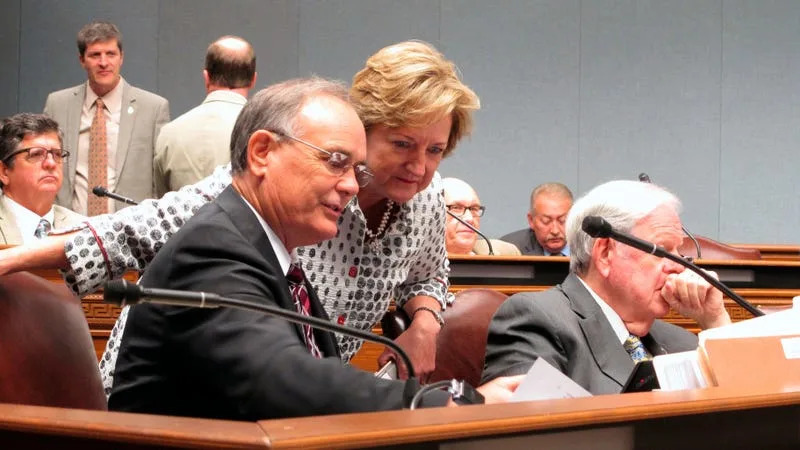
After a truly eyebrow-raising hearing on Wednesday, Louisiana’s House criminal justice committee voted against adding rape and incest exceptions to the state’s abortion ban, one of the strictest in the country.
Pastor John Raymond of Slidell, La., testified against the bill, saying that an abortion in the case of rape would make it so there are two victims instead of one–a talking point parroted by anti-abortion activists throughout the discussion. Women will “clamor to put old boyfriends behind bars in order to dispense with the inconvenience of giving birth,” he said.
Raymond, mind you, currently faces numerous criminal charges for cruelty to juveniles, including multiple allegations of physically abusing a 4-year-old, once allegedly holding him upside down by the ankle and whipping his butt. The pastor has also been accused of taping three 13-year-old boys’ mouths shut after they refused to stop talking in class.
The rest of the hearing was equally disheartening. Democrat Delisha Boyd, who introduced the bill to add rape and incest exceptions, revealed that she was the product of rape after her mother was sexually assaulted when she was 15. “My mother never recovered,” said Boyd, adding that her mother died just before she was 28 years old.
Republicans, of course, were unmoved by this argument. Anti-abortion activist Debbie Melvin said abortion “can be like a second rape.”
“A baby is the only beautiful thing that can come from rape,” she said.
Most rape survivors who testified supported Boyd’s bill. One survivor wept as she said that if she hadn’t been able to have an abortion she may have died by suicide. Morgan Lamandre, the president and CEO of Sexual Trauma Awareness and Response (STAR), said that she used to be vice president of the anti-abortion club at her high school, but changed her mind after working with sexual assault survivors. She pointed out that forcing a person to carry a rapist’s baby is only further traumatizing them.
“By forcing survivors to give birth, you are forcing them to forever be connected to their rapist,” Lamandre said. “In Louisiana, men are allowed to choose the mother of their children regardless of what the mother wants.”
The House Criminal Justice Committee then killed the bill in a 10-5 vote. All of the Republicans on the committee voted against adding the exception. One Republican representative, Tony Bacala, said he was voting against it because its author, Rep. Boyd, is the product of rape, and she turned out to be a good person.
She told CNN that she had to try to protect one staffer in particular who Trump would request accompany him on trips.
“He one time had one of my other deputies bring her back so that they could look at her ass, is what he said to him,” Grisham said. “I sat down and talked to her at one point, asked her if she was uncomfortable. I tried everything I could to ensure she was never alone with him.”
Grisham said she spoke to various chiefs of staff, including Mark Meadows, about Trump’s behavior.
“I think, at the end of the day, what could they do other than go in there and say, ‘This isn’t good, Sir’?” she said. “Donald Trump will do what Donald Trump wants to do.”
Grisham said Trump would often comment on people’s looks and speculate about cosmetic surgery.
“But with this one staffer, it was really bad, to the point that I was extremely uncomfortable,” she said, adding that all senior White House staffers at the time knew about the situation.
“I did everything I could to keep her off of trips actually, and to stay with her if she was with him alone because I was really nervous about what could happen,” Grisham added.
She did not name the staffer. Grisham has recounted the details before, including in her book.
“I frankly see no redeeming quality in this woman or any of the Trump accomplices who now want to clear their names and want to make a buck,” CNN political commentator Ana Navarro said earlier.
What new Florida immigration law means for employers, hospitals and workforce
Brandon Girod, Pensacola News Journal – May 10, 2023
Standing at a podium with a sign reading “Biden’s Border Crisis,” Florida Gov. Ron DeSantis signed a new state immigration law Wednesday that critics say is cruel as it imposes tough penalties and new restrictions on people living in the state illegally.
The measure, approved last week by the Florida Legislature, has been condemned by critics as cruel and potentially leading to law enforcement profiling. It’s considered among the toughest steps taken by any state to deter immigrants without legal permission.
“We have to stop this nonsense, this is not good for our country,” DeSantis said, adding “this is no way to run a government.”
But immigrant advocates said Florida’s approach targets a community already struggling to survive with new criminal penalties and restrictions. Immigrants living in Florida, legally and illegally, represent a huge share of the state’s workforce, leaders added.
Susan Pai, a Florida immigration lawyer based in Jacksonville, broke the new law down, highlighting some of the bill’s biggest impacts.
Strengthening employment requirements
Several sections of the bill outline strengthened employment requirements, including:
Employers are required to verify a new employee’s employment eligibility within three business days after the first day the new employee begins working for pay.
Private employers with 25 or more employees must use the federal E-Verify system to verify a new employee’s employment eligibility starting on July 1.
Public agencies are also required to use the E-Verify system to verify a new employee’s employment eligibility.
Employers cannot continue to employ an unauthorized alien after obtaining knowledge that a person is or has entered the county illegally.
It is unlawful for any person to knowingly employ, hire, recruit or refer, either for herself or himself or on behalf of another, for private or public employment within the state, a “foreign national” who is not authorized to work in the U.S.
An unauthorized immigrant can not obtain a license to practice law in Florida after Oct. 31, 2028, repealing a 2014 law that allowed immigrants living in the country illegally to practice law in the state.
Violating the new law could result in a series of escalating penalties that could lead to the state suspending or revoking all licenses to operate their business.
The Farmworkers Association of Florida, a grassroots nonprofit that advocates for social and environmental justice with farmworkers, estimates that there are about 300,000 farm workers in Florida who live in the state illegally, making up about 60% of the state’s farm workers.
Losing those jobs could have a significant impact on Florida’s agriculture industry, and Pai says she imagines it’s a similar situation among roofers, landscapers and others.
“I’ve been getting a lot of calls from people asking me if they should leave the state,” she said. “The undocumented community is very scared to even show up for work.”
Pai also stressed that Section 12 makes it a crime to even refer someone for employment within the state, and underlined that the law applies to people who lawfully entered the country on visitor and student visas but are not authorized to work.
Hospitals must ask patients about their legal status
Section 5 states that any hospital that accepts Medicaid must include a provision on its patient admission or registration forms for the patient or the patient’s representative to indicate whether the patient is a United States citizen, lawfully present in the United States, or not lawfully present in the United States.
Hospitals would then need to turn the cumulative data over to the governor and the Florida Legislature quarterly and annually, and they would then have to quantify how much it costs to provide medical assistance to people not living in the country legally. The identity of patients would not be included in this data.
Pai says this law conflicts with health care professionals’ oaths to patients because it dissuades people in need of health care from seeking it out if they are in the country illegally.
“It’s going to prevent people from either bringing theirselves in for medical care or even their children,” Pai said. “They’re not going to know that they don’t have to answer the question. Once they’re asked the question, they believe they have to give up their undocumented status.”
People foregoing preventative health care to hide their status could end up costing Florida more money down the road when untreated medical issues become an emergency.
“Ultimately, their condition may worsen and the cost to Florida may actually be more than if they were just given the care in the first place.”
Out-of-state driver’s license issued to ‘unauthorized immigrants’ no longer valid
Driver’s licenses and permits issued by other states exclusively to people living in the country illegally will no longer be recognized in Florida.
The National Conference of State Legislatures says there are 19 states and the District of Columbia that issue these licenses to people living in the country illegally, and Pai says this bill could “open the flood gates” of racial profiling and increase the danger for drivers across the state.
“If you have an undocumented alien who can get a valid license, they can drive legally, they can buy insurance. They’re not going to flee the scene of an accident because they have a valid license. It just makes things more dangerous for everybody,” said Pai.
The law also bars counties and municipalities from providing funds to people, entities or organizations to issue identification documents to individuals who don’t provide proof of lawful presence in the county.
Transporting a person living in the country illegally across state lines is a third-degree felony
The law now makes it a third-degree felony for anyone who knowingly or who reasonably should know that they are transporting immigrants who entered the country illegally into Florida. Transporting a minor is a second-degree felony.
A previous iteration of the bill included transportation within the state, but was cut after critics pointed out that the bill could make transporting a family member who entered the country illegally to the hospital, their job or to school a felony.
Juvenile DNA database
Section 18 would force arrested adults and even juveniles with an immigration detainer (an “immigration hold”) to provide their DNA to the state.
SB 1718 expands FDLE’s mission to include immigration matters
The most sweeping sections of the bill outlines the expansion of the Florida Department of Law Enforcement’s mission to include immigration matters.
Section 13 states “FDLE, with respect to counter-terrorism efforts, responses to acts of terrorism within or affecting this state, coordinating with and providing assistance to the Federal Government in the enforcement of federal immigration laws, responses to immigration enforcement incidents within or affecting this state, and other matters related to the domestic security of Florida as it relates to terrorism and immigration.”
Sections 14 through 17 expand several Florida anti-terrorism laws to include immigration law enforcement, which Pai says is a “very smart way” to skate around having to create state-specific immigration crimes that are not also federal crimes.
Pai says this “huge” expansion of power is ultimately going to “dilute” anti-terrorism resources in the state.
“There’s no appropriation that goes along with this huge expansion of power to the Florida Department of Law Enforcement and other law enforcement agencies and organizations in the state of Florida who are charged with anti-terrorism and now immigration enforcement incidents within or effecting the state,” she said.
Appropriates $12M from Florida’s General Revenue Fund to migrant transportation program
Section 21 appropriates $12 million from the General Revenue Fund, which is funded by taxpayer dollars, to be used for DeSantis’ “unauthorized alien transport program.” The same program that made headlines when DeSantis flew about 50 Venezuelan migrants in two charter planes from Texas to Martha’s Vineyard, Massachusetts.
The Division of Emergency Management selected three companies to execute Gov. Ron DeSantis’ controversial migrant relocation program.
A “notice of intent award” issued on Monday named ARS Global Emergency Management, GardaWorld Federal Services and Vertol Systems Company, Inc., which was the company that carried out last year’s migrant flights to Martha’s Vineyard.
The division had posted a request for proposals at the end of of March, after getting control of the program and $10 million to carry it out through special session legislation. During the regular session, which concluded last week, lawmakers approved $12 million more for the program.
But the taxpayer cost will be more than that, as the program has already generated multiple legal challenges. Florida has paid two law firms more than $640,000 in legal fees for DeSantis’ relocation of nearly 50 Venezuelan migrants from San Antonia, Texas, to Martha’s Vineyard.
The companies selected, according to the request for proposals, must “provide ground and air transportation and other related services… to assist in the voluntary relocation of Inspected Unauthorized Aliens that have agreed to be relocated from Florida, or another state, to a location within the United States.”
The related services include research and planning, ensuring those relocated have provided voluntary consent, and arranging social support at the destination.
How many US mass shootings have there been in 2023?
May 9, 2023
Data shows gun ownership in the US has grown over the last several years
Gun violence is a fixture in American life – but the issue is a highly political one, pitting gun control advocates against people who are fiercely protective of their right to bear arms.
We’ve looked into some of the numbers behind firearms in the US.
Mass shootings on the rise
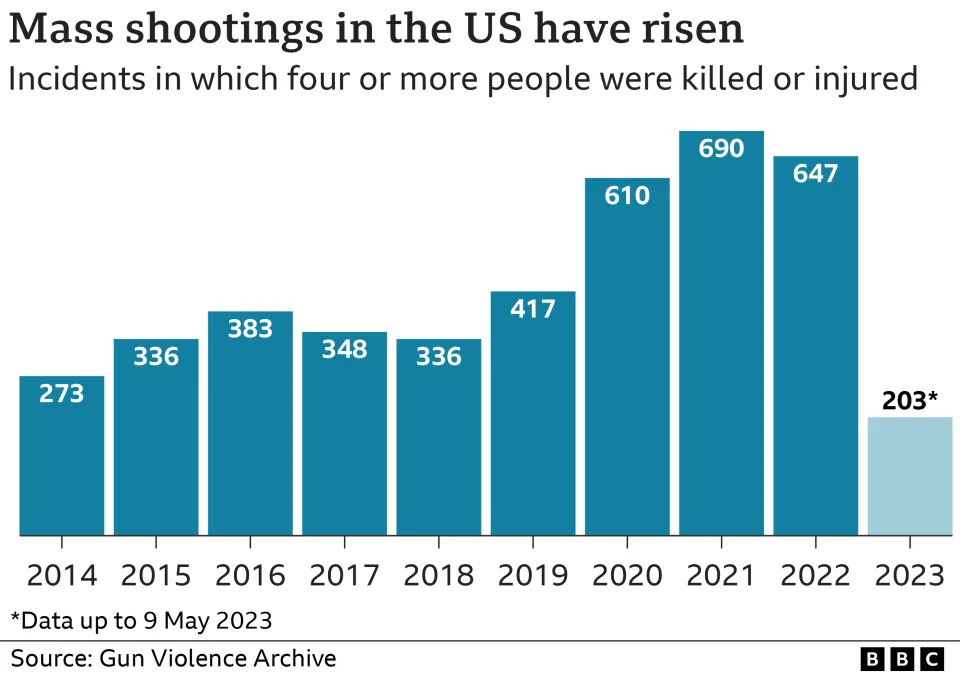
There have been more than 200 mass shootings across the US so far this year, according to the Gun Violence Archive, which defines a mass shooting as an incident in which four or more people are injured or killed. Their figures include shootings that happen in homes and in public places.
There have been two in Texas in the last week – five killed at a home in Cleveland, north of Houston, and eight dead at a shopping mall in Allen, near Dallas.
In each of the last three years, there have been more than 600 mass shootings, almost two a day on average.
The deadliest such attack, in Las Vegas in 2017, killed more than 50 people and left 500 wounded. The vast majority of mass shootings, however, leave fewer than 10 people dead.
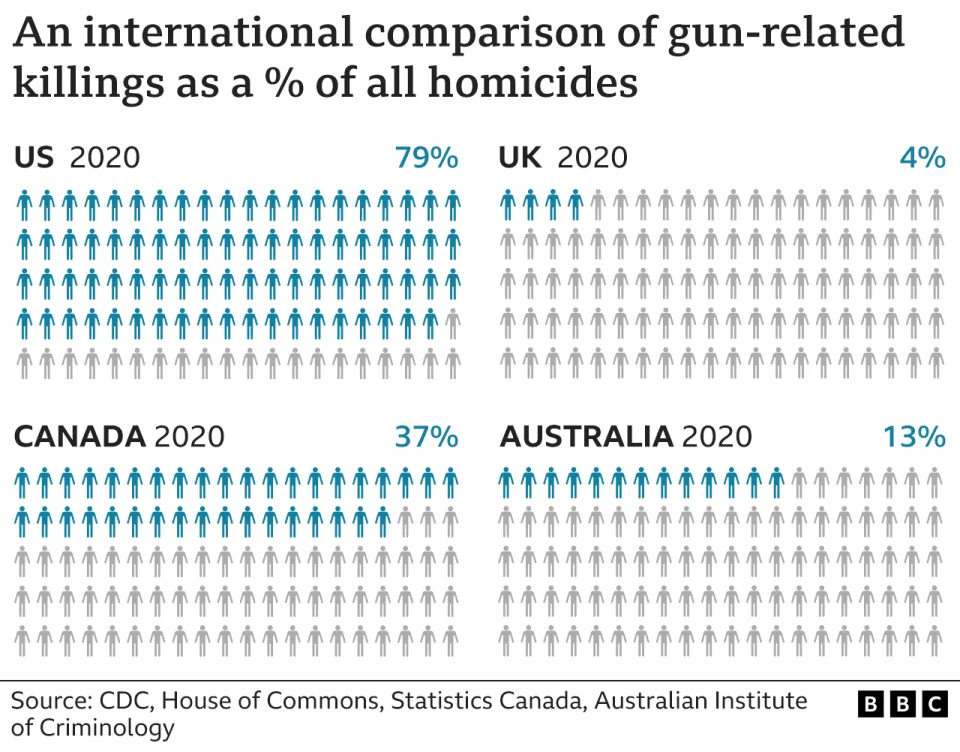
Data shows more than 50 people are killed each day by a firearm in the US.
That’s a significantly larger proportion of homicides than is the case in Canada, Australia, England and Wales, and many other countries.
Graphic showing an international comparison of gun-related killings as a percentage of all homicides in each country. The US leads with nearly 79% of all homicides occurring with guns.
How many guns are there in the US?
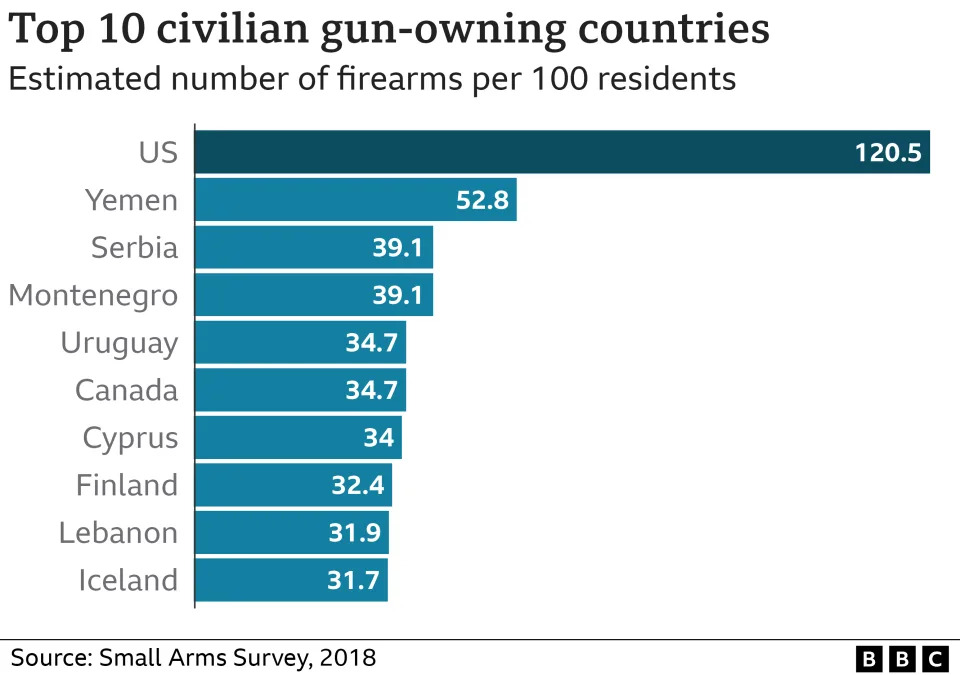
While calculating the number of guns in private hands around the world is difficult, the latest figures from the Small Arms Survey – a Swiss-based research project – estimated that there were 390 million guns in circulation in the US in 2018.
The US ratio of 120.5 firearms per 100 residents, up from 88 per 100 in 2011, far surpasses that of other countries around the world.
Chart showing civilian gun ownership around the world
More recent data out of the US suggests that gun ownership grew significantly over the last few years. A study, published by the Annals of Internal Medicine in February, found that 7.5 million US adults became new gun owners between January 2019 and April 2021.
This, in turn, exposed 11 million people to firearms in their homes, including 5 million children. About half of new gun owners in that time period were women, while 40% were either black or Hispanic.
Who supports gun control?
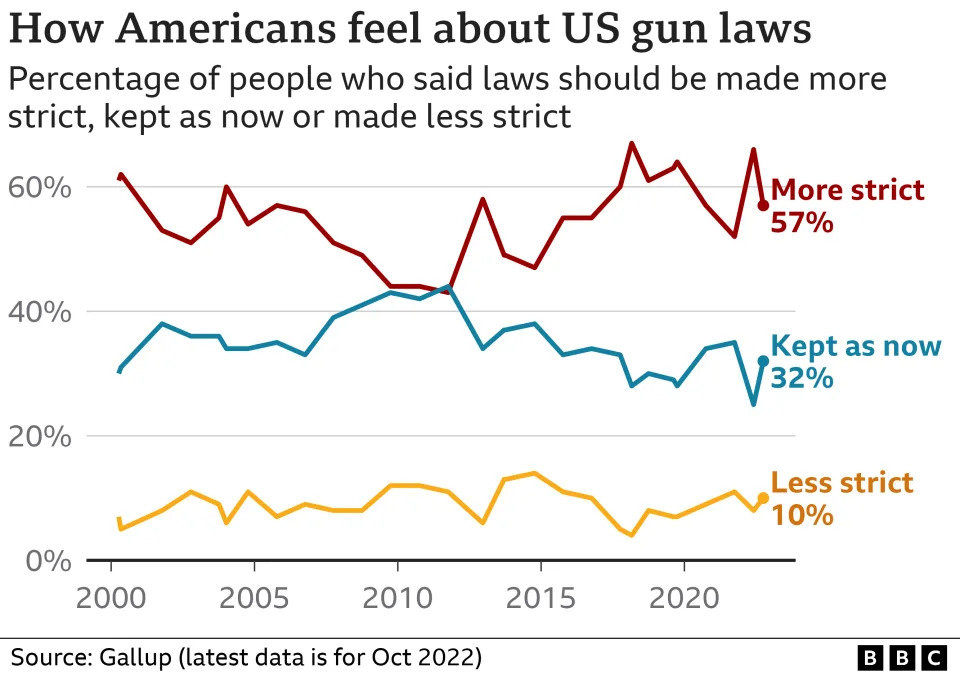
A majority of Americans are in favour of gun control.
57% of Americans surveyed said they wanted stricter gun laws – although this fell last year – according to polling by Gallup.
32% said the laws should remain the same, while 10% of people surveyed said they should be “made less strict”.
Gun control opinion
The issue is extremely divisive, falling largely along party lines.
“Democrats are nearly unanimous in their support for stricter gun laws,” another Gallup study noted, with nearly 91% in favour of stricter gun laws.
Only 24% Republicans, on the other hand, agreed with the same statement, along with 45% of Independent voters.
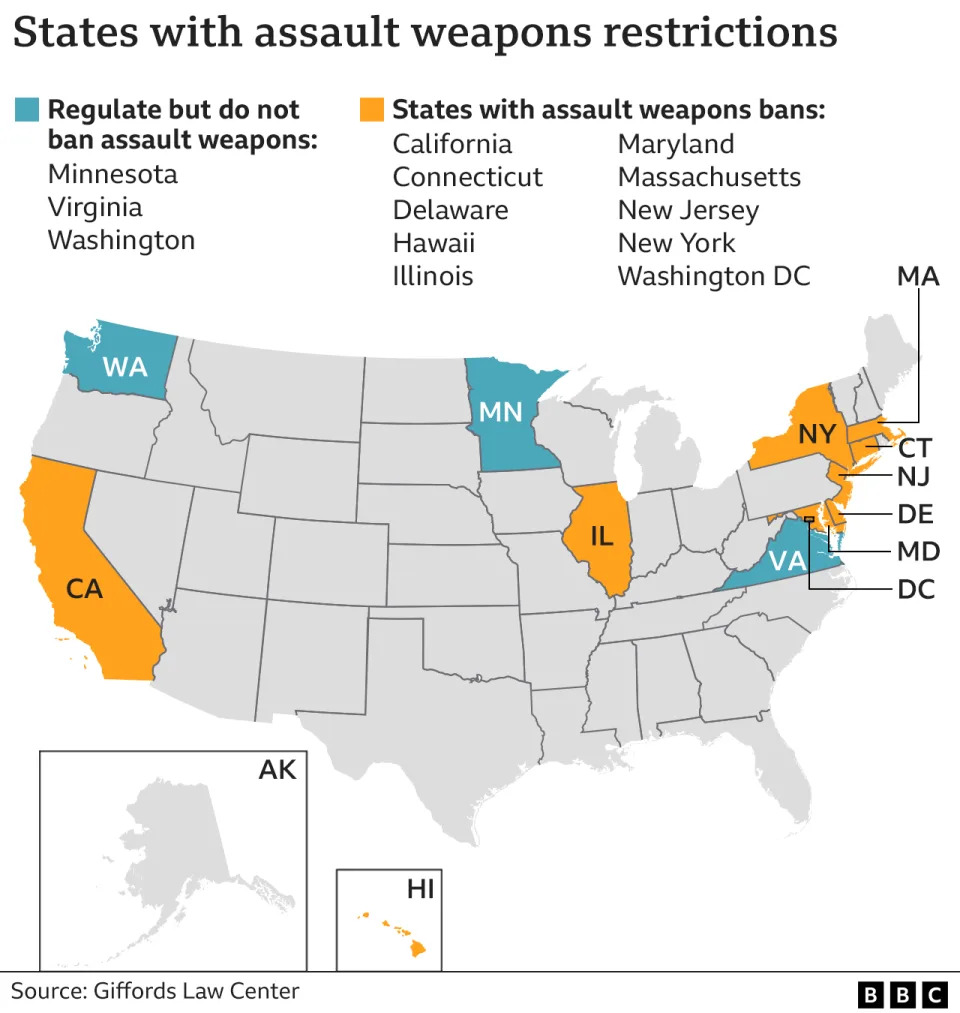
Some states have taken steps to ban or strictly regulate ownership of assault weapons. Laws vary by state but California, for example, has banned ownership of assault weapons with limited exceptions.
Map showing states with assault weapon bans – California, Connecticut, Delaware, Hawaii, Illinois, Maryland, Massachusetts, New Jersey, New York & Washington DC, and those with restrictions Minnesota, Virginia and Washington, March 2023
Some controls are widely supported by people across the political divide – such as restrictions governing the sale of guns to people who are mentally ill or on “watch” lists.
Who opposes gun control?
Despite years of financial woes and internal strife, the National Rifle Association (NRA) remains the most powerful gun lobby in the United States, with a substantial budget to influence members of Congress on gun policy.
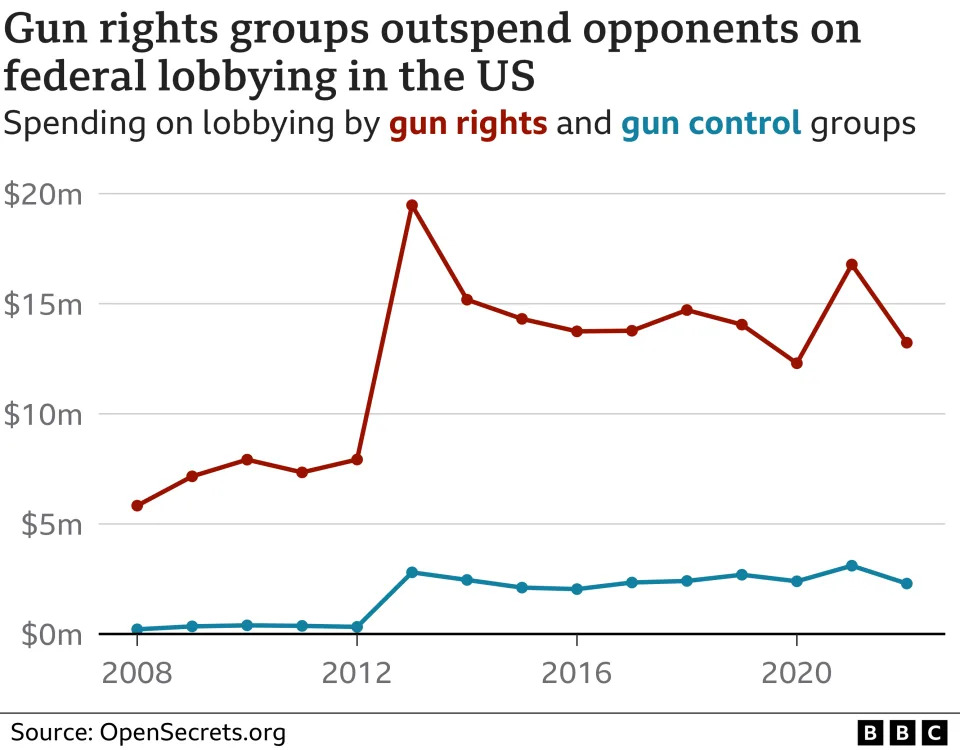
Over the last several election cycles, it, and other organisations, have consistently spent more on pro-gun rights messaging than their rivals in the gun control lobby.
A line chart showing the amount spent per year by gun rights groups and gun control groups on federal lobbying in the US from 2008 to 2022. Gun rights groups have consistently spent more than double what gun control groups have. Gun rights spending peaked in 2013 at just under $20m – gun control groups spent just under $3m in the same year. In 2022, gun rights groups spent $13m, while their opponents spent $2.3m.
A number of states have also gone as far as to largely eliminate restrictions on who can carry a gun. In June 2021, for example, Texas Governor Greg Abbott signed into law a “permitless carry bill” that allows the state’s residents to carry handguns without a licence or training.
Similarly, in April last year Georgia became the 25th in the nation to eliminate the need for a permit to conceal or openly carry a firearm. The law means any citizen of that state has the right to carry a firearm without a licence or a permit.
The law was backed by the NRA, and leaders within the organization called the move “a monumental moment for the Second Amendment”.
Why are mass shootings rare in other countries despite high levels of gun ownership?
Justin Klawans, Staff writer – May 9, 2023
Guns. Illustrated | Gettyimages
There is no question the United States has a ton of guns — more than anywhere else in the world by far. There are an estimated 352 million guns in private circulation in the U.S., according to data collected by The Trace, and some other studies cited by the outlet suggest the number is even higher.
It comes as no surprise, then, that the U.S. leads the world in mass shootings. There have already been over 180 of these incidents in 2023 alone, The New York Timesreports. Many mass shootings occur in schools; since the Columbine High School shooting in 1999, more than 352,000 students have experienced gun violence in the classroom, according to The Washington Post.
While the United States leads the world in number of firearms, it’s hardly the only country where gun ownership is high. Yet in most other countries, mass shootings are rare, if not unheard of, mainly due to gun laws being significantly stricter than they are in the U.S. Between 2009 and 2015, there were just 19 mass shootings in all of Europe, research shows. School shootings are even rarer, and World Population Review reports that every country besides the U.S. has had less than 10 of them in 2023. These are five nations that have high numbers of firearms but little trouble with shootings.
Finland
There are an estimated 1.5 million licensed firearms in Finland, the country’s interior ministry reports, in a nation of just 5.6 million. This high rate of gun ownership is due to an activity widely seen in Finland (and many other nations): hunting. Finns “have hunted and fished for food for thousands of years,” Slatereports, and “hunting remains a popular weekend, or even after-work, activity.” Finland’s large area provides ample space for the hunting industry to flourish.
Despite this, Finland has had less than five documented cases of mass shootings. This is because, like most of the Nordic countries, Finland has highly regulated gun control laws. Following a school shooting in 2007, Finnish Parliament raised the minimum age to purchase a gun from 15 to 18, and the prospective buyer must fill out a detailed application to receive a handling license. The interior ministry has also implemented “changes to the provisions on the storage of firearms, component parts of firearms, and cartridges,” as well as additional legislation to ensure guns remain safely locked away when not in use.
Switzerland
Like Finland, hunting is a part of life in Switzerland, which may be why the Alpine country has approximately 2 million privately owned guns, Insiderreports, in a country of just 8.7 million people. Despite this staggeringly high rate of gun ownership, though, there has not been a mass shooting in Switzerland in more than 20 years.
Insider notes that the U.S.’ National Rifle Association often points to Switzerland as an example of gun laws not being necessary, because they claim the Swiss have limited legislation on firearms. But this is simply not true. Firearms in Switzerland are highly controlled and regulated, according to the official Swiss Confederacy portal. Semi-automatic rifles with large magazines are banned, and people who want to purchase handguns or smaller magazine semi-automatic rifles must undergo a permitting process and send their weapon’s information to the government.
Canada
Canada’s vast northern lands make it another ample country for hunting, which contributes to the 7.1 million firearms in private hands, according to the Canadian government, in a nation of 39 million people. This statistic lies in a similar range with comparable Western nations, the government notes, except the United States.
The country has had a few recent mass shootings, including one in 2020. Despite this, instances of mass violence remain very rare, Reutersreports. This is because Canada has some of the harshest regulations against assault rifles in the world, and the nation’s public safety arm notes Canada “has prohibited over 1,500 models of assault-style firearms and certain components of some newly prohibited firearms.” Many of these weapons became newly prohibited following the 2020 mass shooting, and there are also limits in the Canadian criminal code placing restrictions on the number of rounds in rifles, handguns and shotguns.
New Zealand
New Zealand also has a lot of guns — 1.5 million in a country of just 5.1 million people — but unlike the United States, New Zealand took legislative action after a tragedy.
Following a 2019 mass shooting in Christchurch that killed 51 people, then-Prime Minister Jacinda Ardern implemented a series of sweeping reforms to the country’s already strict gun laws. Ardern announced these reforms just one week after the shooting, Timereports, and the new laws were pushed through parliament almost immediately. The laws included creating a firearms registry and placing a complete ban on AR-15s and other assault rifles. New Zealand also created a gun buyback program to try and get weapons off the streets. By the end of the program, Kiwis had turned in more than 50,000 guns, NPR reports, greatly slashing the number of firearms on the streets of New Zealand.
Australia
Like their neighbors to the southeast, Australia also has a high rate of gun ownership, and the University of Syndey notes there are about 3.5 million registered firearms in the nation of 26.4 million. However, the university also reports that the “proportion of Australian households with a firearm has fallen by 75% in recent decades.”
This drop was similarly spurned by just a single tragedy: the 1996 Port Arthur massacre in Tasmania. Thirty-five people died in the worst mass shooting in Australian history, and the country’s conservative government enacted similar new restrictions on guns. This includes a national gun registry, and Time notes that firearm license applications must prove the prospective owner has “a ‘genuine need’ to own weapons.” The Aussies also implemented a gun buyback program after Port Arthur, and Vox reports the country confiscated 650,000 weapons. There have been almost no mass shootings in Australia since then.
Breast cancer screening should start at age 40 – 10 years earlier than previous advice, group says
Nada Hassanein, USA TODAY – May 9, 2023
Women should be screened for breast cancer every other year starting at age 40 instead of 50, according to draft guidelines released Tuesday by the United States Preventive Services Task Force, the independent national body of experts that sets standards for tests and screenings.
The previous recommendations, last updated in 2016, said women younger than 50 who are concerned could discuss screening with their doctors. Now, the task force says screening at 40 could save 19% more lives.
Experts say the guidelines are a leap in the right direction but should go further to advise women to be screened annually. Several other leading groups have long recommended yearly mammograms starting at age 40.
“Cancers do grow between mammograms,” said Dr. Maxine Jochelson, a radiologist at Memorial Sloan Kettering Cancer Center. She agreed that beginning screenings at 40 is the “right answer for average risk women.”
Breast cancer makes up nearly 30% of new cancers in U.S. women each year, and it’s estimated that 1 in 8 women will develop breast cancer in the course of their lives. The median age for diagnosis across all women is 62, but that can vary by racial group.
Breast cancer clinicians have long called for lowering the recommended age for a woman’s first mammogram, especially for Black women, who are more likely to be diagnosed at earlier ages or with aggressive subtypes and are 40% more likely than white women to die of breast cancer.
Nearly 1 in 5 Black women with breast cancer are diagnosed with triple-negative breast cancer, a type that grows and spreads more quickly, is difficult to treat and lacks three receptors commonly found in breast cancers that doctors target for treatment.
The task force is “also calling for more research on how best to address health disparities across screening and treatment,” task force member and internist Dr. John Wong, chief of the division of clinical decision making at Tufts Medical Center, told USA TODAY.
Breast cancer is also the second-leading cause of cancer-related death for white, Asian, Pacific Islander, American Indian and Alaska Native women, though Asian and Pacific Islander women have the lowest breast cancer death rate of all groups.
The guidelines will become official after the task force reviews feedback during the public comment period that ends June 5. The recommendations apply to women, including those assigned female at birth, transgender men and nonbinary people.
Why experts say the new guidelines still fall short
Most organizations recommend annual mammograms starting at age 40, including the American College of Radiology, the American Society of Breast Surgeons, and the American College of Obstetricians and Gynecologists.
But the task force is the official body that many primary care doctors follow for preventive testing. Its recommendations are based on review of existing evidence and is supported by the federal Agency for Healthcare Research and Quality.
Private insurance plans generally base coverage off the task force’s recommendations, though the Centers for Disease Control and Prevention says most insurance plans are required to cover mammograms starting at age 40.
In announcing the new draft guidelines, the task force said it chose to keep the recommendation at every other year because of an increased risk of false positives diagnosis. It said callbacks can cause patients to worry or lead to unnecessary biopsies.
But experts say the harms of missed cancers outweigh that worry, and advanced imaging and biopsies can address false positives.
“The guidelines are worrisome,” said Dr. Michele Blackwood, chief of breast surgery at Rutgers Cancer Institute of New Jersey and member of the American Society of Breast Surgeons. “Most of us in this realm still vociferously support yearly mammograms for women over age 40.”
Women diagnosed under age 50 are more likely to be diagnosed with aggressive cancers, and many women skipped mammograms during the COVID-19 pandemic and are seeing later-stage diagnoses, Blackwood said. It’s time, she said, “to focus on harms of not screening.”
The American College of Radiology also recommends high-risk groups such as Black women and Ashkenazi Jewish women get risk assessments by age 25 to determine whether a mammogram before age 40 is needed.
Unified guidance is needed, said Dr. Vivian Bea, section chief of breast surgical oncology at NewYork-Presbyterian Brooklyn Methodist Hospital and a breast surgeon at Weill Cornell Medicine.
“It’s confusing for physicians and providers who are then counseling patients,” she said. “It’s also confusing for patients.”
Dr. Ryland Gore, a breast surgical oncologist in Atlanta, said the Preventative Services Task Force could benefit from having an oncologist − a cancer doctor − on the task force.
“It’s estimated that about 300,000 new cases will be diagnosed this year, but breast cancer numbers are not going down,” Gore said. “Imagine how many you potentially miss by saying, ‘Oh, you can just do this every other year.’ That is not good enough.”
Cancer can go under the radar in people with dense breasts, which means they have more fibrous tissue than fatty tissue. Nearly half of all women have dense breasts, which increases the risk for breast cancer.
Experts say mammograms may miss tumors in people with dense breasts and that they may be better detected by ultrasound or MRI. But in its draft guidelines, the task force concluded “that the evidence is insufficient to determine the balance of benefits and harms of supplemental screening for breast cancer with breast ultrasound or MRI, regardless of breast density.”
“Dense breasts make it harder to find the cancer on the mammogram,” Jochelson said. “And so, what happens is you miss it on the mammogram, and then you might find it on the next mammogram. But it’s going to have a year to grow.”
MRI was the best supplemental imaging in women with dense breasts who had average to intermediate risk for breast cancer and whose mammographies were negative for cancer, according to a meta-analysis of 22 studies published in the journal Radiology in January. Of more than 132,000 patients with dense breasts, 541 cancers missed by mammography were detected with alternative imaging.
As of 2019, at least 38 states had laws mandating clinicians inform patients that they have dense breasts. In March the U.S. Food and Drug Administration, which is responsible for regulating mammography standards, updated regulations to require mammography facilities to inform patients if they have dense breasts.
“We can save more lives by doing yearly and doing supplemental imaging,” Jochelson said. “I don’t doubt it for a second.”
Dense breast tissue. This increases the risk of breast cancer and can make it harder to see a tumor by mammogram. Ask your mammographer to let you know if you have dense breast tissue, and if you do, discuss with your clinician whether they recommend additional imaging like ultrasound or MRI.
Family history. Risk is higher for people with a first-degree relative – mother, sister or daughter – or multiple relatives on either the maternal or paternal side who have had breast or ovarian cancers.
Age. Breast cancer risk increases as a person ages.
Genetic mutations. People with inherited changes in genes, such as BRCA1 and BRCA2, are at higher risk for breast and ovarian cancers.
Previous history. Prior diagnoses of breast cancer increases the risk for a second diagnosis.
The CDC says there are also risk factors that can be reduced. These include not exercising, being overweight or obese, taking certain forms of hormone replacement therapy during menopause and certain oral contraceptives, and drinking alcohol.