This New Healthcare Bill Wrecks Lives in Exchange for, What, Exactly?

Esquire

This New Healthcare Bill Wrecks Lives in Exchange for, What, Exactly?

A few thoughts, and questions, about the Cassidy-Graham plan.
https://hips.hearstapps.com/hmg-prod.s3.amazonaws.com/images/gettyimages-849638706mod-1505854171.jpg?crop=1.00xw:1.00xh;0,0&resize=768:*Getty

By Charles P. Pierce     September 19, 2017

Let us stipulate right at the beginning that, if you put the menu for Chinese takeout in front of the president* and wrote “Obamacare Repeal” across the top, he’d sign it. So let’s take him out of the whole equation. The tragedy is that, once you do that, you are left with the inescapable conclusion that, on the matter of the Affordable Care Act, the Republican Party is little more than a cult centered around human suffering.

The latest evidence comes to us as The Cassidy-Graham Plan, named for its co-sponsors, Bill Cassidy, Republican of Louisiana, and our old pal, Lindsey Graham of South Carolina. The difference between this proposal and the rest of the Walking Dead plans that have wandered through Congress this year is that this one is at least nominally detailed. And that’s the problem, and the cruelty, of it.

As Sarah Kliff explains at Vox, this plan comes closer to absolute de facto repeal of the ACA as any of the other plans did.

The proposal would eliminate the health care law’s subsidies for private insurance and end the Medicaid expansion. States could allow for waivers that let insurers charge sick patients higher premiums and stop covering certain benefits required under the Affordable Care Act, like maternity care or prescription drugs. The health insurance marketplaces would no longer exist as they are envisioned to continue under other Republican proposals. The federal government would convert some (but not all) of that spending into a lump-sum payment to states. States could choose to spend this money on providing insurance — or they could use it to fund high-risk pools, or do other activities to pay the bills of patients with high medical needs. States wouldn’t get this money for free: They’d be required to kick in a small percentage themselves. The plan hasn’t been scored by the Congressional Budget Office yet, but analysts who have studied Cassidy-Graham estimate it would cut deeply into federal funding for the health law programs, likely resulting in millions losing coverage. Cassidy-Graham would arguably be more disruptive, not less, to the current health care system than the plans that came before it. It would let money currently spent on health insurance go toward other programs, providing no guarantee that the Affordable Care Act programs individuals rely on today would continue into the future.

The individual details of this plan have been exposed as scams, time and time again. (For a party that doesn’t want “government” controlling healthcare, these people seem remarkably enthusiastic of handing it over to governors like Scott Walker and Sam Brownback.) It’s demonstrably worse for people than the plan that famously was sunk by a single vote. And yet it’s just as close to passing right now as that one was. Maybe closer. It’s likely going to be voted on without a score from the Congressional Budget Office, which likely would be as grotesque as the CBO scores its predecessors rang up. It likely once again will garner no Democratic votes. (Joe Manchin on Tuesday said he was against it.) But it is the fundamental anti-politics of the thing that clearly shows that the entire Republican Party is lashed to the side of the whale at this point. The party opposes any attempt to reform the healthcare system in this country—and, certainly, any attempt to improve the ACA—in a fashion that is damned near evangelical in its blind and reckless fervor.

Consider: Dean Heller, Republican of Nevada, voted for the previous bill and likely will vote for this one, despite the fact that his state’s Republican governor, Brian Sandoval, is practically screaming at him not to do so.
https://hips.hearstapps.com/hmg-prod.s3.amazonaws.com/images/gettyimages-849623716mod-1505854223.jpg?crop=1xw:1xh;center,top&resize=768:*Getty

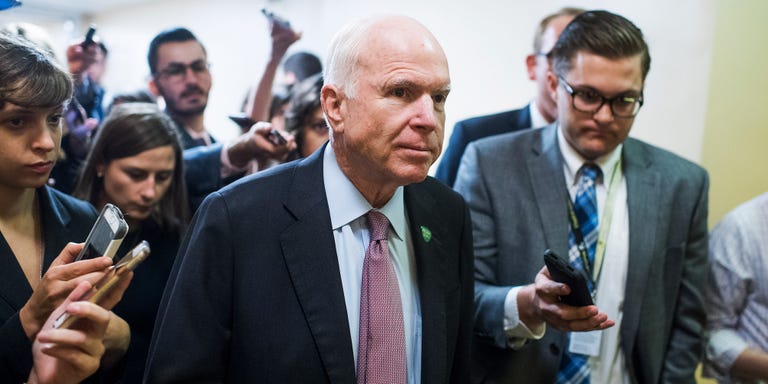
Consider: John McCain, who cast a crucial vote the last time around, has been all over the lot this time around, probably because he’s Damon and Graham is Pythias. This time, McCain has tried to hide behind Arizona Governor Doug Ducey and nobody has any idea what he’s finally going to do.

Consider: state governors in general seem to be reluctant to embrace the freedom that comes with this latest bag of rocks, at least if you listen to its sponsors. From USA Today:

“Among the list of governors was Alaska’s Bill Walker, an independent, who had been lobbied by the Trump administration to support the bill because Alaska GOP Sen. Lisa Murkowski is undecided and is a critical vote to get the legislation through. “As you continue to consider changes to the American health care system, we ask you not to consider the Graham-Cassidy-Heller-Johnson amendment and renew support for bipartisan efforts to make health care more available and affordable for all Americans,” the 10 governors urged in a letter addressed to Majority Leader Mitch McConnell, R-Ky., and Minority Leader Chuck Schumer, D-N.Y.”

It’s still anyone’s guess if this dog’s breakfast even will get to a floor vote in the Senate. But the insistence on trying marks the Republican congressional majorities pretty lousy. They know the country doesn’t want this. They know that an effective majority of their members don’t want it. They know that governors of their own party don’t want it. And they know that the president* of their own party has moved on to threatening nuclear annihilation, among other hobbies. Why this fanatical pursuit of this one legislative goal? It can’t all be about money; none of the senators in question seems to be in danger of a serious primary challenge or of having the golden spigot turned off.

The only conclusion would seem to be that there is something in their political makeup that believes that the people who benefit from the ACA, and the people who would benefit if it were repaired and not destroyed, are unworthy of those benefits and that it is not the proper function of government to question this fundamental truth. (This, at least, is what Rand Paul is honest enough to say out loud.)

They will wreck lives to prove a point that isn’t even true to begin with, and on which they are such monumental hypocrites that even the elite political press is beginning to notice. (Much as has been the case with immigration, the people seeking to “hand power back to the states” are more willing to take power away from the states if the states dare do on their own that which the senators are trying desperately to head off nationally.) Listen to Lindsey Graham go all mad-preacher about the subject on Monday, Per the Washington Examiner:

“This is Bernie Sanders’ worst nightmare,” Graham said in an interview on Breitbart News Saturday on SiriusXM, speaking about his healthcare proposal. “It’s either this or we’re going to Obamacare and Berniecare. Now, Berniecare is full-blown single-payer socialism. It is his dream and that’s where Democrats are going.”

Don’t tease me, bro.

Update (6:04 p.m.): OK, so it’s a little bit about money. (Koch network ‘piggy banks’ closed until Republicans pass health and tax reform, The Guardian)
Respond to this post on the Esquire Politics Facebook page.

The Victory Speech Hillary Clinton Never Gave Is Devastating

HuffPost

The Victory Speech Hillary Clinton Never Gave Is Devastating

Rebecca Shapiro, HuffPost      September 20, 2017 

 https://s.yimg.com/uu/api/res/1.2/JzmNVfrkciW0wISk.uX1ZQ--/Zmk9c3RyaW07aD00NTU7dz02NDA7c209MTthcHBpZD15dGFjaHlvbg--/http://media.zenfs.com/en-US/homerun/the_huffington_post_584/f5f40f9bc1fd0227c626932ee522322b

About halfway through Hillary Clinton’s election memoir, What Happened, the former Democratic presidential candidate quotes 19th century poet John Greenleaf Whittier:

“For all sad words of tongue and pen, the saddest are these: ‘It might have been.’”

Throughout the book, Clinton discusses the ins-and-outs of her stunning loss to Donald Trump, but arguably no detail captures the above sentiment more than a passage from the victory speech she planned to give on election night.

Clinton shared the ending with readers, noting that she never had the chance.

She planned to conclude her remarks by saying if she could go back in time and tell anyone in history about becoming president, she would pick her mom, Dorothy Howell Rodham, who died in 2011. Rodham was abandoned by her parents at the age of 8 and sent on a train to relatives halfway across the country, who would end up mistreating her.

Clinton writes of this imaginary visit:

“Sometimes I think about her on that train. I wish I could walk down the aisle and find the little wooden seats where she sat, holding tight to her even younger sister, alone, terrified. She doesn’t yet know how much she will suffer … I dream of going up to her, and sitting down next to her … and saying, ‘Look at me. Listen to me. You will survive. You will have a good family of your own, and three children. And as hard as it might be to imagine, your daughter will grow up and become the President of the United States.’”

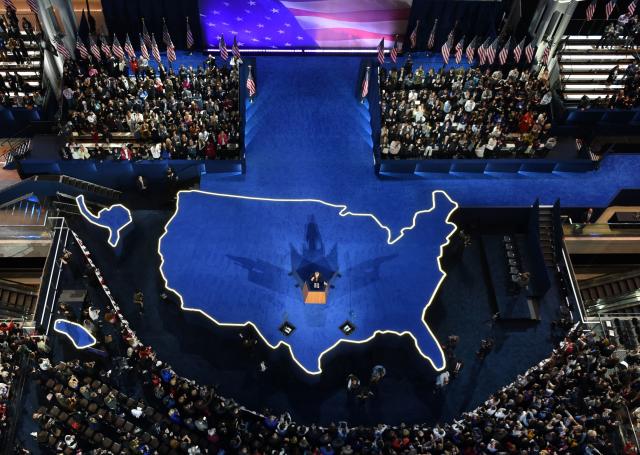
Soon after Clinton conceded the election to Trump, The Washington Post published photographs of what Clinton’s history-making victory speech was supposed to look like at New York City’s Jacob K. Javits Convention Center. Clinton’s campaign had planned for her to stand in the center of the United States outline, which was invisible to those in the room.

“It was meant to be revealed when Clinton spoke upon being declared president-elect,” the Post reported.

New report details just how toxic Trump’s environmental agenda has been thus far

ThinkProgress

New report details just how toxic Trump’s environmental agenda has been thus far

The Trump administration is increasing the environmental burden on low-income communities of color, a new report finds.

Natasha Geiling     September 19, 2017

https://i2.wp.com/thinkprogress.org/wp-content/uploads/2017/09/ap_17250657243196.jpg?resize=1280%2C720px&ssl=1Petrobras oil refinery plant in Pasadena, Texas. (CREDIT: AP Photo/Frank Bajak)
From fast-tracking the Dakota Access pipeline to failing to ban a potentially brain-damaging pesticide, the Trump administration’s environmental policies have already negatively impacted the country’s most vulnerable communities, according to a newly-released report from the Environmental Data and Governance Initiative.

During EPA Administrator Scott Pruitt’s confirmation process, he told senators that he was “familiar with the concept of environmental justice” and that “all Americans be treated equally under the law, including the environmental laws.” Despite those assurances, however, the report, titled “Pursuing A Toxic Agenda,” tracks a slew of policy and budget choices made by the Trump administration in its first seven months and concludes that “the Trump administration poses the most serious threat the EPA has faced in the agency’s 47-year existence.”

Mustafa Santiago Ali, former head of the environmental justice program at the Environmental Protection Agency and current senior vice president of climate, environmental justice and community revitalization for the Hip Hop Caucus, agrees with the report’s conclusions.

“This is one of the most challenging times for the agency,” Ali told ThinkProgress. “There seems to be a direct assault on communities of color, low income communities, and indigenous communities based on the policies that [the Trump administration] have proposed and tried to move forward on.”

Ali, who left the EPA in March after seeing the agency begin to pursue “values and priorities” different than his own, said that he has yet to see the administration propose a policy that would directly benefit vulnerable communities. Instead, Ali noted Pruitt’s stated goal of wanting to “dismantle” the EPA in its traditional form and turn it into an agency that works more for industry stakeholders than the American public.

“There’s this huge disconnect between what is needed, and what is being asked for from anyone except the fossil fuel industry,” Ali said.

Still, as the report notes, there are opportunities for the environmental justice movement to make progress under the Trump administration — just so long as they don’t involve the federal government. At least for the duration of the Trump administration, the report suggests that the EPA and the federal government will not be the appropriate avenues for pursuing progress in environmental justice. Instead, the report suggests that civil society as well as local governments need to take a more active role in ensuring that the tenets of environmental justice are incorporated into policy planning.

“The federal government does not get a pass. They have a distinct responsibility for addressing these issues inside of our most vulnerable communities,” Ali said. But, he added, groups like faith-based organizations, academic institutions, and philanthropic foundations also have an important role to play in furthering environmental justice during the Trump administration.

“All of these folks have got to come together and work in authentic, collaborative partnerships,” Ali said. “That is the way we will move our most vulnerable communities to surviving to thriving.

Even with help from civil society and local government, however, several Trump-era environmental policies are already placing vulnerable communities in danger. Specifically, the report cites rollbacks in environmental justice policies within the EPA which are already placing farm workers and communities living near industrial facilities at risk. The report notes EPA Administrator Scott Pruitt’s decision not to ban chlorpyrifos — a widely-used pesticide that EPA scientists had linked to brain damage in children — as a policy that will have an outsized impact on the health of farm workers and farming communities. Just over a month after declining to ban chlorpyrifos, the chemical was implicated in the poisoning of at least twelve farm workers in California, all of whom reported symptoms of vomiting and nausea after exposure.

The report also highlights Trump’s executive order to fast-track completion of the Dakota Access pipeline as an example of the administration’s preference for industry over vulnerable communities. In December, after months of protest by indigenous communities as well as social justice and environmental groups, the Obama administration temporarily halted construction on the controversial pipeline and ordered the Army Corps of Engineers to conduct a full study of the pipeline’s potential environmental impacts. A month later, President Trump issued an executive order directing the Army Corps to approve the pipeline in an “expedited” manner, effectively canceling the previous administration’s request for further environmental review,

Indigenous groups won a victory in mid-June, however, when a court found that the administration had failed to fully consider the environmental impacts of the project, especially on the drinking water of the Standing Rock Sioux tribe. The court ordered the Army Corps of Engineers to more fully consider the project’s potential impacts, though it’s unclear whether the pipeline will remain operational during the review. It became operational in June and has already suffered three minor leaks.

The report also cites the Trump administration’s decision to delay an Obama-era update to the rules that govern how industrial facilities — particularly those that store hazardous chemicals — plan for and respond to potential disasters. Known as the Risk Management Plan rule, the Obama administration’s updates would have required facilities to contract with third-party auditors following accidents and would have forced companies to create enhanced emergency response plans in the event of a toxic discharge. In March, Pruitt announced that the EPA was delaying implementation of these RMP updates until 2019, citing requests from industry.

Just months later, in the wake of devastating flooding from Hurricane Harvey that left parts of Houston under feet of water, the Arkema chemical plant in Crosby, Texas suffered a series of explosions and fires. More than 300 residents were evacuated from a 1.5-mile radius around the plant to avoid any toxic health impacts. The facility would have been covered by the updated RMP plan, but the company was part of the industry coalition that lobbied for its delay.

Facilities that handle hazardous chemicals and waste tend to be disproportionately concentrated in low-income communities of color, meaning that facilities impacted by the delay of the RMP rule are more likely to be near vulnerable communities.

The report also looks at suggested cuts to the EPA’s environmental justice programs, as presented in the Trump administration’s proposed budget. The administration has proposed eliminating eliminate the Lead Risk Reduction Program, for instance, which is charged with reducing childhood exposure to lead-based paint. The Trump administration has also proposed eliminating the Department of Justice’s budget to help EPA prosecute Superfund cases to ensure that industry actors actually work to remediate the areas they have polluted.

Conflicting decisions on pipelines frustrate industry, landowners

StateImpact

A reporting project of NPR Member Stations- Pennsylvania

Conflicting decisions on pipelines frustrate industry, landowners

By Marie Cusick       September 18, 2017

https://stateimpact.npr.org/pennsylvania/files/2017/09/IMG_5501-620x465.jpgMarie Cusick / StateImpact Pennsylvania

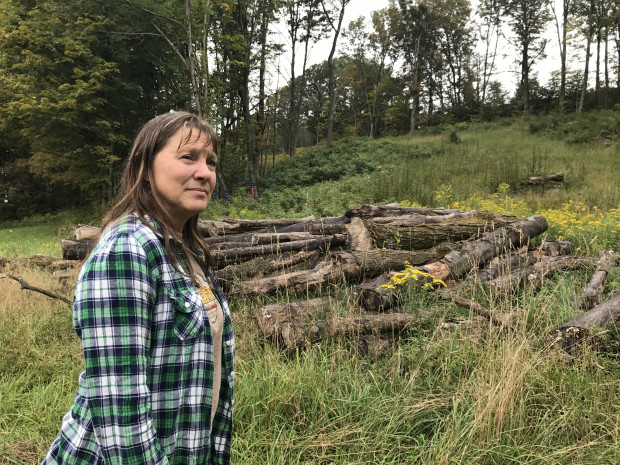
Hundreds of Cathy Holleran’s maple trees were cut down, through the use of eminent domain, for an interstate natural gas pipeline that’s now stalled.

In March 2016, workers for one of the nation’s largest natural gas pipeline companies cut down a large swath of maple trees in Susquehanna County–a rural patch of northeastern Pennsylvania. A video shot by an activist shows the trees crashing down as chainsaws buzz.

Cathy Holleran was powerless to stop it. At the time, she was tapping the trees for her family’s maple syrup business, but the pipeline company condemned her land using the power of eminent domain.

Armed U.S. Marshals

Driving around a year-and-a half later, she’s still in disbelief. A court order had prevented her from interfering, and law enforcement officers came to protect the pipeline workers.

“We had to stay completely away. They brought armed U.S. Marshals with assault rifles and Pennsylvania State Police, and had guys walking all over property in bullet proof vests,” Holleran recalls. “I mean, really! We’re making syrup. What are we going to do? Are we going to go attack these guys?”

Walking through her property on a recent soggy September afternoon, Holleran finds tree stumps hidden beneath shoulder-high weeds.

“This used to all be woods– as thick as that,” she says, gesturing to a cluster of remaining trees.

By her count, she lost more than 550 maples, “I went through with my camera and took pictures from every angle and counted them by hand to make sure I was accurate.”

She says her family’s maple syrup business has been cut in half. But the real shame of it all, Holleran adds, is this may all have been for nothing.

The Constitution Pipeline was supposed to emanate from northeastern Pennsylvania, and run 121 miles through New York State. Federal regulators gave their blessing to the project. So did Pennsylvania regulators. But New York State (whose border is about 20 miles from Holleran’s land) refused to grant a necessary water permit.

The pipeline company, Williams, sued, but a federal court recently sided with New York. Holleran says she’d warned the company of this possibility.

“All along we kept saying, ‘You might not get through New York. You might not get your permits. You’re gonna come through here and cut our land?’”

Williams spokesman, Chris Stockton, says at the time the company was working with New York’s Department of Environmental Conservation, and the permit was advancing.

“We were addressing their concerns as they came up,” he says. “We had no reason to think we would not receive that permit. We were playing by the rules and doing everything we needed to do.”

‘The rules of the game have changed’

“What happened with the Constitution was a surprise,” says Fred Lowther, a partner with the law firm Blank Rome, who’s represented major oil and gas pipeline companies.

It reminds him of another ruling, about a decade ago, when the industry ran into a similar problem: a state killed a federally-approved pipeline. The Islander East project was supposed to run from Connecticut, under Long Island Sound. But Connecticut wouldn’t give it a water quality certificate, claiming it would damage nearly 600 acres of clam beds. And when the pipeline companies sued, a federal court sided with the state.

“It caused quite a stir in the industry,” Lowther says of the ruling. “Because the intention was not to give states the veto power over a federally-approved project, but to give them a say in how the project was shaped.”

History appears to be repeating itself with the Constitution Pipeline. Lowther says pipeline companies will likely be more cautious.

“I think going forward, people will be very careful before they authorize either the taking of land or the clearing of right of way,” he says.

It has long been assumed by the pipeline industry that once their projects get approval from the Federal Energy Regulatory Commission (FERC) the state permits fall into place.

“Historically, that has not been a problem,” says Mark Robinson, a gas industry consultant who used to work at FERC. ”We’re kinda in a new arena now. The rules of the game have changed a little bit.”

In a surprise move earlier this month, West Virginia environmental regulators rescinded a water certificate for another federally-authorized natural gas pipeline. Robinson warns states shouldn’t be able to unilaterally reject important, interstate projects.

“I imagine you’ll see significant pushback from the pipeline industry,” he says.

Last week FERC overruled New York environmental regulators in their denial of a water permit to another pipeline, saying the state had taken too long with its review and thus “waived” its authority.

Landowners often find themselves with few options. Angela McGowan is an attorney for the Harrisburg for the firm, Pillar Aught. She’s represented property owners dealing with other new pipelines in Pennsylvania, and says the industry generally has the upper hand—they just have to pay the people whose land their taking.

Eminent domain occurs in a sort of vacuum, she explains. The law doesn’t consider whether a pipeline company has all its permits in hand–  the i’s dotted and the t’s crossed.

“The eminent domain code basically just says you’ve got to prove you have the power,” says McGowan. “Once you do that, it’s just about what the ‘just compensation’ is.”

But Cathy Holleran is waiting for answers. She and the company are still in court and haven’t agreed on how much she should be paid.

“I can’t even tell you the amount of stress, personally, this has put us through,” she says.

The conflicting decisions from the state of New York and the federal government have left her with heaps of rotting maple trees strewn across her property.

The census data has bad news for Black and Latinx Americans

ThinkProgress

The census data has bad news for Black and Latinx Americans

Across the country families are getting wealthier, but rosy coverage of new census figures is hiding an alarming fact.

E.A. Crunden        September 13, 2017

https://i0.wp.com/thinkprogress.org/wp-content/uploads/2017/09/ap_110215017408.jpg?resize=1280%2C720px&ssl=1 AP Photo/David Goldman

New Census Bureau data shows an increasingly optimistic picture for white Americans — but far less so for Americans of color, many of whom still face stark income disparities.

Released Tuesday, the numbers appear to show good news across the board in several key areas. Median household income in the United States in 2016 was $59,039 — a more than three percent rise from 2015 and the highest ever recorded. Poverty also saw a dip, as did the number of people without health insurance. The Census Bureau said that data reflects both a return to pre-recession levels, with 2.5 million people no longer living in poverty, and a precarious drop in the number of uninsured Americans, now around 8.8 percent of the population.

But the figures also show a grim reality. While white families now earn an average income of around $65,041, that picture is far less rosy for other racial demographics. Hispanic families earn around $47,675 — considerably lower than the over-arching average, $59,039. Worse off are Black families, who earn a median of $39,490, more than $25,000 less than their white counterparts. (The top earners, bringing in around $81,431 per year, are families identified as Asian, a broad demographic including those with origins across much of the Asian continent but outside of the Middle East.) Those numbers are despite the fact that medians for both Black and Hispanic households grew at twice the rate of white households in 2016.

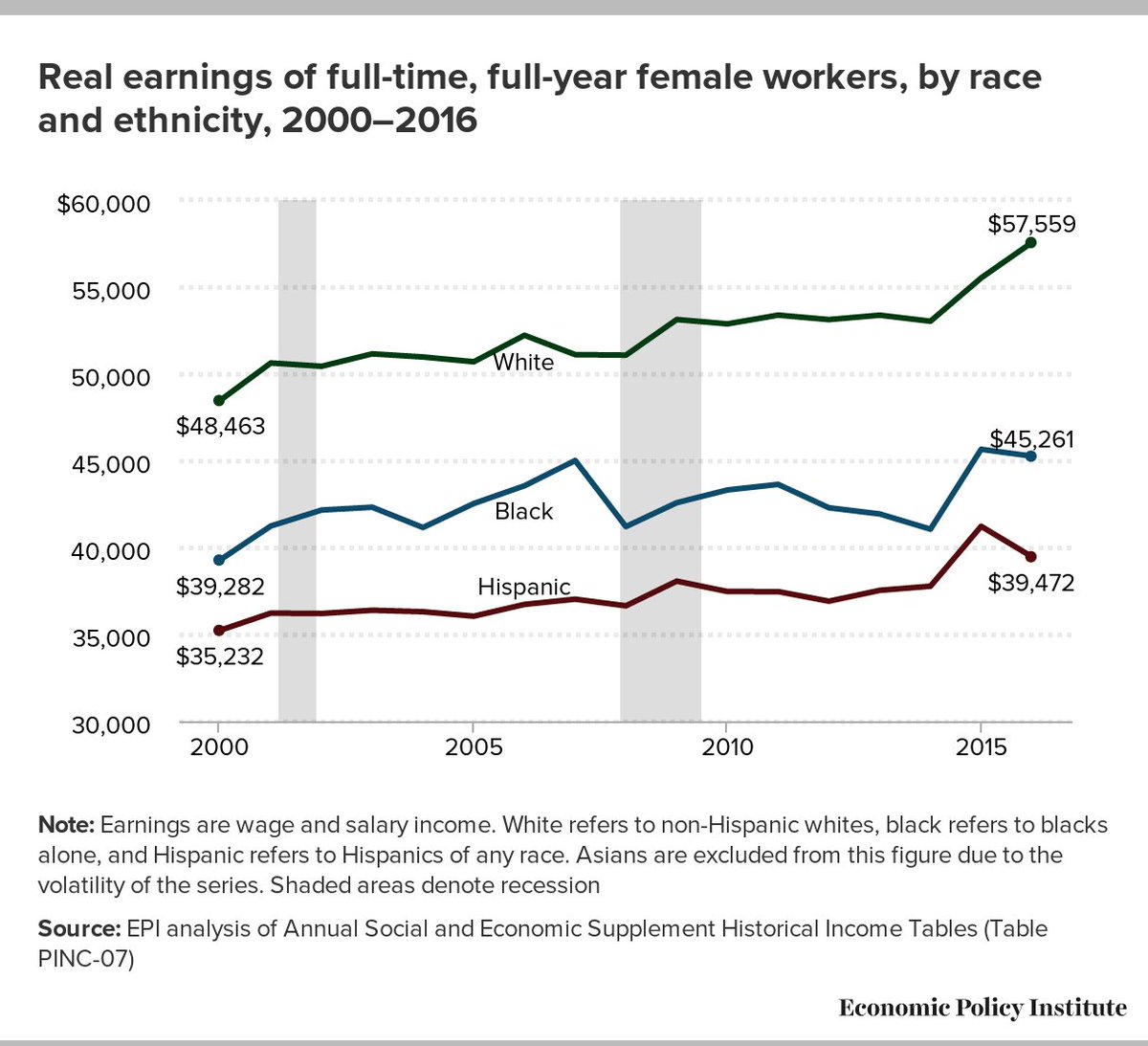
The Census Bureau told ThinkProgress that no reason could be given for the gaps, and commentary could only be offered on the figures and trends. But experts and economists highlighted the data on social media, pointing to the numbers as a disconcerting sign that the figures reinforce income inequality in a damning way, one that also cuts along gendered lines. Janelle Jones, an economic analyst with the Economic Policy Institute, noted on Twitter that “earnings actually DECREASED for black women and Latinas” while they rose for white women (women of all races are still out-earned significantly by their male counterparts):

https://pbs.twimg.com/media/DJi-vE_XkAAtpys.jpg

While the figures alone are striking, they aren’t the only indicator that the United States has a severe economic inequality issue. According to a new study by Prosperity Now and the Institute for Policy Studies, wealth trends for Black and Latinx families are dwindling, even as the United States becomes increasingly less white demographically. If the study is correct, the median wealth for Black families will be $0 by 2053; two decades later, Latinx families are expected to reach the same number.

“While households of color are projected to reach majority status by 2043, if the racial wealth divide is left unaddressed, median Black household wealth is on a path to hit zero by 2053 and median Latino household wealth is projected to hit zero twenty years later,” the report’s key findings note. “In sharp contrast, median White household wealth would climb to $137,000 by 2053.”

Related: Census data confirms connection between Obamacare and record-low uninsured rate. But states that did not embrace ACA provisions continue to see higher uninsured rates.

Wealth is about more than income — assets and ownership are an important component of how wealth is determined. But the study still points at an increasingly pressing issue. Projections indicate the United States will be majority non-white by 2044; if trends continue as they are now, that could mean serious repercussions for the U.S. economy, which will suffer along with many communities of color.

This is all part of an enduring legacy, Dedrick Asante-Muhammad, a senior fellow at Prosperity Now, told The Guardian.

“The middle class didn’t just happen by market forces, and the whiteness of the middle class didn’t just happen by market forces,” he said. “Both were intentional.”

Interpretations of Tuesday’s census figures have in many ways overlooked this reality. With much of U.S. focus directed on the country’s middle class, any growth within that group is seen as positive. But for Black and Latinx people, the story becomes more complicated, both because they are paid less than white counterparts, and because white families are more likely to have access to pre-existing wealth and assets.

“You find first-generation, even second-generation African-American and Latino households that have professional jobs and are making ‘middle-income money’ – but they have the wealth of a white high-school dropout,” said Asante-Muhammad. “They’re not truly part of a middle class – which would mean financial stability, money to weather challenging economic situations, or money to invest in the economic opportunities of their children.”

That reality is one that might not be addressed any time soon. In addition to reinforcing pre-existing racial income inequality, census figures also point at another jarring trend — the rich are getting richer more generally, while the poorest households have an even smaller income than before. That’s not a good sign for Americans of color already at a disadvantage, or a positive sign that dramatic shifts could be coming.

Even those welcoming the census data were quick to note that the figures reflect a reality prior to the election of President Donald Trump. The president’s policy proposals, which aim to roll back things like food stamp funding, and wide-scale legislative efforts, like unraveling the Affordable Care Act, could have a dramatic impact on the growth measured in 2016.

That’s something Americans should watch out for, Peter Atwater, president of Financial Insyghts, told the Washington Post.

“There’s a danger that this is as good as it gets,” he said.

An Undocumented Journey Through Harvey

Esquire

An Undocumented Journey Through Harvey

When her trailer flooded, Maria and her children escaped on a makeshift raft. But with the risk of deportation, she didn’t know where to turn. 

By Lorena O’Neil     August 31, 2017

The water seeped in under the door of Maria’s mobile home in Houston Sunday night as she tapped out the numbers 9-1-1. No answer. “Just take the children and leave me,” her friend José urged in Spanish. Jose is paralyzed from the waist-down. Maria and her late husband took him in to live with them and their five children following his car accident six years ago. The water kept coming into the trailer. Now it crept towards Jose’s electric wheelchair.

“No—if we leave, we all leave together,” Maria told Jose. She was scared. She had called 911 three hours earlier and had been instructed to calm down and wait. So Maria waited, and waited, and now the water was coming in faster, and now there was more of it. Her children were crying.

As Maria began to panic, her friend’s husband, whom she had called earlier, showed up at her front door with his son and his two teenage friends. He pointed to the inflatable kiddie pool her family used during the hot Houston summer, and suggested they use it as a raft to push José through the floodwater. With José, her 9-year-old twin boys, and her 10-year-old daughter situated in the green and blue floating pool, the 5-foot-tall Maria pushed her family through frigid water that reached her chest. Maria’s other two daughters, just 11- and 12-years-old, walked alongside their mother in the dark. She wondered what would happen next. Both Maria and Jose are undocumented immigrants, and she feared being asked for papers once they reached a shelter.

Maria’s concern about potentially being detained by “la migra”—immigration officials—was one shared by many undocumented immigrants as Hurricane Harvey ravaged Houston and other parts of southern Texas. Pew estimates that the Houston metropolitan area is home to roughly 575,000 undocumented immigrants, the third largest population in the United States behind Los Angeles and New York. Even before the storm, the undocumented community was on high alert, due to Senate Bill 4, an anti-immigrant measure that allows local police officers to ask about a person’s citizenship status and had been scheduled to go into effect Friday. (It has since been temporarily halted.)

http://esq.h-cdn.co/assets/17/35/1024x683/gallery-1504126919-hurricane-harvey.jpgHouston is home to about 575,000 undocumented immigrants, the third largest population in the United States. Getty

The ICE and U.S. Customs and Border Protection put out a joint statement over the weekend in light of the storm saying they wouldn’t target undocumented immigrants at evacuation sites, shelters, or food banks. Houston Mayor Sylvester Turner went as far as saying he would personally defend any undocumented immigrants who faced deportation as a result of seeking help in the storm. These reassurances never reached Maria, and she almost didn’t go to a shelter due to her fear. (Esquire is withholding the last names of undocumented immigrants profiled in this article.)

Maria had walked for 75 minutes through the water towards an elementary school on higher ground. She brought a change of clothes and blankets with her from home that were now soaked. The kiddie pool was becoming so deflated it was tough to push. As her legs began to fatigue from wading through the water, a black truck splashed by and three men jumped out to assist Maria, Jose, and the rest of the group. The Good Samaritans drove the family to a nearby school and Maria contemplated where to go next. She tried to call acquaintances, but claims it was tough to find someone who would agree to house them once she mentioned José was paraplegic. The men who had been in the black truck offered to take them to Gallery Furniture, a Houston furniture store that had opened its doors as a shelter for hurricane evacuees.

“I was so scared,” she says in Spanish, the language in which our interview was conducted. “I was scared I would go there and they would ask me for my papers.”

Maria left Mexico when she was 20-years-old and has been living in Texas for the past 17 years. Her husband passed away from a stroke a year ago, and now she is terrified of being deported and leaving her five American-born children without parents. But the men in the truck reassured Maria and José nobody would ask for their documentation at Gallery Furniture. Desperate for food, water, and a place to sleep, Maria went to the furniture store, where the family was greeted with hot dogs, coffee, and a temporary wheelchair for José. Still, she was anxious.

http://esq.h-cdn.co/assets/17/35/1024x481/gallery-1504126623-hurricane-harvey-texas-flooding-3.jpgThere have been dozens of Hurricane Harvey-related deaths since it made landfall in Texas over the weekend. Getty
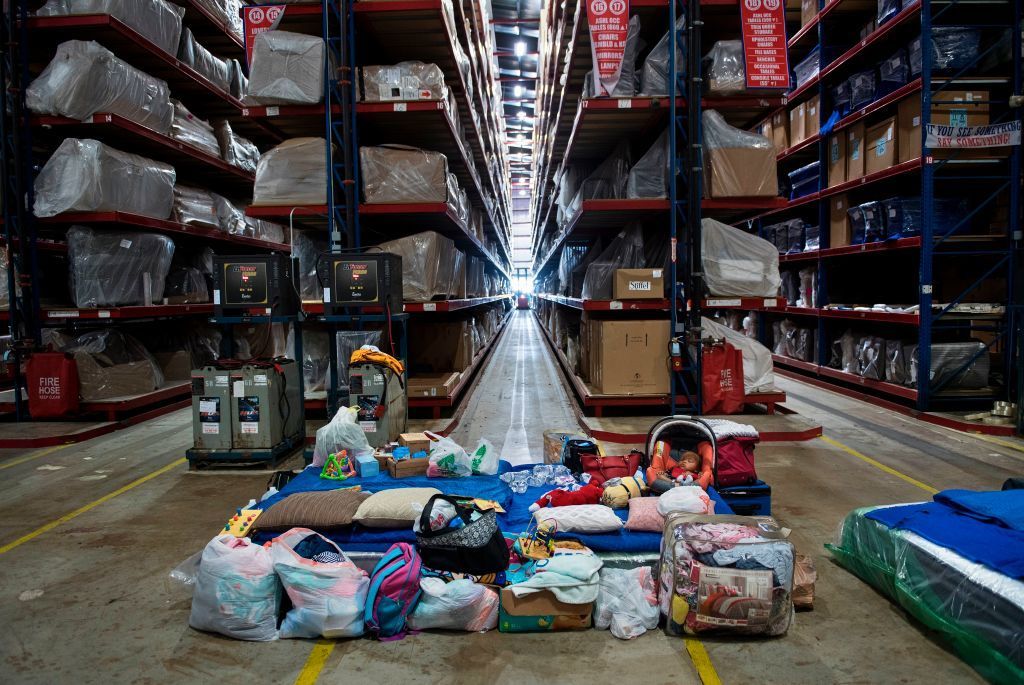
“I didn’t want to stay there,” she says. At 4 a.m., two police officers walked in, and her anxiety grew. The pair spoke with some of the volunteers at the shelter and walked into the kitchen. Nobody asked for papers.

Maria, Jose, and the children slept at the furniture store for one night before moving to a family member’s house, where they are currently living. Maria has since returned to her mobile home to assess the situation. The water has damaged two of her four bedrooms, plus a bathroom. Her two trucks are flooded, as well, one of which she uses to pull the taco food cart that she depends on for her livelihood. Maria, like approximately 80 percent of Harvey’s worst flood victims, does not have flood insurance.

“I know [undocumented] people have been afraid before the hurricane, of just dropping their kids at school or going to work,” says Pancho Arguelles, executive director at Living Hope Wheelchair Association, a non-profit organization that assists people like José with spinal cord injuries who don’t have access to healthcare.

http://esq.h-cdn.co/assets/17/35/1024x685/gallery-1504126484-hurricane-harvey-gallery-furniture.jpgHouston’s Gallery Furniture store took in families like Maria’s Sunday night. Getty

He worries about the new anti-immigrant bill, and says he thinks undocumented people will mistakenly think it means every police officer is essentially becoming an immigration officer. The deterioration of trust between police officers and the community they serve is of serious concern to police chiefs in Texas, many of whom have spoken out against Senate Bill 4 both before and after it was signed into law by Texas Gov. Greg Abbott. The legislation—nicknamed the “anti-sanctuary cities” law—would ban police chiefs, sheriffs, and other law-enforcement officials from preventing an officer from questioning a person about his or her immigration status. Jail officials would also be forced to honor all ICE requests to hold inmates for possible deportation. On Wednesday, a federal district judge temporarily blocked the bill from taking effect while a lawsuit against it continues. Houston is one of the cities involved in the lawsuit looking to strike down the law.

“I know [undocumented] people have been afraid before the hurricane, of just dropping their kids at school or going to work.”

Still, Maria feels uncertain about her future in the U.S. “I’m worried,” she says. Speaking on behalf of the undocumented community in Houston she says, “We have a lot of needs right now.” Maria hopes to move back into her damaged home and get her business back up and running as soon as she can.

“I will work hard and fight like always for my children,” she says. “I’m their only support.”

I Have No More Patience for Trump Supporters

Esquire

I Have No More Patience for Trump Supporters

Last night in Arizona, Trump came right up to the edge of inciting you to riot and you rode along with him.

http://esq.h-cdn.co/assets/17/34/980x490/landscape-1503507094-gettyimages-837575404.jpgGetty

By Charles P. Pierce         August 23, 2017

At least, old Ted Agnew had the late William Safire writing his stuff for him. “Nattering nabobs of negativism.” “Pusillanimous pussyfooters.” I mean, that’s the top-shelf brand right there. It’s an honor to have such invective thrown in your direction. Ol’ Ted broke new ground in only two areas—taking cheap-ass bribes in the office of the vice president and attacking the media.

Instead, 45 years later, we get this mendacious litany of sixth-grade sneering:

So the — and I mean truly dishonest people in the media and the fake media, they make up stories. They have no sources in many cases. They say “a source says” — there is no such thing. But they don’t report the facts. Just like they don’t want to report that I spoke out forcefully against hatred, bigotry and violence and strongly condemned the neo-Nazis, the White Supremacists, and the KKK.

(APPLAUSE)

I openly called for unity, healing and love, and they know it because they were all there. So what I did —

(APPLAUSE)

So what I did is I thought, I’d take just a second, and I’m really doing this more than anything else, because you know where my heart is, OK?

(APPLAUSE)

I’m really doing this to show you how damned dishonest these people are.

And then:

You know why? Because they are very dishonest people. So I said, racism is evil. Now they only choose, you know, like a half a sentence here or there and then they just go on this long rampage, or they put on these real lightweights all around a table that nobody ever heard of, and they all say what a bad guy I am. But, I mean do you ever see anything — and then you wonder why CNN is doing relatively poorly in the ratings. Because they’re putting like seven people all negative on Trump. And they fired Jeffrey Lord, poor Jeffrey. Jeffrey Lord. I guess he was getting a little fed up, and he was probably fighting back a little bit too hard. They said, we’ve better get out of here; we can’t have that.And those who cause violence in its name are criminals and thugs, including the KKK, neo-Nazis, white supremacists and other hate groups that are repugnant to everything we hold true as Americans. Now let me ask you, can it be any better than that, in all fairness? And you know I mention that, but to the best of my knowledge when there was a big problem, Barack Obama never said it took place because of radical Islamic terrorists, he never said that, right.

And, finally, the full Schickelgruber:

And — and I say it, and you know, we’re all pros. We’re all, like, we have a certain sense. We’re smart people. These are truly dishonest people. And not all of them. Not all of them. You have some very good reporters. You have some very fair journalists. But for the most part, honestly, these are really, really dishonest people, and they’re bad people. And I really think they don’t like our country. I really believe that. And I don’t believe they’re going to change, and that’s why I do this. If they would change, I would never say it. The only people giving a platform to these hate groups is the media itself, and the fake news…These are sick people. You know the thing I don’t understand? You would think — you would think they’d want to make our country great again, and I honestly believe they don’t. I honestly believe it. If you want to discover the source of the division in our country, look no further than the fake news and the crooked media…

http://esq.h-cdn.co/assets/17/34/768x384/gallery-1503507160-gettyimages-837568980.jpgGetty

Before we get to the other stuff, and there was lots of other stuff, I’d like to address myself to those people represented by the parenthetical notation (Applause) in the above transcript, those people who waited for hours in 105-degree heat so that they could have the G-spot of their irrationality properly stroked for them. You’re all suckers. You’re dim and you’re ignorant and you can’t even feel yourself sliding toward something that will surprise even you with its fundamental ugliness, something that everybody who can see past the veil of their emotions can see as plain as a church by daylight, to borrow a phrase from that Willie Shakespeare fella. The problem, of course, is that you, in your pathetic desire to be loved by a guy who wouldn’t have 15 seconds for you on the street, are dragging the rest of us toward that end, too.

A guy basically went mad, right there on the stage in front of you, and you cheered and booed right on cue because you’re sheep and because he directed his insanity at all the scapegoats that your favorite radio and TV personalities have been creating for you over the past three decades. Especially, I guess, people like me who practice the craft of journalism in a country that honors that craft in its most essential founding documents. The President of the United States came right up to the edge of inciting you to riot and you rode along with him. You’re on his team, by god.

Are you good people? I keep hearing that you are, but let’s go back to Tuesday night’s transcripts and see what we find:

One vote away. One vote away. We were one vote away. Think of it, seven years the Republicans — and again, you have some great senators, but we were one vote away from repealing it.

(CROWD CHANTING)

But, you know, they all said, Mr. President, your speech was so good last night, please, please, Mr. President don’t mention any names. So I won’t. I won’t. No I won’t vote — one vote away, I will not mention any names. Very presidential, isn’t’ it? Very presidential. And nobody wants me to talk about your other senator, who’s weak on borders, weak on crime, so I won’t talk about him.

Right there, in the passive-aggressive fashion of the true moral coward, he made a bobo out of a former POW who currently is undergoing treatment for what is likely a terminal brain cancer. And you chanted and cheered. Do good people chant and cheer a rhetorical assault on a dying man of respect and honor?

http://esq.h-cdn.co/assets/17/34/768x384/gallery-1503507188-gettyimages-511816368.jpgGetty

I have no more patience, and I had very little to start with. I don’t care why you’re anxious. I don’t care for anybody’s interpretation of why you voted for this abomination of a politician, and why you cheer him now, because any explanation not rooted in the nastier bits of basic human spleen is worthless. I don’t want any politicians who seek to appeal to the more benign manifestations of your condition because there’s no way to separate those from all the rest of the hate and fear and stupidity. (And, for my colleagues in the Vance-Arnade-Zito school of Trump Whispering, here’s a hint: They hate you, too.) I don’t care why you sat out in a roasting pan since 5 a.m. Tuesday morning to whistle and cheer and stomp your feet for a scared, dangerous little man who tells you that your every bloody fantasy about your enemies is the height of patriotism. You are now the declared adversaries of what I do for a living, and your idol is a danger to the country and so are you. Own it. Deal with it. And, for the love of god, and for the sake of the rest of us who live in this country, do better at being citizens.

As to the rest, I might have been a little groggy, but I thought I heard him say he was going to shut down the government unless Congress gives him money for his stupid wall that Mexico was supposed to finance. I thought I heard him tell that evil racist gossoon, Sheriff Joe Arpaio, to count on a pardon down the line somewhere. And, I swear to god, I thought I heard him call the Democrats in the Congress communists.

Wait. What?

It’s all they’re good at. It’s all they’re good at. That’s all they do. On healthcare, they have 48 Democrats. We got no votes. We got no votes. And it would have been great healthcare. And by the way, would have been great healthcare for Arizona. Would have been great. So the Democrats have no ideas, no policy, no vision for the country other than total socialism and maybe, frankly, a step beyond socialism from what I’m seeing.

(BOOING)

Thought so.

(Also, note to all the Purity Police who think people like Joy Reid are “red-baiting” when they mention that Russian ratfcking helped decide the last presidential election. That bit right at the end there? That’s actual red-baiting. Please take notes. I don’t want to have to go over this again.)

It was a deadening, numbing 77 minutes. (If there’s one modern orator he most resembles, it’s Fidel Castro.) The abiding feelings that I took away from this carnival of the Id were twofold: first, that this jefe manqué is on the verge of sending people infinitely better than he is to die in a war he doesn’t understand, and second, and probably most important, this is a president* who is scared to death. He’s frightened of the responsibilities of his office, of the mounting unpopularity of both himself and his policies, and of the hounds baying at the frontiers of his shady past and shadier present. He’s terrified, and he should be. He’s desperately shoring up the bubble that his ovine followers helped him build to insulate him from the truth and from empirical reality.

Come to this house.

Be one of us.

I’m Proud of My Husband for Knelling During the Anthem, but Don’t Make Him a White Savior

The Root

I’m Proud of My Husband for Knelling During the Anthem, but Don’t Make Him a White Savior

https://i.kinja-img.com/gawker-media/image/upload/s--GZYM1L2p--/c_fill,fl_progressive,g_center,h_80,q_80,w_80/kwnbevunwdwtruqyjgly.jpg  Erica Harris DeValve     August 23, 2017

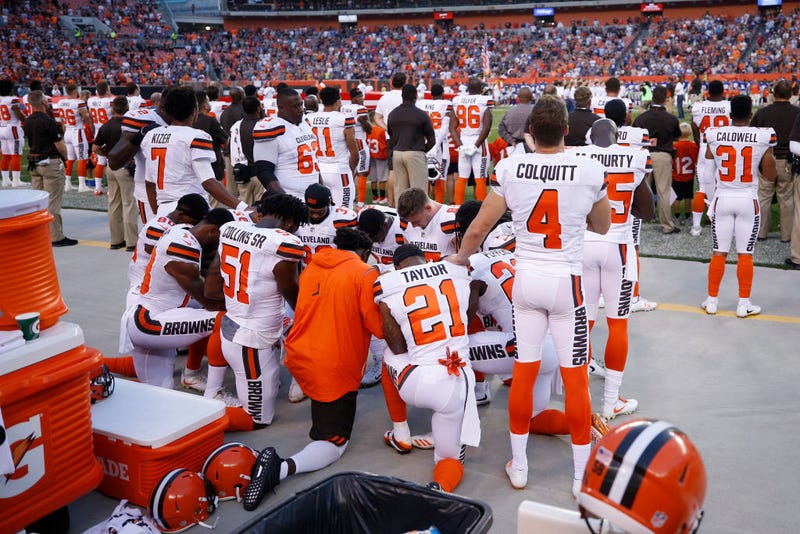
https://i.kinja-img.com/gawker-media/image/upload/s--auzkPeM6--/c_scale,fl_progressive,q_80,w_800/aurf1sojpzm9aiulnpn6.jpgA group of Cleveland Browns players kneel in a circle in protest during the national anthem prior to a preseason game against the New York Giants at FirstEnergy Stadium in Cleveland on Aug. 21, 2017. (Joe Robbins/Getty Images)

On Monday night, I walked into FirstEnergy Stadium having absolutely no clue what was going to happen during the national anthem. When it began, I saw a group of Browns players kneeling and was proud. A few moments later, I noticed that No. 87—my husband, Seth—was among them, and I was even prouder.

That moment reconfirmed a few things that I knew: that the many in-depth conversations about race that Seth and I had—that every interracial couple must have had—resonated and took root with him; that he knew this was bigger than just one-on-one chatting with me over dinner or coffee; and that he gets it, beyond a simple desire to be protective of me as his wife.

While I understand (and am deeply proud) that Seth is the first white NFL player to kneel during a demonstration like this (on Sept. 4, 2016, Megan Rapinoe, a U.S. women’s soccer player, was the first white professional athlete to do so), I would like to push back against some of the attention he’s been getting that portrays him as some sort of white savior to a movement that was started and has been carried on by black football players for about a year now.

I am grateful for the widespread support and praise that Seth is getting for his actions, but I would like to offer a humble reminder that a man—a black man—literally lost his job for taking a knee, week after week, on his own. Colin Kaepernick bravely took a step and began a movement throughout the NFL, and he suffered a ridiculous amount of hate and threats and ultimately lost his life’s work in the sport he loves.

We should not see Seth’s participation as legitimizing this movement. Rather, he chose to be an ally of his black teammates. To center the focus of Monday’s demonstration solely on Seth is to distract from what our real focus should be: listening to the experiences and the voices of the black people who are using their platforms to continue to bring the issue of racism in the U.S. to the forefront. Seth, as a white individual, never has and never will truly have to feel the weight and burden of racial discrimination and racial oppression. No white person does or will. But all white people should care and take a stand against its prevalence in this country.

What I hope to see from this is a shift in the conversation to Seth’s black teammates, who realistically have to carry that burden all the time. I am discouraged by this idea that acknowledging and fighting against racism is a distraction that must be stored away in order to be a good football player. I wholeheartedly reject that narrative.

Black players in the NFL cannot just turn their concern on and off in order to be able to focus more on football. White players shouldn’t, either. Racism is a day-to-day reality, and I hope that, instead of holding Seth up on a pedestal, the response will be to do what he did: listen to the voices of the black people in your life, and choose to support them as they seek to make their voices heard.

To the people who are looking at pictures of us and saying, “Oh, well, that makes sense,” I offer a dramatic eye roll. People on Twitter have insinuated that it’s simply my appearance that inspired Seth to kneel with his teammates, or that I must’ve threatened Seth with leaving him or refusing to have sex with him if he didn’t join the demonstration. To even joke in this way is gross. Seth didn’t do what he did simply to obtain a gold star from his wife. His actions on Monday night were not the equivalent of him bringing home a bouquet of flowers after I’ve had a rough day.

In his interview after Monday night’s game, Seth said, “I myself will be raising children that don’t look like me, and I want to do my part as well to do everything I can to raise them in a better environment than we have right now.” I don’t think either of us foresaw that this choice to share about his personal life would become the go-to narrative to explain Seth’s actions in their entirety.

Seth understands how racism systematically oppresses people across this entire nation. He understands that to be complacent about it is not just unacceptable as a “black wife’s” husband; Seth supported his teammates because it was the right thing to do, it was the godly thing to do and it was the responsible thing to do. If I were white, he should have done the same, and I am confident that he would have.

In the last few days, we have seen a lot of the same comments that have been expressed since Kaepernick began kneeling during the national anthem: people imploring players to stand up because it is disrespectful to the flag, to the country, and to active military and veterans. But what Kaepernick did (and what various NFL players are continuing this season) is something we should see as real patriotism. They are engaging critically with the national anthem and this country’s articulated ideals; they are consciously observing the reality of our country’s current state; and they are using their platforms to publicly hold the country in which they live accountable to the ideals it is supposed to be upholding.

To be complacent that the U.S. strives to be “the land of the free” while so many of its citizens of color are being oppressed for their race is unpatriotic and irresponsible. I applaud those who realize that and do something about it rather than ignore it.

Erica Harris DeValve recently graduated from Princeton University and will begin pursuing her master’s in theology from Fuller Theological Seminary this fall with a focus on the intersection of race and Christianity in the U.S.

‘Open carry’ and open debate don’t mix

Chicago Sun-Times

EDITORIAL: ‘Open carry’ and open debate don’t mix

Sun-Times Editorial Board     August 18, 2017 

https://suntimesmedia.files.wordpress.com/2017/08/charlottesville_weapons1.jpg?w=637&zoom=2White nationalists, neo-Nazis and members of the “alt-right” with body armor and combat weapons evacuate comrades who were pepper-sprayed after the “Unite the Right” rally was declared an unlawful gathering by Virginia State Police August 12, in Charlottesville, Virginia. | Chip Somodevilla/Getty Images

Look at the photo accompanying this editorial. Is that a group of people with whom you would want to get into a heated argument?

We’re guessing no. There is something about a semiautomatic rifle that makes for a one-sided debate. Say goodbye to your cherished right to speak your mind.

Is this really what lawmakers and the federal courts had in mind in recent years as they have supported ever more lax “open-carry” and “concealed carry” gun laws?

What we see here is not Americans protecting themselves, as lawmakers likely envisioned, but Americans scaring the bejeebers out of other Americans. We see two constitutional protections — free speech and the right to bear arms — in fundamental conflict, and guns are winning.

The sight of heavily armed white supremacists in Charlottesville, Virginia, this month was the predictable outcome of the expansive view of gun ownership that the courts and many state legislatures have taken in recent years. Open-carry laws have made it legal for people to carry powerful weapons even at the most contentious public gatherings. Illinois is one of just five states that prohibits people from openly carrying handguns, and it is one of just six states and the District of Columbia to prohibit the open carry of long guns, according to the Law Center to Prevent Gun Violence.

Even as authorities grow more lax about firearms of all kinds, gun carriers are growing more assertive, showing up at rallies in military-style clothing and body armor and toting big guns. Charlottesville wasn’t the first time people came to a rally armed to the teeth. In June, hundreds of people, many carrying rifles and wearing body armor, showed up at a park in Houston that includes the city zoo, alarming crowds of families with young children.

On Thursday, the American Civil Liberties Union announced it no longer would represent white supremacist groups that want to bring loaded guns to their demonstrations. The ACLU believes fervently in free speech, but not in speech dictated only at the barrel of a gun.

When the Founding Fathers drafted the First Amendment, guaranteeing our right to assemble, there was a reason they included the word “peaceably.”

When a photo at the top of the news screams with meaning

Chicago Sun-Times

EDITORIAL: When a photo at the top of the news screams with meaning

Sun-Times Editorial Board      August 22, 2017

https://suntimesmedia.files.wordpress.com/2017/08/23.jpg?w=637&zoom=2Hammond Police say these two suspects committed three armed robberies Friday morning, and may have pulled a fourth a short time later in East Chicago. | Hammond Police

What do you see?

All day on Tuesday, a report about two young men suspected of committing three armed robberies in Hammond in less than an hour drew more online readers than any other Sun-Times news story.

You can bet it wasn’t the words that pulled readers in. The news was breaking and details were sketchy.

It was the photo that mattered. It screamed with meaning.

In that photograph, taken by a surveillance camera, here’s what we see:

We see two young men, probably only teenagers, who should be getting ready for school in the fall or working jobs. They are running down a sidewalk in broad daylight with guns, and we wonder where they got the guns. We know it’s easy enough.

We wonder who the young men are pointing their guns at, and we admit we’re grateful it is not us. We wonder if they are running through a neighborhood where people are afraid to step outdoors because of people like them.

We see how one young man grips his gun with two hands, like he’s done this before. Or did he learn it from watching TV? Guns are everywhere on TV. Was he younger when he first held a gun? Did it feel heavier then?

We notice how the other young man keeps his right hand in his pocket. Even as he aims his gun, he projects an unsettling casualness. We wonder how somebody so young can be so apparently disengaged.

We see the hoodies and the clean white gym shoes and the neat haircuts. Take away the guns, and the two young men look like every good kid we have ever known. We can’t pretend they are made of entirely different clay. Too easy.

We see they are African-Americans, and this matters greatly. It is a heavy burden, now as always, to grow up a black man in America. If the gangs and drugs don’t get you, the racist stereotyping might. How can anybody claim otherwise less than two weeks after hundreds of white supremacists marched in Charlottesville, Virginia? And after the president of the United States failed to condemn the racists properly?

At what age does a young black child look in the mirror and begin to believe the lies might be true?

We study this photograph and we want to say this:

Young men with guns are the problem, not young black men with guns. Young people of any color who grow up in poor and dangerous neighborhoods, who are left by adults to run the streets, who go to bad schools, who can’t find work, who begin to wonder if they stand a chance, who come to believe they have no future — that’s the problem.

We know nothing specific about the two young men in the photo, not even their names. But whatever their full stories might be — whatever bad breaks they may have caught — they must be taken off the street. People who rob other people at gunpoint can’t walk free.

But we look at this photograph, and we wonder how it ever got to this. Why do we bicker over essential school funding? Why does our nation spend so much on the military and so little on jobs programs? Why do so many politicians favor a tax cut for the rich but oppose a living wage for working people?

The photograph is a Rorschach test. What do you see?

Send letters to: letters@suntimes.com.