The model minority myth is responsible for huge misconceptions about being Asian in America.

Well-Rounded Life

June 2, 2018

The model minority myth is responsible for huge misconceptions about being Asian in America.

Model Minority Myth

The model minority myth is responsible for huge misconceptions about being Asian in America.

Posted by Well-Rounded Life on Saturday, June 2, 2018

Unions Did Great Things for the Working Class

Bloomberg – Economics

Unions Did Great Things for the Working Class

Strengthening them could blunt inequality and wage stagnation.

By Noah Smith      June 13, 2018

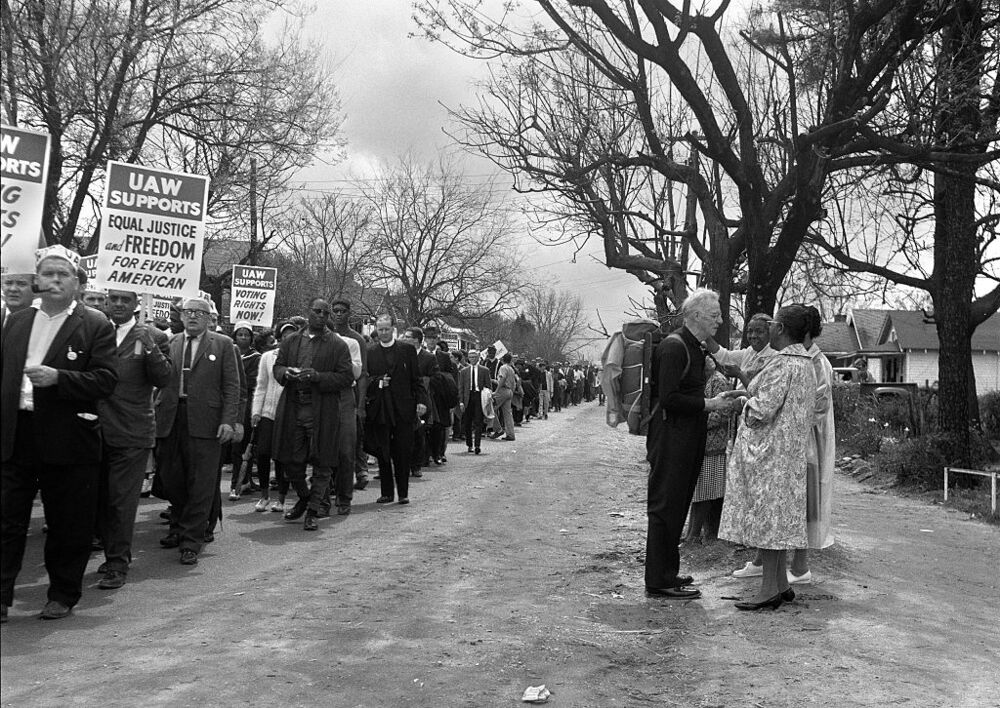
On the right side. Photographer: Stephen F. Somerstein/Archive Photos/Getty Images

Politically and economically, unions are sort of an odd duck. They aren’t part of the apparatus of the state, yet they depend crucially on state protections in order to wield their power. They’re stakeholders in corporations, but often have adversarial relationships with management. Historically, unions are a big reason that the working class won many of the protections and rights it now enjoys, but they often leave the working class fragmented and divided — between different companies, between union and non-union workers, and even between different ethnic groups.

Economists, too, have long puzzled about how to think about unions. They don’t fit easily into the standard paradigm of modern economic theory in which atomistic individuals and companies abide by rules overseen by an all-powerful government. Some economists see unions as a cartel, protecting insiders at the expense of outsiders. According to this theory, unions raise wages but also drive up unemployment. This is the interpretation of unions taught in many introductory courses and textbooks.

If this were really what unions did, it might be worth it to simply let them slip into oblivion, as private-sector unions have been doing in the U.S.:

It’s Been a While Since the Union Made Us Strong. Share of workforce belonging to unions in the private sector is now just over 6%.

But there are many reasons to think that this theory of unions isn’t right — or, at least, is woefully incomplete.

First, even back in the 1970s, some economists realized that unions do a lot more than just push up wages. In a 1979 paper entitled “The Two Faces of Unionism,” economists Richard Freeman and James Medoff argued that “by providing workers with a voice both at the workplace and in the political arena, unions can and do affect positively the functioning of the economic and social systems.”

Freeman and Medoff cite data showing that unions reduced turnover, which lowers costs associated with constantly finding and training new workers. They also show that unions engaged in political activity that benefitted the working class more broadly, rather than just union members. And they showed that contrary to popular belief, unions actually decreased racial wage disparities. Finally, Freeman and Medoff argue that by defining standard wage rates within industries, unions actually reduced wage inequality overall, despite the cartel-like effect emphasized in econ textbooks.

But the world didn’t listen to Freeman and Medoff, and private-sectors unions declined into near-insignificance. Now, four decades later, economists are again starting to suspect that unions were a better deal than the textbooks made them out to be. A recent paper by economists Henry Farber, Daniel Herbst, Ilyana Kuziemko and Suresh Naidu concludes that unions were an important force reducing inequality in the U.S.

Since past data tends to be patchy, Farber et al. combine a huge number of different data sources to get a detailed picture of unionization rates going all the way back to 1936, the year after Congress passed a law letting private-sector employees form unions. The authors find that as unionization rises, inequality tends to fall, and vice versa. Nor is this effect driven by greater skills and education on the part of union workers; during the era from 1940 through 1970, when unionization rose and inequality fell, union workers tended to be less educated than others. In other words, unions lifted the workers at the bottom of the distribution. Black workers, and other nonwhite workers, tended to benefit the most from the union boost.

Now, however, private-sector unions are mostly a faded memory and their power to raise wages has waned — Farber et al. find that although there’s still a union wage premium, it’s now much more due to the fact that higher-skilled workers tended to be the ones who stayed unionized. A 2004 paper by economists John DiNardo and David Lee found that by 1984-1999, unions had lost much of their ability to force wages higher.

Given the contrast between the golden age of 1940-1970 and the current age of spiraling inequality, wouldn’t it make sense to bring unions back? Perhaps. The key question is why private-sector unions mostly died out. Policy changes — right-to-work laws, and the appointment of anti-union regulators, probably played a key role in reducing unionization. But globalization may have also played a big part. Competition from companies in countries like Germany — where unions often bargain to hold down wages in order to increase their companies’ competitiveness — might have made the old American model of unionization unsustainable. Now, with even stiffer competition from China, the challenge of re-unionizing the U.S. might be an insurmountable one.

But it might be worth it to try. Other than massive government redistribution of income and wealth, there’s really no other obvious way to address the country’s rising inequality. Also, there’s the chance that unions might be an effective remedy for the problem of increasing corporate market power — evidence suggests that when unionization rates are high, industry concentration is less effective at suppressing wages. Repealing right-to-work laws and appointing more pro-union regulators could be just the medicine the economy needs.

So supporters of free markets should rethink their antipathy to unions. As socialism gains support among the young, both economists and free-market thinkers should consider the possibility that unions — that odd hybrid of free-market bargaining and government intervention — were the vaccine that allowed the U.S. and other rich nations to largely escape the disasters of communism in the 20th century.

It looks like it’s time for a booster shot.

This column does not necessarily reflect the opinion of the editorial board or Bloomberg LP and its owners.

What Caused the United States’ Decline?

The Nation

What Caused the United States’ Decline?

Hint: You don’t have to look far.

By Tom Englehardt       June 14, 2018

An unidentified US soldier patrols next to a US flag on a military ship docked in Manama, Bahrain. (AP Photo / Hasan Jamali)

EDITOR’S NOTE: This article originally appeared at TomDispatch.com. To stay on top of important articles like these, sign up to receive the latest updates from TomDispatch.com.

Think of it as the all-American version of the human comedy: a great power that eternally knows what the world needs and offers copious advice with a tone deafness that would be humorous, if it weren’t so grim. If you look, you can find examples of this just about anywhere. Here, for instance, is a passage in The New York Times from a piece on the topsy-turvy Trumpian negotiations that preceded the Singapore summit. “The Americans and South Koreans,” wrote reporter Motoko Rich, “want to persuade the North that continuing to funnel most of the country’s resources into its military and nuclear programs shortchanges its citizens’ economic well-being. But the North does not see the two as mutually exclusive.”

Think about that for a moment. The United States has, of course, embarked on a trillion-dollar-plus upgrade of its already massive nuclear arsenal (and that’s before the cost overruns even begin). Its Congress and president have for years proven eager to sink at least a trillion dollars annually into the budget of the national security state (a figure that’s still rising and outpaces by far that of any other power on the planet), while its own infrastructure sags and crumbles. And yet it finds the impoverished North Koreans puzzling when they, too, follow such an extreme path.

Clueless is not a word Americans ordinarily apply to themselves as a country, a people, or a government. Yet how applicable it is.

And when it comes to cluelessness, there’s another, far stranger path the United States has been following since at least the George W. Bush moment that couldn’t be more consequential and yet somehow remains the least noticed of all. On this subject, Americans don’t have a clue. In fact, if you could put the United States on a psychiatrist’s couch, this might be the place to start.

AMERICA CONTAINED

In a way, it’s the oldest story on Earth: the rise and fall of empires. And note the plural there. It was never—not until recently at least—empire, always empires. Since the 15th century, when the fleets of the first European imperial powers broke into the larger world with subjugation in mind, it was invariably a contest of many. There were at least three or sometimes significantly more imperial powers rising and contesting for dominance or slowly falling from it. This was, by definition, the history of great powers on this planet: The challenging rise, the challenged decline. Think of it for so many centuries as the essential narrative of history, the story of how it all happened until at least 1945, when just two “superpowers,” the United States and the Soviet Union, found themselves facing off on a global scale.

Of the two, the United States was always stronger, more powerful, and far wealthier. It theoretically feared the Russian Bear, the Evil Empire, which it worked assiduously to “contain” behind that famed Iron Curtain and whose adherents in this country, always modest in number, were subjected to a mania of fear and suppression. However, the truth—at least in retrospect—was that, in the Cold War years, the Soviets were actually doing Washington a strange, if unnoted, favor. Across much of the Eurasian continent, and other places from Cuba to the Middle East, Soviet power and the never-ending contest for influence and dominance that went with it always reminded American leaders that their own power had its limits. This, as the 21st century should have (but hasn’t) made clear, was no small thing. It still seemed obvious then that American power could not be total. There were things it could not do, places it could not control, dreams its leaders simply couldn’t have. Though no one ever thought of it that way, from 1945 to 1991, the United States, like the Soviet Union, was, after a fashion, “contained.”

In those years, the Russians were, in essence, saving Washington from itself. Soviet power was a tangible reminder to American political and military leaders that certain areas of the planet remained no-go zones (except in what, in those years, were called “the shadows”). The Soviet Union, in short, rescued Washington from both the fantasy and the hell of going it alone, even if Americans only grasped that reality at the most subliminal of levels.

That was the situation until December 1991 when, at the end of a centuries-long imperial race for power (and the never-ending arms race that went with it), there was just one gigantic power left standing on Planet Earth. It told you something about the thinking then that, when the Soviet Union imploded, the initial reaction in Washington wasn’t triumphalism (though that came soon enough) but utter shock, a disbelieving sense that something no one had expected, predicted, or even imagined had nonetheless happened. To that very moment, Washington had continued to plan for a two-superpower world until the end of time.

AMERICA UNCONTAINED

Soon enough, though, the Washington elite came to see what happened as, in the phrase of the moment, “the end of history.” Given the wreckage of the Soviet Union, it seemed that an ultimate victory had been won by the very country its politicians would soon come to call “the last superpower,” the “indispensable” nation, the “exceptional” state, a land great beyond imagining (until, at least, Donald Trump hit the campaign trail with a slogan that implied greatness wasn’t all-American anymore).

In reality, there were a variety of paths open to the “last superpower” at that moment. There was even, however briefly, talk of a “peace dividend”—of the possibility that, in a world without contesting superpowers, taxpayer dollars might once again be invested not in the sinews of war-making but of peace-making (particularly in infrastructure and the well-being of the country’s citizens).

Such talk, however, lasted only a year or two and always in a minor key before being relegated to Washington’s attic. Instead, with only a few rickety “rogue” states left to deal with—like… gulp… North Korea, Iraq, and Iran—that money never actually headed home and neither did the thinking that went with it.

SUPPORT PROGRESSIVE JOURNALISM: If you like this article, please give today to help fund The Nation’s work.

Consider it the good fortune of the geopolitical dreamers soon to take the reins in Washington that the first Gulf War of 1990-1991, which ended less than a year before the Soviet Union collapsed, prepared the way for quite a different style of thinking. That instant victory led to a new kind of militarized dreaming in which a highly tech-savvy military, like the one that had driven Iraqi autocrat Saddam Hussein’s forces out of Kuwait in such short order, would be capable of doing anything on a planet without serious opposition.

And yet, from the beginning, there were signs suggesting a far grimmer future. To take but one infamous example, Americans still remember the Black Hawk Down moment of 1993 when the world’s greatest military fell victim to a Somali warlord and local militias and found itself incapable of imposing its will on one of the least impressive not-quite-states on the planet (a place still frustrating that military a quarter-century later).

In that post-1991 world, however, few in Washington even considered that the 20th century had loosed another phenomenon on the world, that of insurgent national liberation movements, generally leftist rebellions, across what had been the colonial world—the very world of competing empires now being tucked into the history books—and it hadn’t gone away. In the 21st century, such insurgent movements, now largely religious, or terror-based, or both, would turn out to offer a grim new version of containment to the last superpower.

UNCHAINING THE INDISPENSABLE NATION

On September 11, 2001, a canny global jihadist by the name of Osama bin Laden sent his air force (four hijacked US passenger jets) and his precision weaponry (19 suicidal, mainly Saudi followers) against three iconic targets in the American pantheon: the Pentagon, the World Trade Center, and undoubtedly the Capitol or the White House (neither of which was hit because one of those jets crashed in a field in Pennsylvania). In doing so, in a sense bin Laden not only loosed a literal hell on Earth, but unchained the last superpower.

Shakespeare would have had a word for what followed: hubris. But give the top officials of the Bush administration (and the neocons who supported them) a break. There had never been a moment like it: a moment of one. A single great power left alone, triumphant, on planet Earth. Just one superpower—wealthy beyond compare, its increasingly high-tech military unmatched, its only true rival in a state of collapse—had now been challenged by a small jihadist group.

To President Bush, Vice President Dick Cheney, and the rest of their crew, it seemed like nothing short of a heaven-sent opportunity. As they came out of the shock of 9/11, of that “Pearl Harbor of the 21st century,” it was as if they had found a magic formula in the ruins of those iconic buildings for the ultimate control of the planet. As Secretary of Defense Donald Rumsfeld would instruct an aide at the Pentagon that day, “Go massive. Sweep it up. Things related and not.”

Within days, things related and not were indeed being swept up. The country was almost instantly said to be “at war” and soon that conflict even had a name, the Global War on Terror. Nor was that war to be against just Al Qaeda, or even one country, an Afghanistan largely ruled by the Taliban. More than 60 countries said to have “terror networks” of various sorts found themselves almost instantly in the administration’s potential gun sights. And that was just to be the beginning of it all.

In October 2001, the invasion of Afghanistan was launched. In the spring of 2003, the invasion of Iraq followed, and those were only the initial steps in what was increasingly envisioned as the imposition of a Pax Americana on the Greater Middle East. There could be no doubt, for instance, that Iran and Syria, too, would soon go the way of Iraq and Afghanistan. Bush’s top officials had been nursing just such dreams since, in 1997, many of them formed a think tank (the first ever to enter the White House) called the Project for a New American Century and began to write out what were then the fantasies of figures nowhere near power. By 2003, they were power itself and their dreams, if anything, had grown even more grandiose.

In addition to imagining a political Pax Republicana in the United States, they truly dreamed of a future planetary Pax Americana in which, for the first time in history, a single power would, in some fashion, control the whole works, the Earth itself. And this wasn’t to be a passing matter either. The Bush administration’s “unilateralism” rested on a conviction that it could actually create a future in which no country or even bloc of countries would ever come close to matching or challenging US military power. The administration’s National Security Strategy of 2002 put the matterbluntly: The United States was to “build and maintain” a military, in the phrase of the moment, “beyond challenge.”

They had little doubt that, in the face of the most technologically advanced, bulked-up, destructive force on Earth, hostile states would be “shocked and awed” by a simple demonstration of its power, while friendly ones would have little choice but to come to heel as well. After all, as President Bush said at a Veterans of Foreign Wars convention in 2007, the US military was “the greatest force for human liberation the world has ever known.”

Though there was much talk at the time about the “liberation” of Afghanistan and then Iraq, at least in their imaginations the true country being liberated was the planet’s lone superpower. Although the Bush administration was officially considered a “conservative” one, its key officials were geopolitical dreamers of the first order and their vision of the world was the very opposite of conservative. It harkened back to nothing and looked forward to everything. It was radical in ways that should have, but didn’t, take the American public’s breath away; radical in ways that had never been seen before.

SHOCK AND AWE FOR THE LAST SUPERPOWER

Think of what those officials did in the post-9/11 moment as the ultimate act of greed. They tried to swallow a whole planet. They were determined to make it a planet of one in a way that had never before been seriously imagined.

It was, to say the least, a vision of madness. Even in a moment when it truly did seem—to them at least—that all constraints had been taken off, an administration of genuine conservatives might have hesitated. Its top officials might, at least, have approached the post-Soviet situation with a modicum of caution and modesty. But not George W. Bush, Dick Cheney, Donald Rumsfeld, and pals. In the face of what seemed like the ultimate in possibilities they proved clueless when it came to the possibility that anything on Earth might have a shot at containing them.

Even among their critics, who could have imagined then that, more than 16 years later, having faced only lightly armed enemies of various sorts, still wealthy beyond compare, still with a military funded in a way the next seven countries couldn’t cumulatively match, the United States would have won literally nothing? Who could have imagined that, unlike so many preceding imperial powers (including the United States of the earlier Cold War era), it would have been able to establish control over nothing at all; that, instead, from Afghanistan to Syria, Iraq deep into Africa, it would find itself in a state of “infinite war” and utter frustration on a planet filled with ever more failed statesdestroyed citiesdisplaced people, and right-wing “populist” governments, including the one in Washington? Who could have imagined that, with a peace dividend no longer faintly conceivable, this country would have found itself not just in decline, but—a new term is needed to catch the essence of this curious moment—in what might be called self-decline?

Yes, a new power, China, is finally rising—and doing so on a planet that seems itself to be going down. Here, then, is a conclusion that might be drawn from the quarter-century-plus in which America was both unchained and largely alone. The Earth is admittedly a small orb in a vast universe, but the history of this century so far suggests one reality about which America’s rulers proved utterly clueless: After so many hundreds of years of imperial struggle, this planet still remains too big, too disparate, too ornery to be controlled by a single power. What the Bush administration did was simply take one gulp too many and the result has been a kind of national (and planetary) indigestion.

Despite what it looked like in Washington once upon a time, the disappearance of the Soviet Union proved to be no gift at all, but a disaster of the first order. It removed all sense of limits from America’s political class and led to a tale of greed on a planetary scale. In the process, it also set the United States on a path to self-decline.

The history of greed in our time has yet to be written, but what a story it will someday make. In it, the greed of those geopolitical dreamers will intersect with the greed of an ever wealthier, ever more gilded 1 percent, of the billionaires who were preparing to swallow whole the political system of that last superpower and grab so much of the wealth of the planet, leaving so little for others.

Whether you’re talking about the urge to control the planet militarily or financially, what took place in these years could, in the end, result in ruin of a historic kind. To use a favored phrase from the Bush years, one of these days we may be facing little short of “regime change” on a planetary scale. And what a piece of shock and awe that’s likely to prove to be.

All of us, of course, now live on the planet Bush’s boys tried to swallow whole. They left us in a world of infinite war, infinite harm, and in Donald Trump’s America where cluelessness has been raised to a new power.

Tom Engelhardt created and runs Tomdispatch.com, a project of The Nation Institute where he is a Fellow. His next book, A Nation Unmade by War (Dispatch Books), will be published later this month.

Two Truthless Leaders Just Signed an Agreement That Commits No One to Anything

Esquire

Two Truthless Leaders Just Signed an Agreement That Commits No One to Anything

The Trump-Kim summit on North Korean denuclearization concludes with…something.

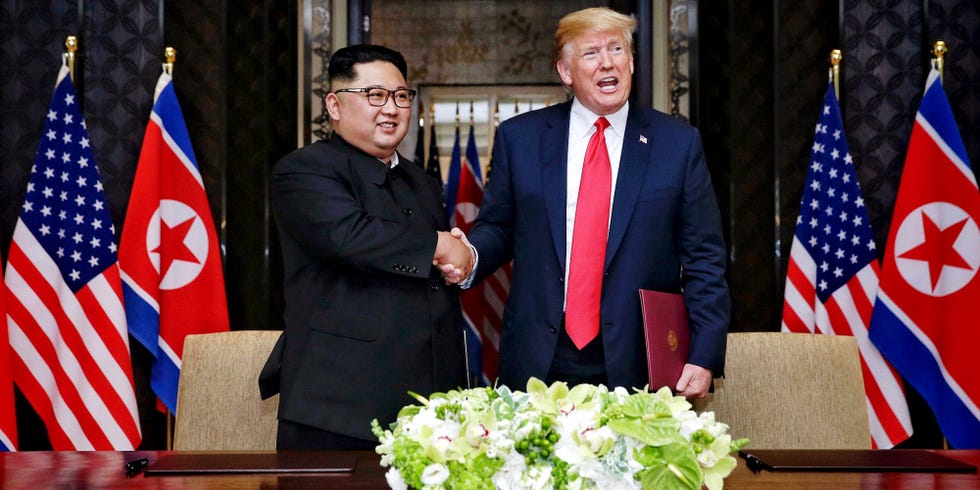
By Charles P. Pierce     June 12, 2018

Getty Images

Every foot is the wrong foot.

Yes, it is better to talk than to rattle plutonium at each other. Yes, given the history of United States foreign policy going back at least to the 1890s, it is absurd to get hysterical about an American president meeting with bloodthirsty foreign leaders. Yes, to those of us who are old enough to remember the conservative howling when Jimmy Carter tried to make human rights central to American foreign policy, it is hilarious to hear conservatives waxing wroth about the subject now. Yes, yes, yes.

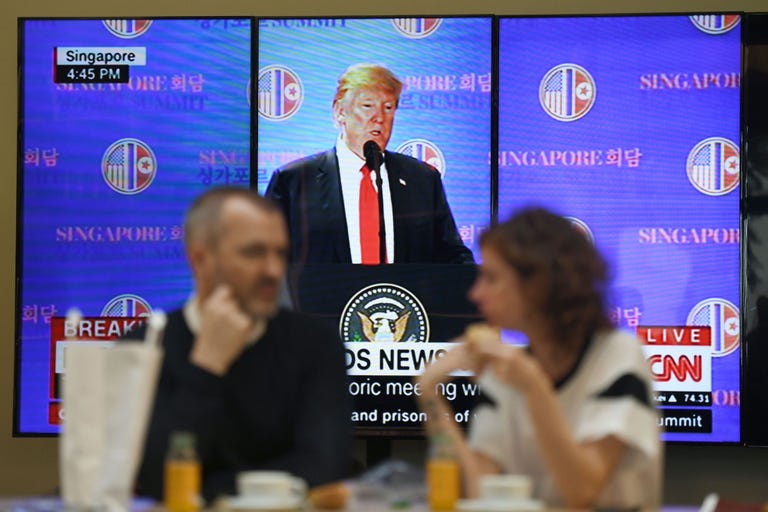
At the same time, this was a singularly absurd spectacle, as well as one of the strangest episodes in the history of cable news, a real-life anime exercise to rival all those shots of an empty podium that so enthralled the nation during the 2016 presidential campaign. Endless shots of an empty road in Singapore, “live coverage” of a closed-door meeting, of which there is no official record, between two of the most notorious bad-faith artists ever to lead sovereign nations. Meanwhile, pundits in Washington, D.C., practiced their remote viewing skills on camera.

Getty / Images

Then, there was this press conference to remind us who we’re dealing with here as our president*. I slept through it, and I feel confident that I made the right choice. From The Washington Post‘s transcript:

“Well, [Kim] is very talented. Anybody that takes over a situation like he did at 26 years of age and is able to run it and run it tough, I don’t say it was nice or I don’t say anything about it, he ran it. Very few people at that age, you can take one out of 10,000 probably couldn’t do it.”

“Otto Warmbier is a very special person and he will be for a long time in my life. His parents are good friends of mine. I think without Otto, this would not have happened. Something happened from that day. It was a terrible thing. It was brutal. But a lot of people started to focus on what was going on, including North Korea. I really think that Otto is someone who did not die in vain. I told this to his parents. A special young man and I have to say, special parents, special people. Otto did not die in vain. He had a lot to do with us being here today.”

Wow.

Getty / Images

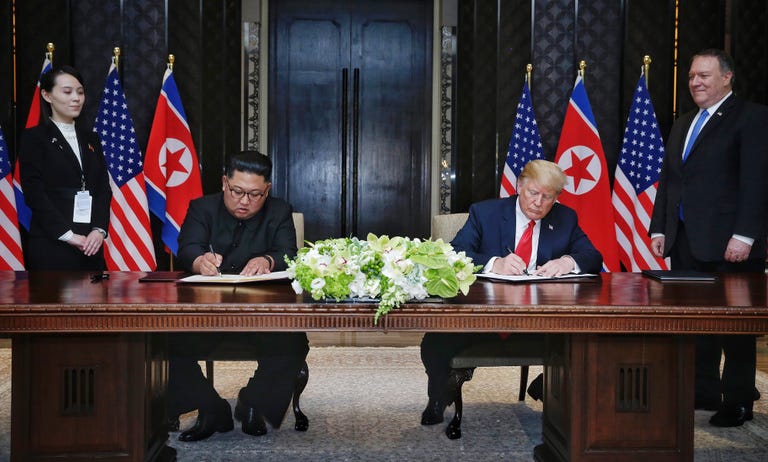
“No. Not at all because if you look at it, I mean it said we are going to — let’s see here. It will be gone — I don’t think it can be anymore plain than what we’re asking, issues related to the establishment of the new U.S.-DPRK relations, the building. We talk about the guarantees. And we talk about unwavering commitment to the complete denuclearization of the Korean Peninsula. This is the document that we just signed…Yes, we did. Yes, we did. And we’ll be verifying. Yes. We’ll be verifying. It will be verified.”

Oh, OK.

“He actually mentioned the fact that they proceeded down a path in the past and ultimately as you know nothing got done. In one case, they took billions of dollars during the Clinton regime. Took billions of dollars and nothing happened. That was a terrible thing. And he actually brought it up to me. And he said, we have never gone this far. I don’t think they’ve ever had the confidence, frankly, in a president that they have right now for getting things done and having the ability to get things done.”

Wait. Kim told him that North Korea had taken billions of dollars from the Clinton Administration and did nothing in return and now, what, Kim feels guilty about the whole thing? I find the credibility of this account…disturbing.

“Yes, we’ve done exercises for a long period of time working South Korea. And we call them war games, that I call them war games, and they’re tremendously expensive, the amount of money that we spend on that is incredible. And South Korea contributes but not a hundred percent, which is certainly a subject that we have to talk to them about also. And that has to do with the military expense and also the trade. So, we’re doing that, we actually have a new deal with South Korea in terms of the trade deal. But we have to talk them, and we have to talk to many countries about treating us fairly. But the war games are very expensive, we pay for a big majority of them, we fly in bombers from Guam, I said it when I first started, I said, where do the bombers come from? Guam, nearby, I said, “Oh, great. Nearby. Where is nearby? Six and a half hours. Six and a half hours? That’s a long time for these big massive planes to be flying to South Korea to practice and then drop bombs all over the place and then go back to Guam.”


Getty / Images

“I know a lot about airplanes, it’s very expensive…I think it’s very provocative, I have to tell you, Jennifer, it’s a very provocative situation. When I see that, and you have a country right next door, so under the circumstances that we are negotiating a very comprehensive, complete deal, I think it’s inappropriate to be having war games.”

As iodine shares skyrocket on the South Korean stock market.

“From the beginning, we got along. But there’s been a lot of ground work. This wasn’t like we went and we started talking about as you know, right? We didn’t just come in and start talking about these very complex subjects that have been going on for 70 years. We’ve been discussing this for months. And once the rhetoric stopped, once they did a great thing — North Korea did a great thing by going to the Olympics because the Olympics and President Moon will tell you this, the Olympics was not exactly doing great. People didn’t feel like being bombed out of the opening ceremonies. They weren’t exactly selling tickets. And as soon as the chairman, Chairman Kim, said “Let’s participate in the Olympics”, it sold like wildfire and was a great success as an Olympics. It was a great success. He did a great thing.”

Kim Jong-StubHub.

“I may be wrong, I mean I may stand before you in six months and say, ‘Hey I was wrong.’ I don’t know that I’ll ever admit that, but I’ll find some kind of an excuse.”

Most truthful thing he’s ever said. It’s the moment he became president*.

“As an example they’ve got great beaches… I explained, you could have the best hotels in the world right there. Think of it from a real estate perspective.”

Yeah, me too:

Beyond all that, and the equally strange interview with ABC’s George Stephanopolous, this was an anomalous exercise between two anomalous creatures of history. The two anomalous creatures signed an anomalous document that really doesn’t commit anyone to anything. There is really nothing to comment upon, except for the fact that an American president* met a leader of North Korea for the first time. There’s no reason for them to trust each other, and no reason for the rest of us to trust either of them.

And, besides, no country in the history of the world willingly has given up all its nuclear weapons once it had them. I am skeptical that North Korea under its present leadership is going to be the first one to do so. But, hey, maybe they really want a yacht club and a couple of casinos.

RELATED STORIES

Trump Said Something Honest About North Korea

These Photos of Trump and Kim Jong Un Are Weird

Dennis Rodman Interview Was One for Our Times

Respond to this post on the Esquire Politics Facebook page here.

Did anyone notice how much Trump name-dropped Russia at the G7 summit?

The Daily Show

June 11, 2018

Tonight at 11/10c, did anyone notice how much Trump name-dropped Russia at the G7 summit?

Tonight at 11/10c, did anyone notice how much Trump name-dropped Russia at the G7 summit?

Posted by The Daily Show on Monday, June 11, 2018

Canada responds to post G7 comments by the US

Brittlestar

June 11, 2018. Canada responds to post G7 comments by the US

Canada responds to post G7 comments by the US

Canada responds to post G7 comments by the US🇨🇦🍻🇺🇸

Posted by Brittlestar on Sunday, June 10, 2018

Everything wrong with Fox News in one video.

NowThis Politics

March 15, 2018

Everything wrong with Fox News in one video.

Fox News Had a Different Reaction When Obama Wanted to Negotiate with North Korea

Fox News Had a Different Reaction When Obama Wanted to Negotiate with North Korea

Everything wrong with Fox News in one video

Posted by NowThis Politics on Thursday, March 15, 2018

Bill Maher Scolds Libs: Forget The Culture, Grab The Government

HuffPost

Bill Maher Scolds Libs: Forget The Culture, Grab The Government

 Mary Papenfuss, HuffPost        June 9, 2018  

Taxpayers Still Shelling Out Billions Annually in Fossil Fuel Subsidies

EcoWatch

Taxpayers Still Shelling Out Billions Annually in Fossil Fuel Subsidies

Lorraine Chow     June 4, 2018

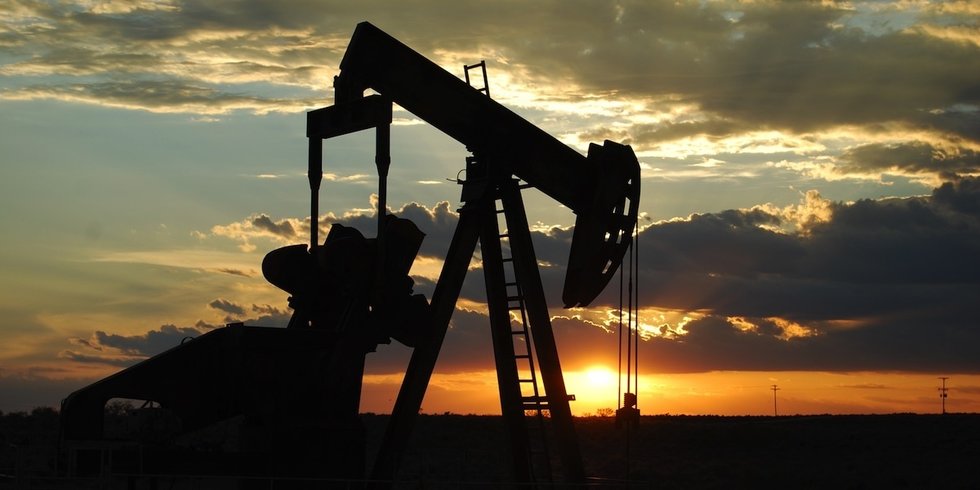
Paul Lowry/Flickr/CC by 2.0

The world’s richest countries continue to subsidize at least $100 billion a year in subsidies for the production and use of coaloil and gas, despite repeated pledges to phase out fossil fuels by 2025.

The Group of Seven, or G7, consists of Canada, France, Germany, Italy, Japan, the UK and the U.S. The group, as well as the larger G20, agreed as early as 2009 to phase out fossil fuels in order to combat climate change.

But a new report from Britain’s Overseas Development Institute (ODI) reveals that on average per year in 2015 and 2016, the G7 governments supplied at least $81 billion in fiscal support and $20 billion in public finance, for both production and consumption of oil, gas and coal at home and overseas.

“With less than seven years to meet their 2025 phase-out deadline, G7 governments continue to provide substantial support the production and use of oil, gas and coal,” the authors stated.

The study, co-authored by Oil Change International, the International Institute for Sustainable Development and the Natural Resources Defense Council, was issued Monday ahead of the G7 summit in Canada.

“Governments often say they have no public resources to support the clean energy transition,” the study’s lead author Shelagh Whitley told the Thomson Reuters Foundation. “What we’re trying to do is highlight that those resources are there (but) it is being used inefficiently.”

For the study, each G7 member was rated on the following measures: transparency; pledges and commitments; ending support for fossil fuel exploration; ending support for coal mining; ending support for oil and gas production; ending support for fossil fuel-based power; and ending support for fossil fuel use.

France ranked the highest overall, with 63 out of 100 points. While the country is lagging behind in its support for fossil fuel use, France earned the top spot for making early progress in ending fossil fuel exploration and production and ending coal mining, the researchers determined. Germany (62 points) and Canada (54 points) rounded out the top three in the dubious list.

Unsurprisingly—due to President Donald Trump’s intention to pull the U.S. out of the Paris agreement and his administration’s unrelenting push of fossil fuels—the U.S. was ranked lowest on the list, scoring only 42 out of 100 points.

The report showed that the U.S. spent $26 billion a year supporting fossil fuels and scored the worst in ending support for coal mining, a pet project of President Trump.

“Despite their numerous commitments, not only have G7 governments taken limited action to address fossil fuel subsidies but they have also failed to put in place any mechanisms to define and document the full extent of their support to oil, gas and coal, or to hold themselves accountable for achieving these pledges,” the authors said.

The researchers urged the governments to establish concrete plans to end fossil fuel subsidies by 2025 as promised, Reuters reported.

“What should be a low-hanging fruit in terms of moving public resources away from fossil fuels is not happening, or where it is happening, it’s not happening fast enough,” Whitley told the news service.

RELATED ARTICLES AROUND THE WEB

Trump Administration Plans Costly Taxpayer Bailout of Unprofitable

Pruitt and Aides Rack Up $90,000 in Taxpayer-Funded Travel in

OECD: Fossil fuel subsidies added up to at least $373bn in 2015

United States ‒ Progress Report on Fossil Fuel Subsidies Part 1

These tiny homes can be the difference between life and death.

HuffPost

June 7, 2018

“I thought I was going to die outside. This saved our lives.”

For homeless people in Eugene, Oregon, these tiny homes can be the difference between life and death. (via Listen to America)

Tiny Homes For A Growing Epidemic

"I thought I was going to die outside. This saved our lives."For homeless people in Eugene, Oregon, these tiny homes can be the difference between life and death. (via Listen to America)

Posted by HuffPost on Thursday, June 7, 2018