Trade war jeopardizes China’s huge investment in creation of new ‘cancer alley’ in Appalachia

ThinkProgress

Trade war jeopardizes China’s huge investment in creation of new ‘cancer alley’ in Appalachia

Industrial build-out in West Virginia would have massive environmental impacts.

Mark Hand      June 18, 2018

Environmental activists fear massive investments in petrochemical and energy facilities could turn part of Appalachia into a new “cancer alley” like the one in Louisiana along the Mississippi river. Credit: Julie Dermansky/Corbis via Getty Images

Doubts are growing about a Chinese company’s planned investment in a suite of natural gas-related projects in West Virginia due to the Trump administration’s intensification of a trade war between the United States and China.

From the day the agreement was announced last fall, skepticism has surrounded the issue of whether state-owned China Energy Investment Corp. would follow through on its planned $83 billion investment in energy infrastructure in West Virginia. The cost and scope of the project — known as the Appalachian Storage Hub — would be unprecedented.

The massive project would include natural gas liquids storage, a major intersection of pipelines, and a petrochemical refinery row. Environmental groups have expressed concern that the construction of natural gas liquids and petrochemical processing plants could contaminate air and water resources.

The escalating trade war between the United States and China is causing further uncertainty about the agreement. Global stock prices fell Monday as investors reacted to the decision last week by the United States to target an additional $50 billion in China-made goods for new tariffs.

Brian Anderson, director of the Energy Institute at West Virginia University, has previously touted the positive impact of the China Energy investment. Anderson said two months ago that the agreement with the Chinese company could be coming along at the perfect time. But on Monday, Anderson adjusted his expectations, telling an energy industry conference in Pittsburgh, Pennsylvania that the trade war “has put this project in jeopardy.”
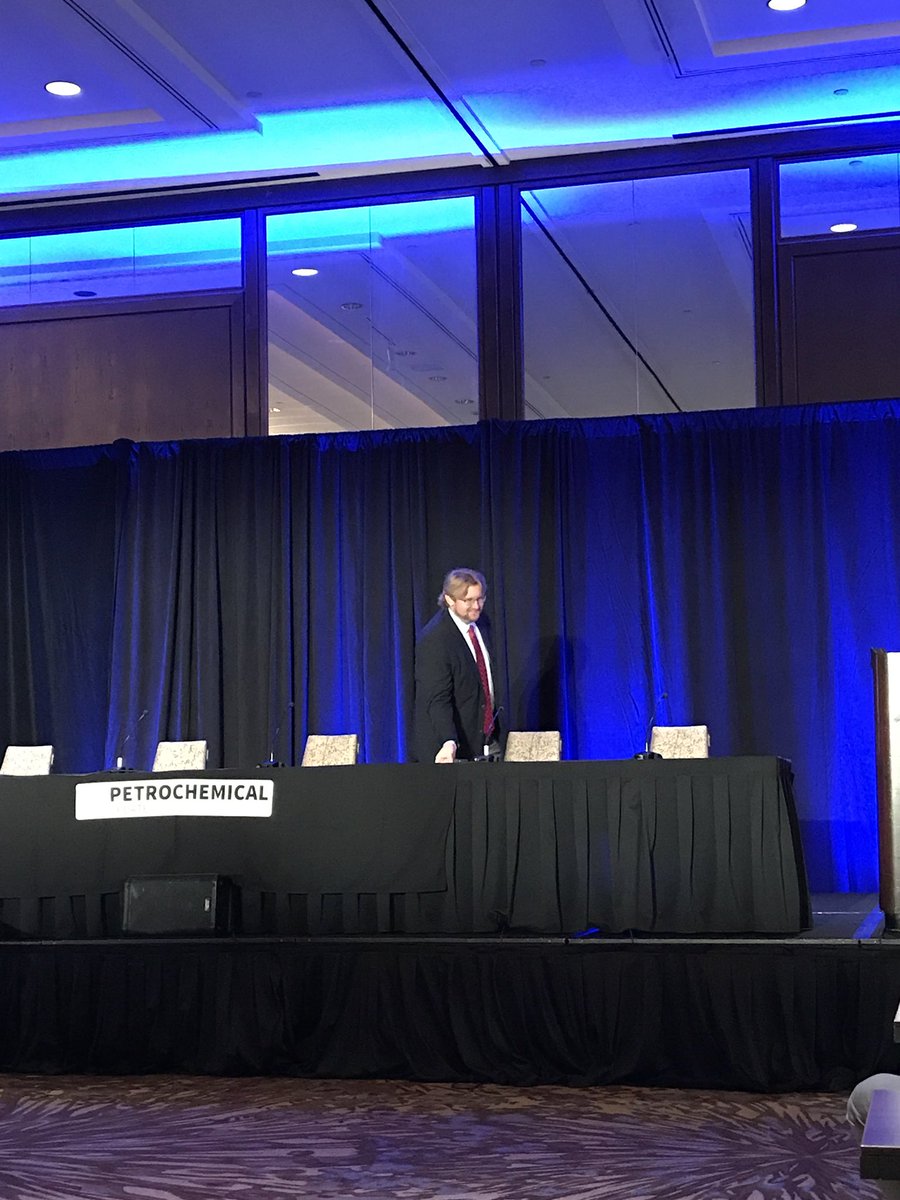
Another potentially ominous sign for the project is the decision by the chief executive of China Energy to cancel plans to speak at this week’s conference — the Northeast U.S. Petrochemical Construction Conference — as the war of words between the two countries on trade issues heated up. The CEO, who reports to the president of China, reportedly cited the trade war as the reason for canceling his trip to the conference.

If trade relations between the United States and China improve and China Energy ultimately carries out its end of the deal, environmental groups are concerned that the state of West Virginia will not be able to properly oversee the potential damage caused by the construction and operation of the energy and petrochemical facilities.

West Virginia has a long history of favoring coal industry profits over the environment and public health. The state is showing the same deference to the natural gas industry, which has grown into a powerful business force in the state over the past 10 years.

The scale of industrialization that would come from the $83 billion investment would be a “big burden” on the state Department of Environmental Protection that does not have adequate resources to enforce regulations on existing coal and natural gas industry operations, according to Angie Rosser, executive director of the West Virginia Rivers Coalition.

Natural gas investments are happening at such a rapid pace in the state that “mistakes are being made and damage is being done” by state environmental officials in a similar fashion to how they failed to adequately monitor the coal industry, Rosser told ThinkProgress.

Appalachia’s struggling coal communities find hope in transition to clean energy

The Appalachian Storage Hub took a major step forward last November as part of a U.S. trade mission to China attended by President Donald Trump and Chinese President Xi Jinping. During Trump’s visit to China, China Energy announced the signing of a memorandum of understanding to invest $83.7 billion in the planned storage hub over 20 years. For comparison, West Virginia’s gross domestic product in 2016 was $72.9 billion.

If it is developed, the hub would bring a massive buildup of the petrochemical industry along the Ohio River from southwestern Pennsylvania to Huntington, West Virginia. It would stretch into surrounding counties with a spur from down the Kanawha River from Point Pleasant, West Virginia, to Charleston, West Virginia.

Environmental groups fear the region could become another “cancer alley,” similar to the buildup of petrochemical facilities in Louisiana along the Mississippi River between Baton Rouge and New Orleans.

“Petrochemicals, pipelines, and plastics are not a plus for the Ohio Valley. We are threatening the future of generations to come if we buy into this promise of short-term economic gains instead of realizing the disastrous long-term effects that will occur,” the Ohio Valley Environmental Coalition, a nonprofit group based in Huntington, said in an alert issued last Thursday.

West Virginia is undergoing political upheaval that also could impact the agreement. Last week, West Virginia Gov. Jim Justice (R) forced Commerce Secretary Woody Thrasher to resign over his handling of a flood relief program. Thrasher was the top state official who traveled to China last November as part of the trade delegation.

A once thriving coal town has turned toxic, and citizens are desperate for help

Furthermore, a potential conflict of interest has emerged as part of the $83 billion investment. At least one member of West Virginia’s negotiating team was also negotiating on behalf of his private company when he traveled to China last fall to negotiate the deal, the Charleston Gazette-Mail reported last Friday. The corporate executive, Steven Hedrick, is CEO of Appalachia Development Group LLC and CEO of the Mid-Atlantic Technology, Research and Innovation Center.

Appalachia Development Group has been seeking a loan guarantee from the U.S. Department of Energy as part of the Appalachian Storage Hub project. The state Commerce Department paid for Hedrick’s travel for the China negotiations. The state found out that Hedrick asked China Energy officials to specifically target some of their investment in his company’s natural gas storage hub.

Rosser, head of the West Virginia Rivers Coalition, said she believes the state will have “big-time regrets” if it does not implement necessary safeguards that will protect the environment and public health from the massive industrial build-out.

‘America is better than this’: What a doctor saw in a Texas shelter for migrant children

The Independent

‘America is better than this’: What a doctor saw in a Texas shelter for migrant children

Kristine Phillips, The Independent     June 17, 2018

A prominent doctor has spoken out against the Trump administration‘s policy of separating migrant children from their parents at the US border. saying it could have a ‘devastating’ long-term effect on their emotional well-being.

Dr Colleen Kraft, president of the American Academy of Pediatrics, visited a shelter for children under the age of 12 that runs along the Texas border with Mexico.

The shelter in question held 60 beds and had a little playground for children. Rooms are equipped with toys, books and crayons.

To Dr Kraft, it looked like a friendly environment for children – a place where they could be happy.

But the child who caught the pediatrician’s attention during a recent visit was anything but happy. This little girl – no older than two – was screaming and pounding her fists on a mat. Yet staff members could not comfort the infant because of the rules prohibiting physical contact.

“The really devastating thing was that we all knew what was going on with this child. We all knew what the problem was,” Dr Kraft said. “She didn’t have her mother, and none of us can fix that.”

Nearly 2,000 immigrant children were separated from their parents during six weeks in April and May, according to the Department of Homeland Security.

The little girl is among the multitude of immigrant children who have been separated from their family as part of the Trump administration’s “zero-tolerance” policy, meaning any adult who crosses the border illegally will face criminal prosecution. That also means parents were taken to federal jails while their children were sent to shelters.

It is believed 11,432 migrant children are in the custody of the Department of Health and Human Services – an increase of nearly 3,000 from beginning of May. These numbers include children who arrived at the border without a relative and children separated from their parents.

The policy so far has pushed shelters to their capacity. Trump administration officials are making preparations to hold immigrant children on military bases. On Thursday, the Trump administration said it will house children in tents in the desert outside El Paso.

“The really basic, foundational needs of having trust in adults as a young child was not being met. That contradicts everything we know that the kids need to build their health,” said Dr Kraft after her visit to the Texas shelter.

 Such a situation could have long-term, devastating effects on young children, who are likely to develop what is called toxic stress in their brain once separated from caregivers or parents they trusted. It disrupts a child’s brain development and increases the levels of fight-or-flight hormones in their bodies, added Kraft. This kind of emotional trauma could eventually lead to health problems, such as heart disease and substance abuse disorders.

Kraft and her organization are not alone in this opinion.

Nearly 4,600 mental health professionals and 90 organizations have signed a petition urging Trump and attorney general Jeff Sessions to stop the policy of parental separation.

It says: “To pretend that separated children do not grow up with the shrapnel of this traumatic experience embedded in their minds is to disregard everything we know about child development, the brain, and trauma.”

“While not all of the children we are ripping from their parents will suffer the full consequences of toxic stress, many may,” said child psychologist Megan Gunnar of the University of Minnesota.

Although the policy is being implemented by his own administration, Mr Trump has avoided publicly owning it and. Instead, he blamed Democrats for “forcing the breakup of families at the border with their horrible and cruel legislative agenda.”

Health and Human Services blames Congress, saying its inability to pass legislation on border security “created perverse and dangerous incentives for illegal border crossings and child smuggling.”

For Dr Kraft, the partisan finger-pointing means politicians run the risk of obscuring the impact the parental separation policy will have on children.

“As partisan and as divisive as the whole topic of immigration is, we need to start with what’s right,” she said. “Can we start with just keeping parents and children together while we figure out some of the other details?”

“The kids need to come first,” she added. “America is better than this.”

Washington Post News Service

Raising wages [doesn’t] kill jobs.

Unfiltered: ‘‘Raising wages [doesn’t] kill jobs. It’s just a thing rich people say to poor people.’

June 7, 2018

“There is no excuse for any company in America to pay their workers so little that they need food stamps, and Medicaid and rent assistance … This is bulls**t.” https://yhoo.it/2Ma9V3s

Unfiltered: ‘‘Raising wages [doesn’t] kill jobs. It's just a thing rich people say to poor people.’

“There is no excuse for any company in America to pay their workers so little that they need food stamps, and Medicaid and rent assistance … This is bulls**t.” https://yhoo.it/2Ma9V3s

Posted by Unfiltered Yahoo News on Thursday, June 7, 2018

For the biggest group of American workers, wages aren’t flat. They’re falling.

Chicago Tribune

For the biggest group of American workers, wages aren’t flat. They’re falling.

By Jeff Stein and Andrew Van Dam, The Washington Post     June 16, 2018

A crowd of more than 2,000 march in downtown Chicago to protest low wages on Labor Day on Sept. 4, 2017. (Nancy Stone / Chicago Tribune)

The average hourly wage paid to a key group of American workers has fallen from last year when accounting for inflation, as an economy that appears strong by several measures continues to fail to create bigger paychecks, the federal government said Tuesday.

For workers in “production and nonsupervisory” positions, the value of the average paycheck has actually declined in the past year. For those workers, average “real wages” – a measure of pay that takes inflation into account – fell from $22.62 in May 2017 to $22.59 in May 2018, the Bureau of Labor Statistics said.

This pool of workers includes those in manufacturing and construction jobs, as well as all “nonsupervisory” workers in service industries such health care or fast food. The group accounts for about four-fifths of the privately employed workers in America, according to BLS.

Without adjusting for inflation, these “nonsupervisory” workers saw their average hourly earnings jump 2.8 percent from last year. But that was not enough to keep pace with the 2.9 percent increase in inflation, which economists attributed to rising gas prices.

“This is very likely because of the spike in oil prices eating into inflation-adjusted earnings,” said Allen Sinai, chief global economist and strategist at Decision Economics. “We pay for energy-related costs out of our wages, out of our compensation. And it’s making a real impact.”

The fall in those wages has alarmed some economists, who say paychecks should be getting fatter at a time when unemployment is low and businesses are hiring.

“This is odd and remarkable,” said Steve Cornell Kyle, an economist at Cornell University. “You would not normally see this kind of thing unless there were some kind of external shock, like a bad hurricane season, but we haven’t had that.”

The falling wages promise to exacerbate historic levels of U.S. inequality. Within the labor force, it means workers who were already making less are falling further behind. And if private laborers as a whole are seeing their earnings flatten while the economy as a whole grows at an annual rate of more than 2 percent, that means the gains are going almost exclusively to people already at the top of the economic ladder, economists say.

“The extra growth we are seeing in the economy is going somewhere: to capital owners and people at the top of the income distribution,” said Heidi Shierholz, director of policy at the Economic Policy Institute and a former chief economist at the Labor Department, noting workers’ share of corporate income remained relatively low as of January. “And what we’ve seen is in recent period a much higher share of total income earned going to owners of capital.”

Stephen Moore, a conservative economist at the Heritage Foundation and campaign adviser to President Trump , said the figures were troubling. But he added that the drop in real wages could be a reflection of the economy adding low-end jobs, rather than declining values further up the chain. If so, he said, that would be a sign of economic vitality, as the economy pulled in unemployed workers.

But other experts doubted that argument. “For that to be true, you’d have to see that the jobs coming back are particularly low-wage jobs,” said Elise Gould, an economist at the Economic Policy Institute, a left-leaning think tank. “There was some evidence of that initially in the recovery, but I don’t think the evidence supports the idea.”

But why is wage growth so tepid?

This problem is not new: Slow wage growth bedeviled the Obama administration as well.

Economists broadly disagree about the cause of persistently weak wage growth, offering a variety of possible explanations.

Ernie Tedeschi, a former Treasury official under President Barack Obama, said the unemployment rate may create a misleadingly positive impression of the health of the jobs market, given how many Americans dropped out of the labor force during the Great Recession.

Weaker union rights for workers may also be cutting into their ability to force pay increases from their bosses, said Jared Bernstein, who served as an economic adviser to Vice President Joe Biden.

Trump officials pointed to what they called a strong growth in private business investment in the first quarter of 2018, after the tax law’s passage, and expressed optimism that the law would translate into higher wages for workers in the near future. They also dismissed the allegation that the data disproved their claim that the tax law would raise the average worker’s wage by $4,000.

“The law is just six months old,” said DJ Nordquist, chief of staff for Trump’s Council of Economic Advisers, in an email. “Our estimates [of the tax law’s benefits] were for ‘steady state’ – when the full effects of the law spread throughout the economy, which will take years, as we always said it would.”

But to Democrats, the tepid wage growth helps bolster their claim that the Republican tax law was overwhelmingly geared toward the wealthy and that a more direct role for the federal government is needed to help workers.

“Today, while the cost of health care, prescription drugs, gasoline and housing soar, the average worker, according to the Bureau of Labor Statistics, is now making slightly less than he or she made one year ago after adjusting for inflation,” Sen. Bernie Sanders (I-Vt.) said in an email to The Washington Post, arguing for a higher minimum wage and a single-payer health-care plan.

Related: Chicago Tribune

A minimum-wage worker can’t afford a 2-bedroom apartment anywhere in the U.S., report finds

By Tracy Jan, Washington Post    June 13, 2018

Apartment for rentIn this Nov. 10, 2015, file photo, apartments for rent are shown in Portland, Ore. A new report says for the lowest-paid workers, there is still nowhere in the country where someone working a full-time minimum-wage job could afford to rent a modest two-bedroom apartment. (Don Ryan / AP)

The economy’s booming. Some states have raised minimum wages. But even with recent wage growth for the lowest-paid workers, there is still nowhere in the country where someone working a full-time minimum-wage job could afford to rent a modest two-bedroom apartment, according to an annual report released Wednesday by the National Low Income Housing Coalition.

Not even in Arkansas, the state with the cheapest housing in the country. One would need to earn $13.84 an hour – about $29,000 a year – to afford a two-bedroom apartment there. The minimum wage in Arkansas is $8.50 an hour.

Even the $15 living wage championed by Democrats would not make a dent in the vast majority of states.

In Hawaii, the state with the most expensive housing, one would have to make $36.13 – about $75,000 a year – to afford a decent two-bedroom apartment. The minimum wage in Hawaii rose to $10.10 an hour this year.

It gets worse in many metropolitan areas. San Francisco, Marin and San Mateo counties top the list of most expensive jurisdictions, where one would need to make $60.02 an hour to afford a modest two-bedroom apartment.

“The housing crisis is growing, especially for the lowest-income workers,” said Diane Yentel, president of the National Low Income Housing Coalition. “The rents are far out of reach from what the average renter is earning.”

Downsizing to a one-bedroom apartment will only help so much.

According to the report, a one-bedroom is affordable for minimum-wage workers in only 22 counties in five states: Arizona, California, Colorado, Oregon and Washington. Those states all set their minimum wages higher than the federal minimum of $7.25.

Nationally, one would have to earn $17.90 an hour to afford a modest one-bedroom apartment or $22.10 an hour for a two-bedroom rental. That’s based on the common budgeting standard of spending a maximum of 30 percent of income on housing.

The report estimates that renters nationally make an average of $16.88 an hour. That means even those making above minimum wage struggle to afford rent.

Housing costs have continued to rise with growing demand for rental housing in the decade since the Great Recession. At the same time, new rental construction has tilted toward the luxury market because of increasingly high development costs, the report said. The number of homes renting for $2,000 or more per month nearly doubled between 2005 and 2015.

“While the housing market may have recovered for many, we are nonetheless experiencing an affordable housing crisis, especially for very low-income families,” Sen. Bernie Sanders, I-Vt., said in the report.

The low-wage workforce is projected to grow over the next decade, particularly in service-sector jobs such as personal-care aides and food-preparation workers.

Meanwhile, the Trump administration has tried cutting federal housing subsidies for the lowest-income Americans. As it stands, only 1 in 4 households eligible for federal rent assistance gets any help, the report said. Housing and Urban Development Secretary Ben Carson recently proposed tripling rent for the poorest households and making it easier for housing authorities to impose work requirements on those receiving rent subsidies.

This Nation Is Politically Deranged

Esquire

This Nation Is Politically Deranged

The Justice Department Inspector General’s report proves the nation became addicted to unreality.

By Charles P. Pierce      June 15, 2018

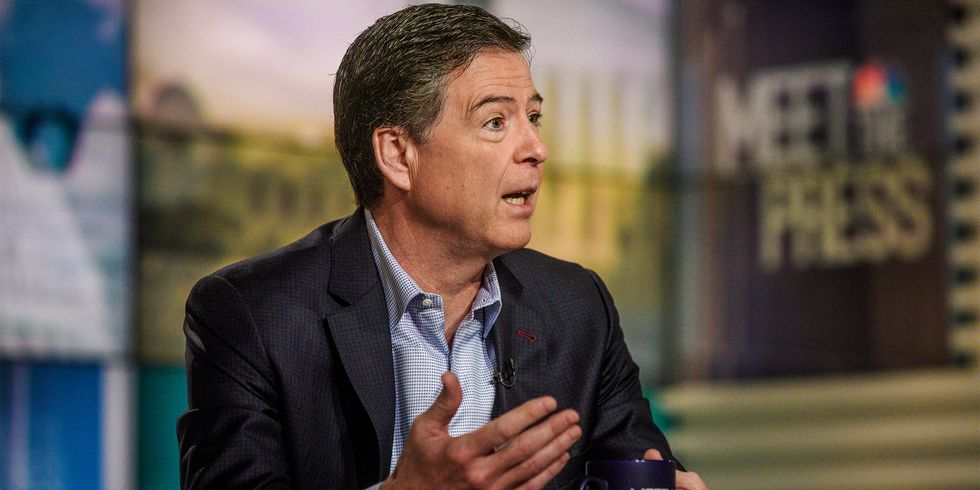
Getty Images

I feel very safe in saying that James Comey’s future paperback sales took a considerable nosedive on Thursday afternoon. The Department of Justice’s inspector general dropped The Last Honest Man from a very great height into a very deep well on Thursday.

The IG’s long-awaited report—which came on the same day that the Attorney General of New York filed suit against the Trump Foundation for breaking almost every charitable tax regulation and campaign finance law known to man or beast—excoriated Comey for what it called “insubordinate” and “extraordinary” bungling in his performance during the 2016 presidential election, citing what it called “ad hoc decision making based on his personal views even if it meant rejecting longstanding Department policy or practice.” The July press conference was a mistake. The October letter was a mistake. James Comey was the biggest mistake of all.

By all accounts—and I’ve only read a chunk of it at this point, plus the executive summary—IG Michael Horowitz is a straight-shooter who wrote an honest report. Which is undoubtedly why the executive branch is lying its ass off about the report, when it discusses it at all, after assuring the rubes that the report would undermine fatally every charge ever levied against El Caudillo del Mar-A-Lago and the alleged organized criminal conspiracy that was his entire public career, including his campaign and his entire presidency*. Oh, Rudy (A Noun, A Verb, and A Manic Episode) Giuliani is out there, behaving like the rodeo clown he has become. And the president* wandered out onto the White House lawn for some prevarication al fresco on Friday morning.

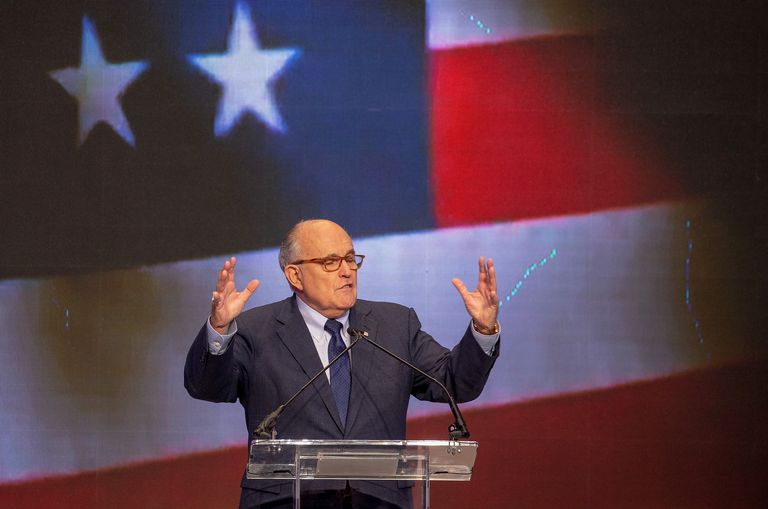
Getty Images

But, by and large, the report’s most basic implicit conclusion—that Comey’s blundering at least played a role in installing the current administration*—is so clear and irrefutable that it seems that the president*’s defenders are caught between giving the report a good leaving alone and clumsily attempting to use its findings to discredit Robert Mueller’s investigation, a lie so stupendous that the president* couldn’t wait to use it Friday morning. From CNN:

“I think that the report yesterday … totally exonerates me. There was no collusion, there was no obstruction.”

In the long run, however, I don’t think they’re going to be able to peddle the whole notion that this report has anything to do with Robert Mueller’s investigation to anyone except the most devoted rubes in the base. Which is cold comfort, I admit. In fact, the only true rube-bait in the entire report seems to be the uncomplimentary texts between the two canoodling FBI agents Peter Strzok and Lisa Page.

The report makes plain one other thing—that the first thing that corrupted the 2016 presidential election, the first thing that infused into it the dark sense of unreality that was its defining characteristic, was the absurd importance placed on the email protocols of Hillary Rodham Clinton. The pursuit of a scandal without a crime—by the Republican Congress, by federal law enforcement, and by the elite political media—was a continuation of the absurd charges involving the tragic events at the American consulate in Benghazi, and the absurd attempts to turn the Clinton Foundation into what we now know that the Trump Foundation actually was: an organized effort to skirt federal tax regulations and campaign finance laws.

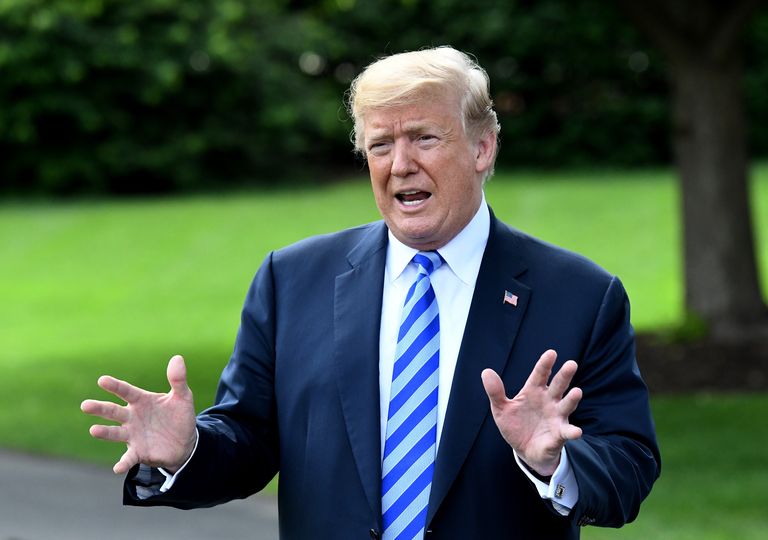
Getty Images

(Remember that both The New York Times and The Washington Post entered into business arrangements with Peter Schweitzer, the career conservative ratfcker, to publish the charges based on his spurious book, Clinton Cash, the place where the equally absurd Uranium One “scandal” was spawned. And this was two months before the president* had even launched his campaign.)

And all of this, it can be argued, was a continuation of the three-decade search for something, anything, to hang on the Clintons. Future historians are going to be gobsmacked when they study how a moderate-to-conservative Democratic president and his wife threw so much of official Washington into utter hysterics for three decades.

The 2016 campaign already was a surreal event before the president* descended into it on his gilded escalator. (It’s possible that, with his wolverine’s nose for profitable unreality, he sensed this instinctively, and that’s why he decided to get in on the action in the first place.) The whole year was full of events that didn’t make any sense at the time. For example, on January 28, 2016, shortly before the Iowa caucuses, the president* bailed on a Fox TV debate, announcing that he would, instead, hold a charity event “for our wonderful vets” across town.

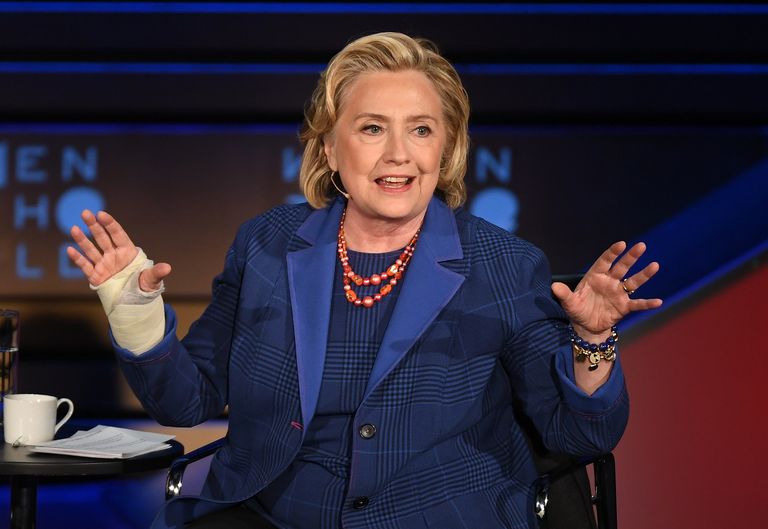
Getty Images

He brought a number of his aging plutocrat running buddies out to the event. Mike Huckabee and Rick Santorum showed up to be humiliated on stage. It was a campaign event badly disguised as a charitable fundraiser. Its whole affect was schizoid. And, on Thursday, as part of her lawsuit against the Trump Foundation, New York Attorney General Barbara Underwood pulled back the entire curtain:

“As our investigation reveals, the Trump Foundation was little more than a checkbook for payments from Mr. Trump or his businesses to nonprofits, regardless of their purpose or legality. This is not how private foundations should function and my office intends to hold the Foundation and its directors accountable for its misuse of charitable assets.”

And the Iowa event was a perfect example about how this three-card monte system worked. From The Des Moines Register:

“According to the petition, the event generated about $5.6 million in tax-free donations, and of that, $2.823 million was contributed to the Trump Foundation. The remainder was given directly by private donors to veterans’ charity groups and was not funneled through the foundation. The lawsuit says that after the fundraiser, the Trump Foundation “ceded control over the charitable funds it raised to senior Trump campaign staff, who dictated the manner in which the Foundation would disburse those proceeds, directing the timing, amounts and recipients of the grants.” In the days after the Des Moines fundraiser, Trump toured the state for a series of campaign rallies at which he handed out oversized $100,000 checks to various charity organizations.”

“Doing so “provided Mr. Trump and the campaign a means to take credit at campaign rallies, press briefings, and on the Internet, for gifts to veterans charities. The foundation’s grants made Mr. Trump and the campaign look charitable and increased the candidate’s profile to Republican primary voters and among important constituent groups,” the lawsuit says. All of that amounts to an improper in-kind contribution worth $2.823 million from the foundation to the campaign, according to the lawsuit. “In addition, at Mr. Trump’s behest, the Trump Foundation illegally provided extensive support to his 2016 presidential campaign by using the Trump Foundation’s name and funds it raised from the public to promote his campaign for presidency, including in the days before the Iowa nominating caucuses,” a release from the New York Attorney General’s office says.”

All of this was reported at the time by David Fahrenthold of The Washington Post, who eventually won a Pulitzer Prize for his work. Yet, in the campaign coverage, the sense of unreality was virtually unshakable. A political campaign, functioning as an allegedly genuinely corrupt criminal enterprise, and aided and abetted by a seedy network of ratfckers and bagmen from across the pond, was forcing the American political establishment, and especially its elite political press, to cover it according to the rules that the criminal enterprise established for itself.

Getty Images

At the same time, on the other side of the race, the candidate was plagued by crises and “scandals” that proved time and again to be phantoms, and yet those phantoms were energized, time and again, from the very top of federal law enforcement. The whole campaign was conducted on a plane of malignant make-believe, and that came at an unsupportable cost.

Matthew Miller, whom we often see on the electric TV machine, flagged an important passage from the report that beautifully sums up how we elected a president in 2016. And this is what, finally, brings us back to saintly Jim Comey one more time. It is an e-mail from October 5, 2016 sent by Comey to James Clapper and John Brennan, the other two intelligence satraps who already were onto the evidence that Russian ratfckers and the Volga Bagmen were helping the Republican candidate. Apparently, there was some discussion of whether or not the country needed to know about this. (Spoiler: It did.) This is what Comey wrote:

“I think the window has closed on the opportunity for an official statement, with 4 weeks until a presidential election. I could be wrong (and frequently am) but Americans already ‘know’ the Russians are monkeying around on behalf of one candidate. Our ‘confirming’ it (1) adds little to the public mix, (2) begs difficult questions about both how we know that and what we are going to do about it, and (3) exposes us to serious accusations of launching our own ‘October surprise.'”

Not an entirely unwarranted concern, until you remember that, 23 days later, Comey wrote the letter to Congress, re-opening the email investigation because of the material found on Anthony Weiner’s laptop. This was the single most crucial moment in the campaign, and the IG report makes clear that Comey wrote the letter because he was afraid that the renegade agents in the New York FBI field office would leak the material anyway. (This is an aspect of the affair that the IG report hints at, but does not explore in any great depth.) In other words, Comey blew the investigation a second time over his fears of something that had not happened yet.

I don’t believe there’s ever been an American election in which so many people operated as though reality was too awful to contemplate and chose, instead, to chase ghosts and goblins of their own imagination. The 2016 presidential campaign was an extended dive into deep political madness. Nothing that’s happened since ever should have been a surprise.

Fox News Shep Smith on Trump’s North Korea Scam

act.tv

June 13, 2018

Shep Smith breaks down the useless North Korea deal.

Shep Smith on Trump's North Korea scam

Shep Smith breaks down the useless North Korea deal.

Posted by act.tv on Wednesday, June 13, 2018

Republican party is now the Trump party? “RIP GOP,

From Veterans Against the GOP.    June 14, 2018

HLN

Is the Republican party now the Trump party? “RIP GOP,” S.E. Cupp mourns. “We used to stand for something. Now, just one thing.”

Is the Republican party now the Trump party? "RIP GOP," S.E. Cupp mourns. "We used to stand for something. Now, just one thing."

Posted by HLN on Thursday, June 14, 2018

The United States already spends more on the military than the next 10 countries combined.

Robert Reich

June 14, 2018

The United States already spends more on the military than the next 10 countries combined. Our latest video explains why it’s time to rein in Pentagon spending and the endless war machine, and demand investment in America. Please watch and help spread the word.

The Military-Industrial Drain

The United States already spends more on the military than the next 10 countries combined. Our latest video explains why it's time to rein in Pentagon spending and the endless war machine, and demand investment in America. Please watch and help spread the word.

Posted by Robert Reich on Thursday, June 14, 2018

Two people who lie about everything signed a deal that’s specific about nothing.

Bill Maher on trump and kim jong un

June 15, 2018

Two people who lie about everything signed a deal that’s specific about nothing. I would say it was a feckless stunt.

A Feckless Stunt

Two people who lie about everything signed a deal that’s specific about nothing. I would say it was a feckless stunt.

Posted by Bill Maher on Friday, June 15, 2018