Victory for Clean Water

Victory for Clean Water: Court Reinstates Obama WOTUS Rule for 26 States

By Lorraine Chow          August 17, 2018

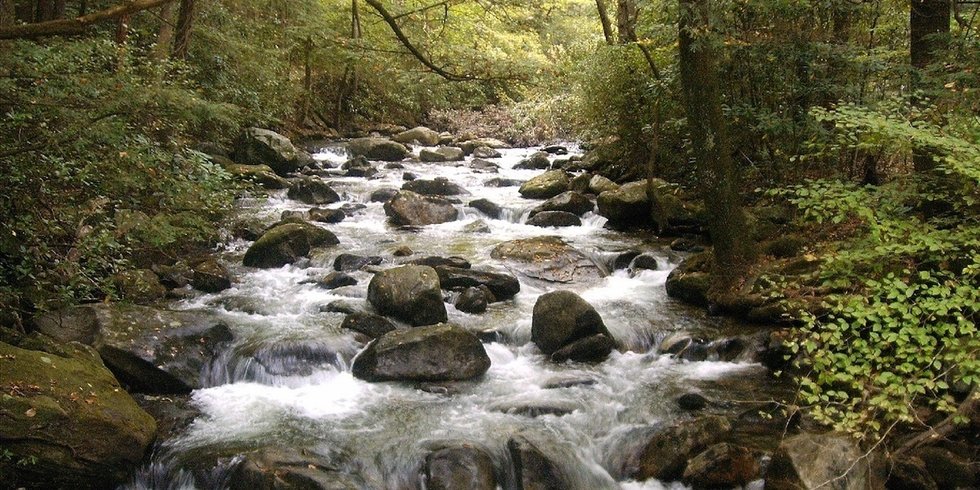
Jones Gap State Park in Greenville County, South Carolina. Jason A G / Flickr / CC BY-ND 2.0

A federal judge invalidated the Trump administration’s suspension of the Clean Water Rule, effectively reinstating the Obama-era regulation in 26 states.

The 2015 rule, also known as Waters of the United States (WOTUS) defines which waters can be protected from pollution and destruction under the Clean Water Act. It protects large water bodies such as lakes and rivers, as well as small streams and wetlands.

But last year, President Trump declared WOTUS “a horrible, horrible rule” and tasked then-U.S. Environmental Protection Agency (EPA) head Scott Pruitt to replace it. In February, Pruitt issued a “Suspension Rule” that delayed WOTUS until 2020 in order to craft a looser and more industry-friendly rule.

On Thursday, South Carolina District Judge David Norton sided with a coalition of conservation groups that challenged the delay, and placed a nationwide injunction on Pruitt’s suspension rule. The decision does not apply to 24 other states where legal challenges are pending.

Norton said that the EPA violated rule-making procedures, specifically by failing to provide an adequate public notice and comment period required by the Administrative Procedure Act (APA).

“As administrations change, so do regulatory priorities. But the requirements of the APA remain the same. The court finds that the government failed to comply with these requirements in implementing the Suspension Rule,” Norton wrote.

The court also cited the affidavit of Bob Irvin, president and CEO of American Rivers, which described the many different states where he has fished that would be affected by the suspension of the Clean Water Rule.

Irvin hailed the judgement as a “tremendous win.”

“The court made clear that the Trump administration cannot ignore the law, science, or the views of the American people in its rush to undermine protection of rivers and clean water,” Irvin said in a statement.

The Southern Environmental Law Center (SELC), which represented the conservation groups, celebrated the decision.

“This is a victory for families and communities across America who depend on clean water, and a rebuke to the polluting industries trying to gut this nation’s bedrock health and environmental safeguards,” said Geoff Gisler, senior attorney at SELC, in a statement. “Water is a way of life in the South, where clean water is the lifeblood of our economy. We are thrilled the court rejected this administration’s blatant attempts to undermine safeguards that are critical to our nation’s welfare without being accountable to the American people.”

The Water Crises Aren’t Coming—They’re Here

Esquire

The Water Crises Aren’t Coming—They’re Here

For eons, the earth has had the same amount of water—no more, no less. What the ancient Romans used for crops and Nefertiti drank? It’s the same stuff we bathe with. Yet with more than seven billion people on the planet, experts now worry we’re running out of usable water. The symptoms are here: multiyear droughts, large-scale crop failures, a major city—Cape Town—on the verge of going dry, increasing outbreaks of violence, fears of full-scale water wars. The big question: How do we keep the H20 flowing?

imageSean Freeman

I. All the Water There Is

Here’s a concept: paper water. Paper water is water the government grants certain farmers who are drawing water from a river or a watershed in, say, California. The phrase describes the water the farmer, under premium conditions, is entitled to. Practically, however, paper water is mostly notional water, conceptual water, wish water, since over the years California has awarded many times as much paper water as there is actual water—which, to distinguish it, is quasi-legally called wet water. Some paper water might be made real during years of exceptional abundance, but most of it will forever be speculative and essentially useless, since it can’t realistically be traded, having no value. Paper water thus amounts to a type of hypothetical currency, backed by the Bank of Nowhere, Representing Nothing since 1960 (or thereabouts), when modern water troubles arrived in America and especially in California, where the wildly expanding citizenry required new state and federally managed water systems run by Watercrats.

Paper water is also a signifier of a domestic and global concern called peak water, a term proposed in 2010 by the hydrologist Peter Gleick in a paper he wrote with Meena Palaniappan that was published in Proceedings of the National Academy of Sciences.Gleick meant the phrase to be applied to worldwide circumstances, such as those that currently prevail in Cape Town, South Africa, where, as a result of a ferocious three-year drought, the taps might before long run dry, possibly in 2019—Day Zero, it’s been called.

ESQ090118_134

The Colorado Rover Delta, in Northern Mexico, photographed in 2018. Most years, nearly all the river’s water is diverted long before it reaches the delta. Ronald de Hommel

The U. S. is also afflicted. In fact, Gleick regards California, with its relentless, outsized, and wildly conflicting demands on water, as a “laboratory for all of peak water’s concerns.” Peak water derives conceptually from peak oil, a phrase first used by a geophysicist named M. King Hubbert in 1956. Peak oil means that the planet has only so much oil, and that eventually it will grow sufficiently scarce that what remains will be too expensive to collect. Hubbert predicted that U. S. oil production would reach maximum output between 1965 and 1975, and in 1970 it did, but it has risen lately because of new means of recovering oil, such as fracking. Some people still believe in peak oil, and others think there will always be plenty of oil, because there is more we haven’t found yet.

That water was in a position similar to oil occurred to Gleick when people would ask if he thought that the world, with its population growing alarmingly and climate change causing certain places to become disastrously water-soaked (South Asia, Texas) while others (Cape Town, California) are water-starved, would ever use up its water. “My first reaction was ‘We never run out of water,’ ” Gleick says. “But there’s groundwater in China and India and the Middle East and in America in the Midwest and California that we really are using up just like oil.”

HAVING EVAPORATED FROM LAKES AND RIVERS AND OCEANS AND RETURNED AS SNOW AND RAIN, THE WATER WE CONSUME HAS BEEN THROUGH INNUMERABLE USES. DINOSAURS DRANK IT. THE CAESERS DID, TOO.

Water cannot be created or destroyed; it can only be damaged. When Gleick says we’ll never run out, he means that at some point, millions of years ago, there was all the water there is, a result of the law of the conservation of matter. Having evaporated from lakes and rivers and oceans and returned as snow and rain, the water we consume has been through innumerable uses. Dinosaurs drank it. The Caesars did, too. It’s been places, and consorted with things, that you might not care to think about. In theory, there’s enough freshwater in the world for everyone, but like oil or diamonds or any other valuable resource, it is not dispersed democratically. Brazil, Canada, Colombia, Peru, Indonesia, and Russia have an abundance—about 40 percent of all there is. America has a decent amount. India and China, meanwhile, have a third of the world’s people and less than a tenth of its freshwater. It is predicted that in twelve years the demand for water in India will be twice the amount on hand. Beijing draws water from an aquifer beneath the city. From being used faster than rain can replenish it, the aquifer has dropped several hundreds of feet in the last forty years, and in places the city is sinking four inches every year.

As for the world’s stock, however, nearly all of the water on earth is salty; less than 3 percent is fresh. Some of that is in rivers, lakes, aquifers, and reservoirs—the Great Lakes contain one fifth of the freshwater on the earth’s surface—and we have stored so much water behind dams that we have subtly affected the earth’s rotation; but two thirds of all the freshwater we have is frozen in the earth’s cold places as ice or permafrost, leaving less than 1 percent of the world’s total water for all living things. Much of that gets a rough ride. American ponds and streams and lakes and rivers contain fungicides, defoliants, solvents, insecticides, herbicides, preservatives, biological toxins, manufacturing compounds, blood thinners, heart medications, perfumes, skin lotions, antidepressants, antipsychotics, antibiotics, beta blockers, anticonvulsants, germs, oils, viruses, hormones, and several heavy metals. Not all of these are cleansed from water before we drink it.

There are two kinds of numbers, I believe, big ones and little ones, but here are some big ones by way of context: According to the World Health Organization, among the two billion people who have no drinking water provided to them, 844 million travel more than thirty minutes to a river or a tap, where they sometimes receive water contaminated by human excrement. Such water has the risk of diarrhea, cholera, dysentery, typhoid, and polio. Nearly 850,000 people die each year from diarrhea, a cruel circumstance in areas short on clean water, since diarrhea works its effects by means of dehydration. Bangladesh, India, Rwanda, and Ghana have some of the most tainted water.

Ghana - Guinea Worm - Water Collectors with Filtered Water
Water collectors push their cart of water filled drums laboriously homewards in Ghana. Getty Images/Louise Gubb.
The simplest hardships to invoke are hunger and thirst. Only a few hours of deprivation will acquaint a person with both. Half a gallon of drinking water a day is what each of us needs to drink to stay alive. (An American uses roughly eighty to a hundred gallons a day, including toilets, baths and showers, dishwashers, washing machines, and so on.) In the dry parts of the world, or the semidry parts where there are too many people and no water-delivery system, the search for that daily half gallon can be dire, and sometimes past dire. A survey in 2015 of members of the World Economic Forum in Davos listed “water crises” for the first time as the world’s leading threat, ahead of “spread of infectious diseases” and “weapons of mass destruction.” Each year Gleick’s organization, the Pacific Institute, updates its Water Conflict Chronology, a compilation of disturbances around the world involving water. In 2017, there were more than seventy incidents, dozens of them deadly, mainly in the Middle East and Africa. In 1997, there were only three.

Stationarity, a term from statistics, applies to contexts in which the past predicts the future. When water experts say that we are “outside stationarity,” they mean that the slaphappy way that the world uses water has brought about so many unexampled circumstances, so many overburdened systems and areas of deprivation and depletion, that we cannot know how matters will unfold. Sometimes water specialists say that the earth is experiencing water stress. The Nile, the Rio Grande, the Yellow River in China, the Indus in Asia, and the Colorado (which sustains the American Southwest from Phoenix to Las Vegas to San Diego) are tapped out. The Ganges flows, but it’s unspeakably filthy.

With water, there are “distinct classes of water haves and have-nots,” according to Jay Famiglietti, who is the senior water scientist at the NASA Jet Propulsion Laboratory at the California Institute of Technology. (Earth science is part of NASA’s charter.) “The wet areas of the world are the high latitudes and the tropics, and the areas in between are getting drier,” he says. The supercharged hurricanes and typhoons that have resulted from global warming move water around within the regions that already have water but do nothing for the parched places. America has hot spots, too. California had its own Zero Day not long ago when, in Tulare County in the Central Valley, an area of corporate farms, something like a thousand wells went dry in towns such as East Porterville, meaning that more than seven thousand people found themselves occupying houses where you would turn on a tap and nothing came out. The water table has been diverted by means of deep wells and irrigation systems serving the sprawling farms. The county began delivering bottled drinking water, and there were free public showers. Water to flush toilets and do laundry came from tanks parked at the fire station. People filled barrels and hauled them home.

Drought Stricken Town Of East Porterville Deals With Severe Water Shortage

Neighbors distribute drinking water, talk about water issues as water wells supplying hundreds of residents remained dry in the fourth year of worsening drought on February 11, 2015 in East Porterville, California. Getty Images/David McNew.

A quarter of all the food grown in America comes from the Central Valley—oranges and grapes are raised in Tulare, along with dairy cows and cattle—so having it go even partially dry is not a small concern. “No one really knows what happens, if this were to get worse,” Famiglietti says. “Our water security, and therefore our food security, is at far greater risk than people realize. Aside from the crisis of humans not having water, we’re also going to be losing these major food-producing regions like the Central Valley. Agriculture will migrate to where the water is, maybe the southern parts of South Dakota and southern Idaho. There is already some agricultural migration to those regions.”

That may sound simple, relatively, a cultural shift, like the past migration of workers and jobs from the Rust Belt to the Sun Belt. However, climate change, with its disruption of the rain cycle, making severe storms even more severe and diminishing the snow pack in seasons of drought, makes it impossible to know which areas will remain stably wet. Cape Town is suffering now because “a once-in-a-millennium event,” as it has been described, has been occurring since 2015—scant rain in the region for three years.

In California, rain became scarce in 2011 and stayed scarce for five years. Sufficient rain fell during the winter of 2016 that the drought appeared to have ended, since people could see rivers running and reservoirs filled that had seemed nearly empty before. Water experts view the matter differently. They make a distinction between surface drought and groundwater drought. Five years of overdrafting in the Central Valley left a groundwater deficit that the rains didn’t replenish.

AQUIFERS THAT LIE BENEATH ROCK DEPOSITS OR IN GAPS BETWEEN THEM, AND ESPECIALLY ONES IN PLACES WHERE RAIN IS SPARSE, MIGHT NOT RECOVER IN A TIME FRAME THAT MEANS ANYTHING AGAINST THE MEASURE OF A HUMAN LIFE SPAN.

Aquifers commonly contain water that went underground thousands or millions of years ago and hasn’t come out since—it’s called fossil water. Groundwater, however, is as vulnerable to contamination as surface water. An overdrafted aquifer near a coast can have seawater seep into it and ruin it. Arsenic occurs naturally in rocks and can find its way into the water table, also ruining it. An aquifer near an industrial dump might be polluted by man-made chemicals. In the Central Valley, some wells are contaminated by nitrates, which come from fertilizer, leaky septic tanks, and big cattle-feeding operations; drinking nitrate-polluted water can bring about conditions such as blue- baby syndrome, in which the fingertips of babies turn blue from insufficient oxygen.

Finally, an overdrafted aquifer can be depleted. Whether it returns is a matter of how it was filled in the first place. Porous aquifers, ones beneath sand and gravel, as in the Central Valley, can recover with rain. Aquifers that lie beneath rock deposits or in gaps between them, and especially ones in places where rain is sparse, might not recover in a time frame that means anything against the measure of a human life span. In India, so many farmers have killed themselves from despair over disappeared groundwater, and the poverty it enforces, that there is a category called suicide farmers. In 2016, more than 11,300 farmers took their own lives.

III. See You in Six Thousand Years

Besides California, the other American place in water jeopardy is the High Plains, which sits on top of an aquifer called the Ogallala. The Ogallala is sometimes described as an ocean of groundwater. One of the largest known aquifers in the world, it runs from South Dakota to Texas, more or less in the shape of a monkey wrench. Near the top, in places, it is a thousand feet deep, and at the lower end, in places, there are areas where it is as shallow as only a few feet. The Dust Bowl, which played out above the Ogallala, was, in a way, a period phenomenon. All the water necessary to sustain the crops that now cover the plains was always there, but a few feet deeper than Depression-era farmers could reach with windmill pumps. Electric pumps, which only became widespread by the end of the thirties, made it accessible.

For decades farmers thought the Ogallala was inexhaustible. According to Scientific American, drawing on government studies, by 1975 the amount of water taken each year from the aquifer equaled the flow of the Colorado River, and now the annual draw is about eighteen times that amount. Farmers have been pumping out four to six feet a year in places where half an inch is being added. As far as continuing to be useful, the Ogallala might be exhausted by 2070. A reasonable estimate is that it would take six thousand years for rain to replenish it.

IV. A Water-Crisis Tour

Peter Gleick is sixty-one, and he looks like the scholar he is. He is tall and gangly, with a thin face and glasses, a gray beard, and wispy gray hairs that rise from his crown like solar flares. He grew up in New York City, where he was a Cub Scout and learned from his father to identify birds in Central Park. He went to Yale, then he moved to California and got a doctorate in energy studies from UC Berkeley. In 1987, he was one of four founders of the Pacific Institute, which specializes in water policy, and in 2003, he was named a MacArthur Fellow.

Toward the end of 2011, someone anonymously mailed him a private document from the Heartland Institute, a conservative think tank that denies climate change. The document described a plan to produce a curriculum for kindergarten through twelfth-grade students that disputed climate change. It also described the institute’s contributions to climate scientists who cast doubt on climate science. “I could have thrown it out. I could have sent it to a journalist,” Gleick told me. “But I chose to try to verify it myself.” He set up a Gmail account under the name of one of Heartland’s board members and asked Heartland to send him the institution’s most recent documents. What he received he dispersed to journalists, who published them. The Heartland Institute said that one of the documents was forged. Gleick wrote a piece in the Huffington Post acknowledging what he’d done and apologizing for his deception.

image


“My board was not happy,” he said. “I stepped down, they made an investigation that eventually supported my version, and I was reinstated.” Meanwhile, the Heartland Institute bought petergleick.com, where you can read “Why Isn’t Pacific Institute’s Peter Gleick in Jail?” Regardless, in 2016, Gleick stepped down after nearly thirty years as the Pacific Institute’s president and now spends most of his time writing in an office on the institute’s premises. He is considered to be an eminent authority on water issues around the world and is regarded as especially knowledgeable about California’s circumstances.

The Pacific Institute occupies a Victorian house among an enclave of such houses in Oakland. One morning I met Gleick there, and then we drove east to visit what he called some “peak water signifiers”—a sort of water-crisis tour.

We were going to a walnut farm first. On the way, as we passed rolling green hills, Gleick explained that there are three components to peak water, the first being peak renewable water. “A renewable resource is flow limited,” he said. “You never run out of it, like sunlight. Most water is renewable—rainfall, snowmelt, rivers—but in more and more places around the world, we’re running into limits brought on by peak use. The classic example is the Colorado River, hardly a drop of which ever reaches its delta, in Mexico, anymore. It gets used up entirely along the way.”

Even an overtaxed river like the Colorado is partly renewable. “You get more the next year when it rains and snows,” Gleick continued. “It’s not that there’s never water, but there’s a limit to how much you can take, and that limit, its peak, is the renewable flow of the resource.”

ESQ090118_136

Zero Day: A dam near Cape Twon in March with almost nothing to dam. Getty Images/WIKUS DE WET

Gleick calls the second component of peak water peak nonrenewable water. “Just like peak oil,” he said. “An aquifer is not sustainable if humans pump it faster than nature charges it. The people in the Central Valley who have seen their wells go dry are experiencing peak nonrenewable water. There is still water there, but the groundwater level has dropped, and only the farms can afford to dig the deeper well. You could find other water for these people—you could hook them up to a municipal system that’s maybe hooked up to a river. No one’s dying of thirst. But we cobble together fixes when we run out. So you go back to this question: Are we running out of water? Yes, sort of, with nonrenewable resources, and yes, sort of, with renewable resources.”

The walnut farm was about fifty miles north of Oakland, in Winters. “More and more orchards are going in, because they make money,” Gleick said. “There’s a distinction between field crops—cotton, rice, wheat, and corn—which you plant every year, and permanent crops, like fruits and nuts. Permanent crops need permanent water. If you have a drought and you’re growing wheat or alfalfa, maybe you fallow your field for a year. But if you’re growing almonds, you’ve got to water these trees or they die, and it’s a twenty- year investment sometimes before they produce a crop. That puts more pressure on groundwater. The advantage with trees is you can use drip irrigation, meaning you can target the roots, and apply the right amount of water at the right time, because there are monitors in the soil. Drip irrigation is more efficient than flood irrigation, where you simply flood the field and hope you’re watering at the moment the crop needs it most.”

The walnut farm, Sierra Orchards, was owned by a forward-thinking farmer named Craig McNamara, who looks a lot like his father, Robert McNamara, the secretary of defense under Kennedy and Johnson. We bumped down mud roads in an electric cart, which McNamara drove, and we saw the trees and his drip-irrigation system and how it works with a computer program to let him know when the soil is dry, and at the bottom of a small declivity, we stood beside Putah Creek, which he draws from. Since the creek was running high, he was flooding some of his fields with creek water to restore the water table. Finally, McNamara showed us hedgerows he’d planted to attract insects and birds and a huge machine by a barn that was converting walnut shells into organic matter he could use for fertilizer. Bookkeeping is what goes on in most farm offices I’ve ever visited, but McNamara’s was like a command center where he could find on a computer screen what he needed to know about which square yard of his orchard needed water and which square yard had enough.

As Gleick and I drove away, he said that McNamara was noteworthy in trying to do more with less water. “The hedgerows and recycling shells, those are things that most farmers think cost money and don’t provide an immediate or obvious return. They’re smart from a sustainability point of view, but if you’re maximizing return, you don’t do them. That’s why his neighbor’s using pesticides. It’s more expensive to put in smart irrigation systems and soil-moisture monitors, but you make up the money by being organic.”

V. “Secret, Occult, and Concealed”

The way water is used in the Midwest and West, and elsewhere around the world, exemplifies a nineteenth-century principle called the tragedy of the commons. The tragedy of the commons means that when there is a resource available to everyone, and the resource is unregulated—in the nineteenth century it was the common land for grazing cattle—people will use it to their own advantage until it is consumed rather than conserve it to everyone’s advantage. It is a principle that still applies widely, to overfishing, say, in the North Atlantic, and the disappearance of cod. Several colloquial rules, made at the start of the twentieth century, govern water in the West, and sometimes they contradict one another. Where water is shared, from a river, say, the rule that usually prevails is “first pump, oldest pump” or “first in time, first in right.” These older rights are also called “senior rights” or “pre-1914 rights.” They mean that even if you are upstream of another farm, if the downstream farmer’s rights preceded yours, you can’t have water until he has all he wants. People without senior rights might get paper water.

California farmers who draw from wells don’t deal in paper water, since so long as the wells are on their property, the farmers are entitled to drill as deep as they like. In India, in parts of China, and in the U. S., with groundwater it’s the “law of the biggest pump,” which allows a farmer to drain the water from underneath his neighbor by drilling a deeper well, since groundwater doesn’t observe boundaries. So many treaties and arrangements and agreements govern water use in the West and have for so long that a court in 1861 wrote that the “secret, occult, and concealed” nature of the resource made it impossible to control. Impossible then, apparently impossible now, with voracious use in between.

VI. The Upside

By a sign at the entrance to the Harvey O. Banks Delta Pumping Plant, outside Tracy, Gleick pulled over and opened a map. Out the window was a broad expanse of brown cattails and a long reach of deep blue water with the sun shining on it and gleaming like a strip of chrome. “We’re here,” Gleick said, pointing on the map to an extensive line of blue running mostly east to west. “The mouth of the San Joaquin River, where the Sacramento and San Joaquin join. It’s the largest delta on the West Coast.”

Above the marsh, a red-tailed hawk slid across the sky like a skateboarder. “The third concept of peak water is peak ecological water,” Gleick went on. “Peak renewable and peak nonrenewable effectively describe the problems with supply and demand. A third problem, though, are the ecological damages that result from human use of water. Say we take more and more water from a river. We grow more food, we make more widgets, we get an economic benefit, but the ecological cost also grows as fisheries suffer and wetlands dry up. Eventually, the negative ecological costs outweigh the economic benefits. We define that as the point of peak ecological water.” Gleick pulled the car back onto the road and turned onto a blacktop leading to the pumping station, which we could see like a fort halfway up some hills, about a quarter mile ahead.

California drought: reservoir water is low

The San Luis reservoir is an artificial lake and the fifth largest reservoir in California. Water from the San Joaquin-Sacramento River Delta is pumped uphill into the reservoir and released to continue downstream along the California Aqueduct for farm irrigation and other uses. Getty Images/Christian Science Monitor.

Through pipelines and canals, the station sends water south from the delta as far as Los Angeles, which gets the bulk of its water from the north. The deltas and estuaries it draws from tend to be breeding and nursery areas for birds and fish as well as migratory stopovers for birds. “Taking water from the San Joaquin Delta,” Gleick said, “there’s longstanding, serious, peak-ecological- water concerns about salmon extinctions in the delta, other fish extinctions, and also how it acts on the Pacific flyway,” a major migratory route for birds that goes over the region.

From a slight movement of color in the field, he identified a meadowlark landing on a fence post, like one of those people who need only a few notes to name a song. “There is a field of study in ecology called ecological valuation,” he continued. “What’s the value of an endangered fish species, or worse, extinction? The fact that we’re bad at valuing those things doesn’t mean that there’s no value to them. Peak water should never mean that people are dying of thirst. If we get to that point, that’s a failure of governments. Instead, peak water’s going to be felt first by ecosystems and agriculture and economies. We’re already seeing peak-water constraints hurt our economies, especially with the drought, in farmers having to fallow land, which leads to unemployment.

“I think people in California have understood for a long time that our water system is not in balance,” Gleick went on, “but they see the problem through their own lenses. If you’re a farmer and you see salmon or the delta smelt as responsible for water being used in a way that doesn’t benefit you, you think you can do without the fish. If you care about the fish, you may think the farmer could grow something different, or the same thing differently, and use less water. Neither group talks to the other, but it’s a false dichotomy to think that the only way to solve the human water problem is to give up water for fish.”

Gleick believes there are two solutions—the hard path and the soft path, notions also derived from energy policy. The hard path wrings water from the environment mainly by means of dams and tunnels for transferring water and by desalinization plants. “It’s what World Bank guys and engineers are trained to do,” Gleick said. The hard path exemplifies twentieth-century thinking, which in turn was based on the nineteenth-century notions that resources were boundless and that science could control nature. There are still places to put dams, but dams are very expensive, and desalinization is too costly to be practical anywhere except places such as the Persian Gulf, where oil pays for it.

Hard path believes that no water should escape being used, and it is indifferent to the vitality of an ecosystem. By its reasoning, a depleted system can be shed for a new one, the way new oil deposits can be found. The discarded system will expire or recover, but the caravan will have moved on. An example is the Colorado River, the passage of which is so oversubscribed that only once in the last twenty years has the river reached its delta in Mexico with any flow.

Soft path involves conservation and tactics such as storm-water capture or wastewater treatment and reuse—twenty-first-century thinking, Gleick calls it. “We are already treating wastewater, stuff you flush down your toilet,” Gleick said. “We are not yet drinking that water, because we don’t need to. They drink it in parts of Africa and in Singapore, where they call it ‘new water,’ a means of branding it. We use it for nonpotable purposes: irrigation, cooling power plants, and restoring groundwater.”

Gleick turned into the parking lot of the pumping station, where there were only a couple of cars. “I’m a big fan of California agriculture,” he said, “but I’m also a big fan of ecosystems and reliable urban water supply. I think we can have a healthy agricultural economy and meet basic human needs for water and still save the fish, but not the way we’re doing things today.”

“What if things don’t work?” I asked.

“The dystopian vision, which I don’t think will happen, because I hope and think we’ll be smarter than that,” Gleick said, “but the dystopian future is one in which we lose more and more fisheries, the winter-run Chinook salmon go extinct, the delta smelt disappear, bird migrations plummet, the Salton Sea”—a saline lake fed by Colorado irrigation runoff—“disappears, and toxic dust spreads over southern California, the way it did when the city of Los Angeles drained Owens Lake. Plus a number of farms go out of production, and considering how reliant the country and the world are on California farms, the effect is widespread. Also, urban water gets more and more expensive, because we have to turn to desalinization, consequently more populations lack access to safe and affordable water, and we see more and more East Portervilles.

“WHAT MAKES ME OPTIMISTIC IS THAT IT’S OBVIOUS WE CAN DO THINGS DIFFERENTLY.”

“What makes me optimistic,” he went on, “is that it’s obvious we can do things differently. I would be doing something else if I didn’t have that optimism, although it’s tempered in two ways. One is, while I truly believe we’re moving toward sustainable water management and use, I think bad things will happen along the way. We’ll lose some things permanently, like species. The other thing is that not everybody will suffer equally. The rich can isolate themselves to some degree from climate change and water problems, but the poor will suffer. Those weren’t rich communities in the Central Valley that had their wells dry up.”

For several minutes, we stood beside the aqueduct and simply watched the water flowing south, the way people stare at a deep hole in the ground. Then Gleick said, “When you start butting up against peak-water limits, you have to start doing things differently. We’re not going to build many more big dams, and we’re overdrafting groundwater, but that will drive innovation. This is the direction we have to go. There’s no more new water.”

VII. The Downside

Earlier, Gleick had said, “In California, we have all the world’s water problems in one form or another. There’s one exception. We don’t really have violence, yet.” Elsewhere, they have their share. In 2016 in Darfur, seventy people were killed “in clashes between farmers and herders over access to water resources and land,” according to the Pacific Institute’s Water Conflict Chronology.

In recent years, many of the conflicts in which people have been killed over water have taken place in India. Some of the occasions involved protests over dams or canals, and some were farmer-versus-herder disputes. In 2014, in northern India, during a drought, a group of bandits announced that they would kill people who lived in villages near their hideout unless the people brought them water every day. Twenty-eight villages said they would take turns paying what they called a “water tax.” Indirectly, water affects civil migration, which in turn affects politics in the form of responses to migration, such as the rise in Europe of right-wing nationalism and the election in Italy in March of populist factions opposed to immigrants. Last year, speaking at the Vatican’s Pontifical Academy of Sciences, Pope Francis wondered “if we are not on the path towards a great world war over water.” People who think a water-conquest war is unlikely tend to point out how difficult it is to move water, but it isn’t any more difficult to move water than it is to move oil.

INDIA-WATER-DROUGHT

June 6, 2018: An Indian man waits for fresh water supplies to arrive with a truck at a water distribution point, in the low-income eastern neighbourhood of Sanjay camp in New Delhi. Getty Images/DOMINIQUE FAGET

Gleick thinks that water is less likely to cause a war than to be used as a weapon. In 2014, in the journal Weather, Climate, and Society, he published a paper called “Water, Drought, Climate Change, and Conflict in Syria.” He described the area’s water conflicts, which are ancient—the first, according to the Water Conflict Chronology, appears to have occurred forty-five hundred years ago when a king named Urlama diverted water through canals to deprive an enemy of it. More recently, climate change and the scarcity of freshwater resulting from a drought between 2006 and 2011 led to what one expert described as the “most severe set of crop failures since agricultural civilizations began in the Fertile Crescent many millennia ago.” Gleick’s paper discussed how all this encouraged the discontent that led to Syria’s civil war. “No one argues that climate change or drought caused the civil war,” he told me. “But they had an influence. And after the civil war started, there were massive and unrelenting attacks by pretty much all the parties on civilians and infrastructure, including, explicitly, water resources. Attacks on the water-treatment plants in Aleppo, attacks in Iraq on local water systems—use of water as a weapon. ISIS took over dams on the Tigris and Euphrates and released water on downstream villages to prevent attacks on their bases.”

“Water Wars” makes a fine headline, Gleick said, but he thinks any such conflict between nations would be more complicated. “India and Pakistan have been fighting forever over water in the region of Kashmir,” he said, “but if it breaks into war, water would only be a part of the cause. Egypt has threatened Ethiopia over the Grand Ethiopian Renaissance Dam Ethiopia is building over the Nile at the border of Ethiopia and Sudan. Egypt is completely dependent on the Nile, but would they actually attack the dam? I don’t think so, but it’s possible.” The future is rarely a continuation of the present, and doesn’t usually play out as we expect. Maybe we don’t run out of water. Maybe science finds a better means of providing drinkable water from castoff water and sewage. We tend to think of societal calamities as happening in places where the people are different from us, yet matters of race and culture seem irrelevant when we all require a half gallon of water each day to survive. When a region runs out of water, the people left there don’t really die of thirst. They die mainly from the diseases that come from drinking bad water. In these places, the equation is succinct: Demand, simple human need, the assertion, even, of a right, overwhelms supply.

Enquirer’s safe held damaging Trump stories

AP: National Enquirer’s safe held damaging Trump stories

National Enquirer executive granted immunity in Cohen probe: Report

By Jeff Horowitz, AP          August 23, 2018 

WASHINGTON (AP) — The National Enquirer kept a safe containing documents on hush money payments and other damaging stories it killed as part of its cozy relationship with Donald Trump leading up to the 2016 presidential election, people familiar with the arrangement told The Associated Press.

The detail came as several media outlets reported on Thursday that federal prosecutors had granted immunity to National Enquirer chief David Pecker, potentially laying bare his efforts to protect his longtime friend Trump.

Trump’s former lawyer Michael Cohen pleaded guilty this week to campaign finance violations alleging he, Trump and the tabloid were involved in buying the silence of a porn actress and a Playboy model who alleged affairs with Trump.

Several people familiar with the National Enquirer’s parent company, American Media Inc., who spoke to the AP on the condition of anonymity because they signed non-disclosure agreements, said the safe was a great source of power for Pecker, the company’s CEO.

The Trump records were stored alongside similar documents pertaining to other celebrities’ catch-and-kill deals, in which exclusive rights to people’s stories were bought with no intention of publishing to keep them out of the news. By keeping celebrities’ embarrassing secrets, the company was able to ingratiate itself with them and ask for favors in return.

But after The Wall Street Journal initially published the first details of Playboy model Karen McDougal’s catch-and-kill deal shortly before the 2016 election, those assets became a liability. Fearful that the documents might be used against American Media, Pecker and the company’s chief content officer, Dylan Howard, removed them from the safe in the weeks before Trump’s inauguration, according to one person directly familiar with the events.

It was unclear whether the documents were destroyed or simply were moved to a location known to fewer people.

American Media did not immediately respond to a request for comment.

Pecker’s immunity deal was first reported Thursday by Vanity Fair and The Wall Street Journal, citing anonymous sources. Vanity Fair reported that Howard also was granted immunity.

Court papers in the Cohen case say Pecker “offered to help deal with negative stories about (Trump’s) relationships with women by, among other things, assisting the campaign in identifying such stories so they could be purchased and their publication avoided.”

The Journal reported Pecker shared with prosecutors details about payments that Cohen says Trump directed in the weeks and months before the election to buy the silence of McDougal and another woman alleging an affair, porn star Stormy Daniels. Daniels was paid $130,000, and McDougal was paid $150,000.

While Trump denies the affairs, his account of his knowledge of the payments has shifted. In April, Trump denied he knew anything about the Daniels payment. He told Fox News in an interview aired Thursday that he knew about payments “later on.”

In July, Cohen released an audio tape in which he and Trump discussed plans to buy McDougal’s story from the Enquirer. Such a purchase was necessary, they suggested, to prevent Trump from having to permanently rely on a tight relationship with the tabloid.

“You never know where that company — you never know what he’s gonna be —” Cohen says.

“David gets hit by a truck,” Trump says.

“Correct,” Cohen replies. “So, I’m all over that.”

While Pecker is cooperating with federal prosecutors now, American Media previously declined to participate in congressional inquiries.

Last March, in response to a letter from a group of House Democrats about the Daniels and McDougal payments, American Media general counsel Cameron Stracher declined to provide any documents, writing that the company was “exempt” from U.S. campaign finance laws because it is a news publisher and it was “confident” it had complied with all tax laws. He also rebuffed any suggestion that America Media Inc., or AMI, had leverage over the president because of its catch-and-kill practices.

“AMI states unequivocally that any suggestion that it would seek to ‘extort’ the President of the United States through the exercise of its editorial discretion is outrageous, offensive, and wholly without merit,” Stracher wrote in a letter obtained by The Associated Press.

Former Enquirer employees who spoke to the AP said that negative stories about Trump were dead on arrival dating back more than a decade when he starred on NBC’s reality show “The Apprentice.”

In 2010, at Cohen’s urging, the National Enquirer began promoting a potential Trump presidential candidacy, referring readers to a pro-Trump website Cohen helped create. With Cohen’s involvement, the publication began questioning President Barack Obama’s birthplace and American citizenship in print, an effort that Trump promoted for several years, former staffers said.

The Enquirer endorsed Trump for president in 2016, the first time it had ever officially backed a candidate. In the news pages, Trump’s coverage was so favorable that the New Yorker magazine said the Enquirer embraced him “with sycophantic fervor.”

Positive headlines for Trump, a Republican, were matched by negative stories about his opponents, including Hillary Clinton, a Democrat: An Enquirer front page from 2015 said “Hillary: 6 Months to Live” and accompanied the headline with a picture of an unsmiling Clinton with bags under her eyes.

Associated Press writers Chad Day and Jake Pearson contributed to this report.

We live in ridiculous times.

Vox

Climate science proposals are being reviewed by Ryan Zinke’s old football buddy. Seriously.

We live in ridiculous times.

Secretary of Interior Ryan Zinke on June 5, 2018. Alex Wong/Getty Images

Political narratives, especially in popular fiction but often in journalism as well, are built around uncovering hidden wrongdoing. The basic model of a compelling political story is: There is some sort of corruption afoot, it is discovered and exposed to the public, and the perpetrator is shamed or punished.

But what if the corruption isn’t hidden at all, but right out in the open? What if, when it’s identified, the perpetrator doesn’t apologize, or demonstrate any remorse or shame, and there’s no punishment? What then?

We don’t really have good narratives around what happens in that situation, which is why the Trump administration so often leaves us sputtering and gawking. It can’t just be a motley collection of incompetent grifters, each misruling their own little fiefdom, trying to stay in their boss’s good graces, succeeding less through wits than a congenital lack of shame and the unstinting institutional support of GOP donors. Can it?

It is difficult to accept, especially for Washington’s establishment, which is so accustomed to normal politics and conventional political narratives. It’s so grubby, almost too ridiculous for a great country like the United States. It would be implausible as fiction. There must be something more.

WASHINGTON, DC - MARCH 28: US President Donald Trump makes remarks prior to signing an Energy Independence Executive Order at the Environmental Protection Agency (EPA) Headquarters on March 28, 2017 in Washington, DC. The order reverses the Obama-era clim
These guys? Really? Ron Sach/Getty Images

But there isn’t. It’s incompetent grifters all the way down.

Research proposals at the Interior Department are now going through political review

The Department of Interior oversees $5.5 billion in spending that goes to nongovernmental groups; a big chunk of that is scientific research.

Last week, Mallory Pickett at the Guardian reported that several US climate scientists are seeing their research proposals delayed and delayed, to the point that they are having difficulty hanging onto resources.

“The uncertainty that we have is compounding with every week,” Dennis Ojima, an ecosystem science professor at Colorado State University, told Pickett. “For teams that are trying to initiate new research it’s difficult to get the graduate students and postdocs lined up.”

What’s going on?

It turns out that, since the beginning of 2018, all scientific research is being funneled through a political review process. Specifically, the Department of the Interior is reviewing all scientific funding requests above $50,000 to ensure that grants “better align with the administration’s priorities.”

Why not leave reviews to DOI staff, as has traditionally been done? Because Interior Secretary Ryan Zinke views career staff, many hired under President Barack Obama, untrustworthy.

“I got 30 percent of the crew that’s not loyal to the flag,” he told an oil industry group in 2017. Career staff may view themselves as public servants, loyal to principles that transcend partisanship, but that’s not the kind of loyalty Zinke wants.

In June, 12 Democratic senators sent Zinke a letter asking, more or less, WTF? They expressed “deep concern” that an unprecedented layer of political review “weakens confidence in the integrity of the DOI review process and at the very least, creates the appearance of improper political interference in program decisions that should always be merit-based.”

Ya think?

DOI never responded to the letter, so we don’t know whether the small claque of political appointees reviewing scientific research is overwhelmed or deliberately slow-walking climate change research. Perhaps some mix of both.

But see, that’s just workaday corruption of independent agency processes to serve ideological ends. It’s not savory, but it’s not that different from the kinds of things, say, President George W. Bush’s Interior Department used to do.

Workaday corruption is not enough for this administration. It’s got to verge on performance art, to keep you gaping until the next thing happens. So here’s the Trumpian punctuation on the whole affair.

President Trump Departs White House For West Virginia
Yeah, these guys. (From left to right: Energy Secretary Rick Perry, Interior Secretary Ryan Zinke, and HHS Secretary Tom Price.)
 Mark Wilson/Getty Images

Research proposals are being reviewed by Zinke’s old buddy Steve

The person who has been assigned to lead this political review of research proposals is Steve Howke, technically a senior adviser to Acting Assistant Secretary of Policy, Management, and Budget Scott Cameron at DOI.

If you are the naive sort, not yet thoroughly given over to cynicism, you might reasonably ask: What sort of qualifications does Howke have to be reviewing scientific research proposals? Is he a scientist himself? A researcher? A staffer familiar with grant proposals? Someone who has literally ever worked in government?

Ha ha, no. Howke is — and I am not making this up — an old football buddy of Zinke’s. He went to school with Zinke from kindergarten through Whitefish High School in Montana, where they played on the team together. He considers Zinke a “close friend” and supported his campaign for House.

And as for his qualifications, “Howke’s highest degree is a bachelor’s in business administration,” Pickett reports. “Until Zinke appointed him … Howke had spent his entire career working in credit unions.”

Dimwitted, cartoonish corruption is oddly difficult to reckon with

Again, if I had pitched something like this as dystopian fiction five years ago, I would have been laughed out of the room by any competent editor.

When horrible things happen to people, to land, to international alliances and longstanding norms of political conduct, it feels like the story behind all that pain and damage ought to be dramatic. It ought to have some depth — subterfuge, secret meetings, grandiose evil schemes.

It is offensive to both our moral and aesthetic sensibilities that the story behind our woes should be so small and petty, so very … dumb. Scott Pruitt building a $43,000 secure phone booth and only using it once. Steven Mnuchin’s $1 million in travel costs, including $800,000 to fly around on military jets. Zinke hiring an old high school football buddy to implement scientific research priorities.

It’s the kind of corruption that belongs in a movie by the Coen brothers, not shaping US policy. But that’s where we are.

Is this finally the President’s accountability moment?

The New Yorker

Letter From Trump’s Washington

“The Worst Hour of His Entire Life”: Cohen, Manafort, and the Twin Courtroom Dramas That Changed Trump’s Presidency

Is this finally the President’s accountability moment?

By Susan B. Glasser       August 22, 2018

With Michael Cohen’s guilty plea and Paul Manafort’s criminal convictions, Tuesday was a day for the optimists who think they can finally see the beginning of the end of the Trump Presidency. Photograph by Samuel Corum / Anadolu Agency / Getty
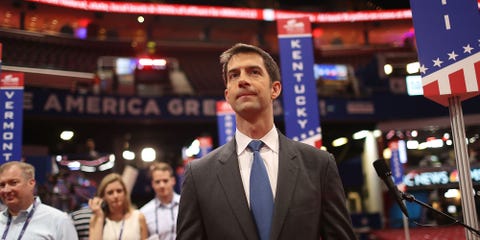
Just before 5 p.m. on Tuesday, the afternoon of August 21, 2018, became one of those unforgettable Trump news cycles, like the moment when the “Access Hollywood” tape was released, on October 7, 2016, and Donald Trump’s voice was heard bragging about sexually forcing himself on women, or when the White House suddenly announced, on May 9, 2017, that Trump had fired the F.B.I. director, James Comey, instantly conjuring the comparisons to Richard Nixon and Watergate that have shadowed him ever since. Tuesday’s breathtaking news unfolded in the course of a single hour in two separate federal courtrooms—one in New York City, the other in Alexandria, Virginia—where, at virtually the same time, Trump’s former attorney Michael Cohen pleaded guilty to eight federal counts and Trump’s former campaign chairman, Paul Manafort, was found guilty on eight federal counts brought by the special counsel, Robert Mueller. As all this played out, I happened to be interviewing one of Trump’s main legal nemeses, President Obama’s former White House ethics czar, Norm Eisen.

Eisen, a Harvard Law School classmate of Obama’s, has reinvented himself in the Trump era as one of this President’s most persistent legal scourges, filing multiple complaints against the President and his advisers as chairman of the watchdog group Citizens for Responsibility and Ethics in Washington. One of them is a court case arguing that Trump, by refusing to disengage from his businesses, is illegally receiving payments from foreign governments seeking to influence him, in violation of the Constitution’s ban on such “emoluments.” In another legal filing, which resulted in a referral to the Justice Department, crew pointed out that Trump had failed to properly disclose the funds used to reimburse Cohen for his pre-election hush-money payments to Stephanie Clifford, an adult-film actress whose screen name is Stormy Daniels, who says that she had an extramarital affair with Trump.

Eisen and I weren’t talking about that at 4:52 p.m. on Tuesday. We were talking about his new history of Prague, which Eisen’s mother fled as a Holocaust survivor and to which Eisen had triumphantly returned as Obama’s Ambassador to the Czech Republic. But Prague and its stubborn attachment to democracy, despite the predations of the twentieth century, would have to wait. Our conversation was interrupted multiple times by the courtroom news, most notably that Cohen’s guilty plea included the revelation that the President himself had ordered the payments to both Clifford and Karen McDougal, a former Playboy playmate, who also claims to have had an affair with Trump, that were designed to buy their silence. In his court appearance on Tuesday, Cohen admitted that that money was an illegal campaign contribution designed to “affect the outcome of the Presidential election”—and that he gave the money on Trump’s express command. In other words, the President of the United States was, for all intents and purposes, his unindicted co-conspirator.

I read Eisen this information as it appeared on my Twitter feed. “This is the worst hour of Trump’s Presidency,” he said. “No, make that his entire life.”

The walls are closing in on Donald Trump. Many of those he picked to lead both his Presidential campaign and his White House face legal jeopardy from Mueller’s investigation and may start to turn on him, following the path of Cohen, who once bragged of his willingness to “take a bullet” for Trump. Unless he flips or is pardoned, Manafort may spend the rest of his life in prison, after Tuesday’s conviction. He is the first head of a Presidential campaign since Nixon’s to be convicted of a crime. Trump’s former national-security adviser has pleaded guilty to a charge brought by Mueller. So has the longtime Manafort protégé tapped by Trump to organize his Presidential Inauguration. Even Trump’s current White House counsel has apparently been coöperating with the special counsel for months, and the rest of the White House isn’t fully aware of what he has been saying. There is a crisis engulfing Trump’s Presidency, and it is a real one.

But, as with many of the breathtaking Trump-news cycles before it, we still don’t have an answer to the key question raised by Tuesday’s legal developments: Will Trump himself ever face the reckoning that more and more of his advisers and associates are confronting? Until now, Trump has escaped any accountability for his actions, and there is still no clear path showing how that will change. He has lied with abandon, openly bragged about firing the F.B.I. director in an effort to halt the Mueller investigation, and laughed at complaints from what he calls a craven élite when he has flaunted the basic norms of American civic life. He has mocked the institutions of our democracy, taunted friends and allies, and surrounded himself with advisers willing to lie, cheat, and bend the rules on his behalf—and their own. Many of them have already faced harsh consequences for those actions, or will eventually.

But the Constitution designates only one form of accountability for the President, beyond rejection at the ballot box: impeachment and trial by Congress. The deafening silence from the Republican officials who currently control both houses of Congress suggests the remoteness of that approach, for now at least. There was no statement of concern from the Speaker of the House or the Majority Leader of the Senate after the split-screen courtroom dramas. There were no reports of concerned Republican Party elders gathering behind closed doors to demand action, or committee chairmen vowing to investigate the President, partisan politics be damned. And, in the next ten weeks, until the midterm elections decide whether Republicans will keep their hold over Capitol Hill, there isn’t likely to be any.

Still, Tuesday’s news suggested that the system had struck back, if not promising full accountability then promising, at least, some halting steps toward it. In New York, at the courthouse where Cohen pleaded guilty, the top F.B.I. agent on the case, William F. Sweeney, Jr., made a remarkable statement. “As we all know, the truth can only remain hidden for so long before the F.B.I. brings it to light,” he said. “We are all expected to follow the rule of law, and the public expects us—the F.B.I.—to enforce the law equally.” Trump’s name wasn’t mentioned, but it didn’t have to be: the message was unmistakable. “The rule of law applies,” Robert Khuzami, the deputy U.S. attorney for the Southern District of New York, who was in charge of prosecuting the case, said. “We are a nation of laws, and the essence of this case is justice, and that is an equal playing field for all persons in the eyes of the law.”

But how, and when, will justice apply to Trump, if there is no one willing to apply it? Not long after that courthouse press conference, John Roberts, a White House reporter at Trump’s favorite media outlet, Fox News, tweeted, “Source close to @realDonaldTrump tells Fox News ‘remember, the President cannot be indicted.’ ” There are some in legal circles who believe that a President could, in fact, be indicted, but that proposition has never been tested in the courts, and official Justice Department policy (dictated under the Administration of the last President to be impeached, Bill Clinton) stipulates that the President cannot be indicted, leaving Congress as the sole arbiter of Trump’s fate.

And so ignoring the trouble seems to be the initial White House strategy. That is exactly what Trump himself did in the hours after the news, when he flew to West Virginia for a campaign rally at which he never uttered the words “Manafort” or “Cohen.” Just before 9 p.m., Trump finished his rally, and a quick glance at the Fox News home page showed that, instead of leading with the day’s huge Trump news, this story was splashed across the top of the site: “mollie tibbetts murder suspect is illegal immigrant from mexico.” Soon, the Fox News host Sean Hannity, one of the President’s defenders and confidants, came on the air and delivered a long opening monologue recapping the day’s events. He suggested that they were not of real consequence to the President, because none of them proved, or had anything much to do with, “Russia collusion.”

By Wednesday morning, Trump had started tweeting about the news as if the twin legal setbacks were merely a new set of inconvenient facts that he could dismiss with his trademark of poorly capitalized bluster and blatant untruths. Cohen was a terrible lawyer, he joked, and Manafort was a “brave man” who had refused to “break.” The President signed off with his signature attack line: “Witch hunt!”

On the Times site, meanwhile, a banner announced, “cohen pleads guilty, implicating the president.” Even the conservative Drudge Report managed to convey the day’s seriousness. “trump hell hour,” its headline read.

It may be months, or even years, before we know what Tuesday afternoon’s events really mean. The “Access Hollywood” tape did not, in fact, cement Trump’s defeat in the 2016 election, no matter how much it initially seemed like it would. Comey’s firing set in motion the Mueller investigation, but it may or may not deserve the comparisons to Nixon’s Saturday Night Massacre that were so quickly made about it. We don’t know the end of the Trump story yet.

But Tuesday was a day for the optimists who think they can finally see the beginning of the end of that story, those like Norm Eisen, who are convinced that the institutions of American democracy are proving resilient in the face of Trump’s assault. While Cohen was in the courtroom entering the guilty plea that would place the President in legal and political jeopardy, Eisen was trying to convince me with his argument. Part of it was his study of history and his new book, “The Last Palace,” about a city that in the past century had seen both Nazi and Soviet invasions but had overcome both. “Democracy writ large has beaten illiberalism again and again, and that’s why I have optimism that today’s struggle will be no exception,” Eisen told me on Tuesday, which also happened to be the fiftieth anniversary of Soviet tanks rolling in to Prague to crush the city’s 1968 uprising. “There is an inexorable bend toward accountability.” He then reeled off all the possible ways in which Trump, facing legal and political jeopardy, could be held accountable. He returned to this theme later in the conversation, after we had a few minutes to absorb the hour’s momentous news. “How marvellous that we are having this conversation exactly when not one but two federal verdicts prove the point,” he said.

A few hours after our interview, an Op-Ed by Eisen and two others appeared on the Times’ Web site. He had sent in the final draft while we listened to thebreaking news about Manafort and Cohen. It pointed out that, whatever else the day’s events heralded for the future, they had already proved one thing: despite the President’s endless phony claims, “this is no ‘witch hunt,’ ” and Mueller and his investigation will not come up empty-handed. 

Susan B. Glasser is a staff writer at The New Yorker, where she writes a weekly column on life in Trump’s Washington.

Beto O’Rourke — the man taking on Ted Cruz — brilliantly explains why NFL players kneeling during the anthem is not disrespectful

NowThis Politics

August 21, 2018
Beto O’Rourke — the man taking on Ted Cruz — brilliantly explains why NFL players kneeling during the anthem is not disrespectful

Beto O'Rourke on NFL Players Kneeling During the National Anthem

Beto O'Rourke — the man taking on Ted Cruz — brilliantly explains why NFL players kneeling during the anthem is not disrespectful

Posted by NowThis Politics on Tuesday, August 21, 2018

If the Republican Party Is Going to Regain Sanity, It Needs to Lose People Like Tom Cotton

Esquire

If the Republican Party Is Going to Regain Sanity, It Needs to Lose People Like Tom Cotton

In every sense, he is an extremist, and not just on one issue.

By Charles P. Pierce       August 21, 2018

Cleveland Prepares For Upcoming Republican National Convention

Getty ImagesJoe Raedle

When El Caudillo Del Mar-a-Lago finally is gone, and all those Never Trump Republicans are beavering away at pretending he wasn’t the perfect product of 40 years of Republican politics, undoubtedly aided and abetted by their new pals in the elite political media, we are all going to have to deal with Senator Tom Cotton of Arkansas.

You may recall that this jumped-up wingnut-welfare hothouse orchid first made news by trying to submarine President Barack Obama’s successful attempt to strike a deal with Iran. Since then, this bobble-throated slapdick has made a habit of killing off any policy initiative, no matter how bipartisan, that doesn’t fit into the political persona he is crafting for his inevitable White House run. Believe me, it’s coming. For pure ambition, this guy makes Frank Underwood look like a cloistered Trappist. He is going to run as the hardbar’s hardbar, and he’s not going to let anything get in his way, including, as it happens, the truth. Also, anything resembling a reasonable compromise on any issue.

Eventually, he got his way on the Iran deal, because the country elected a president* who doesn’t know anything about anything, and he’s spent his time since then pitching a ramped up sanctions regime and threatening any European nation that dares flout the obvious genius of this policy. He also was central to the failure of the Congress to strike any deal regarding the Dreamers last winter. From CNN:

Sen. Tom Cotton, an Arkansas Republican, said on the Senate floor that the plan would be called the “olly olly oxen free amendment.”

The benefits of a Harvard education right there. Back when he was still an explicable facsimile of a sentient human being, Lindsey Graham called Cotton “the Steve King of the Senate.” This was not a compliment.

image

Now, with the fanciful bipartisan dream of criminal-justice reform being floated again by desperate Republicans facing a midterm cataclysm, Cotton has stepped in to argue for a renewed “war” on drugs and for a more draconian criminal-justice system. From Politico:

“Cotton is lambasting the proposal as a “jailbreak” that would “let serious felons back on the streets,” taking on a daunting coalition fighting for the package that includes the Koch political operation, White House adviser Jared Kushner and a number of powerful GOP senators. But Cotton believes that, in the end, President Trump and Senate Majority Leader Mitch McConnell (R-Ky.) will side with him. “The president went to Singapore and agreed with the Singaporeans that we should give the death penalty to drug dealers. I can’t imagine the president wants to reduce mandatory minimum sentences for drug dealers,” the Arkansas Republican said in an interview. “I believe Sen. McConnell shares my view that we should not let serious felons out of jail and we should not shorten the sentences for drug dealers.” Even opponents of sentencing reform will privately admit it would likely pass if McConnell brings it up. But Cotton’s loud opposition may determine whether or not McConnell even allows a vote given his reluctance to summon up legislation that divides the conference — right before the election, no less.”

Everybody with even a passing expertise with the American criminal justice system—from cops to prosecutors to defense lawyers to inmates—realizes that this system is dangerously out of whack. It is racially biased. It is shot through with double standards based on class. The prisons are overcrowded, and privatizing them has proven to be a wretched failure. Every state has at least one maximum-security facility that is ready to blow. And you can’t reform this system without reforming the process of sentencing the people in it.

Inmates At California Prison Install Drought-Tolerant Garden

And this is where Tom Cotton has decided to plant his flag for 2024 or whenever. He spends a lot of time tweeting out the details of atrocity crimes across America—a cheap trick for conservative con-men since before he was born. In every sense, he is an extremist, and not just on this issue, either.

Despite the long odds, the battle is raging behind the scenes. Internal discussions of the subject at Senate lunches have been heated, according to Republican sources, a preview of what might happen on the Senate floor if the chamber takes it up. It’s the same dynamic that kept McConnell from bringing up a larger criminal justice reform package in 2016 as Cotton railed against it and declared the United States has an “under-incarceration problem.” Trump’s “for prison reform, I’m for prison reform. What I don’t support is sentencing reductions under the guise of prison reforms, and that’s unfortunately what many senators are moving towards,” Cotton said in the interview.

This is the basic fault line under all the earnest Never Trumpers that you see making the rounds these days. If the Republican Party is ever going to regain its sanity again, if it ever is going to cast off the ravages of the prion disease it acquired when Ronald Reagan first fed it the monkeybrains in 1980, then it is going to reform root and branch. It’s easy to say that the party has learned a lesson from nominating Donald Trump. It has to learn not to produce Tom Cottons, either.

Respond to this post on the Esquire Politics Facebook page here.

Attention 2018 Voters! Trump and the Grand Old Party has thrown seniors, working men and women and the poor under the bus so the rich can get richer.

MSNBC

The Rachel Maddow Show / The Maddow Blog

As deficit grows, GOP leaders eye cuts to Medicare, Social Security

By Steve Benen      August 21, 2018

Two men stand on the plaza of the U.S. Capitol Building as storm clouds fill the sky, June 13, 2013 in Washington, DC.. Mark Wilson/Getty

Rep. Steve Stivers (R-Ohio), who currently chairs the National Republican Congressional Committee, sat down with CNBC’s John Harwood, who asked the Ohio Republican about the fact that the deficit is soaring in the wake of his party’s tax breaks.

Predictably, the congressman responded to the issue the way GOP lawmakers nearly always respond to the issue.

Harwood: No misgivings about a tax cut that was not paid for, that’s allowing debt and deficits to rise like it is now?

Stivers: I do think we need to deal with our some of our spending. We’ve got to try to figure out how to spend less.

Note the pivot: massive tax breaks for the wealthy and big corporations has turned a modest budget shortfall into an enormous budget shortfall. Stivers sees that as a problem in need of attention, not by reversing course on regressive tax policies, but by looking at spending.

And that, naturally, led to a conversation between Stivers and Harwood on social-insurance programs like Social Security and Medicare – what are frequently referred to as “entitlements” – which Republicans want to cut in order to clean up the budget mess they created with tax cuts.

If this sounds familiar, there’s a good reason for that. It was just a few months ago that House Speaker Paul Ryan (R-Wis.) said the “name of the game on debt and deficits” is cutting “entitlements.”

At face value, it’s difficult to take the rhetoric seriously. If Republican policymakers were genuinely concerned about the budget deficit, they wouldn’t have passed unnecessary tax breaks for people who don’t need them, without even trying to find a way to pay for the cuts. No one should accept the premise that GOP leaders are sincere about fiscal responsibility.

But even more important is the bigger picture: GOP officials like Stivers and Ryan are helping prove Democrats right about one of the most serious threats posed by the Republican tax plan.

As we discussed in March, the debate over the GOP plan may have been fairly brief – Republicans pushed their scheme through quickly to get ahead of public opposition – it featured plenty of Democrats arguing vociferously that its proponents would pass tax cuts for the wealthy, blow up the deficit, and then target Social Security and Medicare, crying about the importance for “fiscal responsibility.”

Ryan wasted no time confirming Democrats’ fears. The Speaker started talking up Medicare cuts in December, and Social Security cuts soon after. Now the chair of the NRCC is signaling similar intentions.

It’s quite a message Republicans are taking into the midterm elections, isn’t it? Donald Trump’s party pushed through unpopular tax breaks, which led to unpopular deficits, which GOP leaders hope to address though unpopular cuts to celebrated pillars of modern American society such as Social Security and Medicare.

Good luck with that.

Aretha Franklin’s Most Unforgettable Vocal Performances

Esquire

Aretha Franklin’s Most Unforgettable Vocal Performances

Her voice inspired social change and brought world leaders to tears.

By Justin Kirkland       August 16, 2018

Aretha Franklin performs at the Lincoln Memorial

Mark Reinstein

Aretha Franklin is impossible to define. In a time when everything is iconic and stunning and must-see, none of those words seem to do her justice because Franklin’s legacy transcends vocabulary words. Instead, maybe the best way to remember her is simply by listening to the stories she’s already told us. Over the course of seven decades, Aretha Franklin’s voice has had the power to bring world leaders to tears, to fuel the Civil Rights movement, and change the very fabric of music. Franklin, The Queen of Soul, died on Thursday at the age of 76. These are her performances that will remain among the greatest in history.

“AMAZING GRACE,” NEW TEMPLE MISSIONARY BAPTIST CHURCH, 1972

Franklin’s voice transcended religion. As an artist, she contributed to the secularization of gospel music—echoes of which are still heard today on pop and hip-hop radio. Her performance of “Amazing Grace” went on to sell over two million copies, becoming the highest selling gospel album of all time. But this performance? Even if you don’t believe in a higher power, after listening to Aretha work her way through the hymn, you’d be hard pressed not to wonder if she has some kind of connection up there.

“(YOU MAKE ME FEEL LIKE A) NATURAL WOMAN,” KENNEDY CENTER HONORS, 2015

After receiving her own Kennedy Center Honor 21 years before, the Queen of Soul returned to the stage to honor Carole King, the writer of one of her most recognizable hits. King immediately leapt to her feet as Aretha started the song. By the time the song ended, Franklin had shed her fur coat, President Obama was wiping tears, and every person in the place was on their feet.

“NESSUN DORMA,” GRAMMY AWARDS, 1998

After legendary opera singer Luciano Pavarotti had to pull out of the 40th annual Grammy Awards following throat problems, the Grammys had to make a quick move. Two hours before the performance, Aretha stepped up to the challenge. What resulted was a performance for the ages. Moving back and forth between Italian and English, Aretha’s soul-infused rendition of the aria from the opera Turnadot was one of the most surprising moments in Grammy, and music, history.

“PRECIOUS LORD, TAKE MY HAND,”HER FATHER’S FUNERAL, 1984

Having originally released the song in 1956, “Precious Lord” had a long history in Aretha’s life. Her mentor, Mahalia Jackson, sang it at Martin Luther King, Jr’s funeral. Four years later, Franklin would sing it at Jackson’s, as well as the dedication of the MLK memorial in Washington D.C.

“MY COUNTRY ‘TIS OF THEE,” BARACK OBAMA’S INAUGURATION, 2009

For President Obama’s first inauguration, his choice to have Aretha sing “My Country ‘Tis of Thee” was a powerful moment in American history. Here was one of the greatest singers in history—one who’s made great strides for women and people of color—singing at the inauguration of the first black president. No matter what comes next, her performance of the patriotic 1831 song will remain a proud moment in this country’s history.

“I DREAMED A DREAM,” BILL CLINTON’S INAUGURATION GALA, 1994

President Obama wasn’t the first Commander in Chief with the good idea to pull in the talents of Aretha Franklin. The Les Misérables showstopper is admittedly a strange choice for a presidential inauguration, but if anyone has the ability to make it work, it’s Aretha Franklin. The giant Broadway number grows even bigger with her raspy voice and soulful infusion, ending in yet another standing ovation.

“(I CAN’T GET NO) SATISFACTION,” AMSTERDAM, 1968

A voice like this can do any genre. And as the first woman inducted into the Rock and Roll Hall of Fame, she absolutely covered rock music, too. Her cover of The Rolling Stones’ “(I Can’t Get No) Satisfaction,” highlights the blues roots of the hit, connecting it to the origins of rock music and Franklin’s own training as a gospel musician.

“SAY A LITTLE PRAYER,” ‘THIS IS TOM JONES,’ 1970

Recorded a year before by Dionne Warwick, Aretha revamped Burt Bacharach and Hal David’s “Say a Little Prayer” with a burst of energy that set it apart from the original recording. As a guest on This Is Tom Jones, she performed the song effortlessly, cementing it as another single in a long list of successes.

“RESPECT,” ANTIBES, FRANCE, 1967

If Aretha Franklin had to be summed up into one song, there’s a pretty good chance it would be “Respect.” While recorded versions and later live performances were a bit slower, the original live performances turned “Respect” up several notches. This performance came right as Aretha’s career was hitting meteoric status. The breakdown after the bridge is just one example of why Aretha is and always will be a live performance master.

“BRIDGE OVER TROUBLED WATER,” LIVE AT THE FILLMORE WEST, 1971

Choosing a favorite performance from her concert at Fillmore West is nearly impossible. But alongside covers of “You’re All I Need To Get By” and “Eleanor Rigby,” it always comes back to the most-soul driven performance of the bunch. Taking to the piano and slowing the song down a bit to really tear into those big notes, Aretha’s performance of the Simon & Garfunkel classic is proof that even the most well-known songs can benefit from the gift that is Aretha’s voice.

Judge orders new federal review of Keystone XL pipeline

Radio.com – WBEN

Judge orders new federal review of Keystone XL pipeline

LINCOLN, Neb. (AP) — A federal judge has ordered the U.S. State Department to conduct a more thorough review of the Keystone XL pipeline’s proposed pathway after Nebraska state regulators changed the route, raising the possibility of further delays to a project first proposed in 2008.

U.S. District Judge Brian Morris of Montana said in a ruling Wednesday that the State Department must supplement its 2014 environmental impact study of the project to consider the new route. Morris declined to strike down the federal permit for the project, approved by President Donald Trump in March 2017.

The Nebraska Public Service Commission rejected pipeline developer TransCanada’s preferred route in November 2017, but approved a different pathway that stretches farther to the east. The “mainline alternative” route is five miles longer than the company’s preferred route, cuts through six different Nebraska counties and runs parallel to an existing TransCanada-owned pipeline for 89 miles.

State Department officials “have yet to analyze the mainline alternative route,” Morris wrote in his ruling. The State Department has “the obligation to analyze new information relevant to the environmental impacts of its decision.”

Last month, the State Department declared the pipeline would not have a major impact on Nebraska’s water, land or wildlife. The report said the company could mitigate any damage caused.

It’s not clear whether the additional review will delay the 1,184-mile project. TransCanada spokesman Matthew John said company officials are reviewing the judge’s decision.

Environmentalists, Native American tribes and a coalition of landowners have prevented the company from moving ahead with construction. In addition to the federal lawsuit in Montana that seeks to halt the project, opponents also have a lawsuit pending before the Nebraska Supreme Court. Oral arguments in the Nebraska case aren’t expected until October.

Critics of the project have raised concerns about spills that could contaminate groundwater and the property rights of affected landowners.

Pipeline opponents cheered the decision and said they were confident that the courts would find other violations of federal law raised in the lawsuit.

“We are pleased that Judge Morris has rejected all of the excuses raised by the Trump administration and TransCanada in attempting to justify the federal government’s failure to address TransCanada’s new route through Nebraska,” said Stephan Volker, an attorney for the environmental and Native American groups that filed the Montana lawsuit.

A State Department spokesman said the agency was still reviewing the judge’s order but declined to offer additional comments.

The pipeline would carry up to 830,000 barrels of crude oil per day from Canada through Montana and South Dakota to Steele City, Nebraska, where it would connect with the original Keystone pipeline that runs down to Texas Gulf Coast refineries.

The State Department’s new report noted two major spills in South Dakota involving the original Keystone pipeline, which went into operation in 2010, but added that TransCanada has a lower overall spill rate than average in the oil pipeline industry.

Associated Press reporter Matthew Lee contributed from Washington.