We saved 155 lives on the Hudson. Now let’s vote for leaders who’ll protect us all.
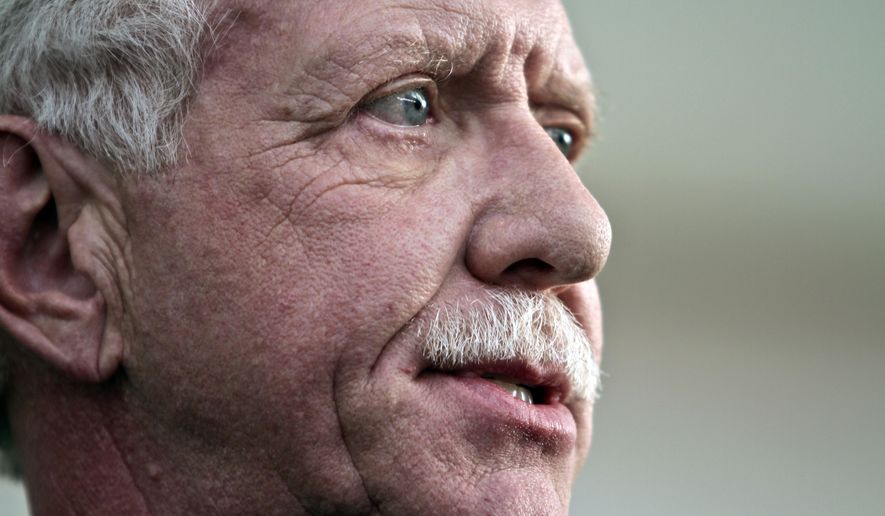
ByChesley B. ‘Sully’ Sullenberger III October 29, 2018
Chesley B. “Sully” Sullenberger is a safety expert, author and speaker on leadership and culture.
Voters line up to vote at Westminster Presbyterian Church in Grand Rapids, Mich, on Nov. 8, 2016. (Cory Morse/AP)
Nearly 10 years ago, I led 154 people to safety as the captain of US Airways Flight 1549, which suffered bird strikes, lost thrust in the engines and was forced to make an emergency landing on the Hudson River. Some called it “the Miracle on the Hudson.” But it was not a miracle. It was, in microcosm, an example of what is needed in emergencies — including the current national crisis — and what is possible when we serve a cause greater than ourselves.
On our famous flight, I witnessed the best in people who rose to the occasion. Passengers and crew worked together to help evacuate an elderly passenger and a mother with a 9-month-old child. New York Waterway took the initiative to radio their vessels to head toward us when they saw us approaching. This successful landing, in short, was the result of good judgment, experience, skill — and the efforts of many.
But as captain, I ultimately was responsible for everything that happened. Had even one person not survived, I would have considered it a tragic failure that I would have felt deeply for the rest of my life. To navigate complex challenges, all leaders must take responsibility and have a moral compass grounded in competence, integrity and concern for the greater good.
I am often told how calm I sounded speaking to passengers, crew and air traffic control during the emergency. In every situation, but especially challenging ones, a leader sets the tone and must create an environment in which all can do their best. You get what you project. Whether it is calm and confidence — or fear, anger and hatred — people will respond in kind. Courage can be contagious.
Today, tragically, too many people in power are projecting the worst. Many are cowardly, complicit enablers, acting against the interests of the United States, our allies and democracy; encouraging extremists at home and emboldening our adversaries abroad; and threatening the livability of our planet. Many do not respect the offices they hold; they lack — or disregard — a basic knowledge of history, science and leadership; and they act impulsively, worsening a toxic political environment.
As a result, we are in a struggle for who and what we are as a people. We have lost what in the military we call unit cohesion. The fabric of our nation is under attack, while shame — a timeless beacon of right and wrong — seems dead.
This is not the America I know and love. We’re better than this. Our ideals, shared facts and common humanity are what bind us together as a nation and a people. Not one of these values is a political issue, but the lack of them is.
This current absence of civic virtues is not normal, and we must not allow it to become normal. We must rededicate ourselves to the ideals, values and norms that unite us and upon which our democracy depends. We must be engaged and informed voters, and we must get our information from credible, reputable sources.
For the first 85 percent of my adult life, I was a registered Republican. But I have always voted as an American. And this critical Election Day, I will do so by voting for leaders committed to rebuilding our common values and not pandering to our basest impulses.
When I volunteered for military service during wartime, I took an oath that is similar to the one our elected officials take: “I do solemnly swear that I will support and defend the Constitution of the United States against all enemies, foreign and domestic.” I vowed to uphold this oath at the cost of my life, if necessary. We must expect no less from our elected officials. And we must hold accountable those who fail to defend our nation and all our people.
After Flight 1549, I realized that because of the sudden worldwide fame, I had been given a greater voice. I knew I could not walk away but had an obligation to use this bully pulpit for good and as an advocate for the safety of the traveling public. I feel that I now have yet another mission, as a defender of our democracy.
We cannot wait for someone to save us. We must do it ourselves. This Election Day is a crucial opportunity to again demonstrate the best in each of us by doing our duty and voting for leaders who are committed to the values that will unite and protect us. Years from now, when our grandchildren learn about this critical time in our nation’s history, they may ask if we got involved, if we made our voices heard. I know what my answer will be. I hope yours will be “yes.”
Pollutant runoff is creating green algae and red algae which is killing the fish and marine life. Beaches are closing so people can’t even enjoy the water. I wonder when the Florida state government will begin to address this.
Gen R
Dead dolphins. Massive fish kills. Sick people. This is the scene in Florida right now, and it has many residents wondering if any politicians are willing to fix it.
Dead dolphins. Massive fish kills. Sick people. This is the scene in Florida right now, and it has many residents wondering if any politicians are willing to fix it.
Zero-Sum America: An Empire Headed Toward Collapse
Dick Rauscher, orig. pub. by Dick Rauscher blog October 29, 2018
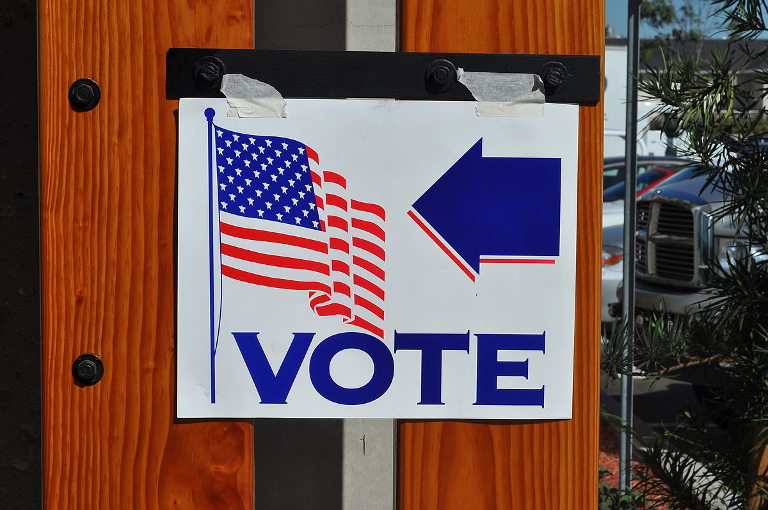
Teaser photo credit: By Tom Arthur from Orange, CA, United States – vote for better tape, CC BY-SA 2.0
Driven by zero-sum thinking, the rigid, inflexible, ideological thinking and obsessive need of our collective human ego to be absolutely and imperatively “right”, is rapidly driving our Nation and our American democracy toward collapse.Zero-sum thinking is the win/lose concept that for one side to win, the “other” side has to lose. It is the exact opposite of win/win; the foundational concept embedded in a democracy in which both sides compromise to get some of their “wants” met in any negotiation. When the level of anger against the “other” is stoked by the hate-mongering rhetoric, and the repulsive intolerance of “other” we are currently witnessing in our country, rigid zero-sum thinking redefines “winning” as the utter decimation and destruction of the “other”. Period. No compromise. No give and take. The goal of conflict becomes “engage and destroy”.In the zero-sum thinking so prevalent in our nation today, the values and behaviors that drive the ethical concepts of tolerance, win/win, and compromise are no longer valued. They have no credibility. As a result, inflexible zero-sum thinking has become a dangerous cancer that is eroding away at the very foundations of our American democracy.
The “light on the hill” that has provided hope and meaning for the world is growing more fragile and dimmer every day. If we remain on this path, it will take the American empire into the dark age of our decline and collapse.
We Are Ignoring Human History
The growing use of zero-sum thinking in Washington is spreading. We are a nation increasingly embracing and manifesting the behaviors and ideologies of hatred and hate mongering that created:
the holocaust of Hitler,
the Gulags of Stalin,
the Great Famines of Mao, and the
Cambodian killing fields of Pol Pot.
In each of these moments in history, autocratic rulers used hate mongering and the vilification of “other” to justify their brutality against a group of people; a vilification that was artificially created for one purpose, and one purpose only; and that was to divert their nation’s attention from the growing power, wealth, domination, and influence of the nation’s oligarchic elite.
Once the vilified and dangerous threats posed by the evil“other” were identified, it justified the hatred, lack of compassion, intolerance, and brutal repression used by the oligarchic elite to “control” the enemy “other” and “make the nation safer” for the “people”. This rhetoric and vilification of“other” to distract, is the primary purpose of the tribal “populism” and so-called national patriotism we see popping up around the world today.
The more hatred and bigotry the oligarchic elite can create and direct toward the “dangerous enemy”; while at the same time praising and affirming the wisdom and patriotism of the “in-group”, the more their base of true believers will be galvanized to demand ever more hatred and oppression toward the less than human “others” or evil “enemy”. This immoral technique of hate-mongering to distract and divide, is being aggressively used by the oligarchy of the “ruling elite” in our Nation today. And unfortunately, it’s working.
We see this appalling, egregious, and dangerous “populist” behavior clearly in
the increasing lack of empathy for “others”,
the increasing intolerance of those who look or believe differently,
the increasing negation of intimacy,
the need to distance ourselves from anyone who dares to think differently from us,
and the dangerous increase in outright hatred and repulsion for anyone considered to be “other” (and that includes anyone who dares to disagree with us religiously or politically).
These rapidly growing trends are clear and sobering evidence that our American Empire is rapidly heading for collapse.
The intolerant behaviors, narrative, lies, and hearsay“evidence” we are witnessing from our leaders in the White House and Congress is clearly designed to stoke these hateful emotional feelings of revulsion and intolerance, and distract our attention. This litany of hate-mongering, repeated day-after-day, and week-after-week, is used whenever the oligarchy elite in Washington needs to divert our attention from their own behaviors.
This hate mongering, and zero-sum rhetoric is designed to focus the nation’s attention on some other “convenient” emotional distraction; and use that distraction as another opportunity drum up even more of their rhetoric of danger, fear, anger, and intolerance. The targets of convenience for this rhetoric of hate include immigrants, illegal “aliens”, the fake-news press, the “mob” behaviors they are witnessing in the evil “others”, the fear of terrorism, and the need to make the nation safer and great again after the abomination called the “Obama era”.
It’s Hard To Argue With History
History is clear. Our nation is on a path toward collapse. Every empire in human history that has allowed the oligarchic elite, what we call the 1%, to create an extreme wealth and power inequality, has experienced collapse. When the natural resource that enabled the initial growth of an empire become less readily available or depleted and weakens the foundation of the empire, the collapse is unavoidable and irreversible, And once the collapse has begun, it happens very rapidly. The resources that created past human empires included the availability of agricultural land, gold, silver, copper, and water. Today, the natural resources that created the industrial era of Western Civilization, our American Empire, and the other prominent Nation’s of the world are petroleum and carbon-based energy. The use of petroleum energy will eventually have to end. But this powering-down from carbon-based energy is not going to happen soon enough to derail the impact of global warming and global climate change that now threatens the very survival of human civilization and humanity itself.
So What Do We Need To Do?
We know what we have to do to reverse the looming ecological crises that threaten our Nation and our planet. We need to make fundamental changes in the “profit-based” global economic systems that are;
based on greed and directly fueling the wealth and power inequalities of the oligarchic elites discussed above, and
creating the dangerous illusion that unlimited exponential economic expansion is actually possible on our limited planet.
The need to begin “powering down” from our use of carbon-based energy is urgent. We have already run out of time to avoid climate change and the impacts of storm intensification.
We know what we have to do. We have the solutions and the ability to restore a sustainable equilibrium with nature. So what is stopping us?
Once again, the problem is the ruling, oligarchic elite, or 1% in the various nations around the world. They control the media. They control the contents of education, the validity of science and the power of the media. They use their virtually unlimited financial resources to control the “narratives” required to stoke the populism and the distractions created by zero-sum thinking. They have no intention of allowing any legislation or behaviors that will impact “business as usual”.They will continue to aggressively prevent the solutions to global warming from being implemented or impacting “business as usual”, because “business as usual” is the source of their power, wealth, and influence.
Summary
The ruling oligarchic elite, the 1%, accomplish their retention of power, and protect their wealth, by distracting the “commons”. They do this by shifting the world’s attention on to war, global conflict, threats of terrorism, the danger of immigrants and illegal “aliens”, taxes hikes, tax cuts, threats to reduce or eliminate social programs, jobs creation, the health of the stock market, the health of the economy, controversial appointments to the supreme court, the egregious murder of a reporter in a Saudi embassy ……the distractions are never-ending. As long as the virtually unlimited power of their money in our political system can distract the commons, they will continue to control the narratives of distraction. They know their behaviors of distraction from issues of global warming are going to lead to pain and suffering. They even know that the day is coming they will have to head for the bunkers they are creating for their own “safety”. The key word for them is “someday”. Today, they simply want the trillions of dollars in revenues they expect to earn through the extraction of coal, gas, and petroleum in the next couple of decades. And that income from petroleum extraction pales in comparison to the amount of government subsidies they will receive during that same time period.
In the meantime, we will continue to be used and manipulated. The elite 1% will continue to finance and use populist zero-sum thinking to create even more wealth inequality, continue the tone deafness of Congress to the needs and dis-empowerment being experienced by ordinary people, and “business as usual” will continue down the merry road toward civilizational collapse.
Conclusion
The oligarchy elite known as the 1% includes:
the millionaires, and billionaires in the White House, Congress, State, and local governments;
the CEOs and board members of our international global corporations;
all of the individual billionaires, millionaires, and special interest groups who are funding our elections to influence outcomes favorable to themselves;
the wealthy individuals and special interest groups that influence the creation of laws and legislation designed to protect their own wealth, and the wealth and the power and wealth of the 1% they represent.
Other than the need to manipulate and distract the attention of the 99%, the focus of the oligarchic elite rarely includes the voices or needs of the 99%; the community commonly referred to in the American Constitution as “we the people”.
The only effective way to reverse the growing collapse of our American Empire is the refusal to embrace the growing hate rhetoric and zero-sum thinking and vote for leaders that promote compromise and the reality that we are all interconnected in the web of life and the ecosystems of our planet that support that web. Leaders that:
understand the reality we are all passengers on the global train headed into the future; a future that isn’t what it used to be, and
the sobering reality that what happens to one of us, happens to all of us.
It’s time for the American people to stand up and demand change by voting. Speak your truth! When others incite anger, hatred, and division, and encourage zero-sum treatment of “others”, simply walk away. Don’t engage with them. They are not worth the time and effort to engage with them. They won’t hear you! The only thing you will accomplish is the creation of more zero-sum anger, conflict, and angst in the world. Vote against the politicians and political systems that support that kind of hate mongering…….it is the cancer rapidly destroying our Nation and the values and ethics of democracy that made us a great nation. It is the cancer that is rapidly destroying our planetary home.
If a politician is part of the 1%, vote them out of office. If a politician has been in office for more than 8 to 12 years, vote them out of office. If a politician denies global warming and climate change for any reason, vote them out of office immediately. If a politician promotes hate mongering, vilification of “other” for any reason, vote them out of office immediately.
It’s time to take back our country and affirm the values, morals, and ethics that brought hope into the world and made us the light on the hill. And it’s time to get real with climate change. Nature “is” going to win the war we are waging with her. Anyone who doubts that obvious reality… vote them out of office. “Now” They are clearly embracing the ignorance always created by rigid, ideological zero-sum thinking.
One final thought… voting is a privilege. It is a choice we have as Americans. We clearly need to increase the number of people who vote.
Perhaps we could adopt the policy that anyone who does not vote in local, state, or national elections, be fined or taxed at a significantly higher rate than that of patriotic persons who do vote to support our democracy? In other words, a person could either vote in all of our democratic elections to support our nation, or they could opt-out of voting and pay higher taxes as a way to financially support our nation.
Perhaps we could pass a law that automatically registers every citizen to vote and allow every voter the ability to mail in his or her ballets?
Perhaps we could pass a law limiting the amount of money that can be donated to a person running for public office?
Could we reverse the law that defines a corporation as a real live “person”? Corporations clearly represent the wealth and power of the 1%, and they are clearly not a “We the People” “person” as defined in the Constitution.
These might be ways to restore the concept of “We The People” and improve our national voting system. The power of money in our political systems has given the 1% and oligarchic elites, massive control of our Nation. That control needs to end. Our future will be largely determined by how well we handle this critical problem.
Donald Trump Launches Operation Midterms Diversion
By John Cassidy October 30, 2018
The deployment of troops to the border and the floating of an executive order revoking birthright citizenship for U.S.-born children of immigrants were blatant election stunts on Trump’s part. Photograph by Airman 1st Class Zoe M. Wockenfuss / U.S. Air Force / AP
By early afternoon on Tuesday, Donald Trump’s latest piece of political chicanery, Operation Midterms Diversion, could be considered a partial success. After a week in which the media narrative was focused on pipe bombs, an alleged bomber who just happened to be an ardent supporter of Trump, and a racist massacre in a Pittsburgh synagogue, two of the three cable news channels—Fox and MSNBC—had reverted to subjects more to Trump’s liking: immigration, the southern border, and the allotment of U.S. citizenship.
CNN, to its credit, was resisting the President’s effort to dictate the news agenda and stayed focused on Pittsburgh, where the funerals of some of the victims of Saturday’s dreadful mass shooting were taking place, as the city was bracing for a visit from the President and his wife, Melania. The home pages of the New York Times and the Washington Post were both leading with the Pittsburgh story, too. But they were also featuring prominently Trump’s pledge, in an interview with the news site Axios, to abolish the right to U.S. citizenship for children born in the United States to parents who aren’t citizens.
It was no accident at all that this announcement was made just a week before the midterm elections. “We’re the only country in the world where a person comes in and has a baby, and the baby is essentially a citizen of the United States for eighty-five years with all of those benefits,” Trump told reporters from Axios. “It’s ridiculous. It’s ridiculous. And it has to end.”
The first part of this statement was a Trump truth—that is, a blatant falsehood. Many other countries, including Canada, Brazil, Argentina, and Mexico, have birthright-citizenship laws. The second half of Trump’s quote was merely a restatement of something he said to Fox News’s Bill O’Reilly in August, 2015, shortly after he launched his Presidential campaign, when he invoked the derogatory term “anchor babies” and added, “Our country is going to hell.”
The supposed news in the Axios story was that Trump also declared his intention to sign an executive order ending birthright citizenship, an option that most legal experts regard as a nonstarter because it would almost certainly violate the 14th Amendment, which states: “All persons born or naturalized in the United States, and subject to the jurisdiction thereof, are citizens of the United States.” Even Paul Ryan, the Republican Speaker of the House, poured cold water on Trump’s idea of issuing an executive order. “You obviously cannot do that,” he told a Kentucky radio station. “I’m a believer in following the plain text of the Constitution, and I think, in this case, the 14th Amendment is pretty clear, and that would involve a very, very lengthy constitutional process.” The floating of an executive order was a blatant election stunt on Trump’s part, the second in twenty-four hours. On Monday, he announced he was sending more than five thousand active-duty troops to the southernmost reaches of Arizona and California, supposedly to protect the border with Mexico from a so-called “invasion” by Central American migrants. “This is an invasion of our Country and our Military is waiting for you!” Trump wrote in a Monday morning tweet heralding the troop movements.
Of course, there is no invasion, or even a threat of invasion. Despite an uptick in the last few months, the number of illegal border-crossings is only about a quarter of what it was back in 2000. (That’s largely because the number of Mexican migrants has fallen sharply in the past decade.) And the caravan of migrants and would-be refugees that formed in Honduras and recently traversed into southern Mexico is still a long way away: about a thousand miles from the U.S. border.
If and when the caravan gets that far, there is every reason to believe that the U.S. Customs and Border Protection—a civilian agency with sixty thousand employees and almost a century of experience—will be able to deal with the challenge of intercepting and processing its members. As Gil Kerlikowske, who served as its commissioner from 2014 to 2017, noted in an interview with the Washington Post, “These are things that C.B.P. can actually handle quite well on their own.” Even if the C.B.P. were to get stretched, the Administration could send in some additional National Guard units to provide backup, as has happened several times before. There is seemingly no need for active-duty troops; indeed there are big questions about what the fifty-two hundred of them will be doing once they arrive at the border to take part in what is officially called Operation Faithful Patriot.
The Posse Comitatus Act, which was passed in 1878, places strict limits on using the armed services as part of civilian law enforcement. In a briefing on Monday, Air Force General Terrence J. O’Shaughnessy, the head of U.S. Northern Command, said his troops would abide by the Posse Comitatus Act and concentrate on support duties, such as hardening border posts and transporting C.P.B. agents. But National Guard units could just as easily carry out these tasks. Nearly “all of the kinds of troops sought for Faithful Patriot exist in the Guard,” the Post’s Dan Lamothe and Nick Miroff noted on Monday.
Of course, the truth is that the launching of a full-scale military operation had nothing to do with the requirements on the border and everything to do with the fact that the midterms are just seven days away. Desperate to shift the attention away from outbreaks of violence by right-wing extremists, and his own role in inciting such attacks, Trump doubled down on the 2016 playbook he had been holding handy all along: demonizing immigrants and inciting racial fears among his white supporters.
From the perspective of Trump and his like-minded Republican allies, the formation of the latest caravan from Honduras was a godsend. Last week, Trump suggested there were “Middle Easterners” among the migrants. On Monday, he claimed, “Gang Members and some very bad people are mixed into the Caravan.” It barely needs saying that there is no evidence to support either of these assertions.
Last week, a New York Timesreport from Huixtla, Mexico, characterized the caravan as being made up of people of all ages who “seemed driven by a kind of blind faith, born of desperation, that this is their best chance to escape the poverty, violence and hardship they knew at home and to build better lives.” In the city of Mapastepec, my colleague Jonathan Blitzer, interviewed a thirty-year-old man, Daniel Jimenez, who said he didn’t even know if he’d make it as far as the U.S. border, or stay somewhere in Mexico and look for work, but he had felt he simply had to leave Honduras, because “you just can’t live there anymore.”
Trump doesn’t give a fig about the accuracy of his claims, of course. He wants to increase Republican voter turnout next week. He has a low opinion of the party’s voters. And he thinks the best way to get them to the polls is to raise the specter of white America being swamped by non-white immigrants. So, with the support of Mike Pence, Lindsey Graham, and many other Republicans, he’s going at it—pledging to send in the army, rewrite the Constitution, and who knows what else in the days ahead. As he said, there are some “very bad people.” But they aren’t in the caravan.
As a member of the 1%, Dennis Mehiel knows best that the wealthy only benefit more when Americans don't vote. His org Show Up 2018 is encouraging first time voters to show up on November 6th to make a change.
The Ruling Minority Will Stop at Nothing to Stay in Control
By Rebecca Traister October 29, 2018
No time for self-care. Photo: Jim Watson/AFP/Getty Images.
Diagnosing the mood of the citizenry is a notoriously dicey proposition, as is making electoral predictions based on it. Even trusting empirical research, the polls, has been shown to be a fool’s errand. I’ve now been on the road for close to a month promoting my book, traveling from D.C. to Minneapolis to Portland, Oregon. I’ve talked to self-selected crowds of hundreds of mostly (but not all) progressive women, many (but not all) white. And for every person who tells me that my book — about the transformational power of American women’s political anger — has come out at the “perfect” (i.e., the absolute fucking worst) time, when fury over Brett Kavanaugh has gripped the nation, I’ve encountered another who’s made me doubt its very premise. “How can I feel driven again?” I’m asked. “How can I get my friends back out on the sidewalks when they feel like winning isn’t possible, when they’ve decided they might as well pack it in?”
Women, as well as men, tell me they’ve turned off the news, taken a break from protest or campaigning to refocus on their families or themselves; they feel anxious, suddenly aware of the possibility that the blue wave of Democrats may not materialize, that the efforts to stave it off via gerrymandering and voter suppression and the gush of Koch money into tough races may win out. In other words, Kavanaugh’s ascendance hasn’t jolted these people to redouble their efforts to topple Republicans at the polls in November. Rather, it’s left them deeply demoralized, drained of hope and energy at perhaps the most crucial moment of all.
In some regards, these bracing realizations are overdue. Yes, Democrats might well lose the midterms. But that this is sinking in only now, as an aftereffect of Kavanaugh’s confirmation, is the devil’s timing — if, that is, the ultimate impact is to paralyze Democrats. That’s the purpose of the Republicans’ victory lap, of course. By cheerily casting protesters as a mob that incited a backlash in popular opinion (a backlash only debatably borne out by polling), they’re hoping that the loosely aligned left resistance eats its own tail in response. This summer, some Democrats worried that if Kavanaugh’s confirmation were blocked, the party’s voters would be placated and stay home in November while the right would rev up into a frothing electoral force. But somehow, the right’s win has been successfully framed by the president and Republicans as something that needs to be avenged.
Lots of American women, especially white middle-class women, are new to intense progressive engagement; their energies are necessary and may be game changing. But they’re also perhaps most likely to be shocked by the revelation of the limits of their power. Aditi Juneja, the lawyer, activist, and co-creator of the Resistance Manual,told me while I was reporting my book that she’d noticed over her years organizing that white women tended to have “faith that if they voice their opinions to their representatives, that they will be heard, that they will have influence.” To Juneja, this stood in stark contrast to assumptions made by activists of color, who often expressed “no faith that politicians will see that there is any cost to disappointing black and brown people.”
To some extent, the past two years have given newly minted activists reason to feel confident: The pressure applied at town halls and via calls and letters to senators (including to Maine’s Susan Collins) was enough to stave off repeal of the Affordable Care Act in 2017. When #MeToo, first initiated by Tarana Burke more than a decade ago to address sexual assault in communities of color, took a new form in 2017, after mostly white women in highly paid industries spoke up for the first time, many of the men they accused wound up suffering heretofore rare consequences such as the loss of jobs and power. A series of teachers’ strikes in 2018 led to higher wages even in states where the striking itself was illegal. There has been an influx of first-time female candidates, many black and Latina; on the Democratic side, those women have emerged victorious in primary after primary. The furor over the Trump administration’s family-separation policy this summer was not enough to reunite the hundreds of children forcibly taken from their parents, some of whom were deported, but the civil disobedience was enough to stop new separations.
Yes, it’s human to respond to a crushing loss by retreating, by taking time to recover before getting back up again. When we think about the left-leaning activism that has bloomed since Donald Trump beat Hillary Clinton — the sidewalk-pounding registration efforts, the new candidacies, the organizing and protesting, the building of a progressive infrastructure outside the Democratic Party — we don’t often linger on the two and a half months between Election Day and the Women’s March.
Those were days of fear and grief, not to mention intraparty excoriation. Identity politics, feminism, the apathy of the young, Hillary Clinton, Bernie Sanders, everybody and everything were blamed for the cataclysmic result. It wasn’t until the Women’s March — ultimately organized and led by a multiracial coalition that insisted on linking left-progressive principles and causes — became the biggest single-day political demonstration in the country’s history that we began to see an energetic movement taking shape.
We don’t have that kind of time right now. We don’t have months, or weeks, or even another second to spend recuperating. We have eight days.
But it’s hard! Being schooled on your own powerlessness by a minority takes the breath out of you. They have the power. That is the point. If it were so easily won away from them, we wouldn’t be in this political situation, which is not new but stretches back centuries and will extend far beyond the end of our lives. It may be devastating to those who thought they had leverage within the white patriarchy to experience what it’s like for people who’ve never had that illusion, who’ve never believed that speaking up or writing to senators or even voting would improve their lot. But the Kavanaugh steamroll can also be instructive and reorienting.
This is where hope becomes a tactical necessity. And out on the road, I have encountered a few gusts of it. In Boston, one woman in her mid-20s told me that her friends who’d remained politically disengaged finally had been radicalized by Christine Blasey Ford’s testimony; they’d seen the misogyny and Republicans’ willingness to support it and were suddenly — just now, in the fall of 2018 — determined to try to prevent the party’s further rise. In St. Louis, Democratic state representative Stacey Newman told me that when she made a call for 30 people to show up to a phone bank, 165 volunteered.
If past generations, kept from polls and beaten on picket lines, tear-gassed and hanged and enslaved and incarcerated, hadn’t kept imagining that their efforts would one day bear fruit, even if it would be after their deaths, we’d be in more trouble in 2018 than we already are.
There will be time — our lifetimes — to temporarily pull back and recover from bitter defeats; there will be so many more bitter defeats. But any impulse toward flirting with despair must be resisted. The left has a weapon on the table for a little over a week. It is a compromised weapon, rendered duller by the forces it has the potential to challenge. But the desire to give up, if only for a while, will ensure its uselessness. Now is the season for progressives, the newly motivated and the old stalwarts, to get out of their own front doors and start knocking on others, to drive people to polls, to call local campaigns and ask how they can help those who never had the luxury of being able to catch their breath or turn away in the first place.
*This article appears in the October 29, 2018, issue of New York Magazine. Subscribe Now!
At a small US factory, Trump’s trade war forces hard changes
Christopher Rugaber, AP Economics Writer October 29, 2018
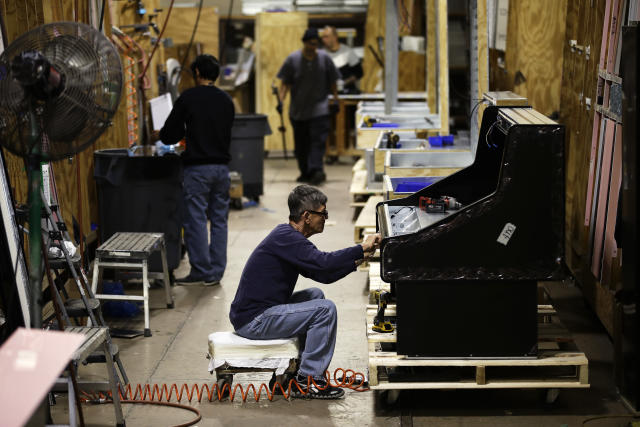
In this Thursday, Oct. 18, 2018, photo Workers build refrigerators at the Howard McCray’s commercial refrigeration manufacturing facility in Philadelphia. This year, McCray has slashed its spending on large equipment in half. Christopher Scott, president of Howard McCray, is also leaving four jobs unfilled and instead adding more overtime for his current workers. “That’s what the tariffs are doing to us,” Scott said. (AP Photo/Matt Rourke)
PHILADELPHIA (AP) — Sitting in his office beside photos of grandchildren decked in Philadelphia Flyers jerseys, Christopher Scott shakes his head. Another email has come in from another supplier. It wants to raise prices to cover the cost of President Donald Trump’s tariffs.
For weeks, emails and letters have been arriving in a steady stream at Howard McCray, the small Philadelphia factory Scott runs with about 85 workers. It’s mostly bad news. One supplier is charging more for shelving brackets, another for electrical switches, a third for wheeled castors. McCray needs those parts for the refrigerated display cases it produces for convenience stores and restaurants.
Since Trump imposed tariffs on imported steel and aluminum and on Chinese products, Scott, like many other American manufacturers, has had to rapidly switch gears.
Warriors coach Steve Kerr on state of America: ‘We’re broken right now’
Vincent Goodwill, Yahoo Sports October 29, 2018
Steve Kerr has had plenty to talk about during the Warriors’ trip to New York. (Getty).
NEW YORK — In the wake of Saturday’s shooting at a synagogue in Pittsburgh that resulted in the deaths of 11 people, Golden State Warriors coach Steve Kerr called the United States a “broken” country.
Sunday afternoon, some 90 minutes or so before the Warriors were to take on the Brooklyn Nets at Barclays Center, Kerr was impassioned, yet again saddened, by the tragedy and the climate that purportedly caused it.
“It’s just devastating. I just expect it now and that’s just the sad thing,” Kerr said. “I remember watching an interview with a student after the Santa Fe shooting in Texas [in May]. A 14-year-old girl, she was asked, ‘Did this shock you?’ She said, ‘No, I expected that this would happen to us at our school at some point.’ That’s where we’ve gotten as a country. We’re broken right now.
“So nothing surprises us anymore. Nothing surprises me anymore. There’s shootings at schools, churches, synagogues, malls, movies theaters.”
The suspect was taken alive by the police, and the FBI said he was carrying an AR-15-style rifle and three handguns at the Tree of Life Congregation, where he allegedly shouted anti-Semitic slurs before the mass shooting took place.
“We need our leaders to step up and unite the country with the appropriate words and actions, and we’re not getting that right now,” Kerr said. “It’s frustrating and I don’t know what to say.”
Midterm elections are upon us, and NBA coaches like Doc Rivers have spoken out about the importance of voting and have worn pins with the phrase “I am a voter” on their suits during games.
Kerr has made his position and opinions on political issues public, and he has been a constant retweeter of issues surrounding gun control on his Twitter account.
“We need to vote. I urge everybody to get out and vote on Nov. 6,” Kerr said. “Everybody has their own issues that are important to them. My personal issue is gun safety, gun control. Nobody in this country should have a semiautomatic weapon of war. That’s my personal belief.”
Kerr said he will vote for candidates who plan on banning those types of weapons.
“I’m going to vote for every candidate willing to stand up to the NRA and say, ‘You know what? This is insane,’” Kerr said. “We’re murdering each other every day. We have to get rid of bump stocks, we have to get rid of high-capacity magazines. We have to get rid of semiautomatic weapons, we just do.
“Other countries don’t go through this. And so that’s the issue that’s most important to me and that’s the candidates I will be voting for, the ones who are willing to stand up and say this is wrong, we have to protect our fellow citizens and protect our country.”
Kerr’s father, Malcolm Kerr, president of the American University of Beirut, was assassinated outside his office in Lebanon in 1984, when Steve Kerr was 18 years old.
Kerr hasn’t been the only coach to speak out about weapons or even the political rhetoric that has defined this country since Trump’s rise — San Antonio Spurs coach Gregg Popovich is also a constant Trump critic — and Kerr has applauded players such as LeBron James and Dwyane Wade who’ve used their platform to make progressive statements.
Kerr said as long as the statements aren’t divisive and in the name of positive social change, he’s all for it.
“More and more you’re seeing people in the sports world, athletes and coaches speaking out,” Kerr said. “It’s easy to feel broken right now, how our country is. Everybody can have influence, not just our political leaders. People who are well-known figures and have cameras in their face a lot or average citizens, being kind to each other and being nice to one another, not just spewing hatred on social media. Those are things we have to think about to try to accomplish to get our country back on track.”