The Dominion Settlement Is Just the Beginning of Fox and Rupert Murdoch’s Nightmare
Jeffrey Sonnenfeld – April 19, 2023
Celebrity Sightings In Los Angeles – November 12, 2019
Rupert Murdoch is seen on November 12, 2019 in Los Angeles, California. Credit – PG-Bauer-Griffin/GC Images
Forget the repetitive media chatter debating the political and societal wins and losses over the historic record $787.5 million settlement between Fox News and Dominion Voting Systems, after the voting machine maker alleged defamation by the cable network for promoting false news stories that Dominion rigged the 2020 presidential election against Donald Trump. Fox settled out of court at the last minute, seemingly panicked over the prospect of a dazed 92-year-old Rupert Murdoch, CEO of Fox News parent company Fox Corporation, having to take the stand to explain how he lost control of his prized creation—his “Foxenstein” monster. But while it’s a historic and record-setting amount to pay to avoid an embarrassing public trial over the airing of an admitted lie, the settlement doesn’t mark the end of Fox’s or Murdoch’s nightmare.
The horror story that is just beginning to unfold and that will continue to haunt the company and its patriarch is the corporate governance catastrophe this case leaves in its wake and the punctured business bravado of the scorching public record of admitted fraud and negligent management oversight. Fox’s celebrity anchors already soiled themselves in emailed evidence revealing they did not believe what they were reporting as truth. Their testimony and emails are in the public record for future litigants. Meanwhile, the judge’s special master, investigating fraudulent representations by Fox and its lawyers in discovery, continue undaunted by this settlement. The rest of Murdoch’s life and the rest of the careers of his board will likely be defined by ongoing fallout.
The Big Winner
There is no disputing that this is a grand slam for Dominion and nothing short of a transformative business success. Dominion is a tiny young company not even 1% the size of Fox, and it was sold to private equity investors Staple Street Capital for just about $40 million in 2018. This week’s settlement is gigantic—more than eight times their company revenues last year of $98 million, which assuming a 20% profit margin means that the settlement results in a whopping 5000% boost in the company’s earnings.
Such a whopping settlement may not have been awarded by a jury in court and very well could have been tossed on appeal. This small a company would have had a tough time proving concrete economic damage and lost revenues equivalent to $787.5 million let alone the $1.6 billion in damages they were seeking had it gone to trial. There are two types of damages—compensatory and punitive—and the idea that a company that may have been valued by its own investors, according to Fox’s lawyers, at no more than $80 million could get anything close to 10 times that as compensatory damages is blatantly ludicrous, while punitive damages are becoming increasingly pegged to the value of compensatory damages.
Even if an appellate court concurred with a possible jury verdict that an actual malice standard was met, the financial damages Dominion asked for were excessive. Plus, unlike the Alex Jones award of $1 billion, which is facing years of byzantine appeals and stalling, Dominion gets this money now—without any more hassle, delay, or expense and without having to deal with anxious insurers and litigation finance hedge funds breathing down their neck.
News Corporation headquarters, home to Fox News, on April 18, 2023 in New York City. Moments before opening arguments were set to begin, Fox News and Dominion Voting Systems said that they had reached a settlement of $787 million in the voting machine company’s defamation lawsuit against Fox.Spencer Platt-Getty Images
The Even Bigger Loser
On the other hand, for Fox Corp., the parent company of Fox News, this is a major strikeout. Incredibly, even though $787.5 million, more than half of the company’s total profit last fiscal year, is four times larger than the prior record for a defamation settlement—in 2017, Disney/ABC News paid out $177 million over misleading reporting on pink slime—Fox’s woes are just beginning.
Sure, some Dominion fans or Fox News haters might be upset that the cable channel did not have to publicly accept responsibility or apologize, rather just releasing a statement of meaningless legalese: “We acknowledge the Court’s rulings finding certain claims about Dominion to be false.” But such disappointment ignores the massive business and financial ramifications that Fox will have to live with for years. We are still only in the early innings of Fox’s struggles.
What now stands as a statement of legal fact for future litigants is the judge’s condemning conclusions.
The judge wrote, “the evidence does not support that FNN conducted good-faith, disinterested reporting.”
In another finding, the judge wrote that the “evidence developed in this civil proceeding demonstrates that is CRYSTAL clear that none of the statements relating to Dominion about the 2020 election are true.”
Other companies, such as Smartmatic, will surely be emboldened in their own defamation suits against Fox, which share basically the same fact patterns as Dominion’s. Furthermore, the condemning depositions of Fox anchors and executives, admitting that they knew their stories were false and sources were ludicrous, opens Fox’s board to serious claims of negligence and breaches of fiduciary duty—violations of a board’s duty of care and duty of loyalty under Delaware corporate law.
Plaintiffs’ attorneys are rushing to file derivative shareholder class action lawsuits on behalf of the 60% of Fox shares not held by the Murdoch family. Fox has a sophisticated board with accomplished individuals, such as former House Speaker Paul Ryan, Managing Partner of Quinn Emanuel William Burck, former Ford CEO Jacques Nasser, and Formula One CEO Chase Carey, all of whom have a lot to lose—whether by way of reputation or liability—by more embarrassing disclosures coming out of depositions and trials.
Already two of many law firms queuing up filed suit in Delaware Chancery Court, charging: “Fox knew—from the Board on down—that Fox News was reporting false and dangerous misinformation about the 2020 Presidential election, but Fox was more concerned about short-term ratings and market share than the long-term damages of its failure to tell the truth.”
While some media commentators have suggested that insurance might cover a large portion of Fox’s Dominion settlement, the company’s breaches of fiduciary duty could absolve insurers from having to cover the payout on top of permitting them to charge the company permanently higher insurance premiums. Even worse for Fox, unless the company reforms its coverage and corporate governance processes, insurers might recoil from underwriting the insurance of Fox’s board directors and officers, much the way Elon Musk was once forced to personally underwrite the insurance of Tesla’s board directors and officers after every insurance company refused to stomach the risk.
Admissions by Murdoch, Ryan, Fox News CEO Suzanne Scott, and Fox Corp. Chief Legal Officer Viet Dinh demonstrate a failure to act on what they knew to be false—or a failure of their duties of care and duty of loyalty to the shareholders. Their duties were not to protect management or even to please viewers, but to protect the enterprise and shareholder value. Yet, when asked in a January deposition if he could have intervened when falsehoods were being spread on his cable network, Murdoch succinctly replied on the record, “I could have. But I didn’t.”
Alt-right media such as One America News Network and Newsmax are likely facing even greater financial peril as they are facing similar legal challenges as Fox.
Despite his self-proclaimed willingness to testify in court, Murdoch’s rambling, brutally candid, and self-incriminating answers in deposition raise questions over his judgment. Fox cannot retract Murdoch’s sworn testimony, and when they unsuccessfully tried to hide his actual Fox News executive oversight duties, they had to apologize for such deception. Presumably Murdoch will be forced to continue to shed light on how much he knew, when he knew it, and what he did or didn’t do in response, as the drumbeat of investigations rolls on.
For its part, Fox News is already modifying its approach and seeming to take some of these lessons to heart before they become total Faux News. Nobody would mistake Fox today for MSNBC, but the cable network has severely limited former President Trump’s airtime recently, rarely ever showcasing full Trump campaign rallies and speeches as it used to do, while anchors almost always now resort to pre-taped edited clips of Trump rather than offering the unchecked freewheeling surprise live dial-in privileges Trump used to enjoy. Like Samuel Johnson quipped, nothing so focuses the mind like the prospect of an imminent hanging. Still, as Murdoch tries to restrain his out-of-control creation, he has his work cut out for him.
Switzerland has a stunningly high rate of gun ownership — here’s why it doesn’t have mass shootings
Hilary Brueck and Azmi Haroun – April 19, 2023
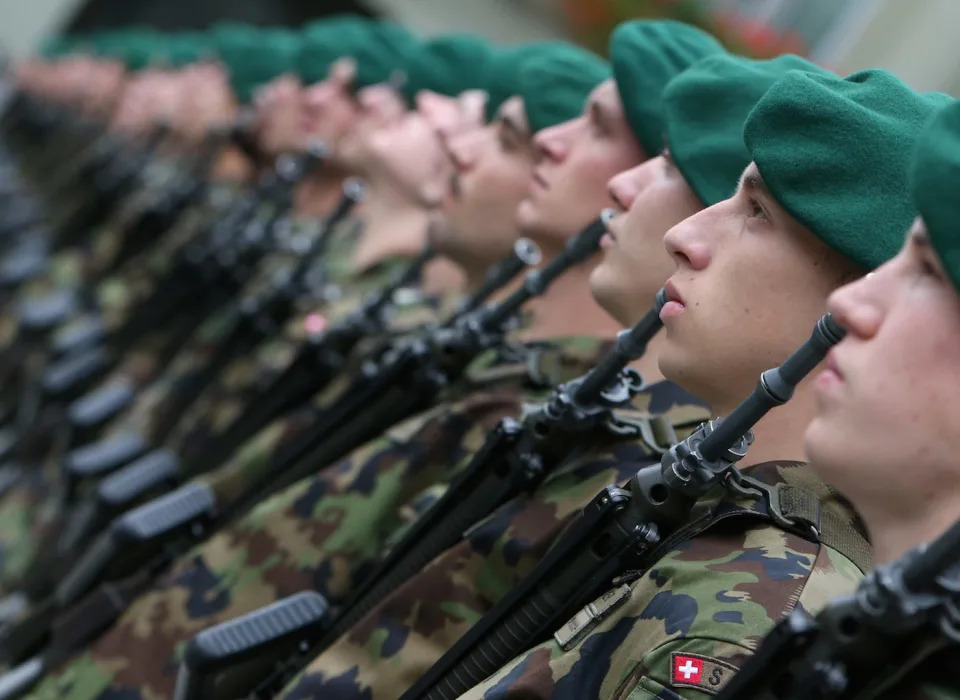
Switzerland has a stunningly high rate of gun ownership — here’s why it doesn’t have mass shootingsMembers of the Swiss federal army’s honor guard in October 2012.REUTERS/Thomas Hodel
Switzerland hasn’t had a mass shooting in 21 years.
The Swiss have strict rules for who can get a gun, and take firearm training very seriously.
Switzerland hasn’t had a mass shooting since 2001, when a man stormed the local parliament in Zug, killing 14 people and then himself.
The country has about 2 million privately owned guns in a nation of 8.3 million people. In 2016, the country had 47 attempted homicides with firearms. The country’s overall murder rate is near zero.
The National Rifle Association often points to Switzerland to argue that more rules on gun ownership aren’t necessary. In 2016, the NRA said on its blog that the European country had one of the lowest murder rates in the world while still having millions of privately owned guns and a few hunting weapons that don’t even require a permit.
But the Swiss have some specific rules and regulations for gun use.
Though the word roughly translates to “boys shooting” and the competition used to be only boys, teenage girls have been allowed in since 1991.
Kids in the country flock to the competition every September to compete in target shooting using Swiss army-service rifles. They’re proud to show off how well they can shoot.
The competition values accuracy above all else, and officials crown a Schutzenkonig — a king or queen of marksmen — based on results.
Having an armed citizenry helped keep the Swiss neutral for more than 200 years.
Alpine herdsmen in Toggenburg, Switzerland.Keystone/Getty Images
Switzerland hasn’t taken part in any international armed conflict since 1815, but some Swiss soldiers help with peacekeeping missions around the world.
Many Swiss see gun ownership as part of a patriotic duty to protect their homeland.
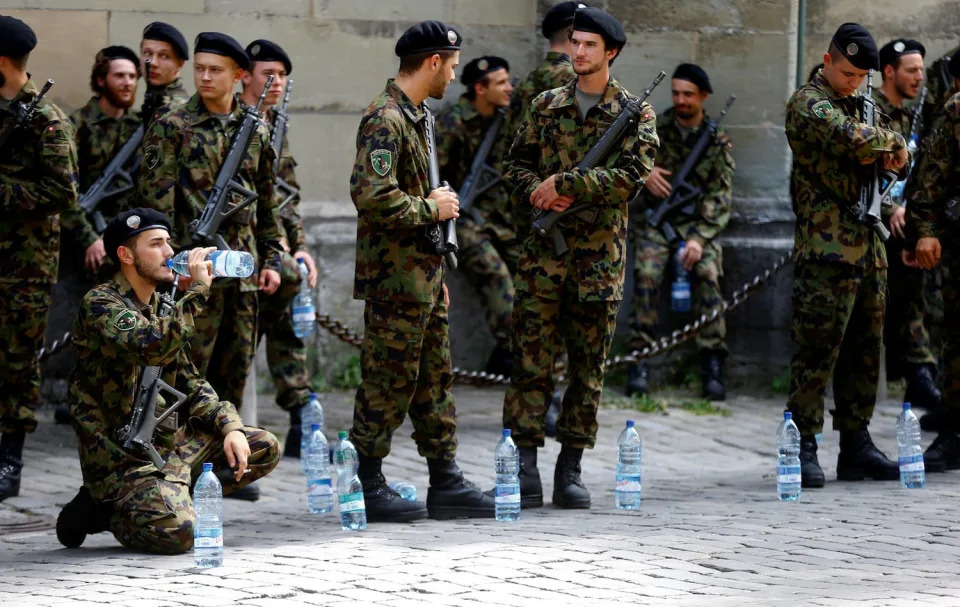
Most Swiss men are required to learn how to use a gun.
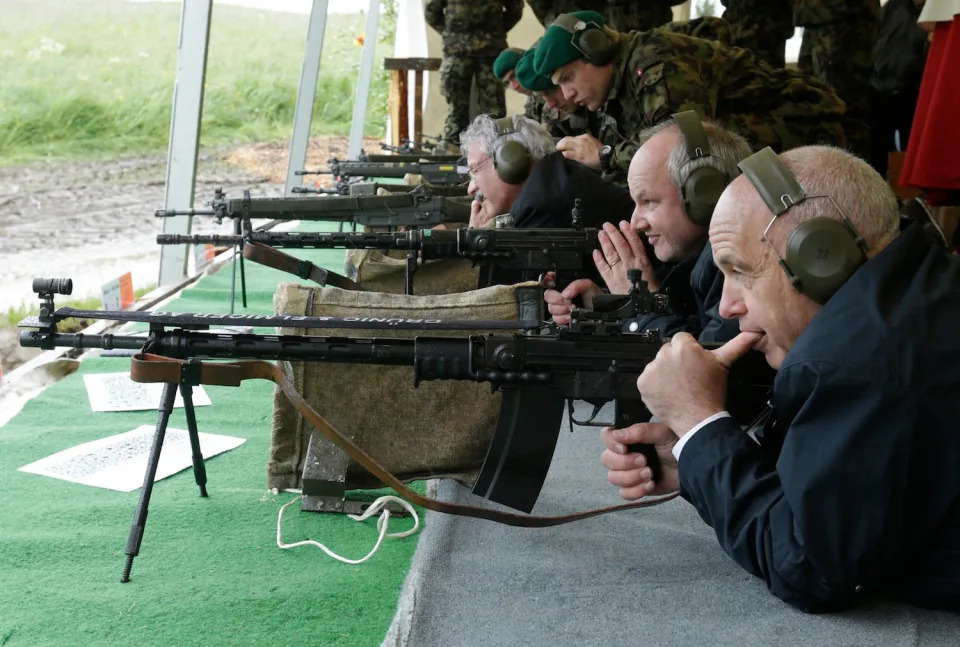
Swiss President Ueli Maurer pauses during a shooting-skills exercise — a several-hundred-year-old tradition — with the Foreign Diplomatic Corps in Switzerland on May 31, 2013.REUTERS/Denis Balibouse
In recent years, the Swiss government has voted to reduce the size of the country’s armed forces.
Switzerland is a bit like a well-designed fort.
Arnd Wiegmann/Reuters
Switzerland’s borders are basically designed to blow up on command, with at least 3,000 demolition points on bridges, roads, rails, and tunnels around the landlocked European country.
John McPhee put it this way in his book “La Place de la Concorde Suisse”:
“Near the German border of Switzerland, every railroad and highway tunnel has been prepared to pinch shut explosively. Nearby mountains have been made so porous that whole divisions can fit inside them.”
Roughly a quarter of the gun-toting Swiss use their weapons for military or police duty.
AP/Keyston, Lukas Lehmann
In 2000, more than 25% of Swiss gun owners said they kept their weapon for military or police duty, while less than 5% of Americans said the same.
In addition to the militia’s arms, the country has about 2 million privately owned guns — a figure that has been plummeting over the past decade.
Members of an honor guard of the Swiss army.REUTERS/Arnd Wiegmann
The Swiss government has estimated that about half of the privately owned guns in the country are former service rifles. But there are signs the Swiss gun-to-human ratio is dwindling.
In 2007, the Small Arms Survey found that Switzerland had the third-highest ratio of civilian firearms per 100 residents (46), outdone by only the US (89) and Yemen (55).
But it seems that figure has dropped over the past decade. The University of Sydney now estimates that there’s about one civilian gun for every three Swiss people.
Gun sellers follow strict licensing procedures.
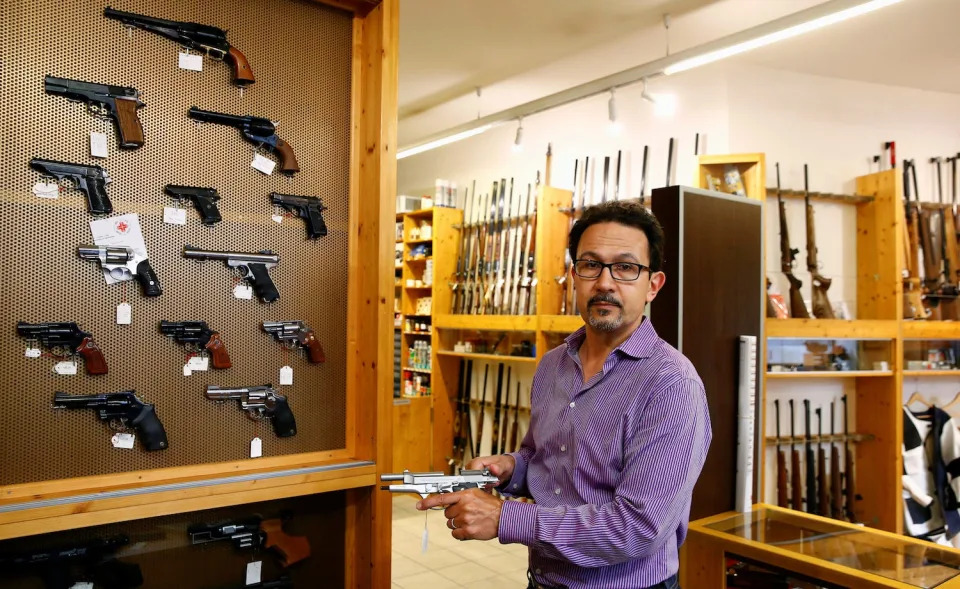
Daniel Wyss, the president of the Swiss weapons-dealers association, in a gun shop.REUTERS/Arnd Wiegmann
Swiss authorities decide on a local level whether to give people gun permits. They also keep a log of everyone who owns a gun in their region — known as a canton — though hunting rifles and some semiautomatic long arms are exempt from the permit requirement.
Cantonal police don’t take their duty doling out gun licenses lightly. They might consult a psychiatrist or talk with authorities in other cantons where a prospective gun buyer has lived to vet the person.
Swiss laws are designed to prevent anyone who’s violent or incompetent from owning a gun.
Nina Christen of Switzerland at the Olympic Games in Rio in August 2016.Sam Greenwood/Getty Images
People who’ve been convicted of a crime or have an alcohol or drug addiction aren’t allowed to buy guns in Switzerland.
The law also states that anyone who “expresses a violent or dangerous attitude” won’t be permitted to own a gun.
Gun owners who want to carry their weapon for “defensive purposes” also have to prove they can properly load, unload, and shoot their weapon and must pass a test to get a license.
Switzerland is also one of the richest, healthiest, and, by some measures, happiest countries in the world.
The Swiss have been consistently near the top of this list. In 2017, when the UN ranked Switzerland fourth overall among the world’s nations, the report authors noted that the country tends to do well on “all the main factors found to support happiness: caring, freedom, generosity, honesty, health, income, and good governance.”
Meanwhile, according to the report, happiness has taken a dive over the past decade in the US.
The report authors cite “declining social support and increased corruption,” as well as addiction and depression for the fall.
Around the world, stronger gun laws have been linked to fewer gun deaths. That has been the case in Switzerland, too.
A police officer at Geneva’s airport.REUTERS/Denis Balibouse
After hundreds of years of letting local cantons determine gun rules, Switzerland passed its first federal regulations on guns in 1999, after the country’s crime rate increased during the 1990s.
As of 2015, the Swiss estimated that only about 11% of citizens kept their military-issued gun at home.
Most people aren’t allowed to carry their guns around in Switzerland.
Hunters at a market in central Switzerland offer their fox furs.REUTERS
Concealed-carry permits are tough to get in Switzerland, and most people who aren’t security workers or police officers don’t have one.
“We have guns at home, but they are kept for peaceful purposes,” Martin Killias, a professor of criminology at Zurich University, told the BBC in 2013. “There is no point taking the gun out of your home in Switzerland because it is illegal to carry a gun in the street.”
That’s mostly true. Hunters and sports shooters are allowed to transport their guns only from their home to the firing range — they can’t just stop for coffee with their rifle.
Guns also cannot be loaded during transport to prevent them from accidentally firing in a place like Starbucks — something that has happened in the US at least twice.
Germany’s foreign minister: Parts of China trip ‘more than shocking’
Alexander Ratz – April 19, 2023
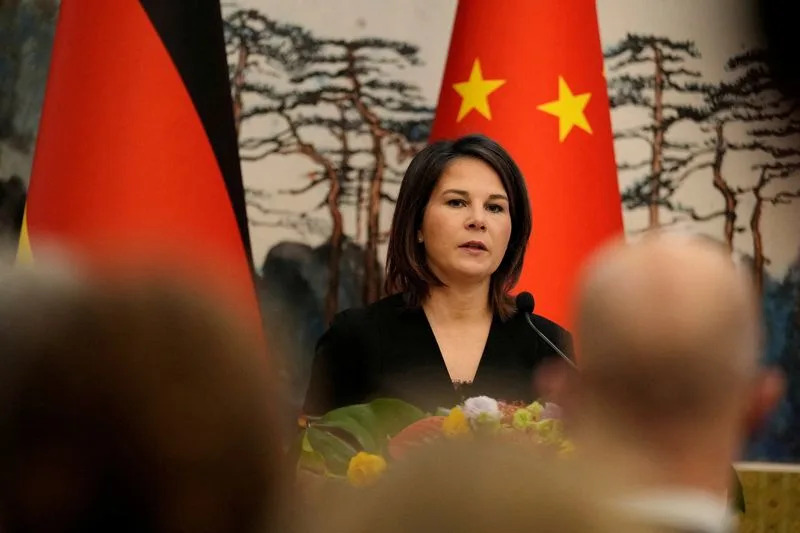
German Foreign Minister Annalena Baerbock visits ChinaGerman Foreign Minister Annalena Baerbock visits China
BERLIN (Reuters) – German Foreign Minister Annalena Baerbock on Wednesday described parts of her recent trip to China as “more than shocking” and said Beijing was increasingly becoming a systemic rival more than a trade partner and competitor.
The blunt remarks followed Baerbock’s visit to Beijing last week where she warned that any attempt by China to control Taiwan would be unacceptable.
Beijing claims democratically governed Taiwan as a Chinese province and has never ruled out the use of force to bring the island under its control.
Baerbock had also said China wanted to follow its own rules at the expense of the international rules-based order. Beijing in turn asked Germany to support Taiwan’s “reunification” and said China and Germany were not adversaries but partners.
Speaking to the German Bundestag (lower house of parliament) on Wednesday about her China trip, Baerbock said “some of it was really more than shocking”.
She did not elaborate on specifics, although her remark came after she said China was becoming more repressive internally as well as aggressive externally.
For Germany, she said, China is a partner, competitor and systemic rival, but her impression is now “that the systemic rivals aspect is increasing more and more”.
China is Germany’s largest trading partner, said Baerbock, but this did not mean Beijing was also Germany’s most important trading partner.
The German government wants to work with China but does not want to repeat past mistakes, for example the notion of “change through trade”, she said, that the West can achieve political shifts in authoritarian regimes through commerce.
Baerbock also said China had a responsibility to work towards peace in the world, in particular using its influence over Russia in the war in Ukraine.
She welcomed Beijing’s promise not to supply weapons to Russia, including dual use items, though added that Berlin would see how such a promise worked in practice.
In a departure from the policies of former chancellor Angela Merkel, Olaf Scholz’s government is developing a new China strategy to reduce dependence on Asia’s economic superpower, a vital export market for German goods.
(Writing by Matthias Williams; Editing by Mark Heinrich)
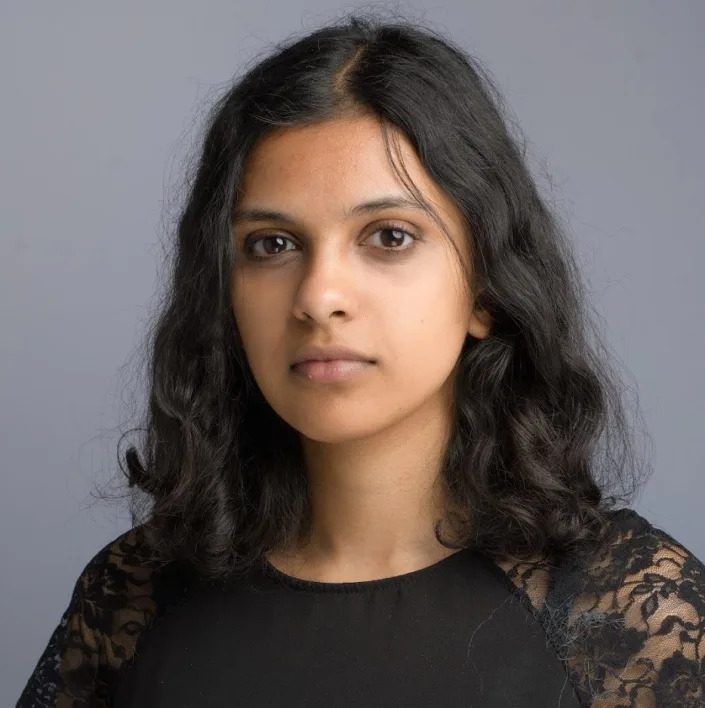
At the beginning of March, Aria Babu quit her job at a think tank to dedicate herself to something most people have never heard of. Having worked in public policy for several years, the 26-year-old Londoner had come to an alarming realisation about the future of the UK, the world – and the human species.
‘It became clear to me that people wanted more children than they were having,’ Babu says. ‘Considering this is such a massive part of people’s lives, the fact that they were not able to fulfil this want was clearly indicative that something was wrong.’
The new focus of Babu’s career is a philosophy known as pronatalism, literally meaning pro-birth. Its core tenet is deceptively simple: our future depends on having enough children, and yet life in developed countries has become hostile to this basic biological imperative. Linked to the subcultures of rationalism and ‘effective altruism’ (EA), and bolstered by declining birth rates, it has been gaining currency in Silicon Valley and the wider tech industry – especially its more conservative corners.
‘I’ve been in various text threads with technology entrepreneurs who share that view… there are really smart people that have real concern around this,’ says Ben Lamm, a Texas biotech entrepreneur whose company Colossal is developing artificial wombs and other reproductive tech (or ‘reprotech’) that could boost future fertility.
‘We are quite familiar with the pronatalist movement and are supporters of it,’ says Jake Kozloski, the Miami-based co-founder of an AI matchmaking service called Keeper, which aims to address the ‘fertility crisis fueled by a marriage crisis’ by helping clients find the other parent of their future children.
‘I encourage people who are responsible and smart and conscientious to have children, because they’re going to make the future better,’ says Diana Fleischman, a pronatalist psychology professor at the University of New Mexico and consultant for an embryo-selection start-up (she is currently pregnant with her second child).
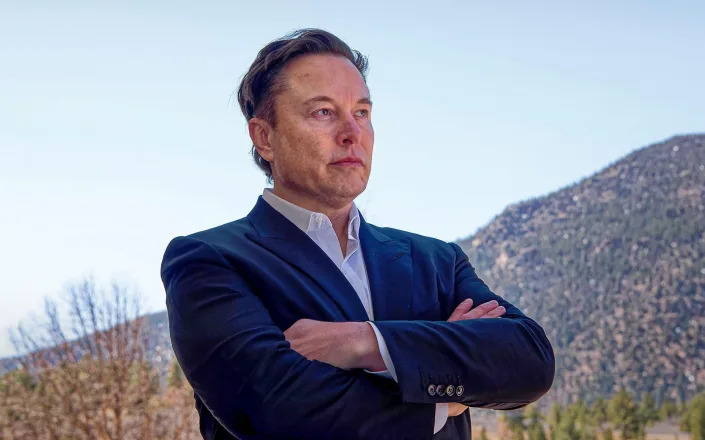
Easily the most famous person to espouse pronatalist ideas is Elon Musk, the galaxy’s richest human being, who has had 10 children with three different women. ‘If people don’t have more children, civilisation is going to crumble. Mark my words,’ Musk told a business summit in December 2021. He has described population collapse as ‘the biggest danger’ to humanity (exceeding climate change) and warned that Japan, which has one of the lowest birth rates in the world, ‘will eventually cease to exist’.
In an Insider article last November that helped bring the movement to wider attention, 23andMe co-founder Linda Avey acknowledged its influence on the Texan tech scene, while the managing director of an exclusive retreat, Dialog, co-founded by arch-conservative investor and PayPal pioneer Peter Thiel, said population decline was a frequent topic there.
Babu, who hopes to join or create a pronatalist organisation in the UK, says it is still ‘niche’ here but gaining ground on both the ‘swashbuckling intellectual Right’ and the more family-focused and Blue-Labour-tinged segments of the Left.
At the centre of it all are Simone and Malcolm Collins, two 30-something American entrepreneurs turned philosophers – and parents – who say they are only the most outspoken proponents of a belief that many prefer to keep private. In 2021 they founded a ‘non-denominational’ campaign group called Pronatalist.org, under the umbrella of their non-profit Pragmatist Foundation. Buoyed by a $482,000 (£385,000) donation from Jaan Tallinn, an Estonian tech billionaire who funds many rationalist and EA organisations, it is now lobbying governments, meeting business leaders, and seeking partnerships with reprotech companies and fertility clinics.
The Collinses did not coin the word ‘pronatalism’, which has long been used (along with ‘natalism’) to describe government policies aimed at increasing birth rates, or mainstream pro-birth positions such as that of the Catholic Church. Its opposite is ‘anti-natalism’, the idea that it is wrong to bring a new person into the world if they are unlikely to have a good life. Lyman Stone, a natalist demographer and research fellow at the US’s Institute for Family Studies, has described the Collinses’ philosophy as ‘a very unusual subculture’ compared to millions of everyday natalists. Yet it is their version – a secular, paradoxically unorthodox reconstruction of arguably the most traditional view on earth, driven by alarm about a looming population catastrophe – that is prospering among the tech elite.
‘I don’t think it’s appealing to [just] Silicon Valley people,’ Malcolm tells me on a long call from his home in Pennsylvania. ‘It’s more like, anyone who is familiar with modern science and familiar with the statistics is aware that this is an issue, and they are focused on it. The reason why you see Silicon Valley people disproportionately being drawn to this is they’re obsessed with data enough, and wealthy enough, to be looking at things – and who also have enough wealth and power that they’re not afraid of being cancelled.’
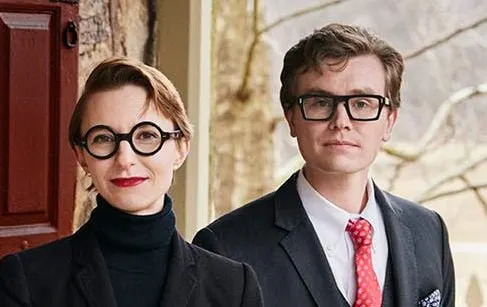
The Collinses – Winnie Au
The problem, he concedes, is that falling birth rates are also a common preoccupation of neo-Nazis and other ethno-nationalists, who believe they are being outbred and ‘replaced’ by other races. ‘A lot of alleged concerns about fertility decline are really poorly masked racist ideas about what kinds of people they want on the planet,’ says demographer Bernice Kuang of the UK’s Centre for Population Change.
The Collinses strongly disavow racism and reject the idea that any country’s population should be homogenous. Still, Babu finds that many in the rationalist and EA community, which skews pale and male, are wary of exploring pronatalism – lest they be ‘tarred with the brush of another white man who just wants an Aryan trad-wife’.
Another issue is what you might call the Handmaid’s Tale problem. From Nazi Germany’s motherhood medals to the sprawling brood of infamous, Kansas-based ‘God hates fags’ preacher Fred Phelps, a zeal for large families has often been accompanied by patriarchal gender politics. For liberal Westerners, the idea that we need to have more babies – ‘we’ being a loaded pronoun when not all of us would actually bear them – may conjure images of Margaret Atwood’s Gilead.
Some more illiberal countries are already shifting in this direction. China has begun restricting abortions after decades of forcing them on anyone who already had one child. Russia has revived a Soviet medal for women with 10 or more children. Hungary, where fertility long ago dropped below 2.1 births per year per woman – the ‘replacement rate’ necessary to sustain a population without immigration – has tightened abortion law while offering new tax breaks and incentives for motherhood. Following the end of Roe v Wade in the US, Texas has proposed tax cuts for each additional child, but only if they are born to or adopted by a married heterosexual couple who have never divorced.
But the Collinses contend that this kind of future is exactly what they are trying to prevent. ‘People often compare our group to Handmaid’s Tale-like thinking,’ says Malcolm, ‘and I’m like: excuse me, do you know what happens if we, the voluntary movement, fails…? Cultures will eventually find a way to fix this; how horrifying those mechanisms are depends on whether or not our group finds an ethical way.’ Though they define themselves politically as conservatives – Malcolm invariably votes Republican – they claim to favour LGBT rights and abortion rights and oppose any attempt to pressure those who don’t want children into parenthood.
Instead, they say, their hope is to preserve a ‘diverse’ range of cultures that might otherwise begin to die out within the next 75 to 100 years. They want to build a movement that can support people of all colours and creeds who already want to have large families, but are stymied by society – so that ‘some iteration of something that looks like modern Western civilisation’ can be saved.
‘We are on the Titanic right now,’ says Malcolm. ‘The Titanic is going to hit the iceberg. There is no way around it at this point. Our goal is not to prevent the Titanic from hitting the iceberg; it’s to ready the life rafts.’
It was on the couple’s second date, sitting on a rooftop and gazing out at the nearby woods, that Malcolm first raised the prospect of children. Simone’s response was not enthusiastic.
‘I was very excited to spend my life alone, to never get married, to never have kids,’ she recalls. ‘People would be like, “Do you want to hold the baby?” I was one of those who’s like, “No, you keep it. I will watch that baby from behind glass and be a lot more comfortable.”’
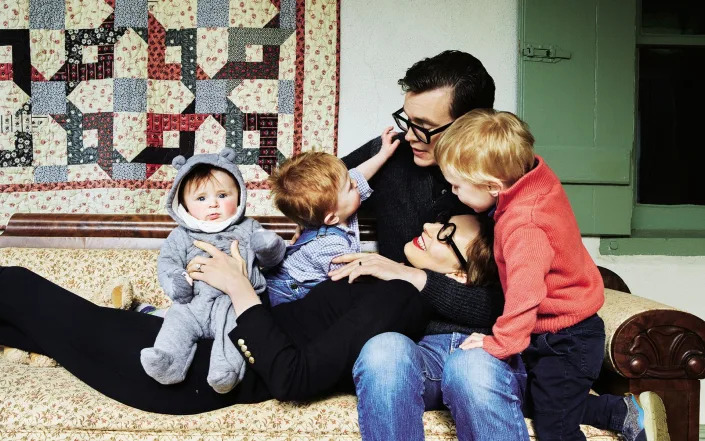
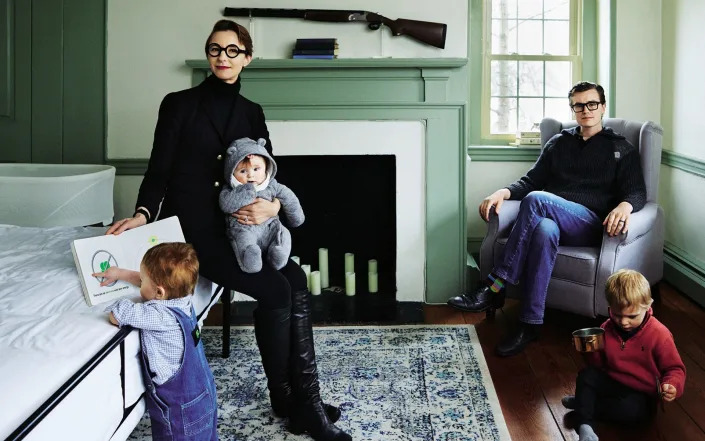
As she says this, her five-month-old daughter Titan Invictus – the couple refuse to give girls feminine names, citing research suggesting they will be taken less seriously – is strapped to her chest, occasionally burbling, while Malcolm has charge of their two sons Torsten, two, and Octavian, three. They live in the leafy suburbs of Philadelphia, balancing parenthood with full-time jobs as co-chief-executives of a travel company, writing books about pronatalism, and their non-profit projects (to which they donated 44 per cent of their post-tax income last year). They project an image of accentuated preppiness, dressing in ultra-crisp country club, business casual when photographers visit, and are effusive and open to the press. Malcolm starts our interview by saying, ‘Absolutely spectacular to meet you!’
The Collins family – Winnie Au
Both dealt with adversity in their own youths. Malcolm, 36, was held by court order in a centre for ‘troubled’ teenagers, where he was told by staff that if he resisted they would simply invent new infractions to keep him locked up. Simone, 35, now needs hormone therapy to menstruate regularly and IVF to conceive a child due to years of anorexia.
Back then, Simone was a textbook anti-natalist. She grew up as the only child of a failed polyamorous marriage among California hippies, where her understanding of a wedding was ‘everyone puts on masks in the forest and there’s a naked sweat lodge’. She was also a ‘mistake baby’, who watched her mother struggle with shelving her career ambitions.
What changed Simone’s mind was not any kind of Stepfordian conversion but a simple promise from Malcolm that she would not have to surrender her career. So it proved. She took no time off during Octavian’s gestation, answered business calls while in labour, and returned to the office five days after his birth. She stays with each child continuously for their first six months, carrying them in a chest harness while working at a treadmill desk, after which Malcolm handles the bulk of child-raising. She finds she gets a productivity bump with each newborn – ‘You’re up every three hours anyway, so why not knock off some emails?’
These personal epiphanies might not have translated into political ones except for Malcolm’s stint as a venture capitalist in South Korea, where the fertility rate is the lowest in the world at 0.8. He was shocked that nobody seemed to regard this as an emergency.
‘If this was an animal species it would be called endangered,’ says Malcolm. ‘We would be freaking out that they are about to go extinct.’ He begins our interview by speaking without interruption for nearly half an hour, incredibly quickly and with frenetic intensity as if chased by the enormity of what is coming.
Virtually every developed nation is now below replacement rate, and the United Nations predicts that the global average will sink below that line around 2056. By 2100 only seven countries are projected to remain above 2.1, mostly in sub-Saharan Africa, meaning developed nations won’t be able to rely on immigration to keep growing.
The impact on actual population will be delayed by decades and hopefully offset by increasing life expectancy, so our species will probably grow through most of the 21st century before holding steady or starting to shrink (estimates vary).
Most demographers do not consider this a crisis, according to Bernice Kuang. ‘In pop culture, there’s so much really alarmist talk about fertility and population implosion, and that just doesn’t really come up in the same way in academia,’ she says, noting that we cannot predict the long-term impact of future ‘reprotech’. Many experts also see overall population decline as a good thing, arguing that it will help prevent or mitigate climate change and other problems.
But pronatalists argue that problems will manifest long before this, as working-age people begin to be outnumbered by older ones. The global economy is predicated on the assumption of continual growth in GDP, which is strongly linked to population growth. ‘If people assume that the economy is going to shrink in future, and shrink indefinitely, then it’s not just a recession – it’s like there’s no point investing in the future,’ says Babu, who defines her politics as economically liberal, feminist, and pro-immigration. ‘If that happens, your pension breaks down because your pension is gambled on the stock market. You withdraw your savings; the government can’t borrow. A lot of these structures just break down.’
Aria Babu – Aria Babu
Take the UK’s current economic doldrums and broken public services, which Babu blames partly on the combination of Britain’s ageing population and the flight of younger immigrants after Brexit. What happens when populations everywhere are ageing or shrinking? One omen is Japan, which is ageing faster than any other nation. A Yale professor called Yusuke Narita, who has become an icon among angry young people, has proposed ‘mass suicide and mass seppuku [ritual disembowelment] of the elderly’ as ‘the only solution’, although he later said that this was merely ‘an abstract metaphor’.
For the Collinses, all of this is only part of the crisis, because the fertility of different cultural groups is not declining uniformly. Research by Pronatalist.org found that higher birth rates are associated with what some psychologists call the ‘Right-wing authoritarian personality’ – or, as Malcolm puts it, ‘an intrinsic dislike and distrust of anybody who is not like them’. That is, says Malcolm, emphatically not his or Simone’s brand of conservatism, which welcomes immigration and wants a pluralistic, multicultural society in which all groups are free to raise their children in their own way of life. By contrast, progressives and environmentalists have fewer children on average, not least because of a widespread despair about climate change among millennials and Gen Z.
There is also emerging evidence that the personality traits thought to undergird political beliefs – such as empathy, risk-taking, and a preference for competition vs cooperation – may be partly inherited. A literature review by New York University and the University of Wisconsin found evidence that political ideology is about 40 per cent genetic. Hence, the Collinses fear that as fertility declines it will not be some racial Other who outbreeds everyone else but each culture’s equivalent of the neo-Nazis. ‘We are literally heading towards global Nazism, but they all hate each other!’ says Malcolm.
What is to be done? ‘Our solution is, uh, we don’t have a solution,’ he admits. He says the only things proven to increase birth rates are poverty and the oppression of women, which are bad and should be stamped out. The only hope is to find those few families that combine liberal, pluralistic politics, such as support for LGBT rights, with high fertility – or create new, hybrid micro-cultures that value both – and help them multiply.
That means creating new educational and childcare institutions, supporting alternative family structures (the nuclear family is historically very unusual, and struggles to support large broods), repealing red tape such as sperm- and egg-freezing regulations, and cutting the cost of fertility treatments.
‘We’re trying to rebuild the high-trust networks that existed before the industrial revolution,’ says Pronatalist.org’s 20-year-old executive director Lillian Tara. ‘Raising children takes a village, and we’re trying to create that village.’ It also means resisting any attempt by what Malcolm calls the ‘woke mind virus’ to assimilate their children into a progressive monoculture.
This is where technology comes in. ‘Many of the groups that we are concerned about disappearing – gay couple couples, lesbian couples – from a traditional organs-bumping-together standpoint, can’t have kids… that are genetically both of theirs,’ says Simone. ‘That certainly dissuades some people from having kids entirely.’ A still-nascent technique called in vitro gametogenesis (IVG), which grows eggs and sperm directly from stem cells, could change this. Cheaper egg freezing and IVF could lighten the trade-off between career and motherhood for women.
Then there are those who struggle with inheritable problems such as depression and schizophrenia. Diana Fleischman says she knows many ‘wonderful people’ who are leery about having children for this reason. Such problems could be mitigated by genetic screening and embryo selection. Titan was born through just such a process, the Collinses tell me, winning out over other embryos that had higher estimated risks of traits such as obesity, migraines and anxiety.
The idea of using birth rates to influence future politics is one many will find alarming. It echoes the American ‘Quiverfull’ movement, which dictates that Christians should breed profusely so that over time society will be stuffed full of good believers.
Malcolm is blunt that some techies are trying to do just that. ‘Silicon Valley people, they’ve done the math, and they actually do want to replace the world with their children,’ he says. ‘They’re like, “Oh yeah, I have eight kids, and if those kids have eight kids, and those kids have eight kids, then at the end my kids will make up the majority of the world’s population… I understand these people’s mindset. They’ve been economically successful… they think they’re better than other people.’ (Musk, he insists, is not of this persuasion.)
Fleischman says she has encountered this too: ‘A lot of this is secret, because it’s just not socially acceptable to say, “I’m going to use my wealth to make as many half-copies of myself as possible. I’m going to photocopy myself into the future.”’
While Musk has been open about his pronatalist beliefs, others are staying quiet to maximise their chance of victory, notes Malcolm. ‘They’re like, “Why are you broadcasting this? We all know this, we can fix this on our own, we don’t need the diversity that you seem pathologically obsessed with”… they’re the people you’re not hearing from.’ Musk did not respond to a request to be interviewed.
If people don’t have more children, civilisation is going to crumble. Mark my words,’ Musk told a business summit in December 2021 – (Apex MediaWire Photo by Trevor Cokley/U.S. Air Force
The Collinses aren’t worried about this, because they think it is doomed to fail. They want to build a durable family culture that their descendants will actually want to be part of, not just ‘spam their genes’, and to help other families with different values do the same. ‘You have an 18-year sales pitch to your kids… and if you fail, well f—k you – your kid’s gonna leave,’ says Simone. ‘The people who carry forward their culture and viewpoints are going to be people who love being parents.’
Even so, this project inherently requires making some judgment on which cultures should prosper in future – and therefore, potentially, which genomes. That rings alarm bells for Emile Torres, a philosopher who studies the history of eugenics and its counterpart, dysgenics – the notion that humanity’s gene pool is slowly becoming somehow worse.
‘Dire warnings of an impending dysgenic catastrophe go back to the latter 19th century, when this idea of degeneration became really widespread in the wake of Darwin,’ Torres says. ‘Biologists were warning that degeneration is imminent, and we need to take seriously the fact that intellectually “less capable” individuals are outbreeding.’ Often this meant poor people, disabled people, non-white people, or other groups lacking the political power to contest their designation as inferior, leading to atrocities such as the Nazi sterilisation regime.
The Collinses – despite using embryo selection – say they reject that kind of eugenics, and Malcolm pours scorn on the ‘pseudoscience’ idea that intelligence or political personality traits differ meaningfully between ethnicities. Rather, he argues that they cluster in much smaller cultural groups such as families or like-minded subcultures. When screening their own embryos, the Collinses did not worry about traits such as autism or ADHD. ‘We don’t think humanity can be perfected, we just want to give our kids the best possible roll of the dice,’ says Simone, who herself is autistic and Jewish.
Still, Torres argues that voluntary, ‘liberal’ eugenics can end up having the same effect as the coercive kind by reinforcing whatever traits are seen as desirable by the prevailing ideology, such as lighter skin, mathematical reasoning or competitiveness. Lyman Stone’s verdict last year was scathing: ‘My policy goal is for people to have the kids they want, but these “pronatalists” would abhor that outcome because it would yield higher fertility rates for people they think shouldn’t breed so much.’
Malcolm says he shares those concerns, which is why he is committed to being almost totally agnostic about which families Pronatalist.org works with. ‘If we act as anything other than a beacon, then we are applying our beliefs about the world to the people we recruit, which goes against our value set,’ he says.
The Collins family – Winnie Au
To sceptics, pronatalism’s appeal in Silicon Valley may simply look like the latest messianic project for a community already convinced that they are the best people to colonise space, conquer death and fix the world’s problems. Yet it speaks to a sense of disquiet that is widely shared. You do not need to fear dysgenic doom to feel that something is fundamentally broken about the way we have and raise children – as many recent or aspiring parents are already aware.
‘In almost every low-fertility country, no one is able to have the number of children they want to have. Even in South Korea, people still want to have two children; they don’t want to have 0.8,’ says Kuang. But far from being an inevitable consequence of progress, she contends that it stems from specific choices we force on to families.
‘The first half of the gender revolution was women attaining educational attainment at parity with men, entering the workforce at parity with men,’ she continues. But the second half remains unfinished, leaving many women caught between mutually incompatible expectations at work versus at home – the classic ‘have it all’ problem. In South Korea, where the new president (a man) has declared that structural sexism is ‘a thing of the past’, a government pamphlet advised expecting mothers to prepare frozen meals for their husbands before giving birth and tie up their hair ‘so that you don’t look dishevelled’ in hospital. ‘Wow, you wonder why women aren’t rushing to sign up for that kind of life?’ laughs Kuang.
Partly of the problem is that middle-class parents are now expected to micromanage their children’s upbringings more intensely than ever before. ‘It seems like in the past six- and seven-year-olds were just allowed to be feral… now it would basically be considered abuse to leave your child alone all day,’ says Babu.
Then there is the cost of housing. ‘How are you going to have two children, even if you desperately wanted to, if you can barely afford a one-bedroom apartment?’ asks Kuang, who would love to have three or four kids if only she could square the mortgage. Babu likewise says becoming a parent would be an easy choice if she knew she could still have a high-flying career and make enough money for a decent home. As it is, she’s torn.
Kuang concedes that no government has yet fixed these problems, but she does believe they are fixable. Although cash bonuses, lump sum payments and restricting abortion have all proven ineffective, she says, robust parental leave for all genders could make a difference. So could high-quality, affordable childcare that is available in adequate supply, and begins as soon as parents need to go back to work.
In the meantime, the Collinses hope to have at least four more babies, unless they are thwarted by complications from repeated C-sections. ‘When I look into the eyes of our children,’ says Simone, ‘and I see all the potential they have… and I think about a world in which they didn’t exist because we thought it was inconvenient? I’m like, I can’t. I can’t not try to have more kids.’
I Lost My House in the Fort Lauderdale Flood While Ron DeSantis Campaigned in New Hampshire
Elijah Manley – April 18, 2023
Photo Illustration by Kelly Caminero / The Daily Beast / Getty
Fort Lauderdale last week was inundated with a historic downpour that caused massive floods and catastrophic property damage, upending the lives of thousands of people. According to experts and meteorologists such as Dan DePodwin of AccuWeather, this level of rain was so historic and rare that it is expected to only occur once every thousand years. Some areas saw over 25 inches of rain.
Cars and trucks floated through the city, and artery roads were turned into rivers that can only be passed by swimming through them. Many residents lost their homes, their vehicles, and their every material possession.
I know all this to be true because my family experienced it all.
As I was heading home last Wednesday night, I got a frightening text. It was from my mom, telling me not to come home. “You can’t come home. Water is everywhere, inside and outside. We’re flooded.”
Though it was pouring, I wasn’t gravely concerned. “It’s just a little water,” I thought to myself. I was wrong.
I would have no home to return to that night, but I would swim through two feet of water across the city just to sleep on the ground downtown. When the waters receded days later, I came back to what had been my home to find all my belongings destroyed and the interior of the house flooded.
Elijah Manley
Pictures, clothes, books, everything: gone. They’re irreplaceable. Everything I spent my life building was gone in one night. It’s like the memory of your identity has been wiped away. I couldn’t help but feel destroyed inside knowing that everything I had to my name is gone. It takes me back to a time in my childhood when my family was homeless. During that time, it was difficult maintaining all of our belongings.
And as I and countless others were experiencing this tragedy, our governor was in other states, far away, hawking his book and hyping up donors for a likely presidential run. In a time of historic crisis, the leader of our state’s government went AWOL.
It was only a few years ago when another Florida Republican governor, Rick Scott, traveled to areas affected by other natural disasters. He’d put partisanship aside and advocate for emergency aid to support affected communities. “We can rebuild homes. We can rebuild businesses. We cannot rebuild your life,” Scott said.
Our current governor, Ron DeSantis, is no Rick Scott.
This angers me beyond words. I’m not rich. My family is working class, and we have been blue-collar all our lives. It hurts my heart to know that my governor couldn’t make time to visit my city, witness our suffering, and demonstrate leadership. He could have promised swift and aggressive relief, pledged to help us rebuild, and looked into our eyes and let us know some things are more important than politics. But he didn’t.
Elijah Manley
Some DeSantis supporters have argued that his book tour and speaking engagements were planned in advance, while these floods could not have been predicted. That excuse might work for a day. Once it became clear there was a catastrophe back home, he could (and should) have hopped on the first jet back to Florida.
Instead, he continued his journey across the country to three states, including the early primary state of New Hampshire.
Yes, you read that correctly: while a major city in the governor’s home state was underwater, Ron DeSantis continued to sell books and campaign across the country.
When he did fly back, it was in the middle of the night for a quick stop at the state Capitol to sign the six-week abortion ban. Then he left again, making no stops in Fort Lauderdale or affected areas. (His campaign and office staff did muster up the energy to attack critics on social media and lambaste the media for pointing out his absence.)
This isn’t about partisanship, this is about responsibility. I have levied the same criticism at President Joe Biden for not visiting East Palestine, Ohio, after the catastrophic train derailment that devastated the working-class region.
If Ron DeSantis is more interested in running for president than being the governor we deserve in difficult times, then he must resign immediately. When we lost everything, our governor was absent. If DeSantis can’t demonstrate basic humanity and offer effective leadership during an emergency as governor, how can we expect him to handle larger crises as president? We shouldn’t.
Vladimir Kara-Murza is a pro-democracy opposition leader in Russia — and my friend. He was arrested in April of last year for “discrediting the armed forces” of Russia. His arrest was apparently triggered by a visit he made to Arizona the previous month during which he simply told the truth.
“The entire world sees what [Russian President Vladimir] Putin’s regime is doing to Ukraine,” Kara-Murza told members of Arizona’s state legislature. “It bombs civilian areas, hospitals and schools.”
In the months that followed his arrest, the Kremlin piled on. He was also charged with using the funds of an “undesirable organization” — the Washington, D.C. -based NGO “Free Russia Foundation” — to convene a conference in support of Russian political prisoners in Moscow in October 2021. Simultaneously, he was accused of “high treason” because he testified before the Helsinki Commission and the NATO Parliamentary assembly, and for allegedly “consulting foreign special services” for $30,000 a month.
This punishment is much harsher than the ones to which the regime’s vengeance has lately subjected members of the opposition. The two other leading opponents of the Kremlin, Alexei Navalny and Ilya Yashin, were sentenced to nine years and eight-and-a-half years respectively.
Heightened repression is always a sign of fear. Could Kara-Murza’s punishment have had something to do with the fact that Navalny was sentenced a year ago and Yashin last December, when the war in Ukraine may not have looked to the Kremlin as much of an endless bloody slog as it appears today? And also when its prosecution of the war, while dealing with harsh Western sanctions, was not as much fraught with the possibility of popular discontent over gradual impoverishment and casualties in the hundreds of thousands? It seems that the reason the sentence is so harsh is to scare civil society and preclude any chance of organized resistance.
Even in the post-Stalin Soviet Union, the authorities generally avoided charging dissidents with crimes like “high treason,” most often espionage. (The 1977 case of the Jewish refusenik Anatoly Sharansky was an exception.) As Kara-Murza, whom the Kremlin almost certainly tried to poison twice before, pointed out to the kangaroo court this week, his sentence harkens back not just to Soviet times but to the 1930s Stalinist purges of “enemies of the people.”
Kara-Murza is a Cambridge-trained historian, and he was right. Putin’s regime is descending into Stalinism. Sustained by indiscriminate ruthlessness, such regimes do not “evolve”— witness North Korea or Cuba. They can only be destroyed either by an invasion, like Pol Pot’s Cambodia or Saddam Hussein’s Iraq, or exploded from within by a miraculous leader like Mikhail Gorbachev.
Neither outcome is likely in Russia so long as Putin lives. And so the struggle is very personal now between the two Vladimirs, Putin and Kara-Murza, even biological: Only Putin’s death can free my friend Vladimir. Putin is 70, Kara-Murza is 41. But the effective age gap will narrow steadily as Kara-Murza’s jailers will undoubtedly begin grinding him down from day one.
Yet Kara-Murza was defiant and hopeful even as his sentence came down. “I know that the day will come when the darkness over our country will be gone,” he said in his final statement before the court. “When the war will be called a war, and the usurper [in the Kremlin] will be called a usurper; when those who have ignited this war will be called criminals instead of those who tried to stop it… And then our people will open their eyes and shudder at the sight of the horrific crimes committed in their names.”
And that is how Russia’s road back to the community of civilized states will commence, Kara-Murza told the court. Even as he sat in the steel cage in the courtroom, he said he believed that Russia would travel this road.
“Because,” he concluded, despite everything, “I love my country and I have trust in our people.”
Ex-Navy Officer Reportedly Probed for Amplifying Pentagon Leak to Russian Channels
Josh Fiallo – April 17, 2023
Dado Ruvic/Illustration/Reuters
The feds are reportedly probing a former U.S. Navy non-commissioned officer who’s accused of overseeing a prominent Russian propaganda account that made leaked documents from the Pentagon go viral this month.
Sarah Bils, 37, was unmasked this weekend as being behind the online persona “Donbass Devushka”—which roughly translates to “Donbass Girl”—despite her being a New Jersey native who lives in Washington state.
Two U.S. defense officials told United States Naval Institute News that Bils is now being probed for potentially sharing four classified docs—allegedly leaked initially by Massachusetts Air Guardsman Jack Teixeira, who was arrested last week—to Donbass Devushka’s 65,000-plus followers on Telegram.
Exact details on the probe—and potential charges for Bils—have not been released.
A Navy biography for Bils says she was an aviation electronics technician who worked out of Naval Air Station Whidbey Island in Washington state until November 2022. Speaking from her home, she admitted to The Wall Street Journal that she’s partially behind the Donbass Devushka network, which describes itself on its social media pages—including Twitter, Telegram and YouTube—as engaging in “Russian–style information warfare.”
But Bils told the paper she’s just one of 15 people “all over the world” with access to the propaganda accounts, maintaining that she wasn’t the administrator who posted the classified U.S. intel. Instead, she claims she was the admin who eventually deleted the posts.
The leaked docs quickly went viral in Russia after they were posted by Donbass Devushka on April 5, the Journal reported, with “several large Russian social-media accounts” picking up the documents and reposting. The channel’s posts with the classified documents remained online for days.
“Some very interesting potential intel,” the Telegram channel for Donbass Devushka posted with screenshots of the documents. “The authenticity cannot be confirmed but looks to be very damning nato information.”
It was the virality of this post that alerted U.S. authorities that classified intel was compromised. Previously, Teixeira, 21, had been posting other classified documents to a private Discord channel for months but the docs never went public, group members told The Washington Post.
Bils said she never used her position in the Navy to leak classified intel and that she didn’t work with Teixeira, telling the Journal, “I obviously know the gravity of top-secret classified materials. We didn’t leak them.”
The military and Justice Department have not made a public statement about Bils and her alleged role in amplifying the leak. Gen. Pat Ryder, a Pentagon spokesman, told the Journal that the military has ordered a review of intelligence access, accountability, and control procedures to nix future leakers.
Teixeira has been charged with unauthorized detention and transmission of national defense information and unauthorized removal of classified information and defense materials. The feds allege that he shared classified information on social media starting in December.
Members of Teixeira’s Discord channel told the Post that he shared screenshots of battlefield conditions in Ukraine, highly classified satellite images of the aftermath of Russian missile strikes, and vivid details on troop movements within Ukraine.
The Donbass Devushka network has basked in the aftermath of this month’s leaks—gaining thousands of new followers. Those new to its multiple social media pages were met with posts advertising pro-Russia merchandise and a promise that proceeds would go to the mercenary Wagner Group and the Russian military.
The Journal reported that Bils was honorably discharged from the military in November after a “significant demotion.” Bils told reporters that she’d left the Navy because she suffered from post-traumatic stress disorder, and that she has “some” Russian heritage.
On a podcast that shares the same name as her popular Telegram channel, Bils spoke with a “slight Russian accent,” the Journal reported—an accent other outlets have described as being “phony.” She also posed as being a woman from the Donbas region of Ukraine, one of the bloodiest areas of the Russo-Ukrainian conflict.
Bils told the Journal her old gig gave her clearance to view top-secret information but that she no longer has that access.
“I don’t even know the authenticity of the documents or what they say,” she told the Journal about the leaked intel shared on her page. “I am not very well versed in reading documents like that.”
One of the most prolific pro-Russia propaganda channels is run by a US Navy veteran living in Washington
Hannah Getahun – April 16, 2023
US Navy sailors lining up on the USS Carl Vinson.Getty Images
A popular pro-Russia social-media account is run by a Navy veteran, per reports.
Donbass Devushka, whose real name is Sarah Bils, previously claimed to be from Eastern Europe.
The account helped to spread the leaked Pentagon documents that were posted on Discord.
A social-media account that spread misinformation about the war in Ukraine and pro-Russian war talking points was created by former US Navy non-commissioned officer, The Wall Street Journal confirmed in an exclusive interview.
Sarah Bils is a 37-year-old woman in Oak Harbor, Washington, who served at the US Naval Air Station on Whidbey Island until November of 2022, online Navy records show. Bils’ identity was first uncovered by users on Twitter and Reddit, and first reported by an advocacy site mainly posting about the war known as Malcontent News.
Online, however, Bils goes by the name Donbass Devushka, and her account sometimes posts graphic images of the fighting, praises the brutal wing of the Russian military known as the Wagner group, and sometimes celebrates the death of Ukrainian fighters.
Bils told the Journal that 15 other people help her run the account.
The persona has a YouTube channel, a Twitter, and a Spotify podcast with tens of thousands of followers. On the podcast, Bils, who in previous posts claimed to be from Eastern Europe, appears to put on a phony accent.
On the bio of her Telegram — from which she posts dozens of times a day — Bils says the account is “Russian-style information warfare” that’s “Bringing the multipolar world together.” The account, ironically, once posted a screenshot of the popular meme reading “I’ll serve crack before I serve this country” — meant to signify that someone would never join the US military.
The Telegram account was also recently associated with helping to spread four images of the dozens of leaked US intelligence documents that appeared on a Discord server called Thug Shaker Central. Many of these documents contained information on US intelligence gathering on the war in Ukraine. Jack Teixeira, a 21-year-old junior-ranking US National Guard airman, was arrested on Thursday and charged on Friday with possessing classified documents pertaining to national security, and possessing national defense materials.
Bils, who had secret security clearances while serving, told the Journal she did not help to leak the documents. The Journal also noted that the documents posted on her channel were altered versions of the Discord documents, but Bils denied that her team had altered them.
“I obviously know the gravity of top-secret classified materials,” she told the publication.
The documents are no longer on the account, but the Donbass Devushka Telegram channel shared a theory on April 13 that the leaks were actually an intentional effort from US intelligence officials and that Teixeira unknowingly carried out their plan.
Insider reached out to emails associated with Donbass Devushka and Bils but did not immediately receive a response.
The US Navy did not immediately respond to Insider’s request for comment.
Correction: April 17, 2023 — An earlier version of this story mischaracterized Bils’ position in the Navy. She was a noncommissioned officer, not a commissioned officer.
Former Navy NCO running pro-Russian social account under investigation for helping spread classified documents
Michael Lee – April 17, 2023
Former Navy NCO running pro-Russian social account under investigation for helping spread classified documents
A former Navy non-commissioned officer is reportedly the subject of a Justice Department investigation into her role in helping spread classified documents recently leaked online.
Sarah Bils, a 37-year-old former aviation electronics technician in the Navy, is allegedly behind the pro-Russian “Donbass Devushka” social media account that helped classified documents originally leaked by Massachusetts Air Guardsman Jack Teixeira reach a wider audience, according to a report from the Wall Street Journal on Sunday.
Donbass Devushka, which translates as “Donbas Girl,” is a series of social media accounts popular on Telegram, Twitter and YouTube that pushed a pro-Kremlin view for an English-speaking audience. Despite presenting itself as being a single Russian blogger, the accounts are run by multiple administrators, including Bils.
The social media accounts and Bils’ role are now the subject of a Justice Department investigation, according to a report from USNI News on Monday.
Bils last served at Naval Air Station Whidbey Island before leaving the service late last year. She reached the grade of E-7, or chief petty officer, during her time in the service, but she left the military as an E-5, or petty officer second class. It is unclear why the former service member was demoted.
The Navy did not immediately respond to a Fox News Digital request for comment.
Classified documents allegedly posted to the internet by Teixeira had gone relatively unnoticed until they were picked up by the Donbass Devushka social media account, which boasts a much larger following than the invite-only Discord server that was run by the Massachusetts Guardsman.
From there, the documents were picked up by several large Russian social media accounts, spurring the Pentagon investigation into the leaks.
In an interview with the Wall Street Journal, Bils, who had access to classified material in her capacity in the Navy, said the documents were posted to Donbass Devushka by another administrator and later deleted by her.
“I obviously know the gravity of top-secret classified materials. We didn’t leak them,” she told the outlet.
Defense Secretary Lloyd Austin has ordered a review of intelligence access and procedures in response to the leaks.
Bils is originally from New Jersey and currently lives in Washington state. She joined the Navy in 2009 and completed “A” school at Naval Aviation Technical Training Center in Pensacola, Florida, and first reported to Fleet Readiness Center Northwest, Whidbey Island, in 2011.
Her awards include two Navy and Marine Corps Achievement Medals, a Meritorious Unit Commendation, four Good Conduct Medals and the National Defense Service Medal, according to USNI News.
The Justice Department declined to comment on the case.
Russian oil products are heading to the crude-rich Persian Gulf as the UAE and Saudi Arabia take advantage of cheap barrels
Phil Rosen – April 17, 2023
Russian President Vladimir Putin with Saudi Arabia’s Ambassador to Russia Abdulrahman Al-Rassi.Reuters/Sergei Karpukhin
Gulf nations are snapping up cheap Russian oil products while exporting their own crude at market rates.
Saudia Arabia and the UAE have emerged as key storage and trading hubs for Russian products, the Wall Street Journal reported.
Russia is sending 100,000 barrels a day to Saudi Arabia, up from effectively zero pre-Ukraine war, Kpler data shows.
Petro-rich nations in the Persian Gulf are buying discounted Russian oil products as Moscow continues to seek willing buyers while the West shuns the warring nation.
The United Arab Emirates and Saudi Arabia are using those Russian barrels within their own borders for consumption and refining purposes, while exporting their own products at market rates, the Wall Street Journal reported.
Russian naphtha and diesel sell at discounts of $60 and $25 a ton, respectively, according to the report.
In addition, the two countries, particularly the UAE, have emerged as key trade and storage hubs for Russian oil and fuel. Trading firms import Russia energy to the UAE and re-export it to Pakistan, Sri Lanka or East Africa, the report said.
Kpler data shows Russian oil exports to the UAE more than tripled to 60 million barrels last year. Separate Argus Media data cited by the Journal show Russia now accounts for more than 10% of gas oil stored in Fujairah, the UAE’s main oil-storage center.
Meanwhile, Saudi Arabia is importing 100,000 barrels a day from Russia after seeing effectively zero before Russia war on Ukraine, translating to an annual pace of about 36 million barrels.
US officials have objected to the burgeoning relations between Russia and the Gulf nations. But with Russia’s Urals crude trading at more than a 30% discount to Brent crude, the international benchmark, the arbitrage is particularly attractive.
Moscow has proven capable of navigating Western sanctions and price caps well enough to push oil exports above levels reached before it invaded Ukraine. In the first quarter, Russia’s seaborne crude exports hit 3.5 million barrels a day, compared to the 3.35 million barrels reached in the year-ago quarter.
Meanwhile, Kpler data shows that China and India now account for roughly 90% of Russia’s oil, with each country taking in 1.5 million barrels a day — more than enough to absorb the volumes no longer heading to European nations.