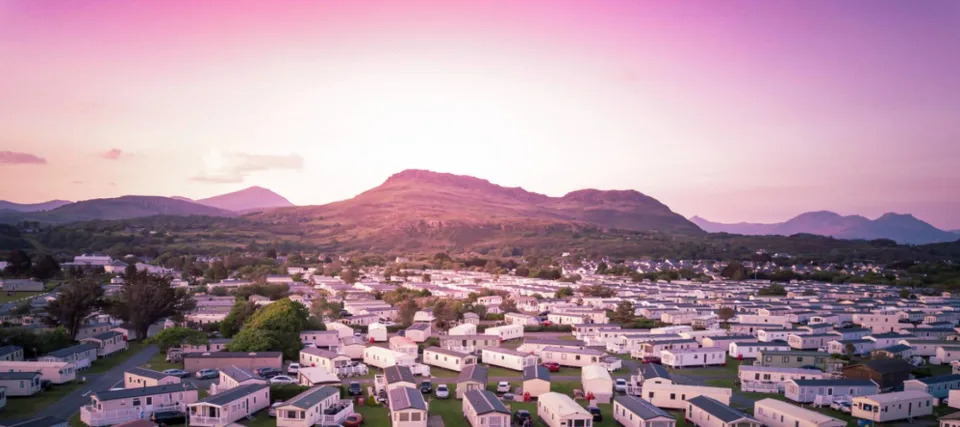
Corporate landlords are gobbling up mobile home parks and rapidly driving up rents — here’s why the space is so attractive to them
Vishesh Raisinghani – December 5, 2022
Corporate landlords are gobbling up mobile home parks and rapidly driving up rents — here’s why the space is so attractive to them
The hunt for yield has pushed private equity firms and professional investors into new segments of the real estate market.
In recent years, sophisticated investors have snapped up multi-family units and single-family homes. Now, corporate landlords are targeting the most cost-effective segment of the real estate market: mobile home parks
The most affordable U.S. housing option
Manufactured homes or mobile homes are considered the most affordable non-subsidized housing option in America. That’s because the owners own only the prefabricated unit and not the land under the home. The land is usually leased from the landlord of a trailer park.
The average monthly rent for a mobile home in 2021 was $593. That’s significantly lower than the average one-bedroom condo rental rate of $1,450. The mobile park rental also often includes utilities and insurance.
Rents typically rise 4% to 6% annually and renters have the flexibility to move their housing unit to another park. These factors make the manufactured home highly attractive to low-income households.
As of 2020, nearly 22 million Americans lived in mobile homes. That’s 6.7% of the total population or about one in 15 people across the country. However, the economic inefficiencies that make these manufactured homes affordable also make them attractive to professional investors.
Investing in mobile home parks
Factors such as below-market rents and disrepair make mobile home parks attractive for investors seeking to add value. The typical mobile home park lot costs $10,000, which means 80 lots would be worth $800,000 on average.
Put simply, the entry price for these parks is much lower than multi-family apartments and condo buildings across the country.
Professional investors can also raise rents significantly to improve the valuation of the property. Attracting tenants with higher incomes or improving the park’s amenities and infrastructure are other value-add strategies that make this asset class appealing.
The fact that moving a typical mobile home costs between $3,000 to $10,000 also means that most tenants are unable to afford the move. This gives landlords immense pricing power.
Meanwhile, the yield is much higher. The capitalization rate (the ratio of net operating income to market price) could be as high as 9%, according to real estate partners Dave Reynolds and Frank Rolfe, who together are the fifth-largest owner of mobile home parks in the U.S.
The largest mobile park landlord is real estate veteran Sam Zell. Zell’s Equity LifeStyle Properties (ELS) owns 165,000 units across the country and the asset is a key element of his $5.4 billion fortune.
In recent years, larger investors such as Singapore’s sovereign wealth fund GIC and private equity firms such as The Carlyle Group, Brookfield, Blackstone, and Apollo have also added exposure to this asset class.
Even Warren Buffett is involved. His firm’s subsidiary, Clayton Homes, is the largest manufacturer of mobile homes in the U.S., and also operates two of the biggest mobile home lenders, 21st Mortgage Corp. and Vanderbilt Mortgage.
You can invest too
Retail investors looking for exposure to mobile home parks have plenty of options. Acquiring a park is, perhaps, the most straightforward way to access this asset class. However, publicly-listed stocks and real estate investment trusts offer exposure too.
Sam Zell’s Equity LifeStyle Properties is listed on the New York Stock Exchange under the ticker ELS. Sun Communities Inc. (SUI) owns 146,000 units across the U.S. and some in Canada, while Legacy Housing Corp. (LEGH) builds, sells, and finances manufactured homes.
Retail and institutional investors could see more upside from this segment as the economic inefficiencies are ironed out.
How much do you need to earn annually to afford a house in Los Angeles?
Salvador Hernandez – December 1, 2022
A home for sale in the Mission Hills area of Los Angeles on Oct. 11. (Brian van der Brug / Los Angeles Times)
The annual income needed to buy a home in Los Angeles skyrocketed past $220,000, a recent study found, with higher mortgage rates and inflation cutting deeper into household incomes.
That means the ability to own a home is a goal inching further and further away from more families and households in Los Angeles, where the median annual household income in 2020 was just over $65,000.
According to the residential real estate firm Redfin, the yearly salary needed now to buy a median-priced home in the city and comfortably make the mortgage payment is now $221,592, up nearly 41% from last year.
In Los Angeles, the high cost of housing has also played a role in making it the most overcrowded large U.S. county.
Across the U.S., home buyers need to earn $107,281 a year, or 45.6% more, in 2022 compared with the previous year to buy a typical home, the study conducted by Redfin found.
Rising mortgage rates are the leading factor for the higher housing cost, according to the study, which found that from February 2020 to October 2022, the monthly payment for a family buying a median-priced home increased about 70%.
Home prices have also remained relatively steady, meaning that those who can still afford a home need to readjust their budgets, while others have been priced out.
“High rates are making buyers rethink their priorities, as many of them can no longer afford the home they want in the location they want,” said Chelsea Traylor, a Redfin agent.
The biggest spike has been in Florida, where the average mortgage payment increased more than 73% in North Port, where an annual salary of $131,535 is now needed to afford a home. The salary needed to buy a median home increased to $128,892 in Miami as well, a rise of more than 63% in a single year.
In 93 metro areas analyzed by Redfin, the agency found all of them needed at least a 30% salary increase to buy a median-priced home. Prospective home buyers in at least half those areas needed to make a minimum of $100,000 a year.
Redfin’s study compared median monthly mortgage payments in October 2022 and October 2021, and considered an affordable monthly payment to be no more than 30% of the home buyer’s income.
The study also found that although some areas in California — like the Bay Area — had “smaller-than-average” increases in income requirements, the state is still home to five of the most expensive places to own a home.
In San Francisco, the salary needed to buy a median-priced home soared to more than $402,000 and, in San Jose, a salary of more than $363,000 was needed to make the monthly mortgage payments. In Anaheim, home buyers needed about $254,000 a year, followed by Oakland, with a required salary of $247,559, and Los Angeles.
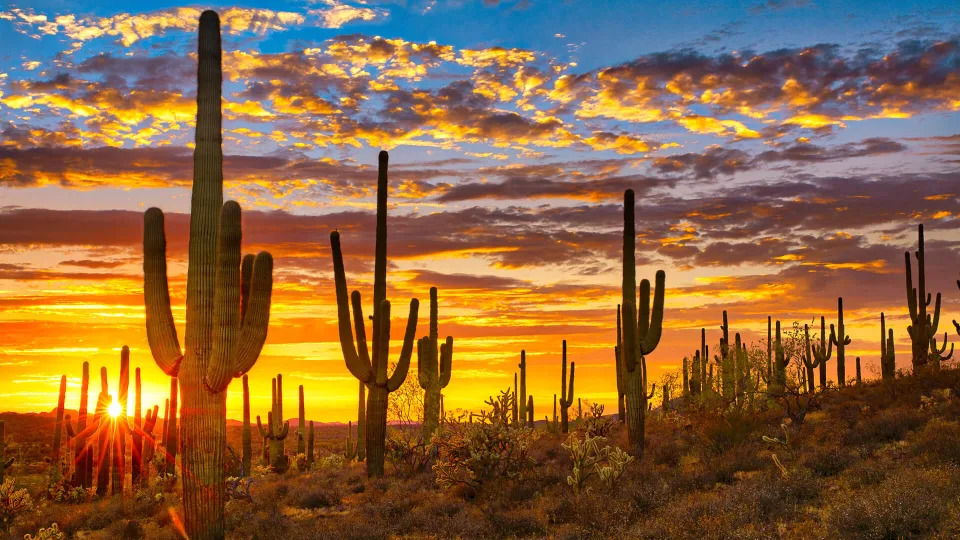
With warm weather and relatively affordable living costs, Arizona has long been a popular destination for retirees. While the average monthly costs of the necessities (rent, groceries, healthcare and utilities) total $2,626 across the U.S., there are several cities in Arizona where you can live on even less.
GOBankingRates has identified the Arizona cities where not only could you live on $2,500 a month in retirement, but where you could also live well. Only cities with livability scores of 65 or higher (on a scale of 1 to 100) were considered. These are the best Arizona cities for retirees to live on $2,500 a month.
Shutterstock.com
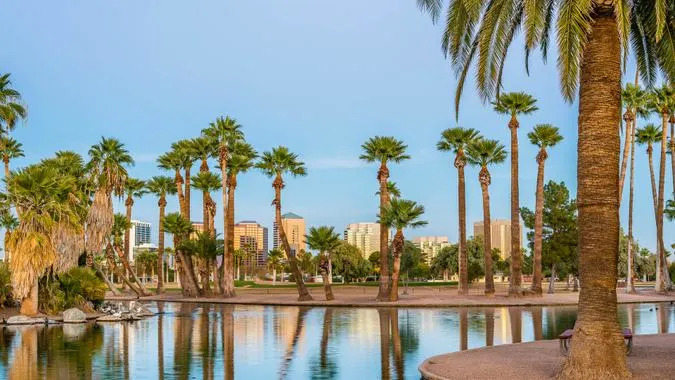
Phoenix
Total monthly expenditures: $2,397
Livability score: 65
Although Phoenix is the most expensive city on this ranking, it’s still relatively affordable compared to other places in the U.S. At $341, the average monthly cost of groceries for a person age 65 or older is less than the national average of $350. And healthcare is also more affordable — the average monthly cost for this age group is $512 in Phoenix, while the national average is $556.
Thunderbird Conservation Park lo / Shutterstock.com
Glendale
Total monthly expenditures: $2,369
Livability score: 73
Affordable housing and groceries make Glendale a smart choice for retirees on budgets. The average rent for a one-bedroom is $1,196, while the average monthly cost of groceries for those age 65 and older is $339.
benedek / Getty Images/iStockphoto
Tucson
Total monthly expenditures: $2,063
Livability score: 65
Tucson is the most affordable city on this list: The average rent for a one-bedroom is $962, the average monthly cost for groceries is $335, the average monthly cost for healthcare is $453 and the average monthly cost for utilities is $313. However, the No. 1 city has Tucson beat in terms of livability, as well as the percentage of the population that’s 65 and older, which is 14.8% here.
DenisTangneyJr / Getty Images
Mesa
Total monthly expenditures: $2,456
Livability score: 77
Although Mesa is not the cheapest city on this list, it has the highest percentage of people age 65 and older at 16.6% and the highest livability score. There’s no shortage of things to do in Mesa, with Wild West towns for history lovers, mountains and lakes for those seeking outdoor adventure, museums, restaurants, shopping, golf courses and more.
7 Florida Cities That Could Be Headed for a Housing Crisis
Jordan Rosenfeld – November 30, 2022
TraceRouda / Getty Images/iStockphoto
Florida seems to be a state that people are always flocking to and never leaving, with its temperate weather, great beaches and lots of excellent attractions. However, even Florida is feeling the results of market forces, which are increasing mortgage rates, driving up home prices, and thus driving out people. In fact, the Florida cities on this list are showing alarming signs that could be pointing toward a housing crisis.
In order to find the Florida cities showing cause for concern, GOBankingRates looked at the largest 200 cities in terms of total housing units and some crucial factors such as percentage of mortgages that are between 30 and 90+ days delinquent and homeowner and renter vacancy rates. Data was drawn from the Consumer Financial Protection Bureau, the Consumer Protection Bureau, and RealtyTrac. Here are seven most likely to end up with a housing crisis.
‘We the People’ at heart of White House holiday decorations
Darlene Superville – November 28, 2022
Cross Hall of the White House is decorated for the holiday season during a press preview of holiday decorations at the White House, Monday, Nov. 28, 2022, in Washington. (AP Photo/Patrick Semansky)The Green Room of the White House is decorated for the holiday season during a press preview of holiday decorations at the White House, Monday, Nov. 28, 2022, in Washington. (AP Photo/Patrick Semansky)The East Colonnade of the White House is decorated for the holiday season during a press preview of holiday decorations at the White House, Monday, Nov. 28, 2022, in Washington. (AP Photo/Patrick Semansky)The White House Christmas Tree is on display in the Blue Room of the White House during a press preview of holiday decorations at the White House, Monday, Nov. 28, 2022, in Washington. (AP Photo/Patrick Semansky)A gingerbread replica of the White House and a sugar cookie replica of Independence Hall are on display in the State Dining Room of the White House during a press preview of holiday decorations at the White House, Monday, Nov. 28, 2022, in Washington. (AP Photo/Patrick Semansky)Depictions of Willow, bottom left, and Commander, the Biden family’s cat and dog, are part of decorations in the Vermeil Room of the White House during a press preview of holiday decorations at the White House, Monday, Nov. 28, 2022, in Washington. (AP Photo/Patrick Semansky)Cross Hall and the Blue Room of the White House are decorated for the holiday season during a press preview of holiday decorations at the White House, Monday, Nov. 28, 2022, in Washington. (AP Photo/Patrick Semansky)Former President Barack Obama’s portrait is on display alongside decorations in the Grand Foyer of the White House during a press preview of holiday decorations at the White House, Monday, Nov. 28, 2022, in Washington. (AP Photo/Patrick Semansky)The Blue Room of the White House is decorated for the holiday season during a press preview of holiday decorations at the White House, Monday, Nov. 28, 2022, in Washington. (AP Photo/Patrick Semansky)
WASHINGTON (AP) — “We the People” is Jill Biden’s holiday theme with White House decorations designed for “the people” to see themselves in the tree ornaments, mantel displays, mirrors and do-it-yourself creations that have turned the mansion’s public spaces into a winter wonderland.
“The soul of our nation is, and has always been, ‘We the People,’” the first lady said at a White House event honoring the volunteers who decorated over Thanksgiving weekend. “And that is what inspired this year’s White House holiday decoration.”
“The values that unite us can be found all around you, a belief in possibility and optimism and unity,” Jill Biden said. “Room by room, we represent what brings us together during the holidays and throughout the year.”
Public rooms are dedicated to unifying forces: honoring and remembering deceased loved ones, words and stories, kindness and gratitude, food and traditions, nature and recreation, songs and sounds, unity and hope, faith and light, and children.
A burst of pine aroma hits visitors as they step inside the East Wing and come upon trees adorned with mirrored Gold Star ornaments bearing the names of fallen service members.
Winter trees, woodland animals and glowing lanterns placed along the hallway help give the feeling of walking through snow.
Likenesses of Biden family pets — Commander and Willow, the dog and cat — first appear at the end of the hallway before they are seen later in the Vermeil Room, which celebrates kindness and gratitude, and the State Dining Room, which highlights children.
Recipes contributed by the small army of volunteer decorators spruce up the China Room’s mantel. Handwritten ones — for apple crisp and pizzelle, an Italian cookie — are family recipes shared by the first lady.
Aides say she was inspired by people she met while traveling around the country and by the nation’s founding documents, the Declaration of Independence and the Constitution.
A copy of the Declaration of Independence is on display in the library, while the always-show-stopping 300-pound (136 kilogram) gingerbread White House this year includes a sugar cookie replica of Philadelphia’s Independence Hall, where the documents were signed.
The executive pastry chef used 20 sheets of sugar cookie dough, 30 sheets of gingerbread dough, 100 pounds (45 kilograms) of pastillage, 30 pounds (14 kilograms) of chocolate and 40 pounds (18 kilograms) of royal icing to create the gingerbread and sugar cookie masterpiece.
A new addition to the White House collection this year is a menorah, which is lit nightly during the eight-day Jewish festival of Hanukkah. White House carpenters built the menorah out of wood that was saved from a Truman-era renovation and sterling silver candle cups.
Some 50,000 visitors are expected to pass through the White House for the holidays, including tourists and guests invited to nearly a month’s worth of receptions. Among them will be French President Emmanuel Macron, who will meet with President Joe Biden at the White House on Thursday and be honored at a state dinner, the first of the Biden administration.
More than 150 volunteers, including two of the first lady’s sisters, helped decorate the White House during the long Thanksgiving holiday weekend.
The decorations include more than 83,000 twinkling lights on trees, garlands, wreaths and other displays, 77 Christmas trees and 25 wreaths on the White House exterior. Volunteers also used more than 12,000 ornaments, just under 15,000 feet (4,500 meters) of ribbon and more than 1,600 bells.
Some of the decorations are do-it-yourself projects that the first lady hopes people will be encouraged to recreate for themselves, aides said. They include plastic drinking cups turned into bells and table-top Christmas trees made from foam shapes and dollar store ramekins.
Groupings of snowy trees fill corners of the East Room, which reflects nature and recreation, and scenes from four national parks are depicted on each fireplace mantel: Grand Canyon, Yellowstone, Great Smoky Mountains and Shenandoah.
In the Blue Room, the official White House Christmas tree — an 18 1/2-foot (5.6-meter) Concolor fir from Auburn, Pennsylvania — is decorated to represent unity and hope with handmade renderings of the official birds from all 57 territories, states and the District of Columbia.
The State Dining Room is dedicated to the next generation — children — and its trees are decorated with self-portrait ornaments made by students of the 2021 Teachers of the Year, “ensuring that children see themselves” in the décor, the White House said.
Hanging from the fireplace in the State Dining Room are the Biden family Christmas stockings.
“We the People” are celebrated again in the Grand Foyer and Cross Hall on the State Floor, where metal ribbons are inscribed with the names of all the states, territories and the District of Columbia.
As part of Joining Forces, her White House initiative to support military families, Jill Biden was joined by National Guard leaders from across the country, as well as National Guard families. Her late son, Beau Biden, was a major in the Delaware Army National Guard.
She met before the event with children from National Guard families, telling them she wanted to hear their stories because “you have served right alongside of your parents and you deserve to have your courage, and your sacrifice, recognized, too.”
The White House noted that the holiday guide book given to visitors was designed by Daria Peoples, an African American children’s book author who lives in Las Vegas. Peoples is a former elementary school teacher who has written and illustrated a series of picture books to support children of color, including those who have experienced race-based trauma.
Dreaming of beachfront real estate? Much of Florida’s coast is at risk of storm erosion that can cause homes to collapse, as Daytona just saw
Zhong-Ren Peng, Professor of Urban and Regional Planning,
University of Florida November 23, 2022
Dozens of homes were left unstable in the Daytona Beach area after Hurricane Nicole’s erosion. Joe Raedle/Getty Images
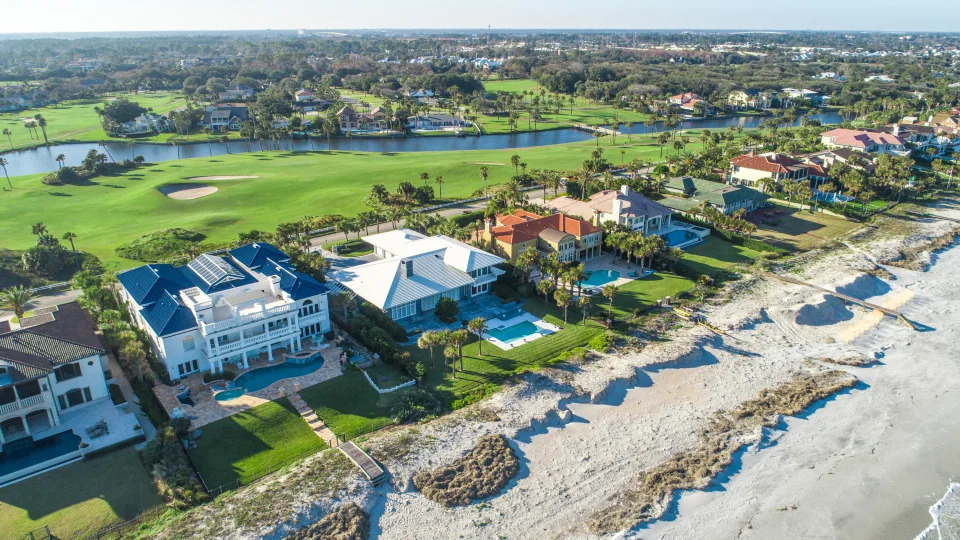
Back-to-back hurricanes left an unnerving scene on the Florida coast in November 2022: Several houses, and even swimming pools, were left dangling over the ocean as waves eroded the earth beneath them. Dozens of homes and condo buildings in the Daytona Beach area were deemed unsafe.
The destruction has raised a disturbing question: How much property along the rest of the Florida coast is at risk of collapse, and can it be saved?
As the director of iAdapt, the International Center for Adaptation Planning and Design at the University of Florida, I have been studying climate adaptation issues for the last two decades to help answer these questions.
Rising seas, aging buildings
Living by the sea has a strong appeal in Florida – beautiful beaches, ocean views, and often pleasant breezes. However, there are also risks, and they are exacerbated by climate change.
Sea level is forecast to rise on average 10 to 14 inches (25-35 cm) on the U.S. East Coast over the next 30 years, and 14 to 18 inches (35-45 cm) on the Gulf Coast, as the planet warms. Rising temperatures are also increasing the intensity of hurricanes.
With higher seas and larger storm surges, ocean waves more easily erode beaches, weaken sea walls, and submerge cement foundations in corrosive salt water. Together with subsidence, or sinking land, they make coastal living riskier.
The risk of erosion varies depending on the soil, geology and natural shoreline changes. But it is widespread in U.S. coastal areas, particularly Florida. Maps produced by engineers at the Florida Department of Environmental Protection show most of Florida’s coast faces critical erosion risk.
Aging or poorly maintained buildings and sea walls, and older or poor construction methods and materials, can dramatically aggravate the risk.
Designing better building codes
So, what can be done to minimize the damage?
The first step is to build sturdier buildings and fortify existing ones according to advanced building codes.
Building codes change over time as risks rise and construction techniques and materials improve. For example, design criteria in the Florida Building Code for South Florida changed from requiring some new buildings to be able to withstand 146 mph sustained winds in 2002 to 195 mph winds in 2021, meaning a powerful Category 5 hurricane.
The town of Punta Gorda, near where Hurricane Ian made landfall in October 2022, showed how homes constructed to the latest building codes have a much better chance of survival.
Many of Punta Gorda’s buildings has been rebuilt after Hurricane Charley in 2004, shortly after the state updated the Florida Building Code. When Ian hit, they survived with less damage than those in neighboring towns. The updated code had required new construction to be able to withstand hurricane-force winds, including having shutters or impact-resistant window glass.
Many homes in Punta Gorda fared better in Hurricane Ian’s winds because they had been rebuilt to higher standards after Hurricane Charley in 2002. Bryan R. Smith / AFP
However, even homes built to the latest codes can be vulnerable, because the codes don’t adequately address the environment that buildings sit on. A modern building in a low-lying coastal area could face damage in the future as sea level rises and the shoreline erodes, even if it meets the current flood zone elevation standards.
This is the problem coastal residents faced during Hurricanes Nicole and Ian. Flooding and erosion, exacerbated by sea-level rise, caused the most damage – not wind.
The dozens of beach houses and condo buildings that became unstable or collapsed in Volusia County during Hurricane Nicole might have seemed fine originally. But as the climate changes, the coastal environment changes, too, and one hurricane could render the building vulnerable. Hurricane Ian damaged sea walls in Volusia County, and some couldn’t be repaired before Nicole struck.
How to minimize the risk
The damage in the Daytona area in 2022 and the deadly collapse a year earlier of a condo tower in Surfside should be a wake-up call for all coastal communities.
Data and tools can show where coastal areas are most vulnerable. What is lacking are policies and enforcement.
Florida recently began requiring that state-financed constructors conduct a sea-level impact study before starting construction of a coastal structure. I believe it’s time to apply this new rule to any new construction, regardless of the funding source.
With Hurricane Nicole’s storm surge coinciding with high tide, the waves breached a condo tower’s sea walls in Daytona Beach in November 2022. Joe Raedle/Getty Images
A comprehensive sea-level impact study requirement should also allow for risk-based enforcement, including barring construction in high-risk areas.
Similarly, vulnerability audits – particularly for multistory buildings built before 2002 – can check the integrity of an existing structure and help spot new environmental risks from sea-level rise and beach erosion. Before 2002, the building standard was low and enforcement was lacking, so many of the materials and the structures used in those buildings aren’t up to the standards of today.
What property owners can do
There is a range of techniques homeowners can use to fortify homes from flood risks.
In some places, that may mean elevating the house or improving the lot grading so surface water runs away from the building. Installing a sump pump and remodeling with storm-resistant building materials can help.
FEMA suggests other measures to protect against coastal erosion, such as replenishing beach sand, strengthening sea walls and anchoring the home. Engineering can help communities, temporarily at least, through sea walls, ponds and increased drainage. But in the long term, communities will have to assess the vulnerability of coastal areas. Sometimes the answer is to relocate.
However, there’s a disturbing trend after hurricanes, and we’re seeing it with Ian: Many damaged areas see lots of money pouring in to rebuild in the same vulnerable locations. An important question communities should be asking is, if these are already in high-risk areas, why rebuild in the same place?
Election certification avoiding chaos, except in Arizona
Morgan Lee and Scott Sonner – November 19, 2022
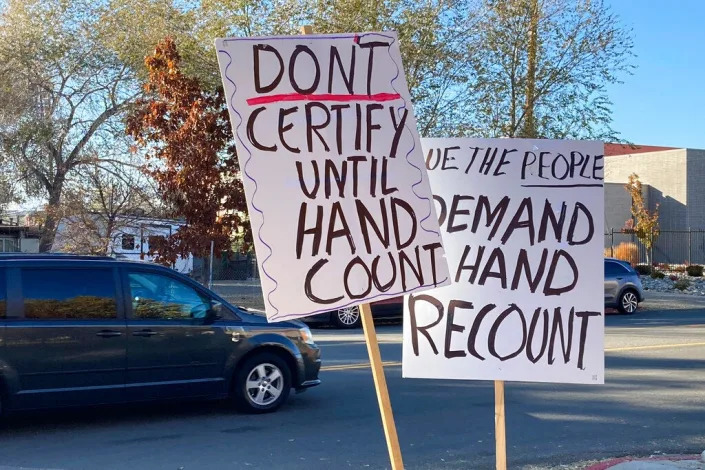
Signs are displayed outside the Washoe County Commission chambers to demand a hand count of ballots before commissioners were scheduled to canvass the vote in Reno, Nev., Friday, Nov. 18, 2022.
SANTA FE — Certification of this year’s midterm election results appears to be proceeding smoothly with little controversy across the country, with a small Arizona county being a rare exception, calming fears that local commissions consumed by talk of election conspiracies would create chaos by refusing to validate the will of the voters.
Action has been orderly even in places where suspicions about election fairness ran deep and led to bitter clashes at local public meetings.
In Nevada, a state that has been a hotbed of election conspiracy accusations and movements to ditch voting machines in favor of hand-counting all ballots, all 17 counties met a Friday-night deadline to certify election results.- ADVERTISEMENT -https://s.yimg.com/rq/darla/4-10-1/html/r-sf-flx.html
In rural Elko County, the county commission unanimously certified the results just weeks after questioning the reliability of voting machines and expressing support for hand-counting all ballots.
Commissioners praised county Clerk Kris Jakeman for a post-election audit that included random hand-counts backing up the results from machine tabulators. Some commissioners had watched the audit and said it helped relieve some of their skepticism.
“I’ve learned a lot this year,” said Commissioner Delmo Andreozzi. “And I appreciate everybody’s willingness to help educate me and help me become more aware about the whole process.”
It was much the same story in New Mexico, where several rural county commissions have been under intense pressure by some residents to reject certification since the state’s primary election in June.
In Otero County, where a crisis occurred this summer when commissioners initially denied certification after the primary, the general election results were certified this week with a drama-free unanimous vote.
“In my heart of hearts, I think Otero County does a good job,” Commission Chairwoman Vickie Marquardt said. “I have no reason not to certify this election.”
In another rural New Mexico county, where a livid crowd in June berated county commissioners as “cowards” and “traitors” as they certified the primary results, the room fell silent this week as the all-Republican board pored over vote tallies and signatures from poll judges. Commissioners peppered Torrance County election officials with questions before voting 3-0 to certify.
The commission had spent months responding to doubts about voting systems with a hand recount of the primary ballots and invitations to attend security testing of ballot-counting machines.
“I’m not seeing any discrepancies, commissioners. Are you?” Republican commission Chairman Ryan Schwebach told colleagues. He won reelection to the local post with roughly two-thirds of the vote, defeating a challenger who said vote-counting machines can’t be trusted. All but one county in New Mexico certified vote tallies this week.
Conspiracy-focused protesters rallied Friday outside an election board meeting in Reno, Nevada, with signs reading “Don’t certify before hand count” and “We the people demand hand count.” Despite the protests, the Washoe County commission voted 4-1 to certify the results.
County Commissioner Jeanne Herman, who represents the most rural part of the county, which stretches north to the border with Oregon, cast the lone dissenting vote. She made a failed attempt earlier this year to push an election reform package that, among other things, would have posted National Guard troops at polling places and relied almost exclusively on paper ballots.
Christiane Brown, a Reno gun control activist, told the commission that the system worked this year, and even most candidates who had embraced the 2020 election falsehoods conceded defeat.
“Denying results does not change them,” she said. “The people rejected lies, disinformation, intimidation and ignorance, as well as hatred. The voters spoke, the system worked, and the rule of law held.”
In Arizona, the state’s 15 counties are just beginning to certify their election results and have until Nov. 28 to do their canvass and send final vote tallies to the secretary of state. Kari Lake, the Republican who lost the race for governor, has refused to concede and in a Thursday video said she has a team of lawyers reviewing whether Election Day issues at the polls disenfranchised some voters.
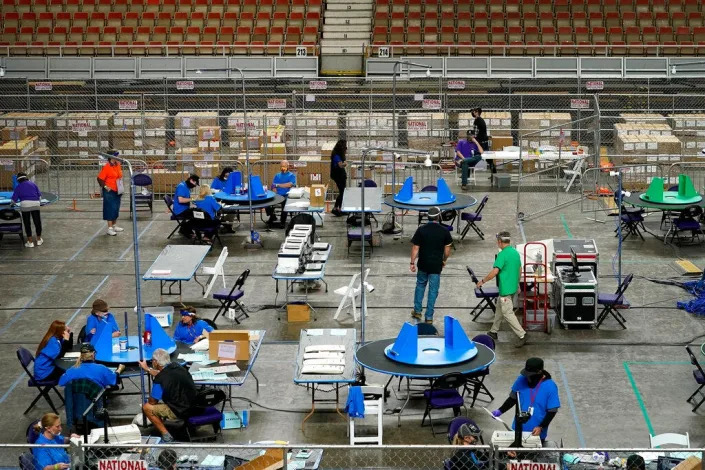
Maricopa County, Ariz., ballots cast in the 2020 general election are examined and recounted by contractors working for Florida-based company, Cyber Ninjas, in Phoenix on May 6, 2021. At least one recount will be on tap in Arizona after the counting from the Nov. 8, 2022, midterm elections ends.
The two Republicans who control the board in southeastern Arizona’s Cochise County delayed their certification Friday night after hearing from a trio of conspiracy theorists who argue vote-counting machines are not certified. The board ignored testimony from the state elections director, who said the contention was false.
The board delayed the vote until the Nov. 28 deadline, saying they wanted to see proof and have the three men evaluate it. State Elections Director Kori Lorick threatened legal action “to compel compliance” and ensure that votes from about 46,000 residents were property reported.
The state is set to certify results from all 15 counties on Dec. 5, a move needed before a recount can proceed in the race for state attorney general, which is too close to call.
Under Arizona law, the only role of the elected county boards is to accept the numbers as they are tallied by their elections departments. If they refuse to do so, either the secretary of state or a candidate would sue.
Election certification emerged as an issue after the 2020 presidential election in Michigan, where Trump and his allies pressured Republicans on both the state certification board and the one for Wayne County, which includes Detroit. The results, showing Democrat Joe Biden winning the state by 154,000 votes, were eventually certified.
Detroit City Clerk Janice Winfrey said her office anticipates having no problems with certification of the Nov. 8 general election. By midday Friday, 71 of the state’s 83 counties had certified results.
“More Michigan citizens cast ballots than ever before in a midterm election, and now bipartisan canvassing boards across the state are certifying the results in accordance with state law,” said Michigan Secretary of State Jocelyn Benson. “We are optimistic that all canvassers will continue to demonstrate this level of professionalism and commitment to upholding the will of the voters.”
Sonner reported from Reno, Nevada. Associated Press writers Christina A. Cassidy in Atlanta, Ken Ritter in Las Vegas, Gabe Stern in Reno; and Corey Williams in Detroit contributed to this report.
West Texas earthquake causes damage hundreds of miles away
November 18, 2022
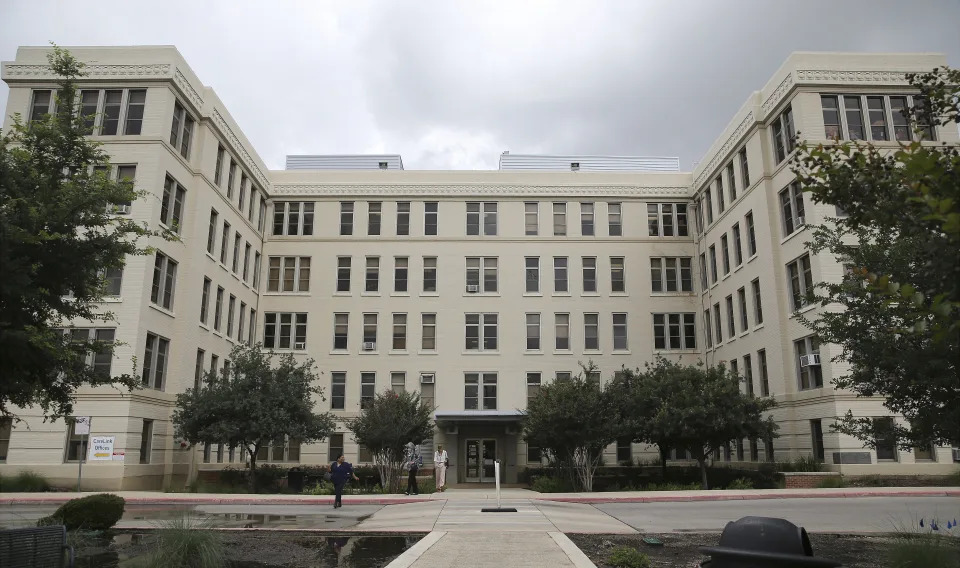
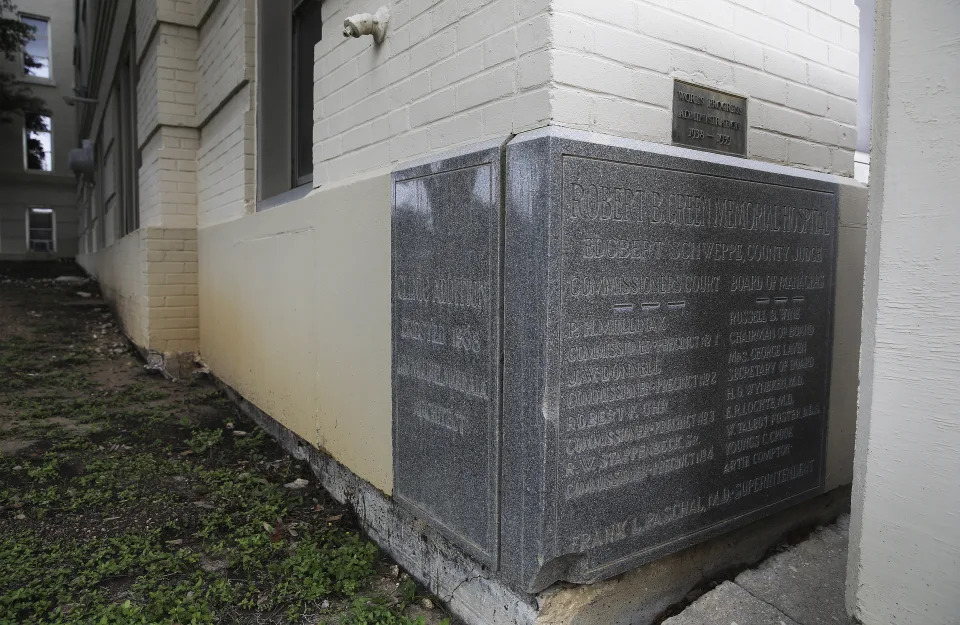
This May 24, 2021 photo shows the Robert B. Green hospital building, Bexar county’s original hospital that has been standing for more than 100 years, in San Antonio. A strong earthquake that struck a remote area of the West Texas desert on Wednesday, Nov. 16, 2022, caused damage in San Antonio, hundreds of miles from the epicenter, officials said. University Health said Thursday, Nov. 17, that the historical building was deemed unsafe because of damage sustained from the quake. (Kin Man Hui/The San Antonio Express-News via AP)This May 24, 2021 photo shows a historical marker on the corner of the old Robert B. Green Hospital building, Bexar county’s original hospital that has been standing for more than 100 years, in San Antonio. A strong earthquake that struck a remote area of the West Texas desert on Wednesday, Nov. 16, 2022, caused damage in San Antonio, hundreds of miles from the epicenter, officials said. University Health said Thursday, Nov. 17, that the historical building was deemed unsafe because of damage sustained from the quake. (Kin Man Hui/The San Antonio Express-News via AP) ASSOCIATED PRESS
University Health said Thursday that its Robert B. Green historical building was deemed unsafe because of damage sustained from the quake, which hit Wednesday in a remote area near the New Mexico border. The historical building is more than 100 years old and has been closed off for safety reasons, University Health said.
The quake initially had a 5.3 magnitude but that was revised upward to 5.4. The earthquake’s epicenter was about 23 miles (37 kilometers) south of Mentone, a tiny community about 350 miles (560 kilometers) northwest of San Antonio.
It was one of the strongest earthquakes on record in Texas and hit in an area known for oil and gas production. On Thursday, the state’s Railroad Commission — which regulates Texas’ oil and gas industry — sent inspectors to the site to determine whether any actions were needed.
Earthquakes in the south-central United States have been linked to oil and gas production, particularly the underground injection of wastewater. The U.S. Geological Survey said research suggests that a 5.0 magnitude quake that struck the same West Texas area in 2020 was the result of a large increase of wastewater injection in the region.
In neighboring Oklahoma, thousands of earthquakes of varying magnitudes have been recorded in the past decade, leading state regulators to direct producers to close some injection wells.
Global population passes 8 billion, says UN amid concerns of impact on climate crisis
Sravasti Dasgupta – November 15, 2022
The world population has crossed eight billion, the United Nations said on Tuesday as it warned of the impact of climate change and resource scarcity.
John Wilmoth, director of the UN’s population division said that reaching eight billion people is “a sign of human success, but it’s also a great risk for our future”.
According to a statement by the UN, the global population is growing at its slowest rate since 1950.
UN projections suggest that the global population could grow to around 8.5 billion in 2030 and 9.7 billion in 2050.
It is projected to reach a peak of around 10.4 billion people during the 2080s and to remain at that level until 2100.
The figures were earlier released by the UN in a report ahead of World Population Day in July.
“China and India, with more than 1.4 billion each, accounted for most of the population in these two regions,” the report said.
“India is projected to surpass China as the world’s most populous country in 2023,” it added.
Despite the global population increasing, experts say that the growth rate has fallen steadily to less than 1 per cent per year.
“A big part of this story is that this era of rapid population growth that the world has known for centuries is coming to an end,” Mr Wilmoth said.
Experts have warned that the rising population combined with the impact of climate change will adversely affect vulnerable nations and people.
Deborah Balk, a demographic researcher at the City University of New York, said: “African cities will, on average, grow.”
Ms Balk said that this will leave millions more urban dwellers exposed to climate threats such as rising seas.
Analysts warn that there will also be resource scarcity with the population rise.
“Every single person needs fuel, wood, water, and a place to call home,” said Stephanie Feldstein, population and sustainability director at Center for Biological Diversity.
UN officials have also said that rising population is likely to impact achieving sustainable development goals.
“The relationship between population growth and sustainable development is complex and multidimensional” said Liu Zhenmin, UN Under-Secretary-General for Economic and Social Affairs in a statement.
“Rapid population growth makes eradicating poverty, combatting hunger and malnutrition, and increasing the coverage of health and education systems more difficult.
“Conversely, achieving the Sustainable Development Goals, especially those related to health, education and gender equality, will contribute to reducing fertility levels and slowing global population growth.”
Farmland Values Hit Record Highs, Pricing Out Farmers
Linda Qiu – November 13, 2022
Farmland outside of Clark, S.D., on Oct. 26, 2022. (Tim Gruber/The New York Times)
Joel Gindo thought he could finally own and operate the farm of his dreams when a neighbor put up 160 acres of cropland for sale in Brookings County, South Dakota, two years ago. Five thousand or six thousand dollars an acre should do the trick, Gindo estimated.
But at auction, Gindo watched helplessly as the price continued to climb until it hit $11,000 an acre, double what he had budgeted for.
“I just couldn’t compete with how much people are paying, with people paying 10 grand,” he said. “And for someone like me who doesn’t have an inheritance somewhere sitting around, a lump sum of money sitting around, everything has to be financed.”
What is happening in South Dakota is playing out in farming communities across the nation as the value of farmland soars, hitting record highs this year and often pricing out small or beginning farmers. In the state, farmland values surged by 18.7% from 2021 to 2022, one of the highest increases in the country, according to the most recent figures from the Agriculture Department. Nationwide, values increased by 12.4% and reached $3,800 an acre, the highest on record since 1970, with cropland at $5,050 an acre and pastureland at $1,650 an acre.
A series of economic forces — high prices for commodity crops like corn, soybeans and wheat; a robust housing market; low interest rates until recently; and a slew of government subsidies — have converged to create a “perfect storm” for farmland values, said Jason Henderson, a dean at the College of Agriculture at Purdue University and a former official at the Federal Reserve Bank of Kansas City, Missouri.
As a result, small farmers like Gindo are now going up against deep-pocketed investors, including private equity firms and real estate developers, prompting some experts to warn of far-reaching consequences for the farming sector.
Young farmers named finding affordable land for purchase the top challenge in 2022 in a September survey by the National Young Farmers Coalition, a nonprofit group.
Already, the supply of land is limited. About 40% of farmland in the United States is rented, most of it owned by landlords who are not actively involved in farming. And the amount of land available for purchase is extremely scant, with less than 1% of farmland sold on the open market annually.
The booming housing market, among a number of factors, has bolstered the value of farmland, particularly in areas close to growing city centers.
“What we have seen over the past year or two was, when housing starts to go up with new building construction, that puts pressure on farmland, especially on those urban fringes,” Henderson said. “And that leads to a cascading ripple effect into land values even farther and farther away.”
Government subsidies to farmers have also soared in recent years, amounting to nearly 39% of net farm income in 2020. On top of traditional programs like crop insurance payments, the Agriculture Department distributed $23 billion to farmers hurt by President Donald Trump’s trade war from 2018 to 2020 and $45.3 billion in pandemic-related assistance in 2020 and 2021. (The government’s contribution to farm income decreased to 20% in 2021 and is forecast to be about 8% in 2022.)
Those payments, or even the very promise of additional assistance, increase farmland values as they create a safety net and signal that agricultural land is a safe bet, research shows.
“There’s an expectation in the market that the government’s going to play a role when farm incomes drop, so that definitely affects investment behavior,” said Jennifer Ifft, a professor of agricultural economics at Kansas State University.
Eager investors are increasingly turning to farmland in the face of volatility in the stock and real estate markets. Bill Gates, the Microsoft co-founder and billionaire, is the biggest private farmland owner in the country and recently won approval to buy 2,100 acres in North Dakota for $13.5 million.
The number of private equity funds seeking to buy stakes in farmland has ticked higher, said Tim Koch, a vice president at an agricultural financial cooperative in the Midwest, Farm Credit Services of America. Pension funds also consider farmland a stable investment, Ifft said.
Farmers, too, have witnessed an influx of outside interest. Nathaniel Bankhead, who runs a farm and garden consulting business in Chattanooga, Tennessee, has banded with a group of other agricultural workers to save up to $500,000 to buy about 60 acres of land. For months, the collective has been repeatedly outbid by real estate developers, investors looking to diversify their portfolios and urban transplants with “delusional agrarian dreams,” he said.
“Places that I have looked at as potential farmland are being bought up in cash before I can even go through the process that a working-class person has to do to access land,” he said. “And the ironic thing is, those are my clients — like I get hired by them to do as a hobby what I’m trying to do as a livelihood. So it’s tough to watch.”
Bankhead characterized the current landscape as a form of “digital feudalism” for aspiring working farmers. Wealthy landowners drive up land prices, contract with agricultural designers like himself to enact their vision and then hire a caretaker to work the land — pricing out those very employees from becoming owners themselves.
“They kind of lock that person to this new flavor of serfdom where it’s, you might be decently paid, you’ve got access to it, but it will never be yours,” he said.
Unable to afford land in her native Florida, Tasha Trujillo recently moved her flower farm to South Carolina. Trujillo had grown cut flowers and kept bees on a parcel of her brother-in-law’s 5-acre plant nursery in Redland, a historically agricultural region in the Miami area, about 20 miles south of downtown.
When she sought to expand her farm and buy her own land, she quickly found that prices were out of reach, with real estate developers driving up land values and pushing out agriculture producers.
A 5-acre property in the Redlands now costs $500,000 to $700,000, Trujillo said. “So I essentially didn’t have a choice but to leave Miami and Florida as a whole.”
“Farming is a very stressful profession,” she added. “When you throw in land insecurity, it makes it 20 times worse. So there were many, many times where I thought, oh, my God, I’m not going to be able to do this. This isn’t feasible.”
As small and beginning farmers are shut out — the latest agricultural census said that the average age of farmers inched up to 57.5 — the prohibitively high land values may have ripple effects on the sector at large.
Brian Philpot, CEO of AgAmerica, an agricultural lending institution, said his firm’s average loan size had increased as farms consolidated, squeezing out family farms. This, he argued, could lead to a farm crisis.
“Do we have the skills and the next generation of people to farm it? And two, if the answer is going to be, we’re going to have passive owners own this land and lease it out, is that very sustainable?” he said.
Henderson also warned that current farmers may face increased financial risk as they seek to leverage their high farmland values, essentially betting the farm to expand it.
“They’ll buy more land, but they’ll use debt to do it,” he said. “They’ll stretch themselves out.”
Economists and lenders said farmland values appear to have plateaued in recent months, as the Federal Reserve raised interest rates and the cost of fertilizer and diesel soared. But with high commodity prices forecast for next year, some believe values will remain high.
A native of Tanzania who moved to South Dakota about a decade ago, Gindo bought 7 acres of land to raise livestock in 2019 and currently rents an additional 40 acres to grow corn and soybeans — all the while working full time as a comptroller to make ends meet.
For now, he has cooled off his search for a farm of his own even as he dreams of passing on that land to his son. The more immediate concern, he said, was whether his landlord would raise his rent. So far, the landlord has refrained because Gindo helps him out around the farm.
“He really doesn’t have to lend me his land,” Gindo said. “He can make double that with someone else.”
In Florida, Trujillo said, the owner of the land where her brother-in-law’s nursery sits has spoken of selling the plot while prices remain high, so he too has begun looking for his own property.
“That’s a big fear for a lot of these farmers and nursery owners who are renting land, because you just never know when the owner’s just going to say, ‘You know what, this year, I’m selling, and you’ve got to go,’” she said.
In Tennessee, Bankhead said he considered giving up on owning a farm “multiple times a day” as friends who have been longtime farmers leave the profession.
But so far, he remains committed to staying in the field and doing “the work of trying to keep land in families’ hands and showing there’s more to do with this land than to sell it to real estate developers,” he said. “But the pain of not having my own garden and not being able to have my animals where I live, it never stings any less.”