Assisted-living homes are rejecting Medicaid and evicting seniors

THe Washington Post

Assisted-living homes are rejecting Medicaid and evicting seniors

Christopher Rowland, The Washington Post – April 6, 2023

Shirley Holtz paid private rates for 26 months at an assisted-living facility before qualifying for Medicaid. She lived there for another two years at the Medicaid rate before being evicted. (Family Photo)

Shirley Holtz, 91, used a walker to get around. She had dementia and was enrolled in hospice care. Despite her age and infirmity, Holtz was evicted from the assisted-living facility she called home for four years because she relied on government health insurance for low-income seniors.

Holtz was one of 15 residents told to vacate Emerald Bay Retirement Community near Green Bay, Wis., after the facility stopped accepting payment from a state-sponsored Medicaid program. And Emerald Bay is not alone. A recent spate of evictions has ousted dozens of assisted-living residents in Wisconsin who depended on Medicaid to pay their bills – an increasingly common practice, according to industry representatives.

The evictions highlight the pitfalls of the U.S. long-term care system, which is showing fractures from the pandemic just as a wave of 73 million baby boomers is hitting an age where they are likely to need more day-to-day care. About 4.4 million Americans have some form of long-term care paid for by Medicaid, the state-federal health system for the poor, a patchy safety net that industry representatives say pays facilities too little.

Residents of assisted-living facilities – promoted as a homier, more appealing alternative to nursing homes – face an especially precarious situation. While federal law protects Medicaid beneficiaries in nursing homes from eviction, the law does not protect residents of assisted-living facilities, leaving them with few options when turned out. In Wisconsin, residents who entered facilities on Medicaid, as well as those who drained their private savings after moving in and subsequently enrolled in Medicaid, have been affected.

“It’s a good illustration of how Medicaid assisted-living public policy is still in its Wild West phase, with providers doing what they choose in many cases, even though it’s unfair to consumers,” said Eric Carlson, a lawyer and director of long-term services and support advocacy at the nonprofit group Justice in Aging. “You can’t just flip in and out of these relationships and treat the people as incidental damage.”

The U.S. government does not monitor or regulate assisted-living facilities, and no federal data is available on the frequency of evictions. In Wisconsin, The Washington Post counted at least 50 since the fall based on statements by operators and nonprofit and government Medicaid agencies. But evictions have become so common that some states, including New Jersey, have enacted policies to curb them.

Emerald Bay did not explain why it stopped participating in Medicaid. But advocates, family members and the nonprofit that managed the facility’s Medicaid contract contend the motivation was financial: Medicaid reimbursement is lower than full private pay rates.

Family members said they were upset and angry. Holtz spent her entire savings paying out of pocket with the understanding that she would be permitted to stay once she qualified for low-income insurance, her relatives said. Ann Marra, Holtz’s daughter, said her mother – who worked much of her life as a professional secretary and raised her family in Algoma, a small town on Lake Michigan – deserved better treatment.

Marra feared the eviction would affect her mother’s mental health.

“It’s cruel, heartless and sad,” she said.

After a stressful search, Holtz’s family moved her on March 13 to an assisted-living facility that still honors state Medicaid. Emerald Bay’s operator, Baka Enterprises, did not respond to requests for comment.

Advocates for assisted-living residents worry that pandemic-induced economic conditions are contributing to the problem in pockets of the country. Profits in assisted-living facilities are threatened by a shortage of staff and big spikes in labor costs, inflation that is jacking up the costs of goods, and higher interest rates. Meanwhile, occupancy rates continue to lag behind pre-pandemic peaks.

The industry blames evictions on insufficient Medicaid funding. Reimbursements, made under federal waivers that allow states to spend Medicaid dollars for elderly care outside of nursing homes, are not keeping up with rising costs, industry representatives said.

“Chronic Medicaid underfunding is not sustainable and is limiting participation as well as driving many providers out of the waiver program, reducing access to care options,” said LaShuan Bethea, executive director of the National Center for Assisted Living trade group.

The gap in pay rates between Medicaid and the full amount charged to families paying out of pocket varies among states. While private pay rates are often $5,000 a month or more, Medicaid in many states pays only about $3,000 a month, said Paul Williams, vice president of government relations at Argentum, a trade association representing assisted-living facilities.

Operators “have tried to hold off [canceling Medicaid contracts] as long as they can, hoping the reimbursement will be increased to help them afford inflation factors,” Williams said. “Hope has diminished in some states of that happening, and they’re saying, ‘I cannot do this anymore.'”

In 2020, about 18 percent of 818,000 residents in U.S. assisted-living facilities were supported by Medicaid payments, according to federal data, a ratio that has remained stable for at least a decade.

In Wisconsin, at least four facilities have canceled Medicaid managed-care contracts in recent months. In addition to Emerald Bay’s 15 residents, Cedarhurst of Madison had 28 residents who were Medicaid beneficiaries when it terminated its contract last year. Residents found out they were being evicted after being called to a group meeting in late fall, said one of those told to leave, Elizabeth Burnette.

“Residents were in tears to hear they had to find another place to live,” Burnette, 80, said. “Most of us are incapacitated in some way, with walkers and in wheelchairs or mobile beds.”

Cedarhurst operates the facility, which is owned by a Massachusetts-based real estate investment trust, Diversified Healthcare Trust. Going to 100 percent private pay at the Madison site was a “tough decision” made in conjunction with Diversified Healthcare, Cedarhurst spokeswoman Christie Schrader said.

Cedarhurst became the facility’s operator in November 2021.

“When we took over management, we inherited Medicaid residents with special cases who required advanced care that we do not offer at our communities,” Schrader said. “Therefore, we believed it was in the residents’ best interest to aid them in finding alternative placement which could care for them in the way they deserve.”

The lobbying and trade group in Wisconsin that represents the long-term care industry said assisted-living operators recognize evictions are highly stressful for residents and their families.

“Not only is it traumatic for the resident and the family, it’s also traumatic for the facility. It really is,” said Rick Abrams, president and CEO of the Wisconsin Health Care Association/Wisconsin Center for Assisted Living. “This is the residents’ home. Everyone understands that.”

He said evictions usually occur when an assisted-living facility and one of the state’s nonprofit Medicaid managed-care organizations cannot agree on the monthly rates for care of an elderly person. Written notices given to residents in the recent evictions stated little about the rationale.

HarborChase of Shorewood, outside Milwaukee, had six Medicaid residents when it said it was ending its Medicaid contracts in January, according to managers of the state’s nonprofit Medicaid managed-care organizations.

“With the new year comes necessary changes,” Karin Bateman, chief operating officer of Vero Beach, Fla.-based Harbor Retirement Associates, HarborChase of Shorewood’s parent company, wrote in a three-paragraph letter to residents on Jan. 6 that informed them that the facility would no longer accept Medicaid. “Our 60-day notice of Medicaid termination gives you time to plan accordingly.”

Harbor Retirement Associates did not respond to requests for comment.

The evictions carry an especially harsh sting for residents who enter assisted-living facilities paying full rates out of pocket with the understanding that, once their nest egg has been spent down, they can remain in the facility under Medicaid. Such arrangements are common across the country and are discussed with families by marketing staff, according to elder-law attorneys and industry experts.

But facilities may have strict limits on the number of beds they designate as Medicaid-eligible, or they can back out of state Medicaid contracts completely. Such caveats may be buried in the fine print of resident agreements or are not addressed at all in the contracts, according to contract provisions in the Wisconsin cases reviewed by The Post. Families often sign such contracts in a time of stress, as they are seeking a safe place for a parent who can no longer remain in their own home.

“This is how people are getting screwed, by promises that the place will take [Wisconsin Medicaid] if they stay for two years. Then they either sell to another company, or change their minds and opt out of the program entirely, which you really can’t stop them from doing. At that point, the family has used up their funds,” said Carol Wessels, an attorney specializing in elder law in Mequon, Wis.

Family members are often left feeling betrayed.

“It’s appalling to say the least,” said Megan Brillault, whose mother, Nancy Brillault, was evicted from HarborChase of Shorewood after spending most of her $120,000 savings. “They said, ‘Here, let us take your money, all your life savings, and you can live here forever,’ and 10 months later they’re saying, ‘We miscalculated, and we are no longer taking Medicaid beds.'”

Megan Brillault provided an email to The Post in which a HarborChase representative said Nancy could transition to Medicaid after paying private-pay rates for one year. The residency contract did not address the issue, said Brillault, a lawyer.

Medicaid pays for nursing home care directly. It’s an entitlement – if a low-income person qualifies, the state must fund a nursing home bed. Medicaid pays all costs in nursing homes, including room and board, as well as care.

Assisted living is different. At those facilities, Medicaid money can be used to reimburse only the cost of care, such as bathing and dressing, and not room and board, although some states offer supplemental payments to help with rent and food.

With the overwhelming majority of residents paying privately, the median operating profit for U.S. assisted-living facilities in 2019 was 29 percent before deductions for interest and rent payments, according to the National Investment Center for Seniors Housing & Care.

Kate McEvoy, executive director of the National Association of Medicaid Directors, said states want to give elderly people options outside of nursing homes but are squeezed between restrictions on how Medicaid money can be used and the high costs of assisted living.

“This has been a challenge in what has primarily been a proprietary, market-driven model,” she said.

In the eviction notice emailed to Holtz’s family in Wisconsin, Baka Enterprises, Emerald Bay’s operator, said it had decided to terminate its contracts with the state’s Medicaid program that covers services for the elderly. It did not provide a reason, but cited a provision of its contract with residents that allowed it to discharge them if they could not afford private-pay rates and the facility did not have designated Medicaid beds.

Kris Holtz, Shirley Holtz’s son, said he was not aware of the provision when he moved his mother into Emerald Bay. Shirley Holtz paid private rates for 26 months before qualifying for Medicaid. She lived at Emerald Bay for another two years at the Medicaid rate before receiving the eviction notice, he said.

The Emerald Bay Medicaid contract was managed by a nonprofit called Lakeland Care. “In the end, Emerald Bay asked us to pay the full private-pay rate for these members, which we are unable to do as a Medicaid-funded agency,” Lakeland Care’s chief executive officer, Sara Muhlbauer, said in a written statement to The Post.

Experts say moving elderly people out of familiar surroundings can induce a condition called “transfer trauma” that accelerates decline. Shirley Holtz’s relatives detected rapid changes after the eviction, said Marra, her daughter. Her mother lost 15 pounds, she said, and quickly stopped using her walker.

On Monday, three weeks after moving out of Emerald Bay and into the new facility, Shirley Holtz died. “The move was a huge factor in her decline,” Marra said in a text.

Even as she mourned, Marra texted an expletive to describe the U.S. long-term care system, punctuated by a red-faced frown emoji. “Kinda angry right now,” she said.


DeSantis has one thing in common with trump, they do nothing constructive: No One Is Talking About What Ron DeSantis Has Actually Done to Florida

Time

No One Is Talking About What Ron DeSantis Has Actually Done to Florida

William Kleinknecht – March 29, 2023

Florida Governor DeSantis Kicks Off His "Freedom Blueprint" Tour In Florida
Florida Governor DeSantis Kicks Off His “Freedom Blueprint” Tour In Florida

Florida Gov. Ron DeSantis speaks during an event spotlighting his newly released book, ‘The Courage To Be Free: Florida’s Blueprint For America’s Revival at the Orange County Choppers Road House & Museum on March 08, 2023 in Pinellas Park, Fl. Credit – Joe Raedle—Getty Images

Media coverage of Florida Gov. Ron DeSantis’s all-but-announced candidacy for president is already in full frenzy, and so far the script is exactly as his handlers would like it to be. The governor regularly opens up new fronts in the culture wars, sowing alarm over critical race theory, transgender rights, or border policies. In response, liberal pundits fall into the trap of accentuating the very issues DeSantis has chosen to fire up his base.

Omitted from the public debate about DeSantis’s policies is almost any discussion of his actual record of governance—what exactly he has delivered to the citizens of his state, especially those without seven-figure incomes and lush investment portfolios.

Even a cursory dip into the statistics of social and economic well-being reveals that Florida falls short in almost any measure that matters to the lives of its citizens. More than four years into the DeSantis governorship, Florida continues to languish toward the bottom of state rankings assessing the quality of health careschool fundinglong-term elder care, and other areas key to a successful society.

Florida may be the place where “woke goes to die”—as DeSantis is fond of saying—but it is also where teachers’ salaries are among the lowest in the nation, unemployment benefits are stingier than in any other state, and wage theft flourishes with little interference from the DeSantis administration. In 2021, DeSantis campaigned against a successful ballot initiative to raise the state’s minimum wage, which had been stuck at $8.65 an hour. Under DeSantis’s watch, the Sunshine State has not exactly been a workers’ paradise.

Read More: Why “Woke” Is A Convenient Republican Dog Whistle

DeSantis weaponizes the cultural wars to distract attention from the core missions of his governorship, which is to starve programs geared toward bettering the lives of ordinary citizens so he can maintain low taxes on the wealthy and corporations. Florida is the ideal haven for privileged Americans who don’t want to pay their fair share of taxes. It has no income tax for individuals, and its corporate tax rate of 5.5% is among the lowest in the nation. An investigation by the Orlando Sentinel in late 2019 revealed the startling fact that 99% of Florida’s companies paid no corporate income tax, abetted by tax-avoidance schemes and state officials who gave a low priority to enforcing tax laws.

This is a pattern that shows up in the statistics of many Republican-led states, which on average commit fewer dollars per-capita to health carepublic education, and other crucial services compared to their blue counterparts, while making sure corporations and wealthy individuals are prioritized for tax relief. Arizona cut taxes every year between 1990 and 2019, following up with a shift to a flat tax this year that will cost its budget $1.9 billion. Meanwhile, its public-school spending ranks 48 among the 50 states.

In Florida, the state’s tax revenues come largely through sales and excise taxes, which fall hardest on the poor and middle class. A 2018 study by the left-leaning Institute on Taxation and Economic Policy found that Florida had the third least-equitable tax system of the 50 states. In the state’s “upside-down” tax structure, the poorest 20% of Florida families paid 12.7% of their income in taxes, while the families whose income was in the top 4% paid 4.5%, and the top 1% paid 2.3%, according to the study.

Florida taxpayers get less for their money than residents of many other states. The Commonwealth Fund, a private foundation that studies health-care systems globally, found in its 2022 “scorecard” that Florida had the 16th worst health care among the 50 states. It’s no wonder that Florida ranks below the northern blue states in life expectancy and rates of cancer deathdiabetesfatal overdosesteen birth rates, and infant mortality.

Largely because of DeSantis’s obstinacy, Florida is one of 10 states that have refused to expand Medicaid under the Affordable Care Act, an act of political spite that has cost those states billions in federal health care dollars and cost thousands of people their lives. More than 12% of Floridians are without medical insurance, a worse record than all but four other states. Despite having the country’s highest percentage of retirees, Florida has the worst long-term care among the 50 states, according to the American Association of Retired Persons.

Public schools fare no better than health care in DeSantis’s Florida. Not only did Florida rank 49th in the country for average teacher pay in 2020, but the Education Law Center, a non-profit advocacy group based in New Jersey, found in a 2021 report that the state had the seventh-lowest per-pupil funding in the country. Education Week, which ranks states public school annually, looking beyond mere test scores, placed Florida 23rd in its 2021 report, a lackluster showing for a large and wealthy state.

It says something about the state of our political discourse that Florida’s denuded public sector was not more of an issue in last year’s gubernatorial campaign. In endorsing DeSantis’s Democratic opponent, Charlie Crist, the Tampa Bay Times spent so many column inches on the incumbent’s demagoguery, vindictiveness, and authoritarian tendencies that it never even got to the minutiae of his governance. “No matter what you think about the state of the Florida economy or its schools or its future…,” the paper wrote, “the choice really is this simple: Do you want the state governed by a decent man or a bully?”

To be fair to the media, DeSantis and his allies manned the trenches of the culture wars so ferociously that it was all reporters could do to keep up with all the bomb throwing. How do you delve into the state’s tax policy when your governor is flying planeloads of migrants to Martha’s Vineyard or declaring war on Disney for issuing a statement in opposition to the state’s so-called “Don’t Say Gay Law”?

But that is very much the point of wedge issues, as they have been wielded by scurrilous politicians for decades, to anger and distract voters so they won’t notice the actions of public officials that mainly benefit the wealthy and are against the public interest.

As the 2024 election draws closer, DeSantis must not be allowed to accomplish nationally what he did in his state—cloak his service to the wealthy by frightening working people with stories about transgender recruiting and “socialist” college professors. There are unmistakable signs that Americans are focused on what an activist government can do for the public good, as evidenced by Floridians’ vote to increase the minimum wage.

The failure of DeSantis to better serve the most vulnerable citizens of his state is his weak underbelly in a national campaign.

Video shows guards walking away during fire that killed 38 migrants near US-Mexico border

USA Today

Video shows guards walking away during fire that killed 38 migrants near US-Mexico border

Wyatte Grantham-Philips, Christine Fernando and Jeanine Santucci USA TODAY March 29, 2023

Surveillance footage from inside the immigration detention center in northern Mexico near the U.S. border where 38 migrants died in a dormitory fire appears to show guards walking away from the blaze and making no apparent attempt to release detainees.

The fire broke out when migrants fearing deportation set mattresses ablaze late Monday at the National Immigration Institute, a facility in Ciudad Juarez south of El Paso, Texas, Mexican President Andrés Manuel López Obrador said.

Authorities originally reported 40 dead, but later said some may have been counted twice in the confusion. Twenty-eight people were injured and were in “delicate-serious” condition, according to the National Immigration Institute.

The security footage, which was broadcast and later authenticated by a Mexican official to a local reporter, shows at least two people dressed as guards rush into the frame, then run off as a cloud of smoke quickly filled the area. They did not appear to attempt to open cell doors so migrants could escape the fire.

Authorities were investigating the fire, the institute said. The country’s prosecutor general has launched an investigation, Andrea Chávez, federal deputy of Ciudad Juarez, said in a statement. Mexico’s National Human Rights Commission also was alerted.

What caused the fire?

López Obrador said the fire was started by migrants inside the facility after they learned they would be deported.

“They never imagined that this would cause this terrible misfortune,” López Obrador said.

The immigration institute said it “energetically rejects the actions that led to this tragedy,” without further explaining what those actions may have been.

Video shows guards leaving as fire starts

The video footage shows the area in the facility filled with smoke within seconds, obscuring the view of the camera. In the video, two people dressed as guards are seen rushing into the frame, then walking quickly off as migrants remain behind bars. At least one migrant is seen kicking at a cell door while flames grow.

Mexico’s interior secretary, Adán Augusto López, told local journalist Joaquín López Doriga he was familiar with the video.

Katiuska Márquez, a 23-year-old woman from Venezuela and her two children, ages 2 and 4, were looking for her half-brother in the aftermath of the fire.

“We want to know if he is alive or if he’s dead,” she told The Associated Press. She wondered how all the guards who were inside made it out alive and only the migrants died. “How could they not get them out?”

Migrants from Central, South America caught in blaze

The institute said 68 men from Central and South America were staying at the immigration facility at the time of the fire. Authorities were working with other countries to identify the dead.

Victims were identified as being from Guatemala, Honduras, El Salvador, Venezuela, Colombia, and Ecuador. Guatemalans made up the largest contingent, according to the Mexican attorney general’s office.

Guatemalan Foreign Affairs Minister Mario Búcaro said 28 of the dead were Guatemalan citizens.

“We are going to look to find those responsible for this,” Búcaro said.

A migrant cries leaning on an ambulance as a person she knows is attended by medics after a fire broke out at the Mexican Immigration Detention center in Juarez on Monday, March 27, 2023.
Photos show mass law enforcement response in Ciudad Juarez

Photos showed ambulances, firefighters, Mexican soldiers and vans from the morgue swarm the scene. Rows of bodies were laid out under silver sheets in a parking lot outside the facility. Survivors were carried on stretchers into ambulances. A woman wept while leaning her head against an ambulance.

Mexico border fire sheds light on systemic issues, advocates say

Global human rights organizations called for stronger protections for asylum seekers and expressed outrage over the fire, which they said sheds light on systemic issues related to the detention and treatment of migrants.

The fire serves as a “reminder to the governments of the region of the importance of fixing a broken migration system,” said Ken Salazar, U.S. ambassador to Mexico, in a Twitter statement.

The immigration institute has struggled recently with overcrowding in its facilities. About 20 migrants, officials and human rights workers described a southern Mexico immigration detention center run by the institute as crowded and filthy, according to an investigation by The Associated Press in 2019.

The “extensive use of immigration detention leads to tragedies like this,” Felipe González Morales, the United Nations special rapporteur for human rights of migrants, said in a Twitter statement. He said immigration detention “should be an exceptional measure” and not generalized.

Human rights organizations have warned for years about the risks people from Central and South America face when trying to apply for asylum in the United States, Rafael Velásquez, Mexico director for the International Rescue Committee, a global human rights organization, said in a statement. The dangers have increased, and humanitarian infrastructures in the country have been “increasingly strained” amid “historic numbers of new asylum claims” and stricter border policies.

“The news of the fire at the migrant detention center in Ciudad Juárez is devastating,” Velásquez said. “This is proof of the extremely urgent need to ensure that there are systems in place to provide safety for people in need of international protection.”

Mounting tensions in Ciudad Juarez

Tensions between authorities and migrants had apparently been running high in recent weeks in Ciudad Juarez, a major crossing point across the border from El Paso for migrants entering the United States. Shelters in the city are full of migrants waiting for opportunities to cross or who have requested asylum in the U.S. and are waiting out the process.

On March 9, more than 30 advocacy organizations and migrant shelters wrote an open letter denouncing the criminalization of migrants and asylum seekers in Ciudad Juarez and accusing authorities of excessive force in detaining migrants.

Mexico’s migrant facilities have seen protests from time to time as the American government has pressured the country to ramp up efforts to reduce the number of migrants coming to United States.

Frustrations reached a fever pitch this month when hundreds of migrants, most of them Venezuelan, heard false rumors that the U.S. would allow them to enter and tried to cross an international bridge to El Paso. In October, migrants rioted at a Tijuana immigration center, and in November, dozens rioted at the country’s largest detention center in the southern city of Tapachula.

A girl lights candle during a vigil for the victims of a fire at an immigration detention center that killed dozens in Ciudad Juarez, Mexico. According to Mexican President Andres Manuel Lopez Obrador, migrants fearing deportation set mattresses ablaze at the center, starting the fire. (AP Photo/Christian Chavez) ORG XMIT: XMC156

View from above: Aerial video shows Fort Myers Beach scars six months after Ian

Fort Meyers News Press

View from above: Aerial video shows Fort Myers Beach scars six months after Ian

Mark H. Bickel and Ricardo Rolón, F. M. News-Press March 29, 2023

The News-Press has provided special coverage for the six-month anniversary of Hurricane Ian. The Category 4 storm hit Southwest Florida on Sept. 28, 2022, leaving behind catostrophic damage and killing more than 160 people.

For a different perspective, Ric Rolon, a visuals journalist for The News-Press, piloted a drone that flew high above the beach recently and captured what things are lookings. While ongoing recovery efforts continue, the view remains one of a location that was pounded unmercifully by Hurricane Ian’s storm surge and winds.

GOOD-BYE IAN: Retired: There will never be another hurricane named Ian

This perspective is a unique layer to the coverage we have been providing and will continue to provide as Southwest Florida makes strides for a full recovery.

You can check out our coverage of the six-month anniversary of Hurricane Ian HERE.

The US housing market is crashing and soaring at the same time. It all depends on where you live.

Business Insider

The US housing market is crashing and soaring at the same time. It all depends on where you live.

Matthew Fox – March 28, 2023

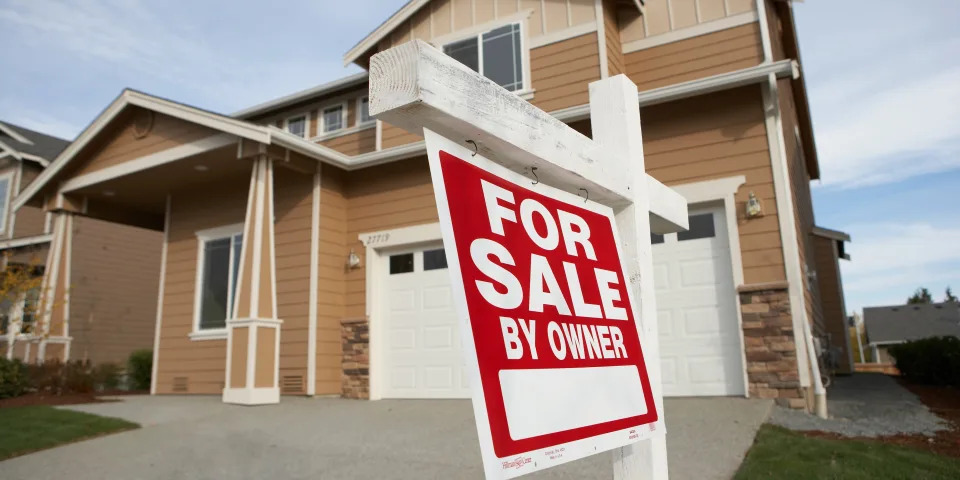
A for-sale sign home in Washington state
Mortgage rates could fall as low as 5% this year but may not be enough to significantly boost home sales.Thomas Northcut/Getty Images
  • The US housing market is crashing and soaring all at the same time as pockets of the market see divergent trends.
  • Home prices on the West Coast have plunged as much as 10%, while homes in the East have surged.
  • The home price trends have been driven by mortgage rates, little supply, and broader economic trends. 

The US housing market is experiencing both a crash and a boom at the same exact time, and it all depends on where you live.

According to data from Black Knight, home prices on the West Coast are plunging at the same time home prices on the East Coast are surging. The split between rising fortunes or sinking home values essentially depends on whether the home is located east or west of the Rocky mountains.

From January 2022 to January 2023, home prices fell 7.5% in Seattle and dropped 10.3% in San Francisco. At the same time, home prices surged 12% in Miami and jumped 9.3% in Orlando. Even Buffalo, NY saw home price values rise 8.3% on an annual basis in January.

Except for Austin, Texas, 37 of the biggest metro areas east of Colorado saw home prices rise year-over-year in January. Meanwhile, all 12 of the major housing markets west of Texas saw home prices fall over the same time period.

Such a split in the US housing market is unprecedented. In the US housing crisis of 2007 and 2008, home prices dropped in 134 out of the 153 metropolitan areas, and the select few pockets of strength saw home prices stay essentially flat, not rise like they are today.

“We’ve never seen anything quite like this where it’s so stark, west to east,” Black Knight vice president Andy Walden told The Wall Street Journal.

The unprecedented nature of the bifurcated housing market is driven by a number of factors that stem from the COVID-19 pandemic, which saw a boom in housing demand at a time when the supply of homes was limited.

Fast forward to today, and supply is still low, while mortgage rates have soared to levels not seen in more than a decade, making it more expensive for prospective home buyers. That means housing markets that have a supply of relatively affordable homes, such as Buffalo, NY and Hartford, Connecticut, have seen steady price gains.

But in areas of the market that were already suffering from sky-high home prices, like in San Francisco and Los Angeles, there has been room for home prices to fall. And a wave of layoffs at high-profile technology companies that are mostly concentrated in West Coast cities has removed potential buyers from the market and has likely sparked an uptick in homes for sale.

To be sure, West Coast home prices had room to fall after experiencing dizzying gains over the past decade. Home prices in San Francisco soared 112% between 2012 and 2020, nearly doubling the national gain of 58% during that same time period, according to data from S&P Dow Jones Indices.

The pain seen in West Coast housing prices might take time to spread to the East Coast, if it does at all, given that the supply of homes remains extremely limited. At the same time, the millennial generation and Gen Z represents a large swath of prospective buyers that could help keep any future price declines limited.

That’s as long as mortgage rates don’t surge even higher. The average 30-year fixed mortgage rate was at 6.42% last week, well below its one-year high of 7.08%, according to data from Freddie Mac. That represents some relief for prospective home buyers.

See Stunning Photos of How Climate Change Is Altering Our World

Gizmodo

See Stunning Photos of How Climate Change Is Altering Our World

Molly Taft – March 27, 2023

Photo:  Paolo Patrizi
Photo: Paolo Patrizi

Beautiful and troubling photographs of how the world is changing and heating up are part of a competition to pressure one of the world’s leading camera companies to drop its controversial views on climate.

Business accountability watchdog Action Speaks Louder launched the “Cameras Don’t Lie” competition in February in order to pressure photography giant Canon to distance itself from the climate denial the group says is being perpetuated at a nonprofit Canon supports.

“Canon has two faces; while branding itself as an environmentally-friendly and socially responsible company, it has created a think tank, the Canon Institute for Global Studies (CIGS), which is a platform for climate denial,” the campaign’s website reads.

The Canon Institute for Global Studies was founded by Canon in 2008 “with the aim of contributing to the development of Japan and the rest of the world,” according to a company press release. As the Guardian reported last year, a fellow at the Institute, Taishi Sugiyama, has written multiple blog posts for the Institute that question the science behind climate change and endorse content and theories from prominent denier-led groups and institutions. A report released by a think tank last year also found that Canon has significantly lower climate ambitions than competitors like Nikon, Sony, and Panasonic, and recently lowered its emissions reductions targets.

Earther reached out to the Canon Institute as well as Canon for comment but did not hear back by time of publication. Multiple articles mentioned in the Guardian piece from Sugiyama, including one article calling Thunberg a communist as well as a description of a children’s book he wrote that encourages kids to “investigate the effects of global warming based on facts,” remain live on the site.

Canon has pushed back on the allegations that it has lackluster environmental goals as well as the charges from Action Speaks Louder.

“The statements referred to by Action Speaks Louder are those published by Mr. Sugiyama, who is affiliated with CIGS. CIGS operates independently and is unrelated to the business activities of Canon. The research and statements published by Mr. Sugiyama are solely his own,” the company told PetaPixel early last month. “Therefore, Canon is not in a position to officially respond to inquiries from Action Speaks Louder. Global environmental issues are one of Canon’s management core pillars, and Canon remains committed to contributing, through a variety of means, to the realization of a net-zero CO2 emissions society.”

The finalists here were selected from more than 180 entries from 30 countries. The winning image, “Vanishing Island of Dhal Chor Bangladesh” by photographer Paolo Patrizi, shown above, was on display in Times Square in New York City in March, ahead of Canon’s shareholder meeting.

Click through to see the winning photograph and other finalists in the campaign.

Vanishing Island of Dhal Chor, Bangladesh
Photo:  Paolo Patrizi
Photo: Paolo Patrizi

“Rapid erosion and rising sea levels are increasingly threatening the existence of islands off the coast of Bangladesh. Dhal Chor, Monpura and Bhola are some of many islands on the bay of Bengal affected by increasingly rapid erosion and some of the fastest recorded sea-level rises in the world,” Patrizi said of his photo. “These ‘vanishing islands’ are shrinking dramatically.”

Hatonuevo mining complex, Colombia
Photo:  César David Martínez
Photo: César David Martínez

Martínez told the campaign: “The biggest open pit mine in Colombia and one of the biggest in the world, shows the deep impact that the extraction of one of the worst polluter and greenhouse gases causes in nature and environment: The coal.”

Amami Oshima Island, Japan
Photo:  Hisayuki Tsuchiya
Photo: Hisayuki Tsuchiya

Tsuchiya described his photograph: “The breeding and calving of humpback whales are gradually moving northward due to global warming. Microplastics are also increasing, and the ecosystem of whales is changing.”

Lake Abashiri, Hokkaido, Japan
Photo:  Kanade Endo
Photo: Kanade Endo

“While traveling alone in Hokkaido, I noticed a strong smell of decay on the shore of Lake Abashiri. The source of the smell was diatoms that had grown so abnormally that they filled the sand of the lakeside and the rotting corpses of salmon,” Endo said.

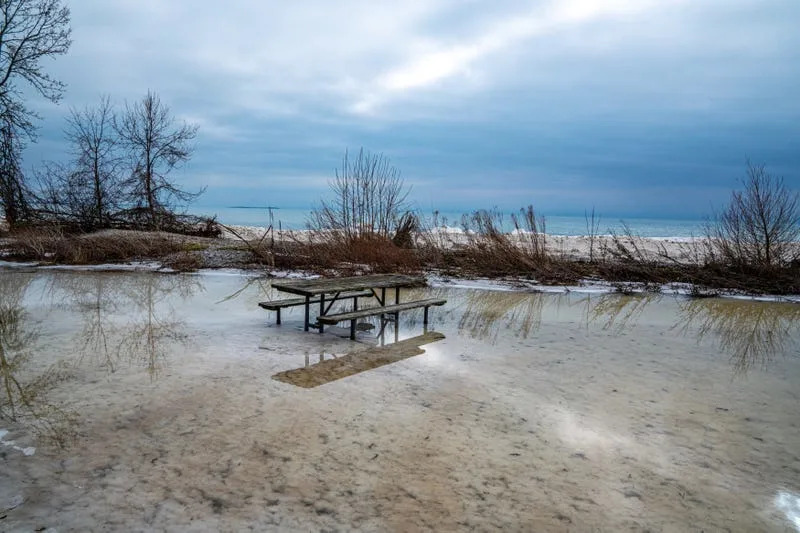
Presqu’ile Provincial Park, Ontario, Canada
Photo:  Katherine Cheng
Photo: Katherine Cheng

Cheng said of her photo: “On the first day of 2023, the Presqu’ile Provincial Park and its coastal trails were flooded with water. Typically on January 1, the ground and nearby lake would be covered in ice and snow in Ontario. However, record-high temperatures have been broken across the province this year, leaving many trails, river ice rinks and ski hills closed.”

Mt. Zao, on the border of Yamagata and Miyagi Prefectures, Japan
Photo:  Kazuaki Koseki
Photo: Kazuaki Koseki

“On a clear night at the end of May, when the snow had melted from the trees, I looked up wistfully at the withered ice and the starry sky, and continued to gaze at these trees, clasping my hands and praying,” Koseki said. “Global warming and climate change are believed to be one of the reasons for the death of these trees. Other possible reasons include the impact of tourism development and attraction of tourism.”

Yosemite National Park, California, USA
Photo:  Marcin Zajac
Photo: Marcin Zajac

“I came to Yosemite to photograph something completely different and when I arrived to the park it was covered in smoke,” Zajac told the campaign. “I considered going back home to avoid camping in smoke, but eventually I stayed around. When at night the smoke cleared for a bit it was surreal to see the fire burning in the valley. The thick smoke didn’t seem to discourage climbers though – if you look carefully you can see lights from their headlamps as they climb up El Capitan.”

Ishigaki Island, Okinawa, Japan
Photo:  Marie Abe
Photo: Marie Abe

“In the summer of 2022, rising sea temperatures caused the coral reefs around Ishigaki Island to almost completely die after large-scale bleaching,” Abe said. “This is the appearance of the bleached coral with dazzling pastel colours that will be attractive for a little while before it decays.”

San Francisco, California, USA
Photo:  Patrick Perkins
Photo: Patrick Perkins

Perkins said of his photo: “The day before I took this photo, there had been severe fires all up and down the coast of California, Oregon and Washington. My sister’s house had burned down, and my father’s house had been threatened. My father told me that they had woke up at 2am to fight the fire from spreading onto their land, and my sister had drove home the next day to find her house burned down in a separate fire. The day after I heard that, the sky in San Francisco where I live turned orange from all the smoke. I went out with my camera to try to document what felt like a biblical event. This shot won Unsplash’s photo of the year in 2020.”

Kolkata, India
Photo:  Satyaki Acharya
Photo: Satyaki Acharya

“A waterbody in Kolkata, India has dried up due to the intense heat event before the summer season has set in properly,” Acharya said. “The million footprints are proof of the struggle people undertake everyday for some water.”

Nyaung Oo Township, Mandalay Region, Myanmar
Photo:  Wai Maung
Photo: Wai Maung

“This photo shows the local people in central Myanmar were combating climate change by forest restoration and rehabilitation (i.e., planting trees in a barren land near their village),” Maung said of his photo. “Before planting, rectangular pits (trenches) were dug for capturing and storing sufficient rainwater. Cow dung & bio fertilizers were put inside the pits. The purpose of tree planting is to restore the watershed area and to create a fuel wood supply plantation. For survival and subsistence, planting trees is one of the local strategies to cope with harsh climatic and edaphic conditions.”

Sen. Sherrod Brown: American consumers losing power over their savings and paychecks is an emergency, too.

MarketWatch – Outside the Box

Opinion: Sen. Sherrod Brown: American consumers losing power over their savings and paychecks is an emergency, too.

The Consumer Financial Protection Bureau holds Wall Street and big banks accountable. The U.S. Supreme Court must protect it, writes Sen. Sherrod Brown.

Sherrod Brown – March 27, 2023

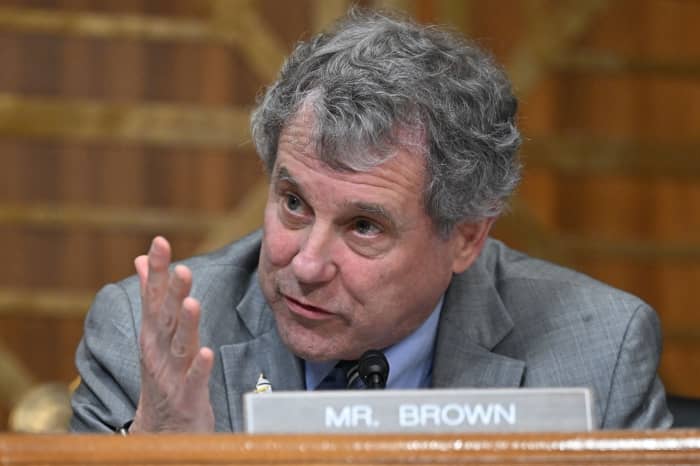
U.S. Senator Sherrod Brown (D-OH) says the CFPB must remain strong and independent. AGENCE FRANCE-PRESSE/GETTY IMAGES

The collapse of Silicon Valley Bank sent shockwaves through the global economy and had the makings of another crisis. Depositors raced to withdraw money. Banks worried about the risk of contagion. I spent that weekend on the phone with small business owners in Ohio who didn’t know whether they’d be able to make payroll the next week. One woman was in tears, worried about whether she’d be able to pay her workers. 

The Federal Deposit Insurance Corporation (FDIC) and the Federal Reserve responded quickly, took control of the bank, and contained the fallout. Consumers’ and small businesses’ money was safe. That Ohio small business was able to get paychecks out.

The regulators were able to protect Americans’ money from incompetent bank executives because when Congress created the Federal Reserve in 1913 and the FDIC in 1933, it ensured that their funding structures would remain independent from politicians in Congress and free from political whims. 

But now, as the U.S. Supreme Court considers the case of Community Financial Services Association v. CFPB, these independent watchdogs’ ability to keep our financial system stable faces an existential threat.

The Consumer Financial Protection Bureau is the only agency solely dedicated to protecting the paychecks and savings of ordinary Americans, not Wall Street executives or venture capitalists. Corporate interests have armies of lobbyists fighting for every tax break, every exemption, every opportunity to be let off the hook for scamming customers and preying on families.

The CFPB’s funding structure is designed to be independent, just like the Fed and the FDIC.

Ordinary Americans don’t have those lobbyists. They don’t have that kind of power. The CFPB is supposed to be their voice — to fight for them. The CFPB’s funding structure is designed to be independent, just like the Fed and the FDIC. Otherwise, its ability to do the job would be subject to political whims and special interests — interests that we know are far too often at odds with what’s best for consumers.

Since its creation, the CFPB has returned $16 billion to more than 192 million consumers. It’s held Wall Street and big banks accountable for breaking the law and wronging their customers. It’s given working families more power to fight back when banks and shady lenders scam them out of their hard-earned money. 

The CFPB can do this good work because it’s funded independently and protected from partisan attacks, just as the Fed and the FDIC are. So why, then, does Wall Street claim that only the CFPB’s funding structure is unconstitutional?

Make no mistake — the only reason that Wall Street, its Republican allies in Congress, and overreaching courts have singled out the CFPB is because the agency doesn’t do their bidding. The CFPB doesn’t help Wall Street executives when they fail. It doesn’t extend them credit in favorable terms or offer them deposit insurance like the other regulators do. The CFPB’s funding structure isn’t unconstitutional — it just doesn’t work in Wall Street’s favor.

If the Supreme Court rules against the CFPB, the $16 billion returned to consumers could be clawed back. What would happen then — will America’s banks really go back to the customers they’ve wronged with a collection tin?

Invalidating the CFPB and its work would also put the U.S. economy — and especially the housing market — at risk.

Invalidating the CFPB and its work would also put the U.S. economy — and especially the housing market — at risk. For more than a decade, the CFPB has set rules of the road for mortgages and credit cards and so much else, and given tools to help industry follow them. If these rules and the regulator that interprets them disappear, markets will come to a standstill. 

By attacking the CFPB’s funding structure and putting consumers’ money at risk, Wall Street is putting the other financial regulators in danger, too. 

The Fifth Circuit’s faulty ruling against the CFPB is astounding in its absurdity — the court ruled that the authorities that other financial agencies, like the Federal Reserve and the FDIC, have over the economy do not compare to the CFPB’s authorities. In other words, the court is claiming that the CFPB supposedly has more power in the economy than the Fed.

That’s ridiculous. Look at the extraordinary steps taken to contain the failures of Silicon Valley Bank and Signature Bank — the idea that the CFPB could take action even close to as sweeping is laughable.

But we know why the Fifth Circuit put that absurd assertion in there — they recognize the damage this case could do to these other vital agencies, and to our whole economy.

Imagine what might happen if another series of banks failed and the FDIC did not have the funds to stop the crisis from spreading.

The FDIC’s own Inspector General has stated that the Fifth Circuit ruling could be applied to their agency. If that happens, the FDIC and other regulators could be subject to congressional budget deliberations, which we all know are far too partisan and have resulted in shutdowns. Imagine what might happen if another series of banks failed and the FDIC did not have the funds to stop the crisis from spreading, or the Deposit Insurance Fund to protect depositors’ money. Imagine if politicians caused a shutdown, and we were without a Federal Reserve. 

U.S. financial regulators are independently funded so that they can respond quickly when crises happen. It’s telling, though, that plenty of people in Washington don’t seem to consider the CFPB’s issues in the same category. Washington and Wall Street expect the government to spring into action when businesses’ money is put at risk. But when workers are scammed out of their paychecks, that’s not an emergency — it’s business as usual. 

When Wall Street’s abusive practices put consumers in crisis, the CFPB must have the funding and strength it needs to carry out its mission — to protect consumers’ hard-earned money. 

U.S. Sen. Sherrod Brown (D-OH) is chairman of the U.S. Senate Committee on Banking, Housing, and Urban Affairs.

More: Supreme Court to hear case that will decide the future of consumer financial protection

Do Anti-ESG States Know They’re Facing Some of the Worst Climate Change Hazards?

The Motley Fool

Do Anti-ESG States Know They’re Facing Some of the Worst Climate Change Hazards?

By The Daily Upside   – March 24, 2023 

Unless the data are dead wrong, it is increasingly clear that many of the U.S. states facing some of the greatest climate change hazards appear to be the ones most virulently opposed to environmental, social and governance (ESG) policies.

The data also show something else that we don’t like to talk about: Americans are already dying due to climate change and have been since around 2005. U.S. cities from coast to coast are experiencing fatalities in the double digits yearly, especially south of the Mason-Dixon line, according to an in-depth project surveying more than 24,000 regions of the world, led by the United Nations Development Program and New York-based Rhodium Group, a provider of independent research, data and analytics tackling mission-critical global topics.

In Texas, the fatality rate due to climate change – for instance, from heat stroke or other underlying causes – is estimated to be 14 people a year per 100,000 of the population in both Dallas and Austin. Those numbers will rise to 38 and 39, respectively, by 2040, and leap to 130 and 131 people a year, respectively, by 2080, according to the data.

The situation in Phoenix is even more dire, with an annual fatality rate of 17 people per 100,000 of the population, climbing to 46 by 2040 and 148 people a year by 2080. In Atlanta, the fatality rate is estimated to be around 10 people a year per 100,000, with that number at 29 by 2040 and shooting to 100 people by 2080.

“The mortality impact is some of the most striking of the data,” says Hannah Hess, associate director at Rhodium, who worked on the project. “When you look at the year 2040, it can seem really far out and distant in the future, but the people most affected by the heat are 65 and older – those are people in their 40s today who will be impacted.” 

By the same token, those in their 20s and 30s will be confronting even higher temperatures, and those who are currently in their teens or younger will be forced to contend with some of the most extreme climate challenges of anyone alive.

This week, President Biden cast his first veto since taking office, rejecting a bill that would have scuttled a Labor Department rule he put in place allowing money managers to account for climate change when making investment decisions for their clients’ retirement savings. The Biden rule supplanted a Trump-era rule that sought to impede the consideration of ESG principles in investing, “even in cases where it is in the financial interest of plans to take such considerations into account.”

In issuing the veto, Biden blasted “MAGA House Republicans” and others for risking Americans’ retirement plan savings by making it illegal to weigh ESG principles. “Your plan manager should be able to protect your hard-earned savings, whether Rep. Marjorie Taylor Greene likes it or not,” he said, noting strong opposition from the Republican congresswoman from Georgia.

Two Democrats also backed the bill. Sen. Joe Manchin of West Virginia, who charged that Biden’s veto was “absolutely infuriating” and denounced the administration’s “radical” and “progressive agenda,” and Jon Tester of Montana, who voted alongside the Senate’s Republicans to overturn the Biden rule.

Both Georgia and West Virginia are forecast to sustain pronounced effects from climate change relative to northern states, like Montana.

The ESG fight, not surprisingly, is focused on money – primarily, how resources will be marshaled or redirected in anticipation of future shifts that are expected to devastate real estate, housing and jobs markets. “Without concerted and urgent action, climate change will exacerbate inequalities and widen gaps in human development,” the UNDP projected at the end of last year.

A smattering of top money managers and private equity firms have begun to prepare for the transition, touting pro-ESG investing principles that aim to capture a profit. But they have also warned adopting these strategies poses heightened financial and reputational risks with the growing anti-ESG backlash.

The world’s biggest private-equity firm, Blackstone, disclosed in a recent filing that pushback from states across the country over so-called “boycotts” of investments in the fossil fuel industry could affect the company’s fundraising and revenue and will be perceived negatively by some stakeholders. Others signaling similar headwinds include KKR & Co., State Street, Carlyle Group, T. Rowe Price, TPG Inc., Ares Private Equity Group, Raymond James, and BlackRock.

While partisanship seems to be ruling the debate, it’s worth looking closely at what is forecast for some of the states that are most assiduously pursuing anti-ESG legislation, many of which are expected to experience some of the most serious fallout of climate change. Among them are Texas, Arizona, Oklahoma, Idaho, Louisiana, Arkansas, Tennessee, Kentucky, West Virginia, South Carolina and Florida.  

Over the past few years, these states have sought to introduce or pass legislation barring companies from discriminating against investing in fossil fuel developers or energy companies contributing to climate change. Those succeeding in passing legislation against so-called “woke capitalism” include Texas, Arizona, Oklahoma, Idaho, Louisiana, Tennessee, Kentucky, West Virginia, South Carolina and Florida. 

Other states that have tried or are still trying to pass anti-ESG legislation include North Dakota, South Dakota, Colorado, Wyoming, Montana, Arkansas, Nebraska, Minnesota, Pennsylvania and New Hampshire, according to the National Conference of State Legislatures, a Denver nonpartisan research organization. Meanwhile, Arizona, Texas, Oklahoma, South Carolina, Tennessee and Florida have more anti-ESG legislation pending, in addition to what they’ve already enacted, even though all of them are now dealing with fatalities from climate change.

Hess says research shows that some states’ attitudes may change on climate change as “those places start to feel the impact,” but, until then, states suffering the ongoing fatalities of climate change while fighting to ban ESG-friendly policies, sustainability practices and “social credit scores” to protect investments in fossil fuels is “an odd reality.”

Worth noting are the states that have pursued anti-ESG legislation, but will not feel the impact of climate change as strongly as some of the states mentioned above. They are Pennsylvania, New Hampshire, Indiana, Missouri, Kansas, Nebraska, Utah, Wyoming, Montana, Minnesota, North Dakota, South Dakota and Alaska.

The one state that will be hard hit by climate change but is working to bolster pro-ESG initiatives – and block any attempts to stop it from doing so – is California. According to the UNDP-Rhodium data, the state’s cities are already sustaining some of the highest annual fatality rates in the country due to climate change. At present, the death toll is estimated to be around a dozen people per 100,000 of the population in San Francisco and Sacramento, but is seen rising to 30 and 33, respectively, by 2040, and 104 and 113 people a year, respectively, by 2080.

Other cities that are being impacted by climate change include Los Angeles, Houston, San Antonio, Las Vegas, Nashville, Memphis, New Orleans, Miami, Virginia Beach, Raleigh, Charlotte and Washington, DC, according to the data.

Interestingly, the data show a handful of states will see some benefits from climate change, at least in theory. Rising temperatures likely will contribute to fewer mortality rates in cooler cities such as Seattle, Portland, Denver, Kansas City, Minneapolis, Milwaukee, Chicago, Indianapolis, Louisville, Cincinnati, Pittsburg, Philadelphia, New York and Boston. These benefits stem from the fact that, as temperatures rise, annual fatality rates resulting from cold weather will ease, Hess says.

Even with fewer fatalities in some regions, by the end of the century, the effects of climate change will eventually overtake much of the U.S., whether through rising temperatures, changes in precipitation, droughts, serious weather patterns, or what is expected to be an influx of displaced populations – also known as “climate refugees” – who will need to migrate to safer locations to survive. That means anyone living in safe zones will find their regions more and more crowded. 

“Income will matter a lot in how people will be able to adapt and respond to the impact of climate,” Hess says.

Banking industry intent on killing the golden goose: Bye banks: Recent turmoil is spurring many to move their money

The Washington Post

Bye, banks: Recent turmoil is spurring many to move their money

Abha Bhattarai, The Washington Post – March 24, 2023

FILE – Customers and bystanders form a line outside a Silicon Valley Bank branch location, Monday, March 13, 2023, in Wellesley, Mass. The sudden crisis in the U.S. banking industry is sure to cause some tightening of lending and credit and a slowdown in the pace of borrowing and spending. If it does, the crisis could actually end up aiding the Federal Reserve in the elusive goal the Fed has been pursuing for a full year: A much lower inflation rate. (AP Photo/Steven Senne, File) (ASSOCIATED PRESS)

Dan Ushman isn’t sure where he’ll end up stashing his company’s money. But he’s been thinking a lot about it these days.

The start-up founder recently moved savings out of Silicon Valley Bank, whose spectacular collapse this month set off tremors across the financial industry, and parked it in accounts at Bank of America and Chase while he contemplates what’s next – brokerage accounts, perhaps, or money market funds, Treasury-backed trusts or certificate of deposit accounts.

The goal, he says, is simple: to reduce risk while maximizing interest.

“Having SVB collapse out from under us gave us a lot of pause,” said Ushman, 38, founder of a software firm in Chicago. “We’re thinking hard about how to spread our cash around. We want higher yields and safety. But the thing about business savings is that they’re savings until you need them, so we don’t want to lock anything up long-term.”

Across the country, millions of Americans are making similar calculations, trying to figure out how to best allocate their money following the implosion of two U.S. banks and the emergency takeover of European banking giant Credit Suisse last weekend, which set off fears of a global financial crisis.

The crisis so far doesn’t seem to have come, and the government has taken great pains to reassure depositors that bank accounts are safe. But that hasn’t stopped people from shifting their money around. Americans are moving hundreds of billions of dollars out of banks – especially smaller, regional banks – into larger institutions, as well as money market funds, government bonds, high-yield online savings accounts, even cryptocurrencies and gold.

In the two weeks since SVB’s dramatic collapse, investments in money market funds, a type of mutual fund focused on low-risk securities, have ballooned by nearly $240 billion, according to the Investment Company Institute. Yields on 2-year Treasury bonds have fallen 24 percent as a result of booming demand. Money market funds are not insured by the government the way bank accounts less than $250,000 are. But even riskier investments are thriving, too: Bitcoin prices have risen 40 percent, and gold is up about 10 percent.

Overall, an estimated $550 billion in deposits have moved from smaller and regional banks to large banks and money market funds in the past two weeks, according to an analysis by JPMorgan.

“Turmoil in the markets always puts money in motion,” said Danielle Lucht, a financial adviser in Cape Coral, Fla., who is fielding twice as many calls from clients as she was a few weeks ago. “The big concern right now is: Is my money safe? How can I make it safer? People who have cash in simple savings accounts are using this as an opportunity to move their money.”

About 12 percent of Americans say they have taken money out from the bank “because of the collapse of Silicon Valley Bank,” and 18 percent say they are considering doing so, according to a Yahoo News/YouGov poll released Tuesday. (It is also worth noting, though, that most people – 55 percent – said they are confident the banking system is safe.)

The recent shift builds on a trend that began a year ago, when the Federal Reserve began raising interest rates after years of keeping them near zero. Suddenly regular bank accounts – that pay very little, if any, interest – became much less attractive than other investments offering higher returns.

That steady movement out of bank accounts took on a life of its own this month after fears of bank failures led customers at SVB and Signature Bank of New York to take out billions of dollars in cash in a matter of a few hours. The result was a bank run that triggered the collapse of both institutions.

The Federal Reserve and other regulators were quick to step in with emergency measures aimed at stemming similar runs at other banks. But panic persists: This week, shares of PacWest Bancorp, a regional California institution, tumbled 17 percent after it said it had lost 20 percent of its deposits this year. Economists say that lack of confidence in a company’s stock can be self-fulfilling if it prompts customers to remove their money, leaving the bank in even worse shape.

At First Republic Bank, not even a $30 billion rescue package from the nation’s biggest banks has been enough to keep people from taking out their money. In all, customers have withdrawn about $70 billion in recent weeks, or roughly 40 percent of the bank’s deposits, the Wall Street Journal reported this week.

“People are looking around and saying, ‘I really don’t want to be uninsured,'” said Itamar Drechsler, a finance professor at the Wharton School at the University of Pennsylvania. “They’re buying government bonds and going to bigger banks at the expense of regionals.”

The federal government insures deposits of up to $250,000 in any given bank account, though there are looming questions about whether it might raise that cap or extend protection to all deposits as it did at SVB and Signature Bank of New York this month. Treasury Secretary Janet L. Yellen struggled to manage the fallout from remarks Wednesday over the extent to which the federal government could insure deposits over the limit at other banks if they failed; markets fell after she spoke, and she later amended her written testimony to stress that the government has “tools we could use again” and would be “prepared to take additional action if warranted.”

Still, the recent panic has been enough to spook those with large sums piled into traditional bank accounts. Brenton Wickam, 53, a commercial real estate investor in Silicon Valley, hadn’t thought twice about keeping his personal savings in one bank account – until recently.

When SVB collapsed, Wickam started getting a barrage of text messages all saying the same thing: “First Republic’s next.” That was particularly troubling to Wickam, who had been banking there for years.

Last week, he showed up at a local branch to begin moving his savings into new accounts, in $250,000 chunks so they’d be insured by the government. The leftover money he took to Wells Fargo, though he plans to invest it in money markets or Treasurys.

“I felt like the dumbest guy in the room, keeping all of my cash in one bank account,” Wickam said. “I’ve been around awhile – 2000, 2008, I’ve seen what a financial crisis looks like – but I was just being lazy.”

The exodus of deposits, particularly from smaller banks, is particularly worrisome because it could have a chilling effect on how much those institutions are able to loan. Nearly 70 percent of commercial real estate loans, for example, come from small and midsize banks, Fed data shows.

“The consequence of this is manyfold,” said Torsten Slok, chief economist at Apollo Global Management. “The reality is, banks finance themselves through deposits.”

A drop in deposits, he said, would mean banks have less money on hand to make loans. If someone walked in looking for a $40,000 car loan, for example, and a bank didn’t have much in deposits, it would have to borrow that money from wholesale markets, where interest rates have risen rapidly in the past year. As a result, borrowers could face higher interest rates and stricter standards, Slok said.

“If banks across the country suddenly say, ‘We’re going to tighten lending standards for anyone who would like to buy a car or a house or get a corporate loan’ – if they stop lending money out, you could have a sudden stop in the economy,” he said. “That begins to raise the risk of a recession.”

Fed Chair Jerome H. Powell pushed back against that fear this week, saying the banking system is “sound and resilient.”

“We took powerful actions with Treasury and the FDIC, which demonstrate that all depositor savings are safe and that the banking system is safe,” Powell said in a news conference on Wednesday. “Deposit flows in the banking system have stabilized over the last week.”

Verbal assurances aside, the interventions of regulators have raised more questions than answers for many Americans. They’ve also prompted many people to stop and consider their investment habits, since interest rates are at their highest level in 16 years.

“The silver lining in this debacle is that it’s caused people to pause and ask, ‘Is my money OK at the bank?,'” said Rick Salmeron, a financial adviser in Dallas, who has seen a rush toward high-yield online savings accounts. “They’re realizing, ‘Wow, I have all of this cash making a paltry 0.01 percent interest in the bank when I could be getting 3.5 percent.'”

Steve Miller, 51, a stay-at-home dad in Orange County, Calif., recently moved his family’s savings from a large bank to a Vanguard federal money market account. It wasn’t so much panic over recent bank failures that prompted the move, he said, but rather the realization that he could be earning much higher interest on his money. Now he’s earning 4.65 percent interest.

“We have always kept our cash reserves parked in the bank, but this was a good trigger,” he said. “It made me realize we could be earning much more by being invested in Treasury bills.”

The Washington Post’s Jeff Stein contributed to this report.

‘Gerbil banking’ preceded the Great Depression. We’re seeing it again today

Fortune

‘Gerbil banking’ preceded the Great Depression. We’re seeing it again today

Maureen O’Hara – March 23, 2023

‘Gerbil banking’ preceded the Great Depression. We’re seeing it again today

The recent action by a consortium of banks to deposit money in First Republic Bank harkens back to an earlier attempt to counter bank runs: the U.S. Postal Savings system.

Banking in the 19th century was notoriously unstable, with bank runs or “panics” coming all too frequently. By the turn of the 20th century, such runs were almost seasonal, prompting depositors to withdraw in advance of what might be a coming run, thereby, of course, precipitating liquidity crises at banks. This came to a head in the Panic of 1907, the granddaddy of panics, when the banking system collapsed.

Congress at that time considered an array of solutions to bank instability such as deposit insurance (favored by the Democrats), postal savings (favored by the Republicans), and a central bank (favored by almost none of them but viewed as something to study). Republican William Howard Tafts’ election in 1908 sealed the deal, and we got a Postal Savings system.

The idea of Postal Savings was simple. There were post offices everywhere and they would take deposits from individuals, paying them a slightly lower interest rate than the banks offered (a maximum deposit of $2,000 was also imposed to reduce competition with the banks). Now, when individuals became concerned about bank solvency and withdrew their funds, they could put the money in Postal Savings instead of under their mattresses. And what would the Postal Savings system do with the funds? Put the money back into the banks!

This gerbil-like treadmill would thus keep the funds in the banking system, while giving the Postal Savings system interest on its bank deposits to pay the system’s depositors. The circularity of flows out of and then back into the banking system at the heart of the Postal Savings system did have a certain cleverness to it.

As David Easley and I showed in a research paper, this system worked pretty well until the onset of the Great Depression. Faced with growing numbers of bank failures, even the Postal Savings system lost faith in the banks, and so shifted its investments from deposits to government bonds. While certainly not the major cause of banking’s problems, we showed that this action contributed to the liquidity problems undermining the banking system. With the collapse of the banking system in 1933, the view that the Postal Savings system could restore stability to the banking system similarly vanished, setting the stage for the establishment of FDIC deposit insurance.

The latest banking woes demonstrated once again that when concerns arise, depositors flee–but this time to the largest banks which are viewed as “Too Big to Fail”. And what did they do with the money? Already awash with deposits, they made the decision to put some back into First Republic. The gerbil lives again!

The actions of the large banks are admirable, but clearly, this is only a short-run answer. Is a new U.S. Postal Savings System the answer? No. Deposit insurance has proven its worth in protecting retail depositors, who, if they have amounts above the insurance cut-off can simply open accounts at multiple banks.

Corporations also qualify for deposit insurance and they face the same $250,000 limit–but is this the appropriate level? The reported inability of some companies to make payroll payments following Silicon Valley Bank’s closure and the need for a larger scale to meet basic corporate banking needs suggests it’s not.

The argument for insurance limits is based on limiting moral hazard at banks. But where this cut-off limit should be is debatable, and the FDIC’s willingness to deviate from its stated level when the need arises underscores the arbitrary nature of this guarantee limit. SVB’s corporate customer-driven bank run underscores why it is time to re-examine this important aspect of our banking system protection.

Maureen O’Hara is the Purcell Professor of Finance at the Johnson College of Business, Cornell University, and a former President of the American Finance Association.

The opinions expressed in Fortune.com commentary pieces are solely the views of their authors and do not necessarily reflect the opinions and beliefs of Fortune.

More must-read commentary published by Fortune: