At Davos, Rick Perry makes bizarre claim about U.S. fossil fuel exports

ThinkProgress

At Davos, Rick Perry makes bizarre claim about U.S. fossil fuel exports

Exporting climate-destroying fuels is not “exporting freedom.”

Joe Romm    January 25, 2018

Rick Perry wtih Kellyanne Conway March 2, 2017. CREDIT: Alex Wong/Getty Images
Rick Perry with Kellyanne Conway, March 2, 2017. Credit: Alex Wong/Getty Images.
Energy Secretary Rick Perry said Wednesday that President Donald Trump’s big push to export fossil fuels should be seen as an effort to spread freedom throughout the world — since it gives countries another choice regarding where they get their energy.

“The United States is not just exporting energy, we’re exporting freedom,” Perry said during a Fox Business interview from the World Economic Forum in Davos, Switzerland.

For Perry, giving other countries a choice of who satisfies their addiction to climate-destroying fuels like coal, oil, and natural gas is somehow increasing their freedom. But it’s really exporting dependence and exporting carbon pollution.

If the U.S. were to promote zero-carbon fuels, like solar and wind power, however, that would free countries from dependence on anyone’s dirty hydrocarbons.

Indeed, the whole point of the landmark December 2015 Paris climate agreementis that more than 190 of the world’s leading countries unanimously agreed with the overwhelming science that says the only way to avoid catastrophic climate change is to leave most of the world’s fossil fuels in the ground.

Today, thanks to Trump, the United States literally sits alone as the only one of those countries now saying it will abandon this global deal, after the last two other holdouts, Nicaragua and Syria, signed on last fall.

“There’s no strings attached when you buy American LNG [liquefied natural gas],” Perry told Fox Business host Maria Bartiromo. “So that’s world-changing.”

Well, American LNG is world-changing — or, rather, climate changing — but not in a good way.

Back in 2014, the U.S. Department of Energy released an analysis of total greenhouse gas emissions from LNG. One of the country’s top methane experts told me at the time, “a close reading of the DOE report in the context of the recent literature indicates that exporting natural gas from the U.S. as LNG is a very poor idea” from a climate perspective.

More recent research paints an equally grim picture. A study in the journal Energylast month on the overall emissions impact of “U.S. liquefied natural gas (LNG) exports,” concluded that “emissions are not likely to decrease and may increase significantly due to greater global energy consumption, higher emissions in the U.S., and methane leakage.”

Total lifecycle greenhouse gas emissions for LNG are much higher than they are for regular pipeline gas because the liquefaction process is so energy-intensive and because there are even more leaks from that process and from shipping the LNG overseas.

Remember, natural gas is mostly methane, and some 86 times better at trapping heat than carbon dioxide. And earlier this month, a NASA analysis found that the jump in fossil-fuel methane emissions in the past decade “is substantially larger than in previous literature.”

And if fracked gas domestically is part of the climate problem, then liquefying that gas and shipping it to other countries is an even bigger problem.

When you add in our exports of coal and oil, then America is one of the biggest exporters of carbon pollution in the world. And that is not exporting freedom.

How We Can Lower Drug Prices?

Robert Reich added a new episode.
How We Can Lower Drug Prices? (When Big Pharma Pulls the Strings)

Senate Republicans’ first order of business this week after shutting down the government was to confirm Alex Azar — a former pharmaceutical executive who jacked up the prices on medications at Eli Lilly — as secretary of health and human services. If we are ever going to rein in the soaring cost of prescription drugs in America, we must break Big Pharma’s grip on our political system.

How We Can Lower Drug Prices? (When Big Pharma Pulls the Strings)

Senate Republicans' first order of business this week after shutting down the government was to confirm Alex Azar — a former pharmaceutical executive who jacked up the prices on medications at Eli Lilly — as secretary of health and human services. If we are ever going to rein in the soaring cost of prescription drugs in America, we must break Big Pharma's grip on our political system.

Posted by Robert Reich on Thursday, January 25, 2018

Our Military Spending is Out of Control

Ro Khanna‘s post to the group: Veterans against the G.O.P

As many Republicans demand another huge increase in military spending, here is a reminder that we already spend more on defense than the next eight countries combined.

 No automatic alt text available.


The US Has Military Bases in 172 Countries. All of Them Must Close.

The Nation

The US Has Military Bases in 172 Countries. All of Them Must Close.

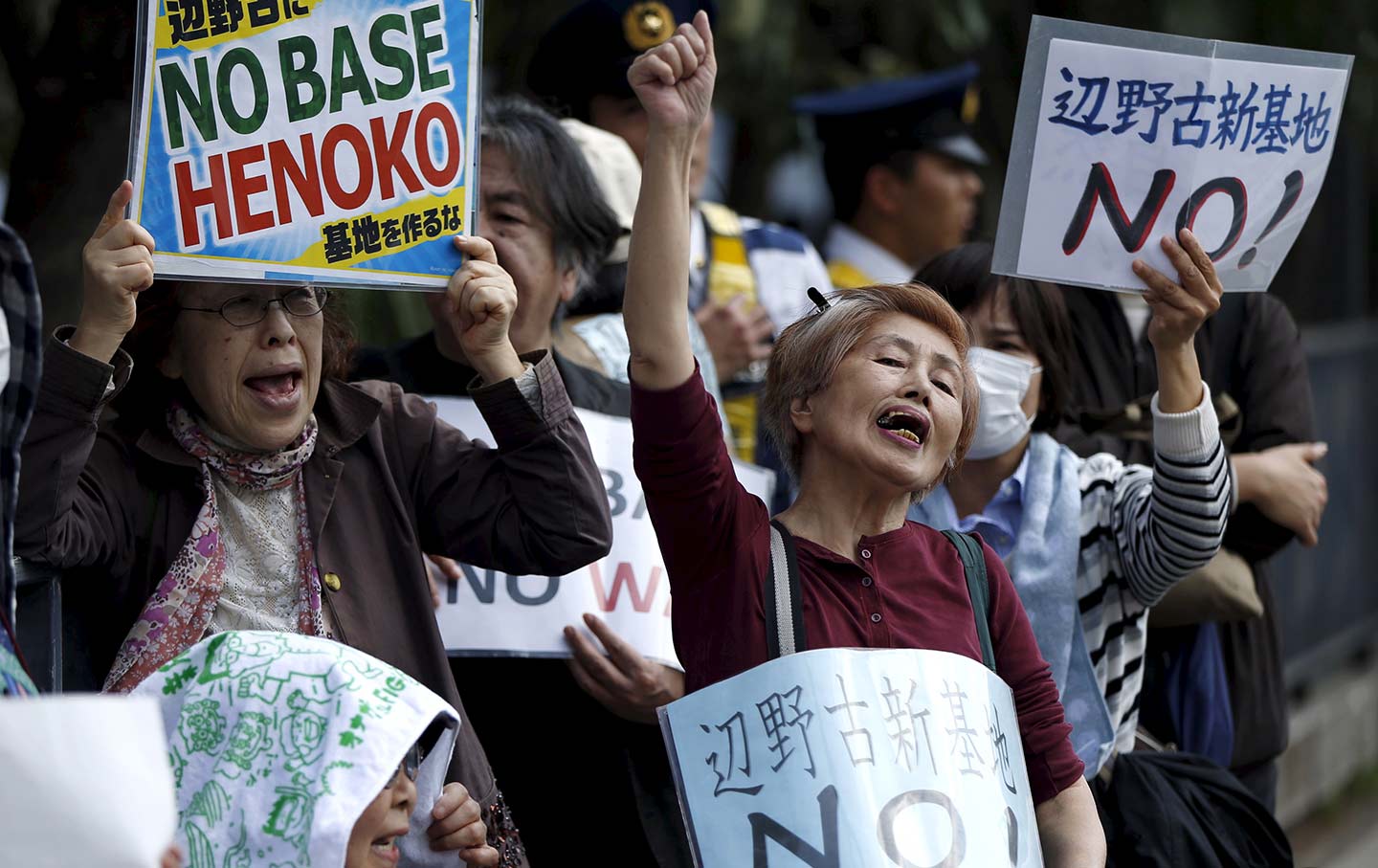
US bases are wreaking havoc to the health and well-being of communities across the world.

By Alice Slater     January 24, 2018

People protest the planned relocation of a US military base in Japan to Okinawa’s Henoko coast on April 17, 2015.(Reuters / Issei Kato)

On the weekend of Martin Luther King Day, Baltimore University fittingly hosted more than 200 activists in the peace, environment, and social-justice movements to launch a timely new initiative, the Coalition Against US Foreign Military Bases. Ajamu Baraka, Green Party vice-presidential candidate and co-founder of the Black Alliance for Peace, opened the meeting reminding us that Reverend King, in his historic anti-war speech more than 50 years ago at Riverside Church in New York, called the government of the United States “the greatest purveyor of violence in the world today” adding that “the war in Vietnam is but a symptom of a far deeper malady within the American spirit,” while warning that “a nation that continues year after year to spend more money on military defense than on programs of social uplift is approaching spiritual death.” Taking on the very nature of capitalism, King further insisted that

We must rapidly begin the shift from a thing-oriented society to a person-oriented society. When machines and computers, profit motives and property rights, are considered more important than people, the giant triplets of racism, extreme materialism, and militarism are incapable of being conquered.

In a series of panels over two days, conference speakers from every corner of the globe proceeded to describe the extraordinary cruelty and toxic lethality of US foreign policy despite King’s warning more than 50 years ago. We learned that the United States has approximately 800 formal military bases in 172 countries, a number that could exceed 1,000 if you count troops stationed at embassies and missions and so-called “lily-pond” bases, with some 138,000 soldiers stationed around the globe. David Vine, author of Base Nation: How U.S. Military Bases Overseas Harm America and the World, reported that only 11 other countries have bases in foreign countries, some 70 altogether. Russia has an estimated 26 to 40 in nine countries, mostly former Soviet Republics, as well as in Syria and Vietnam; the UK, France, and Turkey have four to 10 bases each; and an estimated one to three foreign bases are occupied by India, China, Japan, South Korea, Germany, Italy, and the Netherlands.

And, apart from the bases, there are other harmful US military impacts in many countries around the globe, which uproot many communities. John Lannon, of Ireland’s Shannonwatch works to end US military use of the civilian airport at Shannon, Ireland. The United States has flown more than 3 million troops and weapons through Shannon, en route to military actions despite Ireland’s decision not to join NATO and its official policy of military neutrality. James Patrick Jordan, with the Alliance for Global Justice, reported that after 9/11 the Northern Command of the US Pentagon added the training of many troops in Latin American countries in order to send them abroad to fight in US wars in other countries.

Peace and environmental activists from every region around the globe shared their experiences protesting the devastating environmental and health impacts caused by US military bases, which are wreaking havoc to health and well-being in so many communities. From Agent Orange in Vietnam, depleted uranium in Iraq, and munitions dumps and firing ranges in Vieques, Puerto Rico, to a toxic brew of poisons along the Potomac River, communities and soldiers as well as children born subsequent to exposure to these toxins are suffering a broad range of illnesses and inherited genetic damage, while the US government ducks any accountability for the harm caused by its mindless dumping and reckless burial of untreated toxic military wastes. Indeed, while some of the United States’ so-called “peer” nations, like Germany, have successfully sued for funds for clean-up of military bases after the US left them in dreadful condition, countries in Latin America, Asia, or Africa have been unable to hold the US to account, which is more evidence of the white patriarchy exercising its privilege, as we learned from Patricia Hynes, a former professor of environmental health at Boston University who won the US EPA Lifetime Achievement award and has created the Vietnam Peace Village Project to support third- and fourth-generation Agent Orange victims.

David Swanson, introducing the panel on US militarism in South America, observed:

Modern imperialism is unique to the US. US exceptionalism justifies imperial bullying and is a prominent sentiment we may have to cure. US nationalism has a religious character. Its destructive mission is imagined as sacred. Fort McHenry is not a historic site—it’s a “National Monument and Historic Shrine.” We may have to learn to value other things including the other 96 percent of humanity before the empire shuts down.

The global breadth of the participants was striking as we heard from activists in Asia, Europe, Africa, Latin America, and the Middle East, all ready and willing to expand this new network and work, not just to close down US bases, but as many expressed so eloquently, to dismantle the US empire and its patriarchal, racist, colonial policies that are causing such harm around the world. At the end of the meeting we decided to reach out and expand our coalition and took the following actions:

  • Resolution on Global Day of Actions Against Guantanamo (February 23, 2018)
  • Resolution on a National Day of Anti-War Action in Spring 2018

Most importantly, we agreed to hold a larger international conference abroad, within one year of the date of this beginning to hasten the end of the empire that subjugates people and destroys the ecosphere in order to maintain its cruel economic system. To add your voice and participate, see www.noforeignbases.org.

Get unlimited access to The Nation for as little as 37 cents a week! SUBSCRIBE

Alice Slater is the New York Director of the Nuclear Age Peace Foundation, and serves on the Coordinating Committee of World Beyond War.

Air Pollution Is Killing Millions Around The Globe Each Year

HuffPost

Air Pollution Is Killing Millions Around The Globe Each Year

Erin Schumaker, HuffPost          January 23, 2018

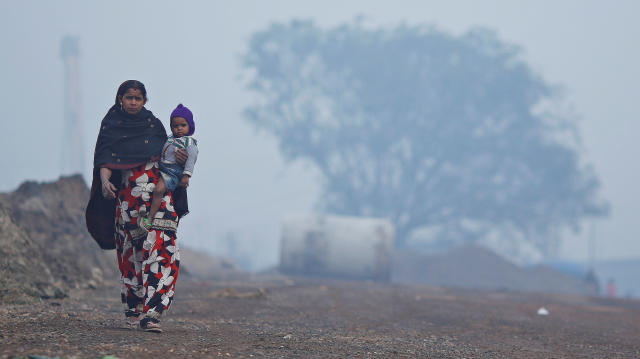
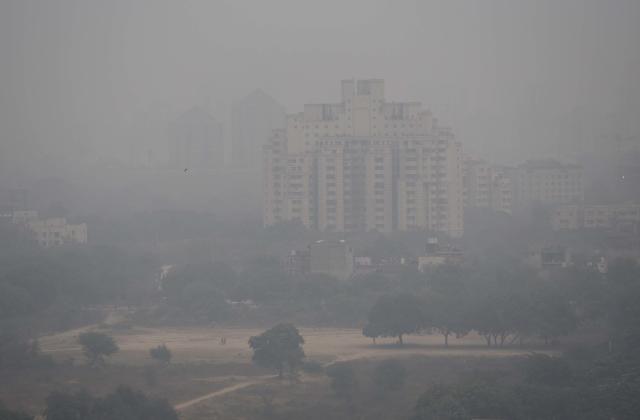
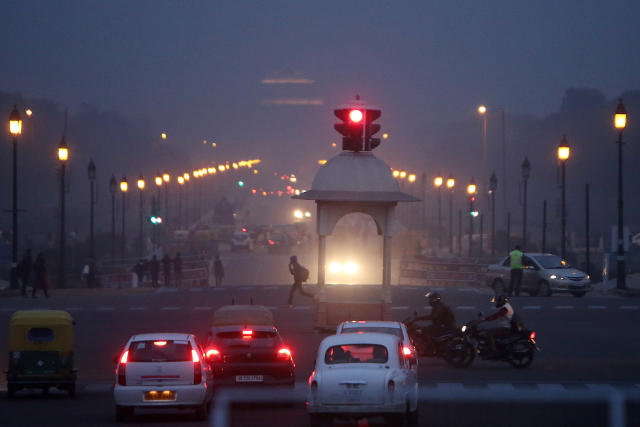
A thick smog settled over New Delhi as winter began in India last year, forcing medical professionals to declare a public health emergency.

Residents swarmed local hospitals complaining of respiratory problems. Cricket players were forced to put on anti-pollution masks during a national match between India and Sri Lanka. And United Airlines canceled flights into the city, citing the air-quality concerns.

Air pollution isn’t among the causes of death that medical examiners list on death certificates, but the health conditions linked to air pollution exposure, such as lung cancer and emphysema, are often fatal. Air pollution was responsible for 6.1 million deaths and accounted for nearly 12 percent of the global death toll in 2016, the last year for which data was available, according the University of Washington’s Institute for Health Metrics and Evaluation.

Heavy smog engulfed Gurgaon, India, a city southwest of New Delhi in North India. The air quality index was at 320, which agencies consider unfit for inhalation even by healthy people and which made commuting difficult. December 2017.  (Sanjeev Verma/Hindustan Times via Getty Images)“Air pollution is one of the great killers of our age,” Philip Landrigan of the Icahn School of Medicine at Mount Sinai wrote in an article published in the medical journal The Lancet.

India’s late environment minister, Anil Madhav Dave, made headlines last year for denying there was proof that air pollution was singularly responsible for death in India. Dave conceded that air pollution “could be one of the triggering factors for respiratory associated ailments and diseases,” but he blamed the negative health effects on other issues: poor diet, occupational hazards, socioeconomic status and genetics.

Dave died in May 2017 from cardiac arrest. The new environment minister, Harsh Vardhan, has also said that “to attribute any death to a cause like pollution, that may be too much.”

But there are numerous studies linking air pollution to morbidity around world.

“There is a huge amount of data linking outdoor and indoor air pollution with adverse health effects, including acute and chronic disease, exacerbations of chronic disease and death,” said Dr. Barry Levy, adjunct professor of public health at Tufts University School of Medicine.

The right to breathe is, you would think, the most fundamental right ― more than food, more than water. And that right is being seriously compromised right now. Mayur Sharma, TV personality

Of the 6.1 million air pollution death in 2016, 4.1 million are attributable to outdoor, or ambient, air pollution, according to IHME. Such pollution comes from sources like vehicles, coal-fired power plants and steel mills. Household, or indoor, air pollution is a more pressing problem in low-income countries due to the use of indoor fires for cooking and heat, and it’s linked to an estimated 2.6 million deaths per year. (In India at least, the total air pollution death rate has declined since 1990 even as the outdoor death rate went up in recent years ― due largely to a decrease in the number of deaths attributable to indoor air pollution. Scientists don’t completely understand how ambient and household air pollution deaths interact, and there’s some overlap between them, which is why the sum of ambient and household air pollution deaths exceeds total air pollution deaths.)

Developing countries bear the brunt of the world’s pollution problem

Air pollution is undoubtedly a global public health problem, but not all countries are equally affected.

As many as 1.6 million deaths were attributable to air pollution in India in 2016, according to IHME. That same year, all air pollution was linked to almost 123 out of every 100,000 deaths in the country ― among the highest in the world.

“When it comes to the number of deaths from air pollution, India is No. 1,” Landrigan told HuffPost.

Afghanistan and several African countries have higher ambient air pollution death rates than India, likely because of the extremely dusty conditions in those countries, combined with other pollution sources, like vehicle emissions and crop burning.

“With globalization, mining and manufacturing shifted to poorer countries, where environmental regulations and enforcement can be lax,” Karti Sandilya, one of the authors on the Lancet Commission on Pollution and Health, told Reuters. “People in poorer countries ― like construction workers in New Delhi ― are more exposed to air pollution and less able to protect themselves from exposure, as they walk, bike or ride the bus to workplaces that may also be polluted.”

North India’s topography makes its pollution problem worse, Vox noted in November. The region acts as a basin, trapping pollution from crop burning outside the city and mixing it with industrial pollution from within city limits. And that mix of pollution sources is most intense during the coldest months of the year.

In fact, the problem is getting so bad that some people are moving out of New Delhi altogether. Television personality Mayur Sharma is perhaps the most notable example: He left his job and moved his family out of the capital to escape the pollution.

“The right to breathe is, you would think, the most fundamental right ― more than food, more than water. And that right is being seriously compromised right now,” Sharma told NPR.

As India’s economy has expanded, the country has struggled to keep up with the environmental costs of that growth. Premature deaths from air pollution have stabilized in China, which rivals India in terms of pollution problems and population. That stabilization occurred partly because China has used fines and criminal charges to crack down on pollution. India’s government, however, seems more focused on economic growth than on protecting air quality and the environment.

King's Way in New Delhi is seen shrouded in smog on Dec. 4, 2017. (Anindito Mukherjee via Getty Images)

Air pollution ― and climate change ― link the global community in deadly ways

Because air pollution and related health problems can travel, no country can solve its air pollution problem alone.

Air pollution from Chinese consumption was linked to an estimated 3,100 premature deaths in the U.S and Western Europe in 2007, according to an article published last year in the journal Nature. At the same time, nearly 110,000 premature deaths in China were linked to pollution prompted by consumption in the U.S. and Western European.

Air pollution can travel long distances and cause health impacts in downwind regions,” Qiang Zhang, co-author of the article and a researcher at Tsinghua University in Beijing, explained to Popular Science.

“Air pollution doesn’t care about political boundaries.”  Kirk Smith, professor of global environmental health at the University of California, Berkeley, School of Public Health.

Climate change will likely exacerbate those global concerns, according to public health experts.

They anticipate that climate change will trigger a host of public health problems, including heat- and cold-related deaths, increased disease risk and mental health problems from climate displacement and extreme weather conditions.

Climate change also contributes to air pollution trends ― hotter temperatures increase wildfire risk, and wildfires create ambient air pollution. It also increases ground-level ozone, which is a main ingredient in urban smog, and can trigger health problems like chest pain, throat irritation and lung inflammation, according to the Environmental Protection Agency.

“Higher temperatures are expected to increase the rate of ozone formation,” Levy said.

This makes it even more crucial for local, national and intergovernmental organizations to join forces to address air pollution.

As Kirk Smith, a professor of global environmental health at the University of California, Berkeley, School of Public Health, put it, “Air pollution doesn’t care about political boundaries.”

Paul Ryan Collected $500,000 In Koch Contributions Days After House Passed Tax Law

HuffPost

Paul Ryan Collected $500,000 In Koch Contributions Days After House Passed Tax Law

Mary Papenfuss, HuffPost        January 20, 2018

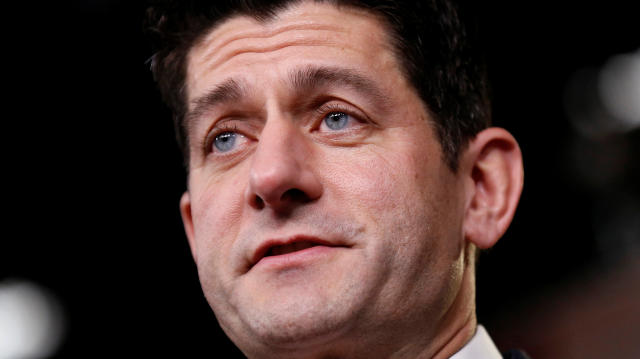
Just days after the House passed its version of the federal tax law slashing corporate tax rates, House Speaker Paul Ryan collected nearly $500,000 in campaign contributions from billionaire energy mogul Charles Koch and his wife, according to a recent campaign donor report.

Koch and his brother David spent millions of dollars to get the tax law passed and are spending millions more in a public relations campaign in an attempt to boost support for the law, The Wall Street Journal reported.

Koch Industries, one of the largest private corporations in the nation, operates refineries and manufactures a variety of products. The new tax law — which slices corporate tax rates from 35 percent to 21 percent, slashes estate taxes and includes a special deduction for oil and gas investors — is expected to save the Koch brothers and their businesses billions of dollars in taxes.

Just 13 days after the tax law was passed, Charles Koch and his wife, Elizabeth, donated nearly $500,000 to Ryan’s joint fundraising committee, according to a campaign finance report filed Thursday.

Five other donors, including billionaire businessmen Jeffery Hildebrand and William Parfet and William Parfet, each contributed $100,000 in the last quarter of 2017, according to the records.

“It looks like House Speaker Ryan is quickly being rewarded for passing this legislation that overwhelmingly benefits the Kochs and billionaires like them,” Adam Smith, spokesman for campaign finance reform nonprofit Every Voice, told the International Business Times, which first reported the Koch contributions.

The Koch donations were paid into Team Ryan, which raises money for the speaker, the National Republican Congressional Committee and a PAC run by Ryan. On the same day, Charles and Elizabeth Koch also each donated $237,000 to the NRCC.

The Koch brothers, worth an estimated $100 billion together, have become the gorillas of dark money contributions distorting American democracy since the Supreme Court’s decision in Citizens United v. FEC, which opened the door to unlimited campaign contributions from corporations, unions and wealthy individuals to outside groups. The brothers are using their massive wealth to push a political agenda that’s the “most hard-line libertarian philosophy” in America, according to Jane Mayer, author of Dark Money: The Hidden History of the Billionaires Behind the Rise of the Radical Right.

Ryan has indicated that he won’t run again when his term is up this year, Politico reported, though he hasn’t made an official announcement. If he doesn’t run, his contributions would be redirected.

Clarification: Language in this story has been updated to better describe the Supreme Court decision in Citizens United v. FEC.

Environmentalism for conservatives:

Salon

Environmentalism for conservatives: How to make climate activists see red

Young Republicans, reformed lobbyists, and green Tea Partiers: Meet America’s “eco-right”

Zoya Teirstein, Grist     January 21, 2018

This post originally appeared on Grist.

Todd Tanner has a pretty sweet offer for his fellow Montanans: a new shotgun in exchange for science-based evidence that he’s wrong about climate change.

The conservationist uses the challenge in an attempt to raise awareness about our warming planet. A lot of people where Tanner lives in Bigfork, Montana, would probably like to take him up on his offer: The state has one of the highest rates of outdoor recreationists in the country, and Tanner is no exception. He was planning on going hunting after we finished our interview. “You wouldn’t know it,” he said over the phone, “but I’m literally walking around in a pair of wool pants.”

Tanner is sure he’ll never have to hand over that new shotgun, though he says he would love to find out that anthropogenic climate change isn’t real. “If someone shows me the error of my ways they can have their choice,” he said. “They can have any rifle, shotgun, pistol, or rod I own, and I’ll walk away feeling like I got the better end of the bargain.”

Since 2011, Tanner has harnessed his prominent position in Montana’s hunting and fishing communities to get people engaged. After wildfires incinerated forests and droughts desiccated rivers in Big Sky Country this year, agitated sportsmen and women have become easier to find. Tanner’s nonprofit, Conservation Hawks, is part of a coalition of grassroots organizations trying to pull conservatives into the conversation about rising temperatures.

And it’s starting to work. There’s a small but growing alliance of concerned conservatives who want to reclaim climate change as a nonpartisan issue. This motley crew of lobbyists, Evangelical Christians, and far-right radicals call themselves the “eco-right.”

Christine Todd Whitman, former chief of the Environmental Protection Agency under President George W. Bush, believes the eco-right has a real chance at inspiring action in Congress. With Republicans controlling both houses of Congress and the White House, and a record-breaking year of environmental disasters finally behind us, 2018 could be the year the party reverses course. “If you look at the damage from just this last summer, from the floods, the droughts, the fires, it’s pushing $300 billion out of our economy,” Whitman said.

In Montana, Tanner diligently crafts his messaging in the hopes that he can turn even a small portion of the red state’s hunters and anglers into climate activists. There’s also a broader, national effort to target American conservatives. RepublicEn, for instance, is a coalition of more than 4,000 conservatives and libertarians pushing for environmental action. The organization hopes that, generations from now, the eco-right will be remembered for leading the United States out of the climate crisis and into the clean energy revolution.

Alex Bozmoski is the director of strategy and operations at RepublicEn. It’s a job he’s well-suited for — he used to be a climate denier himself.

As an undergrad at Georgetown, Bozmoski enrolled in a climate science class as a joke, planning to heckle the professor. But when challenged to justify his skepticism, Bozmoski found he had drawn erroneous conclusions fueled by conservative radio shows and Fox News. He cast around in his network of fellow Republicans and conservatives for people he could discuss his newfound understanding of climate change with, but he kept coming up empty.

Bozmoski found that, despite a long legacy of environmental leadership in the Republican Party, most modern-day members weren’t even thinking about our overheating planet, let alone figuring out how to address the problem.

Environmental issues weren’t always this polarizing. President Nixon set a firm national precedent when he created the EPA and the National Oceanic and Atmospheric Administration in 1970. The Senate passed the Clean Air Act that same year, 73 votes to 0.

Fast-forward to the 2012 presidential election, when multiple Republican candidates advocated for abolishing the EPA. Two years later, just one of all the 107 Republicans running for Senate mentioned climate change.

It’s no wonder Bozmoski felt betrayed by his party and ill-equipped to apply his conservative thinking to the issue. Yet he could still understand why his fellow conservatives didn’t care.

“When you don’t trust anyone talking about climate change, when you don’t see your tribe talking about solutions that fit with your worldview, it’s really easy to cope with the problem by ignoring it or denying it,” he said. Bozmoski did neither.

He went hunting for like-minded Republicans and found Bob Inglis, a former U.S. representative from South Carolina who came out swinging against global warming in 2010 (a position that likely cost him his seat in the House). Bozmoski tracked the ousted politician down in 2012, and they started a project called the Energy and Enterprise Initiative. RepublicEn grew out of that project. They popularized the term “eco-right.”

RepublicEn hit the road in 2014, traveling across the country to persuade conservatives that their principles and values can be applied to curbing greenhouse gas emissions. Since then, RepublicEn has held 300 events across America, mostly for expressly conservative audiences. Bozmoski estimates that the organization has reached more than 26,000 Americans. He gets people to listen by reminding them that they have power.

“You are the most important environmental champions on planet Earth,” he tells them. “Republicans won’t lead without first being led by their constituents. You have an outsized influence on our ability as humanity to deal with this problem.”

RepublicEn hopes to generate conservative support for a revenue-neutral carbon tax. “It’s the only solution that’s effective enough to address climate change and fits with conservative principles,” Bozmoski said.

A carbon tax is pragmatic and relatively simple: Put a rising fee on the use of fossil fuels, forcing companies to curb their emissions. To make it revenue neutral — and more acceptable to conservatives — the money generated by that fee goes back to Americans through checks or by cutting payroll or sales taxes.

A carbon tax in any form is unlikely to make it through today’s highly partisan Congress, so, in the meantime, RepublicEn advocates for a level playing field for wind and solar energy, less leaky oil and gas infrastructure, and nuclear power.

Jessica Fernandez, a lifelong Floridian and conservative, was one of the people inspired by RepublicEn’s national eco-right tour. Her upbringing might have had something to do with it. “At my house,” she said, “we grew up with solar panels on the roof and composting.”

In 2014, she met Alex Bozmoski and Debbie Dooley, head of a subset of the Tea Party called the Green Tea Party. Fernandez, a long-time director of the Miami Young Republicans, liked their pitch that conservatives should be leaders in conserving the environment. “It’s groundbreaking, I know,” she said with a chuckle. When trying to engage other Republicans on green issues, she quickly learned that an alarmist attitude just doesn’t work.

What approach does work? A focus on money. Fernandez said that conservatives are more likely to respond positively if you say, “Hey! Fixing the climate is something that can benefit you economically.” She tells them about community solutions like solar co-ops, groups of homeowners who use their collective purchasing power to install solar on the cheap, thereby reducing monthly electric bills.

Tanner, the conservationist from Montana, approaches the issue from a different angle. He thinks talking to conservatives about climate change requires language that is hyper-specific and localized.

The fine lines between demographics are razor-sharp. Messaging that works for a hunter might not work for a fisherman, even though both face the same set of environmental consequences: a scarcity of fish and game. “It’s almost like code,” he said. “As soon as you try and talk to people who aren’t like you, all of these barriers go up.”

For that reason, Tanner says the messenger and the message have to be authentic. He spends his weeks customizing language that personally appeals to various sub-demographics of sportsmen and women. There are millions of hunters and anglers in the United States. “That’s a ton of us,” he said. “If even 20 percent or 30 percent of them got engaged, it would have a huge impact.”

James Tolbert is an unlikely environmental lobbyist. He spent 27 years helping big corporations clean up pollution. In 2013, the engineer was wrapping up work on the fallout from a million gallons of crude oil spilling from the Enbridge Pipeline into the Kalamazoo River in Michigan when he decided to switch teams. He traded in his senior position at energy infrastructure firm AECOM for a role as a lobbyist at Citizens’ Climate Lobby.

While Conservation Hawks and RepublicEn use grassroots organizing to drum up support among conservatives, lobbyists like Tolbert use a “grasstops” approach to push Republican representatives in Congress to support solutions.

We “create political space with a member of Congress by showing him that there is support from key members in his community,” Tolbert said. Citizens’ Climate Lobby calls these key community members “influencers” — business leaders, members of the chamber of commerce, even regional newspaper editorial boards. He sees them as crucial to getting anywhere with members of Congress.

When a Republican representative hesitates to accept climate change for fear of losing an upcoming reelection campaign, a well-placed opinion piece in a hometown newspaper or an endorsement from a local business leader can occasionally tip the scales.

It’s premature to say the winds of change are blowing, but we may be seeing the beginnings of a breeze. This month, more than 100 congressional lawmakers, including 11 House Republicans, wrote a letter to President Trump urging him to address climate change and the threat it poses to national security after his administration left the issue out of its national security strategy.

William Ruckelshaus, who served as EPA administrator under Nixon and President Reagan, has met with a number of eco-right organizations. He believes massive support for significant action on global warming is “going to have to include conservative groups, and virtually every discipline in society.” When Republicans do finally warm up to the idea of a conservative environmental movement, the eco-right will step out of the wings.

“They’re going to begin to get worried” about the growing impacts of a warming planet, Ruckelshaus said. “If there are organizations that they feel more comfortable with, they’re more likely to sign on.”

The eco-right hasn’t exactly received a warm embrace from the conservative movement. In 2014, the Washington, D.C.-based public relations firm Berman and Company launched the Environmental Policy Alliance — yes, EPA for short. The outfit is “devoted to uncovering the funding and hidden agendas behind environmental activist groups.” Among its targets: climate-conscious organizations like Tanner’s Conservation Hawks.

Shortly after it started, the alliance launched a website called Green Decoys,  which claims that left-wing environmental NGOs use sportsmen as a cover for their “radical environmental activist” agendas.

The site has a different informational video targeting each kind of American conservation group. In the “Montana” video, a man in camouflage carrying a rifle speaks straight into the camera. “I’m a real sportsman,” he says. “And I’m a member of organizations that support hunting and fishing.” His double appears on screen, wearing a camo neckerchief. “And I’m a phony sportsman,” the double says. “I support candidates that think we cling to our guns because we just don’t know any better.”

Tanner isn’t worried about people who question his legitimacy. “If the folks who run Green Decoys, and I’m well aware of who they are, want to get together and see who’s a better hunter or fisher, or who’s the real deal and who’s not,” he said, “we are more than happy to have that conversation.”

Bozmoski recognizes that some conservatives have gone too far down the path of denial to be receptive to RepublicEn’s message. “We aren’t big enough to go around persuading people who really believe, to their core, that this is a government conspiracy,” he said. “We don’t worry about the people on the fringe who are hobbyists in antagonism on climate change.”

Fernandez hopes the tide of support for environmental legislation will rise to the highest levels of government.

“Climate change doesn’t have a political affiliation,” she said. She believes that even President Trump might change his tune if the solution is “repackaged as something that benefits the United States of America.”

What should the eco-right do while the top dogs on Capitol Hill insist on looking the other way? Ruckelshaus, the former EPA chief, says to “keep on.” But as we descend into ever-worsening environmental chaos, the question remains: How soon can these conservatives alter the course of history?

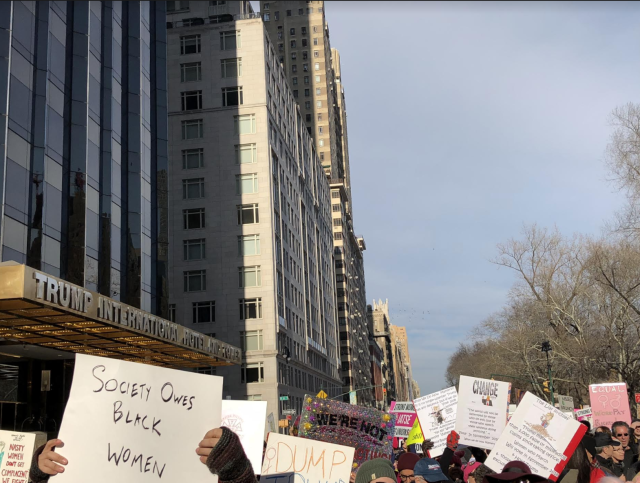
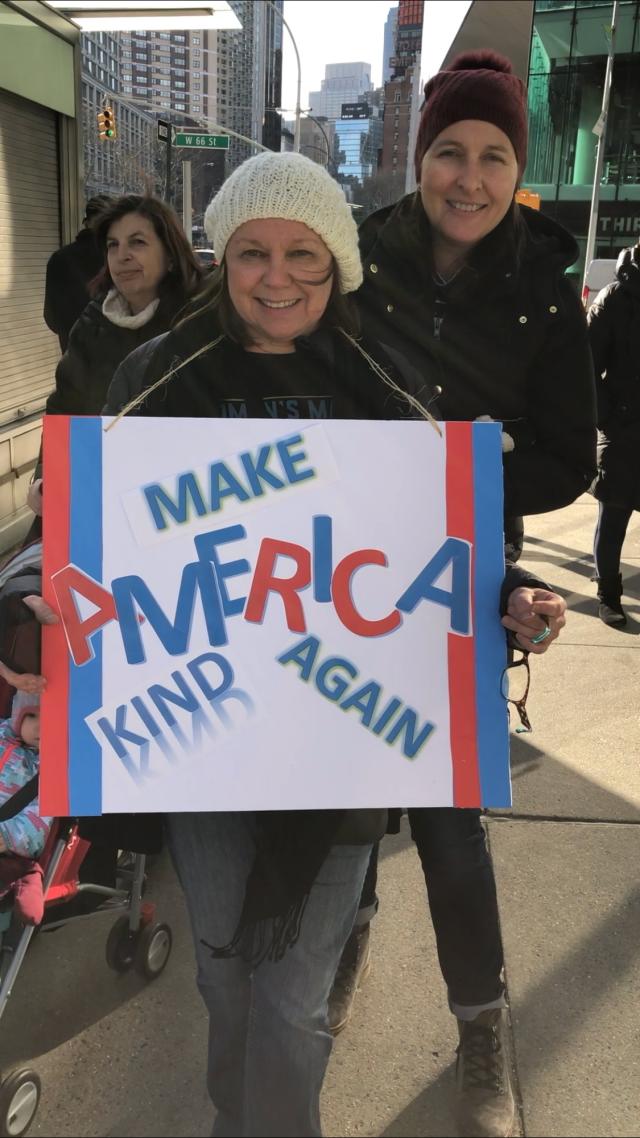
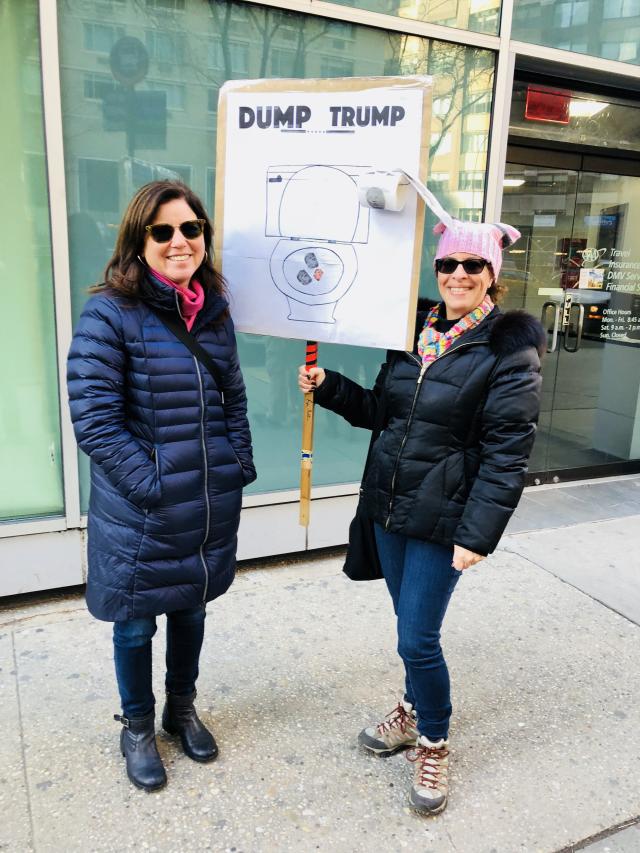
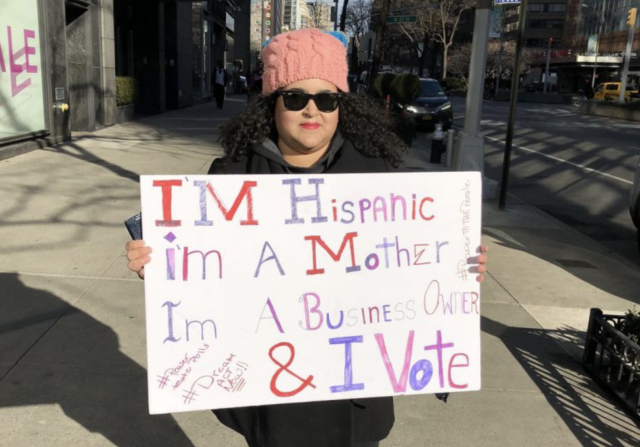
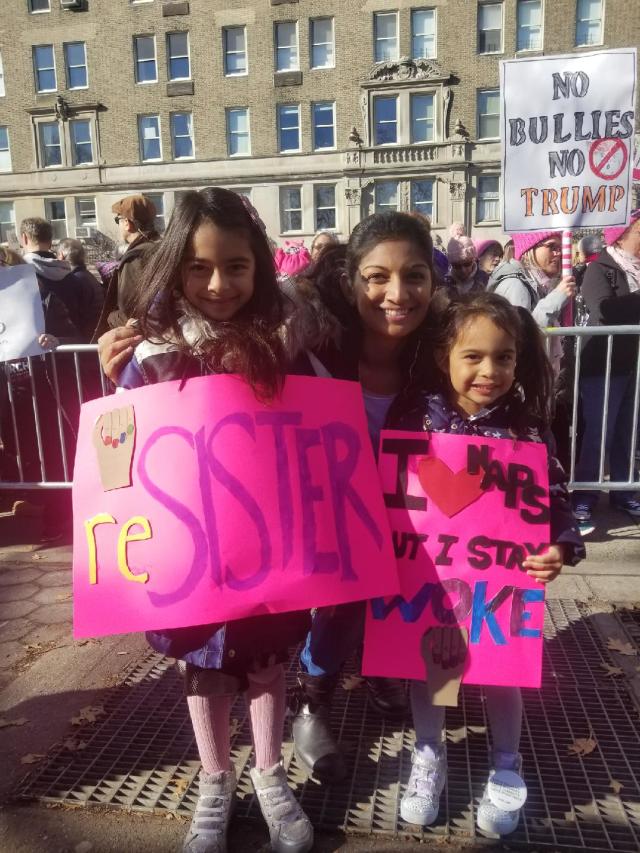
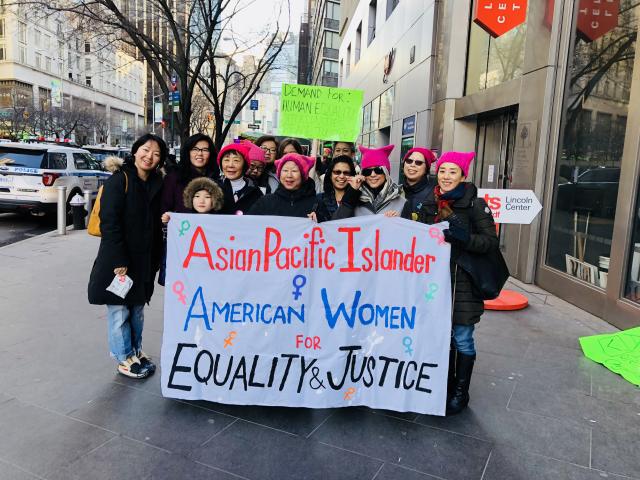
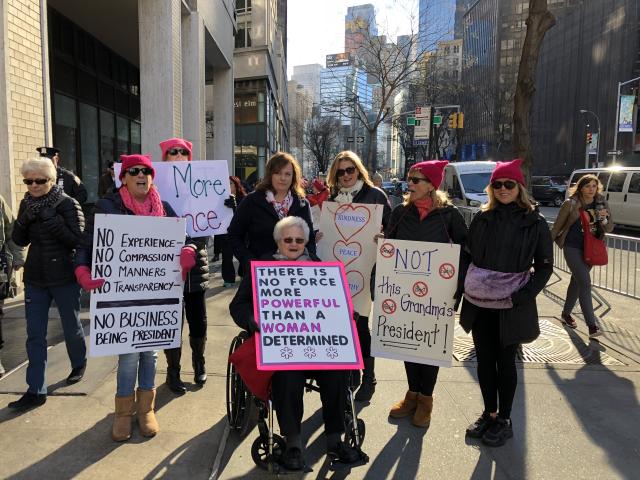
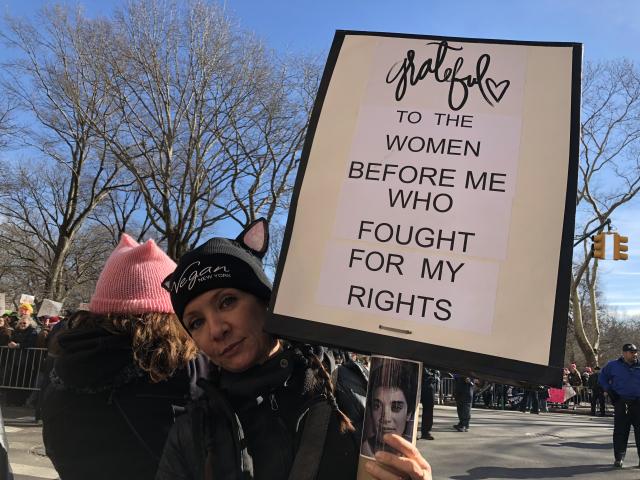
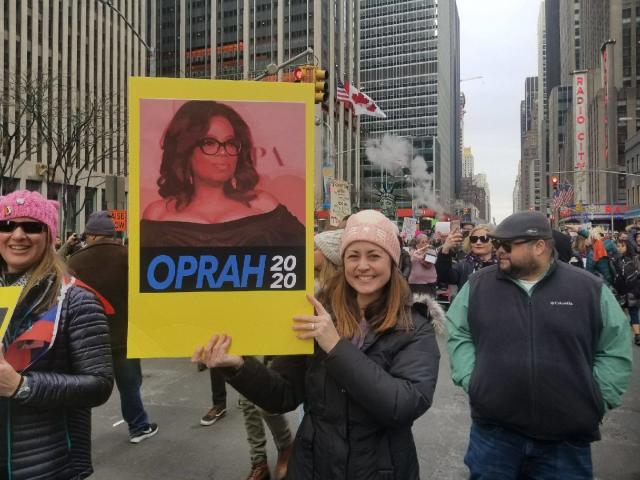
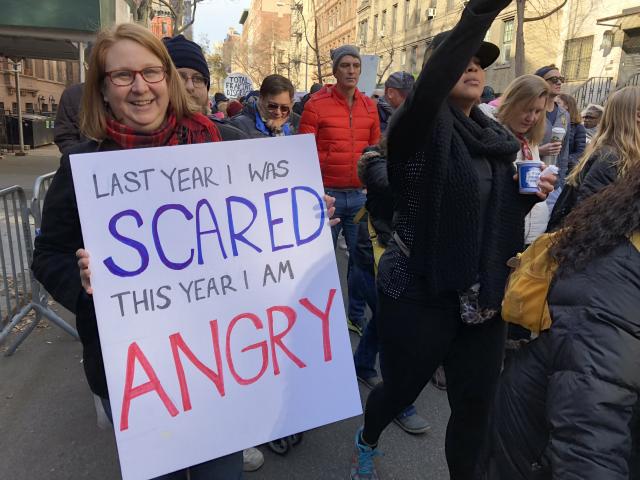
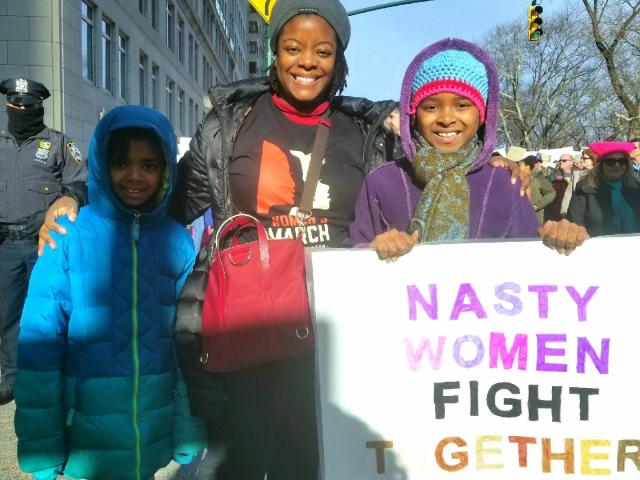
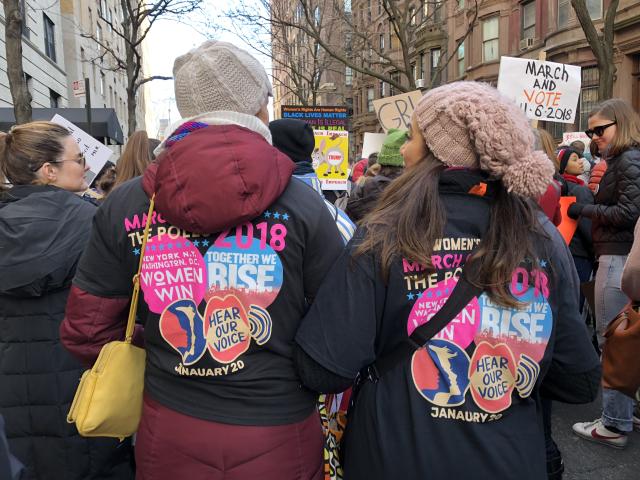
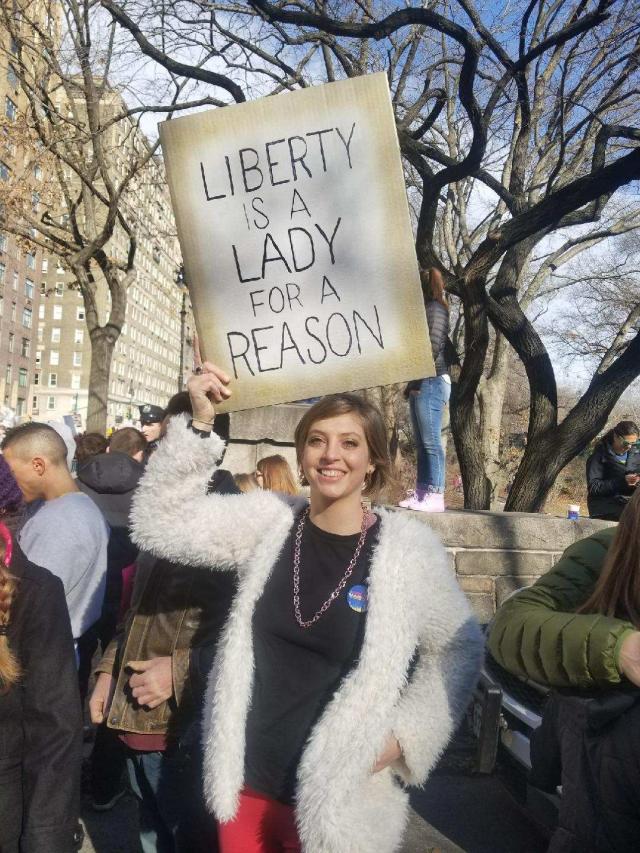
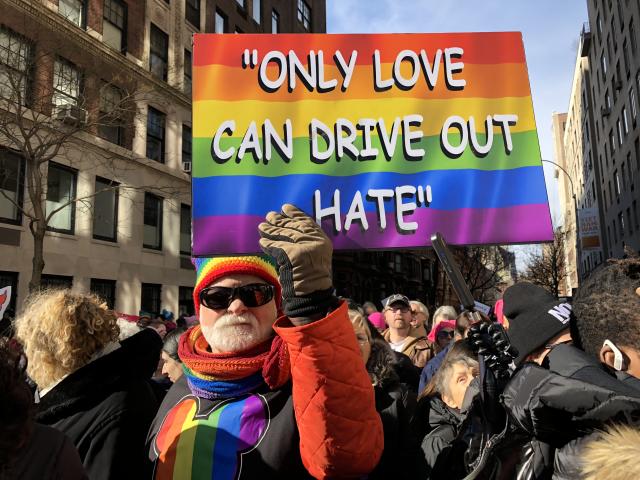
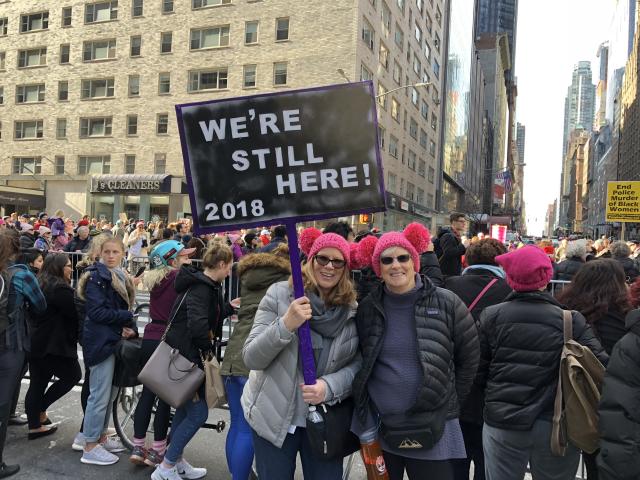
The women who marched in 2018

Yahoo News

The women who marched in 2018

 Lisa Belkin      January 20, 2018  

Fracking Waste Lawsuit Highlights Dangerous Trend of Corporations Targeting Community Rights Defenders

EcoWatch

DeSmogBlog

Fracking Waste Lawsuit Highlights Dangerous Trend of Corporations Targeting Community Rights Defenders

Marcellus Shale rig and gas well operation on Ridge Road in Jackson Township operated by Rex Energy. WCN 24/7 / Flickr

By Simon Davis-Cohen         January 18, 2018

In early January, a federal judge ordered the nonprofit law firm Community Environmental Legal Defense Fund (CELDF) to pay $52,000 to an oil and gas exploration company for defending a rural Pennsylvania township’s ban on underground injections of fracking waste.

This sanction comes at the request of Pennsylvania General Energy Company (PGE) and the Pennsylvania Independent Oil & Gas Association, but is part of a growing trend to prevent municipalities across the nation from pushing back against state and federal attempts to overrule them.

Starting in 2012, PGE proposed an injection well which, according to Grant Township’s Board of Supervisors, “would receive 30,000 barrels [1.26 million gallons] of frack wastewater per month for 10 years.” The board of supervisors for this small community near Pittsburgh warned that the injection well “threatens to subject every resident of Grant Township to a slow poisoning, and threatens thousands more who depend on Grant Township’s watershed for clean water.”

The community’s law, they added, bans the injection well “as a violation of our basic civil rights.” PGE operates multiple gas-extraction wells in the township.

Rights of Nature, Local Governance

CELDF, which has defended Grant’s efforts to prevent waste injection wells for over three years, has worked with some 200 municipalities in the U.S. to defend local laws challenging similar corporate projects. The group aims to drive state constitutional change to bolster the rights of local residents and ecosystems against what it calls regressive state preemption and corporate personhood.

Grant Township, for example, is elevating a “right of self-government,” rights “to clean air, water, and soil” and “ecosystem rights” above corporations’ “rights” to inject waste from oil and gas extraction in the township.

These types of local laws often face substantial legal pushback from private corporations and states which claim authority over issues such as fossil fuel production. Along with the sanctions against CELDF, PGE is suing Grant Township itself, population 741, for damages that would likely be in the hundreds of thousands of dollars. Among its claims: The injection well ban violates the corporation’s rights as a “person” under the First, Fourth, and Fifth Amendments; the Equal Protection Clause of the Fourteenth Amendment; and the Contract Clause and Supremacy Clause of the U.S. Constitution.

Grant Township is the fourth local government CELDF has defended in federal court.

‘Frivolous’ Legal Arguments

At the heart of the court’s decision awarding PGE sanctions against the legal nonprofit (the company originally asked for $500,000) is an argument that the sanctions are justified because CELDF’s legal arguments are contrary to “settled” law and therefore “frivolous.” This reasoning asserts that corporate personhood and Pennsylvania’s authority over municipalities on issues affecting drinking water and fossil fuel development is settled, and therefore CELDF’s defense of Grant’s claim to the contrary is “clearly unreasonable.”

Grant Township, the court wrote, “seeks to disavow constitutional rights afforded corporations so as to prevent PGE from the lawful exercise of its right to pursue gas extraction related activities within its borders.” On top of all this, Grant’s law recognized legal rights for a local ecosystem. CELDF’s attempt to represent that ecosystem in court, the judge ruled, violates the Federal Rules of Civil Procedure, a set of rules that govern how legal proceedings take place in U.S. district courts.

Local Governments Sanctioned Across U.S.

CELDF is not alone in facing sanctions for challenging so-called settled law on similar issues. Defend Local Solutions is a campaign led by Tallahassee’s Mayor Andrew Gillum which is aimed at expanding the powers of municipalities in Florida. The campaign said at least seven states have “super preemption” bills on the books that sanction local officials who dare challenge specific state preemption bills that rescind powers from municipalities.

In Florida, for example, Gillum personally faced the threat of sanctions after he refused to repeal a local law that banned fire arms in public parks (even though the ordinance wasn’t being enforced).

New bills, such as Texas’s highly controversial “show me your papers” and sanctuary city preemption bill (SB4), also include punitive language for municipalities pushing back against state and federal authority.

Texas’s bill would fine local officials and employees $25,000 per day or even remove them from office if they defy the law, according to the Mexican American Legal Defense and Education Fund. Parts of this section of the law, however, are hung up in court. However, the court ruled that local officials can be sanctioned if they outright ban police from asking for people’s immigration papers, and other sections of the bill are in effect, including a section that threatens punishment for local jail officers. The concept of economic retribution for noncompliance is spreading.

Georgia’s 2017 bill, HB37, removes funding from any private college that “prohibits or restricts officials or employees … from communicating or cooperating with federal officials or law enforcement officers with regard to reporting [immigration] status information.” And in 2016 Arizona passed a bill which withholds state funds from localities that enact policy that challenges the state’s claimed supremacy.

In CELDF’s sanction case, the court acknowledges that sanctions can have the effect of “chilling novel legal or factual arguments.”

Thomas Linzey, CELDF’s director and one of the two attorneys being personally sanctioned, said “that’s exactly the point. For years, the oil and gas corporations believed that they could stop the community rights movement by suing municipalities to overturn their local laws; but having failed to do so, they’re now coming after the lawyers who are helping those communities to stop drilling. In many ways, the industry’s filing for sanctions against us is just proof of how strong the community rights movement is becoming.”

In court records, CELDF pointed to Brown v. Board of Education (which overturned “separate but equal” schools for Black and White students, 1954), courts striking down bans on gay marriage, and other novel legal arguments as evidence that sanctions against lawyers who challenge “settled” law could set a dangerous precedent.

“We understand that the real problem isn’t the injection well, but the system of law that keeps trying to shut us down,” the Grant Township Board of Supervisors said in a statement. “We’re not going anywhere.”

Reposted with permission from our media associate DeSmogBlog.

RELATED ARTICLES AROUND THE WEB

Massive Fracking on Nevada Public Lands Sought by Trump … ›

Trump Re-Examines Regulations Regarding Fracking, Oil Drilling … ›

DeSmogBlog

Oil and Gas Industry’s 2017 Suing Spree Could Set Speech-Chilling Precedents

Dimock, Pennsylvania resident Ray Kemble

By Sharon Kelly                     January 2, 2018 

In 2017, while the Trump administration absorbed media attention with its cries of “fake news,” the oil and gas industry was busy launching private legal actions across the U.S., attacking critics who presented information and opinions to the public.

Those lesser-noticed legal maneuvers, if successful in 2018, could create chilling new precedents, keeping important facts away from the public eye and making it more expensive and risky to talk about the fossil fuel industry’s real and potential impacts on human health and the air, land, and water.

The past year brought some of the most aggressive lawsuits by the oil and gas industry against environmentalists in recent decades. They included legal moves aimed at preventing researchers from discussing their findings, motions painting political movements as for-profit conspiracies, and even a $5 million dollar lawsuit brought against a cancer patient whose tap water, state investigators determined years ago, was contaminated by gas drilling — by the company that is now suing him.

That lawsuit, filed by a shale gas drilling company, claims that a Pennsylvania landowner violated a non-disclosure agreement by talking to the press about his fouled drinking water, his home’s plummeting property value, the impacts of truck traffic on his community, the poor air quality around his home since drilling and fracking began in the area, or other problems he believes the company itself caused.

These oil and gas industry cases — involving novel uses of conspiracy, defamation, and even wire fraud laws — represent new and concerted efforts by large corporations to make individuals and groups pay for presenting information and opinions to the public.

Cancer Patient Gagged

Dimock, Pennsylvania, landowner Ray Kemble, who was diagnosed with bladder cancer in March 2017, was sued in August by Cabot Oil and Gas, which drilled a series of Marcellus shale wells in Kemble’s hometown.

Back in 2010 state environmental regulators concluded that Cabot Oil and Gas’s drilling operations had contaminated the area’s groundwater and ordered the company to cough up $4.6 million. In May 2016, federal health officials concluded that the drinking water in Dimock was indeed unsafe, and in December 2016, the U.S. Environmental Protection Agency’s (EPA) long-awaited national study warned that hydraulic fracturing (fracking) has contaminated drinking water supplies across the U.S. (without directly commenting on Kemble’s situation).

Cabot signed settlements with virtually all of the families drawing water from the contaminated Pennsylvania aquifer, though the precise terms of those agreements remain secret. A separate federal lawsuit, brought by two families down the road from Kemble, the Elys and the Huberts, was settled in September for an undisclosed amount, a sign that the Ely and Hubert settlement also includes a non-disclosure clause.

Cabot’s new lawsuit argues that a 2012 settlement bars Kemble from “disparaging” the company by discussing any harm he believes the company caused him — or even talking about things the company did after the settlement was reached.

But good luck finding out what exactly a settlement agreement between Kemble and the company might have said: In December, Cabot argued in court that it didn’t need to provide the document at the heart of the case to the attorneys representing Kemble’s co-defendents, nevermind the public.

Non-disparagement and non-disclosure agreements have been in the public spotlight lately amid the #MeToo scandals, after it came to light that powerful sexual harassers and assaulters frequently used the clauses to prevent those they assaulted from talking publicly.

Critics argue that non-disclosure and non-disparagement agreements (NDAs) should also not be used in cases where the public health could be at risk, warning that NDAs could, for example, keep someone sickened after drinking bad water from warning their neighbors about the danger.

Legal experts have questioned whether courts would ever actually enforce such an order — so the case brought by Cabot against Kemble could set a significant precedent.

Cabot also sued Kemble’s attorneys and the law firms where they work for representing Kemble in his earlier lawsuit against Cabot, which Kemble withdrew a few months after his cancer diagnosis (Kemble’s attorneys have cited unspecified “new information” in explaining the decision to drop the case). Kemble’s supporters say they fear that by including Kemble’s attorneys in the lawsuit, Cabot is trying to make it harder for those harmed by powerful companies to find representation.

On December 21, 2017, Susquehanna County Judge Jason J. Legg allowed Cabot’s claims against the attorneys to go forward, while admonishing Cabot for breaking Pennsylvania’s Rules of Civil Procedure by claiming $5 million in damages, even though the rules forbade Cabot to name a specific figure higher than $50,000 in their complaint. The judge noted that the claiming damages of $5 million “may have been designed to attract media attention” and “likely” served no legitimate legal purpose.

To Kemble, the lesson is clear. “This is just a way to shut the people up of the county and of the state, and I just don’t think it’s right,” Kemble said, according to NPR’s State Impact. “We the people have the right to talk.”

Stop Citing Working Paper, Gas Supplier Demands

In a December 11, 2017 letter, natural gas supplier Eversource Energy demanded that environmental advocacy group Environmental Defense Fund (EDF) stop citing a study that found evidence that Eversource and another utility legally manipulated natural gas pipeline markets in ways that caused astronomical gas price spikes during cold snaps from mid-2013 to mid-2016.

That analysis found that Eversource and Avangrid booked pipeline capacity and then left it unused, driving down New England’s natural gas supplies while demand was high, costing New England’s power customers over $3.6 billion. This working paper, prepared by a group of researchers including an EDF economist, emphasized that researchers hadn’t found that anything the company’s did was illegal, but suggested that the laws might need reform.

Those price spikes have been heavily touted by pipeline builders, who say they prove that New England needs to build more pipelines to carry fracked natural gas to the northern states in winter. The new study calls into question whether gas shortages were caused by a lack of pipelines or a failure to fully use the ones already built.

“Limited pipeline capacity is indeed partly responsible for these extreme prices,” the researchers wrote. “But we also find strong evidence that two firms that held significant shares of the contracts to flow gas on the Algonquin Gas Transmission Pipeline — one of the two major pipelines serving New England — regularly restricted capacity to the region by scheduling deliveries without actually flowing gas.”

The cease and desist letter warns EDF that Eversource could sue the environmental group if it continues to cite claims the company describes as “unsupported by fact.”

EDF told DeSmog that the study has been presented for peer review, the method the scientific and academic communities use to ensure research is rigorous. “The Working Paper is going through the process for academic publication in a peer-review journal,” EDF spokesperson Jon Coifman told DeSmog. “Versions have been presented at several academic conferences and workshops.”

Cease and desist letters are often sought in defamation cases, which allow people and companies to sue when someone harms their reputation by deliberately spreading false factual claims — which means it’s unusual to see a cease and desist letter sent over scientific analysis.

The study was authored by Levi Marks, PhD candidate at the University of California, Santa Barbara and Charles Mason, Chair in Petroleum and Natural Gas Economics at the University of Wyoming, along with EDF researcher Kristina Mohlin, and Matthew Zaragoza-Watkins, Assistant Professor of Economics at Vanderbilt.

In November, Eversource and Avangrid were hit with a class action lawsuit over the same general allegations made in the study. The class action argues that the companies violated consumer protection and anti-trust laws, and unjustly enriched themselves by driving up power prices by 20 percent.

EDF has rebuffed the cease and desist demand. “We stand by the analysis and reject this obvious attempt to intimidate and chill legitimate public inquiry,” Coifman told UtilityDive shortly after receiving Eversource’s letter.

Suing the Grassroots

In August, Dakota Access pipeline builder Energy Transfer Partners (ETP) filed a major lawsuit alleging racketeering and conspiracy by the grassroots environmental movement Earth First!, along with environmental groups Greenpeace and Banktrack.

The lawsuit accuses the non-profits of seeking to profit through environmental activism. “Maximizing donations, not saving the environment, is Greenpeace’s true objective,” ETP’s complaint alleges, while accusing pipeline opponents of violating anti-racketeering laws (meant to protect against mafia-style organized crime) and characterizing emails and tweets sent by Dakota Access pipeline (DAPL) critics as wire fraud.

The lawsuit claims that ETP suffered nearly a billion dollars in damages and seeks to legally bar defendants from engaging in political protests. But civil rights advocates have taken issue with the coporation’s approach.

“Defendants employed time-honored, lawful means to advance their views, protected by core constitutional rights of free speech and association,” the American Civil Liberties Union (ACLU) wrote in a friend-of-the-court brief objecting to ETP’s claims of racketeering, defamation, and conspiracy. “Under ETP’s theories, ordinary political speech that runs counter to a corporation’s business interests could expose the speaker to enormous, unwarranted liability.”

In December, attorneys for Earth First Journal, a publication whose name echoes the name of the activist group Earth First!, arrived in federal court to argue that Earth First! is a social movement based on a shared set of ideas, and not a legal entity like a corporation, and therefore isn’t a thing that you can sue.

Earth First!, the journal’s attorney said, lacks the sorts of characteristics you’d find at something like a corporation, like a leadership structure, employees, or even members.

Even if the oil industry’s 2017 lawsuits don’t make it very far, the specter of defending multi-million dollar legal claims could make non-profits and social movements nervous about publicly criticizing powerful corporations.

And that, opponents say, is exactly the point.

“Defending major lawsuits like these against deep-pocketed corporations is extremely expensive, time consuming, and stressful, particularly for cash strapped non-profits,” ACLU staff attorney Brian Hauss wrote in a December 6, 2017 post about ETP’s 231-page lawsuit. “If the courts have any sense, this case won’t get to trial. But ETP doesn’t need to win in court to do major damage.”

It’s Official: 2017 Was the Hottest Year Without an El Niño

EcoWatch

It’s Official: 2017 Was the Hottest Year Without an El Niño

Lorraine Chow      January 19, 2018

The United Nations announced Thursday that 2017 was the hottest year on record without an El Niño event kicking up global annual temperatures.

Last year’s average surface temperatures—driven by carbon dioxide and other greenhouse gas emissions—was 1.1 degree Celsius above pre-industrial times, putting the world on course to breach the internationally agreed “1.5°C” temperature barrier to avoid dangerous climate change set by the 2015 Paris climate agreement.

Significantly, the Paris agreement could be negatively impacted by President Donald Trump and his administration’s rash of anti-environmental policies. Trump, who famously denies climate change and wants to promote U.S. fossil fuels, plans to repeal the Clean Power Plan that limits power plant emissions and intends to withdraw the U.S. from the landmark climate accord.

The UN report was based on a consolidated analysis by the World Meteorological Organization (WMO) of five leading international datasets.

Other international organizations have also placed 2017 as either the second or third hottest year behind 2016, which happened to be bolstered by El Niño. (Warmer waters in the tropical Pacific Ocean during an El Niño can boost warming effects around the globe). On Thursday, NASA ranked last year was the second warmest since record-keeping began in 1880. The National Oceanic and Atmospheric Administration (NOAA), which uses a different analytical method, ranked it third.

However, as WMO Secretary-General Petteri Taalas pointed out, “Temperatures tell only a small part of the story.”

The long-term temperature trend is far more important than the ranking of individual years, he explained. Seventeen of the 18 warmest years on record have all been during this century.

The warming in the Arctic, which is heating up at least twice as fast as the rest of the planet, “will have profound and long-lasting repercussions on sea levels, and on weather patterns in other parts of the world,” Taalas said, noting that the warmth in 2017 was accompanied by extreme weather in many countries around the world.

“The United States of America had its most expensive year ever in terms of weather and climate disasters, whilst other countries saw their development slowed or reversed by tropical cyclones, floods and drought,” he said.

NOAA said earlier this month that weather and climate-related disasters cost a record $306 billion in 2017. The federal agency listed several noteworthy events, including the wildfires in the west, with total costs of $18 billion, tripling the previous U.S. annual wildfire cost record. The year’s string of devastating hurricaneswere also very expensive. Hurricane Harvey had total costs of $125 billion. Hurricanes Maria and Irma had total costs of $90 billion and $50 billion, respectively.