Trump’s bad bet on fossil fuel

Robert Reich posted a new episode.
May 13, 2018

Trump and his merry band of climate change deniers are tearing up clean policies in favor of the coal industry. Here are the reasons why Trump’s big bet on coal is so stupid. Your thoughts?

Trump's Bet on Coal

Trump and his merry band of climate change deniers are tearing up clean policies in favor of the coal industry. Here are the reasons why Trump's big bet on coal is so stupid. Your thoughts?

Posted by Robert Reich on Sunday, May 13, 2018

Giant Hog Farms Are Fighting for the Right to Keep Polluting.

Mother Jones

Giant Hog Farms Are Fighting for the Right to Keep Polluting. The Trump Administration Is on Their Side.

“This industry in particular has incredible influence over all levels of government.”

Tom Philpott           May 5, 2018

Triton Tree/iStock

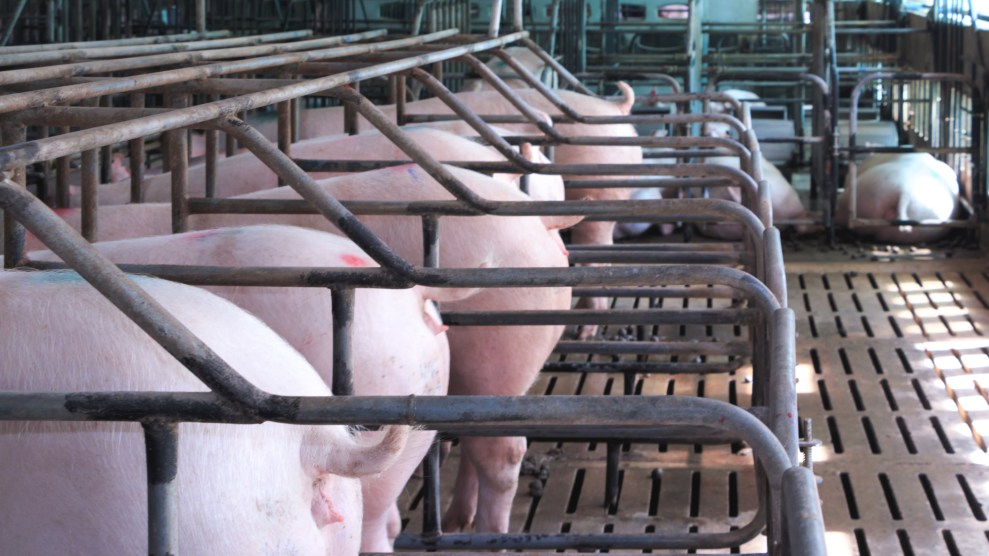
If you enjoy bacon or ham, chances are you’ve eaten pork from North Carolina, where about 16 million hogs—10 percent of the US total—are raised each year. The great bulk of that production takes place in a handful of counties on the state’s coastal plain—places like Baden County, home to more than 750,000 hogs but only 35,000 humans. Recently, a federal jury awarded more than $50 million in damages to 10 plaintiffs who live near one of the factory-scale hog operations.

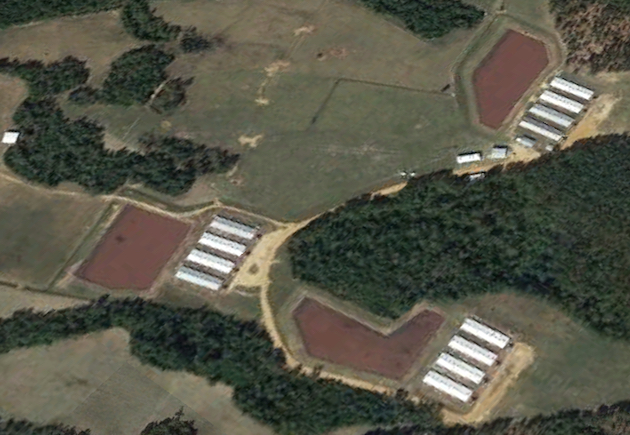
The hog facility in the case, which raises hogs under contract for Murphy Brown, a subsidiary of China-owned pork giant Smithfield, is called Kinlaw Farm. Here’s a Google Earth image of it:

Those white buildings in three clumps of four are hog barns. A typical barn holds around 1,000 hogs. The brownish splotches are open-air cesspools known as lagoons, which store manure from all those animals before it’s sprayed on surrounding fields. I’ve been near operations like this, and the stench is blinding—pungent gases like ammonia and hydrogen sulfide permeate the air. In addition to revulsion, these gases can trigger ill health effects in neighboring communities, including eye irritation, chronic lung disease, and olfactory neuron loss.

As Leah Douglas recently noted in a Mother Jones piece, all 10 of the plaintiffs in the case are black. This isn’t surprising, because in North Carolina, “people of color are 1.5 times more likely to live near a hog CAFO than white people.”

If you play around with Google Earth, you can find several residences within a half-mile of the site. That’s not unusual—a recent analysis of satellite data by the Environmental Working Group found that around 160,000 North Carolinians, representing more than 60,000 households, live within a half-mile of a hog confinement or a manure pit.

The Bladen County case is the first of 26 lawsuits pending in North Carolina hog country—the next is due to begin trial this month. (Smithfield, meanwhile, has vowed to appeal last week’s court decision.) Will the legal onslaught force the industry to stop siting intensive high production so close to people’s homes? Iowa is the site of even more hog production than North Carolina, and people who live near facilities there have similar complaints.

If the federal court’s Bladen County decision withstands Smithfield’s appeal, “it could motivate the company to change its ways,” says Danielle Diamond, executive director of the Socially Responsible Agriculture Project. But she doesn’t anticipate broader changes in the industry, because “other courts are not required to follow this decision.” (The decision could, however, influence the 25 additional cases pending in the same federal district court that awarded the $50 million.)

Real change, Diamond says, won’t come until governments force the industry to clean up its act through tighter regulation. But “this industry in particular has incredible influence over all levels of government,” she says. North Carolina’s state legislature is notoriously cozy with Big Pork; and as the money-in-politics tracker Open Secrets notes, the meat lobby wields tremendous power in Washington.

Indeed, chatting with reporters last Monday, USDA chief Sonny Perdue aired his view on the North Carolina case: The ag secretary called the decision “despicable,” adding, “I feel certain that kind of award has to be overturned.”

Tom Philpott is the food and ag correspondent for Mother Jones. He can be reached at tphilpott@motherjones.com

The anti-Obama: Trump’s drive to destroy his predecessor’s legacy

The Guardian

The anti-Obama: Trump’s drive to destroy his predecessor’s legacy

From the Iran deal to TPP to climate change, ‘the whole thing that animates and unites his policy views is antipathy towards Obama’

David Smith in Washington, The Guardian         May 11, 2018  
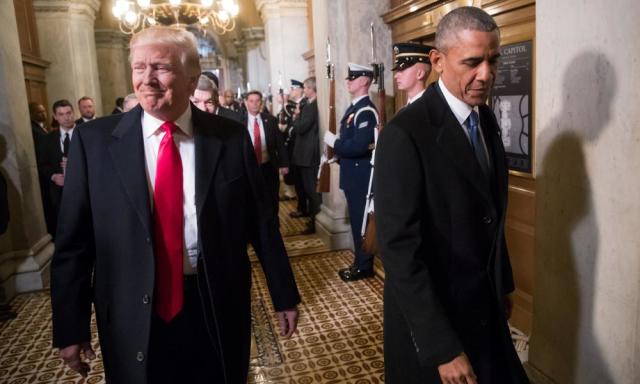
Donald Trump advertised his ambitions to dismantle Barack Obama’s achievements throughout the election campaign. Photograph: Pool New/Reuters

When Donald Trump pulled out of the deal to curb Iran’s nuclear ambitions, hardline conservatives celebrated, European leaders winced and Barack Obama made a rare, lengthy public statement.

Trump’s decision was “misguided” and “a serious mistake”, Obama said, as his signature foreign policy achievement was tossed away.

It was just the latest example of Trump’s all-out assault on the Obama legacy. From climate change to criminal justice to international relations, rarely has one occupant of the Oval Office appeared so obsessed with taking a chainsaw to the work of another.

Tommy Vietor, a former national security council spokesman under Obama, told the Guardian: “The whole thing that animates and unites his policy views is antipathy towards Obama. It’s fucking pathetic. He’s a vindictive person so there is an element of this that is about sticking it to Obama. He knows, probably better than anyone, how to find all the Republican erogenous zones because he spent years whipping people into a frenzy and telling lies about Obama.”

From the start, it has been hard to imagine two men more different than Obama, 56, a mixed-race intellectual married to one woman for a quarter of a century, and Trump, 71, a white, thrice married businessman and reality TV star who has boasted about grabbing women’s private parts. One reads books voraciously; the other, it is said, barely reads at all. There were few reasons for their paths to ever cross except, perhaps, on a golf course, their one common passion.

But then came the 2011 White House Correspondents’ Association dinner. Trump, pushing a racially charged conspiracy theory questioning whether the president was born in America, was among the tuxedo-wearing guests. Obama mocked his nascent political ambitions without mercy. “Obviously, we all know about your credentials and breadth of experience,” he said, recalling an episode of Celebrity Apprentice in which the men’s cooking team fell short and Trump fired actor Gary Busey.

“And these are the kind of decisions that would keep me up at night,” the president continued to roars of laughter. “Well handled, sir. Well handled. Say what you will about Mr. Trump, he certainly would bring some change to the White House. Let’s see what we’ve got up there.”

The room erupted as Obama pointed to a Photo-shopped image of the then fantastical idea of a Trump White House, with three extra storeys, a giant “TRUMP” sign, a hotel, casino and golf course, a giant crystal chandelier, four gold columns and two women in swimwear drinking cocktails in the north lawn fountain.

Four years later, Adam Gopnik of the New Yorker magazine would recall: “Trump’s humiliation was as absolute, and as visible, as any I have ever seen: his head set in place, like a man in a pillory, he barely moved or altered his expression as wave after wave of laughter struck him … he sat perfectly still, chin tight, in locked, unmovable rage.”

Future historians may well ask: was this the moment that Trump resolved to storm the White House and tear down the Obama legacy?

For sure, from the day he formally launched his election campaign in June 2015, branding Mexican immigrants as criminals and rapists, he cast himself as the anti-Obama in style and substance. His act enraptured rightwing media and the Republican base, who saw Trump as a vessel into which they could pour their hopes and frustrations. David Litt, a former speechwriter for Obama, said this week: “It’s not only Trump who says, ‘If Obama is for it, I’m against it.’ This was the guiding philosophy for eight years of the Obama administration. Trump is a catalyst of the movement but he’s also a product of it.”
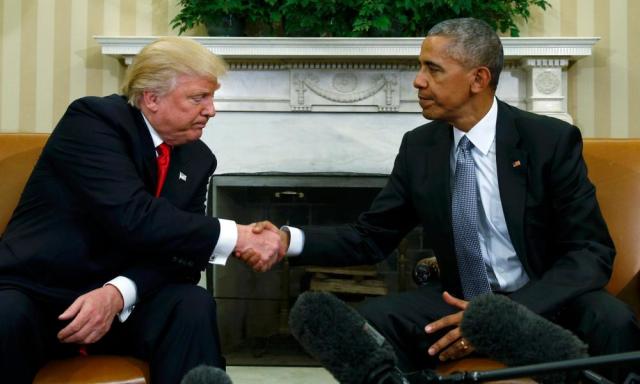
President Barack Obama greets President-elect Donald Trump in the White House Oval Office on 10 November 2016. Photograph: Kevin Lamarque/Reuters

During his battle with Hillary Clinton, Trump duly promised to unravel Obama’s accomplishments. He described the Trans-Pacific Partnership (TPP), a proposed free trade deal with Asia, as “a rape of our country”. He said he is “not a great believer in manmade climate change” and vowed to cancel the Paris agreement. He called the Iran nuclear accord a “disaster” and “the worst deal ever negotiated” and warned that it could lead to a “nuclear holocaust”.

John Hudak, a senior fellow at the Brookings Institution think-tank in Washington, said: “The president ideologically disagrees with much of what President Obama accomplished but it’s important to remember these were campaign promises. It’s not out of nowhere. It’s what his voters wanted. Very little of what the president is doing is shocking, considering his campaign rhetoric.”

Soon after the stunning election outcome, Obama hosted Trump at the White House for about an hour and a half. Trump seemed surprised and a little impressed by the welcome, Obama appeared to be walking on eggshells.

But extraordinarily, since inauguration day, the men have not spoken. Hudak described this as “odd”, noting a past example: the first person Obama called after the killing of Osama Bin Laden was George W Bush.

“But it’s important to remember President Trump doesn’t like to hear ideas that he does not believe. If he called President Obama and said, ‘Can you talk me through this Iran deal?’ he would hear things that wouldn’t fit with that mindset. He could call Bill Clinton or George Bush, but why waste their time?”

At the recent funeral of former first lady Barbara Bush, the Bushes, Clintons and Obamas were joined by the first lady, Melania Trump, but the current president was conspicuously absent.

In the meantime, Trump is working through his Obama checklist at a rapid clip. He made good on his promises to withdraw from the TPP, Paris and Iran agreements. He partially reversed what he called a “terrible and misguided deal” with Cuba, reinstating some travel and commercial restrictions. He ordered the Pentagon to reverse an Obama-era policy that allowed transgender people to serve in the military.

Trump has also struck a radically different tone from the 44th president, expressing admiration for strongmen, confounding America’s longstanding allies and apparently viewing international relations through the prism of personal chemistry. The steady hand of “no drama Obama” has been replaced by chaos, unpredictability and Twitter diplomacy.
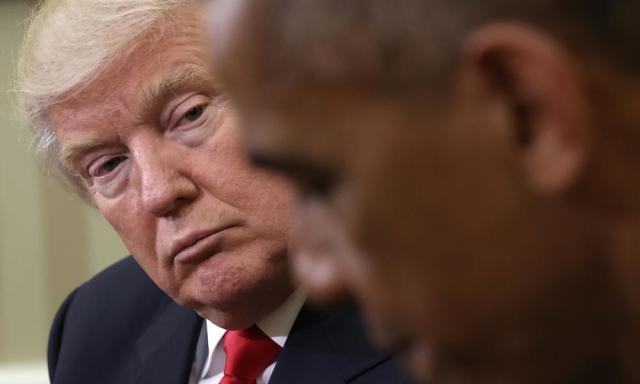
Donald Trump’s ‘only guiding principle seems to be to undo what Obama did’, says one Democratic strategist. Photo: Win McNamee/Getty Images

Domestically, his tone on abortion rights, gun control and race relations represents another 180-degree turn. He announced plans to scrap Deferred Action for Childhood Arrivals (Daca), a program created under Obama to allow people brought to the US illegally as children the temporary right to live in America. He has rolled back hundreds of government regulations in areas such as immigration, net neutrality and clean air and water.

Some reversals have gained less public attention but could have more lasting consequences. Whereas the Obama administration directed federal prosecutors to be less aggressive in charging non-violent drug offenders, Trump’s attorney general, Jeff Sessions, has reverted to a hard-line stance, raising the prospect of a resurgence in mass incarceration just as the prison population had begun to dip.

Lanhee Chen, a research fellow at the Hoover Institution in Stanford, California, said: “It’s not unusual for a president to want to do things differently from his predecessor. I will say the scope and ambition of Trump’s effort to do that is breathtaking. Whether it’s breathtakingly good or breathtakingly bad depends on your point of view.”

But there have been setbacks in the anti-Obama crusade. Trump was unable to steer Republicans to agree on a replacement for the Affordable Care Act, the flagship of Obama’s domestic program, though critics argue they have since done their best to sabotage it through a sweeping tax reform and other measures.

Some believe the effort failed because Trump has little grasp of or interest in policy details. Bob Shrum, a Democratic strategist, said: “His only guiding principle seems to be to undo what Obama did. His driving motivation seems to be his animosity towards Obama. We know he has no deep convictions of his own so Obama became his negative reference point.”

Large Oil Spill Reported on Montana Reservation, Contaminating Pond

EcoWatch

Large Oil Spill Reported on Montana Reservation, Contaminating Pond

Lorraine Chow      May 3, 2018

A well operated by Anadarko Minerals Inc. spilled a “substantial” amount of oil in the central region of the Fort Peck Reservation in northeast Montana, according to local media.

An estimated 600 barrels of oil and 90,000 barrels of brine (production water) leaked from the well, the Glasgow Courier reported, citing officials with the reservation’s Office of Environmental Protection and the Bureau of Land Management.

The spill was first discovered by a farmer doing a flyover in the area. The farmer immediately notified Valley County authorities about the incident.

According to a press release received by MTN News, the spill was reported to the reservation’s Office of Environmental Protection on April 27. The exact date that the leak occurred is not yet clear. The well was shut in late December.

Fort Peck Reservation, which lies north of the Missouri River, is home to members of the Sioux and Assiniboine nations. Members adamantly oppose the proposed Keystone XL (KXL) pipeline and its potential to endanger their water supply.

The press release states that the spill further reinforces tribal officials’ opposition to the KXL and pipeline development on or near the reservation.

Oil and brine from the leak has now traveled roughly 200 yards downhill to a stock pond used by tribal entities to water livestock. The extent of the pond’s contamination is not yet determined, the press release continued. According to initial assessments, about three to six inches of oil currently sit on top of the water.

Jestin Dupree, a Fort Peck Tribal council member, detailed in a Facebook post Wednesday: “In order to get this pond cleaned up there are certain levels of contamination that are allowable but we are looking at the possibility of draining the pond for a proper clean up and the Tribal Chairman felt the same way. In some places in this pond the water is about 13 feet deep.”

“THIS IS CONSIDERED A LARGE SPILL as there are 100,000 gallons of salt water, 27,000-30,000 gallons of oil which equates to 600 barrels of oil,” he added.

According to MTN News, Anadarko has developed a clean up plan with oversight from tribal officials, the Bureau of Indian Affairs, the Bureau of Land Management and the U.S. Environmental Protection Agency.

Dupree noted on Facebook that by Friday the oil company will have a dollar amount for the cost of clean up.

Floyd Azure, chairman of the Fort Peck Tribes, was quoted by MTN News as saying that the incident is further indication of the detrimental effects oil production on the environment and is yet another threat to the reservation’s water quality.

After their initial report was published, the Glasgow Courier posted on their Facebook page: “Fort Peck Tribes have asked that people avoid the area of the oil spill so as not to impede clean up efforts.”

EcoWatch has contacted the reservation and will update with any new information.

Glasgow Courier: A “substantial” oil spill occurred approximately 5 miles west of the Frazer/Richland Road, Lustre Grain East Road Junction.

The spill was discovered last Thursday, according to the Fort Peck Disaster Emergency Service Coordinator. Clean-up is ongoing and the cause is being investigated.

Clean up and assessment are being handled by the Fort Peck Tribes and EPA. More information will be in May 9 Glasgow Courier.

Image may contain: sky, mountain, outdoor and nature
Image may contain: sky, cloud, outdoor and nature

RELATED ARTICLES AROUND THE WEB

More Than 2,400 Animals Killed by Oil Spill in Colombia

Zinke suddenly pulls land in home state of Montana from oil and gas

Oil Spills in Yellowstone River after Pipeline Leak – Scientific American

Geothermal technology has already transformed Iceland.

May 11, 2018

The U.S. can tap into a huge source of renewable energy that few people are talking about: geothermal. This technology has already transformed Iceland.

#WeCanSolveThis #YEARSproject

We Can SolveThis: America Forges Ahead

The U.S. can tap into a huge source of renewable energy that few people are talking about: geothermal. This technology has already transformed Iceland. #WeCanSolveThis #YEARSproject

Posted by DeSmogBlog on Friday, May 11, 2018

This African factory turns trash into energy.

May 10, 2018

1,400 tons of waste burned a day. Power for 25% of Addis Ababa’s homes.     3 million bricks made from the ash.

See More

This African factory turns trash into energy, clean water and bricks

1,400 tons of waste burned a day.✅Power for 25% of Addis Ababa's homes.✅3 million bricks made from the ash. ✅ via World Economic Forum

Posted by EcoWatch on Thursday, May 10, 2018

What Happens to bees after they sting?

What Happens to bees after they sting?

What Happens To Bees After They Sting

You Need To See This… 😱😱😱😱😱😱via ViralHog #FNJ

Posted by Alltime Videos on Saturday, May 5, 2018

Utah High Schoolers Convinced State Lawmakers to Admit Climate Change Is Real

EcoWatch

Utah High Schoolers Convinced State Lawmakers to Admit Climate Change Is Real

Lorraine Chow       May 10, 2018

Panoramic view of Logan, Utah. Michael Gordon / CC BY 3.0

Utah’s state lawmakers aren’t exactly friendly to climate change legislation. Their Republican governor said in 2015 that man-made climate change is “a little debatable.” In 2010, the state legislature overwhelmingly passed a resolution that implied global warming is a conspiracy and urged the U.S. Environmental Protection Agency to stop all carbon dioxide reduction policies and programs.

But thanks to a group of fearless high schoolers, Gov. Gary Herbert reversed the 2010 measure this past March, with the support of 75 percent of Republican legislators.

The resolution, which Herbert signed on March 20, “encourages the responsible stewardship of natural resources and reduction of emissions through incentives and support of the growth in technologies and services that will enlarge the economy.”

This valiant, two-year effort was detailed in a High Country News op-ed this week by Jack Greene, a retired high school teacher who works with Utah students on environmental issues.

According to Greene, a group of students at Logan High School were shocked after learning about the 2010 resolution and sprung to action. He described how the students have already witnessed Utah’s longer and more intense fire seasons, a dwindling snowpack and increasing water scarcity.

“My generation and generations to come will inherit the many threats that climate change poses,” student Piper Chirstian told Greene.

They eventually drafted their own bill and gathered support from grassroots groups, business coalitions and key lawmakers.

In 2017, they enlisted Republican legislator Rep. Becky Edwards to sponsor the resolution, “Economic and Environmental Stewardship.”

Although this attempt failed, the students did not give up, and “partnered with a coalition of advocacy organizations, whose volunteers met with representatives from nearly every Utah political district,” Greene reported.

The bill’s supporters pled to legislators to consider the effects of climate change on the state’s future.

“We, as youth leaders of Utah, have assembled with you, our state leaders, to address what we consider to be the paramount issue of our generation—that of a changing climate,” one student said.

During the 2018 legislative general session, after impassioned testimony from the students, the bill gained traction. It made it out of committee by an 8-2 vote, Green wrote, “then, at last, came success as the House passed the resolution 51-21 and the Senate 23-3.”

Those opposed to the bill included Rep. Mike Noel. As quoted by The Salt Lake Tribute, Noel told the students: “This whole issue of climate change has been used by organizations to fool people.”

The Utah Legislature, however, was no fool.

RELATED ARTICLES AROUND THE WEB

13 Youths ‘in a Position of Danger’ Sue Washington State Over

Letter: Ignoring climate crisis, is Salt Lake City going to be like Cape

Low snowfall sign of climate change, Utah scientists say | KUTV

Scientists predict climate change to impact Utah ski industry – The

Study Uncovers Surprising New Reason to Go Local

EcoWatch

Study Uncovers Surprising New Reason to Go Local

Olivia Rosane        May 9, 2018

Pexels

There are lots of ecological reasons to buy local food, from reducing the carbon footprint of the meals you eat to preventing agribusiness‘ destruction of unique ecosystems like the Amazon rainforest.

But research published by Proceedings of the National Academy of Sciences Monday uncovered another surprising benefit to local agriculture: it is also better for the environment of countries that currently import lots of food.

This is because, when local crops are displaced by cheaper imports, farmland is then drafted into service growing less sustainable crops, with environmental consequences for the importing country.

The study pointed out that its findings go against conventional wisdom, which held that importing countries benefited from global food trade at the ecological expense of exporting countries.

“What is obvious is not always the whole truth,” study author and Michigan State University (MSU) Center for Systems Integration and Sustainability Director Jianguo “Jack” Liu said in an MSU press release. “Unless a world is examined in a systemic, holistic way, environmental costs will be overlooked,” she said.

To undertake that systemic examination, the study’s authors looked at the international soybean trade.

As the Yale School of Forestry and Environmental Studies explained, Brazil is the world’s second-largest producer of soybeans, and its efforts to clear land for that production is a “major driver of deforestation in the Amazon basin.”

But the study found that the trade also hurt countries like China, which is the world’s largest soybean importer.

As China imported more and more soybeans, local farmers could no longer compete and converted their fields to crops like corn and rice, which require more nutrients to grow and therefore result in an increase in Nitrogen pollution.

The study looked specifically at the highest-producing agricultural land in China, in the country’s northeast, and found that the greatest increases in Nitrogen pollution there came from fields that had flipped from soy to rice, followed by fields that had flipped from soy to corn.

Researchers further examined 160 cases on six continents and found Nitrogen levels went up when fields in importing countries switched from soy to other, more demanding crops like wheat, vegetables, corn or rice.

The study’s abstract concluded with a call for more research into the environmental consequences of international trade agreements for importing countries,

According to the MSU press release, another potential area of study would be fields in Mexico and South America that have switched from corn to more nutrient-demanding vegetables due to an influx in cheap corn from the U.S. The release noted that changes in crops can also put increased pressure on local water supplies.

“This study underscores the need to pay attention to both sides of international trade not rely on conventional wisdom,” Liu said in the MSU press release.

RELATED ARTICLES AROUND THE WEB

Organic Agriculture Is Going Mainstream, But Not the Way You Think

Proposed GMO Food Labeling Could Leave 100 Million Americans

How Foodies Can Understand Capitalism and Farm-to-Table Justice

Costa Rica President Announces ‘Titanic and Beautiful Task’ of Abolishing Fossil Fuels

EcoWatch

Costa Rica President Announces ‘Titanic and Beautiful Task’ of Abolishing Fossil Fuels

Lorraine Chow        May 10, 2018

Puntarenas, Costa Rica. kansasphoto/ Flickr / CC BY 2.0

Carlos Alvarado, the new president of Costa Rica, announced the country’s “titanic and beautiful task of abolishing the use of fossil fuels in our economy to make way for the use of clean and renewable energies.”

He made the remarks at his inauguration speech Wednesday in front of a crowd of thousands, the Independent reported.

The 38-year-old former journalist also wants the country to be a global example in decarbonization.

“Decarbonization is the great task of our generation, and Costa Rica must be among the first countries in the world to achieve it, if not the first,” he said.

His goal is for Costa Rica to lead the Paris agreement on climate change and be a “world decarbonization laboratory” before the United Nations’ climate talks in 2020 (COP 26).

The Central American nation already derives most of its electricity without using fossil fuels. Last year, the country of 4.8 million people ran for 300 consecutive days on its renewable energy mix of hydropowerwind and geothermal. That impressive feat bested its 2015 record of 299 days of 100 percent renewable production. It also went 271 days using only renewable energy production in 2016.

Despite a 98 percent renewable power grid, Costa Rica has a gasoline-dependent transportation sector, with roughly half of its emissions coming from transport.

Still, the government has been working hard to green its fleet. Former president Luis Guillermo Solís signed a law that eliminates sales, customs and circulation taxes for electric vehicles and allows them to use municipal parking facilities free of charge.

Alvarado, who arrived to his inauguration ceremony at the Plaza de la Democracy on a hydrogen bus, campaigned on modernizing and electrifying older modes of transport, promoting research and development in hydrogen and biofuels, and banning oil and gas exploration in the country.

In a speech last month, he announced intentions to ban fossil fuels for transportation by 2021, the year Costa Rica reaches 200 years of independence.

Energy experts, however, cast doubt on the plan, as Reuters reported. They warn that the plan to eliminate fossil fuels in a handful of years is unrealistic.

Oscar Echeverría, president of the Vehicle and Machinery Importers Association, said the switch to clean transport cannot be rushed because the market is so far undeveloped.

“If there’s no previous infrastructure, competence, affordable prices and waste management we’d be leading this process to failure. We need to be careful,” Echeverría explained to the news service.

But economist Mónica Araya, a Costa Rican sustainability expert and director of Costa Rica Limpia, praised the government’s focus on weaning off polluting energy sources.

“Getting rid of fossil fuels is a big idea coming from a small country. This is an idea that’s starting to gain international support with the rise of new technologies,” she told Reuters. “Tackling resistance to change is one of the most important tasks we have right now.”

RELATED ARTICLES AROUND THE WEB

Costa Rica Runs Entirely on Renewable Energy for 300 Days

Costa Rica Plans For Sustainable EV Future

100% Renewable Electricity Worldwide Is A New Cost-Effective

BBC News – Can nature boost a country’s economy?