
Democrats Score Special Election Upset In Wisconsin District Trump Won Big

HuffPost

Democrats Score Special Election Upset In Wisconsin District Trump Won Big

Amanda Terkel, HuffPost         June 13, 2018 
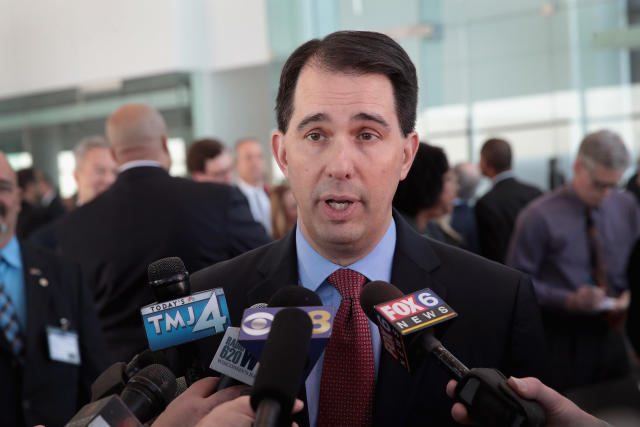
Wisconsin Democrats scored a major upset victory Tuesday night, winning a state Senate seat in a district that went for Donald Trump by double digits in 2016.

Caleb Frostman defeated state Rep. Andre Jacque (R) for the open seat in District 1 that was previously held by state Sen. Frank Lasee (R), who resigned to take a job in Gov. Scott Walker’s administration. Frostman will be on the ballot again in November for the regular election.

Republicans held on to a state Assembly seat in District 42 that also held a special election Tuesday.

Although Frostman’s term is short, his win is a huge victory for the Democratic Party. Not only was the seat held by a Republican, but Trump defeated Democratic rival Hillary Clinton there by 17 points in the 2016 presidential election. Trump also won the state of Wisconsin overall.

“Tonight is a good night for Wisconsin Democrats,” said state party chair Martha Laning. “We continued a winning streak by flipping a red seat blue and electing Caleb Frostman to the state Senate, a 21-point swing from Trump’s 2016 performance.”

Frostman’s win is especially sweet for Democrats because Walker tried to prevent Tuesday’s contests from taking place to begin with. Both the vacancies were created when Walker tapped the incumbents to join his administration in December.

State law requires the governor to call special elections for vacancies that take place before May in an election year, but Walker had refused to do so.  He planned to keep them vacant until the regular elections in November. The National Democratic Redistricting Committee, a group led by former Attorney General Eric Holder, sued Walker ― and won.

Walker reluctantly called these special elections in March, knowing full well that Democrats had a real shot at flipping the seats.

In January, Democrat Patty Schachtner also had a surprise victory in a state Senate special election, succeeding in another district that had been held by Republicans and went to Trump by 17 points. At the time, Walker called the results a “wake-up call” for Republicans that there was a potential blue wave of Democratic wins coming in November.

“Scott Walker and his Republican allies gerrymandered this district for their own partisan benefit,” said Holder on Tuesday night, “but the citizens of Wisconsin are clearly speaking out this year to demand a state government that better represents their values.”

Democrats have flipped 43 state legislative seats from red to blue since Trump became president. Republicans have flipped seven from blue to red.
Related:

Tuesday’s special elections in Wisconsin: What you need to know

Green Bay Press Gazette

Tuesday’s special elections in Wisconsin: What you need to know

Patrick Marley, Milwaukee     June 11, 2018

       (Photo: Craig Gilbert / Milwaukee Journal Sentinel)
MADISON – Wisconsin will hold two closely watched special elections  Tuesday, the latest test of whether a “blue wave” could be coming this fall.

Why are the elections being held?

Tuesday’s elections will fill the seats of former Sen. Frank Lasse (R-De Pere) and former Rep. Keith Ripp (R-Lodi), who stepped down in December to take jobs in Gov. Scott Walker’s administration.

Walker didn’t call special elections at the time. Voters in those districts — with the help of a group run by former Obama Attorney General Eric Holder — sued and courts ruled Walker had to call the special election.

Who’s running?

In Senate District 1, Republican Rep Andre Jacque of De Pere faces Democrat Caleb Frostman, the former head of the Door County Economic Development Corp. The district includes all of Door and Kewaunee counties and parts of Brown, Manitowoc, Calumet and Outagamie counties.

In Assembly District 42, Republican Jon Plumer, a Lodi Town Board member and owner of karate schools, is running against Democrat Ann Groves Lloyd, a Lodi alderwoman and University of Wisconsin-Madison academic adviser.

The district is just north of Madison and includes most of Columbia County and parts of Dane, Dodge, Fond du Lac, Green Lake and Marquette counties.

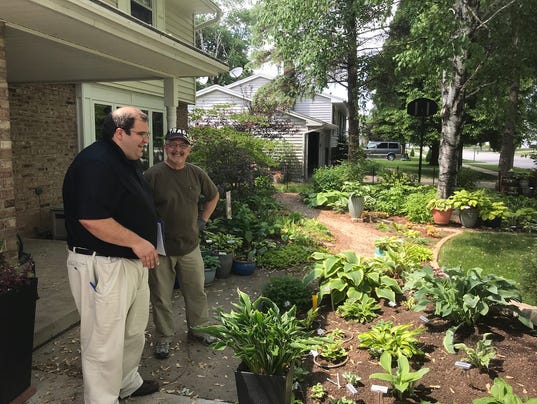
     Caleb Frostman (left), the Democratic candidate in Tuesday’s special election for state Senate, talks to Sturgeon Bay voter Tom Fernandez.  (Photo: Craig Gilbert / Milwaukee Journal Sentinel)
Are the races being closely watched? 

Since President Donald Trump took office last year, 25 legislative and congressional seats have flipped from Republican to Democrat, according to Charles Franklin, a pollster and political scientist at Marquette University Law School. Just five have flipped the other way.

Among the seats that went to Democrats was a state Senate seat in western Wisconsin won by Patty Schachtner in January. Walker called that result a “wake-up call” that should warn Republicans they could be in trouble this fall.

Election experts say people shouldn’t draw too many conclusions from one election night, but Tuesday’s results could help guide the narrative about whether a “blue wave” is coming.

Candidates for Assembly District 42 seat meet in Lodi for candidate forum. WisconsinEye

How long will the winners hold the seats?

Not long. The districts are up for election again in November, so both the winners and the losers will have to stay in election mode.

Election observers say Tuesday’s winners will have an edge in the fall election, but no guarantee they will win again. Turnout in the fall is certain to be much higher in the fall than on Tuesday.

What’s at stake?

In one sense, the stakes are low because the seats will immediately be up for election again. In another, they’re high because the Senate seat is an important part of Democrats’ strategy to try to take over the upper house.

Republicans control the Senate 18-14 and Democrats would need to net three seats in the fall to take power in that house.

Republicans have a much firmer, 63-35 margin in the Assembly.

Rising CO2 poses bigger climate threat than warming, study says

UPI – Home / Science News

Rising CO2 poses bigger climate threat than warming, study says

New research suggests geo-engineering efforts designed to encourage cooling and reduce rising temperatures are likely to do little to prevent damaging weather extremes.

By Brook Hays     June 12, 2018

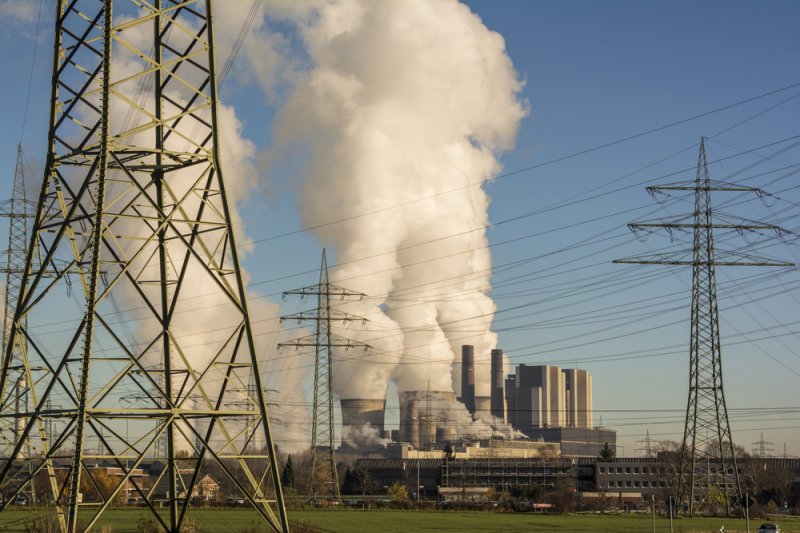
New research suggests CO2 concentrations are a better predictor of the extreme weather events associated with global warming. Photo by Reinhard Tiburzy/Shutterstock

June 12 (UPI) — Even if global warming is curbed and the increase in global temperature is limited to 1.5 degrees Celsius, scientists warn rising CO2 concentrations could still trigger a dangerous increase in extreme weather.

Broadly speaking, more CO2 translates to higher temperatures, but the relationship between atmosphere and climate is complex, and scientists say there are scenarios in which warming could be limited to 1.5 degrees, despite a sizable increase in atmospheric CO2.

New climate models developed by researchers at the University of Bristol and the University of Oxford suggest CO2 levels, not global temperatures, are a better predictor of the most damaging consequences of climate change.

“Future work is needed to confirm exactly why we see this direct CO2 effect, but current research points to a combination of circulation and cloud cover changes, and an increase in the amount of direct radiation on the Earth’s surface due to simply having more CO2 in the atmosphere,” Hugh Baker, a PhD student in physics at Oxford, said in a news release.

In a new study, published this week in the journal Nature Climate Change, scientists argued climate change mitigation agreements need set targets for atmospheric CO2.

The new research suggests geo-engineering efforts designed to encourage cooling and reducing rising temperatures are likely to do little to prevent damaging weather extremes.

“Geo-engineering techniques that reduce the amount of sunlight hitting the Earth’s surface are increasingly thought of as a way of achieving the Paris Goals because they decrease surface temperature,” said Bristol scientist Dann Mitchell. “However, our results show that for extreme climate such as heatwaves, changing the global mean temperature is not enough, you need to reduce CO2 concentrations themselves.”

Related UPI Stories

Study reveals missing drivers of ocean deoxygenation

Taking CO2 out of the air is more economical than scientists thought

Atmospheric CO2 levels in April hit highest average ever recorded

First global CO2 maps published using China’s TanSat data

Incredible footage of a rare White Moose has been captured in Sweden.

Native American Wisdom

February 13, 2018

Incredible footage of a rare White Moose has been captured in Sweden. There are only an estimated 100 of them left in the country!!

*BeatyWhiteMoose*

Incredible footage of a rare White Moose has been captured in Sweden. There are only an estimated 100 of them left in the country!!Please Post where you're from so i can track how far the video going…?💞Thankyou💖💗

Posted by Native American Wisdom on Tuesday, February 13, 2018

Water wars! Investors looking to profit off water shortages, including the Colorado River.

DeSmogBlog

June 11, 2018

Investors are eyeing water shortages as investment opportunities including the Colorado River which provides water for 40 million Americans.

Water wars? Investors look to profit off of water shortages

Investors are eyeing water shortages as investment opportunities including the Colorado River which provides water for 40 million Americans.

Posted by DeSmogBlog on Monday, June 11, 2018

Canada responds to post G7 comments by the US

Brittlestar

June 11, 2018. Canada responds to post G7 comments by the US

Canada responds to post G7 comments by the US

Canada responds to post G7 comments by the US🇨🇦🍻🇺🇸

Posted by Brittlestar on Sunday, June 10, 2018

We went to North Korea with one of the last American tourists to go.

June 11, 2018

We went to North Korea with one of the last American tourists to go.

One of the Last American Tourists In North Korea

We went to North Korea with one of the last American tourists to go.

Posted by VICE News on Monday, June 11, 2018

Bill Maher Scolds Libs: Forget The Culture, Grab The Government

HuffPost

Bill Maher Scolds Libs: Forget The Culture, Grab The Government

 Mary Papenfuss, HuffPost        June 9, 2018  

Florida’s ‘city of the future’ is first solar-powered town in America

Fox News

Florida’s ‘city of the future’ is first solar-powered town in America

By Phil Keating, Fox News

America’s first solar community coming to life in Florida

Jasmin Day is pregnant and when her girl or boy is born later this year—she’s keeping the gender a surprise—her baby will become the first child ever born in Babcock Ranch, Fla.

“Almost all the boxes are undone,” she says while stepping over the just delivered new bed. She, husband Josh, and little kids, Judson and Elliot, just moved into their new house and this brand new community – dubbed the city of the future.

The young couple from Memphis, Tenn. could not be happier.

“To be able to be a part of a community of everyone that cares,” Josh Day said, “and wants that for them, not only for themselves but also for their children and their grandchildren, to have it be a more clean Earth whenever our children are older.”

His wife added: “I think we’re pretty all in! We live here. We work here.”

Babcock Ranch, near Fort Myers on state’s west coast, was developed from the beginning with a massive solar power farm generating 100 percent of the electric needs. About 350,000 photovoltaic solar panels stretch across a swath of land the size of 200 football fields.

When developer Syd Kitson, a former NFL lineman with the Dallas Cowboys and Green Bay Packers, bought the 17,000-acre property, it was all old mining and farmland.

Babcock Ranch, near Fort Myers on state’s west coast, was developed from the beginning with a massive solar power farm generating 100 percent of the electric needs. About 350,000 photovoltaic solar panels stretch across a swath of land the size of 200 football fields.
It’s now the country’s first, fully solar city, with a very low carbon footprint, a soon-to-open school, electric shuttles that will eventually be driverless, a cute town square with shops and an emphasis on the environment and preservation.

Where most developers would build and sell as many homes as possible, for greater profit, Kitson’s vision from the beginning was preserving most of the open space, now encompassing several lakes and 50 miles of bike trails.

The homes run from $190,000 to about $499,000. Residents can work in the town, but are not required to do so.

The fully completed footprint will eventually be 19,500 homes.

“We think about the way we develop differently…. It’s the most environmentally responsible, the most sustainable new town that’s ever been developed,” Kitson said. “And, it’s the first solar-powered town in America. And we’re very proud of that.”

In January, the first two people moved in. Now, there are 150 homes under contract with an expectation that will there will be 250 families moved in by December. Eight developers are now building homes. The vision is a unique creation of a 45,000-person small city.

But first came the enormous solar farm. Kitson gave the land to Florida Power & Light for free, which then spent more than $100,000,000 installing all the panels, wires and storage batteries. That solar-generated power now is shared throughout FPL’s grid, as Babcock Ranch’s demand, at this point, remains very small.

John Woolschlager, an urban planning professor at nearby Florida Gulf Coast University, said all cities can ultimately follow Babcock Ranch’s model, but it will take years. Babcock Ranch’s huge advantage was that it’s being built from scratch with the self-sustainability and pro-environment philosophy on the ground first.

“I think, also, if you look to the distant future, it’s going to be a necessity,” Woolschlager said. “If we want to have a good life in the future, we have to think more sustainability, because if we don’t, we’re going to run out of energy, run out of water and run out of resources.”

For Josh Day, he’s landed a physical therapy job in the town square’s Life Wellness Center. So, if he doesn’t bike to work and home, he can just ride a solar powered, electric shuttle, in a town which – for now – has no traffic nor rush hours.

Phil Keating joined Fox News Channel (FNC) in March 2004 and currently serves as FNC’s Miami-based correspondent.

Taxpayers Still Shelling Out Billions Annually in Fossil Fuel Subsidies

EcoWatch

Taxpayers Still Shelling Out Billions Annually in Fossil Fuel Subsidies

Lorraine Chow     June 4, 2018

Paul Lowry/Flickr/CC by 2.0

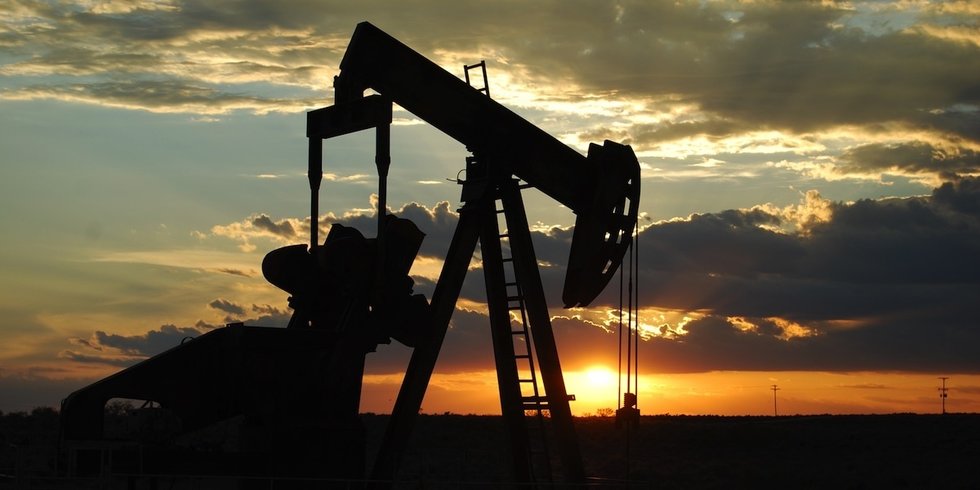
The world’s richest countries continue to subsidize at least $100 billion a year in subsidies for the production and use of coaloil and gas, despite repeated pledges to phase out fossil fuels by 2025.

The Group of Seven, or G7, consists of Canada, France, Germany, Italy, Japan, the UK and the U.S. The group, as well as the larger G20, agreed as early as 2009 to phase out fossil fuels in order to combat climate change.

But a new report from Britain’s Overseas Development Institute (ODI) reveals that on average per year in 2015 and 2016, the G7 governments supplied at least $81 billion in fiscal support and $20 billion in public finance, for both production and consumption of oil, gas and coal at home and overseas.

“With less than seven years to meet their 2025 phase-out deadline, G7 governments continue to provide substantial support the production and use of oil, gas and coal,” the authors stated.

The study, co-authored by Oil Change International, the International Institute for Sustainable Development and the Natural Resources Defense Council, was issued Monday ahead of the G7 summit in Canada.

“Governments often say they have no public resources to support the clean energy transition,” the study’s lead author Shelagh Whitley told the Thomson Reuters Foundation. “What we’re trying to do is highlight that those resources are there (but) it is being used inefficiently.”

For the study, each G7 member was rated on the following measures: transparency; pledges and commitments; ending support for fossil fuel exploration; ending support for coal mining; ending support for oil and gas production; ending support for fossil fuel-based power; and ending support for fossil fuel use.

France ranked the highest overall, with 63 out of 100 points. While the country is lagging behind in its support for fossil fuel use, France earned the top spot for making early progress in ending fossil fuel exploration and production and ending coal mining, the researchers determined. Germany (62 points) and Canada (54 points) rounded out the top three in the dubious list.

Unsurprisingly—due to President Donald Trump’s intention to pull the U.S. out of the Paris agreement and his administration’s unrelenting push of fossil fuels—the U.S. was ranked lowest on the list, scoring only 42 out of 100 points.

The report showed that the U.S. spent $26 billion a year supporting fossil fuels and scored the worst in ending support for coal mining, a pet project of President Trump.

“Despite their numerous commitments, not only have G7 governments taken limited action to address fossil fuel subsidies but they have also failed to put in place any mechanisms to define and document the full extent of their support to oil, gas and coal, or to hold themselves accountable for achieving these pledges,” the authors said.

The researchers urged the governments to establish concrete plans to end fossil fuel subsidies by 2025 as promised, Reuters reported.

“What should be a low-hanging fruit in terms of moving public resources away from fossil fuels is not happening, or where it is happening, it’s not happening fast enough,” Whitley told the news service.

RELATED ARTICLES AROUND THE WEB

Trump Administration Plans Costly Taxpayer Bailout of Unprofitable

Pruitt and Aides Rack Up $90,000 in Taxpayer-Funded Travel in

OECD: Fossil fuel subsidies added up to at least $373bn in 2015

United States ‒ Progress Report on Fossil Fuel Subsidies Part 1