Pruitt Grants Oklahoma Leniency to Dispose of Toxic Coal Ash Without Federal Oversight

EcoWatch

Pruitt Grants Oklahoma Leniency to Dispose of Toxic Coal Ash Without Federal Oversight

Olivia Rosane     June 19, 2018

The collapsed coal ash impoundment and closed power plant at Dan River Steam Station (Duke Energy), Eden, North Carolina. The impoundment failure caused the 2014 Dan River coal ash spill. The U.S. EPA.

On Monday, Oklahoma became the first state to be granted a permit from the Environmental Protection Agency (EPA) to dispose of its own coal ashThe Associated Press reported.

The move displaces the federal government as the body responsible for coal ash disposal in EPA head Scott Pruitt’s home state. Coal ash is the residue left over from burning coal for power that often contaminates groundwater. It is a change that industry has lobbied for and environmental groups have opposed.

States have demonstrated that “they don’t care about the health and safety of communities near coal ash dumps,” Earthjustice attorney Lisa Evans told The Associated Press.

About 100 million tons of coal ash is produced by U.S. plants every year, often left in disposal ponds that leak into groundwater, contaminating it with pollutants like arsenic and radium. Tests ordered by the EPA this spring of groundwater around plants in various states found elevated pollution levels, according to The Associated Press.

Despite this, “industry has asked for leniency, less stringency. That’s the direction they’re going,” Evans said.

According to documents obtained under the Freedom of Information Act, switching coal ash oversight to states was part of an “action plan” proposed by coal industry executive Robert Murray this spring to Pruitt and other officials in the Trump administration.

Pruitt defended the decision, saying in a statement that the move empowered “those who are best positioned to oversee coal ash management—the officials who have intimate knowledge of the facilities and the environment in their state.”

Pruitt also moved to weaken Obama-era coal ash disposal regulations in March, but the rule change allowing states to control coal ash disposal was actually passed by Congress and signed by former President Barack Obama in 2016, according to NPR. The law said that state rules had to be “as protective as” federal guidelines.

“I am pleased that Oklahoma is the first state in the nation to receive approval of its Coal Combustion Residuals permit program. We actually incorporated the federal rule into our state permitting rules program over a year ago,” Oklahoma Department of Environmental Quality (DEQ) Executive Director Scott Thompson said in an EPA press release about the decision.

But at a hearing in February, Oklahoma environmental groups said the DEQ was not prepared to adequately regulate coal ash.

“The DEQ rules are weaker than the EPA rules,” Oklahoma Grand Riverkeeper and activist Earl Hatley told NPR in February. “This is just a boon for industry to do what they want.”

Waterkeeper Alliance senior attorney Kelly Foster further expressed concerns that the DEQ plan did not provide enough information on how companies would be made to comply with regulations and how the DEQ would take on new responsibilities with existing resources.

Georgia and Texas are following Oklahoma in taking steps to control coal ash disposal, The Associated Press reported.

RELATED ARTICLES AROUND THE WEB

Trump Administration Seeks to Gut Water Pollution Safeguards

Pruitt has made environmental injustice the norm at EPA: 5 shocking

Pruitt huddled with coal exec who raised over $1M for Trump

EPA Environmental Justice Adviser Slams Pruitt’s Plan to Weaken

trump holds rally for his base

Seth takes A Closer Look at Trump’s latest rally full of lies, right on the heels of his disastrous border policy backlash.

Trump Holds Rally Amid Aftermath of Family Separation Policy: A Closer Look

Seth takes A Closer Look at Trump’s latest rally full of lies, right on the heels of his disastrous border policy backlash.

Posted by Late Night with Seth Meyers on Thursday, June 21, 2018

House GOP 2019 budget calls for deep Medicare, Medicaid spending cuts

The Hill

House GOP 2019 budget calls for deep Medicare, Medicaid spending cuts

By Niv Elis and Peter Sullivan        June 19, 2018

Getty Images

House Republicans offered a budget proposal on Tuesday that would cut mandatory spending by $5.4 billion over a decade, including $537 billion in cuts to Medicare and $1.5 trillion in cuts to Medicaid and other health programs.

On Medicare, the budget would move towards a system of private health insurance plans competing with one other, rather than the current open-ended, government-provided Medicare system.

On Medicaid, the budget would impose new caps that could lead to cuts in payments over time.
The budget also sets up a fast-track process known as reconciliation that could allow ObamaCare repeal to pass without Democratic votes in the Senate.

But that is a long way off at this point.

The Senate would have to adopt a budget as well to unlock the process, and GOP leaders have indicated they have moved on from ObamaCare repeal for now.

The budget also proposes $2.6 trillion in reductions to other mandatory spending programs, including welfare and other anti-poverty programs.

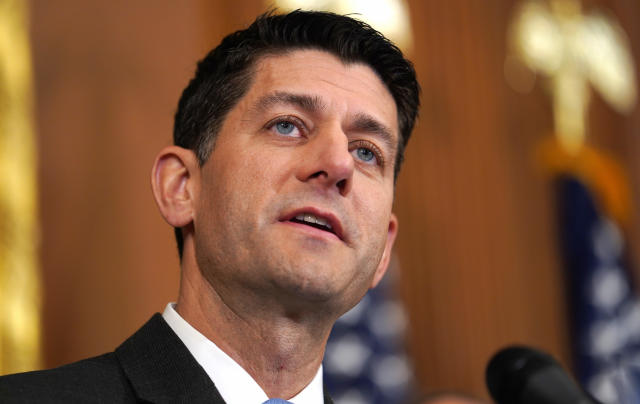
“Despite an extraordinary past and a booming economy thanks to tax reform, there are real fiscal challenges casting a shadow of doubt on the nation’s future, including $21 trillion of debt that is rapidly on the rise. We must overcome the challenges,” said House Budget Committee Chairman Steve Womack (R-Ark.).

The budget, which will be marked up on Wednesday and Thursday, is largely a GOP messaging document. Congress is legally required to approve a budget plan by April, which then kicks off a process of appropriating 12 spending bills.

A separate spending deal reached in February largely governs the next year’s budget, and until this week it was unclear whether the House Budget Committee would even bother with a budget plan. There is still no word from the Senate Budget Committee on whether it will present its own document.

The new budget calls for a precipitous drop in non-defense spending over the next decade, even as defense spending rises.

The plan sticks to the 2019 discretionary spending levels agreed in the budget deal, but then charts an aggressive course to balance over the course of a decade.

Non-defense discretionary spending, which covers most of the federal government’s activities, would drop from the $597 billion to $555 billion by 2028. Meanwhile, defense spending would climb from $647 billion this year to $736 billion in 2028.

Democrats lambasted the plan for unrealistic assumptions, including the repeal of the Affordable Care Act, a goal the GOP has thus far failed to achieve despite numerous efforts.

“The 2019 Republican budget scraps any sense of responsibility to the American people and any obligation to being honest. Its repeal of the Affordable Care Act and extreme cuts to health care, retirement security, anti-poverty programs, education, infrastructure, and other critical investments are real and will inflict serious harm on American families,” said Rep. John Yarmuth (D-Ky.), the ranking member on the House Budget committee.

He also pointed to the GOP tax law, which the Congressional Budget Office projected could cost as much as $1.9 trillion over a decade, as a driver of deficits.

To achieve balance, the budget plan assumes that the economy will consistently grow at 2.6 percent a year over the next decade, far higher than the CBO estimate of 1.8 percent a year, but lower than the administration’s rosy 3 percent outlook.

Budget watchers say that the plan is not realistic.

“While the budget resolution calls for $8.1 trillion of deficit reduction relative to CBO’s baseline, most of these savings come from rosy economic assumptions or unreconciled and often unrealistic spending cuts,” said Maya MacGuineas, president of the Committee for a Responsible Federal Budget

“The budget also fails to account for the costs of extending the recent tax cuts or replacing the Affordable Care Act, despite continued efforts to enact these policies,” she added.

A separate call for $302 billion in savings through the reconciliation process, which requires authorizing committees in Congress to reduce deficits, “would represent a step in the right direction,” she continued.

Alzheimer’s disease may be triggered by herpes virus, scientists suspect

The Telegraph – Health

Alzheimer’s disease may be triggered by herpes virus, scientists suspect

Sarah Knapton, The Telegraph              June 21, 2018

Alzheimer’s disease may be triggered by the herpes virus, a new study suggests, leading to hopes that antiviral medication could help prevent dementia.

Around 850,000 people are living with dementia in Britain, and the majority of people have Alzheimer’s which occurs when sticky plaques of amyloid build up in the brain, killing brain cells.

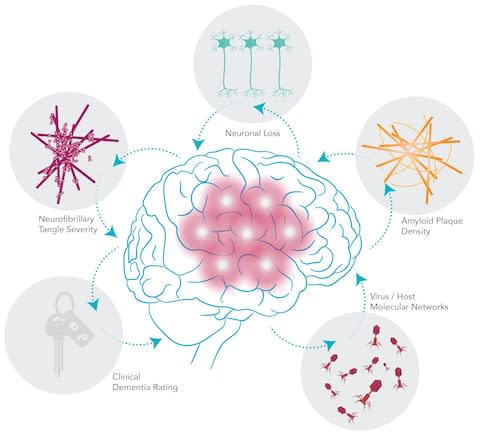
But new research has found that the brains of people who have died of Alzhiemer’s have almost double the level of HHV-6A and HHV-7 herpes virus as non-diseased brains, suggesting it is playing a role in the condition.

Researchers in the US believe that the disease may trigger an immune ‘cascade’ which encourages the growth of amyloid plaques.

It raises hopes that cases could be prevented through antiviral drugs.

How herpes in the brain could trigger Alzheimer’s

The team did not set out to study the impact of herpes, but were looking for anything which might be different in six key brain regions in people with Alzheimer’s compared to those who were dementia free.

They began by sequencing DNA from the dead patients to find out information about inherited genes, followed by their RNA to find out how those genes were expressed.

“We didn’t go looking for viruses, but viruses sort of screamed out at us,” said lead author assistant research professor Ben Readhead of Arizona State University.

“We saw a key virus, HHV 6A, regulating the expression of quite a few Alzheimer’s risk genes and genes known to regulate the processing of amyloid, a key ingredient in Alzheimer’s neuropathology.”

The study authors say the findings suggests that Alzheimer’s could be ‘collateral damage’ caused by the brain’s response to the virus.

Both HHV 6A, and 7 are common herpes viruses and most people are exposed to them early in life. It is different from the Herpes-simplex virus which causes cold sores and genital herpes.

The level of the virus in the brain also correlated with clinical dementia scores before death. Those with more viral DNA performed worse in tests.

“I don’t think we can answer whether herpes viruses are a primary cause of Alzheimer’s disease,” said study senior author, Dr Joel Dudley, Director of the Institute for Next Generation Healthcare at the Icahn School of Medicine at Mount Sinai. 

“”But what’s clear is that they’re perturbing and participating in networks that directly underlie Alzheimer’s.

“This study represents a significant advancement in our understanding of the plausibility of the pathogen hypothesis of Alzheimer’s

“If it becomes evident that specific viral species directly contribute to an individual’s risk of developing Alzheimer’s or their rate of progression once diagnosed, then this would offer a new conceptual framework for understanding the emergence and evolution of Alzheimer’s at individual, as well as population, levels.”

Commenting on the study Prof Clive Ballard, Professor of Age-Related Diseases, University of Exeter Medical School, said: “This new study is a vital step forward as it highlights specific disease related mechanisms.

“This now gives the potential to investigate the impact of viruses more directly in experimental studies, so that we can really understand whether there may be important implications for treatment or prevention.”

Prof Ruth Itzhaki, Professor Emeritus of Molecular Neurobiology at the University of Manchester, and Honorary Senior Research Fellow at the University of Oxford, added: “A picture is building up showing strong links between herpes viruses and the likelihood of developing Alzheimer’s disease.

“We now need more research to establish whether these viruses are causally linked to Alzheimer’s, and whether using that information we might be able to develop treatments.”

The research was published in the journal Neuron.

 Video: These Lifestyle Changes Can Reduce Risk of Alzheimer’s

blob:https://www.today.com/ccfd87f8-0b78-48c5-b2cc-dcf27724e0d5

How to prevent Alzheimer’s: Follow these 4 tips from doctors

Alzheimer’s can start formulating in your brain as early as your 30s. Follow these tips to change your lifestyle for better brain health.
by Robert Powell and Gabrielle Frank /  / Source: TODAY
Most people think of Alzheimer’s as an old person’s disease, but doctors say it can actually start formulating in your brain as early as your 30’s. While that might be a scary thought, there are a few lifestyle changes you can make now that experts believe could impact your risk of developing the disease.

“One out of three cases of Alzheimer’s may be preventable if that person does everything right,” explained Dr. Richard Isaacson, director of the Alzheimer’s Prevention Clinic at Weill Cornell & New York-Presbyterian Medical Center in New York City.

These lifestyle changes can reduce your risk of getting Alzheimer’s

Isaacson stressed how important it is to make changes now: “20 to 30 years is ample time to make brain-healthy choices.” So what can you do?

1. EXERCISE REGULARLY, AT A HIGH INTENSITY.

“Exercise can protect against Alzheimer’s because it not only increases blood flow to the brain, but it loosens up that amyloid plaque, the bad sticky stuff that gets caught up and gunked up in the brain of a person with Alzheimer’s disease,” noted Isaacson.

Any exercise helps, but experts recommend getting at least three hours of rigorous activity a week. Ideally, that would be two cardio workouts and one strength-training session.

2. GET AT LEAST 7.5 HOURS OF QUALITY SLEEP EVERY NIGHT.

When you sleep, the brain can clean out the damaging amyloid plaques.

“Turn off the electronics, no bright lights from the screens, no texting, no emails. Have a quiet, dark room. And clear your mind,” Isaacson advised.

3. EAT RIGHT AND EAT LESS.

Avoid sugar and processed foods, and you might want to switch to a Mediterranean diet. The brain shrinks as you age, but a study published last year in the journal Neurology found people in their mid-70’s who consumed a Mediterranean diet (more fruits, veggies, olive oil, and less meat and cheese) lost less brain mass than people who ate a diet more typical of their country, Scotland. A bigger brain later in life is beneficial and could protect from diseases like Alzheimer’s.

Experts say the best brain diet is comprised of foods like leafy greens, whole fruits and vegetables. While you shouldn’t obsess over counting calories, try to aim for 2,100 calories a day.

4. GET YOUR BLOOD CHECKED EVERY YEAR.

“Having high blood pressure, high cholesterol and diabetes is a way towards Alzheimer’s disease … Know your blood pressure, know your fasting blood sugar, know what your cholesterol is,” Isaacson said.

Keep your brain challenged, TODAY correspondent Maria Shriver noted. Shriver recommended the website BrainHQ, which features many brain exercises that have been linked to dramatically lower rates of dementia in seniors.

Corals, blueberry bushes and polar bears: Signs of global warming are all around

AP        June 19, 2018

Female polar bear baby “Nanook” looks through a window of her enclosure during her first open air outing at the zoo in Gelsenkirchen, western Germany, on April 13, 2018. Nanook was born on December 4, 2017 at the zoo. Rolf Vennenberend/AFP/Getty Images

GOTHIC, Colo. — David Inouye is an accidental climate scientist. More than 40 years ago, the University of Maryland biologist started studying when wildflowers, birds, bees and butterflies first appeared each spring on this mountain.

These days, plants and animals are arriving at Rocky Mountain Biological Lab a week or two earlier than they were 30 years ago. The robins that used to arrive in early April now show up in mid-March. Marmots end their winter slumber ever earlier.

“If the climate weren’t changing, we wouldn’t see these kind of changes happen,” Inouye said while standing on a bed of wildflowers that are popping up on the first day of May as marmots snoop around nearby.

It’s been 30 years since much of the world learned that global warming had arrived. On June 23, 1988, NASA scientist James Hansen testified before Congress, explaining that heat-trapping gases spewed by the burning of fossil fuels were pushing temperatures higher.

But it turns out climate isn’t the only thing that’s changing: Nature itself is, too. That’s the picture painted by interviews with more than 50 scientists and an Associated Press analysis of data on plants, animals, pollen, ice, sea level and more.

You don’t need a thermometer or a rain gauge to notice climate change, and you don’t need to be a scientist to see it.

Evidence is in the blueberry bushes in Henry David Thoreau’s Walden Pond, the dwindling population of polar bears of the Arctic and the dying corals worldwide. Scientists have documented 28,800 cases of plants and animals “responding consistently to temperature changes,” a 2008 study in the journal Nature said.

“Nature is extremely sensitive to temperature and nature is reacting to the warmer temperatures,” said Boston University biologist Richard Primack. “The dramatic change is happening right in front of us.”

In the 1850s, Thoreau charted when Walden Pond’s highbush blueberry first flowered. At the time, it happened around May 16, on average. In the past 10 years, it’s averaged April 23. Primack started tracking blueberries there in the 2000s, so he can’t specifically say how much of the earlier blooming was due to warming temperatures in the last 30 years, but he figures about a third of it is.

In 1983, mail carrier John Latimer started keeping track of when the birds, chipmunks and butterflies emerge, when the trees and plants bloomed and when they changed colors and dropped leaves in northernmost Minnesota. Spring is coming earlier, he found. But it’s not consistent; there are some really late years interspersed, creating a roller-coaster effect.

Starting about 30 years ago, the growing season in general around the Northern Hemisphere “rather abruptly changed to a new normal,” with earlier springs and later falls, said Mark Schwartz, a University of Wisconsin-Milwaukee geographer. In the Lower 48 states, 2012 was the earliest growing season on record until it was edged out by 2017, he said.

In the U.S., fall’s first frost is happening about nine days on average later since 30 years ago, while the last frost of spring is happening almost four days earlier, according to the National Oceanic and Atmospheric Administration.

That means the growing season in between is nearly two weeks longer. And some of the stuff that’s growing is making us sneeze and suffer.

High ragweed days across America swelled from 1990 to 2016, according to a study by the U.S. Department of Agriculture’s Lewis Ziska. In Kansas City, the number of high pollen days jumped from 58 to 81.

“Allergies and asthma are on the rise. Climate change isn’t the only reason, but it contributes,” said Dr. Howard Frumkin, former environmental health chief at the Centers for Disease Control and Prevention and now at the Wellcome Trust in London. Frumkin said ragweed and poison ivy trigger more powerful allergic reactions with higher carbon dioxide levels.

Some of the hardest-hit places on Earth are underwater. Coral reefs are sensitive to warmer water, and there isn’t a reef on this planet that has gone unscathed by global warming, said Mark Eakin, coordinator of the National Oceanic and Atmospheric Administration’s coral reef watch.

“If you look at coral reefs around the world, they’ve suffered a great deal of damage,” Eakin said. “Many of them are shadows of what they’ve been before 1998.”

There had been no global mass bleaching of coral — when they go white because of heat stress and frequently die — until 1998. Another hit in 2010 and then from 2014 to 2017 was the biggest global mass bleaching of them all, devastating the Great Barrier Reef in Australia, Eakin said.

Melting ice has made polar bears the poster animal of climate change. Studies show that their survival rates, reproduction rates and body weight are going down in most parts of the Arctic, said Steven Amstrup, formerly U.S. Geological Survey’s top polar bear researcher and now chief scientist at Polar Bear International. In parts of Alaska, Amstrup found a 40 percent population drop since the mid-1990s.

When Amstrup first started studying polar bears in Alaska he was tracking the resurgence of the animals from widespread hunting in the 1950’s and 1960’s. But starting in the late 1990’s they started losing their habitat and “we weren’t seeing as many big old bears.”

Ornithologist George Divoky, on his 47th summer in Cooper Island, Alaska, to study shore birds, is another accidental climate scientist.

“In 1988, things started getting strange,” Divoky said. In the years that followed, seabirds like the black guillemot started arriving earlier, laying eggs earlier and not surviving as well, he said, blaming warming.

In 1989, Divoky counted 220 pairs of birds. Last year, there were 85 pairs, and two-thirds of the chicks died.

“I was just studying birds,” Divoky said. “I don’t take any pride in that I may be documenting the end of an Arctic seabird colony.”

Katharine Hayhoe, a climate scientist at Texas Tech, has heard non-scientists accusing the government or researchers of manipulating temperature data to show warming. There’s no cooking the books, she said; nature is broadcasting a clear signal about climate change.

“If you don’t trust the thermometers, throw them out,” Hayhoe said. “All we have to do is look at what’s happening in nature.”

Inside the Disastrous White House Briefing on Trump’s Child-Separation Policy

New York Magazine

Daily Intellegencer

Inside the Disastrous White House Briefing on Trump’s Child-Separation Policy

By Olivia Nuzzi    June 19, 2018

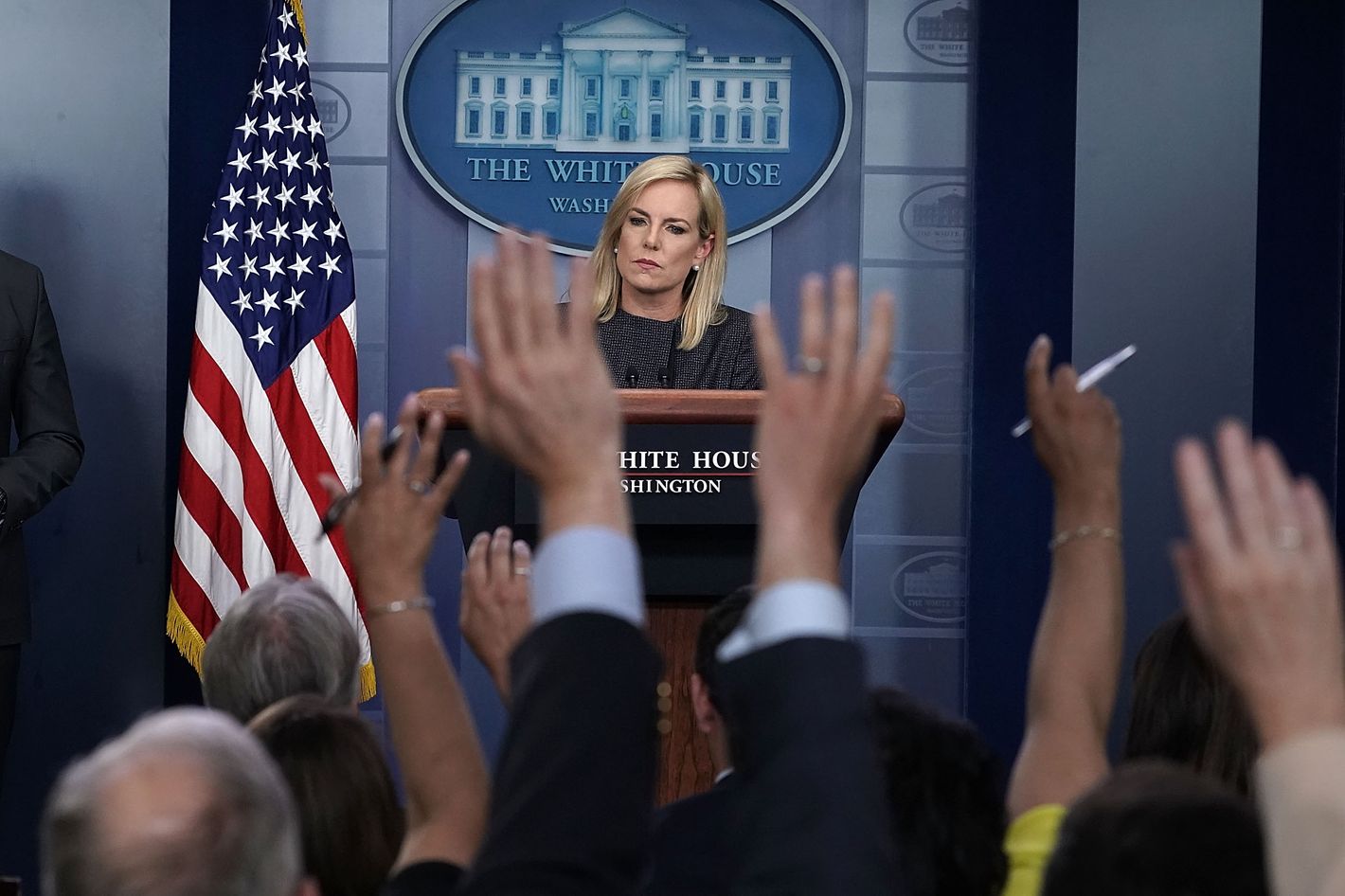
Kirstjen Nielsen takes questions from reporters during Monday’s briefing. Photo: Alex Wong/Getty Images

Over the loudspeaker, a voice said the White House briefing would be moved to 4 p.m. The press, already assembled ahead of the scheduled time of 3:30 p.m., which itself was a rescheduling of the initial 1:15 p.m. appointment, laughed and groaned.

It’s nothing new for a White House to experience such disorganization; the veteran reporters tell the newer ones about how bad it was under Clinton, how in hindsight, the George H.W. Bush and Reagan administrations seem admirably prompt. But during Donald Trump’s presidency, the briefings have had two recurring themes: first, they never go well, and second, when administration officials struggle more than usual to get their story straight, the event hangs in a state of doubt.

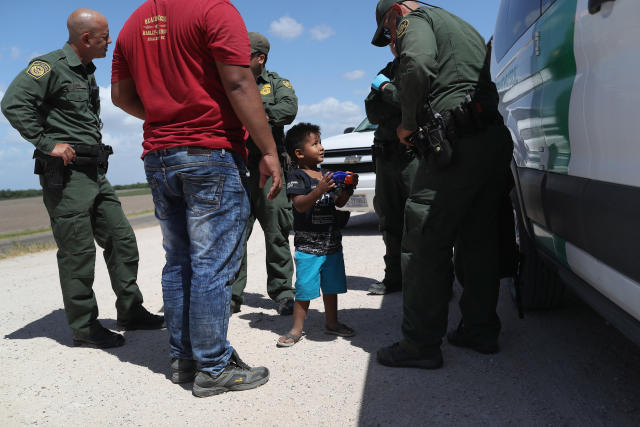
On Monday, new reporting continued to reveal the realities of the Trump administration policy of forcibly separating children from their adult guardians who cross the border without U.S. citizenship. Attorney General Jeff Sessions and White House Chief of Staff John Kelly are both on record endorsing the practice as a means of deterring undocumented immigrants from entering the country.

Yet the president and members of his staff have repeatedly and falsely blamed Congress — in particular congressional Democrats — for the nearly 2,000 children who have reportedly been taken into federal custody in just the last six weeks. Condemnation is growing and bipartisan, led at the beginning of this week by former First Ladies Laura Bush and Michelle Obama. Some even interpreted the statement from the current First Lady, Melania Trump, as a break with her husband (others disagreed). “Mrs. Trump hates to see children separated from their families and hopes both sides of the aisle can finally come together to achieve successful immigration reform,” her spokesperson said.

The gap has continued to grow between the critics of the policy and the administration officials who say it doesn’t belong to this administration, or isn’t even a “policy” at all (whatever that means).

In what may have been an omen for the utterly stupid catastrophe that was to follow, around 1:15 p.m. a man jumped the White House gate, prompting a lockdown. Sometime later, after the briefing was pushed back, ProPublica published audio of young children separated from their parents screaming and crying inside of a U.S. Customs and Border Protection facility. In the recording, an agent can be heard joking at their expense. “We have an orchestra here,” he says.

Reporters in the briefing room, a small space that sits on top of what was once the White House pool, listened to the recording while they waited.

Four p.m. came and went. CNN reported that Press Secretary Sarah Huckabee Sanders didn’t want to do the briefing alone, and was waiting for Homeland Security Secretary Kirstjen Nielsen to arrive and enter the room with her. (The Washington Post later reported that the story was the result of a leak by one of Sanders’s enemies in her ranks, designed to come out when she was too busy to respond, forcing her to address it at the podium.)

The briefing was rescheduled for 5:00 p.m. Just before 5:15 p.m., Sanders and Nielsen, along with several aides, opened the sliding door stage right from the podium.

Nielsen appeared agitated as she faced questions. At one point, asked how the treatment of the children separated from their parents wasn’t child abuse, she impatiently responded, “Can you be more specific?”

“We have high standards,” Nielsen said. “We give them meals. We give them education. We give them medical care. There’s videos, TVs.”

Nielsen’s claim can be judged against the photos and reporting of the conditions the children are subjected to; as The Atlantic reported, CBP’s own images show them “using Mylar blankets and being housed in cages.”

The stories, Nielsen said, “reflect the focus of those who post such pictures and narratives.”

Nielsen insisted that the Trump administration doesn’t have a policy of removing children from their parents who enter the country illegally, but offered various scenarios in which a child would be removed from their parents who enter the country illegally. She compared this to any person who commits a crime being separated from their family when they go to jail. She said critics who accuse the administration of using these children as a political tool are “cowardly.”

“The children are not being used as a pawn, we are trying to protect the children,” she said.

Both Nielsen and, when she was done, Sanders, expressed unfamiliarity with the images and stories that have put this issue on every news channel that airs on the dozens of TVs throughout the White House, and on the covers of the newspapers in their mail. (Sanders, true to form, said she hadn’t talked to Trump about arguably his most high-profile critic of the day, Laura Bush.) When officials are taking questions, the easiest thing for them to do when asked about a story or a statistic that they can’t spin in their favor or gracefully wiggle away from is to say they haven’t read it, seen it, or heard it. They’ll get back to you, they say. They rarely do.

As Nielsen spoke, another reporter’s phone began to ring with a mildly ridiculous melodic clang. After a while, when none of the reporters who’d been called on elected to play the audio published by ProPublica and ask for a response, I decided to play it. It was a small disturbance, prompting confused looks around the briefing room and expressions of annoyance and emerging panic from two White House aides, but it didn’t outright disrupt. Nielsen seemed to hear it — it’s a small room, it’d be hard not to — but she didn’t veer from her script.

“Are you intending for this to play out as it is playing out?  Are you intending for parents to be separated from their children? Are you intending to send a message?” a reporter asked.

“I find that offensive. No. Because why would I ever create a policy that purposely does that?” she said.

“Perhaps as a deterrent,” the reporter said, noting, along with another reporter, that both Sessions and Kelly have offered that explanation.

Nielsen replied, “That’s not the question that you asked me.”

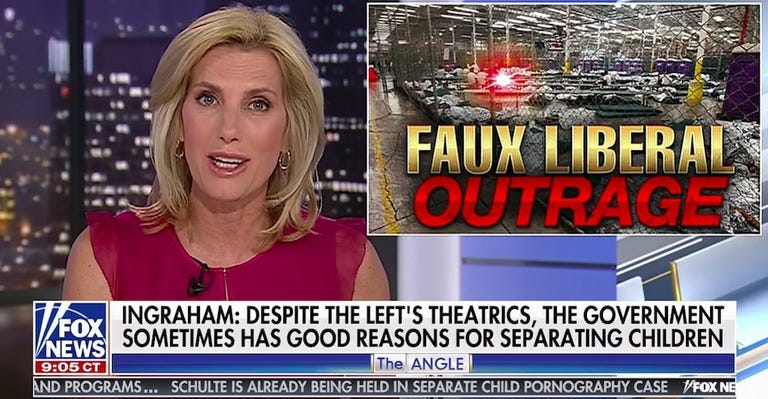
Watch Laura Ingraham’s Soul Leave Her Body As She Describes Border Facilities as ‘Summer Camps’

Esquire

Watch Laura Ingraham’s Soul Leave Her Body As She Describes Border Facilities as ‘Summer Camps’

Wow, this is even worse than expected!

By Jack Holmes      June 19, 2018

Donald Trump seized control of the Republican Party by channeling the resentful id of talk radio and Fox News. This was most apparent on immigration, where Trump depicted undocumented Mexican migrants as rapists and criminals to kick off his campaign. From there, he has only ventured deeper into the abyss. Fox News has followed him all the way, and it seemed sadly inevitable that they would back him this week amid a national firestorm over the emerging human rights crisis on our southern border.

But as the Fox power players returned to their broadcast chairs for Monday night primetime, what we got was even uglier than expected. Leading the way was Laura Ingraham, who responded to reports on the severe trauma children were experiencing as they were torn from their parents’ arms by suggesting they were getting a free ride to Camp Winnepesaukee.

It’s rare that you get to watch someone’s soul leave their body on national TV, dribbling out the side of their mouth as they explain how cozy kids have it as they’re kept in cages ahead of being dragged away from the one sense of security they still have left, their parents, after an often traumatic thousand-mile journey to escape horrific circumstances back home.

The immediate question was whether Ingraham would be sending her kids to one of these “summer camps” this July. Perhaps she’s eying the new tent city outside El Paso, Texas, where it will be an average of 96 degrees each day that month. Or maybe we just learned something about the Fox host’s childhood that might have led her to become such an unreconstructed ghoul as an adult. Surely something must lead you to, as a college student, try to out your LGBT peers by secretly recording them at a support group meeting, as Ingraham did.

Just to test her theory, here’s audio, obtained by ProPublica, of children who were just separated from their parents and put in summer camp.

Does that sound like the summer camp you went to? Or does it sound like the kind of thing that will make it into documentaries about this period, a chilling final testament to the human cost of this administration’s performative cruelty? Of course, the surest sign that it’s not all sunshine and roses is that Trump, the consummate coward, refuses to take responsibility for the separations in public, blaming Democrats and lying incessantly about “enforcing the law.” This is not the law, it is the policy of the Trump administration.

It’s not enough to suggest the kids have it good, though. You also have to demonize them as potential violent criminals—and use one of the president’s favorite buzzwords as you do it:

Some of these kids are toddlers. That can be easy to forget, since authorities only seem interested in allowing media and elected officials access to the facility in Brownsville, Texas, where boys aged eleven to seventeen are kept. But that is just one facility—where they probably think has the least sympathetic detainees—in which unaccompanied children, an increasing number of whom were forcibly separated from their parents, are held. Ingraham would like the separated kids to all be sixteen-year-old boys who she can paint as potential violent gangsters. What about the five-year-old girls, who are kept in facilities authorities won’t tell us about and won’t let us see?

Characterizing all undocumented immigrants as violent criminals is at the core of Trumpist immigration rhetoric, which takes it as the Word of the Lord that immigrants bring violent crime. (In reality, undocumented immigrants are less likely to commit violent crime than native-born citizens.) That is why, when discussing immigration, the president only talks about MS-13 or the relatively rare cases where citizens are killed by undocumented immigrants. The attempt is to paint all undocumented immigrants as violent criminals.

That is why it never mattered whether Trump called all undocumented immigrants “animals,” or just MS-13. His rhetoric on immigration is constantly dehumanizing: he calls the alternative to his family separation and detention program “catch and release,” like we’re hunting or fishing. (It is also not an accurate characterization of how the previous program worked.) He has never made a distinction between violent criminals and peaceful people who come here seeking a better life but don’t have proper documentation. And it’s not just his rhetoric—it’s his policy, too: 40 percent of those his administration deports are noncriminals.

It’s unlikely there’s much of a distinction in the minds of his followers, which might explain why 55 percent of Republicans support family separation. It’s easy to separate animals from their parents—we do it every day.

One example of this non-distinction is Fox News’ Brian Kilmeade, who mirrored Ingraham’s insane MS-13 scaremongering—again, about a group of children, some of whom are toddlers. It appears the Fox & Friends host is getting high on his own supply of uncut white resentment, which led to an incredibly ugly rant from the Couch of Great American Discourse Tuesday morning:

These kids get fanned out to working-class neighborhoods, into our society, and then they have to be paid for by English as a second language, and then they gotta be schooled, and then a lot of them, sadly, in my neighborhood, turn into MS-13.

This is nuts. First off, it’s a bit of vintage nativism, suggesting immigrants are a drain on society when the undocumented contribute more in taxes than they receive in benefits. Also, Kilmeade is a millionaire TV host and it seems incredibly unlikely there are MS-13 members in his neighborhood. But the key point is his assertion that immigrants are the cause of, or will only exacerbate, social problems. Kilmeade, who is a steadfast supporter of anyone with an “(R)” next to their name, included this in his rant:

We are $20 trillion in debt, we have classrooms that are overrun, we have teachers buying their own supplies…

The Party of Fiscal Responsibility just ballooned the national debt with a tax cut that will add $1.9 trillion and a spending bill that will add $1.3 trillion. Meanwhile, last year, House Republicans sought to cut the education budget by $2.4 billion, or 3.5 percent. That pales in comparison to the Trump administration’s proposed cut of $9.2 billion. But this, Kilmeade says, is about underfunded schools. Who is the real threat to high-functioning American public schools: immigrant kids, or politicians who spend nearly all their time catering to the donor class?

But the symbiosis between this administration and its primary pravda network would not be complete without an appearance from Attorney General Jeff Sessions—who orchestrated and has repeatedly defended the family separation policy, sometimes citing the Bible in an ultra-authoritarian Evangelical interpretation—on Ingraham’s show. The dehumanizing rhetoric and cruel treatment of these people, along with the new addition of actual concentration camps, has led some to make Nazi comparisons. Sessions dismissed this as silly—the Nazis wanted to kill people, not deport them!

Axios: INGRAHAM: “[Lawmakers are comparing this policy to] Nazi Germany, concentration camps, what’s going on here?”
SESSIONS: “It’s a real exaggeration. In Nazi Germany, they were keeping the Jews from leaving the country but this is a serious matter.”

Of course, in the beginning, the Nazis primarily sought to expel the Jews from Europe. But history doesn’t matter, you see—that’s why they’re cutting the education funding! Just from a PR standpoint, though, the first distinction you should probably draw between yourself and Nazis is that you do not, presumably, have a genocidal hatred for a societal subgroup that you constantly dehumanize and blame for society’s problems. The logistical differences should come after.

Trump And His Allies Are Either Woefully Misinformed About Family Separations Or Lying Through Their Teeth

Border Crossing With Music

June 18, 2018

Amid the Trump administration’s crackdown on immigration at the U.S.-Mexico border, these musicians provide cross-border solidarity.

Border Crossing with Music

Amid the Trump administration's crackdown on immigration at the U.S.-Mexico border, these musicians provide cross-border solidarity.

Posted by Direct From on Monday, June 18, 2018

Americans own 40 percent of world’s firearms

AFP

Americans own 40 percent of world’s firearms: study

AFP          June 19, 2018

Of the 857 million guns owned by civilians, 393 million are in the United States – more than all of the firearms held by ordinary citizens in the other top 25 countries combined (AFP Photo/Brian Blanco)

United Nations (United States) (AFP) – Americans make up only four percent of the global population but they own 40 percent of the world’s firearms, a new study said Monday.

There are more than one billion firearms in the world but 85 percent of those are in the hands of civilians, with the remainder held by law enforcement and the military, according to the Small Arms Survey.

The survey, produced by the Graduate Institute of International and Development Studies in Geneva, says it bases its estimates based on multiple sources, including civilian firearms registration data from 133 countries and territories and survey results in 56 countries.

Of the 857 million guns owned by civilians, 393 million are in the United States – more than all of the firearms held by ordinary citizens in the other top 25 countries combined.

“The biggest force pushing up gun ownership around the world is civilian ownership in the United States,” said Aaron Karp, one of the authors of the report which compiles new data from the last ten years.

“Ordinary American people buy approximately 14 million new and imported guns every year,” Karp told a news conference at UN headquarters in New York.

Americans have access to powerful firearms that are not available in many other countries due to tighter legislation.

“Why are they buying them? That’s another debate. Above all, they are buying them probably because they can. The American market is extraordinarily permissive,” he said.

Gun ownership rates vary across the world, with 121 firearms for every 100 residents in the United States compared to 53 in Yemen, 39 in Montenegro, and 35 in Canada.

Japan and Indonesia are at the other end of the spectrum with less than one firearm per 100 people.

Only 28 countries released information on their military stockpiles while 28 nations offered information the firearms owned by law enforcement agencies.

Civilian firearms registration data was available for 133 countries and territories. Survey results were used