Pediatric hospital beds are filling up as RSV spreads across the US. Here are the symptoms to look out for and who’s most at risk of getting seriously ill.
Catherine Schuster-Bruce – October 24, 2022
In severe cases, a patient with RSV may need to be given oxygen, a breathing tube, or be put on a ventilator to help them breathe.Marijan Murat/picture alliance
Difficulty breathing and dehydration could be signs that a child is sick with RSV.
Confirmed RSV cases in the US have increased in recent weeks.
RSV usually causes a mild illness, but can be serious, particularly in infants and older people.
Difficulty breathing and dehydration are among the signs of respiratory syncytial virus that parents should look out for, doctors say, as pediatric hospital beds fill up across the country amid an unusual outbreak of the illness.
RSV typically causes mild, flu-like symptoms that get better within weeks without treatment, according to the Centers for Disease Control and Prevention. However, it can be serious, especially for infants and older people, with the potential to cause pneumonia and inflammation of the small airways called bronchiolitis, which can lead to respiratory failure and death.
The CDC estimates that around 58,000 children younger than 5 years are hospitalized with the virus each year.
“RSV can be super dangerous for some young infants and younger kids, particularly those that are less than 2 years of age,” Dr. Priya Soni, an assistant professor of pediatric infectious diseases at Cedars Sinai Medical Center, told CNN.
CDC data shows that confirmed cases in the US have increased in recent weeks, and doctors across the country have reported high numbers of kids sick with RSV, as well as other illnesses.
Dr. Jesse Hackell, chair on the committee on practice and ambulatory medicine for the American Academy of Pediatrics, told The Washington Post that it was “very hard to find a bed in a children’s hospital — specifically an intensive care unit bed for a kid with bad pneumonia or bad RSV because they are so full.”
Dr. Juan Salazar, physician in chief of Connecticut Children’s Medical Center, told The Hill RSV cases are expected to rise in fall, but they started spiking in early September and have risen exponentially since, which he hadn’t seen before.
Hospitals in more than 24 states around the country, including Rhode Island, Washington, Colorado, Texas, Ohio, Louisiana, New Jersey, Massachusetts as well as the District of Columbia, told ABC News they are struggling with more pediatric cases than normal of infections other than COVID.
“We’re seeing RSV infections going rampant all throughout the country,” Mora, a volunteer medical spokesperson for the American Lung Association, told CNN.
Seek medical help if your child is having difficulty breathing or seems dehydrated
According to the CDC, early symptoms of RSV include: a runny nose, a cough, which may progress to wheezing, and decreased appetite.
Infants younger than 6 months may have one symptom like: irritability, decreased activity, decreased appetite, or pauses while breathing. RSV may not always cause a fever, according to the CDC.
Doctors told CNN that parents should seek medical attention if a child has any signs of labored breathing or dehydration including: breathing harder or faster, the belly moving up and down, nasal flaring, and diapers that are less wet than usual.
Infants who are premature, aged six months and younger, have birth lung or heart defects, or neuromuscular disorders that make it difficult to clear secretions are most at risk of getting sick, according to the CDC. Most kids younger than 2 years of age will catch it without getting seriously unwell.
Adults with compromised immune systems and older adults, particularly those with underlying heart or lung diseases, are also at higher risk of getting seriously ill from RSV.
RSV can spread when an infected person coughs or sneezes
A person can catch RSV when virus droplets from an infected person’s cough or sneeze gets into their eyes, nose, or mouth.
Dr. Elizabeth Mack, division chief of Pediatric Critical Care at the MUSC Children’s Health, said in a press release that babies often get RSV from someone in the household: “It’s common that the older sibling goes to day care, went to the store, went to a party, came home, had a runny nose and then the infant got really sick.”
Covering your nose and mouth when you sneeze can help prevent RSV from spreading
People can help to prevent RSV by: covering coughs and sneezes with a tissue or a sleeve, and regularly washing hands for at least 20 seconds.
Mack said that it was a “good idea” to wash your hands before interacting with a newborn, “regardless of whether you’re symptomatic or have been around anybody who’s sick.”
“If somebody’s sick, avoid close contact, avoid sharing utensils or food. Frequently touched surfaces should be cleaned if somebody in the household is sick,” she said.
Parents can treat RSV at home with pain killers
There is no specific treatment for RSV. For many, it is a mild illness that can be treated at home. Parents can give their kids non-aspirin pain killers, like ibuprofen, ensure they drink enough, and speak with a healthcare provider before using non-prescription cold remedies, according to the CDC.
Babies under the age of 6 months or older people may need hospital treatment if they become dehydrated or have trouble breathing.
In severe cases, a patient may need to be given oxygen, a breathing tube, or be put on a ventilator to help them breathe, which usually lasts a few days, the CDC website states.
There isn’t yet a widely available vaccine for RSV, but scientists are working on it.
“The unfortunate thing is that there is a vaccine against RSV, but it’s only available to babies with high-risk conditions. Vaccinations begin in October, but the surge hit early,” Mack said.
“The Methodist Health System Family is heartbroken at the loss of two of our beloved team members,” Methodist Hospital executives said in a statement. “Our entire organization is grieving this unimaginable tragedy. During this devastating time, we want to ensure our patients and employees that Methodist Dallas Medical Center is safe, and there is no ongoing threat. Our prayers are with our lost co-workers and their families, as well as our entire Methodist family. We appreciate the community’s support during this difficult time.”
In the aftermath, as loved ones and community members mourn the losses, nurses unions are demanding better protection for health care workers.
“It is devastating to learn about the loss of our fellow nurses’ lives in Dallas, Texas,” said R.N. Jean Ross, president of National Nurses United, the country’s largest union and professional association of registered nurses with almost 225,000 members nationwide. “Our hearts go out to the families and colleagues of the nurses who died. No one should lose their life because they went to work.”
Texas Nurses Association CEO Serena Bumpus says the state’s nursing community is overcome with “sadness, disbelief and anger.”
“We mourn for the victim’s families, but also for the staff at Dallas Methodist,” Bumpus told the Star-Telegram. “The loss of their co-workers in this senseless tragedy is difficult to understand. There were still patients who had to be cared for, babies to be delivered etc. So, many went right back work. It’s difficult to process a loss when you don’t have an opportunity to stop and reflect.”
Health care workers face increased threats
Concern about violence against health care workers has been renewed with recent incidents like the one in Dallas. Over the summer, a shooting at a Tulsa medical facility on June 1 left four people dead.
“There is an epidemic of violence against nurses and other health care workers,” Ross told the Star-Telegram.
Health care and social service workers are five times as likely to be injured from violence in their workplace than other workers, TIME magazine reported. Over the last decade, the number of such injuries has risen dramatically —from 6.4 incidents per 10,000 workers annually in 2011 to 10.3 per 10,000 in 2020.
It’s become even worse during the COVID-19 pandemic, health care workers say. In September, nearly a third of respondents to a National Nurses United survey said they’d experienced an increase in workplace violence.
“It was only a matter of time before we experienced a tragedy like this,” Bumpus says. “Nurses deal with violence from patients and their families regularly.”
Nurses are often the targets of physical assault. The violence-related injury rate for registered nurses is more than three times higher than for workers overall, according to NNU. A September Press Ganey study found that an average of two nurses were assaulted every hour at work. Nurses often experience workplace violence from patients and family members/visitors due to several reasons — illness, medications, high-trauma situations, altered states caused by memory loss, dementia, mental illness, and delays in needed care. Because there’s a nursing shortage, nurses often have no choice but to go back to work right away.
These high rates of workplace violence contribute significantly to high rates of stress, anxiety, post-traumatic stress disorder, burnout, moral distress, and turnover among nurses.
Underreporting of workplace violence incidents is a significant issue, according to NNU, so the actual statistics may be even higher. Underreporting can be due to pressure from employers not to report, fear of retaliation or to lack of employer response when reports have been made.
“Nurses need a safe place to work so that patients have a safe place to heal. When nurses aren’t safe, patients aren’t safe,” Ross said. “Health care workplace violence can impact everyone in the vicinity—including patients and their families. Everyone is a patient at some time in their lives, so we need to make sure our hospitals are safe.”
A safer work environment
It’s the hospital’s responsibility to provide a safe work environment, NNU says.
“Management needs to protect the spaces where people come to be healed by stopping physical violence and threats from ever occurring in the first place,” Ross said. “Because many hospitals fail to implement workplace violence prevention plans, we need a national, enforceable standard to hold health care employers accountable to keeping nurses, other health care workers, and our patients safe from violence in the workplace.”
The unions want the U.S. Senate to pass the Workplace Violence for Health Care and Social Service Workers Act (HR 1195/S 4182). The bill passed the House last year and was introduced in the Senate this year. It would create national minimum requirements for health care employers to implement research-proven measures to prevent workplace violence, including safe staffing, and improve reporting and tracking.
Hospitals need to ensure that units are staffed appropriately, NNU says. Safe staffing gives more time to recognize and deescalate potentially violent behavior, and ensures that patients get the care they need when they need it.
“Health care employers could prevent workplace violence, through unit-specific prevention plans, environmental and administrative controls like safer staffing levels, hands-on training, and reporting and tracking systems, but many employers fail to put necessary measures in place,” Ross said.
Exposure to environmental toxins may be root of rise in neurological disorders
Nina Lakhani in New York – October 23, 2022
The mystery behind the astronomical rise in neurological disorders like Parkinson’s disease and Alzheimer’s could be caused by exposure to environmental toxins that are omnipresent yet poorly understood, leading doctors warn.
At a conference on Sunday, the country’s leading neurologists and neuroscientists will highlight recent research efforts to fill the gaping scientific hole in understanding of the role environmental toxins – air pollution, pesticides, microplastics, forever chemicals and more – play in increasingly common diseases like dementias and childhood developmental disorders.
Humans may encounter a staggering 80,000 or more toxic chemicals as they work, play, sleep and learn – so many that it is almost impossible to determine their individual effects on a person, let alone how they may interact or the cumulative impacts on the nervous system over a lifespan.
Some contact with environmental toxins is inevitable given the proliferation of plastics and chemical pollutants, as well as America’s hands off regulatory approach, but exposure is unequal.
In the US, communities of color, Indigenous people and low income families are far more likely to be exposed to a myriad of pollutants through unsafe housing and water, manufacturing and agricultural jobs, and proximity to roads and polluting industrial plants, among other hazards.
It’s likely genetic makeup plays a role in how susceptible people are to the pathological effects of different chemicals, but research has shown higher rates of cancers and respiratory disease in environmentally burdened communities.
Very little is known about impact on brain and nervous system disorder, but there is growing consensus that genetics and ageing do not fully account for the sharp rise in previously rare diseases like Alzheimer’s, Parkinson’s and ALS (amyotrophic lateral sclerosis) – a degenerative disease more likely in army veterans and neighborhoods with heavy industry.
“Neurology is about 15 years behind cancer so we need to sound the alarm on this and get more people doing research because the EPA [Environmental Protection Agency] is absolutely not protecting us,” said Frances Jensen, the ANA president and chair of the Department of Neurology at the University of Pennsylvania.
Scores of well-known dangerous toxins such as asbestos, glyphosates, and formaldehyde continue to be used widely in agriculture, construction, pharmaceuticals and cosmetics in the US, despite being banned elsewhere. Earlier this week, the Guardian reported on corporate efforts to influence the EPA and conceal a possible link between the popular weed killer Paraquat and Parkinson’s.
Jensen added: “It’s like dark matter, there are so many unknowns … it’s truly going to be an epic exploration using the most cutting edge science we have.”
Neurology is the branch of medicine focused on disorders of the nervous system – the brain, spinal cord and sensory neural elements like the ears, eyes and skin. Neurologists treat stroke, multiple sclerosis, migraines, Parkinson’s, epilepsy, and Alzheimer’s, as well as children with neurodevelopmental disorders like ADHD, autism and learning disabilities.
The brain is the most complex and important organ in the body – and likely the most sensitive to environmental toxins, but was largely inaccessible to researchers until sophisticated imaging, genetic and molecular techniques were developed in the past 20 years.
Going forward, research could help explain why people living in neighborhoods with high levels of air pollution have a higher risk of stroke, as well as examine links between fetal exposure and neurodevelopmental disorders.
Rick Woychik, director of the National Institute of Environmental Health Sciences, said: “It’s not just about pesticides. PFAS chemicals are ubiquitous in the environment, as are nanoplastics. And there are trillions of dollars’ worth of demand for nanomaterials, but it’s sobering how little we know about their toxicology.”
US politics’ post-shame era: how Republicans became the party of hate
David Smith in Washington – October 23, 2022
Photograph: Jeff Swensen/Getty Images
Republicans were in trouble. Mitt Romney, their US presidential nominee, had been crushed by Barack Obama. The party commissioned an “autopsy” report that proposed a radical rethink. “If we want ethnic minority voters to support Republicans,” it said, “we have to engage them and show our sincerity.”
Ten years after Romney’s loss, Republicans are fighting their first election since the presidency of Donald Trump. But far from entering next month’s midterms as the party of tolerance, diversity and sincerity, critics say, they have shown itself to be unapologetically the party of hate.
Perhaps nothing captures the charge more eloquently than a three-word post that appeared on the official Twitter account for Republicans on the House of Representatives’ judiciary committee – ranking member Jim Jordan – on 6 October. It said, simply and strangely: “Kanye. Elon. Trump.”
The first of this unholy trinity referred to Ye, the rapper formerly known as Kanye West, who has recently drawn fierce criticism for wearing a “White Lives Matter” T-shirt at Paris fashion week and for antisemitic messages on social media, including one that said he would soon go “death con 3 on JEWISH PEOPLE”.
The second was billionaire Elon Musk, who published a pro-Russian peace plan for Ukraine and denied reports that he had been speaking to Russian autocrat Vladimir Putin.
The third was former president Donald Trump, who wrote last weekend that American Jews have offered insufficient praise of his policies toward Israel, warning that they need to “get their act together” before “it is too late!” The comment played into the antisemitic prejudice that American Jews have dual loyalties to the US and Israel.
It was condemned by the White House as “insulting” and “antisemitic”. But when historian Michael Beschloss tweeted: “Do any Republican Party leaders have any comment at all on Trump’s admonition to American Jews?”, the silence was deafening.
Jim Jordan, who recently tweeted ‘Kanye. Elon. Trump’, speaks at a rally held by Trump in Youngstown, Ohio, in September. Photograph: Gaelen Morse/Reuters
Republicans have long been accused of coded bigotry and nodding and winking to their base. There was an assumption of rules of political etiquette and taboos that could not be broken. Now, it seems, politics has entered a post-shame era where anything goes.
Jared Holt, an extremism researcher at the Institute for Strategic Dialogue thinktank, said: “The type of things they would say in closed rooms full of donors they’re just saying out in the open now. It’s a cliche but I always remember what I heard growing up which is, when people tell you who they are, you should believe them.”
The examples are becoming increasingly difficult to downplay or ignore. Earlier this month Tommy Tuberville, a Republican senator for Alabama, told an election rally in Nevada that Democrats support reparations for the descendants of enslaved people because “they think the people that do the crime are owed that”. The remark was widely condemned for stereotyping African Americans as people committing crimes.
And Marjorie Taylor Greene, a congresswoman from Georgia, echoed the rightwing “great replacement” theory when she told a rally in Arizona: “Joe Biden’s 5 million illegal aliens are on the verge of replacing you, replacing your jobs and replacing your kids in school and, coming from all over the world, they’re also replacing your culture.”
Such comments have handed ammunition to Democrats as they battle to preserve wafer thin majorities in the House and Senate. Although the party is facing electoral headwinds from inflation, crime and border security, it has plenty of evidence that Trump remains dominant among Republicans – a huge motivator for Democratic turnout.
Indeed, Trump did more than anyone to turn the 2013 autopsy on its head. In his first run for president, he referred to Mexicans as criminals, drug dealers and rapists and pledged to build a border wall and impose a Muslim ban. Opponents suggest that he liberated Republicans to say the unsayable, rail against so-called political correctness and give supporters the thrill of transgression.
Antjuan Seawright, a senior adviser to the Democratic Congressional Campaign Committee, said: “He has been the creator of the permission slip and the validator of the permission slip. For many of them, he is their trampoline to jump even further with their right wing red meat racial rhetoric.”
Beyond Republicans’ headline-grabbing stars, the trend is also manifest at the grassroots. In schools, the party has launched a sweeping assault on what teachers can say or teach about race, gender identity, LGBTQ+ issues and American history. An analysis by the Washington Post newspaper found that 25 states have passed 64 laws reshaping what students can learn and do at school over the past three academic years.
There are examples of the new extremism all over the country. The New York Republican Club will on Monday host an event with Katie Hopkins, a British far-right political commentator who has compared migrants to cockroaches and was repeatedly retweeted by Trump before both were banned by the social media platform.
In Idaho, long a deeply conservative state, Dorothy Moon, the new chairwoman of the state Republican party, is accused of close associations with militia groups and white nationalists. Last month she appeared on Trump ally Steve Bannon’s War Room podcast to accuse the state’s Pride festival and parade of sexualising children.
A recent headline in the Idaho Capital Sun newspaper stated: “Hate makes a comeback in Idaho, this time with political support.”
Michelle Vincent, a senior adviser to Democratic gubernatorial candidate Stephen Heidt, noted the such currents have long been a problem in Idaho but said: “Trump made hate OK. He made bad behavior seem OK because of the extremes of what he was doing. They started emulating him. People were were abused here during Black Lives Matter protests. We have so much militia here and they are out of control.”
In many cases, the naked bigotry goes hand in hand with Trump’s “big lie” that the last election was stolen from him due to widespread voter fraud. A New York Times investigation found that about 70% of Republican midterm candidates running for Congress in next month’s midterm elections have either questioned or flat-out denied the results of the 2020 election.
They can now count on support from Tulsi Gabbard, a former Democratic congresswoman and presidential candidate who in 2017 met with Syrian dictator Bashar al-Assad and dismissed his entire opposition as “terrorists” Gabbard this week defected to the Republicans and campaigned for Kari Lake, the Republican nominee for governor of Arizona and an unabashed defender of the big lie.
Another election denier is Doug Mastriano, a political novice running for governor of Pennsylvania with the help of far-right figures. He was outside the US Capitol during the January 6 insurrection and photographed watching demonstrators attacking police before he supposedly walked away.
Mastriano has repeatedly criticised his opponent, attorney general Josh Shapiro, for attending and sending his children to what he brands a “privileged, exclusive, elite” school, suggesting that this demonstrates Shapiro’s “disdain for people like us”. It is a Jewish day school where students receive both secular and religious instruction.
After a long courtship, Trump himself has in recent months begun embracing the antisemitic conspiracy theory QAnon in earnest. In September, using his Truth Social platform, the former president reposted an image of himself wearing a Q lapel pin overlaid with the words “The Storm is Coming”. A QAnon song has been played at the end of several his campaign rallies.
Ron Klein, chair of the Jewish Democratic Council of America, said: “It’s very unfortunate that the Republican party is either silent and complicit in this antisemitic language that’s being put forward by Donald Trump and others that align with him. But it’s very indicative of a Republican party that does not want to take on rightwing extremists.”
Klein, a former congressman, added: “Some members of Republican party did use dog whistles and symbolic language to make their points about minorities, including the Jewish community, and that was very troubling. But the era of Donald Trump has just lifted the rock under which these people now feel it’s OK and even helpful for them to make these kinds of statements and use these kinds of words to gain political power and political stature, which is very troubling in our American political system.”
The 2013 autopsy now looks like a blip, an outlier, in half a century of Republican politics. Richard Nixon’s 1968 “law and order” message stoked racial fear and resentment in the south. Ronald Reagan demonised “welfare queens” in 1976 and, four years later, launched his election campaign with a speech lauding “states’ rights” near the site of the “Mississippi Burning” murders – seen by many as a nod to southern states that resented the federal government enforcing civil rights.
A political action committee linked to George HW Bush’s campaign in 1988 paid for an attack advert blaming Democratic rival Michael Dukakis for the case of Willie Horton, an African American convict who committed rape during a furlough from prison. Lee Atwater, Bush’s campaign manager, bragged that he would turn Horton into “Dukakis’s running mate”.
I don’t think Donald Trump made people more racist or antisemitic; I think he gave them permission to express it
Stuart Stevens, veteran Republican campaign strategist
The Atwater playbook is being deployed again in Senate midterm races as Republicans Ron Johnson of Wisconsin and Mehmet Oz of Pennsylvania run attack ads accusing their Democratic opponents, Mandela Barnes and John Fetterman, of being soft on crime, often with images of Black prison inmates.
Stuart Stevens, a veteran Republican campaign strategist who wrote a withering indictment of the party’s trajectory, It Was All a Lie: How the Republican Party Became Donald Trump, said: “I don’t think Donald Trump made people more racist or antisemitic; I think he gave them permission to express it.”
Stevens, a senior adviser at the Lincoln Project, an anti-Trump group, continued: “It’s a party of white grievance and anger and hate is an element of that.”
Kurt Bardella, a Democratic strategist and former Republican congressional aide, agreed: “The real consequence of Donald Trump’s presidency is it did give permission to so many people within the party who used to try to mask or hide their racism. They now feel like they can proudly wear it and they do.”
With hate crimes on the rise across America, there are fears that comments by Trump, Tuberville, Greene and others will lead to threats and violence that put lives in danger. Bardella added: “We learned after January 6 that, to the Republican party faithful, these aren’t just words, they are instructions. It’s a very dangerous development that one of the major political parties in America has made the conscious decision to wrap itself in the embrace of white nationalism.”
Climate change is on the ballot in the midterm elections: Here’s what’s at stake.
Elizabeth Weise – October 22, 2022
With half of registered voters saying climate change is one of the most important issues in the upcoming midterm elections, could the results on Nov. 8 mean changes for U.S. policy regarding global warming?
A significant shift in the makeup of Congress would mostly involve delays rather than major legislation being rescinded. But time is of the essence as scientists continue to warn that without immediate and deep emission reductions across all sectors, limiting global warming to 1.5 degrees Celsius will soonbe “beyond reach.”
Democrats have set up several major climate change initiatives at the national level that Republicans would like to roll back. To do so, they will need a landslide victory — and even then hitting the undo button will be a challenge.
Five major climate initiatives are at stake as voters decide who controls the House and Senate, along with governor’s races and ballot initiatives across the nation.
Related video: Biden says he’ll use executive powers to fight climate change
Ad: 0:18 0:30 https://s.yimg.com/rx/martini/builds/51382509/executor.htmlScroll back up to restore default view.
Here’s a look at what the midterms mean for the climate:
‘Undo’ of Inflation Reduction Act still possible
Coming just 85 days after the most consequential piece of climate legislation ever passed in the United States, the outcome of the midterm elections are unlikely to erase key provisions of the Inflation Reduction Act unless Republicans gain a two-thirds majority in both the House and Senate.
The sweeping legislation includes record spending on clean energy initiatives. It also has measures to reduce prescription drug prices and to ensure large corporations pay income taxes.
The law was approved by the Senate on Aug. 7 in a party-line vote. To dismantle it would require passage of a new law to either repeal or replace it, a virtually impossible task given current political realities.
To overcome a veto by President Joe Biden, Republicans would have to gain a two-thirds majority in both houses of Congress, which is seen as unlikely.
The other truth in politics is that once a major bill such as the IRA is passed, the longer it is in effect, the less likely it is to be overturned.
“It’s hard to do big things and it’s hard to undo big things,” said Tiernan Sittenfeld, senior vice president for governmental affairs with the League of Conservation Voters.
Critical water rights decisions hang in the balance amid megadrought
Two governors’ races could affect the 40 million Americans who get their water under the century-old Colorado River compact.
A megadrought that’s lasted for 22 years has pushed the mighty Colorado River well beyond its limits. Scientists estimate about 40% of the drought is attributable to human-caused climate trends.
To deal with the extreme lack of water, the Department of the Interior took an unprecedented step earlier this year, demanding governors of the seven states that get water from the river come up with an emergency plan to drastically reduce use.
Interior was clear: If the governors of Wyoming, Colorado, Nevada, New Mexico, Utah, Arizona, and California didn’t come up with a proposal, the agency’s Bureau of Reclamation would do it for them.
There’s been no deal and things are now on hold as all of the states but Utah have governors’ races on November 8.
How things play out in two of those states, Arizona and Nevada, could delay a state-run plan, causing the Department of the Interior to step in.
In both states, Republicans with unorthodox water plans are polling well and could end up calling the shots.
In Arizona, Republican candidate Kari Lake wants to prioritize finding additional water supplies rather than conservation. Her major proposals to deal with the state’s water shortages are building a pipeline to bring water from the Missouri and Mississippi rivers or constructing seawater desalination plants.
But desalinization would raise costs significantly and a pipeline is likely politically unworkable.
Conservation is really the only option, said Eric Kuhn, former general manager of the Colorado River District.
“The water’s just not there,” he said.
In Nevada, Republican candidate and political firebrand Joe Lombardo says California gets too much water under current rules and the entire Colorado River Compact should be renegotiated.
That seems unlikely to happen. The Compact was ratified in 1922. To create a new one would require the approval of Congress, state legislatures and governors.
Whatever humans do, in the end Mother Nature calls the shots, said Kuhn, the co-author of “Science Be Dammed: How Ignoring Inconvenient Science Drained the Colorado River.”
“You can’t deliver more water than you have.”
Plan to make companies disclose climate data not finalized
In the financial world, a historic climate change rule that could significantly change what investors are told about companies’ risk is set to be finalized next year. A shift in the composition of Congress could throw up roadblocks, though might not derail it.
The Securities and Exchange Commission proposed the rule in March. It would require public companies to disclose the risks they face from global warming as well as disclosing their greenhouse gas emissions. The rule doesn’t require companies to change what they’re doing, only to make it known to potential investors.
Already at least 16 Republican state attorneys general have contested the proposed rule and it’s anticipated that multiple lawsuits will be brought against it.
Others believe it will survive opposition.
“This rule was built to survive legal challenges,” said Elizabeth Small, head of policy for CDP, a nonprofit that runs a voluntary climate disclosure system for companies.
Two states propose landmark climate initiatives
While several states and numerous counties and cities have various climate initiatives, two stand out because of the size and economic importance of the states contemplating them.
In California, Proposition 30 would increase by 1.75% the tax on people who make more than $2 million. The resulting money – as much as $5 billion per year by state estimates – would go toward building electric and hydrogen vehicle charging stations and wildfire suppression and prevention programs.
If California were a country, it would have the world’s fifth-largest economy, so what the state does matters. If it passes, the initiative could spur the adoption of zero-carbon vehicles and construction of infrastructure to support them, both electric and hydrogen, not just in California but across the United States.
Across the country in New York state, Proposal 1 would allow the state to issue $4.2 billion in bonds for environmental, natural resources, water infrastructure, and climate change mitigation projects.
The Clean Water, Clean Air, and Green Jobs Environmental Bond Act would pay for environmental improvements across the state, including $1.5 billion for climate change mitigation, $1.1 billion to restoration and flood risk reduction, $650 million to conserve open spaces and $650 million for water quality in resiliency infrastructure.
If the historically large measure results in the jobs and cleaner, healthier environment supporters say it will, it could encourage other states to take similar steps.
Agriculture at the center of another, bigger fight ahead
How these climate issues play out could set the stage for an even bigger fight expected to begin in earnest after the midterms.
Every five years since 1933, Congress passes a piece of legislation that touches almost every aspect of America’s agriculture and nutrition policy: the farm bill. Formally known as the Agriculture Improvement Act, in 2018 it cost $428 billion and is an enormous driver of what American grows and eats.
Agriculture accounts for 11% of total U.S. greenhouse gas emissions, according to the Environmental Protection Agency. Conservation and sustainability are expected to be big issues as the details of the next farm bill are hashed out.
“It could be a huge opportunity for advancing climate solutions,” said Sittenfeld. “There’s no overstating the potential for the farm bill as we have very ambitious goals for cutting climate emissions.”
Russian authorities advise civilians to leave Ukraine region
Andrew Meldrum and Joanna Kozlowska – October 22, 2022
KYIV, Ukraine (AP) — Russian-installed authorities in Ukraine told all residents of the city of Kherson to leave “immediately” Saturday ahead of an expected advance by Ukrainian troops waging a counteroffensive to recapture one of the first urban areas Russia took after invading the country.
In a post on the Telegram messaging service, the pro-Kremlin regional administration strongly urged civilians to use boat crossings over a major river to move deeper into Russian-held territory, citing a tense situation on the front and the threat of shelling and alleged plans for “terror attacks” by Kyiv.
Kherson has been in Russian hands since the early days of the nearly 8-month-long war in Ukraine. The city is the capital of a region of the same name, one of four that Russian President Vladimir Putin illegally annexed last month and put under Russian martial law on Thursday.
On Friday, Ukrainian forces bombarded Russian positions across the province, targeting pro-Kremlin forces’ resupply routes across the Dnieper River and preparing for a final push to reclaim the city.
The Ukrainian military has reclaimed broad areas in the north of the region since launching a counteroffensive in late August. It reported new successes Saturday, saying that Russian troops were forced to retreat from the villages of Charivne and Chkalove in the Beryslav district.
Russian-installed officials were reported as trying desperately to turn Kherson city — a prime objective for both sides because of its key industries and ports — into a fortress while attempting to relocate tens of thousands of residents.
The Kremlin poured as many as 2,000 draftees into the surrounding region to replenish losses and strengthen front-line units, according to the Ukrainian army’s general staff.
The wide Dnieper River figures as a major factor in the fighting, making it hard for Russia to supply its troops defending the city of Kherson and nearby areas on the west bank after relentless Ukrainian strikes rendered the main crossings unusable.
Taking control of Kherson has allowed Russia to resume fresh water supplies from the Dnieper to Crimea, which were cut by Ukraine after Moscow’s annexation of the Black Sea peninsula. A big hydroelectric power plant upstream from Kherson city is a key source of energy for the southern region. Ukraine and Russia accused each other of trying to blow it up to flood the mostly flat region.
Kherson’s Kremlin-backed authorities previously announced plans to evacuate all Russia-appointed officials and as many as 60,000 civilians across the river, in what local leader Vladimir Saldo said would be an “organized, gradual displacement.”
Another Russia-installed official estimated Saturday that around 25,000 people from across the region had made their way over the Dnieper. In a Telegram post, Kirill Stremousov claimed that civilians were relocating willingly.
“People are actively moving because today the priority is life. We do not drag anyone anywhere,” he said, adding that some residents could be waiting for the Ukrainian army to reclaim the city.
Ukrainian and Western officials have expressed concern about potential forced transfers of residents to Russia or Russian-occupied territory.
Ukrainian officials urged Kherson residents to resist attempts to relocate them, with one local official alleging that Moscow wanted to take civilians hostage and use them as human shields.
Elsewhere in the invaded country, hundreds of thousands of people in central and western Ukraine woke up on Saturday to power outages and periodic bursts of gunfire. In its latest war tactic, Russia has intensified strikes on power stations, water supply systems and other key infrastructure across the country.
Ukraine’s air force said in a statement Saturday that Russia had launched “a massive missile attack” targeting “critical infrastructure,” adding that it had downed 18 out of 33 cruise missiles launched from the air and sea.
Ukrainian President Volodymyr Zelenskyy later said that Russian launched 36 missiles, most of which were shot down.
“Those treacherous blows on critically important facilities are characteristic tactics of terrorists,” Zelenskyy said. “The world can and must stop this terror.”
Air raid sirens blared across Ukraine twice by early afternoon, sending residents scurrying into shelters as Ukrainian air defense tried to shoot down explosive drones and incoming missiles.
“Several rockets” targeting Ukraine’s capital were shot down Saturday morning, Kyiv Mayor Vitali Klitschko said on the Telegram messaging service.
The president’s office said in its morning update that five suicide drones were downed in the central Cherkasy region southeast of Kyiv. Similar reports came from the governors of six western and central provinces, as well as of the southern Odesa region on the Black Sea.
Ukraine’s top diplomat said the day’s attacks proved Ukraine needed new Western-reinforced air defense systems “without a minute of delay.”
“Air defense saves lives,” Foreign Minister Dmytro Kuleba wrote on Twitter.
Kyrylo Tymoshenko, the deputy head of Ukraine’s presidential office, said on Telegram that almost 1.4 million households lost power as a result of the strikes. He said some 672,000 homes in the western Khmelnytskyi region were affected and another 242,000 suffered outages in the Cherkasy region.
Most of the western city of Khmelnytskyi, which straddles the Bug River and had a pre-war population of 275,000, was left with no electricity, shortly after local media reported several loud explosions.
In a social media post on Saturday, the city council urged local residents to store water “in case it’s also gone within an hour.”
The mayor of Lutsk, a city of 215,000 in far western Ukraine, made a similar appeal, saying that power in the city was partially knocked out after Russian missiles slammed into local energy facilities and damaged one power plant beyond repair.
The central city of Uman, a key pilgrimage center for Hasidic Jews with about 100,000 residents before the war, also was plunged into darkness after a rocket hit a nearby power plant.
Ukraine’s state energy company, Ukrenergo, responded to the strikes by announcing that rolling blackouts would be imposed in Kyiv and 10 Ukrainian regions to stabilize the situation.
In a Facebook post on Saturday, the company accused Russia of attacking “energy facilities within the principal networks of the western regions of Ukraine.” It claimed the scale of destruction was comparable to the fallout earlier this month from Moscow’s first coordinated attack on the Ukrainian energy grid.
Both Ukrenergo and officials in Kyiv have urged Ukrainians to conserve energy. Earlier this week, Zelenskyy called on consumers to curb their power use between 7 a.m. and 11 a.m. and to avoid using energy-guzzling appliances such as electric heaters.
Zelenskyy said earlier in the week that 30% of Ukraine’s power stations have been destroyed since Russia launched the first wave of targeted infrastructure strikes on Oct. 10.
In a separate development, Russian officials said two people were killed and 12 others were wounded by Ukrainian shelling of the town of Shebekino in the Belgorod region near the border.
Health and Wellness: Knee surgery gone wrong? It’s more common than you think
Carrie Jose – October 22, 2022
Carrie Jose
Arthroscopic knee surgery is one of the most common surgeries performed – despite research telling us that it’s not nearly as effective as most people are led to believe. Furthermore, the science tells us that people who do undergo arthroscopic knee surgery are likely to have knee arthritis that advances more rapidly – resulting in a total knee replacement that quite possibly could have been avoided.
Arthroscopic knee surgery is a minimally invasive procedure that’s commonly done to help “clean out” your knee joint if you’ve got degenerative arthritis, or to clip out pieces of a torn meniscus that might be irritating your knee.
Sounds pretty simple and harmless – right?
Well… it is until it isn’t. The big problem is that arthroscopic knee surgery is not necessary for most cases of knee pain. If there is a complication – which there are many even with “minimally invasive” procedures – you could end up being worse off than when you went in. Plus – if you never even needed the surgery to begin with – you just put your knee through unnecessary trauma that you’ve got to now heal from. This further delays you from addressing the root cause of your knee pain.
The truth is that most people can get full relief of their knee pain as well as full restoration of knee function without any type of surgery or procedure. This is true for 70% of all knee pain cases.
An early research study from 2002 by JB Mosely and colleagues, and published in the New England Journal of Medicine, revealed that placebo surgery for advanced knee arthritis was just as effective as actual arthroscopic surgery. Since then, numerous studies have proven similar results. This means that even if you have a torn meniscus or degenerative arthritis in your knee – you can still get better naturally and with conservative treatment.
So why then – despite all this research – are surgeons still performing arthroscopic knee surgery more than ever?
In some cases it’s just what the surgeon knows, and they haven’t kept up with the research. Other times, it’s due to poor conservative management of knee pain. If you’ve gotten physical therapy and it wasn’t effective, people are led to believe that the physical therapy “didn’t work”. But more often than not, you just haven’t found the right physical therapist yet – someone who understands how to diagnose knee pain properly and get you the customized approach that is required to avoid surgery.
And then there’s the elephant in the room.
It’s very common for knee pain to be coming from somewhere other than your knee. Knee pain can come from your ankle, hip, or back. One study showed that 40% of the time – knee pain is caused by your back – even when you don’t have any back pain. MRI’s add even more confusion to this. It’s entirely possible to have degenerative changes, a torn meniscus, or advanced arthritis in your knee – and still have your knee pain stemming from a source other than your knee.
Over the course of my 20 year career, I’ve seen many knee surgeries go wrong. Most of the time, it has nothing to do with the procedure itself, but everything to do with an incorrect diagnosis going in. If your knee pain can be resolved conservatively – and you put it through unnecessary trauma (surgery) – there’s a good chance you’re going to have more problems afterwards. If you get knee surgery when your knee problem isn’t even coming from your knee – then you’re definitely going to have problems afterwards.
The moral of this story is to make absolutely certain that 1) your knee problem is really a knee problem and 2) you’ve fully exhausted all (quality) conservative therapy options before going under the knife.
Remember that 70% of all knee pain cases do not need surgery. Science has proven this. Don’t resort to knee surgery unless you’re 100% sure you really need it. Because it can go wrong and when it does – it’s much harder to come back from then if you had avoided it to begin with.
Dr. Carrie Jose, Physical Therapist and Pilates expert, owns CJ Physical Therapy & Pilates in Portsmouth and writes for Seacoast Media Group. To get in touch or sign up for her upcoming Masterclass for Knee Pain Sufferers – visit www.cjphysicaltherapy.com or call 603-605-0402.
‘We are going to be homeless’: How mobile homeowners are being forced out in metro Phoenix
Catherine Reagor, Juliette Rihl and Kunle Falayi, – October 22, 2022
Homeowners in mobile home parks across metro Phoenix are getting evicted.
Many own the mobile home but rent the small lot it sets on.
“This is more than just a notice to get out,” said Priscilla Salazar, whose family has lived 11 years in the Weldon Park mobile home community near 16th Street and Osborn Road. “We are going to be homeless.”
Like Valley apartments, some mobile home park owners are raising rents when leases expire and evicting tenants who can’t pay.
In other cases, owners are shutting the parks down so the land can be used for something else, including housing that mobile homeowners can’t afford. Some mobile home park buyers are clearing out tenants and flipping the infill sites for big profits.
Mobile homes have long been one of the most affordable housing options for metro Phoenix residents, but the growing number of parks closing or becoming pricier is putting many residents in a bind. New affordable parks aren’t being built, and many mobile homeowners can’t afford to live elsewhere or move their homes to other communities in the Valley, alarming housing advocates and prompting government officials to seek solutions.
In mid-September, tenants of Weldon Court received a notice that their park would be closing. It had been sold for $5.48 million to an investor from California just days before. Tenants were given six months to move out.
The Weldon Court mobile home park was recently sold, and mobile homeowners in the community were given six months to move out.
“This is our little mini Phoenix. This is our community,” said Salazar, whose children have grown up in the park. Many tenants are low-income families or seniors on fixed incomes.
Residents of Weldon Court and two other Valley mobile home parks that are evicting tenants or raising rents recently protested at the Arizona Capitol and Phoenix City Council chambers. The other two parks with residents fighting their landlords are Las Casitas — which is now called Beacon — at 19th Avenue and Buckeye Road, and Periwinkle, at 27th Avenue and Colter Street.
Mobile home park buying spree
Like with affordable Phoenix-area apartments, investors are snatching up mobile home parks in the Valley.
Since the beginning of 2021, at least 30 trailer, manufactured and mobile home parks have sold for almost $260 million, according to an Arizona Republic analysis of real estate records.
The Valley has been a hub for factory-built homes since after World War II. Many GIs returning home headed to the Southwest. Some hitched a travel trailer to their cars and put down roots and wheels in metro Phoenix.
Most of the metro Phoenix mobile home parks to sell during the past five years are prime infill sites.
The mobile home park buying and closure spree comes as Arizona is facing a shortage of 270,000 homes.
“It’s horrible for people who own their mobile home and have been living in a park for decades,” said Pamela Bridge, director of litigation and advocacy at Community Legal Services. “Investors are raising rents and our office is seeing so many more evictions in older parks.”
She said many longtime residents in Phoenix-area mobile home parks have paid off their homes and made improvements on them, but they can’t afford to move them and can’t find other parks where they can rent a space.
“These people have done nothing wrong,” she said. “We need to leave these mobile home park owners in stable situations.”
Jerry Suter, an 83-year-old veteran who has lived at the Periwinkle Mobile Home Park for 28 years, planned to live out the rest of his days there. He called the park’s closing “devastating” and “traumatic.” With an income of $1,290 in Social Security payments each month, he said he can’t afford to live anywhere else.
Grand Canyon University bought the park six years ago, decided to close it and plans to build student housing.
“They’re going to literally have to drag me out of there,” Suter said. “I’m not giving up my trailer.”
Phoenix has about 20,000 mobile homes, which represents about 3.1% of all of the area’s homes, according to the U.S. Census Bureau. That’s far more than the number of mobile homes that can be found in cities with similar populations, including Houston, San Diego and Philadelphia.
But the supply of mobile homes and parks is shrinking. About 5% of Phoenix homes were in mobile home parks in 2018.
The rapid disappearance of mobile home parks is due, in part, to transactions like this: In 2018, homebuilder Taylor Morrison bought the former Scottsdale Wheel Inn Ranch RV and Mobile Home Park, where residents were evicted by another owner a few years before. Similar scenarios with investors buying the parks, evicting the tenants and then selling to a developer are happening across metro Phoenix.
The Phoenix city manager’s office recently created a task force to research potential solutions to the mobile home dilemma. The task force will present its findings to the City Council next month.
District 8 Councilmember Carlos Garcia, whose district includes Las Casitas mobile home park, said he wants to find a way to keep people in their homes or, if the evictions move forward, find new places for the residents to live.
“To me, all options are on the table,” Garcia said. “Priority is to make sure these families don’t end up on the streets.”
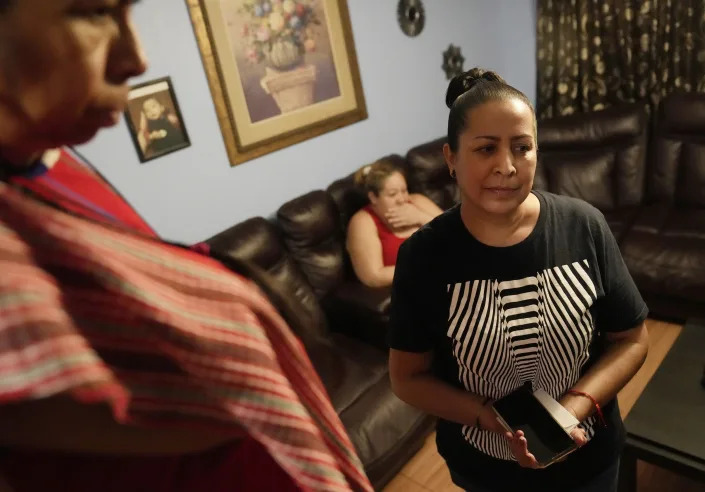
Sylvia Herrera (left) and Raquel Hernandez meet during an emergency meeting at the Beacon mobile home park (formerly Las Casitas mobile home park) on Sept. 20, 2022, in Phoenix. The residents were asked to sign a four-month lease and are worried about being evicted by the new owner. Hernandez recently bought her mobile home in the park.
Residents of Beacon mobile home park were given a new lease in late September. Their rent will increase by 88% over the next four years, it said.
Elvia Ramirez, who lives in the park with her children, started looking for somewhere else to move. But the single mother of four, who works as a receptionist and has lived in the park since she was a teenager, hasn’t been able to find something within her budget.
“Even the mobile homes are too expensive now,” said Ramirez, 33. If she doesn’t secure a new home, she said, she and her kids will probably have to move in with family.
The median price of a U.S. mobile home is now $61,400, according to a LendingTree study. That’s up 35% since 2016.
Many mobile homes are several decades old, and some are even trailers, the oldest type of mobile house. Some of the parks in metro Phoenix sold since early last year are more than 70 years old.
Many parks won’t rent to owners of older mobile homes because their houses may not be up to code. Also, some with additions can’t be moved without damaging them.
The typical rent for a mobile home lot in the Phoenix area was about $400 to $500 a month in 2019, according to housing advocates. Now, rents are rising above $1,000 per lot in some Valley parks.
Help available to mobile homeowners
Arizona has a fund to help, but some mobile homeowners don’t hear about it, and others cannot fully benefit from it because of the age of their residences.
For some owners, the fund isn’t enough to help them move, so they take less than $2,000 in state funds to walk away from their mobile home.
Under Arizona law, mobile home park residents who are displaced because of redevelopment are eligible to receive up to $12,500 from the state’s relocation fund.
But many of the mobile homes are so old, they cannot be moved to another park, either because they would fall apart or because they don’t meet current wind-resistance codes.
Residents who have to leave their homes in place because they can’t be moved can get only $1,875 from the fund, which is managed by the Arizona Housing Department.
Many residents and housing advocates said more help is needed.
“Now I have to abandon my home and give it to the university,” Suter said. “What am I gonna buy for $1,875?”
Patricia Dominguez said her family recently spent $4,000 on a new roof for their home — more than double what they will be reimbursed if they abandon it.
“What they’re offering is nothing compared to the love, and the blood, and the sweat and tears that we’ve all put into our unit,” said Dominguez. Her mother and sister, Salazar, live in Weldon Court.
Community organizer Sylvia Herrera, who is working with residents of all three parks to get more time and money before eviction, said the state relocation fund is “deceiving” because many people can’t move their trailers and therefore can’t access the full relocation amount.
“These are not really resources if you can’t qualify,” she said.
Tara Brunetti, assistant deputy director of the Arizona Department of Housing’s Manufactured Housing Division, said park owners must notify the agency if they plan on closing a park and give tenants 180 days’ notice.
“That gives us time to reach out to the residents” and offer them help, she said. “We are definitely seeing more applications for the fund now.”
The fund has more than $7.6 million to help mobile home park residents.
Sylvia Herrera leads an emergency meeting of residents at the Beacon mobile home park (formerly Las Casitas mobile home park) on Sept. 20, 2022, in Phoenix. The residents were asked to sign a four-month lease and are worried about being evicted by the new owner.
The state program does offer more money than it did five years ago, but it took a legislative move to get the increase.
Mobile homeowners and their advocates are hoping for a different kind of fix.
Some cities, including Portland, Oregon, and Austin, Texas, have updated their zoning laws to help prevent mobile home residents from displacement.
A 2018 Austin city ordinance zoned existing mobile home parks as a “mobile home residence district.” That means if the landowner wanted to use the land for a different purpose, they would need City Council approval to change the zoning.
In 2018, when a new owner began evicting longtime residents from the Tempe Mobile Home Park near Arizona State University, the city of Tempe stepped in and helped get rent concessions from the landlord. Tempe also set up meetings for the tenants to negotiate with the new owner and get aid from the Arizona Housing Department.
That former mobile home park is now high-end apartments.
“I believe there should be laws or community work in cities and counties that come up with long-term solutions for people in the park. These people are a vital part of our community,” said Bridge, of Community Legal Services. “We want their children to remain in schools and for the parents to be able to get to their jobs nearby.”
Then, big Wall Street-backed investment firms were behind most of the sales. Now, big and small investors are driving the trend, but almost all are out-of-state buyers.
The biggest Phoenix-area mobile home park sale since the beginning of 2021 was $84.5 million for the Royal Palm park in Phoenix at 19th and Dunlap avenues. Property records show Chicago-based Continental Communities is the new manager.
Bridge said she has come across several cases of new out-of-state mobile home park owners not giving tenants or the state enough move-out notice.
Mobile home evictions are tracked differently than other rental evictions, and the data to tally the total isn’t available in Arizona.
“Because of the housing crisis, there is no affordable housing. Trailer parks are the most affordable housing right now that you can find,” Herrera said. “People are just trying to retain that, trying to hold on to living in mobile home parks.”
Coverage of housing insecurity on azcentral.com and in The Arizona Republic is supported by a grant from the Arizona Community Foundation.
These simple lifestyle strategies can profoundly impact your brain’s health | Opinion
Christopher Martens and James Ellison – October 22, 2022
Alzheimer’s disease is a top concern among aging adults and a growing societal problem in the United States, where 1 in 10 adults over the age of 45 report difficulties with memory or thinking. Currently, more than 6 million Americans are affected by Alzheimer’s disease and twice as many will be affected by 2050. Fear of dementia has increased public demand for better treatments and has spurred a much-needed increase in federal funding for Alzheimer’s research that will hopefully lead to a cure for this devastating disease.
Last year, the Food and Drug Administration approved Biogen’s controversial new Alzheimer’s medication, aducanumab — marketed as Aduhelm — despite a lack of clear evidence of its safety and benefits. Following much scrutiny and a decision by the Centers for Medicare & Medicaid to severely limit coverage of the treatment, the company declared that medication a commercial failure. Last week, Biogen announced promising results of a second drug, lecanemab, which appears marginally safer and more effective. Whether the FDA will approve lecanemab remains to be seen.
While we continue to learn and discover new information on how to combat and cure this devastating disease, it is time for us all to increase our awareness of the lifestyle choices and changes we can adopt right away to decrease risk and lessen the number of individuals and families who will be impacted by this disease.
As the search for a blockbuster drug for Alzheimer’s disease continues, we should focus our attention on the solid evidence that relatively simple strategies for improving brain health are already known to lessen the risk of developing this feared condition. Lifestyle modifications such as quitting smoking, increasing physical activity and treating depression, hearing loss and high blood pressure are highly beneficial for preserving brain health and are very achievable with current treatment approaches. In 2020, an international panel of experts concluded that up to 40% of all dementia cases worldwide could be significantly delayed or even prevented by addressing such modifiable risk factors. Hearing loss, for example, is widespread among older adults and is one of the strongest risk factors for cognitive decline. It can also be easily addressed with hearing aids, which recently became available over the counter. More recently, psychosocial factors such as depression, social isolation and sedentary lifestyle, each more common during and since the COVID-19 pandemic, have been recognized as important risk factors for dementia. These can be treated with psychotherapy, medications, social interactions and physical activity.
Clinical trials of aerobic exercise, nutritional supplementation and cognitive rehabilitation are currently ongoing and may offer low risk, cost-effective strategies for lessening dementia risk in older adults. One positive aspect of this approach is that lifestyle interventions often address multiple risk factors, leading to extra benefits. For example, increasing physical activity through regular exercise not only lowers blood pressure but has been found to help relieve depression and anxiety and improve other risk factors for dementia like type 2 diabetes and obesity.
Research is showing us that many of the factors which increase our risk for Alzheimer’s disease can be treated with great benefit. While we continue to learn and discover new information on how to combat and cure this devastating disease, it is time for us all to increase our awareness of the lifestyle choices and changes we can adopt right away to decrease risk and lessen the number of individuals and families who will be impacted by this disease. Ask your health care providers to suggest which of these lifestyle changes will most greatly benefit you and your loved ones.
Christopher Martens, Ph.D, is an assistant professor of kinesiology and applied physiology at the University of Delaware and Director of the Delaware Center for Cognitive Aging Research, which is focused on conducting clinical trials aimed at addressing the modifiable risk factors of Alzheimer’s disease and related disorders. James Ellison, M.D., MPH, is the Swank Foundation Endowed Chair in Memory Care and Geriatrics at Christiana Care in Wilmington Delaware and editor-in-chief of the Journal of Geriatric Psychiatry and Neurology.
Hurricane Ian was lethal for elderly, those with chronic health conditions
Christopher O’Donnell, Tampa Bay Times – October 21, 2022
Douglas R. Clifford/Tampa Bay Times/TNS
Thomas Billings Jr. and his wife, Sarah, decided to ride out Hurricane Ian in the family room of their Naples ranch home, close to Edgewater Beach.
About two hours after the storm’s landfall, Billings was returning from fetching something from a bedroom when he found his wife lying facedown, according to a Naples Police Department report.
As floodwaters seeped into the home, he moved Sarah, 73, to the bedroom. But the 79-year-old man did not have the strength to lift her onto the bed, the report states. The man was only able to escape the rising waters by floating his wife and himself to the back lanai.
He survived but Sarah drowned, a death that the county medical examiner concluded was complicated by a heart attack.
Florida has strict laws requiring nursing homes and assisted living facilities to plan for disasters like hurricanes. But few rules exist to protect an increasing number of elderly people with chronic health conditions who live at home, including some who rely on electric-powered medical equipment like dialysis and oxygen machines.
Hurricane Ian provided a brutal lesson in how vulnerable that population is to the harsh conditions during and after a major storm.
Medical examiners in Florida have so far linked 112 deaths to Hurricane Ian. Almost 60% of those were people age 65 or older. Chronic medical conditions like heart attacks and respiratory illnesses were contributing factors in one-third of reported deaths, records show.
The average age of those who died was 67.
“There is no one who is required to make sure they evacuate or that their home environment will keep them safe,” said Lindsay Peterson, an assistant professor who conducts disaster preparedness research at the University of South Florida’s School of Aging Studies. “They are much more vulnerable, and we see that in these statistics.”
The reports suggest many would still be alive had they evacuated.
Nine people died because power outages meant they could not operate oxygen or dialysis equipment, including a 70-year-old diabetic in Charlotte County who went a week without dialysis.
Delays in 911 responders reaching patients because of the storm were cited as contributing factors in another five deaths. One was a 79-year-old woman in Orange County whose operation for a fractured hip was delayed because the hospital she was taken to had no running water.
Even some who survived the worst of the storm later succumbed to its aftermath.
Four residents suffered heart attacks and died while they were trying to clear up storm debris, reports show. A 58-year-old man with existing heart problems collapsed and died after walking up seven stories of a Naples condo tower where he and his wife were sheltering. The elevator had stopped working after the lobby flooded.
Trends suggest the number of seniors receiving medical treatment at home will continue to rise. The Centers for Medicare & Medicaid Services estimates that home care expenditures will reach $201 billion by 2028, a 73% increase from 2020.
More needs to be done at state, local and federal levels to protect that population as hurricanes increase in intensity, Peterson said. Home health centers and dialysis centers are required to have post-storm operation plans, she said.
Other states, including Ohio, have gone further with laws that require home health visitors to check in with their clients before a disaster and offer assistance and advice.
Those with health conditions can turn to special-needs shelters, which include generators to power medical equipment and are staffed with nurses.
But it’s not always easy to convince people and their caregivers to commit to staying in a shelter, Peterson said. Elderly people with dementia may feel distressed in a busy shelter where there is always light and noise.
“People associate home with their safety, especially older adults,” she said. “How do we convince them this is not safe for you anymore?”
Both Hillsborough and Pinellas counties maintain a registry of those who have special medical needs and might struggle during an emergency like a hurricane.
Pinellas counts 2,643 people on the registry, which includes information on their evacuation zones and whether they have their own transportation. About 4,000 people are on Hillsborough’s registry, with more than 1,600 listed as needing transportation to evacuate.
Both counties operated special shelters during Ian, with roughly 400 people and 110 caregivers staying at three shelters in Pinellas. Hillsborough housed about 400 people and 40 caregivers across five shelters, officials said.
The shelters are intended as a last resort for people without the resources or time to travel to a hotel or stay with friends or relatives, said Ryan Pedigo, director of public health preparedness in Hillsborough. But he acknowledged that some — including those with medical needs — won’t take advantage of the free facilities, and that many people wait until it’s too late to evacuate.
“You can’t wait until eight hours before landfall to make that happen. People need to take the initiative to leave earlier and evacuate,” he said. “I don’t know if it’s complacency or people flat-out don’t want to go to a shelter.”
Joy Weidinger’s husband of 58 years, Douglas Weidinger Sr., was listed among Hurricane Ian’s dead.
The 79-year-old Punta Gorda man, who suffered from chronic obstructive pulmonary disease and asbestosis, relied on an oxygen concentrator, a device that provides oxygen-rich air.
When power stopped working, he switched to portable oxygen canisters the couple had ordered for the storm.
But his health deteriorated, his wife said, in part because he was so stressed about the hurricane. He died Sept. 29, one day after the storm made landfall.
The medical examiner in Charlotte County cited the interruption of power as a contributing factor in his death.
“We hooked him up to the concentrator, but by the time we did it, it was too late,” she said. “We all have a time to go.”






 Scroll back up to restore default view.