The ‘great wealth transfer’ isn’t $72 trillion but $129 trillion, BofA says—and the government gave most of it to baby boomers

Fortune

The ‘great wealth transfer’ isn’t $72 trillion but $129 trillion, BofA says—and the government gave most of it to baby boomers

Hillary Hoffower, Chloe Berger – October 28, 2023

Ippei Naoi/Getty Images

You’ve probably heard about the “great wealth transfer.” It’s the $72 trillion stack of assets that baby boomers are sitting on and going to pass onto millennials someday, thereby solving many of the economically beleaguered younger generation’s problems. But there was another, even more “massive” wealth transfer from the government to the baby boomers over the last 40 years, according to Bank of America Research.

The investment bank isn’t alone in coming to this conclusion. No less a figure than Ray Dalio, the billionaire and former leader of what was for many years the world’s biggest hedge fund, wrote on his LinkedIn page in August about a “coordinated government maneuver” that left household balance sheets rich and the state effectively broke. Dalio did not mention the boomers, or any generation, by name, but BofA has now done him one better.

Boomers have quite simply been the biggest beneficiary of a “massive wealth transfer,” wrote the BofA team led by Ohsung Kwon, echoing Dalio’s observation that trillions of wealth flowed from the public to the private sector thanks to government policy since the 1980s, when boomers were in their prime working years. BofA pointed to the ballooning government debt—from 31% of GDP to 120% during that period—and the 10-year Treasury yield shrinking from 12% to 4.6% today (it’s actually 4.9% as of press time).

So how many trillions? Over this period, BofA calculates, U.S. household net worth has skyrocketed from $17 trillion to $150 trillion. Boomers, alongside “traditionalists,” hold two-thirds ($146 trillion) of that total net worth. This means that government policy has resulted in a $129 trillion wealth transfer into the pockets of those boomers and older Americans, BofA said (it didn’t clarify the exact apportionment of wealth between these two groups).

At the top of the ladder

Just over a quarter of this wealth is held in financial assets such as real estate. No surprise there, considering that nearly all boomers locked in a low 3% mortgage rate, unlike those poor millennials—the only group that took on meaningful mortgage debt since 2021, now in the 8% range. Fortune has reported extensively on how millennials have not enjoyed a boomer level of success as they struggled to afford to buy a home for years before facing off with an overpriced, ultra-competitive pandemic housing market.

BofA’s findings are more evidence that boomers have had it pretty good, economically speaking. In addition to low interest rates and inflated housing prices boosting asset value, a 2020 Deutsche Bank report found that boomers shelled out less for education than millennials did and won’t have to pay for the environmental damage caused by the carbon emission-releasing companies they invested in.

While boomers have still had their fair share of economic challenges, like the Great Inflation of the 1970s, BofA found they ultimately benefited in the long run from an economy that’s set them up pretty nicely for wealth accumulation. In a 2021 memo to clients, billionaire (and boomer) Howard Marks wrote that the generation is so big that they’re still wielding enough political and financial power to advocate for a system that works for them, “Boomers have been and still are consuming more than their fair share of the pie. This will leave future generations saddled with substantial debt stemming from expenditures they didn’t benefit from proportionally,” he wrote.

Of course, four of the last five presidents are part of the baby boomer generation, and Congress is largely made up of boomers, if not traditionalists like the recently deceased Dianne Feinstein, with millennial figures such as Alexandria Ocasio-Cortez and Jon Ossoff the major exception. President Joe Biden, of course, is what BofA would call a traditionalist, But George W. Bush, Bill Clinton and even Barack Obama were all technically boomers.

As Jill Filipovic, author of “OK Boomer, Let’s Talk,” told Salon in an interview, boomers climbed the ladder and then “pulled it up behind them.” Standing at the lowest rung, three-fourths of millennials (and 82% of Gen Zers) feel they’re navigating economic struggles shaped by their parents, per a survey by OnePoll on behalf of National Debt Relief.

At the bottom of the ladder

Dealing with a hefty price tag for a college education and ensuing student debt, many young adults graduated into a post-recession thorny job market, bouncing around to find a well-paying role. Forced to tack on other gigs to make ends meet, many still aren’t seeing the fruits of their labor; a separate BofA report finds that the extra income isn’t giving them much more spending power.

The housing market is no rosier of a scene; while some millennials have made up some ground and started to househunt, many were pushed back to the last rung of the ladder when they were outbid by boomer cash offers. It’s led many young adults to depend on their more financially stable parents to afford a house. No wonder most millennials (and Gen Z) feel the economy is hurting their ability to be financially independent and like they’re falling behind.

“Millennials, and now Gen Z, have grown up amidst global and financial turmoil,” Suzanne Schmitt, Head of Financial Wellness at New York Life, told Fortune. “These two cohorts have witnessed economic changes in their formative years and may be more risk-averse when it comes to financial habits than their predecessors.”

There’s a silver lining, though, in the other great wealth transfer that is still pending. This could make millennials five times wealthier in 2030 than they were at the start of this decade, according to a Coldwell Banker estimate. Others are less optimistic. A survey from Alliant Credit Union finds that half of millennials think they’re inheriting at least $350,000 from their parents, while half of boomers report say they’ll give away less than $250,000. As Americans live longer and struggle to afford retirement during inflationary times, it’s likely the nest egg chips away a bit more. Even if there’s a large lump sum, many millennials don’t feel equipped to handle it.

Perhaps, then, that wealth transfer won’t be as “great” as the ones boomers already received, the one Bank of America called downright “massive.” It may not be repeated anytime soon.

Here are the places that could become too hot for humans due to climate change

Los Angeles Times – Opinion:

Here are the places that could become too hot for humans due to climate change

Daniel Vecellio – October 27, 2023

FILE - A sign displays an unofficial temperature as jets taxi at Sky Harbor International Airport at dusk, July 12, 2023, in Phoenix. The historic heat wave continues in Phoenix, but the end may finally be in sight for residents of Arizona's largest city. An excessive heat warning was expected to expire at 8 p.m. Sunday, Sept. 10, and meteorologists were forecasting a high of 106 degrees (41.1 Celsius) on Monday, Sept. 11, and 102 (38.8 C) on Tuesday, Sept. 12. (AP Photo/Matt York, File)
A sign displays the temperature at dusk at Phoenix Sky Harbor International Airport in July 2023. The area is experiencing record heat-related deaths this year. (Matt York / Associated Press)

Heat waves have always been part of summer, but the familiar short periods of oppressive conditions have grown into weeks to months of sweltering heat. Research has shown that heat waves have become longer, hotter and more frequent over the last half a century because of human-induced climate change.

The 2021 Pacific Northwest heat dome, the Central Plains’ summer from hell the following year and this year’s Southwest sizzler are the most familiar recent examples in this country. But extreme heat has touched every continent over the last few years: Temperatures have regularly exceeded 122 degrees (50 Celsius) across the Asian subcontinent, and London’s thermometers reached 104 (40 C) for the first time last year, much earlier than climate models predicted.

But will such extended periods of heat and humidity come to regularly test the limits of human tolerance in places where much of the world’s population lives? It could happen sooner than we think.

Read more: Opinion: Yes, there was global warming in prehistoric times. But nothing in millions of years compares with what we see today

We can study this question using the wet-bulb temperature, which combines the influence of heat and humidity on the human body. It denotes the temperature to which a parcel of air would cool by evaporating water into the environment, analogous to the cooling effect of sweat evaporating from skin. Scientists previously theorized that a wet-bulb temperature of 95 degrees — equivalent to an air temperature of 95 at 100% relative humidity — was the highest at which humans could cool themselves without the aid of fans or air conditioning. But lab testing of young, healthy, non-heat-acclimated people at Pennsylvania State University indicated that the wet-bulb limit was closer to 88.

Using this lower threshold based on actual experimental data, I and other scientists at Penn State and Purdue University examined when and where these conditions would appear in future climates using the latest models.

Read more: Opinion: On the climate crisis, it’s time to lean into pessimism

Unfortunately, the hot spots for exceeding this wet-bulb temperature threshold include some of the most populous parts of the world: the Indus River Valley in India and Pakistan, eastern Asia, the Middle East and sub-Saharan Africa. These regions comprise many low- to middle-income countries with vulnerable populations that will bear the brunt of climate change even though they contributed relatively little to its causes.

If global warming, currently at 1.2 degrees C (2.2 F) above the preindustrial baseline, is kept to 1.5 C (2.7 F), the extent and duration of temperatures exceeding the threshold can be limited. At 3 C (5.4 F) of warming, however, the duration of exposure in the world’s hot spots begins to increase exponentially, and physiologically intolerable conditions also begin to appear in the Americas.

Breaking the wet-bulb temperature threshold once, it’s worth noting, does not inherently make a place “too hot for humans.” Chicago, for example, would experience an average of one hour a year above the threshold at 2 degrees of warming, but one has to be exposed to these conditions for six continuous hours without taking precautions to reach dangerous core temperatures.

Read more: Opinion: To shut down the supply side of climate change, start here

On the other hand, at the same 2 degrees of warming, the city of Hudaydah, Yemen, with a population of about 700,000, will experience an average of 340 hours a year of physiologically intolerable heat and humidity, putting the entire population at increased risk of dying. Divided into six-hour increments, that’s equivalent to 56 days a year of these extreme conditions.

Other populous global hot spots at 2 degrees of warming would include Aden, Yemen, with about 34 days a year of such conditions; Dammam and Jeddah, Saudi Arabia, with 37 and eight days, respectively; Bandar Abbas and Ahvaz, Iran, with 29 and three; Lahore, Pakistan, with 24; Dubai, with 20; and Delhi and Kolkata, India, with six and five.

Even in our current climate, extreme heat is already associated with dire health consequences. A Midwestern heat wave killed 700 people in Chicago in 1995. More than 70,000 died in Europe in the summer of 2003, and in 2010, 55,000 perished due to heat in Russia. More recently, an estimated 1,400 died across Oregon, Washington and British Columbia during the 2021 heat dome, and about 60,000 lost their lives due to extreme heat across Western Europe last year.

Thousands more have probably lost their lives in the heat waves that have afflicted the Global South, where the lack of public health capacity and reporting obscures the toll. Vulnerable populations die not only of heatstroke but also of complications related to cardiovascular, respiratory and renal illnesses.

The results of our study suggest that we need to prepare for, adapt to and mitigate extreme heat right now.

How do we put the brakes on the worst consequences of extreme heat? During these ever-worsening summer heat waves, we can prevent heat-related illnesses by opening cooling centers, monitoring vulnerable communities and shifting high-exertion activities to cooler parts of the day. To better prepare for future heat waves, we should also invest in adaptation and mitigation measures to deal with the warming that past emissions have already baked into our future climate.

Ultimately, a global effort to reduce the use of fossil fuels and bring net carbon emissions to zero as quickly as possible is the only way to avoid intolerable conditions for billions.

Daniel Vecellio is a postdoctoral research scholar at George Mason University’s Virginia Climate Center. He completed the work behind the extreme heat study while he was a postdoctoral fellow at the Center for Healthy Aging at Penn State.

U.S. consumers are ‘walking towards a cliff’ and the jobs market is beginning to ‘fray at the edges,’ warns market strategist

Fortune

U.S. consumers are ‘walking towards a cliff’ and the jobs market is beginning to ‘fray at the edges,’ warns market strategist

Eleanor Pringle – October 27, 2023

Justin Sullivan—Getty Images

Forget about the blistering pace of economic growth in the United States this past quarter: Americans are hurting, and one market strategist believes life might be about to get a whole lot worse.

Speaking to CNBC’s Squawk Box Europe, Longview Economics founder Chris Watling argues U.S. households are “walking towards a cliff, basically” and warned the excitement around strong retail sales is not justified. That poses a problem for U.S. growth as spending by consumers accounts for over two-thirds of the economy.

“They’re running out of cash. If you look at excess savings they’ve been run down quite hard,” said Watling, who serves as Longview’s CEO and chief market strategist. “If you look across the income quartiles, the bottom…quartiles are under pressure, [and] probably [have] spent all that excess savings.”

Indeed, backward-looking data suggests U.S. households appear to be in robust condition. According to predictions from the U.S. Census Bureau, retail and food services sales for September 2023 will hit $704.9 billion, up 0.7% from the preceding month and 3.8% higher than a year ago.

Wall Street also enjoyed a slew of positive third-quarter updates from major retailers. Just this week Amazon enjoyed a 13% bump in revenue, while Unilever reported underlying sales growth was up 5.2%.

Watling is unconvinced by such sales success, saying it has been buoyed by a household savings ratio that is now dwindling.

The London-based analyst isn’t alone in this observation. Citigroup CEO Jane Fraser believes “cracks” are beginning to appear in consumer spending, while Bank of America CEO Brian Moynihan suggested customers have now reached a tipping point.

“So it’s not quite all good news,” Watling continued. “Quite the reverse, I think there are some real challenges coming for the U.S. consumer.”

Labor market ‘fraying at the edges’

While the nation’s economy expanded at a 4.9% annual rate from July through September, its fastest in nearly two years, Watling added that some economic indicators are hinting at troubles beneath the surface.

Among them are car repayment delinquency rates for risky borrowers, which have pushed to the highest figure in three decades. Also worrying is a slowdown in the Kansas City Fed’s Labor Market Conditions Indicators (LMCI), which saw momentum drop into negative numbers earlier this year.

“The labor market’s under a lot of pressure,” said Watling. “We had a good payrolls month, but if you look at a lot of the indicators of where the labor market’s likely to go, a lot of them are fraying at the edges—they’re quite soft.”

Continued pressure on both consumers and the labor market could be what “kick-starts” a recession in the U.S. economy, Watling added.

“Bond King” Bill Gross is similarly unconvinced by the seemingly positive picture some datasets are painting.

Earlier this week Gross, former chief investment officer of Pacific Investment Management Co., or Pimco, tweeted that he was predicting a recession in the fourth quarter and urged his followers to return to the bond market.

Watling added that a further headache for the U.S. economy will be its stock market in the coming months, which he believes is massively overpriced.

When asked about the impact of this shaky consumer on Wall Street, he replied: “From our point of view, though, I can see a bounce for a month or two. It’s been quite beaten up; markets have been coming down since July, but I think net-net, you want to be underweight equities if you are looking beyond the next few months.

“Particularly, the U.S. equity market is too expensive; it’s overvalued…The U.S. in aggregate is overvalued—tech’s overvalued.”

He finished: “I think the U.S. is in for tough times.”

Screw You, Republicans, and Your Stupid, Useless Prayers

The New Republic

Screw You, Republicans, and Your Stupid, Useless Prayers

Ellie Quinlan Houghtaling – October 26, 2023

Here we go again. At least 18 people were killed and upwards of 60 people injured in Lewiston, Maine, late Wednesday evening. This is the 565th mass shootings that has been reported in 2023 alone, according to the Gun Violence Archive.

The senseless violence has also tapped into another fruitless round of Republican leaders issuing “thoughts and prayers” to the families of victims while continuing to pocket large donations from gun lobbyists.

In the last decade, the National Rifle Association has spent more than $37 million on its political lobbying, with GOP legislators reaping the bulk of it, including Senators Mitt Romney and Mitch McConnell, according to data from OpenSecrets. Meanwhile, the money behind “gun rights” lobbying groups has dwarfed gun control efforts every year dating back to 1998.

Their unbroken influence over the political right has swept votes on issues ranging from bans on assault weapons to high capacity magazines, both of which Maine’s own Senator Susan Collins voted against.

Like Collins, other Republicans are once again offering us nothing but their thoughts and prayers.

Recent changes to the House’s leadership are unlikely to change circumstances, either. Just last week, now-Speaker Mike Johnson entertained a meeting with a group against gun control legislation, Women for Gunrights.

Roughly 63 percent of Americans are dissatisfied with U.S. gun laws, according to a 2023 Gallup poll, which noted that just 54 percent of Republicans were satisfied with their own party-driven policies—a five point decrease from 2022.

“Praying for everyone’s safety in Maine, and for the victims and their families,” tweeted Florida Representative Maxwell Alejandro Frost. “But unlike some in Congress, I don’t believe the only thing we can do about gun violence is pray. Every minute our leaders fail to act = more people dead to senseless gun violence.”

Hate running? Get an under-desk treadmill and do this cozy TikTok walking workout instead

techradar.

Hate running? Get an under-desk treadmill and do this cozy TikTok walking workout instead

Matt Evans – October 24, 2023

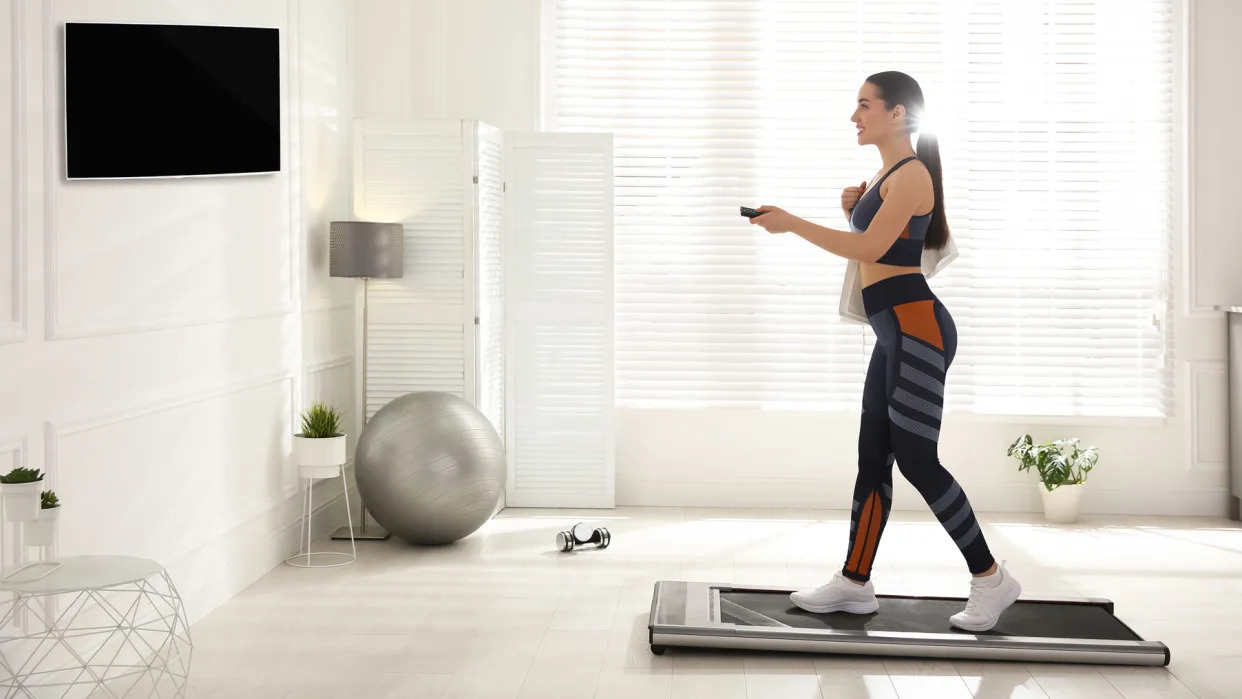
 Woman using a walkingpad in front of TV.
Woman using a walkingpad in front of TV.

I consume quite a bit of online fitness content. It’s the nature of my job. Quite often, I get recommended on my feed clips of influencers running at night, gymming in the early hours of the morning, and people who are obviously on steroids, or using filters to change the shapes of their faces and bodies.

They’re the hardest workers in the room, rising and grinding, going hard rather than going home. It’s exhausting to watch, and I can see why it’s off-putting for new fitness starters. The influencers pushing the limits, using performance-enhancers, and editing their pics to attain perfection make exercise – and by extension, themselves – unattainable.

Therefore, it was quite refreshing to run across ‘cozy cardio’, the latest trend making low-impact exercise accessible and acceptable using the best under-desk treadmills at home. First popularized by TikToker Hope Zuckerbrow, she uses her walking pad for 30 minutes while watching TV, reading or listening to lofi music, occasionally wearing a fluffy bathrobe and sipping a protein coffee.

The trend exploded, getting reported on in several major news outlets (including, apparently, this one), and similar to its predecessor, the ‘hot girl walk’, the concept is aimed at making exercise a comforting, healing activity for people who might be intimidated by the gym or running outdoors. Walking to lose weight, sure, but also walking for pleasure and, well, coziness.

I’m not intimidated by either the gym or running, and I normally detest wellness trends on social media. They’re rarely backed by science and occasionally promote people doing potentially dangerous things for clout rather than health. However, this trend is anything but. Bringing exercise into your comfort zone with a low-intensity workout, in your own space on your own terms, is great. I love the idea of using exercise as a comforting, healing activity, and I’m a huge lofi music fan.

For those who decry the trend’s followers as ‘not working out properly’ or ‘hard enough’, I’d say it’s far preferable to not working out at all, as it’s beneficial for both body and mind. The Journal of the American Medical Association found that “associations between physical activity and depression suggest significant mental health benefits from being physically active, even at levels below the public health recommendations.”

Another report from Cambridge University found that 11 minutes of brisk walking every day is enough to reduce your risk of early death. Clearly, any amount of extra walking you can fit into your day is a Good Thing.

A sedentary lifestyle can be toxic for both body and mind, and activity – even low-intensity, enjoyable activity – is the panacea. If you don’t want to walk in the dark winter months, under-desk treadmills (or walking pads) are a way to get your steps in while you’d otherwise be watching one of the best streaming services.

Below are three of the best under-desk treadmills, or walking pads, we’ve tested, and the ones I’d recommend getting for all your cozy cardio needs. There are likely to be heavy discounts on many under-desk treadmills during the Black Friday sales period, and these are a few models worth keeping an eye out for. I’d also recommend getting one of the best fitness trackers to keep an eye on your step count.

Walking this many minutes a day can undo the harmful effects of sitting, study finds

Today

Walking this many minutes a day can undo the harmful effects of sitting, study finds

Linda Carroll – October 25, 2023

Getty Images

Sitting all day is well-documented to be harmful for your health, from impeding your blood flow to increasing your risk of heart disease and Type 2 diabetes. Previous research has even shown that while regular physical activity can reduce some of the negative impact of sitting all day, it can’t undo all of it.

However, a new study found that brief periods of exercise may be more beneficial for your health than previously thought, even if you spend most of the day sitting. This strategy of small bursts of movement throughout the day is also known as “exercise snacking.”

Published Oct. 24 in the The British Journal of Sports Medicine, the new research found that the current recommendation of getting 150 minutes a week of moderate to rigorous physical activity can counteract the harm to your body from sitting for prolonged periods, the study’s lead author, Edvard Sagelv, a researcher at The Arctic University of Norway, told NBC News via email.

“This is the beautiful part: We are talking about activities that make you breathe a little bit heavier, like brisk walking, or gardening or walking up a hill,” he said. “Only 20 minutes of this a day is enough, meaning, a small stroll of 10 minutes twice a day — like jumping off the bus one stop before your actual destination to work and then when taking the bus back home, jumping off one stop before.”

The data came from almost 12,000 people ages 50 and older who wore movement-detection devices for 10 hours a day for four days and were tracked for at least two years. The researchers found that sitting for more than 12 hours a day versus eight hours increased risk of death by 38% — but this only applied to people who got less than 22 minutes of moderate to rigorous activity a day. They also found that the more people exercised, the more the risk of death decreased.

What about lower intensity activity? This only benefitted people who spent 12 or more hours a day sitting.

Previous research also shows the benefits of “exercise snacks.” Another study published in The British Journal of Sports Medicine suggests that 30 to 40 minutes a day of moderate-to-vigorous activity mostly counteracts the damage done by lots of time sitting and, better yet, that the exercise can be done in short spurts.

“Physical activity of at least moderate intensity, equivalent to the current recommendations from the World Health Organization (150 to 300 minutes of activity of at least moderate intensity per week for adults), seems to attenuate the risk of death associated with high sedentary time,” said the study’s lead author, Ulf Ekelund, a professor in the department of Sport Medicine at the Norwegian School of Sport Sciences in Oslo.

“It is possible to split up the activity to as short as 1-minute bouts,” Ekelund said in an email. “We examined accumulated time in minutes in light, moderate and vigorous intensity, which effectively means that ‘every single minute counts.’ The newly released (WHO) guidelines suggest that you can accumulate physical activity in small bouts (such as taking the stairs) throughout the day.”

The study examined how various amounts of exercise and sitting interacted with one another. The researchers totaled all the minutes during the day that were shown to be active and sedentary by the accelerometers. It also found that you can undo the damage of sitting.

“We observed that those who were most active did not have a statistically increased risk of death regardless of high sitting time compared with the group with the highest MVPA (moderate-to-vigorous physical activity) and lowest sedentary time,” Ekelund said. “Those in the middle group (11 minutes per day) had no increased risk of death if they belonged to the least sedentary (about 8.5 hours per day).”

It’s important to remember that sitting time includes not only time in the office but during the rest of the day, as well.

Sports medicine expert Matthew Darnell, Ph.D., is intrigued by the idea of short bouts of activity adding up to the recommended amounts.

“I really like that term (exercise snacks),” Darnell said. “It could be as simple as going for a walk around the block two times a day. Those little exercise snacks add up over time.”

However experts stress that you shouldn’t assume these studies mean you can sit all day except for a 22 minute walk and not have any negative health effects. Talk to your doctor or a trainer about the right amount of exercise for you based on your daily routine.

Republicans’ New Speaker Pick Led Effort to Overturn 2020 Election

The New Republic

Republicans’ New Speaker Pick Led Effort to Overturn 2020 Election

Ellie Quinlan Houghtaling – October 25, 2023

It’s Day 22, and the House still doesn’t have a speaker, though the GOP selected another designee out of an apparent carousel of contenders late Tuesday.

Republican Conference Vice Chair Mike Johnson, a four-term congressman representing Louisiana, is the latest of the batch to try to unify the divided caucus. Johnson’s beliefs are a sweet spot for many GOP members: He’s anti-LGBT and rallied against Roe v. WadeAnd when it comes to the 2020 election, he’s just a less dumb version of Jim Jordan, who played a close role in January 6 but failed to secure the speaker’s gavel earlier this month.

In the days following the 2020 presidential election, Johnson played a more subtle but still key part: He led the amicus brief signed by more than 100 Republicans that sought to overturn election results in Georgia, Michigan, Pennsylvania, and Wisconsin.

Then, on January 6, 2021, 139 Republican representatives voted to dispute the Electoral College results, in large part thanks to a loophole nitpicked by Johnson, who The New York Times described as the “most important architect of the Electoral College objections.”

According to the Times, it was Johnson’s lawyerly nuance that made him dangerous.

Offering possible objections based on what he described as “constitutional infirmity,” Johnson claimed there were grounds to reject the election results from states that permitted pandemic-induced state modifications to mail-in ballots and early voting systems that bypassed the approval of state legislatures.

Ultimately, it was Johnson’s work that allowed Republicans to seize on the events of January 6 for political profit, helping them transform their brand from dangers to democracy to defenders of electoral integrity, and garner grassroots support and donations from corporate backers who had once denounced them.

According to a leaflet from Johnson’s office obtained by Punchbowl News, Johnson’s core principles include: individual freedom, limited government, the rule of law, peace through strength, fiscal responsibility, free markets, and human dignity—though none of those seemed to conflict with his belief in overturning the 2020 presidential election results.

Only a few GOP members have indicated so far that they will not support him in a floor vote. His endorsers include Majority Leader Steve Scalise, fellow contender Representative Kevin Hern, and perhaps most critical, Donald Trump.

The Michael Scott look-alike is the second person to snag the speaker nomination in just one day, after Majority Whip Tom Emmer resigned mere hours after his own nomination.

New House Speaker Once Blamed Abortions for Social Security, Medicare Cuts

The New Republic

New House Speaker Once Blamed Abortions for Social Security, Medicare Cuts

Ellie Quinlan Houghtaling – October 25, 2023

The new House speaker, Mike Johnson, has touted some extremely controversial opinions as a member of the far-right House Freedom Caucus—but few as unsavory as his apparent hatred for a woman’s right to choose, sizing a woman’s worth up as her ability to create more workers for American businesses.

In a clip that surfaced Tuesday, Johnson put the onus of Republican cuts to essential programs on unborn children, claiming that if American women were producing more bodies to churn the economy then Republicans wouldn’t have to cut essential social programs like Medicare and Medicaid.

Roe v. Wade gave constitutional cover to the elective killing of unborn children in America,” Johnson said, during a House Judiciary Committee hearing.

“You think about the implications of that on the economy; we’re all struggling here to cover the bases of Social Security and Medicare and Medicaid and all the rest. If we had all those able-bodied workers in the economy, we wouldn’t be going upside down and toppling over like this,” he added.

Johnson has also co-sponsored at least three bills hoping to ban abortion at a nationwide level, including the Pain-Capable Unborn Child Protection Act, the Protecting Pain-Capable Unborn Children From Late-Term Abortions Act, and the Heartbeat Protection Act of 2021, all of which carry criminal penalties of up to five years in prison for physicians who perform abortions.

New House Speaker Mike Johnson Wants Women to Pop Out ‘Able-Bodied Workers’ to Fund Social Security

Jezebel

New House Speaker Mike Johnson Wants Women to Pop Out ‘Able-Bodied Workers’ to Fund Social Security

Kylie Cheung – October 25, 2023

Photo: Win McNamee (Getty Images)

Dear reader, with a heavy heart, I regret to introduce you to our new House Speaker, Rep. Mike Johnson (R-La.). After three long weeks of House Republicans debasing themselves (and debasing former Speaker nominees Steve Scalise (R-La.), Jim Jordan (R-Ohio), and Tom Emmer (R-Minn.)) to find a new Speaker, the caucus went with Johnson late Tuesday night, and voted him into the position Wednesday afternoon after a single ballot.

Where previous nominees flailed around, caucus support for Johnson was resounding. Scalise and Jordan were both Speaker nominees for a number of odd days before it became clear there was no path forward; Jordan saw massive rifts form in his relationships with a handful of his caucus after they received a slew of death and other threats in his name. Emmer was the nominee for just over the run-time of Avengers: Endgame. But when Rep. Elise Stefanik (R-N.Y.) nominated Johnson on the House floor, caucus members reportedly cheered and chanted, “Mike! Mike! Mike!”

In his remarks, not only does Johnson claim Roe “gave constitutional cover to the elective killing of unborn children,” but he rails against the imagined economic detriments of abortion, pushing his caucus’ outlandish claim that by depleting a hypothetical workforce, abortion has defunded social security: “Think about the implications of that on the economy. We’re all struggling here to cover the bases of social security and Medicare and Medicaid and all the rest,” Johnson says. “If we had all those able-bodied workers in the economy we wouldn’t be going upside down and toppling over like this… Roe was a terrible corruption.” Mind you, social security and health care have been gutted in the last several years by Republican lawmakers, not people who choose to end a pregnancy.

Alas, this is the man who will be presiding over the House moving forward as the threat of another government shutdown looms. This is the man who will be relied on to forge the bipartisan agreements necessary to pass a budget and keep the wheels of our government in motion. You’ll have to excuse me if I’m not feeling overly optimistic about things right now.

Covid shots may slightly increase risk of stroke in older adults, particularly when administered with certain flu vaccines

CNN

Covid shots may slightly increase risk of stroke in older adults, particularly when administered with certain flu vaccines

Brenda Goodman, CNN – October 25, 2023

Joe Burbank/Orlando Sentinel/AP

Vaccines for Covid-19 and influenza may slightly increase the risk of strokes caused by blood clots in the brains of seniors, particularly when the two vaccines are given at the same time and when they are given to adults who are age 85 and older, according to a new study.

The safety signal was detected by experts at the US Food and Drug Administration who analyzed data from Medicare claims.

It is the second study to find an elevated risk of stroke for seniors after Covid-19 and flu vaccinations given together. The US Centers for Disease Control and FDA issued a public communication in January explaining that one of their near real-time vaccine safety monitoring studies—called the Vaccine Safety Datalink–had picked up a small and uncertain risk of stroke for older adults who received a dose of Pfizer’s bivalent Covid-19 vaccine and a high-dose or adjuvanted flu shot on the same day. That study triggered the FDA’s broader look at strokes after vaccination noted in the medical records of seniors on Medicare.

That said, the risk identified in the FDA’s study appears to be very small—roughly 3 strokes or transient ischemic attacks for every 100,000 doses given–and the study found it may be primarily driven by the high-dose or adjuvanted flu vaccines, which are specially designed to rev up the immune system so it mounts a stronger response to the shot.

In additional analysis of the Medicare claims data, the FDA researchers found a very slightly increased risk of stroke in adults ages 65 and older who’d only gotten a high dose flu shot. In absolute terms, the extra risk from high-dose flu shots amounted to 1-2 strokes for every 100,000 doses.

“The absolute risk is miniscule,” said Dr. Steve Nissen, a cardiologist and researcher at the Cleveland Clinic in Ohio. “I mean it is trivial in comparison to the risk for people over 85 of dying from Covid.”

At least five other recent studies—many launched to try to tease out this link, have not found any additional risk of stroke after vaccination for Covid-19, influenza or both.

“Available data do not provide clear and consistent evidence of a safety problem for ischemic stroke with bivalent mRNA Covid-19 vaccines when given alone or given simultaneously with influenza vaccines,” said Dr. Tom Shimabukuro, director of the Immunization Safety Office at the CDC in a public presentation of the data on Wednesday to the CDC’s Advisory Committee on Immunization Practices.

Researchers say they are continuing to probe the possible link, but in the meantime, they say everyone should still get vaccinated since any tiny increase in risk of a stroke after vaccination is dwarfed by the increased risk of stroke or other serious outcomes following either a flu or Covid-19 infection.

“The risk of serious disease associated with both influenza and Covid for the population at highest risk, which is of course, older persons, is so much greater than the potential increased risk associated with a vaccine,” said Dr. William Schaffner, an infectious disease expert at Vanderbilt University.

“That’s a hard equation for the average person to do,” Schaffner said.

Spread out your shots?

Schaffner said people who are worried could consider getting each shot at different times rather than together.

“That’s a reasonable thing to do,” he said.

Schaffner, who is in his mid-80s, said he got both his Covid and flu vaccines at the same time, in the same arm, and had very little reaction afterwards.

A few weeks ago, however, Dr. Peter Marks, head of FDA’s Center for Biologics Evaluation and Research, said he was planning to get his Covid-19 vaccine first, followed by his influenza vaccine about two weeks later.

“If you want to minimize the chance of interactions and minimize confusing the side effects from one with another, you wait about two weeks between the vaccines,” Marks said on an FDA stakeholder call in September.

Other experts said they hoped the information wouldn’t confuse people or deter them from getting their vaccines, since the benefits of getting them still greatly outweigh the risks.

“The bottom line is that these are small signals. We’re not entirely sure whether they are valid, and they certainly do not lead themselves to any change in the recommendations for people getting either Covid or influenza vaccines at the present time,” Schaffner said.

For the study, FDA investigators looked at the medical claims of more than 5.3 million adults ages 65 and older who were enrolled in Medicare and received a bivalent Covid-19 vaccine made by Pfizer or Moderna. They saw no increased risk of stroke in the overall group after Covid-19 vaccination.

When they looked at adults ages 85 and older, they found an elevated risk of strokes caused by blood clots in those who’d had Pfizer vaccines, but not in those who got Moderna shots.

Seniors ages 65 and older who got a bivalent vaccine and high-dose or adjuvanted flu shot at the same time also had an increased risk of blood clots in their brains.

The study is observational, meaning it can only show associations, it can’t prove cause and effect. It was also posted as a preprint ahead of peer review by outside experts and publication in a medical journal.

Study sees link to seizures in young kids

A separate FDA investigation of more than 4 million records from three large commercial insurance databases, found a very small and tenuous link between seizures in children between the ages of 2 and 5 and Covid-19 vaccination. Children this age appeared to be slightly more likely to have seizures after Covid-19 vaccination compared to background seizure rates in the general population in 2020—a year when infectious diseases were lower in kids because of masks and social distancing.

The signal disappeared, however, when researchers compared it to background rates of seizures reported in US children in 2022, a year when infections in kids rebounded.

That study was also posted as a preprint.

The study authors said their findings should be interpreted with caution, since most were associated with fevers, which are common in kids. Vaccination can also cause kids to run fevers.

They said they hoped their findings would be investigated in a more robust epidemiological study.

About 4% of children experience seizures triggered by fevers, according to the National Institute of Neurological Disorders and Stroke.

Dr. Phillip Yang, a cardiologist at Stanford Health Care, said the findings didn’t look particularly concerning.

“It’s not unusual after Covid vaccine that we have little bit of a fever that could trigger a seizure, and kids who are more susceptible to it. So again, it’s not a surprising finding,” Yang said.